Sunday, April 5, 2026

A Great Awakening: A Review

A GREAT AWAKENING

A man of faith and a man of science find common ground in A Great Awakening. This true-life story is enhanced with strong performances even if the runtime feels pushed.

June 1787. The nascent United States of America is anything but. The Constitutional Convention in Philadelphia is in near chaos. Delegates from the twelve former British colonies are arguing amongst themselves (Rhode Island did not bother sending a delegation). In the midst of all the bickering stands, or rather sits, Dr. Benjamin Franklin (John Paul Sneed). Dr. Franklin is known for his wit, which he does exercise on other delegates, albeit sparingly. For the most part, he sits in silence, concerned about how things are going.

He goes to his temporary residence, the home of his grandson Benjamin Franklin Bache (JT Schaeffer). Benny is in awe of his grandfather. He has also followed him into the printing business. Dr. Franklin is greatly worried about the fate of the Republic. Benny helps his grandfather with old papers. Amongst them is the biography of a long-ago friend, the Reverend George Whitefield (cowriter Jonathan Blair). Dr. Franklin now remembers. 

Young George Whitefield (pronounced Whitfield) wants to be an actor. That is hard given he is blind in one eye and from the poorest of backgrounds. A strong voice and encouragement from another actor, however, helps Whitefield in his pursuits. He manages to go to Oxford as a servitor (someone who gets an education in exchange for serving a wealthier student). Whitefield struggles under their abuse but finds hope with a group of religious students. They are the Holy Club, headed by the Wesley Brothers John (Carson Burkett) and Charles (Caleb Hughes). George becomes at first religious, then a zealot. Eventually, he finds a passionate yet middle ground.

His powerful oratory brings him attention. His fervent faith will make him the enemy of the staid Anglican priesthood. He travels throughout Britian, preaching salvation to the lowest in society. It is now when he travels to America.

Franklin knows the name George Whitefield, his fame reaching even the New World. Franklin is a Deist, who believes in a God but believes that God is removed from men's lives. Despite their differences, Franklin and Whitefield begin working together. They soon become friends, though they are unable to change the other's point of view. However, there are struggles that both men cannot overcome either by faith or reason alone. The American colonies are chafing at British heavy-handedness. Despite his belief in the equality of man, Whitefield relies on slave labor for his cherished orphanages. Despite his efforts at virtuous living, Franklin does not shrink from keeping to missionary positions while serving on a political mission in London. It is here where Benjamin Franklin learns of Reverend George Whitefield's death in 1770. 

All this, along with a surprise night visit from General George Washington (Russell Dean Schultz) makes Dr. Franklin decides to finally speak at the Convention. What are his words, and will he be heeded?

A Great Awakening has a runtime close to two hours long. That is a rather long runtime that eventually wears the viewer out. Granted, there are longer films that do not have the stumbles that A Great Awakening has. I think one of the film's major drawbacks is in its structure. It goes by a familiar route: one character remembers another in flashbacks. The problem here though is that we do take up around maybe ten to twenty minutes in the beginning delving into Benjamin Franklin's early years. How is that a problem? 

It is because after that, we then shift to George Whitefield's early years. It is almost as if we are getting two biopics almost rammed together. It is curious that Benjamin Franklin was only eight years older than George Whitefield. In A Great Awakening, they could pass for father and son. It is historically accurate in that Franklin outlived the younger man by twenty years. Yet, I digress.

A Great Awakening, cowritten by co-lead Jonathan Blair, Jeff Bender and director Joshua Enck, might have done better to trim parts of Franklin and/or Whitefield's backstories. They might also have done better by structuring their pasts up to their meeting with less detail. That seems a curious criticism. After all, A Great Awakening is about these two different men and the bond that they shared. I think that what I am getting at is that one starts looking at Whitefield's struggles with extreme self-punishment and then Benjamin Franklin pops in.

That, however, is probably the film's most distinct flaw. In all other aspects, A Great Awakening is a very strong picture. Jonathan Blair is an absolute standout in his role as the Reverend George Whitefield. He brings a zeal to his role. It is a compliment to any actor that when we see him on film, we see the character. Jonathan Blair makes George Whitefield into this passionate, committed man of God. He is blessed with a powerful voice that makes his words of divine judgement and love extremely powerful.

Charismatic is perhaps the best term to describe Jonathan Blair's performance. He does not make George Whitefield into a crazed preacher. Instead, Whitefield comes across as a man fiercely committed to his God while also having reason. This is not a humorless figure. He is not lighthearted. Instead, he is someone so rarely seen on film: a man of firm, solid faith who takes everyone at their value. Near the end, he does question why despite having worked together Franklin has never embraced Jesus Christ. It is not in terms of condemnation or damnation. Instead, it is in terms of concern and confusion. Blair gives George Whitefield respect without being reverential.

The same goes for John Paul Sneed as Benjamin Franklin. Sneed makes Franklin both the elder statesman of the Founding Fathers and a bit of a cynical rake. He is more amused and interested in how Whitefield can increase his Pennsylvania Gazette circulation than in Whitefield's words. Over the course of the film, however, we see Franklin showing respect and admiration for the man. He is able to stand to his own principles. Yet, we also see someone who, like Whitefield, searches for truth. It is a strong performance, one that makes Benjamin Franklin wise, witty and worried.


A surprising element in A Great Awakening that should be talked about more is the music. Chad Marriot wrote an appropriate score that keeps to the Colonial Era. What is surprising is that the film has an original hymn that works beautifully in the film. Awaken Us Today, which serves as the film's theme, is heard at a climactic moment when Franklin and the rest of Philadelphia first hear the fiery preacher's words. Awaken Us Today, which is also heard at the film's end, is an original song written specifically for A Great Awakening. The hymn is so perfect that it sounds as if it had been a traditional hymn adapted for the film. 

I am reminded of when Aaron Copland adapted the traditional Shaker hymn Simple Gifts for Appalachian Spring. Here, it is the reverse. Copland used a traditional hymn and made it new. A Great Awakening with Awaken Us Today makes a new song sound traditional.  

A Great Awakening does not shy away from the less pleasant aspects of Franklin and Whitefield. Franklin chastises Whitefield for using slaves despite his condemnation of slavery. The film subtly shows Franklin fooling around while in London. This is while he attends a production mocking Whitefield. 

Minus some issues with its structure and length, I found A Great Awakening a well-acted, well-produced film about a little-known friendship that shaped American history. Benjamin Franklin is fond of quoting his father. "One tiny candle illuminates a thousand". The revolutions that Benjamin Franklin and George Whitefield started are still active today.        

DECISION: B-

Thursday, April 2, 2026

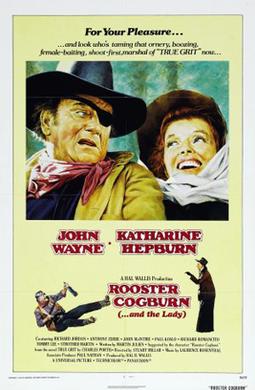
True Grit (1969): A Review (Review #2142)

TRUE GRIT (1969)

The West was wild and wooly, but it also managed to be wryly amusing in True Grit. With strong performances and a good balance of serious and offbeat, True Grit is a strong film. 

Matty Ross (Kim Darby) is devastated when she learns that her beloved father has been murdered. The killer is known to her as trusted Ross farmhand Tom Chaney (Jeff Corey). Chaney, who has gone by other names, kills Mr. Ross (John Pickard) when the latter attempts to stop Chaney from going back to the saloon at Ft. Smith to gamble and booze up more.

Ross, who has come to collect her father's body, is determined to avenge Mr. Ross. With that in mind, she seeks out first the local sheriff. Informed that Chaney has slipped into Indian territory and is now subject to federal jurisdiction, she finds U.S. Marshall Reuben "Rooster" Cogburn (John Wayne). Cogburn, overweight, with one eye and a dubious reputation for shooting first and asking questions later, at first balks. The promise of a hefty reward and a chance to go after the bandits whom Chaney has joined changes his mind.

A couple of unexpected elements pop up in this manhunt. The first is La Boeuf (Glen Campbell). La Boeuf is a Texas Ranger, also on the hunt for Chaney. La Boeuf and Cogburn easily join forces but will not have the pesky Mattie join them. That is the second unexpected element. Both men attempt to keep Mattie out of the manhunt. Mattie, however, is made of true grit herself and stubbornly pushes on. With that, the three set out to find Chaney.

Chaney has joined up with the gang of Ned Pepper (Robert Duvall). The trio discover that the Pepper gang are to go to a remote cabin that Rooster knows to pick up fresh horses. The lawmen and Mattie get there first. The bandit Moon (Dennis Hopper) gives them valuable information before dying. No dice, though, as Ned and his gang manage to escape. The pursuit continues. Mattie and Chaney unexpectedly meet. Now, it is a fight to save Mattie and capture Ned and Chaney (dead or alive). Will the one-eyed fat man triumph? 


What surprised me about True Grit was how much lightness, even humor, there was in it. True Grit was not a spoof or a caricature. Rather, it has an amusing manner given the serious premise. I think this is due to the performances. 

John Wayne's Oscar-winning performance as Rooster is big. I think that this is the correct way of playing the role. Rooster Cogburn is big. He is a flummoxed drunk but one who keeps to his code and the law, when convenient. There is something amused and amusing seeing Wayne sometimes bemused and sometimes flustered by La Boeuf or Mattie. 

However, Wayne has a wonderful dramatic moment when he recounts his past with an ex-wife and clumsy son, Horus. As he reflects on the woman he won and lost, Wayne does something interesting. He does not sink into pathos or make Rooster an introspective fellow. Instead, he keeps to a more amused, perhaps even shellshocked manner. He is dramatic but not exaggeratedly so. This is one of John Wayne's best performances. He balances mournful and nostalgic with a lightness that makes for enjoyable viewing.

John Wayne does not skimp out on the action. The highlight is when Rooster faces off against Ned and three of his gang. He tells Ned in a matter-of-fact manner that he will either kill him or arrest him. After Ned insults him, Rooster seems genuinely astonished to find someone would mock him. With an air of determination and defiance, he calls out, "Fill your hands, you son of a bitch!" before going all guns blasting. Despite the wild odds, you are convinced that Rooster will beat them all.

True Grit also is a showcase for Glen Campbell. This was Campbell's film debut, and it was a good one. He kept to that light manner as La Boeuf, whom you could not be sure was fully aware of things. He did seem at times a bit nervous on camera, almost jumpy. That being said, I think that helped Campbell's performance. La Boeuf is supposed to be a bit of a braggard who is less experienced than Rooster. As such, Campbell's more cocksure manner fits the part.

Kim Darby does well as Mattie. She does at times come across as dim and whiny. However, for most of True Grit, Darby's Mattie is direct and blunt to the point of rudeness. It does give True Grit a bit more of a comic manner. In his supporting role, the late Robert Duvall holds his own as the arrogant Ned Pepper. Dennis Hopper has a smaller role as the unfortunate Moon. He seemed a bit exaggerated in his manner. Fortunately, he was not on screen long enough to shame himself. 

Still, while True Grit is more lighthearted than other Westerners, it is not a comedy. It veers close to it. However, True Grit manages to have both drama and action. The climactic battle between Rooster and Ned's gang is brief but quite exciting. Elmer Bernstein's score adds to the excitement. Bernstein also wrote the title theme, with Don Black writing the lyrics. They received the second of True Grit's two Oscar nominations. True Grit was well sung by Campbell. 

True Grit is a fun, delightful film. Those two qualities are not usually associated with Westerns. That being said, this first adaptation of Charles Portis' novel is a good film, though perhaps longer than it should be. Nonetheless, one will have no problem filling their hands with such a colorful figure as Rooster Cogburn. 

DECISION: B+