Showing posts with label Horror. Show all posts

Thursday, September 10, 2026

Obsession (2026): A Review (Review #2220)

OBSESSION

I know a couple that has been dating for some time now. They have their cute nicknames for themselves as both individuals and as a couple. They travel together but would insist, if anyone dared to ask, that they are not physically intimate. Apparently, whenever they go out of town on their de facto honeymoons, all they do at night is sing hymns and play canasta. While watching Obsession, I was reminded of these two lovebirds. Granted, there are no otherworldly possessions involved with the couple that I know of (to my knowledge, anyway). Obsession hits familiar horror tropes, and I suppose gives audiences what it wants. It never quite worked for me, though.

Baron, universally known as Bear (Michael Johnston) has yearned for his coworker Nikki Freeman (Inde Navarrette) for some time. His friend and coworker Ian (Cooper Tomlinson) insists to him to Nikki does not reciprocate his feelings. We get stronger hints that their fellow friend/coworker Sarah (Megan Lawless) does have stronger feelings for Bear. Bear, however, will not be denied his own dream girl of Nikki, or at least denied his chance to pursue a relationship. In efforts to curry favor with Nikki, Bear rushes to buy a crystal necklace to replace the one Nikki just told him that she'd lost. At the shop, he opts to buy not the necklace, but a "One Wish Willow", a novelty item from the 1980s that will do just that. Bear makes his one wish: "I wish Nikki Freeman loved me more than anyone else in the world".

In the classic case of "be careful what you wish for", Nikki now becomes besotted with Bear. He might be happy about that, but he also sees that Nikki at times acts strangely and erratically. She brings Bear's dead cat out of the bag, so to speak. She hovers in corners in a creepy, vaguely demonic way. She lies about her father dying of cancer. She tapes the door to his house, where is now pretty much living in, and does not want him to leave.

Bear continuously insists that Nikki's freaky behavior is not a sign of mental or psychological instability. He keeps asking her to "stop being weird". Being weird, however, does not cover the full extent of Nikki's manner. The culmination of her eccentricity comes when at a boys' night out party that she cajoled Bear into taking her to, Nikki recites an incestuous take on Hansel and Gretel. She then pulls Sarah's chair out rather than let Bear kiss her after a game prompt would make him do that. She concludes by becoming incoherent and attacking herself with a broken beer bottle in front of the horrified partygoers.

Nevertheless, Bear still will not let Nikki go. There is something seriously wrong with Nikki, who whispers to Bear pleas to kill her. The One Wish Willow hotline was no help. Neither are Ian and Sarah, whose lives are as much in danger as Bear's is. Who will live and who will die before this Obsession ends?


I think that a reason why Obsession did not become one for me is that I am not a horror film fan. I do not hate the genre. I just do not get scared at movies. I also, for better or worse, get hung up on details. A major component of Obsession is that Bear calls the phone number on the One Wish Willow box. Desperate to reverse the wish, he turns to said number. I kept wondering how the phone number to a novelty item made before any of the characters would have been born still functioned.

Perhaps this is overthinking things. I will grant that. There were, however, other elements that made me think that Obsession is now becoming the most overrated film of 2026. As much as writer/director Curry Baker might push me to see Bear in a negative light, I couldn't. I did not see him in a positive light. I found him to be a wimp and simp. The first alarming signs when it came to Bear was when he rushed out to buy a replacement necklace. This is not the act of someone in love. This is the act of someone attempting to curry favor with someone (no pun intended). Again, granted it sounds like something the male lovebird I know would do. 

Truth be told, I never cared for the four principal characters (Andy Richter playing a small role of their boss who is also Sarah's father). The acting from all four is mostly flat. I can give a little leeway in that those are the characters. Bear, Nikki, Ian and Sarah are remarkably dull people who speak in pretty much monotones. Out of the four, I think Megan Lawless' Sarah was the most competent. She had a good scene with Bear late in Obsession when she talked about her hopes and fears about getting into an art school. I can also give grudging respect to how Sarah's icing did pop out almost out of nowhere.

I, however, thought everyone else in Obsession was simply awful. I remain permanently puzzled over how Inde Navarrette is being touted as a potential to probable Best Actress Oscar nominee. She was like most everyone else in Obsession: serviceable to a bit exaggerated as Nikki. I think that she was also hampered by Baker's screenplay and directing. Obsession uses a lot of horror tropes that I think ended up backfiring on the film.

For example, we get the dark cinematography, dominated by greys and browns. We get the overtly spooky music, particularly in a montage that is supposed to show the idyllic first few days of the Bear/Nikki romance. However, when it comes to Navarrette, I think it was a mistake to have her appear as this overtly creepy, shadowy figure from time to time. She looked less like a person and more like a hellish creature. Now, I understand that was the intent. For me, though, I think that undercut any genuine terror by staying close to horror cliches. At the scene where Nikki is supposed to move Sarah's chair and demand Bear kiss her, I was not filled with dread. 

I was filled with laughter. 

I was also not overwhelmed with Michael Johnston's Bear. Yes, Bear was supposed to be totally weak-willed and pathetic. However, I thought Johnston made Bear almost comatose and unable to show any true emotion. There does not seem to be any evolution in Bear via Johnston's performance. His constant cries of "Stop being weird" came across as not having just words. They were not demands. They were not pleas. They were just statements.

Cooper Tomlinson was probably the worst of the bunch. While I felt genuine sadness at his fate (I recoil at films that do harm to innocents), he was flat throughout the film.

I watched Obsession with a growing sense of puzzlement over how it is seen as some kind of cinematic breakthrough. It is a second-rate horror film that has bad performances and typical horror tropes. The biggest obsession that I have seen is from Obsession fans. 

Thursday, August 20, 2026

The Island of Dr. Moreau: A Review

THE ISLAND OF DR. MOREAU

This review is part of the Summer Under the Stars Blogathon. Today's star is Marlon Brando.

Divas to the left of me. Crazies to the right. Sometimes, the divas and crazies switch places and were even one and the same. The bonkers behind-the-scenes stories during the filming of The Island of Dr. Moreau have become infamous. Fired directors who had nervous breakdowns. Actors who accidentally repeated police reports as if it were actual dialogue. Other actors who fled or attempted to flee the filming location. Those wild stories range from the amusing to the terrifying. However, what about the film itself? Separate from the eccentric anecdotes, how is The Island of Dr. Moreau as a movie? 

Told occasionally in voiceover, we start with Edward Douglas (David Thewlis). He is the eventual sole survivor of a plane crash on the Java Sea. Edward is a United Nations negotiator who is close to finding peace with warring nations in the region. However, it is not the U.N. that comes to his rescue. Instead, it is the Ombak Penari, a small ship that came across Edward's raft. Aboard is Dr. Montgomery (Val Kilmer), who first tells Edward that he will be dropped off on Java. However, they end up on what Montgomery calls "Moreau's Island", where Edward reluctantly agrees to go.

Montgomery appears somewhat hospitable. That hospitality, however, includes locking Edward in his guestroom. Why would Montgomery make Edward a de facto prisoner? Who is the beautiful woman dancing in the courtyard? The answer to the second is Aissa (Fairuza Balk), who says that she is Moreau's daughter. The answer to the first is a shocking secret. Montgomery is helping give birth to new creatures who are half-man, half-animal.

Edward, aided by Aissa, flee to a village of these new mutants overseen by the Sayer of the Law (Ron Perlman). This blind half-man/half-goat creature speaks the words of the Father. Edward now comes face to face with the mysterious Doctor Moreau (Marlon Brando). He is the mad scientist who has created his "children" with varying degrees of success. Montgomery is his hands at the various surgeries. Edward is appalled at Moreau's activities but his efforts at escape flop.

One creature who does not escape is Lo-Mai (Marc Dacascos), who has violated Moreau's laws about killing other creatures. He's disposed of with Azazello (Temuera Morrison) violating another law: shooting him. Moreau controls his creatures via electroshock implants inside of them. Montgomery also controls them with various shots that allegedly are to stop them from regressing but which he adds some marijuana. However, by now one of the creatures, Hyena-Swine (Daniel Rigney) has uncovered the implant and removed it.

The mutants are revolting, leading to a cascade of butchery and death. Which of the three pure humans (Moreau, Montgomery and Douglas) will survive the growing chaos on the Island of Misfit Monsters? 

It is approximately twenty minutes into The Island of Dr. Moreau before Marlon Brando appears. When he does, I would not blame anyone watching from having one of two reactions. He or she will either sit in stunned disbelief or burst out into laughter. Those are probably the only logical reactions to seeing Kabuki Brando arrive on his version of the Pope-Mobile. 

It does not get any better for Brando. His performance is one for the ages in that it somehow transcends goofy, bypasses loony and lands on Bizarro World. Actually, even on Bizarro World, Marlon Brando's performance would be seen as flat-out bonkers. Brando's first appearance has him in garish white makeup and all-white ensemble, looking like the illegitimate child of the Abominable Snowman and Frozen's Olaf.

His appearance then shifts to his speaking. That does not improve matters. Brando adopts a very curious accent, presumably British but the type more suited to a P.G. Wodehouse adaptation than an H.G. Wells one. He is quite foppish in his manner, with grand gestures and an air of not being fully aware of where or even who he is. I will give credit where credit is due. Marlon Brando does seem to play it oddly straight when Moreau is surrounded by beast men waiting to lunge at him.

Even here, when the animals are revolting against Father, Marlon Brando looks as if he either doesn't care or doesn't seem aware of anything. Sometimes though, one flat-out laughs at how broad Marlon Brando is (and no, that is not a fat joke).


The height or nadir of Brando's gonzo acting comes in what should be a curiously tender scene. Aissa has come to Moreau for help. She is slowly transitioning to animal (Aissa being the most human-looking of his creations). There we see Marlon Brando, usually ranked among the greatest actors of all time, with an ice bucket on his head. He tells Aissa that his "caloric converter" is empty, requiring her to dump ice directly into Moreau's head. The entire scene, I think, is meant to be a tender heart-to-heart between Aissa and Moreau. Instead, one could not help but to laugh at the hilarity of the "caloric converter".

Caloric converter probably is one of the saner elements in The Island of Dr. Moreau. The mad doctor has with him one of his favorite creations: Majai (Nelson De La Rosa). One never knows why he is almost always at Moreau's side (we do get to see this tiny figure nude when Montgomery is vaccinating the various creatures). This attachment to Majai is an unexplained whim. Majai later became the inspiration for the character of Mini-Me in the Austin Powers franchise. Majai adds nothing to whatever plot Ron Hutchinson and the film's former director Richard Stanley had. Then again, I don't know if The Island of Dr. Moreau had an actual script or director. Technically, the latter role was filled by John Frankenheimer. Visually, it's anyone's guess if someone was overseeing this madhouse.

Marlon Brando didn't embarrass himself in The Island of Dr. Moreau. He didn't humiliate himself. He looked like he was too whacked out to even be aware of what he was doing. His performance is such that one can believe the stories that Brando repeated police reports accidentally picked up through his earpiece as if it were actual dialogue. Brando does not appear to know anything about reality if one judges by his performance. 

As bad as Brando was, and he was bad, his two other costars were hardly better. David Thewlis did embarrass and humiliate himself as Edward Douglas. While Marlon Brando was acting on a whole other planet, Thewlis was not bothering to show his utter contempt for everything to do with the film. Brando may have slipped into some alternate universe, but Thewlis was one-note throughout. One can watch Marlon Brando as some kind of bizarre avant-garde acting style he was doing for his own eccentric amusement. One cannot watch David Thewlis as anything other than looking and sounding irritated.

A mild defense can be made owing to a lack of script. However, David Thewlis never convinced anyone that he was genuinely shocked or horrified at the demonic experiments going on. His character says that this is a mad and evil world that Moreau has created. Edward, however, never seems to believe anything that he says. One can say that it is wrong to create human/animal hybrids. Thewlis, however, never delivers his statements with any conviction. It is pretty sad that someone apparently cannot make the case why bestiality is wrong. 

Then we got Val Kilmer. He seemed to act as if the whole thing was crazy and it was best to be crazier. Given the reports of intense animosity between Kilmer and Brando, one imagines that the former enjoyed mocking the latter when Montgomery goes mad. However, in that short time period when Montgomery is the new Father, he looks less crazy and more bored. I think Kilmer may have tried to be menacing. He might have tried, but he failed spectacularly.

It is unfortunate that Fairuza Balk gave the most honest performance in The Island of Dr. Moreau. She is the only major player to appear to at least try to make any of this remotely plausible. It is probably the best performance in the film because she steered clear of what doomed her male costars. She did not make Aissa a whacked-out loon (Brando), a bored actor (Kilmer) or an angry actor desperate to get out (Thewlis). Ron Perlman was basically sad as the Goat-Boy. One often forgets that he is there or what his purpose is.

The film is confused about itself. Its efforts to be deep end up looking goofy. We start with a fistfight between the other survivors of Edward's doomed flight. "They fought like beasts, not men", we hear in Thewlis' voiceover. That's not subtle foreshadowing. The film ends with footage of various fights, again pushing the "man is really a beast" theme that it thinks it is communicating. "You all killed the Father. You all ate the flesh", Douglas somewhat mockingly tells Hyena-Swine when the latter appears close to demanding worship. My guess is that even atheists would roll their eyes at The Island of Dr. Moreau's pretentions of intellect.

The Island of Dr. Moreau has exactly two good things in it: Fairuza Balk and Gary Chang's score. The music is strong and effective in its effort to make things ominous and thrilling. Like Balk, Chang's score was making the effort. Apart from those two aspects, The Island of Dr. Moreau is a film that one watches almost in stunned disbelief at how laughable it all is. I figure that it may be revived as a cult film. It is not a "so bad it's good" film. It just gives mad scientists a bad name. 

Sunday, July 26, 2026

Dr. Jekyll and Mr. Hyde (1941): A Review

DR. JEKYLL AND MR. HYDE (1941)

Ten years after Fredric March won Best Actor for playing dual roles, two-time Oscar winner Spencer Tracy tried his hand at matching March's performance. The 1941 Dr. Jekyll and Mr. Hyde remake suffers from an unintended sense of comedy. The film was miscast three times over, but each actor did their best. 

Dr. Harry Jekyll (Tracy) is a good man. He believes that the base aspects of a person's character can be removed through science. Jekyll is engaged to British belle Beatrix Emery (Lana Turner), the daughter of respected Sir Charles (Donald Crisp). Sir Charles is dubious of Jekyll's medical theories. He is also displeased by how loose Beatrix comes across. By the standards of the time, Beatrix would be a Victorian tramp. She lets him kiss her in public.  

A real Victorian tramp is lusty Cockney barmaid Ivy Peterson (Ingrid Bergman). Jekyll and his friend and colleague, Dr. John Layton (Ian Hunter), rescue Ivy from a rough man. She wastes no time attempting to seduce Jekyll. While she does not get her way, Jekyll seems open to the suggestion. He still is devoted more to his experiments than to Beatrix. One fateful night, he takes his concoction. From that emerges his dark side, which takes the form of "Mr. Hyde".

Mr. Hyde wastes no time either. He quickly forces Ivy to be his mistress. Beatrix and Sir Charles have left for the Continent, so Jekyll will be fine to play with his basic instincts. Good news comes to Jekyll when he learns that the Emerys have returned. Even better news is that Sir Charles has finally agreed to let them marry sooner than originally planned. Jekyll swears off Hyde. That in turn will please Ivy, who turns to Jekyll for help. Things, however, do not go as planned.

Jekyll can no longer control his split nature. Which of his two sides will win out? Will both Ivy and Beatrix survive the ravishes of Mr. Hyde? Will Dr. Jekyll similarly be able to survive Mr. Hyde as well? 

I think that our three leads did as well as they could with the roles they played. However, all three of them look rather silly attempting to be the characters. Spencer Tracy was best when playing the everyman. He excelled at being a good man, the best friend, the sidekick. Here, I think he gave it as good a go as his skills permitted. However, I found a lot of his performance elicited more chuckles than suspense.

I think it is because of a variety of factors. There was director Victor Fleming's decision to have Spencer Tracy speak in a whisper when playing Hyde. One does not need to make the villain cartoonish or silly. However, whenever Tracy is Hyde, his whispers come across as one of two things. Either he is trying to make Hyde more menacing by whispering or trying to suppress giggles himself that one could see him as threatening. Either way, the end results are more humorous than horrifying.

Spencer Tracy was also not known for using makeup. He had surprisingly little makeup as Hyde. He mostly attempted to show off the dark side by widening his eyes. That, added to his persistent whisper, only made Mr. Hyde a figure of fun than of danger. 

A second factor was the decision, presumably by Fleming, to not have Tracy even try for a British accent. That leads to a bizarre situation of having this very American man in London high society. Presumable, Dr. Jekyll is British. If he is supposed to be British, Tracy's very American tones make no sense. If he is supposed to be American, there is never an explanation as to why this Yank is in London high society.

Spencer Tracy's performance here is a rare miss. He comes across as exaggerated to downright silly. He apparently thought that widening his eyes showed menace and murder. Instead, it looked like someone trying to elicit chuckles at spookiness. Bless him, for he is trying, so there is that. It is that in his trying, Tracy just looks comical.

Dr. Jekyll and Mr. Hyde is equally perplexing when it comes to the two female leads. If I understand things, Ingrid Bergman and Lana Turner were meant to play each other's roles. I get that both wanted to play against type. Bergman wanted to play someone sleazier and Turner the sophisticated lady. That being said, neither looked logical. 

Ingrid Bergman is a Cockney by way of Sweden. One was unaware that the East End of London extended all the way to Stockholm. Like Tracy, Bergman tried to make this tart believable. In her defense, she did act the part of the tragic Ivy well. However, like Tracy she ended up looking foolish. The issue is her Swedish accent. Ingrid Bergman almost always sounded Continental. In Dr. Jekyll and Mr. Hyde, that European tone is so at odds with this working-class barmaid. In terms of performance, Ingrid Bergman does quite well. In terms of sound, it comes across as laughable.

Lana Turner, curiously enough, is the best of the three. One could see Turner trying to be this innocent, posh British lady. Oddly, to her credit Turner did not try for an accent either. I think that would have made her look absurd. Throughout the film, you could see Lana Turner working to play this role. It might not have been convincing but one gives mad props to her for making the effort.

One element that does look creepy is in how obvious the age differences were. Spencer Tracy was 41 when he made Dr. Jekyll and Mr. Hyde. Lana Turner was twenty-one years younger. In their scenes together, Turner looks old enough to be Tracy's daughter. That is because she was old enough to be his daughter. It looks almost obscene to have someone that much younger play Tracy's love interest. Ingrid Bergman was twenty-six. Although their fifteen-year age gap wasn't as horrible as that of Tracy and Turner, it still looked a bit peculiar. 

In his smaller role, Donald Crisp does well as Sir Charles Emery. He is respectful without being haughty, supportive without being a simp. Crisp does not have much to do in Dr. Jekyll and Mr. Hyde. He does make his presence known as the man who tries to understand Jekyll.


John Lee Mahin, Percy Heath and Daniel Hoffenstein's adaptation of the Robert Louis Stevenson novel sometimes takes surreal and downright perverted turns. In one dream or fantasy sequence, Tracy's Hyde imagines his dueling broads as horses. He whips them repeatedly, turning this into some whacked-out S&M scene that is quite daring now, let alone in 1941. The sadomasochism in Dr. Jekyll and Mr. Hyde is barely concealed. Ivy, for example, is clearly being whipped for Hyde's erotic satisfaction. He also repeatedly assaults her, though the screen goes black every time that he does. 

There are good elements in Dr. Jekyll and Mr. Hyde. Franz Waxman's score and Harold Kress' editing create that moody, gothic atmosphere. They, along with Joseph Ruttenberg's cinematography, all received Academy Award nominations. Each elevate the film and makes for interesting viewing. However, the three performances are why this version of Dr. Jekyll and Mr. Hyde ultimately fails. Spencer Tracy, Ingrid Bergman and Lana Turner all tried. They are not bad performances. They just are not particularly good ones either.       

Dr. Jekyll and Mr. Hyde fails to match the original. I understand that efforts were made to hide the Fredric March version so that the public would not compare it to this remake. Fortunately, the original survived and will stand the test of time better than this remake. 

To be fair to this remake though, the original never featured women being whipped like horses.

Wednesday, July 22, 2026

Dr. Jekyll and Mr. Hyde (1931): A Review (Review #2190)

DR. JEKYLL AND MR. HYDE (1931)

The duality of man gets the creepy treatment in Dr. Jekyll and Mr. Hyde. An Oscar-winning performance and impressive visual effects elevate this early adaptation of the Robert Louis Stevenson horror classic. 

Renegade British Dr. Henry Jekyll (Fredric March) is convinced that man is capable of separating the noble aspects of himself from the depraved nature fighting within each person. His colleagues are at most cooly receptive to downright contemptuous of such ideas. Dr. Jekyll will not be denied his scientific breakthrough.

What he is being denied, repeatedly, is early marriage to Muriel Carew (Rose Hobart). Her father, Brigadier General Carew (Halliwell Hobbes) is adamant that they marry on the anniversary of his own nuptials seven months away. Jekyll is desperate to get married. He is not so desperate for Ivy Pearson (Miriam Hopkins), a tart who fancies him after he rescued her from an abusive man. She tempts him openly, but he resists.

Now convinced that his experiments have yielded success, Jekyll drinks his concoction. To his horror, they transform him into a hideous, ape-like figure who cannot control his animal side. He tells his butler Poole (Edgar Norton) that this mysterious figure is a friend named Hyde. Hyde, however, cannot hide his darker impulses. Frustrated that the Carews are in Bath (Muriel's father presumably keeping her as far from Jekyll as possible) Hyde pursues the luscious tart, Ivy. He forces her to become his mistress until Jekyll discovers that the Carews are returning early.

Jekyll attempts to break off his liaison with Ivy, who is unaware of Hyde's other identity. He also swears off drinking his concoction. However, the poison has taken over Jekyll, who has no control over when Hyde will come out. The lives of everyone involved are in danger with the mad doctor and his alter ego running rampant through London. Who will live and who will die by the time that both Jekyll and Hyde end their reigns of terror? 

Fredric March won Best Actor for his performance in Dr. Jekyll and Mr. Hyde. He was declared a co-winner with Wallace Beery for The Champ despite March receiving one more vote than Beery. According to Academy rules at the time, if two nominees came within three votes of each other, a tie was declared. Out of the two of those, I lean towards Beery. In the early parts of Dr. Jekyll and Mr. Hyde, I found Fredric March a bit theatrical. There is also the matter of accents. 

Fredric March does not have a British accent. He sounds like an American. As such, March sticks out with everyone else who spoke with British accents. Some of the actors were British. Others were not, such as Miriam Hopkins. She adopted a convincing Cockney accent. Therefore, hearing March sound nowhere near British made his own foreignness stick out. 

None of that says that Fredric March gave a bad performance. He had a difficult task in that he had to portray two characters and portray them convincingly. Fredric March did an excellent job in convincing one that he was both Jekyll and Hyde. He made Jekyll into a good, if frustrated man. Hyde was a brutal beast. He could be a little more over-the-top, but that was the character. March changed voices, even whole inflections, between Jekyll and Hyde. Fredric March was quite effective and strong as both characters. "I'm no gentleman, but I have money", Hyde sneers to Ivy. That is quite true even now on how some men manage to get beautiful women. 

Despite being a Pre-Code film, I think Jekyll wanted marriage to get some, yet I digress.

Miriam Hopkins was equally strong as the sleazy but doomed Ivy. Unlike March, she had an accent that sounded effective and convincing. Hopkins was quite daring in her come hither manner. Even for a Pre-Code film, one is taken a bit aback by how brazen Ivy was. Yet, when she ends up being the terrified and abused mistress, one feels for Ivy. 

Everyone else is acceptable. That is not to say that they were good. I found the rest of the cast a bit theatrical in their manner. However, it was not a major issue.

Dr. Jekyll and Mr. Hyde's director Rouben Mamoulian elevates the production with a mixture of inventive camerawork and visual effects. The film begins with a four-minute sequence from Jekyll's point of view, down to seeing Jekyll reflected in the mirror. There are other instances where Mamoulian has us see things from Jekyll's perspective. In doing this, the initial shock of seeing Hyde emerge works extremely well. The limitations of the time do give us some time-lapse images of Hyde returning to Jekyll and vice versa. However, that is near the end of the film and is no less effective. 

The film also has a very curious transition method of split screens. On one side, we see for example Hyde running through the park. On the other, before shifting the scene, we see people at Muriel's formal engagement party wondering where Jekyll could be. Just before Jekyll's first transformation, we see a clever montage of both his naysayers and Ivy's shapely leg almost taunting Jekyll to drink.

The transformation from Jekyll to Hyde is still very effective visually. We see a mix of March's acting and strong makeup work plus the overall visuals shape the change to be extremely well-handled. Even after almost a century the effects still hold up well. The film also has great subtext, such as when a boiling kettle underscores Jekyll's internal rage. 

Dr. Jekyll and Mr. Hyde does have some curiosities. Chief among them is how Jekyll is pronounced. Most people say "Jeck-ill". In the film, it is "Jee-Kyl". I found that very peculiar. 

Dr. Jekyll and Mr. Hyde still holds up very well. Fredric March's performance is hard to top even though others have tried. The film has all those spooky London fogs and gothic touches that work to give it a more menacing feel. There is no need for a split decision: Dr. Jekyll and Mr. Hyde is a strong and effective adaptation. 

Monday, June 1, 2026

House of Dracula: A Review (Review #2171)

HOUSE OF DRACULA

Poor Dracula. Few monsters have been so powerful, yet so powerfully misused. Despite having his name in the title, Dracula disappears halfway through House of Dracula. This film is perhaps the weakest entry in the Universal Frankenstein franchise (and probably in the Dracula and Wolf Man franchises too). House of Dracula is a B-Picture, just barely passing acceptable.

Potentially mad scientist Franz Edelmann (Onslow Stevens) has two potential patients seeking his cure. The first is Count Dracula (John Carradine). He no longer wishes to be a vampire and wants the bad doctor's help. Dr. Edelmann thinks that a series of blood transfusions will reverse the Count's vampirism. That treatment, however, makes it hard for Edelmann to see another patient: Lawrence Talbot (Lon Chaney, Jr.). He has come to end his life as the Wolf Man. It takes the persuasive powers of both Inspector Holz (Lionel Atwill) and Edelmann's beautiful assistant Miliza (Martha O' Driscoll) to keep Talbot at Edelmann's home.

Talbot rejects the idea that his lycanthropy is more mental than chemical. In his despair, Talbot attempts suicide. This attempt, however, has some positives. It leads to the discovery of a cave. Here, Edelmann can grow the plants that could help Talbot reverse his curse. Here, Edelmann also discovers the frozen remains of Frankenstein's Monster (Glenn Strange). Edelmann will keep the Frankenstein creature around but will not revive him.

One being who is revived is Dracula. He has hypnotic eyes only for Miliza. He does not notice Edelmann's hunchbacked assistant Nina (Jane Adams). Nina notices that Dracula craves Miliza. Edelmann thinks that he can deceive Dracula into releasing his hold on the luscious Miliza. However, it will take the sun to end this threat.

Pity that in the transfusions it is Edelmann now who can be the new Nosferatu. The mad doctor becomes madder. He will revive the Frankenstein Monster. Will Talbot be freed from his curse? Will Edelmann turn to the dark? Who will live and who will die in the House of Dracula?

Again, for a film titled House of Dracula, the title character seems almost an afterthought. In fairness, he does start out the film. He also is the catalyst for Edelmann's transformation. However, just like in House of Frankenstein, he is disposed of halfway through this 67-long film. Once he's gone, it seems unfair to call it "House of Dracula".

Come to think of it, we get a very curious continuity question with House of Dracula. In House of Frankenstein, Dracula had been vaporized by the Sun as a distraction to let the last mad scientist and hunchback escape. One would have thought that Dracula was no more. However, here is the undead once again undead again. We can also go into how Lawrence Talbot had been apparently shot to death in House of Frankenstein. Now, we see him back and in perfectly good health for someone who had silver bullets pumped into him. 

We can see here that House of Dracula is not interested in keeping to the already-established storyline. Instead, we either have to ignore or forget what had come before. Edward T. Lowe's screenplay seems to be doing a variation of what had come before. About the only real change is making the hunchback a woman. I guess that having a female hunchback was an effort at diverse casting. Little girls too should aspire to be hunchback nurses to mad scientists. 

House of Dracula also has some very curious to pointless moments. Having Miliza play Beethoven's Moonlight Sonata for Talbot and Baron Lantos (Dracula's other name) is a bit on-the-nose for the goings-on here. There is a dream sequence where Dracula appears to beckon the transforming Edelmann to revive Frankenstein's Monster. I admit that this sequence is interesting. It is probably one of the few good parts in Erle C. Kenton's direction.

The worst part of House of Dracula is what it does to poor old Frankenstein's Monster. We get a repeat of Frankenstein being frozen. I think this is the second or even third time such a fate has befallen our monster. However, Frankenstein's Monster essentially popped up at the end and that was it. I would be surprised if Frankenstein's Monster was in more than three minutes in House of Dracula. One finishes House of Dracula thinking, "Frankenstein's Monster pops out at the end for what?"


The performances overall are acceptable. I would put Jane Adams as one of the stronger performances as Nina the Hunchback. She is a blend of empathetic and frightened. Adams balances being serious with being slightly comical. John Carradine has improved as Count Dracula/Baron Lantos. He is not as laughable as he was last time. To be fair, we did not get a closeup of his eyes. Onslow Stevens, like Adams, kept a balance between serious and silly. He did lean in more on the latter, but nothing that was embarrassing.

Our beloved Lionel Atwill returns for the last time in a Frankenstein film as yet another police official. I briefly thought that he had a metal arm. I was mistaken. Atwill is the unsung hero of the Frankenstein franchise. He appeared in five of the eight Frankenstein films. He might have appeared in Abbott & Costello Meet Frankenstein had he lived (this would be his film released in his lifetime, with his final two films released posthumously). To his credit, Atwill never camped out the increasingly whacked-out scripts. 

I thought well of Lon Chaney, Jr. as our perpetually tormented Wolf Man. He did what he could with the script. Martha O'Driscoll was pretty but not particularly impressive as Miliza. Poor Glenn Strange probably got the worst of the deal. He was in House of Dracula so briefly that they might as well have resorted to using clips from past Frankenstein films. 

House of Dracula is not a good film, let alone a great film. It is passable entertainment, an acceptable way to use up a free hour. 


UNIVERSAL FRANKENSTEIN FILMS


Monday, May 25, 2026

House of Frankenstein: A Review

HOUSE OF FRANKENSTEIN

House of Frankenstein may bill itself as an all-star cast of Universal Studios monsters. I would argue that while House of Frankenstein does have a rogue's gallery of them, the title itself is a misnomer. While not as good as what had come before, House of Frankenstein is serviceable entertainment. 

Mad scientist Gustave Niemann (Boris Karloff) languishes in prison for attempting to be like the fabled Doctor Frankenstein and bring life from death. His fellow prisoner is Daniel (J. Carroll Naish), a hunchback. Fortune smiles on them when during a fierce storm, their prison is destroyed and they escape. More good fortune comes when they help Professor Lampini (George Zucco). Lampini has a traveling carnival show, which Niemann and Daniel relieve Lampini off when they kill him.

Now, disguised as Niemann and his assistant, our wicked duo makes their way to Visaria, the most doomed town in all Europe. Niemann is set on getting revenge against the Visaria leaders who locked him up and denied him his genius. At the top of that list is the Hussman family. Burgermeister Hussman (Sig Ruman) is unaware of any of this. He is more interested in his grandson Carl (Peter Coe) and his new wife, the American Rita (Anne Gwynne). To help Niemann get his revenge, he is not relying on Daniel. He is relying on the carnival's main exhibit: Count Dracula (John Carridine). Once Niemann removes the stake from Dracula's bones, he comes back to life.

Dracula, calling himself Baron Lantos, soon has Rita under his spell. The Burgermeister meets his end, but Niemann has no scruples of letting the Baron get burnt by the sun during their escape. Now, it is off to the ruins of Castle Frankenstein. Here, Niemann and Daniel come across a Gypsy encampment. Daniel falls for Gypsy maiden Ilonka (Elena Verdugo), whom he rescues from an abusive Gypsy. She agrees to go with them to the Castle. Here, they find the frozen remains of Frankenstein's Monster (Glenn Strange) and Lawrence Talbot aka The Wolf Man (Lon Chaney, Jr.). They will do for Niemann's mad plan for revenge.

Niemann has promised Daniel a better body in exchange for helping him. Daniel thinks the best body available to transfer his brain into is that of Talbot. That would help both Daniel and Larry. Daniel sees that Ilonka is smitten with the melancholy Talbot. Talbot for his part will finally be released from his living death as the Wolf Man. However, Niemann is too obsessed with revenge to note what Daniel or Talbot want. Niemann revives Frankenstein's monster as part of his wicked plan for vengeance. However, a lycanthrope, a hunchback and a Gypsy maiden will all involve themselves to bring the mad scientist and the monster to a gruesome end. 

In a curious way, House of Frankenstein is two films crammed into its 70-minute runtime. Theoretically they are tied together because Dr. Niemann uses both Dracula and Frankenstein's Monster for his scheme. However, Dracula drops out midway through House of Frankenstein. As such, he seems to be there just for name recognition more than for plot necessity. His end seems almost anticlimactic. It leaves one wondering why he was even there at all. The same goes for the Hussman family. Once that subplot is finished, I do not remember them being involved with the rest of the film again.

In short, Dracula could have been eliminated from Edward T. Lowe's screenplay, and it would have worked just fine. 

It might have even worked better given John Carradine's performance. He is able to hypnotize Rita, but the methods might elicit more chuckles than frights. When director Erle C. Kenton focuses on Carradine's eyes to show his hypnotic power the end result looks hilarious. I do not think that was the intention.

We also have a very curious situation in that there is a lot of brain-hopping going on. Niemann's plans involve transferring the brains of his two enemies into the Monster and Talbot to condemn them to eternal misery. I think we have seen this kind of whacked-out scheme already. It does seem a bit too much to have all of this mind-shifting. Come to think of it, I think we have seen Frankenstein's Monster frozen already too. 

There are elements in House of Frankenstein that do make it passable fare. Boris Karloff returns to haunt viewers again. He steps away from the Monster and into the mad scientist role. His turn as the vengeful Dr. Niemann is entertaining. He brings the appropriate amount of menace without being over-the-top. We even get what I think is a nice in-joke when Niemann comments that he is being seen as a would-be Frankenstein. Karloff uses his distinct voice to make Niemann eerie, a man built for revenge.

I was impressed by J. Caroll Naish's turn as Daniel. He is not as good as Bela Lugosi's Ygor. However, he had good moments of drama when he sees that his unrequited love for Ilonka will not be returned. It does look curious whenever he does commit murder. However, Naish makes for a good, almost sympathetic, lackey.

Our Frankenstein regular Lionel Atwill is not forgotten in House of Frankenstein. Here, he is Inspector Arnz, a Hussmann family friend who tracks down the Burgermeister's killer. I suppose that Atwill had to pop up in a Frankenstein movie somehow. Also returning is Lon Chaney, Jr. as the cursed Wolf Man. He continues to make Talbot a sympathetic and tragic figure. This is a haunted man, knowing that he does evil things despite his basic goodness. Chaney keeps to how well he has done in the role. 


Glenn Strange makes his first appearance as Frankenstein's Monster. He was not on Karloff's level. However, he did a respectable job in the role. Unfortunately, for this being the House of Frankenstein, he had very little to do. As mentioned, David Carradine was a bit silly as Dracula/Lantos. That, however, was not the whole of his performance. He did well when Dracula first rises from the dead. Elena Verdugo's Ilonka also did well as our Gypsy princess. Less so was her American counterpart. Anne Gwynne was not terrible. I put her weakness on the material than on herself. 

House of Frankenstein also has some surprisingly good camera work. Of particular note is when the camera flows to the Frankenstein Castle ruins as the Lampini Caravan travels on. 

House of Frankenstein is a B-Picture. It feeds off of what has come before. However, it is entertaining and almost no one embarrasses themselves here. This is not a great or even particularly good film. It is, however, good enough to keep to this surprisingly strong franchise. 


FRANKENSTEIN UNIVERSAL FILMS


Monday, May 18, 2026

Frankenstein Meets the Wolf Man: A Review

FRANKENSTEIN MEETS THE WOLF MAN

Does he? Does Frankenstein really meet the Wolf Man? Yes, though anyone thinking that Frankenstein Meets the Wolf Man would be a clash of titans might be disappointed. Now, we find that our monster will never be a solo act. Frankenstein Meets the Wolf Man works well in tying two franchises together.

Graverobbers have forced their way into the Talbot family crypt. Looking for a ring, they desecrate the tomb of the late Lawrence Stuart Talbot. They remove the wolfsbane from the coffin, which was a bad choice. Now, with no wolfsbane and a full moon, the apparently dead Larry Talbot (Lon Chaney, Jr.) has risen to kill as the Wolf Man. Talbot has no control over this curse and carries great guilt about it. 

Eventually, he finds himself in a Cardiff hospital. Dr. Frank Mannering (Patric Knowles) and Inspector Owen (Dennis Hoey) do not believe Talbot's wild stories of lycanthropy. Owen does not even believe that Talbot is who he says that he is. It takes some more investigating and another killing to slowly change their minds.

Desperate to rid himself of his curse, Talbot seeks out the Gypsy Maleva (Maria Ouspenskaya) for help. She cannot help him but thinks someone else can. That person would be Dr. Ludwig Frankenstein. Unfortunately, the local townsfolk do not welcome Gypsies or anyone with them. Another full moon causes Talbot to flee into the Frankenstein Castle ruins. Here, he discovers Frankenstein's Monster (Bela Lugosi) frozen in ice. The Monster might be a help to Talbot. Unfortunately, the blind and mute Monster cannot help him find Dr. Frankenstein's notes. 

Also helpful might be Baroness Elsa Frankenstein (Illona Massey). Talbot poses as someone willing to buy Castle Frankenstein. The mayor (Lionel Atwill) would be happy to be an intermediary, but the Baroness soon finds that the buyer wants her late grandfather and father's notes. They do, however, develop an attraction to each other. However, Talbot's delicate mental state and the reappearance of Frankenstein's Monster cause havoc for all concerned. So does the return of Dr. Mannering, who has searched for Talbot. 

At last, more mad science experiments can begin. Talbot talks Mannering into transferring his life into the Monster, freeing himself from the wolf man's curse. Elsa and Mannering secretly decide that both should be destroyed. However, curiosity gets the better of Mannering. This leads to a showdown between Frankenstein's Monster and the Wolf Man. Will everyone survive?

Should one be technical that it was Frankenstein's Monster and not Frankenstein himself who met the Wolf Man? Maybe we can stretch things out in saying that because Baroness Elsa Frankenstein had an interest in Lawrence Talbot, Frankenstein did indeed meet the Wolf Man. Now I'm just being silly. It is interesting though that in Son of Frankenstein, Baron Wolf von Frankenstein commented that most people called the Monster "Frankenstein". Now, that is exactly what Frankenstein Meets the Wolf Man does. 

Frankenstein Meets the Wolf Man runs a brisk 72 minutes. Despite that, it technically is the third longest film in this franchise, tying it with The Bride of Frankenstein. Nevertheless, the film has a lot within that runtime in terms of plot. 

As a side note, Son of Frankenstein is the longest Frankenstein film at 99 minutes. Abbott & Costello Meet Frankenstein goes ten minutes longer than The Bride of Frankenstein and this film. The original Frankenstein and House of Frankenstein are two minutes shorter than this film. The shortest Universal Frankenstein films both run a surprising 67 minutes: The Ghost of Frankenstein and House of Dracula

I was concerned that I might not follow some of that plot because I have not seen a Lon Chaney, Jr. Wolf Man film prior to this. However, Frankenstein Meets the Wolf Man does a good job of covering the basics to where I understood Lawrence's plight. I understand that some plot elements changed between The Wolf Man and Frankenstein Meets the Wolf Man. That, I do not know. I do not think, however, that any changes in canon will alter one's enjoyment of Frankenstein Meets the Wolf Man.   

Lon Chaney, Jr. does a good job reprising his role as the tortured Lawrence Talbot/Wolf Man. He makes Talbot a sympathetic figure, one haunted by guilt and fear, desperate to escape his doomed life. There was one moment where Chaney did look a bit silly. That was during a Wine Festival where he angrily denounces a local singer for singing a song about eternal life. On the whole though, Lon Chaney, Jr. did a very good job as the good man turned monster.

I think that Frankenstein Meets the Wolf Man is mostly well-acted by everyone. I think the one possible exception is that of Bela Lugosi as the Frankenstein Monster. That criticism of Lugosi's performance, however, comes with a lot of caveats. Lugosi was given very little to do. In fact, he does not appear until about 35 minutes into the film. He also is hampered by both Curt Siodmack's screenplay and the previous Frankenstein film.

One does not need to necessarily know The Wolf Man to follow the plot here. One, however, would benefit tremendously from knowing what came before Frankenstein Meets the Wolf Man. In The Ghost of Frankenstein, Bela Lugosi's Ygor had been transplanted into the Monster. However, the Monster became blind because Ygor and the Monster's blood types are not compatible. In keeping with that, Lugosi's Frankenstein Monster correctly stumbles about. However, the end result is a curious walk with his arms sticking out and him shuffling along. The cliche of the Monster with arms outstretched and moving stiffly probably came from this performance. 

The decision to make the Monster mute, however, came from either Siodmack or director Roy William Neill. That also hampered Lugosi's performance. Perhaps it made sense to keep the Monster mute. Audiences might have roared with laughter hearing the Monster speak with a Hungarian accent. They might not have remembered the Ygor/Monster transference to make them understand that it was Ygor inside the Monster. 

Lugosi had both his arms tied behind his back when it came to his performance, so to speak. He could not speak. He technically was playing a blind creature. He was also almost inconsequential to the plot. It is a strange irony that Bela Lugosi had been originally cast as The Monster when Frankenstein was first announced. He ultimately did not play the part, though the exact reasons are unclear. Now, when he got to play the Monster, Lugosi was given a thankless role and did what he could with it.


Much better were the other roles. Patric Knowles did well as Dr. Mannering. He made him into a sensible man of science who still accepted Talbot's truth when it was presented to him. It is to Knowles' credit that he made that last-minute shift to try to bring the Monster fully to life slightly believable. I figure that it needed to happen for the plot to happen. It did not quite work, but Knowles tried. 

It is a surprise, given how dashing Knowles was, that he never became a star.

Lionel Atwill continues to be our Frankenstein utility infielder. He makes his third of five appearances in this franchise. His role as the mayor of longsuffering Vasaria is small. However, he shows a sympathetic side to the accursed House of Frankenstein. Maria Ouspenskaya reprises her The Wolf Man role as Maleva the Gypsy Queen. She makes Maleva into someone attempting to help but finding that anti-Gypsy prejudice blocks her. 

Technically Maleva was not a Gypsy Queen. I just like saying that.

Probably the worst of the performances was Ilona Massey as the Baroness Frankenstein. In her defense, it was not a particularly strong part. However, she brought little to the role.

Frankenstein Meets the Wolf Man is entertaining and short. It is not a great film but one that keeps within this franchise. Despite the title, the film is more about The Wolf Man than about Frankenstein's Monster. It was not a battle royale but a nice get-together of monsters who lead such interesting lives. 


UNIVERSAL FRANKENSTEIN FILMS


Monday, May 11, 2026

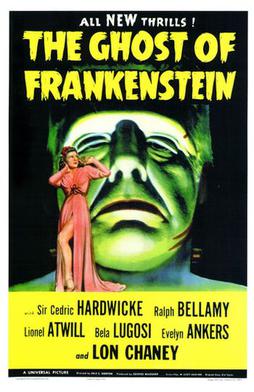
The Ghost of Frankenstein: A Review

THE GHOST OF FRANKENSTEIN

Some people simply refuse to learn. One would think that after the disasters that the Frankenstein family patriarch had, his sons would have stopped. One would think that if one of the Frankenstein sons had similarly failed when it came to the Monster. Alas, the Frankenstein family keeps to the definition of insanity. The Ghost of Frankenstein has yet another Frankenstein family member trying to correct what came before. Like before, the results are disastrous. However, The Ghost of Frankenstein is still an entertaining film.

Baron Wolf von Frankenstein's crazed henchman Ygor (Bela Lugosi) lives. He survived the destruction of Castle Frankenstein by the enraged villagers. Surprisingly, so did the Monster (Lon Chaney, Jr.). Ygor is now set to bring back the Monster to full power. For that, he goes to see another Frankenstein.

That would be Ludwig (Sir Cedric Hardwicke). Ludwig is Henry Frankenstein's second son. He also has followed in his father and brother's footsteps into the medical field. Ludwig has successfully managed brain transplants. He is aided by Dr. Theodore Bohmer (Lionel Atwill). Bohmer is deeply resentful that he was once the teacher but now is the student. 

Ludwig is a good man who has disowned his father's work. His daughter Elsa (Evelyn Ankers) is engaged to town prosecutor Erik Ernst (Ralph Bellamy). Ernst and his fellow Visaria citizens are horrified at reports of a rampaging giant in town. The Monster shows a bit of a dual personality here. On one hand, he tenderly protects a small girl and helps to get her ball off a roof. On the other, he tosses two men who tried to get in his way. Now captured, the Monster is enraged at the name "Frankenstein". Ygor is not. 

Ygor pushes Ludwig to restore the Monster in body and mind. Ludwig is at first reluctant. However, he thinks that he can correct his father and brother's mistakes. Ludwig opts to give the Monster the brain of his former assistant, whom the Monster has killed. With both a brilliant mind and a moral nature, the Monster can become what Frankenstein pere always dreamt of. 

Ludwig, however, is unaware that Ygor has decided to take the Monster's place. Ygor now pushes Bohmer to transfer Ygor's brain into the Monster. This ultimately has disastrous results for all concerned. Ygor ends up blind and consumed by the flames. Will anyone survive being haunted by The Ghost of Frankenstein?

I think that The Ghost of Frankenstein is a good follow-up to what has come before. The film manages to stay close to the previous Frankenstein films. We even get a flashback sequence featuring footage from the original 1931 Frankenstein as Elsa reads from her grandfather's journals. Director Erle C. Kenton and screenwriter W. Scott Darling (from an original story by Eric Taylor) even managed to reedit the Chaney Frankenstein in as good an effort to integrate this to what had come before.

In another interesting bit, Sir Cedric Hardwicke played both Ludwig and his father Henry in a brief scene. 

Hardwicke does an excellent job in The Ghost of Frankenstein. He plays the role seriously, making Ludwig into a decent and moral man motivated by good intentions. Hardwicke shows tenderness and affection when he is with Elsa. If he does go a bit over-the-top, I would say that happens at the end. Hearing Ygor's voice come out of the Monster, Ludwig realizes that he has been duped. As always, the Frankenstein men learn too late of the dangers of trying to correct what has gone on before. 

As a side note, I do not know if the curious pattern of those Frankenstein men repeatedly trying something that has led to ruin is some kind of theme through these films.

As good as Cedric Hardwicke is, it is Bela Lugosi who continues to dominate as the wicked Ygor. Lugosi is so wonderful in his wickedness. He plays Ygor as a man who knows that he always has the upper hand. He badgers Ludwig. He is barely respectful towards Elsa. He delights in manipulating Bohmer. What is brilliant about Lugosi's performance is that, like Hardwicke, he plays all this seriously. There is never the slightest sense of camp or winking at the camera. Bela Lugosi makes Ygor a bigger and crueler monster than the Monster himself. 

The Ghost of Frankenstein is the first Frankenstein film not to have Boris Karloff in the role. Lon Chaney, Jr. was best known as the Wolf Man, another of Universal Films' Monsters. Here, I think Chaney did a good job as the Monster. He showed a good rapport with Cloestine Hoffman (Janet Ann Gallow), the child that he first protects and then is manipulated to abduct. He is menacing when confronting his jailers and later, Ludwig. 

The curious thing here is that in a sense, two actors are playing Frankenstein's Monster. Lon Chaney, Jr. is the physical representation until Ygor's brain is transplanted into the Monster's body. At the end, the Monster ends up blind due to the blood types not integrating. As such, Chaney has to start stumbling about. In the future, the idea of Frankenstein's Monster being a stumbling, shuffling character with outstretched arms would take hold. While I would say that it did not come from The Ghost of Frankenstein, in a sense this was the genesis of that image. 


Lionel Atwill makes a return appearance in a Frankenstein film. Here, his Dr. Bohmer is appropriately imperious and bitter. Atwill, curiously, would be the actor to be in more Frankenstein-related films than either Boris Karloff or Lugosi. He would be in five Frankenstein films starting from Son of Frankenstein to House of Dracula (which technically is a Frankenstein film). Each time, he would play a different character. In The Ghost of Frankenstein, Atwill manages to hold his own against both Hardwicke and Lugosi. That both of them gave strong to standout performances, such a thing is no small accomplishment.

Atwill, for good or ill, however, was veering at times towards camp. He was not deliberately playing things as camp. Everyone in The Ghost of Frankenstein was playing things straight. That being said, Atwill did come across as slightly silly. Some of that, to be fair, can be put down to his dialogue. "You weave a pretty fairy tale, crooked neck", Bohmer tells Ygor. The line itself is amusing. Atwill's almost staccato delivery of such a line makes it oddly albeit unintentionally hilarious.

Truth be told, I did not think much of Evelyn Ankers and Ralph Bellamy as Elsa Frankenstein and Erik Ernest. Their love story was pretty much nonexistent. They just seemed to be there. 

The Ghost of Frankenstein seems an apt title. This would be the final Universal Frankenstein film where our man-made monster would be the sole monster. Future films would involve team-ups with various other ghouls. As it stands, The Ghost of Frankenstein keeps to this franchise's efforts to make good, entertaining films with this monster. 

Monday, May 4, 2026

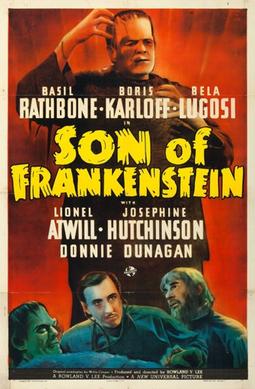
Son of Frankenstein: A Review (Review #2155)


SON OF FRANKENSTEIN

Bela Lugosi was originally meant to play Frankenstein's Monster in Frankenstein. Unhappy with the initial script, he turned down the role. Boris Karloff was cast, launching his career. Lugosi, however, would get a chance at appearing in a Frankenstein film with Son of Frankenstein. Lugosi stole the movie from everyone else, as Son of Frankenstein is a strong follow-up in this franchise.

Baron Wolf von Frankenstein (Basil Rathbone) returns to his ancestral home with his wife Elsa (Josephine Hutchinson) and son Peter (Donnie Donagan). He wants to redeem the Frankenstein family name. Easier said than done, as the village has yet to forgive the Frankenstein family for unleashing the Monster on them. The local police chief, Inspector Krogh (Lionel Atwill) attempts to keep the peace between the Baron's family and the local community. Krogh has a mechanical arm owing to his encounter with the Monster. However, he harbors no ill will towards the Frankenstein family.

Someone who does harbor ill will towards the villagers is Ygor (Bela Lugosi). He was a blacksmith who somehow survived his public hanging. Ygor has lived in the Castle Frankenstein ruins and has a surprise for the Baron. It is none other than Frankenstein's Monster (Boris Karloff). He is neither dead nor alive. Wolf believes that he can correct his father's mistakes and make the Monster into a creature for good.

As it turns out, this blows up in the Baron's face. Ygor is eager for revenge against those who hung him. Now with the Monster active, Ygor makes him his personal hitman. Krogh suspects that the Monster has returned. He also is aware that the villagers will attempt to take matters into their own hands against the Baron. The Frankenstein family is not safe. Will the Baron be able to stop both Ygor and his late father's Monster?

Son of Frankenstein manages to be a logical sequel to this unexpected franchise. Willis Cooper's screenplay even manages to be a bit meta with the material. Early on, Wolf comments that nine out of ten people call the Creature by the family name. It's a wry, though perhaps unintended, comment on how people call the Monster "Frankenstein" when technically it is not the Monster's name. 

The film also manages to be clever at times. "We came to meet you, not to greet you", one of the villagers tells the Baron when the Frankensteins return to their ancestral land. Late in Son of Frankenstein, Ygor is asked about the Frankenstein family butler Benson (Edgar Norton). Benson has disappeared and the Baron is worried that he will talk. "No, he'll never tell," Ygor tells him with regards to "Benson man". It is a menacing line, delivered by Lugosi with a mix of dark humor and eeriness.

It is made more menacing through Bela Lugosi's performance. Son of Frankenstein is probably Lugosi's finest hour as an actor outside his iconic turn in Dracula. Lugosi as Ygor is menacing and dangerous. Moreover, he shows Ygor to be ruthless and even a bit shady. The villagers know that Ygor is alive. However, as they have already hung him for murder, they cannot hang him again. When brought before the village council, Ygor coughs on them. Apparently, it is accidental. A case can be made that he did not intend to literally cough on his adversaries. However, Rowland V. Lee's directing is subtle enough to show that Ygor might be using his unique position to literally spit on his executioners. 

Lugosi makes Ygor into this quietly menacing figure. He is someone who will stop at nothing to get his revenge. Looking at Son of Frankenstein now, I imagine that some people will find Ygor and Inspector Krogh funny. More than likely, this is due to how Young Frankenstein took elements from Son of Frankenstein for its affectionate send-up of the Universal horror films. Ygor, for example, plays a horn. The horn playing is, like most of Lugosi's performance, menacing and creepy. Now, however, it looks like merriment.

Worse so is Lionel Atwill's Inspector Krogh. It is a film history curiosity that, technically, Atwill is perhaps the most prominent actor in the Universal Frankenstein series. This is the first of five consecutive appearances that Atwill will make in a Frankenstein film. Young Frankenstein spoofs Krogh with the similarly one-armed Inspector Kemp. Atwill's efforts to be very Prussian in manner led him and director Lee to make Krogh move his prosthetic arm in very sharp moments. They even have the creaking sound. I think that even without Young Frankenstein, Inspector Krogh would elicit chuckles.

Bless Lionel Atwill for balancing the silly and serious of his character. He plays Inspector Krogh straight. He is an efficient but stiff police inspector (no pun intended). However, it is that straightforward manner that makes Krogh unintentionally amusing. At the film's climax, poor Krogh's arm is ripped off by the Monster. Somehow, it is not meant to be funny. Somehow, it ended up as such. When offered liquor at a tense showdown with the Baron, he declines. Inspector Krogh declares, "You forget! I have my hat on!". Again, I figure that this line was not meant to be funny. It is not played as funny. However, it did make me laugh out loud. It is the line and Atwill's line delivery that makes it so. 

Son of Frankenstein has a very strong performance from the title character. Basil Rathbone was a versatile actor, able to play both heroes and villains. Here, he was a bit of both. Baron Wolf was not a bad man. He loved his wife and son. He was motivated by genuinely good intentions of restoring the Frankenstein family name. He even went into reviving his father's creation with the hope of showing the positive intentions behind the creation. Baron Wolf von Frankenstein, however, would be the first of many to learn that the road to hell is paved with good intentions. While he ultimately is heroic, Rathbone does show that he is slightly less menacing than the mad, psychotic Ygor. 


Unfortunately, lost in all this is Boris Karloff as the Monster. Son of Frankenstein would be the last time that Karloff would play the Monster. It would not be the last time that he appeared in a Frankenstein film, however. Karloff was pretty much forgotten in Son of Frankenstein. Bela Lugosi so dominates the film that the Monster has very little to do. He is, sadly, a plot device. He is mute and just lumbers about. To be fair, the Monster does show emotion when Ygor meets his maker. He also does well when struggling to eliminate the Frankenstein family name. However, for the most part, the Monster is just there. One can see why Boris Karloff opted out of appearing as the Monster for future Frankenstein films.

Josephine Hutchinson as the Baroness was not particularly great. She was serviceable. However, she did come across as slightly dim. 

Son of Frankenstein has vaguely Expressionistic scenery. Frank Skinner's score also adds to the overall quality of the film. Son of Frankenstein may not be held alongside its two predecessors. However, as a film, Son of Frankenstein is a strong and entertaining film. It should be seen just for Bela Lugosi's magnificent turn as one the franchise's greatest villains. 

The Son of Frankenstein also rises. 

DECISION: B+ 

UNIVERSAL FRANKENSTEIN FILMS

Frankenstein (1931)

The Bride of Frankenstein

The Ghost of Frankenstein

Frankenstein Meets the Wolf Man

House of Frankenstein

House of Dracula

Abbott and Costello Meet Frankenstein