Tuesday, April 28, 2026

Michael (2026): A Review (Review #2153)

MICHAEL (2026)

How much do you require in your biopic? Do you require that it explore the artist's life and person struggles as they achieve their artistic triumphs? Do you prefer instead to have a montage of that artist's greatest hits, recreated with as much accuracy as possible? If you prefer the former, you can skip Michael, the biopic of the late Michael Jackson. If you prefer the latter, you should rush to Michael, the jukebox musical of the late Michael Jackson. Michael does well when we see and hear Jackson's music. Michael does nothing when it comes to everything else. 

Covering the years 1966 to 1988, Michael chronicles the rise and rise of Michael Jackson (played as an adult by Jackson's nephew, Jafaar Jackson). As a child in Gary, Indiana, Michael (Juliano Valdi) is the youngest of the musical group that Jackson patriarch Joseph (Coleman Domingo) is shaping and pushing to his will. He is determined that his five boys will succeed as The Jackson Five. Jackson matriarch Katherine (Nia Long) mostly looks on, though as Michael grows up, they do enjoy watching classic movies together.

The Jackson Five soon attract the attention of Motown Records. They eventually work with Motown's legendary founder, Barry Gordy (Larenz Tate). Gordy, unlike Joseph (the children always call their father by his first name) actually takes time to show Michael kindness. Eventually, Michael wants to make his first solo album, Off the Wall. Joseph agrees, so long as Michael does it on his off time and not when he's with the Jackson Five. Michael also gets a nose job and his beloved pet chimpanzee, Bubbles. 

He also gets a new lawyer. John Branca (Miles Teller) is able to do just about everything for Michael. Branca's top task? Fire Joseph. It came at the most opportune time, as Joseph was conspiring with none other than boxing promoter Don King (Deon Cole) to get the Jackson Five on a Pepsi-sponsored tour. Negotiations finally get Michael to join his brothers on this tour and to promote Pepsi. A botched commercial does cause massive injury to Michael's head when his hair catches on fire. Despite this and the surgeries required to repair the damage, Michael goes on to make the Thriller video and perform Bad for his own solo tour. At the end of Michael, we see His Story Continues.


I cannot say whether the on-screen text of "His Story Continues" is a message that there will be a sequel or a more metaphorical suggestion. I cannot say whether or not "His Story Continues" is or was intended to be a pun on Jackson's HIStory double album. I can say this: Michael, as a movie, offers the viewer no insight into what kind of person Michael Jackson was. I think the most daring or revelatory moment in Michael about Michael Jackson was when we see him go to Studio 54. John Logan's screenplay, however, does not clarify if Jackson's foray into the disco club is for himself or to hear Rock with You playing at the club. 

Michael does not, contrary to what I have heard others say, "play it safe" when it comes to Jackson. Michael does not play it anything. Michael, as we have it now, is just a series of musical montages interrupted by occasional moments of drama. More often than not, the non-musical moments are very positive towards Jackson. He happily signs autographs both at meet-and-greet events and when casually shopping at toy stores. He insists that Branca donate every penny from the settlement over the Pepsi commercial accident to the burn center. Jackson has previously visited children in hospitals.

It is a case of "think of the children!".

While watching, one frankly is unsure whether to stare in astonishment or laugh as Michael Jackson reads Peter Pan to Bubbles the chimp. It is almost verging on parody to have young Michael read Peter Pan voraciously. Logan's screenplay is not subtle in its symbolism. 

Where Michael goes well is when it recreates Jackson's various musical moments. This is not just relegated to the adult Jackson. Director Antoine Fuqua does a wonderful job when we see the Jackson Five sections. Major credit to that goes to young Juliano Valdi. He is sweet and charming as young Michael. He is also able to recreate the young Michael Jackson's movements as he does his best James Brown and Fred Astaire dancing. Presuming that it is Valdi doing the singing, he does an exceptional job singing the early Jackson Five hits like ABC and I'll Be There.  

Once Jackson becomes a young adult, the musical performances continue to be Michael's highlights. Jafaar Jackson is the son of Michael's brother Jermaine. Jafaar was only twelve when his Uncle Michael died. Now at 29, Jafaar does an excellent job as his legendary relative. The musical moments are when Jafaar Jackson excels. The dancing, particularly when recreating Thriller or the Motown 25th Anniversary special, is fun to watch. It would be difficult to not move when the various hits are playing. It is also a credit to Jafaar Jackson on how well he captured his late uncle's musical skills.

The few times that Michael bothers to try for something other than adoring glances Jafaar Jackson does rise to the occasion. It is thanks to his performance that the aforementioned "Michael reads Bubbles a bedtime story" does not slip into total farce.

That dishonor goes to Coleman Domingo as Joseph Jackson. Domingo looks more like Little Richard to where one briefly thinks that the Tutti Frutti singer is taking his belt to Michael. Other actors are pretty much wasted in their roles. Nia Long spent all her time merely looking on or watching a movie with Michael as his mother Katherine. Her one big and, granted, good moment was when she told Joseph that he was not going to beat Michael anymore. Miles Teller is an actor that I think has never reached his full potential. His role as John Branca felt like nothing. Even worse is Laurenz Tate as Barry Gordy. Michael tries to have some drama here, but Tate was given little to do. It is a terrible waste and a terrible shame for Tate and Michael

The shallowness of Michael when it comes to finding who Jackson was is best shown when the film recreates the Thriller video. There were stabs at trying to showcase the artist. Jackson asks that Thriller director John Landis capture the whole body during the dancing because that was what Fred Astaire often said about film dancing. The recreation of Thriller is top-notch. 

However, there was no mention of how Jackson asked that a disclaimer be placed at the beginning of the video. Jackson at the time was a Jehovah's Witness. The video's supernatural elements were so distasteful to the group that he was threatened with excommunication. To keep the video from being destroyed, Branca managed to add a disclaimer stating, "Due to my strong personal convictions, I wish to stress that this film in no way endorses a belief in the occult". 

Michael could have explored this conflict. Michael could have shown Jackson shocked at his religious group's reaction. Michael could have shown how this conflict could have destroyed one of if not the greatest music video ever made. Michael never touched on any of this. 

If you like Michael Jackson's music and want to see a de facto Michael Jackson cosplay, go see Michael. If you want to know who Michael Jackson was or what drove him as a person or artist, don't go see Michael

Ultimately, I think it would be easier and cheaper to rewatch either or both the television miniseries The Jacksons: An American Dream or the musical documentary Michael Jackson's This Is It if you wanted to see the real Michael Jackson as both a performer and person. 

1958-2009


Tuesday, April 21, 2026

Kitty Foyle: A Review

KITTY FOYLE

There are some films that are for all time. There are other films that are of their time. Kitty Foyle falls squarely in the latter category. Now best remembered, if at all, for winning Ginger Rogers a Best Actress Academy Award, Kitty Foyle suffers from its now dated manner and some very questionable plot points. However, it does have a strong central performance and is an interesting time capsule of World War II America.

Billed as "the natural history of a woman", Kitty Foyle begins with a five-minute overview of who we got what the film calls the "white-collar girl". This new woman came about after she got the vote. Now that men and women were equal, there was no need for men to give up their seats to any female. We then get to the main plot.

Kitty Foyle (Rogers) has gotten the best news around. Her boyfriend Mark (James Craig) has just asked her to marry him. Despite being a doctor, Mark is poor. Mark asks her if it is all over between her and the man from Philadelphia. Kitty says yes, as that mysterious Philadelphian is married and with a child. With that, Mark tells Kitty to meet him at the hospital at midnight.

Ah, but Kitty did not count on that Philadelphia freedom sweeping back into her life. Like a very wealthy bad penny, her Pennsylvania paramour surprises her at her women's hotel. He is Wyn Strafford VI (Dennis Morgan). He may be married. He may have a young son. He is also still passionate about Kitty. He now asks her to run away with him to Argentina. Wyn is planning to leave his wife and child and begs Kitty to go with him. Despite her promise to Mark, she agrees.

Now, she has a literal talk with herself via a mirror. We then slip into the long flashback in Kitty Foyle to see how she got into this predicament. Kitty has always looked upon the Philadelphia elite with not-so-secret longing. Her father or Pop (Ernest Cossart) tells her that Cinderella stories are illogical. However, handsome prince charming Wynnewood Strafford VI happens to come along. She likes him and he likes her, but they have a mostly platonic relationship. Wyn won't propose and his magazine has fallen to the Great Depression. With no proposal, no job and Pop dying suddenly, Kitty starts fresh in New York City.

She might have left the City of Brotherly Love, but her heart still belongs to Wyn. Kitty is a hit at a high-end perfume shop, but she still has a lot to learn. A false fire alarm caused by Kitty brings her into contact with Mark. He is poor. He is a bit absurd. He eventually wins Kitty over. However, all Wyn has to do is come up for Kitty to fall to pieces into his arms again.  

Despite all common sense, Wyn and Kitty marry. The Straffords attempt to accept this, but it is clear that their class differences will be too hard to overcome. There is divorce, then the loss of any chance of a reconciliation. There is more loss for Kitty, but which man will she choose?

After watching Kitty Foyle, I thought early on that she was a dolt. I also thought that she was rather horrible on a variety of levels. She has a good man in Mark yet is willing to abandon him with apparently no hesitation because Wyn sweeps in at almost the last minute. Add to that how Wyn would spirit Kitty off to Buenos Aires to be his mistress or at least his floozy until his second divorce is final. I cannot remember for sure, but I think that Wyn was not going to tell his wife and child that he planned on leaving them for Kitty. He was, if memory serves right, going to Argentina anyway. He was not, if memory serves right, making his abandonment official until he got to South America.

That Kitty Foyle seriously contemplated all this is something that I find very troubling. Up to a point, I understand how someone could be so deeply in love with someone that they lose all common sense to be with them. However, that notion of weak-kneed devotion seems at odds with Kitty Foyle's "strong, empowered woman" message. She is willing to have a child outside of marriage. She is even willing to have the child carry her maiden name.

This is all surprisingly daring stuff for 1940. The film does make clear how she could have an out-of-wedlock child (she got pregnant during her brief marriage). It even shows how she was mistakenly called "Mrs. Foyle", leading to having her son carry the Foyle and not Strafford name. Kitty Foyle shows that Kitty discovered that Wyn was engaged to marry someone of his own class, preventing a reconciliation or awareness that he would be a father. Nevertheless, I still found a lot of that a bit too much to accept.

Kitty Foyle has a major disadvantage of it being a product of its time. Kitty mentions that Wyn sounds a lot like Ronald Colman. They celebrate then-Governor Franklin D. Roosevelt's election to the Presidency and the end of Prohibition. Most cringeworthy of all, Rogers' Kitty at one point exclaims, "I'm free, white and twenty-one...or almost". I genuinely did not know that such a phrase was real. 

In a way, it is nice that such things are shown in films like Kitty Foyle. It allows one a chance to see how far we've come. It is a bit of a time capsule of early 1940's America. However, how many contemporary viewers would know who Ronald Colman was, let alone whether Wyn was doing a good or bad impersonation of him? 

Kitty Foyle was something of a breakout role for Ginger Rogers. She had been a hoofer for years. Her work with Fred Astaire had made her beloved by audiences. Here, she was able to show her dramatic chops. She did well in the role. Rogers showed flair for comedy, such as when she fakes a fainting spell to try and get out of trouble. She also gets to act against herself when having a conversation with her reflection. This was a well-shot element from director Sam Wood. I did think that the voiceovers she had on the various flashbacks were a bit too much. I also thought that her confrontation with the other Staffords was a bit forced too. It was not terrible, but it was showier than I would think good.

However, Rogers also has some wonderful moments where Kitty shows regrets about things. A tender moment is when she encounters the new Mrs. Wyn Strafford VI and their son, Wyn Strafford VII. She will not tell her customer her name. She won't share that with the child either. However, we see a mix of genuine pain at seeing the young child. She knows that her own son would be about his age. Early on, Wyn comments on Kitty's legs. You can see in Ginger Rogers' performance that she is both amused and unamused at his comments.

It is unfortunate that the rest of the cast save Ernest Cossart as Pop matched Rogers. Dennis Morgan frankly came across as creepy. His Wyn was outwardly pleasant. However, one always sensed that the man had no spine. I figure that was the character, which meant that Morgan played the part correctly. However, Morgan never convinced me that he was truly in love with Kitty. He struck me as someone who wanted her but did not value her. 


In a curious twist, James Craig's Mark was the opposite. He was handsome enough. He also came across as someone who valued her but did not want her. Mark was from the get-go the best choice for Kitty. He was a doctor, albeit a poor one. He, after a bad start, did win her over. Why she kept rushing back to the creepy, somewhat dim Wyn is something that I cannot figure. Craig as Mark, however, never expressed romantic ardor for Kitty. He seemed to play Mark as someone who considered Kitty a bit of a chum. It is one thing to wonder why Kitty wants Wyn to where she, to use modern parlance, ghosted Mark. It is another thing to wonder why Mark put up with her picking him up and dropping him without a moment's hesitation.

Kitty Foyle was a big hit when released. It makes sense. It was a product of its time starring a very popular performer. It is not a bad film. It is, however, dated to where it is almost an antique. Less remembered than her pairing with Fred Astaire, Kitty Foyle shows Ginger Rogers' range but little else.    

Monday, April 20, 2026

The Heart is a Lonely Hunter: A Review

THE HEART IS A LONELY HUNTER

The pain of the silent heart is explored in The Heart is a Lonely Hunter. This adaptation of Carson McCullers' novel is steady and moving if at times a bit overacted by the most unlikely source. 

John Singer (Alan Arkin) is a deaf-mute jeweler in the South. His BFF, Spiros Antonapoulos (Chuck McCann) is like him a deaf-mute. Unlike Singer, Antonapoulos is rather childlike in his manner. He will wander around town at night and break bakery windows to get at the food. Antonapoulos' cousin cannot take his relative's latest brush with the law and sends him to a mental hospital. John wants to be closer to him and be his official caretaker. With that, he sets off to another Southern town to live near his bestie.

Singer takes the spare room of the Kelly home. That room was once for the Kelly's oldest child, daughter Margaret, better known as Mick (Sondra Locke). She is unhappy to have a boarder take her room. However, her father Robert (Biff McGuire) is still recovering from hip surgery, and the family needs the money. Singer soon becomes someone that Mick can trust. She yearns for a better, classier life and Singer gives her Mozart recordings, a composer that she loves.

Mick is the first of many people whom Singer touches. There is drunk, disillusioned veteran Blount (Stacy Keach, billed as Stacy Keach, Jr.). He initially mistakes Singer's silence for intense listening. A drunken bout from Blount has both cross paths with Dr. Copeland (Percy Rodriguez). He initially balks at treating Blount as he steadfastly refuses to treat white patients. However, Dr. Copeland will forgo attending to someone "not of his kind" by calling it "emergency treatment". This encounter is fortuitous for Copeland, as he has a deaf-mute patient. The somewhat good doctor swallows his pride and asks Singer to help translate to his deaf-mute patient (Singer can write and read lips).

Copeland has his own problems. His daughter Portia (Cicely Tyson) has married a poor man and become a maid rather than follow in his footsteps. He is also dying of cancer. Blount has a new lease on life when he finds a job as a carnival ride operator. Copeland warms up to Singer. Even Mick starts coming around to this silent and caring man. Mick also starts coming into her own. She even has a pinup of Leonard Bernstein on her wall. She also finally gets to host a party for her classmates despite her mother's (Laurinda Bennett) misgivings. Here, she meets Harry (Wayne Smith), her frenemy's older brother. 

A shocking act of violence ties Copeland and Blount. Portia grows angrier at her father as does Mick at her parents over the Kelly's dire financial situation. Singer finds Antonapoulos hard to handle on their first outing. As the summer comes to a close, not everyone will survive. For those left behind, only with absence do they see how important John Singer was.

The Heart is a Lonely Hunter has some problems. At a little over two hours long, it feels a bit longer than it should. Some things seem to be forgotten. Early in the film, Mr. Kelly is seen working on a watch to make a little extra money. We know that Singer is a jeweler who specializes in watches. The sign outside the Kelly home also notes that they have fast watch battery services. Yet, we never see anyone working on watches after Singer arrives. Singer is never shown working or even going to or from a jewelry store. It strikes me as odd that Mr. Kelly or Mr. Singer never dealt with watches again.

The subplot involving the Copelands was also curious. Granted, the white woman whose blouse was torn could have or should have said that she fell. The men with her should have seen the fall. In this case, I think the resulting brawl happened because the plot required it to. Here, oddly, is where I think we got a bad performance.


Cicely Tyson was one of our great actresses. However, her performance as Portia seemed a bit exaggerated, almost silly in her rage. Her drunken reproach to her father about his refusal to perjure himself had me smiling and close to chuckling. I do not think that was the intention. I did not understand why Portia thought her strict father would be willing to commit perjury, especially given that witnesses would know that he was not present when Willie was attacked or stabbed someone.

As a side note, The Heart is a Lonely Hunter has an issue whenever someone is supposed to be drunk. Both Tyson and Stacy Keach looked exaggerated when they were meant to be boozing it up. I do not know if director Robert Ellis Miller could not get his actors to play their roles with more realism or not. I do know that the end results from some of the cast looked forced.

That is not the case, however, with everyone. Both Alan Arkin and Sondra Locke received Oscar nominations for Lead Actor and Supporting Actress for The Heart is a Lonely Hunter. Both of them were warranted. Arkin is a curious case in that a lot of his performance is passive. I trust that his American Sign Language was accurate as there is no way of knowing for someone not versed in ASL. I think that, like the characters in the film, the audience reads whatever it reads into the film in Arkin's performance. It is almost an hour before we see any suggestion that Singer has emotions. Arkin communicates what he does with his face and eyes. Sometimes, though, we see his world in unusual ways. At one point, Singer joins Mick in conducting a Mozart recording. He continues doing so after the record ends, unaware that the music stopped.

Sondra Locke in her film debut was excellent as the tomboyish Mick. Locke was older in real life than her character (she was older than her on-screen boyfriend even though he was supposed to be at least two years older). Despite this, Locke communicated her longing for a better life. She is moving when comforting her beloved Poppa or struggling with Momma. Locke also has a surprisingly amusing manner when dealing with Mick's pesky brothers. They, along with their friend, were horrid to crash her party with fireworks. Her rage and efforts to be "the adult" among her peers is both amusing and moving. 

She is also surprisingly gentle when with Wayne Smith's Harry. Their romance is soft and slow. Even their eventual consummation is handled with surprising restraint. 

It is the rest of the cast that seems at times to struggle with Thomas C. Ryan's screenplay. As mentioned, both Keach and Tyson seem a bit exaggerated for things. Percy Rodriguez was somewhere in the middle. His Dr. Copeland seemed a bit too much when playing the rigid, somewhat prejudiced person. Sometimes, though, he was also moving. There is the scene where he reveals his cancer diagnosis. 

The Heart is a Lonely Hunter explores these disparate lives through the eyes of a man who cannot speak. With strong performances from Alan Arkin and Sondra Locke, it is worth viewing.     

Friday, April 17, 2026

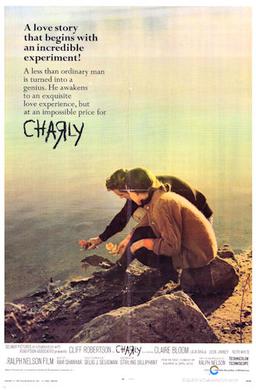
Charly: A Review (Review #2150)

CHARLY

I remember reading Flowers for Algernon, which Charly is based on. I do not remember much about Flowers for Algernon, except that I was sad at the end. That was not how I finished Charly. I finished the film slightly confused over how the third act went. Charly is not a terrible adaptation. It is a dated one that goes off the rails by the end.

Charly Gordon (Cliff Robertson) has an IQ of 70. He makes many efforts to improve his cognitive skills but still struggles with things. Charly has a job as a janitor at a bakery. His "friends" are terribly abusive, routinely mocking him and setting him up for ridicule.

Good fortune might have finally come Charly's way. Alice Kinnian (Claire Bloom) has been teaching Charly with her regular ESL class. Kinnian is also affiliated with two doctors working on a major project. Dr. Anna Straus (Lilia Skala) and Dr. Richard Nemur (Leon Janney) both believe that they can increase intelligence in people after successful tests with lab mice. With some convincing from Alice, Charly is ultimately chosen.

The way to measure Charly's growth is to have races with the primary lab rat named Algernon. Algernon and Charly must both go through a maze (the former physically, the latter on a paper map). Algernon has repeatedly won these races until he starts not to. It is the first sign that Charly is becoming brighter. He shows his bakery bullies that he can handle the complicated machinery. He starts painting and reading both literary and scientific books.

He also starts developing sexual designs on Alice Kinnian. Dr. Nemur has been pushing Charly's intellect too fast. Dr. Straus all but begs him to let Charly's emotional intelligence grow. Charly is intellectually bright but emotionally immature if not downright disturbed. This culminates in Charly attempting to sexually assault Kinnian. He goes full-on rebel, hitting the clubs and riding in a motorbike.

For reasons I simply do not understand, Alice dumps her fiancée to go and be with her attacker. They fall in love, in bed, and in cahoots. Dr. Nemur and Dr. Straus are ready to present Charly Gordon and Algernon to the world. Unfortunately, their fellow scientist Bert (Dick Van Patten, billed as Richard) sees what they do not. The formerly successful mice are regressing to their original state. Also, Algernon is dead. Charly realizes that he too will revert to his own state. He at first applies his intelligence to solving the problem. Alas, he cannot and he ends up where he began: playing with a group of children in a playground while wearing a suit.

By now the idea that someone can win an Oscar for playing a disabled character is almost cliché. It is seen by Academy members as some kind of acting feat. Perhaps that is why Charly won Cliff Robertson the Best Actor Oscar despite being Charly's sole nomination. I cannot say whether Charly began the trend of somewhat showy performances being so-called Oscar bait. 

I can say that as a film, Charly mostly works for the first two thirds of it. The film shows us Charly's world in a steady and non-sensational manner. There is almost a documentary-like manner to how director Ralph Nelson eschews using a lot of music. There is some which was written by Ravi Shankar which is quite lovely. However, a lot of the early part of Charly focuses more on how Charly is treated by others. The film tells you a lot about Charly Gordon without dialogue. The film opens with this grown man in a suit happily sliding down a slide and going around the merry-go-round. Without saying anything, it is quickly established that this man is mentally a child.

Charly comes apart completely after he violently attacks Kinnian. It was already slipping off with some odd choices. Why exactly Algernon was left with Charly at his apartment the film never explains. How his abusers at the bakery failed to see that Charly moved with more confidence and spoke better is similarly unexplained. However, once he attempted to force himself on Kinnian, Charly never recovered. 


Nelson made a bizarre choice to show Charly's rebellion by having be a biker hippie or hippie biker. The montage that shows Charly's wild living is unintentionally hilarious. It is about the fourth of five split-screen sequences in Charly. The split-scene sequences where we see two people simultaneously might have worked once. Its first use when we see the intelligence test from both Kinnian and Charly's point of view works. However, like a cheap magic act that grows stale, its overuse was a wild mistake.

Not as wild as seeing the rebellious Mr. Gordon's montage. He looked almost deliberately comic, as if it was clear that no one was taking this seriously. Looking at it from a distance of almost sixty years, Charly's rumspringa looks like the squarest event in history. No number of split screens, however, could make the Charly/Anne romance look remotely plausible. This man had attempted to force himself on her earlier; yet, after his return, are we supposed to believe that she willingly if not eagerly goes to bed with him? The forced romance in Charly never works. That said romance is expressed via voiceovers from Cliff Robertson and Claire Bloom does not help sell the believability of it.

This was a passion project for Robertson. He had played Charly Gordon on television. He had bought the rights to the story. He had hired a screenwriter to adapt Flowers for Algernon and its television version The Two Worlds of Charly Gordon for film. Robertson later fired that first writer (future Oscar winning screenwriter William Goldman) and got Stirling Silliphant to adapt the story. Sometimes, too much passion can be a bad thing.

Cliff Robertson should have known the character inside and out by now. However, while watching Charly, I never shook the feeling that he was acting and not being. There seemed to be a bit too much focus on the technical elements to show Charly's initial mental impairment. In an odd criticism, I think Robertson was thinking too much on how to show that he was intellectually disabled. His efforts to come across as mentally challenged was rather calculated. Of particular note is when his supposed friends pull another mean prank on him at the bakery. They had stuffed dough into his locker. I think that anyone regardless of mental capacity would have been hurt or enraged at this affront. Charly seems openly delighted and amused. I get what Charly and Charly were going for. I just did not believe it.

Things did not get any better when he started developing intellectually. Robertson does not show someone amazed at discovering a whole new world of knowledge and possibilities. He shows an average person learning new things. It is when he gets to his hippie/biker era that Cliff Robertson becomes almost embarrassing to watch. His facial expressions came across as deliberately comical. It does not look like a good performance let alone an Oscar-winning win. 


Claire Bloom did slightly better as Kinnian, the teacher who became his lover. I think she is better than the material. I just do not think that she would have fallen in love with Charly. I think the performances of Lilia Skala and Leon Janney were better as the dueling doctors. Skala showed professionalism mixed with some compassion. Janney showed professionalism with no compassion. 

Charly lost its way by the end. That is unfortunate, as until about the midpoint mark the film was serviceable. It was not great but serviceable. It had an interesting story. It had good but not great performances from the cast. Once Charly decided to get at Kinnian, the film never recovered. There are no Flowers for Algernon and no bouquets for Charly.   

Wednesday, April 15, 2026

The Miracle Worker: A Review

THE MIRACLE WORKER

"The light shines in the darkness, and the darkness has not overcome it". This passage from the Gospel of John (John 1:5) might be the theme of The Miracle Worker. This film adaptation of the Broadway play is still a bit stagebound. However, it also has both almost universally excellent performances and a moving true-life story that impacts the viewer.

A sudden but brief childhood illness has robbed little Helen Keller of sight and sound. She cannot see, hear nor speak. Her parents, Confederate Captain Arthur Keller (Victor Jory) and his second wife Kate (Inga Swenson) are doing their best with their daughter. Helen (Patty Duke), however, is a menace. She is a bit of a wild animal, picking food out of their plates and running free. In a mix of desperation and frustration, Captain Keller agrees to contact the Perkins School in Boston for a teacher who might help.

That teacher is Annie Sullivan (Anne Bancroft). She is a feisty Irish lass who is herself a former Perkins student. That Annie is close to blindness herself only adds to Captain Keller's fury and immense dislike for her. He was bound to dislike any Yankee, still being bitter about losing the war. However, his rages are somewhat tempered by both Kate and James (Andrew Prine), his son from an earlier marriage.

Annie senses that there is a mind buried in Helen's dark world. She is also enraged at how Helen is treated by her family. Helen is not abused. Instead, she is coddled, kept almost like an injured pet than a person. It is time for a lot of tough love. That means a fierce battle between the willful, spoiled Helen and the no-nonsense Annie at the breakfast table. Helen will learn to eat at the table, with a spoon, and fold her napkin. 

In all that time, Annie continues to teach Helen American Sign Language by spelling out various objects with her hands. Annie grows frustrated at how Helen cannot or perhaps will not make the connection between the words and the objects. She insists on having two weeks alone with her in a secluded home to teach her. The Kellers reluctantly agree to Annie's request. Will Annie break through Helen's darkness? Will Helen find that words have meanings?


The Miracle Worker brought two of its original Broadway actors to recreate their roles for the film adaptation. Anne Bancroft and Patty Duke were not originally considered for the roles despite their Broadway success. Bancroft had a brief film career before The Miracle Worker, making her debut in Don't Bother to Knock with Marilyn Monroe. However, she had left Hollywood and had not made a film in five years. Patty Duke for her part was at sixteen technically too old to play Helen Keller. Despite those circumstances, both of them eventually won the parts. 

Both are brilliant in their roles. Each received an Academy Award for their intense performances. Anne Bancroft's Annie is loving but also firm in her ideas. We get to see through William Gibson's adaptation of his own play how Annie is a haunted woman. There are shadowy flashbacks that reveal Annie Sullivan's past. There is the loss of her beloved younger brother Jimmy. There is her own struggle with vision impairment. There are her own fears of failure with Helen.

Some of her best scenes, curiously, are not with Duke's Helen. Rather, they are whenever she argues with Helen's parents. Bancroft shows the steely woman behind the dark glasses. Annie knows that Helen has been getting away with murder. Helen is spoiled, spiteful, and used to getting her way. Annie will not let her. Annie, however, also knows that the Kellers' ideas of compassion have done great damage to Helen. She has to fight them as well as fight Helen.

Patty Duke became the youngest competitive acting Oscar winner at the time. Her Best Supporting Actress win came when she was 16. While both Tatum O'Neil and Anna Paquin later won in this category at a younger age, that record is secondary to Duke's performance. Duke has to act with her body and face. Technically, she does have one word of dialogue when she makes a sound that is meant to say "water". Apart from that, Duke relies on her physicality to express Helen Keller's moods and thoughts. We see Helen's immense frustration at wanting to be seen and heard while being physically unable to see, hear and speak. She is willful, stubborn but also deeply pained.

The rest of the cast with one exception is able to match Bancroft and Duke under Arthur Penn's direction. Victor Jory was loud and proud as Captain Keller. He made Captain Keller a man used to being obeyed until he met his match with the stubborn Annie. Andrew Prine had a small role as Helen's half-brother James. However, he left a positive impression as a sarcastic but aware young man. He could dismiss Annie's plans while also challenging Captain Keller to let her finish them.

The one performer whom I think failed was Inga Swenson as Katie Keller. I found her overdramatic to the point of parody. Swenson, to me, looked as if she thought that she was on a stage instead of film production. In her first scene, her hysterics were hysterical. 

The Miracle Worker also played a bit like it was a filmed play. To be fair, the film opened up more with outdoor scenes. However, a lot of the film still holds to its theatrical roots. The film more than makes up for its somewhat stagey manner with almost universally strong performances and Laurence Rosenthal's score.

The Miracle Worker is a showcase for Anne Bancroft and Patty Duke. This story of tough love par excellence will hold the viewers' attention. It is a moving and powerful portrait of two profiles in courage.

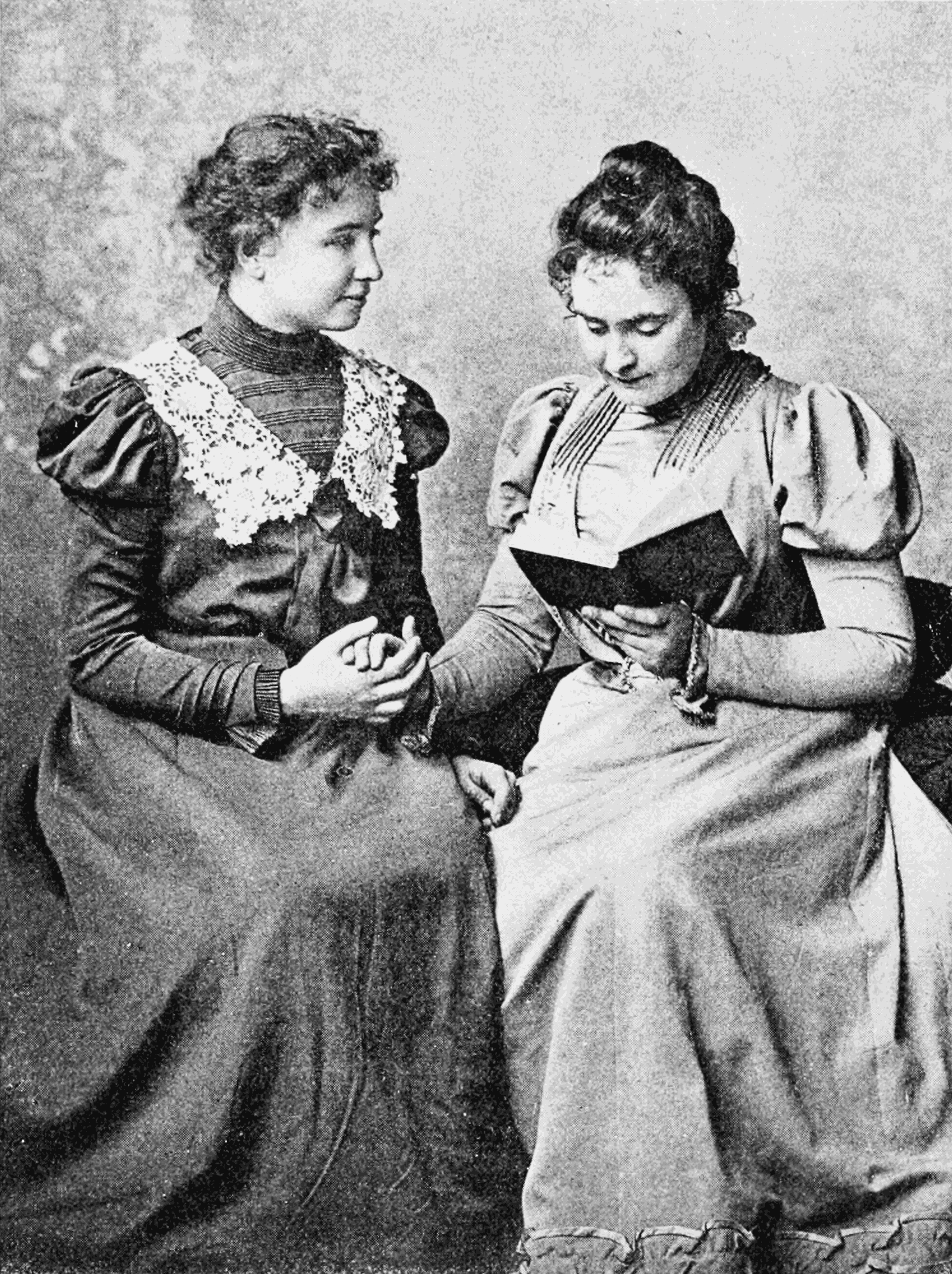
Helen Keller (Left): 1880-1968
Annie Sullivan (Right): 1866-1936


Sunday, April 12, 2026

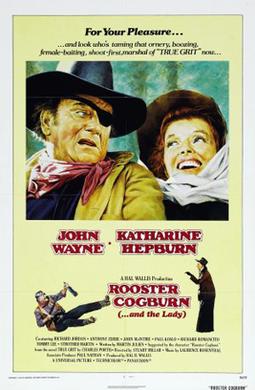
Rooster Cogburn (...and The Lady): A Review

ROOSTER COGBURN (...AND THE LADY)

There was a time when sequels were far less common than they are today. In 1975, we got a new adventure of the wild, drunk, one-eyed fat lawman Rooster Cogburn. The role that won John Wayne the Best Actor Oscar for True Grit found him teamed up with his polar opposite in terms of persona and worldview. Rooster Cogburn, also known as Rooster Cogburn (...and the Lady) is unapologetic about being a lark. Greatly entertaining, better than its reputation may be, Rooster Cogburn and the Lady blends action, romance and comedy well. 

U.S. Marshall Reuben "Rooster" Cogburn (Wayne) is of the "shoot first ask questions later" school of law enforcement. In fairness, his latest set of kills were the results of when the gang that he was tracking shot and killed his deputy. Nevertheless, Rooster's frenemy Judge Parker (John McIntire) orders him to give up his badge. That forced retirement does not last long. Judge Parker needs Cogburn to find the bandit known as Hawk (Richard Jordan). Hawk and his gang have stolen a shipment of nitroglycerin from the U.S. Army, killing its protection squad. They plan to use it for a major train heist. 

With that, Cogburn is authorized to go after them. He figures that the promised posse will not arrive, so he ventures into Indian territory. Here, he finds that Hawk's gang has already attacked Ft. Ruby. Despite its name, Ft. Ruby is now a small mission for Native Americans. Hawk and his men have killed Reverend Goodnight and most of the Natives have fortunately fled. The only people left are the reverend's spinster daughter Eula (Katharine Hepburn) and her Native student, Wolf (Richard Romancito). Eula and Wolf are determined to avenge the killings (Hawk's men having killed Wolf's father as well). Rooster is determined to keep both her and Wolf out of his way.

Nevertheless, she persisted. Forcing herself onto his chase, Rooster contends with this feisty, outspoken Yankee. The dangerous nitroglycerin forces the Hawk gang to move slowly, which helps Rooster and his de facto posse. It becomes a back-and-forth between the Hawk gang and Rooster Cogburn (...and the Lady). As they continue working together, the old codger and the devout sister start warming up to each other. Who will win out between the bandits and the unlikeliest duo in the West?

I think the sight of Katharine Hepburn as a pistol-packing mama is enough to merit watching Rooster Cogburn (...and the Lady). In many ways, the film is a Western version of The African Queen. You have a religious woman teaming up with a drunken man to go after her family's killers. You even have a climactic river rapids scene. Both films have the prickly prim sister and the cantankerous drunk finding, if not romance, at least a surprising amount of admiration between them. There are a few differences between the two. One of the biggest is the inclusion of Wolf, who is almost a surrogate son to both. However, I think that Rooster Cogburn and the Lady is elevated by the chemistry and rapport between John Wayne and Katharine Hepburn.

Both actors are essentially playing their screen personas. They come close to almost spoofing those personas. However, they are both competent enough to not go into parody or farce. Instead, both of them seem to be playful with those personas and with each other. Again, I marvel at how well John Wayne and Katharine Hepburn work together. They in real life were polar opposites. Here though, I think that helps in their characterizations. 

I also think that both showed deep respect and admiration for the other. We see as the film continues how each dislikes elements of their character but not dislike the person themself. Rooster and Eula never shout at each other. They may trade barbs and quips, but they are never nasty one towards the other. This initial bantering allows us to enjoy as both of them soften, even grow protective of the other.

A surprising element in Martha Hyer's screenplay (written under the pen name Martin Julien) is how much comedy it allows Hepburn to play. She is able to trade great putdowns with Cogburn. At one point, he expresses surprise that she can quote General Robert E. Lee (Cogburn having lost his eye fighting for the Confederacy during the Civil War). When he asks what she knows about General Lee, she replies that he was a Christian gentleman...who got whipped by the Yankees. Another time, she offers prayers for the Hawk gang members killed. As she does so, Eula takes watches and supplies while quoting Scripture about how we bring nothing into the world and take nothing out of it. It is quite funny to see her pickpocket dead men while reciting the Word.

John Wayne is also able to throw zingers at the grand dame. He also can be simultaneously flirtatious and insulting to her. He is also able to show a warm, almost fatherly or grandfatherly side with Richard Romancito as Wolf. The young Native man looks up to Rooster, even asking if there has ever been an Indian marshal. If memory serves right, Rooster says that he is not aware of any, but that he would be happy to help him. 

I do think that Richard Jordan was a bit over-the-top as the villainous Hawk. It seemed unintentionally comic. 

Rooster Cogburn is blessed with some beautiful cinematography of this lush view of the West. It also has a fun musical score that blends romantic with action elements.

Rooster Cogburn (...and the Lady) is self-aware. It is intended as a good time with two actors playing with their screen personas. It has good action sequences and an engaging story. At a little over an hour and a half, it does not overstay its welcome. It also has John Wayne and Katharine Hepburn playing well off against the other. Years after Wayne's death, Katharine Hepburn remarked that she loved working with him. She called him "a true legend" and compared him to a big tree that she leaned on. They were only weeks apart age wise. They were total opposites in their sociopolitical views. However, Rooster Cogburn (...and the Lady) makes for fun viewing. Its charm works on you if you do not take it seriously.       

Saturday, April 11, 2026

Goodbye, Mr. Chips (1939): A Review

GOODBYE, MR. CHIPS

1939 is often held as the greatest year in film history. This was the year of Ninotchka. This was the year of The Wizard of Oz. This was the year of Stagecoach. This was the year of Love Affair and The Women and Mr. Smith Goes to Washington and Young Mr. Lincoln. This was also the year of Gone with the Wind, the granddaddy of epic films. In that mix is Goodbye, Mr. Chips. This simple story of a teacher's lifelong commitment to his profession and the woman who loved him will win you over in the end.

The Brookfield School has existed since 1492. Mr. Arthur Chipping (Robert Donat) has not been there that long. He, however, causes something of a small scandal when he is absent for the first day's roll call in 58 years. He does eventually totter in but finds himself locked out of the assembly. This gives him a chance to flash back to his earliest days.

Mr. Chipping is an eager, young Latin teacher. His inexperience shows in his inability to control his new students. He is treated like a substitute, and his response is to crack down hard. It is to where he prevents the star rugby player from taking the field. This makes him disliked by both students and staff. As time goes on, Mr. Chipping finds few friends save for German Max Staefel (Paul Henreid, billed under his original name of Paul von Hernreid). Staefel persuades Chipping to go to Austria on holiday. Here, despite himself, Chipping makes the acquaintance of feisty British suffragette Katherine Ellis (Greer Garson). Contrary to what he might think, Katherine is no damsel in distress.

Despite all logic and reason, Katherine takes a liking to stodgy Mr. Chips. Despite all logic and reason, Mr. Chips takes a liking to our feisty lass. She soon has him wrapped around her finger. To everyone's shock, they marry. Katherine charms Brookfield. She also slowly makes Mr. Chips into a warm fellow, able to crack wise and make Latin puns. The students and administration soon find Mr. Chips a good egg. 

Then, twin tragedies strike. Katherine dies in childbirth. Mr. Chips, while devastated, moves on. Next comes the Great War. He is too old to join and had already retired, having already survived an earlier push to replace him. Due to the number of men going off to war, Mr. Chipping is called out of retirement to become headmaster, fulfilling Katherine's prophesy. He sees the generations that he helped usher die for King and Empire. He also, despite grumblings, honors his friend Staefel when mentioning those who have died in battle despite Staefel fighting for the Austro-Hungarian Empire. Time waits for no man. Now, with the end coming at last for the beloved Mr. Chips, we find that he did have children. Hundreds of them, all boys.


I think it will be hard not to be moved by Goodbye, Mr. Chips. We see his evolution from naive teacher to harsh instructor and ultimately to beloved figure. This is a credit to Robert Donat's performance. Donat brings out Chipping's shy manner. His scenes with Greer Garson are the highlight of Goodbye, Mr. Chips. He is at times flummoxed by how straightforward Katherine is. He is also eventually besotted, but in a good way. 

Donat also has a wonderful moment near the end. He reads off the names of those former students and teachers killed on the Western Front. It is a sad reminder of the cost of war. Donat does not make a big moment out of reading Staefel's name. We see in this brief moment the character of the man. Mr. Chipping will remain loyal to his friends regardless of where they ended up.

Goodbye, Mr. Chips is also the star vehicle for Greer Garson. She received a Best Actress nomination for her performance as the free-spirited, free-thinking Katherine. She is wonderful in the role. Katherine is the perfect yin to Arthur's yang. The film wisely held back on introducing Katherine. We wait for almost forty minutes before we see her emerge from the mountain mist. As the film goes on, we see how Katherine in turns charms and is charmed by our schoolteacher. She never abuses him but shows Katherine to be fiery but loyal. Garson brings an elegance, a charm and grace to Katherine. She softens Chipping's stiff edges. 

The film also showcases Paul Henreid in his small role of the Austrian teacher and Chips friend. He shows Staefel as a bon vivant who genuinely likes the stiff upper-lipped Brit. Henreid makes Staefel a jolly fellow, forever delighting in people.

An element in Goodbye, Mr. Chips that does wonders is in keeping the same face of youth. Terry Kilburn plays four generations of the same family's Brookfield student. It emphasizes the continuing change of and permanence of time. One generation of the Colley men does grow into adulthood. John Mills is Peter, the young man doomed to die in the trenches. 

Goodbye, Mr. Chips is sweet and sentimental and unafraid to be such. Robert Donat's win might not be well-remembered today. This is especially true when you see whom he defeated in that legendary year of 1939. That being said, whether he should have won is a discussion for another day. After seeing Goodbye, Mr. Chips, one can see how Academy members were as charmed as Katherine was.  After seeing Goodbye, Mr. Chips, I think the viewer too will be charmed. 

Thursday, April 9, 2026

Sentimental Value: A Review

SENTIMENTAL VALUE

"And a house is not a home, when there's no one there to hold you tight, and no one there you can kiss goodnight". Thus sang the legendary Luther Vandross in a cover version of A House is Not a Home. I doubt that this ballad was on director/cowriter Joachim Trier's mind when he created Sentimental Value. In this Scandinavian exploration of parents and children, Sentimental Value may try some viewers' patience. In the end though, that patience will be rewarded. 

The Borg family is artistic royalty in Norway. Legendary film director Gustav Borg (Stellan Skarsgard) has crafted well-regarded films touching on interpersonal strife and the aftereffects of the Second World War. One of his daughters, Nora (Renate Reinsve) is a successful stage actress. The public, however, does not know that Nora suffers from intense, almost crippling stage fright. His other daughter Agnes (Inga Ibsdotter Lilleaas) has not followed the Borg artistic tradition. She instead has become a historian with a husband and young son.

As a historian, Agnes might appreciate the Oslo family home which has been in the Borg family for generations. It is all sorts of things to both Agnes and Nora. It was the home where they lived with their mother Sissel, a psychiatrist, after their parents split up. Sissel worked from home. Gustav worked outside Norway. Now, he has returned after decades away for Sissel's funeral. The house, technically, still belongs to Gustav.

Gustav may have a legendary reputation among filmmakers. However, he also has struggled to get financing for his newest project. He has a script based on his mother, Karin. She was in the Norwegian resistance during the war. The effects of her physical and emotional tortures led to her suicide in the house when Gustav was seven. Now, he asks Nora to play the part. She angrily refuses, still haunted by their difficult relationship.

Into this comes American actress Rachel Kemp (Elle Fanning). She, a longtime Gustav Borg admirer, meets him at a film festival. Gustav is there for a career retrospective where an earlier film featuring Agnes as a child is screened. Rachel has just screened her own film, which has flopped. Now, the two see in the other a chance for career revival. Gustav offers Rachel the lead role which she eagerly accepts. Her involvement now piques Netflix's interests, and they agree to finance the project.  

Shortly after production begins, everyone sees that this is not going well. Rachel, despite her best and sincerest efforts, struggles with the language. Gustav attempts to accommodate her by rewriting the dialogue in English. Nora thinks that Gustav is exploiting family tragedy by his insistence on filming at the family home. Agnes is not happy that Gustav has given her son a small part in the film, remembering how he did the same with her. Agnes, however, soon starts seeing in Gustav's script his own hidden trauma over Karin. Her research leads to a greater understanding of her family dynamic. Who will end up playing the Karin-like figure? Will the house release family trauma?


Sentimental Value keeps to at least one Scandinavian tradition. It delves into the quiet despair that so many of them seem to live through and live for. It does not have the depths of misery that an Ingmar Bergman film might have. While it is not anywhere near a comedy, Sentimental Value at least does not drown in the immense crisis of the soul like for example in Autumn Sonata. While the Borgs are damaged in some ways, they are also able to function. They can even smile and laugh, something that I've yet to see in an Ingmar Bergman film.

Four of Sentimental Value's cast received Oscar nominations for their performances. Each was well-earned. Renate Reinsve was nominated for Best Actress as Nora, the older and more wrecked daughter. We start Sentimental Value with her about to take the stage in some avant-garde production. Nora is clearly falling apart as she attempts to energize herself to take the stage. Her near-collapse and furious efforts by her and others to get her on showcase a brilliant performance. As the film continues, Reinsve has to play not just Nora but the character that she is supposed to be playing on stage/screen. Nora's pain, rage and regret are all so excellently captured in Reinsve's performance.

Stellan Skarsgard and both Inga Ibsdotter Lilleaas and Elle Fanning were recognized in the Supporting categories. Skarsgard showed Gustav to be a flawed but not unkind man. Skarsgard gives a surprisingly quiet performance as Gustav. He does have a wonderful moment of anger when an interviewer asks what he considers idiotic and insulting questions to Rachel in a joint interview. He also shows Gustav's prickly side. However, Skarsgard shows Gustav to be sometimes blinded by art but not totally unaware. 

One might think that Elle Fanning had the easier role since she was playing an American actress. Unlike almost all of her other castmates, she did not have to speak in a foreign language. Well, yes, there are moments when Rachel attempts to speak in Norwegian. The rest of the cast does slip into English when needed. However, Fanning shows herself in a wonderful scene when rehearsing a scene in the abortive Karin film. As she continues to dig into the character under Gustav's directing, we see the strengthening emotion that both Rachel and the character are undergoing. She has a wonderful scene with Reinsve when Rachel insists that Nora is right for the part that she has withdrawn from. It shows Rachel to be wise both in terms of her career and in what both Nora and Gustav need.

There may be a temptation to think that Lilleaas has the softer role as the more understanding Agnes. I would argue that her role was harder. She has to be the softer core, the one who seeks rapprochement with Gustav and Nora. As she examines Karin's records or softly reproaches Gustav, we see Agnes as caring but firm. 

None of them would ultimately win Best Lead Actress, Supporting Actress or Supporting Actor Oscars. I think, though, that their performances will be more regarded in years to come than the actual winners. The same goes for Joachim Trier and Eskil Vogt's screenplay, which was also nominated but lost

If I would find some issue with Sentimental Value, it might be with its length and pacing. I figure that some would find it long and slow. I did find it a bit long and slow at over two hours. However, I think Sentimental Value is worth the time. Here, we see that perhaps home is where the heart is. We also see that sometimes, even things of sentimental value need to be let go of to build something better.

Wednesday, April 8, 2026

Florence Nightingale: The Television Movie

FLORENCE NIGHTINGALE

Florence Nightingale seems like a ready-made subject for a biographical film or television production. She was a pioneer in nursing. She is held as a model for womanhood. Florence Nightingale, the television movie, is proper and respectable. While it has a curious choice for the lead, Florence Nightingale treats the subject with the proper respect and respectability. 

Florence Nightingale (Jaclyn Smith) is the belle of the ball in Victorian high society. She has many male admirers. One of them is Richard Milnes (Timothy Dalton), a dashing man about town and country. He serves as voiceover to our tale. Florence's parents Fanny (Claire Bloom) and William (Jeremy Brett) are mostly pleased with how well Flo is getting on in high society. Fanny is less pleased that Flo seems set on an independent life. Mr. Nightingale sees that his daughter is too bright to be nothing but a society doyenne.

Florence is set on changing nursing. She is appalled at how nurses and hospitals are very unkempt. She pushes on, despite endless opposition. This opposition continues after reading of the horrid conditions of British troops during the Crimean War. Determined to help the cause, Nightingale gathers her nurses and goes to Scutari (present-day Uskudar, Turkey). 

Here, the haughty British military leadership is askance at any woman, even the now-legendary Nightingale, would tell them how to do things. Her chief nemesis is the haughty Dr. Hall (Jeremy Child). He is dead set against letting Nightingale's trained women enter the makeshift hospitals. He goes so far as to forbid the men from receiving any anesthetic treatment, believing pain is the best medicine for British glory. Nevertheless, she persisted. Slowly pushing where she can, Nightingale gets things done. She also has friends in high places and the press on her side. However, will she have to sacrifice personal happiness for the greater good? Will she have to sacrifice her own health too?

Perhaps the oddest thing in Florence Nightingale is the casting of Jaclyn Smith as our heroine. It is not that Smith gives a bad performance. On the contrary, she is effective in the role. We see Florence as a very caring and wise figure. She tends to all regardless of rank or status. I would go so far as to say that she has a greater fondness for the lower classes. Smith shows her quiet but firm resolve whenever facing off against her opponents. It could be Nurse Davis (Carol Gillies), who is of the old school and who is sometimes helpful, sometimes not. She could also show the woman within whether with Dalton's Milnes or Dr. Lawrence Sutherland (Stephan Chase), an unofficial suitor in the Crimea. 

The problem is the fact that she is clearly American. I think that Smith made as good a go on a British accent, particularly an upper-class one, as she could. However, she sounded more American than British. Again, she was not bad in the role. She just never got the patrician tones all down. 

Timothy Dalton was our narrator in Florence Nightingale. Ivan Moffat and Rose Leiman Goldemberg's screenplay does not make a case as to why Flo's thwarted suitor Richard Milnes has to be the one to tell us her story. Her parents are still alive. Florence learns though a letter that he has grown tired of waiting and decided to marry someone else. Mr. and Mrs. Nightingale could easily have done the voiceover work. In fact, it might have been better if only to have Jeremy Brett's voice tell us of his daughter's exploits.

Still, Dalton and Smith worked well together, their scenes having at times a moving impact on this ill-fated romance. The aforementioned Brett was grand and elegant as Mr. Nightingale. Claire Bloom was delightful as the sometimes-scandalized Mrs. Nightingale. She shifted from shocked to supportive to ultimately proud of her headstrong but loving daughter. 

Another standout is Child as the haughty Hall. He is thoroughly despicable and arrogant doctor. Child pops up late in Florence Nightingale. Each time one sees him, however, one is filled with such anger at his coldness, indifference and brutality. He is vainglorious and uncaring except for a wildly idiotic sense of courage. In Hall's mind, it is better for the wounded soldiers to endure pain than to receive treatment because it will make them stronger and more noble. 

Director Daryl Duke gets strong performances out of his cast. He keeps things moving well. He also has some wonderful moments, such as a montage of potential nurses interviewed by Nightingale culminating in the reappearance of Nurse Davis. 

Florence Nightingale is a respectable biographical telefilm, complete with its elegant score. The one drawback is Jaclyn Smith's struggle to have a British accent. One does fight the temptation to call the project Charlie's Nurses. On the whole, however, Florence Nightingale will serve as a good primer to this exceptional and legendary figure.

1820-1910


7/10

Tuesday, April 7, 2026

I Will Buy You: A Review (Review #2145)

Welcome to Rick's Texan Reviews Annual Opening Day Movie Review, where I look at a baseball-related film to coincide with the AAA Opening Day for the El Paso Chihuahuas. This year, I look at the dark side of Japanese baseball.

Baseball is big business everywhere. Whatever purity the sport had disappeared once free agency came into existence. However, Japanese baseball was more corrupt if I Will Buy You is believed. A portrait of players both getting played and playing the financial field, I Will Buy You will make the viewer think about the high cost of a nation's pastime. 

Syowa University has an absolute baseball phenom in Goro Kurita (Minoru Oki). All the professional baseball teams lust after him. One of them is the Toyo Flowers. It is now up to their main scout Daisuke Kishimoto (Keiji Sada) to land Kurita for the team. That is easier said than done. Other teams are starting to woo not just Kurita but his family. There are gifts and lavish contracts being offered to land the valuable player.

Kishimoto is aware that Kurita has a vulnerable spot. That is his coach and mentor, Coach Kyuki (Yunosuke Ito). Kyuki is something of an informal father figure to Kurita. He is also a very shifty and eccentric fellow. Kyuki may also be dying. He complains about gallstones, but could it be something more serious? One person who is not impressed by any of this is Fudeko (Keiko Kishi). She is Kurita's girlfriend, who tells Kishimoto that she hates baseball. She is also sister to Kyuki's mistress, Ryoko (Mitsuko Mito). Fudeko knows that Kyuki is not just cheating on his wife but faking his illness.

The bidding for Kurita grows more intense as the college season is coming closer to conclusion. Kurita's four brothers (two full, two half) are not above dangling themselves to other teams like the Handen Lilies and Osaka Socks in exchange for influence. Fudeko pushes Kurita to drop baseball altogether, seeing what it is doing to him and others. Kishimoto for his part agrees to get Kyuki to be part of a Toyo Flowers deal. "I will buy you", he tells the Coach when he asked Kishimoto if he would buy him. Whiskey, money, even a cow are offered and presented to the Kurita family. Is Kyuki really faking his illness? Which team will Kurita choose? Will he get played or is he a master player? Will the negotiations bring wealth and fortune to the Kurita family, or will they bring death?

There is something dark and cynical in director Masaki Kobayashi's film. I Will Buy You shows that the various teams will stop at nothing short of actual murder and abduction to get a player. Kishimoto remarks late in the film that players like Kurita are not seen as players but as commodities. This is very true, more so now. What price, metaphorical and literal, they are willing to pay is what drives I Will Buy You. Fudeko is more direct in her bitter assessment of the bidding war. "What the hell is baseball anyway? In your world, you buy and sell people. It's socially condoned human trafficking", she tells Kishimoto. 

I Will Buy You looks at how not just teams but even individuals lose perspective. "Am I worth that much? Makes me nervous", Kurita tells Kishimoto and Kyuki when hearing about the latest proposals. One of the rival team scouts compares Goro's oldest brother to Godzilla. There is an offscreen tragedy that befalls someone. We do get the beginning of it, and it shocks the viewer to see how dangerous the negotiations are.

There are no heroes in I Will Buy You. Even Fudeko, who should be the only one genuinely looking out for Kurita's interests, is herself blind. She may genuinely believe that someone is playing dirty tricks to get his way. However, we find that in the end she was tragically wrong. Kyuki is not a good man. "I used to teach bayonet fighting to young Chinese girls", he explains to Kishimoto when he hears Kyuki speak strong Chinese. That is a shocking admission given that China and Japan were antagonists in the war. Later on, Kishimoto is told that Kyuki was a spy for the Chinese during the war. We know that he has a mistress. Is he thoroughly deceitful to get his own way?

I Will Buy You has excellent performances all around. Keiji Sada is excellent as the driven, determined but ultimately conflicted Kishimoto. We see how he will keep working to land Kurita for the Toyo Flowers. However, we see how ultimately, he is disgusted by Kurita's own selfishness when it comes to his father figure. Yunosuke Ito's Kyuki has the viewer shift in their view of him. He can look sympathetic, then duplicitous, then self-interested and ultimately as tragic. Ito makes Kyuki a troubled and troubling man. Minoru Oki's Kurita too can appear at times almost lost in the seedy world of baseball bidding. However, he also shows that Kurita is no innocent but perhaps the best wolf around. Keiko Kishi is pretty. She is also strong as Fudeko, the woman aware of how corrupting the world has become and perhaps always was. 

One thing that Masaki Kobayashi did in I Will Buy You which surprised me was in how he used music. Whenever we hear Kishimoto's thoughts, they are accompanied by a theremin. It gives the film a spooky feel, almost like a horror film. Zenzo Matsuyama's screenplay also allows for amusing moments. In one scene, we see the Osaka Socks scout struggling in pulling a cow to offer the family to, much to the villager's amusement. It is a bit of a respite from the sometimes-seedy world we see. 

One is not surprised by the intensity of the bidding for the elites in any sport. Baseball just seems to draw the most attention. We live in an age of multimillion, multiyear contracts for even a lower-end baseball player. Curiously enough, it is a Japanese player who is now the face of massive contracts from a winner-take-all team. The cost of a Shohei Otani is bigger than it was for an Ichiro Suzuki. A scout wants the best players for his/her team. How far they will go is a question that I Will Buy You asks. It is also a question that has yet to be answered. 

DECISION: B+

2025 Opening Day Film: The Great American Pastime

2024 Opening Day Film: Mr. Baseball

2023 Opening Day Film: Angels in the Outfield (1954)

2022 Opening Day Film: Bull Durham

2021 Opening Day Film: Alibi Ike

2020 Opening Day Film: Mr. 3000

2019 Opening Day Film: Ladies' Day

2018 Opening Day Film: Fear Strikes Out

2017 Opening Day Film: Eight Men Out