Showing posts with label Best Actress. Show all posts

Wednesday, July 8, 2026

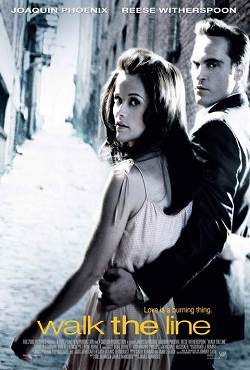
Walk the Line: A Review

WALK THE LINE

"We got married in a fever, hotter than a pepper sprout". So begins Jackson, the duet by the country music legends Johnny and June Carter Cash. That song, along with others like Ring of Fire and Walk the Line, is a good chronicle of their at-times tempestuous lives, careers and marriage. Walk the Line, the biopic of this legendary musical figure and his better half, is a long film. However, it is also highly effective, with strong performances and a committed story.

Starting and almost ending with his 1968 concert at Folsom Prison, Walk the Line covers the life and times of John R. Cash (Joaquin Phoenix). As his band, the Tennessee Three, are playing his introductory music, Johnny seems lost in thought as he looks on a saw. That saw sparks memories of his early years in rural Arkansas. He has an abusive father, Ray (Robert Patrick), a faith-centered mother, Carrie (Shelby Lynne) and a beloved brother, Jack (Lucas Till). Times are tough and the Cash family struggles. Things get harder when Jack dies in a sawmill accident. Johnny or J.R. is guilt-stricken as he goes off to Germany to serve in the Air Force. Here, Johnny sneaks in a little songwriting, working on songs like Folsom Prison Blues

Upon returning from his tour of duty, Johnny marries Vivian (Ginnifer Goodwin) and has four daughters. He also continues pursuing his music dreams. Vivian endures his efforts, barely hiding her irritation that Johnny isn't successful in door-to-door sales. Johnny finally, albeit shyly, goes to Sun Records to audition for its owner, Sam Phillips (Dallas Roberts). His efforts at singing gospel flop, but when he breaks out Folsom Prison Blues, Johnny and his-then Tennessee Two players get a record contract. 

It also gets him touring with a group of other Sun Records singers. There's wild man Jerry Lee Lewis (Waylon Malloy Payne). There's the quieter Elvis Presley (Tyler Hilton). One person not on Sun Records who is part of the tour is country music royalty June Carter (Reese Witherspoon). She is one of the members of the Carter Family, whom Johnny and Jack would listen to on the radio. June is more comedienne than singer, though she does sing. June, like Johnny, is married. He is clearly attracted to June. For her part, she is pleasant but, to use modern parlance, puts him in the friend zone.

Johnny's continuing success and touring strain his marriage. His growing fixation for the now-divorced June do not help. She agrees to keep performing and touring with Cash despite his on-stage antics. He for example humiliated her (though I think unintentionally) when he pressured her into performing Time's A-Wastin' with him. That song had been a duet between her and her first husband. Johnny's growing pill-popping did not help.

Despite common sense, June does once succumb to the temptations of the flesh. She is also irritated by the behavior of not just Johnny but of the other tourmates. June works out her feelings by writing Ring of Fire. Johnny works out his feelings by getting arrested for bringing prescription drugs from Mexico and ultimately divorcing Vivian. He buys a secluded home and attempts to break generational curses. Mother Maybelle Carter (Sandra Ellis Lafferty) gets June to see that Johnny and June need each other. Will Johnny reconcile himself to God and his own past?

Walk the Line is more than a biographical film about one of America's greatest musical artists. It is also a love story. It is a very troubled love story in some ways. Johnny Cash was sometimes very inconsiderate of June. He more than once put her in uncomfortable and difficult situations. He pursued her relentlessly. It is a credit to director/cowriter James Mangold and his cowriter Gill Dennis that Cash did not come across as almost a stalker. I think it is because they adapted Cash's autobiographies Man in Black and Cash: The Autobiography, which I figure did not spare Cash from sometimes ruthless self-examination. 

Nevertheless, Walk the Line is a love story. For as awful as Johnny Cash was to others and to himself, we see in Joaquin Phoenix's performance a man driven by his own doubts and talent. In some ways, Phoenix's Cash is very tender, sweet, and deeply hurt. In other ways, he is petulant, arrogant, and self-absorbed. Phoenix plays Cash with no mimicry or impersonation. Instead, his performance is more evocative of the man.

This goes into whenever Phoenix sings. Johnny Cash had a distinct voice, his bass-baritone rumbling through the very core of him. Phoenix was not able to sing as low as Johnny Cash could. His voice is slightly higher than Cash's. That being said, Phoenix sounds similar to Cash. That lends a strong sense of authenticity whenever he performs either with June or by himself. Physically, Phoenix does an exceptional job. He gets Cash's distinct movements and guitar playing pretty much perfectly.

As a figure, Joaquin Phoenix shows Johnny Cash as troubled but also searching, be it for redemption, forgiveness or June Carter. He has wonderful moments when showing Cash's hesitancy and nervousness when first performing before a paying audience. Phoenix also does well when auditioning for Sam Phillips. I am dubious that Cash improvised Folsom Prison Blues after his gospel number failed to impress. That might be a little dramatic license. However, Cash's mix of frustration, fear and arrogance all came through quite well.

Joaquin Phoenix received a Best Actor Oscar nomination for his performance. His costar, Reese Witherspoon, won Best Actress for her turn as June Carter. I cannot say whether or not Witherspoon should have won. I can say that, based on the performance, the nomination itself was correct. June Carter first appears about thirty minutes into Walk the Line.  Given that the film runs about two hours and fifteen minutes, her appearance is held back for some time. Despite that, Reese Witherspoon is excellent in the role. 

She brings June's insecurity and struggles over her relationship with Cash. There are many positive moments in Walk the Line for Witherspoon. She can handle the comedy parts that June would perform on stage. She can also handle the musical parts just as well as Phoenix can. Witherspoon shows equal vocal dexterity when dueting with Phoenix's Cash on such songs as It Ain't Me Babe or Jackson. When she performs solo, such as with Wildwood Flower or working out Ring of Fire, Witherspoon is just as capable of holding the audience.

I should say that I am not as familiar with June Carter Cash's voice as I am with Johnny Cash's. However, I trust that Witherspoon did a strong approximation of it. 

What makes Witherspoon's performance great is that she makes June Carter a woman in full. She does this with small moments, such as when she apologizes to a shopper for her divorce. June did make a full effort to live out a Christian life but, like all of us, stumbled. The hurt and embarrassment that she shows is gentle. June Carter, however, is no shrinking violet. She comes from a performing family with decades of experience. As such, June is incensed when she sees Johnny, Jerry Lee Lewis and others boozed up before a matinee. Staring them down like an irate mother, she lets them know clearly that they are not professional. She culminates this by launching the empty beer bottles at the startled men. 

Reese Witherspoon makes June Carter that blend of strong and vulnerable. She is, to quote another country song, a good-hearted woman in love with a good timing man.  


Overall, I think all the performances were good. Robert Patrick's Ray is cruel and hard, but he also sees his son disappearing into failure. I am of a mixed mind when it comes to Ginnifer Goodwin as Vivian Cash. She was good in the role and played the role as directed. However, I wonder if perhaps Walk the Line leaned too far into trying to make her something of a villain. More than once, she came across as almost shrewish and pretty much non-supportive of her husband. 

James Mangold does wonderful work in directing his cast. He also does well with some of the visuals. He films Johnny Cash's on-stage meltdown in a frenetic, chaotic way, reflecting the tumult in his life. In a film about two musicians, it is not surprising to have many musical numbers. Part of me thinks that these numbers lengthen Walk the Line. Part of me, however, asks what songs or performances I would cut. 

Perhaps some of the tour artists' offstage antics. I might also have cut out Shooter Jennings' cameo as his father Waylon Jennings.

Those are minor points. I do not know if Johnny and June Carter Cash were ever called or thought of as Country Music Royalty. It would not surprise me if they were considered as such. Walk the Line is a moving, well-acted and well-sung tale of this great love story. The Man in Black and the Wildwood Flower made for a great duo. Walk the Line makes for a great film.

Johnny Cash: 1932-2003
June Carter Cash: 1929-2003

Sunday, June 21, 2026

Howards End: A Review (Review #2180)

HOWARDS END

We might be giving our ancestors a bit of an unfair rap. We might look up the Edwardians as staid, emotionless, frigid figures. If one goes by Howards End, these were actually very lustful albeit more restrained individuals. This adaptation of the E.M. Foster novel stays true to the Merchant Ivory standard of repressed passion amidst the lavish production. Howards End, while I bit slow and long, still has enough to make it lush and insightful viewing.

A rushed, secret engagement between the wealthy Paul Wilcox (Joseph Bennett) and middle-class Helen Schlagel (Helena Bonham Carter) delights and surprises her family. They quickly call it off but are too late to stop the telegram informing Helen's family of that fact. Helen's Aunt Juley (Prunella Scales) unexpectedly arrives at the Wilcox retreat of Howards End to look over her prospective relations. She is shocked to find that no one knew of the engagement and is made to look foolish.

Some months later, the Wilcoxes take up an apartment across from the Schlagels. Despite their initial botched interactions, Helen's older sister Margaret (Emma Thompson) and Wilcox matriarch Ruth (Vanessa Redgrave) become fast friends. Ruth's family is not unkind towards the matriarch. They just live their lives and do not offer much in terms of company or intellectual enrichment. Margaret does. It is to where, on her deathbed, Ruth wills Howards End to Margaret. The note, however, is scribbled and barely legible. Ruth's husband Henry (Anthony Hopkins), with his children and their spouses' consent, burn the dubious will and agree never to speak of it again. 

Margaret and Helen are intellectuals who host salons with their brother Tibby (Adrian Ross Magenty). One of those is Leonard Bast (Samuel West). Helen and Leonard, who is less well-off than the upper-middle class Schlagels, meet somewhat cute when Helen takes Leonard's umbrella after a music recital/discussion. They quickly befriend Leonard, who works at an insurance company. They also have kept a connection with the Wilcox family. Turning to Henry for advice to help Leonard, he tells them that Leonard's company is in reality coming close to insolvency. He recommends that they advise him to leave and find a lower paying but safer job.

Henry and Margaret have by now married. They are content in their new relationship. Everyone else is not. Henry and Ruth's children Charles (James Wilby), Evie (Jemma Redgrave) and Charles' wife Dolly (Susie Lindeman) all find the Schlagels rather bourgeois. That does not bother Margaret or Helen as they are proudly that. Things come to a head at Evie's wedding. An enraged Helen arrives with both Leonard and his wife Jacky (Nicola Duffett). Leonard's former business did not fail as Henry told them. That left Leonard in worse financial shape, and Helen blames Henry for deliberately ruining them. Things grow more complicated when Jacky recognizes Henry and drunkenly reveals that she was his former mistress.

Despite that, Margaret forgives Henry's indiscretion. Howards End is a de facto storage for Margaret and Helen's property until everyone can decide what can be done. One thing that apparently won't be done is host Helen at Howards End. Helen and Leonard have indulged in the pleasures of the flesh. There is now clear-cut evidence of their liaison growing within Helen's body. Helen is not ashamed. Henry is enraged. Margaret is shocked by both Helen's actions and Henry's hypocrisy. Things, however, lead to murder and, after some time, Margaret ends up receiving Howards End as her own property, fulfilling Ruth's original directive.


I think that Merchant Ivory productions have a perhaps unfair stereotype of being all posh and grandiose settings that say nothing about today. Seeing Howards End, I think we see how the more things change, the more that they stay the same. The same issues of class, of the heart versus the head, are really not that different from the Edwardian era to today. Granted, the out-of-wedlock situation that Helen has might not carry the same stigma that it would in the early 1910s. However, it would still be something of a scandal since Helen did get knocked up by a married man.

Something that did surprise me about Howards End is how, under James Ivory's direction, the film played a bit like an Edwardian screwball comedy. This is particularly true when the thoroughly befuddled Mr. Bast crashes the Schlagel tea party. The dialogue has an amusing manner when the Schlagel siblings and Mr. Bast discuss scones. 

In the film, we see the conflicting worldviews of the Wilcox and Schlagel families. The former is proper, restrained. The latter is more informal and curious about the world. That is not to say that the Schlagel sisters see things alike. Margaret remains within the boundaries of Edwardian society. She is an intellectual, aware of the world. She also does not approve of Helen's indiscretions and is shocked when her sister crashes Evie's wedding with the Basts. She is obedient to her husband, but she is also quietly forceful in pointing out his hypocrisy and cruelty. "You had a mistress, and I forgave you. My sister has a lover, and you drive her out of the house. Why can you not be honest for once in your life. Why can't you say what Helen has done, I have done", she tells Henry.   

What makes this scene more impactful is more than just Margaret pointing out Henry's double standards. It is in Emma Thompson's Academy Award-winning performance. James Ivory, who was nominated for his directing, led Thompson to not make this a big, dramatic moment. Instead, as Thompson plays the scene, it is of a woman genuinely hurt, confused and determined to have things exact. She does not shout or rage at Henry. Her declaration is not one of fury. It is one of pain and puzzlement. Ruth tells Margaret, "You're so clever, yet so good". That is an apt a descriptor for Margaret as one can find. 

Margaret Schlagel Wilcox is a fascinating character. She is thoroughly Edwardian in behavior, yet far more progressive in outlook. She is direct but sensible. She supports suffrage but will not go against her husband on most matters. Emma Thompson gives a magnificent performance.

Everyone in Howards End gives excellent performances. That is a major credit to James Ivory as a director. Anthony Hopkins is not overtly cruel as Henry Wilcox. Instead, he is a man trapped by his own worldview, one where one can feel for the poor but think it is the way of the world. Vanessa Regrave, who was the other nominated performance (Thompson as pointed out winning), is moving as the dying matriarch who is seeing her world shift in ways that she does not understand. Helena Bonham Carter excels as the passionate Helen. She is moral outrage and morally outrageous. 

The film is appropriately sumptuous visually with its Oscar-nominated costumes and Oscar-winning art direction. Ruth Prawer Jhabvala's Oscar-winning screenplay adaptation has some wonderful mise-en-scene. When Leonard and Helen finally give in to the temptations of the flesh, it is as they row down the river. We see them metaphorically and literally flowing into dangerous waters.

Howards End might be a bit longer than some viewers may like, clocking in at almost two-and-a-half hours. It might also be a bit too posh for some. That, hopefully, is not something to keep viewers away from an intelligent, well-acted and well-crafted film. Howards End moves well and tells its story of repressed and open passions with great power. 

Friday, May 1, 2026

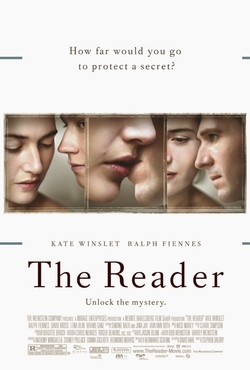
The Reader: A Review (Review #2154)

THE READER

What is worse: to be responsible for the deaths of 300 defenseless women or to not know your ABCs? If The Reader is to be believed, it is the latter. This Oscar-bait production did achieve that goal. On just about every other level, The Reader is boring, slow, pretentious and frankly off-putting. 

Shifting from a reunified Germany in 1995 to the former West Germany of 1958 and in between, we see the story of love and death. Michael Berg (Ralph Fiennes) is awaiting a visit from his daughter, Julia (Hannah Herzsprung). Michael does love Julia, but he is also estranged from her. He then floats to his past.

In 1958, 15-year-old Michael Berg (David Kross) comes down with what he first thinks is a cold. It turns out to be scarlet fever. After finally emerging from his forced isolation, Michael goes to thank the woman who brought him home that first day of his illness. That woman is Hanna Schmitz (Kate Winslet), a tram conductress. He helps her get coal. She helps him lose his virginity.

It takes virtually no time for her to take his clothes off, take her clothes off and begin schtupping a minor. Hanna, our child predator, loves having Michael read to her. He reads all sorts of things to her ranging from Homer's Odyssey to Lady Chatterley's Lover. Curiously, she finds the latter disgusting and tells him so, while the 36-year-old woman is soaking in the bathtub with a 15-year-old boy. Michael is so thoroughly besotted with his hunny to where he would rather spend all his free time with her than with friends his own age. However, without notice, Hanna cuts off the affair and disappears.

We move to 1966. Michael is now a law student, and an important case is gripping the nation. Six women who had committed war crimes and crimes against humanity are facing trial. They were SS guards who were forcing 300 Jewish women and children to march through Poland. On a fateful night, Allied bombs had accidentally struck a church where the prisoners were being held. Rather than let the women and children escape, the female SS guards forced them to stay inside the burning church. Michael is shocked to find that one of those women was his older lover, Hanna.

His devastation is compounded during the testimonies. A survivor recounts how Hanna seemed to be kinder than the other female guards by picking the weakest ones from immediate execution. That perception shifted when the other Auschwitz inmates learned that Hanna had the young girls go to her quarters and read to her. If they did more than read to her, one can only speculate. The trial reaches a climax when the SS guards joint report is brought out. Who wrote it? The defendants quickly turn on each other and blame Hanna alone for their collective crimes. Hanna, rather than hand over handwriting samples, admits to everything.

It is now that Michael realizes Hanna's shocking secret: she cannot read. The trial is over, with Hanna sentenced to life imprisonment. Despite all this, Michael cannot fully let Hanna go. Eventually, he sends her audio tapes of the stories that he read to her. She uses them to learn to read and write. It is now 1988, but will Hanna be able to make it in the new Germany? Will Michael heal from being The Reader?

In 2013, Seth MacFarlane hosted the Academy Awards. He had an opening number titled We Saw Your Boobs. Treating the Academy Awards like a live-action Family Guy episode, MacFarlane mocked various actresses who had appeared topless on film. He name-checked such women as Charlize Theron in Monster, Jodie Foster in The Accused and Hillary Swank in Boys Don't Cry. Each of these women won Best Actress for those films. In all of those films, their characters were sexually assaulted, which is where and when we saw their boobs.  

In We Saw Your Boobs, Kate Winslet came in for particular mockery. "And Kate Winslet in Heavenly Creatures, and Jude, and Hamlet, and Titanic, and Iris, and Little Children, and The Reader, and whatever you're shooting now", the song goes. I am of very mixed emotion on this topic. I can see why MacFarlane and others have pointed out how often Winslet is seen nude on film. I think the We Saw Your Boobs number is crass, vulgar and insulting (dragging Scarlett Johannson's unauthorized photos into this parade was a particularly low blow). However, it becomes hard to argue for the artistic merits of The Reader's nudity when one looks at it.   

Is it a good or bad thing that we get to see both Kate Winslet and David Kross nude? They both are fully frontal at some points. I am again of mixed emotions here. The Reader sees itself as being artistic, perhaps avant-garde, during these nude scenes. I found it a mix of prurient and pretentious. I can see my way to there being some nudity in the film. However, late in The Reader, the imprisoned Hanna is seen washing herself before she is sentenced. We did not have to see her boobs here.  


I feel that I have wandered way off when it comes to reviewing The Reader. I fear that I will wander off into a whole other topic. The Reader veers dangerously close to making Hanna at minimum a victim and at most some kind of heroine. The film, to my mind, seems to imply that we should think well of Hanna because she eventually learned to read and write. It does not seem very interested in how she committed statutory rape. It does not seem very interested that she allowed defenseless women and children to be burned to death.  There is a certain coldness, a certain remoteness, from Hanna's actions with Michael and with those women and children. If memory serves right, what exactly Hanna had her favorites do separate from reading to her is not openly stated. Given what she had Michael do, the suggestion of sex is strongly implied. 

All this paint Hanna as pretty monstrous. Her lack of literacy is not something to have us focus on. Moreover, there is something almost cartoonishly symbolic that Hanna opted to off herself on top of books. It is as if director Stephen Daldry decided we needed to gild the lily by having Hanna end things with books helping her.

In terms of performances, The Reader is best remembered as the film which won Kate Winslet her first Best Actress Oscar. Winslet was on her sixth nomination when The Reader was released. I cannot feel but think that there was an overdue narrative building for Winslet and that said narrative got her the Oscar. I cannot say that it was a bad performance. I thought I heard a German accent popping out every so often. I found it a bit hit and miss. I also found Winslet to be a bit removed from things. When she had her big Oscar-clip moment, there was nothing there, at least for me. As she defended the guards' decision to not let the prisoners escape the burning church, she states that they were guards. "We were responsible for them!" Hanna says. 

However, I did not see any true sense of emotion here. She was not saying this because she was cold. She was not saying this as bizarre justification. She was not saying this because she thought it true. She was not saying this because she was naive or unaware of what she was actually saying. She was saying this because that was what was in the script. 

As I think of Kate Winslet's performance in The Reader, I come to my conclusion that it was efficient but not revelatory.

To be fair, many other actors in the film did the same kind of "this is a serious story" type of acting. That kind of acting is stodgy and oddly lifeless. Ralph Fiennes as the older Michael Berg suffered from this. It was hard to accept that this man felt anything given how stiff he came across. It made it harder to accept given that the adult Michael had a British accent and the younger Michael had a German accent. Bruno Ganz in his small role as Michael's law professor was there just to ask questions. He too was very serious but remote.

Michael's family was similarly serious and remote. When the adult Michael goes with Julia to his widowed mother's home, the mother coldly says that he did not come home for his father's funeral but instead to tell her he's getting divorced. This scene is so stiff it veers close to farce.

David Kross as the younger Michael is the only one who seems to act. His hesitation with the older woman, his initial ecstasy and eventual heartbreak are well-played. Kross was given the same material as everyone else. However, he was miles ahead of everyone else because we could see and feel Michael's conflict. Granted, there were a few moments when Kross was off. There was a fight between Michael and Hanna that looked unreal when he complains that it is his 16th birthday and she makes no notice of it. 

Nico Muhly's score adds to the faux somberness of The Reader. To be fair, it is hard to know which parts were filmed by cinematographer Roger Deakins and which were filmed by cinematographer Chris Menges. They received one of The Reader's five Oscar nominations. The film's others for Picture, Director, Adapted Screenplay and Lead Actress are a bit curious to me. 

I wonder if people go back to the serious but remote The Reader for repeated viewing. If so, I wonder if they think well of Hanna Schmitz. She has sexual relations with a minor. She was an SS guard. She let 300 women and children burn to death rather than run the risk of them escaping. At least she eventually learned to read and write. Triumphing over illiteracy makes up for crimes against humanity, I suppose. 

Tuesday, April 21, 2026

Kitty Foyle: A Review

KITTY FOYLE

There are some films that are for all time. There are other films that are of their time. Kitty Foyle falls squarely in the latter category. Now best remembered, if at all, for winning Ginger Rogers a Best Actress Academy Award, Kitty Foyle suffers from its now dated manner and some very questionable plot points. However, it does have a strong central performance and is an interesting time capsule of World War II America.

Billed as "the natural history of a woman", Kitty Foyle begins with a five-minute overview of who we got what the film calls the "white-collar girl". This new woman came about after she got the vote. Now that men and women were equal, there was no need for men to give up their seats to any female. We then get to the main plot.

Kitty Foyle (Rogers) has gotten the best news around. Her boyfriend Mark (James Craig) has just asked her to marry him. Despite being a doctor, Mark is poor. Mark asks her if it is all over between her and the man from Philadelphia. Kitty says yes, as that mysterious Philadelphian is married and with a child. With that, Mark tells Kitty to meet him at the hospital at midnight.

Ah, but Kitty did not count on that Philadelphia freedom sweeping back into her life. Like a very wealthy bad penny, her Pennsylvania paramour surprises her at her women's hotel. He is Wyn Strafford VI (Dennis Morgan). He may be married. He may have a young son. He is also still passionate about Kitty. He now asks her to run away with him to Argentina. Wyn is planning to leave his wife and child and begs Kitty to go with him. Despite her promise to Mark, she agrees.

Now, she has a literal talk with herself via a mirror. We then slip into the long flashback in Kitty Foyle to see how she got into this predicament. Kitty has always looked upon the Philadelphia elite with not-so-secret longing. Her father or Pop (Ernest Cossart) tells her that Cinderella stories are illogical. However, handsome prince charming Wynnewood Strafford VI happens to come along. She likes him and he likes her, but they have a mostly platonic relationship. Wyn won't propose and his magazine has fallen to the Great Depression. With no proposal, no job and Pop dying suddenly, Kitty starts fresh in New York City.

She might have left the City of Brotherly Love, but her heart still belongs to Wyn. Kitty is a hit at a high-end perfume shop, but she still has a lot to learn. A false fire alarm caused by Kitty brings her into contact with Mark. He is poor. He is a bit absurd. He eventually wins Kitty over. However, all Wyn has to do is come up for Kitty to fall to pieces into his arms again.  

Despite all common sense, Wyn and Kitty marry. The Straffords attempt to accept this, but it is clear that their class differences will be too hard to overcome. There is divorce, then the loss of any chance of a reconciliation. There is more loss for Kitty, but which man will she choose?

After watching Kitty Foyle, I thought early on that she was a dolt. I also thought that she was rather horrible on a variety of levels. She has a good man in Mark yet is willing to abandon him with apparently no hesitation because Wyn sweeps in at almost the last minute. Add to that how Wyn would spirit Kitty off to Buenos Aires to be his mistress or at least his floozy until his second divorce is final. I cannot remember for sure, but I think that Wyn was not going to tell his wife and child that he planned on leaving them for Kitty. He was, if memory serves right, going to Argentina anyway. He was not, if memory serves right, making his abandonment official until he got to South America.

That Kitty Foyle seriously contemplated all this is something that I find very troubling. Up to a point, I understand how someone could be so deeply in love with someone that they lose all common sense to be with them. However, that notion of weak-kneed devotion seems at odds with Kitty Foyle's "strong, empowered woman" message. She is willing to have a child outside of marriage. She is even willing to have the child carry her maiden name.

This is all surprisingly daring stuff for 1940. The film does make clear how she could have an out-of-wedlock child (she got pregnant during her brief marriage). It even shows how she was mistakenly called "Mrs. Foyle", leading to having her son carry the Foyle and not Strafford name. Kitty Foyle shows that Kitty discovered that Wyn was engaged to marry someone of his own class, preventing a reconciliation or awareness that he would be a father. Nevertheless, I still found a lot of that a bit too much to accept.

Kitty Foyle has a major disadvantage of it being a product of its time. Kitty mentions that Wyn sounds a lot like Ronald Colman. They celebrate then-Governor Franklin D. Roosevelt's election to the Presidency and the end of Prohibition. Most cringeworthy of all, Rogers' Kitty at one point exclaims, "I'm free, white and twenty-one...or almost". I genuinely did not know that such a phrase was real. 

In a way, it is nice that such things are shown in films like Kitty Foyle. It allows one a chance to see how far we've come. It is a bit of a time capsule of early 1940's America. However, how many contemporary viewers would know who Ronald Colman was, let alone whether Wyn was doing a good or bad impersonation of him? 

Kitty Foyle was something of a breakout role for Ginger Rogers. She had been a hoofer for years. Her work with Fred Astaire had made her beloved by audiences. Here, she was able to show her dramatic chops. She did well in the role. Rogers showed flair for comedy, such as when she fakes a fainting spell to try and get out of trouble. She also gets to act against herself when having a conversation with her reflection. This was a well-shot element from director Sam Wood. I did think that the voiceovers she had on the various flashbacks were a bit too much. I also thought that her confrontation with the other Staffords was a bit forced too. It was not terrible, but it was showier than I would think good.

However, Rogers also has some wonderful moments where Kitty shows regrets about things. A tender moment is when she encounters the new Mrs. Wyn Strafford VI and their son, Wyn Strafford VII. She will not tell her customer her name. She won't share that with the child either. However, we see a mix of genuine pain at seeing the young child. She knows that her own son would be about his age. Early on, Wyn comments on Kitty's legs. You can see in Ginger Rogers' performance that she is both amused and unamused at his comments.

It is unfortunate that the rest of the cast save Ernest Cossart as Pop matched Rogers. Dennis Morgan frankly came across as creepy. His Wyn was outwardly pleasant. However, one always sensed that the man had no spine. I figure that was the character, which meant that Morgan played the part correctly. However, Morgan never convinced me that he was truly in love with Kitty. He struck me as someone who wanted her but did not value her. 


In a curious twist, James Craig's Mark was the opposite. He was handsome enough. He also came across as someone who valued her but did not want her. Mark was from the get-go the best choice for Kitty. He was a doctor, albeit a poor one. He, after a bad start, did win her over. Why she kept rushing back to the creepy, somewhat dim Wyn is something that I cannot figure. Craig as Mark, however, never expressed romantic ardor for Kitty. He seemed to play Mark as someone who considered Kitty a bit of a chum. It is one thing to wonder why Kitty wants Wyn to where she, to use modern parlance, ghosted Mark. It is another thing to wonder why Mark put up with her picking him up and dropping him without a moment's hesitation.

Kitty Foyle was a big hit when released. It makes sense. It was a product of its time starring a very popular performer. It is not a bad film. It is, however, dated to where it is almost an antique. Less remembered than her pairing with Fred Astaire, Kitty Foyle shows Ginger Rogers' range but little else.    

Wednesday, April 15, 2026

The Miracle Worker: A Review

THE MIRACLE WORKER

"The light shines in the darkness, and the darkness has not overcome it". This passage from the Gospel of John (John 1:5) might be the theme of The Miracle Worker. This film adaptation of the Broadway play is still a bit stagebound. However, it also has both almost universally excellent performances and a moving true-life story that impacts the viewer.

A sudden but brief childhood illness has robbed little Helen Keller of sight and sound. She cannot see, hear nor speak. Her parents, Confederate Captain Arthur Keller (Victor Jory) and his second wife Kate (Inga Swenson) are doing their best with their daughter. Helen (Patty Duke), however, is a menace. She is a bit of a wild animal, picking food out of their plates and running free. In a mix of desperation and frustration, Captain Keller agrees to contact the Perkins School in Boston for a teacher who might help.

That teacher is Annie Sullivan (Anne Bancroft). She is a feisty Irish lass who is herself a former Perkins student. That Annie is close to blindness herself only adds to Captain Keller's fury and immense dislike for her. He was bound to dislike any Yankee, still being bitter about losing the war. However, his rages are somewhat tempered by both Kate and James (Andrew Prine), his son from an earlier marriage.

Annie senses that there is a mind buried in Helen's dark world. She is also enraged at how Helen is treated by her family. Helen is not abused. Instead, she is coddled, kept almost like an injured pet than a person. It is time for a lot of tough love. That means a fierce battle between the willful, spoiled Helen and the no-nonsense Annie at the breakfast table. Helen will learn to eat at the table, with a spoon, and fold her napkin. 

In all that time, Annie continues to teach Helen American Sign Language by spelling out various objects with her hands. Annie grows frustrated at how Helen cannot or perhaps will not make the connection between the words and the objects. She insists on having two weeks alone with her in a secluded home to teach her. The Kellers reluctantly agree to Annie's request. Will Annie break through Helen's darkness? Will Helen find that words have meanings?


The Miracle Worker brought two of its original Broadway actors to recreate their roles for the film adaptation. Anne Bancroft and Patty Duke were not originally considered for the roles despite their Broadway success. Bancroft had a brief film career before The Miracle Worker, making her debut in Don't Bother to Knock with Marilyn Monroe. However, she had left Hollywood and had not made a film in five years. Patty Duke for her part was at sixteen technically too old to play Helen Keller. Despite those circumstances, both of them eventually won the parts. 

Both are brilliant in their roles. Each received an Academy Award for their intense performances. Anne Bancroft's Annie is loving but also firm in her ideas. We get to see through William Gibson's adaptation of his own play how Annie is a haunted woman. There are shadowy flashbacks that reveal Annie Sullivan's past. There is the loss of her beloved younger brother Jimmy. There is her own struggle with vision impairment. There are her own fears of failure with Helen.

Some of her best scenes, curiously, are not with Duke's Helen. Rather, they are whenever she argues with Helen's parents. Bancroft shows the steely woman behind the dark glasses. Annie knows that Helen has been getting away with murder. Helen is spoiled, spiteful, and used to getting her way. Annie will not let her. Annie, however, also knows that the Kellers' ideas of compassion have done great damage to Helen. She has to fight them as well as fight Helen.

Patty Duke became the youngest competitive acting Oscar winner at the time. Her Best Supporting Actress win came when she was 16. While both Tatum O'Neil and Anna Paquin later won in this category at a younger age, that record is secondary to Duke's performance. Duke has to act with her body and face. Technically, she does have one word of dialogue when she makes a sound that is meant to say "water". Apart from that, Duke relies on her physicality to express Helen Keller's moods and thoughts. We see Helen's immense frustration at wanting to be seen and heard while being physically unable to see, hear and speak. She is willful, stubborn but also deeply pained.

The rest of the cast with one exception is able to match Bancroft and Duke under Arthur Penn's direction. Victor Jory was loud and proud as Captain Keller. He made Captain Keller a man used to being obeyed until he met his match with the stubborn Annie. Andrew Prine had a small role as Helen's half-brother James. However, he left a positive impression as a sarcastic but aware young man. He could dismiss Annie's plans while also challenging Captain Keller to let her finish them.

The one performer whom I think failed was Inga Swenson as Katie Keller. I found her overdramatic to the point of parody. Swenson, to me, looked as if she thought that she was on a stage instead of film production. In her first scene, her hysterics were hysterical. 

The Miracle Worker also played a bit like it was a filmed play. To be fair, the film opened up more with outdoor scenes. However, a lot of the film still holds to its theatrical roots. The film more than makes up for its somewhat stagey manner with almost universally strong performances and Laurence Rosenthal's score.

The Miracle Worker is a showcase for Anne Bancroft and Patty Duke. This story of tough love par excellence will hold the viewers' attention. It is a moving and powerful portrait of two profiles in courage.

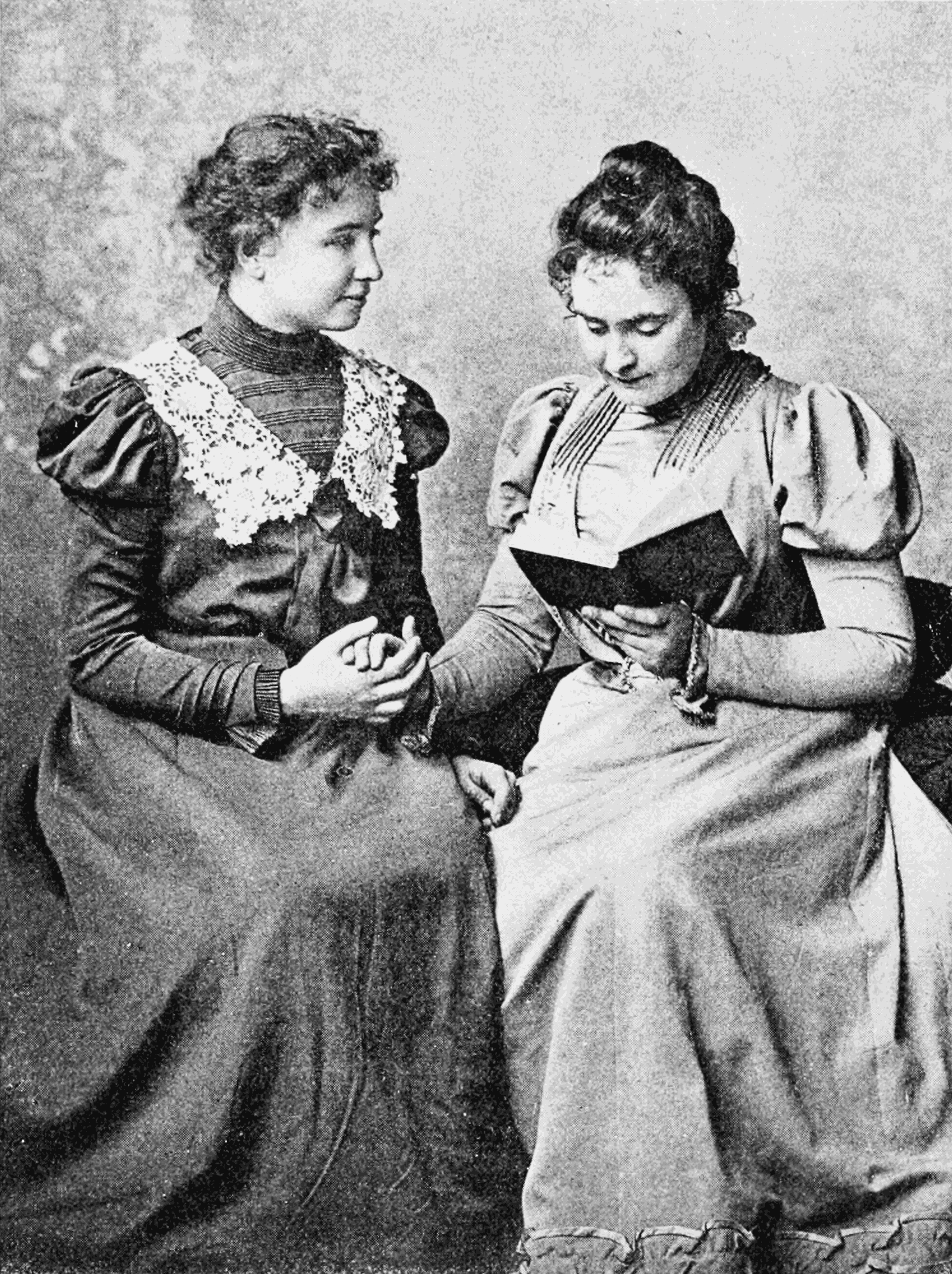
Helen Keller (Left): 1880-1968
Annie Sullivan (Right): 1866-1936


Wednesday, February 11, 2026

A Streetcar Named Desire: A Review

A STREETCAR NAMED DESIRE

In the American South, they are proud of their crazy people. So commented Julia Sugarbaker on an episode of Designing Women. I wonder how proud Ms. Sugarbaker would be of Blanche DuBois, the ultimate crazed Southern belle. Both Blanche and her A Streetcar Named Desire antagonist have become legendary. The filmed adaptation of Tennessee Williams' sordid song of the South may have been watered down from the original stage production. However, A Streetcar Named Desire still has immense power owing to its brilliant performances and direction.

Fading beauty and English teacher Blanche DuBois (Vivien Leigh) has come to New Orleans' French Quarter to visit her sister Stella (Kim Hunter) for an indefinite stay. Stella is happy to have Blanche back. One person who is at most disinterested and at most irritated at having the Grande Dame of Belle Reve back is Stella's husband. As Blanche is refined and proper, Stanley Kowalski (Marlon Brando) is coarse and brutal. 

Blanche does not understand why Stella puts up with Stanley. It helps that Stella is fixated on Stanley's animal magnetism and incredible body. It also helps that Stella is pregnant. Stanley is convinced that Blanche has squandered the DuBois estate and thus stolen from what should be his due to the Napoleonic Code. It is doubtful that he knows what the Napoleonic Code actually is. It is doubtful that Stanley's poker buddies know either. One who might know is his best friend Mitch (Karl Malden). He is more respectful and sophisticated than Stanley but not as refined as Blanche. 

Mitch and Blanche begin seeing each other socially. Blanche is a widow after her sensitive husband killed himself. What exactly drove her husband to end his life is as shadowy as the fog Blanche seems to live in. So is her sordid past at the Flamingo Hotel and the true reason she left her teaching position. Stanley has contacts who know what's what. Stella won't believe the stories. Mitch believes them. Blanche, whose mixture of lies and fantasy start blending, is teetering on emotional and mental collapse. Stella's now given birth, leaving Stanley and Blanche alone together. Blanche has lost touch with reality. A shocking act from Stanley pushes her over the edge. Will Blanche find refuge from her many disasters? Will Blanche continue to depend on the kindness of strangers?

A Streetcar Named Desire brings back almost everyone from the original stage production to recreate their roles on film. That includes director Elia Kazan, who keeps things well-paced for a two-hour runtime. The only performer who was not from the original Broadway production was Vivien Leigh. She however had played Blanche on the London stage. As such, everyone in the cast, it could be argued, was recreating their original stage performance. 

A Streetcar Named Desire has one of the finest acting in film. Brando, Leigh, Malden and Hunter were all nominated for their performances. Three of the four won in their respective categories, the first time that had happened in Academy Award history. Only Brando lost, with Humphrey Bogart beating him for The African Queen. Each performance is extraordinary. I will start with the winners.

I think it would be difficult to not compare Vivien Leigh's second Oscar for Best Actress to her first for Gone with the Wind. In both, she plays Southern belles gone wildly wrong. However, I think Leigh gives a simply brilliant performance as Blanche DuBois. If one listens to her, we see how Leigh captured Blanche's mix of mania and melancholy. She starts off speaking in a rapid-fire manner. Her voice is very high, and her manner seems almost exaggerated in its graces and airs. Late in the film, however, her pitch changes to a lower, huskier tone. This is when she is forced into talking about her sordid, sleazy past as the town nympho. 

This to me shows that Blanche was somewhat aware that she was putting on an act. I say "somewhat aware" as part of me thinks that Blanche is the type to will something to be true even when it isn't. She is a deeply tragic and traumatized figure. Censorship would not allow her late husband's truth to be fully revealed (she remarks that he was sensitive and wrote poetry). However, Leigh's performance made me think that Blanche carries a bit of guilt about his condition. We see her as already fragile, high-strung and frankly a bit loony when she emerges from the train station. 

When she is forced to relinquish the fantasy world of "magic" to the harsh light of reality, there is more than symbolism there. Blanche struggles between her ideas of refinement and her carnal desires. This is a person at war with themselves. Blanche at heart, I think, wants to be that refined, sophisticated lady. She is also not deliberately cruel, which she says is the one unforgivable thing that she is not guilty of. 

Leigh does an absolutely brilliant job as Blanche DuBois. Her final scene is filled with deep tragedy and a touch of grace. One cannot help being moved by her famous last line. It is a confession to herself and others that unlike Scarlett O'Hara, Blanche DuBois hasn't the strength to stand on her own.


Kim Hunter and Karl Malden also do excellent work as Stella and Mitch. Hunter shows Stella to be drawn to someone like Stanley. It is not openly stated, but it is sex. She, unlike Blanche, has no shame in giving in to the temptations of the flesh. She also is different from Stanley in that her loves can be emotional as well as physical. She accepts Stanley for the man that he is. She may even like how mean he is. However, she also sees the fragility in Blanche and wants desperately to care for her. Hunter is a perfect supporting actress. She supports Brando and Leigh without either overshadowing them or fading in their shadows. Hunter is able to go toe-to-toe with them without taking attention away from them. Hunter manages that balance exceptionally well.

Malden plays Mitch as someone who is between Stanley and Blanche. Stanley, for example, would simply balk at the idea of having to bow to any woman upon greeting them. We see Mitch, albeit reluctantly, do such a thing. The smile on his face is not that of someone who expects a bit of something-something. It does hint that he would like some, however. 

Mitch treats Blanche like the refined lady that she sees herself as. Malden makes Mitch into something of an innocent. He is able to play rough-and-tough poker with the bros. He is also able to fret about his ill mother and marvel at Blanche's elegance and sophistication. His scene where he confronts Blanche about her wicked past is a strong scene. As he forces Blanche to literally enter the light, we see a man both enraged and heartbroken.

Now we turn to Marlon Brando. He is absolutely brilliant from his first scene as the brutal, brutish Stanley Kowalski. Stanley is boorish, animalistic and filled with rage at the slightest hint of mockery. This is a man who is surprisingly similar to Blanche in one way: he too is a man of passions. His cries of "HEY STELLA!" may now be something of a cliche and ripe for parody. However, it is a credit to Marlon Brando's performance that he makes Stanley's intensity and ferocity look natural and not silly.

We still end up finding him repellant given how he tortured Blanche at the end. Stanley is not a good man. When he tears into the refined DuBois sisters for constantly mocking him as a "Polack", one feels that immense chip on his shoulder tearing at him. He acts out like an uncaged, unhinged man. 

It is curious though that for how much Brando as Stanley Kowalski is, few have noted that Brando managed to get a bit humor into his performance. Hearing him constantly go on about both the Napoleonic Code and the various people who will examine things for him is amusing. After his intense and frightening slamming of the dishes, he calmly says that his side is clear and offers to clean Stella and Blanche's side. Brando made that if not laugh-out-loud funny, at least a wryly amusing moment.

Tennessee Williams received credit for the film's screenplay. I suspect that "adaptation by Oscar Saul" did most of the heavy lifting. There are aspects from the original production that would not pass muster in the Hays Code era. Blanche's late husband being gay would be a firm no. The open nature of Stanley's assault on Blanche would never be filmed. Even now, such a thing would still be pretty shocking. I think that the forced changes work in A Streetcar Named Desire. The smashed mirror is already suggestive enough both to what Stanley did to Blanche and the smashing of Blanche's mind. The shall we say more optimistic ending with Stella resolving to reject Stanley's call is one that I like more than her surrendering to him. Granted, that is a personal thing, but I prefer it.

Elia Kazan brought a great deal of passion out of his actors. He also brought in excellent elements, such as the Oscar-winning Production Design of this run-down French Quarter apartment complex. Alex North's Oscar-nominated score was also excellent, a mix of dramatic and sultry to match the chaotic world.

A Streetcar Named Desire is an excellent adaptation. Whatever changes occurred work. Standout, if not iconic, performances capture this dark tale of the seedy South. Haven't we all at one point depended on the kindness of strangers? 


Monday, February 2, 2026

I Want to Live! A Review (Review #2120)

I WANT TO LIVE!

True crime meets true tragedy in I Want to Live! Blending film noir with a documentary manner, I Want to Live! gives us a sympathetic portrait of a mostly unsympathetic figure.

Barbara Wood (Susan Hayward) is a good-time girl who loves the men and the jazz. This jazz baby is also a longtime criminal. She drinks, dances, flirts and presumably more than flirts through life. Her BFF Peggy (Virginia Vincent) cuts out after two mutual friends ask Peg and Babs to provide false alibis. Barbara, for her part, agrees to lie for them and ends up locked up for perjury. 

After her prison term, Barbara tries to go straight. She marries Hank Graham (Wesley Lau) and has a child, Bobby. However, Hank is a junkie who even slaps Barbara around when she refuses to turn over their last $10 so he can get a fix. She then goes back to petty crime to keep body and soul together. Her old criminal partner Emmett Perkins (Philip Coolidge) welcomes her back with open arms. His associate John Santo (Lou Krugman) is thoroughly antagonist and openly hates baby Bobby. 

Things go wildly wrong after their latest heist. Barbara was the getaway car driver of a robbery. However, an elderly crippled widow, Mable Monahan, was murdered. The police have tagged Perkins, Santo and Graham for the crime. Barbara, initially unaware of the murder, plays up her image as "Bloody Babs: The Tiger Woman". She finds the whole thing just the latest in her defiant run-ins with the law.

All this makes great headlines for San Francisco newspaperman Ed Montgomery (Simon Oakland). It is not until after she realizes that murder was the case that they gave her that Barbara panics; horrified by the charge, Barbara foolishly attempts to get a false alibi as Hank is nowhere to be found. To her horror and disappointment, she finds that her supposed alibi is really officer Ben Miranda (Peter Breck). Her past dooms her to be found guilty. The press attention also plays a role in dooming the so-called Queen of the Murder Mob, along with Perkins and Santo, to be sentenced to death.

Montgomery soon begins having doubts about Graham's guilt. She was involved in the Monahan robbery. However, was she the actual murderess? Psychiatrist Carl Palmberg (Theodore Bikel) diagnoses that Graham is amoral but averse to violence. She is also left-handed, while Monahan's killer was right-handed. Montgomery shifts from Graham's antagonist to ally. He begins writing articles making a case that she is innocent. At the minimum, he pushes for a commutation on her death sentence by gas. It is now a battle against the clock to save Barbara Graham. Will she make it out alive? Has her time finally run out?

The veracity of I Want to Live! has been brought into question in the ensuing years. Nelson Gidding and Don M. Mankiewicz's screenplay makes the case that Graham was innocent and wrongly executed. Gidding and Mankiewicz used actual court testimony, Montgomery's articles and Graham's own correspondence to craft their story. As such, one can argue that I Want to Live! is biased in Graham's favor. We also see this when Graham does her best to go straight. 

The film, however, does not downplay Graham's less-than-noble virtues. We see her consistently defiant even when it goes against her own best interests. She is a party girl, ready with a snippy comeback no matter what the circumstances. "Life's a funny thing", someone observes to Graham early in I Want to Live! She replies with a touch of sarcasm, "Compared to what?". As the film comes to a dramatic close, one of the guards in the gas chamber advises her to take deep breaths to make the execution easier. Graham softly but bitterly replies, "How would you know?".

A strong element that makes I Want to Live! both gripping and moving is director Robert Wise's decision to make the execution preparations very methodical. We see the precise preparations for the execution. As stated earlier, I Want to Live! has an almost documentary-like manner in these scenes. There are many dramatic moments, especially when Graham is in her cell waiting to see if she lives or dies. In between them though, we see how the gas chamber is set up. It makes for very sad viewing.

Sadder viewing comes from Graham's final hours, which feel stretched into days. At one especially difficult moment, she is being walked towards the gas chamber when the silence is broken by a telephone ring. As she is walked back to her cell, Susan Hayward as Graham softly says, "Why do they torture me so?".

I Want to Live! has a firm anti-capital punishment slant. It also has a heart in Susan Hayward. Winning an Academy Award on her fifth nomination, Hayward creates a moving portrait of this at-times self-destructive and self-defeating woman. Hayward makes Barbara Graham into a tough but vulnerable broad. Graham is a survivor, a sly and tough cookie who knows the score. "What's your occupation? What do you do?" one of her criminal cronies asks her. Her smart reply? "The best I can". 

We get to see Graham's tough exterior in the film. We also see through Hayward's performance the frightened and desperate woman railroaded into a disaster. Hayward has what always helps an actress: a court testimony scene. On the stand, we see Graham's shift from disbelief to desperation and ultimately to quiet resignation. Once the jury hears about her past conviction for perjury, Graham realizes that it is all over for her. 

Hayward as Graham has a running manner of throwing fake dice to see what comes up. We see that ultimately, she got snake-eyes. She plays Graham as belligerent, showing that she will stand up to everyone. She also makes one feel great sadness for her at the end. Hayward does this effectively by controlling her voice. She never fully screams or rages. However, it is when she is quiet and soft that makes her performance all the more impactful.

As her final appeal fails, she says softly, "I want a mask". She does not want to see anyone on the way to the execution. Moments like those break your heart.

I Want to Live! also has strong performances from Oakland as Montgomery. He shifts well from someone who uses her to sell papers to someone who tries to undo the damage. Virginia Vincent in her small role does well as Peg, the girl who cut out to become a respectable housewife. She stayed loyal to the end. 

A surprising element in I Want to Live! is the use of a jazz score written by Johnny Mandel. It gives the film an urgency and decadence that matches the story. Of particular note is when we see Graham slip back into a life of petty crime. The drums and bongos push the tension of the situations. Fortunately, Wise also opted to keep the final section quiet. That too makes the end more tragic.

I Want to Live! in some ways is a B-picture. There is a strong element of grittiness and lack of polish. However, these are not noble people. They are criminals and hoods. I Want to Live! shows us that Barbara Graham was also a person. She made terrible choices and paid the ultimate price for them. One cannot but be moved by the film. The real-life Barbara Graham may have ultimately been guilty of murder. The film version of Barbara Graham was a victim who was sleazy but innocent.

1923-1955


Saturday, January 24, 2026

The Farmer's Daughter (1947): A Review

THE FARMER'S DAUGHTER

Immigrants add so much to the uniqueness of American life. Everything from American cuisine to American vernacular has been enriched by foreign-born people. Politics is no different. In America, a naturalized citizen can rise to high positions of power except for President of the United States. One such success story is chronicled in The Farmer's Daughter. Charming and surprisingly contemporary, The Farmer's Daughter delights in its blend of homespun wisdom and political romance. 

Swedish American Katrin "Katie" Holstrom (Loretta Young) leaves her family's farm to study nursing in Capitol City. Crooked barn painter Adolph (Rhys Williams) offers her a lift to save bus fare but instead hoodwinks her into spending all her money for car repairs. These repairs, caused by his incompetence and efforts to force his attention on the not-so-dumb blonde, leave her penniless. 

Still, Katie is a resourceful Scandinavian. She quickly finds employment as a maid to the politically powerful Morley family. Katie does not initially win over the Morley's cranky butler Joseph Clancy (Charles Bickford). However, she is a good worker who manages to survive Mr. Clancy's cantankerous ways. She also charms Agatha Morley (Ethel Barrymore). Mrs. Morley is the widow of a respected Senator and something of a kingmaker for her political party. She is also the mother of Glen Morley (Joseph Cotten), who is on his third term in Congress. 

Katie has made clear that she will work for the Morleys only temporarily. Her plan is to be their maid just long enough to raise the funds needed to go back to nursing school. However, Katie has become indispensable to the family. Mrs. Morley and Mr. Clancy also see what Glen will not admit: he has fallen in love with Katie. Katie feels the same way, but neither can say it out loud.

One thing that Katie can say out loud are her views on politicians and politics. The Morleys and their party seek out a replacement for a fellow Congressman who has just died. Reluctantly settling on Anders J. Finley (Art Baker), Katie is appalled at the selection. He is thoroughly unsuitable in her eyes. She confronts Finley on his record at his first political rally, much to Agatha and Glen's embarrassment. Katie's open and honest manner inspires the opposition to field their own candidate for Congress: Katrin Holstrom! She agrees to be their candidate, driving a wedge between herself and the Morleys. Her open and honest campaign is at odds with Finley's dirty tricks, culminating in lurid suggestions on her reputation by Adolph to the Finley campaign. Will Agatha and Glen go along with smearing Katie's good name to hold on to power? Will her Swedish brothers help her out of this jam? Will Glen and Katie find that politics do make the strangest but happiest of bedfellows?

The Farmer's Daughter has a special place in Academy Awards history. It is not because of the number of nominations that it received (only two, for Loretta Young as Lead Actress and Charles Bickford as Supporting Actor). It is not because of the film's historical significance. In fact, save for being the inspiration for a television series of the same name, The Farmer's Daughter is not well-known. No, the film has that special place because it has one of the biggest upsets of all time in terms of Oscar winners. 

At the 20th Academy Awards, the odds-on favorite to win Best Actress was Rosalind Russell for her performance in Mourning Becomes Electra. Russell was on her third nomination in six years and a back-to-back nominee this year. She was well-liked and respected by her peers. She had also hired publicist Henry Rogers to run her Oscar campaign. Rogers had guided Joan Crawford and Olivia de Havilland to their successful Oscar wins the previous two years. Mouring Becomes Electra was a rich, juicy lurid melodrama meant to showcase Russell's range. She had won the Golden Globe for Best Actress for Mourning Becomes Electra. At the Oscar ceremony, all of that year's Golden Globe winners matched the eventual Oscar winners for Picture, Director, Actor and Supporting Actor/Actress. It stood to reason that Rosalind Russell had the Oscar in the bag.

Russell was so sure that she would win that she literally stood up just as Fredric March announced the winner. The winner, however, was not Rosalind Russell. To audible gasps, the winner was Loretta Young. Young's win seemed to come out of nowhere. This win is more stunning given that all her competition was in heavy dramas, and the Academy then and now is very resistant to comedies. Perhaps another time we can discuss how Loretta Young pulled off one of the greatest surprise Oscar wins in Academy history. For now, let us look at the film.


The Farmer's Daughter is a breezy 97 minutes long. In that runtime, we get a great deal of story that showcases the various actors. Loretta Young maintains solid Swedish accent. It is never cartoonish or exaggerated, a credit to her and her dialect coach. She also shows Katie to be much shrewder than everyone gives her credit for. Early on, she and Adolph are forced to stay in a motel. He pretends to have trouble starting the car. Katie, with a look that shows she is fully aware of Adolph's schemes and intentions, cooly gets the car started. Katie is a smart cookie despite the blonde hair and foreign accent.

Young also shows that Katie is blunt but polite, almost guileless, in her manner. She is serving at a victory party for Glen and his fellow Congressman Wilbur Johnson (Thurston Hall). Johnson asks her if she voted for him. She replies that she had just moved and had not registered to vote in his district. He boasts that she would have voted for him if she could have. "If I could have voted, I wouldn't have voted for you", she replies in a perfectly sweet and matter-of-fact manner. Young says this with such innocence but directness that one laughs. Katie did not tell Johnson this to insult him. She told him this because she is honest. Earlier, she piped in when Morley's cronies deride a former Congressman whom the Holmstrom family knows. When he was described as a second-rate Congressman, Katie says, "Mr. Schmidlapp was first-rate with a second-rate party". 

The Farmer's Daughter does not mention either the state or which party is which. However, I think that the Morleys were Democrats given how Katie was given a speech by the late Senator Morley to practice her English with. The speech was a eulogy for President Woodrow Wilson which criticized the failure to enter the League of Nations. This particular scene is well-shot and directed by H.C.  Potter. As Katie speaks, we see her absorbing the thoughts, reflecting on the meaning. Unbeknownst to her, Mrs. Morley is overhearing her late husband's words. Mr. Clancy is aware of this, but Mrs. Morley silently shushes him. The scene is surprisingly moving.

The film does not skimp out on the love story. Loretta Young plays Katie's growing love for Glen softly and effectively. A glance, a softness in her facial expression, her fainting when she mistakenly thinks that Glen and not Wilbur had died all show how she had fallen in love without overtly saying so. Joseph Cotten is not often thought of as a romantic lead. However, he does a nice job in The Farmer's Daughter. There is a particularly amusing scene when Glen is attempting to impress Katie with his skating prowess. As played by Cotten, he comes across as a lovestruck teen attempting to show off to the girl. There is something almost childlike in Cotten's manner that makes the scene cute. The conclusion will have you smiling if not laughing the way that Katie was.

Glen, as played by Cotten, is a good man. He can be a political creature, willing to pick someone electable versus someone who would be best for the constituents. However, we see that Glen eventually does the right thing by both his morals and by Katie. Charles Bickford was nominated for his performance as the crabby but secretly lovable Joseph Clancy. He is efficient and brooks no foolishness. He also appreciates Katie's solid work ethic and ultimately becomes her friend and ally. As she tearfully leaves the Morley home when starting her campaign, Clancy tells her that he's been with the Morleys for over twenty years. He has supported them and their candidates all these years. This time though, he's going to vote for her. 

Ethel Barrymore is wonderful as the shrewd Agatha Morley. She has great rapport with Bickford's Clancy. While most people refer to them as "Mrs. Morley" and "Mr. Clancy", in their scenes they refer to each other as "Agatha" and "Joseph". This reveals a greater connection than that of employer and employee. There is no hint of romance between them. Rather, it is more one of respect and personal affection.

The Farmer's Daughter is surprisingly contemporary when it comes to politics. Katie comes out in favor of a living wage. When Morley asks her to explain what that is, she replies that a living wage depends on whether you're getting it or receiving it. She also is unafraid to call out politicians who work for their donors rather than their constituents. Katie openly confronting Finley about his past corrupt bargains of giving government contracts to family and friends is something we rarely see now. Such a scene will have the viewer cheering.

The film also targets not just political but moral corruption. While never overtly stated, it is clear from Allen Rivkin and Laura Kerr's screenplay that Adolph is a Ku Klux Klan member. As he tells a clearly displeased Agatha about his "organization", she fills in the information about this organization's goals and memberships. It wants an America that is white, with no foreign born and with "the right kind of religion". This group would therefore not want someone like Katrin Holmstrom due to her immigrant Swedish background. However, Agatha sees that Finley would have no problem not only associating with someone like Adolph but would smear Katie's reputation. Agatha would, very reluctantly, go along with the insinuations of impropriety. The connection to open bigotry, however, is a bridge too far. at the end, she has Adolph thrown out. Clancy, in fury, throws Adolph's hat at him. "YOU FORGOT YOUR HOOD!" he shouts.   

Still, The Farmer's Daughter is not a political film. It is a romantic comedy that involves politics. Charming, sweet and with strong performances all around, The Farmer's Daughter is a film that people should know more of. Raise a cup of glogg for the delightful The Farmer's Daughter, and we'll just pretend that it is Christmas.   

Sunday, January 4, 2026

Moonstruck: A Review

MOONSTRUCK

The words "lunacy" and "lunatic" stem from the Latin word for "moon" (luna). "Luna" is still the word for "moon" in Spanish and Italian. Being in love is a bit like being insane, I suppose. The lunacy of love is delightfully captured in Moonstruck, a charming romantic comedy with standout performances all around.

Italian American widow Loretta Castorini Clark (Cher) is a mistress of bookkeeping but at 37 figures that she will never love nor marry again. The Castorinis are a superstitious lot, convinced that good or bad luck follows them. Loretta agrees to marry her nebbish, bumbling boyfriend Johnny Cammareri (Danny Aiello). She is not in love with Johnny but thinks that this is for the best.

Loretta's engagement is not welcome news to her father Cosmo (Vincent Gardenia). He balks at her getting married again and especially at paying for the wedding, tradition or no tradition. Loretta's mother Rose (Olympia Dukakis) is not enthusiastic either but quietly accepting. Johnny has left for Palermo to see his dying mother and has asked Loretta to invite his estranged brother, Ronny. Her initial efforts are rebuffed, but determined to see it through, she goes to Ronny's bakery. 

Despite her common sense, Loretta does more than mend fences with Ronny (Nicolas Cage). She goes to bed with him. He now declares his love for, to which she responds by slapping him and yelling, "SNAP OUT OF IT!". Cosmo and Rose, unaware of any of this, continue believing that Loretta and Johnny will be married a month from now. Rose's brother Raymond Cappomaggi (Louis Gus) and sister-in-law Rita (Julie Bosavvo) recall when Raymond claims to have seen a giant Moon when Cosmo was courting Rose. To almost everyone's surprise, "Cosmo's Moon" has returned.

Cosmo is the only one not to see it. More than likely, it is because he has a mistress, Mona (Anita Gillette). Loretta agrees to go with Ronny to the Metropolitan Opera to see La Boheme, his other great passion, on condition that he drop any romantic ideas and go to her upcoming wedding. The romantic entanglements continue when both Loretta & Ronny and Cosmo & Mona end up at the Met. Rose, meanwhile, has dinner alone until she invites jilted professor Perry (John Mahoney) to join her. Rose suspects that Cosmo is cheating on her, unaware that Loretta has inadvertently confirmed her mother's suspicions. Things come to a head when Johnny unexpectedly returns, his mother having made a "miraculous" recovery. How will these tangled romances end? 

Moonstruck is a love letter to love in all its crazy, charming and confusing forms. Screenwriter John Patrick Shanley in his Oscar-winning screenplay builds a logic to the increasingly eccentric situations. He builds up the story slowly, allowing for both the characters and their predicaments to flow. Moonstruck does a masterful job in showing how the various characters evolve and how they see the world. 

For example, early on we see Loretta appear to dismiss someone ordering roses, commenting on how so much money is spent on something that will be tossed into the trash. However, when the florist that she is working the books for presents her with a single rose, we see Loretta genuinely charmed and moved by the gesture. This reveals that despite the "bad luck" that got her husband killed by a bus, Loretta at heart still believes in love. 

We see the characters in all their delightful eccentricity throughout Moonstruck. It is when Cosmo hoodwinks a couple into spending more money on plumbing. We see it when Rose is awakened to be told Loretta's news. "Who's dead?", Rose asks in a quizzical but deadpan manner. It is in their insistence that some other force controls both the positive and negative events in their lives.

One thing that I do not think people have focused on is a key moment. After Raymond tells the story of Cosmo and his Moon, we see all the characters react when a massive moon appears to them. Loretta looks on this "love moon" with wistfulness, soon joined by Ronny who asks her to come back to bed. Raymond gets frisky with Rita, who delights in the renewed attention. Cosmo's father or Pop (Feodor Chaliapin) encourages his dogs to howl with delight. Rose looks at it with longing and sadness, underscoring how Cosmo has strayed. It is telling that Cosmo, passed out drunk, is the only one not to see it. I think it suggests that Cosmo is the only one not in love anymore. He is blind to true love, something that everyone else is not.


Moonstruck has excellent performances from the entire cast. Both Cher and Olympia Dukakis won Oscars for their performances, with Gardenia receiving a Supporting Actor nomination. Cher has a strong manner to her Loretta Castorini. Blunt, sometimes exasperated, Loretta is also a woman emerging into her own. She is resigned to things, to a settled life. Once she encounters the wild Ronny, it is as if Loretta has allowed herself to come out and embrace life. 

Cher has wonderful comedic timing with her castmates. She can bemoan her father's obstinacy and Ronny's brutish and self-pitying manner. She can also show compassion and tenderness. Her disbelief that Cosmo could be stepping out on Rose, coupled with her shock and disappointment when she discovered Cosmo's infidelity, showcases Cher's acting strengths. While most people remember her "SNAP OUT OF IT!" reaction, there are other moments that showcase Cher's strong performance. A quiet moment is when she returns home after the opera. Just by kicking a can down the street, we see Loretta contemplating all that she has gone through and wondering if her luck has finally turned.

Dukakis is wise and loving as Rose, the Italian mother who knows more than she lets on. Her continued search to find why men chase women is comic gold. However, we also see the genuine love and pain she feels about Cosmo. She loves him and knows that love hurts. Beneath Rose's wisdom, there is warmth, compassion and understanding. Dukakis balances humor and heart. 

As a side note, it is curious that despite neither of them being of Italian heritage, Cher and Dukakis are so perfect in their roles as these Italian Americans.

The actual Italian Americans in Moonstruck also do wonderful work. Danny Aiello is hilarious as Johnny, the weak, bumbling and befuddled beau. I would use nebbish, a good Yiddish term, to describe Johnny. Vincent Gardenia is wonderful as Cosmo, the man who lost love and ultimately found it again. We see that, at heart, he does love his wife and daughter, even if he has to struggle with his fear of death to show that love. 

Nicolas Cage makes Ronny's crazed manner almost rational. He is a bit cartoonish, but I think that is how Ronny is. A great bit of directing, either from Cage or director Norman Jewison, is when Ronny scratches his face while Loretta calls him "a wolf". It is a sly nod to Loretta's perception and Ronny's true nature. 

It would be unfair to not mention John Mahoney, the only non-Italian character in Moonstruck. His role is small, but it is important. It serves as a counterpoint to the various romantic entanglements of the Castorinis. While they pursue love, the non-Italian Perry pursues affirmation. Yet, in his own way, Perry also has a little bit of moon magic. While reflecting on his life with Rose, he expresses a belief that love is like "moonlight in a martini". 

Moonstruck is a charming and logical story, even if its logic is broad. That, I suppose, is how love is: charming and with its own curious logic. Love has never been so amusing and delightful as it is when one is Moonstruck.