Showing posts with label 2005. Show all posts

Wednesday, July 8, 2026

Walk the Line: A Review

WALK THE LINE

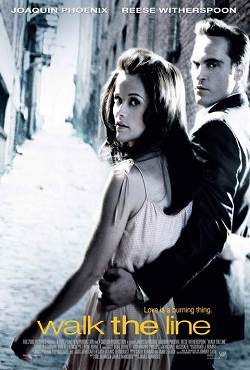
"We got married in a fever, hotter than a pepper sprout". So begins Jackson, the duet by the country music legends Johnny and June Carter Cash. That song, along with others like Ring of Fire and Walk the Line, is a good chronicle of their at-times tempestuous lives, careers and marriage. Walk the Line, the biopic of this legendary musical figure and his better half, is a long film. However, it is also highly effective, with strong performances and a committed story.

Starting and almost ending with his 1968 concert at Folsom Prison, Walk the Line covers the life and times of John R. Cash (Joaquin Phoenix). As his band, the Tennessee Three, are playing his introductory music, Johnny seems lost in thought as he looks on a saw. That saw sparks memories of his early years in rural Arkansas. He has an abusive father, Ray (Robert Patrick), a faith-centered mother, Carrie (Shelby Lynne) and a beloved brother, Jack (Lucas Till). Times are tough and the Cash family struggles. Things get harder when Jack dies in a sawmill accident. Johnny or J.R. is guilt-stricken as he goes off to Germany to serve in the Air Force. Here, Johnny sneaks in a little songwriting, working on songs like Folsom Prison Blues

Upon returning from his tour of duty, Johnny marries Vivian (Ginnifer Goodwin) and has four daughters. He also continues pursuing his music dreams. Vivian endures his efforts, barely hiding her irritation that Johnny isn't successful in door-to-door sales. Johnny finally, albeit shyly, goes to Sun Records to audition for its owner, Sam Phillips (Dallas Roberts). His efforts at singing gospel flop, but when he breaks out Folsom Prison Blues, Johnny and his-then Tennessee Two players get a record contract. 

It also gets him touring with a group of other Sun Records singers. There's wild man Jerry Lee Lewis (Waylon Malloy Payne). There's the quieter Elvis Presley (Tyler Hilton). One person not on Sun Records who is part of the tour is country music royalty June Carter (Reese Witherspoon). She is one of the members of the Carter Family, whom Johnny and Jack would listen to on the radio. June is more comedienne than singer, though she does sing. June, like Johnny, is married. He is clearly attracted to June. For her part, she is pleasant but, to use modern parlance, puts him in the friend zone.

Johnny's continuing success and touring strain his marriage. His growing fixation for the now-divorced June do not help. She agrees to keep performing and touring with Cash despite his on-stage antics. He for example humiliated her (though I think unintentionally) when he pressured her into performing Time's A-Wastin' with him. That song had been a duet between her and her first husband. Johnny's growing pill-popping did not help.

Despite common sense, June does once succumb to the temptations of the flesh. She is also irritated by the behavior of not just Johnny but of the other tourmates. June works out her feelings by writing Ring of Fire. Johnny works out his feelings by getting arrested for bringing prescription drugs from Mexico and ultimately divorcing Vivian. He buys a secluded home and attempts to break generational curses. Mother Maybelle Carter (Sandra Ellis Lafferty) gets June to see that Johnny and June need each other. Will Johnny reconcile himself to God and his own past?

Walk the Line is more than a biographical film about one of America's greatest musical artists. It is also a love story. It is a very troubled love story in some ways. Johnny Cash was sometimes very inconsiderate of June. He more than once put her in uncomfortable and difficult situations. He pursued her relentlessly. It is a credit to director/cowriter James Mangold and his cowriter Gill Dennis that Cash did not come across as almost a stalker. I think it is because they adapted Cash's autobiographies Man in Black and Cash: The Autobiography, which I figure did not spare Cash from sometimes ruthless self-examination. 

Nevertheless, Walk the Line is a love story. For as awful as Johnny Cash was to others and to himself, we see in Joaquin Phoenix's performance a man driven by his own doubts and talent. In some ways, Phoenix's Cash is very tender, sweet, and deeply hurt. In other ways, he is petulant, arrogant, and self-absorbed. Phoenix plays Cash with no mimicry or impersonation. Instead, his performance is more evocative of the man.

This goes into whenever Phoenix sings. Johnny Cash had a distinct voice, his bass-baritone rumbling through the very core of him. Phoenix was not able to sing as low as Johnny Cash could. His voice is slightly higher than Cash's. That being said, Phoenix sounds similar to Cash. That lends a strong sense of authenticity whenever he performs either with June or by himself. Physically, Phoenix does an exceptional job. He gets Cash's distinct movements and guitar playing pretty much perfectly.

As a figure, Joaquin Phoenix shows Johnny Cash as troubled but also searching, be it for redemption, forgiveness or June Carter. He has wonderful moments when showing Cash's hesitancy and nervousness when first performing before a paying audience. Phoenix also does well when auditioning for Sam Phillips. I am dubious that Cash improvised Folsom Prison Blues after his gospel number failed to impress. That might be a little dramatic license. However, Cash's mix of frustration, fear and arrogance all came through quite well.

Joaquin Phoenix received a Best Actor Oscar nomination for his performance. His costar, Reese Witherspoon, won Best Actress for her turn as June Carter. I cannot say whether or not Witherspoon should have won. I can say that, based on the performance, the nomination itself was correct. June Carter first appears about thirty minutes into Walk the Line.  Given that the film runs about two hours and fifteen minutes, her appearance is held back for some time. Despite that, Reese Witherspoon is excellent in the role. 

She brings June's insecurity and struggles over her relationship with Cash. There are many positive moments in Walk the Line for Witherspoon. She can handle the comedy parts that June would perform on stage. She can also handle the musical parts just as well as Phoenix can. Witherspoon shows equal vocal dexterity when dueting with Phoenix's Cash on such songs as It Ain't Me Babe or Jackson. When she performs solo, such as with Wildwood Flower or working out Ring of Fire, Witherspoon is just as capable of holding the audience.

I should say that I am not as familiar with June Carter Cash's voice as I am with Johnny Cash's. However, I trust that Witherspoon did a strong approximation of it. 

What makes Witherspoon's performance great is that she makes June Carter a woman in full. She does this with small moments, such as when she apologizes to a shopper for her divorce. June did make a full effort to live out a Christian life but, like all of us, stumbled. The hurt and embarrassment that she shows is gentle. June Carter, however, is no shrinking violet. She comes from a performing family with decades of experience. As such, June is incensed when she sees Johnny, Jerry Lee Lewis and others boozed up before a matinee. Staring them down like an irate mother, she lets them know clearly that they are not professional. She culminates this by launching the empty beer bottles at the startled men. 

Reese Witherspoon makes June Carter that blend of strong and vulnerable. She is, to quote another country song, a good-hearted woman in love with a good timing man.  


Overall, I think all the performances were good. Robert Patrick's Ray is cruel and hard, but he also sees his son disappearing into failure. I am of a mixed mind when it comes to Ginnifer Goodwin as Vivian Cash. She was good in the role and played the role as directed. However, I wonder if perhaps Walk the Line leaned too far into trying to make her something of a villain. More than once, she came across as almost shrewish and pretty much non-supportive of her husband. 

James Mangold does wonderful work in directing his cast. He also does well with some of the visuals. He films Johnny Cash's on-stage meltdown in a frenetic, chaotic way, reflecting the tumult in his life. In a film about two musicians, it is not surprising to have many musical numbers. Part of me thinks that these numbers lengthen Walk the Line. Part of me, however, asks what songs or performances I would cut. 

Perhaps some of the tour artists' offstage antics. I might also have cut out Shooter Jennings' cameo as his father Waylon Jennings.

Those are minor points. I do not know if Johnny and June Carter Cash were ever called or thought of as Country Music Royalty. It would not surprise me if they were considered as such. Walk the Line is a moving, well-acted and well-sung tale of this great love story. The Man in Black and the Wildwood Flower made for a great duo. Walk the Line makes for a great film.

Johnny Cash: 1932-2003
June Carter Cash: 1929-2003

Wednesday, August 13, 2025

Bewitched: A Review

BEWITCHED

This review is part of the Summer Under the Stars Blogathon. Today's star is Shirley MacLaine. 

There was a brief time when filmmakers decided to raid old TV Guide issues for their next projects. Writer/director Nora Ephron decided that she was going to take a different tactic with these television-to-film adaptations by going meta. Thus, we got Bewitched, a curious and contradictory effort to simultaneously adapt the television series and be separate from the television series. Unsure of itself, Bewitched tries to be clever but ends up only confused about itself.

Isabel Bigelow (Nicole Kidman) is a literal witch who wants to give up witchcraft and live as a mortal. 

Quick side note: it is unclear if Bigelow is Isabel's actual last name or something she made up on the spot. The film tries to have it both ways.

Isabel's father Nigel (Michael Caine) is appalled at her plans but cannot change her mind. With that, Isabel tries to get off the magic but finds it hard to not use it as she is unfamiliar with life in the mortal world. Into this situation, she stumbles into Jack Wyatt (Will Ferrell). Jack is a well-known actor whose latest film, Last Year in Katmandu, flopped big-time. Looking to revive his flailing career, his agent Richie (Jason Schwartzman) gets him to agree to a reboot of the television series Bewitched. To placate Jack's ego, the show will now put his character of Darrin as the focus versus Darrin's wife, Samantha.

Jack thinks that Isabel, who makes clear that she is not an actress, would be perfect as Samantha. Despite never having seen Bewitched (Nigel saying that it degraded their kind), Isabel is cast, along with legendary acting diva Iris Smythson (Shirley MacLaine) as Endora. Isabel, good natured and naive about things, is enraged to find that Jack and Richie are playing her for a sucker. Hell hath no fury like a witch scorned. Isabel is not above using her witch powers to get back at Jack.

Jack for his part is befuddled by things. He grows more befuddled when Isabel's Aunt Clara (Carole Shelley) puts a hex on Jack to make him totally besotted and subservient to Isabel. Fortunately for Isabel, she is able to literally rewind the past to make all this go away. She rewinds and erases the past twice, I should add. Will the rakish Nigel fall for Iris, who is revealed to be a witch herself? Will Jack need the help of Uncle Arthur (Steve Carrell) to sort out his feelings and screen credit for Isabel?

As I thought on Bewitched, I thought that the idea of being meta with the material in and of itself isn't a bad one. One could have some fun with winking a bit at the audience about a woman who is a witch playing a woman who is a witch. The problem is that Bewitched is simply poorly executed. Both Nora Ephron and her writing partner, her sister Delia, were trying to be too clever with the material. Instead of being witty and clever, they ended up muddled and confused. From what I saw, Bewitched tried to have it both ways. It wanted to spell out that it was fully aware of the source material (no pun intended). It also wanted to be part of the material.
 
Let's see if I can set the situation for how Bewitched needlessly tied itself into knots. Everyone is aware of the television series Bewitched, along with the series' premise (mortal man marries a witch, hijinks ensue with the wife and her witch family causing chaos unintentional or not). On the show, you have characters like Darrin's mother-in-law Endora, and Samantha's Aunt Clara and Uncle Arthur. So far, so good. 

HOWEVER, Aunt Clara, the Bewitched television character on the reboot that Isabel is in, is also Isabel's actual aunt also named Clara. Isabel's Aunt Clara also happens to have the same accident-prone nature of the television series' Aunt Clara. I don't think that there is any way to make sense out of that. If Bewitched the movie is to be believed, the television Aunt Clara is somehow also Isabel's Aunt Clara. Either that, or there is a wild and irrational coincidence that Isabel happens to have a literal Aunt Clara who is exactly like the character of Aunt Clara on a television show that Isabel was forbidden to watch prior to entering the mortal world.

The Uncle Arthur situation is even more puzzling to irrational to downright nuts. Jack had mentioned earlier that Uncle Arthur was his favorite character on Bewitched, the television show. Near the film's conclusion, Uncle Arthur appears to Darrin in the way Uncle Arthur would appear on Bewitched, the show. This would mean that Jack is seeing a literal figment of his imagination as he should know that Uncle Arthur does not exist.

Yet, somehow, Uncle Arthur appears to be real, fully involved with Isabel's witch world as he says that he knows how that world operates. Carrell here is apparently playing a Paul Lynde impersonator playing Paul Lynde playing Uncle Arthur. I say this because Carrell adopts Paul Lynde's voice and mannerisms as Uncle Arthur. I thought Carrell's Paul Lynde impersonation was wildly exaggerated. Even for someone as camp as Paul Lynde, he was never that over-the-top. 

I figure that Carrell was attempting to play the Uncle Arthur from the television show. However, by the time he pops it, Bewitched is so confused about whether it is trying to be an adaptation of the television show or be a movie about adapting the original show that one simply does not know what to think. "I'm about to be killed by a fictional character," Jack screams out. That, I think sums up what is wrong with Bewitched. I get the desire to not be a straightforward film version of the television series. I can even respect the desire to play with the premise. What fails, what ultimately fails Bewitched is that it never decided which route to take. As such, it wanted to take both routes, which ended up confusing everyone.  

Bewitched puts in elements that never get a solid answer. We learn that Iris is actually a witch. We see her casting spells. Yet, we never know exactly why she is a witch. We do not learn if Nigel actually falls in love with Iris or is himself placed under a love spell. We also pretty much drop them from Bewitched, leaving such questions unanswered.


Perhaps the worst element in Bewitched is in how Isabel erased a long section of the Isabel/Jack relationship by literally rewinding what we had seen and erasing it from ever happening. It is a cheap and lazy way to not deal with the situation that the film had taken our time to present. One wonders why Isabel simply did not do this from the get-go. Worse, she does this rewind again when Jack's ex-wife Sheila (Katie Finneran) appears. At first, Isabel's witchcraft causes a light to fall on her, which would have killed her. Saying to herself that it was probably a bit too much, she just rewinds and has her merely whipped by a wind machine. It was the worst thing that the Ephron sisters could have done to move the plot forward. 

It is unfortunate that Bewitched was such a disaster because I think the actors genuinely tried to make it good. Nicole Kidman was game to play Isabel as this woman who wants a normal life but ends up in the most unnormal world of television. She does well as Isabel and when playing Samantha. Will Ferrell too I think tried to make Jack's egocentrism humorous. If you like Ferrell's manic, madcap manner, you will find Bewitched tolerable. If you don't, you will find Bewitched unbearable. The film has a montage of clips from his past films. I liked the quick glimpses of Sunday's Fool, Atticus Rex, An Onion for Wally and the infamous Last Year in Katmandu (where he plays a Vietnam War soldier from the South, a Roman soldier, a boxer and a Himalayan explorer respectively). I get that Jack is supposed to be an idiot. I don't get how he could plausibly have been a star, even in this world. 

Michael Caine and Shirley MacLaine were here for a good paycheck where they could be as over-the-top as their hearts wanted. To be fair, Caine appears to have tried to play the situations straight with a hint of mischief. He has a nice section where he pops up to berate his daughter while she's shopping. I hope he kept the Newman's Own box where we see his face rather than Paul Newman's. MacLaine camped it up to almost unheard-of levels. I guess she figured that she was playing an over-the-top acting diva who just happened to be a witch. As such, she just ran with it and never looked back. 

Bewitched is misguided and misdirected in every sense of the word. They thought that they were being clever with the material. They were actually being incoherent with the material. Bewitched will not put a spell on anyone, except perhaps one to have you fall asleep.

DECISION: D+

Friday, March 14, 2025

Dominion: Prequel to The Exorcist. A Review

DOMINION: PREQUEL TO THE EXORCIST

How many prequels can a film have? The Exorcist, a hallmark in horror films, got two prequels. The first was 2004's Exorcist: The Beginning. A year later, we got Dominion: Prequel to The Exorcist. We therefore have a situation where we get both "the beginning" and a "prequel" to the same movie. More bizarre, with The Beginning and Dominion, we get pretty similar stories. It isn't a surprise given that they share origin stories, so to speak, with studio involvement shaping a very convoluted situation into having both films. Dominion is held as superior to The Beginning. I can say that it is, but not by much.

Holland, 1944. Catholic priest Lankester Merrin (Skellan Skarsgard, one of the two Dominion cast members who was also in The Beginning) attempts to stop a Nazi commandant from killing villagers in revenge for the killing of one of his men. Despite the commandant's whispered offer to soften the blow by killing someone who is local scum (someone who beats his wife or is a drunkard), Merrin refuses to help. With that, the commandant kills at random, causing Merrin to lose his faith.

Now going to British East Africa three years later, Mr. Merrin is leading an archaeological dig where a Byzantine church has been discovered despite the Byzantine empire never coming that far south and before the introduction of Christianity to the area. Under supervision by Major Granville (Julian Wadham, the other Dominion cast member who survived into The Beginning), the half-English Merrin continues the dig accompanied by young Father Francis (Gabriel Mann). They later meet Dr. Rachel Lesno (Clara Bellar), who runs a clinic for the Turkana community. 

As the dig continues, Merrin becomes intrigued by local Cheche (Billy Crawford), a disabled man shunned by the Turkana. He is just one of the many strange figures and situations going on, everything from cattle eating the hyenas that have been hounding them to the discovery of a demonic temple beneath the church. Tensions begin to build between the Turkana and the British, the former convinced that the latter have brought great evil to them. The tensions build to a climax when two British soldiers are found gruesomely killed in the reopened church. 

Could their killings be something that the Turkana did? Is there a greater, supernatural evil at work? Francis, who barely survived a reprisal attack on his school by a vengeful Turkana warrior, at first sees Cheche's physical recovery as a miracle. However, he soon sees that it is not a miracle, but a sign of demonic possession. Will Merrin rediscover his faith to save Francis, Cheche and Rachel while stopping a war between the British and Turkana? Will this great demonic force lure Merrin into attempting to absolve Merrin's guilt at the expense of his soul? Who will win this great battle between good and evil?

The problem is that Dominion is too similar to The Beginning, so those who have seen The Beginning will be hampered when watching Dominion. Presuming that you have not watched The Beginning, I think that you would find Dominion to be slightly more meditative about issues of faith in a world beset by evil both supernatural and man-made. I think people going into Dominion expecting a lot of gore and blood will be terribly disappointed.

There are other elements that do disappoint in Dominion. Right or wrong, the visual effects are downright ghastly. Some scenes like the cannibal cows and the final battle between Cheche's possessed figure and Merrin are so poor in their VFX that they come across as unintentionally funny. Other elements in William Wisher and Caleb Carr's screenplay are puzzling. For example, Father Francis is found in a situation that echoes the martyrdom of Saint Sebastian. How exactly Father Francis found himself in this situation is a bit unclear, but it does give one a chance to admire the physical beauty of Gabriel Mann.

Another element is how both Rachel is underused and the truth about how she survived the concentration camp is revealed. It does not help that Bellar's performance near the end runs dangerously close to being parody. Sometimes, Crawford's possessed Cheche is surprisingly frightening, especially when he threatens Father Francis in English, which he should not know. However, he too at times hammed it up when playing evil.

Fortunately, there are other elements in Dominion that do work. One strong element is Skarsgard's Father Merrin. He makes one think that this man wants to break from faith because of what he has seen and been forced to partake in but who still has some part of him not want to turn completely away from God. He makes that transformation from priest to archaeologist back to priest believable. 

Another positive element is a fantasy sequence where Merrin sees what would have happened if he had made a different decision in 1944 Holland. This shows what I think is a great truth: that a particular decision might have a worse outcome than what we think it would have had, a case of unintended consequences. We also see this when Granville unintentionally recreates the same situation with the Turkana as that which Merrin had witnessed during the war. Here, we see that evil is not just the realm of Satan, but well within the hearts of men.

I think Wisher and Carr deserve credit for exploring these concepts, even if the execution did not fully work. 

Somehow, I do not feel it in my heart to throw blame on director Paul Schrader. The visual effects, awful as they are, may have been a result of poor funding. Dominion was plagued by interference from Morgan Creek, the studio behind the film. While there are some scares in Dominion, my understanding is that Morgan Creek wanted more in keeping with their idea of what The Exorcist franchise was seen as: scary and graphic. That resulted in the strange situation of having these two prequels.

Dominion: Prequel to The Exorcist is a much more serious film than perhaps the producers would have wanted. It is not a great film, but it is a passable film that could have been better.

DECISION: C+

THE EXORCIST FILM SERIES

The Exorcist

Exorcist II: The Heretic

The Exorcist III

Exorcist: The Beginning

The Exorcist: Believer 

THE EXORCIST TELEVISION SERIES

The Exorcist: The Television Series

Sunday, January 9, 2022

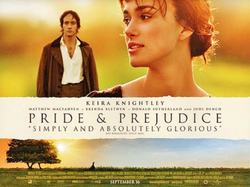
Pride & Prejudice (2005): A Review (Review #1570)


PRIDE & PREJUDICE (2005)

Perhaps to my shame, I admit I never finished Pride & Prejudice. From what I did read, however, I was quite impressed with the celebrated Jane Austen novel. While perhaps her most famous/beloved work has been adapted at least twice on film and television, the 2005 adaption remains one of the most popular versions. This version of Pride & Prejudice is a beautiful film, simultaneously contemporary and traditional, that is a delight throughout.

The five Bennet sisters, living in genteel poverty, are happy. Mrs. Bennet (Brenda Blethyn) wishes nothing but advantageous marriages for her girls, while Mr. Bennet (Donald Sutherland) would like to keep out of things altogether. Jane Bennet (Rosemund Pike) has caught the eye of Mr. Bingley (Simon Woods), the wealthiest man around. Jane's sister Elizabeth (Keira Knightley) is not opposed to marriage but is not looking for it either.

Things take a complication when she strikes a love-hate relationship with the brooding, proud Mr. Darcy (Matthew Macfayden), Mr. Bingley's best and wealthier friend. As the proud Darcy and the prejudiced Elizabeth continue their pas de deux d'amour, their various friends and family intermingle. The small and small-minded distant Bennet cousin Mr. Collins (Tom Hollander) pursues Elizabeth, while caddish soldier Wickham (Rupert Friend) manages to lure young Lydia Bennet (Jenna Malone) away. Eventually, true love triumphs for both Jane and Elizabeth, as the futures Mrs. Bingley and Mrs. Darcy rise above pride and prejudice.

From the opening sequence where the camera flows around the rambling, ramshackle yet loving Bennet home to where our lovers are bathed in the sunlight of their love, Pride & Prejudice is a sweeping, beautiful film. Director Joe Wright is very fond of having the camera follow the characters all around, but this works exceptionally well here. We get quick interactions between small groups of characters that give us story details without bogging things down. 

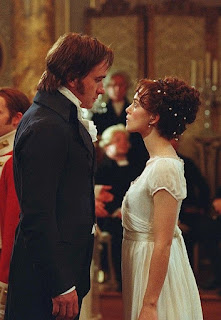
There is spirit of life in Pride & Prejudice as we see the various interactions between characters. Wright, along with screenwriter Deborah Moggach, do allow some moments of magical fantasy to enter the film. As Darcy and Elizabeth dance at the Bingley ball, at one point it appears as if they are the only ones in the ballroom, allowing their sharp comments to disappear as they fight their growing love.

One aspect that stands out in Pride & Prejudice is how contemporary the film feels. There is an almost rapid-fire delivery to the dialogue, not in a screwball comedy way but in a sharp, fast manner that has no sense of stuffiness to it. In short, the world of Pride & Prejudice feels lived, real, alive, as if we were genuine observers in this Regency Romance. I would put it as having the Darcy/Elizabeth romance be made up of respectable flirtation.

Each performance was simply perfect. Knightley comes into her own as Elizabeth, a very modern woman who is sharp, intelligent, not above throwing shade at the arrogance of the wealthy, but also aware of her own mind. She is brilliant when rejecting Collins' proposal, moving when seeing another side to Darcy, and delightful when showing her affection or irritation with her family. 

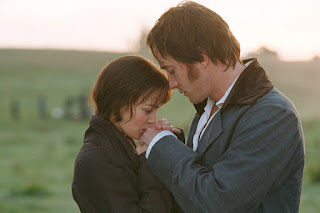
Macfayden, to my mind, has not been given enough credit for his Darcy. He certainly is an extremely handsome man (I would not blame women if they fainted when he appears through the morning mist, shirt open and coat flowing), but he shows the complexity of Darcy's emotions. Starting out openly haughty, he also shows how Darcy attempts to hide his growing attraction to the mind and body of Elizabeth: a quick glance, a flustered manner. Macfayden is excellent as Mr. Darcy.

Hollander brings humor to the bumbling Collins, Friend a plausible vulnerability to Wickham. Blethyn balances comedy and irritation to Mrs. Bennet, Sutherland showing the outwardly indifferent but genuinely caring Mr. Bennet. Rosemund Pike makes the case that one could have a film centered around Jane Bennet, and Woods like Blethyn balances comedy and romance with his Bingley. We also see early performances from Carey Mulligan as Kitty Bennet, and while Judi Dench has a small role as Lady Catherine de Bourgh, she is equally impactful.

Pride & Prejudice may be a costume picture, but there is no sense that it is theatrical. Instead, it is as quietly fiery as the romance between Fitzwilliam Darcy and Elizabeth Bennet, two individuals who are clearly made for each other. Beautiful, moving, fast-paced and keeping the sense of the time setting while injecting a modern sensibility to things, Pride & Prejudice is an excellent film.   

DECISION: A-

Friday, August 13, 2021

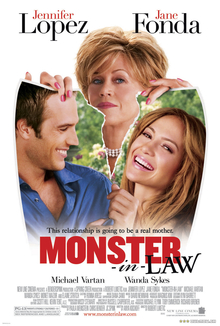
Monster-in-Law: A Review

MONSTER-IN-LAW

This review is for the Summer Under the Stars Blogathon. Today's star is Jane Fonda.

It's J-Lo versus J-Fo in Monster-in-Law, an admittedly dumb comedy that despite both itself and myself manages to entertain.

Charlie (Jennifer Lopez) has dreams of being a fashion designer but is happy as a temp for various businesses (dog walker, doctor's office). That is until she spots Dr. Kevin Fields (Michael Vartan), a hunky man who is equally enraptured by Charlie's beauty. A whirlwind romance begins, but there's a stumbling block.

That block is Viola Fields (Fonda), a broadcasting legend whose recent firing led to an on-air meltdown. Having just returned from a stint at a treatment center, Viola wants nothing more than to spend her free time with her son. Charlie, unfortunately, does not fit into the picture. 

Viola decides the best way to break up Kevin and Charlie's engagement is to be the future mother-in-law from Hell, one so awful that Charlie will flee to the mountains in terror. Despite warnings from her assistant Ruby (Wanda Sykes), Viola has Charlie investigated, keeps her up at all hours, and generally torments her until Charlie gets wise to Viola's scheme. Now it's time for Charlie to get some payback, with both battling it out until the wedding day itself.

Monster-in-Law was Jane Fonda's comeback after walking away from films fifteen years earlier. I know many bash the film as so much tawdry trash, and I am not about to marshal a defense of Monster-in-Law as a great or even good film. However, I will vouch for Monster-in-Law being an entertaining film in that it is fully aware of its own idiocy. 

Everything from Anya Kochoff's script to Robert Luketic's directing pushed Monster-in-Law to be broad and dumb, but nothing in either suggested they were going for any wit. Instead, through the clichés and stereotypes they presented, it is clear that Monster-in-Law was not going for anything above B-level sitcom. I can't fault a film for succeeding in its low aims.

The fun of Monster-in-Law is in seeing these two divas battle it out in increasingly idiotic, even murderous ways. If one thinks about it, both Viola and Charlie attempted to kill the other. I think Fonda is a good enough and talented enough actress to know Viola Fields is a paper-thin character, forever at odds with reality. To her infinite credit she manages to make such things as referring to Charlie as "that dog-walking slut" sound funny. Monster-in-Law allows Fonda the chance to be totally unhinged, not caring that she is looking foolish whether lunging at a poor Britney Spears-type pop star on live television or frantically stuffing gravy with nuts to serve the unsuspecting nuts allergic Charlie. 

Lopez is more blank as Charlie, as if she's aware that the whole thing is stupid but unsure whether to play it straight or not. Fonda embraced the silliness of it all, going broad to the Nth degree. Lopez, conversely, didn't, so her halfhearted efforts to make Charlie realistic look more out-of-place in something so over-the-top as this film.

Both however were miles ahead of Vartan, who was there as a plot device to get these two together. He was there just to look pretty, which he did. However, there was no performance there, but whether this is because Vartan cannot actually act or Vartan can but found nothing to act with is unclear. 

The standout is Sykes as Ruby, forever able to insult Viola and rattle off a quip with the greatest of ease. She can tell off Viola by mentioning her stay at "a loony bin" or mentioning how Charlie has had fewer lovers in her lifetime than Viola had at Woodstock. Gleefully insulting even when attempting to comfort Viola (such as when she suggest Viola marry another gay guy to take her mind off her troubles), Sykes is able to cut loose with her broadsides at our broad Viola. She and Fonda make for a great double-act to where you'd want to see a film centered around them prior to the events of Monster-in-Law

How either tolerated the other is a mystery, but they work so well together it manages to elevate the material despite the illogic of sensible Ruby and haughty Viola finding any common ground. 

I admit to having a special fondness for Monster-in-Law, as terrible as it may be. Predictable, in many ways stupid, I still find Monster-in-Law a weirdly enjoyable romp. I firmly believe a film should be judged by what it is trying to do. With that mindset, Monster-in-Law succeeds at being a low-level sitcom made into a feature film. Maybe it's a guilty pleasure, but if you go into it with the knowledge that in many ways it's a bad film, you can find entertainment with Monster-in-Law.

DECISION: C+

Sunday, March 31, 2019

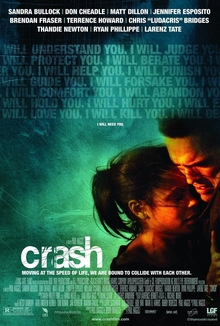
Crash (2005): A Review (Review #1200)

CRASH (2005)

Crash has not fared well with many film enthusiasts, perennially finding itself listed as among the worst Best Picture winners of all time. Some are especially harsh on Crash given the films it beat out, but that conversation is for another time. Here, I look at the film independent of its status as a Best Picture winner.

Having seen Crash for the first time since its release, a good distance of fifteen years, I find myself asking, 'How did Crash end up even getting nominated for Best Picture, let alone win'?

Crash could do with a Venn Diagram to sort out all the connections our characters have despite some of them not actually meeting. We have a myriad of stories connecting all these disparate characters so I'll do my best to sort them all out.

Los Angeles Detective Graham Walters (Don Cheadle) and his partner in more ways than one Ria (Jennifer Esposito) are at a crime scene where a body has been found. Their car was also hit from behind by an accented Asian woman whom over the course of the film we find is named Kim Lee (Alexis Rhee). Ms. Lee hurls racist comments at the Hispanic Detective Ria, who in turn openly mocks Lee's accent. We then shift to 'yesterday'.

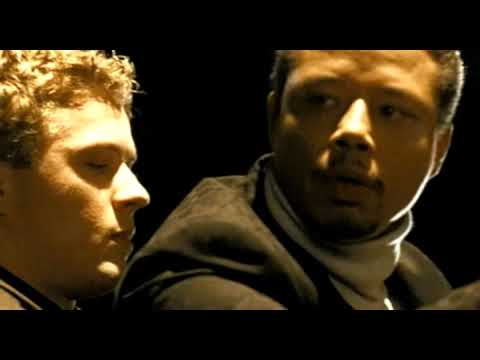
Racist L.A. cop Officer Ryan (Matt Dillion) and his rookie partner Hanson (Ryan Phillipe) pull over Cameron (Terrance Howard) and his wife Christine (Thandie Newton). Despite Cameron being a successful television director, he is still 'driving while black', so he's an open target. Worse, Ryan gropes Christine during his 'investigation'. Ryan also has issues with his ill father and is openly hostile that the black health insurance administrator Shaniqua Johnson (Loretta Devine) won't help.

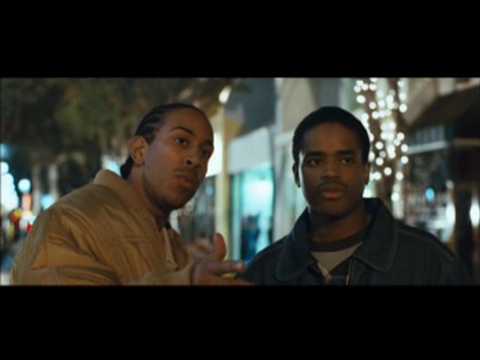
Over at another part of town, philosophical Black Power carjacker Anthony (Chris 'Ludacris' Bridges) and his more happy-go-lucky partner in crime Peter (Larenz Tate) have pulled off their latest carjacking after Anthony goes on a verbal tear about how 'white people are terrified of two young black men because they are two young black men'. They unwittingly carjacked the L.A. District Attorney Rick Cabot (Brendan Fraser) and his wife Jean (Sandra Bullock). Back at home, Jean goes into more racist hysteria, demanding that the locks be changed a second time become she's convinced the Latino 'gang member' locksmith will make copies so his 'homies' will break in.

Image result for crash 2004Said Latino locksmith Daniel (Michael Peña), who loves his daughter, has another client who is just as paranoid as Jean. That would be Farhad (Shaun Taub), an Iranian shopkeeper who berates Daniel for telling him he needs a new door rather than a new lock. Farhad keeps going on about he needs to 'fix the lock' and is either unable or unwilling to understand the lock itself is not the problem. Needless to say, his shop is broken into, with terms like 'rag head' sprayed inside for good measure. Now Farhad, unbeknownst to his more Americanized daughter Dorri (Bahar Soomekh), spends the rest of Crash hunting Daniel down with his new gun to avenge Daniel's supposed ineptness.

But wait, there's more!

In the course of this day, we find all sorts of goings-on. Graham finds that what appears an open-and-shut case about yet another 'racist' cop killing a black undercover officer may not be so open-and-shut but is pressed by the D.A.'s office to go along with the official story to get D.A. Rick good publicity. Jean has a fall and finds that the only person who is willing and able to help is her Hispanic housekeeper. Anthony and Peter accidentally run over someone they keep calling a 'Chinaman' whom they leave at a hospital due to Peter's intense pressure. They also attempt another carjacking, this time hitting Cameron. This causes two problems: Anthony, who takes pride in never attacking 'his people', now is willing to break that rule but now the mild-mannered Cameron finally breaks down and strikes back.

It's only through the intervention of Hanson, who is part of the squad that chases the vehicle, that Cameron can walk away. He might have run if he knew that Hanson's now-former partner Ryan has saved Christine from a car crash that nearly killed her, leaving both Ryan and Christine confused. Hanson ends up giving Peter a ride but kills him in a racially-motivated panic. Farhad nearly kills Daniel but unbeknownst to him Dorri had given her father blanks. Dorri is also a doctor who does the examination of Peter, whom we discover is not only the victim from the beginning but is also Graham's brother. The 'Chinaman', who is really Choi Jin Gui (Greg Joung Paik) ends up being Kim Lee's husband, and she was rushing to find him when she crashed into Graham and Ria.

Couple of more twists: Choi, we find, is really a human smuggler, the van he was about to get into when Anthony and Peter ran him down full of Cambodians. Anthony opts to take the van and release the Cambodians in Chinatown rather than sell them, and as he leaves, there's another fender-bender involving an Asian man and a black woman who starts hurling insults. That black woman is Shaniqua Johnson.

Related image
It's amazing how in attempting to give a Crash plot summary and be as brief as possible I end up sounding ridiculously excessive. It's just that Crash has so many stories running through it that attempting to give all the stories a summation takes an awful long time. I figure that writer/director Paul Haggis thought he was saying something profound about not just the interconnection of all people but of how racism is everywhere. However, what I found was that Crash was far too convenient in all those interconnections and so over-the-top in its portrayal of racism that it ends up cartoonish and at times hilarious.

Haggis' background is in television, which makes me think that Crash was somehow close to a television series jammed into a feature. We have all these stories floating about with characters that share a sometimes tenuous connection that sometimes just don't work. I think it is because almost all the characters do not resemble real people with their contradictions and at times even semblance of reason.

Take Bullock's Jean for example. It's one thing to assume that Daniel with his tattoos, shaved head and swarthy looks is a gang member. It's another to be shouting it to where you think she wants him to hear her rant. There's no sense to such things. If she and Rick had had this conversation in their bedroom perhaps it would have made sense, but her ranting and raving about her paranoia practically to his face seems more hilarious than real.

I found Bullock's whole performance comical and could never take her serious. Pretty much everyone in Crash seemed to be less acting and more standing in and saying things, never bothering with subtlety or realism. The only actual performance was Dillon, but he had the benefit of having something of a backstory that puts his racism in some kind of context. There's no reason for racism, let alone excuse for it, but Crash gave Dillon's character via a monologue with Devine a story that details how he got to his state.

Image result for crash 2004Everyone else though just was racist because the script told them to be. Worse, some of the performances showed no emotion. Esposito for example seems unnaturally calm given that a) she was hit from behind and b) a crazed woman is hurling racist insults at her. Even her mocking of Lee's accent by wisecracking about her 'blake' (meaning 'brake') seems shockingly calm, odd given that as a police officer she would have endured worse.

Crash has virtually no pleasant people: even the Asian couple who could have had a nice moment end up being human traffickers. Here I'm going to digress to ask one of those pesky questions on logic. I've been criticized for focusing on details in films, such as when I was berated for not declaring Get Out a turning point in cinema because I focused on why there were candles in the operating room. However, I could not help wondering about those Cambodians being smuggled.

How did Anthony fail to notice that there was a group of people in the van? Could he not smell them given that essentially they had been left in a van all day?

If I understand Crash, Anthony and Peter carjacked the Cabots in the previous evening and then Anthony returned to the van after his second carjacking (that of Cameron) failed spectacularly. That in itself is bizarre given that despite taking Anthony's gun away from him Cameron never mentioned in his meltdown that there was another man in his car who had threatened him. However, after Anthony and Peter are separated when the Cameron carjacking flops, Anthony is forced to take a bus and then spots the van from the night previous. Remembering the keys were left at the door, he takes the van.

Am I to understand that a van with keys in the door was never looked at by anyone in the neighborhood, or that a group of people would meekly wait all day inside the van without food or water and never shout for help? This seems something that would happen only because the plot wants to give in a last-minute twist, not any sense of reality.

Haggis hammers the racism over and over again, the message more important than the delivery; he also loves to transition from one story to another via visual cues such as one door closing in one story and opening to another. There is a cacophony of stories bouncing around to where all appear to be short-changed.

Crash seems less a cohesive whole than a set of vignettes on race and on how every person is racist, with no sense of compassion or kindness or even sense. Its message is clear: every person is one bump from turning into a genocidal terrorist.

Crash is heavy-handed, almost condescending in its idea of how pervasive racism is. It spins so many stories that it soon tangles itself in odd knots (after her dramatic crash, Christine is pretty much forgotten to where I forgot she was in the movie, let alone that she had survived a car explosion). Far too convenient and pleased with itself on its pseudo-insight, with bad performances save for Matt Dillon, Crash has aged poorly; it would probably be forgotten if not for its Best Picture win, and in hindsight one wonders how that happened.

DECISION: D-

2006 Best Picture Winner: The Departed

Wednesday, August 5, 2015

King Kong (2005): A Review (Review #735)

KING KONG (2005)

Too Much Monkey Love...

It's good to know that the original King Kong so inspired Peter Jackson that he decided to make films.   We can see the genuine love Jackson has for the original.  It's a pity though that he decided to not just remake King Kong, or even be slavishly devoted to it. 

Instead, Jackson decided he was going to improve on perfection, making not just his homage to his childhood inspiration, but a film to perhaps overpower and overtake the original.  His King Kong was going to be the inspiration for the next generation of filmmakers as the original was to him; it would be a film that others would turn to and be awed by his version rather than that which inspired him. 

At the moment, I can't decide whether it was genuine love or total hubris on Peter Jackson's part, but here is what I can say: after seeing it both in theaters and for this retrospective, this King Kong made the much-derided 1976 version downright brilliant.

We can essentially break the three-hour film into three acts (or perhaps three movies spliced into one by a mad scientist). Hour One involves Anne Darrow (Naomi Watts) a struggling vaudevillian done in by the Great Depression.  She yearns to be a legitimate actress and appear in something like her playwright hero Jack Driscoll's Isolation (the title being clue enough of his deep work), but hunger and the faltering economy force to consider something as shady as burlesque.   Into her life comes Carl Denham (Jack Black).  He imagines himself a director in the same league as a Cecil B. DeMille or an Orson Welles when he is closer to an Ed Wood.  Along with his friend/lackey Preston (Colin Hanks), Carl has been avoiding the studio chiefs who want him off a movie they see no profit in and his creditors.  He steals the film and hightails it to a waiting ship.  All he needs is an actress to fit into his former leading lady's costumes...

Denham gets the ship's Captain Englehorn (Thomas Kretschmann) to sail into uncharted waters along with his Pequod-type crew, Miss Darrow, and, in a surprising twist, none other than Jack Driscoll himself (Adrien Brody).  Driscoll had given Denham bits of a script, more sketches than anything else, as Driscoll was eager to return to the theater.  Denham gets Englehorn to sail before the studio/police/creditors get to the Venture, and as a bonus Driscoll is essentially shanghaied to take this cruise.

Denham has heard of a mysterious island called Skull Island and urges Driscoll to do two things: one, include it in his screenplay, and two, not tell the nervous crew about where they're going to.  Unfortunately, junior crewman Jimmy (Billy Elliot...I mean, Jamie Bell) has overheard where they're going, and the crew doesn't want to go there.  Just as Englehorn is about to sail to Rangoon to have Denham arrested, a fog and storm gets them to...SKULL ISLAND.


Hour Two is on Skull Island, where unimportant crew are killed off (sometimes in rather gruesome fashion for a PG-13 film) and they meet the creepiest natives in film history this side of Cannibal Holocaust.  Jack and Anne, who have fallen in love, go onto this island and barely escape with their lives (and Denham, with his camera) thanks to the Venture/Pequod crew rescuing them (despite Englehorn's disdain for Denham...which he shares with the viewing audience I imagine). 

Well, the Cannibal Holocaust natives take Anne and offer her as sacrifice to Kong, and the crew goes to rescue her (with Denham and his crew coming along to either be part of the rescue or film the goings-on, I'm not sure which.  Probably a mixture of both).  Well, Anne eventually gets rescued after undergoing a lot and feeling a little empathy for our big gorilla.  Never mind that said gorilla killed off a lot of the crew (both ship and film) AND that in rescuing her the chef gets devoured in a shockingly horrifying manner that even at my age found beyond the pale.

Hour Three goes to New York (how after using chloroform to knock Kong out they managed to get the beast to New York City we don't have to worry or think about), where Denham is the toast of Broadway for bringing Kong, now dubbed King Kong, Eight Wonder of the World, to the stage.  While movie star Bruce Baxter (the ageless Kyle Chandler) eagerly goes along with the act that has revived his career,  Jack, in a rare turn, has written a comedy, Cry Havoc!, but despite having written it for Anne, she is not there.  She is essentially hiding out in a chorus line, depressed about everything.  Kong escapes, goes on a rampage to find Anne, does a little ice skating at Central Park with her (no, I'm not kidding, but it is more accidental ice skating than anything else), Jack and Anne reunite, and the big ape falls to his death.  It wasn't the airplanes that got him.  It was Beauty killed the Beast.

Jackson's King Kong does what is unforgiveable in a film: it makes what should be exciting boring.  It's clear that Jackson essentially fell in love with the star, and devoted more time to it than he should have.  Tonally, the film sprawls in so many directions that no one knows what it wants to be.  Almost from the beginning Jackson decides that this will be some sort of deep, foreboding film, one of danger, rather than an adventure.  We hear this in James Newton Howard's typically horrible score (always pounding away about how serious and foreboding and existentialist this journey into the almost literal heart of darkness was).

Having Billy Elliot quote from Heart of Darkness does not help. What Conrad's tale of a journey into insanity has to do with a gorilla essentially falling for a girl we don't know.  Why we have to have some international sailing crew that even Herman Melville would think was heavy-handed we don't know. Why we have to care or are asked to care about little Jimmy's past or his dreams or even his father-figure type relationship with Hayes (Evan Parke) we don't know.


Which makes the odd moment where Anne does her vaudeville routine (up to impersonating Charlie Chaplin) to make Kong laugh look all the more idiotic, and even a little sad.  The music and general tone of King Kong suggests a SERIOUS film, maybe something close to Apocalypse Now.  Therefore, when we get the scene where Anne mistakes the sound guy for her idol Jack Driscoll the comedy is so forced and unfunny it's more cringe-inducing than laugh-inducing.

As a side note, given how much she admires his work, shouldn't she know what Jack Driscoll looks like?  There is a line about how he looks better 'in person' than in his picture, but the two men look so different there is no way (logically) she could confuse the two.

Jackson, along with his writing partners Philippa Boyens and Fran Walsh (the latter his real-life partner) again and again cannot resist going overboard with everything about King Kong (starting with its inexplicable length).  A lot of the storyline could have been cut or trimmed or simply reworked (why not just have the crew sail to the island without all this jazz about having to avoid the law or BE SO AFRAID OF SKULL ISLAND).  If that had happened, we could have gotten on with the story rather than waste at least half an hour with Anne's work worries, Denham's work worries, Englehorn's payment worries, Driscoll's artistic worries (and abduction).

We also could have cut out the creepy natives, the endless battles with Kong and spiders (there was a reason the original cut them out, you know) and the rather barbaric ways minor characters were killed off.  I never bought the idea that the imagery of the natives was somehow racist, but Jackson did go out of his way to make them freakish.  I figure he thought he was making them scary.  He ended up just making them horrifying.

Just on the moment when Lumpy the cook (Andy Serkis, who also played Kong with motion-capture effects) gets devoured by worms I would have given this an R-rating.  How it got a PG-13 is a sign of how lax the industry has gotten.  Jackson's overbearing slow-motion to emphasize the 'terror' we're suppose to experience or 'fear' SKULL ISLAND is suppose to engender makes this almost hilarious instead.


Parody of a parody...

Then there are the moments that no amount of visual effects can make serious.  How Jimmy, who has never used a rifle/gun in his life, manages to by accident shoot off all the bugs invading Jack is just stupid (as is when Bruce, whose only characteristic is how big his ego is, shows up to rescue them from certain death).

How Anne never got whiplash the way she was flopped about by Kong I don't know.

When Jack shows up at the King Kong debut, for a moment he thinks that the praise Carl Denham is lavishing on someone is for him, only to see it is for Baxter.  Given Carl had no idea Jack was there, what made Jack think Carl was talking about him?

I figure this was a deliberate stab at comedy but it, like Kong, fell flat.

Again and again and again Jackson is so enamored of everything that he doesn't know when to quit.  To be honest by the time we got to Skull Island I'd pretty much lost interest and didn't care whether any of them lived or died.

We also get some lousy characters and lousy performances. Making the top on both counts is Jack Black, someone I admit to not liking and never finding funny.  His Denham was so openly loathsome that when he about to be killed off by the Cannibal Holocaust crew I wanted him dead.  He is unethical, selfish, underhanded, manipulative, only interested in his film to the point of blocking out everything else.  At a certain point, when he manages to survive being tossed off a gigantic log by Kong, with all these dead people surrounding him, Denham observes his camera, broken, with the film exposed.  THIS moves him virtually to tears, but why would Jackson and Company think I would care?  When he makes his declaration of using money from the future film to give to a dead film crew members family, not only do we know he is thoroughly insincere, we begin to wonder whether he is literally insane.

As a side note, Denham must have been really desperate in his casting if he thought both Mae West AND Myrna Loy would be perfect for the part he gave Anne.  If you've seen both of them, you couldn't find two different types: the vamp and the sophisticate, so the idea they could both play the same part is the same as suggesting Miley Cyrus and Michelle Dockery could both play the same role the same way.

Even all that we could forgive if Black bothered to give a performance, but all he did was make faces and raise his eyebrows.  Typical Black shtick. 

Watts does what she can with Anne, a mopey little character with nothing to recommend her to be this brilliant comedienne.  Bless Brody for trying something so far out of his range: the romantic/action lead (and for building his body up), but he didn't look all that interested in the goings-on.  His scenes with Watts looked boring and it looked like these two wouldn't be interested in sharing a cup of coffee, let alone be madly in love. 

It's curious that despite winning Best Visual Effects (along with Best Sound Mixing and Sound Editing), a decade later King Kong's effects look downright cheesy and fake.  Time has not aged the visuals that once were so fascinating.

The problem with King Kong is that it takes itself so seriously.  It WANTS us to be awed, it WANTS us to be amazed, it WANTS us to care, but it never earned any of that.

"He destroys the things he loves," Preston observes to Jack (and for the record, Hanks was about the only good thing in this horror).  Were Boyens and Walsh thinking about Peter Jackson when they wrote that?  

DECISION: D-

Wednesday, September 1, 2010

Harry Potter & The Goblet of Fire: A Review (Review #111)


HARRY POTTER & 
THE GOBLET OF FIRE

Put Some Fire Under the Potter...

This Harry Potter film, the fourth in an epic series of eight (the seventh book being split into two films) finally gets it right, mostly. Of course, I'm not a fan of the books, having read only one and finding that one a bit underwhelming. I figure that they have to be a bit repetitive because each year Harry goes off to Hogwarts, faces great danger, and comes out all right. Have I got the gist of it?

That being the case, Harry Potter & The Goblet of Fire put things in that were needed (a genuine sense of danger/darkness/terror) and took out things that were always needless (no Dursleys!). As a result, what we have is an actual film that shifts the franchise from the cuteness of the Columbus films to the darkness, even evil, within the world of Hogwarts under new director Mike Newell.

Harry Potter (Daniel Ratcliffe) is not with his Muggle relatives for once but with the Weasleys. He joins them to go the the Quidditch World Cup (I figure a bit like the FIFA World Cup, except for Quidditch), and it's the final match between Ireland and Bulgaria. It's here though, that chaos breaks out: Lord Voldermort's murderous henchmen, known as Death Eaters, crash the festivities, killing and destroying and of course threatening Harry's life. Be that as it may, Harry, along with his friends Ron Weasley (Rupert Grint) and Hermione Granger (Emma Watson) still go off to Hogwarts.

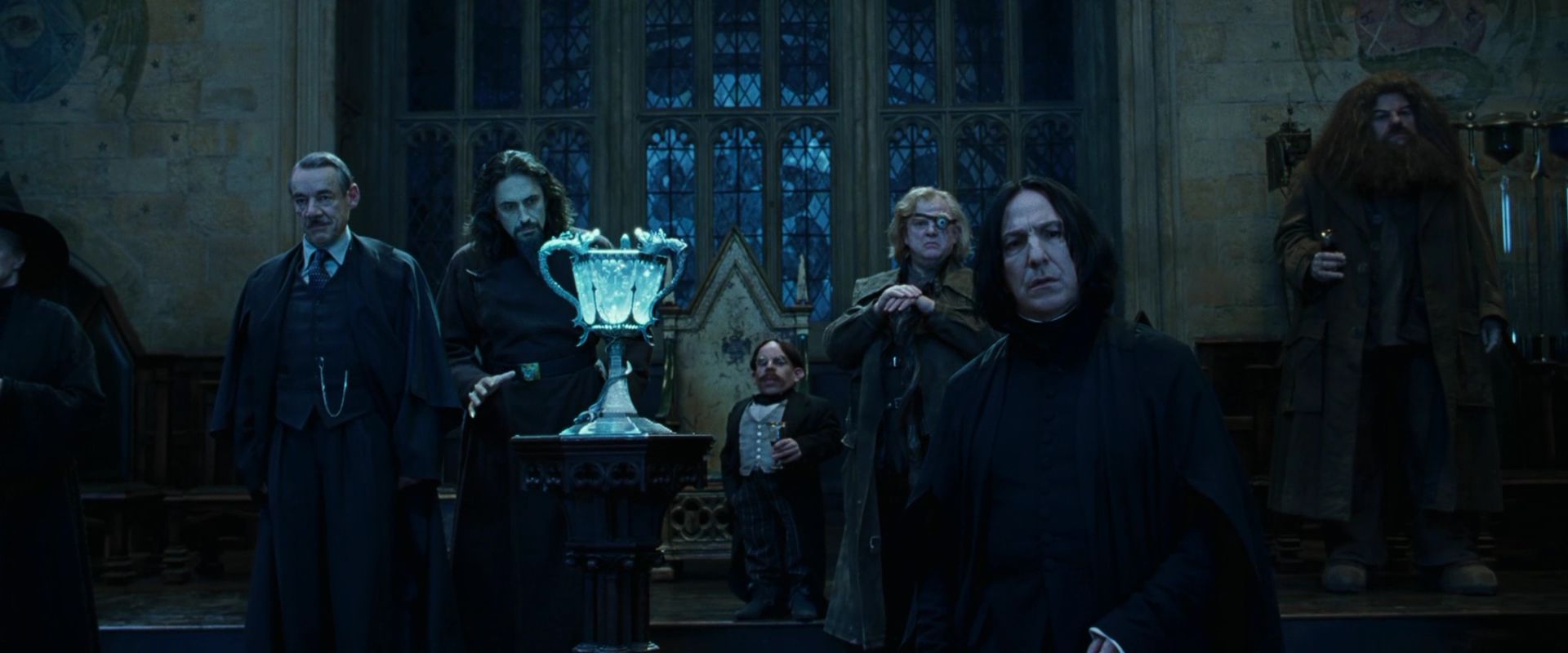
There is a special event this year: the Triwizard Tournament. Future wizards/warlocks/witches (whatever they're called) from other schools: The Beauxbatons Academy of Magic of Girls from France and the Durmstrang for Boys from Russia, or at least some Slavic country even if the name sounds vaguely German. They are coming to compete against the British co-ed Hogwarts for the championship.

Professor Dumbledore (Michael Gambon) informs them that the winner will receive great glory, but must survive THREE EXTREMELY DANGEROUS TASKS (begging the question, are there ever any other kind?). Anyone seventeen or over who is willing to face these THREE EXTREMELY DANGEROUS TASKS must submit their name into the Goblet of Fire, which will select one champion from each school. Since Harry & Company are fourteen (although none of them actually look fourteen, so we have to suspend disbelief for a bit) they concentrate on their studies, with yet another Professor of Defense Against the Dark Arts: Alastor "Mad Eye" Moody (Brendan Gleeson).


The Goblet now releases the names of the competitors: from Durmstrang: Viktor Krum (Stanislav Ianevski), from Beauxbatons (which sounds like Beautiful Batons) Fleur Delacour (Clémence Poésy), and from Hogwarts Cedric Diggory (Robert Pattinson pre-Twilight). Then, the Goblet unexpectedly releases a fourth name, an unexpected choice. Any guess as to who was named?

Now, they have these three competitions (all dangerous): getting a golden egg away from a dragon, rescuing someone from the bottom of the Black Lake, and the third, and most dangerous of all, entering a maze that could devour them to reach the Triwizards Cup. Through each danger (with some sequences extremely frightening) Harry is always aided by others, be it his bumbling classmate Neville Longbottom (Matthew Lewis) or even Cedric. However, in the midst of all this Harry has two great issues to deal with: Lord Voldermort is still Out There, plotting to rise again and kill him, and a greater horror...dating!

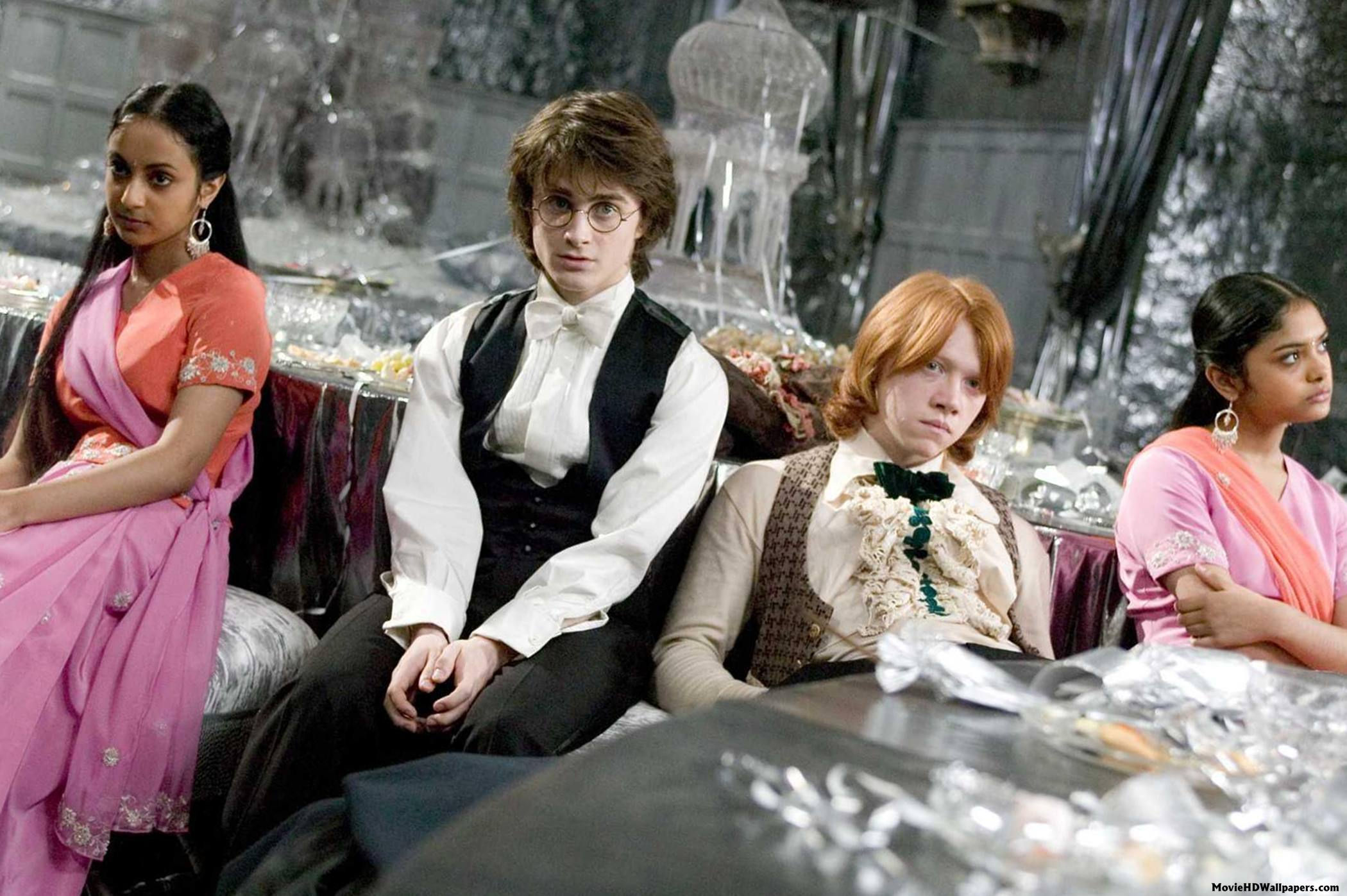
I suppose this is what elevates Goblet of Fire from all the previous films. It has the requisite menace from Lord Voldermort and his Death Eaters, but also has something everyone can relate to: the teenage rites of passage. This is most explicitly shown at the Yule Ball, a Christmas Eve dance where guys have to ask girls out. In the midst of all the danger and evil going on, there are real human emotions being played, among them love, lust, fear, and jealousy.

To my mind, Grint is becoming far more than Ratcliffe's sidekick, but a serious actor who is emerging out of the shadows. Goblet of Fire introduces something into the mix between Ron and Harry: resentment. We all know that Harry couldn't have put his name in the Goblet of Fire, but Ron doesn't believe him, and Grint's face expresses so much: a combination jealousy and anger against Harry that is both brilliant and frightening in its intensity. This is a realistic view because in every friendship at some point there will be conflict, perhaps even jealousy and resentment. When Harry & Ron make up, that also plays realistically, as does when they both realize they have to ask girls out to the Yule Ball. These moments where we see our characters as real people is what elevates Goblet of Fire into a better film in the franchise than we've seen before.

Newell also gives us more visually. Following in Prisoner of Azkaban's footsteps, there is very little lightness in Goblet of Fire, which is again dominated by grays and blacks. Even the moments of visual splendor, as when the students from Beauxbatons and Durmstrang enter the Great Hall of Hogwarts is visually arresting in its pomp and ceremony (although, for my tastes, a bit unrealistic).

I wonder if J. K. Rowling--whom I understand to now be the Citizen Kane of all British writers--toyed with the idea of sending her Hogwarts students to Beauxbatons or Durmstrang. Now that would have been interesting: to see our heroes in another setting. We might as well, given how little Maggie Smith's Professor McGonagall or Alan Rickman's Professor Snape had to do in the film. Even Tom Felton's Draco Falfoy were almost incident to the overall plot. It's debatable whether this is good or bad: it's good to be able to concentrate the story on our three main leads, but it does sacrifice almost everyone else.


THERE WILL BE A SPOILER HERE. 
READ AT YOUR OWN RISK.

Goblet of Fire has some of the most intense sequences in the franchise so far, so frightening that I wonder if it's a good thing to gear these films toward children. Things as small as Sirius Black (Gary Oldman) emerging from the fire in a fireplace to seeing four people lying at the bottom of the Black Lake to the Maze, where at last Lord Voldermort finally rises, in the form of Ralph  Fiennes (whom I thought was just a touch hammy, but given Lord Voldermort is suppose to be the embodiment of evil, I'll cut him some slack).

This issue with the violence reaches the culmination with the killing of Cedric, which to my memory is the first real death in the entire film (everyone else up to now was merely frozen or somehow able to be revived). Frankly, I wonder why everyone was surprised that we had a character murdered (since we were told it would be EXTREMELY DANGEROUS).

However, why would parents or adults allow children to participate in such gruesome, potentially deadly activities, even if it is in a world of magic?  Is that me being far too logical about fantasy stories?

END OF SPOILER.


If we go over the acting of some of the guest stars, we can't say that Goblet of Fire pushes any great cinematic borders. Pattinson is pretty to look at (given he was a former model, that's not surprising) but he really didn't have much to do with the story. It is nice though, to hear him speak with his native accent. He didn't show any great acting ability here, so whether his awful performances in the Twilight films are a result of the weak material Stephanie Meyer gives or of Pattinson's lack of talent is still up in the air.

There is some comedy thanks to intrepid (and insipid) reporter Rita Skeeter (Miranda Richardson, continuing the trend to behave as if the Harry Potter films were the new Shakespeare where every brilliant actor is fighting to get a role in them, which has me asking where are Sir Derek Jacobi or Sir Christopher Lee, or aren't they good enough for them?).

When I saw that the Weasley's tent at the Quidditch World Cup was larger on the inside than the outside, Harry might have been impressed, but I wasn't. I've seen that before--has Rowling or screenwriter Steve Kloves ever heard of a little art-house miniseries called Doctor Who?  This tent, it wouldn't be called 'a TARDIS' now would it?

The Doctor Who connection continues as we have as Barty Crouch, Jr., none other than The Doctor himself (David Tennant), it's not a surprise we have a TARDIS tent. I like Tennant as an actor (and yes, as the Tenth Doctor as well), but I couldn't help laugh at some of the faces he makes as he's led away. They were almost comic, not frightening.


ANOTHER SPOILER HERE. BE WARNED.

As with any Harry Potter film, we have those lovely Deus Ex Machinas that will always get Harry out of everything. The D.E.M. isn't as atrocious and insulting as the Time-Reversal deal Hermione had in Prisoner of Azkaban, but it still was completely out of the blue: it was the spirits of Mr. & Mrs. Potter as well as Cedric Diggory coming to give Harry more power to fight Voldermort and escape from the maze, leaving a frustrated and furious Voldermort.

I suppose there was no other way a fourth-year wizard student could possibly defeat the greatest force of evil, but it all seemed a bit too convenient. As usual, Harry himself doesn't have to do anything himself to get out of danger; it's done for him.

I think a line the Weasley twins tell Harry at the end of the Black Lake Challenge sums up the entire Harry Potter franchise perfectly: "Even when you go wrong, it turns out all right".


END OF SPOILER.

Goblet of Fire is a frightening film, I'd argue too frightening for anyone under 14. I wouldn't let my preteen children see it or for that matter read this particular book until they get older. Given all the ones that have come before, I'd say that's a good thing in terms of film. This chapter centers the story where it should be: on Harry.

It gives real emotions like love and hate a greater prominence in the story. It still has what all previous Potter films have: a great length (two and a half hours--will they ever be under two hours) which again I think is wrong for films geared toward children. However, the darkness, the danger, the humanity within Goblet of Fire makes it the best Harry Potter film of the franchise so far.

After a few stumbles, Harry's Back!


DECISION: B-

Next Harry Potter Film: Harry Potter and the Order of the Phoenix

Wednesday, July 21, 2010

Capote: A Review (Review #105)

CAPOTE

Writer's Prison Block...

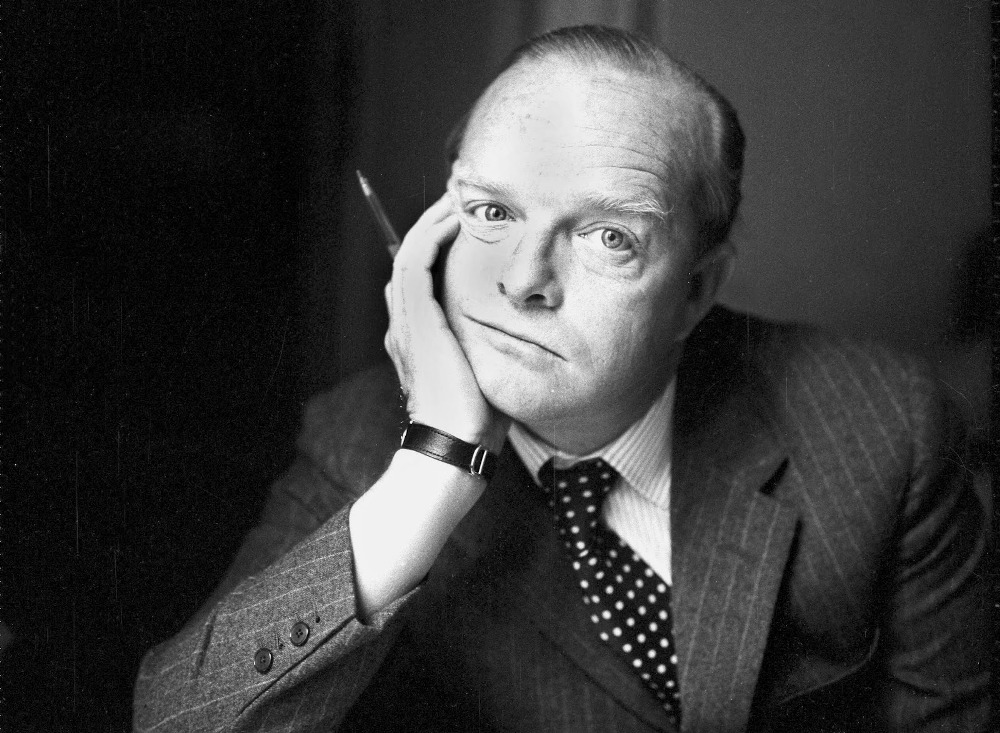
As it stands, Truman Capote is the type of writer whom everyone has heard of but whom few people actually read (myself included), at least not without it being required. It is his being, his persona, that is mostly remembered.

Two films explore the author's life while creating his most famous work: In Cold Blood. The second to be released was Infamous and beating it to the punch is the first version, titled simply Capote.  Both cover the same ground, and another time I'll discuss the two versions.  For now, I can say that Capote is a masterwork, a portrait of the artist as a middle-aged man.

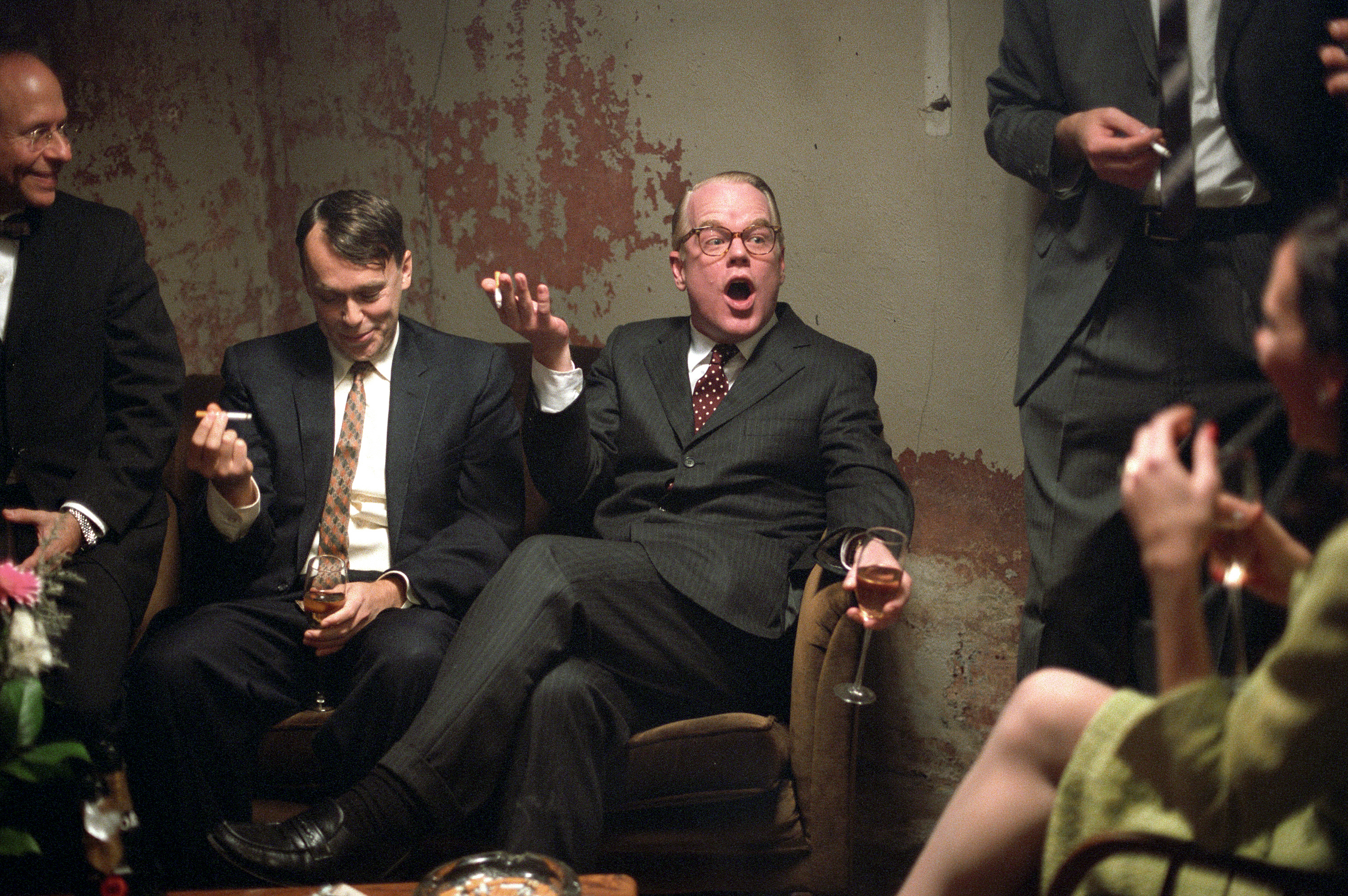
Truman Capote (Phillip Seymour Hoffman) notices an article about the killing of a family in western Kansas. He goes there with his friend, fellow novelist Nelle Harper Lee (Catherine Keener) to do research on an article on how the murders have affected the citizens. He clashes with Kansas Bureau of Investigations officer Alvin Dewey (Chris Cooper) but eventually becomes friendly with him and his family.

As he becomes more fascinated with the crime and with the denizens of Holcomb, KS, he expands his article into a book, and after the killers, Richard Hickock (Mark Pelligrino) and Perry Smith (Clifton Collins, Jr.) are captured, Capote's fascination grows. He begins a relationship with them, and the one with Smith becomes extremely close, much to the displeasure of Capote's companion, Jack Dunphy (Bruce Greenwood) and concern of Lee.

The success of Lee's To Kill a Mockingbird and Capote's struggle both with the book (which he calls In Cold Blood), his jealousy of Lee's success, and the conflicting emotions that Hickock and Smith's deaths stir in him, all play havoc with his life. Eventually, Capote does finish In Cold Blood with great success, but after that, he flies into the unknown, never to complete another work.


Director Bennett Miller creates a very sparse, quiet film with Capote. There is a conscious stillness throughout the film, especially when they are in Kansas, matching the endless vistas of the state. There are no big, elaborate scenes, and almost all the performances are quiet, soft. Even the sets are sparse: few pieces of furniture are seen.

This isn't a flaw, it's actually a plus. We focus more on the acting and the dialogue (the script written by actor Dan Futterman), and we're given a quiet story about how a horrible crime brought down so many, not just the victims but the killers and even their chronicler.

The performances match the stillness and quiet of the film. Hoffman captures Capote's babyish voice and mannerism, but it's not an imitation but a thorough character study. The scene when he attempts to gain Smith's trust by talking about how his mother was so similar to Smith's is brilliant, this performance of someone opening up to someone so beneath his social status is raw and deep.  It's amazing that Hoffman should in a sense, never have played Capote.  The actor is considerably taller than the writer, but Hoffman showcases Capote's ego, intelligence, and despair.  It is one of Hoffman's best performances.

Keener is perfection as Lee: a woman who appears to retreat into the shadows even at the height of her success with the book and film adaptation of her only published work. She lends a quiet support to Capote/Hoffman, a person who cares for her friend but cannot ultimately break him out of the prison he himself created.

Collins' Smith is still a bit of an enigma, someone we really don't know or ever are able to.  Perhaps that is how it was. Cooper is all business, all serious as Dewey, one who grows to like Capote (in spite of not knowing anyone like him) but who knows his first loyalty is to the law and who is genuinely hurt and angry that Capote would help, let alone befriend, these murderers.

If there are flaws in Capote, it's that the trial of Hickock and Smith were very rushed to the point of being non-existent. We also get very little of the relationship between Capote and Dunphy. However, there are more pluses than minuses. One of my favorite scenes is when Capote has a reading of In Cold Blood: the power of the words, and the trust Miller and Futterman have in the audience to appreciate Capote's work and have his writing hold our attention is excellent.

Capote isn't a biopic since it doesn't cover the lifespan of Truman Capote. It's an elegant portrait of a literary giant (no pun intended) who achieves his goal, one that has a terrible and tragic cost. The film is about the process of creating, and how even a person with extraordinary gifts and a joie de vivre can be brought down when reality does become stranger than fiction.

Image result for truman capote
1924-1984