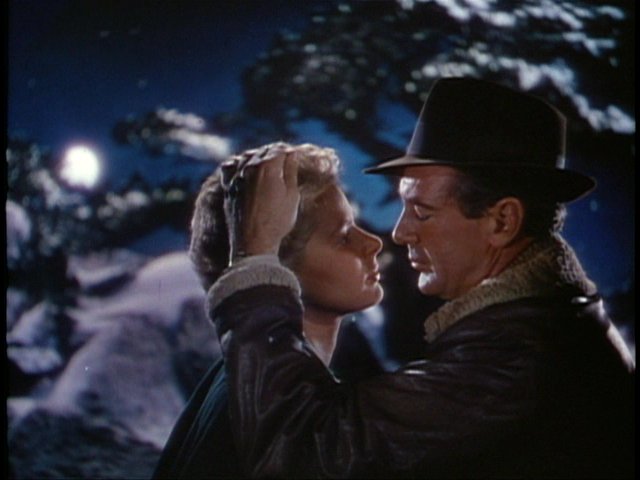
PETER O'TOOLE OSCAR NOMINATION NUMBER ONE: AN ANALYSIS
There would be time enough to reward Peter O'Toole in the future.
Perhaps that is a reason why O'Toole lost the Best Actor Oscar on his first nomination. How were people in 1962 supposed to know that the Academy of Motion Picture Arts and Science would nominate O'Toole seven more times without ever awarding him a competitive Oscar?
The 35th Academy Awards showed a lot of lust in the dust in its slate of nominees. The grand biographical epic Lawrence of Arabia led the nominations tally with ten. Hot on its heels was the relatively small-scale drama To Kill a Mockingbird, which had eight. Curiously, these two films faced off in only five categories. At the time, certain categories were split between black-and-white and color films. Therefore, Lawrence of Arabia and To Kill a Mockingbird could both be nominated for Art Direction and Cinematography (and both win the former) with no difficulty. In the five categories where they did compete against each other, the overall tally was evenly split between them. Lawrence of Arabia won in three of those five categories: Picture, Director and Score. To Kill a Mockingbird won in the other two categories: Adapted Screenplay and Actor.
The other Best Picture nominees were also nominated in multiple categories.
Mutiny on the Bounty, The Music Man and
The Longest Day received seven, six and five overall nominations respectively. In a surprising turn, these other nominees did not face off against
Lawrence of Arabia and/or
To Kill a Mockingbird often. It is a hodgepodge of categories where only in Film Editing did four of the five Best Picture nominees compete against each other.
To Kill a Mockingbird failed to be nominated for its film editing, with
The Manchurian Candidate taking that fifth slot that year.
Lawrence of Arabia won that category, one of its seven overall wins.
That black-and-white/color split caused part of that failure to have the Best Picture nominees square off as often. The Longest Day and To Kill a Mockingbird were the black-and-white films that faced off in Cinematography and Art Direction. The former won the first category, the latter the second. The three Best Picture nominees in color competed against each other in Color Art Direction (Lawrence of Arabia, The Music Man and Mutiny on the Bounty) and Color Cinematography (Lawrence of Arabia and Mutiny on the Bounty). Lawrence of Arabia won those. When there was no black-and-white/color split, it was Lawrence of Arabia winning Best Sound over The Music Man and in Original Score over both Mutiny on the Bounty and To Kill a Mockingbird. The Music Man, as an adaptation of a Broadway musical, was in a separate category of Musical Adaptation, which it won.
Overall, the Best Picture race was a battle between T.E. Lawrence and Atticus Finch.
The Longest Day, The Music Man and
Mutiny on the Bounty had little to no chance of winning here. Those five, six and seven nominations were not in Best Director. The remaining three Best Director slots were filled by
Divorce Italian Style's Pietro Germi,
The Miracle Worker's Arthur Penn and in something of a surprise, Frank Perry's
David and Lisa. The man who later brought the tawdry
Mommie Dearest to life can claim to have been nominated for Best and Worst Director.
The five Best Picture nominees were hit films, up to a point. The Longest Day, Lawrence of Arabia and The Music Man were the top three films respectively. Mutiny on the Bounty was fifth and To Kill a Mockingbird was sixth. There is a bit of a caveat in that Mutiny on the Bounty did not recoup its budget. Therefore, despite having a big box office, the film was a flop. It was also a flop at the Oscars, losing all seven of its nominations.
Further evidence that no other film other than Lawrence of Arabia and To Kill a Mockingbird had a major chance to win comes from the acting nominations. Out of the twenty acting nominees that year, not one came from The Longest Day, The Music Man or Mutiny on the Bounty. Only Lawrence of Arabia and To Kill a Mockingbird were nominated in the acting categories. Both received two acting nominations each. Lawrence of Arabia famously had no female roles, so it was not in Lead or Supporting Actress. Its nominations were in Lead for Peter O'Toole and Supporting for Omar Sharif. To Kill a Mockingbird had its nominations in Lead for Gregory Peck and Supporting Actress for Mary Badham.
It would be here in Best Actor where the young Turk and the old veteran would fight it out. Now, let us look at the competition.
The nominees for Best Actor in a Leading Role of 1962 were:
Two of this year's Best Actor nominees were already Oscar winners. Jack Lemmon had won on his first nomination: Best Supporting Actor for Mister Roberts. All of his future nominations were in the Leading Actor category. This nomination for Days of Wine and Roses was his fourth out of an eventual eight, with a second Oscar forthcoming. Burt Lancaster had won Best Actor on his second nomination for Elmer Gantry. This nomination for Birdman of Alcatraz would be his third out of an eventual four overall, all for Lead Actor.
Two of this year's Best Actor nominees received their first nominations; those would be both Peter O'Toole and Marcello Mastroianni. The latter made Oscar history with his nomination for
Divorce Italian Style. It was the first time that an actor was nominated for a leading performance in a non-English language film. He would receive two more Leading Actor Oscar nominations for
A Special Day and
Dark Eyes. Mastroianni would earn a place in Oscar history as one of the few people nominated multiple times for acting Oscars in a language other than English. For his part, Peter O'Toole would receive a career total of eight Oscar nominations, all for Lead Actor, and would go on to lose all eight.
Our fifth nominee, Gregory Peck, was the sole actor with previous nominations and no wins. His nomination for To Kill a Mockingbird was his fifth nomination. He had been nominated for three years straight from 1945 to 1947, with a fourth nomination in 1949. 1948 must have been a quiet year for Peck. It had been thirteen years since that nomination for Twelve O'Clock High.
Two past winners. Two first-time nominees, one in a foreign language film. A beloved veteran who had yet to win an Oscar. Looking at it now, one wonders why they even bothered to hold a ceremony given that Gregory Peck was almost certain to win separate from how good or bad his performance was.
Peter O'Toole was not completely out of the running. Lawrence of Arabia had the most nominations: ten versus To Kill a Mockingbird's eight. It was the bigger hit. He and he alone was Peck's greatest threat. However, had O'Toole won, it would have felt a bit like an upset win. Peck had lost four times before. He was adored by filmgoers and his fellow actors. Atticus Finch seemed tailor-made for Gregory Peck. It was almost as if he were playing himself.
Gregory Peck had all the cards to win this year. As stated, he was the only returning nominee. He was totally beloved by the Academy membership and Hollywood community overall. Lawrence of Arabia was pretty much set to dominate the Academy Awards. To Kill a Mockingbird could not mount a threat for all of its other battles with Lawrence of Arabia. That film was too big, too powerful, to have another be a strong rival; no other Best Picture nominated film was not going to be a serious threat.
Curiously enough, that dominance was reversed in Best Actor between To Kill a Mockingbird and Lawrence of Arabia. It was Peck who was essentially too strong to have anyone else overtake him. O'Toole was Peck's greatest threat. He, however, was not going to get past Peck's wild card: those previous nominations. Giving Peck the Oscar would be a way to reward Peck on a personal level while throwing To Kill a Mockingbird a bone.
The battle was always going to be between Gregory Peck and Peter O'Toole. The other three had little to no chance. Lancaster and Lemmon were already Oscar winners. That, along with how neither
Birdman of Alcatraz nor
Days of Wine and Roses were as big as either
To Kill a Mockingbird or
Lawrence of Arabia pretty much killed their chances. Mastroianni was in a foreign language film. Sophia Loren, who presented Best Actor that year, had been the first person to win an acting Oscar for a foreign language performance in
Two Women. I think her win was a combination of Loren's star power and a relatively weak competition. We were not going to see a repeat for Lead Actor here. Peck and O'Toole were too strong to have Mastroianni sweep in.
Most people that year may have focused on Lead Actress to see if Bette Davis could win her third Oscar. That bit of potential history, coupled with the juicy story of the longstanding feud between Davis and her non-nominated
What Ever Happened to Baby Jane? costar Joan Crawford might have distracted some. When it came to Best Actor, there was hardly any suspense.
It was a combination of personal affection and an overdue narrative that got Gregory Peck the win. In a most curious way, Peter O'Toole's first nomination out of a future eight losses would go unrewarded because someone else was considered overdue.
Here, now, is my ranking from Best to Worst:
Peter O'Toole
Gregory Peck
Marcello Mastroianni
Burt Lancaster
Jack Lemmon
Peter O'Toole burst onto the world's stage as T.E. Lawrence. His performance was complex, befitting this most enigmatic of men. He showed Lawrence as brash, arrogant, who then became almost drunk with his own publicity only to become disillusioned, haunted and tortured. The arrogance of youth was blended with ancient wisdom in his performance. This was a man who came to Arabia utterly convinced that he knew more than the generals, because he did. He evolved into a man whose loyalty became divided both politically and internally.
At one point in the film, Lawrence has reached the Suez Canal. As someone calls out "Who are you?" to him, we see Peter O'Toole's admittedly beautiful blue eyes. This is a now-haunted man, who cannot answer that question because he simply does not know. The double meaning of the question is clear. It is both a literal question and a metaphorical one.
Technically, Lawrence of Arabia was not Peter O'Toole's film debut. It was, however, a thunderous debut for audiences. It is a towering performance which for me has grown in stature.
Here is where I get into the "unpopular opinion" section when it comes to Gregory Peck's win. His performance in To Kill a Mockingbird is held in such lofty terms as to be downright deified. So many lawyers will almost certainly tell you that Atticus Finch/Gregory Peck inspired them to become lawyers. Atticus Finch was voted the Greatest Screen Hero by the American Film Institute. He is nobility itself. He is the embodiment of moral courage. He is practically perfect in every way.
Curiously, Lawrence of Arabia's T.E. Lawrence was ranked at Number 10 on the AFI Heroes and Villains List, the highest listing for a historical figure.
I think that it is a very good performance. Having revisited To Kill a Mockingbird after so many years, I think there are issues. Nowadays, Peck's Atticus Finch can be seen as a "white savior". Here is Atticus Finch, all nobility, all moral rectitude, strutting about telling the rural jurors to "do their duty" and do right by "the great levelers" of the court system. Finch's closing statement, to my mind, comes across as rather grand to pompous, especially in its delivery. This is not to say that what he was saying was wrong. It is, rather, to say that Atticus Finch was addressing the wrong audience.
The jurors in the Tom Robinson trial were rural white men. I figure most were not well-educated, certainly not to Finch's level. Yet, here is Atticus Finch, not speaking to them but almost speaking at them, lecturing them about doing their duty. He did not seem to want to win them over into doing the near-impossible. He seemed to be scolding them for not overcoming decades of prejudice because he, Atticus Finch, said so.
To be fair, the "white savior" trope could be thrown at T.E. Lawrence. Here was this brash British officer trying to liberate the Arab peoples and unite them under one banner. I would argue that Lawrence is different than Finch because Lawrence was a real person. Moreover, it was his efforts to meddle in Arab affairs that were not shown in Lawrence of Arabia in the best light. That did not happen in To Kill a Mockingbird. Far from it. Atticus Finch is nobility itself because he is that white savior, not despite him being a white savior. Yet, I digress.
There is also whether Gregory Peck acted or played himself. Peter O'Toole was wrong for the role of T.E. Lawrence on many levels. O'Toole was about a half foot taller than the real Lawrence. He also was a gregarious Irishman versus the more retiring British officer. Gregory Peck, conversely, was pretty much the same as Atticus Finch off and on screen.
Again, this is not to say that I think Gregory Peck gave a bad performance. His scenes with the children were a standout for him in terms of acting. He was gentle and loving but firm in his own way. Overall, though, I still think that Atticus Finch is closer to how Gregory Peck was than when he played Josef Mengele or Douglas MacArthur.
Finally, when it comes to Peck, we cannot dismiss the "overdue" narrative.
To Kill a Mockingbird was his fifth nomination. It was also his last nomination. The Academy may have felt that, now that they awarded Peck the Oscar, they had done right by him. To be fair, they were not going to nominate him for something like
Old Gringo. Still, no one questions why Gregory Peck never received another acting Oscar nomination (he was awarded the Jean Hersholt Humanitarian Award four years later).
Now, as regards the other nominees, I put Marcello Mastroianni third because he, like O'Toole and Peck, gave an actual performance. His sleazy Count had something of an exaggerated manner. However, Divorce Italian Style was a farce. I think that Mastroianni played the part correctly. With the forlorn face and slightly droopy shoulders, Mastroianni made the character a deliberately ridiculous figure. We were meant to laugh at him and see him as a bit of a cartoon. He was comically sinister.
Lancaster's great flaw in Birdman of Alcatraz was that he made his character one-note. Lancaster's Robert Stroud was always righteously angry. Sometimes, I thought that Lancaster was literally posing while delivering his lines as if he were playing a statue come to life. Lancaster's square jaw and tight face always said, "I AM NOBLE". Gregory Peck at least had gentle moments with children. Burt Lancaster just had his birds.
It is curious that Jack Lemmon keeps popping up during this Peter O'Toole Retrospective. This is the first of an eventual three times that Lemmon and O'Toole would face off against each other. They would not face off against each other until
1980 on O'Toole's sixth nomination and Lemmon's seventh. They would duel again
two years later on what would be Lemmon's final Oscar nomination. Both would lose those three times.
I have seen five of Jack Lemmon's eight nominations. I have yet to see the two films that won him the Oscar:
Mister Roberts and
Save the Tiger. It is unfortunate that each time that Lemmon and O'Toole face off, the former always lands at or near the bottom. Lemmon's nomination for
Tribute was probably his worst. His nomination for
Days of Wine and Roses, to my mind, is not far behind.
Having seen Days of Wine and Roses twice, I still am astonished at its lofty reputation. It is constantly sold to me as this gripping portrait of the destructive nature of alcoholism. I see it as the alcoholic version of Reefer Madness. One drop of booze, apparently, can turn a teetotaler into a sex-crazed harpy with vaguely incestuous designs.
My puzzlement over
Days of Wine and Roses' lofty reputation extends to Jack Lemmon. This nomination, his fourth, was for a supposed straight drama. His previous nominations for
Mister Roberts and
Some Like It Hot were for comedies.
The Apartment, I would argue, qualifies as a dramedy.
Days of Wine and Roses was, I figure, meant to showcase Jack Lemmon as a dramatic, serious actor.
If so, why was I laughing watching him throughout the film? I think it has to do with how apparently Lemmon and film director Blake Edwards approached the film. Lemmon had vetoed
the original teleplay's director, John Frankenheimer, from directing the film version. According to Frankenheimer, Lemmon nixed him as the film version's director because Lemmon said that Frankenheimer "couldn't direct comedy". Reflecting decades later, Frankenheimer still seemed astonished at Lemmon's reasoning. "I never saw it as a comedy", Frankenheimer said.
The end results show that apparently Jack Lemmon and Blake Edwards saw Days of Wine and Roses as a comedy. There was a lot of mugging and slapstick early on in the film. Lemmon, for example, had a bouquet of flowers but was unaware that the elevator had cut the flowers off the stems. His "striptease" while revealing a bottle of booze was deliberately silly and exaggerated. Worse is what I am constantly told is his big dramatic scene. Lemmon's character had hidden a bottle in his father-in-law's greenhouse with an elaborate system: fifth row, third table, fourth pot. Lemmon is supposed to evoke shock and tears as he becomes more desperate in his efforts to find that bottle of alcohol, smashing the greenhouse due to his inability to find it and/or accurately recall his own code.
In the original teleplay, Cliff Robertson made the scene one of desperation, even terror. In the film version, Jack Lemmon made the scene one of unintended comedy. Ranting and raving like a crazed lunatic, this is some of the wildest overacting that I have seen. I wasn't shocked. I wasn't astounded. I Whatever Robertson's flaws as an actor might have been, he was nowhere near as over-the-top as Jack Lemmon was when he did the same scene. I think Jack Lemmon's nomination for Days of Wine and Roses is terrible and should not have happened. I think The Music Man's Robert Preston, Sweet Bird of Youth's Paul Newman or The Man Who Shot Liberty Valance's John Wayne would all have been better choices.
Peter O'Toole should have won Best Actor for Lawrence of Arabia over Gregory Peck for To Kill a Mockingbird.
In conclusion, the Academy made the wrong choice in not awarding Peter O'Toole the Best Actor Oscar on his first nomination.


_poster.jpg)