Showing posts with label Presidential Biopic. Show all posts

Saturday, July 4, 2026

Young Washington: A Review

YOUNG WASHINGTON

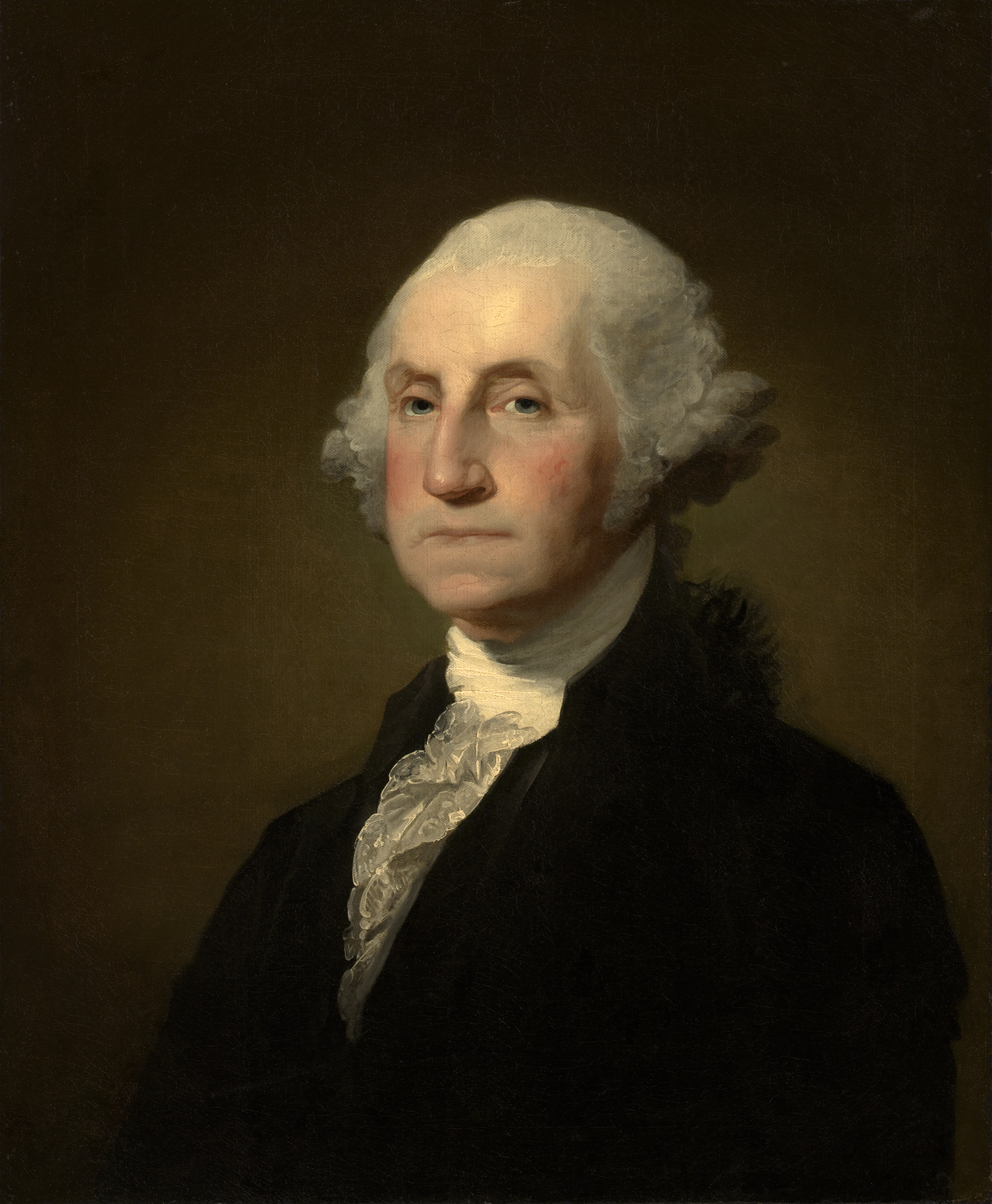
First in war, first in peace, and first in the hearts of his countrymen. Thus George Washington, first President of the United States, was eulogized by his fellow Founding Father Henry "Light Horse Harry" Lee. Long before he was held up as the Father of Our Country, George Washington was just a young man aiming to rise above his station. Young Washington is a well-acted and filmed biopic that while long is very much worth the effort.

July 9, 1755, the Pennsylvania wilderness. A sickly young man is astonished to find himself in the fog of war. He forgets about his health problems to find himself in the midst of fierce battle. How did this young man find himself here, and will he listen to commanders who tell him that the Virginia men are lost?

We then go twelve years earlier. Here, a young man named George Washington suffers the loss of his father. His older half-brother Lawrence (John Foss) takes young George under his wing. George Washington will not be among the elites. He is not British, has no land to his own name and does not have the background to enter into the upper echelons of society. He does not even have enough, thanks to his father's death, for a formal education. George, however, has Lawrence's extensive library.

Now, he grows into a tall and handsome man. Young George Washington (William Franklyn-Miller) essentially crashes the lavish dinner party of Lord Halifax (Kelsey Grammer). He also meets the feisty and outspoken Sally Cary (Mia Rodgers). They flirt in the way of the times, with quick repartee and subtle glances. Lord Halifax agrees to have Washington survey uncharted lands in the Ohio valley. George goes as a surveyor with his friend Chris Gist (Leo Hanna). They survive the harsh winter. They survive dealings with the Native Americans, especially Half-King Tanacharison (Ryan Begay).

The natives may have no love of the British, but they hate the French more. The French are now making incursions onto disputed and British territory. George informs Governor Robert Dinwittie (Ben Kingsley). George, technically already in the Virginia militia, is to inform the French that they are to leave. From that, George Washington finds himself leading men. He makes clear that no shots are to be fired, but someone, somewhere, does fire the shot that triggers the Seven Years' War (also known as the French and Indian War).

This is a terrible start for George. He loses the battle to hold his newly created Fort Necessity. He loses his closest friend. He also loses Sally to Lord Fairfax's son William (Joel Smallbone). Demoralized, depressed and with Lawrence dead, George retreats. His mother Mary (Mary-Louise Parker) once opposed his involvement in war. Now, she urges her son to rally and return. He does so, at a lower rank than when he started. Now as aide-de-camp to the haughty General Braddock (Andy Serkis), we return to the start of Young Washington. Will this young man in a hurry find himself protected by God? Will he turn the tide of battle, if not history?

Young Washington hits on almost all levels. It is entertaining. It is exciting. It is beautifully shot. It is well-acted. One aspect that Young Washington does well is that it neither deifies nor demonizes the title character. This George Washington is not deconstructed into a dark figure of evil. This George Washington, however, is not held aloft as some remote, aloof figure. Instead, this George Washington is a surprisingly relatable figure.

He is someone who knows that he is not among the elites. Particularly early on, George Washington is reminded in action and words of his surprisingly low rank. He is a second-born son with no title, no rank, no real social position or standing in society. His half-brother Lawrence, Governor Dinwiddie informs him, can obtain a military commission owing to his formal education and property. Young George has neither, so such a position would be impossible. He is also a man in love with a woman who will not be available. Long before The Great Gatsby, young Washington learned that "rich girls don't marry poor boys".

Granted, that line came from the 1974 film version and not from F. Scott Fitzgerald's novel. The idea, however, still holds true. 

What one sees in Young Washington is not a monument. They also do not see some sort of klutz, bumbling his way through whatever situation he is in. Instead, we see the future President as an intelligent, ambition figure, well-spoken and at times frustrated by the limitations he faces. He also is like us, crashing parties and mourning friends. He may not have cut down a cherry tree, but he does take out his frustrations by swinging axes at lumber. This young Washington is calm and steady. He is also surprisingly romantic. 

William Franklyn-Miller does an absolutely wonderful job as young George Washington. He speaks in a quiet but firm manner. He shows Washington to be quite mature. However, Franklyn-Miller also shows George Washington to not be above misjudgments, frustrations and even fears. The scene where he sees his dear friend die will be deeply moving to the viewer. 

As a side note, Young Washington has a visually beautiful scene when he buries and prays over the grave of his friend as Fort Necessity is burned to the ground. This scene is visually splendid. It is also, I think, symbolic of where George Washington was at the moment. I do not know if that was the intention of director Jon Erwin or those of Erwin's cowriters Diederik Hoogstraten and Tom Provost. That, however, for me was the end result.

Going back to William Franklyn-Miller, his performance allowed for George Washington to be romantic without being foolish. He has a soft manner exchanging witty lines with Mia Rodgers' Sally. They, however, were not in some kind of rom-com manner. Instead, they both showed George and Sally as being bright, articulate and aware of the other's feelings without slipping into farce.

I think all the performances in Young Washington were excellent. Ben Kingsley and Andy Serkis are probably the biggest names in the cast. Their roles were relatively small. However, both of them gave their characters a reality to them. Kingsley's Dinwiddie was sometimes sharp with young Washington. He did not play him as a mentor but as a figure making sure that his interests lined up with the Crown's interests. If that meant bending things to allow this colonial some military power, so be it. Serkis might have slipped a bit into some ham as General Braddock. However, I think that is how the role was meant to be seen as. 


Kelsey Grammer and Joel Smallbone had smaller roles as the Fairfax father and son. They did make the most of their screentime. Grammer came across as well-meaning and favorable towards the bright young man. That did not mean that Lord Fairfax would think he would be a better suitor than his slightly bitchy son, however. It is interesting how well the music worked in the film. When George learns that Sally is betrothed to William Fairfax, the chamber music starts rising. That is a clever touch. It suggests George's disappointment blocking out the words that pain him to hear. 

In her small role of Mary Washington, Mary-Louise Parker excels as the woman who frets for her son but ends up encouraging him to seek out God's will for his life. The same goes for John Foss as the wise and caring Lawrence Washington, his half-brother and father figure. We also get, not exactly comic relief, but a nice double-act of David and Henry Frisk (Angus Castle-Doughty and Fearghal Geraghty). They are average men, slightly sarcastic and salty, who are not afraid to call things as they are. They also are proud Virginians who will stand with one of their own. Leo Hanna's Christopher Gist is also well-acted. He is a loyal friend to George who will stay with him to the bitter end.

Young Washington moves well to where one barely notices the two-hour plus runtime. The battle sequences are exciting and well-filmed. It might have spent perhaps a bit more time in the Sally/George romance than needed. It might have thrown in perhaps a bit too much foreshadowing. "We are pawns, George, but even pawns can take a king", Lawrence tells young George when teaching him chess. It might have taken a bit long to get back to where Young Washington began.  

Overall, though, Young Washington is a well-crafted biopic of the Father of Our Country. On just about every level, Young Washington will entertain and bring life to a figure too often seen as walking marble.
1732-1799


Wednesday, July 1, 2026

Ike: Countdown to D-Day. The Television Movie

IKE: COUNTDOWN TO D-DAY

The recent film Pressure inspired me to watch another production centered around how June 6, 1944, became the longest day. Ike: Countdown to D-Day takes the events surrounding the Allied invasion of Normandy and shapes them into strong viewing.

General Dwight D. Eisenhower (Tom Selleck) very reluctantly assumes the post of Supreme Commander of the Allied Expeditionary Force. He does so under the understanding that the entire operation be under his sole command. Fortunately, he has a supporter in British Prime Minister Winston Churchill (Ian Mune), who agrees. However, British Field Marshal Bernard "Monty" Montgomery (Bruce Phillips) is less than thrilled at this idea. Nevertheless, Eisenhower and Montgomery begin the plans for the Allied invasion of occupied France.

Ike has to endure many divas in uniform. There is the grandiose Montgomery. Then there is the slap-happy General George S. Patton (Gerald McRainey). He has been making dubious comments to the press on how the post-war world will be run by the Anglo-American alliance. This irks Ike due to these potentially racial overtones. Patton appears almost weepy at not being part of the final assault. Ike knows he's being played but goes along. He knows Patton is a proud man. He also knows that he will be needed post-invasion.

The plans for Operation Overlord continue. Eisenhower has to make some difficult personnel decisions. One general, Henry Miller (Paul Gittins) has been too loose with his talk while liquored up. French General Charles de Gaulle (George Chevstov) has the gall to say the plans are terrible. Fortunately, Churchill and Their Majesties George VI (Mick Rose) and Queen Elizabeth (Carol Seay) see that the Allies have good leadership for this great crusade.

As time for the invasion grows closer, Ike must make still more hard choices. Will the invasion have to be postponed? Will the invasion ultimately work? The troops about to be sent off to Normandy have been told not to talk to Eisenhower about personal matters. Despite this, Ike mingles with the troops and asks them about themselves. Ike's loyal aide Walter Bedell "Beetle" Smith (Timothy Bottoms) is astonished at this. With that, D-Day finally arrives, and whether or not Dwight D. Eisenhower will have to bear the blame or share the glory is up to those men storming the beaches.


Ike: Countdown to D-Day is interesting in that Tom Selleck neither looks nor sounds like General Eisenhower, yet he is believable in the role. I think Selleck's success comes not from an attempted impersonation or mimicry. Instead, Selleck concentrated on the man himself. Selleck makes Eisenhower into a calm, measured man. He is not unaware of the terrible cost that the invasion will carry. He is patient when dealing with men who think themselves greater. However, Selleck's Eisenhower manages to keep sight of the mission as a whole.

There is a remarkable level of maturity in Countdown to D-Day. All the actors treat the scenario with respect. That is not to say that they are somber. The film's script by Lionel Chetwynd wisely kept some amusing moments. Of particular note is when Montgomery insisted that Eisenhower put out his cigarette before receiving the King and Queen. Once George VI and Elizabeth arrive, His Majesty and Churchill immediately light up their own cigarettes and cigars. One chuckles at how Montgomery, who finds smoking offensive, has to endure this unintended affront by His Majesty and his Prime Minister.

Robert Harmon, who earned an Emmy nomination for Countdown to D-Day, more than merited that recognition. All the performances were first-rate. Tom Selleck blended a mix of commanding with almost humility as Eisenhower. At the presentation to Their Majesties on Operation Overlord, the King expresses concern over the projected high casualties. Eisenhower replies from the stage that he too is concerned. He expresses how the young men from Britain, America and Canada may not return, but that it is the necessary cost, albeit a deeply painful one.

The other actors also do fine work. Timothy Bottoms' Beetle is patient and supportive to the general. He, Selleck and Gerald McRainey share a wonderful scene. McRainey as Patton seems to want to almost break down in tears at the thought of not being in battle. He appears to be almost a softy behind the bravado. As he leaves Eisenhower's office still holding on to his command, Patton appears to think that he has pulled a fast one on Ike. Bettle questions Ike about all this. Eisenhower, perhaps resigned to things, admits that Patton thinks he's pulled a fast one. However, Eisenhower does not rage or gloat. He merely accepts.

Harmon also has great camerawork in Countdown to D-Day. An especially good sequence is when Group Captain James Stagg (Christopher Baker) is giving his weather report to the commanders. The camera flows beautifully, showing a besieged Eisenhower among all the various generals, each with their own concerns and timetables.

As a side note, it is interesting that in Countdown to D-Day, Stagg was important but not a major player. In the recent Pressure, he was made the central figure. In the former, Stagg's information is necessary but part of the overall plan. In the latter, it appears that his word alone metaphorically turned the tide of history. In Countdown to D-Day, it works. In Pressure, it does not. Yet, I digress.

Ike: Countdown to D-Day is a strong production. It treats the men with respect without being reverential. They are not shown as important, lofty figures aware of their importance to the world. Instead, they are shown as surprisingly ordinary men tasked with an extraordinary mission. Those portrayed in Ike: Countdown to D-Day were treated with intelligence and respect. 

1890-1969


8/10

Monday, September 22, 2025

Truman: The Television Movie

TRUMAN

Perhaps few people were as poorly prepared to be President as Harry S. Truman. A former haberdasher who gained political office through the patronage of an infamous political boss (though Truman himself was honest), he was not welcomed into the echelons of his boss, President Franklin D. Roosevelt. When FDR died suddenly in his fourth term, then-Vice President Truman was not seen as up to the job. Truman, the television biopic based on historian David McCullough's biography of the 33rd President, is respectable but oh so dry.

Hopping about from his 1948 reelection campaign to his life in Independence, Missouri and after his reelection, Truman attempts to give much scope to how Harry Truman (Gary Sinise) rose to the Presidency. He had but one love, Bess (Diana Scarwid), but her mother and brother were not wild about Harry. As far as they are concerned, Harry is a loser.

To be fair, even Harry sometimes sees himself as a loser. That is until his reputation for honesty and his military record in World War I gains him the attention of Missouri political boss Tom Pendergast (Pat Hingle). Pendergast thinks that Harry will be the perfect stooge, but except for one very reluctant compromise involving road work that Truman knows will benefit both farmers and Pendergast's patrons, Truman steers clear of any shady business.

That reputation for honesty despite his Pendergast ties elevates him to the Senate. Here, Truman goes after war profiteers and finds himself, most reluctantly, as the compromise candidate for Vice President under Franklin D. Roosevelt. No one, least of all Harry, seems aware of how ill FDR is. Worse, Truman is essentially cut off from Roosevelt's inner circle. As such, when FDR dies and Truman ends up succeeding him as President of the United States, he is thrown into a series of maelstroms. Will he drop the bomb on Japan? Will he fire the popular General Douglas MacArthur (Daniel von Bargen) when he goes off against his Commander-in-Chief over Korea? 


Truman is well-acted and respectable. That being said, I was surprised and disappointed as to how boring Truman was. I think a major reason why Truman did not work for me is in how we simply did not get the man behind the image. This is not a reflection on Gary Sinise's performance as Harry Truman. While I do not think that Sinise got Truman's voice (sounding too nasal to my ears), I think Sinise communicated Truman's honesty and frustrations at being excluded. In a lot of ways, Harry Truman was excluded both at home from his snobbish in-laws and at work from his snobbish officials. 

Here, I think, would be a good point to look at where Truman slid off a bit. Late in the film, we are introduced to Clark Clifford (Tony Goldwyn). Who he is, why he is there, and why anyone should listen to this young man is not mentioned. He is just there and for reasons that Thomas Rickman's adaptation of McCullough's biography never makes clear, the viewer is supposed to care. Another character, Charlie Ross (Colm Feore) has a very curious death, keeling over in front of the press and staff before giving a statement for the President. People around him thought that Ross was clowning around, unaware that he had literally dropped dead in front of them.

To be fair, director Frank Pierson did not play this moment for laughs. He treated it with taste. However, I barely remember the character of Ross in Truman, so his death does not have the impact one would think that it would have to the Truman family. Moreover, the way Truman is structured, Harry famously (or infamously) threatening to punch a critic who gave his daughter Margaret a negative review of her recital comes across as more a bad outlet for grief than genuine anger at Truman's daughter getting bashed in print.


As a side note, I am surprised that Truman did not show some of the Truman Administration's more colorful and amusing moments. We don't see Harry Truman rising when the butler first enters the Oval Office. We don't see how Truman realized that the White House was a death trap when he sees a White House servant swaying as he walks across the floor, the foundation slowly crumbling due to decades of neglect. 

We don't see poor Bess Truman in her first major appearance as the new First Lady struggling to smash a champagne bottle to christen a plane (the bottle had not been properly prepared). Bess, a shy woman thrust into the spotlight, was both publicly humiliated and deeply enraged when Harry was amused. If memory serves correct, she told him that she wished she had thrown the bottle at him. 

We don't see Harry playing piano with the sultry actress Lauren Bacall sitting on top of it. Neither Bess nor Margaret, to put it mildly, were amused at the photos. I cannot recall if either Bess or Harry commented that it made him look like the piano player at a whorehouse. These little bits would have enlivened Truman. Instead, we got angry Cabinet meetings with Clark Clifford. That ought to excite viewers. Yet, I digress.

Truman was, as I stated, well-acted. Sinise showed Truman as a man of principle and decency. Diana Scarwid, who like Sinise was Emmy-nominated for her performance, was good as the supportive spouse. I cannot fault the performances of the cast. I can fault Truman for being so dry.

Truman was fine. It was well-liked enough to win the Outstanding Made for Television Movie Emmy (one of two wins out of eight overall nominations). Having seen three of its nominees, I think it was more the prestige subject than the overall quality that got Truman the Emmy. Truman is as I have said respectable but dry. I imagine that the real Harry S. Truman was the former but not the latter.

1884-1972

6/10

Thursday, October 17, 2024

The Apprentice: A Review

THE APPRENTICE

With the once and perhaps future President Donald Trump once again making headlines and others taking metaphorical and literal shots at him, it may not be surprising to see a biopic about Trump now in theaters. The Apprentice is a good film, until it isn't. While the film has good performances in it, The Apprentice slips into familiar territory that keeps it from achieving greater heights.

Young Donald John Trump (Sebastian Stan) is desperate to get the government off his family's back. He and his father Fred (Martin Donovan) are being sued by the federal government, which is accusing the Trump organization of racial discrimination in their Trump Village apartment complex. For help, he turns to the most ruthless lawyer in New York City: Roy Cohn (Jeremy Strong). Using methods both legal and illegal, Cohn wins the case, though Fred is leery of this man.

Cohn takes a liking to young Donald, though exactly what kind of liking is open to interpretation. Taking the young Trump under his wing, Cohn gives him his Three Life Lessons: always attack, never admit wrongdoing and always claim victory even if you lost. Trump soon looks to Cohn as a true father figure. It might not be surprising given that Fred openly sees his namesake son Freddy (Charlie Carrick) as a failure for becoming an airline pilot and not part of Fred's real estate business. Donald has, but he is still not good enough in Fred's eyes. This comes to a head when Trump wants to go into New York and turn a dilapidated hotel in a rundown neighborhood into a luxury hotel. Cohn again fixes things for Trump, saving him from his own foolishness.

Cohn can't save him from Ivana Zelnickova (Maria Bakalova), a Czech model who is flattered by Trump's interest but is not interested herself in him. Nevertheless, he persisted, and they marry. As we enter the 1980's, Trump exhibits greater narcissism and greed. He turns his back on Freddy, now a hopeless alcoholic. He rapes Ivana after a fight. He pops pills like they were candy and seeks both liposuction and a hair transplant. He finally turns his back on his mentor Cohn, who is unwilling to admit that he is gay and that he has AIDS. Will Trump triumph over his enemies and frenemies? Will Cohn see his apprentice become the master of the art of the deal?

For the first half of The Apprentice, screenwriter Gabriel Sherman and director Ali Abbasi did something that seems impossible: they humanized The Donald. With both Stan's performance and the script, the early part of The Apprentice shows Donald Trump to be naive, almost innocent, about life. When sitting at Cohn's table, surrounded by various shady characters, Trump looks lost and insecure, hesitant even. This is not the brash, braggadocio persona we all know and (love/hate). This is almost a little boy, terrified and desperate to please and be wanted. So desperate is he for help and validation that Donald Trump, who is a teetotaler in large part because of what he has seen alcohol due to his beloved older brother, reluctantly drinks on Cohn's orders. At the end of his first alcoholic experience, he leaves Cohn's car and promptly throws up.

Trump may not have thrown up when he stumbles into a gay orgy that Cohn is participating in, but young Donald is genuinely shocked to downright terrified at what he walked into (Cohn too distracted by the sex to even notice the bedroom door opening). This Trump is so naive and unaware that when at Cohn's party, he genuinely has no idea who an artist named Andy Warhol (Bruce Beaton) is. When Warhol told him that he was an artist, Trump merely smiled and asked if he had found any success at it. His bumbling efforts to fit in at Cohn's decadent party paint Trump as the ultimate square.

The Apprentice also makes us shockingly sympathetic to Trump when he goes to Trump Village to collect the rent. Yes, we see Donald Trump be a literal rent collector. The various denizens of Trump Village range from the obnoxious to the dangerous. Trump has to endure people going from begging to more time (which Trump gives some leeway to) to having one aggressive person throw boiling water at him, causing Trump to cuss him out after the occupant slams the door on him. This is not the ruthless, arrogant figure. This is someone who is trying to please his father and father figure.

We even get genuinely human moments from Trump. His romancing of Ivana is actually sweet, his grief at Freddy's death moving. 

Had The Apprentice ended there, we would have had a film that while not celebratory of Trump, would have given him nuance and showed him as human. However, once we go into New Year's in the 1980s, complete with Blue Monday playing to signal we were in the 1980s, The Apprentice becomes what I think people would have said it would be: a hatchet job. His sudden ruthlessness, casual cruelty, obsession with his weight and potential hair loss start slipping into farce. It also seems to come out of nowhere. That The Apprentice did not show this amount of evil from Trump prior to Blue Monday makes the transition all the more jarring.

This is best or worse captured in Trump assaulting Ivana after a fight. The President will deny it, the first wife is dead and unable to say anything. It is impossible to say what happened. It is, however, hard to imagine that Ivana would have joyfully appeared in a Pizza Hut commercial with her rapist, spoofing their divorce. Introducing these elements as well as other bits like struggling to get oral sex from a random woman, take away from the good half of The Apprentice.

This is unfortunate because The Apprentice is made up of some strong performances. Sebastian Stan does a credible job as the young Trump, someone who is unsure, looking to make his mark in New York instead of his family's Queens. Stan captures Trump's voice and mannerisms. He also makes Trump into if not a pleasant person, at least a more relatable one. Once we shift post-Blue Monday, Stan becomes the parody that so many leftists and Never Trumpers take as the real Trump: buffoonish, arrogant, cruel. 

Stan, however good he was, is simply no match for Jeremy Strong as Roy Cohn. Right from the get-go when Trump and Cohn look on each other, The Apprentice makes clear that Cohn is the ultimate malevolent force. With his staccato delivery and almost expressionless face, Strong forever pushes, prods and provokes all those around him. He makes Roy Cohn ruthless but direct, unable to show anything other than a drive for total domination of everything and everyone. It is a bit of a surprise to find future political fixer Roger Stone (Mark Rendall) be a pool boy at Cohn's place, but there it is. 

Unlike Stan, however, Strong never shifts from his performance. That is why his last scene is shocking, even moving. At Cohn's last birthday party where Trump presents him with an American flag cake, a visibly feeble Cohn looks at it and then breaks down in tears. It takes one aback to see this monstrous figure collapse, fully aware of his imminent death but regretful only for that and for nothing else. It does what was impossible: make Roy Cohn remotely human.

Bakolava does well as Ivana, and both Donovan and Catharine McNally as Trump's Scottish-born mother Mary Anne do well in their small roles. Donovan in particular does strong work as the disapproving and ultimately mentally incapacitated Fred Trump, Sr. I was, however, surprised that not once in The Apprentice did we ever hear Ivana call her first husband "The Donald", an accidental nickname that I believe he still uses, though to be fair it is not as prevalent as it was before. 

The Apprentice starts out well and then shifts midstream into more familiar anti-Trump territory. It does not take away from strong performances by Stan and especially Strong. I am sure that there is a better way to portray someone seen by many as a savior, others as the New or Worse Than Hitler. The ingredients are there, but The Apprentice did not mix them well enough. 

Donald Trump: born 1946
Roy Cohn: 1927-1986


DECISION: C+

Monday, September 9, 2024

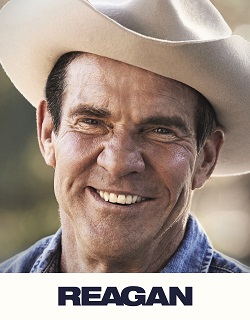
Reagan: A Review (Review #1865)

REAGAN

How one feels about Reagan, the biopic on the 40th President, might, more than likely will, depend on how one feels about the man himself and what he represents to the viewer. Those who love the Gipper will adore the film. Those who hate the Great Communicator will despise it. It is unfortunate that most cannot get past their own feelings on the man and his ideology to see the film itself. Respectful without being too reverential, Reagan is a positive though placid look at one of the most consequential Presidents in living memory.

Reagan uses the framing device of Russian Communist Andrei Novikov (Alex Sparrow) visiting former KGB operative Viktor Petrovich (Jon Voight). Novikov wants to know why the Soviet Union fell. Petrovich tells him the story of how he had been tracking Ronald Reagan (David Henrie as a teen, Dennis Quaid as an adult) since at least from his time as a Hollywood actor and president of the Screen Actors Guild.

Petrovich repeatedly warned the Politburo that Reagan was dangerous. He had a mix of firm anticommunism with a religious bent that made it a crusade. He'd even earned the mocking nickname of Crusader from Petrovich. Reagan was a generally affable fellow, mixing with other Hollywood personalities and firmly allied with the SAG until he saw that the Communists were trying to muscle in on them. This began his shift to the Right. Reagan's commitment to his political causes cost him his first marriage to Jane Wyman (Mena Suvari). However, hope came when aspiring actress Nancy Davis (Penelope Ann Miller) turned to Reagan for help in getting her name removed from a blacklist when she was confused with another Nancy Davis. From that, a romance blossomed.

Reagan soon started moving up in the political world, first as Governor of California and then after a thwarted effort in 1976, the Presidency four years later. His assassination attempt and dealings with the Soviet Union brought about the eventual collapse of the Iron Curtain and the Communist dictatorships in Eastern Europe. However, Alzheimer's would soon take over, leading to his death.

I am not surprised at the divide Reagan has between critics (21% positive) and audiences (98% positive). My sense is that professional reviewers are seeing Reagan through their own biases on the subject. Some, no doubt, do find elements in Reagan that are worthy of criticism. I too will do that. However, I also see this, or any film, based on what it is attempting to do and whom its target audience is. Reagan is for those who do not think he or his views are demonic.

As a side note, I have lived long enough to see Reagan and both Bushes described as "literally the New/Worse Than Hitler", so there is that.

I see Reagan as something of comfort food for conservatives and center-right individuals who do not want either a long lecture or a hagiography closer to Southside with You (91% and 71% positive from critics and audiences respectively). The question that I ask is, "Is Reagan (the movie) terrible?" not "Is Reagan (the man or his ideas) terrible?"

Reagan is not a hagiography in that it does touch on some controversial matters. It does not shy away from Iran-Contra. It gives time for a montage of negative reactions from those opposed to him in the 1984 reelection. In a nice montage to Genesis' Land of Confusion (itself an anti-Reagan song), we see teens and young adults dancing while also noting the various protesters opposed to his lack of action on AIDS or nuclear disarmament. That Reagan tackles these subjects at all is a plus to the film.

I can see where Reagan made a few wrong turns. The framing device was a mistake in Howard Klausner's adaptation of Paul Kengor's The Crusader: Ronald Reagan and the Fall of Communism. Perhaps opening and closing Reagan with this conversation would have worked. Going back to it over and over again cut out the flow the film gets into. A better use might have been if Petrovich had been lecturing a group of students about the fall of the Soviet Union.

In fact, I think Reagan might have done better if it had focused on his war with Soviet Communism instead of attempting to put almost every part of Reagan's life in the film. It starts getting bogged down, and sometimes one feels like one is rushing through things. Take for example the character of Dana (Derek Richardson). Starting out as essentially a Hippie for Reagan (he shows up unannounced on their yard, disheveled with long hair and a vaguely stoned-out speaking style that understandably alarms Nancy), we next see him coming to the White House as a speechwriter, still wearing casual wear in the Oval Office. Reagan might have done well covering these events through his eyes.

Instead, characters come in and out so quickly that you rarely if ever get a sense of who they are. Things went so fast that I was surprised to read that Creed frontman Scott Stamp appeared as Frank Sinatra. I didn't realize Sinatra was even in the movie. If not for my own knowledge, I would not know who "Trumbo" or "Holden" were when Ronald and Jane were at a nightclub. Other incidents, such as his speech at the Brandenburg Gate or an amusing moment when he shushes a group of protesters who greeted him with silence, are nice. However, they again show that Reagan tried to pack too much in.


The reason Reagan is not getting a negative review from me is due to a few factors. At the top of them is Penelope Ann Miller as Nancy. She did a standout job in the role. Miller made Nancy into a genuine person, neither the overprotective power-hungry shrew nor the zombified political spouse. I was genuinely moved when Nancy is at the hospital after the assassination attempt. The mix of fear and hope that Miller shows was effective. Credit should also be given to the makeup work on Miller, who looks convincingly like the former First Lady. Her scenes with Dennis Quaid really do well in selling their great love story. 

As the title character, I think Dennis Quaid had a difficult task. Ronald Reagan had a distinct speaking manner and voice, trained from decades as a radio announcer and actor. As such, Quaid could do only so much in his interpretation of the role. I think he did as well as he could, which is not a slam on his performance. There were times when he sounded more like Ronald Reagan and less like Dennis Quaid. Other times, it was the reverse. There was, again, only so much he could do with the script he was presented. On the whole though, Quaid was a serviceable Reagan. 

The scope of the film did not let David Henrie do much as the younger Reagan. That is a shame since he could have done well in Reagan: The Early Years. While I think Miller was spot-on as Nancy Reagan, I was not convinced by Suvari as Jane Wyman. Dan Lauria was good in his small role as House Speaker and Reagan frenemy Tip O'Neill, one moment bon vivant with Ronnie, the next being fiercely antagonistic. John Coda's score was an error, not so much in that it was bad but that it was dead set on being stirring when it might have done well to take a "less is more" approach.

Reagan is, I found, a film that is perhaps not as in-depth as it could have been but not filled with fierce fury and hatred for its subject either. It may not be the definitive portrait of the man behind the myth. It does serves as a good primer into this man, loved and hated in equal terms then and now.

Ronnie, we hardly knew you...

1911-2004


DECISION: B-

Friday, May 21, 2021

Warm Springs: The Television Movie


WARM SPRINGS

It is said that one has to walk before one can run. President Franklin Delano Roosevelt took perhaps a too literal view of this expression after his polio diagnosis robbed him of the ability to walk. Warm Springs is a respectful, respectable portrait of how his convalescence freed him and his wife from their own restrains to shape them into the dynamic figures they needed to become.

Dilettante Franklin Roosevelt (Kenneth Branagh) aspires to high office, an aspiration nearly derailed by his extramarital affair with his wife's social secretary. While Franklin's wife Eleanor (Cynthia Nixon) can accept a divorce, Franklin's powerful mother Sara (Jane Alexander) makes clear no divorce is possible. Franklin's political handyman Louis Howe (David Paymer) also sees the scandal of divorce as the end of FDR's political career, something he knows would be disastrous for the world.

The strains on the marriage due to Franklin's infidelity go out the window when Franklin is struck with infantile paralysis, better known as polio. Franklin slips into his own great depression, sensing his life is over. Desperate to regain the ability to walk, he hears about a resort in Warm Springs, Georgia that is supposed to have restorative waters. Here, he starts gaining hope that he may walk again while seeing the suffering of others, including the proprietor, Tom Loyless (Tim Blake Nelson). 

As Franklin becomes more sympathetic to the plight of others, Eleanor comes into her own as a speaker in an effort to keep Franklin's name alive in Democratic Party circles. A rapprochement is achieved between Mr. and Mrs. Roosevelt, and while Franklin never walks on his own power, his illness brings him closer to the suffering others both disabled and not endure, ultimately preparing him to face two of the greatest challenges of the Twentieth Century.

Warm Springs is a respectful, respectable film on the turning point of the future President's life. It does slip into being a bit of hagiography when we see how worshipful the other Warm Springs guests see their "Doc". All these people come to not just see whether the warm waters in Warm Springs but to shake FDR's hand. He inspires them, changes their lives, and such moments do seem to be gilding the lily.

We also get a smorgasbord of characters that rarely get any major play. There's the "ethnic" Italian from the Bronx Jake Perini (Andrew Davoli) to provide a "working class" voice, and a romance between a former ballet dancer and a Warm Springs attendant. They just kind of flow in and out as needed, making them slightly superfluous. The same goes for the almost blink-and-you-miss-it liaison entre Franklin and Lucy Mercer (Melissa Ponzio). 

However, Margaret Nagle's screenplay does have major positives. There's an acknowledgement over why Roosevelt opted to keep the degree of his disability secret or at least downplayed. While this seems more like a present-day discussion than one that would have taken place in 1928, at least it gives a voice over the difficulties a disabled politician would face at the time. 

Warm Springs also has strong performances from our leads. Branagh's best performance comes not when he's playing the brash, grinning Happy Warrior but when expressing fear and anger over his disability. Near the end, he tearfully admits that he wanted to walk not just for himself but for Eleanor, and one senses that it's his way of asking forgiveness for his indiscretion. 

Nixon did not bother to capture Eleanor's distinct high-pitched voice but I think it allows for a performance rather than an impersonation. She shows Eleanor's growing strength of confidence and conviction while still struggling with their married life. It was a casting coup to have Alexander play the domineering Sara Roosevelt as she had previously played Eleanor in the miniseries Eleanor & Franklin and its sequel Eleanor & Franklin: The White House Years. While a much smaller role, Alexander made her presence known.

Also in a smaller but no less important role is Kathy Bates as Miss Mahoney, a physical therapist who also becomes something of an emotional therapist to FDR. She holds your attention when she refuses to wallow with FDR in his misery, reminding him she 

Warm Springs does not delve into the personal sides of Eleanor and Franklin as one might expect. On the whole though, it is a well-acted and at times moving portrait of a man embracing his disability to rise to greatness.


7/10

Monday, November 23, 2020

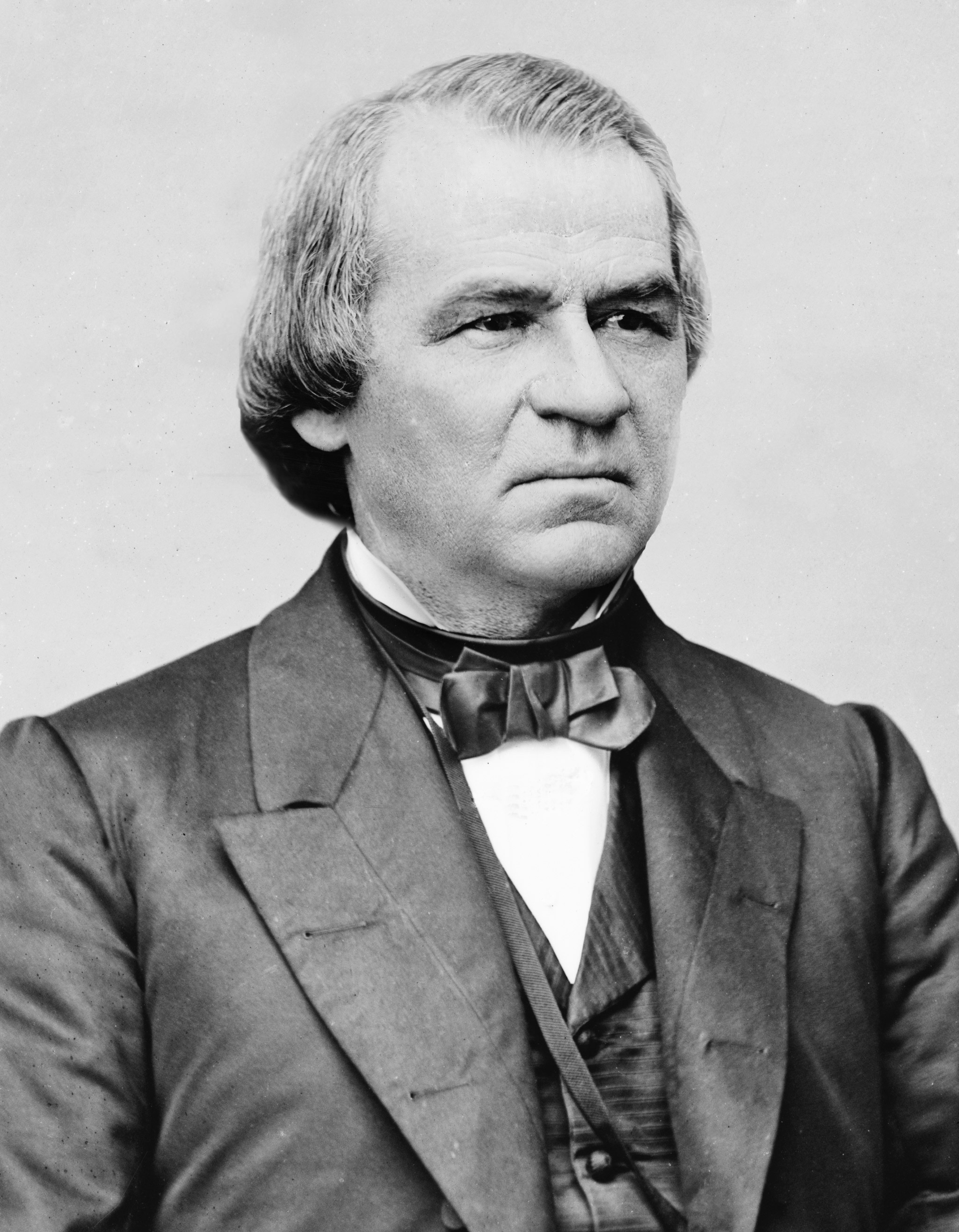
Tennessee Johnson: A Review


TENNESSEE JOHNSON

In real life, President Andrew Johnson and President Donald Trump have much in common. Both were single-term Presidents. Both were seen as uncouth by the "elites" and "swamp" of their day. Both were impeached on flimsy but politically motivated charges by a Congress with a near-pathological hatred against them. Both had the misfortune to follow popular and beloved Presidents into office. Both were irascible, short-tempered men who could not control themselves and who did themselves more harm whenever they spoke (one of the eleven articles of impeachment against Johnson was about him making "inflammatory remarks" against Congress, which oddly was not included as a "high crime and misdemeanor" against Trump).

Perhaps history will be as kind to President Trump as the biopic Tennessee Johnson was to President Andrew Johnson. Historically inaccurate but well-crafted and acted, Tennessee Johnson may give the viewer a wrong impression of the 17th President but on the whole works as entertainment.

Runaway indentured tailor Andrew Johnson (Van Heflin) manages to escape to the safety of Tennessee, where the local community embraces his sewing skills and shelters him. He soon becomes not only an important member of the community but has found love and education through Eliza McCardle (Ruth Hussey). The local librarian and illiterate tailor soon fall in love and marry.

Johnson is a fierce man of the people, unimpressed with the powerful and holding the radical idea that all free (white) men should have the right to vote, not just property owners. His political career rises, culminating in being Vice President under Abraham Lincoln in a unity ticket. Johnson is not afraid to face off against his own people when it comes to secession, up to not following fellow Senator Jefferson Davis' lead in resigning to join the Confederacy.

However, Lincoln's assassination elevates the drunk Johnson to the Presidency, and he's made a powerful enemy in Senator Thaddeus Stevens (Lionel Barrymore). Their war reaches a culmination when Stevens manages to bring about impeachment proceedings against this upstart. Now Johnson has to fight for his Office while attempting to control his temper. Ultimately, he manages to barely hold on.

Tennessee Johnson is open about how while the film is a biopic, it is not without as it puts it "certain dramatic liberties". As such, the film gives us a very polished portrait of the cantankerous Johnson, barely hinting at how belligerent and drunk he could be. While Tennessee Johnson paints Johnson as a decent man who saw Eliza as his muse and comfort, it isn't a hagiography. 

The success of Tennessee Johnson is due in very large part to Van Heflin's performance. He makes Johnson a sense of honor and conviction but also a man of doubts and fears, one who is so intimidated by the idea of Lincoln that he appears clearly sloshed at his Vice Presidential swearing-in. The role allows Heflin to give an elegant and intense performance. He has what all actors want: a dramatic monologue when addressing the Senate trial (which did not happen in real life). At times, Heflin as Johnson seems to almost address the viewer directly.

In supporting roles, Hussey manages to transcend the surprisingly thin role of "supportive wife" into making the First Lady into a stronger figure, loving, supportive but not worshipful. Barrymore is excellent as the villainous Stevens, convinced of his own righteousness in taking down the "evil tyrant" Johnson. 

It's a credit to director William Dieterle that he not only drew out strong performances from his actors but for also sneaking in moments of romance and even suspense when a Senator falls ill and has to all but be dragged back into the chamber to vote. Dieterle ratches up the suspense as to whether Senator Huyler (William Farnum) will vote Guilty or Not Guilty. 

As a side note, "Huyler" is the name used for real-life Kansas Senator Edmund Ross, who cast the deciding vote to acquit and saved Johnson's removal from office. Why exactly Huyler voted as he did is not clear, though to be fair neither is Ross' rationale.

Tennessee Johnson can be seen as a product of its time, showing the need for the government to work together and the importance of "the common man". Again, this film may not be history but it tell an interesting story and is well-acted. At the most, perhaps a remake could be mounted or a film of Senator Ross, a Profile in Courage. On the whole, the film works well and makes for interesting if not accurate filmmaking.

1808-1875

DECISION: B+

Tuesday, April 23, 2019

Abe Lincoln in Illinois: A Review


ABE LINCOLN IN ILLINOIS

Abe Lincoln in Illinois keeps to a more reverential tone that seems par for the course on any biopic of the 16th President. Here we see that the man before the legend pretty much becoming the legend. Abe Lincoln in Illinois gives us not just a Presidential portrait but a mirror to look at the times in which it was released.

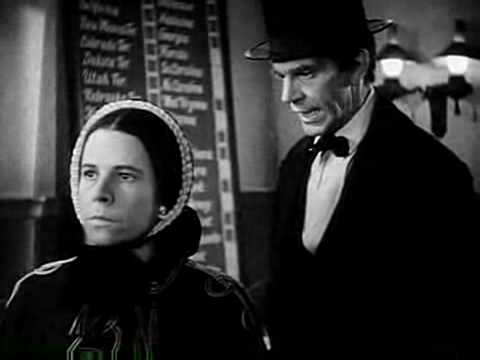
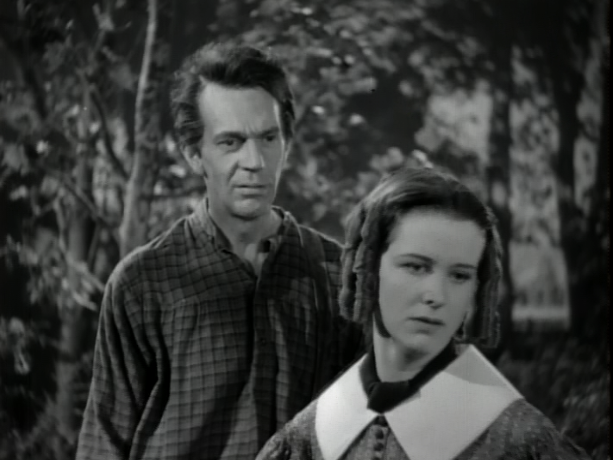
Covering the years 1831 to 1861, Abe Lincoln in Illinois hits some highlights to young and middle-aged Abraham Lincoln (Raymond Massey). There's his short but interesting voyage down South to New Orleans to sell hogs, whose highlight is first meeting the beautiful Ann Rutledge (Mary Howard).  After New Orleans, he decides to settle in New Salem, that quiet town where Miss Ann lives.

He fights the town bully Jack Armstrong (Howard da Silva), earning not just Jack's respect but that of the town. Abe silently pines for Ann while she's engaged to another man. Eventually, Ann does turn to Abe, who despite his apparent ineptness has become Postmaster. She, however, dies just as his reluctant political career begins, leaving him heartbroken.

Image result for abe lincoln in illinoisAbe equivocates with his new love, Miss Mary Todd (Ruth Gordon) and finds a worthy opponent in Senator Stephen Douglas (Gene Lockhart). It seems that everyone but Abe believe him not just capable but necessary to be President. Mary Todd certainly thinks so, openly stating she will be the engine to push Abe into the White House. Also advocating is his law partner Billy Herndon (Alan Baxter), who berates Abe for wavering in his nation's call.

Eventually, Abe comes to his senses, especially after a well-fought Illinois Senate campaign where in a series of debates with Judge Douglas, Lincoln declares that 'a house divided cannot stand'. He is eventually selected by the Republican Party as a compromise candidate and wins the Presidency. Now he makes his own Illinois Farewell Address to his community before heading to Washington and his destiny as Commander-in-Chief.

Abe Lincoln in Illinois, adapted from the successful Broadway play, does much to put Honest Abe on a pedestal. Roy Webb's score is very worshipful and John Cromwell's direction also at times seems to border on the theatrical.

Of particular note is a short scene where we see the Harpers Ferry Raid. John Brown is cradling his dead son in almost a Pieta-like manner, and his own manner is rather grand given the chaos and death of the Raid. It is curious though that it was Robert E. Lee who led the raid against Brown's attempted slave revolt.

Image result for abe lincoln in illinoisAs a side note, none other than John Wilkes Booth witnessed Brown's execution. If memory serves correct, Booth said of Brown's final moments, "He was a brave old man", but I digress.

We do get scenes like these, where the 'importance' of moments and foreshadowing almost bludgeon us. Early on, Abe is sworn in as a vote-counter, and that moment is treated with odd reverence for something that was more casual in nature. It seems to telegraph that later on he will be sworn in as President, but it robs us a bit of the evolution of the man.

One thing that was not explored and I wish they had was Lincoln's journey down South. I think this journey began his evolution towards being anti-slavery, particularly seeing the slave auctions. It's unfortunate and a weakness in Abe Lincoln in Illinois that Lincoln's evolving views on the "Negro", while still not as advanced as we might have hoped, were more progressive than others.

In terms of performances I admit Massey did an excellent job as the lanky, seemingly rustic Abe. He showed that rare image of Lincoln as a spinner of yarns and witty comments versus the more popular conception of Lincoln as a dour, depressive individual. His 'aw-shucks' manner and folksy delivery make him a strong Lincoln.

Howard was a bit overly dramatic as Ann, perhaps the only real love of Abe's life, but her death scene is moving. I didn't like Gordon as Mary Todd, but I think this is more a response to how Mary Todd was. She seems too brittle this early on, having little sense of any coquettish or playful nature to balance out her more somber husband.

Lockhart did quite well as the shrewd Douglas, aware that Lincoln was no country rube but a formidable opponent. Both he and Massey had standout moments at their debates, bringing fire and fury as they battled it out. I might have seen a whole film just on those debates and can see why they are still reenacted more than a century later.

I think Abe Lincoln in Illinois says as much about when it was released as when it was set. The film was released in 1940, where we were coming close to entering another great war and the current President was also highly regarded to almost worshiped. As such, films that elevated the President would be in good standing order. I cannot say that Abe Lincoln in Illinois was a de facto celebration of Franklin D. Roosevelt, but it is not beyond the real of possibility.

Abe Lincoln in Illinois is a good primer to our most admired and beloved President (sorry Barry, sorry Donny). It does not delve much into his political evolution or even his private life (we get no proposal scene between Abraham and Mary Todd). However, with strong performances from Massey and Lockhart along with excellent cinematography by James Wong Howe, Abe Lincoln in Illinois is worth the time even if it does not capture the man in full.

1809-1865


DECISION: B-

Tuesday, April 3, 2018

LBJ: A Review

LBJ

There are essentially two types of Presidential biopics.  There are the ones that make the subject look divine and are quite worshipful: PT-109, Sunrise at Campobello, Southside With You, Wilson, Kennedy.  Then there are those that make the subject look downright bonkers and Satanic: The Reagans, Nixon, W.

The fact that the worshipful ones are almost always about Democratic Presidents and the Satanic ones are almost always about Republican Presidents I'm sure is just mere coincidence. LBJ, the newest Presidential biopic, is about the 36th President of the United States, Lyndon Baines Johnson.

Lyndon Baines Johnson was a Democrat.

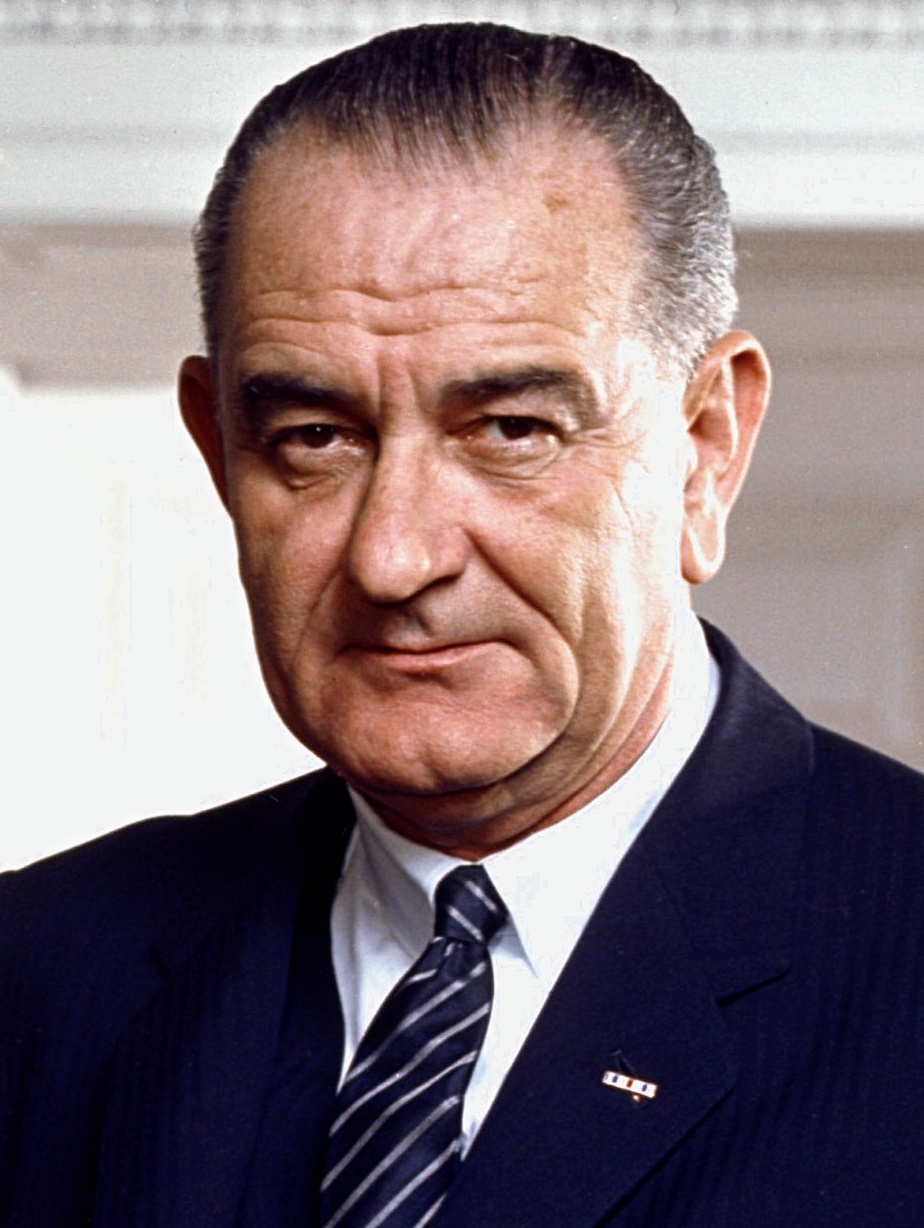
LBJ covers the time shortly before and after the assassination of President John F. Kennedy (Jeffrey Donovan), where his frenemy, Vice President Lyndon Johnson (Woody Harrelson) tries to navigate uncertain waters.  On the one hand, he's got his real enemy, Attorney General/JFK's little brother Robert F. Kennedy (Michael Stahl-David), who despises Johnson, I suspect because he is not liberal enough for the more elegant and glamorous Kennedys.  On the other, he's got fellow Southerner Senator Richard 'Dick' Russell (Richard Jenkins) of Georgia, who sees Johnson as too liberal, what with his support of race-mixing an all.

Before 1960, Johnson was the powerful Majority Leader in the Senate, able to make laws by the force of his will, and with a contentious relationship with his fellow Texan Senator, Ralph Yarborough (Bill Pullman).

Ah, when once Texas was a solidly blue state that would never elect Republicans and where Democrats ruled without question.  How times have changed...yet I digress.

Johnson equivocates on running for President in 1960, wanting to jump in but fearing he will lose and thus, lose the public's love for him.  Sure, whatever.  He also sees how pretty JFK looks on TV, and how Bobby despises him to no end.  He mounts a halfhearted campaign at the convention, but he, the 'work horse' still loses to the more beautiful 'show horse' Kennedy.  Despite this, RFK is aghast and furious that JFK would go to LBJ behind RFK's back to be VP.

So many initials.

Bobby does his best to freeze Johnson out, dumping some Equal Employment Opportunity Commission on him and having Under-Secretaries attend.  Johnson trudges on, and suspects that all this is being done to clear the path for Bobby to run in 1968 as the main Democratic candidate rather than the Vice President.

Then comes Dallas, and everything changes.  LBJ now finds himself the President, even if Bobby still refuses to recognize or behave any better with the new Commander-in-Chief.  The Kennedy Court plots to undermine Johnson, while Johnson, now full of vim and vigor, seizes the mantle of JFK to push the Civil Rights bill into law, with no compromises or negotiations with people like Russell, who feel betrayed that 'one of their own' would have them give the 'Negroes' rights.  LBJ, however, rises to the occasion to achieve greatness.

Image result for lbj movieWhile watching LBJ, I was reminded of a comment I heard about the making of another Presidential biopic.  20th Century Fox mogul Darryl F. Zanuck worshiped President Woodrow Wilson, so much so that he foisted a lengthy biopic of his boyhood hero on the public.  His biographer, when noting how Wilson was a flop, commented that there were many Presidents whose life stories would be fascinating. 

"But WILSON?!", he said, almost shocked that our most bookish, schoolmarm racist Commander-in-Chief would be considered the stuff of exciting cinema.

In the same vein, I ask, "Lyndon Johnson?!"

I suppose one can make a good film about Lyndon Johnson, but LBJ isn't.  The reasons for it are many.

LBJ is squarely in the 'worshipful' mode, a film that has no interest in exploring any dark aspects of this person's volcanic personality or bullying manner.  It literally makes Vietnam a footnote, mentioning it briefly at the end, and apparently only to note that he was the last sitting President not to run for reelection.

I am going to throw in a little political speculation here, but I imagine LBJ is a somewhat romantic take on Johnson because this is what liberals would like to remember Johnson for.  They would love to hold onto the vision of Johnson as the architect of The Great Society, where the government's sole purpose for being was to provide financially to and for all. 

If it means tearing down some of the Kennedy mystique to build up our somewhat-humble hero, so be it.  LBJ is the first film that I can remember where the Kennedys were shown in a bad light, at least when it came to matters outside the bedroom.  JFK was shown as vacillating, unsure about what to do or how far to push.  RFK was shown as perpetually angry, spiteful and hateful towards our subject, who from what I drew from LBJ just wanted to be loved.
Image result for lbj movie
Now, as a digression, I'd like to talk about one aspect of the performances that the actors could not help.  The real Johnson was a towering 6'4", who used his height to cajole others.  The real Bobby Kennedy was a mere 5'9", making him over a half foot shorter.  In LBJ, Johnson looks like he's barely an inch taller than Bobby Kennedy if that.  If IMDB is to be believed, Harrelson is 5'9 1/2" and Stahl-David is 5'10".  I personally doubt those are their actual heights but that's neither here nor there.

The height disparity between the actors and the real-life figures makes it less a war between the imposing Johnson and the smaller RFK and more like people equally matched.  While this adds to the perception LBJ wants to leave on the viewer of Johnson as a good man much put upon, it lessens the bitter war between them. 

Johnson, I figure, was meant to be highly sympathetic, but you never get the sense in LBJ that he was a force to be reckoned with. 

Woody Harrelson was miscast as Lyndon Johnson, and it was not due to his height.  Even though both of them are Texan, Harrelson neither looks or sounds like Johnson.  The looking part was not entirely Harrelson's fault: he was loaded with some really freakish makeup that gives J. Edgar a run for its money in awful.  The sound part, however, was: Harrelson's higher, softer tones can't convince people that he was this blustery, bullying figure.  Pullman's Senator Yarborough came across as less a 'man of principle' and more a dithering figure, one with a nice smile but nothing else to recommend him as anything close to a rival.

Jennifer Jason Leigh as Lady Bird did well in a small part, even if she on occasion did look like she had wandered off a biopic of The Wicked Witch of the West instead of the First Lady.

Better performances were given by Jenkins as our sincerely racist Senator and especially Stahl-David as Bobby, the fiery id to JFK's ego, though Donovan neither looked or sounded like President Kennedy.

Director Rob Reiner and screenwriter Joey Hartstone made one bad choice after another, from the 'stirring' music with its soft trumpets to echo the greatness of LBJ to a long monologue where Johnson was calling for his staff to give his cook her rights.  That whole sequence screamed 'OSCAR CLIP!" and it is so naked a plea for award recognition that it borders of farce.

More than anything, LBJ is quite curious in how soft it is with the subject.  He is shown as almost meek, more needy of love than a powerful and power-craving individual.  He worries about whether his daughters love him and listens to Lady Bird's words soft and tender, which might have made the real LBJ burst out howling with laughter or enraged.  I'm sure he loved his wife and daughters, but this man had no problem being vulgar and uncaring, cheating on Lady Bird and using racial epithets.  Portraying LBJ as this almost endearing figure in this sympathetic portrait would not have been to his liking.

He probably would have enjoyed the scene where he mocks Bobby's Massachusetts accent at him, as well as being seen as the wiser, stronger and better leader than either Kennedy Brother.  Apart from that, LBJ is simply too laudatory to give a genuine insight into this most complex and contradictory figures. 

1908-1973

DECISION: D-

Thursday, November 16, 2017

Sunrise at Campobello: A Review (Review #966)

SUNRISE AT CAMPOBELLO

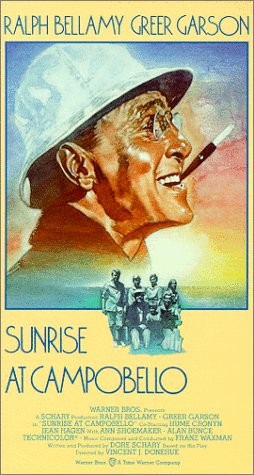
Franklin Delano Roosevelt is the longest-serving President in history, a record 13 years in office.  Sunrise at Campobello, the story of his polio and return to public life, feels just as long.  It should not be a surprise that Sunrise at Campobello is so laudatory towards FDR as to go beyond reverential to almost worshipful.  The fact that FDR's widow, former First Lady Eleanor Roosevelt, was still very much alive and is thanked for her assistance, all but guarantees that Sunrise at Campobello is not going to be a deep exploration into the foibles of our 32nd President.  If not for some good performances, Sunrise at Campobello would almost be dismissed as something brought to you by the Democratic National Committee.

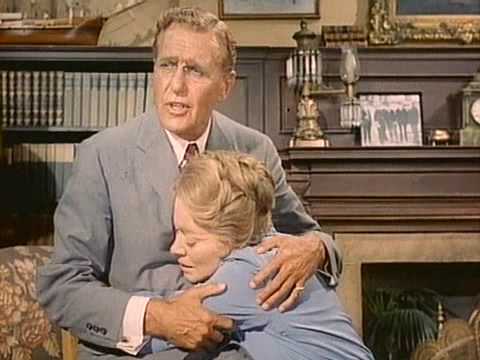
In 1921, patrician Franklin Delano Roosevelt (Ralph Bellamy) is enjoying his summer retreat, Campobello (Beautiful Field in Italian), with his wife, Eleanor (Greer Garson) and their five children.  It's here that Franklin's usual swim does not give him his usual energy, though insisting on staying in his wet clothes does not help.

Things go from bad to worse when Franklin collapses, then finds he cannot walk or move.  Coming to Campobello is FDR's political guru Louis Howe (Hume Cronyn) and later on, the strong-willed Mrs. Sara Roosevelt, FDR's Mommie Dearest (Ann Shoemaker).

The diagnosis is grim: infantile paralysis, better known as polio.  Everyone, from Eleanor to Sara to FDR's loyal girl Friday Missy LeHand (Jean Hagen) think his political aspirations are finished.  Sara is especially gratified by this idea, as she has never thought politics was a worthy profession, especially for her little boy.  It's only Howe who won't give up the idea of a political future for our figure.

In the years from his diagnosis to his return to public life when he nominates New York Governor Al Smith (Alan Bunce) for President in 1928, Sunrise at Campobello chronicles the struggles for Franklin, the increasing role for Eleanor, and his ultimate comeback.


Dore Schary, adapting his Tony Award-winning play, apparently loved his own work so much he opted to not cut.  Either that, or Sunrise at Campobello the play must be an awfully long evening of theater, as the nearly two and a half-hour running time for the film felt far longer.

Without getting too much into things, this crucial part of the evolution of FDR was covered much better in the miniseries Eleanor & Franklin, where we saw the wily politician at his most vulnerable: physically, emotionally, and spiritually.  In that version of the Roosevelt's story, FDR was flawed, sometimes angry, sometimes even bitter, working his way past his ego and frustrations while masking things behind that grin.

With Sunrise at Campobello, too much time was taken up showing FDR as this almost God-like figure that one wonders how someone so great could have had anyone opposing him.  I could not shake off the idea that this is how Stalin would have been portrayed in Soviet films prior to his death and denunciation. It was extremely laudatory, deeply reverential to where it plays almost as farce.

Much of this comes from Schary's script, which gives FDR no faults.  We don't see him as angry, or hurt, or afraid.  The closest comes when he admits to Eleanor, "It's a hard way to learn humility, but I've been learning, by crawling".  Even when he snaps at his daughter Anna (Zina Bethune) about her dropping some books, it is soon quickly forgiven on both sides.

The other characters are also given a bit of a bum rush.  Eleanor's evolution into being the activist/busybody she grew into (depending on your point of view) was not explored.  The children, while on the whole good, were there at times almost as decorative pieces, adding little except domestic bliss.


The fortunate thing is that Sunrise at Campobello has quite good performances in it that save it from being a total snoozefest.  Ralph Bellamy was celebrated for playing President Franklin Roosevelt, and here he recreates his Tony Award-winning performance, a performance he would recreate decades later in The Winds of War and War and Remembrance miniserieses.   I confess that at first I didn't 'hear' FDR's distinctive patrician voice (as a side note, I thought Edward Herrmann sounded more like FDR in Eleanor & Franklin, but I digress).  By the end of it, however, I accepted Bellamy's portrayal of the future President as good not great.

Much better was Garson as Eleanor, who did capture Miss Ellie's distinctive voice and speech patterns.  To be fair, Garson had the real Eleanor present to study.  Garson is probably too glamorous to play our dowdy, lanky Miss Ellie, but she did a first-rate job.  She was allowed some growth, particularly when she breaks down in tears while reading a children's story to her youngest.

It was the supporting characters who were the standouts.  Cronyn was an excellent Louis Howe, the blunt, wheezing political operator who brooked no opposition and saw in FDR a savior for America.  Shoemaker too was elegantly haughty as Sara Roosevelt, one who was used to getting her way.  It's a pity that the material did not play more to the real struggle: between Mama Sara and Our Miss Ellie over Franklin's soul.

It also could have done more to show the struggles of the dysfunctional Roosevelt family versus the cheerful facade.  That would have given better roles to people like Bethune (who made Anna almost a screaming, spoiled brat) and a surprisingly good turn from Tim Considine as James, their oldest.  Considine, best known for his work on The Mickey Mouse Club serials Spin and Marty and The Hardy Boys, showed he had great promise as the loyal son.  Hagen had a lesser role as the loyal Missy LeHand, but she showed LeHand to be thoroughly professional.

It would have been nice if Franz Waxman's score weren't so dominating as well.

Sunrise at Campobello touches on what should be a turning point in the life of one of the great President.  Sadly, it plays like his political career is more for therapy than for anything else. On the whole, Sunrise at Campobello is too busy being noble to be good.


DECISION: C+

Thursday, March 30, 2017

Southside With You: A Review (Review #900)

SOUTHSIDE WITH YOU

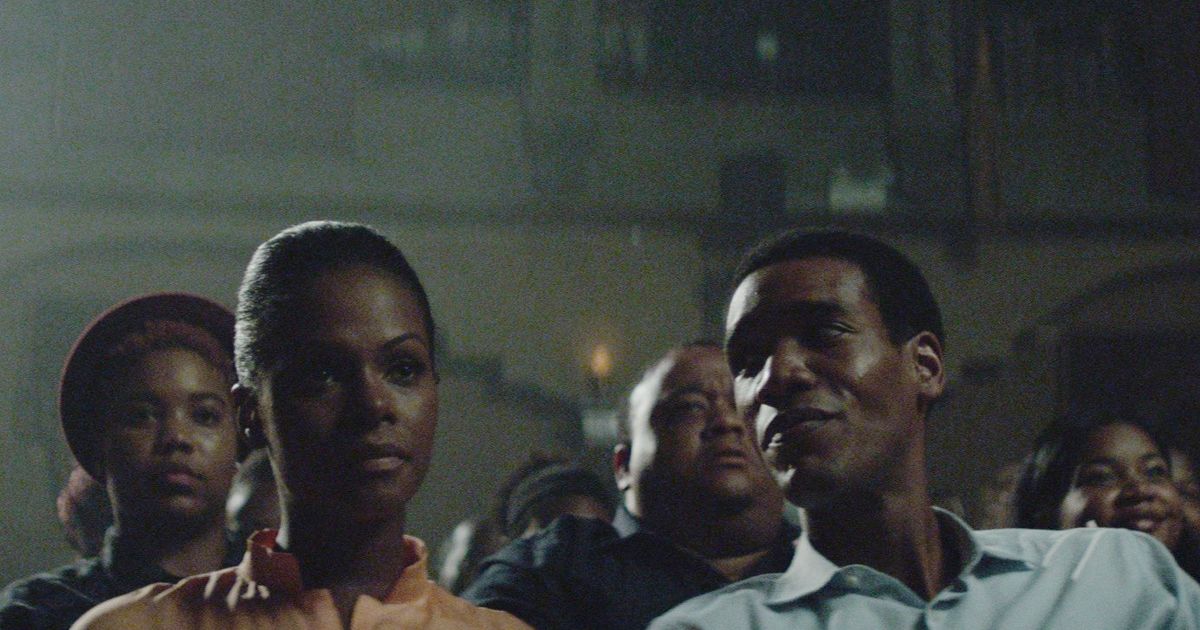
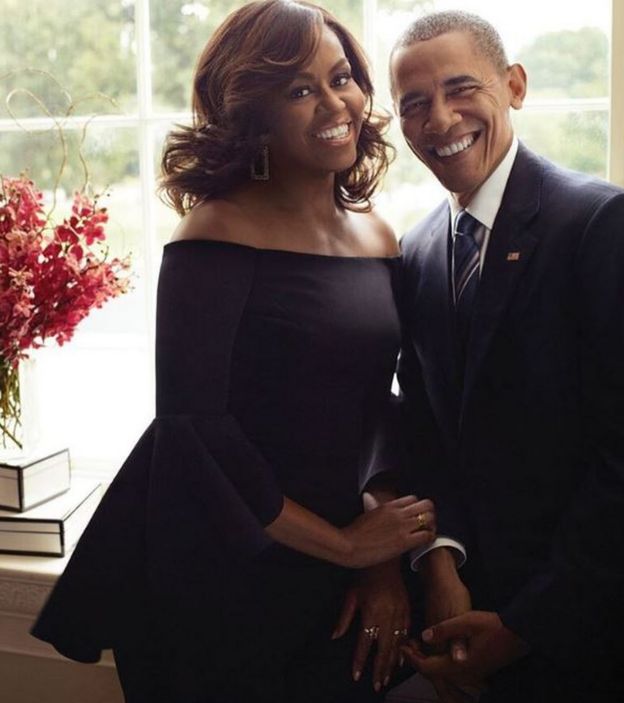
The concern with a film like Southside With You, the story of the first date between future President and First Lady Barack and Michelle Obama (formerly Robinson) is that it will go beyond hagiography into downright sanctification.  One might imagine that at a certain point in the film, the sky will open up, heavenly choirs will sing, a dove will descend on Barry, and we will hear an Orson Welles-type voice call out, "This is My Son, in whom I am well-pleased!" 

It will end with Obama being taken up into Heaven, where Jesus Christ will bow down and worship the One True God.

You know, how Hollywood sees the former President. 

To its credit Southside With You doesn't go full-on worshipful (though the midsection does have touches of idolatry). It isn't terrible or grand, but passable, with some charm and good performances.

Taking place over one long day, lawyer Michelle Robinson (Tika Sumpter) prepares for the arrival at her house of one Barack Obama (Parker Sawyers), a summer associate at the upmarket law firm where she is technically his supervisor.  She insists it's not a date, something that Barack pushes their time into being.  Ostensibly going to a community meeting, Michelle is surprised and a little irritated when the habitually late Barack tells her that this meeting won't be for a few hours.

He plans to take her to an African-American art exhibit...just to wander in.  While Michelle is none too pleased with this development, she goes along with it, as well as wandering through a park (I suspect Grant Park) before going to the community meeting (where Michelle is mistaken for Barack's newest girl and is dazzled by his speaking) and ending with some beer and a movie, Do the Right Thing (which she is eager to see).

As a side note, Do the Right Thing isn't my idea of a date movie, but there you go.

At the end of the day, Michelle is enchanted enough with Barack to consider this be possibly be a 'date' and perhaps for a second one.

The question one should ask about Southside With You is simple: if their names were, say Terrence Smith and Kristen Jones, would we care enough to follow this, The Longest Date?  If the film is based on the actual first date, it was a very long date...lasting essentially from around midday to midnight.  Would our two young lovers-to-be interesting enough for us to care whether or not they go out again?

My answer is, not really.  Part of it comes from the fact that Michelle came across as a bit of a whiner, protesting too much about how this isn't a 'date'.  Part of it comes from the idea of a 'date' involving having the woman listen to this man give an impassioned speech that shows his greatness.  I think on how Obama, even then, had a way with turning phrases into something almost inspiring. 

At the community meeting, Obama says to encourage the people that they should turn the 'no' to 'on', as in 'carry on'.  "They say 'no', we say 'carry on'", he intones, and you think that despite being a mere intern essentially, Barack Obama is dreaming of when he can say things like 'there's no Blue America or Red America, only the United States of America'. 

And here is where I have a slight beef with Southside With You.  Writer/director Richard Tanne has perhaps too much love for his subject that ironically keeps our two young lovebirds a bit at a distance, as if we should marvel at them rather than fully embrace them as just two young people starting out a remarkable and beautiful romance.

We see this in how Obama is bathed in soft light when giving his speech and how Michelle's views on our lanky, chain-smoking cocky kid evolves into perhaps not love but slightly worshipful admiration.  Early, Tanne had a better scene where we could see Barack falling in love with Michelle when she is taken up by a little girl to do some impromptu dancing.


We didn't need great theatrics to show that Barack went from finding Michelle pretty to finding her a potential life-mate.  We know that Barack liked Michelle, so we don't need much to show his growing enthusiasm for her (though curiously, his slight deceit to get her to attend the meeting and somewhat pushy nature show that he might have been a bit of a harasser, not respecting her 'no').  What we needed was for the strong, confident woman Michelle Robison is to emerge, and that scene of her looking at her well-spoken subordinate was, to my mind, the wrong kind of lovey-dovey eyeing.

As Southside With You is about the Obamas, we get to hear a lot about their families: Barack's absent father and essentially missing mother versus the strong family that the Robinsons were (we learn that, curiously the Robinsons never watched Good Times, preferring the more square Brady Bunch, and what this says about how the Robinsons saw the world is left up to the viewer).  It might have been a nice counterpoint: the distance that Obama's parent had from him versus the closeness that Michelle's family had.

Instead, we got nice talk from them about how Barack should forgive his 'incomplete' father (though curiously, no mention of how the future President's beloved grandmother, Toots, who helped raise him, was, in his own words, 'a typical white woman' afraid of black men). 

In that respect, Southside With You is a little on the deification side.  Despite the slight adulation, when Barack and Michelle meet 'a typical white man', their boss Avery (Tom McElroy), we get a slight dig at the future President.  Avery wonders about Spike Lee's actions in Do the Right Thing, and Barack gives an explanation that appeals to Avery.  Once out of earshot, he gives a different answer to Michelle, which shows that Obama was different with people based on how he thinks they would react. 

On the other hand, you had wonderful performances from our two leads, particularly Sumpter as the smart, elegant, but somewhat brittle Michelle.  Sumpter bears a closer resemblance to a young Michelle than Sawyers does to Barack, but they both are charming and likeable as the future First Couple.  Sumpter in particular carries herself with an air of confidence and perhaps with a bit of a chip on her shoulder, while Sawyers portrayal shows a slightly more charming, eager young man who has flaws (he attempts to hide his smoking) but who also finds that with a bit of charm and determination, he can make this woman his own.

It's a bit unfortunate that Southside With You could not avoid being a bit worshipful towards Barack and Michelle Obama.  It's due to that sense of adulation towards its subject that I'm marking it slightly down.  All the pity, since we got good performances and an interesting story to work with.  Again, the somewhat adoring manner the film treats its subjects leaves them just slightly a little off, as if they were like the paintings and sculptures at the Afrocentric art exhibit: something to admire and respect but also study and learn from rather than enjoy for their own unique beauty.

Ultimately, the question that I have about Southside With You (would we care about them if they were not destined for history) is answered with that slight, 'not really'.  They're a nice couple, pleasant enough, but not particularly interesting.  Maybe a movie about their evolving romance rather than their first date would have made them more human and less divine.     


DECISION: C-