Showing posts with label Television Movie. Show all posts

Friday, August 28, 2026

Polly: The Television Movie

POLLY

This review is part of the Summer Under the Stars Blogathon. Today's star is Brock Peters.

I do not know if the expression "Pollyanna" to be incessantly optimistic no matter how bad a situation may be is still in use. If so, that might explain why Polly, the African American adaptation of the Eleanor H. Porter novel is mostly forgotten. That it is unavailable due to streaming and broadcasting rights issues does not help. That is a terrible shame, for Polly is a sweet, delightful adaptation. It is also unafraid to tackle the serious issue of race, albeit with a gentle touch.

Sweet and optimistic Polly Whittier (Keshia Knight Pulliam) has been orphaned after her parents' death in a car accident in 1955. Now, she goes from Detroit to Harrington, Alabama to live with her Aunt Polly Harrington (Phylicia Rashad). It is no coincidence that Harrington, the town, shares the same name as Harrington, the woman. Aunt Polly is the richest black woman in Harrington. She is also formidable, intractable and intimidating to just about everyone in town. Miss Harrington, as everyone calls her, is not a dictator. She is, however, a quietly forceful figure. Aunt Polly even pushes her own sermon ideas on Reverend Gillis (Larry Riley); judging by his sermon, Miss Harrington is from the very dry Protestant worldview.

Polly finds everyone and everything in town delightful. Miss Harrington's assistant Nancy (Vanessa Bell Calloway) and Miss Harrington's maid Mrs. Conley (Barbara Montgomery) see that Polly has brought an enchantment into the home. Polly believes that we should be glad in all circumstances. Miss Harrington believes that we should be correct. Polly also wonders why there are no white folk in Harrington. Her new friend Jimmy Bean (Brandon Adams) tells her that the white folk are on one side of the creek, the black folk on the other, with both sides almost never crossing. A bridge had almost been completed, Jimmy adds, but burned before it could be completed.

Miss Harrington's quiet demeanor has everyone in town shaking except for one person. That is Dr. Shannon (Dorian Harewood). He is a "doctor of music" who moved to Atlanta some time back. Dr. Shannon, however, is back in town. He is also Miss Harrington's long-lost love. Both still pine for the other, but Miss Harrington's rigid manner prevents her from opening up. She is not the only one who is keeping things within themselves. Local recluse Mr. Even Pendergast (Brock Peters) wants to be left alone despite Jimmy and Polly's insistence. There is also Miss Snow (Celeste Holm), the white woman that Polly dares to see. Miss Snow is the white equivalent to Miss Harrington, who came close to literally bridging the gap between the two communities until the bridge burned. 

Polly's optimism and gentle rebellion against Harrington's rigidity (town and woman) soon starts paying off dividends. Townspeople start looking to themselves to fund the orphanage instead of looking for Miss Harrington's largesse with strings attached. The church starts finding joy in the Lord. Things culminate at the bazaar that Nancy's secret sweetheart George (T.K. Carter) organizes. Even Miss Snow emerges from her seclusion to participate. She and Mr. Pendergast share a past that connects them to the destroyed bridge. Polly, forbidden to go to the bazaar, is talked into sneaking out with and by Jimmy. That one act has devastating consequences for everyone in town. Will Polly lose her optimism? Will she be the one to metaphorically bridge the gap between black and white?

Polly was directed by Debbie Allen, who is also Phylicia Rashad's sister. That is a very talented family. In terms of directing, Allen did an excellent job. It is not surprising how well Polly's musical numbers were staged. Of particular note is Stand Up, as rousing a gospel number as has been committed to film. When we first encounter the church choir, they are a perfect reflection of Miss Harrington: respectable but deeply restrained. When we get the second encounter, one can feel the Spirit freely flow with a sense of joy and liberation. Leaning on the gospel music tradition of having the Spirit move you, Stand Up is big, bold and wildly enthusiastic. I would even argue that Allen as a choreographer drew from Alvin Ailey in how she staged the Stand Up number. Allen also showcases her multitalented skills in that she cowrote Stand Up. 

Polly's script by William Blinn even allows for some witty comments about the first and second choir numbers. Polly finds the very restrained choir not to her liking. She remarks that she's never heard a black choir sing like that. Aunt Polly mistakenly takes this as a compliment.

You also have a wonderfully upbeat number with Honey Ain't Got Nothing on You. Nancy, under Miss Harrington's instruction, has taken Polly to the posh dressmaker's shop. Polly asks if the classical music is all they have. She then looks for "Detroit" music, where we hear the Motown-like Honey Ain't Got Nothing on You. Again, we see a joie de vivre as Polly, Nancy and the shopgirls all get down with their joyful bad selves. 

Perhaps the biggest number is Sweet Little Angel Eyes. This song, performed after the very dull first church service, showcases Brandon Adams' extraordinary singing and dancing. Despite being a child, Adams dominates with his physical and vocal dexterity. Keisha Knight Pulliam does well in keeping up with Adams. However, every time Adams appears on the screen, we are drawn to him. 

Debbie Allen, however, shows that she can also have remarkably restrained numbers. Something More, Phylicia Rashad's solo number, would fit perfectly in a Broadway production. It is a moving number, well-sung and delivered by Rashad. Pulliam's solo number, By Your Side, is sweet and charming as she sings to her doll. By Your Side, curiously enough, is the only Polly number cowritten by Alan Menken, who has a long history with Disney music. By Your Side is darling, just like Pulliam in the role. Despite the various songwriters, none of the songs seem out of place. This is a credit to Allen to corral all the musical numbers into a cohesive whole.

It is also a credit to Allen that she drew strong performances out of the cast. Keisha Knight Pulliam is, yes, adorable and precious as Polly. She and Adams were wonderful together as Polly and Jimmy Bean, quickly transitioning from minor antagonists to solid friends. They play their roles with great earnestness, if not completely smooth in terms of characterization. It takes a great amount of skill from director and actor to have children talk about race without having them look or sound harsh or unnatural. When discussing Miss Snow, Polly asks, "She mean?". Jimmy replies, "She's white" in a pretty noncommittal and direct way. His delivery suggests that he does not know if Miss Snow is mean, only that her own race makes the mystery woman almost alien. Polly argues that a person's color is irrelevant to their goodness or badness. This is a pleasant idea that Pulliam sells.

The adults also acquit themselves well in their roles. Phylicia Rashad is intimidating and icy as Aunt Polly. She is able to convey a surprisingly imperious manner without looking ridiculous. Anyone who can ask "What is a Fats Domino?" with a straight face deserves major props. Her scenes with Dorian Harewood's Dr. Shannon work well. Harewood may be a bit forced in his manner, but it is not a dealbreaker. 

Brock Peters makes Mr. Pendergast into a slightly Boo Radley type figure in his reclusiveness. However, when he takes Polly's advice on how his lamp could make more rainbows if he opened up the window is a nice, gentle moment. His eyes reveal a man finding a metaphorical and literal new light. His scene with Celeste Holm also is a strong moment. The secret about the bridge is revealed in a soft, gentle manner. The regret shown is moving, a credit again to Allen's directing and Peters' acting.


Celeste Holm may be the "token white character" in Polly.  She, however, delivers the goods as the old lady who is brought back by Polly's enthusiasm and genuine warmth. Holm and Peters as stated do work well together. As they discuss the past and future bridge, Mr. Pendergast comments that there may a bridge yet. "Don't you think that "yet" should become "now"?", Miss Snow replies. Holm also works well with the other cast members. The last scene where Miss Snow and Miss Harrington come together is touching without having to use dialogue.

T.K. Carter's George and Vanessa Bell Calloway's Nancy make a nice couple. Both also work well with the other cast members. Overall, Polly is quite well acted.

It also couches the sensitive issue of race in strong but mostly family-friendly terms. The doctor who sees Polly after her accident calls her "a brave pickaninny". This is a surprising statement even if does reflect the time and was not said with any intended malice. Rashad as Aunt Polly tells him that her niece will grow up to be a strong black woman and is no one's pickaninny. Looking sheepish, the doctor replies that sometimes change comes fast to where some struggle to keep up. Again, the term might not be understood by younger viewers. The term, unfortunate as it is, was also spoken in a tone that denotes more foolishness than overt hostility. Polly does well to not condemn ignorance and show that people can overcome fear and prejudice once they get to know the other.

However, while race makes up an element of Polly, the film mostly revolves around the need to show how little acts of love and kindness can change lives for the better. Polly is meant as a sweet story about a little girl whose firm belief in seeing the good side to everything lifts those around her.

Polly has excellent musical numbers and strong acting from its cast. It might give Butterfly McQueen little to do in her final role. Overall, Polly works as the sweet, gentle story I think it set out to be. Polly will be appreciated by children for its upbeat manner and by adults for handling serious topics in a gentle way. It also will be enjoyed by all for some wonderful musical numbers. Hopefully, Polly will escape its lack of availability and find a welcome home everywhere. 

8/10

Wednesday, July 1, 2026

Ike: Countdown to D-Day. The Television Movie

IKE: COUNTDOWN TO D-DAY

The recent film Pressure inspired me to watch another production centered around how June 6, 1944, became the longest day. Ike: Countdown to D-Day takes the events surrounding the Allied invasion of Normandy and shapes them into strong viewing.

General Dwight D. Eisenhower (Tom Selleck) very reluctantly assumes the post of Supreme Commander of the Allied Expeditionary Force. He does so under the understanding that the entire operation be under his sole command. Fortunately, he has a supporter in British Prime Minister Winston Churchill (Ian Mune), who agrees. However, British Field Marshal Bernard "Monty" Montgomery (Bruce Phillips) is less than thrilled at this idea. Nevertheless, Eisenhower and Montgomery begin the plans for the Allied invasion of occupied France.

Ike has to endure many divas in uniform. There is the grandiose Montgomery. Then there is the slap-happy General George S. Patton (Gerald McRainey). He has been making dubious comments to the press on how the post-war world will be run by the Anglo-American alliance. This irks Ike due to these potentially racial overtones. Patton appears almost weepy at not being part of the final assault. Ike knows he's being played but goes along. He knows Patton is a proud man. He also knows that he will be needed post-invasion.

The plans for Operation Overlord continue. Eisenhower has to make some difficult personnel decisions. One general, Henry Miller (Paul Gittins) has been too loose with his talk while liquored up. French General Charles de Gaulle (George Chevstov) has the gall to say the plans are terrible. Fortunately, Churchill and Their Majesties George VI (Mick Rose) and Queen Elizabeth (Carol Seay) see that the Allies have good leadership for this great crusade.

As time for the invasion grows closer, Ike must make still more hard choices. Will the invasion have to be postponed? Will the invasion ultimately work? The troops about to be sent off to Normandy have been told not to talk to Eisenhower about personal matters. Despite this, Ike mingles with the troops and asks them about themselves. Ike's loyal aide Walter Bedell "Beetle" Smith (Timothy Bottoms) is astonished at this. With that, D-Day finally arrives, and whether or not Dwight D. Eisenhower will have to bear the blame or share the glory is up to those men storming the beaches.


Ike: Countdown to D-Day is interesting in that Tom Selleck neither looks nor sounds like General Eisenhower, yet he is believable in the role. I think Selleck's success comes not from an attempted impersonation or mimicry. Instead, Selleck concentrated on the man himself. Selleck makes Eisenhower into a calm, measured man. He is not unaware of the terrible cost that the invasion will carry. He is patient when dealing with men who think themselves greater. However, Selleck's Eisenhower manages to keep sight of the mission as a whole.

There is a remarkable level of maturity in Countdown to D-Day. All the actors treat the scenario with respect. That is not to say that they are somber. The film's script by Lionel Chetwynd wisely kept some amusing moments. Of particular note is when Montgomery insisted that Eisenhower put out his cigarette before receiving the King and Queen. Once George VI and Elizabeth arrive, His Majesty and Churchill immediately light up their own cigarettes and cigars. One chuckles at how Montgomery, who finds smoking offensive, has to endure this unintended affront by His Majesty and his Prime Minister.

Robert Harmon, who earned an Emmy nomination for Countdown to D-Day, more than merited that recognition. All the performances were first-rate. Tom Selleck blended a mix of commanding with almost humility as Eisenhower. At the presentation to Their Majesties on Operation Overlord, the King expresses concern over the projected high casualties. Eisenhower replies from the stage that he too is concerned. He expresses how the young men from Britain, America and Canada may not return, but that it is the necessary cost, albeit a deeply painful one.

The other actors also do fine work. Timothy Bottoms' Beetle is patient and supportive to the general. He, Selleck and Gerald McRainey share a wonderful scene. McRainey as Patton seems to want to almost break down in tears at the thought of not being in battle. He appears to be almost a softy behind the bravado. As he leaves Eisenhower's office still holding on to his command, Patton appears to think that he has pulled a fast one on Ike. Bettle questions Ike about all this. Eisenhower, perhaps resigned to things, admits that Patton thinks he's pulled a fast one. However, Eisenhower does not rage or gloat. He merely accepts.

Harmon also has great camerawork in Countdown to D-Day. An especially good sequence is when Group Captain James Stagg (Christopher Baker) is giving his weather report to the commanders. The camera flows beautifully, showing a besieged Eisenhower among all the various generals, each with their own concerns and timetables.

As a side note, it is interesting that in Countdown to D-Day, Stagg was important but not a major player. In the recent Pressure, he was made the central figure. In the former, Stagg's information is necessary but part of the overall plan. In the latter, it appears that his word alone metaphorically turned the tide of history. In Countdown to D-Day, it works. In Pressure, it does not. Yet, I digress.

Ike: Countdown to D-Day is a strong production. It treats the men with respect without being reverential. They are not shown as important, lofty figures aware of their importance to the world. Instead, they are shown as surprisingly ordinary men tasked with an extraordinary mission. Those portrayed in Ike: Countdown to D-Day were treated with intelligence and respect. 

1890-1969


8/10

Wednesday, April 8, 2026

Florence Nightingale: The Television Movie

FLORENCE NIGHTINGALE

Florence Nightingale seems like a ready-made subject for a biographical film or television production. She was a pioneer in nursing. She is held as a model for womanhood. Florence Nightingale, the television movie, is proper and respectable. While it has a curious choice for the lead, Florence Nightingale treats the subject with the proper respect and respectability. 

Florence Nightingale (Jaclyn Smith) is the belle of the ball in Victorian high society. She has many male admirers. One of them is Richard Milnes (Timothy Dalton), a dashing man about town and country. He serves as voiceover to our tale. Florence's parents Fanny (Claire Bloom) and William (Jeremy Brett) are mostly pleased with how well Flo is getting on in high society. Fanny is less pleased that Flo seems set on an independent life. Mr. Nightingale sees that his daughter is too bright to be nothing but a society doyenne.

Florence is set on changing nursing. She is appalled at how nurses and hospitals are very unkempt. She pushes on, despite endless opposition. This opposition continues after reading of the horrid conditions of British troops during the Crimean War. Determined to help the cause, Nightingale gathers her nurses and goes to Scutari (present-day Uskudar, Turkey). 

Here, the haughty British military leadership is askance at any woman, even the now-legendary Nightingale, would tell them how to do things. Her chief nemesis is the haughty Dr. Hall (Jeremy Child). He is dead set against letting Nightingale's trained women enter the makeshift hospitals. He goes so far as to forbid the men from receiving any anesthetic treatment, believing pain is the best medicine for British glory. Nevertheless, she persisted. Slowly pushing where she can, Nightingale gets things done. She also has friends in high places and the press on her side. However, will she have to sacrifice personal happiness for the greater good? Will she have to sacrifice her own health too?

Perhaps the oddest thing in Florence Nightingale is the casting of Jaclyn Smith as our heroine. It is not that Smith gives a bad performance. On the contrary, she is effective in the role. We see Florence as a very caring and wise figure. She tends to all regardless of rank or status. I would go so far as to say that she has a greater fondness for the lower classes. Smith shows her quiet but firm resolve whenever facing off against her opponents. It could be Nurse Davis (Carol Gillies), who is of the old school and who is sometimes helpful, sometimes not. She could also show the woman within whether with Dalton's Milnes or Dr. Lawrence Sutherland (Stephan Chase), an unofficial suitor in the Crimea. 

The problem is the fact that she is clearly American. I think that Smith made as good a go on a British accent, particularly an upper-class one, as she could. However, she sounded more American than British. Again, she was not bad in the role. She just never got the patrician tones all down. 

Timothy Dalton was our narrator in Florence Nightingale. Ivan Moffat and Rose Leiman Goldemberg's screenplay does not make a case as to why Flo's thwarted suitor Richard Milnes has to be the one to tell us her story. Her parents are still alive. Florence learns though a letter that he has grown tired of waiting and decided to marry someone else. Mr. and Mrs. Nightingale could easily have done the voiceover work. In fact, it might have been better if only to have Jeremy Brett's voice tell us of his daughter's exploits.

Still, Dalton and Smith worked well together, their scenes having at times a moving impact on this ill-fated romance. The aforementioned Brett was grand and elegant as Mr. Nightingale. Claire Bloom was delightful as the sometimes-scandalized Mrs. Nightingale. She shifted from shocked to supportive to ultimately proud of her headstrong but loving daughter. 

Another standout is Child as the haughty Hall. He is thoroughly despicable and arrogant doctor. Child pops up late in Florence Nightingale. Each time one sees him, however, one is filled with such anger at his coldness, indifference and brutality. He is vainglorious and uncaring except for a wildly idiotic sense of courage. In Hall's mind, it is better for the wounded soldiers to endure pain than to receive treatment because it will make them stronger and more noble. 

Director Daryl Duke gets strong performances out of his cast. He keeps things moving well. He also has some wonderful moments, such as a montage of potential nurses interviewed by Nightingale culminating in the reappearance of Nurse Davis. 

Florence Nightingale is a respectable biographical telefilm, complete with its elegant score. The one drawback is Jaclyn Smith's struggle to have a British accent. One does fight the temptation to call the project Charlie's Nurses. On the whole, however, Florence Nightingale will serve as a good primer to this exceptional and legendary figure.

1820-1910


7/10

Wednesday, March 11, 2026

A Streetcar Named Desire: The 1995 Television Movie

A STREETCAR NAMED DESIRE (1995)

The 1951 film adaptation of Tennessee Williams' sultry tale of the steamy South featured almost all the original cast from the Broadway production (Vivien Leigh had played her role in the London West End version). Similarly, the 1995 television adaptation of A Streetcar Named Desire brought back the two leads from the 1992 Broadway revival. As such, I figure that Jessica Lange and Alec Baldwin gave the same performances in the television movie that they gave on stage. Therefore, I am left slightly perplexed on why both were held in such high regard. 

Southern belle Blanche DuBois (Jessica Lange) has taken that streetcar named Desire to visit her sister, Stella Kowalski (Diane Lane). Blanche might stay a spell with her sister and brother-in-law. That does not sit particularly well with Stella's husband, Stanley (Alec Baldwin). He is displeased at Blanche's grand airs and graces. She finds him common. 

Amongst his poker buddies, only Harold Mitchell or Mitch (John Goodman) seems remotely decent. Stella, pregnant, is not going to leave Stanley. Even after Stanley strikes her, Stella will stand by her man. Mitch finds Blanche enchanting. Blanche, however, is no demure damsel in distress. She is a ho, fo sho. The war between Stanley and Blanche continues. The Mitch-Blanche romance disintegrates, as does Blanche's mind. A shocking act by Stanley will finally break Blanche. Will she continue to depend on the kindness of strangers?

It is the most curious thing with this adaptation. I did not find this A Streetcar Named Desire to be bad. I was not cringing at the performances. Instead, what I saw was a group of talented actors doing respectable but not necessarily great work. Jessica Lange was appropriately delicate as the world keeps fighting against her. I did think that her voice at times was perhaps too breathy. It was as if she decided that speaking like Marilyn Monroe would show how vulnerable she was. I did not quite buy her faux-refined manners. I figure that, yes, Blanche was always putting on something of a performance no matter what. However, Lange was not as hysterical or fragile as I think Blanche should be.

She did well when working with John Goodman and Diane Lane. Goodman, who like Lange and Alec Baldwin were Emmy-nominated for their performances, was the standout. He fit the role quite well. Goodman was gentle throughout. When he was meant to be a little more assertive with Blanche, one sensed through Goodman's performance that Mitch still wanted to be gentle with her. 

Lange also did well with Lane's Stella. She made her unbridled yearning for Stanley plausible. She was also strong when defending Blanche against her brutish husband.

Overall, I found Jessica Lange decent but not convincing.

Less convincing was her antagonist. Unlike Lange, Alec Baldwin received a Tony nomination for his Stanley Kowalski. He, like Lange and Goodman, also received an Emmy nomination for recreating his role. With all that said, I wondered why he got any recognition to begin with. I found Baldwin's Stanley to be surprisingly restrained, almost apologetic. There is, for example, when he rails against the DuBois sisters for continuously calling him a Polack and dirty. I figure that this is a moment of rage, uncontrollable rage against their tag-teaming in their grand airs. 

As performed by Alec Baldwin, I thought that Stanley Kowalski was about to cry. I did not see any fire or ferocity in his performance. I can't say that Alec Baldwin was miscast, especially as he played the role on Broadway. I did think that he was rather pretty to be someone that gritty. Stanley does not have to be ugly. He, however, should not be thought of as pretty. Rugged, virile, but not pretty. It is, to be fair, not established where Stanley originates from. However, I think Baldwin's Nuw Yawk accent seemed out of place here in the Big Easy. 

One aspect that was surprising was when Baldwin as Stanley removed his shirt to reveal his very hirsute torso. It was to where his chest hair made it look as if he was wearing a vest. 

As a side note, Baldwin was the only Tony nomination that the 1992 A Streetcar Named Desire revival received. It makes one wonder what the American Theater Wing and Broadway League so disliked about this revival to skimp out on recognition. 


One of the elements that brings down this A Streetcar Named Desire is Glenn Jordan's directing. Put aside how sometimes almost the whole cast seemed a bit mannered. Some of his choices were just odd. In the climactic moment when Mitch presents Blanche's sordid past to her, she calls out, "I don't want realism. I want magic!". Yet, for reasons that I cannot guess at, Jordan opted to have us look not at Lange's Blanche but at Goodman's Mitch. I cannot comprehend why Jordan decided that Lange did not merit even a two-person shot at Blanche's slow unraveling. Instead, we needed to keep our eyes on Goodman. 

At the birthday party, Jordan seemed rather fond of moving the camera all over. It soon became rather silly seeing them almost like in a merry-go-round.

It is difficult to look on this A Streetcar Named Desire without thinking of the 1951 film version. It is doubtful that any filmed production will match that adaptation. This version is respectable if flawed.   

6/10

Tuesday, March 3, 2026

Georgia O'Keefe: The Television Movie

GEORGIA O'KEEFE 

Georgia O'Keefe lived to be almost 100. How then do you capture the entirety of her extraordinary life and career in a 90-minute film? You do not try. Instead, Georgia O'Keefe concentrates on her most influential relationship. With solid performances and engaging figures, Georgia O'Keefe is a wonderful introduction to this exceptional artist. 

New York City, 1916. Famed photographer Alfred Stieglitz (Jeremy Irons) is hosting an art exhibit for a new painter that he is wildly enthusiastic about. There is one person wandering the gallery, however, who is not particularly pleased at the exhibition. That person just happens to be the exhibit's subject. Georgia O'Keefe (Joan Allen) insists that she did not give approval for her art to be exhibited or sold. Stieglitz insists that her art should be seen. She needs a place to stay. He has a spare room. They begin an affair.

Stieglitz is enthusiastic about O'Keefe as both an artist and a woman. He does for her something that he has done for no other artist or mistress. He leaves his wife, which surprisingly pleases the other Stieglitz family members. At least Mother Stieglitz (Kathleen Chalfant) is thrilled. Alfred's doctor brother Lee (Ed Begley, Jr.) is less thrilled despite himself having a mistress. Georgia finds Alfred's comment about her being "the American female Picasso" displeasing. She also finds his newest mistress and patron less pleasing. 

In frustration and desperation, O'Keefe goes to New Mexico. Here, she takes informal refuge with flamboyant art patroness Mabel Dodge Luhan (Tyne Daly). This is the perfect place for O'Keefe to paint and reflect. Stieglitz, back home in New York, is enraged to hear stories of O'Keefe cavorting with this eccentric set. He is particularly displeased that she is enjoying the company of Harlem Renaissance writer Jean Toomer (Henry Simmons). The idea that she could be lying naked with, as Stieglitz calls him, "the black prince of Harlem" particularly upsets him. 

Alfred and Georgia do reconcile, especially after Alfred has a health scare. They learn to accept each other. Ultimately, Alfred Stieglitz dies in 1946, Georgia following 40 years later. Despite their tempestuous relationship, she becomes his champion while maintaining her own artistic output.

Georgia O'Keefe is blessed with excellent performances all around. Joan Allen commands the screen as the title figure. She does something interesting in her performance. She rarely if ever rages or explodes. Instead, she communicates O'Keefe's artistic and personal struggles with quiet grace. This is not to say that O'Keefe is a shrinking violet. One of her best qualities is her total bluntness. Early on she tells Stieglitz that she will not be his mistress. Allen's O'Keefe is a blunt broad. Yet Allen never has grand moments of theatricality. It is her forthright manner that draws us in. She is direct and honest, a woman true to herself. Allen does not make her a martyr or heroine. Instead, Allen makes Georgia into someone aware of herself and who knows her value. She does not deny her talents but does not accept compliments either.

Allen has some wonderful moments in her Emmy-nominated performance. She does a wonderful job when talking about art, who it brings something out of her into the world. It is a moving scene that makes us like and respect her.

Jeremy Irons, also Emmy-nominated, makes Alfred Stieglitz a delightful, almost comic character. He flutters about O'Keefe. He is almost apologetic about his interests in her in and out of clothes. That is not to say that Irons makes Stieglitz into a cartoon or a joke. As was observed in Georgia O'Keefe, Alfred wants to be adored, not loved. He does not shy from taking on a new mistress. However, he also openly delights in O'Keefe's achievements. Late in the telefilm, O'Keefe is horrified that her nude photos were put on display. Stieglitz tells her that to him, her beauty is too wonderful not to share. 

The film has nice moments of wit too. "An artist doesn't work for money. He works for pleasure", Stieglitz tells O'Keefe when she tells him of their financial problems. She retorts that saying something like that is a nice way to say that they are poor. Alfred's newest mistress is pleasant but not unaware of the difficulties she is causing. O'Keefe begins struggling with a particular health issue that she has not had before. A friend of O'Keefe tells her, "When she goes, so will your migraines". 

Georgia O'Keefe also has some strong work from the supporting cast. Ed Begley, Jr. holds his own as the eventually forceful Lee Stieglitz. As Georgia is recovering from a breakdown, Alfred is adamant that he must see her. Using his doctor's privileges, Lee makes clear that Alfred will do no such thing. He ends by telling him how cruel he has been, showing Lee's backbone. Tyne Daly has a lot of fun as the wacky and perhaps whacked-out Mabel Luhan. She brings a bit of eccentric humor to things. 

Bob Balaban shows himself a strong director with his cast. He also manages to move things quite well. Georgia O'Keefe never feels rushed nor compressed. That is impressive given that O'Keefe lived to age 98 and the film is a mere 90 minutes long.  

Georgia O'Keefe is respectful without being reverential. The production was blessed with the full cooperation of the O'Keefe estate. As such, we get glimpses into her extraordinary creative output. Georgia O'Keefe is a strong introduction to this legendary figure, where we see the artist come into full bloom. 

1887-1986

9/10

Wednesday, January 21, 2026

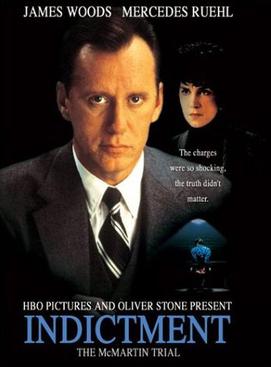
Indictment: The McMartin Trial. The Television Movie

INDICTMENT: THE MCMARTIN TRIAL

The idea that an accusation equals guilt is not a new one. Indictment: The McMartin Trial chronicles one of the most infamous court cases in American history. A shocking tale of frenzied panic overruling common sense, Indictment's impact still hits the viewer.

Christine Johnson (Chelsea Field) on August 12, 1983, makes a shocking accusation against the staff of the McMartin Daycare. She claims that her son Malcolm has been sexually molested by people there. Twenty-six days later, the police start arresting everyone in the McMartin preschool. There is the sole man, Ray Buckey (Henry Thomas), grandson of McMartin owner Virginia Thompson (Sada Thompson). There is Ray's sister Peggy Ann (Allison Elliott) and their mother Peggy (Shirley Knight). Other employees are arrested as well. The last arrest is that of Virginia McMartin, hauled off in her wheelchair before intense media attention.

Attorney Danny Davis (James Woods) takes the case. He believes the McMartins and the daycare to be guilty. He also knows that this will be great publicity. Facing off against Davis is Los Angeles District Office prosecutor Lael Rubin (Mercedes Ruehl). It is not long before Los Angeles television reporter Wayne Satz (Mark Blum) reports the shocking allegations, never questioning their veracity or looking into them. The case soon becomes a media storm. The storm increases thanks to the work of Kee McFarlane (Lolita Davidovich). She is the director of the Children's Institute International that interviews hundreds of children, all of whom allege all sorts of accusations. The District Attorney's Office is overwhelmed with information and trusts McFarlane and the CII's notes from the videotapes to prosecute the case.

All but ADA Glenn Stevens (Joe Urla). He reads Johnson's statement and thinks that it is the ramblings of a mentally unstable person. His concerns are brushed off by Rubin. Children wouldn't lie. Believe all children is the DA's Office mantra. Yet can the children be believed? There are inconsistencies in their stories. McFarlane's questionings, down to showing the children anatomically correct dolls, seem to be more pressuring kids to remember things that they initially insist did not happen. One, for example, remembers Ray molesting him even though Ray had left the preschool by the time. Other stories become more outlandish. There are tales of Mrs. McMartin wheeling herself naked in a circle. Another child claims to have been made to perform satanic rituals in a church and made to drink the blood of rabbits. One child identifies two men from pictures as his sexual molesters. One of the identified is action film star Chuck Norris.

Davis sees that the growing hysteria is blinding people to reasonable doubt. The mob mentality against the McMartins, who are psychologically tortured by everyone around them, arouses his anger. Stevens too is deeply troubled by how the case is growing out of control. Stevens is more troubled when Johnson at one point calls him and claims that someone has sexually molested her dog. Yet the prosecution and persecution continue. For all the Sturm und Drang of the case, the longest trial in American history results in no convictions and ruined lives.

When the MeToo movement was at its zenith, the mantra was "Believe Women" and "Believe All Women". Sexual assault accusations are very serious matters. So is the presumption of innocence. Whenever I heard "Believe Women/Believe All Women", my mind went back to the McMartin trial. Then, it was "Believe the Children". The accusations of child molestation were so shocking that people, included initially Davis and Stevens, believed that everyone accused was guilty. After all, children would not lie. Indictment shows that while the children may not have directly or deliberately lied, they could be manipulated or pressured into saying what the adult wanted to hear. 

Abby & Myra Mann's screenplay and Mick Jackson's direction shows us this in simple ways. As Davis, Ray and Peggy Ann Buckey watch the videotapes, we see McFarlane's questionable questioning methods. Using puppets, McFarlane seems dismissive whenever a child says that no one touched them in their private parts. When she finally gets the answer that she liked, we hear McFarlane squeak out "AMAZING!". The empty courtroom where they watch starts echoing "AMAZING!" over and over. The camera pulls back further and further away. It is a subtle but effective way to show how these dubious methods are reverberating. 

Other moments are more chilling but no less effective. As one of the child witnesses continues his bizarre story of drinking rabbit blood and robed figures in hoods, the reporters listening in another room look at each other in shock and disbelief. I initially thought that they would find such a story so ludicrous that they would openly question whether any of it was true. Instead, they all rush onto the halls, call their various outlets and report the story as more "shocking revelations". 

That no adult ever questioned the logic of some of the charges no matter how bonkers they were never ceases to amaze and trouble me. As Davis and his second go to the remains of the McMartin preschool (it having been attacked by arson for a second time), Davis comments that there are no closets where the children claim to have been taken in and molested. One child says that they were driven to a local supermarket and made to parade naked in their storeroom. Davis goes to the market and finds that the storeroom is openly visible to everyone. It would be impossible to have a nude fashion show there. Yet again, neither the DA's Office nor the opportunistic Satz ever questioned or appeared to investigate the charges.

Indictment has solid performances from the cast. James Woods in an Emmy-nominated performance has rapid-fire intensity to Danny Davis. We see his shift from someone who does not care to someone enraged by how the DA's Office and press is destroying the McMartins. He has a wonderful moment with the equally strong Henry Thomas as Ray Starkey. As he prepares Starkey for his testimony on the witness stand, we see Davis berate Ray the way that the prosecutor would. We then see how he comforts him, telling Ray that he gets up there and tells the truth, he will win.

Shirley Knight, who won an Emmy Award for her performances, is heartbreaking as Peggy. In one particularly somber scene, Peggy is forced to strip and be examined by two disinterested female officers. The officers show her no kindness as they make this old woman bend over. "Can I put my clothes on?", a visibly distraught and humiliated Peggy asks. The officers ignore her, continuing their conversation on their weekend plans. It is hard to not feel for the horror that Peggy is going through. This is a woman who had to ask what a "dildo" was.

Her costar Sara Thompson was also nominated for Emmy recognition as Virginia McMartin. Seeing the wheelchair-bound woman rise on her crutches and tell the judge that she was leaving shows the righteous fury of a falsely accused woman. Thompson later has a strong scene with Elliott. Peggy Ann observes her grandmother watching kids at play. She asks her how she could not be bitter after all they've gone through. Virginia replies that she is not bitter enough to smile at seeing children at play.

Henry Thomas makes it believable to see Ray as a bit creepy in his manner and look. Davis on their first meeting tells him that with his glasses, he does look like a child molester. Thomas has his best scenes when on the stand. Facing off against an equally strong Mercedes Ruehl, he shows how Ray has a backbone. He responds calmly and firmly against Ruben's charges and insinuations. She brings up his past interests in pyramids and how he was a virgin until age 24. He turns the tables against her increasingly eccentric connections between pyramids and lurid sexual tastes.


It is a credit to Mercedes Ruehl that we do not end up hating her as Lael Rubin. She does, at least initially, appear to be motivated by a genuine concern for children. It is only later, as more evidence for doubt comes in, that Rubin appears more villainous. It is as if Rubin, fully committed to the case, now becomes increasingly stubborn, refusing to admit that she was wrong. 

We do end up hating Lolita Davidovich's Kee McFarlane. She grows more arrogant and smugger on the witness stand. That she and Wayne Satz were having an intimate relationship makes it all the more appalling. Mark Blum's Satz was downright evil as the reporter whose sense of infallibility and unquestioning belief in children being made to partake in satanic rituals shields him from any sense of responsibility. Joe Urla is unsung as Glenn Stevens, the ADA who is the first to see that the accusations have serious room for doubt.

Indictment: The McMartin Trial is a shocking and tragic tale of how the mere accusation is enough to create panic, paranoia and hysteria. Sadly, some things have not change. We still have people accused of all sorts of things and their accusers believed no questions asked. The lessons from the McMartin trial have yet to be learned. Indictment: The McMartin Trial however will remind us that accusers should be heard but not unquestionably believed. 

9/10

Tuesday, January 6, 2026

Behind the Movement: The Television Movie


BEHIND THE MOVEMENT

Living history. It is one thing to be living history. It is another, quite another to be living as though you are consciously aware that you are living history. Behind the Movement covers a tumultuous few days between Rosa Parks' arrest for refusing to give up her seat to the one-day boycott to protest segregation. I figure that everyone involved was aware of the story's importance. Pity that such importance blocked out any sense that the people were involved were human.

Montgomery, Alabama's black community is already on edge after the murder of Emmett Till. Among those upset to quietly enraged is seamstress Rosa Parks (Meta Golding). Mrs. Parks calls her husband Raymond (Roger Guenveur Smith) and asks him to buy milk before she leaves work. She boards the city bus and will not give up her seat when told to.

Her refusal gets her arrested, where she talks to a woman in the next cell. The other woman may have been in jail for defending herself against an abusive man, but that was nothing compared to what Mrs. Parks did. The demure, proper Mrs. Parks may be the perfect test case to fight the segregation laws. NAACP lawyer E.D. Nixon (Isaiah Washington) gets the importance of the situation. So does local community activist, Professor Jo Ann Robinson (Loretta Devine). Everyone, save perhaps the Parks couple, understands how important this is.

Eventually, Mrs. Parks agrees to be the test case. Now, it is time to rapidly organize what is intended as a one-day boycott to coincide with Mrs. Parks' trial. The organizers will need all the help that they can get. That means turning to A. Philip Randolph (Al Mitchell), head of the Brotherhood of Sleeping Car Porters labor union. It also means turning to the various church ministers, including a young up-and-coming preacher named Martin Luther King, Jr. (Lashaun Clay). Mr. and Mrs. Parks may have misgivings and fears, but history will not be denied. 

Behind the Movement is in the tradition of "important stories told in very serious tones" telefilms. Everyone, cast and crew, knows that this is oh so serious and oh so important. They are not exactly wrong in that idea. The Montgomery bus boycott and the slow but steady push to change is still a vital story to know. However, Behind the Movement is one where everyone is so noble, so serious, that no one is allowed to be human. Almost every statement is historic. Almost everyone presented is important. Almost every action is loaded with significance. 

This is where Behind the Movement went wrong, oh so very wrong. By behaving as though everyone and everything is of such lofty weight, Behind the Movement forgot that there were actual people involved. When, for example, Randolph and Reverend Ralph Abernathy (Keith Arthur Bolden) go to the Dexter Avenue Baptist Church, everyone there realizes the importance, the significance, the epoch changing appearance of Reverend King.

King would leave a long-lasting legacy on American history. However, when Behind the Movement takes place, King was still a new figure in Montgomery. At the time of the boycott, Dr. King was a month shy of twenty-seven years old. To have Randolph, Abernathy and Nixon behave as though they were now in the presence of greatness is already bad. To suggest, as Behind the Movement does, that they were all aware of it, ironically diminishes Dr. King. It does not help that director Aric Avelino bathes Dr. King in an almost divine light when Randolph, Abernathy and Nixon are in King's office to discuss the boycott.

I do not think that Behind the Movement should have painted King as some bumbling kid. However, over and over throughout the film, everyone behaved as though they knew that the boycott was of worldwide importance right from the get-go. There is an air of profundity in Behind the Movement that does what a lot of historic pieces do. They rob the individuals of their humanity, trading in lofty images to replace flawed, even frightened people. 


People are reduced to almost walking audio-animatronic figures, always noble and aware. The closest that Behind the Movement has in terms of levity is when Alfonso Campbell (Sir Brodie) is, to use modern terms, voluntold to coordinate carpool groups. Even that was in a blink-and-you-miss-it manner. To be fair, there is a slightly comic moment when the bold Professor Robinson hoodwinks a campus security guard to let them exit the campus by claiming to be doing end-of-term grading when they had actually been using campus equipment to make flyers.

Apart from that though, Behind the Movement never failed to make everyone very grand, noble, aware of how important this particular case, this particular boycott, was to world history. Ironically, treating everything that everyone in Behind the Movement did as this lofty moment robbed us of a potentially good story. Stories that transform people into monuments tend to be bad. Stories that transform monuments into people tend to be good. Behind the Movement is squarely in the former category. 

This grand manner extends to almost all the performances. The standout for me is Loretta Devine as Professor Robinson. She is always a welcome sight, and here she brought what little humor there was. I do not think that one needs to go into the other performances. This is not to say that they were bad. They were just all the same, playing everyone as these noble figures. They differentiate only in degrees of seriousness. 

Meta Golding does her best to make Rosa Parks into a less secure figure, but she still carries such a sense of history that it diminishes Mrs. Parks. Roger Guenveur Smith seems wasted as the eternally supportive Raymond, though to be fair he looks enough like Harry Belafonte that I think Smith should play him in a Belafonte biopic. 

Perhaps the worst of the "EVERYTHING I DO AND SAY IS IMPORTANT TO HISTORY" performance was that of Isaiah Washington as E.D. Nixon. Washington's Nixon was so loaded with the weight of history one half-expected him to literally walk on water. 

I think that much of the blame for Behind the Movement being so self-serious is on Katrina O'Gilvie's screenplay. The telefilm is loaded with some almost cringe bits of dialogue. Having a scene where a woman who survived abuse by attacking her attacker comments that Rosa Parks was the brave one is already a curious parallel to draw. Having Parks comment, "I just figure some things are worth standing up for" makes it almost cross into the pompous. 

Behind the Movement might be a good way to start learning about Rosa Parks' story. It is not a good way, though, to find the woman behind the movement.

1913-2005

4/10

Saturday, December 27, 2025

Wallis & Edward: The Television Movie


WALLIS & EDWARD

Helen of Troy was referred to by Christopher Marlowe as "the face that launched a thousand ships". Wallis Simpson was referred to by His Majesty Edward VIII, later the Duke of Windsor, as "the woman I love". Long seen as a scheming adventuress who tried to sleep her way to being Empress of India, her generation's Meghan Markle gets a more sympathetic portrayal in Wallis & Edward. Respectably acted with smooth pacing, Wallis & Edward shows Mrs. Simpson as a victim of her circumstances.

Life seems like a bowl of cherries for Wallis Simpson (Joely Richardson) and her second husband, Ernest (David Westhead). The Simpsons are welcomed in British high society despite their American roots. One person who soon takes a shine to the couple is Edward, the Prince of Wales (Stephen Campbell Moore). The happily unmarried heir to the British throne is currently involved with his latest mistress Thelma, Viscountess Furness (Helena Mitchell). 

It is not long, however, before the Prince Edward looks upon the brassy American as more than a friend. Wallis is conflicted. She loves Ernest and the security that he provides. However, Edward is besotted with her, and she soon falls to his charms. Wallis' aunt Bessie Merryman (Miriam Margolyes) advises her niece to not let His Royal Highness' attention and affection go to her head. Wallis is convinced that her liaison will be a temporary thing. Edward, she knows, will find a younger and prettier woman to romance and perhaps marry.

Wallis, however, had not counted on the Prince of Wales becoming bewitched by her, body and soul. She had done nothing to encourage his growing obsession. Worse, she is horrified at what the romance is doing to her reputation. Ernest confronts Edward about his intentions. Ernest also confesses that he has been having his own affair with a mutual friend. With that, the Simpsons agree to a divorce.

The timing of the Simpson divorce could not have come at a worse time. Prime Minister Stanley Baldwin (Richard Johnson) is both aghast and alarmed at Mrs. Simpson's arrival. If everything goes according to the now King Edward VIII's plans, there will be just enough of a gap between Wallis' divorce and his coronation for them to marry. The prospect of a twice-divorced American as Queen of England brings about a full constitutional crisis. The government is prepared to resign en masse. That would trigger a general election where the potential Queen would be the issue. A marriage, even morganatic, would be bad enough. Edward's offer to abdicate is more horrifying. 

Wallis does not want Edward to abdicate. Baldwin does not want Edward to abdicate. Edward's brother Bertie, Duke of York (Bill Champion), does not want Edward to abdicate. What will the future hold for our thwarted lovers?

Wallis & Edward has a major plus in Joely Richardson as the Duchess of Windsor. Richardson is part of two legendary British acting dynasties (Richardson and Redgrave). Despite her origins, Richardson's Southern tones never sounded forced or exaggerated. I do not know if they would convince Baltimore natives that her Wallis was indeed one of their own. However, Joely Richardson sounds just American enough to make it believable that she is not British.  

That is on the technical aspect. On the dramatic side, Richardson does well in portraying Wallis Simpson as someone caught up in this scandalous situation. The impression most people have of Wallis Simpson, I believe, is that she engineered so much of her affair with Edward to try and become Queen. Wallis & Edward, as written by Sarah Williams, argues that she in reality was horrified that things had spun so out of control. Had it been up to her, if Wallis & Edward is to be believed, Mrs. Simpson would rather have stayed married with Ernest. I believe that she at one point tells Ernest "Just because he's the King doesn't mean you have to hand over your wife". 

Wallis & Edward has a wonderful scene between Joely Richardson and David Westhead when he brings up the subject of divorce. Richardson's Wallis looks genuinely stunned at both the prospect of a divorce and Ernest's admission of his own adultery. Richardson makes Wallis into an almost innocent figure, someone convinced that her liaison is both unserious and fleeting.

I think Stephen Campbell Moore, curiously enough, is too handsome to be believable as Edward VIII. That being said, he also does well portraying Edward's growing obsession with his American mistress. When he claims that he will kill himself if she attempts to leave him, one does think that His Majesty is slipping into dangerous waters. Wallis & Edward also gives Moore a wonderful scene where he shows Edward's common touch. After giving a brief speech to working-class people, a young child's soccer ball accidentally goes towards the King. Instead of being startled, His Majesty begins an impromptu soccer match, bounding and kicking the ball in a friendly manner. It shows how Edward connected to his people and why some of his subjects fiercely opposed his abdication. 

Credit should also go to David Westhead for having, like Richardson, a very convincing American accent. Clifford Rose and Margaret Tyzack as King George V and Queen Mary also do strong work. Rose's declaration to Richard Johnson's Prime Minister Baldwin that "after I'm gone, the boy will ruin himself in twelve months" works well.

Miriam Margolyes has a smaller role as Aunt Bessie. She is also British, but she does her American accent well too. She is the voice of reason and comfort to the besieged Wallis.

I think a lesser appreciated performance is that of Bill Champion as Albert, Duke of York, who must succeed his elder brother as George VI. His scene where he silently breaks down sobbing on hearing Edward's abdication speech is quite effective. Less effective is Monica Dolan as Elizabeth, Duchess of York. She is portrayed as a bit elitist. Elizabeth is genuinely puzzled over why Mrs. Simpson's husband would have to work. This is a very strange tact to take given that Lady Elizabeth Bowes-Lyon, while hardly a coal miner's daughter, was more aware of society than her Windsor in-laws. 

One particularly ghastly moment in Wallis & Edward has nothing to do with the acting or David Moore's direction. It has to do with a horrendous error in Sarah Williams' screenplay. Winston Churchill (David Calder) is portrayed as Edward's greatest champion and friend. He and Moore have a wonderful scene where Churchill urges him to remain on the throne even if it means giving up Mrs. Simpson. Edward remarks that if Winston were asked to give up his wife and children for the throne, would he do it, leaving their pause to answer the question. 

The error is when Churchill, at the ball that Ernest and Wallis essentially crashed, addresses Edward as "Your Majesty". George V was very much alive at the time of this scene. He was the monarch giving the ball. As such, addressing the then-Prince of Wales as "Your Majesty" would have been more than incorrect. It would have been almost sacrilegious, suggesting that George V was either dead or overthrown. A devoted monarchist like Churchill, well-versed in Court etiquette, would never have called Edward, Prince of Wales as "Your Majesty" but instead as "Your Royal Highness". Granted, I'm one of the few who would notice such a thing. I am surprised that the British cast and crew did not notice that gaff. 

Wallis & Edward is a well-acted and produced production. It is sympathetic towards the Duchess, which is rather rare in how Wallis Simpson is usually seen. The television film ends at their wedding, so we do not get the story of their long exile. "You have no idea how hard it is to live out a great romance", the Duchess of Windsor once observed. Wallis & Edward makes for a good quick primer on this story, be it one of the twentieth century's greatest love stories or one of its greatest tragedies. 

Edward, Duke of Windsor: 1894-1972
Wallis, Duchess of Windsor: 1896-1986


7/10

Monday, November 24, 2025

Charles and Diana: Unhappily Ever After. The Television Movie

CHARLES AND DIANA: 
UNHAPPILY EVER AFTER

When the now-King Charles III and his first wife, the late Diana, Princess of Wales were first married, the public was treated to two television movies. The Royal Romance of Charles and Diana and Charles & Diana: A Royal Love Story were fairy tales. I do not believe that Charles and Diana: Unhappily Ever After is accurate either. Oddly more interested in the York saga than the Wales one, Charles and Diana: Unhappily Ever After is curiously quite kind to our battling couple.

The royal romance of Charles, Prince of Wales (Roger Rees) and his new bride, Lady Diana Spencer (Catherine Oxenberg) seemed to be born out of genuine affection. Charles does try to guide Diana into her new life and responsibilities as the Princess of Wales. He even brings her orange juice after she made a faux pas of going into the kitchen, shocking the kitchen staff with her informality. However, cracks start emerging.

The biggest crack is Charles' dear friend, Camilla Parker-Bowles (Jane How). He enjoys Camilla's company more than he does Diana's. It does not help that Her Majesty the Queen, Elizabeth II (Amanda Walker) is not sympathetic to Diana's plight. Diana fortunately has an ally in Sarah Ferguson (Tracy Brabin), who soon becomes Her Royal Highness the Duchess of York. Sarah is all about having fun. Diana, who is married to a stick-in-the-mud like Charles, is also just a girl who wants to have fun. Charles for his part loves being a father. He also detests the popularity that his wife has achieved. 

Sarah makes a spectacle of herself when photos of her "consulting with her financial advisor" come to light. Will the Yorks outdo the Waleses in embarrassing headlines and a failed marriage? Will Diana be able to confront his husband's mistress?

There were at least two elements in Charles and Diana: Unhappily Ever After that I found curious. The first is how for a film supposedly centered around the Waleses, the film gave a great deal of attention to the Yorks. The film, I think, pretty much ends on Sarah and the now-Andrew Mountbatten-Windsor (Benedict Taylor). My sense is that the production crew found the tawdry antics of Fergie to be more interesting than those of the near-saintly Diana. 

One almost feels for Sarah, Duchess of York. Poor Tracy Brabin had very little to do other than talk endless about how she wanted nothing but fun. I think that except for her final scenes with Andrew and Diana, the word "fun" was used every time that Ferguson was on screen. What Fergie's toe-sucking tricks have to do with Charles and Diana one can only guess at. 

A lot of attention was paid to Sarah Ferguson. People walking into this might be confused if told that it was about Charles and Diana. 

The other element is how surprisingly sympathetic Charles and Diana: Unhappily Ever After is to both of them. Rees made Charles into a mostly kind and loving husband. He starts out as someone who encourages and supports his wife. Other film and television projects about the Wales marriage show him as quick to anger, seething with rage and at many times verbally abusive towards Diana.

Not in Unhappily Ever After. He helps Diana in learning and speaking Welsh. He brings her orange juice after she moans that all she wanted was orange juice. For most of the telefilm, Rees' Charles is actually a pretty pleasant fellow. He can be jealous and thoughtless, but did I mention that he brought her orange juice?

He also is shown as one under immense pressure by his disapproving parents. Even at his son's baptism, he is warned against Diana's growing popularity. It must be hard to be told by your father at your son's christening how wrong you are. 

Nancy Sackett's screenplay also does something that I had not seen before in a Charles and Diana biographical production. In all other versions, Diana deliberately threw herself down a flight of stairs in an effort to cause Charles harm. Unhappily Ever After, conversely, had the fall be an accident. In this version, Diana tripped down the flight of stairs after an argument with Charles. Here, Charles at most did not stand with Diana in her firm opposition to giving birth at Buckingham Palace which was the expressed wish of Her Majesty. 

Near the end of the telefilm, Charles is openly enraged but apparently with good cause. He has seen newspaper photographs of Diana dancing the night away with men. It is a mix of public embarrassment and private hurt that upsets Charles. It might not have been the television movie's intentions. The end result, however, is a production that likes Charles.


Turning to the acting, I find a unique situation. Catherine Oxenberg, daughter of Princess Elizabeth of Yugoslavia, is a second cousin to now-King Charles III. She also has the rare distinction of having played Diana, Princess of Wales more than once. She had played the young Lady Diana in The Royal Romance of Charles and Diana a decade prior. Now, she is back in the role. 

I found Oxenberg to have somehow devolved from her first go-round. Her voice was rather breathy and light. There was little to suggest that Diana was evolving into a strong woman. Even her confrontation with How's Camilla came across as a bit flat.

Roger Rees did much better as Charles. He did not look nor sound like the then-Prince of Wales. However, he made Charles into a dignified man, who tried to do right no matter what. He did look early on as someone who was in love with his wife. As such, his liaison with Camilla did look a bit like it was in Diana's imagination. 

It does not help that I kept confusing Jane How's Camilla Parker-Bowles for Charles' sister, Anne the Princess Royal (Cate Fowler). I think that is because Jane How did not come across as a mistress. She barely came across at all. 

Charles and Diana: Unhappily Ever After is a bit of a misnomer in that they did not end up staying unhappy ever after. I get the pun in the title. It just did not work. Still, the telefilm was serviceable if not particularly insightful into the War of the Waleses. Pity that they did not go with what appears to have been their real desire and made an Andrew & Fergie biopic.

6/10

Friday, October 24, 2025

Ring of Fire: The Television Movie

RING OF FIRE

Perhaps Ring of Fire was doomed before it started. The television biopic of June Carter Cash premiered in 2013, eight years after Reese Witherspoon won the Best Actress Academy Award for playing June Carter Cash in Walk the Line. As such, there was always the risk that Ring of Fire was essentially playing as an also-ran against Walk the Line. For better or worse, Ring of Fire will always be in the shadow of Walk the Line. That is a bit of a shame, as Ring of Fire is not a bad production. 

June Carter is part of the Carter Family, one of the most preeminent families in country music. Mother Maybelle Carter (Francis Conroy) is particularly annoyed whenever their music is referred to as "hillbilly". June Carter for her part feels that she cannot measure up to her legendary family. She sings but has little confidence that she is good. She feels her forte is in cornpone comedy, blending her musicianship with jokes.

Eventually, June Carter (Jewel) strikes out separate from the Carter Family. Her star does rise at places like the Grand Old Opry. She also meets Carl Smith (Linds Edwards), a fellow Grand Old Opry performer. Catnip to the women, Smith finds that June Carter is the one for him. They marry but he is a poor fit for the more traditional and respectful Carter clan. 

Less of a fit is the highly talented country newcomer, Johnny Cash (Matt Ross). He is married himself, but he tells June that one day he will marry her. June is faithful to her marriage vows, but Carl is not. She is equally loyal to stockcar driver Rip Nix (Alan Heckner) though they eventually grow apart. Johnny is talented but troubled. June, who routinely tours with him as a "special guest" tries to help him despite his self-destructive ways. She is also unafraid of him, able to stand toe-to-toe with the Man in Black.

Eventually they do marry and have one son, John Carter Cash (Austin Stack). Johnny, however, cannot fully mend his ways. June does all that she can, but even she has her breaking point. In time, June Carter Cash and her husband come to peace through love and music. Only death can separate them.


Ring of Fire is meant to be June Carter Cash's story. I think on the whole it was a strong primer on the Country Music Hall of Fame inductee. A successful biopic does not require for someone to look exactly like their subject. Jewel does not exactly look like June Carter Cash, at least initially. However, as Ring of Fire continued, she began to look more like the older June. 

I do not think people often think of Jewel as an actress. She is still remembered primarily for being a folk-like singer. I think that Jewel acquitted herself quite well as June Carter Cash. She has a solid moment when in a forced therapy session, she talks about the frustration that she feels. June has just seen Johnny yucking it up with fellow addicts. June feels that she has had no opportunity to enjoy her life, having cared for Johnny all those years. Now, here he was having the joy that she had not. Worse, he was not sharing that joy with her, but with strangers. Jewel was pretty solid as Carter Cash. She was funny in her comedy delivery and handled the drama well.


Matt Ross was placed in a pretty difficult situation. He already had a daunting task falling under Joaquin Phoenix's Oscar-nominated turn as Cash in Walk the Line. He was also having to fall under the shadow of Johnny Cash himself. I do not think many people would have thought Ross was Johnny Cash. It was not a terrible job acting-wise. He had some good moments, such as his efforts to go cold turkey on his prescription addiction. He was hampered by not looking or particularly sounding like Johnny Cash. However, I think he got close to how Cash was, so it was not all for naught.

Francis Conroy was stronger as Mother Maybelle Carter. She was firm but in a gentle way. Mother Maybelle told the girls early on that she realized that they were missing out on a lot of things their peers did. However, she reminded them of two things. One, this was work. Two, that many people had paid to see them. This was not something to dismiss but to appreciate. 

Ring of Fire does not go very deep into some of the June and Johnny Cash story. Poor Rip comes and goes rather fast. The actual writing of Ring of Fire was given a very cursory scene. I never got what exactly inspired her to write this ode to dangerous love. However, Ring of Fire has other positives. Seeing Johnny and June perform together, especially whenever Johnny is falling apart on stage, makes for interesting viewing. 

Ring of Fire is entertaining if not particularly great. Jewel gives a good, solid performance. That, along with a respectful if perhaps thin overview of June Carter Cash's life and career makes Ring of Fire worth seeing if you come across it.

1929-2003


5/10