Showing posts with label Lincoln. Show all posts

Tuesday, April 23, 2019

Abe Lincoln in Illinois: A Review


ABE LINCOLN IN ILLINOIS

Abe Lincoln in Illinois keeps to a more reverential tone that seems par for the course on any biopic of the 16th President. Here we see that the man before the legend pretty much becoming the legend. Abe Lincoln in Illinois gives us not just a Presidential portrait but a mirror to look at the times in which it was released.

Covering the years 1831 to 1861, Abe Lincoln in Illinois hits some highlights to young and middle-aged Abraham Lincoln (Raymond Massey). There's his short but interesting voyage down South to New Orleans to sell hogs, whose highlight is first meeting the beautiful Ann Rutledge (Mary Howard).  After New Orleans, he decides to settle in New Salem, that quiet town where Miss Ann lives.

He fights the town bully Jack Armstrong (Howard da Silva), earning not just Jack's respect but that of the town. Abe silently pines for Ann while she's engaged to another man. Eventually, Ann does turn to Abe, who despite his apparent ineptness has become Postmaster. She, however, dies just as his reluctant political career begins, leaving him heartbroken.
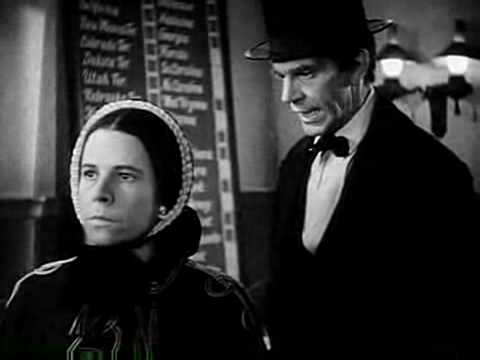
Image result for abe lincoln in illinoisAbe equivocates with his new love, Miss Mary Todd (Ruth Gordon) and finds a worthy opponent in Senator Stephen Douglas (Gene Lockhart). It seems that everyone but Abe believe him not just capable but necessary to be President. Mary Todd certainly thinks so, openly stating she will be the engine to push Abe into the White House. Also advocating is his law partner Billy Herndon (Alan Baxter), who berates Abe for wavering in his nation's call.

Eventually, Abe comes to his senses, especially after a well-fought Illinois Senate campaign where in a series of debates with Judge Douglas, Lincoln declares that 'a house divided cannot stand'. He is eventually selected by the Republican Party as a compromise candidate and wins the Presidency. Now he makes his own Illinois Farewell Address to his community before heading to Washington and his destiny as Commander-in-Chief.

Abe Lincoln in Illinois, adapted from the successful Broadway play, does much to put Honest Abe on a pedestal. Roy Webb's score is very worshipful and John Cromwell's direction also at times seems to border on the theatrical.

Of particular note is a short scene where we see the Harpers Ferry Raid. John Brown is cradling his dead son in almost a Pieta-like manner, and his own manner is rather grand given the chaos and death of the Raid. It is curious though that it was Robert E. Lee who led the raid against Brown's attempted slave revolt.
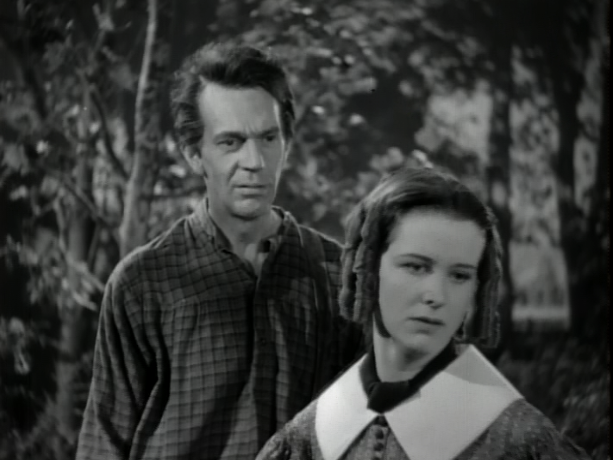
Image result for abe lincoln in illinoisAs a side note, none other than John Wilkes Booth witnessed Brown's execution. If memory serves correct, Booth said of Brown's final moments, "He was a brave old man", but I digress.

We do get scenes like these, where the 'importance' of moments and foreshadowing almost bludgeon us. Early on, Abe is sworn in as a vote-counter, and that moment is treated with odd reverence for something that was more casual in nature. It seems to telegraph that later on he will be sworn in as President, but it robs us a bit of the evolution of the man.

One thing that was not explored and I wish they had was Lincoln's journey down South. I think this journey began his evolution towards being anti-slavery, particularly seeing the slave auctions. It's unfortunate and a weakness in Abe Lincoln in Illinois that Lincoln's evolving views on the "Negro", while still not as advanced as we might have hoped, were more progressive than others.

In terms of performances I admit Massey did an excellent job as the lanky, seemingly rustic Abe. He showed that rare image of Lincoln as a spinner of yarns and witty comments versus the more popular conception of Lincoln as a dour, depressive individual. His 'aw-shucks' manner and folksy delivery make him a strong Lincoln.

Howard was a bit overly dramatic as Ann, perhaps the only real love of Abe's life, but her death scene is moving. I didn't like Gordon as Mary Todd, but I think this is more a response to how Mary Todd was. She seems too brittle this early on, having little sense of any coquettish or playful nature to balance out her more somber husband.

Lockhart did quite well as the shrewd Douglas, aware that Lincoln was no country rube but a formidable opponent. Both he and Massey had standout moments at their debates, bringing fire and fury as they battled it out. I might have seen a whole film just on those debates and can see why they are still reenacted more than a century later.

I think Abe Lincoln in Illinois says as much about when it was released as when it was set. The film was released in 1940, where we were coming close to entering another great war and the current President was also highly regarded to almost worshiped. As such, films that elevated the President would be in good standing order. I cannot say that Abe Lincoln in Illinois was a de facto celebration of Franklin D. Roosevelt, but it is not beyond the real of possibility.

Abe Lincoln in Illinois is a good primer to our most admired and beloved President (sorry Barry, sorry Donny). It does not delve much into his political evolution or even his private life (we get no proposal scene between Abraham and Mary Todd). However, with strong performances from Massey and Lockhart along with excellent cinematography by James Wong Howe, Abe Lincoln in Illinois is worth the time even if it does not capture the man in full.
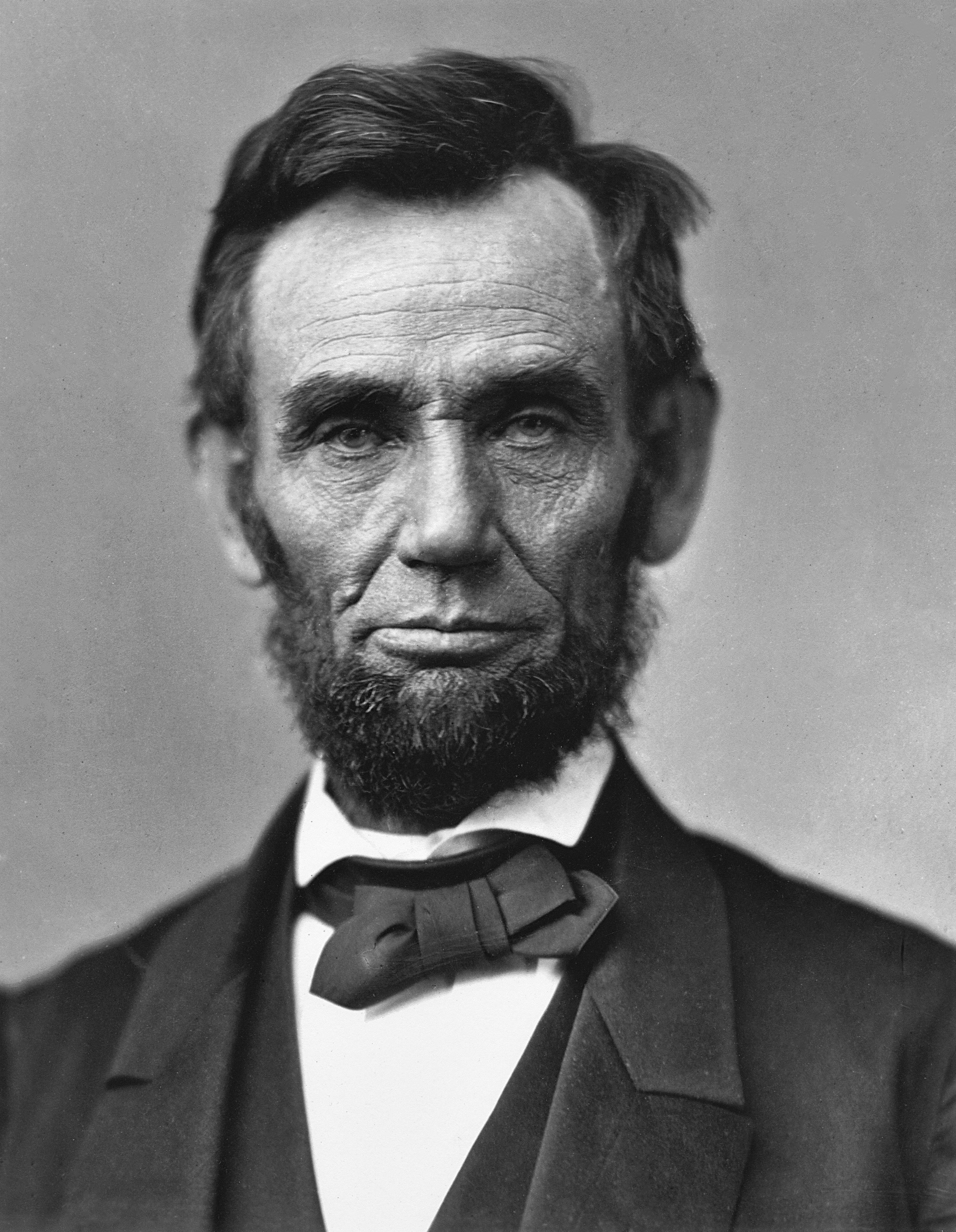
1809-1865


DECISION: B-

Sunday, January 20, 2013

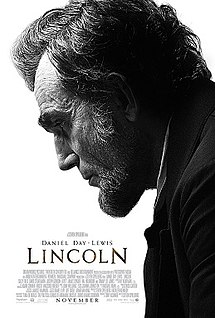
Lincoln: A Review (Review #494)


LINCOLN

President Abraham Lincoln has earned in place in the hearts of all Americans, the standard to which all other Presidents are measured.  Every President since our 16th looks to Lincoln and hopes to rank with him.  Few have.  Since his death in 1865 one can count on one hand those that have succeeded Lincoln who are considered close to him: Theodore and Franklin Roosevelt and Ronald Reagan are the only ones who are held to be among the greatest where Lincoln is already enshrined.  However, perhaps because Abraham Lincoln has been so deified films about him tend to be extremely reverential (with the exception of Abraham Lincoln: Vampire Hunter, a film I enjoyed but that few others appeared to).  We now have Lincoln, which was well-made, well-acted, and a fine film.  However, I found that in the end Lincoln to be a bit of a misnomer since most of Lincoln isn't about the President itself but about how he struggled and ultimately managed to push through the 13th Amendment to the Constitution of the United States, abolishing slavery in America.

President Lincoln (Daniel Day-Lewis) has won re-election, but now in January 1865 he is set on passing the 13th Amendment, despite the fierce opposition of the Democrats whom he still needs to provide the votes for passage in the House.  To help get the necessary votes, he and his trusted Secretary of State William Seward (David Strathairn) hire three proto-lobbyists to get the Democrats who might be swayed, some who are lame-ducks, some who might lose their seats if a close election is called against them by either Republican governors or a Republican-dominated House.

Of course, the rascally Radical Republicans give the President a headache also.  Their leader, Representative Thaddeus Stevens (Tommy Lee Jones) causes him trouble because of his passionate advocacy of 'Negro' rights, daring to suggest in his long career that 'Negroes' are equal to whites.  Only Republican Party founder and grandee Francis Preston Blair (Hal Holbrook) can keep the non-Radicals in line, but a price of his cooperation is seeing a peace delegation from the Confederacy, which the President steadfastly refuses to acknowledge exists.  This delegation, headed by Alexander Stephens (Jackie Earle Haley), held as the Vice President of the Confederate States of America, is kept waiting while Lincoln is working to ensure the 13th Amendment (so that the Emancipation Proclamation and the issue of slavery is settled once and for all, thus keeping the courts out of the possibility of returning slaves to bondage).

With his skills and a little wheeling and dealing, the Amendment is passed.  Lincoln then jumps to the surrender of Lee at Appomattox and then his assassination.


Here is the curious thing to me about Lincoln: it isn't about him.  Tony Kushner's screenplay (based on Doris Kearns Goodwin's Team of Rivals) is strong when it comes to the maneuvering and thinking of the President.  It shows that Lincoln was always two or three steps ahead intellectually of everyone else.  We get Lincoln and others in his circle (from his Cabinet members to Republican leaders) working to get their way, whether it is passage of the Amendment or get the peace delegation to be received.  The machinations of the participants was well-written and highly entertaining (the debates in the House during the Lincoln Administration were certainly more lively and entertaining than the ones we have now). 

HOWEVER, given the film is called Lincoln, one would have expected the film to be ABOUT Lincoln.  President Lincoln certainly wasn't a supporting character or someone that just pops in and out.  My issue with Lincoln is that the story we're told (the passage of the 13th Amendment and the various plans to promote or derail it) could have been told from another vantage point.  One could have made a film about Representative George Yeaman (Michael Stuhlbarg), who opposed slavery on moral grounds but who feared the Amendment would lead to full equality to blacks, a step he wasn't willing to make.  A film could also have been made on Representative Wells Hutchins (Walton Goggins), who while not having won his re-election bid still voted to defy his party to cast a vote for the Amendment (what would be called a Profile in Courage).

Instead, because Lincoln was almost squarely about the work of passing the 13th Amendment, the film flounders as a biopic.  In fact, once the Amendment passes, we get just a bit more about Lincoln and then he dies.  I cannot help feel that while Lincoln IS a good film, it is not a film about Lincoln per se.

However, this isn't to throw Lincoln under the bus.  Day-Lewis broke with tradition by giving the President a more accurate higher register, which goes against the idea that Lincoln's voice was stentorian and grand (read: deep).  His performance as the wise (and on occasion, wise-cracking) Commander-in-Chief was brilliant: for the most part gentle but also with flashes of anger.  When Lincoln does focus on the family issues (his at times unstable wife Mary--Sally Field--or his elder son Robert--Joseph Gordon-Levitt) we do get strong performances from them all. 

In fact, I don't think there is a bad performance among any of the Lincoln cast.  Even the minor roles such as Stuhlbarg or Goggins or Lee Pace as Democratic Congressman Fernando Wood or Gloria Reuben as Mary Todd Lincoln's dressmaker/friend and confidant Elizabeth Keckley were all done well.  Jones dominates his scenes as Stevens, who is prickly and shrewd and unbending.  Thus when he equivocates on his lifelong pledge of racial equality to ensure passage it is in turns shocking but wildly clever.

How I see Lincoln is that the film is passionately reverential.  John Williams' music treats the President with reverence (though when the lobbyists are rounding up cued it to be comical).  Janusz Kaminski's cinematography bathes Lincoln with appropriate grandness (the last shot of Lincoln, where the President gives a section of his Second Inaugural Address, the Malice Towards None, Charity for All Speech while emerging from a candlelight was a bit much for my taste).

Ultimately, I found Lincoln to be proper, well-made, but the President was still bathed in near-divine light, less human and more the President we all love and admire, but still don't fully know.  Respectful, respectable, reverential.  Nothing wrong with that, but perhaps a little more of the human touch might have pushed Lincoln to a higher level, to that level the film aspires to and the President has long achieved.              

1809-1865

DECISION: B+

Tuesday, May 29, 2012

Gore Vidal's Lincoln: The Television Miniseries

LINCOLN

*Author's note: In recognition of two Abraham Lincoln films, the biopic Lincoln and the horror/comedy Abraham Lincoln: Vampire Hunter, I've decided to look at two television miniseries about the 16th President.  This is the second.

I make no secret my utter disdain for Gore Vidal.  Still, I suppose that every once in a while, something good could come out of him.  Such is the case with the miniseries Lincoln (or Gore Vidal's Lincoln, not to be confused with Gore Vidal's Caligula).

Lincoln covers the years the 16th President was in office: 1861-1865, beginning with his arrival in Washington City on the eve of war.  President-Elect Lincoln (Sam Waterston) soon gathers his Cabinet: as his Secretary of State, a rival, William Seward (Richard Mulligan), and as his Secretary of the Treasury, another political rival, Salmon P. Chase (John McMartin).  Both are eyeing the Presidency for themselves and believe Lincoln to be weak, though as Chase observes, "an opportunist".  Also arriving with Mr. Lincoln is Mrs. Mary Todd Lincoln (Mary Tyler Moore), their children Willie and Tad, and a faithful secretary, Johnny Hay (Steven Culp).  Hay is friendly with the Lincoln's eldest son, Harvard student Robert (Gregory Cooke). 

Lincoln is inaugurated, and the Civil War commences.  Lincoln is frustrated by the Union generals' inability to take the fight to the South, and in particular to General George McClennan (David Leery), who has delusions of his military genius but who continuously insists he does not have the material or the men to take the fight to Robert E. Lee (despite outnumbering the Confederate army on at least one occasion 10-1).  Mrs. Lincoln, for her part, indulges in renovating the White House (and doesn't mind dipping into the government till to finance her own wardrobe), while employing a dressmaker, free black seamstress Elizabeth Keckley (Ruby Dee). 

The war drags on, and Lincoln endures both the highs and lows of his public and private life.  Willie dies, Mrs. Lincoln finds herself embroiled in a scandal where she in effect sold the President's State of the Union Address to a newspaper in exchange for cash (one figures to cover her mounting debts).  Mrs. Lincoln also has bouts of mental instability, which she calls "the headache", making her behave irrationally.

The machinations of some of his Cabinet and their families are also covered in Lincoln.  Secretary Chase, who was about to swear-in the President as the new Chief Justice of the Supreme Court, learns that his son-in-law, Senator William Sprauge (Thomas Gibson), 'The Boy Governor' (having earned the name due to him being elected as Rhode Island's head at age 29), had run the blockade and provided arms to the Confederate Army in exchange for cotton to keep his factories running.  Making things worse, Sprauge's fortune had financed a failed effort to draft Chase to replace Lincoln for the Republican Party nomination.

The Radical Republicans also thought of dumping Lincoln, who faced stiff opposition from McClennan, who would have made peace with the South as opposed to Lincoln's unconditional surrender policy.  The President, however, has loyal aides and friends, such as his secretary Hay, Congressman Washburn (Jerome Dempsey), and General Ulysses S. Grant (James Gammon), who is the general who finally fights (even if the casualties are horrific).

At last, after the five years of brutal war, the Union army triumphs, but Lincoln, who has felt that once the war ends, so does he, has one brief moment of respite before going to Ford's Theater.  Lincoln ends the way it began: with a train ride, but this time, the President's body is going to Springfield, Illinois for burial.   


Lincoln is a brilliant miniseries because it allows actors to make these lofty historical figures into flawed humans.  It does what any good historic film should do: bring history to life.  It is perhaps curious to see Johnny Hay, a future Secretary of State, being a big fan of whorehouses, going so far as to take Robert Lincoln, Governor Sprague, and the President's old law partner out to a house of ill repute.  However, this is something that brings these characters out from history books and into circumstances people could understand (if not strictly relate to).

The scheming, the sorrow, the bouts of melancholy or foolishness that we know of ourselves are presented in Lincoln as part of their own lives. 

Director Lamont Johnson won the only Emmy Award Lincoln received for the 1988 season, and we can see why he came out a winner.  The performances are all excellent, especially when we see that for some of the actors, this was a change of pace.  Mulligan, for example, is best known for comedy, particularly adept at playing bumbling, slightly befuddled characters like in SOAP or Empty Nest.  In Lincoln, he's as far from Harry Weston as can be imagined.  Mulligan plays Secretary Seward as a shrewd and calculating operator, but who is outmaneuvered by the President. 

However, it's a credit to Johnson's directing, Mulligan's acting, and Ernest Kinoy'swrit of habeas corpus to prevent the Maryland legislature from voting for secession) to appreciating Lincoln as both a politician and as yes, a friend.  He never loses respect for Lincoln's office, but Johnson allows us a few moments when we see a genuine affection from Seward to Lincoln.

Mrs. Lincoln has suffered injuries from a coach accident.  Seward is the only Cabinet official whom Lincoln trusts enough to stay with the President and First Lady in the hospital.  Seward is also the man who brings proof of Mrs. Lincoln's involvement in passing on the State of the Union to the New York press.  The regret and pain Seward expresses in having to inform the President of the First Lady's actions is never spoken, but Mulligan expresses it through his voice and face.

Likewise, there are surprising performances from those who were not as well-known then as they are today.  Culp shows he can be a great actor by making Hay an eager follower of Lincoln, a man devoted to the President and his policies, and who, despite his indulging in the pleasures of the flesh, has a moral core.  He, for example, is furious when he learns of Kate Chase's engagement to Governor Sprauge.  We see Hay react with anger at how people are plotting against his boss, understanding of what this means, and a genuine hurt given that for much of Lincoln we can see Johnny Hay is in love with the vivacious but manipulative Miss Chase. 

Gibson, who would go on to become the straight man on Dharma and Greg, is totally committed to the portrayal of the duplicitous Governor Sprague.  His voice is one that sounds a bit too educated (as if he's trying to behave as if he were better than everyone around him), and he can appear to be quite vicious (even if he does start out as a more decent individual). 

There are no bad performances in Lincoln, even in the smaller parts such as Robin Gammel's Senator Stephen Douglas, George Ede's blunt Irish butler Mr. McManus, or Dempsey's Congressman Washburn. 

The main parts, however, are remarkable.  Mulligan, as I've stated, is a revelation.  However, Moore as the tormented Mary Todd Lincoln is equally brilliant.  She goes from slightly haughty and self-indulgent to being a deeply caring wife and heartbroken mother to dead children and ultimately a widow.  The agony she expresses as she is forced from her dying husband's bedside is heartbreaking, as are whenever she slips into moments of insanity. 

Matching her is Dee's Mrs. Keckley, who comes across as a strong woman who, like Seward, grows to become about the only friend the much-tortured Mrs. Lincoln has.  It's unfortunate that her part was small, but in their scenes together, Dee and Moore make a formidable team.


Curiously, while Dee and Moore were nominated for their performances, Sam Waterston was inexplicably left out for his simply brilliant turn as President Lincoln.  He not only got the physical aspects of the 16th President right, but he also got what would have been Lincoln's western accent down to where it sounded so natural.  Add to that, Waterston also basically is a standard to which all other Lincolns are matched in how he brings the President deep humanity.  We see this whenever he endures painful loss or in the scene where the President opens up slightly to Seward to express the pain his wife causes him. 

Waterston captures the agony of the office in his voice, in his movements.  He also shows both the shrewdness of his maneuvering and the humanity of the man (as in when he gently looks over the list of soldiers to be executed and muses how many of those he can 'squeak by' with a pardon).  The burden of knowing that thousands will die in the awful conflict weighs heavily (as do the antics of his wife), and Waterston brings them all into his portrayal of this brilliant and complex but much-troubled man.

If I am to find fault in Lincoln (and I really don't find that much fault in it), it is in the images of the battles.  I do believe they were made by reenactors, and sometimes they look as if they were being staged.  However, that really is a minor, minor point that doesn't take away from some great performances and beautiful moments.

Lincoln is a brilliantly made miniseries: well-acted, expertly directed, and with great wit and wisdom in its screenplay.  The series moves effortlessly and gives us an almost close-up look at President Lincoln.  It's as good a film as its subject.

It's more remarkable that it is associate in any way with Gore Vidal, as hideous a person as ever walked the Earth.


9/10

Saturday, April 14, 2012

Sandburg's Lincoln. The Television Special

SANDBURG'S LINCOLN

*Author's note: in recognition of two Lincoln-related films, the biopic Lincoln and the horror/comedy Abraham Lincoln: Vampire Hunter, I've decided to look at two television miniseries about the 16th President of the United States.  This is the first. 

No American President in history has held or will ever hold the power over the American psyche as Abraham Lincoln.  If any President has become iconic, mythical, almost God-like, it's the one-term Congressman who became the first Republican Party candidate to obtain the high office. 

It's no surprise: Lincoln's term was the most tumultuous in American history, one where his entire term in office was consumed by an epic struggle to keep the Union together, where the issue of slavery, which had torn the nation apart, was going to be answered once and for all.  These five monumental years between 1860-1865 were so important and traumatic to the nation that the Civil War divides American history: pre-Civil, post-Civil.  Lincoln's whole life, from backwoods country lawyer to the most revered President in history (sorry Ronnie, sorry Barry) and one of the most respected men in the American psyche is the stuff of legend.  It is also the stuff of great drama.

In 1974 a six-part miniseries was shown: Lincoln (or Sandburg's Lincoln, taking the name from the biography by Carl Sandburg).  In its episodes, we get most of the life story of President Lincoln, with particular emphasis of his time in office.  Sandburg's Lincoln is, if one watches it today, a bit stodgy, and perhaps a little disjointed, but it also has some of the best performances of President and Mrs. Lincoln given as of today. 

Sandburg's Lincoln starts with Crossing Fox River.  It covers the campaign and election to President of the United States by Abraham Lincoln (Hal Holbrook).  First Lady Mary Todd Lincoln (Sada Thompson) is in turns anxious and excited.  Lincoln has no stomach for wheeling and dealing of Cabinet posts in exchange of this, that, and the other, but it is done.  We end with a visit to his stepmother, a widow now, and how he will probably never see her again.

Mrs. Lincoln's Husband covers the machinations of his Secretary of the Treasury Salmon P. Chase (who curiously is called "Solomon" by the President) to become President himself, especially with his daughter Kate (Elizabeth Ashley) pulling the strings.  The First Lady's evolving extravagance and suspicions of her sympathies (in particular when her sister, the widow of a Confederate officer, is housed in the Executive Mansion) is also covered, as that of the death of their child Willie and the First Couple's private moments.

Prairie Lawyer, oddly, goes back in time before his Presidency.  The bulk of the episode covers when attorney Lincoln defends a man against murder charges against his future opponent for President, the Little Giant himself, Stephen A. Douglas.  It also takes time to show the courtship by Lincoln to Miss Mary Owens, who after he through wit and shrewdness wins his case decides to break off their romance.  It ends with Lincoln attending a cotillion, where he meets Southern belle Mary Todd. 

Going back to the future with Sad Figure, Laughing, we see more of the struggle between the basically honorable but stiff Chase and the folksier Lincoln.  The Last Days covers literally that: the end of the war, Lincoln's premonitions of death, the return of their son Robert from the war, and an extended idyll where Mr. and Mrs. Lincoln discuss their hopes and plans for the future: Lincoln's desire to see the Holy Land, the First Lady's wish to see Paris, and a hope for a quiet retirement back to Illinois.   The final episode, The Unwilling Warrior, again, goes back to the past, just before he takes the train from Springfield to Washington City for the Inauguration, the plot to assassinate him in Baltimore, the death of his friend, the young Colonel Ellsworth, his struggles with General George McClennan to get him to fight, and ends with him arriving in a defeated Richmond, Virginia, former capital of the Confederate States of America. 


I trust that Sandburg's Lincoln, as it appears on DVD, is in the exact order of how Sandburg's Lincoln appeared on television in 1974 (I was not around to witness it myself).  That being the case, I do wonder why the producers decided to have Lincoln slightly disjointed; instead of going in a straight, chronological order, we get two episodes about his Presidency, go back to his early years, hop back to his last days, then in The Unwilling Warrior we have a bit of a hop and skip from just before his Inauguration and his early days to the fall of Richmond.  In terms of narrative and structure, I found the decision to jump around a bit puzzling, feeling that a more linear story (with perhaps one glimpse of his early days) would have served better. 

I also found the sets to be unconvincing, looking exactly like sets.  The stage-like setting of Lincoln (apart from when they are obviously on location) took away from the believability of the story.  One can't fully accept you are watching reality when you are thinking the "homes" are on soundstages.

This, however, shouldn't take away from some dynamic performances in Sandburg's Lincoln.  It should be obvious that President Lincoln was not around when audio and video recording existed, so no one alive would know exactly how he sounded.  However, Hal Holbrook so embodies the President it is hard to believe he didn't study Lincoln personally.  Holbrook captures the Lincoln from history: the folksy demeanor ready with a quick joke or story, but he couples him with a shrewd political mind (one who would have a team of rivals in his Cabinet).  He also gives Lincoln a true humility in his dealings with people, an understanding of what motivates them.  For example, while his friends and advisers insist, he get rid of Chase, Lincoln resists.  Holbrook's performance explains why: his Lincoln sees the Big Picture, and moreover, we see how Lincoln understands people, sometimes better than they understand themselves.  Thanks to the script and Holbrook's performance, we see that Lincoln knows that Chase is highly ambitious but also highly principled in his behavior towards his oath of office, making his plots rather weak.

Over and over, through Halbrook we see the intelligence in Lincoln (the President's passion and enthusiasm for Shakespeare, his understanding of human nature), the compassion in Lincoln (how he rarely appears angry when something goes wrong, but more accepting of the flaws of human nature), and the humanity of Lincoln (in his dealings with his wife and indulgence of his children).  In particular are the scenes when we see the President unguarded, as when he is with his stepmother, who raised him, in the first episode.  It's a beautiful, tender interaction between parent and child, and shows us a bit of the private man behind the legend.

Finally, Holbrook's performance is helped by the strong regional accent he carries in Lincoln.  His pronouncing of "widow" as "widder" and constant stories of rural life show us he was both highly educated and a common man.


Matching him is Thompson's Mary Todd Lincoln.   Thompson shows us both the woman easily wounded by the slightest of slights and one deeply in love with her husband, forever loyal to him.  Mary Todd could be odd (as when she accuses her husband of flirtations with other women) but we do see that behind a brittle exterior is a woman deeply and passionately in love with her husband.  In The Last Days, Thompson and Holbrook share a long scene where the Lincolns plan for the future, and as one watches, they are so good one almost feels like one has dropped in on an intimate conversation.  They joy and optimism they express comes true, and our knowledge that it is not meant to be makes their last moments on screen, where they ride off blissfully before heading to Ford's Theater, all the sadder. 

Sandburg's Lincoln is not without its flaws (the structure is a bit odd, important characters such as Secretary of War Cameron come and go while others such as Lincoln's loyal secretary John Nikolai appear but never make clear why they are so loyal to the President, and the sets are not altogether convincing).  Also, the picture quality has been compromised; despite it being only almost forty years since its broadcast Sandburg's Lincoln looks like it is close to freezing in the middle of the picture.   A greater reliance on structure (in particular with Ashley's wonderful turn as Kate Chase, both respectable lady and conniving bitch) would have helped tremendously.

However, with great performances from Hal Holbrook as President Lincoln and Sada Thompson as First Lady Mary Todd Lincoln, Sandburg's Lincoln is a good introduction to what made President Lincoln so extraordinary as both a leader and a man.  I would recommend it more for elementary to middle school students who won't be too bothered by the sets, but on the whole, Sandburg's Lincoln is a worthy miniseries for the Citizen Kane of Presidents. 

7/10