Showing posts with label War Films. Show all posts

Saturday, June 6, 2026

Pressure (2026): A Review

PRESSURE (2026)

"You don't need a weatherman to know which way the wind blows". So rapped Bob Dylan in Subterranean Homesick Blues. That might be true. However, you did need a weatherman to know whether or not to invade Europe. Pressure, based on the stage play of the same name, attempts to wring drama out of the weatherman who forecast conditions on D-Day. Veering close to parody, Pressure manages to hold on. 

England, 1944. Group Captain James Stagg (Andrew Scott) has been hurriedly summoned to Southwick House. Here, Supreme Allied Commander Dwight Eisenhower (Brendan Fraser) informs Stagg of his important task. Stagg is the preeminent meteorologist in Britain, a genius according to Churchill (or so Ike tells others). Stagg, married with a child on the way, is a prickly Scotsman. He finds the joint British/American team far too jolly for their important task. He quickly takes a dislike to his American counterpart, Colonel Irving Krick (Chris Messina). 

Krick and Ike have been together for years. Krick has accurately predicted the weather at every major battle in the African campaign. Krick predicts that the planned date of June 5, 1944, will be sunny and bright. Stagg scoffs and is adamant about how wrong Krick is. Krick has been lucky, Stagg insists. Historical patterns will not hold. He is dead set that June 5 will have massive storms raging across Europe and insists on postponing the planned Normandy invasion.

Krick is dismissive. Field Marshall Bernard Montgomery (Damien Lewis) is downright enraged. Monty demands that the invasion go ahead on schedule come literal hell or high water. "IF D-DAY IS CANCELLED, WE WILL LOSE THIS WAR!" Monty bellows when not throwing shade at Ike for him technically having no battlefield experience. Krick and Monty, as well as the military at Southwick, say to go. Stagg is adamant that it is a No. Ike, haunted by a dress rehearsal of the invasion that went disastrously wrong, must make a choice.

To everyone's surprise, he decides to wait. Stagg has his own dramas involving his wife, their unborn baby and Germans bombing hospitals. In all this, Ike's loyal Girl Friday Kay Summersby (Kerry Condon) attempts to keep everyone and everything in order. Stagg, already distracted by personal matters, is ultimately proven right. He earns the respect of everyone. In turn, Stagg becomes more cooperative with others. Together, he and Krick find a brief window where the invasion can safely take place sooner rather than later. With that, D-Day commences on June 6, 1944.

While I have yet to see The Six Triple Eight, I think that particular film got a lot of online mocking due to its subject matter. I figure that, despite its good intentions, The Six Triple Eight left some people with the vague suggestion that sorting mail was somehow equivalent to landing on Omaha Beach. That suggestion of "postal workers won World War II" became an unfortunate punchline. It also suggested that filmmakers were scraping to find hereto "untold stories" of the Second World War. In a similar vein, Pressure, I think, has been diminished by the dismissive "the weatherman won World War II" tagline. Again, I think there are many stories left to tell of courage during one of humanity's darkest hours. Whether audiences will embrace stories of courageous postal workers or weathermen, let alone whether such stories merit such lavish praise and productions remains to be seen. 

Pressure, with its pun of meteorological and emotional pressure, initially invites the viewer to mock it. The overall production does not help. Volker Bertelmann's score continuously attempts to push how dramatic everything is supposed to be. Bertelmann is no stranger to scoring war music, having won an Oscar for the 2022 version of All Quiet on the Western Front. I suppose that his Pressure score is better than the All Quiet on the Western Front score. At least with Pressure, he is not dry humping the same three notes for the entire film like he did for All Quiet on the Western Front. Yet, I digress. 

David Haig adapts his play with director Anthony Maras. Again, I have never seen the play version of Pressure. I figure, however, that it would play better than it does on film. A play would keep things to fewer locations. A film would let the story open up. In terms of locations, it does. In terms of characters and performances, it does not.

Andrew Scott is pretty remote as Stagg. I suppose that might be how the character is. However, because there is something distant in Scott's performance, one does not feel much when he faces personal crisis. The relationship with his wife would be ripe with drama. Unfortunately, Pressure uses them almost as if they were built to create drama. We see her heavily pregnant and then we see her at the end. Pressure does not go in to making Stagg a whole person. Instead, he is just there to look down on everyone except Ike, who towers over him.

As a side note, Pressure does give Andrew Scott a chance to issue a height joke. When he first arrives, Krick seems pretty dismissive of him. "I thought you'd be older," I think he says. "I thought you'd be taller" is Stagg's curt reply. Andrew Scott is 5'8" and Chris Messina is 5'7". 

Try as Pressure does, one never truly feels like these are people. I did not sense a change in Stagg's manner even when the film suggested it. I also had trouble accepting that Krick and his men would be happily dancing a jitterbug while working on their weather predictions. Stagg seems appalled at the others dancing to Boogie Woogie Bugle Boy. Part of me thinks that yes, people working under extreme pressure should let off a little steam. Part of me also wonders if such a thing would happen so often. An exchange between Stagg and Krick about how the former had never seen (or apparently even heard of) Gone with the Wind did not work either. It seemed more for forced drama than for realism.


The performances were respectable though not great. Kerry Condon is the standout as Kay Summersby.  One can give Pressure some credit in that it does not suggest any liaison between Eisenhower and Summersby. She plays Summersby as sensible, loyal and trustworthy. Kay Summersby is the cool, rational figure able to stand up and stand for Eisenhower and Stagg. I would also say that Chris Messina did a good job as Irving Krick. He plays him as someone confident in his abilities and sure of himself. When he is proven wrong, he at least makes Krick's bitterness relatable. 

Andrew Scott was not particularly good as Group Captain James Stagg. His scenes of domesticity looked forced. His interplay with others looked equally forced. Again, that might be the character. However, I would think that Pressure would make the case for why we should care for and about this man. It did not.

Brendan Fraser did his best as General Eisenhower. I would say that he is frankly too big physically to play Ike. He did not sound like Eisenhower. He tried to look like Ike. In fairness, he did have good moments, such as when he told Montgomery to never undermine him again in front of the men. However, one struggles with Ike flying off the handle at another meeting.

Damien Lewis was hilarious as the future Viscount Montgomery. He chewed the scenery with naked abandon. As he raged and pontificated, Lewis continuously made Monty look in turns unhinged and theatrical. He might have been. He just did not have to be that way here.

I will say that the actual D-Day invasion scene was well-filmed. I do not think that it will rank among the great battle sequences. However, it worked within the film's story and left a strong impact.

Pressure is good but not great. It has some good performances and some bad ones. Overall, Pressure does not make a good case for why we needed to know about the weatherman who saved the world.

1900-1975


Sunday, August 10, 2025

Run Silent, Run Deep: A Review

 RUN SILENT, RUN DEEP

This review is part of the Summer Under the Stars Blogathon. Today's star is Clark Gable. It is also part of the Plaza Classic Film Festival.

Underwater menaces plague ships at war. Run Silent, Run Deep is a good and entertaining film about men fighting battles external and internal aboard a submarine.

In 1942, Commander P.J. Richardson (Clark Gable) lost his submarine to the Japanese vessel Akikaze in the dangerous Bungo Straits. While he manages to save his crew, Richardson's loss still haunts him. A year later, he is still assigned to a desk job when he learns that the submarine Nerka is returning to Pearl Harbor. The Nerka is in need of a new captain. Most of the crew expects Executive Officer Jim Bledsoe (Burt Lancaster) to be promoted. Bledsoe didn't count on a superior officer's need to redeem himself and get a second chance to avenge his men and his honor.

Richardson is by-the-book, not dictatorial but obsessed with drills. The crew grumbles about the endless drills. Their irritation grows when Richardson deliberately avoids a Japanese ship. Why drill so much if they are not going to engage the enemy? 

Simple. Richardson is set on going back into the Bungo Straits and take down the Akikaze. To do that, he must ignore orders for him to avoid the straits. Richardson does destroy another ship on his way to pursue the Akikaze, but at a cost. Richardson too faces health issues that may make him incapable of completing his own personal mission. As such, he must relinquish the Nerka to Bledsoe, who will sail back to Pearl Harbor. 

However, an unexpected radio message from none other than Tokyo Rose herself alerts Bledsoe on how the Japanese are having such success in sinking American ships. The Akikaze already thinks that the Nerka has been sunk, so the Americans have an advantage. Will Bledsoe end up finishing what Richardson started? Who will live to see victory, and who will end up buried at sea?

Run Silent, Run Deep is not a slice-of-life about life in a naval submarine. It is meant as a portrait of men at war and men at odds. In this situation, Run Silent, Run Deep director Robert Wise does well with his two main leads. Richardson and Bledsoe are rivals, but they are always professional. Run Silent, Run Deep does well in making clear that for all of his frustrations and dislike, Bledsoe would never contemplate a mutiny or disobey orders.

Clark Gable is appropriately commanding in his role of Richardson. The film does allow him moments of regret, even humor. Both of these are in the early sections of the film. Gable's professionalism is evident when he attempts to take down the Akikaze the first time. He shows Richardson's frustration at being behind the desk. There is a brief scene where Bledsoe first confronts Richardson in a last-ditch effort to request that he give up commanding the Nerka. This scene, while not funny and played perfectly straight, does something interesting. 

It takes place at Richardson's home. As such, we get to see a different side of him. Here, he is the gardener caring for his tree. We also see him advising his wife (Mary LaRoche) to prepare lemonade with a touch of gin. This clues us in that Richardson is fully aware of Bledsoe's resentment about losing the Nerka. It also shows Richardson to be a family man, giving the viewer an idea that he is not a lone wolf seeking validation. Instead, he is a determined man seeking justice.

Lancaster is able to match Gable in quiet intensity. Bledsoe is a serious man, but he too has a moment where he lets down his guard. Again, it is early on, when he is genuinely touched, even amused, at the gift of a jacket with "Captain" on it from the crew.

Run Silent, Run Deep does give us some bits about the type of men aboard the Nerka. It is surprising to see Don Rickles of all people pop up as a crewman. Here, he is sarcastic but with a soft edge, far removed from his Merchant of Venom persona. Jimmie Bates in his small role of naive crewman Jessie is amusing, and we end up caring about him.

The film does not shy away from showing the conflict between the men. However, it does not dwell on them, showing them to be professional and mature (except perhaps for their habit of tapping the backside of a pinup for good luck). 

While the battle scenes do look a little dated, one can roll with the overall effect. The attack on the Nerka is well-filmed and ultimately moving. The film also has an excellent musical score by Franz Waxman. For history buffs, we get some idea of what a Tokyo Rose broadcast would have been like. The film does well to have our enchanting Japanese female voice say that they call her "Tokyo Rose", since no one actually used that name on air. Still, we get to hear that mix of American swing music and attempts at downbeat propaganda.

Run Silent, Run Deep is good for people who enjoy action and war films. Some of the effects are dated. Still, it is well-acted and entertaining. Run Silent, Run Deep is worth diving into.

DECISION: B-

Monday, November 27, 2023

Napoleon (2023): A Review

NAPOLEON (2023)

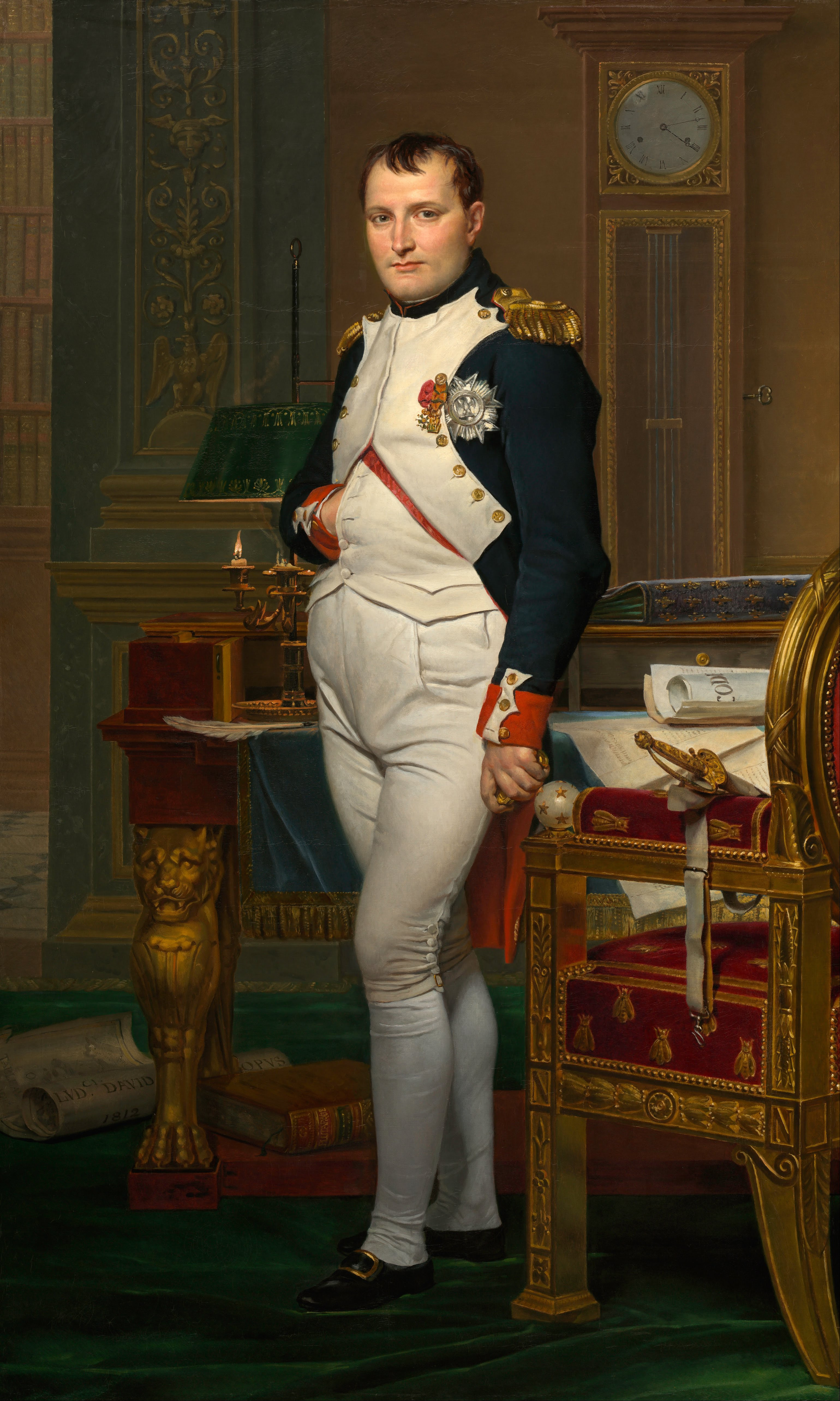
For all the short jokes that inevitably come when people mention Napoleon Bonaparte, he has had a large, dare I say, gigantic, role in world history. This latest biopic of the French Emperor may not be the final word on Bonaparte, but it does have more positives than negatives. 

Covering the time period from the fall of the Ancien Regime and Queen Marie Antoinette's beheading to his second exile on St. Helena, Napoleon chronicles the rise and fall of our Corsican soldier turned Emperor. Napoleon Bonaparte (Joaquin Phoenix) witnesses the former Queen's execution, but is neither a fanatical Reign of Terror supporter or a monarchist. He serves the Republic admirably, defeating the British attempt to conquer his beloved France.

He has another beloved, the beautiful aristocrat Josephine de Beauharnais (Vanessa Kirby). He woos the widow and Reign of Terror survivor, eventually winning her hand in marriage. Napoleon's lusts, however, go beyond Josephine's boudoir. He "liberates" Egypt but rushes back when he hears that Josephine has taken a lover. Despite her indiscretion, he still stands by her, and his quick return to crush the liaison comes in handy when he overthrows the Directorate and installs himself as First Consul.

It is not long before, like the Romans who shifted from Consul to Emperor, France finds itself with a new monarch. That is Napoleon himself, with Josephine beside him. The Imperial throne needs an heir, which Madame l'Imperatrice cannot give him. With a broken heart, he agrees to a divorce for the sake of the nation. Josephine is equally displeased with this decision, but she too sees the impossibility staying as the Emperor's consort. 

They are still friends, with Napoleon writing her many letters detailing his plans for such things as the battle of Austerlitz and his Russian campaign. The failure in Russia forces an abdication and exile, albeit with a generous pension and continued support for the former Empress. However, he found that able was he when he saw Elba. Escaping his exile, he returns to France, but too late to reunite with Josephine, who died shortly before he arrived at her chateau. Despite this, there is still a throne to regain. The ultimate battle between the Emperor and various other empires is at Waterloo, and now defeated, he goes into second exile. He dies there, unrepentant of the millions of death he caused but, according to the on-screen text, whispering his final words, "France, the Army, Josephine". 

It is said that all's fair in love and war. Napoleon proves, or at least tries, to prove that when it goes between the major campaigns of war and the major campaigns of love. It has some trouble balancing the two, especially the romance. Director Ridley Scott and screenwriter David Scarpa could have focused on one or the other. They opted for a bit of a mishmash of both.

It is not that such as mishmash does not work. It is more that it forgets where it finds itself at times. When it focuses on the battle sequences, you get almost thrilling moments. The Battle of Austerlitz is a major highlight, where the drowning soldiers is a mixture of visual awe and terrible tragedy. Napoleon's score and cinematography here, at Waterloo and Toulon early in the film are also strong and effective.

It is also not that the romance angle is not without some positives. The scene where the divorce is publicly formalized is quite sad, and Napoleon slapping Josephine is both shocking and sad. 

However, at times Napoleon played almost like comedy. There were some lines that caused the audience to burst out in laughter. One of the funniest moments comes when he sneers at a British official. "You think you are so great because you have boats!" he declares, half-petulantly half-seriously. 

When, for another example, Josephine chides Napoleon for being overweight, he retorts, "Destiny has brought me here. Destiny has brought me this lambchop". It's hard not to laugh at such lines, especially as delivered by Phoenix, who says this almost casually. This curious moment comes right after he has told Josephine that she is to get pregnant that night or he'll divorce her.

Again, as said by Phoenix, he is perfectly serious. However, given their curious lovemaking habits, I do not know if the Emperor is aware exactly how one gets pregnant. He does when his mother of all people procures a mistress for him to impregnate to verify that he's not the problem. 

One is also left wondering if Napoleon was working at being a bit more contemporary than the historical record. I grant that my knowledge of French history is limited, so I won't bother trying to find if Napoleon is historically accurate. However, when Josephine returns from a tryst with her lover to find all her clothing boxed up in the front courtyard, I did wonder if this was the Napoleonic version of "to the left, to the left".

It is interesting that out of the cast, it was Rupert Everett in the small role of the Duke of Wellington who came out the best. It makes one wonder why there hasn't been a Wellington biopic. Is there a Wellington biopic? If there isn't, I'd love to see Everett reprise the role. Phoenix makes Napoleon into a sometimes stoic, sometimes weepy figure. It depends on whom he is talking to or what he is talking about. For the most part, the Emperor is stoic regardless of whether he is taking down the Directory or attacking the Pyramids. 

When he deals with the Empress, however, more often than not he is ready with handkerchief, wiping tears. 

Kirby, I think, did as well as she could with what she was given. I neither loved nor hated the performance. I think she could have done better, but I do not think she was horrible either. I think she had some good moments, such as in the previously mentioned divorce scene. 

I found Napoleon to be good, not great. It is an antiwar film in that it ends by listing the number of casualties in his various war campaigns, a reminder of the human cost of his rise and fall. I have one major disappointment with Napoleon. Despite the probably unintentionally funny lines, not once did Napoleon ever say, "Not tonight, Josephine".  

1769-1821


DECISION: B-

Sunday, August 27, 2023

Passage to Marseille: A Review (Review #1750)

 PASSAGE TO MARSEILLE

This review is part of the Summer Under the Stars Blogathon. Today's star is Humphrey Bogart.

Passage to Marseille is an interesting picture in that I do not know many films that dive further and further into flashbacks, like a cinematic Russian doll. Almost amusing in its Free France flag-waving, Passage to Marseille has some good points but almost punishingly long and now comes across as slightly silly despite its good intentions. 

A plot summary is a bit hard because Passage to Marseille has up to three flashbacks, one wrapped within another. The present-day story is of reporter Manning (John Loder) who wants to do a report on the Free French Air Force stationed in England. Granted permission to look in at the secret FFAF base, he meets Captain Freycinet (Claude Rains). He gives Manning Flashback Number 1 of when he met FF pilot Jean Matrac (Humphrey Bogart).

Freycinet was an officer aboard the ship Ville de Nancy when the ship comes across a canoe with some men. First claiming to be French miners in Venezuela attempting to return to France to fight the Nazi regime, Freycinet learns the truth from one of the men, Renault (Philip Dorn). 

We now enter Flashback Number 2. Renault and the other men are really escaped prisoners from the notorious Devil's Island in Cayenne, French Guiana. He had joined the French army illegally due to lying about his age but who became a deserter that regretted his decision. Renault feels a fire for France despite his incarceration. He eventually encounters an old former prisoner nicknamed Grandpere (Vladimir Sokoloff). He has saved his money and can get access to a canoe for an escape. Renault agrees, with four other prisoners. He also suggested as their leader Matrac. 

Now we go to Flashback 3. Matrac is a crusading French journalist, condemning the Munich Pact and getting grief for it. He also loves a woman, Paula (Michelle Morgan). Matrac finds joy and love with Paula, but the collaborationist forces get him convicted for murder. He is sent to Devil's Island.

Working our way back from Flashback 3 to 2 to 1, Matrac, Grandpere and Renault leave the island along with a giant named Petit (George Tobias), a small man named Marius (Peter Lorre) and a man in the middle named Garou (Helmut Dantine). Freycinet believes they are patriots, and they eventually join forces to stop the evil Major Duval (Syndey Greenstreet) from mounting a mutiny that would send them to Vichy France. That, however, meant that Matrac would not return to Paula. Freycinet tells Manning that Matrac flies over her home to drop off notes to her and Jean, Jr. This time, however, things may not be the same.

You cannot go home again, or so the saying goes. Watching Passage to Marseille, I got that feeling as the film went on that people involved in the film were trying to echo that film. You have a good number of Casablanca players in the film (Bogart, Rains, Greenstreet, Lorre and Dantine) directed by Casablanca director Michael Curtiz. Certain scenes and characters echoed Casablanca, intentionally or not. Early in the film, we have a man in a trench coat and a French captain observe a plane taking off. Perhaps the wildest Casablanca/Passage to Marseille connection is when Casablanca's Renault (Rains) talked to Passage to Marseille's Renault (Dorn). As one who loves Casablanca, I never thought I would see Renault Meets Renault.

You also have Corinna Mura, the singer at Rick's Cafe Americain, singing in the same way at a French cafe where she sings what I figure is Passage to Marseille's unofficial theme, Someday I'll Meet You Again. I think even the fussy Italian from Casablanca was in Passage to Marseille too. 

Someday I'll Meet You Again is no As Time Goes By, and Passage to Marseille is no Casablanca. You cannot force a love story into a war film and think that you can get the audience to connect with it by virtue of it just being there. The Matrac/Paula romance is wildly underdeveloped and takes so long in getting there that it seems almost an afterthought.

It does not help that the performances were a bit weak. I found Morgan so overwrought in her declarations of love that they seemed a case of she doth protest too much. Bogart too seemed to be in love with Paula because the script said he was, not because he thought it was true. Passage to Marseille spends so much time going from present to past to further past that we can't invest in the last story we get (the Jean/Paula romance). 

Bogart, unlike almost everyone else, did not bother to sound like anything other than an American. Granted, many of the cast was foreign, but Greenstreet at least tried for a French accent. Bogart's New York sound made the idea of him being this passionate Frenchman laughable. 

Not that a lot of the acting seemed up to par. There were times when I was close to chuckling seeing some of the performances. I get the idea that Passage to Marseille is close to propaganda, but the "WE LOVE FRANCE" schtick grew tiresome. So many characters go on and on about how they love France that it becomes slightly comical. Sydney Greenstreet should have twirled his mustache as the EVIL Duval, his performance as broad as his waist*. His lackey went overboard in his sycophancy to where you did not take it seriously.

As a side note, given how Duval was pro-Vichy, why neither Freycinet or Captain Malo (Victor Francen) did not just place Duval and those around him under guard makes them look like idiots. Having Hans Conreid as fellow Vichy supporter Jourdain is already silly enough; the thought that Uncle Tonoose being described in voiceover as "a treacherous youth and wildest officer" is flat-out laughable. Conried was pretty much a comic actor, so casting him in what should be a tough role in a gritty war film is too hard to accept. How can I take seriously the crazed band leader from The 5,000 Fingers of Dr. T being in fisticuffs with French convicts?

I give Curtiz and screenwriters Casey Robinson and Jack Moffitt credit in the flashbacks within flashbacks within flashbacks moved well. I do wonder though if perhaps fewer flashbacks and a more straightforward story would have worked better. Credit should also go to James Wong Howe's brilliant cinematography. Certain sequences, such as Matrac's imprisonment, are almost works of art. 

Other parts, though, seemed curious. Paula and Jean, Jr.'s home seemed quite pleasant and bountiful for living in occupied France. Jean, Jr. is also supposed to be five years old, which makes me wonder exactly how long Matrac was on Devil's Island. 

Certainly, Passage to Marseille did what it set out to do: ennoble the Free French cause. To my mind, it went overboard in that department but given the war I think I understand where it came from. Not exactly a Casablanca sequel, Passage to Marseille wasn't above echoing some memories of Morocco.  It did not work, but in case anyone wondered, the Free French Air Force LOVED France.

*Anyone who thinks that quip is "fat-shaming" should be aware that Passage to Marseille takes potshots at Greenstreet's girth too. In voiceover, Claude Rains remarks that Duval filled the seat of honor "and amply so". 

DECISION: C-

Thursday, May 25, 2023

All Quiet on the Western Front (2022): A Review


ALL QUIET ON THE WESTERN FRONT (2022)

We are now well over a century away from the horrors of the trench wars. As such, we are divorced from the true carnage of the scarred battlefields of Europe as empires battled to the death to create a desert and call it peace. The latest adaptation of All Quiet on the Western Front is, to my knowledge, the first time that Germans have made a film version of their inglorious defeat. Pity that they opted to shred the novel it is based on with a useless subplot.

As the Great War is coming to its third year, eager German student Paul Baumer (Felix Kammerer) enlists with his fellow classmates. Pumped up by rhetoric of victory, the students soon learn that war is hell. Moving eighteen months later, these youthful warriors now collect the dog tags of the dead. 

As they fight for the Fatherland, the German High Command begins negotiations for surrender. Leading these negotiations is Matthias Erzberger (Daniel Bruhl). The conditions are unconditional surrender from the French, something that the Germans are highly reluctant to accept. While they do, the mad German General Friedrichs (David Striesow) wants his nation's defeat to end on a high note: an attack just before the armistice takes place to claim a German victory. This means one last battle before the bitter end, one that will see one young German youth die right before the beginning of peace.

It is hard to give a review for All Quiet on the Western Front given that I have seen and highly admire the 1930 adaptation. Add to that how I have not read the Erich Maria Remarque novel. As such, I might be at a disadvantage in looking over this adaptation. However, if I looked at All Quiet on the Western Front just on what I saw, I would say that it is a bad film.

First, we have the issue of how director Edward Berger (adapting the novel with Lesley Patterson and Ian Skokell) jumped from Paul's brutal and harrowing war experiences to Erzberger's negotiations. Every time we came close to seeing the dehumanizing effects of war on youth, we have to go back to the dull Erzberger attempting to save face.

That Bruhl played Erzberger as this generally quiet, almost somnambulist figure does not make it better. 

The politics subplot robs All Quiet on the Western Front of any genuine impact. The story, oddly nominated for Adapted Screenplay in my opinion, should focus on these sad young men, robbed of their youth and lives for a useless cause. Instead, we get repeatedly interrupted with haughty Frenchmen telling pathetic Germans off. 

Another poor decision was to throw our doomed heroes in so late in the war. I wondered why these young men, so close to the end of the war, would join now. Yes, it could be part of a large and misguided sense of patriotism. However, part of me also thought that by now, stories of the horrors of the front would have filtered in, making the boys reluctant to go.

Since we do not really interact with or know the young men, the impact their deaths would have had is lost. Seeing them die brutal deaths is still sad, but I think we would have felt the losses more if we had gotten to know them.

Even in moments of genuine shock and horror, we are still kept at a distance. Paul and his mentor Kat (Albrecht Schuch) come upon a group of soldiers who died en masse due to removing their gas masks too soon. It is still horrifying to see that, but as filmed and directed by Berger, it is more clinical than impactful.

Curiously, sometimes the film was almost boring. Fellow trooper Kropp (Aaron Hilmer) speaks French and is able to squire pretty girls, but one wonders what about that is interesting. 

Volker Bertelmann's Oscar-winning score has been highly praised, but it consists mostly of humping three notes repeatedly. I do not know if Bertelmann's insistence of blaring the same three notes to full force is what convinced people that this was great music. It became incessant, grew to pompous and ended as irritating. It, to my mind, will rank among the worst pieces of music to win Best Original Score.

This is not to say that there All Quiet on the Western Front does not have some positives. James Friend's cinematography is visually arresting. There are some appropriately horrifying moments, such as at the final battle where rats and men on fire overwhelm the viewer. The sparseness of No Man's Land, the final night of war, the growing chaos are captured effectively and memorably. 

Still, I think on how All Quiet on the Western Front failed to be about the true horror of war. Instead, it was just there. Nature cares not for battles and dead men, and I ended up not caring about All Quiet on the Western Front

DECISION: D-

Monday, December 12, 2022

Devotion (2022): A Review

DEVOTION

"Inspired by a true story" is a poor way to sell a story like Devotion. What could have been and should have been an exciting, insightful true-life tale ended up bloated, lethargic and blank. 

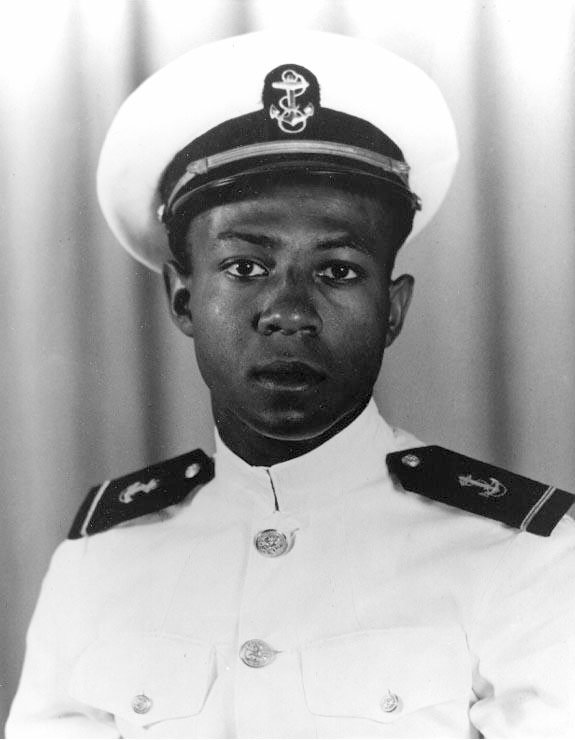
In 1950, Naval Ensign Jesse Brown (Jonathan Majors) is the only African-American in his squadron. This, in a surprising and positive turn, is of no importance to the other pilots, including newly-arrived pilot Tom Hudner (Glen Powell).

Brown very reluctantly works with Hudner, whom he does not dislike but is wary of. For his part, Hudner is more than willing to work with, even be friends with Brown. A tentative working relationship begins between them, one encouraged by Brown's devoted wife Daisy (Christina Jackson).

It is not long before Brown and Hudner's squadron are ordered to the Mediterranean. Here, Brown encounters actress Elizabeth Taylor (Serinda Swan) while on shore leave at Cannes. She invites him and his fellow officers to a night at the casino, and this is the rare non-work adventure they share.

As 1950 draws to a close, the long-feared war in Korea finally breaks out. The squad takes the fight to the North Korean-Chinese border, but Brown does not survive. Hudner is determined to try and save Brown, but cannot. He, however, has kept his pledge to Daisy: not to save him, but to stay with him.

We are told in a post-script that the search for Ensign Brown's remains continues.

I think many who praised Devotion wondered why and how the film failed. Among the elements is the generic title. Granted, the film is based on the nonfiction book Devotion: An Epic Story of Heroism, Friendship and Sacrifice by Adam Makos. However, the longer book title at least gives one an idea of what the story is about. "Devotion" as a film title is more opaque. Devotion to what? Country? Family? Fellow Navy fighters? Elizabeth Taylor? 

Devotion is a very bland title, though perhaps in retrospect it is fitting for a surprisingly bland film. This is a rich subject tackling war, race, the comradeship of fighters, and yet things moved so slowly and haphazardly. Nothing really sticks, making the two-hour-nineteen-minute running time feel longer. I did ask myself at one point, "When is this going to end?", a terrible thing to wonder for any film, let alone one as sincere as Devotion.

Elements are constantly hit on that never go anywhere. We see Ensign Brown talk to himself using racist language (ostensibly to shield himself for when he came across it), but Devotion rarely showed any elements of racism thrown at him. The worse I can remember is when the snooty French doormen initially refused him entry to the Cannes casino. 

To be fair, I was slipping in and out of consciousness during the film, so I might have missed something. However, apart from this and having an unpleasant neighbor who called the police on the Browns for having loud music, I cannot recall any major incidents where race played a role.

I should be happy that Devotion opted out of the easy, safe and predictable route of having his fellow Navy pilots be unhappy or uncomfortable with a "colored" aviator. Brown's fellow pilots got on rather well with him, though found him deliberately standoffish. It is, however, strange that Devotion both included and excluded the race element. At one point, the other black crewmen seemed interested in seeing a fellow African-American fly, but as far as I remember there is little to no mention of their involvement towards or with Brown. 

It is also surprising to see how France was seeing as more openly racist given how often France has been seen as more welcoming to African-Americans like Josephine Baker and James Baldwin. 

I think it is because Jake Crane and Jonathan Stewart's adaption simply did not know what it wanted to say. Was it an "overcoming racism" film? Was it a "war film"? Was it a "band of brothers" film? Was it an "inspirational true story" film"? It was none of these, though I suspect it was because it was trying to be all.

J.D. Dillard's directing did not help. It was not as if the actors did not try, but sometimes one is aghast at how bland they all were. In what was meant to be a moving moment, one of the flyers is facing death when he cannot correct his landing. The flyer, Mohring (Nick Hargrove), ultimately fails and crashes.

This scene should be studied by future filmmakers and actors to show what not to do. As acted by Majors and Powell, there is not a drop of emotion, of urgency, of concern over their fellow flyer potentially being killed right in front of them. For all we know, they could have been talking about Mohring ordering everyone sandwiches. 

Once his plane does crash, Dillard has the characters stay put, not out of shock but out of a bizarre disconnect bordering on disinterest. No one seems horrified. No one seems upset. No one moves for seconds. Even as they stare at the wreckage, there does not seem to be much concern. This is supposed to be a death among the band of brothers, but despite the film's desperate efforts to make one care, one doesn't.

It also does not help that I would not have been able to tell you who Mohring was or what his role in Devotion was. That goes for anyone not named Jonathan Majors or Glen Powell. 

A takeaway from Devotion was my confusion over how I thought Joe Jonas had already been in a World War II film. In reality, I was confusing Joe Jonas with Nick Jonas from Midway. Is it to the point that the Jonas Brothers are that interchangeable that I literally could not tell the difference between Joe and Nick? 

Again, the actors in Devotion tried hard to make things worth the time. Jackson's Daisy is the best of the lot. In her all-too-brief scenes, she did the best she could with the material to make Daisy a loving but concerned wife. 

The other actors too did the best they could with what they had. It is interesting that Powell played Lieutenant Hudner. This is the third time Powell has played a Navy pilot after Hidden Figures and Top Gun: Maverick. It's gotten to the point where a friend of mine literally asked me if Powell had served in the military before becoming an actor (he hadn't). I'm sure Powell has done other films where he isn't flying combat missions, but "Glen Powell as a military character" is coming close to parody. Here, he is shockingly bland and distant, almost like a nice guy who just wandered onto the set and decided to say lines.

Majors too did what he could as Ensign Brown. His best moments were with Jackson, where he could show a nice connection to Mrs. Brown. He did his best too when he is facing death or showing some irritation about the flight report that detailed him disobeying orders (even if the results were beneficial). However, try as he might, the efforts at "stoic" ended up as "bored". 

Again and again, Devotion's greatest flaw is the screenplay. At a battle, we hear from two soldiers. "You want a prayer? Dear God, send us some angels," one of them says, and at that moment the Navy fighters come in. I found that a bit too on-the-nose and predictable. 

Devotion somehow, despite its best efforts and intentions, ended up making a case that a documentary about Ensign Jesse Brown would have been better than the biopic we got. He deserves a lot better than Devotion.

1926-1950


DECISION: C-

Monday, March 21, 2022

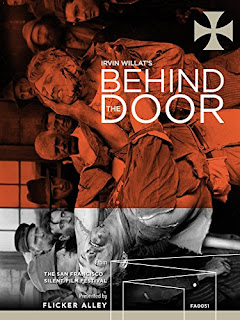
Behind the Door (1919): A Review (Review #1584)

 BEHIND THE DOOR (1919)

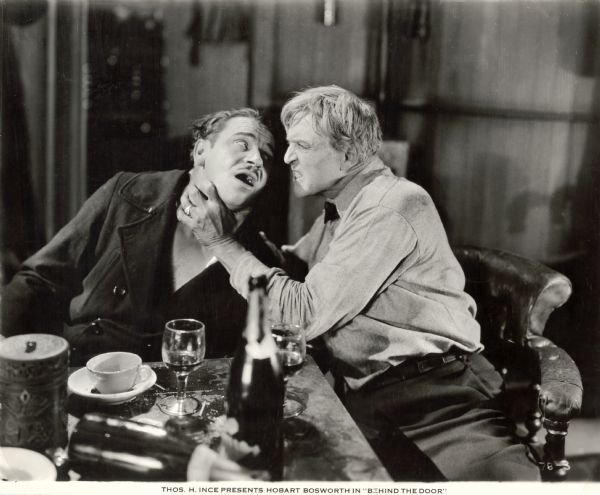
In the early days of film, the First World War was a dominating subject. Two of the first three Best Picture winners revolved around the war (Wings and All Quiet on the Western Front) and there were other films that dealt with the war. Behind the Door was slightly behind the times in that it premiered after the war's end, but it touches on subjects that still resonate today.

Broken World War I veteran Oscar Krug (Hobart Bosworth) returns to his Maine hometown, into a world far different from what he knew. Going back to 1917, we see that despite being a second-to-third generation American, Krug is suspect because of his German ancestry and his mother's German birth. He however is able to stand up against everyone in town, and his former enemy Bill McTavish (James Gordon) now joining him to enlist.

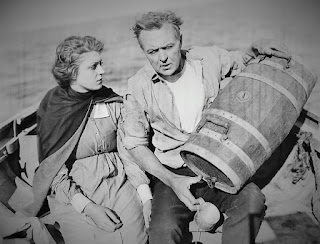
They now serve on the USS Perth, but there's a stowaway: Alice Morse (Jane Novak), whom Krug secretly married. She is hidden by the nurse's group with the hopes of disembarking at the next port, but a German U-boat has taken the ship down. Alice and Oscar have survived, but evil German captain Brandt (Wallace Beery) has taken Alice prisoner, leaving Oscar to float off. However, Oscar manages to survive. Now with a new command, Krug reencounters Brandt, who does not remember Krug. Brandt delights in recounting Alice's cruel fate, unleashing Krug's fury. Now Krug has a chance to enact his own revenge, harkening back to his time as a taxidermist. 

It is a sad note that the condition of many silent films makes them hard to watch. Behind the Door is no exception, for the version we have now is patched together from three separate sources. Even then, sometimes we see the damage dominate the center of the film. As such, it makes it hard to see. 

However, once we accept the damage will be there, we see that Behind the Door is a very strong film. Some of the visual moments showcase beautiful moments, particularly with the title cards. When a mob comes to attack Krug, we read "Somebody get a rope and start the tar to boil" accompanied by an image of a burning noose. When we see title cards as Oscar and Alice are adrift, we see the text almost float in the water.

We even get a little bit of fourth wall breaking when Beery gives us a quick glimpse when we first see him. I almost expected him to try and twirl his mustache. I put that down to a theatrical background where audiences could boo the villains.

Behind the Door is simultaneously progressive and regressive in its portrayals. It does well in showing German-Americans as loyal, patriotic people (would that films made in World War II done the same for Japanese-Americans, though to be fair a few films did). However, we get the EVIL Germans, where we see them be sexually rapacious, violating innocent American womanhood.

Behind the Door did well is that it managed to show just enough without being overtly graphic. The audience sees Alice slipping into the darkness while the German sailors swallow her up, and we can imagine the horror of Krug's cruel vengeance. We do not need the film to be overt to be filled with horror.

The film does have some issues when it comes to the acting. It does have some of that almost cartoonish silent film acting style that looks over-the-top nowadays. Of particular note is Bosworth, who at times lets his shaking fists do his acting for him. Novak was very pretty and her acting did not slip into theatrics. There were some moments that came close but not full-on grand.

Gordon's McTavish did strong work, shifting from antagonist to friend. Beery also did well as the brutal Brandt to where he was almost sympathetic in the end. His last moments, the look of horror in his face, were well-acted.

The film is also quite beautiful in certain moments.

Behind the Door, not remembered now, might be worth a remake. Sad to say that the themes of brutality and revenge in war are still relevant. While the film is itself sad, we do get a nice moment to close this tale, a curiously optimistic moment in this tale of woe.

DECISION: B+

Saturday, August 21, 2021

Dragon Seed: A Review

DRAGON SEED

This review is part of the Summer Under the Stars Blogathon. Today's star is Katharine Hepburn. 

Katharine Hepburn was firmly on the political Left. I mention this only to demonstrate that even liberals can have a glaring blind spot, in this case when agreeing to be part of cultural appropriation. Dragon Seed casts the embodiment of Yankee WASP patrician as a Chinese woman. While not as remembered as Mickey Rooney's ghastly yellowface in Breakfast at Tiffany's, Dragon Seed is still as stunning in its tone-deaf manner as the other Hepburn's film.

It's also stunningly boring.

Narrated by Lionel Barrymore, Dragon Seed starts with a happy, joyful Chinese village overseen by Ling Tan (Walter Huston), prosperous farmer who is patriarch over his wife (Aline MacMahon) and his three sons and their wives. While his Number One son Lao Tan Tan (Robert Bice) has done his duty and provided grandchildren, his Middle Son Lao Er Tan (Turhan Bey) has not. It is due to having a most unusual daughter-in-law, Jade (Katharine Hepburn) versus Tan Tan's wife Orchid (Frances Rafferty). Jade wants to read, speaks her mind (albeit softly) and has no issue standing out.

She also sees the magic pictures from traveling students who tell the villagers of the impending Japanese threat. While most of the village thinks these troubles won't affect them, Jade grows worried. Fortunately, a child distracts her enough to not make a big deal out of the Sino-Japanese theater of World War II. Unfortunately, the war does finally come. While some, like Ling Tan's merchant son-in-law Wu Lien (Akim Tamiroff) can collaborate with the Japanese, others like Ling Tan's Number Three son Lao San Tan (Hurd Hatfield) insist on fighting.

Things grow more complicated when Ling Tan's third cousin the Scholar's (Henry Travers) wife (Agnes Moorehead) takes out her anger at the Lings by turning informant. With war all around them, each Ling suffers tragedy before ultimately sacrificing the land to fight the invaders, with Jade and Lao Er Tan's son being the new seed of the Dragon.

Dragon Seed is one of those "they meant well" films, where the production company wanted to make a neo-propaganda film favorable to the Chinese allies in World War II. However, it is impossible to overlook the ghastly decision to not cast a single actual Asian, let alone Chinese actors, for any credited roles. 

No one apparently thought to cast actual Asians in major roles for Dragon Seed, and it says something about the nature of the oddball casting that the half-Turkish Bey is the most Asian-looking actor in the cast. While other actors in Dragon Seed like Huston and Travers did not look quite as garish, nothing but nothing excuse Katharine Hepburn from sheer condemnation for her almost freakish appearance.

I suppose we should be thankful almost none of them opted for an "Asian" accent, though the dialogue had this faux-"Confucius say" style of speaking. Dragon Seed has almost hilarious dialogue that will make people either cringe or laugh. After describing the joys of reading to her husband, Lao Er says, "It is magic. Your eyes pick up those bird tracks and your eyes give them to your voice and your voice gives them to my ears". I'm not sure if "bird tracks" is the best way to describe Chinese writing, but this bit just sounds odd. When told he is to be a father, Lao Er's response is "We shall be ancestors!", which again sounds peculiar.

More cuckoo bits come whenever they refer to each other as "Fourth Cousin" or "Third Son". After seeing so much death and destruction, Ling Tan and the wife say when seeing their youngest return, "It is our third son". Maybe they were so traumatized they forgot his name? 

Going back to Hepburn, it is hard not to cringe every time she appears in yellowface, the eyes exaggerated in such an appalling manner as to go past ignorant into almost overtly racist. Why Hepburn agreed to play a Chinese woman despite being a total Yankee has to be one of the worst decisions of her professional career. I don't know if she ever addressed or apologized for this shocking lack of judgment, but Hepburn cannot be excused for this freak show. 

It is already bad enough that Hepburn looks almost ghoulish in Dragon Seed. Add to that her bad performance. Hepburn appears to try and straddle between "demure female Asian stereotype" and "Katharine Hepburn as strong woman (even if encased in yellowface)". There's just such a strangeness to it all, that Dragon Seed comes across as all kinds of wrong.

It's racist in not just the casting but the portrayal of the characters between the noble Chinese and satanic Japanese. As a side note, Dragon Seed reminds me of another Walter Huston-as-noble peasant film: The North Star. Both are de facto propaganda films that portray happy peasants living beautiful lives before their countries (the Soviet Union and China) were invaded by the Axis Powers, and said peasants had to take up arms against them. Dragon Seed almost manages to be sexist. Apart from Jade and Orchid none of the other female characters have names. The insistence of the men overtly minimizing women is not helpful. 

Even if some common sense had been exercised to allow for actual Asian actors play these roles, it would have helped. Dragon Seed is really, really boring. There is a stylized manner to the acting, which the adaptation of the Pearl Buck novel makes more mannered. How MacMahon received a Best Supporting Actress nomination for Dragon Seed is astonishing given all she did was show her displeasure at the more modern Jade. There is no reason to have Dragon Seed last a punishing two-and-a-half hours. The first half hour is wrapped up in Lao Er and Jade's alleged love story and the machinations around how they ended up married that by the time the first "metal eggs" drop in, your eyes start shutting down. By the time the peasants start going to war, I think most viewers have finally nodded off.

Dragon Seed, if anything, should be studied to see not just how Asians were perceived in the so-called Golden Age of Hollywood, but in how incorrect casting can damn a movie. One could also learn about how heavy-handed some pseudo-propaganda films were back in the time. 

I can't help think of my dear friend, the late Fidel Gomez, Jr., who would always complain that any Asian-centered film seemed to have "Dragon" somewhere in the title. Dragon Seed holds to that tradition, but unless you are studying film I think nothing good will grow out of Dragon Seed.

DECISION: F

Sunday, May 2, 2021

Cry 'Havoc': A Review


CRY 'HAVOC'

Cry 'Havoc' is the rare World War II film that centers around women, particularly nurses and nursing volunteers on the front lines. Topical at the time, Cry 'Havoc' now looks both dated and stagey, though a couple of good performances save it from being a total bore.

As the Japanese sweep through the Philippines, the U.S. Army is in desperate need of nurses. Unfortunately there are only two currently serving: Captain Marsh (Fay Bainter) and Lieutenant Smith (Margaret Sullavan). Nurse Flo (Marsha Hunt) is tasked to find female volunteers among the various refugees. Sadly, she can find only nine of various backgrounds. The dominant figure is sultry Pat Conlin (Ann Sothern), who constantly butts head with "Smitty". Add to that the fact that Pat and Smitty are both interested in the same (unseen) man: Lieutenant Holt.

The rest of the women find the stress of combat and death hard, but they do their part to attend the wounded. As the Japanese come closer to their hospital, the women continue their work, though sadly not all survive to see the fall of Corregidor and their capture. As the women slowly march upwards from their bunker Pat and a seriously ill Smitty reconcile, the truth about Smith's secret marriage and Pat's platonic relationship with Holt breaking their own war.

Cry 'Havoc' is based on a play and it clearly shows. Many scenes are set in the underground bunker they share, and worse, director Richard Thorpe stages the scenes as if we were in a theater. Bizarrely, despite having ample opportunity to open up Cry 'Havoc' by setting scenes outside, so much of the action is set in this one room it might have just been a filmed play.

That might have been forgivable but not the fact that so many of the performances are bad. At the top of the list is Sullavan. From the beginning there seemed to be a forced brittleness to her performance, no real emotion behind her secretly ill Lieutenant Smith. A frozen face no matter what scene she was meant to play, it seems almost laughable that she and Holt could ever be involved, let alone passionately in love. Intentional or not, Sullavan comes across as a parody of a screen lesbian, making the potential of a deep heterosexual love comical.

Another bad performance is Dorothy Morris as Sue, a British girl traumatized by war. What is meant as a deep scene as she emerges from a hallucination mistaking a volunteers meeting for a party while waiting for her sister to return comes across as hilarious. Morris was simply awful: her British accent poor and her theatrics more comical than moving. Ella Raines as the Philadelphia patrician's daughter Connie too was bad in her own hysterics, though to be fair she did manage to have a strong moment with Sothern when they start to bond despite their differences.

It was not all bad, as a few good performances came out of it. Sothern's turn as the brassy, no-nonsense Pat showcased her ability to backtalk to anyone, but we also saw a different side to her. In that scene with Raines, Sothern shows a more mature woman capable of showing tenderness to a frightened girl. She even quietly accepts a bit of perfume from Connie until she hears the other women coming, where she reverts to type. It reveals that Pat's persona is more of a protective device, as does her admission that she and Holt never had anything more than talks. Ann Sothern is a highlight of Cry 'Havoc', giving a wonderful performance.

I also enjoyed Diana Lewis as simple Southern girl Nydia, who joined the volunteers as a way to find her Alabama boyfriend. For reasons unclear, Joan Blondell was wildly underused as Grace, former burlesque queen. Same goes for Bainter, who is on screen for at most ten minutes, mostly at the beginning and end of Cry 'Havoc'

That may be one of the major problems with Cry 'Havoc': simply too many characters. As the majority of the plot involves the love triangle between Smitty, Holt and Pat, other characters disappear for long stretches, making them almost redundant. That perhaps might work on the stage, but in the film a lot of women seem to get lost in the shuffle. Perhaps a remake can cut some of the characters, such as the West sisters. 

One unintentionally funny moment comes when one of the women says she has what passes as a date with an anti-aircraft gunner. "There's a gunner out there who's going to show me how to operate his anti-aircraft gun. He's brought down seven". Maybe it's my own mindset, but that line sounds curiously suggestive of something more than downing "Japs" (the popular term for the Pacific front enemy at the time). The use of the phrase "We're all free, white and twenty-one" may have been common at the time, but it's pretty cringey now.

Cry 'Havoc' is a bit of a downer, even for a war film. The film rarely gives the women moments of levity, and the only one that comes close (a light swim) ends in tragedy. The film seems a product of its time, but while there is strong potential in the tale of women on the front lines, a slow pace and more than a few weak to bad performances take that potential out.  

DECISION: D+

Monday, November 2, 2020

Raintree County: A Review (Review #1426)

RAINTREE COUNTY

It is somewhat hard to watch Raintree County without remembering that the film came at an especially tumultuous time in the life of one of its stars. Montgomery Clift was in a horrific car accident during its troubled production, causing physical and emotional scars that eventually doomed him. Even if Clift had not been overwhelmed by his personal problems, Raintree County would still be a low mark in his cinematic oeuvre, a slow, dull, almost nonsensical affair barely saved by its leads.

Indiana idealist Johnny Shawnessey (Clift) is lured away from his true love Nell (Eva Marie Saint) by fiery Southern belle Susanna (Elizabeth Taylor). John struggles with many things in this relationship, though oddly his efforts at reconciling his abolitionist views with marrying into a slave-owning family is the least troubling part. Susanna is to put it mildly flat-out bonkers.

She keeps a creepy doll collection that she hangs over their bed. She may have had a hand in the murder of her parents and loyal "mammy" (though the term is not used in the film). She may also be, horror of horrors, "Negro" herself (or as she puts it in her determined Southern accent, "Nee-grah"). The thought that her "mammy" might literally be her mammy is close to driving Susanna to near insanity. How could her "mammy" be her biological mother?

Enter the Civil War. Initially, Johnny does not join the military, but once Susanna has gone back to Georgia and taken their son with her, he joins the boys in blue to find them both. A long search reunites Johnny with his son, but by now Susanna is institutionalized. He brings her back to Indiana where one of these meets a grisly end.


It was probably a surprise to viewers to see a film where Montgomery Clift is playing the sane and calm one in the midst of all the rambling, sometimes confusing storyline. I should say "storylines", as Millard Kaufman's adaptation of Ross Lockridge, Jr.'s novel at times is chaotic and/or unclear. Raintree County spends perhaps a good half hour or more on an extended tangent involving a randy Professor (Nigel Patrick) and a footrace with a local man, Orville "Flash" Perkins (Lee Marvin). You keep waiting for them to pop up again, and they do eventually, but by that time you've lost interest in the film as a whole.

Moreover, as you watch Raintree County, you kind of think the Professor's story would make for a more interesting film than that of the love triangle of Johnny, Susanna and Nell. Raintree County to its credit has its three leads doing good work in this tawdry tale of the Old South. Clift works hard to make Johnny an idealist, even if at times he comes across as rather dim (why would he agree to stay with a woman who faked a pregnancy to snag him). Taylor is fully committed to make Susanna into a tragic figure, though her wild Southern accent and near hysterical manner make her hysterical in the laughable sense.

"You HATE ME! YOU HATE ME BECAUSE I'M SOUTHERN!" she screams out at one point. I figure that maybe the filmmakers wanted to say "colored", the vague suggestion of miscegenation hovering over this but never fully rationalized. Still, Taylor was hell-bent on going all cray-cray, making Saint's more demure Nell look less rational and more slightly bored.

Bless Lee Marvin, who decided he was in a whole other film altogether and acted as though Raintree County was about Flash. Same goes for the parody-ready Patrick as the Professor, whose whole character started out as a joke and never shifted. 

If Raintree County has anything good in it, it's in the technical aspects such as the score and costumes, but apart from that it's a slog to sit through. Clift, Taylor and Saint did the best they could, and it's a credit to director Edward Dmytryk that everyone managed to survive this cure for insomnia, but there's nothing to make this worth your time. 

Raintree County could best be described as Gone with the Light Breeze, a Southern epic romance that fails to be epic or romantic. 

One final note: the constant mention of "Raintree County" brought back to mind the endless repetition of "Moses" in The Ten Commandments. One could make a drinking game over how often "Raintree County" is mentioned and be positively drunk before Taylor goes really off the deep end. 

DECISION: D-

Friday, May 1, 2020

Lancaster Skies: A Review (Review #1390)

LANCASTER SKIES


The Second World War continues to serve as subject for filmmakers three generations later. Lancaster Skies has a major drawback on the budgetary limits, but it did force the filmmakers to focus less on the daring-do of the war and more on the characters when not on the battlefront. If not for one very bizarre final decision Lancaster Skies would have been a much better albeit cheaper film.

After the death of a Bomber Command squadron commander comes his replacement, former fighter pilot Douglas Miller (Jeffrey Mundell). He is a pretty stiff figure, a loner who is haunted by events surrounding his brother Ron (Eric Flynn). George Williams (David Dobson) is Miller's more informal equal, one who gets along with everyone and who balances the responsibility of being in command with an informal and friendly way with his fellow squadron pilots.

Miller's more by-the-book manner does not endear him to his fellow flyers, but eventually he softens a bit towards them with a lot of guidance from George. Miller also catches the eye of a Women's Auxiliary Air Force officer, Kate (Joanna Gale), whose BFF Jo (Rosa Coduri) is sweet on George. Their lives mix and mingle as they await the next bombing mission. On the date the men fly off to bomb their target in Germany, secrets are revealed and perhaps not everyone comes back.

Lancaster Skies (2019) / AvaxHome
Lancaster Skies is highly reminiscent of a low-budget television movie or even a filmed play, and again it is due to the limited budget the film has. The film certainly cannot afford major war sequences, leaving it mostly to the actors and the viewer's imagination to think they are on board a bomber. I would not blame anyone for thinking that the opening and closing scene airplanes were the same ones that Ron played with. Many scenes had a sense that they were all but filmed in people's actual homes and that despite co-writer/director/editor even co-star Callum Burn's best efforts his ambitions were larger than his budget allowed (the film was made for the equivalent of $100,215.20).

What Lancaster Skies has in spades is total sincerity. It is a thoroughly uncynical film, one that is a throwback to films made in the immediate World War II and postwar era that saw the men as brave but flawed, the women strong but romantically inclined and the cause a noble one. The film openly and unabashedly celebrates the fighting men of the Royal Air Force, a film that minus a few points would easily have been made at the time.

Trailer released for Lancaster Skies, filmed in LincolnshireThe film also has some excellent performances. At the top of the list is David Dobson as George. He was a standout in the cast as the outwardly cheerful man who worked to integrate Miller to the other men but whom at the end we learn carries a heavy burden. Dobson's scene where he appears jocular against an infantryman while explaining via coin flips that his men ran the risk of death every day was just the start of one of the best performances I have seen this year.

Dobson hopefully has a bright future where he is allowed more chances to showcase his talent.

Mundell at first appears incapable of emotion, but we see that Miller is capable of human interaction particularly when he's on his "non-date" with Kate. He allowed a moment of vulnerability and even humor when he does a Stan Laurel impression. If one looks at how the role was written and directed, you will see Mundell played the part correctly.

The two women were also quite strong: Gale as Kate, the outspoken WAAF quickly smitten by the brooding Miller and in a sadly smaller role Coduri as Jo, her more upbeat friend and friend with benefits to George.

Lancaster Skies should not be penalized for its minuscule budget. It can be penalized for some odd decisions. While George's secret allows Dobson to show a strong dramatic side and comes as a genuine surprise, its connection to the finale is a genuine head-scratcher. The fact that it leaves everything connected to the lives of George and Douglas just open without even a hint of a conclusion is downright puzzling. Another subplot involving two other bomber pilots whom almost appear to be romantically involved came out of nowhere and led nowhere, while another pilot's subplot dealing with his own guilt came across as almost whining more than genuine.

When I think of Lancaster Skies, I appreciate its sincerity and some good performances. The ending was what knocked it down a bit for me, but I don't hold its very low cost against it. That it could do as well as it did with the limited funding is a credit to Callum and his cast and crew. I'd like to see Lancaster Skies remade with a larger budget and other actors save Dobson. Its sincerity and heart elevate it, though again, that ending...

DECISION: C+

Thursday, January 23, 2020

Midway (2019): A Review (Review #1340)


MIDWAY (2019)

At the surprisingly packed Midway screening I went to, the audience loved the film. The most I can say about this Midway is that I did not dislike it. It is not as horrible as perhaps some of its more vocal detractors have it, and it gets extra points for A) not being a remake of the 1976 version, and B) giving legendary director John Ford something of a cameo role.

However, Midway is far too long for the myriad of stories it is telling, as if it decided to slam in three war films into one bloated film.

After a pre-war scene between Japanese-speaking American intelligence officer Edwin Layton (Patrick Wilson) and English-speaking Japanese naval Admiral Isoroku Yamamoto (Etsuchi Toyokawa), we hop to December 7, 1941 and the attack on Pearl Harbor. While not at the actual attack, cocky shot-hot ace fighter pilot  Dick Best (Ed Skrein) wants to take the fight to the Japs, especially after learning that his best friend was among those killed.

Post-Pearl, Layton is still filled with guilt about not being forceful enough in his warnings on the Japanese, while Yamamoto realizes that Japan has 'awakened a sleeping giant'. Layton, fortunately, has the ear of Admiral Chester Nimitz (Woody Harrelson). Best, for his part, while still fighting with Lieutenant Commander Wade McClusky (Luke Evans), has the tepid confidence of Vice Admiral William "Bull" Halsey (Dennis Quaid). Their ship, the Enterprise, is the launching pad for the retaliatory Doolittle Raid, commanded by Jimmy Doolittle (Aaron Eckhart).

Finally, comes the actual Battle of Midway, a bitter and brutal battle that takes many American and Japanese lives, with the fate of the world hanging in the balance.

Image result for midway movieMy primary issue with Midway is its length, as so many of its problems flow from it. Whole films have been made about Pearl Harbor (From Here to Eternity, Pearl Harbor) and the Doolittle Raid (Thirty Seconds Over Tokyo) that it is almost astonishing that screenwriter Wes Tooke opted to try and fit in both those stories along with the actual Battle of Midway itself.

This in turn causes a lot of actual character development to be lost. The connection between Best and his best friend simply isn't there because as far as I remember, we never see them interact. Worse, we get in the extended Pearl Harbor sequence a young sailor who barely manages to survive thanks to Best's best friend only to never see or hear from him after he does his info dump.

Sadly, this 'blink and you miss them' bit happens again and again. Once the Doolittle raid takes place, we see a little of how Doolittle found himself in occupied China and then Midway forgets about him completely until we learn what happened to him in the credits. If you don't know who John Ford is, you might be puzzled to see this man with his movie camera. You may be even more puzzled when you don't see or hear from him after he orders his cameraman to "Keep rolling!" once the battle begins.

The film is frankly too sprawling, narratively unfocused. It gives us only the most cursory information on the figures (cocky, angry, worried) that one would not be blamed if they thought Best, McCluskey or Layton were fictional. The fact that they were real-life figures seems all the more astonishing, given we learned next to nothing about them and hardly knew who they were.

Midway is also saddled with some weak performances. It may not be Skrein's fault that he looks almost emaciated, but he is flat to almost boring as our hero. He's given something of a backstory with him having a wife and daughter, but Skrein is unable to make Best a human being. Granted, part of that is due to the script, but Skrein did not give a good performance.

Image result for midway movieSame goes for Wilson, a generally good actor, who had a perpetual look of worry throughout Midway. Evans, who is a usually reliable actor even in such enjoyable trifles as Dracula Untold, had nothing to do other than play mild antagonist to our cocky Dick Best.

As a side note, while that was his real name, "Dick Best" sounds almost comical. Granted, again it is his real name, but given that we learn nothing about Lieutenant Best as a person, the name "Dick Best" just sounds peculiar.

Quaid seemed to be chewing scenery with glee as Bull Halsey, and almost appeared to play him as if he were still playing the main character in The Intruder. Harrelson came out of this the best as Nimitz, who had a calm and rational manner even when presented with genuinely eccentric figures such as codebreaker Joseph Rochefort (Brennan Brown). Rochefort working in his slippers and robe does not face the Admiral, but like a lot of characters real and fictional, he just pops in and is gone once he's not needed.

You have essentially cameos from Darren Criss and Nick Jonas that almost end up more distracting than display acting abilities from either of them. One spends more time asking "Is that Darren Criss and Nick Jonas" than seeing their performances, and one wonders if they won't suddenly break out into a duet.

Midway does do more to humanize the Japanese aspect, particularly with a sympathetic portrait of Admiral Yamamoto as a thoughtful man aware of the dangers the Americans posed, a singular voice against the vainglory of the Japanese High Command. Whether this portrayal of the nobility of the enemy is a good thing or not is up to the viewer. Only he or she will decide whether seeing the cautious and meditative Yamamoto contemplate the horrors of war or a young Japanese naval officer begging to go down with the ship alongside his commander only to be rebuffed due to young men not joining the old in death paints a rosy image.

To be fair director Roland Emmerich does have strong battle sequences, particularly in the actual Battle of Midway, that should entertain or at least keep the viewer from falling completely asleep.

Ultimately while not a horrible film, Midway would have done better to focus on Midway itself instead of trying to play at film cliches and throw in so much. A narrower focus to allow us to care and know about the real-life figures would have done Midway a world of good.

DECISION: C-