Showing posts with label 2012. Show all posts

Sunday, May 31, 2026

Ethel (2012): A Review (Review #2170)

ETHEL (2012)

It is said that behind every great man, there is a great woman. I consider Robert F. Kennedy a great man. As such, would I consider Ethel Skakel Kennedy a great woman? Ethel, the documentary about the Widow Kennedy, shows a loving and devoted spouse to one of the most beloved political figures of the mid twentieth century. It does not, however, show us who she is apart from her beloved.

Ethel is directed by Mrs. Kennedy's youngest daughter, Rory, who was born after her father's assassination in 1968. Mrs. Kennedy, then 83, is pretty dismissive about the entire project. "All this introspection, I HATE IT!", Ethel Kennedy says somewhat in jest. One senses that Mrs. Kennedy considers a documentary about her a silly endeavor. Fortunately, all of Robert and Ethel's surviving children are also interviewed to fill in gaps that Mrs. Kennedy would rather not go into.

Mrs. Kennedy is very forthcoming about her own early years as a Skakel. Her family and the Kennedy family share many similarities. Both are large Irish Catholic families. Both had a fierce competitive streak. However, there were marked differences. The Kennedys were posher and more intellectually bent. They for example, as Ethel points out, discussed current events at dinner, which started at 7:15 on the dot. The Skakels, for their part, could start dinner at 5 pm or 10 pm and were more rambunctious. Her family was also self-made, with her father working to build up his fortune. The Kennedys, conversely, were essentially to the manor born. 

Ethel had no shame in being a respectable albeit rebellious figure. She got along fabulously with her school roommate, Jean Kennedy. They also delighted in innocent scrapes. For example, they had received enough demerits to be prohibited from attending an event by the school. Ethel reports that she and Jean found the book, burned it, and attended the event anyway.

It was through Jean that she met Jean's younger brother, Robert. In her own words, Robert was considered the runt of the litter. He was smaller than his siblings, especially his older brother John whom Bobby idolized. However, he had a fierce determination to succeed. Ethel reports that he played football at Harvard because he showed up an hour earlier and left an hour later than everyone else. He even managed to letter in football despite playing with a broken leg. "He really wanted that letter," Ethel reflects.

Ethel was smitten on first sight, stating "Wow!" when asked what her first impression of Bobby was. She managed to win him over after her sister, whom he was dating, found another man. Once hitched, she was thoroughly devoted to him. Ethel was with him as he worked in government and helped Jack reach the Presidency. She brought the kids to committee meetings. She felt it was vitally important for them to see what he did. She also felt that the children needed to see how the other half lived; however, she was frozen out by Bobby when President Kennedy was assassinated. "It was like Daddy had lost both his arms", Ethel says. Ethel could not reach her husband until he set a goal to climb the recently renamed Mt. Kennedy in Canada. He did not enjoy a single minute of the expedition. However, in the most reflective moment in Ethel, she saw that it helped him finally emerge from his overwhelming grief.

Now, he starts out his own campaign, first for Senate for New York, then for the Presidency. Robert was not a natural campaigner, awkward and hesitant. Robert, however, knew that Ethel was what got him through. After his assassination though, Ethel emerged to forge something of her own life.

Ethel shows that her children clearly love Mommy and Daddy. It shows that Mommy loved Daddy (the now adult children always refer to Robert and Ethel as Mommy and Daddy). Ethel herself refers to her husband as "Daddy". The various Kennedy siblings ranging from the oldest, Kathleen Kennedy Townsend to now Health and Human Services Secretary Robert Kennedy Jr. and Kerry, the youngest sister outside director Rory all share their various memories of both Daddy and Mommy. In that regard, Ethel is a pleasant love letter to their mother.

Ethel also has a wealth of archival footage. Of particular note is the wedding of Robert and Ethel, which shows a surprisingly lighthearted, even goofy side to the bride and bridegroom. The viewer gets anecdotes both amusing and mundane. For example, Robert Kennedy Jr. remembers that Mommy could not cook at all. Daddy, he observes, did not marry Mommy for her cooking. Something that does take even Ethel by surprise is the statistic that she was pregnant for 99 months of her life. That is unsurprising given that Robert & Ethel had eleven children. Ethel makes quick note that two of those children were dead when the documentary was made: David in 1984 of an overdose and Michael in 1987 in a skiing accident. 

However, Ethel has a curious flaw. It is Ethel Kennedy herself. Ethel makes clear that this is not a woman who gives the past much thought. She is not one for reflecting or thinking on her impact in history. Some of that hesitancy is understandable. When they get to the assassination, one senses Rory attempting to draw more reflection out of her mother. "Then we lost Daddy", she says. Looking clearly uncomfortable, the Widow Kennedy merely states "Let's talk about something else", in a terse tone.


Senator Kennedy's assassination is a major part of Ethel Kennedy's life story. However, she will not delve into any aspect of it. Ethel Kennedy appears to already be reluctant to talk about herself. She seems perfectly happy to talk about her husband and her children. She can reflect on some of her in-laws. She can talk about the joys of campaigning for Jack in his various races. Ethel Kennedy, however, never mentions her sister-in-law, Jacqueline Kennedy. 

A lot of the reflections and memories in Ethel are more from director Rory Kennedy's siblings than her surviving parent. That is not a bad thing. It is just that in some ways, Ethel is guarded about the documentary subject. It is almost as if Ethel is less documentary and more family home movie. Mrs. Kennedy had been a widow for forty-four years when Ethel was released. Yet, for a film that runs one hour and thirty-seven minutes, it devotes about the last ten to those forty-four years. She created the Robert F. Kennedy Center shortly after the assassination. She had to raise those eleven children without the love of her life (the oldest was seventeen, the youngest was born six months after Kennedy's death). She had a long second act, yet Ethel devotes almost no time to that second act.

In a very curious and strange way, Ethel makes it look like she is a coda to RFK's life. She was a partner, an advisor, a champion to Robert F. Kennedy. Somehow, Ethel does not make the case that she was anything other than a spouse and not a woman of her own separate from her husband and his legacy. 

One senses that she was more than that. Part of me understands that Ethel Kennedy did not see herself in lofty terms. She, at the end of the film, all but bristles at the idea that she could take any credit for her children to be involved in public service. I also suspect that Ethel Kennedy did not want to reflect on herself post-assassination even if she thought looking at the past was worth the time. However, for someone who wants to know what made Ethel Kennedy tick or wanted to know what her life was after June 4, 1968, Ethel gives them very little.

I saw a bit of my own mother in Ethel Kennedy. Both put family first. Both were not big into reflecting on the past. Both were more about the today than the yesterday. Ethel is a respectable portrait of a matriarch. Ethel Kennedy lived twelve years after Ethel premiered, dying in 2024. Ethel is a good primer into one of the unsung heroines of this political dynasty. It gives us a look into her long life with Robert F. Kennedy. Ethel might not be the intimate portrait of this political spouse that I think many might have expected or wanted. Then again, I figure that is exactly how Ethel Kennedy would want it. 

DECISION: B-

Monday, August 14, 2017

Persistence of Vision: A Review (Review #935)


PERSISTENCE OF VISION

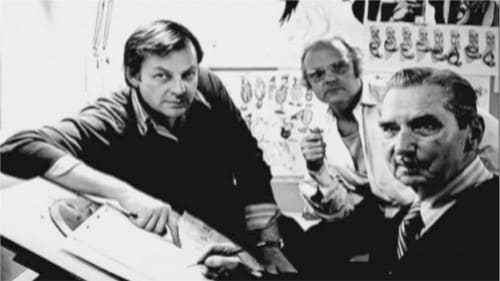
In the pantheon of Great Lost Films there is Greed, The Magnificent Ambersons and Touch of Evil, movies that were taken out of their creators' hands and given over to others who took the product into something other than what it was envisioned to be.  Add to that sad list The Thief and The Cobbler, the subject of the documentary Persistence of Vision.  This animated film, in the works for over thirty years, had a very tortured history and an even worse fate, one that ultimately makes one cry over the whole tragedy of it all.

In his 'quest for excellence', artist and animator Richard Williams became enchanted, or obsessed, with the Nasrudin stories of Persia and began to work to create an animated film based on them.  His difficulties were that he really never had a complete story but a series of vignettes and that due to fraud, he had the rights, and all accompanying work, essentially taken from him.

He was allowed to keep a character, a Thief.  Undeterred, he charged ahead again, this time planning a major work: The Cobbler, The Thief and the The Grand Vizier.  Already having won an Oscar for his animated version of A Christmas Carol and supplementing his studio with commercial work ranging from movie title scenes to television ads, Williams and his group pressed on and on and on.

The pace was slow and painstaking, perhaps too slow and painstaking.  People brought on board, such as master animator Ken Harris, died during its production, and he had been working alongside Williams for fourteen years.  The work on The Cobbler and The Thief took a lot out of those who worked on it: many eventually left for work at other studios, and one animator recounts he was not allowed to visit his wife in the hospital when she had meningitis.  The only way he could get around that was by going to see her on his lunch hour.


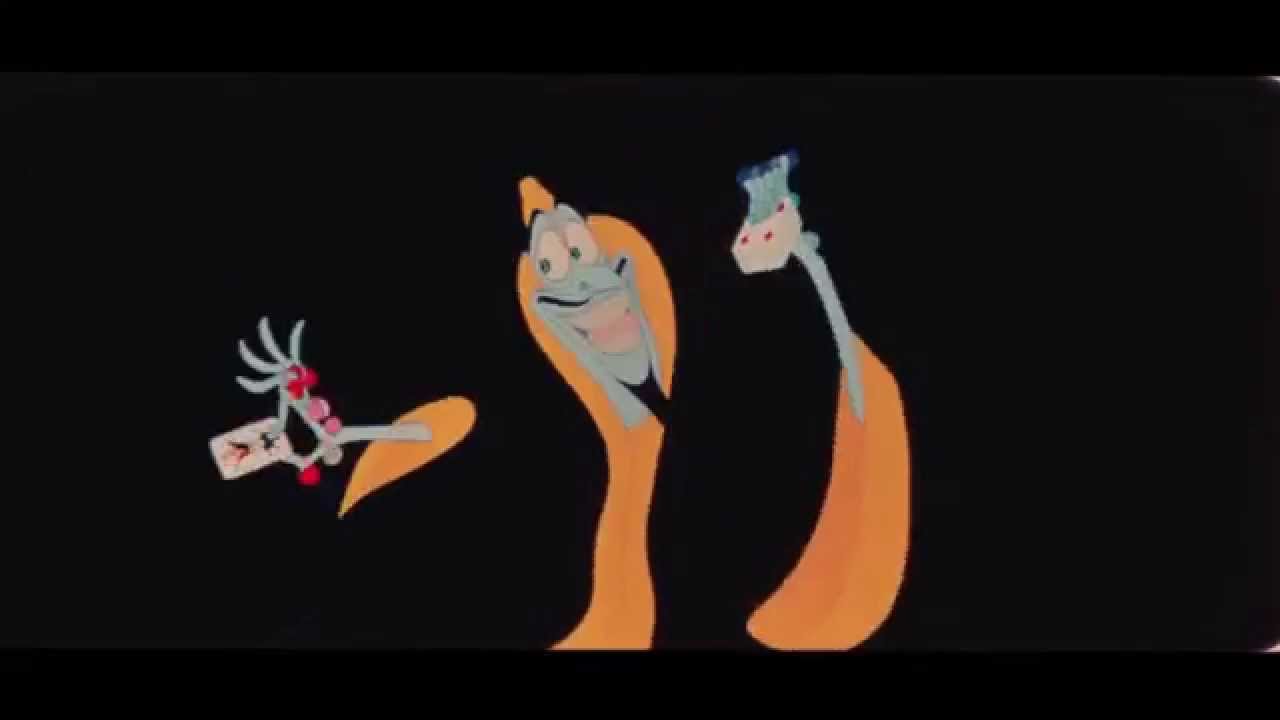
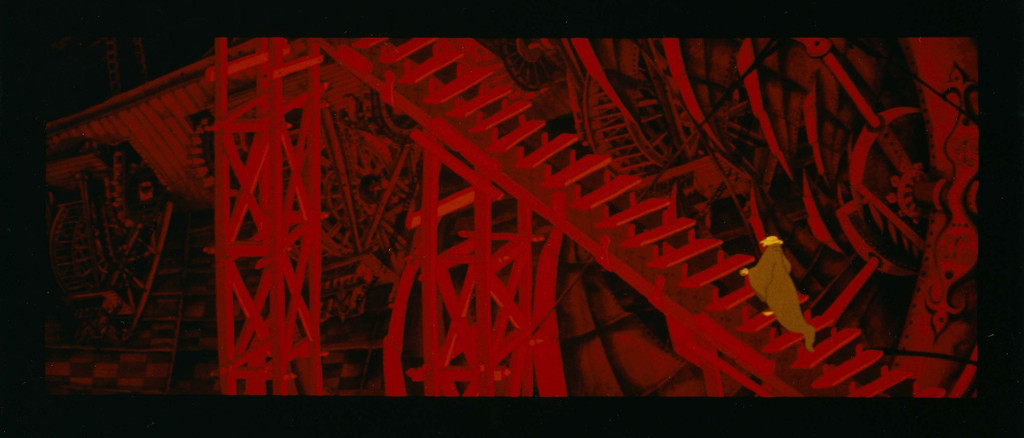
Despite all the production woes with the film, the results more than make up for it.  Using no computer technology, which Williams was opposed to, some of the sequences in The Thief and The Cobbler are breathtaking in their ingenuity and visual splendor.  An unexpected boost comes his way, when none other than Steven Spielberg sees test footage from the film.  So impressed is he that he hires Williams and his crew to create the animation for Who Framed Roger Rabbit?.  With his second Oscar in tow, Williams now has the backing of Warner Brothers for $50 million: $25 to finance and $25 to promote, with the understanding that he had to have it finished and at budget.

Alas, Williams' passion project could not get that done: he continued in his crawl, lengthening scenes because of their beauty instead of story reasons, and that is considering he didn't have an actual story for many years.  In his long interim, Disney managed to beat him to the punch with the similarly-themed Aladdin, which bore more than passing similarities between their characters and those in The Thief and The Cobbler. It didn't help that many people who worked on Aladdin also had at various points worked on The Thief and The Cobbler before quitting or being let go.

As was the case with all artistic ventures that exceed logic, Williams failed on his promise to deliver the film on time and on budget.  With it 'almost complete' in 1992, the Completion Bond Company legally seized everything connected with The Cobbler and The Thief.

After over thirty years work, the film was released as Arabian Knight, an Aladdin knock-off that junked a lot of Williams' work, mixed some of the original work with animation made by others without Williams' input and which differed from The Thief and The Cobbler, and added voices and songs to the characters: two things that Williams was dead-set against (he opposed songs completely and had envisioned the title characters to be mute).

Williams, who did not participate in Persistence of Vision, is still working on a new secret project, and still is revered among artists and animators.


For those who see Persistence of Vision, it all just breaks your heart: both the ultimate collapse of what could have been a beautiful, almost revolutionary piece of art, and the destruction its failed creation wrought.  The work on The Cobbler and The Thief or The Thief and The Cobbler (it seemed that the title could shift) did affect people's private lives (Williams' marriage failed, other people almost literally died in its making, and years were spent on a total of a few minutes' worth of screentime, if they were lucky).

Some things that led to the ultimate fall of The Cobbler and The Thief were not Williams' fault: the shady business deals that took the original Nasrudin stories from him.  Other things were: extending scenes that did not need extending, the failure to have a solid, set script, the driving obsession to the point of other people's private lives (another animator, if memory serves correct, quit or was fired when he was denied the opportunity to be at the birth of his first child, the time needed on a never-ending production).

Director Kevin Schreck does not delve deeply into the blame Williams has for this debacle, but from my seeing of Persistence of Vision, he does bear a great deal of blame.  In his 'quest for perfection', he may have forgotten that 'the perfect is the enemy of the good', and that his work, though beautiful, was running too long in production, money, and patience.

One animator wryly noted that he had 95 minutes of an 80 minute film, but The Thief and The Cobbler kept growing and growing with no actual signs of stopping.

In a certain way, Persistence of Vision is highly sympathetic towards Williams' mad, tragic, doomed efforts to create something truly magnificent.  The scenes from the aborted Nasrudin, as well as Williams' version of The Thief and The Cobbler are spellbinding (particularly a chase between the title characters that was done with no computer enhancements).   Having seen all the work and love poured into the project, seeing just what extraordinary work had been created, and knowing what the original intention of Williams' was, once we see the trailer for the eventual end result, Arabian Knight, with its songs and voices and jumble of animation, it just makes you want to cry.

It being so forgettable that after decades of hard and painstaking work, to see it released on DVD as part of a cereal giveaway makes it all the more mocking and tragic.


However, part of me was almost sympathetic to the money men, those who put up the financial backing to finish this passion project.  It wasn't as if Williams wasn't aware that The Thief and The Cobbler had to finish at some point.  His decision to extend scenes in particular because they were beautiful in particular struck me as extremely poor.  If he had maybe hoped for an extended version of The Thief and The Cobbler, to go back and tweak it after its release, that would have been applauded; his decision to make it grow into something much grander shows that he either did not know or did not learn the hard lesson Erich von Stroheim was taught.

Greed, his silent masterpiece, was intended by the temperamental director to run a punishing nine hours long.  Forced to cut it down to a slightly more reasonable four hours, it was still too long.  Internal studio politics took Greed out of Stroheim's hands and reedited it to a much shorter two hours, but the film, despite its brilliance in its truncated form, was not the work Stroheim had envisioned.

Similarly, Orson Welles' follow-up to Citizen Kane, The Magnificent Ambersons, along with his last comeback at directing a studio-financed film, Touch of Evil, both met a similar fate.  Having decided they were too complex to be understood, the studios took the film and reedited them, down to re-shooting scenes not in the original version of the films.  The destruction of both Ambersons and Touch of Evil essentially left behind 'beautiful corpses', films that are still impressive but not what they could have been if their makers had been allowed to complete things their way.


Such is the case with The Thief and The Cobbler, another film that could have been something extraordinary but that was destroyed by a terrible combination of financial considerations and artistic excess.  What is left is a terrible tragedy for all concerned.  It is highly unlikely that Williams' full, complete vision for The Thief and The Cobbler will ever be realized.  If memory serves correct, a great deal of material was essentially tossed and discarded.

Those who sold the bastardized Arabian Knight and another reworked version not or barely mentioned in Persistence of Vision (The Princess and The Cobbler) will never see profits from their handling of the material.

Audiences will get only tantalizing glimpses of something that could have been extraordinary, even revolutionary, and will have to settle for something less than the sum of its parts.

Persistence of Vision is a tragedy and both a chronicle and a warning to those who seek out to create their masterpiece: be careful that that vision does not blind you to the cold reality of money matters. Sometimes one can love something beautiful too much, and that love will ultimately destroy that which you hold so dear.

DECISION: A-

Thursday, January 2, 2014

The Worst of 2012 So Far


Again, I know I am a year behind.  However, I don't like leaving things unanswered.  As a result, now I go on to my Ten Worst Films of 2012 so far.  Again, all 92 films received a grade from A to F, then a ranking between those with similar grades.

Num. 10
I know many people thought highly of The Deep Blue Sea.  It is good to see Rachel Weisz and Tom Hiddleston show their range, and I thought well of the performances,  However, I also found The Deep Blue Sea rather boring, stuffed with too much 'greatness' within it.  I simply found no joy in the film, and as such I might appreciate The Deep Blue Sea if it actually moved. 

Num. 9
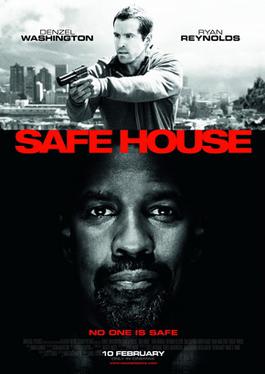
I was once asked if there was a bad Denzel Washington film.  I'm sure Washington, as shrewd a person in Hollywood as there is working today, has made the occasional mistake, but in this case an answer did come.  Safe House might have been interesting if it weren't so generic, and while I admired Ryan Reynolds' Afrikaans, the movie was a boring muddle.  So yes, there IS such a thing as a bad Denzel Washington film, though mercifully those are few and very far between.

Num. 8
Was it a spoof of the television series?  An homage?  A mocking of it?  In short, the tonal confusion of what Dark Shadows was (comedy, horror, drama) was only part of how bad Dark Shadows was.  Johnny Depp continues to act by rote, making Barnabas Collins into Jack Sparrow: Vampire.  In turns ridiculing and embracing the weirdness of the source material, shifting Barnabas from a figure of sympathy to a figure of horror to a befuddled object of lust, Dark Shadows simply did not know what it was.  When the antagonist vomits TWICE on Barnabas, I figure she was representing the audience.  It's never a good sign in a film when someone throws up on someone else.

Num. 7
This Is 40 is something of a sequel to Knocked Up featuring two minor characters from that film to their own vehicle.  I found it an anti-comedy: depressing, smug, and full of itself.  I didn't care for these people or their First World WASP problems.  I never saw Knocked Up but after watching This is 40 I have no desire to do so.      

Num. 6
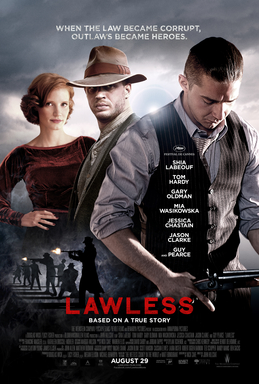
Can an action film be dull?  Yes, and proof of that is Lawless.  It doesn't help that everyone acts as if life is really boring, and given they are bootleggers, that is an extraordinary accomplishment in and of itself.  Despite having a cavalcade of good actors (and yes, Shia Labeouf), Lawless was putting me to sleep.


Num. 5
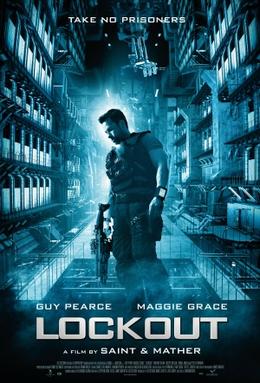
Lockout is a film I barely remember.  It might have been good fun if hadn't been so stupid and clichéd, and come to think of it, creepy.  Bless Guy Pearce's heart for trying to make something different, but Lockout is something we or anyone else will remember or want to watch.

Num. 4
Battleship is the nadir of using board games as feature film material.  Dumb it is, of that there is no doubt.  However, it was also boring and insulting to the audience with logical inconsistencies within the film itself.  Taylor Kitsch, who was being built up to be a big star, instead found 2012 to be an annis horribilus, starring in not one but three box office bombs (John Carter, Savages, and Battleship).  I personally liked John Carter though recognize its flaws, and I couldn't muster enthusiasm to watch Savages.  However, Battleship appeals only to really dumb people, easy to please.  I imagine fans of Matt Smith's Doctor Who would love it.  The fact it couldn't give us a 'you sunk my battleship' is most unforgivable of all.

Num. 3
I liked Taken and admire Liam Neeson's rebirth as an action star.  The Grey, however, was a slow-moving, predictable slog.  I didn't care whether he lived or died, and the story has a whole group of clichés that caused me to doze off a bit. 

Num. 2
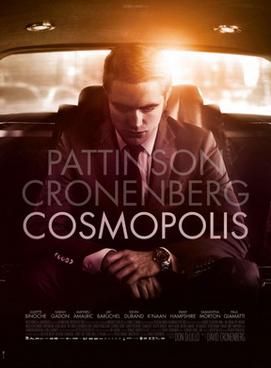
Shockingly, Robert Pattinson can't act. 2012 gave us three examples of this model's pouting as performance: Bel Ami, Breaking Dawn Part II, and my second worst film of 2012, Cosmopolis.  It all moved so painfully slowly, and Pattison showed just how blank he is as an 'actor'.  I did fall asleep at Cosmopolis, so when I woke up I asked no one in particular, 'why is Pattinson hugging that big black man?'  This alleged journey into the dark side of capitalism shows that capitalism does work...few paid to watch this dull disaster.         

It might be unfair to pick on this little-seen film as the Worst Film of 2012 So Far, but even something as boring as Cosmopolis is more watchable than this hideous thing.

Num. 1
Nipples & Palm Trees already has perhaps one of the worst titles in film history.  I imagine it is a reference to sex in Southern California.  However, my history with Nipples & Palm Trees is a most unhappy one.  I was approached by if memory serves correct writer/actor Matthew James to review this film.  I always enjoy discovering new, smaller films, and despite my misgivings over the title I opted to have a copy sent to me.  Boy, was THAT a mistake.  I figured Nipples & Palm Trees was like a porn movie that took out all the sex and left what is laughingly referred to as 'the plot'.  It was simply hideous, and I felt bad having to actually try to review it because I couldn't find one good thing in it: not the acting, certainly not the story, nor the directing or even the catering I imagine. 

I was so disgusted by Nipples & Palm Trees I did something I had never done and have not done since: I literally and I do mean literally threw it out the window.  I got the DVD, put it in the case and tossed it out of my house.  I did go back and put it in the trash, where it belongs.  Nipples & Palm Trees so appalled me that I have rejected almost all non-OFCS sent screeners, fearing I would have a repeat of this grotesque enterprise.  Really, Nipples & Palm Trees might be the worst film I have seen in the nearly five years I have served as reviewer.  Even something that I truly detest like The Hangover Part II is better than Nipples & Palm Trees, and The Hangover Part II is the ugliest film I ever paid to watch.   

Wednesday, January 1, 2014

The Best of 2012 So Far


Yeah, yeah.  I know I'm a year behind, but since I never got around to it and have some free time I decided to have my Ten Best Films of 2012.  Again, a ranking of all 92 films seen from that year so far.  Sadly, I still haven't gotten to some of the screeners from last year.  I felt so overwhelmed with them that I was simply unable to watch them all. 

All films were given a grade of A to F, then separated from within each grade.  With that, here we go.

Num. 10

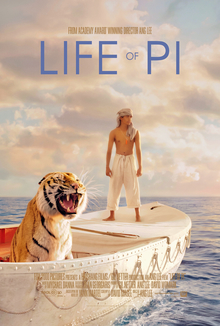
Life of Pi was suppose to be unfilmable.  That I do not know not having read the novel.  The actual film itself is a beautiful-looking one, with amazing special effects (only rarely do we think 'Richard Parker' is not an actual tiger).  The film holds together remarkably well and flows (no pun intended) to being both believable and beautiful.  I know some people dislike the more mystical elements in Life of Pi (in particular the 'so it is with God' explanation for Pi's adventures), but on the whole I found it all so beautiful and bright.

Num. 9

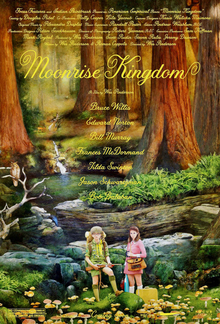
I have never been a fan of Wes Anderson, finding his films self-consciously whimsical to the point of idiocy.  However, Moonrise Kingdom won me over, particularly because it is from a child's point of view.  Granted, the two children are a bit too intellectual for their age, but given how nutty the adults were, they came across as the more rational of the two groups.  Moonrise Kingdom embraces its own wonderfully weird world and even Anderson's quarks (his horizontal camera work, his centering of the characters) didn't get on my nerves.

Num. 8

Ruby Sparks is a variation of the Pygmalion myth, but it is held together by its own whimsy and the performances of Paul Dano and Ruby Sparks' writer Zoe Kazan.  It's an offbeat love story that despite its oddball premise (a writer literally and unwittingly creates his own dream girl) the whole thing works due to both the acting and the genuinely sweet, I daresay realistic love story of how sometimes the people we fall in love with are more images of what we'd like than the actuality of who they are.

Num. 7

For someone who has a reputation of finding romantic comedies unappealing, I notice that a lot of the Top Ten List has at least three of them.  Salmon Fishing in the Yemen enchanted me from its beginning, as Ewan McGregor and Emily Blunt (one of my favorite actors and someone who is hit and miss) share beautiful and believable moments where we see these two genuinely nice, ordinary people fall in love.  Kristin Scott Thomas here is also capable of handling gentle comedy.  It's interesting that Scott Thomas is someone who is as good as her material and director.  In Salmon Fishing in the Yemen, she is wonderful.  In Only God Forgives, she is unforgivable.  While the story is again a bit far-fetched (the title says it all), it feels so natural that you believe it all and for myself, I genuinely liked the characters, and once you like the characters, you root for them and are drawn to the story.

Num. 6

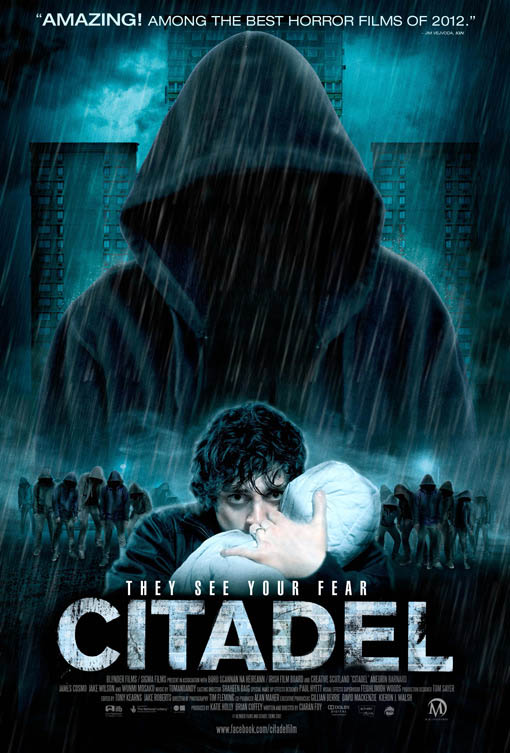
Citadel was trashed by critics and the public at large, but I don't understand why.  I tend to dislike horror films, but I saw Citadel not just as a horror film, but as a smart allegory about the crumbling inner city and the fear of random crime.  The main character is so crippled by fear that it is only when his only child is threatened by the crime and horror that surrounds him that he has to rise above his fear.  I was so caught up in the whole thing that when we got that big twist where we find that they really were demons, I was simply too engrossed in the film to be as stunned and terrified as I ended up being.  I thought Citadel worked as both a horror film and a tale of subtle brilliance. 

Num. 5

The first of two documentaries to end up on my list, Jiro Dreams of Sushi is more than a tale of an old man making raw fish.  Jiro Dreams of Sushi is about the pursuit of perfection, of working constantly to be and do the very best and how the Master will never be outshined, even by his sons that will work to carry his legacy.  I was mesmerized by how something as simple as sushi could be made into art, and how anything done with great love and attention can be something to be proud of.

Num. 4

The controversy over whether Zero Dark Thirty justified or endorsed torture probably cost it a few Oscars, given Hollywood's extreme liberalism.  However, I found Zero Dark Thirty did what should have been done: offer no easy answers about the war on terror.  The film refuses to tell us how or what to think about whether the ends justify the means, and rather than celebrate the leaders of this enterprise (Presidents George W. Bush and/or Barack Obama), we see that the ten year hunt for Osama bin Laden was a painstaking progress done by unknown figures.  Zero Dark Thirty also shows that terrible cost it took on so many to find this monster, and the final half hour that chronicles the actual raid on bin Laden's compound are frightening and intense, celebrating Seal Team Six's courage without being a flag-waving spectacle.  The end still haunts me: Jessica Chastain's Maya, now come to the end of the hunt, sits alone on the military plane, overwhelmed with emotions that reflect America's feelings: exhaustion, relief, and confusion as to what to do next.

Num. 3

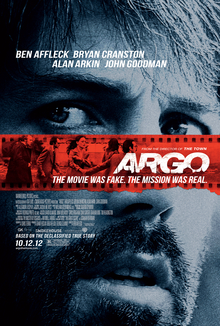
I struggled when looking at Argo.  Try as I might the idea that non-Hispanic Ben Affleck thought he was a good enough actor to play Tony Mendez shows that despite Hollywood's and Affleck's own extreme liberalism, the industry is still remarkably bigoted.  Affleck's ego was too great to allow anyone else, in particular an actual Hispanic actor, to play the lead.  He had no problem not playing the lead in his first directorial effort Gone Baby Gone, but then again, his younger brother Casey was the lead in that film.  Minus that (although it is a big minus), Argo is a sharp, fast-paced, and intense film about the American Embassy staff trapped in the Canadian Ambassador's residence in Tehran, and the efforts to get them out.  It even throws in a few bits of skewering of Hollywood, and the final moments of whether they escape are incredible.

Num. 2

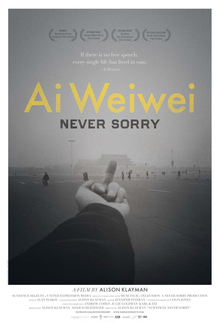
The second documentary to make my Top Ten and the first film of 2013 that earned an A, Ai Weiwei: Never Sorry paints a fascinating portrait of the artist as a defiant man.  Ai Weiwei is no saint: he is open about his illegitimate son and the mistress that bore him, but we see that to Weiwei, the truth is more important that Ming vases.  He constantly challenges the Chinese Communist rules with his art, pushing things as far as he can and even a bit farther, challenging them with his work.  Gleefully dismissive of the restrictions placed on him by the dictators who sweep away the deaths of children due to shoddy construction work and corruption, Ai Weiwei is in terms brave and irascible, unafraid to speak (or in his case, paint or sculpt) truth to power.

And now, of the 92 films I have seen so far from 2012, my Top Film is...

Num. 1
The Sessions has it all: comedy, romance, and intelligence.  John Hawkes' failure to earn a Best Actor Oscar nomination (I imagine Silver Linings Playbook's Bradley Cooper all but stole it from Hawkes) is a black mark on the Academy because he made Mark O'Brien a true figure: bright, witty, and now desirous of experiencing physical pleasure via sex.  Never was the subject of losing one's virginity and nudity handled with intelligence and warmth, avoiding any sensationalism or lurid undertones.  It also respects O'Brien's Catholic faith, as he goes to his priest for guidance between the morality of sex outside marriage and the particular situation his polio paralysis put him in.  Witty, sweet, and ultimately uplifting, The Sessions is charming and respectful. 


Thursday, October 17, 2013

NO: A Review (Review #574)

NO

No is a very simple word used in at least two languages (English and Spanish) and a variation in another (the French 'non') to mean the same thing: a negative, a rejection, a word I hear a lot.  No, the somewhat factual, somewhat fiction story of the most daring ad campaign in history (one that toppled a dictator), has an authentic feel to it thanks to its cinematography.  While the story is good, even interesting, I found it all a bit dull.

Chile, 1988.  International pressure has come upon Chilean General Augusto Pinochet to have democracy return to the South American nation after his coup in 1973 (September 11th, curiously enough) brought him to power.  Pinochet finally gives in, announcing a plebiscite with a simple question: should he remain in power for another seven years?  There are only two answers: Si (Yes) or No (No).   The No Campaign is convinced it is nothing more than window dressing to a brutal dictatorship and doesn't want to participate, but it does.  Their campaign is based on the brutality of the Pinochet years, with footage of the oppression Chile has endured.

Enter Rene Saavedra (Gael Garcia Bernal).  An advertising man, he is asked by the No Campaign for unofficial advice.  He looks at their campaign and dismisses it, calling it too downbeat.  Instead, he suggests instead an upbeat, almost happy series of ads during their brief running time (both the Si and No sides are given fifteen minutes of airtime).  Chile: Viene La Alegria (Chile: Happiness Is Coming) is what he offers the No side, right down to a rainbow that makes up the NO.  Some of the No Campaign is horrified by this, believing it is rather dismissive of 'their' suffering.  However, Saavedra sees what they don't: if they make it all fear and trembling, they run the risk of alienating the two groups they need: housewives and the young. 

The Si Vote is pretty dismissive of the No, including Rene's boss, Lucho Guzman (Alfredo Castro).  He attempts to get Rene out of working with the No by offering him full partnership, but he refuses.  Lucho goes to the Si Vote to consult for them, and it seems they need all the help they can get.  Confident of their victory, the Si Campaign is heavy-handed and boring.  In the time frame between the beginning and end of the campaign, No's flippant and optimistic campaign, even down to mocking Si's stumbled efforts to discredit the opposition, leads to the improbable victory of the No side.


What makes No fascinating is that while the results should be known, we are kept guessing to the end whether they will make it to the finish line.  Credit should be given to Pablo Larrain, who keeps building the story to great effect.  In his recreation we get a great feel to how the campaign look interesting, even amusing.

Perhaps this is where No stumbles for me.  The decision to film everything in low definition (matching the video tape stock of the late 1980s) washes out the imagery, and soon it grows boring to actually watch (when was the last time YOU watched a VHS copy of a family vacation?).  Further, the subplot of Rene's wife (a political activist) and their son could be completely removed from the story without impeding the flow.  Note that in my synopsis, I never mentioned any of that storyline. 

I can't fault the performances, particularly that of Garcia Bernal.  I've been told I bear a resemblance to him (and not just because I'm short), so I'm prone to like him, though not particularly his performances; I have yet to see a film of his that I've actually loved, not Amores Perros, not The Motorcycle Diaries, not Y Tu Mama Tambien, not Letters to Juliet, not Babel, not The King, not The Crime of Padre Amaro.  No does not make me think that streak has been broken.  On the whole though, Bernal gave a performance of that of a man who is more interested in proving he can sell a product (that being, 'democracy') than any firm anti-Pinochet convictions.

The film does have a documentary-like feel (thanks to its lack of score and washed-out look) and on the whole, No is an interesting, if a bit slow, almost dull, document on how with some clever campaigning brought a dictator out of power and ushered in a transition to democracy. 

Would that all revolutions be that smooth...


DECISION: C+

Friday, August 23, 2013

Searching For Sugar Man: A Review


SEARCHING FOR SUGAR MAN

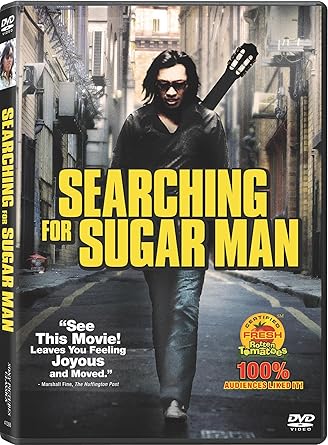
In one of those stranger than fiction tales, Searching for Sugar Man tells the bizarre story of a cult figure no one knew about...not even to a point the very cult leader himself.  Sixto Rodriguez, whose songs became the anthems for generations of South Africans, was a shadowy figure to his fans, someone cloaked in myth and curious legends.  What the filmmakers and the audience eventually discover is a remarkably humble man, one with great talent but no success in his native land.  It would take decades and a distant shore to bring both his story and the man himself to light.

Rodriguez was a singer/songwriter who released two albums in the United States, Cold Fact in 1970 and Coming From Reality a year later.  Both failed to make an impression in the U.S.  However, through some method or other (the film suggests that an American traveling in South Africa brought a copy of one which then was bootlegged until it went all around the country) both albums became the music to the counter-culture of that country, particularly among white liberals who opposed both the restrictive nature of the white minority government as well as apartheid itself.  However, despite his status as an underground hero to the youth, no one knew what actually became of Rodriguez. 

The few bits of information and photos of Rodriguez were obscure and said nothing.  The stories as to what happened to Rodriguez became almost as legendary as the artist himself.  Most involved some form of suicide, ranging from shooting himself on stage to setting himself on fire.  Many years later record store owner/Rodriguez superfan Stephen Segerman (nicknamed Sugar due to the similar sound of Seger/Sugar Man) and reporter Craig Strydom decided to investigate what exactly happened to Rodriguez. 

There was one dead end after another, in particular with regards to where the money went.  The clues in his lyrics started pointing to Detroit, and the mystery starts clearing up. Then by the strangest of coincidences, the search for Sixto Rodriguez led to his daughter, Eva, contacting the searches to let them know that her father was not only alive but working as a construction worker. 

The news that Rodriguez was alive and well stunned South Africa.  The news that he had a mass following in South Africa stunned Rodriguez, who was genuinely humbled that his music, which had long been relegated to obscurity in his mind, had not only reached millions but was a very important part of their lives.  A South African tour was quickly organized, and a nation waited in anticipation.

March 1998, Rodriguez sets foot in South Africa, and his humility transcends understanding.  Neither he or his daughters realized for example, that the limousines at the airport were for them!  At his first concert, the audience was in total abandon.  Just playing the first chords of his song I Wonder had them in fits of shouting glee.  A clearly taken aback Rodriguez stops and tells the crowd, "Thanks for keeping me alive."

What makes Searching for Sugar Man such an extraordinary film is that it is so many films wrapped into one.  It is a mystery story: a search for a long-lost shadowy figure that bears fruit.  It is a redemption story: the inspiration behind political activism to bring down apartheid had been found and found alive.  It is also a hopeful, optimistic story: the man who long ago lost a career now has belatedly been given a second chance.

What one gets from Rodriguez is a man of great talent but great humility (two things that rarely combine).  When he finally appears on camera, he seems highly reluctant to be there, his face still slightly obscured by his sunglasses.  In South Africa, he appears distressed to hear some of the stories about he supposedly died.  We also get some of his songs from his two albums, and find that they are wonderful songs.  Listening to Establishment Blues one can see how it inspired both fear from the government and hope for the antiestablishment.  Rodriguez, as a man and artist, is a great find: someone who loves his works but also has not grown bitter or angry about not having collected the millions he was entitled to.  Indeed, he has never shown any resentment over living in near-poverty and working in construction.  Rather, he seems to have accepted it all as part of life, nothing more or less.  Despite all the things that have happened to him, Sixto Rodriguez appears to believe he's had a good life.

We get how his songs inspired so many in South Africa (particularly given how strict the censorship was in the state) and the enthusiasm his fans have for his music.  About the only thing that is never answered in Malik Bendjelloul's film is whatever did happen to the money.  This trail is left cold, and whoever got the cash from Rodriguez's work (since Rodriguez clearly never did) is one mystery Searching for Sugar Man never answered.

Minus that, the film is a wonderful portrait of a man who was found just in time to, if not reap the financial fruits of his labor, learn just how important his work was to so many.  Near the end of the film, we hear an unreleased song from his thwarted third album.  The song may be called I'll Slip Away, but truth be told Rodriguez will now have that immortality his talent has earned him.  The search for Sugar Man may have ended (happily), but the song goes on...

Born 1942

DECISION: B+

Saturday, May 25, 2013

Jack Reacher: A Review


JACK REACHER

Not having read any of Lee Child's Jack Reacher novels, I'm in no position to argue for or against Jack Reacher the film's fidelity to the source material.  Well, apart from the fact that the character of Jack Reacher is 6'5" with blond hair while the actor playing Jack Reacher (Tom Cruise) in the adaptation of Child's One Shot is at 5'7" (officially) almost a foot shorter as well as brunette.  I won't belabor the point because Tom Cruise did an excellent job as Reacher, a character I like to think of as a tough, military version of Sherlock Holmes (I'll get to that in a bit).  Jack Reacher is an entertaining film with a strong plot (though it was a little opaque at times) and with good performances from almost everyone involved.

There is a mass shooting in Pittsburgh: five random people are shot by a sniper.  Soon the police with efficient work apprehend the prime suspect, one James Barr (Joseph Sikola), former Marine sniper.  The conclusion Detective Emerson (David Oyelowo) and District Attorney Alex Rodin (Richard Jenkins) is that he is the killer.  Barr won't confess to the crimes, but instead writes a cryptic note with three words, "Get Jack Reacher."

Said Reacher sees the news of the shooting and Barr's arrest, and comes as quick as he can to Pennsylvania.  While Barr's defense attorney (and daughter) Helen (Rosamund Pike) at first thinks this mysterious figure might come to help her client, Reacher is not there to save him, but to make sure he is convicted.  However, he agrees to be her chief investigator, even if it means doing odd things like visiting the victim's families.

Soon Reacher reaches certain conclusions: as much as he may dislike/hate Barr, Reacher realizes he didn't do the killings and was set up (a patsy, he calls him).  Now the question is who did it and why.  Reacher also finds that the victims were not as random as is believed; one of them was the actual target and the others were mere cannon fodder for a major development rip-off.  As Helen continues to be befuddled, Reacher digs deeper, alarming the people behind this scheme, particularly a figure known only as The Zec (Werner Herzog), a master criminal who survived the gulags by among other things chewing off his frostbitten fingers.  Helen is told that someone close to her is also in on the scheme (won't tell you who) and Reacher, with the aid of Cash (Robert Duvall), a former marksman whose shooting range was used by Barr and the real killer, tracks down both The Zec and a captive Helen in a final confrontation.  While Barr is basically exonerated, Reacher drifts away...


It' not for me to say, but certain plot elements of One Shot/Jack Reacher are similar to Agatha Christie's The ABC Murders.  In that novel, there appears to be a serial killer who targets seemingly random people based on the first letter of their last name if memory serves correct.   In the end, Hercule Poirot finds that far from being a series of random crimes, the murders were actually committed to hide ONE particular murder and make it appear to be the work of some serial killer.  Similarly, Jack Reacher has a major shooting only to find that this was a way to cover up the targeting of a particular victim.  This is what I thought of while watching Jack Reacher, but I won't get hung up on this detail.  Instead, let me focus on what made Jack Reacher enjoyable to watch.

First, I congratulate Tom Cruise on his performance.  He maintained a cold, methodical manner to Reacher, a man who keeps a focus on things and rarely if ever lets his emotion get in the way.  I spoke earlier on that I thought he was a military Sherlock Holmes.  What I noted about Reacher is that he would focus on tiny detail that escaped everyone but which Reacher showed Helen (and us) how we were both wrong and missing important things.  For example, when Helen gives reports from all the victims, we are suppose to focus on the lives lost.  Reacher, however, notes the odd things.  Helen figures that one victim bought flowers for his wife after a fight, but Reacher notes that the flowers were bought in the morning.  If they were for his wife, Reacher surmises, the husband would have bought them in the evening so they would be fresh.  Another victim, we're led to believe, did not want a major purchase of a watch noted on her credit card so as to surprise her husband.  However, given that said purchase was made near the end of the billing cycle, it would not have shown up on the bill until AFTER it was given.

Therefore, these two victims who happened to be at the same place at the same time, did in fact know each other.  In fact, they were having an affair, which is why the woman moved forward when the man was shot, rather than away.  The fact that this was a false road which was irrelevant to the overall plot irritates me some, but it does show Reacher's high intelligence.  Yet I digress.

Cruise makes Reacher a cold and brilliant figure, one who is direct and uninterested in the niceties of society.  If he has to get information by just asking for it, he will.  However, he does have a semblance of a heart: Sandy (Alexia Fast), a girl who has gotten herself involved in this case, is warned to leave town for a few days by Reacher, who sees that she really is being used.  When he learns that Sandy has indeed been killed to keep silent, a brief moment of pain actually flashes through him.  It's a credit to Cruise as an actor (and sometimes we forget that he is a good one...and sometimes HE forgets he's a good one) that we can see occasional moments where a bit of humanity flashes beneath Reacher's methodical and cold manner.  This Reacher is methodical, a bit arrogant but always a step ahead of almost everyone. 

Even when he's being humorous it appears almost menacing.  "Three things cops won't do," he tells Helen.  "Cops won't vote Democrat, won't drive Cadillacs, and they never use personal vehicles."  I can't be certain that cops don't actually do any of these things, but as far as he's concerned he's almost always right.  As for his height, I found it a plus: there is something impressive about someone small taking down taller men with almost the greatest of ease.

Duvall was great in a mixture of wise elder and comic relief as the shrewd but slightly cantankerous Cash.  Werner Herzog is a genius: we've seen it in Aguirre, The Wrath of God and Fitzcarraldo and Grizzly Man and Cave of Forgotten Dreams.   As such, if he wishes to be this vague super-criminal then he gets a free pass from me.  As the major antagonist with whom Reacher has a climatic fight with (in the rain, no less) Jai Courtney was good...can't complain.  He had a cold manner that matches Reacher's except he is for evil rather than justice (Reacher was not necessarily good, just on the side of the right). 

The only person with whom I had trouble with in terms of performance was Pike's Helen.  I kept wondering why is this woman so dumb.  Time and again Reacher provides her with logic and proof that what he was thinking was correct, but time and again Helen doesn't appear to either understand or believe that Reacher's theories make sense, let alone are accurate. 

I also could not figure if a fight sequence where Reacher is for once taken by surprise didn't have a bit of intended comedy.  Two henchmen manage to surprise Reacher, but they prove so inept (for example, both of them struggle to fit through a door at the same time) that I was beginning to wonder whether this was just a bit odd if not downright silly for something as serious as Jack Reacher.   I wasn't sure whether writer/director Christopher McQuarrie intended this sequence for laughs.

Some of Reacher's escapes (such as when he evades Emerson's officers after an admittedly well-made chase) seemed far-fetched if not unbelievable.  Finally, the 'actual inside man's' motivations were unclear.  In fact, I don't think they were ever explained (apart perhaps, from money), so when he is revealed, we wonder why. 

Still, on the whole I found Jack Reacher well-made: entertaining, with an intelligent lead (performed intelligently by Cruise) and with good action scenes (even if they were a bit clichéd).  If you want entertainment with good action, then Jack Reacher will do.  It's worth One Shot...      

DECISION: B-

Friday, May 24, 2013

The Queen of Versailles: A Review (Review #535)

THE QUEEN OF VERSAILLES

In a certain sense, I feel a sense of sympathy for Jacqueline and David Seigel, the subjects of The Queen of Versailles.  Here they were, happily building their dream home (which if completed would have been the largest private home in the United States, one larger than either The White House or Graceland) and which would have been modeled on the Palace of Versailles.  However, the Seigels, part of that much-derided One Percent, found themselves strapped for cash once the 2008 economic crisis brought down the heady hopes and dreams of many a wealthy couple.  In turns shell-shocked, oblivious, and resilient, the Seigels are objects of both ridicule and endearment as they, once flying high, find that fortune (in all its forms) doth not smile on them anymore.

The Queen of Versailles started as a documentary about the building of said largest private home in the States.  The Seigels owned Westgate Resorts, a timeshare company with various branches across America.  Here, the Westgate Sales Staff eagerly (I'd argue almost cult-like) offer people great chances for a mini-vacation home or hotel room in Vegas or somewhere else, all for a small fee.  As far as 76-year-old David and his 43-year-old trophy wife figure, this is the best of times.  They believe that having a larger home is necessary.  Despite having a large mansion already (one stuffed with literally stuffed animals), it's just too small now.  Therefore, a 90,000 square foot house is required: one with a baseball field, parking lot, sushi bar, and children's wing.

A small digression: growing up, I too had a children's wing.  It consisted of one room. 

In any case, the Seigels keep building their dream home and things are going well.  At least they were until four hours after they celebrate the gala opening of their acquisition of Planet Hollywood Resort (complete with a personal appearance by ex-Playboy Playmate Holly Madison, then appearing in the resort's Peep Show review...I saw it and while they might not be real, they were SPECTACULAR).   They were sued by the Planet Hollywood Towers builders for unpaid bills.  With the banks hurriedly pulling credit all over to save themselves from the imploding economy, Westgate is forced to lay of thousands of employees.

From here, The Queen of Versailles takes one odd, bizarre, but also endearing turn after another.  The Seigels are not heartless plutocrats and do not share the philosophy attributed to Marie Antoinette of "let them eat cake".  Far from it: we learn that both of them are from modest stock, having risen to success on hard work, shrewd business mergers, and a little good fortune.   They do have hearts (for example, Jackie lends her friend $5000 for her own mortgage) but they also don't appear able to accept reality.  Jackie still spends on lavish gifts and parties, while David, attempting to keep the business afloat, gets increasingly irascible as his large family continue to leave the lights on.

Eventually, even their beloved Versailles, the symbol of all they have worked for and felt was now theirs by their virtues, will have to be let go.

Just a little place for me and you...
As I said, the Seigels are not horrible people.  They do care about their friends and employees, and they do know what it is like to have nothing.  The only problem as we see in Queen of Versailles is that they just don't remember what it is like to have nothing.  So used to having material comforts and an excess of them that when they meet up with what people who would shell out $9 go through they seem genuinely puzzled.

For me the most bizarre moment in Queen of Versailles is when Jackie goes back to her hometown to see old friends in similar circumstances (though at a less hefty price) and get her bearings up.  Having just arrived at the airport (on her private plane if memory serves correct) she heads to the Hertz Rent-A-Car kiosk to get a vehicle.  She tells the employee that she is on a budget, and then asks the befuddled and startled Hertz representative, "What's my driver's name?", clearly expecting an answer.

She is not joking.  Jackie is perfectly serious and is thrown a little when informed that she will have to drive herself.  For some reason, Hertz does not offer drivers with their vehicles.

It is in her total obliviousness to how people actually live,  as to how she is genuinely unaware that millions of people are in far worse shape than the Seigels (not many of the Westgate employees recently terminated I imagine would be able to afford the $10,000 Gucci feather pants she bought pre-Recession...and I should point out that two pairs of said pants is more than my annual salary) that makes Jackie less a figure of fun and more almost a figure of pity.  Her dreams of Versailles aren't motivated by arrogance or a need to show off or look down on everyone else.  She truly believes her family deserves a larger home to fit in more things.  She truly believes it would be nice to have a massive ballroom larger than some people's entire homes (say, for example, mine, which could easily fit within the foyer...along with both my front and backyards). 

In short, it's as if the Seigels and their servants live in an alternate universe where spending thousands of dollars on one shopping spree that doesn't include such things as groceries is perfectly rational.  This cult-like groupthink extends to the Seigel's staff.  One of their nannies for example, lives in what was once the Seigel girls' dollhouse, and while it isn't the most comfortable fit she seems quite happy within it.  If memory serves correct the same nanny dons a Rudolph the Red-Nosed Reindeer costume to entertain the Seigels' guest for Christmas (and I don't think she gets paid what we would call overtime for these activities).  The nanny seems perfectly happy to be part of this strange universe where buying toys and continuing to build a massive house but not providing food and water to a pet lizard for lack of cash is considered rational. 


Lauren Greenfield's film does not paint them as monsters nor as victims.  Instead, the Siegels appear as they are: wealthy people who rose from nothing and can't figure out how they got hit with almost losing it all.  The Seigels aren't living beyond their means so much as their means are beyond their living.  They clearly don't need all the material things they have (the stuffed pets are particularly grotesque) but they don't see that (except for Jackie's niece Jonquil, who unlike her aunt and uncle still remembers the sound of the train-whistle from the wrong side of the tracks).   This teen is the only one who when interviewed sees that perhaps the excess which the Siegels live their life even after it was shaken to the core is too much and unhealthy.  However, one doubts they would even listen to her should she point out it is more sensible to stop spending or even selling to keep costs down rather than to have a nanny put on a costume for a party they could have done without.

Somehow, seeing David fume about lights being left on as almost being the cause of massive bills is both relate able and almost sad.  Trust us, the lights are not why you're losing money...though Jackie should turn them off if they're not being used.

Every little bit helps.   

Even the people around them appear not so much dim but unable to accept things as they are.  One figure I was fascinated by was the real estate agent for Versailles, one Lorraine Barrett.  Part of my fascination was on how she clearly didn't know how to pronounce 'Versailles' (she kept calling it 'Versays', complete with the 's').  Part of it was also on how she believed that at a time when so many people are now forced to live with their parents, when college graduates can barely get hired for fast-food or call-center positions, when people truly are suffering, someone would buy a 90,000 square foot unfinished mansion. 

As I said, David and Jackie Siegel are not evil or uncaring.  They at heart do think of others.  It's just that they either can't or won't accept that things will have to be different.  It is less schadenfreude and more 'sad fools'.

In many ways, The Queen of Versailles could be about an allegory about America itself: a great enterprise which spends its resources on frivolous matters, which is in turns ostentatious, vulgar, and perhaps a little insane, brought crashing down when the bills come due, only to turn around and continue living as it has, aware of something being wrong but having no idea as to how to fix it (apart from the obvious of reducing their costs and spending less until they are on more solid financial ground).  I couldn't help think about all those who bought time-shares when one would think that perhaps having a vacation home in Vegas where they could stay for one or two weeks a year might not be the best idea. 

They too were like the Siegels, buying (literally) into the idea that a good life was somehow their right.  I wondered what happened to those people who no longer could afford the time-shares or even managed to justify such ventures.  Then again, they weren't the focus of the film. 

The Queen of Versailles is not about mocking a wealthy family who now find themselves in dire straits.  Rather, it is a chronicle of a family that worked hard, got wealthy, then lost much but forgot they were no longer as wealthy as they were.  They are good people who have moved onto another world, but now that said world has crashed, they apparently can't let go of certain dreams.

In a bizarre and almost heartbreaking way, we are all the King and Queen of Versailles.


Guess who's figures are in better shape...
  

DECISION: B+

Tuesday, May 21, 2013

How To Survive A Plague: A Review

HOW TO SURVIVE A PLAGUE

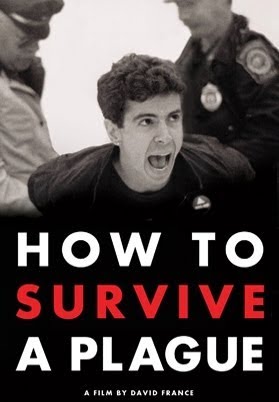
I felt a bit like a throwback to another era after watching How to Survive A Plague.  I may be the last generation who knows people who have died of AIDS.  The generation that has followed me apparently has never heard of Acquired Immune Deficiency Syndrome, and if they have it apparently is something that happened 'in the past'.  As far as Millennials are concerned, safe sex means not getting pregnant.  For those of us who remember when celebrities feathered themselves with red ribbons (I remember being given red ribbons in high school...or was that for drug awareness), who was told that 'anyone can get AIDS', who remember people as varied as Rock Hudson, Ryan White, and Magic Johnson, How to Survive a Plague is not just a history lesson, it's a flashback. 

Of course, for full disclosure I was also brought up to believe that ACT UP (The AIDS Coalition To Unleash Power) was an unhinged militant group of homosexuals blaming everyone but themselves for the AIDS epidemic, people who hated with the same fervor of those who were as homophobic as they were heterophobic.  As in all things, the truth is much more complicated.  How to Survive A Plague is the story of ACT UP, of how they began, fell apart, and came back just in time to see their long fight bear fruit.

It is Year Six from when the first HIV diagnosis was made.  In New York City, Mayor Ed Koch appears to be indifferent to the disease that affects primarily (though not exclusively) gay men.  The gay community, long shunted off and ignored (except on Election Day) and which has been decimated by AIDS, has decided they've been ignored long enough.  Some, like Peter Staley, a closeted investment banker, has decided that they are tired of being ignored and that this disease is not seen as a crisis.  With that, ACT UP is formed.  With their slogan of "ACT UP, Fight Back, Fight AIDS", they take to the streets and hospitals, determined to force the issue.

The AIDS epidemic is not getting either attention or funding, from either state or federal agencies.  ACT UP holds then-President Ronald Reagan and his two successors, Presidents George H.W. Bush and Bill Clinton, accountable for having their needs ignored, and for the slowness of treatments, medications reaching the market, and funding for research.  The gay community is forced to take matters into their own hands.   Sometimes it's in creating a black market for potential treatments.  Other times it's by taking militant steps against those who work against them. 

If it means shouting and demonstrating within St. Patrick's Cathedral while Cardinal John O'Connor is conducting Mass so be it.  If it means putting a large condom over the home of their chief nemesis, the late Senator Jesse Helms, so be it (though to their credit, they do offer to pay for any damage their stunt might have cost.  While no actual structural damage to Helms' home was done, it is certain that the senior Senator from North Carolina was not amused). 

As the AIDS epidemic continues, ACT UP soon starts splintering.  One group, TAG (the Treatment Action Group) soon started working within the system they had earlier denounced, and some within ACT UP saw them as an elite who had betrayed the cause.  Soon internal infighting began weakening the ACT UP organization to where one of its leading lights, playwright Larry Kramer, exploded a tirade at all of them.  Angrily he denounced the denouncers, calling them to remember that they were facing a plague, and if they did not stop their infighting all of them were as good as dead.

Eventually, to the shock of many of them, after years of furious work, the idea of a single AIDS drug was abandoned (despite this being the Holy Grail of ACT UP) and it was replaced by the 'cocktail' of treatments that has given many, including those who began ACT UP convinced they would die, a chance to outlive even those who had opposed them (such as Helms himself).

Some however, such as Robert Rafsky, a gay man who had fathered a child with his ex-wife, did not make it, but their fury at how so many had died while the government did little to nothing outlived them. 

Perhaps this is my imagination, but many of the people who were at the center of the storm and who did literally live to tell the tale looked in the limited present-day interviews looked to me almost shell-shocked, stunned that despite having HIV, they were still alive when a few decades earlier their diagnosis meant almost certain and immediate death. 

Most of How to Survive a Plague is culled from old video tape, giving it not only a 'you are there' immediacy but also a sense of all the events being as if they were happening now.  In many ways, the video of the meetings and protests and even the funerals filled with rage were precursors to the present-day habit of recording every event in a person's life.  However, with How to Survive a Plague we see not just the protests and meetings (including when ACT UP was eating its own) but also brilliantly intercuts Rafsky's life.

As we are reminded via a counter of the number of AIDS death worldwide, we also get scenes of Rafsky's daughter's various birthdays, and as she grows up we wonder how long he will be around.  We end his story with his funeral, his daughter crying and perhaps not fully understanding the circumstances.

Even now, the rage that ACT UP tapped into to force the issue of AIDS to the public in their take no prisoners/not take 'no' for an answer still comes across.  What makes David France's film more effective is that he does not attempt to portray the members as saints or somehow victims.  They are just as able to be petty, spiteful, and vicious to opponents and each other as the opposition is to them.  The interviewees in the archival footage even tacitly recognize that perhaps they had gotten some of it wrong, that the road they pursued of a single treatment was a mistake and that millions of dollars and hours had basically been wasted (though I would argue it wasn't a total waste).

As a film, How to Survive a Plague is an engrossing document of a movement where a major health crisis spurred a group of disenfranchised people to rise up in righteous fury (perhaps sometimes too much fury, but I leave that up to the viewer).

Curiously, while the film obviously focused more on AIDS than gay rights, one thing that did not go noticed is how AIDS played a vital role in the expansion of gay rights.  The gay community would no longer be marginalized, especially since so many of them were dying and no one appeared to give a damn.  I think that without the AIDS epidemic, there would not have been an acceptance of gays in the military or same-sex marriage.  AIDS, at least from what I surmise, was the trigger that forced homosexuality out into the open and would not be shut in again.

Granted A.) this is just a theory and B.) I'm sure they would have not wanted something like AIDS to be the force that brought about this change, but there it is.

How to Survive a Plague is an excellent film, one that doesn't attempt to dress up the flaws of the individuals who do look back in wonder at how they managed not just to survive but to thrive.


DECISION: B+