Showing posts with label National Geographic. Show all posts

Tuesday, July 1, 2025

Sally: A Review (Review #1989)

SALLY

How to look over the life of a somewhat reluctant icon and heroine? You could deify her, turn her into a perfect goddess for future generations to worship. You could diminish her, focus on the negative aspects of her private life or attempt to give her feet of clay. Dr. Sally Ride, the subject of the documentary Sally, was many things: pioneer, scientist, lesbian. Sally does an excellent job covering her public, private and secret life, neither glorifying nor tarnishing this now legendary figure. 

Sally Ride loved science and tennis. These two loves gave her a leg up when NASA at long last decided that it would seek out both female and minority candidates to be astronauts. In 1978, 35 new applicants were accepted into the space program, including, and I quote, "six females, three blacks and one Oriental".

Sally, in using archival footage, does give us many such cringeworthy moments that reflect their time. 

Ride's excellent hand/eye coordination due to her tennis prowess, along with her extensive knowledge of physics, were a major component over why she was ultimately selected to be the first American woman in space. Another reason, not spoken of at the time, was how she did not appear to seek the limelight. This gave her an advantage over her closest rival, Judith Resnick, who did appear to be more eager to bask in the notoriety of being the first. Sally, however, reveals that Ride did want to be the first but wouldn't admit to it. 

Another thing that Dr. Ride could not admit to was about her homosexuality. While she did not keep it a total secret, she also was not about to wave pride flags around NASA. Sally reveals that the reasons for her closeted life were more complicated than mere social stigma. The entire Ride family was very closed up emotionally. Whenever Sally visited her parents, mother Joyce would greet her with, "Hello, oldest daughter," then go back into the house to do whatever she was doing prior. Ride also saw what happened to her friend and mentor, tennis legend Billie Jean King, when King was outed in a palimony suit. The ensuing scandal cost King millions in endorsements and legal fees. 

All those factors played into some of Ride's various decisions pre-and-post flight. That is not to say that Ride was some dour woman. Sally reveals that when on a jet when training, she let out enthusiastic cries of "WEE!" when the jet spun. Once STS-7 lifted off, her comment was, "This sure is fun". Becoming a historic figure, however, had its drawbacks. Her rejection of a bouquet of flowers when the Challenger returned caused an uproar. The constant celebrations drained her. The Challenger explosion, which killed among others her frenemy Resnick, all took their toll.

In all those years, Dr. Ride's relationship with Tam O'Shaughnessy was her rock. Their relationship was not perfect. O'Shaughnessy would have preferred that Ride be more open about their lives beyond just business partners. They made it work, somehow, until Dr. Ride's death. With her now gone, O'Shaughnessy is able to fully acknowledge her life partner. 

Sally is both portrait of a woman and metaphorical time capsule of women in flight. One fascinating bit of discovery in Sally has nothing to do with Ride herself. In the 1950's, there was thought of having women go into space before Valentina Tereshkova became the very first woman in space (Ride being the third overall). Again, via archival footage, Sally shows aviatrix Jerri Cobb being interviewed and stating that women were perfectly capable of being astronauts. This idea was pretty much dismissed by NASA and reenforced by the culture, which made films where female astronauts collapse emotionally.

Sally shows us that even in the early 1980's, some ideas still held. Footage from the press conference with Ride and her fellow astronauts show a particularly ghastly moment. One reporter asks Dr. Ride (she would quietly but firmly ask people to refer to her as either "Sally" or "Dr. Ride", but not "Miss"), "Now, Dr. Ride, during your training exercises as a member of this group, when there was a problem, when there was a funny glitch or whatever, how did you respond? Did you weep?". She was able to at most smile dismissively at these comments, deflecting to ask if her fellow crewmen did likewise. 
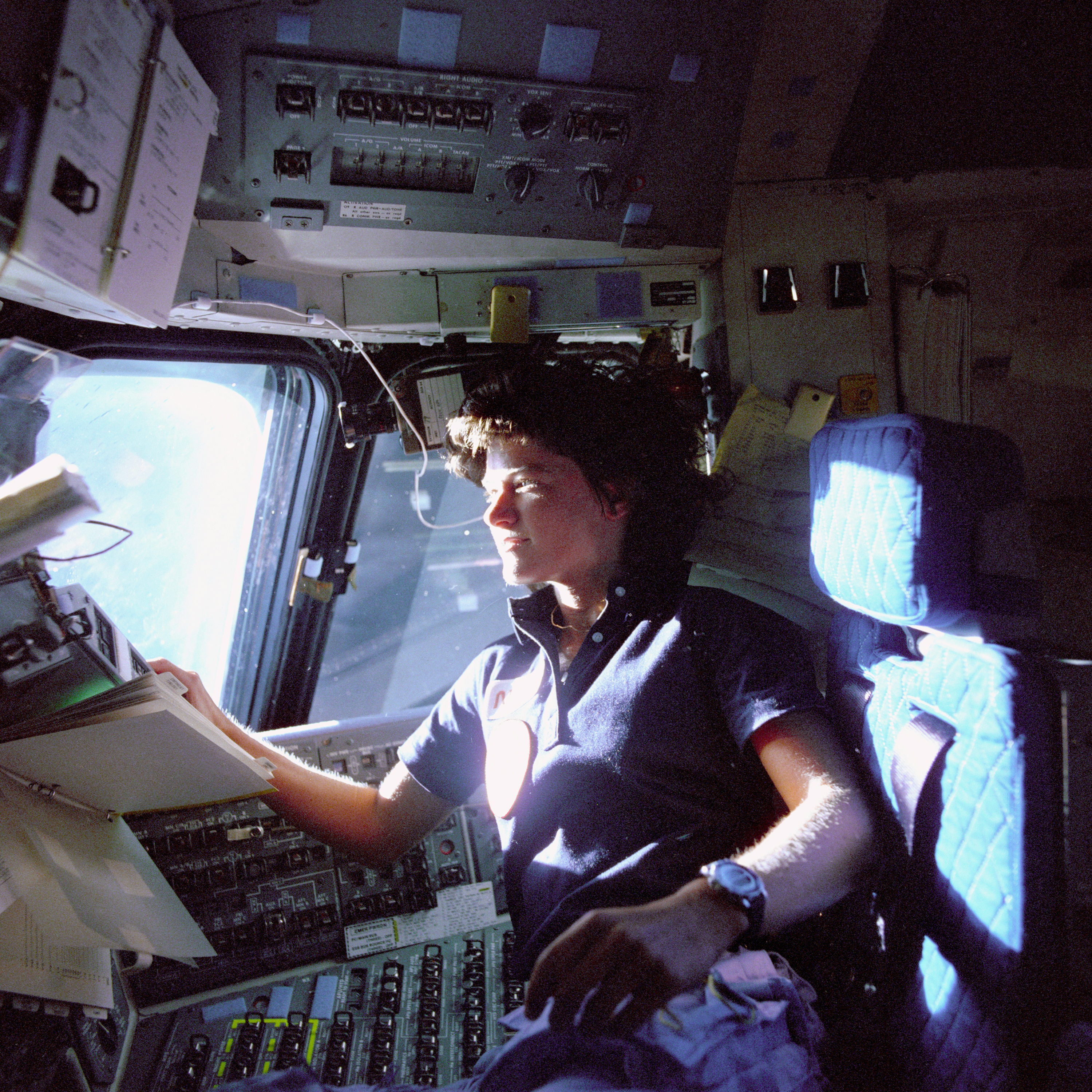
Sally Ride wanted to make history. She wanted to be the first. She was aware of the historic nature of being the first. She also was not keen on having her sexual orientation be one more "first". Ride was in a vague area when it came to her sexuality, neither fully out of nor fully in the closet. Sally, however, reveals that her reticence was due to a variety of factors. Shame was not one of them. She was just a pretty closed-up person, focused on the job, sometimes to the detriment of the personal. 

In between the various footage of Ride asking tough questions to NASA administrators over what happened to the Challenger or her delight at being Cap Com (the voice at Ground Control to the astronauts), we see and hear O'Shaughnessy going through the home that they shared. O'Shaughnessy looks through photos, including the few that they have of them together in private moments versus public engagements where they were not officially a couple. These, coupled with O'Shaughnessy's comments and interviews, are some of Sally's best moments. We get a glimpse into the woman behind the myth.

Sally has various interviews from the many people who worked and lived with Ride. There is her mother Joyce and sister Karen, better known as Bear, who is a Presbyterian minister and like her sister is a lesbian. We get interviews from one of Ride's former partners and her colleagues and friends. Each gives us their insight into this most private of public figures. The archival footage blends well with the interviews. A particularly strong blend is when NASA officials, flummoxed at a woman's specific needs, wonder exactly how many tampons Ride will need when going into space. The inclusion of a makeup kit and suggestion of one hundred tampons is something that everyone now can laugh about. Even Sally Ride via archival footage.

A touching moment near the end is when O'Shaughnessy reads out a letter from Mike Mullane, a former astronaut who trained with Ride and was dismissive of women as astronauts. He not only offers condolences to her on the death of her long-term partner but acknowledges that he was wrong. He also sees that Ride is a true and great heroine for his daughters to look up to. Mullane, who was one of Sally's on-screen interviews, does talk about how he made sexist jokes. He was not asked about the letter. Perhaps he did not know that O'Shaughnessy would read it. 

Sally is a respectful and more importantly insightful portrait of this legendary figure. It does not make her infallible. She was closed off emotionally to where her manner kept some at a distance; she was willing to have an extramarital affair. Like so many of us, Dr. Sally Ride was complex, sometimes contradictory. Sally looks into those complications and contradictions, a woman who was not emotional yet thrilled with glee at flying.

I do not know if, had she lived longer, she would want to be known as "the lesbian astronaut". It was enough to be known as "the first American woman astronaut", which she used to get more girls to pursue scientific interests. Dr. Sally Ride will remain an icon and heroine for all Americans. Sally is an excellent way to get as close to the woman as she could ever let anyone get.

DECISION: A- (9/10)

Wednesday, December 4, 2019

The Cave (2019): A Review (Review #1315)

THE CAVE (2019)

The tragedy and misery of Syria is chronicled in The Cave, a hard film to sit through. A follow-up to the 2017 Syrian documentary Last Men in Aleppo, director Feras Fayaad looks at things through a woman's view. The Cave does well when focusing on the horrors and few joys those besieged are going through. When it slides into displaying Arab/Islamic sexism things become curious. 

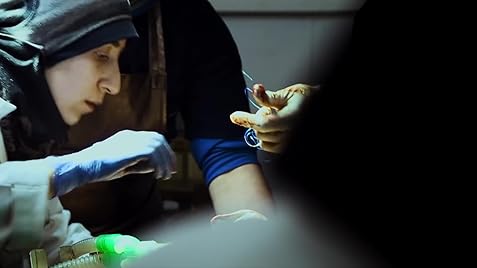
We follow Dr. Amani Ballour, one of the few doctors still in Eastern Ghoula on the outskirts of Damascus, as she navigates not just attending to a variety of patients under extreme conditions but also just surviving the siege itself. Though there are facilities above ground, part of the hospital is also beneath ground in an effort to provide safety from the Syrian and Russian bombings.

While there are horrifying and tragic moments to suffer, there are moments of lightness ranging from a surprise birthday party for Amani to her continuously frustrating efforts to make good dishes with what rice and water they can find.

We also find that despite the dire circumstances, rampant sexism reigns. One frustrated man not only demands to speak to a 'male manager' because Dr. Amani cannot possibly be an administrator due to her gender. As if that wasn't bad enough already, that same man lectured both her and her colleague Dr. Salim Namour (who is male) about how Dr. Amani should be at home.

Image result for the cave 2019 documentaryThere is a contradictory feeling when it comes to The Cave. On the one hand, we need to keep hearing and seeing these type of stories. The horrors and tragedy that is Syria in the midst of the failed rebellion against the Assad regime needs to be at the forefront.

On the other hand, I think there's a sense of exhaustion about these types of stories. For eight years the world has watched as Syria has decimated itself. The monstrous acts of the Assad regime found an equally horrifying set of monstrous acts with ISIS, as if so many sides had a contest as to who could do more unspeakable crimes against humanity.

As a result, there is just a feeling that The Cave is almost a lecture, a scolding about our collective inaction. This sense of scolding and lecturing grows whenever we see and hear about the sexist patriarchy.

Intentional or not, there is a sense that The Cave loses its way when it focuses not on Dr. Amari's acts of courage but on how her gender affects others. After a rare venture outside beyond the hospital, Dr. Amari is clearly displeased when a fully-covered mother declines an offer to work at the hospital. The literally hidden woman remarks that the man would not like it. As they drive off, Dr. Amari's surprisingly controlled anger erupts.

Related image"Why can't a woman decide for herself and do what she wants to? Would that diminish men?", she rhetorically asks. Later on, she goes on "Do they have to keep making us feel inferior? Women can contribute".

It's a strange thing that amid the dead children and dismembered adults, Dr. Amari focuses on male stupidity. There is already enough horror going on around us in The Cave, and somehow the film loses focus on the misery in Syria when it pops in reminders on Arab Syrian men's toxic masculinity.

The despair Dr. Amani has is very close to the surface. At one point after seeing more dead and dying children, she all but snaps, "I don't know what makes people have children in these circumstances", a statement that so shocks her female colleague that said colleague immediately replies, "God forgive you for what you said".

The Cave is a strong survival tale, one that allows for moments of hope. Dr. Salim for example insists on playing classical music when in the operating room, his beloved Beethoven serving as respite to a slightly bemused, slightly disinterested Dr. Amani. We do hear a bit from her parents via telephone, her father encouraging her that she has done great things even after circumstances grow so desperate she herself has to flee. He reminds her not to focus on those she could not save but on those she did.

It is impossible not to feel great sadness and even get teary-eyed when Dr. Amani has to flee from a mother bewailing her dead son Eyad. Hearing Eyad's mother cry from the depths of her soul about how he has left her seems to shake Dr. Amani, whom we next see sobbing in her office.

The Cave is a hard but necessary film to watch, though weakened when it shifts to showcasing Arab/Islamic sexism. This is a portrait of true courage under fire, of a world that cares nothing about the miseries of those forced underground. "It's like living in a grave", Dr. Amani observes. Whether there will be a Resurrection we do not yet know.

DECISION: C+

Tuesday, December 4, 2018

Free Solo: A Review

FREE SOLO

George Mallory, the British mountaineer, was once asked why he climbed mountains. His response is said to be 'because it's there'. Alex Honnold, the subject of the documentary Free Solo, seems to have a similar mindset when it comes to climbing large rocks with no ropes or other equipment (what is called 'free solo climbing').

George Mallory, I note, died on Mt. Everest at age 37 attempting to climb the world's tallest mountain, with debate whether he actually reached the summit or not. Honnold is as of this writing 33, and his attitude towards death is quite casual to almost nihilistic. Essentially, Honnold's worldview expressed in Free Solo is 'if I die, I die, so what?', but more on that later.

Free Solo covers his training on various cliffs around the world, along with his various talks and remembrances of things past, such as his parents' divorce and fellow free soloists who have died. Along with his associates and something of a girlfriend Sanni McCandless, 2016 is spent working towards his goal of free solo climbing El Capitan, the Yosemite Park monolith.

Not even an ankle injury during his training will eventually stop him from going up on June 3, 2017, almost on the spur-of-the-moment after not going up earlier. His first thwarted effort was in part connected to his unease about the cameras his associate and Free Solo co-director Jimmy Chin (along with Elizabeth Chai Vasarhelyi) had on him.

Free solo El Capitan he climbs, with various cameras capturing his rapid ascent up El Cap both with cameramen located at various points and on the ground. Once done, he smiles, Sanni returns and there it is.

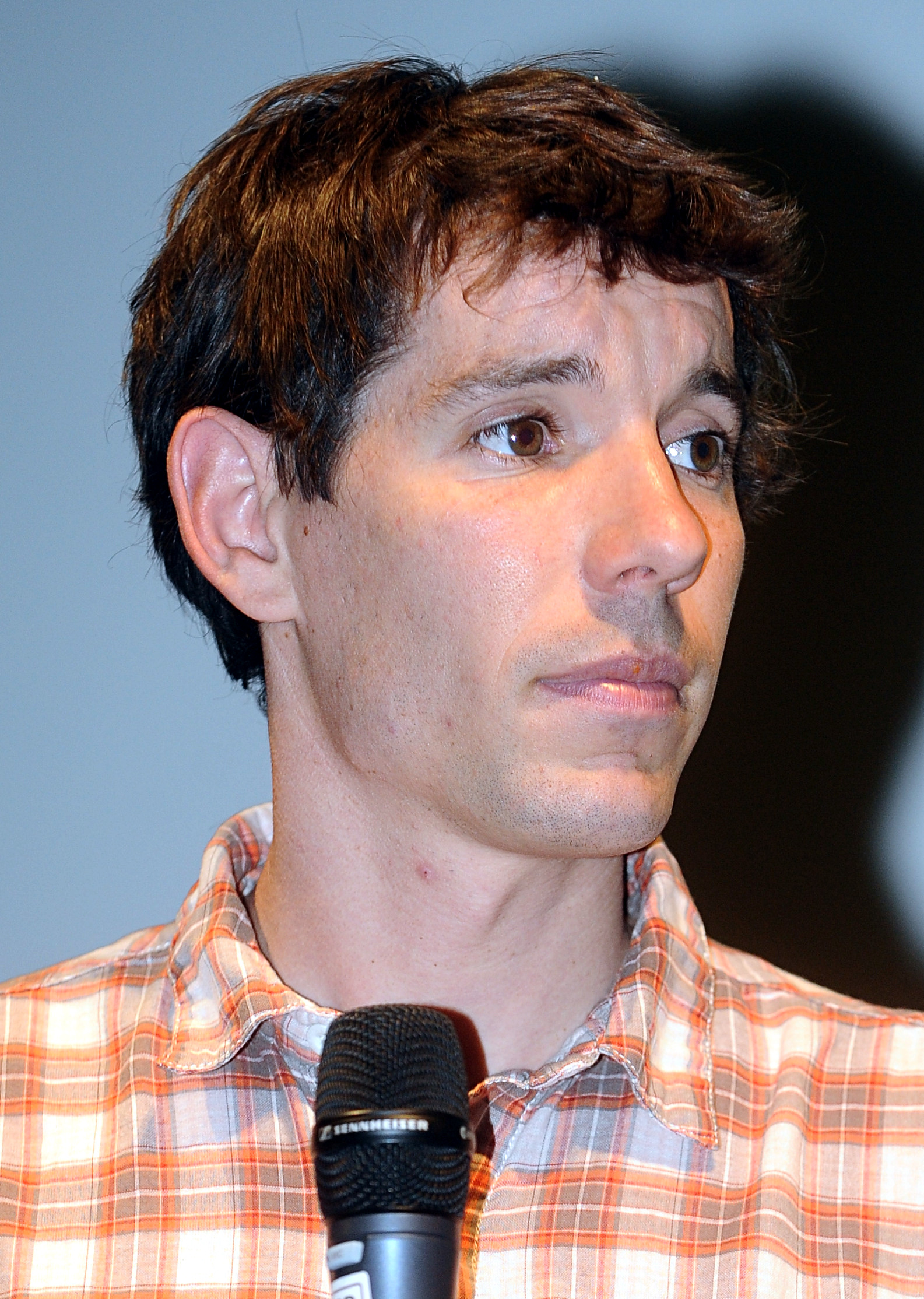
Image result for free solo documentaryI thought to myself that Free Solo is what Grizzly Man would have looked like if a camera crew had followed Timothy Treadwell before he and his girlfriend were mauled to death by bears. The Alex Honnold I encountered in Free Solo is not someone I liked. He strikes me as not aloof but as distant as those peaks he strives for, his passion more for the methods than the actual achievement or joy that comes from it.

He's a bit of a loner, perhaps as his mother Dierdre Wolownick speculates with some kind of Asperger's Syndrome, who by his own admission sometimes has a 'bottomless pit of self-loathing' and didn't start hugging until he was 23.

The hugs apparently started coming because he saw that this was common among others.

Honnold does not seem to have a death wish but he seems not to comprehend why people put happiness as important. Life is about performance, what you do he believes, not personal happiness. Free solo climbing allows him to have that goal, that mark on the world, and other things are not worth noting.

Honnold's climbing hero and training partner Tommy Caldwell at one point asks if Honnold marks anything personal in his various diaries. Honnold seems almost genuinely puzzled about this inquiry, for his diaries note the technical aspects of climbs, not so far as I could tell what he feels about things. His relationship with Sanni too is something he can let go of: she is emotional when remembering his reaction to the widow of another climber when her husband died. 'What did she expect?', seems to be his reaction.

Image result for free solo documentary
One aspect of Free Solo that I was surprised by was on both how the Chin seems to be almost part of his own movie, less a chronicle of Honnold and his climb up El Capitan but about 'the making of Free Solo and the chronicling of Honnold and his climb up El Capitan'. Chin comes across almost as Honnold's personal videographer than just someone interested in showing others this man and his passion.

The film seems very interested in highlighting the technical prowess of the production, going into the nuances of where the cameras should be. To my mind, this comes close to being narcissistic both for Honnold and Free Solo itself. Early on there's mention of Honnold's charitable work but it's quite slight to where one wonders why it was mentioned at all.

Perhaps to make our remote figure look more human?

Free Solo has as its highlight the climbing, particularly when Honnold rises up El Capitan, the vistas and knowledge Honnold is holding on with just his hands and feet making things at times highly uncomfortable. Sometimes even the training scenes put the viewer on edge and are highly uncomfortable.

As a side note, is that part of the wide appeal of Free Solo, that we may see someone with one misstep or miscalculation plunge to their death? The Alex Honnold in Free Solo would have no feeling on dying, so perhaps we shouldn't either, but I digress.

Curiously, when it comes to Free Solo, I feel a certain sense of bullying. I didn't like it. I was not impressed with it or with Honnold apart from some remarkable visual moments and sense of suspense. Yet it seems to have a passionate core group of fans who find any criticism, no matter how mild or even logical, to be an affront on humanity. I feel as though I have to love it and think Alex Honnold among the Greatest Men in Human History.

I feel the same bullying coming from A Star is Born 4.0, so to be fair, I'd sooner watch Free Solo than A Star is Born 4.0, so there's that in its favor.

Born 1985

DECISION: C-

Tuesday, November 13, 2018

Science Fair: A Review

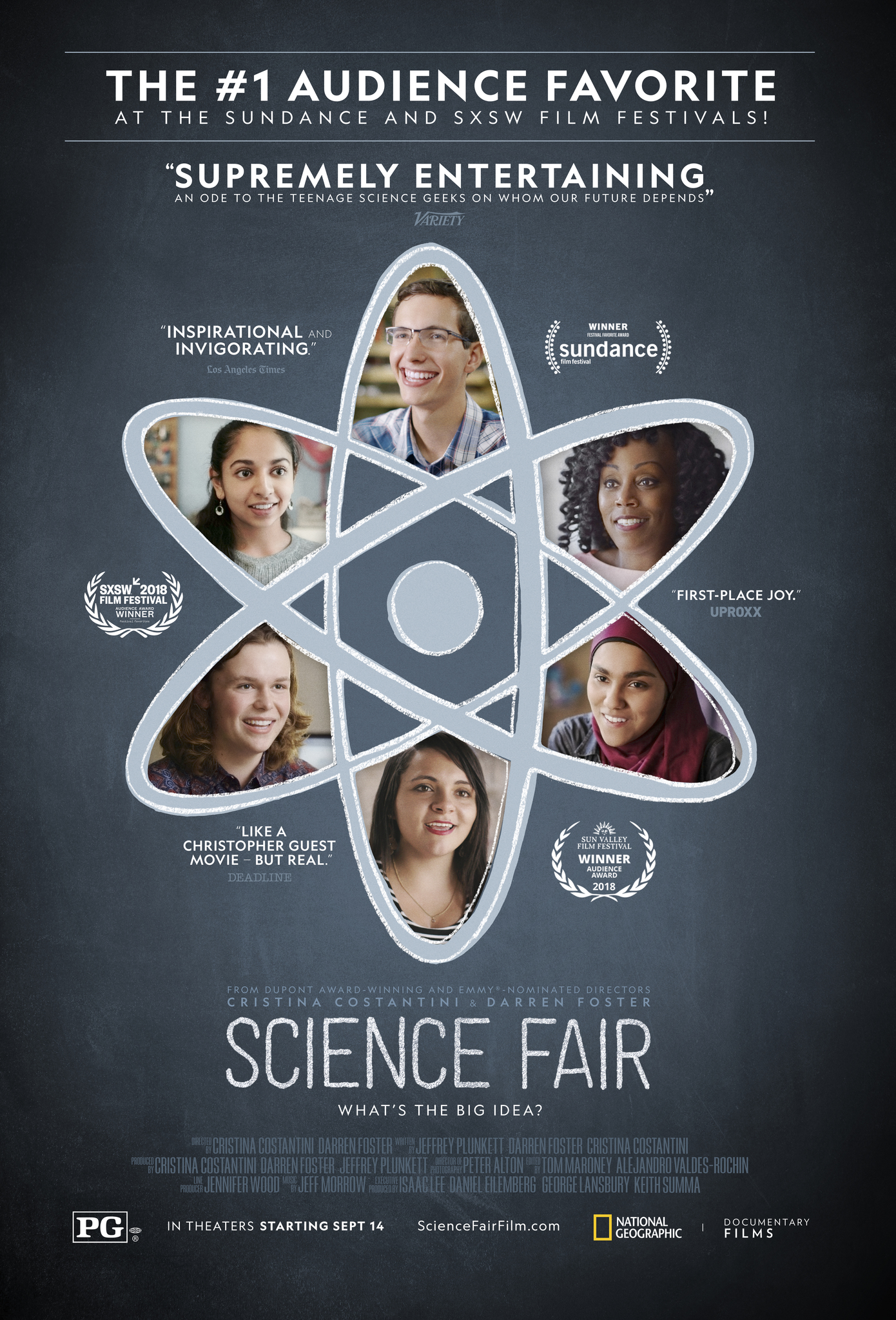
Image result for science fair documentarySCIENCE FAIR

My one encounter with a science fair was when I went to an afterschool presentation about participating. I am sure I informed my mother, but either I didn't or she forgot, because when I walked home that day I found her in tears, convinced I had been abducted. She's been wildly overprotective of me ever since.

I found I was not cut out for science fairs, and I do not remember ever going to an actual science fair. There are, however, some kids for whom science fairs are more than just exploding volcanoes. It's the competition of all competitions, a chance to improve the world and show their mettle. Science Fair chronicles six various groups and individuals from around the world as they compete for the ultimate prize.

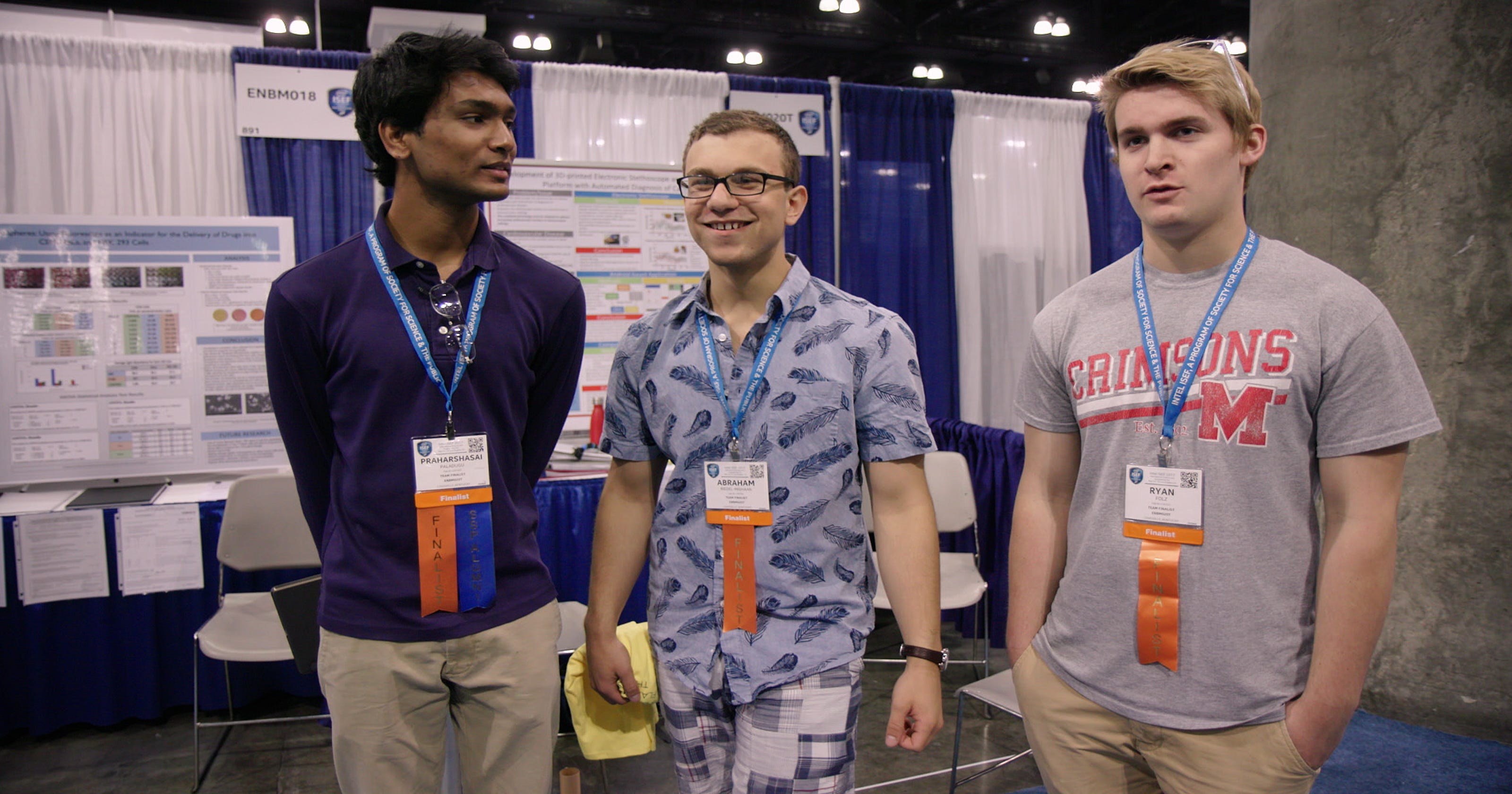
We are introduced to our contestants. From Louisville, Kentucky we have Anjali, a go-getter who is very pleasant but also pretty fanatical about competing. Almost as a counterpart is the laid-back surfer-dude type Ryan, who teams up with Abraham and Harsha.

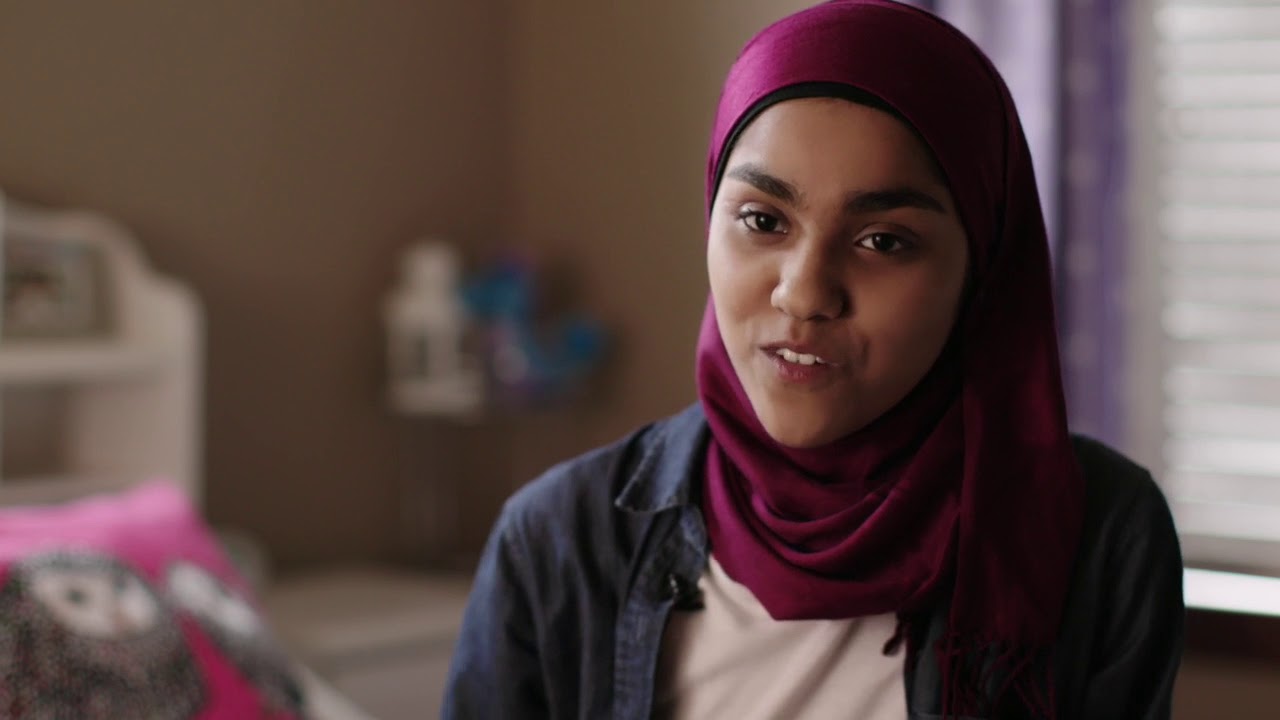
Shifting to Brookings, North Dakota we have Kashfia, a 16-year-old who is both invisible and a rarity in the community. She is passionate about science in a town which loves their athletics even if their football team has a perfect losing record. She is also a hijab-wearing Muslim in a very Anglo part of the world. Despite this, she finds an unlikely sponsor: Coach Schmidt, who is as befuddled by Kashfia's project as most people would be but who also sees her drive and intelligence.

Our first foreign visit is to Lorch, Germany and Ivo, who loves the power of flight and has done so ever since he was a child.

Shifting back to the States, we go to Shenandoah Junction, West Virginia and 17-year-old Robbie, a technical wizard who is surprisingly lackadaisical about most things. He can pull apart a calculator to make it spout off Shakespearean insults but can't find a way to plan ahead.

We leave the States then for Iracema, Brazil and the team of 17-year-old Myllena and 19-year-old Gabriel. Myllena is the dominant one, who despite the poverty of her hometown is determined to use her skills and passion for science to find treatments for the Zika virus devastating her community.

Finally, we return to America and Jericho, New York. Like Louisville, Jericho is a powerhouse at science competitions. Lead by Dr. Serena McCalla, the tough-but-loving teacher who has essentially sacrificed her personal life for her students, she is the mentor to her group of students.

Related image
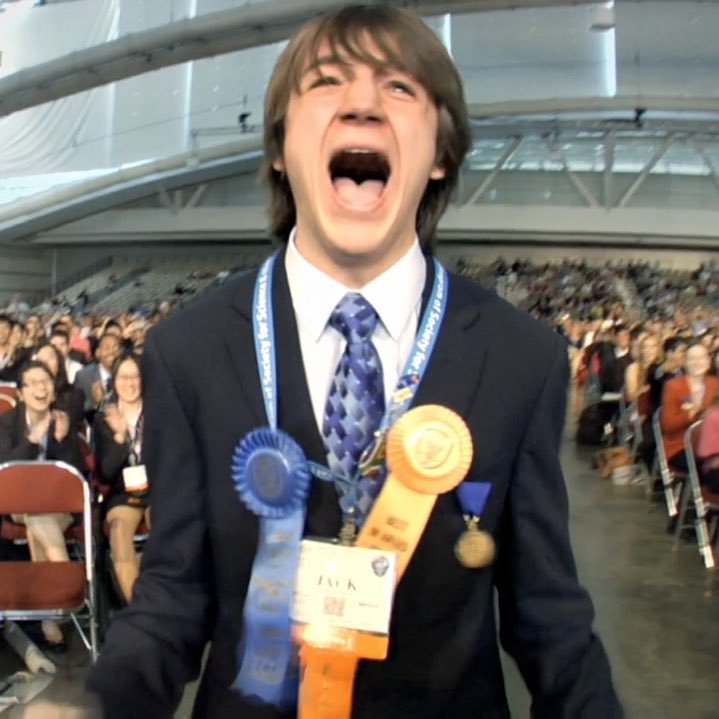
They all seek the same thing: to compete at the International Science and Engineering Fair, the fabled ISEF. The various subjects of Science Fair, along with past winners like 2012's Jack Andraka (who at 15 was the first freshman to win Best in Show and starts Science Fair with his surprisingly flamboyant meltdown reaction to winning) speak of ISEF in hushed, reverential tones.

ISEF...say it soft and it's almost like praying.

The 2017 ISEF takes place in Los Angeles, and we learn how they all end up going. It's like March Madness for Nerds: you go through various rounds where you have to win your state or national competition to move up to ISEF. The competition is surprisingly fluid: Anjali would not be denied, so after losing at her area's competition to Ryan & Company, she merely goes to another competition and wins her Golden Ticket to ISEF.

Science Fair then goes through all the preparations the various subjects go through. There are light moments, like the original Nerd Prom aka the ISEF Student Mixer, where we see these kids release their energy on the dance floor. Given that Ryan & Company had just left their own Prom a few hours before their flight (and being sleep-deprived and perhaps hung over), seeing them cut a rug was a sight. Even Kashfia got into the act, though it was too dark to see if she did let loose or just looked around versus Myllena who had herself a ball.

Image result for science fair documentaryStill, they didn't come to just twerk their Bunsen burners. They came to compete. That means rehearsing their statements to the judges, carefully setting up their presentations, even surviving the notorious SRC flags. SRC: Scientific Review Committee, that strikes terror into every participant for if they rule against your presentation, you are essentially done.

Ryan & Company get an SRC and we see the Committee approach their booth prior to the opening. The rather prissy committee grills them on a technical point of their research but the trio manage to show that the SRC misread a detail, so they manage to survive for another day.

Just before ISEF is open to the judges, we see the various students unique struggles and outlooks. Robbie struggles to find the right shirt and admits he didn't prepare his remarks. Anjali is essentially casing the joint, looking and quipping on the other displays. Myllena and Gabriel rehearse their English and freak out when they fear their translator, whom they will use only to answer questions, may not be there. Harsha irons his, Ryan and Abraham's shirts, making them especially sharp.

After a brief detour to interview past winners from 1942's Dr. Paul Teschan to 1972's Nina Schor (the first girl to win Best in Fair...the film's words, not mine) and 1971's Dr. Martin Lo (who with his sister Cecilia became the first siblings to win), we see but don't hear the closed presentations where our young men and women exude poise and intelligence with hints of understandable nervousness.

There are 1,700 finalists in 22 categories. We finally get to the presentations and learn the fate of our contestants. Dr. McCalla's school wins 7 prizes in total. Ryan & Company do not place. Anjali places fourth in her category. Myllena and Gabriel do not place, and neither does Robbie. Kashifa wins First Place in the Life Sciences: Behavioral & Social Sciences category.

And now for the Grand Prize: the Gordon E. Moore Best in Fair winner (which I lovingly call 'Best in Show'). The 2017 winner is...Ivo Zell from Germany.

Image result for isef 2017We catch up with them at the end of Science Fair: Robbie's ideas got the attention of a Silicon Valley tech entrepreneur. Ryan & Company went to various universities but still keep in touch with hopes to patent their ideas. Anjali went back to the drawing board to improve her idea the day she got back from ISEF. Myllena and Gabriel went to University and tour Brazil to inspire more students. Kashfia's accomplishment was not recognized at Brookings High School, let alone mentioned.

The Brookings High School football team did snap their losing streak on Opening Day though.


I beg forgiveness for perhaps a somewhat droll tone when going over Science Fair. It's not meant to be disrespectful of the younger generation that I'm sure will improve my life.

However, as a side note, I am constantly reminded that for the intellectual prowess many of these kids have, as adults they have a very unfortunate habit of not 'dumbing-down' their text. Many a time have I read instructional manuals or heard them give instructions using their own highly technical vocabulary, either unaware or uninterested that the majority of people have no background into their esoteric language.

If there's one thing I would like education to do is teach those passionate about science and engineering to learn to express themselves in simpler words. It isn't a question of talking down to people but putting it in terms that those not on their level can understand.

Image result for science fair documentaryScience Fair is a very well-directed film in that we do get an understanding of their projects from time to time. Myllena and Gabriel's project is explained well and motivated by what they see in their lives. Kashfia's too: her study is a reaction to the high level of drug use in her community, even if she is somewhat removed from it.

At other times, I felt as lost as Coach Schmidt. I know the kids are bright, but dear me some of their projects were on things I either didn't fully grasp or really care much about. That isn't to say they are not important, merely a bit opaque.

Ryan and Company had something about a holistic stethoscope, which should help poor communities. At least that's what I understood. Ivo just loved all things related to flight.

I do wonder though if directors Cristina Costantini and Darren Foster could have done better in not spreading themselves too thin with their subjects. You have at least nine-plus students to keep track of, along with their projects and occasionally their parents or teachers.

You get some interviews with Kashfia, Robbie, Ivo and Anjali's parents, but as far as I remember never meet Ryan & Company's parents. You get brief interviews with Coach Schmidt and Mr. Zwanzig in Louisville, but then in Jericho the focus shifts more towards Dr. McCalla than to her students.

In Jericho, I think we met only 16-year-old Doris, and I don't remember hearing from Kendra, the first and only named winner from Jericho. As nice as the section on past winners was, it felt more like a distraction.

A greater distraction was how Science Fair hopped at will. I genuinely found Kashfia and Myllena's stories more interesting than the surprisingly goofy manner of Ryan, Abraham and Harsha, who come across as Bros Who Like Chemicals. Our 'Best in Show' Ivo was a bit of a mystery as a person. He seems pleasant enough but I don't think I learned all that about him.

For my mind, I think cutting out some of the subjects to have a sharper and longer focus on a few versus on so many would have done Science Fair much good. As it is, Science Fair is a good film showing that the next generation is capable of doing and pursuing great goals.

DECISION: C+

Friday, December 22, 2017

Jane: A Review

JANE


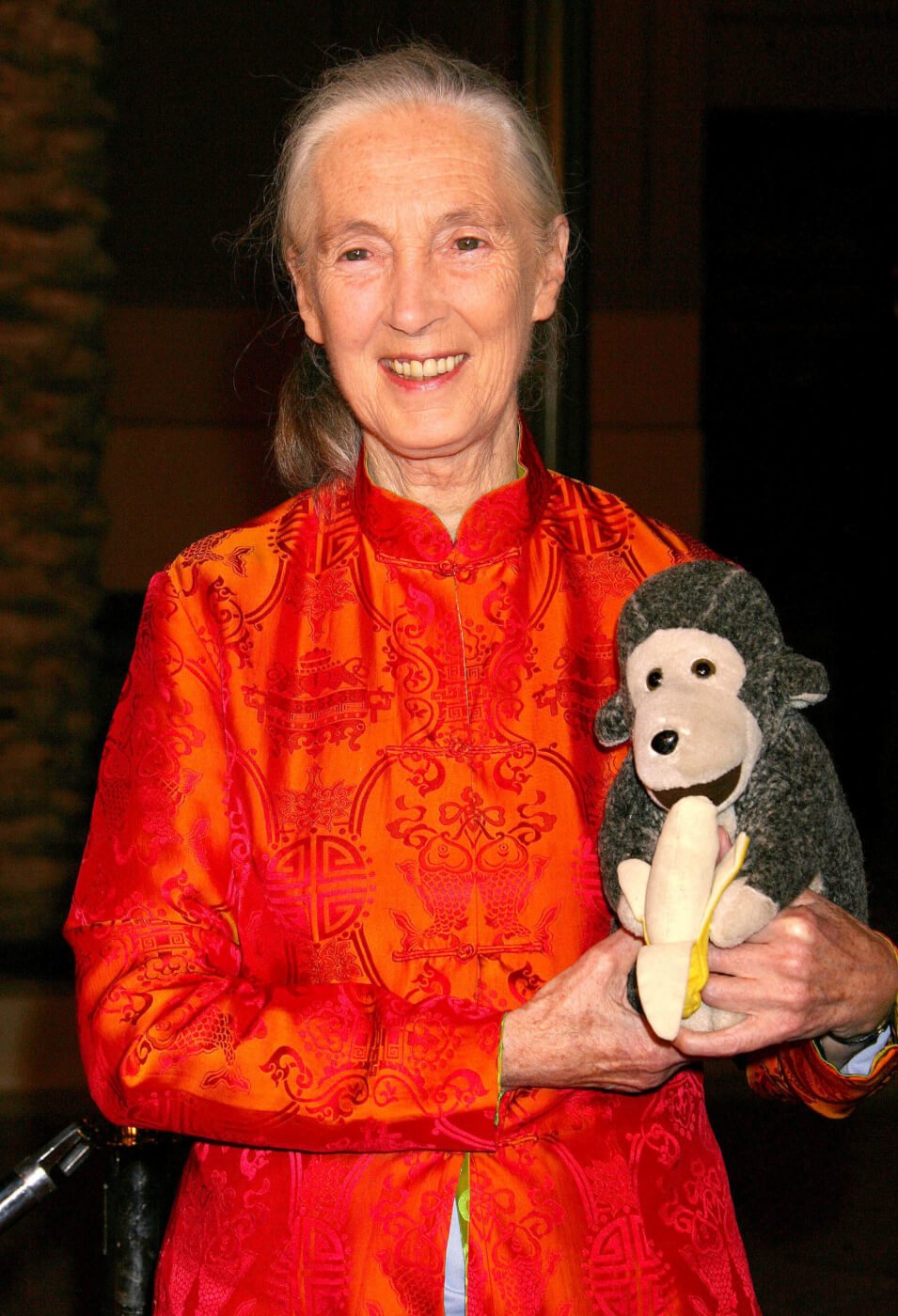
Dr. Jane Goodall has become an icon through her long-term study of chimpanzees in the wild.  Jane, the documentary on her life and work, is an extraordinary achievement.  It's not a hagiography or a dry recitation of her life and times, but a portrait of a remarkable yet quiet figure.

Jane is also unique in that it features recently rediscovered footage found in 2014 that was shot in the 1960's by acclaimed wildlife photographer Hugo van Lawick which was thought lost forever.  The film intercuts this footage with a current interview with 83-year-old Goodall as she is interviewed about her life and work.

Jane Goodall, then a 26-year-old secretary, was sent in 1957 by renowned archeologist Louis Leakey to study the chimpanzees in their natural environment.  Goodall was selected not because of vast scientific and/or academic study but despite of it, as Leakey wanted someone to go to Gombe without any preconceived notions.  Goodall was the perfect candidate as she had an open mind and more important, an eagerness and passion for animals.

With only her mother as a chaperone, she soon takes to the 'time of discovery', adopting a routine of staying all day moving and searching for the group of chimps and then coming down the evening to write.  Her observations, unencumbered by academic study, allows for unprejudiced views.  Eventually the chimps start warming to this 'strange white ape' as Goodall describes herself as, coming down to camp to take bananas.  However, she notes that they become wildly aggressive and dangerous, until with some human ingenuity they reach a peaceful settlement and exchanges.

To keep the funding, the National Geographic Society sends van Lawick to photograph and document her work.  She is woman, he is man...after he leaves he proposes and she accepts.  Despite never planning for a life as a wife and mother, she finds eventually she becomes both. 

She also endures the sometimes patronizing views of men on her work, with newspaper reports sometimes focusing more on her looks and legs than on her field research.  "Beauty and Her Beasts" and playing on her name (She Jane, He Chimp) being some of the more quippy headlines.  Goodall finds correlation between the female in her group, whom she names Flo and herself, especially after Flo gives birth to her own son, whom Goodall names Flint. 

Mother, Dr. Spock, and Flo are the best sources to raise children, she remarks, even if her son, nicknamed Grub ended up hating chimps.  At least he grew different than Flint, who in a sense refused to grow up, insisting on having Flo carry him on his back long after he grew to adulthood with Flo too old to push him to independence.  When Flo dies, Flint lost all purpose, dying three weeks after his mother.  Flo's death also broke the group apart, and Goodall sees that her original views of chimpanzees as kinder than humans is not true: they can be just as bound to cruelty as humans.


Jane gives us a fascinating portrait of this legendary figure, and director Brett Morgen so brilliantly blended the rediscovered van Lawick footage (of which Morgen culled 100 hours worth of) into a tapestry that gives us insight into both Goodall the researcher and Goodall the woman.  Jane does not make Goodall into some saint or aloof intellectual or crazed environmentalist.  Rather, the simplicity, even ordinary nature of Goodall comes across both in the van Lawick footage and her interview, where she looks back with no anger and very little if any regret.

For example, when thinking back to how sexism played a role in her work being overshadowed by her gender or society's perceptions of her beauty, she in her soft-spoken manner comments that she used this to her advantage.  The Jane Goodall in Jane comes across as an extraordinary yet quite ordinary person, one who sees her life as extremely blessed to do what she dreamt of doing: living with animals in Africa.

We do, through van Lawick's footage, also get wry moments of life, such as seen poor Mother Goodall's soap flow down the river while she lathers her face with it.  When her hand tries to reach for it again and cannot find it, we see the perfectly human reaction: her putting her hand all around to 'find' it while blind.

Jane is also accompanied by another brilliant Philip Glass score.  Unlike other compositions by Glass, Jane almost seemed to allow a little bit of humor in the music when the chimps come down en masse to steal bananas.  Glass' score is one of the aspects that makes Jane such a success to view.

The work that Goodall has done has not only given us insight into the wild and the importance of preserving it, but also insight into what makes humans unique in the animal kingdom.  Goodall's work showed that chimpanzees are able, like humans, to form tools, but that they are as capable of war and aggression as we are.  They, however, do not appear to have a vast sense of what we would call 'morality' (none appear to think that stealing was 'wrong', though if they did, would they consider it 'stealing'?).  Chimpanzees do not have an issue with the females having sexual encounters with many males to procreate, while humans do, or at least argue about it.

Goodall remarks that in chimpanzees, males are the dominant sex, something that humans have managed to overcome to varying degrees.

There is still so much to learn, about chimpanzees, about humanity.  Jane will be, I think, a definitive portrait of this most fascinating of ordinary people.

Born 1934

DECISION: A-