Thursday, September 24, 2009

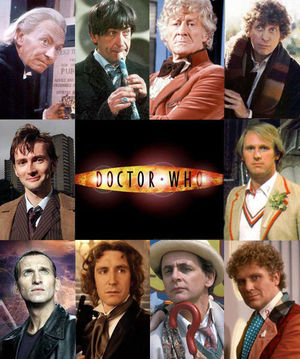
The First Ten Doctors: An Introduction


And Pretty Doctors All in A Row

**Author's Note: I had planned to review the Doctor Who catalog on this site, but given the sheer number of stories I opted to spin-off those reviews to a separate site: Gallifrey Exile. As such, readers will find reviews may hop from one site to another. Reviews are collected at a link at the end of this essay. Also, this essay was updated on January 2021.

Now we come to the end of this brief sojourn into the First Ten Doctors. 

Who is the Best Who? Who is the best Actor to have played the role? What are the best Doctor Who stories? 

I don't like those questions. Each version, in my view, brought his own interpretation to the role, and each one has one perfect story. William Hartnell, who originated it, to be fair didn't have the burden of comparing his performance with anyone else. As we look back though, we can compare him and his stories to those of his successors. 

Patrick Troughton brought humor. 
Jon Pertwee brought action.
Tom Baker brought alien eccentricity.
Peter Davison brought a greater compassion and innocence.
Colin Baker brought outrageous egocentricity. 
Sylvester McCoy brought righteous anger.
Paul McGann brought a greater romanticism.
Christopher Eccleston brought a manic moodiness.
David Tennant brought a touch of wistfulness.

Since the original posting, we've had three more Doctors.


Matt Smith brought naïveté slipping to stupidity.
Peter Capaldi brought a menace to dark danger.
Jodie Whitaker brought nothing.
 
Now, each has his detractors and defenders, but all I think did the best their talents allowed them to, with varying degrees of success. Colin Baker and Peter Capaldi were good Doctors stuck with lousy scripts, yet they did their best. 

We can argue about individual stories, but that is another matter. Ultimately, Doctor Who the program will continue, or at least I thought so. Now with the dual damage Whitaker and showrunner Chris Chibnall has done, I think Doctor Who 2.0 is done. Even with a new Doctor on the horizon, the damage has already been done. Even if Whitaker had made the role her own versus coming across as a bad Tennant/Smith cosplayer, I find that Chibnall has given her such a succession of terrible stories that no actress could have rescued the Doctor.

It's all such a shame, all this to placate a group of people who didn't have an interest in the show and didn't bother sticking around once they'd accomplish their great triumph. I gave Her a chance, but even if the Doctor had maintained being a man I would have thought such awful stories.

In the future, I hope to write reviews on the stories themselves, but I can wait. I hope to have more time.  

Looking back twelve years later, I think I have the time. 

What I don't have is the interest.

Wednesday, September 23, 2009

The Eleventh Doctor: An Introduction


The Eleventh Doctor:
Matt Smith (Born 1982)

**Author's Note: I had planned to review the Doctor Who catalog on this site, but given the sheer number of stories I opted to spin-off those reviews to a separate site: Gallifrey Exile. As such, readers will find reviews may hop from one site to another. Reviews are collected at a link at the end of this essay. Also, this essay was updated on January 2021.

Ah, to be young and naïve.

At the time I wrote this essay, I had great hopes for the newest Doctor. I wrote: 

"I am looking forward to Matt Smith's tenure as The Doctor even though I've never seen him act or heard his voice. Colin Baker had an excellent point about regeneration. You don't want Your Doctor to go, he said, but you're also excited because you wonder what The Next Doctor will be like (pun intended). 

The change from Hartnell to Troughton brought a different Doctor, as did the change to Pertwee, Tom Baker, Davison, Colin Baker, McCoy, McGann, Eccleston and Tennant. Each made it his own, and I hope Smith will do the same.

Tom Baker also made an interesting point. The Doctor, he said, is actor-proof. You could take an established character and make him your own. Each of the Doctors has done so, so why is Smith any different? It will depend on the scripts and the willingness of the public to accept one in the role.

For my part, I'm hoping for great things, and wishing Matt Smith well".


Now, looking back a good ten years since his debut story, I can see so many things that should have told me this was going to be the beginnings of a disaster. 

One thing I had not counted on was the emotional impact that having Tenth Doctor David Tennant regenerate to Eleventh Doctor Matt Smith would have on NuWho fans. I saw wails of tears from many fans at the transformation. This counters Colin Baker's view that fans usually are generally excited to see what the Next Doctor would do and be like.

Instead, I saw a fandom that could not tolerate change, that was dreading rather than looking forward to another actor in the role. Things only got worse when Smith would eventually regenerate to Capaldi. The regeneration was transformed from a somewhat routine but non-dramatic moment into this epic change requiring explosions and long, dramatic monologues. 

How could fans be so simple? I'd seen many regenerations, and only once did I actually cry. That was the regeneration from Third to Fourth, and it had nothing to do with my unwillingness to see Pertwee become Tom Baker. It had to do with Pertwee and Elisabeth Sladen's actual acting. 


Another problem that I did not foresee was in how diminished the character would become. There's eccentric and then there's stupid. Smith's Doctor not only passed that line but smashed it beyond anything imaginable. In a future post, I was pretty positive about Smith but did warn that "he does...run the risk of going too far in the comedic take", and I found that such fears would come to pass. The Eleventh Doctor became stupider and stupider. His fixations with fezes and bow ties, as well as his growing inability to function with a hint of sense, made him an object of ridicule. In short, a joke.

The Doctor could be eccentric, but Smith's version eventually came across as a near-total nitwit. 

Add to that how other characters eclipsed him. At times, The Doctor became a guest star on his own program, the dominant figures being the bossy Amy Pond and the Legendary Legend of Legendness Herself, River Song. First, we see with Amy just how stupid The Eleventh Doctor became. After centuries of dealing with humans, why did this Doctor think that Amy's husband Rory Williams was "Rory Pond", insisting that men took on their wives' names? Some men do, but fandom's insistence on calling the "The Ponds" when Rory was never a Pond was eye-rolling.

In Dinosaurs on a Spaceship, Rory's father made it a point to say "I AM NOT A POND!" to an either oblivious or downright imbecilic Doctor. Smith's Doctor went from frantic to dysfunctional. 

Worse, there was River Song. Granted, I had missed her debut story but soon River not only started appearing more and more prominent in other stories but went from a guest character to the almost de facto star. She was built up as this great figure with her catchphrases "Hello, Sweetie" and "Spoilers!", who not only knew how to pilot the TARDIS better but ridiculed the Doctor for "leaving the parking brake on". It was beyond cringe-inducing.

River Song eventually not only became the child of Amy and her husband "Mr. Pond" but managed to regenerate herself because she was conceived by the power of the Holy TARDIS. I don't know what the motivation was to diminish the lead character to celebrate a minor, obnoxious insignificant one, but it was a terrible mistake. This would not stop with Amy or her daughter, but with Clara Oswald, another obnoxious Companion know-it-all who somehow became this most important of figures.

She told the First Doctor which TARDIS to take, despite the TARDIS saying she select him in The Doctor's Wife, a title later reserved for River Song.  A total mess.

Finally, I saw a group of absolutely dreadful stories: the aforementioned DOAS, A Town Called Mercy, Closing Time, Journey to the Centre of the TARDIS

I left the Matt Smith Era so bitterly disillusioned, and grew disenchanted with Smith's portrayal. 

Oh, but little did I know...

Tuesday, September 22, 2009

The Tenth Doctor: An Introduction


The Tenth Doctor:
David Tennant (Born 1971)

**Author's Note: I had planned to review the Doctor Who catalog on this site, but given the sheer number of stories I opted to spin-off those reviews to a separate site: Gallifrey Exile. As such, readers will find reviews may hop from one site to another. Reviews are collected at a link at the end of this essay. Also, this essay was updated on January 2021.

My mother never understood my love of Doctor Who. She thought it was a stupid show and made it a point to tell me as such. She would also add that being ugly was a prerequisite to play the Doctor...with one exception. After looking at David Tennant, she decided he was halfway decent-looking. 

This seems to be the consensus: that David Tennant is perhaps one of the most attractive men to play the role. In retrospect, a good fifteen years separated from his debut story, Tennant's physical appeal and crafting the Doctor as an object of romantic yearning, even physical desire, may have been a mistake. The romanticism and lust factors may have been both a blessing and a curse to the show. He was certainly swoon-worthy to many a fangirl and fanboy, but could Tennant's looks have been the catalyst for creating whole seasons where every Companion save Donna fell in love with him?

He was perhaps the most romantic of Doctors, one that loved sweeping in to rescue damsels in distress (case in point, The Girl in the Fireplace). Oftentimes, it was suggested that he fell in love to those women he encountered (the aforementioned Girl in the Fireplace, Doomsday, Forest of the Dead). This goes against the Third Doctor Jon Pertwee's view that there should be even a hint of romance between the Doctor and his Companions. 

I think that was a good policy, to make The Doctor a mentor not a lover, someone who in Pertwee's words was fond of his Companions but that fondness is different from desire. However, perhaps Tennant's good looks and easy manner made him too hard to resist. It now makes me wonder whether the emphasis on romance shifted Doctor Who from a good, family science-fiction show into a space soap opera: Lust in Space if you like. 

Perhaps this is why, in the future, the then 34-year-old Tennant was succeeded by the even younger Matt Smith, to continue making The Doctor not into an intellectual hero but an object of worship and erotic fixation. That may explain why when the much older Peter Capaldi came around, more than a few fans objected to not having that romantic, swooning figure but a crotchety old man.

Tennant's looks are not his fault, and he showed himself to be a fine actor and one of the best Doctors. However, with the benefit of hindsight, perhaps the focus shifted from "The Doctor" to "David Tennant", and in the same way Classic Who never fully recovered once Tom Baker left, NuWho has yet to hit the heights the Tennant Era had. 


At the time, I thought David Tennant was a welcome change from Christopher Eccleston. This isn't to say the latter was terrible, but he was a terribly unhappy Doctor. Tennant, on the other hand, is for the most part quite jolly. He has a touch of Troughton: a sense of wonder about the things going on around him. He gets Pertwee's ability to be authoritative, even a bit bossy when the need arises. Tennant also brings something of Davison's vulnerability to the role. This is informed by the fact that The Doctor's home world of Gallifrey is supposed to have been destroyed. While he is a happier Doctor than Eccleston, Tennant can also rage like the best of them.

As I revisit this essay a good twelve years later, I can now confess that I was like many a NuWho fan too enthralled with the show to be analytical. I let my emotions carry me, until Love & Monsters

Love & Monsters shook me from my fever dream of thinking every Doctor Who episode was brilliant. I was angry at how insulting it was to the fanbase. I was horrified at the oral sex joke, one that left me so stunned I had to watch that part just to be sure I had heard what I had heard. It was an ugly, ugly episode, one so horrifying and hideous I essentially quit watching Doctor Who right then and there. I skipped Fear Her out of protest (which I have since seen and thought it too was awful), stumbled through Army of Ghosts Parts I & II, then stopped watching altogether. 

That's how awful I thought it was. The association was simply too awful for me to have anything to do with it. I also thought the battle between the Daleks and the Cybermen was not all it could have been. All the pity. I did think his first season (Series Two) was overall quite good.

It wasn't until Matt Smith took over that I decided to give Doctor Who another try. When he handed over Smith. I hoped for great things.

I was, sadly, unprepared for that Legendary Legend of Legendness, River Song, but that's for next time.

Monday, September 21, 2009

The Ninth Doctor: An Introduction


The Ninth Doctor:

Christopher Eccleston (Born 1964)

**Author's Note: I had planned to review the Doctor Who catalog on this site, but given the sheer number of stories I opted to spin-off those reviews to a separate site: Gallifrey Exile. As such, readers will find reviews may hop from one site to another. Reviews are collected at a link at the end of this essay. Also, this essay was updated on January 2021.

I was very excited when Doctor Who was revived in 2005. So excited that I cajoled a friend of mine to let me watch it at his house since I didn't have cable or satellite. I believe my faith is justified.

Christopher Eccleston's Doctor is in a word: manic. He seems in a hurry to get things done. If the storyline is to be believed, Gallifrey no longer exists. His home world has been destroyed, with him the only survivor. This would make him more dour than his predecessors, and while Eccleston's performance shows him to be angrier, he also does allow some goofiness to come through. 

There is a tinge of regret to him, as if a shadow will always be with him, haunting him perpetually. He also oddly seems to be the most "regular guy" Doctor. There's no air of sophistication or culture that the Third or Fifth Doctor had. Instead, he seems like just a bloke who happens to be a Time Lord.

This might explain that chip on his shoulder he seems to carry, as if he's always worried someone will look down on him. He has a Northern accent, which distinguishes him from all other Doctors and reinforces that outsider status. Perhaps to the class-conscious British this might be an issue of concern.

The Ninth Doctor's anger also seems to find more comfort with violence than McCoy's. He has no problem being vengeful, downright evil, with the 'last' Dalek. He goes so far as to threaten to kill him. Yes, it was to save his Companion Rose Tyler, but it still is a marked departure for someone who used to rail against violence to solve things. Perhaps this was a manifestation of the actor himself, who left the series after one season. I don't know what his plans in relation to Doctor Who are, but he seems to be taking a page from Tom Baker: respect but a wary distance.

Now, with the new series there is a change. Rather than having two-to-four part stories, each story is an individual episode with one or two exceptions. Out of the stories in his tenure, the best to my mind is Dalek. It finally makes the Daleks the terrifying creatures they could be. I also thought The Unquiet Dead (where he meets Charles Dickens, brilliantly played by Simon Callow), and Father's Day were well-written and executed. I really don't think there was a bad episode in the bunch.


Now that I've had well over a decade to reflect on NuWho, I think Eccleston has been wildly underrated. He brought a mix of mirth and menace to the role, both goofy and frightening. I think in retrospect that his costume worked well: the leather jacket and overall black ensemble showed him to both working-class and dark.

The teaming of the Ninth with Billie Piper's Rose was a mix between romantic and friendship. If memory serves correct I don't think the romance was built up to the extent it would be in the future, and perhaps if Eccelston had stayed on it would have been tapered down.

I also think that my wild enthusiasm was perhaps an emotional rather than intellectual reaction, for as good as I think some of the stories are, I cannot recall any of them with great detail apart from The Unquiet Dead and The Empty Child Parts 1 & 2. The "farting aliens" perhaps should have been a sign that things were not as I imagined them, and while Captain Jack Harkness made for a good guest character, his eventual dominance in Who lore may have been a mistake.

On the whole, I think well of Christopher Eccleston as The Doctor, mercurial as both character and actor are. Time has softened my love of Series/Season One, but that is for another day.


Sunday, September 20, 2009

The Eighth Doctor: An Introduction


The Eight Doctor:
Paul McGann (Born 1959)

**Author's Note: I had planned to review the Doctor Who catalog on this site, but given the sheer number of stories I opted to spin-off those reviews to a separate site: Gallifrey Exile. As such, readers will find reviews may hop from one site to another. Reviews are collected at a link at the end of this essay. Also, this essay was updated in January 2021.

With Paul McGann as The Doctor, it's impossible to give a fair analysis. He appeared as The Doctor only once on screen, and that is not available in the United States*. Instead, I will give my impressions of McGann based on my memories of the Doctor Who TV movie.

I was very excited about seeing Doctor Who again, and eagerly started to watch. As the show went on, I started losing interest. Eventually, I did the unthinkable: I switched it off. I like to think that was the beginning of my starting to grow up, leaving aside childish things. Still, it would be nice to have it available if only for completion's sake.

Now, what I do remember about McGann's Doctor is actually quite positive. He seemed more eager for adventure, and more eager to defeat his arch-nemesis The Master once and for all. He also appears frankly less angry than the Seventh Doctor, though not as jolly as the Second. He gave me the impression that he should take part in the affairs of others because it would be interesting.


What I didn't like was the suggestion of romance between the Doctor and his newest Companion, Dr. Grace Holloway (although I think the reports that he kissed her passionately are exaggerated. I don't doubt he did, but I think it was out of joy of remembering who he was than out of an erotic desire).

Less disturbing than this idea of a romance between a Doctor and his Companion is him saying he's half-human. BLASPHEMY, I SAY! There was never anything to suggest he was anything other than what he was for twenty-six years: an alien being, a Time Lord from the planet Gallifrey. Why this was done is irrelevant, the fact that it was done at all was disastrous. I prescribe it to post-regeneration trauma, not to any sense that this is the actual truth.

In retrospect, and with the benefit of hindsight, things become clear. The "half-human" bit was to try and start the show afresh. However, the idea was a bad one from the get-go: it alienated and angered longtime fans without bringing in new ones. It also would become a point of contention in the fanbase. Was the "half-human" story element Canon? Was McGann's version even Canon?

There are three schools when it comes to the Eight Doctor.  The first is that he is Canon, part of the chain that stretches from William Hartnell.  The second is that he is not Canon and can be ignored.  The third is that he is the last of Canon, with everyone following him being non-Canon.

My view is this: he is Canon.  Sylvester McCoy, whom no one questions as Canon, appeared as the Doctor prior to McGann's regeneration.  Since McCoy regenerated to McGann, he is Canon.

As I think on Paul McGann, I think he would have made for a great Doctor. He seemed a mix of romantic and naïve, childlike and wise old soul. He was simply not given a good shot, and that will always be a terrible shame. While he's done audio stories, it is a shame that he never got a chance to complete a series on his own. I hope that the new series will allow him to make a reappearance in the role of the Eight Doctor. It would be a sign of respect. 

Ultimately, the Eight Doctor is the one I know the least, through no fault on either side.

Next, The Ninth Doctor: An Introduction

Visit Here for Eight Doctor Review

*Update: In 2011 the Doctor Who TV Movie, also known as The Enemy Within, was released on DVD in North America. In 2013 McGann reprised the role of the Eighth Doctor in the mini-episode The Night of The Doctor, his first (and as of 2021 his last) on-camera appearance as The Doctor since the TV movie.

Saturday, September 19, 2009

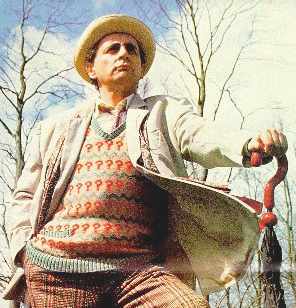
The Seventh Doctor: An Introduction


The Seventh Doctor:
Sylvester McCoy (Born 1943)

**Author's Note: I had planned to review the Doctor Who catalog on this site, but given the sheer number of stories I opted to spin-off those reviews to a separate site: Gallifrey Exile. As such, readers will find reviews may hop from one site to another. Reviews are collected at a link at the end of this essay. Also, this essay was updated on January 2021.

Sylvester McCoy once beat out perennial winner Tom Baker as the favorite Doctor. I can see why. Like the first Baker and Troughton, he has the eccentricity and whimsy of their versions. Like Hartnell and Pertwee, he can bring a darkness and mystery to the part. He also is the first Doctor to have a faint hint of an accent (Scottish), all which combined to make his tenure a good one. His was the last of the original series, and he made it an elegant swan song.

McCoy has been the Doctor who, to my mind, has been both the angriest and the biggest pacifist. He abhors violence and avoids it at almost all costs. However, he is bent on striking out against those who would do violence. He may appear foolish, but he wasn't. I always got the sense that while he still like humans he had grown tired of our inability to resolve things with dialogue. The "Shoot First, Ask Questions Later" mindset was one he constantly goes against, and he is genuinely angry at injustice of any kind.
 
When it came to his companions, he still had Mel whom I abhor, but then found Ace whom I love. Ace, a troubled girl with deep family issues, found in the Doctor (or Professor to her) if not a father figure at the least a good uncle. On occasion, he could put her through a lot, but it was always with her best interests in mind. Perhaps this was his way of seeing that there was still some stubborn hope in these Tellurians. That perhaps, was the best message McCoy's Doctor could give us.


Alas, it was here when the show was put on "hiatus", one that lasted twelve years give or take. Doctor Who was never officially cancelled, but for all intents and purposes it had run its twenty-six year run. McCoy, unlike Colin Baker, was never blamed for the show's end, another credit to how well he did in the role. 

It was unfortunate that the de facto cancellation came at that time since the show was finally finding its way back. The costume was at least rational, and the stories were improving. Remembrance of the Daleks brings the series almost full circle, returning to Coal Hill, the school where the show had begun. I especially love The Curse of Fenric, which to my mind is not just among the best the series made but the last great story of the original era. It's one of the few to elicit in me a reaction of fear and suspense. 

Of the ones available now as of this writing, Ghost Light was one I did not understand at all. Not one bit. I'd put that one as the worst.

Stories available: Remembrance of the Daleks, Battlefield, Ghost Light, The Curse of Fenric, and the ironically titled final story of the original series, Survival. Delta and the Bannermen was released in September.

Friday, September 18, 2009

The Sixth Doctor: An Introduction


The Sixth Doctor:
Colin Baker (Born 1943)

**Author's Note: I had planned to review the Doctor Who catalog on this site, but given the sheer number of stories I opted to spin-off those reviews to a separate site: Gallifrey Exile. As such, readers will find reviews may hop from one site to another. Reviews are collected at a link at the end of this essay. Also, this essay was updated on January 2021.

Actor Brian Blessed, who guest starred on Doctor Who in a part specially written for him, commented in The Doctors: 30 Years of Time Travel & Beyond, about Colin Baker's interpretation of The Doctor. "With Colin", he said, "I got the sense that he hadn't made up his mind how he was going to play it". Baker would, Blessed observed, pursue one avenue of interpreting the role halfway and then pull back. This seems as apt a description of Baker's tenure as any I've heard.

Colin Baker was not the worst Doctor on Doctor Who. If you see his guest starring performance in the Fifth Doctor story Arc of Infinity, you see he could be quite menacing. Perhaps this is what persuaded Doctor Who producer John Nathan-Turner to cast him, though I've also heard JNT found Baker personally witty and funny. If he had a strong producer to guide him, he could have been quite a dangerous Doctor, bringing a touch of menace to the role. 

God Bless John Nathan-Turner, but he was not that kind of producer.

Let me state that JNT deserves credit for keeping the show alive as long as he did. However, he did infinite damage to the show by making some awful decisions. However, we can't avoid that fact that Baker should have been more forceful to JNT. He should have also taken greater charge of his interpretation of the character.


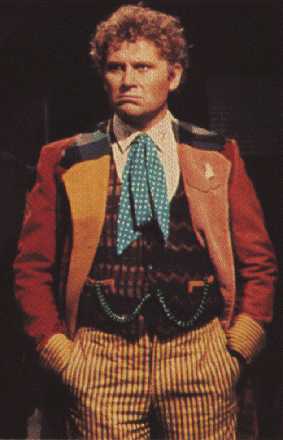
It wasn't Baker's fault alone. He was the unfortunate recipient of the WORST costume in the series' history (and that's saying a lot). The eccentric wardrobes of Tom Baker and Davison now degenerated into a laughable patchwork that made Colin Baker look like Ronald McDonald's illegitimate son. It might have been done with the best of intentions, but to a first-time viewer, it only has the effect of making him look ridiculous, a figure of ridicule than of interest. 

That awful decision doomed Baker before he even began. JNT might have thought he was being clever, enhancing the Sixth Doctor's arrogance, egocentrism and pompousness. Instead, he undercut the character by turning him into a joke. Here is a good example of how actor and producer were at loggerheads, with producer being so wildly wrong.

To emphasize the Sixth Doctor's menace, Baker suggested an all-black suit. Nathan-Turner rejected the idea, deciding to go for the most garish outfit possible. The frustrated costume designer, fed up with Nathan-Turner's constant rejections for her designs, created the multi-patch coat as a joke. To her horror, JNT loved it. Poor Baker, realizing what a hideous outfit he'd have to wear, managed to sneak in a cat pin as his sole contribution.

There is simply no way to underplay how awful the Sixth Doctor's costume is. It should serve as a textbook example of how one poor decision can create a mess that no amount of good writing or acting can save. 

You can't take the character seriously if he's wearing the silliest of costumes. Tragically, only Nathan-Turner didn't see until far too late what damage he'd caused by his obstinacy.  

It brings to mind what Milton Berle once said. Suppose someone comes out in a funny costume, Uncle Miltie stated. You get a laugh for a few moments, but then what? You've got to carry on with the scene, and now you have to work the funny costume into the act. When you are suppose to have a serious character, you can't accept the insanity of the outfit and take things seriously. 


Another unfortunate circumstance that Baker faced was falling ratings. The BBC held the bizarre idea that the reason viewership was dropping was Colin Baker himself. It wasn't the poor stories he had. It wasn't the almost insane idea to start Baker's tenure with the Doctor attempting to murder his Companion (albeit in a state of post-regeneration confusion). It wasn't the slashed budget that caused the already wonky sets and effects to look ghastly.

No, according to the wise folks at the BBC, it was solely the lead actor's fault. Colin Baker got the rawest of raw deals: lousy costume, bad scripts, oddball producer, small budget and while trying desperately to make things work getting the blame on top of all that.

When the BBC actually spent money on the show, the results are still extraordinary. Take for example the opening of the season-long The Trial of A Time Lord (aka Episode One of The Mysterious Planet). Even by today's standards, it's spectacular. In fact, I thought the first minute, with its camera movement over a spaceship and the TARDIS being taken into it, had been remade for the DVD release using 21st-Century computer generated effects.

I was stunned to discover that nothing had been altered in that sequence. It is proof positive that if the budget had been increased it would have rescued The Doctor far more than Doctor in Distress, an embarrassing We Are the World-type song that is still perhaps the lowest point in connection with the series. Doctor in Distress remains one of the oddest moments in attempts to save a show. The sight of an openly contemptuous Anthony Ainley (The Master) and a slightly bemused, slightly perplexed Nicholas Courtney (Brigadier Lethbridge-Stewart) "singing" is frankly quite sad. 

In retrospect, it's unfair that Baker got the blame and the boot for the low ratings and dreadful stories, which were completely out of his control.  He did the best he could under difficult circumstances, and got nothing but grief over it.

Finally, Baker was saddled with perhaps the two worst Companions in the series' history. Peri (full name Perpegilliam) Brown is a good idea on paper: the first American Companion. To her credit Nicola Bryant's American accent is good. However, Nathan-Turner's obsession with exotic names sinks her character, and she really isn't given a chance to do much except run around in skimpy outfits. True, she was there for "eye candy", but it is amusing that the openly gay Nathan-Turner had a fixation on showcasing Peri's physical attributes.

Peri Brown, whatever her faults, could at least be endured.

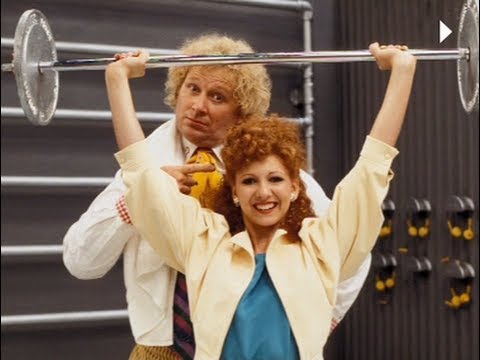
Not so Melanie (Mel) Bush. Even as a child I hated her. To this day I still loath her. Brainless vapid twit. She exemplified the worst caricature of a Companion. My only memories of her are of her SCREAMING. A LOT. SCREAMING ONLY AND ALWAYS.

I hated her. I hated her looks, I hated her voice, I just hated her. What do I mean, 'hated'? I STILL HATE HER. I imagine Bonnie Langford is a very nice person and a talented actress. The stories her character were in, however, gave no indication of either. Perhaps I'm being too harsh, but I still wince whenever I think of Mel Bush. Can't help it. Never liked her. Still don't.

All this created a perfect storm from which no actor could have survived. To his eternal credit, Baker still is active in Doctor Who-related events and activities, and appears proud to be part of the series (if not about how things ended, for which he has every right to be angry).


Even among the ruins of Baker's tenure, one can still find some treasure. The slimy sea villain Sil, first seen in Vengeance on Varos and returning in Episodes Nine-Twelve of The Trial of a Time Lord (aka Mindwarp) is a great villain. I would rank him not just among the best Doctor Who villains but also the last great villain the series created. 

We also had the first appearance of a renegade female Time Lord known as The Rani, more an equal to The Doctor than the now-somewhat cartoonish Master became. She proved herself a worthy opponent whose potential was and is still wildly under-tapped.

Curiously, though he was the only Doctor to be fired, he will be the first to have all his stories released on DVD. Out of the ones available now, I still think Vengance on Varos is the best. In its story about televised torture for the amusement of people, it's remarkably prophetic. As for the worse, I have to say The Ultimate Foe. This isn't a criticism of writers Pip & Jane Baker (though most Doctor Who fans seem to have a particular antipathy for them). It has more to do with Mel being there. She was in Terror of the Vervoids, but that story holds up pretty well in spite of her. I also didn't quite understand The Mark of the Rani, but I give it props for the creation of another Time Lord baddie.

Now, what about The Trial of A Time Lord? One massive story, or four? This debate will be going on among fans from now to the end of time. Arguments for the One Story thesis: the title is The Trial of A Time Lord, and they're marked Episode One, Episode Two,...Episode Twelve, Thirteen, and Fourteen.

Argument for Four Stories thesis: they involve four distinct settings with four sets of writers. Therefore, they are Four Stories. 

I'm with the Four Stories group. If you remove the setting of Gallifrey and the trial itself, I think the stories could be independent of each other. I liken it to The Key to Time. Nobody ever argues they are one story, even though all involve the same objective: finding the six segments of The Key to Time. Like Key to Time, Trial of A Time Lord was a season long. With that, and the fact that there was no one writer for one story, I count them as four. There it is.

Stories available: Attack of the Cybermen, Vengance on Varos, The Mark of The Rani, The Two Doctors, Timelash, Revelation of the Daleks, and The Trial of a Time Lord box set (containing The Mysterious Planet, Mindwarp, Terror of the Vervoids, and The Ultimate Foe).