Showing posts with label George Stevens. Show all posts

Tuesday, May 12, 2026

Woman of the Year: A Review


WOMAN OF THE YEAR

"I take two steps forward; I take two steps back. We come together cause Opposites Attract".  So sang Paula Abdul and the Wild Pair on Opposites Attract. While Woman of the Year may not be that peppy, it fits the story of mismatched newspaper columnists. Held as a romantic comedy, I found Woman of the Year a disappointment given its lofty reputation. 

New York Chronicle's foreign affairs correspondent Tess Harding (Katharine Hepburn) makes dismissive remarks about the need for sports during this, no ordinary time. This draws the ire of her fellow Chronicle reporter Sam Craig (Spencer Tracy). He takes umbrage at her haughty suggestion that baseball be suspended for the war's duration. Craig, the Chronicle's sports correspondent, writes a terse article berating Harding's snobbishness. Harding gives as good as she gets in print. This internal battle of the sexes is too much for their editor, who orders both to knock it off.

Once they meet in the flesh, both see that there is more than meets their eyes. Craig is quickly smitten with Harding. She in turn seems to take a shining to Craig. Soon, they start seeing each other socially. This is not easy for both, especially Craig. He is more comfortable with his sports pals, especially ex-boxer Pinky Peters (William Bendix), than with her intellectual polymath set. Sam especially detests Tess' snobbish secretary Gerald How (Dan Tobin). They are very different people. They are also very much in love.

They marry, delighting her diplomat father William J. Harding (Minor Watson) and her favorite aunt Ellen Whitcomb (Fay Bainter). Despite getting married in a fever, Tess stubbornly refuses to alter anything about herself. She will continue supporting cause after cause. She will take little note of how little time they spend together. She has little issue having Yugoslavian refugee Dr. Lubbeck (Ludwig Stossel) crash their wedding night even if Lubbeck was unaware of the nuptials. Over and over, Tess continuously puts her own needs, wants and careers ahead of both her marriage and her husband.

One would think the low point was when she brings a Greek child refugee to live with them without so much as asking Sam. That, however, is slightly higher than what she does when she wins "Woman of the Year". Sam has finally had it and promptly leaves. A surprise wedding from her maiden Aunt Ellen prompts Tess to rethink things. Could she manage as just Mrs. Sam Craig or is there a way for her to be Tess Harding Craig? 


There is a story about Spencer Tracy and Katharine Hepburn's first meeting prior to making Woman of the Year. Hepburn stood 5'7" and wore heels when she met the 5'10" Tracy (though I suspect that he was shorter). She apologized for standing slightly taller and said that she would be more careful about her footwear. Woman of the Year producer Joseph Mankiewicz, who was with Tracy, looked at Hepburn and said, "Don't worry, Kate. He'll cut you down to his size". 

Woman of the Year is the first of an eventual nine pairings of Spencer Tracy and Katharine Hepburn. I can see what made them work so well as one of the great screen duos. They are a strong blending: her patrician air and his average man manner. Tracy and Hepburn balanced each other quite well. It is to where I wonder if both were playing versions of their real-life themselves. Woman of the Year shows how despite their differences there was an immediate and longstanding attraction. 

Ring Lardner, Jr. and Michael Kanin's Oscar-winning screenplay is quite clever with the wordplay. After finally meeting, Sam rushes to catch up with the leggy Tess. As she stands on the staircase, he starts going up. "Isn't the sports department downstairs?", the WASP Harding asks. Sheepishly replying that it was, she asks, "Well, aren't you going in the wrong direction?". He looks at her and replies, "Maybe I am".

Perhaps it is just me, but I found double meaning in that exchange. Sam is saying that he is going in the wrong direction physically. However, could he also be suggesting that his pursuit of Tess might also be going in the wrong direction?

The film has much excellent wordplay. Tess, in a state of inebriation, looks at Sam who tells her, "I love you". "Even when I'm sober?", she asks. He replies, "Even when you're brilliant". When they get back to Tess' apartment, he admires a painting. "It's a little too high to reach", he says. Tess answers, "I'm not", the meaning clear and probably as daring as the Hays Code will allow.

After all, Sam did not take advantage of the situation, and they were not together until after their quickie wedding.  

Woman of the Year has been celebrated as a female empowerment film, showcasing the woman as the dominant figure. Therefore, the final scene of Tess' total ineptness in the kitchen seems to disappoint viewers. I have a different interpretation. I did not find Tess Harding empowering. I found her horrid.

Repeatedly, Tess Harding shows how callous, self-centered, snobbish, indifferent and insensitive she can be. And those are her positive attributes. Over and over again, we see how Tess repeatedly not only refuses but does not even consider making any adjustments for Sam. I think it is unfair to say that marriages involve the woman making all the changes to please a man. Marriage is a compromise where two people fine-tune their individualism for a joint life. Woman of the Year, it seems, celebrates someone who will not rather than cannot change.
The nadir of Tess' thorough awfulness is in her dealings with Chris, the Greek orphan. Everything involving this situation shows Tess to be a total monster. She takes Chris because she is the head of a refugee group and is expected to take one. She not only never talked to Sam about it but never even considered it. The most appalling aspect is when she and Sam prepare to go to her Woman of the Year dinner.

Sam expects someone to be at the apartment to babysit while they are out. Tess tells Sam that there will be no one. She expects Chris to be fine alone and unsupervised.  She also seems genuinely puzzled over why Sam is so angry about all this. 

Let us go over what has transpired. Tess became a traumatized orphan's ward to save face. Tess did not discuss bringing said traumatized orphan into the home she has with her husband. Tess did not even consider discussing bringing in said traumatized orphan into their home. Tess had no issue leaving said traumatized orphan alone and unsupervised for hours on end so she could attend a dinner celebrating her. She thinks that said traumatized orphan can easily fend for himself should he wake up to find an empty house.

And this is what people say is empowering? 

I hope that people bemoaning the ending that shows Tess to be clueless in the kitchen could be just as upset about Tess' horrendous mothering skills. At least Joan Crawford had someone stay with the children while she was out.

I cannot fault the performances. As stated, Spencer Tracy and Katharine Hepburn seemed to be playing versions of themselves. Tracy had a nice, affable manner to his Sam. He has a surprisingly light touch for comedy, even when it comes at his expense. Hepburn makes Tess into a confident, sophisticated and intelligent woman even if she has no real common sense.

There is strong but small supporting work from Fay Bainter as Tess' loving but at times frustrated aunt. She shows Aunt Ellen as aware that independence is good, but a man beside you is just as good. William Bendix was fun as Pinkie, forever regaling anyone within earshot of his glory days in the ring.

As for the film's ending, I do not see the controversy the way others do. Hepburn shows a surprising ability for physical comedy. I did not see this kitchen scene as her losing power to a man. I saw it as a snobbish woman, who had everything done for her, finally having to figure out things that most of us know. She was going to leave a child alone for hours while she went to a party celebrating her greatness. Her getting a little egg on her shoes seems small in comparison. 

As I finished Woman of the Year, I did end up liking it. I liked how Sam Craig took down Gerald Howe (Dan Tobin), Tess' smug secretary. We did not see it, but we got the gist of it. I think its reputation is overrated. However, there was more to like than dislike. I do not think that Tess Harding Craig was a true Woman of the Year. Maybe Woman of a Season. 


TRACY AND HEPBURN FILMS

Keeper of the Flame

Without Love

The Sea of Grass

State of the Union

Adam's Rib

Pat and Mike

Desk Set


Tuesday, August 13, 2024

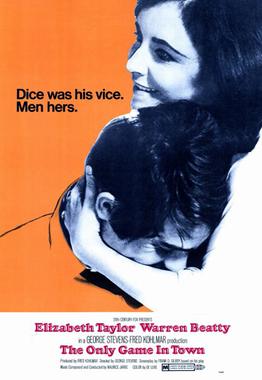
The Only Game in Town: A Review

THE ONLY GAME IN TOWN

Las Vegas, Nevada can be a center of vice, where love is sometimes treated as a gamble. The Only Game in Town, based on a play, has our couple roll the dice to see if they come up winners amidst the glitz and glamour of Sin City. 

Fading Las Vegas showgirl Fran Walker (Elizabeth Taylor) wanders through her life and into a pizza parlor where she spots piano player Joe Grady (Warren Beatty). They go back to her place, where after a tryst they learn about each other.

Joe is close to having $5,000 saved up to leave Las Vegas and start a new life in New York. Fran waits for her married lover, Thomas J. Lockwood, to finally leave his wife and marry her. Despite themselves, they begin what both insist is a no-strings-attached relationship, friends with benefits before the term existed.

Joe manages to hit it big and wins $6,000 on his $2,000 savings. However, their celebration is short-lived as he succumbs to his gambling addiction and loses it all. With nowhere to go, he accepts Fran's offer to stay with him. Their relationship grows despite both wanting to keep things casual. Things become complicated when Tom (Charles Braswell) unexpectedly shows up. He now is finally free, presenting his mistress his divorce papers and urges her to marry him and go to Europe. Will Fran pick up and leave Joe? Will Joe keep repeating his pattern of coming up a winner only to not know when to quit? 


It is a major credit to director George Stevens in his final film that one rarely if ever notices that The Only Game in Town is essentially a two-person filmed play. Fran and Joe do almost all their interactions with just each other, even when we see them out such as a trip to Lake Tahoe or a supermarket. Most of the action takes place in Fran's apartment, with some in the pizza parlor where Joe works. The Only Game in Town keeps its focus on the two characters to where while you may be conscious of the staging, it never feels dry or dull.

Rather, the audience is focused on the situations these two people are in. Their sense of loneliness, of inertia as Fran puts it, their ability to connect when they do not plan to all works well in the film. That they spend so much time together, arguing one moment, laughing the next, gives those few times when they are outside a bit more poignancy. A very moving scene is where Joe, happy to have more than enough to leave, squires Fran about town. He hits a craps table and soon becomes focused on that. Fran is initially happy, but slowly sees that he has an addiction. She moves further and further away until she leaves, he oblivious to her absence.

It is a well-crafted moment, carried by Taylor and Beatty's looks and Maurice Jarre's excellent score that blends upbeat and downbeat jazz. The Only Game in Town gives viewers strong acting performances from both Taylor and Beatty. Taylor does quite well as Fran, this lonely showgirl pining for something more.

I can see how perhaps her scenes with Braswell when Tom makes an unexpected visit might be a bit overdramatic. To be fair, her character is put in a very difficult situation, so I cut her some slack for being a bit overwrought. However, Taylor handles silences well and is capable of holding her own whenever Beatty's Joe makes quips. In fact, it is through Frank D. Gilroy's adaptation of his play that we see the counter between Fran's more direct manner and Joe's need to make his idea of clever comebacks and jokes.

"Make yourself comfortable," Fran tells Joe before they go to bed. "I always do," is his response. As they negotiate terms for him staying with her, Fran remarks about how he will be good for when Tom does not come. "So, you're with me for immoral support," he wisecracks. Beatty is not naturally funny, but in The Only Game in Town it works for Joe's poor efforts at humor, which mask a great fear of falling in love.

The Only Game in Town offers the actors a chance to have intelligent things to say. Realizing that Joe has become her lover and perhaps her friend, Tom acknowledges that he has no right to complain. "A man who doesn't call for six months deserves an unexpected surprise," he tells Fran. His monologue about their Sunday in Monterey, while Fran is calling Joe in a failed effort to say goodbye, works quite well among Taylor, Braswell and Beatty. 

As previously mentioned, Maurice Jarre's score is wonderful, enhancing the drama and romance underneath both Fran and Tony's hard shells.

I think the film may be longer than needed, perhaps in an effort to make it less stagey. Ironically, it had the opposite effect to where you felt it was padding when a simpler take would have been better. The film does not move too far away from what one could see as a stage adaptation, but it was of a major distraction or hindrance.

The Only Game in Town touches on themes of reluctant love, these two ships passing in the night which end up finding themselves. Again, perhaps longer than it should be, The Only Game in Town is an undiscovered and underappreciated film. 

Wednesday, April 7, 2021

Alice Adams (1935): A Review (Review #1475)

ALICE ADAMS

Aspirations to rise to better circumstances drive the title character in Alice Adams, but it's not a tale of snobbery gone wild. Rather, it's a story of a young woman desperate to be someone, someone more than she is, making her sympathetic.

Unlike her friends and acquaintances, Alice Adams (Katharine Hepburn) is from a poorer background. Her father Virgil (Fred Stone) could have become wealthy if he had pursued the glue formula he had developed with a fellow coworker, but he was pretty content to stay loyal to his employer J.A. Lamb (Charles Grapewyn). Mrs. Adams (Ann Shoemaker) is loyal and loving to her family, but also distressed that Alice can't move up in the world because of their poverty.

As her circle does intermingle with the elite, Alice does attend a few parties. At one where her brother Walter (Frank Albertson) unhappily escorts her, she meets the young, wealthy and dashing Arthur Russell (Fred MacMurray), who may or may not be engaged to her frenemy Mildred (Evelyn Venable). While Arthur is taken by Alice and she with him, Alice is also deeply embarrassed and ashamed of her meager world compared to his.

Mrs. Adams finally gets Virgil to quit Lamb's clerk job and start his own glue works so they can move up. Alice hems and haws about Arthur: in love with him but uncertain about his feelings, let alone about how he will react to the depths of the Adams' family deprivation. After a disastrous dinner where the Adamses efforts to impress continuously go awry, both Walter and Virgil face financial ruin thanks to Walter's tricky accounting for Lamb's company and Lamb's assertion that the glue formula was his.

However, Alice stands up for her father and brother to Lamb, who has a change of heart. Arthur, despite her pleas, stays loyal to Alice and declares his love.


As I have not read Booth Tarkington's novel, I can't say how close or far Alice Adams the film stays or strays from the source material. However, here I think that the happy ending is closer to what audiences expected in a tale of love in peril. 

At the heart of Alice Adams' success (film and character) is Hepburn's performance. From the moment we first see her, we know the inner conflict, her yearnings to be better. As she goes into a flower shop and sees that despite her best efforts no flower is within her price range, the excuses she creates to not buy are thinly veiled efforts to shield what she considers her shame of poverty. 

We like her: her loyalty to her family, her resourcefulness, her deep longing to be not better than others but to be as good as others, or at least how she perceives them to be. "I ought to be something besides just a kind of nobody", she tells Arthur. This is Alice's unofficial motto, and says so much about her. She is not snobbish or trying to put on airs. Instead, she sees this beautiful world that is known to her but cannot fully enter it. She yearns for something better, an ambition to move forward and upward.

In Hepburn's performance you see that love both familial and romantic; when she goes to the window after failing to attract attention while sensing that Arthur, her dream man, is gone, she bursts into tears. It's a deeply moving moment that really hit the viewer.

A lot of the performances in Alice Adams were excellent. A real scene stealer is Hattie McDaniel as Melina, the maid hired to give the Adamses a touch of class. Far from being the highly skilled servant they would have like, Melina is a bit clumsy and confused. It's understandable given that she has little time to learn the lay of the land, and perhaps people will think that McDaniel was a bit of a stereotype.

I saw it through different eyes and think she subverted the cliché of the dimwitted colored maid by showing that in some things she had more sense than the Adams Family. She for example warned that the hot food they were serving was wrong for the weather. She also had wonderful bits of physical comedy, like when she all but thrusts caviar sandwiches at a startled Virgil, unaware of what this dish is. There's also physical comedy such as her struggle to open the sliding doors and a routine where her maid's cap kept slipping. It takes a lot to steal a scene from Katharine Hepburn, but McDaniel did.

Another strong performance was Albertson as Walter, who was more interested in gambling and enjoying himself than in Alice's social aspirations. While he was a reluctant participant, he too loved his sister and family despite his myriad of mistakes. Unlike Alice, he sees through the wealthy facades, constantly calling them "frozen faces". 

Sadly though, Walter's character was diminished by Alice's assertion that him socializing and gambling with "coloreds" was an eccentricity versus common sense. "He tells the most wonderful darky stories, and he'll do anything to get them to talk to him," Alice offers Arthur as a reason for his association with people of color. It's a bit cringe-inducing to hear that now, but one has to accept it as a sign of the times.

I would say MacMurray is the weakest link. It does seem incredible that Arthur doesn't at least see that the Adamses are poor and not in his circle. A plot point of whether he believes Virgil stole the formula is left there, though after the disastrous dinner I think he saw they couldn't pull off such a master feat. However, I think this is early in MacMurray's career, so I cut him some slack.

One can quibble that the stolen money and Russell romance situations resolve themselves quickly, but on the whole I found Alice Adams a wonderful and moving picture. With a pitch-perfect performance by Katharine Hepburn and a sympathetic character, Alice Adams is a heroine you want to succeed. It would be nice to see this story retold, but until we get a remake, this version is one worth seeking.  

Thursday, August 31, 2017

A Place in the Sun: A Review (Review #943)


A PLACE IN THE SUN

This is part of the Summer Under the Stars Blogathon sponsored by Journeys in Classic Film.  I'm grateful to Kristen Lopez for allowing me to participate.  Today's star is Elizabeth Taylor.

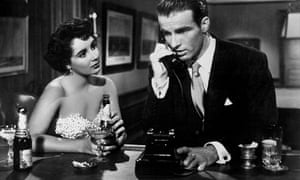
Has there ever been a more beautiful motive for murder than Elizabeth Taylor?

A Place in the Sun, George Stevens' adaptation of Theodore Dreiser's An American Tragedy, is both a sweeping love story and an exploration of societal ambition in both the glories and darkness of that uniquely American ideal of 'upward mobility'.  Both a glorification and condemnation of constrictive class structure, the performances in the film make one both melt in admiration and mourn the inevitable clash.

George Eastman (Montgomery Clift) is the poor relation to wealthier relatives, his parents being somewhat the family eccentrics for their excessive religious work.  Still, he's a relation and is put to work at the lowest level of Uncle Eastman's factory.  There, he meets pretty Alice Tripp (Shelley Winters), whom he starts dating despite the company rule against staff relationships.

Still, George yearns to be among the vaunted upper class his cousins are in, and on his birthday (which the Eastmans don't remember), he's invited to a soiree.  Still a bit removed from the rich society members at the party, he does find one person interested in him: Angela Vickers (Taylor).  Our raven-haired, violet-eyed beauty is fascinated by George: his gentleness, his manner, and she soon falls in love.

George has been in love with Angela since he first spotted her briefly when she came to see the Eastmans on his first day in town, though she took no notice of him then.  George and Angela fall madly in love despite their different backgrounds, but there's a hitch.

Alice finds herself pregnant, or 'in trouble' to use the term of the time.


Now George finds himself in a terrible situation: his deep passion for Angela (and the world she lives in) versus his impending fatherhood for Alice's baby (and the world they come from).  Angela knows nothing of George's double-life, but Alice does.  George stalls for time, insisting that with a new position at the factory it might be beneficial to keep things as they are.

However, things can't stay as they are with a baby on the way, and an Eastman no less.  George's situation grows more precarious every day, between his deep love for Angela and that world and his responsibility to Alice and theirs.  Something has got to give.

Alice forces the situation when he calls up the Vickers' estate where George and the other Eastmans are enjoying the Labor Day holiday.  She insists that George come pick her up at the bus station and marry her, and if he won't, she'll tell all.  It couldn't have come at a worse time for him, as Uncle Eastman was coming around to move his nephew further up and Mr. Eastman seeing George as a good husband for his daughter, Angela's parents now warming up and not objecting to the relationship. George leaves, telling them his mother is ill.

George gets an unexpected break when he and Alice find that the Courthouse is closed due to Labor Day.  To make up for it, George suggests a picnic and rowboat trip to a secluded lake.  Alice, who cannot swim, accepts.  George struggles with the idea of murdering Alice, which he has planned or contemplated for some time.  He finds that in the end, he can't go through with it, but Alice still manages to fall overboard and drowns.

George attempts to cover things up, but pretty quickly Alice's body is found and the trail leads right to George.  At his trial, District Attorney Marlowe (Raymond Burr) is convinced it was premeditated murder, a charge George denies.  In the end though, he is found guilty with Angela's unwitting involvement kept out of the papers to spare her the scandal.  In the end, as he's about to be executed, Angela does make one last visit to the prison to say goodbye to her great love.


It takes a great deal of talent to make someone as unpleasant as George Eastman sympathetic, almost tragic, and yet Montgomery Clift did that by showing Eastman not as a calculating figure but as perpetually ill at ease.  From the moment we first see him, with his jacket and t-shirt, we can admire the beauty of Clift, this beautiful rebel who yearns for that 'place in the sun'.

Clift's performance is pitch-perfect, how he holds himself slightly back whenever he's with his wealthier relatives, his soft manner with Alice (at least in the beginning) and his passion for Angela Vickers.

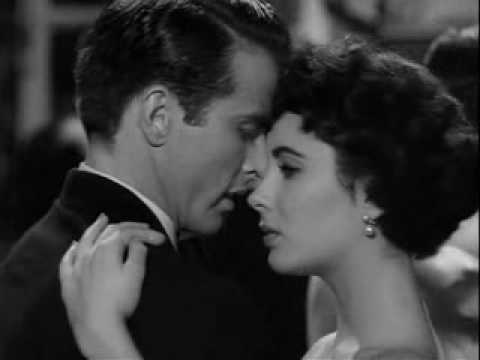
The scenes between Clift and Taylor are so filled with passion, almost a barely contained frenzy coupled with their exquisite external beauty that you get swept away as well.  It is easy to understand why Angela and George fell madly, passionately, totally in love.  It's more than just their physical beauty.  It's finding in each other what they did not have.  For Angela, it's someone who loved her the individual, not the money (though it helped).

For George, it was the world Angela lived in, the promise of a golden world.  Angela is that not-so-obscure object of desire, that ethereal world of joy, bliss, peace and freedom that he had never known his whole life.  She was the polar opposite of schlubby Alice, who was sweet and kind but who also would tie him down to another generation of poverty.

To have this goddess so close, this goddess love him, and to lose it because of a past romance with unintended consequences...we can see why any man would kill to be with Angela Vickers.

Taylor, I don't think, ever gave herself credit for being a good actress.  She proved her critics wrong with her definitive performance in Who's Afraid of Virginia Woolf? but she more than holds her own in A Place in the Sun.  As the carefree bon vivant Angela, she captures innocence without coming off as flighty or frivolous.  Angela is a woman who loves deeply, who sees in George someone not just beautiful outside but inside.

It helps when you have Franz Waxman's lush romantic score to fall in love to.  That sweeping nature of George and Angela's romance, coupled with Waxman's Oscar-winning music, just carries one into such passion you fall into them as well.

It's to where you forget that there is anyone else, which is what George did when it came to poor Alice.  For those who remember Winters as the fat, frumpy lady who was a good swimmer, it may surprise them to see her as a demur yet determined girl.  More surprising is to learn that prior to A Place in the Sun, Winters was known as a 'glamour girl'.  Here, she gives a whole new side and range to her acting abilities, making Alice into a sad girl, neither wimp or harpy.

If anyone gave a bad performance, I would say it was Burr as the District Attorney.  With his cane and theatrical manner, Burr seemed to devour the scenery in one gulp (and no, that was not a Raymond Burr fat joke).

George Stevens' directing not only drew out great performances (though Burr seemed a bit out of control), but he had wonderful mise-en-scène that was intelligent without being wildly overt.  There is when we see outside George's apartment the "Vickers" sign blinking, either from the Vickers Hotel or Department Store, suggesting how the entire Vickers world, and Angela herself, light him the way to a whole new world in the way Jay Gatsby's green light was so close yet far away.  Later on, when we see George struggling over what to do about Alice, above him is the portrait of the doomed and drowned Ophelia from Hamlet, suggesting that perhaps he contemplates a similar fate for his troublesome lover.


It's not too subtle as to be entirely missed, but it's not so overt that it screams out at you.  It's balanced just well enough to work without being over-the-top.

A Place in the Sun is sweeping in its doomed love story, the beauty of Montgomery Clift and Elizabeth Taylor being put to fine use.  It is also an exploration of the lengths one will go to obtain that object of desire, that dream of something so removed from us that one would go to any lengths to obtain it.  It's a tragedy and a romance, and sometimes the two go together.

One cannot help surrendering when one hears "Tell Mama...Tell Mama all".

DECISION: A+