Wednesday, October 8, 2025

Fargo: A Review

FARGO

Murder and mayhem were never so endearing and polite as they are in Fargo. This blend of regional comedy with a dark criminal heart paints a very curious portrait of America that seems from a whole other world. Strong performances and an almost whimsical manner elevate Fargo to being a simultaneously amusing and wicked film.

In 1987 Minnesota, car salesman Jerry Lundegaard (William H. Macy) is facing major financial trouble. Rather than go to his wealthy father-in-law Wade Gustafson (Harve Presnell) for money, Jerry decides to have criminals that he found through one of his employees kidnap his wife Jean (Kristin Rudrud). He will then take half of the ransom money for himself and give half to the two abductors.

The two abductors are Carl Showalter (Steve Buscemi) and Gaear Grimsrud (Peter Stormare). Carl, the more talkative and brains of the operation, sets things into motion with the more taciturn Grimsrud. They manage to abduct Jean, albeit clumsily. The abduction runs into more trouble when they are pulled over by a state trooper. Carl's efforts to talk his way out of the situation are going nowhere. With that, Grimsrud kills the trooper, as well as an unfortunate couple that stumbled onto the first murder.

This brings in Sheriff Marge Gunderson (Frances McDormand) to investigate the crimes. She is heavily pregnant, but she is also an extremely shrewd policewoman. Marge quickly sees that the patrolman and couple were murdered because they came upon something. Deducing that the patrolman's killer was the last person that he met on official business, Marge works her way back.

That eventually leads to Lundegaard. He is becoming more frustrated that his already harebrained scheme is not only going off the rails but is now involving multiple murders. Among those murders is that of Wade, who balks at the idea of letting Jerry deliver the ransom money and gets gunned down for his efforts. As both Marge and the walls begin closing in on him, Jerry finds himself way over his head. Will Carl and Gaear still pull it off? Will Marge get to the bottom of this disturbing crime spree?


Fargo manages a very delicate balancing act. It shows the majority of characters as quirky without making them look silly or cartoonish. I would even go so far as to say that Fargo, for all the accents and almost excessive politeness that the characters have, is quite respectful of them and their world. Even Jerry is quite polite and pleasant. Yes, he planned to steal from his father-in-law, put his wife in danger and became an accessory to murder. However, he was never intentionally malicious. 

We establish this right away when he meets up with Carl and Gaear. Told that he is late by an hour, he immediately apologizes for the confusion in time, insisting that he was told the wrong time. Throughout Fargo, Jerry is pleasant and polite. This is a world where swearing is almost unheard of, making the rare time that Jerry does break out into a vulgarity the most shocking thing that he does. 

Fargo has, I think, affection for the characters. Writer/directors Joel & Ethan Coen make Fargo at times almost a documentary into a whole other world inside the United States. These people speak in a peculiar way. They are almost always polite and courteous. They seem at times almost innocent. However, they are not fools. 

Marge Gunderson is certainly nobody's fool. She is the intellectual and moral core in Fargo. Yes, she does say, "Ya betcha" often. However, she quickly deduces that the tags on the car the deputy had pulled over are not the licence plates. Instead, the DLR stand for "Dealer", meaning that the car must have come from a car lot. Marge maintains a very pleasant demeanor, but underneath is a highly intelligent woman who is able to put things together.

Frances McDormand is excellent as Marge. She makes her a very loving, caring person. Her scenes with John Carrol Lynch as her painter husband Norm show a woman who loves and supports her man. She is never cross or angry. Yet she never makes her sincerity and politeness into a sign of idiocy. She is the intelligent Rose Nylund: a competent and fiercely smart figure who is also very, very nice. 

McDormand won Best Actress for Fargo. However, I was surprised at how relatively small her role is. She does not appear in Fargo until 33 minutes into the film. Judging by my calculations, and I grant that I might be off, McDormand is on screen for a total of 35 minutes. Sometimes, she is on screen for maybe one or two minutes.

William H. Macy, conversely, is on screen much longer. Yet, McDormand won for Lead Actress and Macy was nominated for Supporting Actor. I would have put them in reverse categories given their actual screentime. It is puzzling that Macy was seen as a Supporting Actor when he was the catalyst for the story. He also gave a very strong performance as Jerry Lundegaard. Macy makes Jerry into a schmuck (to use a good Yiddish term), nowhere near a master criminal but a criminal, nonetheless. He is again, remarkably endearing as Jerry, a man who never really rages but sees how dangerously out of control things have gotten. He is a sad sack, but a deceitful one.

Fargo is a well-acted film throughout. Buscemi and Stormare are excellent as the sleazy yet bumbling criminals. They are cruel and evil (Gaear's final act is shocking but mercifully not graphic) but they keep to the tone of the wacky procedures. 


Fargo also gives us a glimpse into a very curious world. The film never ridicules the characters or their lives even when things do look odd to an outsider. When Jerry tries to comfort his somewhat rebellious son Scotty (Tony Denman), we see an accordion on his bed. When Jerry closes the door, we see a poster for The Accordion King. Fargo is the type of world where teens would listen to Lawrence Welk unironically. You can laugh at a teen both having an accordion and a poster for a lederhosen-wearing Accordion King. You don't, because Fargo never sets them up to be odd. We also see this when a young man has learned of his mother's abduction. The film manages to keep the balance between silly and serious well. 

The people in the world of Fargo speak peculiarly. They have near-permanent smiles on their faces. Yet, for all the sincere manners ripe for parody, Fargo eschews mocking them. Marge Gunderson may have an unfamiliar accent and an endearing manner. However, she has a mind that solved the crime and a morality that reveals deep disappointment. Talking to the criminal that she brought in, she tells him that all of this was for what, a little money. She adds, shaking her head, that she doesn't understand it.

Fargo has excellent production work. Roger Deakins' cinematography and Carter Burwell's score (the former being one of Fargo's seven nominations) depict this eccentric but sincere world.

Fargo is able to make one chuckle while still shocking in this allegedly based on a true story. It is certainly worth watching, you betcha. 

DECISION: A-

Tuesday, October 7, 2025

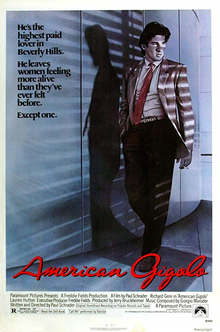
American Gigolo: A Review

AMERICAN GIGOLO

There are all types of lust. There is lust of the flesh. Lust for power. Lust for money. Lust is not a crime but can be a motive for one. American Gigolo blends all these lusts and desires into a taut drama that has a sliver of heart within its dark core. 

Julian Kay (Richard Gere) is one of Los Angeles' most popular male escorts. He is the height of masculinity. He wears the best suits. He drives the best and most expensive cars. He has a very posh apartment. He is also very much alone.

"Julie" squires all sorts of older women willing to pay heavily for his services. He is so good at being an escort that while he has a madam in Anne (Nina Van Pallant), he pretty much freelances. He is so successful a rent boy that he hits on Michelle Stratton (Lauren Hutton), whom he initially mistakes for a Frenchwoman who might be lonely. 

Julian does have some rules: no kink and no gay sex. He, somewhat reluctantly, agrees to fill in for another escort as a favor to his frenemy Leon (Bill Duke), who does go for both kink and gay sex. This client is Judy Rheiman (Patti Carr), whose fey husband (Tom Stewart) likes to watch. Julie tells Leon that he is displeased about having been put in that situation. Leon is pretty dismissive of Julian's complaints.

One person who is not dismissive of Julian is Michelle, who pursues Julian but whom Julian does not charge for his services. Eventually, Julian falls in love with Michelle. Unfortunately for him, she is married to the ambitious Democratic candidate for Senate, Charles Stratton (Brian Davies). More trouble comes Julian's way when he reads that Mrs. Rheiman has been murdered. Detective Sunday (Hector Elizondo) zeroes in on Julian as being the murderer.

Julian is being framed, but who could be behind both the murder and set-up? Why is he being made the fall guy? Julian begins to start searching out the truth and try to clear his name. However, his alibi won't admit to being with him, worried that the scandal will expose her extracurricular activities. Will Leon come to Julian's aid despite being contemptuous of Julian's haughty manner? Will Michelle risk her reputation to save the man that she now loves? Will Julian find himself losing it all?


Despite the salacious subject nature, American Gigolo is remarkably restrained when it comes to any portrayals of physical intimacy. In fact, there is very little sex in the film. A lot of American Gigolo is more by suggestion than exhibition. The closest to seeing anything tawdry is when Julian goes to the Rheiman home. Even here, there is very little flesh on screen and no actual intercourse. 

There is one explicit moment that shocked audiences at the time. This is one of the first times when an actor appeared in a complete stage of undress on camera. Even in this brief moment, the camera is not focused on Gere's revealing of himself. The entire sequence is handled with both taste and restraint. Still, it was a very daring moment and something that even now is extremely rare to see.

American Gigolo is really a neo-noir film, less about satisfying carnal pleasures and more about a man's well-built world crumbling. There is a mystery that catches an innocent man in its well-laid trap. There is the duped figure. There is the relentless detective who follows the clues to their logical but erroneous conclusion. One thing that is missing from American Gigolo is the femme fatale. Michelle is not a dangerous woman, at least not intentionally. Julian is in danger in part because of her. This danger, however, comes from her penetrating his heart. 

Paul Schrader, who both wrote and directed American Gigolo, drew great performances out of his cast. Richard Gere had made only a handful of films prior to this one with Looking for Mr. Goodbar and Days of Heaven being the most prominent ones. American Gigolo was his breakout role, and he gave an excellent performance in the film. Yes, Gere is very handsome, and the film does not shy away from admiring his physical beauty. However, we see the empty shell behind the Armani suits. "I can't be possessed", he tells Michelle. That is his mantra. He can give physical pleasure to women, but it is an empty pleasure. Julian is a master of sex, but not of love. We do see how he does begin to love, even if he still struggles with that.

Gere is quite strong in the film. He is cold and cool as this lover for hire. His emotional remoteness blends with his sordid profession well. His slow crumbling as the frame up job becomes more efficient and effective is at times sad to watch. Julian, at one point, tears apart his expensive vehicle looking for the planted evidence that he knows is there. His growing fear and paranoia, coupled with his growing awareness that he cannot save himself, makes for excellent watching.


As a side note, I wonder if others calling him "Julie" was a way to subconsciously diminish him. Here is this ultimate alpha male involved in a profession usually dominated by females. I found it curious that many called him "Julie", almost as if emasculating him to his face. 

I remarked that American Gigolo is a neo-noir, drawing on elements of film noir while making a more contemporary film. There is a scene where Michelle has followed Julian into a record store that I found reminiscent of a scene in Double Indemnity. I do not know if it was intentional or not, but here are these two figures, caught up in a crime, meeting in a public place. It is not exactly like in Double Indemnity in that Michelle has nothing to do with the crime, let alone instigate it. However, I think American Gigolo draws visually from Double Indemnity

With her cool looks and husky voice, I think Lauren Hutton is in the same sultry mold as another Lauren. Like Lauren Bacall, Hutton proved herself a capable and beautiful actress. She is the good heart in this cold film. American Gigolo is as much her story as Julian's. She has penetrated his heart, and she faces her own moral dilemma of saving him or saving her reputation. 

Elizondo brought some lightness to the somber proceedings as Detective Sunday. Initially appearing slovenly, we see how Julian's outward success has managed to rub off on even the hardest critics. Taking tips and advice on women from Julian at an informal questioning, we see Sunday later on well-dressed and groomed. It is a wry commentary on how aspirational Julian's life appears to outsiders. 

The film is very much a product of its time. The wardrobe and settings note the early 1980's. Of particular note is Giorgio Moroder's score, punctuated by Blondie's Call Me. The song captures the theme of American Gigolo: this lover available day or night. "He speaks the languages of love", Call Me's lyrics say, then proceeds to speak words soft and tender in Italian and French. In American Gigolo, Julian knows several languages and is learning Swedish for an upcoming client. The failure to nominate Call Me for Best Original Song is one of the Academy's greatest oversights. 

American Gigolo is a well-crafted, well-acted film. It is a sad film that reveals more than Richard Gere. It reveals that there is a difference between love and physical pleasure. It does end on something of a hopeful note even if justice was not initially served. In terms of the mystery both of the crime and of the heart, American Gigolo can be called anytime, anyplace, anywhere. 

DECISION: B+

Monday, October 6, 2025

Monster (2003): A Review (Review #2045)

MONSTER (2003)

Much praise has been given to Charlize Theron for her performance in Monster. The biopic of Aileen Wuornos, the rare female serial killer, is shocking, but not in the way perhaps one might think. The film is not graphic when it comes to showing Wuornos' crimes. Instead, I found Monster shocking in how sympathetic it is towards this mass killer. 

Ever since she was a child, Lee (Theron) has dreamed of a glamourous life where she will be loved. Unfortunately, she had to make do with men treating her as a cheap toy. She goes from merely flashing boys to gain their attention to being a hooker. 

Lee, now having moved from Michigan to Florida, finds herself at a lesbian bar. Lee tells shy, insecure Selby (Christina Ricci) that she is not a "dyke", startling and dismaying Selby. Despite this, Lee does eventually accept the pitcher of beer that Selby has ordered. Finding nowhere to stay, Lee agrees to go home with Selby, though it is purely platonic. Selby, who is staying with friends of her father who like him, are very religious. They may suspect that Selby is a lesbian but have no solid proof of that.

Proof of Selby's sexual orientation however comes when Selby and Lee are spotted at the local roller rink where they share an open kiss. Lee wants to fund a better life for her and Selby, so she keeps on being a hooker. A bad trick however ends up beating and raping her, forcing Lee to kill her john. Selby eventually leaves her home to move in with Lee into a second-rate motel. Lee has promised that she will support them and that she will clean up her act and leaving hooking. 

That proves easier said than done, since Lee has no work experience or education. Rejected on all sides and even forced at one point to perform a sex act on a police officer who picked her up during official business, Lee has no choice but to return to the world's oldest profession. She is also forced to kill every man unfortunate enough to cross paths with her. She murders almost always in self-defense, with the possible exception of one man whom she kills despite not being a client but a good Samaritan offering to help her. She does at least spare one john who is sexually inexperienced.

A car accident involving Selby and Lee triggers the eventual capture of Lee. Selby, who has little driving experience, takes her eyes off the road enough to cause an accident into a couple's front yard. Selby is at minimum unaware that the car belonged to one of Lee's victims. At most, Selby is vaguely aware that it is stolen but not aware that Lee has murdered more than one person. Lee is eventually tracked down, though her friend Thomas (Bruce Dern) did attempt to warn her before the police got her out of the biker bar to arrest her. Now behind bars, Selby cooperates with the police to get Lee to incriminate herself during recorded phone conversations. What will Lee's ultimate fate be?


The Patty Jenkins written and directed movie is misnamed. The title may be Monster, but the Charlize Theron character is not really a monster. If one went by Monster, one would wonder why it was titled that. Very early on in Monster, probably not even five to ten minutes, I became very concerned that Monster was going to be very sympathetic towards Wuornos (I do not think that the film ever referred to her as "Aileen Wuornos" or even "Aileen" but instead she was "Lee"). At the end of the movie, we find that there is no monster in Monster

We find Perpetual Victim. 

This Lee killed either in self-defense or due to being in a sort of fugue state. Every time she was hooking, Lee was somehow triggered by past traumatic experiences that compelled her to kill and kill again. The men, even the lawyer who correctly refused to consider hiring Lee for a secretarial job due to her total lack of skills, were shown as almost deserving of being killed or as awful people. The fourth man that Lee killed at least was shown as someone who genuinely wanted to help Lee and did not take advantage of her. However, Monster was at minimum cold towards him, suggesting that Lee was somehow not in full control of herself when she gunned him down in the back of the head.

I will concede that the first killing came after an awful and brutal attack on Lee. However, as I kept watching Monster, I again grew concerned that Lee was not a Monster. If I went by what I saw in this scene, I could have judged it a justifiable homicide. However, again and again, Monster did not portray Wuornos as a monster. I do not think that another film has painted a serial killer in such a sympathetic light. It is almost to where one wonders if the Monster production team actually sided with Wuornos. The abuse, the degrading, the rejection that Wuornos endured for the whole of her life apparently either justified or rationalized Wuornos' killing spree.


Again, this is why I ended up wondering why the film was titled Monster. As portrayed by Jenkins and Theron, Aileen "Lee" Wuornos was almost always a victim, vaguely responsible for killing men and barely responsible for her crimes. This portrait of Wuornos as victim almost basically forced to kill troubles me greatly. I am not happy that her early life forced her to turn to prostitution. It still, however, does not change my moral compass into thinking that Lee was not evil, self-centered, heartless and brutal.

Monster's great claim to fame is that it won Charlize Theron the Best Actress Academy Award. Theron is among the rare people to win an Oscar on their film's only nomination. I give credit where it is due. Theron's transformation is remarkable. The makeup work deglamorizes Theron, making her look as close to the real Aileen Wuornos as possible. Theron has Wuornos' crazed eyes and mannerisms, this angry woman, raging whenever things do not go how she wants them to. Theron is very intense in her performance, especially in Lee's self-righteousness when it comes to her murderous spree. I think though that the script hinders her overall performance. Again, I could not find myself sympathetic towards Wuornos despite Monster's greatest efforts.

With respect to some of my reviewing brethren, I do not think that Charlize Theron gave one of the greatest performances in the history of cinema. I wonder how many people nowadays even remember Monster or Charlize Theron's performance in it. 

I am also surprised that while Theron has received the greatest recognition for Monster, no one seems to be as enthusiastic about Christina Ricci in the film. I thought that Ricci was better in Monster than Theron was. Yes, Theron had the flashier, meatier role as the serial killer who was just misunderstood. However, Ricci to my mind brought a great deal of sympathy as Selby. Selby clearly ended up falling for Lee, and Ricci brings a humanity to Selby. She is genuinely sympathetic, a young woman who is willing to give up all she knows for this other woman. I found in Ricci a character whom I ended up caring about, someone who was either oblivious or willfully blind to her lover's twisted world. Perhaps Selby was both, and it's a credit to Ricci that Selby was a lovestruck dupe. 

Ultimately, I think that if people remember Monster, it is because it made Charlize Theron an Oscar winner. I do not think that neither Monster nor Theron's performance have stood the test of time. I think people will praise Theron's performance if they see Monster. My question is whether people actually want to watch Monster. This is by no means a bad performance, though now having finally seen it, perhaps an overrated one. I still find that Monster is a misnomer given how sympathetic it was towards Aileen Wuornos. That perhaps may be the most monstrous element in Monster.

DECISION: D+

Sunday, October 5, 2025

The Bigamist (1953): A Review

THE BIGAMIST

Can a man love two women simultaneously? If we go by The Bigamist, it appears so. Skewing sensationalism for a more somber take on the subject, The Bigamist at times plays like the cast and crew are living out their own lives on screen. However, a short runtime and an engaging production all around makes The Bigamist worth watching.  

Posh Eva Graham (Joan Fontaine) wants to adopt a child after finding that she is unable to have any. Her husband Harry (Edmond O'Brien) seems happy to join her in this endeavor. The child agency official Mr. Jordan (Edmund Gwenn) senses something slightly off about Harry, as if he is attempting to show enthusiasm but is hiding something.

Mr. Jordan begins investigating the Grahams. It is routine to look into the background of potential adoptive parents. However, Mr. Jordan is in for a wild surprise when it comes to Harry, a traveling salesman. While Harry and Eva live in San Francisco, work takes Harry to Los Angeles often. Following up on a hunch, Mr. Jordan begins to wonder why Harry leaves no real impression when in Los Angeles: no hotel reservations, no dining out, not even sending out for laundry. 

Mr. Jordan eventually finds "Harrison Graham" and discovers a shocking secret. Harrison and Harry are one and the same, only Harrison has another wife and a child, a boy named Danny in Los Angeles. Before he calls the police, Harry begs Mr. Jordan to listen to his story first. 

Life can be lonely on the road. While Harry loves Eva, she had grown distant owing to their successful business. While in Los Angeles, he meets Phyllis (director Ida Lupino), a waitress with no interest in being a pickup for anyone. Despite this, they end up bonding after taking a tour of movie stars homes. Eventually, they begin an affair. Eva realizes that she has pushed Harry away and they begin to reconcile, but then her father takes ill. 

It is now that Harry discovers that Phyllis is pregnant. She does not ask him to marry her, but Harry decides to do the honorable thing and legitimize their child. Phyllis, who knows nothing of Harry's current marriage, does her best with him and their baby. Harry's wild scheme is to stay with Eva long enough for her to formalize the adoption, then divorce her to stay with Phyllis. However, this scheme fell apart when here comes Mr. Jordan. With the secret out, Harry is arrested for bigamy. Which one of the two Mrs. Grahams will ultimately end up being wild about Harry?


The backstage story of The Bigamist is as interesting as what is on the screen. Ida Lupino already was breaking barriers when she went into directing, though she ultimately directed only seven features. She, I believe, was one of the first actresses to direct themselves in film. I think she was the first woman to direct herself in an American film, because I think Leni Riefenstahl directed herself in The Blue Light in 1932. 

That, however, does not cover the strange connection between actress/director Lupino and her costar Joan Fontaine. Like Phyllis and Eva, Lupino and Fontaine shared a husband. Collier Young, who coproduced The Bigamist and wrote the screenplay, was Lupino's second husband. They divorced in 1951. In 1952, he married Joan Fontaine, who became her third husband. The Bigamist was made in 1953. As such, you had the second wife directing the third wife in a film written and produced by the second wife's second husband and the third wife's third husband.

One wonders if all of them thought anything about all this was just a bit nutty. 

Something that was driving me nutty were not one but two inside jokes about Edmund Gwenn. O'Brien as Harry quipped that Mr. Jordan looked like Santa Claus. If that had been the one nod to Gwenn's Oscar-winning role in Miracle on 34th Street, that would have been fine, even amusing. However, they did it again when Phyllis and Harry are on that Hollywood Tour of Stars Homes. The tour guide points out the home of Edmund Gwenn, star of that beloved film Miracle on 34th Street

At that point, my eyes rolled. We get the jokes. We just don't think that they are funny or clever.


As a side note, The Bigamist has four Oscar winners in the cast: Fontaine (Suspicion), O'Brien (The Barefoot Contessa), Gwenn (Miracle on 34th Street) and Jane Darwell (The Grapes of Wrath), who has a small role of a cleaning lady in Jordan's office. 

If not for all these "Mr. Jordan is Santa Claus" bits, I would have ranked The Bigamist higher. Still, the film itself is a well-acted and directed film tackling a dicey subject with restraint and taste. O'Brien probably has the hardest job in making Harry/Harrison's duplicity not come across as selfish or lascivious. His Harry is quite soft-spoken in his delivery. We see that Harry did a bad thing in cheating on Eva with Phyllis. As much as the screenplay can, it makes his fall to temptation appear understandable. Phyllis is not a designing woman out to seduce a man. In fact, she initially tells Harry that she would not want him to marry her after learning of her pregnancy. She won't "trap a man" in this fashion.

We also see that events continue to work against Harry. He is about to tell his wife about his affair when he learns that Eva's father died. He knows that these back-to-back blows would be too much for her. It is a case of "damned if you do, damned if you don't". 

Lupino ably directs herself to make Phyllis both a tough cookie and a vulnerable woman. She carries herself with a unique grace and courage but also loves Harrison. I found Fontaine a bit patrician as Eva, the wronged woman. However, I think that was the character, so I am not holding that against her. Gwenn was if not impish at least pleasant as Mr. Jordan. However, he was able to rally his anger at the various deceptions going on. "I despise you, and I pity you", he tells Harry before leaving Harry's love nest. 

We are left with an ambiguous ending. Harry has been caught and will go to prison. He will also have to support both women as well as Phyllis' baby (I do not think Eva's adoption went through). However, we do not know if either Phyllis or Eva will stand by their man or even want to. It is only at the end when we do see the three of them together. That vague ending works because we now can ask what our own reactions would be at the situation.

The Bigamist works on almost all levels. The Gwenn quips were a bit silly. On the whole though, The Bigamist looks at what could be a sordid topic and has an intelligent, adult manner to it. Short at 80 minutes, The Bigamist packs a lot into this sad story of love and deception. Only you can answer for yourself what you would have done if you had been Harry, Eva or Phyllis. 

Love certainly is strange. 

DECISION: B+

Saturday, October 4, 2025

With Love, Meghan Episode Three: Two Kids from L.A.


WITH LOVE, MEGHAN: TWO KIDS 

FROM L.A.

Original Airdate: March 4, 2025

Special Guest: Roy Choi

Mentions of "Joy": 1

Mentions of Flower Sprinkles: Yes

Passive-Aggressive Moment: 0

Gushing Praise for Markle: "I was blown away that I was even asked to do the show, that you even knew who the hell I was. Because I'm a huge fan of you".

"And cue The Archies". 

Edible flower sprinkles make their return appearance in Two Kids from L.A., our third With Love, Meghan episode. The big surprise in Two Kids from L.A. is that it is actually not bad. I will not go so far as to say that it is good. Given the absolute horrors that we were treated to in the last two episodes, Two Kids from L.A. is better because it takes the focus away from Meghan, Duchess of Sussex and onto the actual food. We still have some, for lack of a better word, woke moments. However, if one looks at Two Kids from L.A., you see just how good something can be when an actual professional versus an overenthusiastic amateur is allowed to take charge.

"It's the little things that bring me a lot of pleasure", Meghan Sussex tells her crew to start Two Kids from L.A. She is again all a-flutter because celebrity chef Roy Choi is coming. Knowing of his love for donuts, Markle makes some, complete with edible flower sprinkles. Once Choi shows up, we get the Choi of Cooking as he instructs the Duchess on various Korean cuisine. The highlight is the preparation for spicy Korean fried chicken.

This will be great for her because Meghan's husband, whoever he is, also loves fried chicken. The two new BFFs talk about their similar backgrounds as Los Angelinos. Meghan uses Roy's Guide to Briming Chicken and Roy's Guide to Parboiling Chicken. There is a visit to the garden, which I presume is that of the rented home where With Love, Meghan is filmed but could be her actual Montecito home garden. With the chicken looking admittedly good, Meghan and Roy can delight in their work while fantasizing about opening a fried chicken joint that will serve fried chicken and crudités. 

What elevates Two Kids from L.A. above the previous episodes is curiously enough by diminishing what Meghan, Duchess of Sussex thinks would be With Love, Meghan's greatest asset: Meghan Markle. Here, Markle is not there to instruct her guest on what to do. Instead, she is the student. A very peppy, excessively eager to please student, but nonetheless a student.

To be fair, Two Kids from L.A. cannot resist giving Markle at least one moment where she comes across as wiser and more knowledgeable than a chef of renown. Late in the surprisingly short episode, we have this exchange.

"Do you ever put, um, cold sparkling water in your eggs before you scramble them?" Meghan asks Choi.

As a side note, I wonder if she ever said that to Harry.

"No", Choi replies. "Same sort of effect. Helps them rise, makes butter a little fluffy", Markle informs him. "Really? I'm gonna do that", Choi responds. 

Granted, Choi is far less worshipful of Markle than someone like Mindy Kaling. He is an old hand at cooking and cooking shows. He not only has had a series of successful food trucks but hosted The Chef Show on Netflix a few years ago. As such, Choi is the first person on With Love, Meghan to mostly treat Markle as someone to instruct, not take instruction from. 

Two Kids from L.A. as such does a better job presenting the food because Choi is an expert, not a prop. We even get a surprising amount of interaction between Markle and Choi and the production crew. At one point, they invite the crew to sample some of their wares. It is not an earth-shattering moment. It is, however, a tacit acknowledgement that there are people outside the two on-camera people. 

I do not know if Markle would be pleased that Two Kids from L.A. succeeds because for once, she is in the background. Perhaps if Markle had taken that tactic of learning from her guests rather than instructing them, With Love, Meghan might have been a better product. We could have even seen the side of Markle that Markle so desperately wants to present to the world.

It is unfortunate that the Duchess opted to make herself the star, as if the world was eagerly waiting for her. We were not. You can see that Markle is really trying hard to come across as friendly and welcoming. The end result, over and over again, is that she instead comes across as creepy and off-putting. Even what would normally sound as innocuous and/or endearing statements end up sounding threatening.

"We're not friends yet. We're going to be. He might not know it yet, but it's true". Somehow, in some way, her delivery of this statement sounds like something out of a stalker movie. 

While Choi was not as worshipful to Markle as past and future With Love, Meghan guests have been or will be, there were moments that were a bit thick in the praise and worship department. "You're always picking up what I'm putting down. I love that about you", Choi once comments. Earlier, as they discuss their own pasts as Los Angeles natives, he remarks, "You and I are so similar. We should have met a long time ago".

I do not know if Choi has ever been seen as a manipulative gold-digging diva the way that Markle has, but I digress.

One thing that Markle and Choi do share in common is a strong perception that racism is all around them. At one point, Markle expresses puzzlement over why there was a brief period in time when people asked for "no MSG" when ordering Asian cuisine. Choi lays down the truth.

"Yeah. Do you want to know the real reason without sanitizing? It was racist. It was racist against Asians, you know? It was a thing about Chinese restaurants. It's not any different than, again, bouillon powder. Like it exists in all of the fast food that America was raised on. What we have now is we have this more democratic food culture where information can be accessed. And um, you don't see any young people saying MSG gets you sick anymore, right?" 

Markle replies that it is good that we left such ideas behind.

I will say that I have absolutely no idea what either MSG or bouillon powder are. My only point of reference with regards MSG is a joke on The Golden Girls. That joke, I might add, was to mock Sophia Petrillo's ignorance and eagerness to curry favor with the Asian American doctor treating her daughter Dorothy Zbornak. I had no idea that requesting "no MSG" was the new Yellow Peril. Then again, my only real connection to Chinese food is a very, very rare Panda Express meal. 

Looking at the food, some of it looked delicious, some not. The concept of pickled strawberries sounds most unappealing to me. Some of Choi's quips were amusing. He tells Markle that he does very little cooking at home. After spending all day cooking for others, he doesn't find the prospect of more cooking appealing. "It's like kissing yourself all day long," he says when it comes to cooking your own food.

I am fighting the temptation to say that Meghan, Duchess of Sussex, is aware of the concept of kissing yourself all day long.

Two Kids from L.A. is on the higher end of With Love, Meghan episodes because Meghan is not the dominant force. She manages to do what she has struggled with when working with others: defer to them. It is not perfect. One does wonder if whether anyone will actually make any of these dishes. Roy Choi, however, was a good guest, less reverential to Mrs. Sussex than others. To be fair, he still had a touch of obsequiousness to him. Given that this obsequiousness is a pinch versus a shovelful, it is a minor miracle that should be appreciated. 

At least one of the Two Kids from L.A. is mostly alright. 

4/10

Next Episode: Love is in the Details

Thursday, October 2, 2025

The Long Walk: A Review (Review #2043)

THE LONG WALK

Mark Twain once observed that golf is a good walk spoiled. I don't know what our literary wit would have thought if he knew that another writer created a walk that went on, nonstop, for 331 miles. The Long Walk gives us a dystopian world that did make the viewers care about the characters' plight. While not without some issues, The Long Walk mostly works.

There has been a terrible civil war in the United States that has led to a military government. In order to inspire the general public to new patriotism, the government televises an annual competition where one young man from each of the 50 states will walk until there is only one. They are chosen at random, but the government has no shortage of applicants for this Trail of Death. 

As a side note, I suppose that no one cares about Washington, D.C. or the various territories like Puerto Rico or Guam since there are no representatives from those places in the long walk. Moreover, there are no girls or transgender men in this competition. Just a thought.

This competition is in Maine, and representing the Pine Tree State is Raymond Garrity or #47 (Cooper Hoffman). His mother Ginny (Judy Greer) begs him to pull out before they begin, but Ray reluctantly won't. He soon makes acquaintances of other boys undergoing this public ordeal. There is the arrogant and cruel Barkovitch (Christopher Plummer). There is the youthful looking Olson (Ben Wang). There is Native American Parker (Joshua Odjick). Of all of the other boys, Ray bonds mostly with Pete McVries (David Jonsson). 

Bonding is a curious turn of phrase given that all of the boys know that the others cannot survive if they are to win. Why would they willingly put themselves through all this? The winner gets a life of fortune, and one wish granted that cannot be denied. With the economy in ruins and no prospects, the young men are willing to endure misery and even death at a chance to lift themselves up.

The rules are simple, explained by the Major (Mark Hamill). They must keep a pace of minimum 3 miles per hour. They will be given food and water along the march, but they cannot stop. If they fail to maintain those rules, they will be given three warnings before they are executed. 

As they march, day and night, with no chance to rest or relieve themselves (them stopping to defecate will be cause for the military to bark out warnings), the various boys do start bonding. It makes it harder for them to see the others either die, get killed or commit suicide. Nevertheless, Ray persisted. Why does he persist so? The Long Walk reveals a connection between the Major and the Garrity family, particularly Ray's beloved father William (Josh Hamilton). Will Ray avenge William? Who will ultimately win The Long Walk?


While the Stephen King novel that The Long Walk is based on was published in 1979, I think many would look upon The Long Walk as a bit derivative of things like The Hunger Games or even King's own The Running Man. It is interesting that both The Long Walk and The Running Man both involve televised competitions where a totalitarian government will kill contestants if they fail. 

Credit should be given where it is due. The Long Walk oddly never feels that long, running at about an hour and fifty minutes. Francis Lawrence's direction never lags or at least lags for long. We get a few breaks from this death march with flashbacks involving Ray and his parents. Lawrence and screenwriter JT Mollner also kept things moving forward quite well. The audience that I saw The Long Walk with were at times deeply moved. Such was a moment when the nerdish Harkness (Jordan Gonzalez) is finally shot. I heard people audibly cry and express horror at the sight of it all. 

Harkness had been walking with a broken ankle for miles, and the wear and tear (physical and emotional) was finally too much. The Long Walk showed him talking to Ray and Pete, telling them that he was writing his experiences down for a memoir that he planned to write once he won the competition. That was a clever move in telling us this before his gruesome end.

There were some ends that were gruesome. Other ends were not seen. With fifty contestants, it would be impossible to know all the contestants. I figure this is why the sequence where they march up a hill had so many of them dropping dead. It is a credit to Lawrence and Mollner that even Ray looked like he was about to bite the dust here. 


The performances were almost all universally good. I would not go as far as saying that Cooper Hoffman has fully emerged from the shadow of his father, the late Philip Seymour Hoffman. However, with solid turns in his earlier films Licorice Pizza and Saturday Night, the younger Hoffman is building up a strong resume. The Long Walk is probably his first major leading role, and he does excellent work as Ray. He makes him humble, kind and caring. However, Hoffman also brings in the pain and rage within him, pushing him onwards despite his senses. There is a brief moment when he reencounters his mother during the long walk. Risking his life to hold her and beg forgiveness from her, it is a deeply moving moment. 

As a side note, I wonder if his scenes where he talks about his late father were reflective of how Cooper Hoffman lost his own father at a very young age. 

The younger cast did universally excellent work. Jonsson's equally caring Pete was a standout here. Wang brought a touch of comic relief as Olson, the man who wanted nothing more than "a good meal, a good screw and a good s--t". Who knew he could be a philosopher? I was not quite as convinced by Plummer's arrogant and cruel Barkovitch. Late in the film, he wants to be part of the smaller group. Yet as played by Plummer, I took it to be some part of Barkovitch's scheme to win. 


The singularly worst performance and what kept The Long Walk from ranking higher was Mark Hamill. Making his second appearance in a Stephen King adaptation after The Life of Chuck, Hamill devours the scenery with abandon as the crazed Major. I understand that he was supposed to be the villain. I understand that his gravelling voice was meant to evoke that villain. I just thought that it was unintentionally comedic. I could not take him seriously, and every time that he popped up, I thought The Long Walk was a bit of a joke.

One element that also pushed The Long Walk down slightly was what I thought was the implausibility of a lot of the plot. There are a few mentions of how this death march is played on television. We even get a brief moment of a solitary girl going all fangirl on Ray. However, I saw nothing in the walkers that would elicit such a response. Were audiences also listening in on their conversations? I think that The Long Walk mostly forgot about this element.

I also think that, despite the psychological torture the participants were put through, most people genuinely would not watch unless they were either sadists or forced to. Also, given the need for sleep and relieving oneself, I think hitting 331 miles is implausible. Again, I get that it is fiction. However, I could not fully accept that some of the participants at this long walk as well as those from the past would not have literally keeled over due to lack of sleep or sheer exhaustion. 

I do have to recognize that the audience that I saw The Long Walk with did feel for the guys. I am taking audience reaction into consideration. I also saw some good performances and a pretty engaging story. The Long Walk is good, not great, but worth looking into.

DECISION: C+

Wednesday, October 1, 2025

With Love, Meghan Episode Two: Welcome to the Party


WITH LOVE, MEGHAN: WELCOME TO THE PARTY

Original Airdate: March 4, 2025

Special Guest: Mindy Kaling

Mentions of "Joy": 1

Mentions of Flower Sprinkles: Yes

Passive-Aggressive Moment: 1

Gushing Praise for Markle: "When I received that in the mail, a box of your preserves, it was probably one of the most glamourous moments in my life".

When I was a child, I was fortunate enough to have had a birthday party at McDonald's. Yes, I am that old. Being of Mexican descent, I had birthday parties that featured pinatas too. In all those halcyon days of childhood, I do not think that I would have ever conceived of having or attending a child's birthday party where I was given a gift bag consisting of gardening tools to take home and use. However, I never had a party, birthday or otherwise, organized by Meghan, Duchess of Sussex. Welcome to the Party, the second of eighteen episodes of her lifestyle show With Love, Meghan, is...well, a sight. Despite being a mother to two children, Welcome to Party made me question whether Mrs. Sussex (per her decree) is even remotely acquainted with children. 

Meghan is all a-flutter because, in her own words, her email pen pal Mindy Kaling is coming over to her rented home/studio. As both are new mothers, Meghan thinks that this is the perfect opportunity to show her gal pal how to create the perfect children's party. While they won't actually have children at the party set-up that they will make, Meghan will show Mindy how to make delicious kid-friendly sandwiches, a balloon arch, kids' party gift bags and a fruit rainbow, all keeping with a specific party theme. The select theme is a garden party. As such, the gift bags will consist of gardening tools and seeds. 

Mindy, now having arrived, loves how Meghan has prepared some frittata for her. Having first connected when Mindy appeared on Meghan's podcast Archetypes in September 2022, Mindy loves everything Meghan says and does. I counted at least four declarative "I love it" whenever Meghan said or did something, though I am sure that I missed more than a few more uses of that term. Mindy pretty much considers herself blessed to be in Mrs. Sussex's presence. "Your fashion is, like, one of my favorite things", Kaling says, making viewers fear that she will break out into song. 

Kaling continues to wax rhapsodic to Markle about Markle. She was thrilled to have received a box of Meghan's preserves. She was thrilled at the drinks that Meghan had prepared. All her party ideas were brilliant. All that praising, however, was for nought.

It is during their making of kids sandwiches that we get one of the most cringeworthy and perhaps infamous moments in the series. It may be called With Love, Meghan, but the Duchess shows little love when her guest remarks on the hostess' surname. While attempting to carry a conversation with Markle, Kaling asks what kind of fast food she liked. Meghan rattles off some, ending with Jack in the Box.

"I don't think anyone in the world knows that Meghan Markle has eaten Jack in the Box and loves it", Kaling declares, apparently astounded that a Californian woman would have ever chowed down this particularly fast food. Sounding sheepish but coming across as defensive, Meghan is having none of it.

"It's so funny you keep saying Meghan Markle. You know I'm Sussex now," the Duchess starts. Turning to an apparently startled Kaling, Mrs. Sussex continues, "You have kids, and you go, "No, I share my name with my children". Kaling, coming across as slightly befuddled if not terrified, nods and says, "Yes". Mrs. Sussex concludes, "And that feels so...I... I didn't know how meaningful it would be to me, but it just means so much to go, "This is our family name, our little family name (emphasis hers)".  Kaling, looking as though someone just pulled a gun on her, replies, "Well, now I know, and I love it".

I imagine that there are hostage videos that are more comfortable to watch than this exchange between friends. Yet, I digress.

With the semantics of surnames now done with, Meghan goes back to show us how to make balloon arches and kids' gift bags. She helpfully informs the viewers that there are machines that will blow up balloons for you. That is less exhausting than blowing up balloons yourself one by one. Kids will love to play with the gardening tools and seeds in their parting gift bags. Children and adults will enjoy the fruit rainbow tray they can both make and eat together. They can even decorate edible ladybugs, which we learn are called "ladybirds" in the United Kingdom thanks to Meghan's unnamed and unseen husband. With that out of the way, the two girls can enjoy the fruits of their labor, a delightful children's tea party without any children in sight.

Welcome to the Party is the first time the viewer is treated to one of Meghan Sussex's favorite things: flower sprinkles. Edible flower sprinkles, which Mindy Kaling naturally loves, will I understand become a major part of With Love, Meghan. Joy, however, is not a major part of Welcome to the Party, as there was only one mention of it. I am not sure that I can even count it, for Mrs. Sussex says "joyful" rather than "joy". Unlike Mrs. Sussex, however, I don't feel the need to get lost in terminology. 

This episode may be titled Welcome to the Party, but Mrs. Sussex did not come across as welcoming. The entire "it's SUSSEX, not MARKLE" segment is the nadir of the episode. Having seen Welcome to the Party twice now, Markle's reaction does not come across as chatty or friendly or even corrective. It comes across as angry, defensive, a barely contained rage at still being referred to as "Meghan Markle". 

It should be remembered that as executive producer, Meghan, Duchess of Sussex, approved of keeping that "you know I'm Sussex now" beatdown in Welcome to the Party. That could have been edited out and spared both Markle and Kaling public embarrassment. However, Markle decided that people should see how brittle she can be when not properly addressed. I'm just flabbergasted that Markle opted to keep that section in With Love, Meghan. Was her soft tirade correcting if not belittling her own guest about what she thinks is her surname also said with love, Meghan? 

It feels a fool's errand to try and sort out the issue of surnames. Prince Harry is from the House of Windsor, but Harry, I believe, would be "Henry Mountbatten-Windsor" and not "Harry Sussex". His and Meghan's son Archie is listed as "Archie Harrison Mountbatten-Windsor" on his birth certificate. As such, Meghan is closer to being Meghan Mountbatten-Windsor than being Meghan Sussex. The now-Prince Archie and Princess Lilibet (who are styled Prince and Princess being the grandchildren of the current monarch who are descended from the male line) would be "Prince Archie of Sussex" (emphasis mine) but their surnames, I think, would still be Mountbatten-Windsor.

It all seems rather tedious to downright silly to get lost in the weeds of what Meghan's actual literal last name is (I think it would be Mountbatten-Windsor). What seems sillier is how almost aggressive she is about something rather innocuous. Kaling clearly meant no harm with her "Meghan Markle" statement. On the contrary. Kaling was so sycophantic towards Markle, eh, Sussex, that it was almost embarrassing to watch. Kaling seems to be there mostly to admire Markle and her craftsmanship. The way Kaling reacted to everything Markle did, you would have thought that Kaling had never even heard of balloons and fruit, let alone that people arrange them in bright, colorful manners.

When Markle introduces Kaling to edible flower sprinkles, Kaling looks as if she has been given her first piece of chocolate cake in her entire life. "What, are you Tinker Bell?" she tells Markle when the Duchess starts spreading about her beloved flower sprinkles. I would not begrudge anyone who came upon this scene and assumed that both were drunk. 

Not that Markle came across as being a particularly good teacher or party planner during Welcome to the Party. During the How to Make a Balloon Arch segment, she remarks that it was hard for her to smile after blowing up balloons for Archie Sussex's birthday party. She then tells those watching that one can purchase these things called "balloon pumps" at a relatively low price which will fill up balloons for you. That she mentions that she blew air for Archie's balloon arch and that there are machines that will blow air for balloon for you frankly makes her come across as stupid. 

At my Mom's Celebration of Life party to commemorate what would have been her 80th birthday, I had a coworker whose family runs a side business of party decorating. She, humble woman from a humble background, had an air pump to create a beautiful balloon arch long before Meghan, Duchess of Sussex enlightened the world with her party planning expertise. Air pumps are not some new invention or esoteric creation. However, to Meghan Markle-Sussex, it was a whole new discovery. It makes for totally bizarre viewing. Did she really believe that no one knew about air pumps until she, Meghan Saxe-Coburg and Gotha, stumbled upon this and told the world such things existed?

It makes her look shockingly out of touch. The Making Kids' Party Gift Bags segment makes her look similarly out of touch, with the added element of making her look downright psychotic. I currently do not have any children. Based on the children whom I do know, none of them would want a gift bag consisting of gardening tools and seeds. Even if the gardening tools are made for children, that does not strike me as appealing to a toddler or elementary school-age child. I think even adults would be aghast at being given a party gift that had trowels, spades and seeds. Markle, I believe, stated that her children like to garden. That is good. I do, however, struggle with the idea that their playmates have that same green thumb. 

As a side note, seeing the photo of Archie's birthday party makes it look oh so sad. The sight of the sixth in line to the British throne, the grandson of the current monarch, at such a cheap-looking birthday party is a bit puzzling to me. That aforementioned McDonald's birthday party that I had looked more lavish in comparison.

As with Hello, Honey! from last time, Markle struggles to create that intimate atmosphere that any television host/hostess needs. She talks to the film crew. She addresses Kaling (I cannot go as far as saying that Markle actually talked to her). She just cannot engage the actual viewer. Again, I think her longtime training as an actress hinders her. Actors do not look into the camera unless they are deliberately breaking the fourth wall, almost always in a winking, humorous manner. Markle never looks the camera, and by extension the viewers, in the eye. She simultaneously wants to make us part of her endeavors and keep us apart. 

Whenever she tries to appear more relaxed, the end result is the opposite. She comes across as almost neurotic, unaware of how to behave. Put aside how I do not believe her claims that she makes breakfast for her family every morning. While making her last-minute frittata, she starts cooking some bacon. "My bacon brings all the boys to the yard", she sings uncomfortably, echoing Kelis' 2003 hit song Milkshake. That is already cringe-inducing. Shortly afterwards, she says "It's time for a parfait par-tay", seemingly pleased with her witticisms. 

One ends up feeling almost sadness at the sight and sound of it all. 

Former Vice President Kamala Harris made "joy" part of her Presidential campaign. Just as Harris could not get joy to help her win the election, Meghan Markle can't seem to find joy in making frittatas and edible flower sprinkles. While making those fun-shaped sandwiches, I believe, Meghan Markle-Sussex tells Mindy Kaling, "I can't guarantee that it will be perfect, but it will be joyful". Mindy Kaling does not appear to be finding any of this joyful. The viewer is not finding any of this joyful. I sense that even Meghan, Duchess of Sussex does not find Welcome to the Party joyful. 

Her statement ends up sounding more like a threat. 

1/10

Next Episode: Two Kids from L.A.