Showing posts with label Dalai Lama. Show all posts

Thursday, September 25, 2025

Seven Years in Tibet: A Review (Review #2042)


SEVEN YEARS IN TIBET

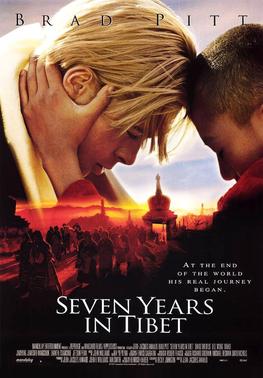
Long before college kids were shouting "Free Palestine", their parents while in college were shouting "Free Tibet". It was en vogue to demand that the Chinese pull out of the real-life Shangri-La, but now no one seems to care about the former kingdom of the Dalai Lama. Amidst the protests and concerts for Tibet, Hollywood pitched in by making Tibet-centered films and documentaries. In 1997, there were two major films released that were about Tibet. The second released film was Kundun. The first was Seven Years in Tibet, based on the memoirs by one of the few Westerners to enter the forbidden kingdom. Seven Years in Tibet is somewhat accurate in that it feels like the film is seven years long. Oddly though, it also feels like it spends only seven minutes between the Westerner and the Holiness.

The arrogant Austrian mountain climber Heinrich Herrer (Brad Pitt) leaves his pregnant wife to conquer the high mountain Nanga Parbat. He apparently is not fond of the Third Reich that has forced the Anschluss or at least is indifferent towards it.  Despite an injury that he keeps hidden, Heinrich climbs on. Unfortunately for him as his team, the Second World War has started. As Austro-Germans, they are captured by the British and held at a prisoner-of-war camp.

The Teutonic prisoners finally manage an escape in part by donning brownface, though for once Heinrich joins them rather than attempting yet another failed solo attempt. Wandering around the Himalayas, Heinrich is eventually reunited with Nanga Parbat expedition head Peter Aufschnaiter (David Thewlis). Peter has food. Heinrich has a compass. Putting their animosity aside, they join forces and eventually stumble onto the forbidden kingdom of Tibet. 

Initially pushed out, they sneak back into Tibet and disguise themselves to enter the capital, Lhasa. Surprisingly, they are welcomed by Tibetan diplomat Kungo Tsarong (Mako), who offers them refuge in his estate. Despite looking like Brad Pitt, Heinrich loses out to Peter for the affection of seamstress Pema Lhaki (Lhakpa Tsamchoe), one of the few Tibetans who can make European clothes and who has been outside Tibet. She presumably is also able to speak German.

They settle into Tibet, where bachelor Heinrich (his wife having divorced him during his long absence and his son Rolf wanting nothing to do with him) makes himself useful. Eventually, the young Dalai Lama (Jamyang Jamtsho Wangshuk) finally meets "yellowhead" when the Dalai Lama's mother brings him for her personal audience (His Holiness' advisors being firmly against him meeting Heinrich for a private audience). The Dalai Lama is intrigued by the outside world, but the outside world is posing a great danger. The Chinese are dead set on taking Tibet. No accommodation with them short of total annexation is possible. The vaguely traitorous secretary turned official Ngawang Jigme (B.D. Wong) helps with the annexation, disgusting Heinrich. With nothing to hold him in Tibet, Heinrich now returns at long last to Vienna in 1951. Will he be able to reunite with Rolf and heal the wounds of separation?

I can't quite call Seven Years in Tibet a noble failure because I see nothing particularly noble about it. Becky Johnson's adaptation of Herrer's memoir thinks itself grand and epic and insightful about the culture clash between East and West. It sees itself as telling a tale of a man's evolution from heartless to healed. Instead, it ends up being something of a vanity project for Brad Pitt.

Pitt sports a hilarious Austrian accent that makes his turn in Inglorious Basterds look restrained by comparison. He also manages to look blonder than he normally does. It is to where one wonders if Pitt took elocution lessons from Arnold Schwarzenegger. We even get some obligatory shirtless scenes where he can show off his physical beauty. It seems almost surprising that despite being so gorgeous, Pitt manages to lose the girl to David Thewlis. Granted, Seven Years in Tibet does show that Peter's overall gentleness and kindness would charm Pema more than Heinrich's braggadocio. Still, this is Brad Pitt. It makes one wonder if things could have improved if Pitt and Thewlis had switched roles. 

At least Thewlis' Teutonic tones were not as over-the-top as Pitt's. 

As a side note, I wonder if David Thewlis is some kind of cinematic curse. He appeared in both Seven Years in Tibet and The Island of Doctor Moreau. Can a good actor be in such awful films without wondering if he has some kind of hex to him? 

I think Pitt was so focused on keeping that Conrad Veidt parody going that he forgot to actually act. This is a terrible performance. Brad Pitt never made a case as to why we should spend all these grueling hours following this obnoxious jerk. It makes things worse when the first hour of Seven Hours in Tibet is more about Harrer's mountain exploits than anything else. It is close to an hour before Heinrich and Peter even get into Lhasa. In a movie that is over two hours long, it takes an hour and seventeen minutes before Heinrich and His Holiness meet. Given how little time Heinrich and the Dalai Lama spend together in the film, one wonders how Heinrich could have served as a mentor or friend to His Holiness. 

That, more than anything, is what sinks Seven Years in Tibet. It is not about Tibet itself. It is not about Heinrich's evolution from selfish to selfless. It is not about the Dalai Lama. It is about Heinrich Harrer: Action Man. We see his mountain climbing that would have made Leni Riefenstahl jealous. We see his various daring escape attempts. We see his shrewdness in escaping Tibetan guards. We see his physical beauty. 

We do not see the metaphorical soul. We do not see the connection between this Teuton and that Tibetan. Perhaps we could say that Seven Years in Tibet is a nice travelogue with a wonderful John Williams score. 

That, however, is probably the only genuine compliment that I can hand the film. Perhaps I can be slightly more charitable in saying that David Thewlis made Peter a more interesting story. Honestly, now in retrospect, I think I would have preferred the film be about his seven-plus years in Tibet (unlike Harrer, Peter stayed with his Tibetan wife and "went native"). It would have been interesting to know what became of him.

As a side note, Harrer and Aufschnaiter's Nazi ties were at minimum downplayed and at worst completely whitewashed. 

Seven Years in Tibet is pretty (as is Brad Pitt in it). It has wonderful music, complete with Yo-Yo Ma solos. It also is slow, boring and empty. Tibet may still be occupied and have been forgotten by the new cause of "Palestine", but at least it won't have to suffer the added indignity of having to sit through Seven Years in Tibet. 
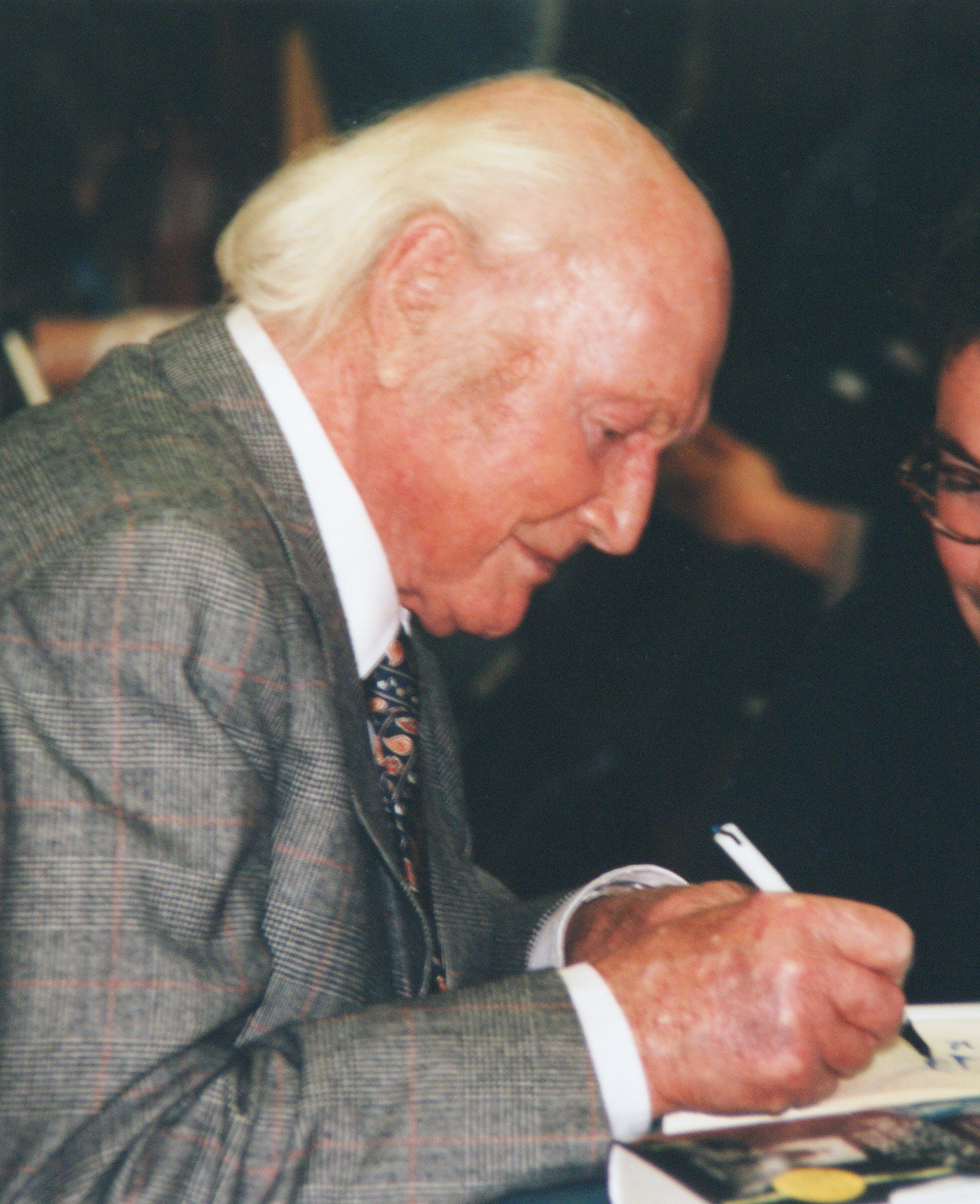
1912-2006


DECISION: D+

Sunday, June 12, 2022

Kundun: A Review


KUNDUN

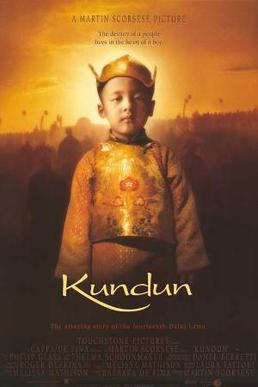
It was a few decades ago when Tibet was the cause du jour for many, particularly in the arts. That is, until the Chinese market became so lucrative that many would willingly ignore the human rights violations and systematic oppression of religion and minorities to get at the yuan. Kundun, a biographical film of the Fourteenth and current Dalai Lama, was the second of two films built around His Holiness released in 1997. Respectful, reverential to the point of deifying the Dalai Lama, Kundun is a beautiful but sadly hollow portrait of this historic figure.

Kundun shows the life of Tenzin Gyatso, a precocious, slightly obnoxious Tibetan boy. He is coddled a bit and somewhat entitled, but no one can explain why. That is, until 1937, when little Tenzin correctly identifies various objects belonging to the 13th Dalai Lama, declaring each "MINE!" in his child's voice.

Spirited off to Lhasa, he grows in wisdom and deep Buddhist faith while seeing the frailties of mortal man. His parents become comfortably wealthy, the man who found him grows greedy and eventually dies in the Potala Palace prison, leading the innocent Dalai Lama to ask, "Potala has a prison?".

He also faces the growing threat from the Chinese, culminating in the Communist invasion of Tibet in their effort to force Tibet to join China (or rejoin China, as the Chinese stubbornly insist Tibet has always been Chinese). The Dalai Lama is urged to flee, and he comes close, but ultimately is temporarily talked back into returning to Lhasa and even meeting Chairman Mao (Robert Lin). The Chairman, as pleasant as he appears to be, is not a man to be trifled with. Despite His Holiness seeing some common ground between socialism and Buddhism, Chairman Mao coolly informs the Dalai Lama, "Religion is poison". Seeing no alternative, the Dalai Lama goes into exile in India, where he still hopes to return to his native Tibet.

Kundun reminds me of two other films, both Best Picture winning biopics: The Last Emperor and Gandhi. Like the former, Kundun is the story of a child perceived as all-powerful and all-knowing, who can order adults around to do his bidding who ultimately is shown as powerless and forced into exile. Like the latter, Kundun is the story of an almost divine figure, who has apparently never sinned and who has a persona and personality that has him almost walk on water.

Herein lies the problem with Kundun: it is pretty but also pretty empty, a film of visual and audible splendor but hollow despite the admittedly beautiful trappings.

This was apparently a passion project for practically everyone involved. Screenwriter Melissa Mathison was active in the Free Tibet movement and devotee of His Holiness. So too is composer Philip Glass, who wrote the Oscar-nominated score. Director Martin Scorsese is one who searches out for spiritual themes in some of his films such as The Last Temptation of Christ and Silence, so Kundun's strong Buddhist spirituality would appeal to him.

However, again herein lies the problem. Kundun, both film and title character, are treated with such awe and reverence that the man behind the Ocean of Compassion is lost. Like with Gandhi, we never know the man behind the myth. The film spends far too much time and energy making the 14th Dalai Lama into this God-Man, one that almost makes Jesus Christ look like your wacky next-door neighbor. This Dalai Lama oozes divinity to an almost maddening manner. He is unsoiled by humanity. He is never cross. He is never happy. He neither cracks jokes or throws shade. 

He is all virtues, no flaws.

It is interesting that in the Jesus miniseries starring Jeremy Sisto, Christ was able to tease his disciples and have a good time at the wedding at Cana. The figure many people hold to be God in human form had a sense of humor. The figure many people hold to be the reincarnation of a high Buddhist teacher, conversely, is gentility itself, forever horrified at the barbarity and cruelty of humans and forever calm, placid and serene.

Whether it is being informed of his father's passing or that the Chinese have invaded, nothing appears to affect or trouble His Holiness. Kundun takes the term "His Holiness" to almost hilarious levels, where one expects him to float off into India rather than bother crossing it on land.

Like with The Last Emperor, the title character is more an observer than the engine. The difference with the last pairing is that when it came to the actual Last Emperor, Pu Yi, his inability to shape history itself, let alone his own life, was the driving force of the film. 

Kundun, conversely, puts the Dalai Lama at the center of events but they neither impact him nor does he impact them. They just happen around him, and despite his court waiting for him to make decisions, his primary decisions seem to be to let them do whatever they think is best.   

In short, despite being the main/title character, there is no Kundun in Kundun.

The blame lies with Scorsese and Mathison. Scorsese has all his actors behave as though people have no emotions. He is too focused both on the visuals in Kundun and in showing reverence to His Holiness to take time on focusing on Tenzin Gyatso the man. Even the minor villain of Reting Rinpoche (Sonan Phuntsok), the Tibetan regent who found the reincarnated Dalai Lama but grew too greedy when it came to his reward, was almost more a shadow than a positive or negative entity.

Mathison for her part was simply too worshipful of the Dalai Lama. She clearly believed him to be quasi-divine, incapable of human frailties or frivolities. She looks upon His Holiness with reverence, but she also expects us to as well without giving us any reason to. Those of us who are not Buddhist will wonder what drives this man, why we should care about his particular plight, and Kundun does not give us reasons to.

It is hard to empathize or care about someone who is so far above us, so perfect, so pure, so holy. 

The positives in Kundun are exterior. The film has a beautiful score, mixing West and East splendidly. It also has some beautiful visual moments courtesy of Roger Deakins' cinematography. It is not surprising that the cinematography and score were two of Kundun's four Oscar nominations, along with the film's costume and set designs. Each of them creates a beautiful, rich visual production that is a feast for the eyes and ears. 

However, a rich visual and audible experience cannot make up for an empty production. Kundun is not a bad film, but an empty one. It is worth watching only as something to watch, to enjoy the vastness and visual splendor it presents. If you enjoy seeing and hearing beautiful images and music, you can enjoy Kundun. If you want to know the private man behind the reincarnation, look elsewhere, for Kundun is nowhere to be found in Kundun.

Born 1935


DECISION: C+

Tuesday, November 28, 2017

The Last Dalai Lama?: A Review (Review #975)


THE LAST DALAI LAMA?

I imagine that the question mark at the end of The Last Dalai Lama? is there to make it a rhetorical statement rather than a declarative one, though I imagine the Chinese Communist government would be more than happy to change the question mark to an exclamation mark.  Despite what one might think, The Last Dalai Lama? is not about the politics of His Holiness' struggle for Tibet.  It is pretty much a literal question as to whether The 14th and current Dalai Lama will indeed be the Last Dalai Lama, but the film takes a while to get there.

The Last Dalai Lama? is a sequel to the documentary Compassion in Exile, made twenty-five years ago by the same writer/producer/director, Mickey Lemle.  Mixing his past interview with His Holiness with an updated one, along with the Long Life Celebration to mark His Holiness' 80th Birthday, the film covers a bit of what is generally known: the Chinese invasion and occupation of Tibet in 1950, the forced exile of Tibet's spiritual and political leader, the Dalai Lama, his interactions with the West.

We hear a lot from the people influenced by the Dalai Lama both from 1992 and 2016, when the film was made.  We hear from the former and current Deans of the Cathedral of St. John the Divine (a church that I have always considered a bit on the esoteric side versus orthodox Christianity).  We hear from composer Philip Glass, who wrote the music to Compassion in Exile which is used in The Last Dalai Lama?, and we hear from former President George W. Bush, the first President to be seen publicly with His Holiness when His Holiness received the Congressional Gold Medal.  President Bush, Jr. also shows the portrait of His Holiness that he painted, art now a major hobby for our former Commander-in-Chief.

It takes a while to figure out what The Last Dalai Lama? actually means.  It might be thought that the film was asking whether the XIV Dalai Lama will be the last one because there will be no real legitimate successor after his death.  This is extremely possible given that the Chinese Communist government passed a law in 2007 declaring that they had the power, if not the actual responsibility and duty, to find the current Dalai Lama's reincarnation.

The current Dalai Lama has a clever retort to this idea: the people will know the Chinese government's true sincerity on the matter when they not only acknowledge the reality of reincarnation but can find the reincarnation of Mao Zedong and Deng Xiaoping.

Instead, the title refers to His Holiness' declaration from 2014 that "he will not be reincarnating and there would be no Fifteenth Dalai Lama".  However, the Dalai Lama in the film leaves a little wiggle room, where if I understand things correctly, he may come back, but definitely born outside Tibet unless he sees conditions changed.

Despite this, His Holiness reaffirms his position of a quarter-century past, that he still does not hate the Chinese.


The Last Dalai Lama?, despite giving us that intriguing title, doesn't actually tackle the idea that the Fourteenth Dalai Lama may be the literal last Dalai Lama until near the end of the film.  Moreover, the question relates more to the esoteric question of his potential reincarnation than on political rationale for there being no successor to the Dalai Lama.

The film mentions that the Chinese government has made clear it would essentially select some poor schlub to sit on the Potala Palace throne.  Even one who has the most cursory knowledge of the Tibetan situation could figure out that the Chinese would select their own Dalai Lama to legitimize their occupation of Tibet, a variation of when the last Emperor of China was made the puppet Emperor of the Japanese-occupied Manchuria, which they called Manchukuo.

The question, however, relates to elements that to Western or secular minds sound down a bit bizarre.  The reason that this man may be the literal Last Dalai Lama is not because the Tibetan method of finding the reincarnation cannot be verified under current circumstances, but rather because the current Dalai Lama has declared that he will not reincarnate.

A bit like The Doctor on Doctor Who refusing to regenerate, though on Doctor Who he really can't actually refuse...he will, whether he wants to or not, until he is finished with his regeneration cycle.  I personally suspect His Holiness has made this declaration as a strategic move, to stop the Chinese from picking someone they can control and bend to their own will.  By saying he will not reincarnate, he is removing a weapon from the Chinese's arsenal to use against the beleaguered Tibet.

However, the hints His Holiness is leaving allow for a very light crack to open to a potential successor.  It's a very long game His Holiness appears to be playing, but The Last Dalai Lama? does not touch on these aspects.

Instead, like many films and documentaries on His Holiness, The Last Dalai Lama? is content to showcase His Holiness in a positive light.  It is easy to like His Holiness, who reminds me of Old King Cole (with his perpetual grin and soft laugh, His Holiness seems a 'merry old soul').  We learn of his interests in education, which in some schools use Tibetan Buddhist ideas.  A visit to a Canadian school showcases not just the mind-body connection, but also the idea of 'mindfulness'.

A very exited and nervous teacher asks the children after his visit, "Did you use your mindfulness?", which to me sounds a bit hippie-drippy, but there it is.

The Last Dalai Lama? is a respectful, respectable portrait of the Monk from Lhasa and touches on the idea that we may literally not see his like again.  Whether the film should or could have featured more about the ramifications of His Holiness' declaration of no return is something the viewer should answer for him/herself.

DECISION: B-