Showing posts with label Martin Scorsese. Show all posts

Tuesday, January 13, 2026

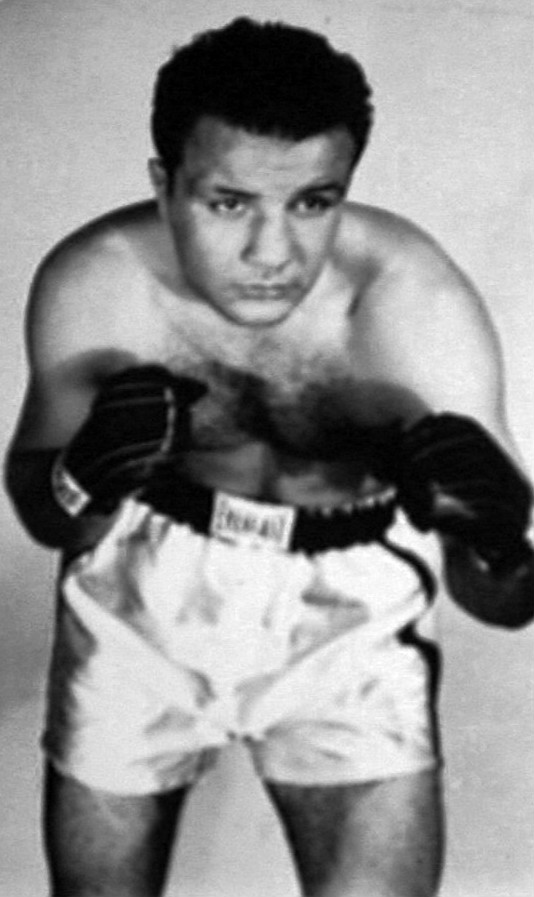
Raging Bull: A Review (Review #2110)

RAGING BULL

Boxing is known as "the sweet science". Neither sweet nor scientific would be used to describe Jake LaMotta, the subject of Raging Bull. This portrait of a brawler in and outside of the ring is a brilliant piece of filmmaking, with standout performances all around.

In 1964, Jake LaMotta (Robert De Niro) is a heavyset master of ceremonies pumping himself up for a performance. We then go back to 1941. Here, LaMotta is a muscular figure, the Bronx Bull knocking down all middleweight opponents. 

One person who knocks him out though is young Vickie (Cathy Moriarty). With a sultry voice to match her sultry body, Vickie drives Jake wild with desire. His loyal brother and manager Joey (Joe Pesci) reminds Jake that he is married. Jake, however, will not be denied and he eventually wins Vickie over, first as his mistress then as his second wife.

Jake is a pugilist par excellence. Despite this, he keeps failing to become middleweight champion even though he clearly defeated such figures as Sugar Ray Robinson (Johnny Barnes). Jake fights brilliantly inside the ring. The problem is that he fights stupidly outside the ring. Perpetually jealous, he is wildly suspicious of any man whom Vickie so much as bumps into, let alone talks to. Jake also does not want help from the Mob to get him a shot at the title despite Joey's awareness of the need to. 

Jake eventually goes against his own interests again and again. He agrees to take a dive for mob boss Tommy Como (Nicholas Colasanto) but does such a poor job of it that he's booed out of the ring and suspended by the boxing commission. He becomes unhinged at Vickie talking to any man, going so far as to accuse Joey of having sex with her. He does make it to the championship (the price of throwing the match) but this is a hollow win. Jake loses Joey. He gains massive weight post-retirement. He runs his nightclub poorly to where he ends up in jail for allowing underage girls in. He loses Vickie and his kids. Finally, he finds a second act as an MC, making quips while introducing strippers and later reciting Shakespeare.

Jake LaMotta is not a good man. In particular, his rage and abusive nature should put people off. However, Raging Bull shows us that as he says of himself near the end, "I'm not an animal". LaMotta is driven, intense, hard. These are all qualities that made him an excellent fighter. They also were the qualities that wrecked him when he was not boxing.

As a side note, him saying, "I'm not an animal" coincidentally echoes another 1980 black-and-white biopic. This exact sentiment was expressed in The Elephant Man. That film featured a physically disfigured man with a noble soul. Raging Bull featured a physically powerful athlete with a disfigured soul. Yet, I digress.

Raging Bull is one of Robert De Niro's finest hours as an actor. He makes Jake LaMotta into this fierce force of nature. He is able to show a surprisingly tender side when with Vickie. De Niro also shows us the shattered man after he takes a dive. Crying uncontrollably, he keeps asking himself and those around him the same question: why did he do it. We marvel at the bouts that LaMotta goes through. We also feel a mix of disbelief and sadness seeing this brawler turn into a de facto lounge act.

Cathy Moriarty had a stellar turn as Vickie, Jake's obscure object of desire. She has a sultry, low voice and beautiful figure. Moriarty also shows Vickie to be loving and surprisingly tolerant of her man until even she got fed up. Like Moriarty, Joe Pesci received an acting Oscar nomination for his turn as the loyal but put-upon Joey. His work with De Niro is absolutely fantastic, each playing off each other so well. They are similar in their volcanic tempers, yet different in Joey staying loyal both in his marriage and his relationship. Unlike Jake, Joey understands that talent alone can't get Jake to the top. 

Martin Scorsese films Raging Bull so beautifully. He does make boxing poetic. He has clever moments, such as how Vickie kicking her feet in the pool matches the drumming we hear. This is indicative of how brilliant Thelma Schoonmaker's Oscar-winning editing is. The various fights also range in style and appearance, no small feat given how many we saw. 

For me, the best example revealing the kind of man Jake LaMotta was captured near the end of Raging Bull. Desperate for money to try and buy himself out of a criminal charge, he storms into his now-estranged wife's home, grabs his championship belt and forces the various diamonds out of it. Going to a pawn shop, he is told that the diamonds are not as much as LaMotta was asking for. Had he brought the entire belt in undamaged, he is told, Jake could have had more than enough cash for it. 

Paul Schrader and Mardick Martin's adaptation of LaMotta's autobiography may not have intended it so. However, to me it shows that Jake LaMotta did not see the true worth of things. He saw the small parts and not the big picture. He saw Vickie talking to men, not her love for Jake. He saw Joey "selling him out" to the Mob, not his brother doing all he could to get Jake a shot at the title. He saw the diamonds. He did not see the belt.

Raging Bull stands tall not just in sports films or biopics. It stands tall among some of cinema's finest achievements. 

1922-2017


Thursday, February 6, 2025

The Age of Innocence (1993): A Review

THE AGE OF INNOCENCE (1993)

Sumptuous is the best way to describe the look of The Age of Innocence. However, there is more than just lavish sets and costuming within the confines of Martin Scorsese's film. The Age of Innocence is a character study of the Gilded Age, where formal manners can be as brutal as a gunshot.

Newland Archer (Daniel Day-Lewis) is a respected and respectable lawyer, engaged to the pretty, proper and equally respectable May Welland (Winona Ryder). In all ways these two very proper upper-class New Yorkers are ideal and ideally suited. 

The only hint of scandal comes from May's cousin, Countess Ellen Olenska (Michelle Pfeiffer). The countess is a shamed woman, having left her philandering Polish husband but not divorcing him. Countess Olenska is beautiful and bright and kind, but her shady past puts old money New York society at arm's length, outraging Newland's sense of right and wrong. 

He becomes Olenska's champion, much to May's delight, who is fond of her relative. Soon, however, the countess and the lawyer become drawn to each other. Though little suggests that there is anything other than a friendship between them, there are more than a few eyebrows raised. Their passion is denied by both, with Newland and May marrying. Yet, Newland and Ellen continue carrying a torch for the other, but will they ever be together?

The Age of Innocence is a tragedy of love. Underneath the Oscar-winning costumes and grand settings, The Age of Innocence delves deep into how society's mores can cause misery for individuals. Ellen, for example, is held to a different standard than either her husband or Julius Beaufort (Stuart Wilson). Beaufort is a serial womanizer, but his liaisons are tolerated in part because he and his wife Regina (Mary Beth Hurt) do not separate. In this world, divorce is a greater sin than adultery. We know that Ellen sparks more than Newland's loins. 

She is the opposite of the proper, quiet and very respectable May. That is not to say that Ellen is a wanton woman, going from man to man and, to use modern terms, having a high body count. She instead is her own woman, aware of her worth independent of a man. Why should she endure personal unhappiness to please strangers?

I found that the acting was a bit stylized. However, I found that in this case, the more mannered acting worked to capture this very formal world of elegance and propriety. There are many soft voices in The Age of Innocence, but again, that fits within the strictness of this society. 

I am not big on Daniel Day-Lewis, finding him at times to be yes, hammy. Here, I think the restraint that director and cowriter Martin Scorsese (adapting the Edith Wharton novel with Jay Cocks) got Day-Lewis to make lends the actor to give a better performance. Newland Archer would be more repressed even when expressing moral outrage at Ellen's treatment. Day-Lewis is matched by Pfieffer as the countess. She is as fiery and forceful as society allows her, maybe a bit more. 

It was Ryder who received an Oscar nomination for The Age of Innocence, and I think she played the part perfectly. May is outwardly demure, unaware, almost sweet. However, in her final scene where she tells Newland that she is pregnant and had told Ellen before she told him, we sense that perhaps she was aware of their emotional affair without saying so. Was she the naive girl both took her for? Was she instead a quietly vengeful one? The ambiguity is there for people to question.

While some roles were smaller, established actors like Geraldine Chaplin, Sian Philips, Richard E. Grant, Jonathan Pryce, Michael Gough, Norman Lloyd and Alexis Smith in her final film role made strong impressions. Out of the smaller roles, my standout was Miriam Margolyes as May and Ellen's grandmother, the cheerful grande dame Mrs. Mingott. This was also an early role for Sean Leonard Thomas, who plays the adult son of Newland and May. While I am not big on voiceovers, I thought the narration worked. It helps when you have a respected actress like Joanne Woodward be the voice guiding us through this world.

The Age of Innocence is very sumptuous in its production. Alongside its Oscar win for the costumes, the film also has a lush Elmer Bernstein score and grand production design, which were also Oscar-nominated. The film also has grand cinematography and excellent editing, particularly in the opening opera scene as the characters spy on others through their opera glasses.

Lush, grand, but with a deep heart within it, The Age of Innocence is a showcase for everyone involved in front and behind the camera.  

DECISION: A+

Saturday, August 17, 2024

The King of Comedy: A Review (Review #1845)


THE KING OF COMEDY

This review is part of the Summer Under the Stars Blogathon. Today's star is Jerry Lewis.

The pursuit of fame as a substitute for love is nothing new. We today are used to such things as "instant celebrities" who achieved notoriety via TikTok, YouTube or other online systems. People like Shawn Mendes and James Donaldson (better known as MrBeast) parlayed online success into major careers. As a side note, both Mendes and Donaldson are the same age (28 at the time of this writing), so fame via social media may be misunderstood as a Zoomer innovation. However, The King of Comedy shows the underbelly of looking for fulfillment through media. A dark portrait of one lonely man's search for validation, The King of Comedy is a fascinating film.

Jerry Langford (Jerry Lewis) rules the late-night airwaves with his eponymous talk show. One night, his rabid fans get more carried away than usual trying to get at him after a show. In comes a man to rescue him from a particularly obsessed fan. This man introduces himself as Rupert Pupkin (Robert DeNiro), who tells Langford that he is a stand-up comedian starting his career. Langford, growing more irritated by the nudnik Pupkin, eventually gets rid of Pupkin by telling him to contact his office to see if they can help him.

Pupkin now becomes more and more detached from what little reality he had been tethered to. He invites a former high school crush, Rita (Diahnne Abbott) on a date where he is simultaneously pleasant and creepy. Pupkin keeps appearing at the Jerry Langford Show studios, forever pushing to either see Jerry or have his comedy tape played for what he knows will be an inevitable booking. Pupkin even shows up unannounced at Langford's country home with Rita, who is completely unaware of Pupkin's divorce from reality.

A visibly enraged but surprisingly measured Langford orders them out of his home and both the home and studio staff is alarmed and frightened by the non-threatening but increasingly irritating and demanding Rupert. Rupert joins forces with Masha (Sandra Bernhard), who is also obsessed with Langford, to abduct the television show host. Rupert orders Jerry to tell his staff about his abduction via cue cards, and that the price for his safe return is the opening slot on the Jerry Langford Show, guest hosted by Tony Randall that night. Masha thinks she will finally have her way with Jerry, while Rupert gets to live out his dream of making his comedy debut. Will Jerry survive this bizarre abduction? Will Rupert get punished or a book deal out of his crime?

I think most people would think of Taxi Driver as the Martin Scorsese-directed, Robert DeNiro acted film about urban isolation, criminal obsession and mental disintegration. I would say that The King of Comedy is its less gruesome twin, cut from the same cloth but without the graphic violence. Rupert Pupkin is not the polar opposite of Taxi Driver's Travis Bickle, but perhaps the more upbeat version of our lonely vigilante. Forever with a grin and an outwardly cheerful demeanor, Pupkin is at the minimum oblivious about how aggressive to irritating he is, at most dismissive. Pupkin is forever convinced of his talent and moreover his inevitable success. 

His fantasies about how, for example, Jerry would ask him as a personal favor to guest host The Jerry Langford Show for six weeks or telling him that he was jealous of Pupkin's comedy show Rupert Pupkin to be deranged. Whether he is genuinely unaware of how he comes across or does not care because of his total belief in his comedic genius we do not know.

Take for example when he goes to Langford's home. Rupert never questions his right to be there, unannounced and uninvited. Rupert is convinced that he will be welcomed. It is not that he is confused over why Langford orders him out. It is his belief that Langford is ungrateful that makes Rupert Pupkin dangerous, separate from the eventual abduction.

The scene where Rupert imagines himself getting married to Rita live on-air is surprisingly tragic. As Victor Borge plays the Wedding March and Dr. Joyce Brothers serving as de facto maid of honor (the two of several cameos), Rupert imagines his high school principal serving as the officiating minister. Here, in this scene more than any other, we see the tragedy of Rupert Pupkin. He is living out his own version of a revenge fantasy. It is not a violent revenge. Instead, it is one where he is justified, where all those who have injured him apologizes, and one where all his dreams come true. He gets fame and the woman of his dreams. It is both sad and disconcerting, seeing Rupert Pupkin live out fantasies to justify his dreams.

What holds your attention is Robert DeNiro's performance. With a permanent, almost innocent grin and outwardly upbeat demeanor, he makes Rupert Pupkin almost a figure of pity. I say almost because there is an anger and darkness beneath the seemingly helpful and naive manner. This comes through in his body language. While there is a smile almost permanently affixed to him, he is forever tightly wound up physically, like a coil that is constantly close to unwinding. 

We see this anger and darkness when he is rebuffed at the Jerry Langford Show studio. That he genuinely does not appear to understand why anyone would not want him around, let alone find him irritating to dangerous is alarming. His fantasies about filling in for Langford in his homemade studio would concern anyone who knew about it. Rupert Pupkin is the original "man-child living in his parents' basement". We hear Pupkin's mother shouting at him about what he is doing or getting to the bus on time. His total divorce from reality is already clear when he uses cue cards, and bungles them, when giving Langford instructions to his alarmed staff.

When the FBI agent in charge tells him, "Well, at this time, Mr. Pupkin, I want to advise you to consider yourself under arrest," Pupkin merely smiles his gleeful grin and replies, "Fine. I think I should get made up". One does not know if Pupkin is actually aware of the gravity of the situation or more focused on being "a king for a night" than on his crimes and putting Langford in danger.

Given his cantankerous reputation, one really is not sure whether Jerry Lewis is playing a character or playing himself as the increasingly irritated and angry Jerry Langford. We do not see him performing any routine. Instead, we see him off-camera, cooly professional but not pleased with the fools he has to endure. In Pupkin's fantasies, however, Lewis convinces you totally that he would see the comedic genius of Rupert Pupkin. His growing anger, however, makes Lewis a model of patience given the lunatics he faces.

Yes, Langford is absolutely right to be angry at how persistent Pupkin is. However, an element of Paul D. Zimmerman's screenplay is why Langford does not have greater security. He already suffers a thoroughly crazed fan in Masha, who literally lunges at him. He endures fickle fans who scream "YOU SHOULD ONLY GET CANCER!" when he apologetically declines talking to a random person on a pay phone. He is supposed to be insanely popular yet has no security detail to protect him. 

Abbott is the weak link in the film. She looks surprisingly blank as Rita, unable to showcase much emotion. As Bernhard is playing an insane person, she is fine playing totally crazed and angry. 

The King of Comedy is an effective and surprisingly sad tale. The need for validation and the horror of having criminal activity rewarded is not new. It seems prescient in how today so many people would rather be kings for a night than schmucks for a lifetime. It is how one defines schmuck that is the tell. For those who think or have concerns about the violence in Taxi Driver, The King of Comedy touches on similar themes, giving us as close to an upbeat ending about isolation as one can imagine.  

DECISION: A-

Thursday, November 16, 2023

Killers of the Flower Moon: A Review (Review #1765)


KILLERS OF THE FLOWER MOON

At a time when people can call Joy Ride the best comedy of 2023 and Across the Spider-Verse "one of the greatest films ever made in the history of cinema" (both said by the same person I might add), I am despairing about both film reviewing and cinema itself. Killers of the Flower Moon is the first film in a long time that had me think there is still hope, even if its creator is entering the twilight of his career. 

The Osage Native American people are both blessed and cursed. Having been pushed off their original land for Oklahoma reservations, the discovery of oil has made them among the wealthiest people in America. Their traditional ways have them share in the profits, but as the saying goes, "mo' money, mo' problems". Soon, the Osage are given "guardians" to watch over their fortune. The guardians, however shady as they are, pale in comparison to the vultures waiting to take over.

Into this comes Ernest Burkhart (Leonardo DiCaprio), a World War I veteran come to live with his uncle, William "King" Hale (Robert DeNiro). Hale appears to be the friend to the Osage, a benevolent white figure that sides with them. In reality, he is a greedy man who lusts after the Osage people's mineral rights. Hale pushes Ernest to court and marry Mollie (Lily Gladstone), a wealthy Osage whose family has vast holdings. Mollie is pretty and pretty shrewd, fully aware that the "coyotes want money". Nevertheless, Ernest is very handsome, and they marry.

Hale knows that the fewer members of Mollie's family are around, the greater the share of Ernest's inheritance will be. Slowly, Mollie's other sisters and mother start succumbing to death. While matriarch Lizzie (Tantoo Cardinal) dies of natural causes (at least I think she did), the other sisters are not so lucky. Drunk troublemaker Anna (Cara Jade Myers) is brutally shot. Mollie's other sister Reta (JaNae Collins) is literally blown up. All the while Mollie is slowly growing weaker physically and morally. Her illness is diabetes, but Hale is not above pushing Ernest into putting a little something in her insulin (a new product for the time) to help get Mollie out of the way.

Despite her illness, Mollie has enough strength to join a group of Osage and plead their case with President Calvin Coolidge. This gets the then-Bureau of Investigation to look into the Reign of Terror that the Osage have been living through. Agent Tom White (Jesse Plemons) comes looking around to investigate the various killings. It is not long before Ernest is caught in his involvement with the targeting of Mollie's family but that of Mollie's first husband, the depressed Henry Roan (William Belleau), who mistakenly trusted Hale, unaware that Hale benefited from his death. A trial against Hale gets temporary justice, but as the radio show that has chronicled the Osage murders tells us, things did not end well.


At its heart, Killers of the Flower Moon is a tragedy, chronicling the evil that men do out of greed. Scorsese shocks the viewer with the randomness of some of the killings. Early on, an Osage mother meets a shocking and ghastly end. The coldness of that act, coupled with Gladstone's voiceover that it was ruled "a suicide" makes it all the crueler. The refrain of "no investigation" to clear acts of murder makes it more chilling. 

The film does not shrink from being graphic, but it also brilliantly builds up suspense. We the audience, for example, know that Rita and her family are in grave danger. Scorsese, however, keeps us waiting by pulling the camera in Mollie and Ernest's bedroom, the windows prominent on the screen. Even though we know something is coming, we are still jolted by the ferocity and horror of Rita's brutal end.

Visually, Killers of the Flower Moon is arresting. A sequence where Ernest sees Hale burning down his fields to Blind Willie Johnson's Dark Was the Night, Cold Was the Ground looks like a vision of Hell, with Hale as Satan himself. 

Killers of the Flower Moon also has truly exceptional performances. I think Leonardo DiCaprio has done some of his best work here as the gullible, corrupt and weak Ernest Burkhart. DiCaprio makes him dumb, weak, sometimes sleazy, sometimes remorseful but also unwilling to face the truth of his actions. Ultimately, Ernest comes across as thoroughly pathetic in every meaning of the word. Near the end of the film, with his life and family in tatters, he remarks, "I ain't got nothing but regret". It is an admission both painful and slightly dishonest. 

Lily Gladstone is the heart of Killers of the Flower Moon as Mollie. She brings a quiet dignity and grace to a woman caught up in terrible circumstances. Gladstone makes Mollie an intelligent woman, one aware that she is a target for gold-diggers but also susceptible to false promises of love. There is also a quiet resignation to the indignities she must endure, such as when she has to call herself "incompetent" when asking her guardian for her own money. Gladstone captures you every time she is on screen. I keep thinking the word "quiet" when it comes to her performance. That, however, does not suggest a passivity or weakness. Far from it: Gladstone brings great strength to Mollie.


DeNiro has come out of the fog of his mugging and Bad Grandpa stage to deliver the goods. The evil face behind the mask of benevolence, DeNiro's William Hale is a thoroughly evil man. What makes DeNiro more effective is that he rarely if ever rages. There are maybe one or two scenes when Hale is out of control. There is when he is whacking his nephew for botching a job. Another is when he screams out, "GIVE ME MY HENRY ROAN MONEY!" when he is attempting to collect on the life insurance policy he took out on an unwitting Roan. Even then, his moments of overwhelming anger fit into Hale's character, that of a man used to getting his way. 

Martin Scorsese masterfully directs all his cast to fine performances, except for recent Best Actor winner Brendan Fraser as Hale's defense attorney W.S. Hamilton. Hammy and fat, Fraser devoured the screen whole in his brief role. That might have been what Scorsese wanted, but it comes across as wildly over-the-top. 

Killers of the Flower Moon also has exceptional production work. Rodrigo Prieto's cinematography is at times spellbinding (the closing scene is beautiful), and the late Robbie Robertson's score mixes Native American elements with almost a bit of rock, building menace when needed. Longtime Scorsese editor Thelma Schoonmaker rarely lets the pacing lag, even at almost three and a half hours.

There are aspects that people have criticized. The length is one. Could it have been shorter or with an intermission? I think it could have and might have benefitted from one. The closing scene of the FBI Stories radio show with Scorsese has also, I think, been called into question. I thought it was a clever and period-appropriate way to sum up what happened after the events of the film versus having online text tell us. I also think Scorsese's appearance is fine. It is almost his way of summarizing both the film and the real-life horror & tragedy we have seen. 

Killers of the Flower Moon is the best film I have seen so far this year. Intelligent, gripping, with excellent performances, this is a strong film of a story that needs to be better known and remembered. 

Sunday, June 12, 2022

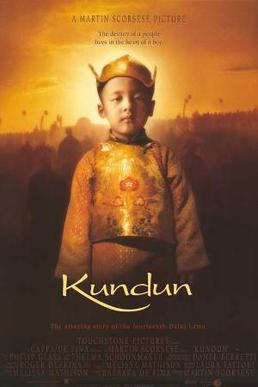
Kundun: A Review


KUNDUN

It was a few decades ago when Tibet was the cause du jour for many, particularly in the arts. That is, until the Chinese market became so lucrative that many would willingly ignore the human rights violations and systematic oppression of religion and minorities to get at the yuan. Kundun, a biographical film of the Fourteenth and current Dalai Lama, was the second of two films built around His Holiness released in 1997. Respectful, reverential to the point of deifying the Dalai Lama, Kundun is a beautiful but sadly hollow portrait of this historic figure.

Kundun shows the life of Tenzin Gyatso, a precocious, slightly obnoxious Tibetan boy. He is coddled a bit and somewhat entitled, but no one can explain why. That is, until 1937, when little Tenzin correctly identifies various objects belonging to the 13th Dalai Lama, declaring each "MINE!" in his child's voice.

Spirited off to Lhasa, he grows in wisdom and deep Buddhist faith while seeing the frailties of mortal man. His parents become comfortably wealthy, the man who found him grows greedy and eventually dies in the Potala Palace prison, leading the innocent Dalai Lama to ask, "Potala has a prison?".

He also faces the growing threat from the Chinese, culminating in the Communist invasion of Tibet in their effort to force Tibet to join China (or rejoin China, as the Chinese stubbornly insist Tibet has always been Chinese). The Dalai Lama is urged to flee, and he comes close, but ultimately is temporarily talked back into returning to Lhasa and even meeting Chairman Mao (Robert Lin). The Chairman, as pleasant as he appears to be, is not a man to be trifled with. Despite His Holiness seeing some common ground between socialism and Buddhism, Chairman Mao coolly informs the Dalai Lama, "Religion is poison". Seeing no alternative, the Dalai Lama goes into exile in India, where he still hopes to return to his native Tibet.

Kundun reminds me of two other films, both Best Picture winning biopics: The Last Emperor and Gandhi. Like the former, Kundun is the story of a child perceived as all-powerful and all-knowing, who can order adults around to do his bidding who ultimately is shown as powerless and forced into exile. Like the latter, Kundun is the story of an almost divine figure, who has apparently never sinned and who has a persona and personality that has him almost walk on water.

Herein lies the problem with Kundun: it is pretty but also pretty empty, a film of visual and audible splendor but hollow despite the admittedly beautiful trappings.

This was apparently a passion project for practically everyone involved. Screenwriter Melissa Mathison was active in the Free Tibet movement and devotee of His Holiness. So too is composer Philip Glass, who wrote the Oscar-nominated score. Director Martin Scorsese is one who searches out for spiritual themes in some of his films such as The Last Temptation of Christ and Silence, so Kundun's strong Buddhist spirituality would appeal to him.

However, again herein lies the problem. Kundun, both film and title character, are treated with such awe and reverence that the man behind the Ocean of Compassion is lost. Like with Gandhi, we never know the man behind the myth. The film spends far too much time and energy making the 14th Dalai Lama into this God-Man, one that almost makes Jesus Christ look like your wacky next-door neighbor. This Dalai Lama oozes divinity to an almost maddening manner. He is unsoiled by humanity. He is never cross. He is never happy. He neither cracks jokes or throws shade. 

He is all virtues, no flaws.

It is interesting that in the Jesus miniseries starring Jeremy Sisto, Christ was able to tease his disciples and have a good time at the wedding at Cana. The figure many people hold to be God in human form had a sense of humor. The figure many people hold to be the reincarnation of a high Buddhist teacher, conversely, is gentility itself, forever horrified at the barbarity and cruelty of humans and forever calm, placid and serene.

Whether it is being informed of his father's passing or that the Chinese have invaded, nothing appears to affect or trouble His Holiness. Kundun takes the term "His Holiness" to almost hilarious levels, where one expects him to float off into India rather than bother crossing it on land.

Like with The Last Emperor, the title character is more an observer than the engine. The difference with the last pairing is that when it came to the actual Last Emperor, Pu Yi, his inability to shape history itself, let alone his own life, was the driving force of the film. 

Kundun, conversely, puts the Dalai Lama at the center of events but they neither impact him nor does he impact them. They just happen around him, and despite his court waiting for him to make decisions, his primary decisions seem to be to let them do whatever they think is best.   

In short, despite being the main/title character, there is no Kundun in Kundun.

The blame lies with Scorsese and Mathison. Scorsese has all his actors behave as though people have no emotions. He is too focused both on the visuals in Kundun and in showing reverence to His Holiness to take time on focusing on Tenzin Gyatso the man. Even the minor villain of Reting Rinpoche (Sonan Phuntsok), the Tibetan regent who found the reincarnated Dalai Lama but grew too greedy when it came to his reward, was almost more a shadow than a positive or negative entity.

Mathison for her part was simply too worshipful of the Dalai Lama. She clearly believed him to be quasi-divine, incapable of human frailties or frivolities. She looks upon His Holiness with reverence, but she also expects us to as well without giving us any reason to. Those of us who are not Buddhist will wonder what drives this man, why we should care about his particular plight, and Kundun does not give us reasons to.

It is hard to empathize or care about someone who is so far above us, so perfect, so pure, so holy. 

The positives in Kundun are exterior. The film has a beautiful score, mixing West and East splendidly. It also has some beautiful visual moments courtesy of Roger Deakins' cinematography. It is not surprising that the cinematography and score were two of Kundun's four Oscar nominations, along with the film's costume and set designs. Each of them creates a beautiful, rich visual production that is a feast for the eyes and ears. 

However, a rich visual and audible experience cannot make up for an empty production. Kundun is not a bad film, but an empty one. It is worth watching only as something to watch, to enjoy the vastness and visual splendor it presents. If you enjoy seeing and hearing beautiful images and music, you can enjoy Kundun. If you want to know the private man behind the reincarnation, look elsewhere, for Kundun is nowhere to be found in Kundun.

Born 1935


DECISION: C+

Sunday, November 17, 2019

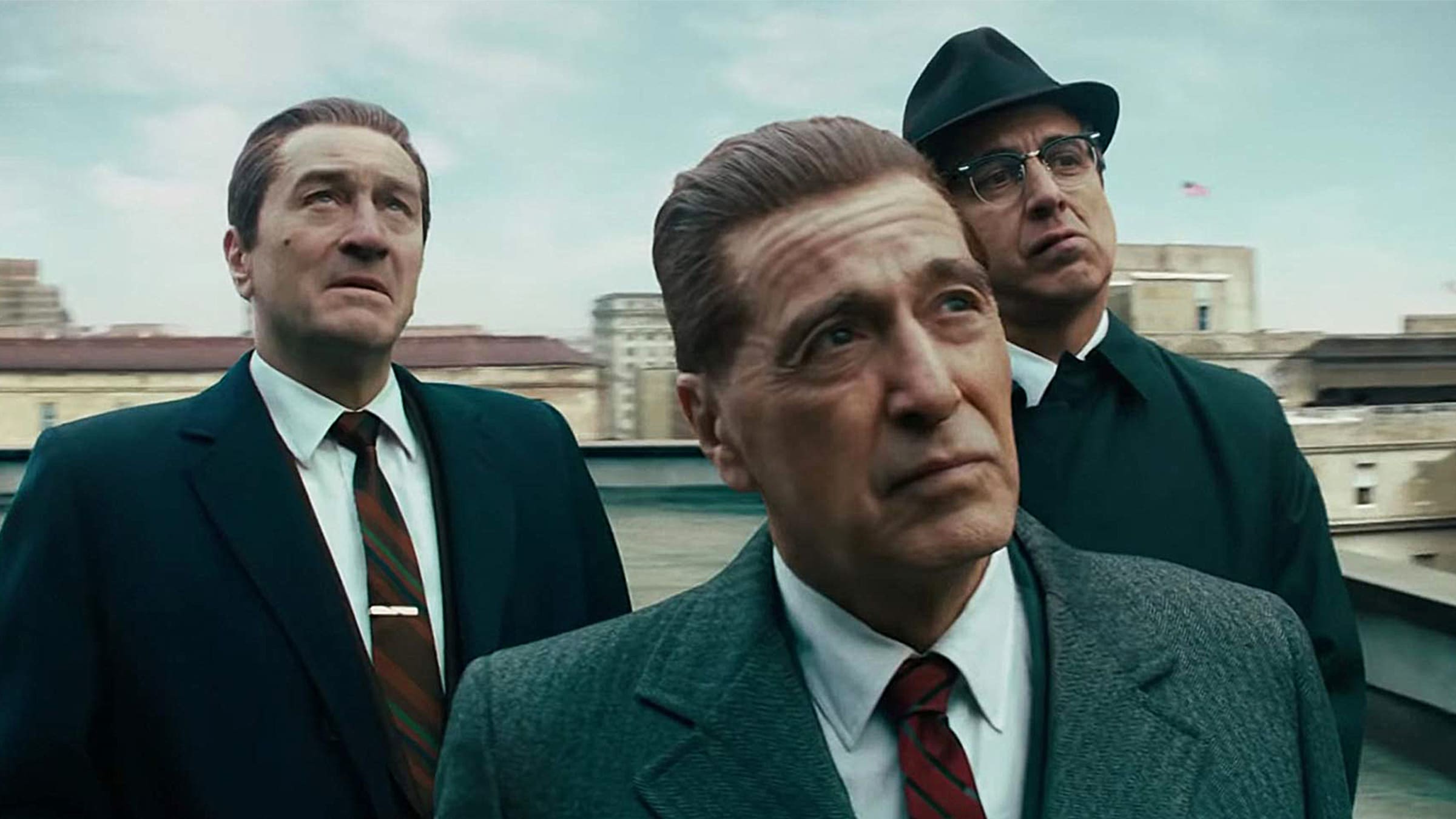
The Irishman: A Review (Review #1305)

THE IRISHMAN

The Irishman is well-aware that Jimmy Hoffa, the notorious Teamsters Union president who achieved greater fame after his still-unsolved disappearance, is a faded figure. "Nowadays, the young kids don't know who Jimmy Hoffa was, maybe that he disappeared...", we hear our narrator/guide tell us in voiceover. The Irishman, while covering familiar territory for director Martin Scorsese, is also a film about the finality and fear of death, the regrets from the past and how everyone goes the way of all flesh.

Narrated by the title subject, we see Frank Sheeran (Robert De Niro) at a retirement home. He flashes back to a road trip for a wedding he took with his friend, mobster Russell Bufalino (Joe Pesci), for a wedding and another visit that reveals itself. Stopping to let their wives have a cigarette break (Russell not permitting smoking in his car), Frank sees they are coincidentally at the same gas station & diner where they first met, sparking a new set of memories.

Frank, recently from World War II, made a little extra on the side running meat to gangsters. As a Teamster union member, he had protection and a good lawyer, Bill Bufalino (Ray Romano). Frank is surprised to re-encounter Bill's cousin, Russell, a quiet man who has his fingers in many pies. Frank soon starts becoming indispensable to Russell, and he in turn offers Frank as an aide to Jimmy Hoffa (Al Pacino).

There again, Frank continuously tries to keep Hoffa from causing problems for the Mob. Hoffa, however, has his own problems. The Mob helped deliver the White House to President John F. Kennedy by essentially cheating in Illinois in exchange for a 'gentleman's agreement' to get JFK to kick Castro out of Cuba and let the Mob get their casinos back. The feeble efforts at that via the Bay of Pigs flops, and meanwhile Hoffa's enraged that Jack's kid brother, Attorney General Bobby Kennedy is targeting him.

Image result for the irishmanThe enmity runs deep between the Kennedys and Hoffa, with Hoffa finally locked up. Hoffa's Teamster President/puppet Frank Fitzsimmons (Gary Basaraba) is also the Mob's puppet, letting them dive into the Teamsters pension fund.

Hoffa sees the pension and the Teamsters as his, and once he secures a pardon from President Nixon he is determined to return to power. Sheeran is advised to tell Hoffa 'it is what it is', but this half-German, half-Irish boss is not going to let some Italians tell him what he can do. He is sure that his files offer him protection.

As we go back to the road trip, Frank Sheeran is placed in an impossible and tragic situation, one that will cost him the love of his daughter Peggy (Anna Paquin), who saw Hoffa as the only good man Frank worked with, and leaves the aging, regretful Frank to live on, knowing that perhaps absolution and people to mourn him is beyond his reach.

Martin Scorsese has been excoriated for saying that the Marvel Cinematic Universe films are 'not cinema'. For this blasphemy, he's been decried as a "stuffed shirt director" and "bitter and jealous" (presumably over the financial success of the MCU franchise). That take-down by the way is from someone who A) insists he's a conservative voice in film criticism (though by his own admission he's a fanboy) and B) blocked me on "the Twitter" for daring to disagree with him.

Image result for the irishman
Well, for a 'bitter and jealous' director dear Marty is still making films, with The Irishman being his latest epic masterpiece until he gets around to making Guardians of the Galaxy Vol. 23. The Irishman moves incredibly fast despite a nearly three-and-a-half hour running time. In that running time, we see in Robert De Niro's performance a haunted man, one who sees himself fading into death and having nothing to show for all his work.

Frank Sheeran is a reminder of what De Niro can do after floundering in things like Little Fockers and Dirty Grandpa. His performance is truly excellent: someone who genuinely wants to 'protect' those he cares about but who ends up hurting them. Frank fears the finality of death, lives with the regrets, and simultaneously yearns for and hides from the end.

In terms of performances there is not one bad one in The Irishman. I don't think Pacino looks or sounds like Jimmy Hoffa, or what little I know of him, but he plays the Teamster boss as almost a lovable tyrant. He is the only person who could be petty enough to race back into the Teamsters headquarters to have the flag raised to full-staff after President Kennedy's assassination while also spoil Peggy with ice cream. In some ways The Irishman paints Hoffa as an idiot, unaware that "Fitz" gets around Hoffa's ban on alcohol by sneaking it in with drenched watermelons (which Hoffa also dislikes but permits). However, part of you genuinely feel sorrow at his quiet but still jarring end.

Related imagePesci also surprises in how quiet his Russell is. The stereotype of Joe Pesci is of him constantly raving and screaming, but in The Irishman I don't remember him raising his voice once. It makes him more menacing in his methodical manner. A surprise too is Romano as the willfully blind lawyer. This is as far from the bumbling Ray Ramone as one can get. Romano does not play any 'gangster' type but his Bill Bufalino is no fool. Smaller performances by Paquin and Bobby Cannavale were also quite strong.

As a side note, Cannavale now has the rare distinction of having been in both a Scorsese and Marvel Cinematic Universe film. Wonder if he'll have any fallout for that.

In regards to the 'de-aging' of the three principles, at the very beginning seeing a young Robert De Niro is slightly jarring but soon it is forgotten. Credit should be given for not making the younger versions without it looking cartoonish or freakish in a Polar Express-type look. Previous Scorsese collaborator Thelma Schoonmaker's editing is up to her brilliant standards, and Robbie Robertson's score has a darkness that works well with the story. Steven Zaillian's adaptation of Charles Brandt's nonfiction work I Heard You Paint Houses moves well, a rich and textured portrait of a dark world and the people that populate it.

The Irishman may lack talking trees and hunky extraterrestrials, but it makes up for those flaws with an involving, fast-paced story where old men look back not in anger but in sorrow. It may not be the final word on one of the most famous unsolved mysteries, but it wraps you in the story and grips you with its performances.

James R. Hoffa
1913-?


DECISION: A-

Friday, October 11, 2019

Alice Doesn't Live Here Anymore: A Review

ALICE DOESN'T LIVE HERE ANYMORE


It's a curious thing that in the midst of Marvel Cinematic Universe fanboys all up in a rage because Martin Scorsese does not think the MCU films are 'cinema' I find myself watching an early Martin Scorsese film that does not involve gangsters in any way. Alice Doesn't Live Here Anymore was later adapted for television as the sitcom Alice, a rare time when a television version of a hit film became a critical and commercial hit on its own. Alice Doesn't Live Here Anymore, grounded in strong and surprising performances, develops a portrait of a woman in transition from dependence to independence and genuine love.

Alice Hyatt (Ellen Burstyn) has always planned on being a professional singer but got sidetracked by life. Now with a young son, Tommy (Alfred Lutter) and a difficult-to-abusive marriage to Donald (Billy Green Bush), she struggles to keep the peace internal and external. Quickly she is widowed and decides the best thing to do is leave Socorro, New Mexico for a career in her old hometown of Monterey, California.

First stop is Phoenix to make money as a singer. However, after a brief stint working in a club and getting wooed by Ben (Harvey Keitel), Alice and Tommy flee when Ben turns out to be married and abusive to his wife Rita (Lane Bradbury) right in front of them.

Now on to Tucson, where Alice reluctantly takes a waitress job at Mel & Ruby's Diner. Eventually, she finds an occasionally wonderful and difficult romance with David (Kris Kristofferson), a local rancher and a friend in fellow waitress Flo (Diane Ladd). In the end, Alice finds what she was looking for: contentment amidst the Arizona desert.

Image result for alice doesn't live here anymoreThose who remember the television show Alice may be surprised at how different Alice Doesn't Live Here Anymore is from the show. This is a darker tale, one that has abuse and strained relationships between the characters. For example, Mel himself (Vic Tayback) not only has a generally minor role but is actually not as harsh as his television version. Flo and Alice start off on a bad note, and Alice and Tommy's relationship has moments of tension and anger.

However, there are also genuine moments of mother-and-child love, such as when they laughingly escalate a water war. Alice Doesn't Live Here Anymore is a remarkably true-to-life film, where the characters are flawed and have genuine reactions and emotions to real-life situations.

Holding center court is Burstyn, who won her only Oscar as of this writing for her performance. It's easy to see why she won: her Alice is a complete and relatable person. She can be angry and loving, snapping at Tommy one moment and gently holding him another. Whether crying when leaving her best friend Bea (Leila Goldoni) for the last time or making a friend in Flo, Burstyn's performance seems less like acting and more like living. In short, she creates a figure we can understand, relate to and even accept as authentic.

It's a credit to any actor or actress that their performance makes the character wholly authentic.

It's pretty wild to see Harvey Keitel play sweet and charming, even goofy, as the lovestruck Ben. If Robert Getchell's screenplay hadn't made Ben into a monster one could easily have seen Ben as a true romantic figure for Alice. In fact, he could easily have played the Kristofferson role and it's surprising Keitel didn't or hasn't done more romantic leads.

As a side note, I am not convinced that whole section was necessary. It felt almost as if the entire Phoenix section could have been cut without it really affecting the film.

Image result for alice doesn't live here anymore
It's also somewhat surprising to see Kristofferson playing a generally gentle, soft and kind romantic figure. I think he is one of the few leading singer/actors in the 1970's who could be simultaneously masculine and delicate, who could be macho without coming across as aggressive or arrogant. His performance is also quite strong. Granted that now his one genuinely angry moment may appear almost violent but I think the film does great in showing him not as a villain but as yet another flawed figure.

Ladd was wonderful as the brassy Flo. She didn't tell anyone to 'kiss my grits!' but she more than held her own. Lutter was also excellent as Tommy, creating another genuine tween: sometimes goofy, sometimes maddening, but someone who felt real. The film also has an early appearance for Jodie Foster as Audrey, Tommy's fellow guitar student who lives a bit on the wild side.

Scorsese keeps things flowing well, drawing great performances out of his cast and in the early sequence deliberately drawing from The Wizard of Oz to evoke a sense of nostalgia in this story of a woman who came into her own. You end up understanding and liking these characters and want them to succeed.

Personally, I prefer the television adaptation to the original film version. Part of it is probably because that is what I am more familiar with and probably because it is lighter than the film. However, Alice Doesn't Live Here Anymore, with strong performances and a sense of authenticity not found in the Marvel Cinematic Universe, is an excellent film if a bit too long and a touch meandering.

There is a new girl in town, and with some luck and love life's gonna be so sweet...   

DECISION: B-

Saturday, April 20, 2019

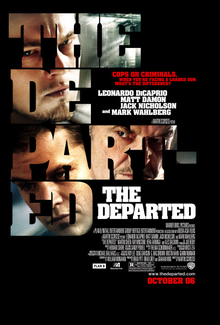
The Departed (2006): A Review

THE DEPARTED (2006)

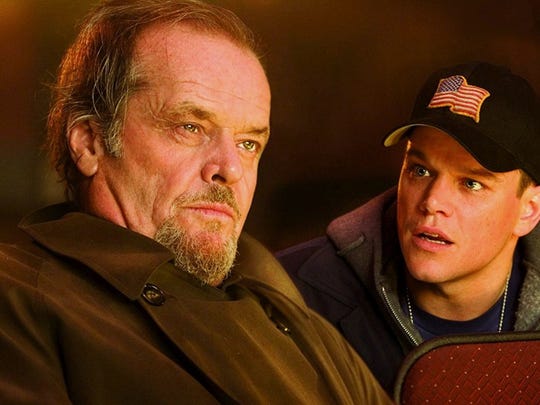
The Departed got director Martin Scorsese his long-sought Best Director Academy Award. Scorsese's remake of the Hong Kong film Internal Affairs keeps to some excellent moments, some wobbly Boston accents and a good though not great film.

Boston crime lord Frank Costello (Jack Nicholson) grooms preteen Colin Sullivan to eventually become his mole inside the Boston State Police. Colin (Matt Damon) rises through the ranks and his information keeps Costello one step ahead, but there's a hitch. Another department stubbornly refuses to give Sullivan the name of the mole in Costello's organization who like Sullivan has worked his way up.

That mole is Billy Costigan (Leonardo DiCaprio), himself a scion of a Boston crime family who wants to break away from his family's past. Under Captain Queenan (Martin Sheen) and his right-hand man Sergeant Dingam (Mark Wahlberg), Costigan uses the family name to work his way to Costello's side.

It soon becomes a game of Spy vs. Spy to find who is the rat. The subterfuges of Sullivan and Costigan isn't the only deception going on, as both of them become romantically involved with the same woman: psychiatrist Madolyn Madden (Vera Farmiga), though the former has a longer and deeper relationship to where she moves in.

As both groups start figuring out who is on the level, things start going haywire. Costello himself is unmasked as an FBI informant, which does not help his increasing paranoia. The investigations cost lives until both rats find their corresponding figure, leading to an orgy of death, deception and fierce retribution.

Image result for the departedNot having seen Internal Affairs, I cannot say how close or far The Departed is from the source material. I can say that The Departed kept that balance between the separate moles rather well until the climatic drug bust, with still at least half an hour to go. That perhaps is one of the film's weak points: it seems to go on much longer than it should. Granted, we needed to wrap up the story but some things felt a bit off.

The subplot with Madolyn seems not just absurd but unnecessary, at least the idea that she would end up sleeping with both rats. It's as if William Monaghan's screenplay wanted to make the parallels between Sullivan and Costigan be a bit too exact.

You also had a rather odd denouement where Madolyn discovers Sullivan's deception. Rather than turn the information to the police, she just locks the door after confronting Sullivan. Even more bizarre is the whole ending: Costigan's fellow officer was apparently contacted by him but he still struggles to accept Sullivan is the traitor. Add to that the end of both a second and never-hinted-at mole and Sullivan's own end and things just felt rather rushed.

As if the rat crawling on the ledge of Sullivan's posh apartment at the end of The Departed was not an exclamation point enough.

Other elements, such as Costigan's growing prescription pill addiction or Costello's FBI protection were dropped in but not made much of.

Image result for the departed
Monaghan's script, however, did have some positives. Costello calls Sullivan 'Collie', subliminally pointing out that for all Sullivan's intelligence and the faux-paternal manner between them Costello considered him essentially his dog. The younger men are tasked to essentially become what their 'father' Costello wants them to be. As such, both deny their true natures (rotten for Sullivan, dutiful for Costigan).

The Departed is a film drenched in Catholicism, particularly in a sense of guilt that comes from betrayal. Both Sullivan and Costigan betray their fathers be it biological (Costigan's decision to be a cop versus a hood) or spiritual (Sullivan causing Queenan's death to take attention away from himself).

Scorsese has some excellent visual moments, such as Costigan's pursuit of Sullivan (though he cannot see Sullivan's face), Queenan's death, an attempted bust on Costello and the climatic drug bust that brings them all into conflict. He also gets strong performances out of his cast.

Damon and Wahlberg, both Massachusetts natives, handle the Boston accent best. I'm surprised that the latter was the one singled out for his performance given that playing a foul-mouthed hair-trigger tempered working-class Bostonian is not exactly a stretch for Wahlberg. As the false cop, Damon was better though by the end he seemed surprisingly dim and detached. DiCaprio was hampered primarily by his efforts to drum up a convincing Boston accent. I found his character a bit one-note but on the whole I think he did well.

As much as Nicholson may be criticized for being over-the-top as the arrogant and increasingly bonkers Costello, I thought well of his performance and thought he played the part as it was written. Farmiga was given a somewhat thankless job as the only female character of note who serves as little more than the bedmate to both men. The standouts were Ray Winstone as Mr. French, the ever-loyal second to Costello who brought menace even when calm and Sheen as the moral Queenan, the only untouched man in this sleazy business.

The Departed is a strong crime drama that keeps the audience within the loop to the game of cat-and-rat. I don't think it's Martin Scorsese's best film, but it is a good film if a bit too long in my view.

DECISION: B-

2007 Best Picture Winner: No Country For Old Men

Wednesday, January 25, 2017

Silence (2016): A Review

SILENCE (2016)

The Rising Sun Rejects The Only Son...

I find that there is a great difference between doubt and disbelief.  Doubt, to me, means 'I cannot believe something in my mind, yet I will accept it as Truth'.  Disbelief, to me, means 'I cannot believe something in my mind, and I will not accept it as Truth'.  Silence does not answer whether our protagonist had Doubt or Disbelief.  As a meditation on faith and its perils, it is another Martin Scorsese masterwork.  As a film, it will try both men's souls and their patience.

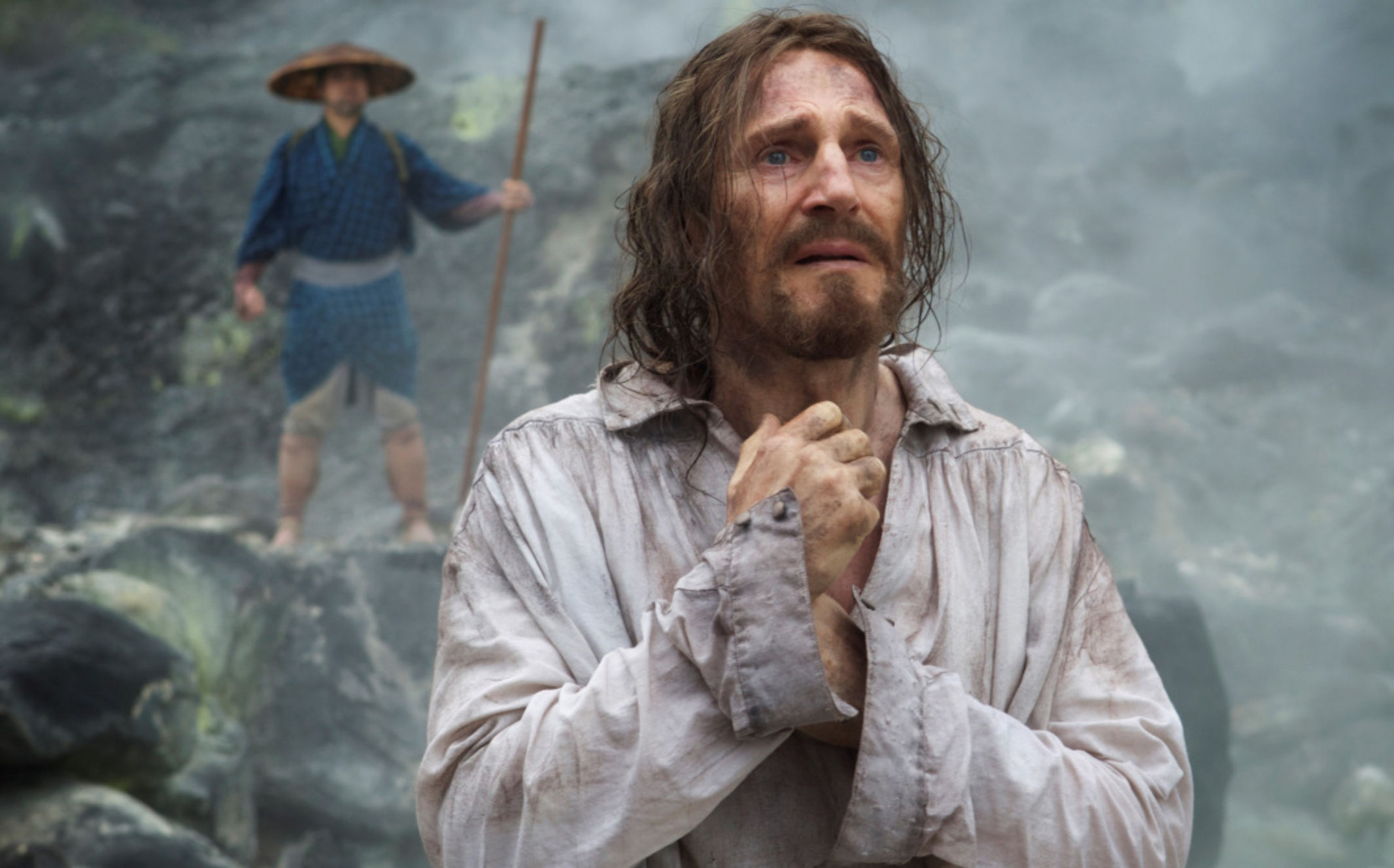
Two Portuguese Jesuits, Father Rodrigues (Andrew Garfield) and Father Garupe (Adam Driver) have received news that their mentor, Father Ferreira (Liam Neeson) has committed apostasy in Japan.  Ferreira has been one of the few remaining missionaries in the Land of the Rising Sun, a nation whose leadership (the Tokugawa shogunate) fiercely hostile to the Gospel.  Any Japanese who is found to be a follower of The Way is tortured unless he or she renounces The Faith.  The most visible example of that is by stepping on an image of Christ or Mary, Mother of Christ.

Ferreira, it has been reported, has renounced the Faith.  Against the advice and judgment of their superior, Father Valignano (Ciaran Hinds), Rodrigues and Garupe go to Japan, in secret, to find Ferreira and discover the truth.

The journey to Nippon is hard, with the two Jesuits finding a most unreliable guide: Kichiro (Yosuke Kobusuka), who may or may not be an alcoholic, and who may or may not be a Christian.  The local peasants and fishermen, all secret Christians, welcome the two Catholic priests, eager for the Sacraments so long denied them.  Rodrigues and Garupe find themselves both guests and prisoners, for they cannot go openly in a nation hostile to not just Christianity but Westerners as well.

Eventually, they are discovered, but not before Garupe and Rodrigues agree to split up to continue their search.  Every time there is some kind of betrayal of the priests to the Japanese, Kichiro is at the center of it.  Every time though, Kichiro tearfully begs confession of Rodrigues and the absolution it gives.


Once Rodrigues comes into Japanese hands, he must match wits and stave off The Old Samurai, whom he discovers is the Governor of the Province, Inoue (Issei Ogata), who pushes for Rodrigues to renounce his own faith, which Inoue insists cannot flower in 'the swamp of Japan'.  Rodrigues holds firm, though he wonders how God could let those who are so devoted to Him suffer so cruelly without recourse.

Inoue has Rodrigues see other Japanese Christians tortured, even though they have apostatized, and to his horror, Garupe is with them.  Garupe has held firm, but the Christians will be killed precisely because Garupe refuses to denounce his God (the only way the others can be saved).  Garupe drowns trying to save one, and Rodrigues is heartbroken, angry, bitter, but he still will not give in. Eventually, Inoue arranges for Rodrigues and Ferreira to meet.  Rodrigues finds that Ferreira has indeed rejected the Christian God, turned to the wisdom of Buddhism, and confirms that Christianity cannot fit into Japanese culture.  Not only does he push Rodrigues to renounce Christ, but he also tells him that the faith of the peasants is a false one, for to them, the Western Christ is still a mystery to them.

Rodrigues is brought to witness a cruel torture of captured Japanese Christians, and in desperation, urges them to apostatize.  Ferreira tells him they already have, several times over.  Inoue wants RODRIGUES to apostatize, to renounce his faith to save them.  Ferreira adds that for Rodrigues to keep his faith at the cost of others life is the true apostasy, and that it is vanity to compare his own suffering with that of Jesus Christ.  Rodrigues, at long last, apostatizes.

Now both Rodrigues and Ferreira, adopting Japanese names, customs, and even wives (all inherited from dead vassals of Inoue), work to keep Christian symbols and ideas out of Japan by examining everything that comes from the Dutch in Nagasaki (the only port where Westerners are permitted).  Kichiro himself becomes Rodrigues' servant, and it is found years later that he had a Christian symbol on him.  He is quickly sent away, with Rodrigues apparently not caring.

Upon Rodrigues' own death, even his body is carefully watched for any signs that he kept true to his apostasy.  Only a brief visit from his wife to his body is permitted.  As we see him buried in the Buddhist manner, his body burned, we look to see in his hands, a tiny crucifix, one the authorities never managed to find.
  
I don't think anyone of faith, regardless of what faith he/she has, hasn't had a 'dark night of the soul', a time when they struggled over whether what they believed was true or not.  Silence, to its credit, looks at the cost faith has on both an individual and those that the individual comes into contact with. 

In this Apocalypse of The Faith Now, our two figures (or primarily Rodrigues) go in search of our mad Kurtz, only to find, like our mad Colonel, that he has become something other than what he started out as, someone who has 'gone native' and left the bounds of Western views to embrace the wisdom of the East.

I just wish that Scorsese had not done what I find rather ridiculous whenever someone has 'deep thoughts'.  It is this idea of 'whispering'.  Garfield's dialogues, even monologues, almost always consist of whispering, or at least speaking softly.  It doesn't matter whether it is internal or external: there is a very hushed, muted verbal nature to Silence, and that displeases me because it signals that the film does not trust me to understand. 

The good Padre whispers his doubts of God's existence as He does not answer the prayers of His Japanese flock.  He is disturbed by God's Silence.  He is irritated by the idea that Kichiro can keep coming to him for absolution whenever he sins (he let his family burn alive to save himself when they refused to renounce Jesus, and helped the Japanese find Rodrigues for his own three hundred pieces of silver...though I'm sure any symbolism was purely coincidental).

When Rodrigues finally and tearfully apostatizes, we find that it is dawning, and in the distance, we can hear a rooster crow.  I'm sure that moment was coincidental too.


Perhaps it's the Protestant in me, but I think one has to be of a Catholic view (which Scorsese was brought up in) to hold some of the ideas of Silence.  A Protestant would not put much stake in iconography (after all, Martin Luther and John Calvin were particularly appalled by images and knowing them would have delighted in stomping over pictures of Mary).  Yet I digress.

I find it hopelessly irritating whenever we have endless moments of whispering.  It, to me, is too much artifice to drive home a point I can just as easily get without whispers, careless or otherwise.

Let us move on to the performances.  Alas, Andrew Garfield, how I am souring on you.  I cannot say I was a fan of Garfield (with the possible exception of The Social Network, maybe Never Let Me Go).  I have avoided Hacksaw Ridge for many reasons, one of them being I cannot believe Garfield's Southern accent.  Silence shows he can't handle a Portuguese one either (and more to the point, do we really need for him or Driver to have one).  Neeson didn't bother to have one, which makes the Irishman the most authentic Portuguese person there.  It doesn't help that Garfield's accent comes and goes.  Driver kept his, which wasn't the greatest but at least he wasn't on screen that long to make it sound stranger than it already did.

The best performance, however, is that of Ogata as the shrewd governor, one who pushes in manners cruel and kind.  His frustration at the young priest's stubbornness is at times almost hilarious (at one point, he appears to almost literally deflate at the verbal sparring between the two when he can't get Rodrigues to see reason).

Silence is visually splendid, with very little to no score to back it up (and which makes the whispering all the more noticeable).  Nothing can take away from the passion Scorsese had with the film, his technical craftsmanship in it. I could even see little callbacks to Kurosawa films like RAN. However, Silence felt a bit remote, removed, aloof, distant.  It is a very slow-moving film.  This isn't a slam, but I suspect there will be people who will find the pace very frustrating.

Again, this isn't a slam on Silence.  It is a warning. It is a very visually splendid film, one that takes its time getting from one point to another.  Even some of the questions it asks aren't answered (such as whether Kichijiro was really a Christian or just kept wavering between faith and folly).  I think we were meant to answer those questions ourselves, whether Rodrigues' faith was truly worn down, whether he did repent and return to Christ, whether he ever truly left, or whether he held on to objects rather than the actual Truth behind the objects.

I respect Silence.  It asks deep questions on and of faith, of the morality of holding to ideals if it means others will perish for them (as Inoue snidely tells Rodrigues, "The price for your glory is their suffering").  It questions whether the faith of people is real or imagined.   It is a visually arresting film.

However, people who go into Silence should steady themselves through a film that might prove very slow for them, sometimes a bit overdone with symbolism, and with a lot of whispering.  They might also find some not-terrible but not-great performances and shaky accents (though again, to be fair, I'm not an Andrew Garfield fan, so that might make me slightly prejudiced).

While watching, I was reminded that 'to live is Christ, to die is gain' (Philippians 1:21).  I cannot say whether those claiming the name of Christ in Tokugawa-Era Japan were true martyrs or not.  However, I find that I cannot fully embrace Silence.

DECISION: B+
Saturday, February 15, 2014

The Wolf of Wall Street: A Review

THE WOLF OF WALL STREET


This is not scientific in any way, but out of my own curiosity I decided to count the number of expletives (in particular F-Words) that The Wolf of Wall Street used in its three-hour runtime.  Some reports have it as high as 544.  Other reports have it at a mere 506.  Now, yours truly decided to tally every F-Bomb he heard, and granted he might have missed a few (given how some characters repeated it so often I had to rush my tally marks), but my total comes to 512, and two of them were mouthed so I won't argue a count of an even 510. 

I can also report that my pen ran out of ink at the end of The Wolf of Wall Street, partially because all those tally marks do add up, partially because the movie is a whopping THREE HOURS LONG.  That's a mere 54 minutes shorter than Gone With the Wind (including the Overture, Intermission and Exit Music), 52 minutes shorter than Lawrence of Arabia (ditto), 32 minutes shorter than Ben-Hur, and 20 minutes shorter than The Godfather Part II.   I throw all that at you because The Wolf of Wall Street, again, is LONG.  That isn't necessarily a bad thing: long movies can be extremely good (examples: Gone With the Wind, Lawrence of Arabia, Ben-Hur, The Godfather Part II).  Sometimes though, a little trimming could have worked wonders: at 3 hours, 21 minutes, The Lord of the Rings: The Return of the King could have maybe cut out one of its many endings without being none the worse for wear.  In the same vein, The Wolf of Wall Street might have cut down on scenes that last longer than they should, maybe show less of Leonardo DiCaprio's nude body (among other naked people) and yes, throw out a few of the 506/512/544 F-Bombs. 

Its running time, while not justified, is however, only one aspect of The Wolf of Wall Street that makes me wonder how so many can think it is so good when it is not.  It's not bad, mind you.  There are many good things in it (the F-Bombs, though, are not among them).  It is just that there is a fine line between 'sprawling' and 'chaotic', and The Wolf of Wall Street goes through said line more often than not. 

Jordan Belfort (DiCaprio) narrates his story, sometimes speaking directly to the viewer.  His life's ambition is to be hyper-rich (he is disappointed that his income one year didn't average a million a week).  Under the mentorship of Mark Hanna (Matthew McConaughey in a cameo), he soon starts his road to being a high-power stock broker.  Unfortunately, the day he starts is October 19, 1987: Black Monday, when the stock market takes a wild plunge leaving everyone stunned.  Out of work, his wife Teresa (Cristin Milioti) directs him to a Long Island firm that deals in penny stocks.  Belfort, however, takes his experience and starts making thousands, tens of thousands, even millions, selling worthless stocks in penny-ante companies. 

His wealth gains the admiration of Donny Azoff (Jonah Hill), who also shares his taste for drugs (introducing him to the joys of crack cocaine, a rare substance Jordan hasn't used before) and women (mostly, but that's later).  Jordan starts his own firm, with the ever-so-posh name of Stratton Oakmont, to lure more customers into his schemes.  As his crew, he gathers a collection of marijuana sellers, users, and only one with anything close to higher education (one of his employees, for example, thinks jujitsu is a place in Israel).  Jordan trains them in the art of the steal, and soon they become very rich.  With that, they also become even more self-indulgent with the hookers, the drugs, and the general bacchanal-like world of their own boiler room.


Jordan attracts more fools...I mean, followers, after a blistering profile in Forbes Magazine, and with that, he also attracts Naomi (Margot Robbie), a beautiful woman he calls the Duchess of Bay Ridge.  Now, Jordan has never been faithful to Teresa, but Naomi is simply too beautiful and desirable to let slip through his fingers.  Affair discovered, a quick divorce and second marriage commences.

Things are rolling along very well, but trouble is on the horizon.  FBI Agent Patrick Denham (Kyle Chandler), as well as the Securities and Exchange Commission, has been keeping his eyes on Jordan ever since the Forbes article, knowing he is a shady character.  Jordan tries to buy his way out of this, but no dice.  Still, he keeps rolling along, determined to make and keep his high-flying life going.  If it means using his wife's Aunt Emma (Joanna Lumley) to hide money in Switzerland, so be it.  If it means doing business in Switzerland with banker Jean Jacques Saurel (Jean Dejardin, clearly enjoying his further ventures into English-language cinema), that works too.  Eventually though, through a mix of inept bungling by Azoff and the Stratton Oakmont minions (particularly the money smuggling to Europe), Saurel's missteps, other outside forces (Benihana somehow helps bring him down too) and Jordan's own hubris the Feds catch up to him.   Though there is a chance for a deal Jordan decides to stay in the game.  That and his turning on the Feds by trying to tip off Azoff about the investigation lands him in a country club prison, but in the end, Jordan Belfort rises again, luring new people into following his Master Plan for Wealth.

I have never held that 'nothing succeeds like excess', so if people truly look at Jordan Belfort and his life of drugs, sex, and cash as something to admire they are far sicker than the subject of The Wolf of Wall Street.  I figure Martin Scorsese wanted to make a film about pure, naked (in more ways than one) greed and avarice, to hold up a mirror to the wild derangement of American capitalism gone mad.  Perhaps all the excess in The Wolf of Wall Street (especially the length) was meant to reflect the excess of Stratton Oakmont and Jordan Belford and his minions in particular.

That is still no reason for having so much in it that it soon becomes far too bloated and chaotic to justify either its running time or its content.

I could not help think that Terence Winter (basing his screenplay on Belford's autobiography) was simply too enamored of the insanity of Belford's world to maybe not try to trim things down.  I could easily see whole characters and subplots removed without affecting the flow of the story.  For example, we get a small story of Jordan's gay butler, Nicholas (Jon Spinogatti), who hosted his own orgy where cash was stolen.  Jordan and his crew is furious about the potential theft, going so far as to dangle the butler over the edge in order to get him to talk (after giving him a beating).  The butler at one point tells them that he and Donnie know the same person, a Rudy from the Lollipop Club (not to be confused with the Lollipop Guild), which Donnie hesitantly denies.

Does it suggest Donnie is gay, bisexual, maybe bicurious?  Well, minus one gay slur thrown at him long later this doesn't come up again.  Same goes for Jordan's two guards, Rocco and Rocco.  We see them when they can see on hidden camera Naomi denying the highly sex-crazed Jordan a visit to her 'special place', but then they disappear without rhyme or reason.  We also get near the end a horrifying scene where the drugged-out Jordan tries to take his daughter out of the mansion but only ends up crashing the car when he puts it in reverse with a terrified little girl in the car.  Violet (Johnnie Mae) does her best to rescue Skylar.

Now, who is Violet?  Who knows!  Technically, Violet is the housekeeper/nanny, but we were never formally introduced.  I remember writing in my notes "Kimmie--where'd she come from?" Kimmie (Stephanie Kurtzuba) is...well, I don't remember, and here is one of the big problems The Wolf of Wall Street has: minus the main characters, other pop in and out so quickly whatever role they played are quickly forgotten. 

Scenes that should have worked don't.  For example, there is the face-off between Denham and Belfort (a side note, at 48 Kyle Chandler looks if not the same age actually younger than the 39 year old DiCaprio).   What should be a battle of wits and subtle hints and nods soon starts getting longer, and longer, with pauses where it looks like they aren't sure if the scene is over or should continue. 

Further, while the cult-like atmosphere of Stratton Oakmont is captured in wild scenes of deranged decadence, it soon becomes a lot to take in: all the drugs, the sex, down to what I think is the first snorting coke/rimming scene in film history. 


This isn't to say that The Wolf of Wall Street doesn't have good things in it.  Leonardo DiCaprio is a great actor because he wills himself to be.  He throws himself into the role with naked abandon (literally sometimes), and we see a side of DiCaprio we rarely see: a comic, manic side.  The airplane scene where a hopelessly high Belfort can't control himself is funny, and his entire scene where while outrageously high he tries to drive home when he can barely move is a great moment.  DiCaprio is great in his role.  Chandler (though criminally underused) is similarly great as the honest agent.

The screenplay also does  have funny moments.  At the interrogation of the brokers, one answers with "I have no recommendation of that", obviously meaning 'no recollection'. 

However, one thing that did puzzle me was how Scorsese, a director who uses music to great effect, didn't have the touch here.  Sometimes it works brilliantly (when Naomi first appears, it's to I Might Like You Better if We Slept Together, and at his wedding they are serenaded to the appropriate Goldfinger, though perhaps this was a touch too direct), sometimes it's a bit odd (the Foo Fighters' version of Mrs. Robinson, while great, is an odd fit). 

Again, I didn't dislike The Wolf of Wall Street, but I really didn't care about this lunatic or his insane world.  I thought the story was simply out of control and would have benefitted from more cutting, less drugs, and less sex.  That, however, does happen to be my general view of life as well.

Born 1962


DECISION: C+