Showing posts with label Julianne Moore. Show all posts

Saturday, January 17, 2026

Far from Heaven: A Review

FAR FROM HEAVEN

The 1950s were for some a golden age of charm and elegance. For others, the Eisenhower Era was one of deep repression. Far from Heaven plays into both ideas, though leaning towards the latter. It evokes the filmmaking style to tell its tale with all its complexities beneath the graceful veneer. 

1957, Hartford, Connecticut. Elegant housewife Cathleen "Cathy" Whitaker (Julianne Moore) seems to have it all. Her husband Frank (Dennis Quaid) is a successful ad executive. They are even the literal faces of the company Magnatech, appearing in the print ads. Cathy is the proud mother of a boy, David (Ryan Ward) and a daughter, Janice (Lindsay Andretta). 

However, all is not as pristine as it seems. Frank harbors a deep secret. He is a closeted gay man, something that threatens to emerge when he is arrested. Cathy is inadvertently caught up in her own gossip after encountering Raymond Deagans (Dennis Haysbert). He is the black gardener who is taking over his late father's accounts. Their interaction, witnessed by a local reporter profiling "Mrs. Magnatech" is misconstrued. 

Initially, things stay hush-hush. However, one night Cathy goes to Frank's office with a surprise dinner. It is Cathy who is surprised when she finds Frank in passionate lip-lock with another man. He admits his struggles and they decide Frank will enter conversion therapy. It ends up leading to Frank's growing drinking problem. It also leads to an accidental slap. 

Raymond finds Cathy sobbing and offers to take her to town to look at some trees and flowers for his work. She agrees, seeing nothing off about taking time to do some errands while in town. They are again spotted by Mona (Celia Weston), Hartford's gossip queen. Now it is Frank who is enraged at the lurid suggestions of miscegenation. Cathy fires Raymond to quell the rumors, and she and Frank go to Miami for a long-delayed second honeymoon on New Year's. However, Frank cannot be "cured" of his same-sex desires. With him finally finding fulfillment, he asks for a divorce. Will Cathy find a kindred spirit with Raymond? Will society let our three figures live?


If one knows the filmography of Douglas Sirk, one appreciates Far from Heaven. The Todd Haynes written and directed film borrows heavily from at least three of Sirk's melodramas. Race relations make up a major element in Imitation of Life. Frank's alcoholism as coping for his struggle to be aroused are reminiscent of Written on the Wind. The hunky gardener who brings culture, life and love into our hausfrau echoes All that Heaven Allows. The very title Far from Heaven mirrors the very titles and style of a Sirk film. 

Far from Heaven is like a Douglas Sirk film if Sirk had been allowed to be more open and touch on other topics like homosexuality. Haynes has Sirk's visual and thematic style down perfectly. In terms of look, Far from Heaven is filled with lush colors dominated by green and blue. The autumn leaves are also in keeping to the lush palate. The soft look in the film deliberately evokes the era, making Far from Heaven familiar while still being original. Even the title card showing "Far from Heaven" captures the style and look of what one might expect from a 1950's melodrama. I will argue that the font might be a bit bigger than what Sirk would have used, but that might be nitpicky. 

Far from Heaven made a wise choice in having Elmer Bernstein write the score, which along with the cinematography was one of the film's four Oscar nominations. Though Bernstein never worked with Sirk, he was familiar with the era and musical style. Bernstein had been working in film since Sirk's time, so he knew how to make Far from Heaven's score lush or menacing when needed.

Haynes also revealed much through his use of the camera. The Dutch angles used when Frank wanders slowly into the underground gay bar or when Raymond's daughter Sarah (Jordan Puryear) is attacked by white boys reveals subconsciously the growing chaos internal or external we see. There are other subtleties revealed, such as when Cathy and Raymond discuss modern art at a local exhibition. Amidst the conformity of the era, you have a white woman and a black man discussing MirĂ³. Both of them would have fewer rights in the era, and here, we see them as equals and as embracing nonconformity. As I think of it, the same can be said for Frank, who is a sexual minority despite his male white privilege. 

It is curious that modern art in the Nifty Fifties is also touched on in another 1950's-set film: Pleasantville. That film couched its firm dislike to downright antagonism of the era in the veneer of a faux-nostalgic look. Far from Heaven, conversely, was oddly more respectful of both the times and the people who lived them. Pleasantville hammered its view that the 1950's were bad compared to the 1990's. Far from Heaven was more sympathetic in its portrayal of present-day looking back to the past. I think it is because Pleasantville presents the era as simplistic to almost intellectually vapid, while Far from Heaven presents it as more complex and questioning of itself. Yet I digress. 

The stylistic manner in Far from Heaven extends to the acting. Julianne Moore was also one of the film's four nominations (the screenplay also receiving recognition). She has a soft speaking manner, not quite breathy but genteel. Even in the moments of struggle and tragedy, Moore never explodes. This, I think, keeps to how some Sirk women were (Lana Turner being a notable exception). Moore gives Cathy a quiet grace and dignity while also keeping to the manner of our ideas of a housewife. Cathy is not dim or weak. She keeps to a soft manner but also has a sense of conviction and moral courage. Dennis Quaid was moving as the conflicted Frank (which in retrospect is an ironic name). Some of his best scenes are with James Rebhorn as the psychiatrist who will attempt to change Frank's sexual orientation. We see Frank's growing unease to hostility at having to undergo this treatment. One of Quaid's final scenes, where he tearfully breaks down in front of his family, is deeply moving and unsettling.

Dennis Haysbert too does well as Raymond, the intellectual gardener. He makes Raymond into a strong and elegant man, protective of his daughter, gentle and intelligent. In her small role, Patricia Clarkson does wonderful work as Eleanor Fine, Cathy's BFF who is supportive, but who also does not understand Cathy. Ward and Andretta also give good performances as David and Janice. One does feel for David, forever longing for "Pop's" attention. Janice for her part does not understand why her friends and their mothers shun her at the ballet recital. 

One can wonder how Cathy and Raymond must be dumb AF as the kids say to not realize that a black man and a white woman going around town together would not set tongues wagging. That, on the whole, is a curious but not major point of criticism. 

Far from Heaven is both a pastiche and homage to the films of Douglas Sirk. The film is appropriately lush and romantic, but with a great deal of love and affection for the subject and characters. Had he lived to see it, I think Douglas Sirk would have been more than proud to have inspired Far from Heaven. It is a perfect Imitation of Sirk.

Thursday, December 11, 2025

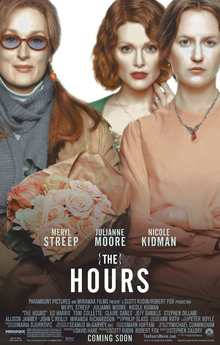
The Hours: A Review (Review #2090)

THE HOURS

The complicated lives of complex women across the generations are chronicled in The Hours. A film that features strong performances and a surprisingly coherent story despite the three separate time periods, The Hours is a good film if not good entertainment.

The Hours covers three time periods as previously stated though they do eventually tie into each other. They are 1923 Richmond, England, 1951 Los Angeles and 2001 New York City. Each section is connected to the Virginia Woolf novel Mrs. Dalloway. The film weaves each story throughout its runtime.

The 1923 section centers around Mrs. Dalloway authoress Virginia Woolf (Nicole Kidman). Virginia struggles with mental health issues. For her own safety and supposed peace of mind, her husband Leonard (Stephen Dillane) has moved her and a whole printing press to the London suburb of Richmond. Virginia is somewhat looking forward to her sister Vanessa's (Miranda Richardson) visit for dinner. Vanessa comes far earlier than expected, along with Vanessa's children. After this visit, Virginia attempts to go to London unsupervised. Leonard, alarmed to learn that she is not at home, races to the train station. Here, Virginia states that she is suffocating and needs to live. Virginia makes it clear that while her life is in danger by her own hand, she must be allowed to live it freely.

The 1951 section is on housewife Laura Brown (Julianne Moore). It is her husband Dan's (John C. Reilley) birthday, and she will make a cake. They have a son, Richie (Jack Rovello) and is pregnant with their second child. Things look good on the outside for the Browns. However, Laura is also suffocating in her own way. As she continues reading Mrs. Dalloway, she finds life is beginning to overwhelm her. This is more so when her friend Kitty (Toni Collette) stops by. Kitty is having a medical procedure for a certain women's issue. Kitty attempts to sound optimistic but is quietly terrified. A surprise kiss from Laura startles them both. Laura, having finished a second cake, goes to a posh hotel, leaving Richie in a friend's care. She takes Mrs. Dalloway and several pills with her. Will she follow in Virginia Woolf's steps to suicide?

The 2001 section has Clarissa Vaughn (Meryl Streep) prepare for a party. Echoing the plot of Mrs. Dalloway, Clarissa wants to have things ready for her friend and one-time romantic partner Richard (Ed Harris). Richard, a poet struggling with AIDS, has been awarded the Carruthers Prize for lifetime achievement. Despite both Richard and Clarissa being gay, they consider their college relationship one of their great loves. Clarissa's current partner Sally (Allison Janney) and daughter Julia (Claire Danes) are quietly supportive. Clarissa has also invited Richard's ex-lover Louis Waters (Jeff Daniels), who has mixed feelings about both Richard and the party. Clarissa loves Richard, but will Richard follow in Virginia Woolf's steps to suicide? In the end, Richard's estranged mother comes, completing the circle in The Hours.

The Hours is what I would call respectable cinema. It is posh, elegant, well-acted and flows surprisingly well despite the three separate time periods. The Academy of Motion Picture Arts & Sciences was impressed enough with The Hours to give the film nine Oscar nominations including Best Picture. Curiously though, it lost in all but one category: Best Actress for Nicole Kidman. More curious, at least to me, is that Kidman is the third billed actress in The Hours after Meryl Streep and Julianne Moore, the latter nominated for Best Supporting Actress.

I have not read Michael Cunningham's novel that David Hare adapted in his Oscar-nominated screenplay. As such, I cannot say how close or far The Hours was from book to screen. I do give credit that The Hours, as stated, never felt as if any of the sections collided or jammed their way in. One also does not have to have read the novel to know that 1951's Richie would pop up in 2001. I figured that out right away as soon as Laura called her son "Richie".

I give you one guess to find the connection. Personally, I found it quite obvious and would be surprised if others did not make an immediate connection. Yet, I digress.

The Hours is a strong film. Peter Boyle's Oscar-nominated editing works excellently. There is no sense that one story forces its way into another. Instead, the film flows quite smoothly between 1923, 1951 and 2001. We see each section move chronologically within the overall story. It does not go from the earliest to the latest time period. If it did, I did not notice it enough to let it get me out of the film.

Another remarkable element in The Hours is Philip Glass' Oscar-nominated score. The music is typical Glass, with a lot of repetition. However, Glass creates an elegant and elegiac score. The music set the mood for these interlocking tales of unfulfilled lives. The closing theme is so beautiful that one listens to it in rapt attention, marveling at its elegance.

Two of the three central performances were singled out for Oscar consideration. Julianne Moore is fine as Laura, the highly depressed and suicidal mother drowning (metaphorically and in a dream sequence, literally) in suburban ennui. I did think that Moore was at times a bit too dramatic, almost stilted in her "I'M MISERABLE" manner. I did not think that Moore was terrible. I do wonder if Moore was reverting to her Far from Heaven manner. If Julianne Moore performances are reflective of Eisenhower's America, all white housewives led lives of quiet despair.

Nicole Kidman was singled out for her performance as Virginia Woolf. I am not going to delve into Kidman's prosthetic nose. I find the focus on the nostril rather silly. Instead, let us focus on her acting. It is quite good. Kidman reveals Woolf's mix of frustration, despair and optimistic rage. She is a creative woman, fully aware of both her place in society and the danger her personal health puts her in. Of particular note is when she expresses her frustration at the stifling yet safe world of Richmond. 

Kidman is good here precisely because she isn't raging or ranting. Instead, Kidman is controlled in her anger, frustration and overwhelming sense of despair. Kidman's Virginia Woolf is someone who wants to live life, even if it will lead her to drowning herself. 


Meryl Streep does well as Clarissa, the woman who is close to living out Mrs. Dalloway. Streep has strong moments where we see Clarissa's own despair. Her scene with an equally strong Jeff Daniels reveals a woman who is working to keep things going while aware that things are going awry. Less strong are her scenes with Ed Harris. This is more on Harris' part than on Streep's. Their scenes seemed more stage-set, as if they were in a play than attempting to act out real life. The two twists involving the dying Richard's illness and connection to the overall story were anything but. I knew both who Richard was and what his fate would be. It is to where I wondered if Hare's screenplay or Stephen Daldry's direction intended to make things obvious.

In their supporting roles, Claire Danes and Allison Janney did well in the 2001 section. The aforementioned Jeff Daniels brought a touch of tragedy and regret to his Louis, the man who left Richard. He had essentially one scene, but he made the most of it. Miranda Richardson's Vanessa was effective, showing a loving yet frustrated side to Virginia's sister. John C. Reilley was probably the weakest part. It veered more towards a parody of a stereotypical 1950's husband and father versus a real person.  

The Hours focuses, intentionally or not, less on the similar struggles that women in general have to be free and independent as themselves. Instead, again intentionally or not, The Hours has all three women be lesbians. Virginia Woolf was somewhat closeted in real life. Laura Brown kisses Kitty fully on the lips, confusing both. Clarissa is an open lesbian. I do not know why The Hours had three lesbians as our three female protagonists. Granted, we never saw Virginia Woolf or Laura Brown involved with any woman sexually. Woolf's kiss with her sister Vanessa was a bit curious, though. Laura kissing Kitty pretty much came out of nowhere.

On the whole though, I have to give The Hours credit for achieving its goal of putting these three stories and melding them into one overall story. "The poet will die, the visionary," Kidman's Virginia Woolf is heard to say. One can see that she, metaphorically, is speaking about someone else in the far future. That someone, we learn, is tied to a distraught mother who needed to escape for a life of her own. Yes, it ties in together surprisingly well. The Hours benefits from strong performances and production work that make it good viewing. 

One need not be afraid of this Virginia Woolf. 

Sunday, July 20, 2025

Still Alice: A Review

STILL ALICE

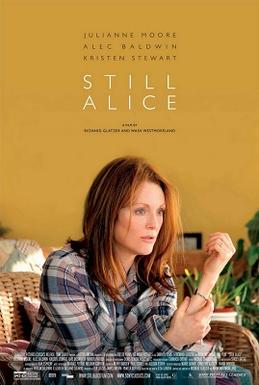
Sometimes, you just want to get things over with. This thought came to me after finishing Still Alice, the film for which Julianne Moore won an Academy Award on her fifth nomination. Moore felt overdue for a win, especially given that she is the rare person to receive a Lead and Supporting nomination in the same year (2003). Still Alice is fine, I suppose. That, however, may be the problem. It is fine. It is not good.

Dr. Alice Howland (Moore) is a brilliant linguistics professor at Columbia University. She has just turned fifty and is approaching the zenith of her academic career. Alice is happily married to her husband John (Alec Baldwin) a successful surgeon. She also has three children: Anna (Kate Bosworth), Tom (Hunter Parrish) and Lydia (Kristen Stewart). Lydia is the one causing Alice something of a headache, her acting aspirations at odds with Alice's ideas of success.

One day, Alice struggles through a presentation. She jokingly plays it off as the aftereffects of too much wine. However, other troubling elements start emerging. She gets lost jogging in familiar areas. She forgets more words. She confuses her daughter for her sister. What is the matter with Alice?

It is not a brain tumor, as she initially suspects. It is early-onset Alzheimer's disease. Alice takes the news surprisingly well, showing no emotion to the diagnosis. She also starts slipping further into the disease. She greets a guest twice, unaware that they have met at the most a half-hour prior. She forgets dinner dates and meetings. She gets lost more often. Alice will not let the disease defeat her, though it does inevitably cost her the loss of her job.

She starts speaking publicly about her diagnosis, requiring a marker to note what she has previously said. It is time for the Howland family to make tough decision. Will John decline an offer from the Mayo Institute to keep Alice in familiar territory? Will Alice and Lydia reconcile their differences? Will Lydia put aside her own acting dreams to care for her mother? Will Alice make a difficult choice about her life if she finds that she can no longer care for herself?


I imagine that Alzheimer's disease is an extremely difficult diagnosis, not just for the person afflicted but also for that person's family. It is painful to see someone fade out into a shadow world, unable to help your loved one in any way. It is painful too to know that you are doomed to fade out yourself, condemned to losing your very identity and ability to function. Each person handles these things differently: denial, anger, sadness. 

What did surprise me about Still Alice is an emotion that I did not expect: dispassion. I suppose that I can give co-directors/writers Richard Glatzer and Wash Westmoreland credit. They opted to not make Still Alice into a sensational or overly sentimental adaptation of Lisa Genova's novel. They did not give the actors big moments of emotional outbursts or histrionics. Instead, I think that they went the opposite way and made the whole thing rather cold and remote. 

It is one thing to be eerily calm when you are given an Alzheimer's diagnosis. It is, I find, quite another to be almost disengaged when you are told that it might be a brain tumor. Alice as played by Moore at times never seemed to display any emotion. I found this surprising given that the character was, I presume, meant to be seen as intellectual and strong. 

I can concede that perhaps that was how Alice Howland was supposed to be: disengaged, remote, dispassionate about her declining health. However, I found her too remote, removed and almost inhuman. To be fair, she did display a little prickliness when dealing with her doctor. That prickliness seemed more for his own calm manner than from any struggle she had.

I cannot shake the idea that Still Alice was going to get Julianne Moore her long-awaited Oscar no matter how good or bad her performance was. Do I think that it was a bad performance? No, but I did find it very "actory". To me, that means calculated, methodical, planned out. Her performance was professional but distant. I never saw the character of Alice Howland. I saw Julianne Moore.

There were times when I thought that Alice was using Alzheimer's as an excuse to get out of things like dinners that she was not keen on. It is strange that what I figure was meant as an emotionally devasting scene where she cries because she can't find the restroom, I thought that it was veering towards parody. 

Her insistence on continuing to try and teach despite her growing inability to do so did not come across as courageous. It came across as arrogant. For someone who is meant to be highly intelligent, she came across as stupid in not seeing that her class was a muddle. 

The rest of the cast save one made Still Alice, well, still in their actions. I found very little emotion in every actor except Kristen Stewart. Again, I was not looking for big moments where people throw things and go into shouting tirades. I was also not expecting the exact opposite: no emotion, no reaction to what I figure would be a difficult thing to live through. 

Stewart, as noted, was the exception. That, however, is not a good thing. She played a struggling actress. I saw an actress struggling. I have never thought that Kristen Stewart is a good actress. Still Alice did not convince me to change my mind.

One of Still Alice's greatest flaws is Ilan Eshkeri's score, which was syrupy and getting on my nerves. Perhaps Eshkeri's score was meant to make up for the lack of emotion that the characters had. That's as good a guess as to why I found it unbearable to listen to.

None of this is to say that the attention that Still Alice brings to Alzheimer's disease is not a good thing. Alice in her speech to an Alzheimer's Association group tells them, "I am not suffering. I am struggling", which is a good way of phrasing things. However, I still would have liked to have seen there be any emotion, even overdone ones, to none at all.

Still Alice, I think, will be remembered for being the film that finally got the talented Julianne Moore an Oscar. It should be noted that Moore has not received an Oscar nomination since Still Alice as of this writing. That makes me think that the Academy figured that they got that over with and could move on. Still Alice is not terrible. It is fine. It also could have been more.

DECISION: C- (4/10)