Showing posts with label 2002. Show all posts

Saturday, January 17, 2026

Far from Heaven: A Review

FAR FROM HEAVEN

The 1950s were for some a golden age of charm and elegance. For others, the Eisenhower Era was one of deep repression. Far from Heaven plays into both ideas, though leaning towards the latter. It evokes the filmmaking style to tell its tale with all its complexities beneath the graceful veneer. 

1957, Hartford, Connecticut. Elegant housewife Cathleen "Cathy" Whitaker (Julianne Moore) seems to have it all. Her husband Frank (Dennis Quaid) is a successful ad executive. They are even the literal faces of the company Magnatech, appearing in the print ads. Cathy is the proud mother of a boy, David (Ryan Ward) and a daughter, Janice (Lindsay Andretta). 

However, all is not as pristine as it seems. Frank harbors a deep secret. He is a closeted gay man, something that threatens to emerge when he is arrested. Cathy is inadvertently caught up in her own gossip after encountering Raymond Deagans (Dennis Haysbert). He is the black gardener who is taking over his late father's accounts. Their interaction, witnessed by a local reporter profiling "Mrs. Magnatech" is misconstrued. 

Initially, things stay hush-hush. However, one night Cathy goes to Frank's office with a surprise dinner. It is Cathy who is surprised when she finds Frank in passionate lip-lock with another man. He admits his struggles and they decide Frank will enter conversion therapy. It ends up leading to Frank's growing drinking problem. It also leads to an accidental slap. 

Raymond finds Cathy sobbing and offers to take her to town to look at some trees and flowers for his work. She agrees, seeing nothing off about taking time to do some errands while in town. They are again spotted by Mona (Celia Weston), Hartford's gossip queen. Now it is Frank who is enraged at the lurid suggestions of miscegenation. Cathy fires Raymond to quell the rumors, and she and Frank go to Miami for a long-delayed second honeymoon on New Year's. However, Frank cannot be "cured" of his same-sex desires. With him finally finding fulfillment, he asks for a divorce. Will Cathy find a kindred spirit with Raymond? Will society let our three figures live?


If one knows the filmography of Douglas Sirk, one appreciates Far from Heaven. The Todd Haynes written and directed film borrows heavily from at least three of Sirk's melodramas. Race relations make up a major element in Imitation of Life. Frank's alcoholism as coping for his struggle to be aroused are reminiscent of Written on the Wind. The hunky gardener who brings culture, life and love into our hausfrau echoes All that Heaven Allows. The very title Far from Heaven mirrors the very titles and style of a Sirk film. 

Far from Heaven is like a Douglas Sirk film if Sirk had been allowed to be more open and touch on other topics like homosexuality. Haynes has Sirk's visual and thematic style down perfectly. In terms of look, Far from Heaven is filled with lush colors dominated by green and blue. The autumn leaves are also in keeping to the lush palate. The soft look in the film deliberately evokes the era, making Far from Heaven familiar while still being original. Even the title card showing "Far from Heaven" captures the style and look of what one might expect from a 1950's melodrama. I will argue that the font might be a bit bigger than what Sirk would have used, but that might be nitpicky. 

Far from Heaven made a wise choice in having Elmer Bernstein write the score, which along with the cinematography was one of the film's four Oscar nominations. Though Bernstein never worked with Sirk, he was familiar with the era and musical style. Bernstein had been working in film since Sirk's time, so he knew how to make Far from Heaven's score lush or menacing when needed.

Haynes also revealed much through his use of the camera. The Dutch angles used when Frank wanders slowly into the underground gay bar or when Raymond's daughter Sarah (Jordan Puryear) is attacked by white boys reveals subconsciously the growing chaos internal or external we see. There are other subtleties revealed, such as when Cathy and Raymond discuss modern art at a local exhibition. Amidst the conformity of the era, you have a white woman and a black man discussing MirĂ³. Both of them would have fewer rights in the era, and here, we see them as equals and as embracing nonconformity. As I think of it, the same can be said for Frank, who is a sexual minority despite his male white privilege. 

It is curious that modern art in the Nifty Fifties is also touched on in another 1950's-set film: Pleasantville. That film couched its firm dislike to downright antagonism of the era in the veneer of a faux-nostalgic look. Far from Heaven, conversely, was oddly more respectful of both the times and the people who lived them. Pleasantville hammered its view that the 1950's were bad compared to the 1990's. Far from Heaven was more sympathetic in its portrayal of present-day looking back to the past. I think it is because Pleasantville presents the era as simplistic to almost intellectually vapid, while Far from Heaven presents it as more complex and questioning of itself. Yet I digress. 

The stylistic manner in Far from Heaven extends to the acting. Julianne Moore was also one of the film's four nominations (the screenplay also receiving recognition). She has a soft speaking manner, not quite breathy but genteel. Even in the moments of struggle and tragedy, Moore never explodes. This, I think, keeps to how some Sirk women were (Lana Turner being a notable exception). Moore gives Cathy a quiet grace and dignity while also keeping to the manner of our ideas of a housewife. Cathy is not dim or weak. She keeps to a soft manner but also has a sense of conviction and moral courage. Dennis Quaid was moving as the conflicted Frank (which in retrospect is an ironic name). Some of his best scenes are with James Rebhorn as the psychiatrist who will attempt to change Frank's sexual orientation. We see Frank's growing unease to hostility at having to undergo this treatment. One of Quaid's final scenes, where he tearfully breaks down in front of his family, is deeply moving and unsettling.

Dennis Haysbert too does well as Raymond, the intellectual gardener. He makes Raymond into a strong and elegant man, protective of his daughter, gentle and intelligent. In her small role, Patricia Clarkson does wonderful work as Eleanor Fine, Cathy's BFF who is supportive, but who also does not understand Cathy. Ward and Andretta also give good performances as David and Janice. One does feel for David, forever longing for "Pop's" attention. Janice for her part does not understand why her friends and their mothers shun her at the ballet recital. 

One can wonder how Cathy and Raymond must be dumb AF as the kids say to not realize that a black man and a white woman going around town together would not set tongues wagging. That, on the whole, is a curious but not major point of criticism. 

Far from Heaven is both a pastiche and homage to the films of Douglas Sirk. The film is appropriately lush and romantic, but with a great deal of love and affection for the subject and characters. Had he lived to see it, I think Douglas Sirk would have been more than proud to have inspired Far from Heaven. It is a perfect Imitation of Sirk.

Thursday, December 11, 2025

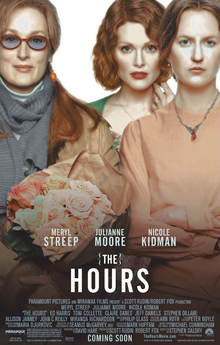
The Hours: A Review (Review #2090)

THE HOURS

The complicated lives of complex women across the generations are chronicled in The Hours. A film that features strong performances and a surprisingly coherent story despite the three separate time periods, The Hours is a good film if not good entertainment.

The Hours covers three time periods as previously stated though they do eventually tie into each other. They are 1923 Richmond, England, 1951 Los Angeles and 2001 New York City. Each section is connected to the Virginia Woolf novel Mrs. Dalloway. The film weaves each story throughout its runtime.

The 1923 section centers around Mrs. Dalloway authoress Virginia Woolf (Nicole Kidman). Virginia struggles with mental health issues. For her own safety and supposed peace of mind, her husband Leonard (Stephen Dillane) has moved her and a whole printing press to the London suburb of Richmond. Virginia is somewhat looking forward to her sister Vanessa's (Miranda Richardson) visit for dinner. Vanessa comes far earlier than expected, along with Vanessa's children. After this visit, Virginia attempts to go to London unsupervised. Leonard, alarmed to learn that she is not at home, races to the train station. Here, Virginia states that she is suffocating and needs to live. Virginia makes it clear that while her life is in danger by her own hand, she must be allowed to live it freely.

The 1951 section is on housewife Laura Brown (Julianne Moore). It is her husband Dan's (John C. Reilley) birthday, and she will make a cake. They have a son, Richie (Jack Rovello) and is pregnant with their second child. Things look good on the outside for the Browns. However, Laura is also suffocating in her own way. As she continues reading Mrs. Dalloway, she finds life is beginning to overwhelm her. This is more so when her friend Kitty (Toni Collette) stops by. Kitty is having a medical procedure for a certain women's issue. Kitty attempts to sound optimistic but is quietly terrified. A surprise kiss from Laura startles them both. Laura, having finished a second cake, goes to a posh hotel, leaving Richie in a friend's care. She takes Mrs. Dalloway and several pills with her. Will she follow in Virginia Woolf's steps to suicide?

The 2001 section has Clarissa Vaughn (Meryl Streep) prepare for a party. Echoing the plot of Mrs. Dalloway, Clarissa wants to have things ready for her friend and one-time romantic partner Richard (Ed Harris). Richard, a poet struggling with AIDS, has been awarded the Carruthers Prize for lifetime achievement. Despite both Richard and Clarissa being gay, they consider their college relationship one of their great loves. Clarissa's current partner Sally (Allison Janney) and daughter Julia (Claire Danes) are quietly supportive. Clarissa has also invited Richard's ex-lover Louis Waters (Jeff Daniels), who has mixed feelings about both Richard and the party. Clarissa loves Richard, but will Richard follow in Virginia Woolf's steps to suicide? In the end, Richard's estranged mother comes, completing the circle in The Hours.

The Hours is what I would call respectable cinema. It is posh, elegant, well-acted and flows surprisingly well despite the three separate time periods. The Academy of Motion Picture Arts & Sciences was impressed enough with The Hours to give the film nine Oscar nominations including Best Picture. Curiously though, it lost in all but one category: Best Actress for Nicole Kidman. More curious, at least to me, is that Kidman is the third billed actress in The Hours after Meryl Streep and Julianne Moore, the latter nominated for Best Supporting Actress.

I have not read Michael Cunningham's novel that David Hare adapted in his Oscar-nominated screenplay. As such, I cannot say how close or far The Hours was from book to screen. I do give credit that The Hours, as stated, never felt as if any of the sections collided or jammed their way in. One also does not have to have read the novel to know that 1951's Richie would pop up in 2001. I figured that out right away as soon as Laura called her son "Richie".

I give you one guess to find the connection. Personally, I found it quite obvious and would be surprised if others did not make an immediate connection. Yet, I digress.

The Hours is a strong film. Peter Boyle's Oscar-nominated editing works excellently. There is no sense that one story forces its way into another. Instead, the film flows quite smoothly between 1923, 1951 and 2001. We see each section move chronologically within the overall story. It does not go from the earliest to the latest time period. If it did, I did not notice it enough to let it get me out of the film.

Another remarkable element in The Hours is Philip Glass' Oscar-nominated score. The music is typical Glass, with a lot of repetition. However, Glass creates an elegant and elegiac score. The music set the mood for these interlocking tales of unfulfilled lives. The closing theme is so beautiful that one listens to it in rapt attention, marveling at its elegance.

Two of the three central performances were singled out for Oscar consideration. Julianne Moore is fine as Laura, the highly depressed and suicidal mother drowning (metaphorically and in a dream sequence, literally) in suburban ennui. I did think that Moore was at times a bit too dramatic, almost stilted in her "I'M MISERABLE" manner. I did not think that Moore was terrible. I do wonder if Moore was reverting to her Far from Heaven manner. If Julianne Moore performances are reflective of Eisenhower's America, all white housewives led lives of quiet despair.

Nicole Kidman was singled out for her performance as Virginia Woolf. I am not going to delve into Kidman's prosthetic nose. I find the focus on the nostril rather silly. Instead, let us focus on her acting. It is quite good. Kidman reveals Woolf's mix of frustration, despair and optimistic rage. She is a creative woman, fully aware of both her place in society and the danger her personal health puts her in. Of particular note is when she expresses her frustration at the stifling yet safe world of Richmond. 

Kidman is good here precisely because she isn't raging or ranting. Instead, Kidman is controlled in her anger, frustration and overwhelming sense of despair. Kidman's Virginia Woolf is someone who wants to live life, even if it will lead her to drowning herself. 


Meryl Streep does well as Clarissa, the woman who is close to living out Mrs. Dalloway. Streep has strong moments where we see Clarissa's own despair. Her scene with an equally strong Jeff Daniels reveals a woman who is working to keep things going while aware that things are going awry. Less strong are her scenes with Ed Harris. This is more on Harris' part than on Streep's. Their scenes seemed more stage-set, as if they were in a play than attempting to act out real life. The two twists involving the dying Richard's illness and connection to the overall story were anything but. I knew both who Richard was and what his fate would be. It is to where I wondered if Hare's screenplay or Stephen Daldry's direction intended to make things obvious.

In their supporting roles, Claire Danes and Allison Janney did well in the 2001 section. The aforementioned Jeff Daniels brought a touch of tragedy and regret to his Louis, the man who left Richard. He had essentially one scene, but he made the most of it. Miranda Richardson's Vanessa was effective, showing a loving yet frustrated side to Virginia's sister. John C. Reilley was probably the weakest part. It veered more towards a parody of a stereotypical 1950's husband and father versus a real person.  

The Hours focuses, intentionally or not, less on the similar struggles that women in general have to be free and independent as themselves. Instead, again intentionally or not, The Hours has all three women be lesbians. Virginia Woolf was somewhat closeted in real life. Laura Brown kisses Kitty fully on the lips, confusing both. Clarissa is an open lesbian. I do not know why The Hours had three lesbians as our three female protagonists. Granted, we never saw Virginia Woolf or Laura Brown involved with any woman sexually. Woolf's kiss with her sister Vanessa was a bit curious, though. Laura kissing Kitty pretty much came out of nowhere.

On the whole though, I have to give The Hours credit for achieving its goal of putting these three stories and melding them into one overall story. "The poet will die, the visionary," Kidman's Virginia Woolf is heard to say. One can see that she, metaphorically, is speaking about someone else in the far future. That someone, we learn, is tied to a distraught mother who needed to escape for a life of her own. Yes, it ties in together surprisingly well. The Hours benefits from strong performances and production work that make it good viewing. 

One need not be afraid of this Virginia Woolf. 

Tuesday, October 10, 2023

My Big Fat Greek Wedding: A Review

MY BIG FAT GREEK WEDDING

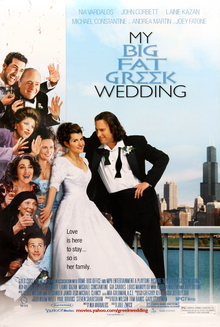
We Greeks, we are the funny people. So goes a line from an Are You Being Served? episode. That line came to me after seeing My Big Fat Greek Wedding, a surprise hit when it was released in 2002. Having seen it twice now, I was still not overwhelmed or even charmed by this tale of Hellenistic nuptial hijinks. Still, it was tolerable if perhaps surprisingly cruel to the characters.

Told in voiceover, we learn that ever since she was a child, Toula Portokalos (screenwriter Nia Vardalos) has been inundated with and embarrassed by her loud, slightly boorish Greek family. Pretty much everyone in the Portokalos family is eccentric to say the least. Her father Gus (Michael Constantine) tells everyone that every word in existence is rooted in Greek and that all ailments can be cured by spraying Windex. Gus' Greek pride is so deep that he manages to find the Greek root to the word "kimono". Toula's mother Maria (Lanie Kazan) is a traditional Greek woman doing what all Greek women should do: marry and have children.

Gus and Maria have a successful Greek restaurant, Dancing Zorba's, which has Toula working there too. Her older sister Athena (Stavroula Logothettis) has already fulfilled her Greek duties, while their younger brother Nick (Louis Mandylor) is still playing the field. Toula is the ugly duckling of the extended Portokalos family: 30, unmarried and looking like a schlub.

Into Dancing Zorba's one night comes Ian Miller (John Corbett). He may look like a Greek god, but he is clearly not Greek. No matter, Toula falls head over heels for him. More surprising for Toula, he is enraptured by our Mediterranean bombshell. Her newfound romance inspires her to take college courses, and she thanks to Maria and her Aunt Voula (Andrea Martin) wheedles her way to work at Voula's travel agency. Eventually, her illicit romance is discovered, horrifying the others in the Portokalos clan.

Eventually, they surrender to reality, and opt to bridge the culture gap. Ian goes along with almost everything thrown at him, be it saying idiotic things in Greek thanks to Nick and his cousin Angelo (Joey Fatone) or getting baptized into the Greek Orthodox Church. The only thing he won't do is change his vegetarianism, which appalls the family but which again, they accept as a mere eccentricity on Ian's part. At the end, Ian Miller and Toula Portokalos marry, and Gus realizes that Miller is a Greek word meaning "apple". As Portokalos means "orange", we have a mix of apples and oranges, fully aware that at the end, we are all fruit.

Perhaps my lack of enthusiasm over My Big Fat Greek Wedding is due to the fact that I too am part of a large extended family. As such, having such a family is not surprising or unique, which I think is what sold My Big Fat Greek Wedding to general audiences. 

Take the issue of the first cousins. When she tells Ian that she has 27 first cousins, I first thought my mere 17 first cousins could not compete. However, she does not clarify if it was 27 first cousins on one side or 27 first cousins overall. If she means on only one side, then she's got me beat. If she means overall, then my Mexican family overtakes her Greek family because those 17 first cousins are just on my mother's side. 

I figure that Vardalos was aiming to show the humor in the culture clash between the very WASP Miller family and the outrageously ethnic Portokalos family. The end result, though, to my mind, is that Toula is deeply embarrassed by her family. To be fair, I can see why: they are loud, vulgar, and obnoxious. The massive Parthenon-inspired Portokalos home is almost arrogantly and defiantly built to stand out among the more traditional homes their neighbors have. That all the Portokalos family members seem oblivious to how they come across is, I figure, meant to be wacky.

It just never sat well with me though. What I saw was an immigrant success story. Gus and Maria came to America (in the film, Chicago, in real life, Canada) and built up a successful business that provided for their children. Toula's Aunt Voula (Maria's sister) similarly built with her husband not one but two successful businesses (travel agency and dry cleaner). Yes, their love for Greece and all things Greek was borderline psychotic, but on the whole they were good, hardworking people. As such, Toula seems to have if not contempt for her boisterous family, at least deep shame. She does not have to be as insanely enthusiastic about all things Hellenic, but she also does not have to chuck her heritage to acquire some WASP exterior that she apparently aspires for. 

I also never figured why Gus in particular was so appalled and opposed to this xeno swinging into his family tree. 

As a side note, xenophobia is rooted in Greek, but that was never brought up. 

Given how Toula was essentially an old maid, something that the family seemed almost obsessive in bringing up, I would figure the Portokalos family would be thrilled that someone finally took an interest in this schlubby woman. Any port in a storm is not something that they considered. Gus came across as monstrously sexist, at one point bemoaning "Didn't I say it was a mistake to educate women?". That he expects a grown man like Ian to ask him for permission to date his 30-year-old daughter is really bizarre. Again, had I been Gus, I would have perhaps been displeased that my Greek daughter was going out with a non-Greek man, but at least she will be providing grandchildren. Gus' sexism lets him ignore how Nick is similarly unmarried with no apparent desire to do so. Gus also ignores Nick's constant pleas to create new menus with his art. Somehow, Gus comes across as a very unpleasant and ignorant man. Why would Toula taking community college courses equal her "leaving him"?

Perhaps this is why almost everyone in My Big Fat Greek Wedding is so broad. The Portokalos family were a mix of cliches and parodies, with few moments of sense or sensibility. The only one who did not go broad and cartoonish was Corbett. He was the opposite: forever calm, almost stupefied, by how often Ian was the butt of jokes. He doesn't even appear too bothered that the wedding invitations that Maria got for them have his mother Harriet's name spelled as "Harry". I figure that is meant to be hilarious. I didn't find it so. 

Ian is a high school teacher, the cool type who has a satchel bag and has a calm class. He says he teaches Hamlet, but he also teaches science, making me wonder exactly how strapped the school is if it needs teachers to teach various subjects. Yet I digress. 

I cannot go much into the acting because like I said, the characters are almost all one-note, usually dialing up the volume to 11. I did think well of Gia Carides as Cousin Nikki. Yes, she is vulgar and openly sexual, but she could also rattle off clever quips. "Hello, Mr. Pottery Class," she greets Ian with, having fun with the excuse Toula has been using to date Ian on the down low. Andrea Martin's Thia Voula is also humorous in her wily ways. Unlike everyone else, her cluelessness is more amusing than idiotic. When Ian tells her he does not eat meat, she is at first appalled. "What do you mean you don't eat meat?", she says, shocking every Portokalos this side of Athens. After a beat, she pulls herself together. "It's OK," she calmly says. "I make lamb". 

As a side note, the Greek words for Aunt and Uncle, Thia and Thio, are surprisingly similar to the Spanish words for Aunt and Uncle: Tia and Tio. Maybe Gus really is not far off. 

It is not, however, that My Big Fat Greek Wedding does not have some nice moments. There is a beautiful moment late in the film when Toula's Greek grandmother silently presents her with her old wedding crown from the old country to Toula. That, I figure, is a theme of the film: the importance of family, continuity and tradition, those elements that tie us together to our past and build our future. 

Maria advises her daughter that she must not take Gus' rejection of Ian so seriously. Man may be the head, but women are the neck, she tells Toula, making clear that women can make men see things the right way. In retrospect, while Kazan too had the broadness that ran through the whole film, she too had moments of genuine wisdom.

Ultimately, I was after two or now maybe three viewings of My Big Fat Greek Wedding still not won over by it. I've endured too many Big Fat Mexican Weddings to be impressed. Still, it is not without some charm and amid the spitting on the bride for good luck and confusion over what exactly a Bundt cake is, it is serviceable souvlaki of silliness. 

"I don't know anything about you except you're Greek," Ian tells Toula early in their relationship. Given that being Greek is her sole defining characteristic, what else is there for him to know? 

DECISION: C+

Wednesday, February 24, 2021

Red Dragon: A Review

RED DRAGON

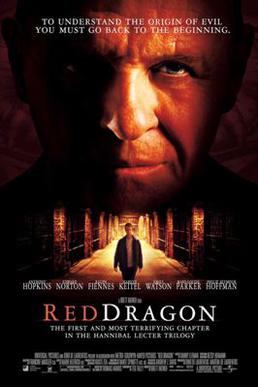
Things have come full circle now, as Anthony Hopkins recreates for the second time his most famous role. There is however, the pesky detail that Red Dragon is essentially a remake that had another actor in the role of gentleman serial killer Hannibal Lecter. As most people don't remember Manhunter, the previous adaptation, Red Dragon has a little more leeway in its telling. With mostly strong performances Red Dragon does well in its telling.

FBI forensics officer Will Graham (Edward Norton) barely survives his encounter with Dr. Hannibal Lecter (Hopkins), who had been working with the FBI on a missing person case. Graham's PTSD forces his retirement, but FBI Special Agent Jack Crawford (Harvey Keitel) talks him into merely consulting on a new case.

It is that of a serial killer nicknamed "The Tooth Fairy", and despite his misgivings Graham finds himself delving deeper and deeper into the case. However, to solve the case he needs the help of two people he despises. One is tabloid journalist Freddy Lounds (Philip Seymour Hoffman), who made Graham's life miserable especially after publishing photos of a barely alive Graham. The other is Lecter himself, who takes this opportunity to taunt Graham.

Lecter and the Tooth Fairy however may be more involved than the former lets on. They've secretly communicated, putting Graham's family in danger. As Graham closes in on the Tooth Fairy, we find it is Francis Dolarhyde (Ralph Fiennes), who is currently making awkward pursuit of blind coworker Reba McLane (Emily Watson). Dolarhyde has a fixation with the William Blake painting The Red Dragon and the Woman Clothed in Sun, believing it has the power to change him into a powerful being. With Lecter playing both sides against the other, Graham and Dolarhyde come to a dramatic conclusion.

I think one of Red Dragon's qualities is that it managed to bring back Ted Tally, who had adapted The Silence of the Lambs, to adapt the earlier Thomas Harris novel. He added elements that establish both Lecter's murderous calm and the Lecter-Graham relationship. In the pre-title sequence we know what Lecter has done to the unfortunate flutist who couldn't play in tune. We also see that Graham is both intelligent and naĂ¯ve when it comes to the wolf at his door.

Brett Ratner is not known as one of the best directors around, but I was surprised at how good Red Dragon was under his supervision. He moved things well and did not give in to some of the more gruesome aspects of the story. 

To be fair though, no matter how much music is cranked up, you can't make someone literally eating a painting look scary. It looks comical, and Red Dragon loses a bit of steam after Francis and Reba have their sexual encounter. It revives slightly at the concluding standoff between Dolarhyde and Graham, but by now you pretty much expect this "twist".

Red Dragon has very good performances on the whole. Norton is either blessed or cursed with a seemingly eternally youthful face, but here it works. His Will Graham is a haunted, tormented figure, one who is simultaneously appalled and lured by the darkness of human depravity. His scene where he attempts to explain to his son what caused his breakdown is a strong bit of acting, and he gives Graham an assurance that allows him to stand toe-to-toe with Lecter, betraying little fear.

Keitel is equal to the task of Special Agent Crawford, professional and rational. Hoffman is unscrupulous as Lounds, making his end if not scary at least surprising. I thought he wasn't taking the situation as seriously as Red Dragon was asking, but nothing horrible. Watson too handled her American accent and the blindness well, though I think nowadays there would be calls to have Reba played by a blind actress.

I think it was the villains who seemed to veer a bit into spoof. Fiennes' Dolarhyde was more buff than usual but at times I found myself suppressing chuckles when he was arguing with the "Red Dragon" or attempting to be menacing. Seeing him devour the painting was also a bit hard to swallow (pun intended). Hopkins for his part was running on fumes, almost a bit camp as Lecter. Perhaps Lecter fatigue was finally setting in. It wasn't terrible but not as calm as controlled as his first effort. Anthony Heald, who along with Hopkins returns to recreate his role from The Silence of the Lambs, continues to make Dr. Chilton a most obnoxious and arrogant fool.

I was surprised at how well Red Dragon holds up even if the ending seemed a bit too much (why did the Grahams not verify whose corpse was in the burned-out mansion?). While The Silence of the Lambs will always be a hard act to follow, it should be noted that Red Dragon technically precedes it. As such, we can be a bit more forgiving.

DECISION: B-

HANNIBAL LECTER FILM SERIES

Manhunter

The Silence of the Lambs

Hannibal

Hannibal Rising

HANNIBAL LECTER TELEVISION SERIES

Clarice

Hannibal

Tuesday, September 10, 2019

The Lord of the Rings: The Two Towers. A Review (Review #1280)

THE LORD OF THE RINGS: THE TWO TOWERS


Editor's Note: This review is of the theatrical version.

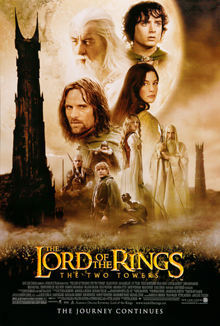
The Two Towers occupies a curious space in the Lord of the Rings trilogy as the midsection of this massive epic series. Neither beginning or end, The Two Towers has to serve as a bridge between The Fellowship of the Ring and The Return of the King. The questions become whether it stands on its own and whether it holds as said bridge while also working as a film independent of them. On the whole, The Two Towers holds up well, though it does give in at times to both some ill-placed comedy and a loss of focus.

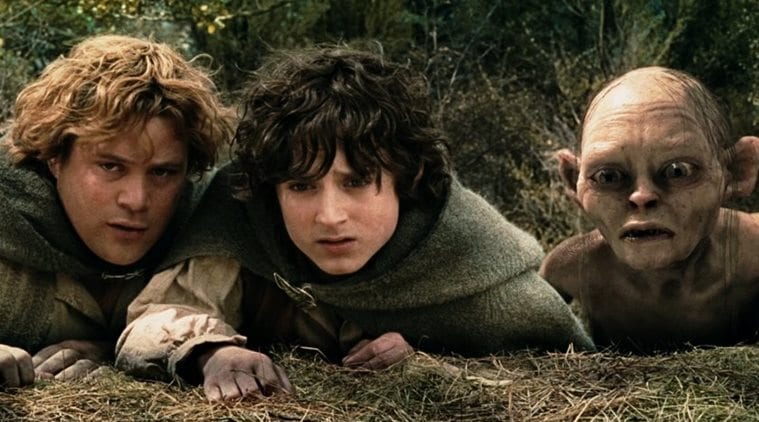
Essentially picking up from The Fellowship of the Ring's ending, The Two Towers has two stories. The main story is of hobbits Frodo Baggins (Elijah Wood) and Samwise Gamgee (Sean Astin) continuing their journey to Mt. Doom in the forbidding world of Mordor to destroy The One Ring. That destruction would ensure the Dark Lord Sauron would be defeated and not destroy all Middle-Earth.

Frodo and Sam are lost, but an unlikely ally comes in the form of Gollum (Andy Serkis), the One Ring's former possessor who is himself possessed by his 'Precious'. He knows the way into Mordor, but Sam does not trust him. Gollum's motivations are as conflicted as the creature himself, for he struggles between seeing 'Master' Frodo as a friend and as his enemy keeping him from his 'Precious'. On their journey, they are captured by Faramir (David Wenham), who takes them to Gondor to gain his father's approval. Faramir happens to be brother to Boromir, killed in The Fellowship of the Ring, but unlike Boromir, Faramir has the strength of character to eventually let Frodo, Sam and Gollum continue on to Mordor, where Gollum may be more foe than friend.

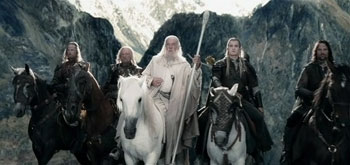
Image result for the lord of the rings the two towersThe other story involves the continuing search for two other hobbits: Merry (Dominic Monaghan) and Pippin (Billy Boyd). Aragorn (Viggo Mortensen), the dwarf Gimli (John Rhys-Davies) and elf Legolas (Orlando Bloom) search for them, encountering Orcs and The Rohirrim, fabled Riders of Rohan sent into exile by their king. In their search, they encounter the wizard Gandalf (Ian McKellen), now restored to life as Gandalf the White. The search ended with Merry and Pippin accounted for, they all now press on first to save Theoden (King of Rohan) from the power of Saruman (Christopher Lee), then to fight off Saruman's army at the stronghold of Helm's Deep.

Merry and Pippin, having encountered Gandalf previously, find themselves with Treebeard (voiced by John Rhys-Davies), a wise Ent (a sentient tree), who with his brother Ents does not appear interested in joining this war until he sees what Saruman has done to his fellow trees. Enraged, he lays siege to Isengard (one of the two towers).

Unbeknownst to both groups of hobbits, the Men at Helm's Deep, now joined by Elves in a last-ditch alliance, fight on. The only Elf that Aragorn thinks of is Arwen (Liv Tyler), the love of his mortal life who reluctantly agrees to join her fellow elves in exile at the urging of her father Elrond (Hugo Weaving). This causes a bit of a complication for Theoden's niece Eowyn (Miranda Otto), who has developed feelings for Aragorn. However, this Shieldmaiden of Rohan is conflicted both by her emotions and her efforts to save her people.


That's a lot of story for one film, yet the curious thing is that for all the Sturm und Drang in The Two Towers, story-wise we really don't move far. Frodo and Sam are closer to Mordor but not yet within it. The other members now move on to more pressing matters but are essentially in a prelude to the final confrontation with their enemy. Moreover, The Two Towers has a major issue: simultaneous stories.

It's interesting that Frodo and Sam disappear in a 35-minute gap, that gap filled by the Battle at Helm's Deep. That there is a gap of that length for ostensibly the main character isn't the problem. It's that when he does return one is almost surprised to remember he was there to start with. I found that a lot of The Two Towers has this jumping about that mostly works well but that also has us forget characters and situations until they come back.

Probably the worst was the transition between when Sam and Frodo avoid capture at Mordor's Black Gate and Merry and Pippin travelling with Treebeard. That jump jolted me, but at times The Two Towers seemed a bit unwieldy in trying to balance so much. For example, all of Arwen's scenes, though beautiful and tragic, did not seem to really fit well within the story. It wasn't wildly out-of-place but seemed a bit of a tangent.

Image result for the lord of the rings the two towersAdd to that that this is the first time I thought things did not look authentic. The dream/love scene between Aragorn and Arwen looked like a stage. A couple of the visual effects looked inauthentic. Then there was seeing Legolas essentially skateboard down a flight of stairs during the Battle. I figure viewers chuckled at that at the time but now, nearly twenty years on, it looked a bit too humorous.

I could have done without this little bit of levity as well as Gimli being the 'comic relief'. Again, it's not that comic relief couldn't work or even that Gimli could not be a funny character. It's just that too often Gimli's height was used as a source of comedy and it felt a bit forced for me.

I also think The Two Towers was far too fond of 'cliffhanger' moments when perhaps cutting them or changing them about could have worked better. At least twice did Legolas think a character was dead when he wasn't, and you can only suggest something so many times before people start questioning whether said character really is dead.

As a side note, I wondered if I was the only one who thought The Black Gates of Mordor looked like The Wicked Witch's Castle from The Wizard of Oz, down to its marching army all but singing "oh-WEE-oh, E-O-UM!"

To be fair The Two Towers has more positives than negatives. It introduced the entire Norse-like world of Rohan well, from its politics to its characters. Composer Howard Shore introduced a new theme for Rohan and what is exceptional about it is that while it's the same melody it can be both triumphant and tragic. When fully orchestrated the Rohan music can be stirring, but when left to a lowly violin it is deeply sad.

It also was a fantastic showcase for Gollum, this poor, sad creature so brilliantly performed. Serkis makes Gollum a creature of deep tragedy and sympathy, a fully realized and complex character. In turns frightened and frightening, Serkis' work is a credit to both his skills and Peter Jackson's directing.

It's a much better and stronger performance than Wenham's Faramir, who was almost blank to boring. Otto was strong as Eowyn, and Bernard Hill's Theoden too was strong in a wider performance: from the weak and defeated old man to a more vigorous (albeit slightly pompous) warrior king. I won't fault Rhys-Davies for making Gimli into a bit of a joke but I do wonder why he voiced Treebeard as well.

The Lord of the Rings: The Two Towers is a very good film that sadly suffers from a bit too much weight and from being that bridge. It is not that it does not work but I would say that some things might have been better left off or reworked.

DECISION: B+

Sunday, July 14, 2019

Chicago (2002): A Review


CHICAGO (2002)

Despite being an adaptation of a 1970's Broadway musical, Chicago was still pretty prescient then and still prescient now about the intersection of crime and fame, the celebrating of infamy, even evil if wrapped in an attractive enough box. The film version of the Kander & Ebb musical keeps that hard, bitter edge while keeping that Razzle Dazzle, even if I was not altogether pleased by some of the end results.

Vixen Roxie Hart (Renee Zellweger) dreams of a showbiz career despite lack of any talent apart from the performances she gives between the sheets. One fateful night, she pops Fred (Dominic West), a furniture salesman she's been cheating on who promised her an entry to the stage. Her schmuck of a husband Amos (John C. Reilly) at first was willing to be the fall guy until he eventually figures out he's been simultaneously screwed and not screwed.

Now potentially facing the death penalty, Roxie gets wise to the advise prison matron Mama Morton (Queen Latifah) offers: get lawyer Billy Flynn (Richard Gere). Flynn, however, not only charges a lot but is currently occupied with a more famous murderess: Velma Kelly (Catherine Zeta-Jones), who doesn't take kindly to this interloper stealing her spotlight. Flynn however does take Roxie's case and has a brilliant strategy: painting Roxie into an innocent lured by jazz & liquor.

Kelly now tries to make an ally of Roxie but no dice. More duplicity comes around as the trial comes, and while both Roxie and Velma get off they find their careers stalled, Chicago moving on to newer, prettier scandals. What are a couple of unrepentant killers to do? Do a double-act of course, and the Merry Murderesses Roxie Hart & Velma Kelly find that Nowadays you can have it all: fame, fortune and a not guilty verdict.

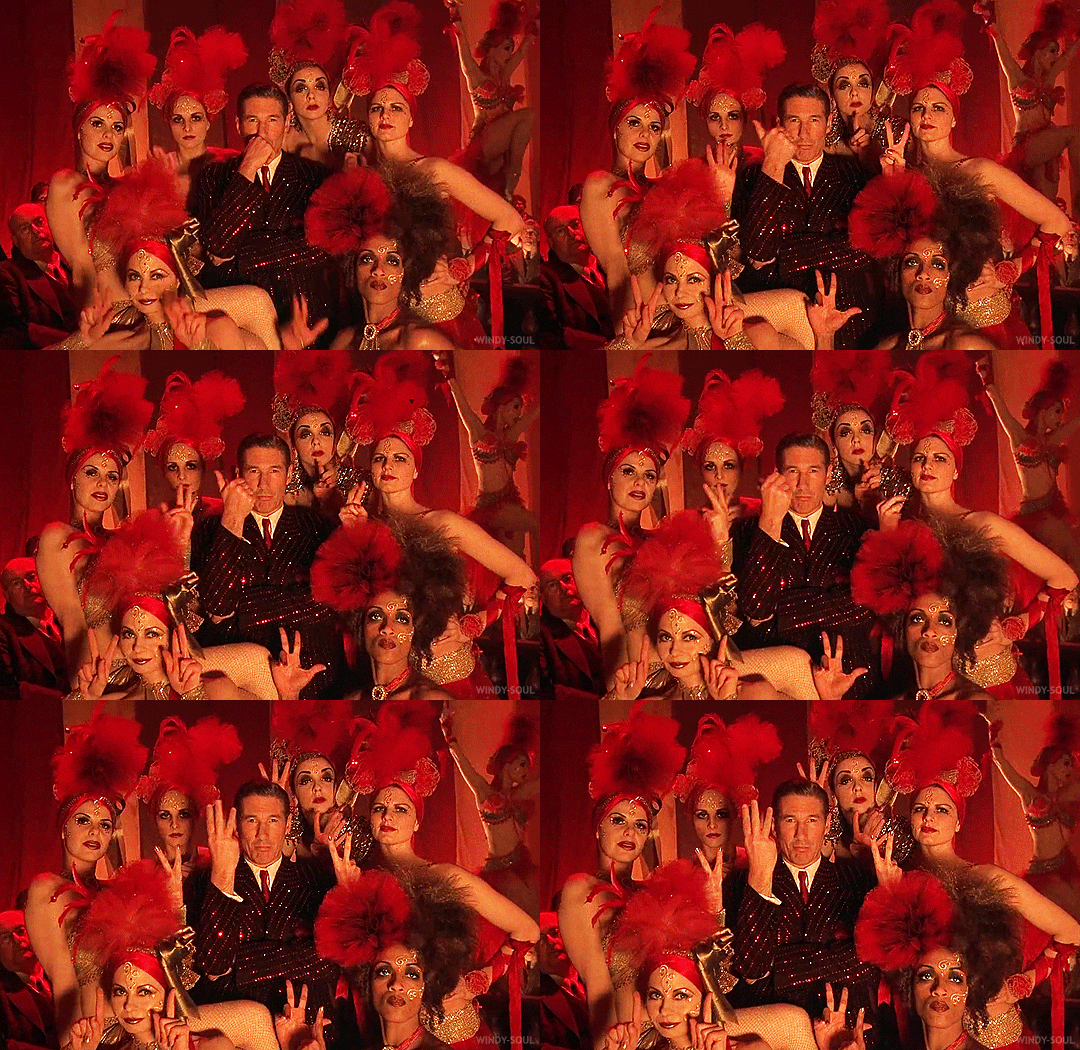
Image result for chicago 2002 razzle dazzleChicago is all rotten at its core and unapologetic about the darkness behind all the bright lights and flashy production numbers. This is not damning with faint praise. Far from it: it's a perfectly straightforward compliment given that is how Chicago was crafted: a cynical celebration of the lurid and sleazy world the Jazz Age was. It is meant to use its vibrant colors and great songs to display a very cold world.

It did it brilliantly for the most part.

From my understanding the original production of Chicago was more in the style of a review than a straightforward musical and the film version keeps to that with generally good results. The musical numbers are in the style of Roxie's imagination versus the more traditional manner where the characters sing and dance their thoughts and feelings. Only the opening and closing numbers All That Jazz and Nowadays stem from something more realistic in that they are presented as actual staged numbers.

As the rest of the songs are in Roxie's mind, I still after a second viewing find that I'm of two minds on them. The staging of the numbers are impressive: lavish and reflective of their revue roots, but also a bit jarring when director Rob Marshall and screenwriter Bill Condon try to integrate them into the non-musical parts. To me, the best musical numbers are the ones that don't have interruptions with the non-musical sections.

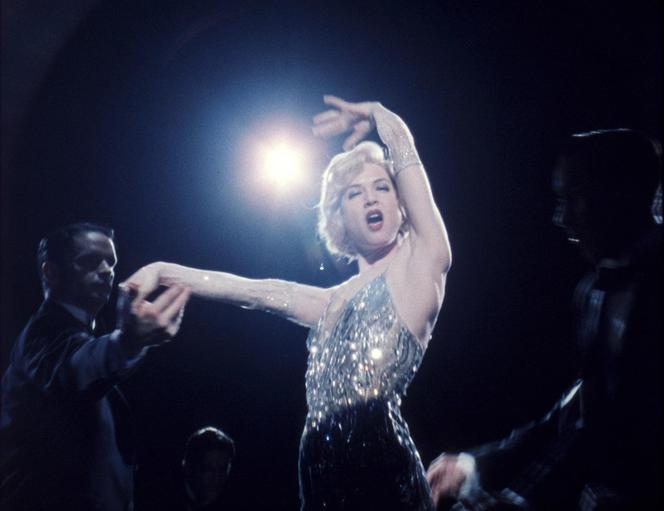
Take Roxie, where our title heroine celebrates her impending fame. It's brilliantly staged despite it being the simplest number in terms of lavishness. The sparkling costume Roxie wears and the cacophony of mirrors perfectly capture Roxie's narcissism, but from what I can remember we didn't get moments where we shifted from the musical productions.

Image result for chicago 2002This can't be said for something like Cell Block Tango, where each girl signs her story but then gets to 'act' certain sections too. This 'song-and-speech' manner in retrospect did not work quite as well as I think it did before because I kept getting taken out of the musical numbers. We see the various women sing/recite about their crimes, then shift to the prison where they are talking about their crimes, then back again to the production number.

More often than not, I kept thinking that even with that 'musical numbers in Roxie's imagination' structure Chicago had to make it more 'sensible' for people to be singing and dancing, perhaps it would have been better to have kept the numbers intact versus cutting in. Sometimes it worked, such as with We Both Reached for the Gun where we had only one or two cuts. Other times, like with Razzle Dazzle, the dialogue seemed like needless interruptions.

This to my mind is especially true when we get what should be solo numbers such as When You're Good to Mama, All I Care About is Love and Mister Cellophane (the numbers for Mama Morton, Billy Flynn and Amos respectively). Cutting between Latifah belting out what she'll do for you and Amos bemoaning his neglected self to scenes of others talking seemed out of place.

Compound that with the actual staging of the numbers. There is nothing wrong with the Kander & Ebb score: Chicago is filled with brilliant songs including the one they wrote for the film, I Move On. My issue is in the manner they were shot. Take again All That Jazz, a signature song in the score.

The editing was frenetic, sometimes chaotic, and for me it didn't allow for us to fully appreciate the dancing and staging of the number. Pretty much all the numbers save perhaps Roxie, We Both Reached for the Gun and Razzle Dazzle had this same type of cutting to where I think a little less would have been good. However, in the latter two they were meant to be grand, so I cut them some slack.

I think many people were surprised to see Zellweger, Gere and Zeta-Jones in Chicago as none of them were known to be musical performers. However, I think they all did excellent work (and it's surprising Gere was not nominated for Best Actor while Zellweger, Zeta-Jones, Latifah and Reilly were nominated for Actress, Supporting Actress and Supporting Actor, with only Zeta-Jones winning).

Image result for chicago 2002
Zellweger was cold and even a little loopy as Roxie, a mix of unrepentant and a little clueless. Zeta-Jones more than matched her as Velma, shallow but shrewd. Gere wasstrong as the cynical, manipulative Flynn.

And those are their non-singing and dancing performances, though I thought Gere's voice was a bit high.

Latifah and Reilly too did well, though I think they were better in the singing part than the acting part. It's a pity Christine Baranski was underused as Mary Sunshine, though she came off as too jaded to be this gullible crusader who believes the very best in people.

Chicago was a good film, with great songs, strong performances and big, splashy numbers. I think some of the musical numbers were short-changed to make it seem more 'realistic' but on the whole I find that All That Jazz was worth it.

DECISION: B-

2003 Best Picture: The Lord of the Rings: The Return of the King

Monday, May 6, 2013

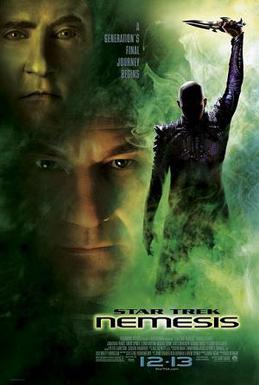
Star Trek: Nemesis. A Review


STAR TREK: NEMESIS

Hardy Not Worth the Time...

Star Trek Nemesis was the final Star Trek film featuring the Next Generation crew, and with good reason.  Nemesis is bad, and despite everyone's best efforts, it can't rise above some of the weakest material the Enterprise has come across.

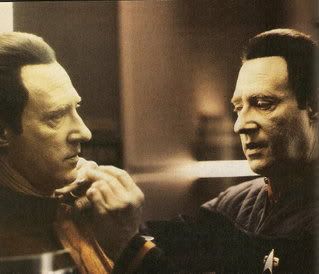
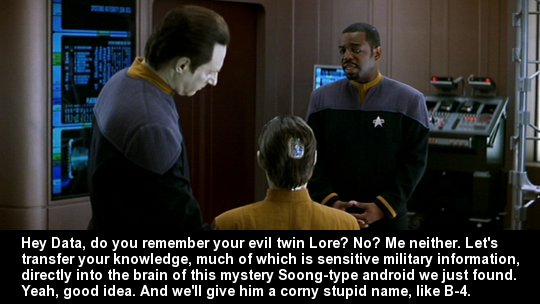
The Romulan Empire has a coup (which I understand is a common occurrence on the planet).  However, there is a twist: the new leader is a Reman, a native of Romulus' twin planet of Remus (no wonder there is a vague Romanesque style to the machinations of the Empire).  Admiral Janeway (Kate Mulgrew from the Star Trek: Voyager television series in a cameo) now asks Enterprise's Captain Jean-Luc Picard (Patrick Stewart) to go to Romulus and see if their new overtures of peace are true.  Of course, this will delay the honeymoon of newlyweds Commander Riker (Jonathan Frakes) and Counselor Troi (Marina Sirtis).  Things are complicated enough as it is with a discovery on Kolarus III: an android that is almost a double for Data (Brent Spiner), whom we discover was an earlier version called B-4 (how punny).

On Romulus, we find the shadowy leader, a Reman named Shinzon (Tom Hardy...yes, THAT Tom Hardy).  He gives Riker, Troi, Data, Worf (Michael Dorn), and Picard a shock: he is eerily similar to Picard in almost every way.  Shinzon makes it clear that they are connected, and we get the whole story: he is Picard's clone, created by the Romulans as part of a nefarious scheme to infiltrate the Federation by attempting to replace Picard with his doppelganger.  That plan, however, was abandoned when there was an earlier coup, and Shinzon was left to wither away on Remus.  If not for the courage and nobility of a Reman guard, he would have perished.  Instead, this Reman became Shinzon's protector and for his loyalty he is now Shinzon's Viceroy (Ron Perlman).   In the ensuing years, Shinzon has managed to build a master ship, the Scimitar, from which he will launch his vengeance against both Romulan and Federation.

There is one major problem: the Scimitar has as its energy source thalaron radiation, which can kill quickly if released.  As Picard attempts to bring Shinzon to the Light Side of the Force...er, make him see the error of his ways, Shinzon will not hear of it.  In fact, he is determined to capture Picard, as he needs his genes to live since as part of his cloning process he was programmed to age quickly.  Therefore, he is running out of time.

As it so happens, so is Data.  Having transferred all his memories and 'emotions' to his brother B-4, he sees that B-4 is a danger.  He was placed there as bait and now has put everyone unwittingly in danger.  As Shinzon begins his attack, Romulan and Federation join forces against a common enemy.  However, Shinzon, now either desperate, uncaring, or insane (we're not sure), decides to make it a suicide mission.  Picard and later Data go to the Scimitar to stop the thalaron radiation explosion Shinzon plans, with one making the ultimate sacrifice.

Or perhaps not....

Perhaps this open-ended finale to Nemesis is what really irritated me on two fronts.  First, one of my Golden Rules of Filmmaking is: Never End Your Movie By Suggesting There Will Be A Sequel.  In a strictly technical sense, Nemesis didn't end by saying 'there will be more Next Generation films, but it left the door open, and in a particularly vile way.  I say vile because the subplot in John Logan's screenplay (based on a story by Logan, Rick Berman, and Brent Spiner...Data himself) appears to have been there for one reason: to rob the audience of the poignancy of the 'loss' we've witnessed.   If you are going to give a major character a noble end, don't cheat by having a literally ready-made replacement waiting in the wings. 

Somehow, despite all their efforts, the 'twist' involving said character is almost telegraphed so brazenly anyone who thinks about where the story is headed is already five steps ahead, right down to how it will all come out.  More than anything, this 'non-death' is what I found most appalling about Nemesis...we are being asked to mourn the loss of a major and perhaps beloved character only to basically be told, 'No, we've got another version right here, so basically he never really died'.

SPOILER ALERT!  IF YOU DON'T WANT IT SKIP THE NEXT PARAGRAPH. 
YOU'VE BEEN WARNED!

As a digression, let us compare the loss of Spock in The Wrath of Khan with the loss of Data in Nemesis.  In the former, it looked pretty definite, and we got to see this iconic character make a great sacrifice (and a chance for Leonard Nimoy to have a great death scene).  In Nemesis, we don't see him really die, and given that B-4 is there, implanted with all his memories, it is as if he really didn't die.  It is a cheat.  You could say that The Search for Spock is a cheat in that the character is basically revived, but the film made a case as to how it happened (the newly created planet of Genesis brought EVERYTHING to life), but in Nemesis, it's basically an upload that brings about a new Data.  In short, where Spock's death was poignant, Data's death is empty of emotion.   

END OF SPOILER!

You have my permission to die, Batman...
I mean, Picard...

There are other things in Nemesis that push the film down.  The film had moments of intended comedy that fell flat (Data SINGS!, but who would have thought Worf wouldn't like the android's rendition of Irving Berlin's Blue Skies...or that Klingons would even know who Irving Berlin was), and there was a lot left unexplained.  Exactly WHEN did the Romulans take Picard to make a clone?  Did this come before or after Picard was taken by the Borg on the television series (and did this cloning take place DURING the series...so was I supposed to have watched Next Generation to follow the plot)?  Poor Picard...always getting used by aliens.  You'd have thought by now other beings would have picked another Enterprise crew member (the super-slut Riker is a good candidate I would imagine).

Also, what exactly IS Janeway doing here?  I'm no expert on Star Trek timelines, but wasn't Voyager stranded 75 years from her original time?  Furthermore, while it is nice to see her pop in, I imagine something like this would appeal to Trekker/Trekkies only, and those of us with limited or no knowledge of the Star Trek mythos, we'd say, "Who's THAT?"

As much as Nemesis wanted to portray Shinzon as either Picard's double (and hammering this theme of duality excessively with both Picard/Shinzon and Data/B-4) our villain came off looking a bit like a camp and whiny kid.  I think Hardy looks imposing as Shinzon and did his best, but part of me felt he knew this was all a bit silly.  One thing that James Cagney, a master of the amoral gangster, always believed was that when playing a villain, one should realize that to a villain, he doesn't see himself as 'the bad guy'.  The great screen villains (a Hannibal Lecter, Norman Bates, Veda Pierce in Mildred Pierce, The Manchurian Candidate's Mrs. Iselin, or Cagney's Cody Jarrett in White Heat) never think of themselves as villains.  They see themselves as almost heroic, or at least above morality.  With Shinzon, you always believed he saw himself as evil, not wounded.  Ostensibly he was motivated by his mistreatment by the Romulans, but he seemed more concerned with having "Daddy" Picard love him than anything else.

I know you want me...
As a side note, the erotic fixation Shinzon had on Counselor Troi was introduced (and given a bizarre moment when he enters her mind via Inzadi...not ask me to explain let alone understand what Inzadi actually is) but never followed through.  If Shinzon really wanted to make Troi his Reman Queen, he didn't seem to bother even trying to capture her.  Of course, this would reduce her to mere eye candy/plot device, which is more than can be said for Dr. Crusher's Gates McFadden.  Same can be said for LeVar Burton's Geordi LaForge...what exactly was the point of having him (apart from contractual obligations)?  I could even say that both Frakes' Riker and Dorn's Worf was similarly irrelevant.  Sad to see so many Next Generation characters appear so fleetingly and/or unnecessarily while Stewart and Spiner hog as much screentime as possible.

There were other things that bothered me.  Jerry Goldsmith, usually a reliable composer, appeared to have ripped off/paid homage to Stravinsky's Rite of Spring when Picard and Data escape the Scimitar.  Speaking of which, this escape was filmed in such a way that I felt I was watching a video game.  Data's literal plunge into space had me laughing more than marveling, another moment of humor (though I have to imagine it was unintended).   Jeffrey Kimball's cinematography went overboard at times (on the desert planet of Kolarus III, the sepia tones were bordering on parody, if not actually crossing said border).

Did YOU come up with this?

Oh, Nemesis...you spoiled your chance to give the Next Generation a respectable send-off.  It isn't to say Nemesis was all terrible: it is nice to see Tom Hardy when he was young and thin, not the gigantic block of muscle he has morphed into.  He certainly looks imposing in black, and he is a good actor (when directed well, which Stuart Baird did not do).  However, he was almost silly as a villain (and I never shook the sense that Hardy thought the same).  Given that Spiner came up with part of the story, I similarly never shook the sense this was his effort to make Data almost the co-star of Nemesis (logic be damned).  I'll give him credit: it takes chutzpah to have your substitute waiting in the wings to give you a character both new and old.

However, Star Trek Nemesis all but doomed any future hopes for another Next Generation-based film.  In fact, its spectacular failure doomed the franchise for almost a decade, and it was such a bad film that rather than attempt to bring back the Next Generation or any other Star Trek series (Voyager, Deep Space Nine, or Enterprise...would have loved to have heard Russell Watson treat us with Going Where My Heart Will Take Me one more time), it took an entire reboot where we had to basically start from scratch to bring the Enterprise out to the stars once more...

No Blue Skies for The Next Generation, alas.      


DECISION: D-   

Next Star Trek film: Star Trek (2009)

Sunday, September 30, 2012

Die Another Day: A Review (Review #446)


DIE ANOTHER DAY


It Couldn't Die Soon Enough...

The Complete James Bond Review Catalogue

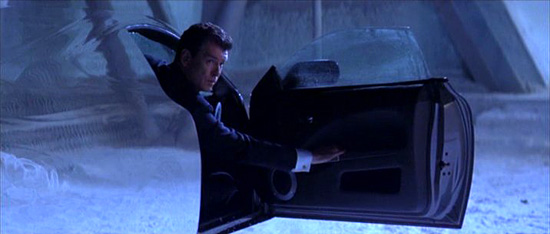
That damn invisible car. 

My friend and fellow film enthusiast Fidel Gomez, Jr. (who may or may not be dead) always went on about "that damn invisible car."  Whenever we'd talk about James Bond, he'd always bring up "that damn invisible car" and have disdain in his voice and face whenever it or Die Another Day was brought up.   I had managed to skip the previous two Pierce Brosnan Bond films, but I did see Die Another Day in the theaters.  I didn't HATE "that damn invisible car" with the fervor Gomez did, but I remember thinking that it was far too convoluted and at times embarrassing for everyone involved.

We start in North Korea, where 007 James Bond (Brosnan) is impersonating a diamond smuggler who will pay for weapons.  The seller: corrupt Colonel Moon (Will Yun Lee), son of General Moon, who is surprisingly open towards teh West for a North Korean military man.  Aiding the bad Colonel in his business is Zao (Rick Yune), who quickly finds that Bond is really a British assassin.  Bond makes his getaway (injuring Zao in the process when the diamond briefcase explodes and diamonds fly into his face), and even though Moon is seen falling into a waterfall Bond himself is captured.

Thus our suave secret agent is tortured with a Madonna song.  This is not hyperbole: we see his torturing while Madonna's Die Another Day plays. 

We are told that is in now 14 months since Bond's capture.  General Moon insists that his dead son had an ally in the West and demands Bond tell him who this ally is.  Bond still won't talk, but instead of being executed, he finds he has been traded for Zao.  MI6 head M (Judi Dench) is unhappy that she had to make this exchange, especially since she suspects Bond might have talked: her top North Korean agent has been killed, and Zao attempted to blow up a summit between South Korea and China.  Bond manages to escape his more benign imprisonment and thanks to the Chinese Secret Service (which now run Hong Kong...how we mourn the loss of Empire), he gets a little help to go to Cuba.

Here, he is led to a secret clinic run by Doctor Alvarez who specializes in DNA-replacement therapy: quite literally a whole new you.  He also encounters Giacinta Johnson, better known as Jinx (Halle Berry).  After a romp we go to the secret clinic, Bond finds Zao but he manages to escape before he manages to complete his transformation to a Caucasian-looking man.

Seriously, this IS the plot.

We also find that Jinx, far from being a bystander, is deeply involved: SHE kills the bad doctor AND blows up the clinic.  Bond however, finds diamonds engraved with the stamp of one Gustav Graves (Toby Stephens), diamonds which are suspiciously like 'blood diamonds' despite the claims that Graves found them in Iceland.

I said the same thing: DIAMONDS?  IN ICELAND?

Now we switch to London, where Graves skydives to Buckingham Palace to receive a knighthood. There his loyal aide Miranda Frost (Rosemund Pike) awaits him.  Among their shared passions is fencing, and Bond challenges him to a duel which he does win.  Graves invites him to his Ice Palace in Iceland to see his newest scientific creation: Icarus, which can harness the sun for unlimited power.

Let's wrap this up: we find out that Graves is really Moon transformed, Jinx is also a secret agent, Frost is a double agent, we melt the Ice Palace (thanks to the invisible car), Bond stops Graves from using North Korea to start an invasion with Icarus blowing up the De-Militarized Zone, and sleeps with Jinx again.

I used to think that Bond villains now simply don't put the effort into their nefarious schemes as they used to.  Now I think Bond villains try too hard to put everything into their nefarious schemes...everything except a semblance of coherence.   I think DAD (last time we had The World Is Not Enough turn to TWINE, now DAD) tries to throw so much in order to build up suspense or "big shocking twists" that it only becomes lost in its own lack of logic.

M near the end reprimands her American counterpart Damian Falco (Michael Madsen...no, I can't explain it either: like watching Mr. Blonde as the head of espionage) for not informing MI6 that the mole (Miranda Frost) was on the Harvard fencing team with Moon.  Far be it for me to criticize the application process of those who work for Her Majesty's Secret Service, but couldn't YOU have found that out yourself?

Furthermore, DAD plays these remarkably idiotic twists games on an inconsistent level.  We are shown that Graves is really Moon (which must be the most successful plastic surgery in recorded history...turning a North Korean into an Englishman, complete with accent) but are never given any indication that Frost is the traitor.  It's as if she has to be the ally because there simply is no one left to do the dishonors.

Again, why couldn't co-writers Neil Purvis and Robert Wade make things more simple?  This entire "Jinx is really mysterious" thread was idiotic.  Taking a page from both The Spy Who Loved Me and Tomorrow Never Dies (in one of the few good things from that movie), why couldn't we (and Bond) know she was working for the Americans?  It certainly would have been simpler than trying to ratch up the mystery quotient as to why this woman is starting to kill people in cold blood and blowing up buildings and suddenly appearing in the Ice Palace.

Now, going deeper into the script, I think both the writers and director Lee Tamahori failed to understand one thing: what makes a great pun is that the characters don't know or don't force the puns.  With DAD, what passes for witty repartee is so forced and obvious that it becomes groan-inducing.  There is something to be said for subtlety, and when our characters KNOW they are making suggestive banter, it just comes off as silly.  It also makes them come off as stupid.

DAD also suffers from a heavy reliance on CGI that is painfully obvious literally (as Joe Biden is prone to say) from the beginning.  You can tell that the fight between Moon and Bond is taking place in front of a green screen, which has the effect of making things look cheap.  Again and again Bond's escapes or encounters look fake that they only end up drawing attention to themselves.

Even that, perhaps, might be forgiven, but some of his escapes are downright imbecilic.  We get not one, but TWO surfing scenes, and while I found surfing into North Korea a bit odd, Bond's second escapade, where he windsurfs to safety, is just stupid.

As if turning an Asian man into a Caucasian didn't already spread the stupid all around.

Tamahori simply couldn't get the actors to make their dialogue sound real (we can forgive Madonna because even she senses that Madonna can't actually act so she didn't bother).  So many times when they're trying to sound clever, they only end up sounding as if they know they are trying to sound clever but can't get the hang of it.

There was talk of giving Jinx her own spin-off film, to which I answer, 'why?'.  Berry is a beautiful woman, but despite her Oscar one has never put her among the Great Actresses of Our Time.  Again, she's very beautiful, but watching DAD again I marvelled at how bad she was.  She was forced and unnatural as this clever, strong, intrepid agent (and seriously, why did it not occur to either Jinx or Bond to investigate if the other worked for another agency).

In short, Berry was horrible in Die Another Day, and while I doubt a stronger actress could have made Jinx a better character, Berry didn't do herself any favors by being so robotic in her delivery.

Speaking of robotic, let me move into the title song.  Poor Madge.  Poor sweet delusional Madge.  She thought she was going to WIN the Best Original Song Oscar for her robotic, auto-tuned rendition of the title theme.  Die Another Day is one of the worst Bond Songs, and while I imagine its popularity is due to her fanbase (and a growing inability to appreciate good music) the lyrics are moronic (I'm going to wake up/Yes & No/I'm going to kiss/some part of {not finishing what she exactly was going to kiss part of}/I'm going to shut my body down). 

It's also contradictory: in the first verse she coos, "Sigmund Freud/Analyze this" but two verses later she declares, "I'm going to avoid the cliches".

Sorry Your Ladyship from London via Detroit...telling Sigmund Freud to "analyze this" IS a cliche. 

Besides, the lyrics go on to say, "I'm going to destroy/my ego".  I bet even Madonna doesn't believe that.

Moving on to the other performances, I didn't dislike Stephens as Jay Gatsby in the A & E version of The Great Gatsby, but I didn't say he was great either.  In Die Another Day, Stephens decided that A.) he didn't need a director, and B.) he was going to play the parody of a Bond villain by being so wildly over the top that no one could take an already unhinged story seriously.  After all, Stephens probably thought, who'd be stupid enough to think I used to be Asian a mere year-and-two-months ago?

Pike could have made a better villain than henchwoman, but truth be told DAD never settled on WHO was the villain and who was the henchman. Just like in TWINE, Frost could easily be the villain AND/OR the henchman, which makes Yune's Zao all the more puzzling.  It's clear he works for Graves/Moon, but it's never clear if he works FOR or WITH Frost. 

As a side note, I wonder if Representative Todd Akin got his idea that women can avoid getting pregnant from "legitimate rape" from Die Another Day: after all, Madonna does say she's going to shut her body down.   Yet I digress.

Another mistake in DAD is that it gives us information only to repeat said information in order to explain to someone else what we already know.  Why couldn't they have just explained whatever it was they wanted to explain either earlier or later rather than twice?  It does seem far too convoluted for its own good. 

I can appreciate that Die Another Day was both the 20th official Bond film and Bond's 40th anniversary, but we could have skipped so many trappings from other Bond films.  Apart from the jet-pack in Q's lab (which appeared to be the same one from Thunderball) and the shoe-knife taken from From Russia With Love, the crashing airplane was too similar to Goldfinger to be just a mere nod.

Curiously, it also has a shout-out to another successful franchise: at the climatic battle between Bond & Graves, it looks like our ex-Korean now-British villain harnesses "the Power of the Dark Side".  I'll leave it at that.  

In Die Another Day, you had bad acting, bad story, bad special effects, bad song, bad music, a ridiculous plot...in short, a mess.  However, there at least was an acknowledgement of all that.  Halle Berry did say she was a Jinx to everyone she came across, so at least that was true.


Oh yes, and That Damn Invisible Car...

DECISION: D-

Next Bond Film: Casino Royale