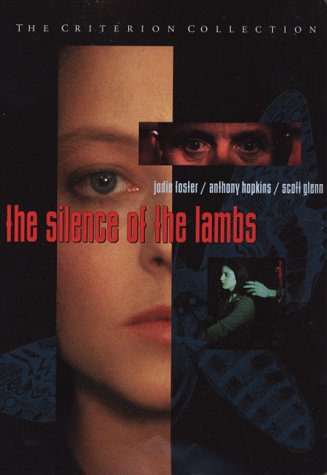
Showing posts with label Hannibal Lecter. Show all posts

Wednesday, March 9, 2022

Hannibal Rising: A Review (Review #1580)

HANNIBAL RISING

Does evil need to be explained? It apparently is not possible for the most sinister of figures to not have an origin story revealing how said figures came to be the way they became. Hannibal Rising is the origin story of that most monstrous yet fascinating of psychopaths, Hannibal Lecter. It is a terrible shame though, that his origin turns out to be surprisingly boring to dumb.

Little Hannibal Lecter survived the Nazi and Soviet invasions of his native Lithuania, though he lost his whole family. Lithuanian collaborators take refuge in the Lecter hunting lodge, where their leader Grutas (Rhys Ifans) looks on menacingly at Hannibal and his younger sister Misha. Did Grutas and his fellow Nazi collaborators commit a barbaric act of cannibalism to save themselves?

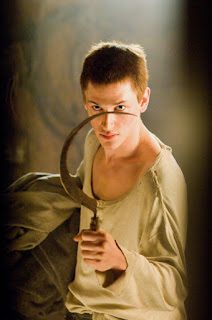
Eight years later, young Hannibal Lecter (Gaspard Ulliel) is now in a Lithuanian orphanage, ironically enough what was once Castle Lecter. After taking murderous revenge on a bully, he finds letters that lead him across the Iron Curtain to an uncle's home. His uncle sadly has died, but his widow, Lady Murasaki (Gong Li) takes him in. She trains him in the way of the samurai, training that comes in handy when a local butcher insults her. Hannibal now has his first kill.

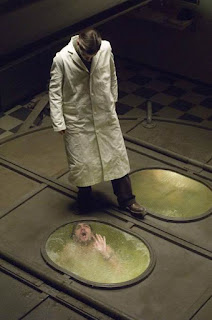
Escaping to Paris where he can train as a doctor, Hannibal and Lady Murasaki now begin their new venture: hunt down those who killed Misha. Slowly, methodically, Hannibal takes bloody revenge on his childhood tormentors, until he leaves for Canada to find the last of them.

Perhaps it was Hannibal Rising screenwriter Thomas Harris' wish to make our murderous cannibal a sad, even sympathetic figure. He should know the most about Lecter: as Harris adapted his own novel and created the character. Having said that, it is a wonder why Harris opted to make Lecter some kind of hero, a Nazi hunter seeking to avenge his beloved little sister.

It is curious that little to nothing suggests that this Hannibal enjoys the taste of human flesh. Granted, as it is his origin story, we can forgive his lack of calculated genius where he is able to escape whatever traps laid for him. However, Hannibal Rising is surprisingly unoriginal in its take on our character. Having him hunt down people gives him an honorable motive, which makes one wonder whether Harris wanted us to see him as less methodical murderer and more wounded soul.

To my mind, having him kill others to avenge his family's killing is almost hackneyed, surprisingly unoriginal and a terrible letdown for someone so charmingly and delightfully wicked. It does not help that none of the previous Hannibal Lecter films hinted at his haunted past. It also does not help that Hannibal Rising does not suggest Lecter would turn out to dine on people. It actually suggests he might turn out to be a good man. As such, if anyone saw Hannibal Rising first then moved on to either Red Dragon/Manhunter or The Silence of the Lambs, he or she might be confused. 

He at first was angry that Grutas suggested to Lecter that he ate and enjoyed his own sister's flesh, but now he likes the taste of it?

Hannibal Rising is also littered with some ghastly performances. Rhys Ifans devoured the scenery to the extent you thought he did literally eat the child actors in the film. It is watchable only in a hilarious kind of watching. It is so over-the-top it almost hypnotizes you, amazed that the bad accent and crazed manner could be considered remotely rational. Kevin McKidd, who plays another Lithuanian cannibal, could not handle the accent any better, though to be fair he did make a decent stab at playing a slightly more sympathetic figure.

One is puzzled about Gong Li, a good actress given little to do. As for the late Ulliel, he did on occasion slip into camp, but I think that was more the script than him. He made a surprisingly charming figure who sought out honorable revenge. Pity that he seemed to be playing in a different movie, one about Nazi hunters than murderous cannibals.

So much about Hannibal Rising is wildly wrong that one feels for the lost opportunity. Unoriginal origin story, mostly bad acting, lousy situations, with little to suggest we are getting the birth of evil. The film plays more like bad fanfiction than it does the genesis of this now-iconic character. Hannibal Lecter had a better origin long after he became an adult, and Hannibal Rising is a poor beginning to this massive figure.

DECISION: D-

HANNIBAL LECTER FILM SERIES

Manhunter

The Silence of the Lambs

Hannibal

Red Dragon

HANNIBAL LECTER TELEVISION SERIES

Clarice

Hannibal

Wednesday, February 24, 2021

Red Dragon: A Review

RED DRAGON

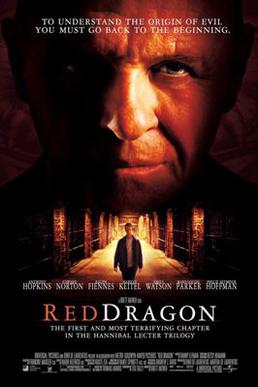
Things have come full circle now, as Anthony Hopkins recreates for the second time his most famous role. There is however, the pesky detail that Red Dragon is essentially a remake that had another actor in the role of gentleman serial killer Hannibal Lecter. As most people don't remember Manhunter, the previous adaptation, Red Dragon has a little more leeway in its telling. With mostly strong performances Red Dragon does well in its telling.

FBI forensics officer Will Graham (Edward Norton) barely survives his encounter with Dr. Hannibal Lecter (Hopkins), who had been working with the FBI on a missing person case. Graham's PTSD forces his retirement, but FBI Special Agent Jack Crawford (Harvey Keitel) talks him into merely consulting on a new case.

It is that of a serial killer nicknamed "The Tooth Fairy", and despite his misgivings Graham finds himself delving deeper and deeper into the case. However, to solve the case he needs the help of two people he despises. One is tabloid journalist Freddy Lounds (Philip Seymour Hoffman), who made Graham's life miserable especially after publishing photos of a barely alive Graham. The other is Lecter himself, who takes this opportunity to taunt Graham.

Lecter and the Tooth Fairy however may be more involved than the former lets on. They've secretly communicated, putting Graham's family in danger. As Graham closes in on the Tooth Fairy, we find it is Francis Dolarhyde (Ralph Fiennes), who is currently making awkward pursuit of blind coworker Reba McLane (Emily Watson). Dolarhyde has a fixation with the William Blake painting The Red Dragon and the Woman Clothed in Sun, believing it has the power to change him into a powerful being. With Lecter playing both sides against the other, Graham and Dolarhyde come to a dramatic conclusion.

I think one of Red Dragon's qualities is that it managed to bring back Ted Tally, who had adapted The Silence of the Lambs, to adapt the earlier Thomas Harris novel. He added elements that establish both Lecter's murderous calm and the Lecter-Graham relationship. In the pre-title sequence we know what Lecter has done to the unfortunate flutist who couldn't play in tune. We also see that Graham is both intelligent and naïve when it comes to the wolf at his door.

Brett Ratner is not known as one of the best directors around, but I was surprised at how good Red Dragon was under his supervision. He moved things well and did not give in to some of the more gruesome aspects of the story. 

To be fair though, no matter how much music is cranked up, you can't make someone literally eating a painting look scary. It looks comical, and Red Dragon loses a bit of steam after Francis and Reba have their sexual encounter. It revives slightly at the concluding standoff between Dolarhyde and Graham, but by now you pretty much expect this "twist".

Red Dragon has very good performances on the whole. Norton is either blessed or cursed with a seemingly eternally youthful face, but here it works. His Will Graham is a haunted, tormented figure, one who is simultaneously appalled and lured by the darkness of human depravity. His scene where he attempts to explain to his son what caused his breakdown is a strong bit of acting, and he gives Graham an assurance that allows him to stand toe-to-toe with Lecter, betraying little fear.

Keitel is equal to the task of Special Agent Crawford, professional and rational. Hoffman is unscrupulous as Lounds, making his end if not scary at least surprising. I thought he wasn't taking the situation as seriously as Red Dragon was asking, but nothing horrible. Watson too handled her American accent and the blindness well, though I think nowadays there would be calls to have Reba played by a blind actress.

I think it was the villains who seemed to veer a bit into spoof. Fiennes' Dolarhyde was more buff than usual but at times I found myself suppressing chuckles when he was arguing with the "Red Dragon" or attempting to be menacing. Seeing him devour the painting was also a bit hard to swallow (pun intended). Hopkins for his part was running on fumes, almost a bit camp as Lecter. Perhaps Lecter fatigue was finally setting in. It wasn't terrible but not as calm as controlled as his first effort. Anthony Heald, who along with Hopkins returns to recreate his role from The Silence of the Lambs, continues to make Dr. Chilton a most obnoxious and arrogant fool.

I was surprised at how well Red Dragon holds up even if the ending seemed a bit too much (why did the Grahams not verify whose corpse was in the burned-out mansion?). While The Silence of the Lambs will always be a hard act to follow, it should be noted that Red Dragon technically precedes it. As such, we can be a bit more forgiving.

DECISION: B-

HANNIBAL LECTER FILM SERIES

Manhunter

The Silence of the Lambs

Hannibal

Hannibal Rising

HANNIBAL LECTER TELEVISION SERIES

Clarice

Hannibal

Thursday, February 18, 2021

Hannibal: A Review

HANNIBAL

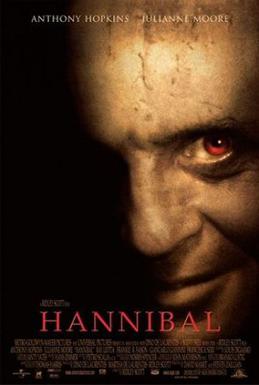
It took ten years but at long last Hannibal Lecter was able to say, "Hello, Clarice". Whether this quote, misattributed to The Silence of the Lambs, came specifically from Hannibal or was included in Hannibal due to its popularity I cannot say. Hannibal is a curious film, curious in that it adds nothing to the Hannibal Lecter mythos, a lot of style but very little substance.

Ten years after Dr. Hannibal Lecter (Anthony Hopkins) escaped American justice, he is living in Florence. His frenemy FBI Special Agent Clarice Starling (Julianne Moore) is still enduring the patronizing of men. After a botched drug bust that she is blamed for, she is contacted by Mason Verger (Gary Oldman), the only Lecter victim to survive. 

Verger, a wealthy child molester who disfigured his own face while under Lecter's drug-fueled therapy, hopes to lure Lecter out of hiding to enact his revenge. This revenge plot eventually ensnares Italian detective Rinaldo Pazzi (Giancarlo Giannini), who endangers his life when he learns of the $3 million dollar reward. Despite a last-minute warning from Starling who has through her own detective work found Pazzi, he is murdered by Lecter.

Now Lecter starts his own plan to meet up with his unofficial muse, a plot that traps Verger in his own plot and gets Starling's nemesis/former lover Paul Krendler (Ray Liotta) to literally take a bite out of himself. The cat-and-mouse game ends for both Hannibal and Clarice, but not in the way one would think.

For all the talk of the gore Hannibal indulged in, I found it a surprisingly dull film. I think it has to do with how long Hannibal is: at over two hours it felt as if the wheels were just spinning until we got to the most talked-about moment. Even this infamous moment where Ray Liotta's character is fed his own brain is not as graphic as I thought it would be. Other elements, such as a flashback where Verger slashes his own face, is shot in a manner that is gruesome but not perhaps as visually horrifying as it could have been.

That isn't to say that Hannibal is restrained: in quite a few ways it seemed to be overtly sadistic with its killings, and I can see how audiences may have found it far over-the-line. However, thinking back part of me thinks "killer pigs" is hilarious than horrifying. OK, they're boars, but it still just seems such an absurd way for Verger to get revenge: by feeding Hannibal Lecter to cannibal boars.

Hannibal spends far too much time with its various subplots to where it is almost a traffic jam. There's the botched drug bust, a seemingly endless Italian subplot, the Verger subplot, all of which are supposed to connect but have a hard time doing so. It takes a full thirty minutes for Lecter to finally appear outside of a flashback, and then over an hour before he and Starling even make contact. I think screenwriters David Mamet and Steven Zaillian as well as director Ridley Scott thought they were making an arthouse horror film, but instead they made a slog.

It says quite a lot that in the opening title sequence, a flock of pigeons form to make Hannibal Lecter's face.

There is also a curious thing of there being absolutely no character to care about. Verger is a child molester (his claims of redemption through Christianity rather dubious). Pazzi is a greedy, almost corrupt cop. Kregler is a sexist pig who demeans Starling (as a side note, why would Starling, one of the stronger female characters, even contemplate an affair with Kregler even if it was in the past). 

Oldman was going for a full-on performance, and it's to his credit that he was unrecognizable in his voice (his face wildly disfigured). Still, there seemed to be something almost hammy about his role. It's to his credit though that it was, given that everyone else in Hannibal acted all this with such stern seriousness that they came across as fully aware of how "important" all this was when one would think their characters would be more scared than somber. 

Oddly, only Andrea Piedimonte as Italian officer Benetti seemed to have any sense of fun or reality into this. Actually, I take some of this back: Ray Liotta's diminishing capacity when drugged is oddly funny too.

Literally, cannibal boars!

The two lead performances are also an issue. Let's say that Julianne Moore originated the role of Clarice Starling and pretend Jodie Foster's version in The Silence of the Lambs didn't exist. Moore's Starling was not human. She was remote, cold, all business. There didn't seem to be an ounce of humanity, of vulnerability, of any emotion within her. This Clarice Starling mistook "hard" for "strong", and moreover her accent was excessively strong to where it seemed deliberately exaggerated. 

Hopkins was essentially coasting through Hannibal, making Lecter almost dull. He is meant to be scary but he seems oddly more amused by the goings-on than a force of true evil. 

Hannibal, I think, might disappoint some Hannibal Lecter fans. It is a poor follow-up to one of the great films, and you wonder why anyone was involved in all this. Dull, slow, slightly pretentious, Hannibal is more graphic and more boring than it should be.

DECISION: D-

HANNIBAL LECTER FILM SERIES

Manhunter

The Silence of the Lambs

Red Dragon

Hannibal Rising

HANNIBAL LECTER TELEVISION SERIES

Clarice

Hannibal

Tuesday, February 16, 2021

Manhunter: A Review


MANHUNTER

Hannibal Lecter has become an iconic figure, the embodiment of sophisticated evil. While it was The Silence of the Lambs that brought Lecter his status, many people do not realize our wicked cannibal psychiatrist made his literary and cinematic debut in another project. Manhunter, the first cinematic version of Thomas Harris' Red Dragon, has been lost in the shuffle of Lecter-related work. While it is a bit dated and more interested in style than substance, there is enough in Manhunter to make it worth a viewing.

Former FBI criminal profiler Will Graham (William Petersen) reluctantly comes out of retirement to just consult on a new serial killer case. His former boss Jack Crawford (Dennis Farina) needs Graham's help on a gruesome case the FBI agents nickname "The Tooth Fairy" for the killer's penchant of biting his victims.

Graham works methodically, but the Tooth Fairy case is connected to his last case. That case nearly killed him and left him emotionally traumatized. The Tooth Fairy case brings him full circle, as he has to confront Dr. Hannibal Lecktor (Brian Cox), the cannibal who nearly killed Graham last time. Lecktor may have insight into the Tooth Fairy case, but he isn't about to let a chance to get back at Graham go by.

As a side note, Manhunter opted to change the spelling from "Lecter" to "Lecktor".

The actual Tooth Fairy, after a lot of detective work, is eventually identified as socially awkward Francis Dollarhyde (Tom Noonan), who has already killed Graham's nemesis, tabloid reporter Freddy Lounds (Stephen Lang) as part of Lecktor's revenge. It's a race now to save both Graham's wife and son from Lecktor's machinations and Dollarhyde's blind coworker Rita (Joan Allen), the Tooth Fairy's next potential victim.

There is not much in Manhunter to suggest it is anything more than a B-Movie with suggestions of creepiness but not much in terms of gore. This is actually a plus in writer/director Michael Mann's adaptation, as he resists the temptation to be graphic in terms of the on-screen violence. Even the moments that suggest horror (like a scene where a tween accidentally sees crime photos) are quite restrained. 

Whether this is what audiences want or not I cannot guess at, but Manhunter is not interested in the crimes themselves, let alone the gory details. Instead, it is meant as an exploration of Will Graham's tortured psyche. Perhaps that explains why Petersen is restrained and almost passive in Manhunter, displaying a man who doesn't display much.

As played by Petersen, Will Graham is a still man, one who doesn't want to let the past haunt him but which still does. I think people may find him a bit emotionalless and remote, but I think this is how the character is meant to be. As such, his general passivity works.

Manhunter may also disappoint Lecter fans because the bad doctor does not feature prominently in the film. It takes a good twenty-three minutes for him to even appear, and Cox doesn't play him as a major threat, let alone a psychopathic criminal genius. Instead, Cox makes Lecktor into the cliché of someone who thinks he is a psychopathic criminal genius.

A lot of the performances in Manhunter are surprisingly quiet, stripped of grandiose manners. Up to a point this is good, but at times it seems unrealistic. Kim Greist as Will's wife Molly seems merely slightly perturbed at having to hide out with her son to avoid the dangerous Tooth Fairy. There's little to suggest anger or fear, merely inconvenience.

I think it is because Manhunter is more interested in the investigation: the forensics, the actual detective work, than it is in plunging into both the horrors of Lecktor and Dollarhyde or the psychological toll on the FBI agents. Manhunter is quite respectful of how the note from the Tooth Fairy to Lecktor is quickly investigated. 

Manhunter is also a film that is awash with visual splendor: deep blues and greens dominate the film, along with a synthesizer score and songs that make it play like a Miami Vice spinoff. One senses that Mann was trying to go for some great visual moment, but the concluding confrontation between Graham and Dollarhyde to Iron Butterfly's In-A-Gadda-Da-Vida didn't feel as cinematic as he wanted it to. The visuals also become dominant when Dollarhyde spies Rita with a fellow coworker. He sees something almost erotic, while the reality shows something quite innocent.

If one thinks on Manhunter, some things just seem so odd. Rita opting to make love to Dollarhyde make her look like a tramp (and despite her work, the casting of the sighted Allen would now be called "problematic"). It doesn't seem to fit, as does Lounds' harassment of Graham and his abduction.

Manhunter feels and looks like an 80's film. This isn't a slam on it, just an acknowledgment that it is a bit dated now. However, it isn't a bad film and has a nice visual style that can be appreciated.       

DECISION: C+

HANNIBAL LECTER FILM SERIES

The Silence of the Lambs

Hannibal

Red Dragon

Hannibal Rising

HANNIBAL LECTER TELEVISION SERIES

Clarice

Hannibal

Sunday, June 23, 2019

The Silence of the Lambs (1991): A Review

THE SILENCE OF THE LAMBS (1991)

The Silence of the Lambs is technically a sequel in that it follows characters introduced in 1986's Manhunter, the adaptation of Robert Harris' first Hannibal Lecter novel Red Dragon. As much as The Silence of the Lambs is seen as a horror film or psychological thriller, after revisiting it I think the film is really a much deeper and richer commentary on women as both victims and heroines.

Novice FBI trainee Clarice Starling (Jodie Foster) is tasked by her superior Jack Crawford (Scott Glenn) to try to convince or con a brilliant but dangerous psychologist/psychopath to help the FBI in profiling a serial killer known as "Buffalo Bill", who skins his victims.

Said psycho is Dr. Hannibal Lecter (Anthony Hopkins), known as 'Hannibal the Cannibal' for having killed and eaten his victims. Currently imprisoned and controlled by inept prison psychiatrist Dr. Fredrick Chilton (Anthony Heald), Lecter is so dangerous he is kept behind glass to avoid him touching anyone.

The ambitious Starling and the brilliant Lecter soon begin an intellectual pas de deux, one attempting to outwit the other to get what they want. For Lecter, it is to get away from Chilton, whom he detests. For Starling, it is a chance to get ahead in her career.

Things take on a greater urgency when "Buffalo Bill" (Ted Devine) has taken a new victim: Catherine Martin (Brooke Smith). She fits Bill's targeted victims: female, overweight, young. She is also the daughter of Senator Ruth Martin (Diane Baker), bringing greater attention to the case. As Lecter continues to toy with everyone, Starling continues the investigation despite Lecter's false clues and wild goose chases, driven by her own haunted past to save Catherine.

Lecter has a few tricks up his sleeve, putting everyone at risk. As Starling's investigation comes to its shocking conclusion, she finds that Hannibal Lecter, now a fugitive, will keep away from her out of courtesy. Doctor Lecter bids Clarice Starling farewell. He spies Dr. Chilton disembarking off a plane. With that, he tells Starling that he's having an old friend for dinner. 

Going back to The Silence of the Lambs, I think that I have found a new interpretation for this story above the surface story of two madmen tied together by one investigator. Rather, and again this is my own interpretation, I think The Silence of the Lambs is about Clarice Starling more than about the horrifying crimes.

I got from Jonathan Demme's film that Clarice was the 'lamb' and that her 'silence' was that of many a competent woman forced to watch herself among the various 'wolves' that surround them. Over and over through Demme's various close-ups and Ted Tally's screenplay we see how Clarice, this small woman, has to endure that nefarious male gaze.

That male gaze takes two forms. There's the gaze of desire which comes from the revolting, arrogant Chilton but also from some of her colleagues like FBI scientists Roden (Dan Butler) and Pilcher (Paul Lazar) and perhaps Crawford himself. As Pilcher talks to Starling, he clumsy asks her out.

"Are you hitting on me?", Clarice almost jokingly asks. Without missing a beat Pilcher says, "Yes". This metaphorical lamb, however, stays silent.

The other gaze is that of contempt, best shown when Crawford and Starling go to examine the body of another victim. Crawford tells the police chief that they cannot talk about certain aspects because essentially 'there's a lady present', and later on the various officers seem irritated when Clarice asks them to leave the autopsy room.

Image result for the silence of the lambsThe Silence of the Lambs, in my view, is a strong allegory about how women are victimized by men in ways large (murder, torture) and small (dismissed, harassed, ogled). I think we can see this at the very beginning of the film, where we see her running out of the very spooky, almost haunted woods. It's almost an archetype: the damsel in distress fleeing from the deep, dark forest. However, in this Gothic horror take on Little Red (or in her case, Grey) Riding Hood and the Big Bad Wolf, the girl is seen overcoming all the obstacles.

Clarice is in her own way a lamb though a strong one, surrounded by wolves who would devour her with their eyes and with their bodies if they could; these hungry wolves range from the mentally ill prisoner Miggs (Stuart Rudin) who literally flings his cum at her, to 'Buffalo Bill' himself who would slaughter her. Chilton is the worst in that he has both desire and contempt for Starling, seeing her as both a sex object and an incessant irritant and intellectual inferior despite the evidence to the contrary.

Even Jack Crawford, who would appear to be a mentor, can be seen as both contemptuous of Starling and perhaps harboring some sexual desires.

It is never really overtly spoken, though Demme shows us how Clarice is often mistreated by the men she is around in various ways save perhaps one: Hannibal Lecter himself. Unlike just about every other man, he sees Clarice for her mind. He is rather courtly and polite, who sees in Clarice not as a thing but as a person.

Lecter is manipulative and in his own way tortures Clarice by having her delve into her traumas, but he would do this with anyone regardless of gender. There is a very brief shot of him caressing Starling's hand with one finger, which suggests sexual desire, but I am not convinced Lecter ever wanted Clarice sexually.

The lion's share of fame in terms of performances has gone to Anthony Hopkins as Lecter. What makes him a truly frightening figure is in how Hopkins plays him: as a man fully in control, brilliant, contemptuous of everyone save perhaps Clarice. Even as he literally devours people he does not seem to lose control. I think that is what makes Hopkins' performance so brilliant. He plays Lecter as someone who is always five steps ahead, taking every opportunity presented and whose very calmness masks his murderous and evil ways.

His charming, courtly manner allows for us almost to cheer when he bids Clarice farewell via telephone. As we see a frightened Dr. Chilton arrive in the Bahamas, Lecter coolly informs her, "I do wish we could stay and chat longer, but I'm having an old friend for dinner," the double meaning a mixture of menace and mirth.

Hannibal Lecter, thanks to Hopkins' performance, has become a cult figure, the center of a cinematic universe with television shows and film sequels/prequels. Poor Brian Cox: whatever the qualities of his version of Lecter in Manhunter, is all for forgotten. However, it is to me a terrible disservice to focus so much on Hopkins and Lecter when The Silence of the Lambs has an equally brilliant performance.
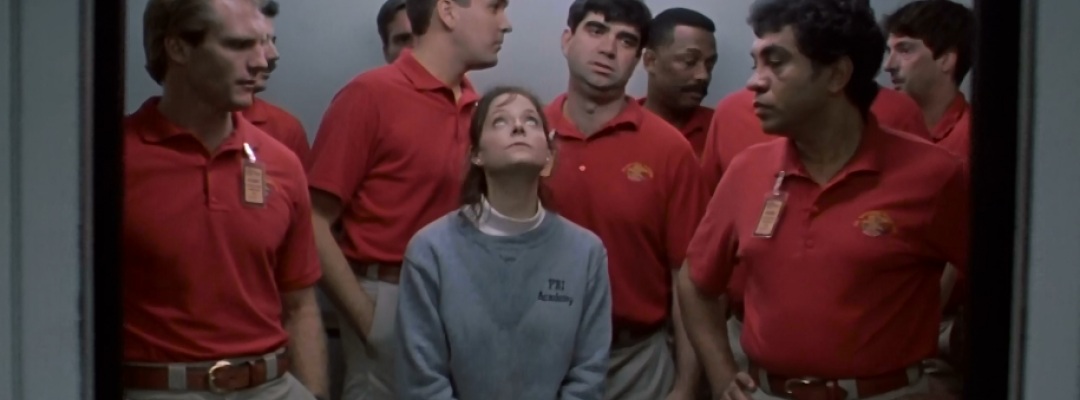
Image result for the silence of the lambsJodie Foster, I think, has gone not fully appreciated for her performance in the way Anthony Hopkins has. Her performance is absolutely pitch-perfect. Foster's Clarice Starling is an authentic character. She is strong and competent but she is also vulnerable. She does not hide that she is a woman by attempting to be 'masculine' and she certainly would never think of being coquettish. Her gender is part of who she is.

However, she is someone who is capable of being hurt. A brief scene of her crying after leaving her first interview with Lecter, where she has endured having cum flung at her and crazed men screaming at her, shows that she is not above having emotions. She also has something that the male investigators do not have: empathy for the victims. Starling does not see these women as mere corpses or subjects in an investigation but instead she sees them as real people. 

The Silence of the Lambs does not have a bad performance in it, a credit to Demme as a director and the various actors in the film. Levine for good or ill is now seen as 'Buffalo Bill', his crazed 'drag act' never slipping into camp but a genuinely creepy being. Even small roles, such as Baker's fearful mother, Kasi Lemmons as Starling's fellow trainee Ardelia Mapp or Chris Isaak as the SWAT commander and even independent film legend Roger Corman in a cameo as the FBI director all have strong moments.

There are also other elements that contribute to the film's great success. Howard Shore, inexplicably not nominated for his score, creates music that is eerie and melancholy. Of particular note is when Clarice is remembering the trauma of her childhood. One can hear what sounds like the wind echoing that dark morning when her young life came apart. I think it was actually music, but it was so well-crafted that one senses the score elevated the scene. The use of the song Goodbye Horses also makes for frightening effect.

Craig McKay's editing is excellent, particularly when balancing the tension between a wrong raid, Catherine striking back against her captor and Clarice's imminent danger. Tak Fujimoto's cinematography works well in setting the eerie nature of the story, though I did question the set-up for when the police storm where Lecter is housed. It did strike me as slightly illogical that Lecter would take so much time with such an elaborate piece but that's being a bit nitpicky.

The Silence of the Lambs is a magnificent film: horror mixed with intelligent yet subtle commentary on gender roles and standout performances particularly from Foster and Hopkins. An extraordinary yet terrifying film, The Silence of the Lambs continues to hold a macabre fascination to this day.

DECISION: A+

1992 Best Picture Winner: Unforgiven

HANNIBAL LECTER FILM SERIES


HANNIBAL LECTER TELEVISION SERIES

Clarice