Showing posts with label Tuesdays With Oscar. Show all posts

Tuesday, September 13, 2016

The Power of Oscar Compels You

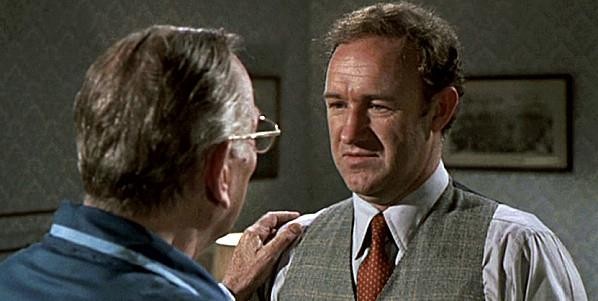
John Houseman:
Best Supporting Actor for
The Paper Chase

TUESDAYS WITH OSCAR: 1973

The 46th Academy Awards had some of the most memorable winners, and one jaw-dropping moment that the cameras didn't quite capture.

We were coming to the end of the ceremony, and David Niven was introducing Elizabeth Taylor, who would announce the Best Picture nominee.  As he was speaking, Robert Opel, a man who had mysteriously managed to get a very rare pass, ran behind Niven completely nude and flashing a peace sign as he streaked across the stage.  The audience was shocked and amused, the orchestra quickly playing Sunny Side Up

Niven was clearly at a loss for words, but soon rebounded magnificently.


"Isn't it fascinating to think that probably the only laugh that man will ever get in his life is by stripping off and showing his shortcomings," the veteran raconteur quipped.  Taylor, who had the unenviable task of following THAT up, quipped herself, "That's a pretty hard act to follow".  When presenting Best Picture, she was visibly flustered by it all, remarking that it really upset her, then adding, "I think I'm jealous". 

To this day no one knows exactly how Opel managed to get the pass or make it past the various security levels.  Moreover, rumors that this was a publicity stunt to boost ratings have emerged, though that has been denied by both Opel and the Academy.  If that was the case, neither Niven or Taylor were let in.  Sadly, Opel is not here to reveal more (no pun intended).  Five years after this, Robert Opel was murdered in a robbery at his studio.

Adding to this rather shocking moment is the fact that Taylor's announcement made history.  The Sting, announced as the Best Picture winner, had as one of its producers Julia Phillips, making her the first woman to win a Best Picture Oscar.  Another female made history, when ten-year-old Tatum O'Neal won Best Supporting Actress, making her the youngest Oscar winner in history.  Her Best Supporting Actor counterpart, John Houseman, was 71 years old and had made very few films before The Paper Chase, known mostly as a producer and acting teacher. 


We also had the very rare moment of Katharine Hepburn making her only Academy Award appearance.  Despite her four wins and twelve nominations (the former yet matched, the latter outdone by Meryl Streep), she never appeared when she was a nominee.  However, to honor her friend, producer Lawrence Weingarten, with the Irving Thalberg Award. 

The 46th Academy Awards were indeed historic, chaotic, wild, elegant and outrageous.

As always this is just for fun and should not be taken as my final decision. I should like to watch all the nominees and winners before making my final, FINAL choice. Now, on to cataloging the official winners (in bold) and my selections (in red). Also, my substitutions (in green).

1972 Academy Awards

BEST ORIGINAL SONG


(You're So) Nice to Be Around: Cinderella Liberty
Live and Let Die: Live and Let Die
Love: Robin Hood
A Touch of Class: A Touch of Class
The Way We Were: The Way We Were

Well, let's put this in perspective.  Live and Let Die is among the greatest Bond Songs in the franchise (screw you, Skyfall and Writing's On the Wall).  In any other year, it would have been a no-brainer to have had Paul McCartney win.  HOWEVER, it was up against one of THE songs from film, the title theme to The Way We Were.  Everyone knows the first line "Memories...light the corners of my mind", and it is such an iconic song, with an incredible delivery by Barbra Streisand that there is no way I could disagree with this choice. 

My own memory of The Way We Were was that I didn't want to see this chick flick at first, but by the end I was all but crying and yelling at the screen, "NO, NO...YOU NEED TO STAY TOGETHER!"  It's one of the few chick flicks that I openly admit to liking. 

Despite this, I select another song, creepy, haunting, erotic, and so brilliant.


From The Wicker Man, Willow's Song, music and lyrics by Paul Giovanni.

Zuckerman's Famous Pig: Charlotte's Web
Live and Let Die: Live and Let Die
Knockin' On Heaven's Door: Pat Garrett & Billy the Kid
The Way We Were: The Way We Were
Willow's Song: The Wicker Man

Willow's Song, also known as How Do, is a brilliant song that works within the film.  Few melodies can evoke the pagan elements within the story and mix it with both hints of eroticism and almost innocence.  As the temptress attempts to seduce our virginal evangelical through song, the song becomes a charged one, tinged with sex and desire along with the need to suppress said desire.  Willow's Song evokes the temptations of the pleasures of the flesh wrapped in loveliness.  All the other songs I named are brilliant in their own way, and it was not easy not picking something like Knockin' On Heaven's Door by my beloved Bob Dylan.  However, how can I not say, 'How Do?'

BEST DIRECTOR

Ingmar Bergman: Cries and Whispers
Bernardo Bertolucci: Last Tango in Paris
William Friedkin: The Exorcist
George Roy Hill: The Sting
George Lucas: American Graffiti

I have nothing against Hill winning, as The Sting is a great film with a very slow and methodical conclusion.  I will say that I had figured out the twists a bit before I was suppose to and found them quite logical. Having said that, and with Friedkin's masterful work of the demonic possession film, I am going with a more critically acclaimed filmmaker and giving it to the Swede for his portrait of sisters in spiritual despair.

Ingmar Bergman: Cries and Whispers
William Friedkin: The Exorcist
Robin Hardy: The Wicker Man
George Roy Hill: The Sting
Terrance Malick: Badlands

There was some strong competition from both nominated and non-nominated directors, but I'm going with the forlorn Bergman this time too. 

BEST SUPPORTING ACTRESS


Linda Blair: The Exorcist
Candy Clark: American Graffiti
Madeleine Kahn: Paper Moon
Tatum O'Neal: Paper Moon
Sylvia Sydney: Summer Wishes, Winter Dreams

We had two children fight it out as ten-year-old Tatum O'Neal and thirteen-year-old Linda Blair fought it out for Best Supporting Actress.  That sadly left Madeleine Kahn, one of the great comedic actresses, in the dust.  How does one compete against both a child and the figurative spawn of Satan?  Now, it has been argued that O'Neal was "in the wrong category" and that she was really a leading character, and that her inclusion in Supporting was more to give her a better chance to win. That I cannot say, but I think that it is Blair's performance that is more remembered.

Also, we should add that perhaps Blair lost due to a controversy that was not of her own making.  Mercedes McCambridge, who had won a Best Supporting Actress Oscar for All The King's Men, performed the voice of the demon in The Exorcist.  It's unclear whether McCambridge had asked for no credit for her work on the film or not.  Regardless of the truth of that, the fact that it was McCambridge's voice and not Blair's might have hurt with the Academy voters.  This is speculation of course, but one wonders whether the controversy revolving around Blair/McCambridge cost one person an Oscar. 

Finally, we have a rare moment: a time when two actresses nominated in the same category from the same film didn't cancel each other out.


Linda Blair: The Exorcist
Eileen Brennan: The Sting
Madeleine Kahn: Paper Moon
Diana Rigg: Theater of Blood
Kari Sylwan: Cries and Whispers

For the longest time I had Rigg win for her turn as the devoted daughter of the deranged Shakespearean actor in Theater of Blood, part horror film, part camp.   However, I decided that such a thing might be a bit much.  Instead, I turned to the overlooked Brennan as the moll who helps bring down the kingpin in The Sting, one of the few female characters of importance in this almost all-male show.  I'm genuinely surprised that despite some really great performances, The Sting managed only one acting nomination.  Even stranger, The Sting marks Robert Redford's only acting nomination. 

BEST SUPPORTING ACTOR


Vincent Gardenia: Bang the Drum Slowly
Jack Gilford: Save the Tiger
John Houseman: The Paper Chase
Jason Miller: The Exorcist
Randy Quaid: The Last Detail

Out of all these nominated performances, only one became so well-known that the actor recreated it for a television series based on the film.  Houseman was not known in film circles, though he was a highly respected teacher and had worked with Orson Welles when both were on Broadway.  Out of all the nominees, it is Houseman's tyrannical Professor Kingsfield that stands far above them, perhaps to Houseman's regret.

Kingsfield was a villain only in that he had great power, knew he had great power, and used it coldly over those he had power over.  Highly intelligent, his wit and disdain was what made him frightening.  He was also aware of who he was and how he was perceived.  When one of his law students, in a rage, called him "a son of a bitch" to his face in the midst of the entire class, Professor Kingsfield retorted as his errant student walks away, "That is the most intelligent thing you've said today".  Houseman's towering performance was so great he reprised the role for a successful television series of The Paper Chase, and did a variation of it in Smith Barney Brokerage Company commercials where he told people Smith Barney made money "the old fashioned way...they EARN it!"

For better or worse, the haughty Kingsfield was now permanently tied to Houseman.  In later years, he would play variations of Kingsfield, whether as the disapproving father of the man-child in Silver Spoons or in guest spots like on 227 or The Naked Gun

Finally, I can say that after watching The Paper Chase, I was so unnerved by Kingsfield and the whole legal education system that I opted not to become a lawyer.  Thanks, John Houseman...


John Houseman: The Paper Chase
Christopher Lee: The Wicker Man
Jason Miller: The Exorcist
Edward G. Robinson: Soylent Green
Robert Shaw: The Sting

In this category, I'm going for the actor who never got the credit he deserved.  Christopher Lee was an iconic figure in horror, though he was much more than just a bogeyman.  Highly cultured and educated, with a superb voice, Lee was essentially pigeonholed into being the heavy.  Out of all his roles, I think his Lord Summerisle is perhaps his best role: seemingly charming, sophisticated, yet downright bonkers in his beliefs about sacrifices.    We're rather spoiled for choice where I think any of them would have been magnificent recipients, but this year, it goes to Christopher Lee in The Wicker Man.

BEST ACTRESS


Ellen Burstyn: The Exorcist
Glenda Jackson: A Touch of Class
Marsha Mason: Cinderella Liberty
Barbra Streisand: The Way We Were
Joanne Woodward: Summer Wishes, Winter Dreams

Well, we are in a bit of a quandary, aren't we? We have Babs in one of her most iconic performances, and we have Glenda Jackson picking up her second Oscar.  Maybe it isn't too much of a quandary, as I would make the long-suffering mother to a demonically-possessed child my choice.  I love Ellen Burstyn, so maybe I'm a bit prejudiced in this area.


Ellen Burstyn: The Exorcist
Tatum O'Neal: Paper Moon
Maria Schneider: Last Tango in Paris
Sissy Spacek: Badlands
Liv Ullman: Cries and Whispers

Well, I've looked around and am puzzled as to why Maria Schneider, partner to the nominated Marlon Brando, was overlooked.  I moved O'Neal from  Supporting to Leading, but there's something about Ullman that makes me wonder whether Cries and Whispers should have made her at least a nominee. 

BEST ACTOR


Marlon Brando: Last Tango in Paris
Jack Lemmon: Save the Tiger
Jack Nicholson: The Last Detail
Al Pacino: Serpico
Robert Redford: The Sting

I don't dislike Jack Lemmon by any stretch, but wonder whether the fact that the funnyman went dramatic had anything to do with his win.  All I can say is that people still talk about Brando's performance in Last Tango in Paris, and it is on reputation alone that I make this choice.


Marlon Brando: Last Tango in Paris
Charlton Heston: Soylent Green
Vincent Price: Theater of Blood
Martin Sheen: Badlands
Edward Woodward: The Wicker Man

I am going for another choice, and that is Woodward as the devout Christian police officer caught up in a web of pagan decadence in The Wicker Man.  As an evangelical myself, I can say that Woodward's Sergeant Howie is not too far off the mark, though perhaps a bit harsher than I would image my brothers to be.  However, the rigidity of Howie was not indicative of a bad or stilted performance, but of one who was determined to avoid sin and all its lures only to end up devoured.

BEST PICTURE


American Graffiti
Cries and Whispers
The Exorcist
The Sting
A Touch of Class

I don't have an issue with The Sting winning, though initially I had pegged The Exorcist as my choice.  I think The Sting is a great film, worthy of its reputation as a clever romp.  I also think The Exorcist, the first horror film to be nominated for Best Picture, still stands as a landmark in film.  Giving this a lot more thought, I am going by reputation again and selecting the foreign-language exploration into the sad heart.

My friend Fidel Gomez, Jr. loves Bergman, and it was he who introduced me to more foreign-language films.  I don't know if he has this Bergman film, but from what I know of it, it is a masterful work; with that, I select Cries and Whispers as the Best Picture of 1973. 


Cries and Whispers
The Exorcist
Soylent Green
The Sting
The Wicker Man

I many times have referred to something as "the Citizen Kane" of XYZ to denote that it is the apex of whatever I'm talking about.  The Wicker Man has been referred to by others as "the Citizen Kane of horror" and I think with justification.  This tale of a devout Christian investigating the disappearance of a girl on an island where paganism and the occult are celebrated, where the pleasures of the flesh are taught openly in school, and where rituals are commonplace has one of the most shocking twist endings in history.  I was stunned by the twist in The Wicker Man and horrified by its fiery conclusion.  It is one of the great films of any genre, much better than the silly remake (which curiously, starred my beloved Ellen Burstyn.  Seriously, what were you THINKING!?).  The original is almost always the best.

With that, I select The Wicker Man as the Best Picture of 1973.

Next Time, the 1974 Academy Awards.

Tuesday, September 6, 2016

Willkommen, Bienvenue, Oscar

Sacheen Littlefeather Refusing Oscar
on Behalf of Marlon Brando:
Best Actor for
The Godfather

TUESDAYS WITH OSCAR: 1972

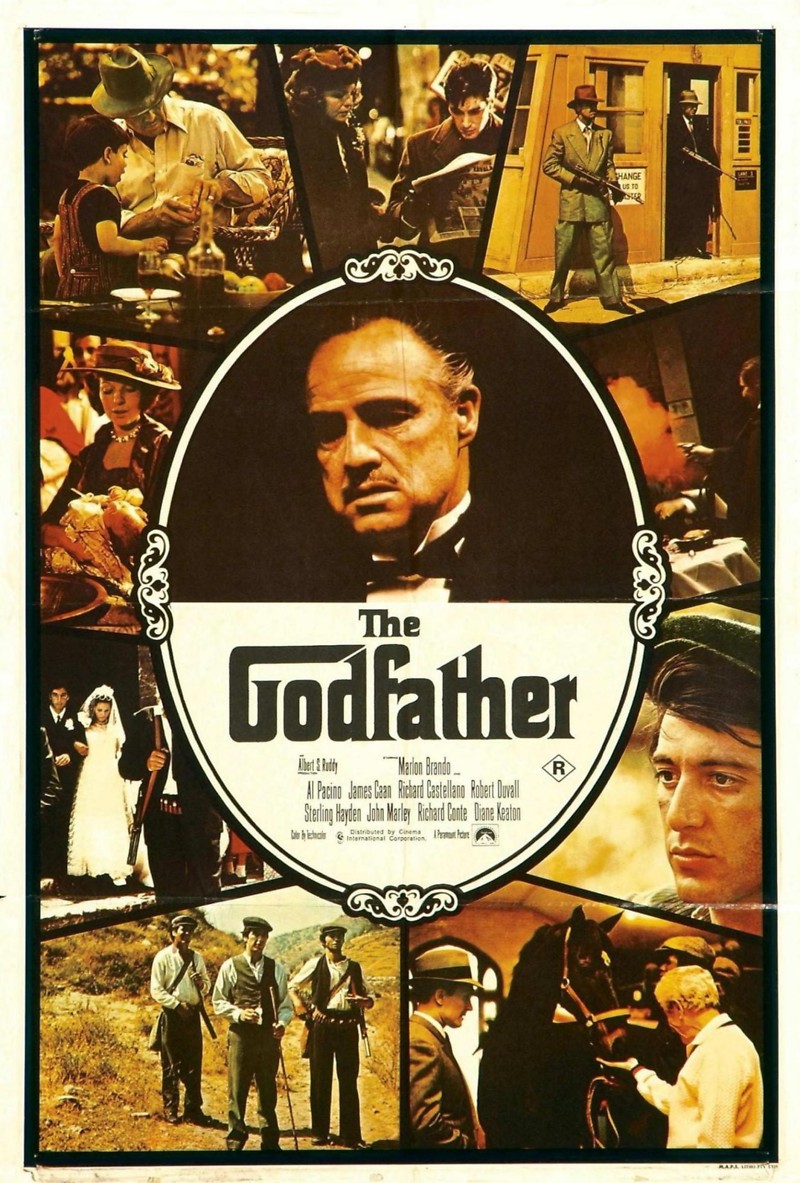
The 45th Academy Awards is remembered not so much for who won (though one of the greatest films of all time did manage a surprise win), but for who came for one of the winners.  This is the Oscar where an obscure Indian actress and activist became forever linked to the Academy Awards, to her eternal infamy warranted or not.  Sacheen Littlefeather went in the place of Marlon Brando, nominated for his 'comeback' role of The Godfather.  Proxies had accepted for others before, but leave it to the mercurial actor to upend things on this night.

The story of Sacheen Littlefeather is a fascinating one.  Having formed a curious relationship with the eccentric Brando, she had been summoned to go on his behalf, with all sorts of odd moments.  Brando had written out a very lengthy speech decrying the portrayal of Native Americans onscreen and on recent Native American activism such as Wounded Knee.  The speech would have been far too long to deliver even if Brando had appeared, but there was no way the producers would have allowed it to have been made, Brando or no Brando.  Ultimately, Littlefeather was forced to wing it, and the grief she has received over it has not abated.

Richard Roeper, with whom I maintain a one-sided feud, made a most interesting point about all this.  He said something along the lines of what exactly Brando playing a gangster has anything to do with Native Americans has yet to be explained.

This sadly would not be the last time the Academy Awards would be used to promote a political viewpoint, though given what would occur in the future, this brouhaha would be rather tame by comparison.

In other Academy news, Cabaret would set a record for the most Oscar wins without winning Best Picture, eight versus The Godfather's mere three.  Four of Cabaret's wins were in categories where it bested The Godfather

As always this is just for fun and should not be taken as my final decision. I should like to watch all the nominees and winners before making my final, FINAL choice. Now, on to cataloging the official winners (in bold) and my selections (in red). Also, my substitutions (in green).

1972 Academy Awards

BEST ORIGINAL SONG


Ben: Ben
Come Follow Me, Follow Me: The Little Ark
Marmalade, Molasses & Honey: The Life and Times of Judge Roy Bean
The Morning After: The Poseidon Adventure
Strange Are the Ways of Love: The Stepmother

And we're back to the most square of square choices as our official nominees.  Out of all these, The Morning After seems to be the best one.  It's a curious, almost comic juxtaposition: this gentle, optimistic song to one of the great disaster films, one that kind of set the model for all other future disaster films. The Morning After also fits the hope the survivors of the Poseidon hold as one by one they meet a grisly fate. 


From Super Fly, Freddy's Dead.  Music & Lyrics by Curtis Mayfield.

Ben: Ben
Marmalade, Molasses & Honey: The Life and Times of Judge Roy Bean
The Morning After: The Poseidon Adventure
Strange Are the Ways of Love: The Stepmother
Freddy's Dead: Super Fly

Perhaps it was because Shaft had won last year that the powers that be opted not to go 'urban' again.  All the pity, as Freddy's Dead is, perhaps not the equal to Theme From "Shaft", at least far more memorable than Strange Are the Ways of Love

BEST DIRECTOR

John Boorman: Deliverance
Francis Ford Coppola: The Godfather
Bob Fosse: Cabaret
Joseph L. Mankiewicz: Sleuth
Jan Troell: The Emigrants

Having seen three of the nominees, I can vouch for the strong directing in Sleuth, Cabaret, and The Godfather.  Fosse did a fantastic job in his musical film, where the songs weren't integrated into the story but performed on stage as they would in a real cabaret club.  However, I still hold out that Coppola's masterwork was a stronger effort, the mix of family loyalty and business into that toxic mix of tragedy.

Francis Ford Coppola: The Godfather
Bob Fosse: Cabaret
Werner Herzog: Aguirre, The Wrath of God
Joseph L. Mankiewicz: Sleuth
Robert Neame: The Poseidon Adventure

Having said that, I believe that Herzog's exploration into the dark recesses of a madman as he goes into his own Heart of Darkness is a much more astonishing achievement.  I was stunned by Aguirre, The Wrath of God visually and emotionally, and is one of those films that haunts you long after you see it.

BEST SUPPORTING ACTRESS


Jeannie Berlin: The Heartbreak Kid
Eileen Heckart: Butterflies Are Free
Geraldine Page: Pete 'n' Tillie
Susan Tyrell: Fat City
Shelley Winters: The Poseidon Adventure

I have nothing against Heckart, but I still have a soft spot for the nice Jewish fat lady who is in her words, 'a very skinny lady in the water'.  It isn't just the kvetching that Winters did in The Poseidon Adventure (curiously, the only cast member in an all-star cast to be nominated from the film), but her final scene, as she gives her all for the sake of others, is genuinely moving. 


Eileen Heckart: Butterflies Are Free
Diane Keaton: The Godfather
Susan Tyrell: Fat City
Talia Shire: The Godfather
Shelley Winters: The Poseidon Adventure

I'm starting to lean towards Keaton's WASP in Italian nightmare, but for the moment, I'm sticking with our dear Mrs. Rosen. 

BEST SUPPORTING ACTOR


Eddie Albert: The Heartbreak Kid
James Caan: The Godfather
Robert Duvall: The Godfather
Joel Grey: Cabaret
Al Pacino: The Godfather

Normally, the fact that three actors nominated in the same category for the same film would be enough for me to say why none of them won and another grabbed the Oscar.  However, while Caan, Duvall, and Pacino were all brilliant in The Godfather (as was everyone in the film), it is Grey's turn as the somewhat gleeful, somewhat demonic Master of Ceremonies that is to me the clear standout performance.  Recreating his stage role as the frightening yet impish MC from the original stage production of Cabaret, Grey's performance, if you look at it technically, is built entirely around song.  Not once does he utter one word of actual dialogue. 

Every time he is on screen, it is to perform a number (starting and ending with Willkommen), and every time you see him, he sings.  However, the impression he leaves as this merry figure of mirth as the world he lives in slips from the decadence of the Weimar Republic to the horror of Nazi Germany is so strong, I simply cannot give it to another of the nominees.

Sorry, Eddie. 


Despite the brilliance of Grey in Cabaret, if I were given a choice, I'm going to go for another musical performance.


James Caan: The Godfather
Howard Da Silva: 1776
Robert Duvall: The Godfather
Joel Grey: Cabaret
Al Pacino: The Godfather

As the wise, worldly Benjamin Franklin, Howard Da Silva stole the show in 1776.  His Founding Father was not a monument, and he knew it.  He was a man, one who advised the more temperamental John Adams into the ins and outs of forming these United States.  Shrewd, slightly manipulative, with a twinkle in his eye and yet as serious as anyone when needed, it is as strong a performance as I've seen.

Kind of makes one wonder how it would compare to the more hip-hop oriented Hamilton.

BEST ACTRESS


Liza Minnelli: Cabaret
Diana Ross: Lady Sings the Blues
Maggie Smith: Travels With My Aunt
Cicely Tyson: Sounder
Liv Ullmann: The Emigrants

Minnelli now is pretty much a sad parody of herself.  I've yet to recover from the horror of seeing her in Sex and the City 2, doing her own whacked-out version of Single Ladies...and wondering which of the three was the REAL Liza Minnelli and which of the others were impersonators.  However, give credit where credit is due: Minnelli is iconic as that chanteuse Sally Bowles, embodiment of Weimar devil-may-care who deep down has a heart.  Her mixture of worldliness and naïveté is brilliant and a bit heartbreaking.  She can sing, and she can dance, but in Cabaret, she shows she can act: a true successor to her mother, Judy Garland.

Perhaps in any other year, I would have leaned towards Ross' turn as the somewhat real-life Sally Bowles, Billie Holliday in Lady Sings the Blues.  However, this year I'm going for LIZA!  Curiously enough, when Ross lost Best Actress she reportedly wept, and if I understand it correctly, someone (perhaps a fellow nominee, perhaps not), told her there would be other chances.  "Not for a black actress", was Ross' sad reply.

It would be 30 years before Ross would be proven wrong (although since 2002, there has yet to be another minority actress to win Best Actress).   

No Substitutions

BEST ACTOR


Marlon Brando: The Godfather
Michael Caine: Sleuth
Laurence Olivier: Sleuth
Peter O'Toole: The Ruling Class
Paul Winfield: Sounder

I would have been pretty happy to see any of the nominees win, a rare moment when we got a good slate of Best Actor nominees.  Here, however, we have another case of two actors in the same category cancelling each other out.  Curiously, with the nominations of both Caine and Olivier, we have a rare film where the entire cast of a film was nominated.  However, it is clear that Brando's mob boss, a man who loves his family yet has damned them to disastrous lives, is the dominant, standout performance.

Then we get to this...


One feels for Sacheen Littlefeather, an obscure figure dragged into a worldwide platform where she will be scrutinized, condemned, mocked, reviled, and held up as a heroine. 

Listening to her speech, I found it remarkably composed and elegant given the very intense pressure she faced as an ordinary woman thrust into the spotlight.  I agree with my one-sided nemesis Richard Roeper about how Brando's gangster having anything to do with Indian rights is yet unexplained, and I'm not a fan of the Academy Awards being used to push a political agenda (even if I agree with it).  Having said that, Brando deserved the Oscar and Littlefeather deserves praise for her dignity...even if perhaps I would have been displeased at Brando's actions.

The best reply was given by John Wayne, who flat-out refused to make any comment about it.  I think he was elegantly angry about it, saying that this was the one time of the year that the industry presents itself to the public...and if they wanted to talk to anyone, they should go get Brando.

I love Brando in The Godfather, but he wouldn't be my choice.


Marlon Brando: The Godfather
Michael Caine: Sleuth
William Daniels: 1776
Klaus Kinski: Aguirre, The Wrath of God
Laurence Olivier: Sleuth

There is no doubt for me as for who was the Best Actor of 1972.  Klaus Kinski is frightening as the evil, perhaps deranged conquistador Aguirre (skipping over the fact that they're all speaking German or English, as Kinski spoke both).  His performance is intense and powerful, an evil man slipping into total power-madness (if not madness itself), one who will take his fellows into the true heart of darkness, left alone to rule the monkeys with his unhinged plans to commit incest and necrophilia simultaneously.   Kinski was not the easiest or most rational of actors (in another Herzog/Kinski collaboration, Fitzcarraldo, the actor so terrified the natives they offered to kill him for Herzog...and one wonders whether Herzog was tempted to take them up on the offer).  However, few performances have been as searing and as brilliant as his in Aguirre, The Wrath of God.  For that one performance alone, his legacy as a great (albeit slightly bonkers) actor is assured.

It is among the most powerful and greatest performance in film, testament to Herzog's vision, Kinski's craft, and the strange power of their collaboration, one which had Herzog refer to Kinski in a documentary about their work as My Best Fiend.

BEST PICTURE


Cabaret
Deliverance
The Emigrants
The Godfather
Sounder

Well, when The Godfather managed to stop Cabaret's march to final victory it was a bit of a surprise.  Let's keep in mind that Cabaret had already taken eight Academy Awards and four of those at The Godfather's expense: Best Film Editing, Best Sound Mixing,  Best Supporting Actor and Best Director.  Let's also keep in mind that Best Director and Best Picture usually correlate.  Finally, let's remember that by the time we got to the Best Picture category, Cabaret had eight Oscars while The Godfather had struggled to get two (the declined Best Actor, for which Cabaret did not get a nomination in, and Best Adapted Screenplay, the only category at that point for which they had been in competition).

Therefore, when The Godfather pulled it off in the end, it was if not a surprise at least one that came at a particular cost.  It should be remembered that The Godfather, with its three Oscars, is only one Oscar more than two other Best Picture winners: The Greatest Show on Earth and Spotlight, which managed only two Oscars including Best Picture. 

In any other year, I probably would have gone with Cabaret, but since I've got one of the greatest films ever made here, I would name The Godfather the Best Picture of 1972.

That being said, if push came to shove I would go down another path.


1776
Aguirre, The Wrath of God
Cabaret
The Godfather
The Poseidon Adventure

The Godfather is a brilliant, extraordinary film, among the greatest ever made.  However, I cannot shake the haunting, terrifying, extraordinary work that is Aguirre, The Wrath of God.  Few films equal its power and brilliance, and stay with you long after the film ends.

I stand by The Godfather, but I would name Aguirre, The Wrath of God as The Best Picture of 1972.

Next Time, the 1973 Academy Awards.


Still among the most frightening things I've ever seen.  It's scarier than Aguirre, The Wrath of God.

Tuesday, August 30, 2016

Sunrise, Sunset, Sunrise, Oscar

Cloris Leachman:
Best Supporting Actress for
The Last Picture Show

TUESDAYS WITH OSCAR: 1971

The 44th Academy Awards had one highlight that is undisputed.  Charlie Chaplin closed the show with the presentation of his Honorary Oscar, unofficially closing one of the most controversial chapters in the annals of Oscar.

Chaplin had been essentially exiled by the United States in 1952 due to a mix of his political views and his scandalous private life, his reentry visa having been revoked.  He was bitter about what he perceived as American hypocrisy and refused to return, settling in Switzerland.  This now-unofficial exile ended nearly twenty years later when he returned to accept the Oscar (take THAT, George C. Scott).  The emotion of the night overwhelmed him.  It looked for a time that he might be too ill to come, with him in a wheelchair, sitting backstage looking at the highlight film of his career.  Then, once he had to go on stage, he rallied and gave a brief but heartfelt thank you to those "wonderful, sweet people" who had invited him. 

It was a reconciliation long in the making, the bitterness of nearly twenty years dissipating between both sides. 

In terms of the awards there were some interesting notes.  The Academy was acknowledging the era by awarding its highest honor to The French Connection, a tale as solidly in the 1970s as any.  It even ventured into being more adventurous when it came to the music categories as we shall see.  The Best Supporting Actor and Actress nominees were both all first-time nominees, and both had two nominees from the same film that didn't cancel each other out. 

As always this is just for fun and should not be taken as my final decision. I should like to watch all the nominees and winners before making my final, FINAL choice. Now, on to cataloging the official winners (in bold) and my selections (in red). Also, my substitutions (in green).

1971 Academy Awards

BEST ORIGINAL SONG


The Age of Not Believing: Bedknobs and Broomsticks
Bless the Beasts and Children: Bless the Beasts and Children
Life is What You Make It: Kotch
All His Children: Sometimes a Great Notion
Theme From "Shaft": Shaft

Oh, sweet Mother of Mercy!  WHO came up with this idiotic list?!  Apart from The Age of Not Believing and Theme From "Shaft", whoever heard of ANY of these songs?   Even the fact that they've pretty much been forgotten perhaps could be forgiven if they were, well, anything other than  so hopelessly square to make milquetoast seem almost avant-garde.  I listened to all five nominees, and truth be told I'm not sure there's much difference between Bless the Beasts and Children and Life is What You Make It. If you played just the melody, could you tell the difference between four of them? For Heaven's sake, TWO of these dry ditties have "Children" in the title!  Syrupy, Syrupy, Syrupy! 

There's not a lick of a difference between the first four, so Theme From "Shaft" was not just the right choice, but a massive jolt to the staid Academy, making its win downright revolutionary.  The bridging between the urban sound with strings and some pretty daring lyrics with double entendres was if not particularly brave at least an acknowledgement of the brilliance of Isaac Hayes' song.  Even the production number from the Academy Awards presentation wasn't the embarrassment it usually is.  It would have been absolutely horrifying if any of the other songs would have won, and one of the lowest points in Oscar history.

Fortunately, sense hit the Music Branch and we were spared a disaster.

Normally, I would just put in my own choice (which isn't the Theme From "Shaft"), but instead, I think it will let you listen to those themes that the Academy could have nominated but chose to overlook for such songs as All His Children.


From Diamonds Are Forever, Diamonds Are Forever. Music by John Barry, lyrics by Don Black.


From Harold and Maude, If You Want to Sing Out, Sing Out.  Music and lyrics by Cat Stevens.


From Willy Wonka and the Chocolate Factory, The Candy Man.  Music and lyrics by Leslie Bricusse and Anthony Newley.


From Willy Wonka and the Chocolate Factory, Pure Imagination.  Music and lyrics by Leslie Bricusse and Anthony Newley.

Now, I ask you, which of the official nominees do YOU remember apart from Theme From "Shaft"

Think on those and then go down to see my winner.


Diamonds Are Forever: Diamonds Are Forever
If You Want to Sing Out, Sing Out: Harold and Maude
Theme From "Shaft": Shaft
The Candy Man: Willy Wonka and the Chocolate Factory
Pure Imagination: Willy Wonka and the Chocolate Factory

From Willy Wonka and the Chocolate Factory, Pure Imagination.  Music and Lyrics by Leslie Bricusse and Anthony Newley.

I found four better and more remembered songs than such things as Life is What You Make It or Bless the Beasts and Children, all eligible as far as I know, and all blissfully ignored for perhaps one of the worst slate of nominees in this category.  Ah, if we can count on one thing when it comes to the Music Branch of the Academy, is that they will never miss an opportunity to miss an opportunity (to quote the late, great Abba Eban).  Their official list of Best Original Songs of 1971 makes the contest between Donald Trump and Hillary Clinton look downright rational.

I think each of these songs could have easily have won and I'd have no objection to any of them winning.  I also think Theme From "Shaft" is one of the greatest Best Original Song Oscar winners.  However, I'm going with Pure Imagination due to the fact that it's so iconic, and if you listen carefully, the music holds a bit of a creepy, off-kilter mood to it, as if beneath the sweetness of the lyrics there is something dark and menacing lurking just beneath.

BEST DIRECTOR

Peter Bogdanovich: The Last Picture Show
William Friedkin: The French Connection
Norman Jewison: Fiddler on the Roof
Stanley Kubrick: A Clockwork Orange
John Schlesinger: Sunday Bloody Sunday

My issue with A Clockwork Orange is that not only did I find it creepy in a bad way but highly pretentious.  I remember being dragged to a screening by my friend Fidel Gomez, Jr., and found it in turns horrifying and self-important.  I don't object to Friedkin winning, for The French Connection is an extremely good film.  However, I was so moved by the tale of lost youth in Texas that my heart goes to Bogdanovich's work in The Last Picture Show.

Peter Bogdanovich: The Last Picture Show
Clint Eastwood: Play Misty For Me
William Friedkin: The French Connection
Norman Jewison: Fiddler on the Roof
Don Siegel: Dirty Harry

Despite some great work by others, I see nothing to shift my view that Bogdanovich shouldn't win.

BEST SUPPORTING ACTRESS


Ann-Margret: Carnal Knowledge
Ellen Burstyn: The Last Picture Show
Barbara Harris: Who is Harry Kellerman and Why is He Saying Those Terrible Things About Me?
Cloris Leachman: The Last Picture Show
Margaret Leighton: The Go-Between

In a rare moment, two actresses from the same film didn't cancel each other out.  For me, Leachman's performance as the lonely, lovelorn housewife, a cougar with a heart, was a devastating one.  Her last scene where she seems to scream out to the world was simply fantastic.


Rosalind Cash: The Omega Man
Rosalind Harris: Fiddler on the Roof
Jill St. John: Diamonds Are Forever
Cloris Leachman: The Last Picture Show
Natalie Trundy: Escape From Planet of the Apes

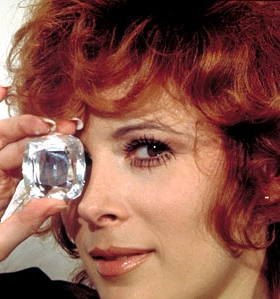
Despite that, and despite some really strong work by others, my heart goes to the sassy, flirtatious, delightfully devious Tiffany Case from Diamonds Are Forever.  St. John knew what the part was, and played it to perfection.  Her Tiffany Case (among the more amusing Bond Girl names) was unapologetic about being a thief, and moreover made Tiffany Case something so rare in a Bond film: a funny and fun Bond Girl who was smart enough to make it funny and fun.  Part comic relief, part self-reliant woman, Jill St. John is among my favorite Bond Girls, and unlike others before or after her, St. John has never regretted either her role or in being called a "Bond Girl". 

BEST SUPPORTING ACTOR


Jeff Bridges: The Last Picture Show
Leonard Frey: Fiddler on the Roof
Richard Jaeckel: Sometimes a Great Notion
Ben Johnson: The Last Picture Show
Roy Schneider: The French Connection

In a rarer turn, we have TWO categories where TWO actors from the same film are nominated and don't cancel each other out.  Sometimes a single monologue can be so good that it's worthy of recognition.  This is how I feel about Ben Johnson's performance in The Last Picture Show.  A sense of tragedy, of loss, of that deep pain beneath that we keep within us, that one that got away...it's all there.


Jack Albertson: Willy Wonka and the Chocolate Factory
Jeff Bridges: The Last Picture Show
Leonard Frey: Fiddler on the Roof
Ben Johnson: The Last Picture Show
Roy Schneider: The French Connection

No, nothing to have me change my mind. 

BEST ACTRESS


Julie Christie: McCabe & Mrs. Miller
Jane Fonda: Klute
Glenda Jackson: Sunday Bloody Sunday
Vanessa Redgrave: Mary, Queen of Scots
Janet Suzman: Nicholas and Alexandra

Here is another rarity indeed: two biopics losing Best Actress, back when a biopic wasn't an automatic Oscar win (like Eddie Redmayne).  The film may have been called Klute, but it doesn't seem like his story.  It seems like Bree Daniels' story.  Bree is no Happy Hooker.  She's a survivor, someone who knows the difference between sex and love, and who is in danger.


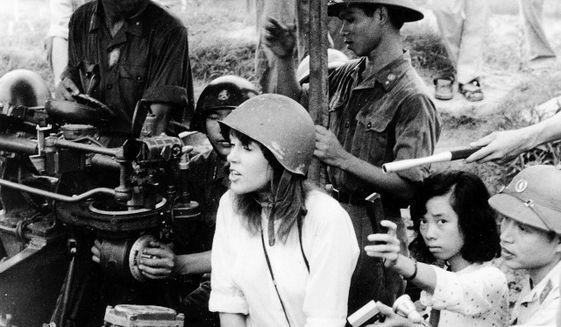
I am no fan of Fonda's politics, but at least she was sensible enough to know that the Academy Awards were not the appropriate venue to get her views out.  A lot of people, particularly the producers, were in terror of what Hanoi Jane might say, and some Academy members weren't thrilled when they saw Tom Joad's daughter virtually dancing with men killing their sons in battle.  However, if we go by performances, I think for now I'm going with Fonda.


Julie Christy: McCabe & Mrs. Miller
Jane Fonda: Klute
Kim Hunter: Escape From Planet of the Apes
Geraldine Page: The Beguiled
Ruth Gordon: Harold and Maude

Fonda was such an odds-on favorite that three of her nominees didn't bother showing up.  Only Suzman bothered to appear.   I had Page win for some time, but opted at the last minute to go with the Academy and give it to Fonda.

Geez, why would ANYONE be upset about this?


BEST ACTOR


Peter Finch: Sunday Bloody Sunday
Gene Hackman: The French Connection
Walter Matthau: Kotch
George C. Scott: The Hospital
Chaim Topol: Fiddler on the Roof

AT LAST MY GENE HACKMAN LOVE CAN BE EXPRESSED!

In case you don't know, I'm an unabashed Gene Hackman lover.  Get him a Kennedy Center Honor already!  As the obsessed detective determined to bring down a major drug ring, Hackman brings his everyman quality to the role.  It's intense, fiery, and he towers over all the other performances.


Clint Eastwood: Dirty Harry
Gene Hackman: The French Connection
Malcolm McDowell: A Clockwork Orange
Chaim Topol: Fiddler on the Roof
Gene Wilder: Willy Wonka and the Chocolate Factory

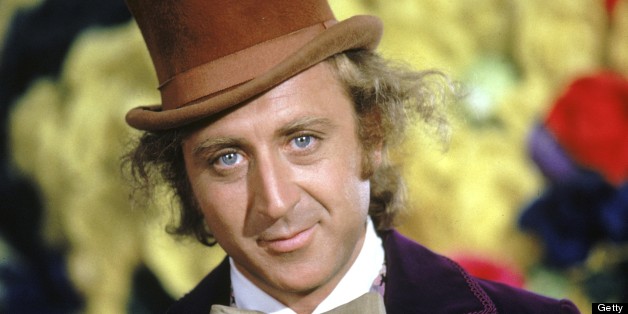
For once, I'm going to temper my Gene Hackman love for another Gene and give it to Wilder's iconic turn as the slightly mad, slightly whimsical, always fascinating Willy Wonka.  It turns crazy and gentle, Wilder will always be THE Willy Wonka, impresario of a world filled with Pure Imagination

BEST PICTURE


A Clockwork Orange
Fiddler on the Roof
The French Connection
The Last Picture Show
Nicholas and Alexandra

The nomination for A Clockwork Orange is to please the critics, Fiddler on the Roof to please audiences, Nicholas and Alexandra to please the Academy's penchant for big/epic biopics.  That leaves us with two choices: the gritty The French Connection and the tragic The Last Picture Show.  I've no objection to The French Connection winning.  It's a fine film.  However, emotionally I was overpowered by this tale of Texas, an anti-Giant.

Therefore, I name The Last Picture Show the Best Film of 1971.


Escape From Planet of the Apes
The French Connection
Harold and Maude
The Last Picture Show
Willy Wonka and the Chocolate Factory

I think there were better films than Nicholas and Alexandra or even Fiddler on the Roof, a rare musical to get a nomination when the genre was well out of fashion.  And there I go, nominating a musical too.  To be fair, Willy Wonka and the Chocolate Factory forms a part of practically everyone's childhood and I think people don't think of it strictly as a 'musical', even though it is one.  However, I see no real challenger to my original choice.

As such, I select The Last Picture Show as the Best Picture of 1971.

Next time, the 1972 Academy Awards.
Tuesday, August 23, 2016

Him Whom Oscar Slaps...

Glenda Jackson:
Best Actress for
Women in Love


TUESDAYS WITH OSCAR: 1970

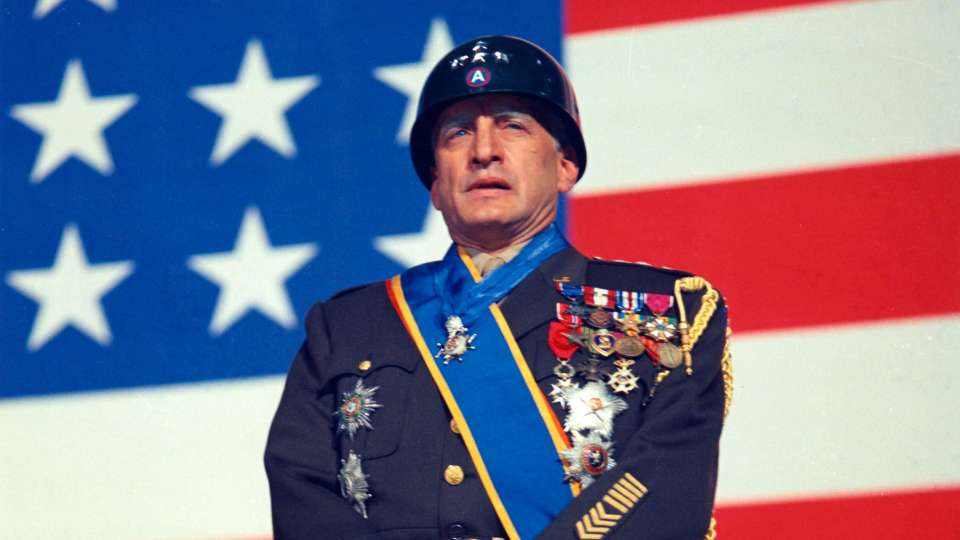
The 43rd Academy Awards had a score of controversy thanks to curmudgeonly George C. Scott.  Scott had denounced the Academy Awards ever since he lost in his first nomination for Supporting Actor in Anatomy of a Murder.  Nominated the next year for The Hustler, he firmly refused the nomination but no worries: he lost.  Now, with his titanic performance in Patton, it was all but certain he'd win.  Yet, stubborn as always, he again flatly refused the nomination, deriding the whole thing as a "GD meat parade".  Despite this, Scott was voted the Best Actor by the Academy, refusal or no refusal.  If memory serves correct, the Oscar that Scott rejected still sits, uncollected, at the Academy archives.

It seems almost fitting that Scott would reject his Oscar.  He metaphorically slapped the Academy the same way General Patton slapped the shell-shocked soldier, a moment so scandalous that the U.S. was in an uproar when they heard about it, and the once-beloved war hero was forever tainted by this one act.

One person who wasn't going to slap Oscar was Helen Hayes, who became the first person to win Lead and Supporting Actress Oscars for her role in Airport

As always this is just for fun and should not be taken as my final decision. I should like to watch all the nominees and winners before making my final, FINAL choice. Now, on to cataloging the official winners (in bold) and my selections (in red). Also, my substitutions (in green).

THE 1970 ACADEMY AWARD WINNERS   

BEST ORIGINAL SONG


Whistling Awa the Dark: Darling Lili
For All We Know: Lovers and Other Strangers
Till Love Touches Your Life: Madron
Pieces of Dreams: Pieces of Dreams
Thank You Very Much: Scrooge

Are they serious?  Till Love Touches Your LifePieces of Dreams?  Why do I get the sense that while music was being radically altered in the late 1960s to early 70s, the Academy held firm in rewarding the squarest choices possible?  Not that For All We Know is some giant step forward: when The Carpenters are the ones singing, you can't say you're particularly avant-garde (and I do like The Carpenters myself).  Still, out of all the nominees For All We Know is a memorable song that people know (though they might not know that it came from a movie).  Out of all the nominees, Thank You Very Much is the only one that is actually worth anything, but I have to ultimately go for the one we can hum along to. 

Despite that, I'm selecting the more adventurous song from the wildest film few people have seen.


Ev'ryone Wants to Be A Cat: The Aristocats
Whistling Away the Dark: Darling Lili
For All We Know: Lovers and Other Strangers
Come and Get It: The Magic Christian
Thank You Very Much: Scrooge

From The Magic Christian, Come and Get It, music and lyrics by Paul McCartney.

The Magic Christian, if memory serves correct, was about how people can be bought rather quickly and easily.  It has Yul Brynner singing Mad About the Boy...in drag! to Roman Polanski!  and Laurence Harvey reciting Hamlet's To Be or Not to Be soliloquy as he strips.  For All We Know...it's a pretty insane film, and the purpose of it all escapes me.  However, while not the best song I've heard, at least it's a damn sight better known than Pieces of Dreams or Till Love Touches Your Life.

BEST DIRECTOR

Robert Altman: M*A*S*H
Federico Fellini: Satyricon
Arthur Hill: Love Story
Ken Russell: Women in Love
Franklin L. Schaffner: Patton

I have no objection to Schaffner's win for the epic Patton.  It was never boring and moved quickly as we covered one aspect of the titanic General's life.  Having said that, I am leaning toward Altman's own war film, where unlike Schaffner's take with war being this grand thing, it was actually something of a dark comedy.  M*A*S*H is now one of the best-remembered war (or anti-war) films, less about Korea than it was about Vietnam. 

Robert Altman: M*A*S*H
William Friedkin: The Boys in the Band
Bob Rafelson: Five Easy Pieces
Franklin L. Schaffner: Patton
George Seaton: Airport

I'm not going to bat for my choice of Rafelson, but I get the sense that he should have been nominated (particularly over the insipid Love Story, which has nothing to recommend it apart from its score).  Seaton gets points for keeping so many stories going together, and Friedkin for just bringing up homosexuality in a film without being opaque on the subject.

BEST SUPPORTING ACTRESS


Karen Black: Five Easy Pieces
Lee Grant: The Landlord
Helen Hayes: Airport
Sally Kellerman: M*A*S*H
Maureen Stapleton: Airport

A rarity in Oscar history: two actress nominated for the same film don't end up cancelling each other out.  It was thirty-eight years between Oscars for The First Lady of the American Theater as Helen Hayes' cutesy stowaway beat out her costar Stapleton.  If memory serves right, her character was spoofed in Airplane!, but I cannot be sure.  One thing I am sure is that Kellerman's Hot Lips Houlihan is still remembered, which is one reason I'm going with Kellerman.


Karen Black: Five Easy Pieces
Lee Grant: The Landlord
Helen Hayes: Airport
Kim Hunter: Beneath Planet of the Apes
Sally Kellerman: M*A*S*H

So far, again, I see nothing to shift my original choice.    

BEST SUPPORTING ACTOR


Richard S. Castellano: Lovers and Other Strangers
Chief Dan George: Little Big Man
Gene Hackman: I Never Sang for My Father
John Marley: Love Story
John Mills: Ryan's Daughter

It's no surprise John Mills won. "Illness always wins", and what better way to show it than by playing mute?  Ryan's Daughter isn't held in particular esteem if I understand it, a kind of weak David Lean as his career peters out.  Maybe Chief Dan George is better, and maybe my unabashed love for Gene Hackman blinds me.  This is the rare time when I'm willing to say I am playing favorites, but come on...GENE HACKMAN! 


Richard S. Castellano: Lovers and Other Strangers
Robert Duvall: M*A*S*H
Maurice Evans: Beneath Planet of the Apes
Cliff Gorman: The Boys in the Band
Gene Hackman: I Never Sang for My Father

Despite that, for the moment I'm going to lean towards Duvall's pompous and perhaps crazed Major Burns. Duvall has a way with officials who are slightly off-kilter.  He is also one of the best actors still working today.  Just like I advocate for a Kennedy Center Honor for Gene Hackman, I advocate one for Robert Duvall.  

BEST ACTRESS


Jane Alexander: The Great White Hope
Glenda Jackson: Women in Love
Ali McGraw: Love Story
Sarah Miles: Ryan's Daughter
Carrie Snodgress: Diary of a Mad Housewife

The only things I know about Glenda Jackson is that she's British and is a hardline-leftist Member of Parliament.  The fact that she's British I figure helped in her winning the Oscar, as so many in the Academy are convinced a native British accent equals great acting (Example Number 1: Eddie Redmayne).  For right now, I can dismiss McGraw's "love means never having to say you're sorry" performance (and for the record, love means ALWAYS having to say you're sorry).  I am leaning toward Snodgress' troubled woman in Diary of a Mad Housewife but again, not a final decision.


Jane Alexander: The Great White Hope
Sandy Dennis: The Out-of-Towners
Glenda Jackson: Women in Love
Sarah Miles: Ryan's Daughter
Carrie Snodgress: Diary of a Mad Housewife

Again, I'm sticking with Snodgress for now.  I get the sense that Miles must have been like Ryan's Daughter...a bit dull. Is Snodgress' housewife mad as in crazy or mad as in angry?  I think she has reason to be both.

BEST ACTOR


Melvyn Douglas: I Never Sang for My Father
James Earl Jones: The Great White Hope
Jack Nicholson: Five Easy Pieces
Ryan O'Neal: Love Story
George C. Scott: Patton

The fact we have to acknowledge that Ryan O'Neal is an Oscar-nominated actor tells us that the Academy may not be the best judge of good performances.

Douglas, Jones, and Nicholson would each I figure have won in any other year, but Scott WAS Patton in few ways actors have embodied a character.  Yes, he may have turned the Oscar down, but that doesn't take away from the committed, almost unhinged general who was devout and deranged, who loved war and made no apologies for it.


Albert Finney: Scrooge
James Earl Jones: The Great White Hope
Jack Nicholson: Five Easy Pieces
Donald Sutherland: M*A*S*H
George C. Scott: Patton

To many, when people think of George S. Patton, they are picturing George C. Scott.  Scott's performance is wrong in at least one fashion: the real General Patton's voice was more patrician, not this gruff, violent guttural sound Scott gave the slap-happy war lord.  Still, we shouldn't look to films for accurate history.  Scott's portrayal of this complex figure: brilliant, arrogant, who could quote Scripture with sincerity yet also believe in reincarnation makes it one for the ages. 

BEST PICTURE


Airport
Five Easy Pieces
Love Story
M*A*S*H
Patton

Patton is a brilliant film, yet at the same time such a product of its time.  We were in the final stages of Vietnam, a war that divided American (and still does) and which were on the verge of losing.  Yet here is Patton, madly cheering on the idea that "Americans have never lost AND WILL NEVER LOSE a war".  To some in 1970, Patton was a pro-American, pro-war film: one that reminded us of who we really were, fighters, unafraid, determined to stomp out all opposition to achieve victory.  To others in 1970, Patton was an anti-American, anti-war film: one that showed the arrogance and folly of following war-and-blood crazed old men into battle, getting us lost in antiquated ideas of what makes men "men" and the destruction unchecked war lords could unleash.

Patton works however you interpreted it: as a cheer or jeer to America.  That is one of the reasons it is such a brilliant film: it is open to interpretation.  I'm sure to the older generation who saw Patton, who lived through the Second World War, it was a reminder of what made America great: tenacity, grit, courage, determination.  I'm sure to the younger generation who saw Patton, who were living through the Vietnam War, it was a reminder of what made America terrible to them: arrogance, stubbornness, ignorance, a lack of compassion.

Despite the greatness of M*A*S*H, another Vietnam film in all but name, I name Patton the Best Film of 1969.  


Airport
Five Easy Pieces
The Great White Hope
M*A*S*H
Patton

Again, Patton can be interpreted in any way: pro-or-anti America, pro-or-anti war, pro-or-anti Vietnam.  Divorced from whatever interpretation you want to give it, Patton as a film works exceptionally well as a biopic and as an entertaining film.

As such, I name Patton the Best Picture of 1969.

Next Time, the 1971 Academy Awards. 

Tuesday, August 16, 2016

Fifty Shades of Oscar

John Wayne:
Best Actor for
True Grit

TUESDAYS WITH OSCAR: 1969

The 42 Academy Awards went all over the place, from the most traditional to the most shocking.  In one evening, the Academy gave its Best Actor Oscar to the most conservative person in Hollywood, and its Best Picture Oscar to an X-Rated film.  You can't get any more confused than that.  What a difference a year makes.

Last year, Oliver! became the first (and of today, only) G-rated film to win Best Picture.  Now, Midnight Cowboy became the first (and of today, only) X-rated film to win.  Let's put some things into perspective though.  It isn't as if the Academy decided that such films as Debbie Does Dallas or Deep Throat were suddenly in the same league as Casablanca or Schindler's List.  We are in the early stages of the ratings system, and the X rating did not have the connotation it has now.  The X was given due to the adult themes and the suggestion of homosexual acts (long before the concept of same-sex marriage was ever conceived).  The film, despite its subject matter of male prostitution, sex acts, and drug use, was later reclassified as R.  To be perfectly honest, given how open society is about sex in all (and I do mean all) its forms, I would probably make Midnight Cowboy PG-13. 

This ceremony also included the lavish musical Hello, Dolly! (another film with an exclamation point), which to me represents the last gasps of a genre that was clearly falling out of favor.  When a musical loses to an X-rated film, you know the times, they are a'changing. You had the respectable biopic (Anne of the Thousand Days) and the 'rebellious' film (Butch Cassidy and the Sundance Kid).  You also had a very interesting situation with the last entry, Z.  It is the shortest film title to receive an Oscar nomination for Best Picture, and it was the first to receive both a Best Picture and Best Foreign Language Film nomination (winning in the latter).  There has yet to be a foreign language Best Picture winner.

Finally, none of the acting Oscars went to Best Picture nominees, an extremely rare occurrence.

As always this is just for fun and should not be taken as my final decision. I should like to watch all the nominees and winners before making my final, FINAL choice. Now, on to cataloging the official winners (in bold) and my selections (in red). Also, my substitutions (in green).

THE 1969 ACADEMY AWARD WINNERS   

BEST ORIGINAL SONG


Raindrops Keep Fallin' On My Head: Butch Cassidy and the Sundance Kid
What Are You Doing the Rest of Your Life?: The Happy Ending
Jean: The Prime of Miss Jean Brody
Come Saturday Morning: The Sterile Cuckoo
True Grit: True Grit

At least this is one time the Academy isn't embarrassed by the winner.  Raindrops Keep Fallin' On My Head is a pretty optimistic song despite the somewhat laidback melody.  It is, perhaps apart from Jean and perhaps True Grit, the only song people remember from this list.  One thing that is for certain is that Raindrops Keep Fallin' On My Head has entered the popular songbook, and there is probably a very small number that either don't know the song or can identify it from Butch Cassidy and the Sundance Kid.

Raindrops Keep Fallin' On My Head was an excellent choice, but my heart and mind tell me another song was worthier.


Raindrops Keep Fallin' On My Head: Butch Cassidy and the Sundance Kid
Ballad of Easy Rider: Easy Rider
Just Leave Everything to Me: Hello, Dolly!
We Have All the Time in the World: On Her Majesty's Secret Service
Jean: The Prime of Miss Jean Brody

From On Her Majesty's Secret Service, We Have All the Time in the World, music by John Barry, lyrics by Hal David.

Louis Armstrong appeared on two 1969 soundtracks: We Have All the Time in the World and doing his own rendition of the title song from Hello, Dolly!  There is a sad melancholy in We Have All the Time in the World because in both the film and with Armstrong, we know it's not true.  The two lovers don't have all the time in the world, and moreover, Armstrong was very ill when he recorded the song, giving it a sadder rendition. On Her Majesty's Secret Service is one of the best James Bond films, and it would be better regarded if not for George Lazenby in his only performance as 007.  It is also one of the few Bond films to not have a title song.  However, We Have All the Time in the World is a beautiful ballad made more tender by the fact that in this case, love is extremely fragile.

BEST DIRECTOR

Costa-Garva: Z
George Roy Hill: Butch Cassidy and the Sundance Kid
Arthur Penn: Alice's Restaurant
Sydney Pollack: They Shoot Horses, Don't They?
John Schlesinger: Midnight Cowboy

For starters, I never understood the great love for Butch Cassidy and the Sundance Kid.  I don't think of it as a classic mainly because I found it a bit dull.  Despite that, I'm willing to give it a second look.  Right now I see it as a battle between the underside of Times Square and the underside of Greek politics.  As such, I'm leaning now towards Z.

Costa-Garva: Z
Dennis Hopper: Easy Rider
Sergio Leone: Once Upon a Time in the West
Sam Peckinpah: The Wild Bunch
John Schlesinger: Midnight Cowboy 

That being said, I am a bit at a loss as to why The Wild Bunch was so ignored this year (only two nominations).  Part of me figures that it was the then-graphic violence that so shocked the staid Academy members who preferred the gentle nostalgia of Hello, Dolly!  However, Bonnie and Clyde was pretty violent for its time and it wasn't ignored in major categories.  Perhaps the members were already overwhelmed with the sexual nature of one film to deal with the violent nature of another.  Despite that, I think few people now would dispute the importance of The Wild Bunch.

BEST SUPPORTING ACTRESS


Catherine Burns: Last Summer
Dyan Cannon: Bob & Carol & Ted & Alice
Goldie Hawn: Cactus Flower
Sylvia Miles: Midnight Cowboy
Susannah York: They Shoot Horses, Don't They?

In case you didn't know or just forgot, Goldie Hawn is an Oscar winner.  That's right: THAT Goldie Hawn.  Laugh-In go-go dancing Goldie Hawn.  Giggling Goldie Hawn.  Overboard Goldie Hawn.  Perpetually ditzy/bubbly Goldie Hawn.  This is no slam against Hawn.  I can't say anything good or bad about her or Cactus Flower.  However, I had a bit of a process of elimination.  Miles is out: her what, five minutes screen-time isn't going to cut it for me.  As for the others, perhaps York could be a more sensible choice, but few people remember her or the film.  As a result, I had to rule with the Academy on this one.


Dyan Cannon: Bob & Carol & Ted & Alice
Claudia Cardinale: Once Upon a Time in the West
Goldie Hawn: Cactus Flower
Diana Rigg: On Her Majesty's Secret Service
Katherine Ross: Butch Cassidy and the Sundance Kid

That being said, I'm going to go with Rigg's Countess in On Her Majesty's Secret Service, the best Bond film you've never seen.  She wasn't coquettish like other Bond Girls, but she was also not a prude.  Elegant, with perhaps a damaged heart, she manages what no other woman could do: tame 007, making her end all the more sad.

BEST SUPPORTING ACTOR


Rupert Crosse: The Reivers
Elliott Gould: Bob & Ted & Carol & Alice
Jack Nicholson: Easy Rider
Anthony Quayle: Anne of the Thousand Days
Gig Young: They Shoot Horses, Don't They?

After a lifetime of pursuing fame and being known as a comedy actor, Gig Young took things to a dramatic turn as the sleazy Master of Ceremonies at a dance marathon in They Shoot Horses, Don't They?  Young had been nominated before, but this was the one that in his mind was going to get him in his own starring vehicles instead of playing second fiddle/banana.  That was not to be: despite his Oscar, Gig Young remained stubbornly second-tier.


Jack Nicholson: Easy Rider
Anthony Quayle: Anne of the Thousand Days
Robert Redford: Butch Cassidy and the Sundance Kid
Robert Ryan: The Wild Bunch
Gig Young: They Shoot Horses, Don't They?

The real tragedy of all that was that Young, an alcoholic, never achieved what he so desperately longed for: stardom.  Three weeks after marrying for the fourth time, the 64-year-old actor and his 31-year-old wife were found dead, the victims of an apparent murder-suicide, with Young as the trigger man.  The exact cause for this horror have never been discovered, and it makes the sordidness of the MC look tame.

A tragedy all around.

BEST ACTRESS


Genevieve Bujold: Anne of the Thousand Days
Jane Fonda: They Shoot Horses, Don't They?
Liza Minnelli: The Sterile Cuckoo
Jean Simmons: The Happy Ending
Maggie Smith: The Prime of Miss Jean Brodie

I get the sense that The Prime of Miss Jean Brodie is the anti-To Sir With Love, showing the dangers of the influence teachers can have on their students.  At the moment I really don't feel that there is much that the other performers can do to knock Smith off the winner's podium.

No Substitutions. 

BEST ACTOR


Richard Burton: Anne of the Thousand Days
Dustin Hoffman: Midnight Cowboy
Peter O'Toole: Goodbye, Mr. Chips
Jon Voight: Midnight Cowboy
John Wayne: True Grit

I think Burton's now getting desperate, going for any Oscar-bait he can lay his hands on.  Wayne's Oscar I think was for Lifetime Achievement rather than for this one role, not that I'm begrudging him his win.  Once again we see how two actors nominated in the same category for the same film essentially cancel each other out.

Now, most people tend to go for Hoffman's Ratso Rizzo, and I'm not about to say his performance wasn't spectacular.  However, after seeing the film again I think it is Voight's Joe Buck that is the better performance.  Voight makes Buck's mixture of innocence and ego almost sympathetic and sad, his delusions of his sexual prowess and desirability crushed by the desperation of turning tricks with men and his haunted past with his girlfriend and grandmother back home in Texas.  His evolution into being a real person and not the caricature he imagined himself to be is as heartbreaking as Ratso's decline.


Henry Fonda: Once Upon a Time in the West
Dustin Hoffman: Midnight Cowboy
William Holden: The Wild Bunch
Paul Newman: Butch Cassidy and the Sundance Kid
Jon Voight: Midnight Cowboy

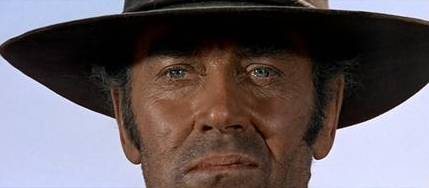
However, when I think how good guy Henry Fonda became this frightening figure of evil in Once Upon a Time in the West, I have to go with him.  The coldness in his eyes, the ruthlessness of how easily he kills, even the most defenseless, without remorse or shame, it's I think his greatest performance ever.  Tom Joad was a good man.  Mr. Roberts was a good man. Frank isn't, and even now, I get the chills when I think of him in Once Upon a Time in the West.

According to his son Peter, even Henry was freaked out by the intensity of his performance, which is why he played villains so rarely. 

BEST PICTURE


Anne of the Thousand Days
Butch Cassidy and the Sundance Kid
Hello, Dolly!
Midnight Cowboy
Z

I'm going to say that Hello, Dolly! shouldn't be here, the last thrusts of a dying genre that held to big, lavish musicals.  I also am dubious of Anne of the Thousand Days.  That leaves three films listed to contend with.  Butch Cassidy and the Sundance Kid is loved, but I never felt the love myself for it.  Now we have two: the 'porn' film and the 'political' film.  I thought Midnight Cowboy was a great film, though curiously enough a bit dated now. 

That leaves me with one choice, and thus, I name Z the Best Picture of 1969.


Easy Rider
Midnight Cowboy
On Her Majesty's Secret Service
The Wild Bunch
Z

I still contend though that there were other, better films that year (sorry, Dolly).  Easy Rider is held as another revolutionary film, though again I wasn't a big fan of it.  I think On Her Majesty's Secret Service is one of the best James Bond films brought down by George Lazenby.  However, as I look over the year, the violence and horror of The Wild Bunch works on so many levels: both as the story its telling and as allegory about American intervention and violence in Vietnam.

As such, I name The Wild Bunch as the Best Picture of 1969.

Next time, the 1970 Academy Awards.