Friday, January 10, 2014

Percy Jackson: Sea of Monsters. A Review

PERCY JACKSON: SEA OF MONSTERS

Wrath of The Titans: Junior Edition...

After Percy Jackson & The Olympians: The Lightning Thief bombed both at the box office and critically, I figured we were through with the tales of the demi-god Percy Jackson, the bastard child of Poseidon and a mortal.  Little did I count on Hollywood's total dearth of ideas, for now we have Percy Jackson: Sea of Monsters (I guess the budget couldn't afford them 'The Olympians' to attach to the title).  The second in Richard Riordan's rip-off...I mean, reimagining...of the Greek myths (out of five), Sea of Monsters brings us yet another tale where mythology is both dumbed down and just dull to watch. 

We get a flashback to set up the story.  Long ago, well, actually four years ago, four campers at Camp Half-Blood (the summer camp for bastard children of randy Greek deities) was attacked, and one of the campers, Thalia, was killed.  No worries, for as the illegitimate daughter of Zeus she has a handy way of surviving (sort of): he turns her into a tree whose power provides a shield for the entire camp.  We then move on to the present day, where Percy (Logan Lerman) is still struggling to think of himself as a true hero.  Despite his actions in Lightning Thief he still has doubts, doubts amplified by the, for lack of a better term, bitchy Clarisse (Leven Ramblin), daughter of Ares, God of War.  Only Percy's friends, Annabeth (Alexandra Daddario), daughter of Athena, and Grover (Brandon T. Jackson), a satyr/Percy bodyguard, believe he has the power to be a true hero.  Watching over all our bastard campers is centaur Chiron (Anthony Head, taking over from Pierce Brosnan) and "Mr. D." (Stanley Tucci), who is a bit too fond of the sweet booze (if you know your mythology, you should know what the 'D' is for). 

Percy has many issues.  Mr. D doesn't remember his name (wonder if Percy started singing Mr. Cellophane when cleaning up at camp) and the father-son chats he has by the water's edge never get a reply (I'm guessing because they couldn't talk Kevin McKidd to reprise his role of Poseidon, but that's just a guess).  Now he gets an even bigger shock: his slutty father has given Percy a half-brother.  Even more shocking, it's a Cyclops, Tyson (Douglas Smith).  Unlike other Cyclops, Tyson is extremely sweet, wanting only to bond with his brother Percy, who does not return the affection.

No time to worry about things like other love children, for Camp Half-Blood has been attacked.  The protective shield provided by Thalia has been all but destroyed because someone has poisoned the tree, putting Thalia's life in danger...again.  The villain, Luke (Jake Abel), the son of Hermes who had been defeated in The Lightning Thief (btw, he was the Lightning Thief in case you were curious).  Only the Golden Fleece can save her.  The Fleece is within The Sea of Monsters, known to us Muggles...I mean, Mortals, as the Bermuda Triangle.  To seek it out, the adults decide these demigod teens/tweens are the perfect ones to do so, and they choose...Clarisse.

From Browncoat to Brown Short

Somehow Percy and his group end up going on their own, and things take a more dangerous turn when Grover is abducted by Luke and his minions, a satyr being needed for the search for the Golden Fleece.  They seek help from Hermes himself (Nathan Fillion), who runs UPS of all things.  He gives them both advise and tools to help them in their quest.  Eventually they do manage to enter the Sea of Monsters, and meet up with a frustrated Clarisse who found herself stuck inside the belly of a monster.  Tyson stumbles and bumbles his way into everyone's hearts, and the ultimate battle for the Golden Fleece begins.

Luke wants it so as to resurrect Kronos, the Titan who swallowed his own children to stop them from taking over.  Now Luke will take his revenge on the Olympians through the 'enemy of my enemy' thinking.  Of course, things don't turn out the way Luke hoped.  The campers do manage to defeat Kronos and bring the Fleece back with them.  Percy has grown to love Tyson, and Thalia is revived in a most unexpected way: rather than remain just a tree, she returns in human form, and now that prophesy of the last living child of one of the three main gods (Zeus, Poseidon, and Hades) takes on a new turn...and the possibility of a sequel.

I am not particularly bothered that Sea of Monsters opted to suggest we will get yet another Percy Jackson film, given that there are three more books in the series (The Titan's Curse, The Battle of the Labyrinth, and The Last Olympian).  I just hope that if we are infected with more Percy Jackson films, they aren't as boring as this one.

I'd say that just about everyone looks bored, knowing that they have to fulfill a contract.  Lerman (whom I'm on the fence about being a good actor or just someone with a film career) was particularly disinterested in the goings-on.  Jackson had the added misfortune of being made the default 'comic relief' (the scenes where he's evading another Cyclops by donning drag being less funny than the film thinks and actually more sad).  Daddario didn't look interested either, and frankly the only one who looked like he had energy was Smith.  Part of it may be because he was a new character and not wrapped up in keeping what had come before, and part of it I suspect may be because he was the only character allowed a personality.

The adults weren't any better.  Head and especially Tucci did what they could with the underwritten parts (courtesy of Marc Guggenheim's adaptation), but they were never a big enough part of the story to matter all that much.  That does lead me to a question on logic: when Half-Blood is being rampaged by a mythological bull, where were the adults?  Fillion had fun spoofing his cult status; he comments on a thermos from a fictional show, Hercules Busts Heads Season One, then wryly comments that it was the best TV show ever, so of course it was cancelled.  Wonder what he was referring to?

As amusing as that might have been to the Firefly fans (sad to say that, like most of America, I skipped the show), Thor Freudenthal could never integrate it successfully into the story (I half expected to see Fillion turn and wink at us to let us in on the 'joke').  There were more unintended moments of comedy (when we see Kronos' sarcophagus, I thought they had raided the prop room of Raiders of the Lost Ark).  There really is nothing for us to care about either the characters or their situations.  The threat isn't interesting, the characters one-note (doubting hero, bright potential love interest, cheerful half-brother, comic relief), the visuals try too hard to make it interesting to cover up the fact the story isn't, and I really can't see the fans of the Percy Jackson books thinking this was what they had in mind when they read them.

I figure Percy Jackson: Sea of Monsters is an inoffensive way to waste a couple of hours, but for those of us who genuinely love Greek/Roman mythology, for whom Edith Hamilton's Mythology was Essential Reading, it is really a sad commentary on modern readers that these magnificent stories have to be whittled down to a series of stories about a rather dull kid and his equally dull friends.

We're contractually obligated to make
MORE Percy Jackson films?!


DECISION: C-

Thursday, January 9, 2014

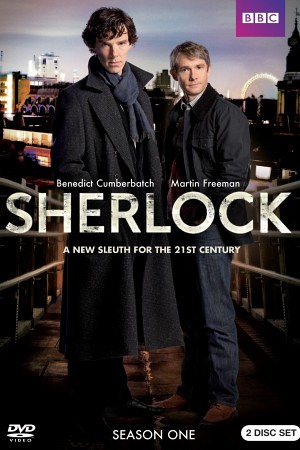
What Am I Missing? Sherlock: Season One. An Overview


SHERLOCK: SEASON ONE

I have completed Season/Series One of Sherlock, the BBC update of the Sherlock Holmes stories, and frankly I can't understand why Sherlock fans are so fierce and fanatical over this particular series.  The way they talk about this show, you'd think no one had ever adapted the Arthur Conan Doyle stories of The Great Detective before. 

I need to set some things straight from the start because I know I am leaving a bad impression.  Therefore, let me state it clearly and succinctly without equivocation.

I DO NOT HATE SHERLOCK!

Again...

I DO NOT HATE SHERLOCK!

I however, do not think Sherlock is a.) the greatest Sherlock Holmes adaptation ever made, and b.) do not comprehend the fanaticism surrounding it. 


Yes, they'll rank among the greats.
But as for being The Greatest....

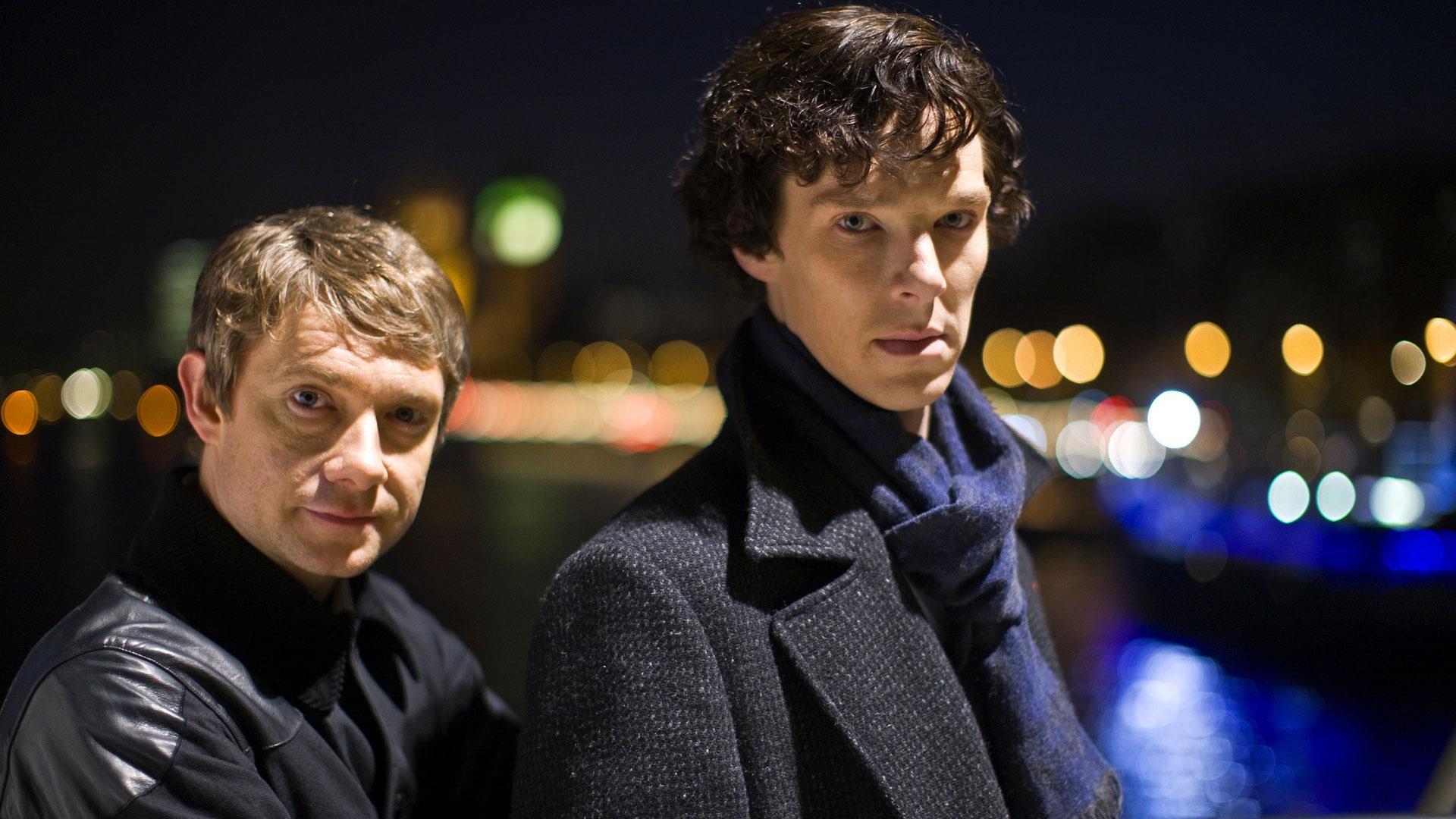
After watching Season One of Sherlock, I think it is a good show, boosted by the two leads' performances.  As the title character, Benedict Cumberbatch does a magnificent job in making Sherlock Holmes one for this century.  He is crusty, dismissive, knowingly aware of his intellectual prowess and unashamed of it.  For this Sherlock, the methods, and especially the successful discovery of the solution, trump everything.  Cumberbatch as Sherlock is by his own words a high-functioning sociopath, but for him, like all good interpretations of Holmes, the exercise of the mind is more important than human connections.

Still, when humor does slip in (such as when Holmes suggests his idea of a date is as good as Watson's in The Blind Banker), we see that Cumberbatch can have some fun with the character, making him almost endearing.

He is equally matched by Martin Freeman as John Watson.  Freeman starts well as Watson, sticking close to the Canon by having Watson be a troubled Afghan War veteran.  He is the heart to Holmes' brain: compassionate, concerned for people, unafraid of ladies and their company, and perhaps the closest thing to a friend Holmes has.

My caveat with Freeman as Watson has been how he veers more to the Nigel Bruce style of Watson (the bumbling dimwit who can't quite put it together) than the Jude Law style of Watson (a brawler who isn't dumb and enjoys life).  I winced when Watson starts shouting at a check-out machine in The Blind Banker, and Freeman has this style to him, what I call flustration: a mix of fluster and frustration, almost befuddlement at what is going on.  The rapid pace of how poor Watson has so much thrown at him in A Study in Pink made me feel almost sorry for him.


They didn't invent it, you know...
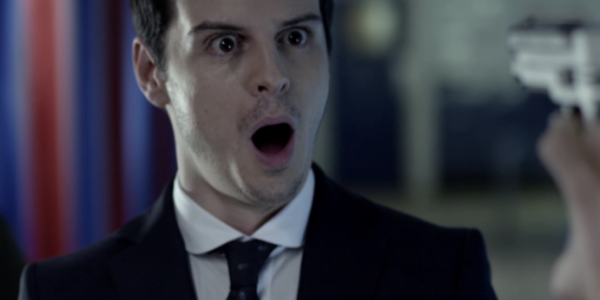
My big beef with Sherlock is more with the writing.  I don't think it's genius.  I know Sherlock co-creators Mark Gatiss (who also dons the role of Sherlock's older brother Mycroft) and Steven Moffat well.  Yes, I'm not partial to what they've done on Doctor Who.  Be that as it may I think that apart from A Study in Pink the two other Sherlock stories in Season One are not the greatest.  The Blind Banker had this rather distasteful air of 'yellow menace' coursing through it, and The Great Game gave us in Jim Moriarty someone who looked like he was auditioning for The Master in Doctor Who.  Instead of being this master criminal, the intellectual equal to Sherlock Holmes, he's just bonkers (and highly camp to boot, which turn in into almost a caricature of a Bond villain than a true rival to Sherlock). 

I don't think the stories are terrible per se, but again, I can't quite figure out why they are seen as this brilliant, unimpeachable bits of television on par with Upstairs, Downstairs or I, Claudius.  Yes, they use the Canon as a springboard to create their own take on Sherlock Holmes, which is a good idea.  I'm not so beholden to the past to think Holmes can't appear in the context of the 21st Century.  However, I haven't been as entranced as others when it comes to the stories themselves. 

I like to think Sherlock isn't all that big on the cases being investigated.  In The Blind Banker in particular, I figured things out faster than Holmes did.  Granted, I had slightly more information than he did, but on the whole even without knowing the Chinese Connection I deduced the killer must be some sort of acrobat. 

If Sherlock is more a character exploration, particularly with the interplay entre Holmes et Watson, then Sherlock does a fine job of it. 


I'm gay, so I can get away with homophobic bits.
A particular dislike of mine has been the 'people think we're gay' storyline that is so at odds with the world.  How many times did people suggest that Sherlock and John were lovers or boyfriends in A Study in Pink?  Seriously, was this necessary?  It wasn't funny, and it was starting to annoy me.  I'd say it even came from out of nowhere, this subtext where two men in a close relationship causes grown (heterosexual) men to giggle nervously.  This 'gay humor' seems to come from another time altogether, and I just don't understand why we need it thrown at us so much. 

As I look at Sherlock Season One I admire things in it (Cumberbatch and Freeman) and am not overwhelmed with other things (the stories, good but not on par with actual Canon).  Sherlock is its own thing, a series that uses the Sir Arthur Conan Doyle stories to build up its world where the characters live, work, and play.  I liked it, I liked things within it, but I didn't love it. 

I don't think Sherlock is worth all the adulation and worship the rabid hardcore fanbase accords it.    

Is Sherlock a good show?  Yes, I would say it is.
Is Sherlock worthy of all the fanaticism attached to it (Sherlockians crying at every turn, Cumberbatch as the ONLY Sherlock in the world yesterday, today, and tomorrow)? 

Nope. 

I admire the work in Sherlock, and don't hate it like the Sherlockians push me to.  I however, don't think it is the greatest Holmes adaptation ever made or ever to be made. 

Therefore, again I ask, 'what am I missing?'  What is it about this particular Conan Doyle adaptation that has grown people crying?  What is it about Sherlock that has people hyperventilate and think it the ultimate thing on television. 

Sherlock is a good show, a very good show.  However, after watching Series/Season One, I admire Sherlock, but I don't love it. 


You're good, but so long as Brett's around
you'll always be second-best.

Wednesday, January 8, 2014

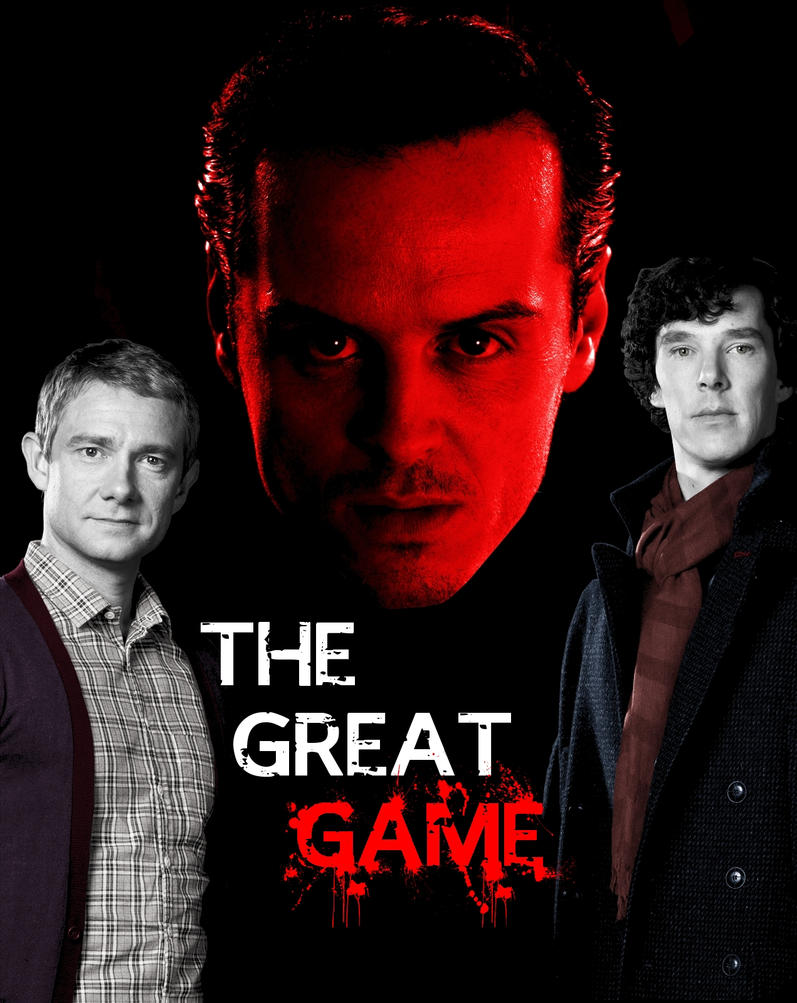
Sherlock: The Great Game Review


SHERLOCK: THE GREAT GAME

Gamer Danger...

May I laugh now?

I started out with 'can I laugh now?', but given how Sherlock Holmes in Sherlock is a far stricter grammarian than I, I figured it might serve my case better if I began with the correct form of the question, asking for permission to laugh rather than asking if I'm physically capable of laughing.

Perhaps I was meant to laugh at The Great Game, or at least certain aspects of it.  As we close out Sherlock's first season with the revelation of that Master Criminal and of said Master Criminal committing nefarious, I daresay, psychotic acts, I at times suppressed a desire to openly burst out laughing.  The Great Game has a myriad of little stories that tie into one Great Story, and I have no dislike for it going the long way round to get to where it ends up.  My objection to The Great Game regards two moments in particular and an overall sense that the Master Criminal was a little derivative of another Master from another Mark Gatiss/Steven Moffat production.

However, I'm getting ahead of myself, aren't I?

Sherlock Holmes (Benedict Cumberbatch) is bored.  No case interests him, so he starts shooting the wall, driving his roommate John Watson (Martin Freeman) bonkers.  This of course makes Watson miss a bombing across from 221 B Baker Street.  Sherlock. however, has no interest in the case his brother Mycroft (The Great Game writer Mark Gatiss) pressures him to take:  the theft of a memory stick containing the Bruce-Partington Program, a group of secret state documents detailing a missile defense plan.  Not even the added bonus of suspected thief Andrew West (San Shella) being found dead by the tracks does not interest him.

However, something else does intrigue him: a strongbox where the bombing took place, with his name on it.  Inside is a pink phone, but not the one from A Study in Pink.  This phone connects Sherlock to a mysterious figure, one who is holding a woman hostage, bombs all around her.  She reads out a message giving Sherlock 12 hours to solve a particular case, otherwise she gets blown up.

That case involves one that triggers Sherlock's memory: that of the death of Carl Powers.  Powers was a teen who was found dead in a pool many years ago, and now Powers' shoes have been left for Sherlock to investigate.  This was Sherlock's first unofficial case, he contacting the police telling them Powers' death was not an accident, and being rebuffed.  As he investigates a few things are discovered.  One, Molly (Louise Brealey) the morgue attendant who fancies Sherlock now has a new boyfriend, Jim from IT (Andrew Scott).  Two, Sherlock deduces Jim is gay.  Three, Watson's examination of the shoes show he missed all the important clues.  Four, despite a woman being tied up with bombs Sherlock is dispassionate about the fate of the woman to say the least.  Holmes does find that Powers was indeed murdered via a 'virtually undetectable' poison that caused his death in the pool.


WHAT? I'm not the first Sherlock?
Next there is the case of  Mr. Monkford, whose rented car from Janus Cars has been found with some blood.  His wife (Caroline Trowbridge) doesn't seem all that interested, but the man who has bombs strapped to him does.  Sherlock unravels that mystery too: Janus Cars is a front to help people who want to disappear do so.  Finally, there is the sudden death of television personality Connie Prince (Di Botcher).  Watson takes more of a lead in this case, having a most uncomfortable meeting with both Connie's brother Kenny (John Sessions) and the houseboy Raoul (Stefano Braschi).  Holmes does solve the crime (increased Botox injections from Kenny's lover Raoul) killed the chat show hostess, but the hostage (an old blind woman) is blown up when she starts detailing information about the bomber.

We move on to the case of a recently discovered Vermeer which Holmes believes is a fake.  There is a connection with the discovered corpse of a guard at the gallery where the Vermeer will be exhibited and later sold.  How to show the guard's death and the forgery are connected?  Holmes deduces the killer here is a mysterious Czech hitman known as the Golem (John Lebar).  Holmes and Watson, thanks to Holmes' network of homeless informants, track the Golem down, but he manages to escape.  Undaunted, Holmes proves that the Vermeer is a fake thanks to learning from Watson that the guard, an amateur astronomer, figured a particular star cluster was not around at the time of the 'painting'.  The threat of a child's voice being the hostage forces Holmes to work faster, and gives Watson a chance to show that Holmes' lack of knowledge of the solar system might have helped him solve the case faster.

We now turn to the Bruce-Partington memory stick case.  Watson has been the one pushing to solve this case, feeling it his patriotic duty (and in an effort to get Mycroft to stop bothering him about it).  We find that the killer was Andrew's fiancĂ©e's brother, who knew about the memory stick and wanted to sell it to cover drug debts but didn't know what to do with it after he accidentally killed Andrew.  Memory stick recovered, Holmes decides to confront the mysterious 'M'.  To his surprise, it's John who turns up at the pool where Carl Powers had died, bombs strapped to him.  M reveals himself: it is Jim Moriarty, also known as Jim from IT.  Moriarty tells Holmes to stay out of his business, but Holmes tells him he can't.  It's a Mexican standoff, with Holmes aiming his own weapon on the bomb-covered coat Watson has managed to remove after Moriarty's brief departure.


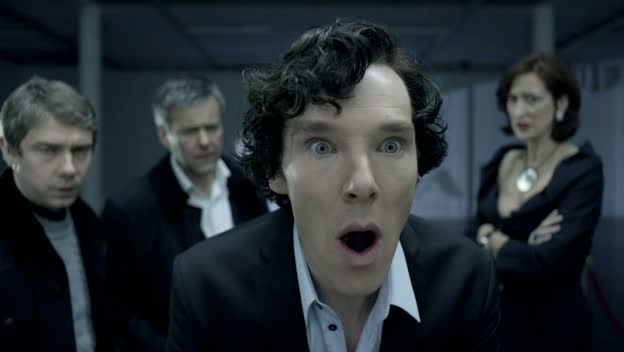
Why do people think a cocked eyebrow is a sign of genius?
I am a firm believer that for something to work, you have to have it grounded in some form of reality.  It doesn't have to be strictly our reality.  The reality within the series/film is fine.  For example, the stories in I Love Lucy are rather outrageous, but because this is the wacky world of the Ricardos and the Mertzes it works.  That being the case, this is one of the things I really disliked about The Great Game.  Let me start with Mark Gatiss as Mycroft Holmes.  This is the first Sherlock story where both the character played a major part and which Gatiss wrote.  As I watched I kept thinking the character of Mycroft has one characteristic: raising his eyebrow to denote anything (particularly snobbishness).  I could never decide whether this was how Mycroft was suppose to be or whether Mark Gatiss was basically playing himself.  Either way I was unimpressed with him both Gatiss' performance (I'd call it one-note) and his character in the story (could the story have flowed without him? I think so).

In regards to other aspects of Gatiss' screenplay I think it took a long time to get around connecting the Bruce-Partington Program with all the mysteries Moriarty made Sherlock go through.  In fact, were they even connected?  The only real connection was the mentioning of Moriarty as the brains behind the Vermeer caper, which connected him to the other crimes, but I am not convinced that the memory stick affair was part of Moriarty's plan.  In fact, if memory serves correct, it seems to be an appendage to The Great Game.  The killing was an accident, and the killer never made any contact with Moriarty or any of his henchmen. 

The worst part of The Great Game in terms of story came about in the search for The Golem.  It's at this point where I did burst out laughing.  Cinematically I appreciate that it tries to make the fight between Holmes, Watson, and the Golem tense and exciting.  However, it not only looked like an outtake from a Bond film (with the Golem evoking memories of Richard Kiel's Jaws) but the hunt for this big bad assassin with the unique name had me laughing.  I simply couldn't take it seriously. 

OMG! I'm NOT a walking stereotype!
As if Andrew Scott's Moriarty didn't do that already.  I also had mixed feelings about Scott as Moriarty.  On the one hand the twist of having Jim from IT as the Napoleon of Crime is a clever move (Scott at 5'8" is considered a small man, so the Napoleon thing works).  On the other (to quote Tevye from Fiddler on the Roof) how can I see this guy as some sort of master criminal when he seems to be on the border between nutty and camp?  As much as I wanted to I could never shake off the idea that Sherlock's Jim Moriarty was a variation of the Master in the revived Doctor Who

As a side note, the character of The Master was created as a Moriarty-type villain to battle against The Doctor (a Sherlock Holmes substitute) and the Brigadier (the Watson figure).  In the Classic series he started out as a suave, debonair figure who was the Doctor's intellectual equal.  In the Revived series, he was just a bonkers power-mad figure.  Similarly, Sherlock's Moriarty, particularly with how Scott plays him, reminds me too much of the NuWho Master.  Yet I digress.

Let me continue on things that troubled me about The Great Game.  The last hostage, the child, was both not featured and seemed to be thrown in there just to have a threat.  I suppose that seeing a child strapped to a bomb was a bridge too far for Sherlock, and this was one time where I figured the entire 'bomb-strapped motif' could have been dropped altogether.  I know why it was there (to both give Sherlock motivation to solve the puzzles and show his generally uncaring manner), but weren't the cases intriguing enough without having to see people suffer.  Yes, I understand it was done to show Moriarty was a psychopath, but he could have achieved it with bombings. 

I wasn't too impressed with the gay mocking with the Prince case and Moriarty himself, an oddity given Mark Gatiss is openly gay (I learned his name is pronounced Gay-tiss, not Gat-iss as I have been, but I'll avoid the temptation to read more into this than there is).  I wonder if a straight writer put in the effeminate characters of Kenny Prince, his houseboy, and Moriarty would he/she gotten away with so much?  A big problem I had with the story was when Holmes solves the Carl Powers case.  Agatha Christie, another of the great British mystery crime authors, never liked the idea that a particular poison was 'virtually undetectable'.  She had worked in a medical dispensary where she came upon many poisons, and she took great pride that in her first novel a medical reviewer complemented her on avoiding the 'virtually undetectable' poison bit.  This came to me when Holmes said that the trace of poison found on the shoelaces was 'virtually undetectable' and thus not found in Powers' autopsy.  I wasn't convinced.

This is not to say I thought The Great Game was awful.  As much as I was unimpressed with Gatiss The Great Game is a great showcase for Freeman and Cumberbatch.  We do get a deeper exploration of their personalities, Holmes' cold, almost Scrooge-like manner versus Watson's more moral view.  Watson is appalled and angered at how cold Holmes can be towards the plight of Moriarty's victims.  Holmes at one point says that worrying about them won't help save them, and Cumberbatch's delivery reminded me of Alastair Sim in A Christmas Carol.  They work so well together and the teaming of Cumberbatch and Freeman is rightly held as a great duo.  Una Stubbs as Mrs. Hudson brings a light touch, injecting comedy into the story and a delight in her all too few brief scenes. 

I also enjoyed the nods to the Canon (the Five Pips from the phone, Sherlock commenting he'd be lost without his 'blogger', the 'Baker Street Irregulars' as homeless) and good moments of comedy at Sherlock's expense.  The bits about Watson's blog and its popularity as well as Sherlock's ignorance of the solar system is played for laughs.

The performances from Cumberbatch and Freeman are the strongest parts of Sherlock.  The story I felt was not the best, though it had good moments within it, and the guest actors Gatiss and Scott to me won't rank as the embodiments of Mycroft and Moriarty respectively.  Still, The Great Game has enough to push it past being average, but not enough for me to think Sherlock is the be-all end-all version of Sir Arthur Conan Doyle adaptations.

I'd say it's more The Good Game.    

Do you want to know a secret?


6/10

Sherlock Season One: Some Thoughts
Next Sherlock Episode: A Scandal in Belgravia

Tuesday, January 7, 2014

Ain't Them Bodies Saints: A Review

AIN'T THEM BODIES SAINTS

I have nothing against Ain't Them Bodies Saints save for one thing.  It tries too hard.  If it were not for the performances of the three leads, Ain't Them Bodies Saints would probably be insufferably artsy.  Fortunately, we see that those in front of the camera can do great things with material that is too self-conscious of its 'art'.

Bob Muldoon (Casey Affleck) and Ruth Guthrie (Rooney Mara) are deeply in love, but they are in the Bonnie and Clyde school of love.  They are criminals, but soft-spoken ones.  They are caught in a shack, and in the ensuing firefight Ruth wounds a deputy sheriff, Patrick Wheeler (Ben Foster).  Ruth is expecting a child, and Bob takes the fall for her act.  He is sentenced to 25 years in prison, and Ruth gives birth to their daughter. 

If memory serves correct about five to seven years pass by.  Bob is still in prison, with his dreams of Ruth and their child.  Ruth, however, has taken that time to build up a life of her own, and in an odd turn, become friendly with Patrick.  Bob and Ruth's father figure Skerritt (Keith Carradine) keeps a wary eye on Ruth, especially now that Patrick tells her that Bob has busted out.  He is determined to see Ruth and his child, and Ain't Them Bodies Saints follows the chase for Bob and the relationship between Ruth and Patrick.  Skerritt warns Bob off but he will not be dissuaded.  Bob's desire for Ruth will cost him dearly, and the fates of Ruth and Patrick left unknown.

I think what pushed Ain't Them Bodies Saints down a bit for me is the fact that writer/director David Lowery drowns us in beautiful, poetic imagery that the lushness soon takes precedence over everything else.  The film is quite beautiful-looking, that is for certain.  However, what is questionable is Lowery's decision to have everyone speak in almost hushed tones.  It makes things seem far too self-conscious about it being unreal, and for myself, I found that something that keeps me at arm's length from the characters.  It's as if even the characters know they are not real, just shadows on which to represent ideas, not actual beings.

However, within the film itself I see the performances that showcase genuine actors lifting material that while not terrible is a bit too artsy.  Ben Foster has had a poor run in film.  His turn as Angel in X-Men: The Last Stand was to be his breakout into big time stardom.  It failed in so many ways, and Foster has floundered in things like The Mechanic.  I certainly hope that Foster is given more character parts that showcase his talent, because he was the standout in Ain't Them Bodies Saints.  Against the persona of a gruff, angry, even dangerous person, his Patrick is rather kind and gentle, with a moral core that is protective of everyone.  This is a side of Foster we rarely see, and it shows his range and should serve as a calling card to all casting agents to get them to put him in more films. 

Casey Affleck shows that he is the actor in the family (while his older brother Ben shows he's the director).  He is compelling as Bob, someone whom you believe would risk so much for the woman and child he yearns for, but who is also selfish and immature.  Mara continues to add to an impressive CV with her quiet Ruth, a woman who grows and understands that, as great a passion she has for Bob, her daughter comes first, and that perhaps Patrick may be a better choice.

That subplot of Patrick and Ruth's relationship is something that is a bit puzzling.  It does seem a stretch to think Patrick wouldn't have known that Bob and Ruth were the ones who shot him.  If he did, it does seem even stranger that he would start a relationship with the girlfriend/baby mama of the guy he thinks shot him.  That, as well as what appears to be a gang after Bob, do seem to be there because there had to be some kind of obstacle in Bob's quest to get to Ruth and his child.

I'll be frank: the soft, quiet, artsy take on the subject matter left me nodding off from time to time.  This I think is what Ain't Them Bodies Saints gets wrong.  The story calls for there to be some action, some motivation, something other than quiet stillness.  It can be quite irritating and sleep-inducing to where it almost drowns in its efforts in its artistry.  However, Affleck, Mara, and especially Foster show their true acting talent and make Ain't Them Bodies Saints watchable, if not strictly enjoyable.

Three Great Actors:
Foster, Mara, Affleck
 
DECISION: C+  

Monday, January 6, 2014

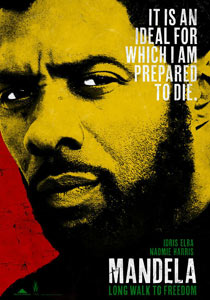
Mandela: Long Walk to Freedom. A Review (Review #600)


MANDELA: LONG WALK TO FREEDOM

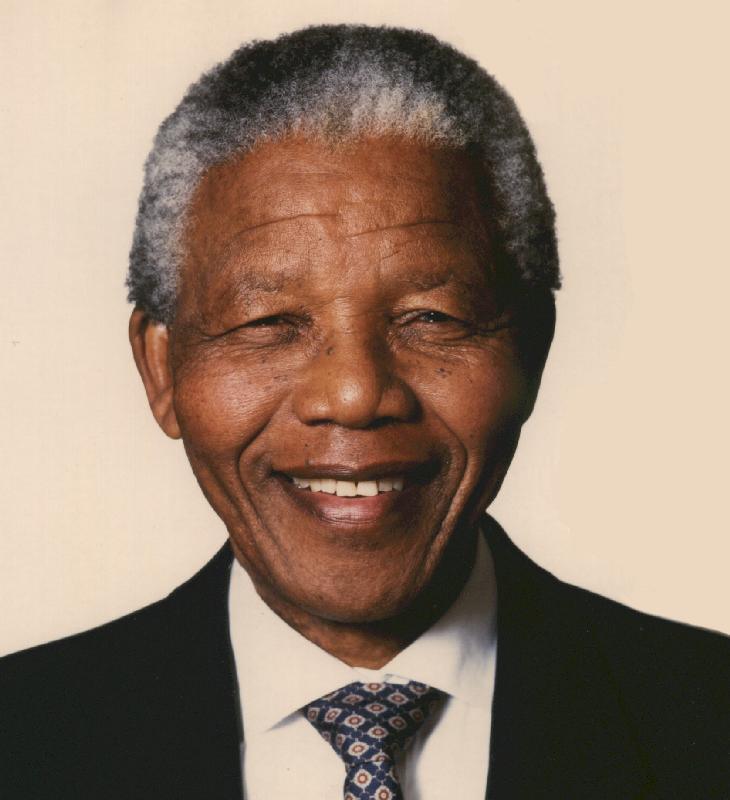
Nelson Mandela's life was like Winston Churchill said of his own, both long and 'not one that has not been entirely uneventful'.  Mandela: Long Walk to Freedom was released shortly before the former South African President's death in 2013.  Adapted from President Mandela's autobiography, Long Walk to Freedom does a strong job in attempting to cover the full measure of Mandela's life.  It might not be able to cover everything in his life with equal measure, but Long Walk to Freedom does not shy away from presenting us with the less flattering parts of Mandela's life.  While it soon forgets that part to give us a more appreciative look into his life, the fact that Long Walk to Freedom took the step to show he was not the saint he said he wasn't is a plus in its favor.

We begin with his early years when, as a member of the Xhosa nation, he is initiated into the rites of manhood.  We then fly many years later, where Nelson Mandela (Idris Elba) is an attorney in South Africa, the first Black lawyer in a country plagued by apartheid where Whites, Blacks, Indians, and Coloreds were not just separated in almost every aspect of life, but where the white minority is systematically held back and held down.  Whites are appalled at the idea that they would have to answer questions from a Black man (even if said Black man was the attorney of record conducting a cross-examination).

He marries, but both his work in the anti-apartheid movement and his constant philandering cost him that relationship.  However, by this time he meets Winifred Madikizela (Naomie Harris), with whom he falls passionately in love with and marries.  That marriage, however, is not to last long, his activities finally getting under the white minority leadership's skin.  He begins to make the struggle to end apartheid an armed one, and eventually he is caught, tried, and convicted of treason.

Now he is sent to Robben Island, where he starts chipping away at his jailers by small acts of rebellion (such as his push to allow the Black prisoners to wear long pants, a privilege reserved only for Indians and Coloreds).  As time progresses and South Africa is both shunned and torn apart by apartheid, Mandela's stock rises, particularly as the white minority government fears the Black majority will take revenge and create a bloody civil war.  Eventually, Mandela, over the objections of his fellow African National Congress leaders, begins meeting with the government.  He and his fellow prisoners are also moved into better and better quarters, though still a prison is a prison.  Mandela concedes nothing, but also steers the two groups into seeing that South Africa would benefit from majority rule without having the nation fall apart.

I saw Long Walk to Freedom and came away respecting Madiba more than I had before precisely because he was not held aloft as some god come down to save us all.  At least in the beginning, we see Mandela as an extremely flawed man, one who at one point strikes his wife for confronting him about his infidelities, and to even show his infidelities makes him a more flawed human.  It is reminiscent of Gandhi except that in that film the Mahatma was portrayed with rather great reverence, almost to the point of mummification.   Granted, later on in Long Walk to Freedom we get that 'Great Man' biopic, where Mandela appears imbued with that great foresight to save the nation.  However, by this time we have a grip on the man who went through so much to maintain his principles.

There was another flaw.  It was the decision to cover so much that other more interesting aspects (such as Mandela learning Afrikaans to 'know the enemy') were entirely dropped.  This would I think have made not just for a more well-rounded portrait of the man but also would have underscored the depth of his thinking. 

These are aspects that Long Walk to Freedom could have done better.  However, I can only find words of praise for Idris Elba as Mandela.  He not only does an excellent job in sounding and speaking like Madiba, but also gives us an insight into the man himself: his lusts, his anger, his quiet and steady determination.  His famous speech at his treason trial, declaring himself ready to die for his principles, is spot-on (and fortunately, Alex Heffes' score does not drown him or try to push our emotional buttons).  Harris is equally strong as Winnie, and the film does step back a bit from showing the darker side of Mrs. Mandela, it doesn't show her to be monstrous either.

Long Walk to Freedom does as good a job as can be expected, neither deifying or demonizing the subject of the film.  It is not the definitive film of Nelson Mandela, but Idris Elba commands the screen and seeing him give full range to someone like Mandela is worth seeing. 

1918-2013


DECISION: B-

Sunday, January 5, 2014

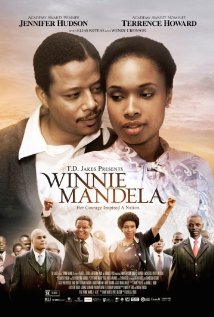
Winnie Mandela: A Review (Review #599)

WINNIE MANDELA

Madiba's Not-So-Better-Half...

It is a strange twist in film history that biopics of two ex-spouses are released within the same year.  Then again, the late former President of South Africa Nelson Mandela and his second wife Winnie are not ordinary people.  They were and are highly important to the history of their nation and the world, though their legacies are wildly divergent.  Winnie Mandela, the first of these two films on the Mandelas, is not a dreadful film.  It is at times a bit too reverential and skims over the more controversial aspects of Mrs. Mandela's public life.  It also has some curious choices in terms of acting that frankly make it look like a made-for-television movie rather than a feature film.  However, within it there are some good things that, if just for a few better choices, might have made Winnie Mandela a more insightful feature.

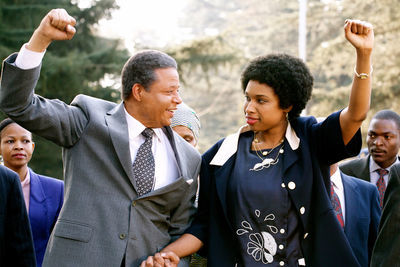
The film attempts to cover virtually the whole of Nomzano Winifred Madikizela's life, beginning with her birth as the sixth daughter of one of the first black schoolteachers, who himself was the son of a chief.  Being the sixth daughter when her father wanted a son did not sit too well with him, but she perseveres, attempting to be the 'son' he wanted by taking on the boys.  Eventually, her brains take her from her remote village to the sprawling metropolis of Johannesburg, where in a total shock to me Winnie goes to school and is friends with girls of all races; in fact, I think we had a representative of all the various groups the apartheid government had (White, Black, Colored or mixed race, and Indian).   Winnie attracts the attention of both a photographer and a Black lawyer, one Nelson Mandela (Terrence Howard).  A quick courtship and marriage follow, but because of Mr. Mandela's work against the apartheid system and insistence of 'one man, one vote' where the white minority did not rule against the black majority's will, he was harassed often.  Eventually, the African National Congress' struggle for peaceful change was met with indifference, so it became an armed struggle.

Eventually, Mr. Mandela was caught, arrested, and tried for treason.  His sentence: life.  Mrs. Mandela takes up the mantle, and in turn faces harassment of her own, including a particularly grueling 18 months imprisonment, most of that in solitary where she was constantly being told not to talk, even to the ants that became her only companions.  The stress of this took their toll on her mental state, and after her release she continued to struggle with herself and against apartheid.  However, things took turns for both the better and the worse.  Sent into virtual exile, a white doctor who comes to offer her a job is basically assassinated by the whites keeping tabs on her.  Even more horrifying is the Mandela United Football Club.

Ostensibly a volunteer bodyguard group, the MUFC grew to shameless hooliganism and brutal thugs (with perhaps Mrs. Mandela's tacit support).  This group and Mrs. Mandela herself reached its lowest point with regards to how they treated opponents.  Winnie, in military garb, suggested that they would take the nation armed with 'our boxes of matches and our necklaces we shall liberate this country'.  "Necklacing", as we find out, is the horrific practice of forcing a tire around someone, then lighting said tire on fire (hence, the reference to boxes of matches).  If that wasn't already quite horrifying (and going against her still-imprisoned husband's more conciliatory methods), the MUFC believes one of their own, a fourteen year old named Stompie Seipei, was an informant.  Despite his taking refuge at a church hostel, he was dragged at gunpoint and murdered.  Winnie Mandela never quite answers exactly what the depth of Mrs. Mandela's involvement was in this shocking act.

Finally, after 27 years imprisoned, Nelson Mandela is released, with Winnie by his side.  However, despite his repeated warnings about her violent words, the MUFC, and suggestions of an affair with her MUFC main bodyguard, they now must separate.  Winnie Mandela ends with her appearance at a Truth and Reconciliation Commission hearing, and her reflections of her wedding to Nelson.

As I said, in many ways Winnie Mandela is not terrible.  One thing going for it is Howard, who does his best to create a believable Nelson Mandela, speaking with Mandela's distinctive cadence and capturing his unique voice as well as any American actor can.  I also think well of Jennifer Hudson's performance on the whole.  I am one of those people who thinks Hudson should not have won an Oscar for Dreamgirls.  Just like I didn't think Anne Hathaway should have won for singing one song, I think Hudson won for belting out And I'm Telling You I'm Not Going with all the gusto of the diva she was on American Idol.  However, with Winnie Mandela I think Hudson shows that she has grown as an actress, and I think she like Howard did the best to try to capture a South African accent (with varying degrees of success). 

One thing that IS odd is how Hudson as Winnie doesn't appear to age all that much if at all, while Howard as Nelson ages considerably.  Just a thought.

A highlight (if it can be called that) is when we see the solitary confinement of Mrs. Mandela.  Hudson was excellent as this woman being psychologically tortured.  Pity that a.) the symbolism of her leading the ants (somehow, South African musician Dave Matthews' Ants Marching came to mind) and the evil (a bit comically evil) female guard stomping all over the ants while screaming at Winnie to be quiet was a bit heavy-handed. 

This heavy-handedness is another aspect of Winnie Mandela that does the film in.  We see only one evil Afrikaans in their lives, DeVries (Elias Koteas).  I appreciate that this was done to keep a sense of continuity, but for the longest time I wasn't exactly sure why HE, out of all the Afrikaans in South Africa, was particularly obsessed with the Mandelas.  Even when we're suppose to think him truly evil, it can come off as unintentionally hilarious (like when he eats her wedding cake...the bastard!).  All that was left for him to do at this particular point was twirl a mustache.

Another Winnie Mandela misstep is Andre Pieterse and director Darrell Roodt's screenplay (from a biography by Anne Marie du Preez Bezdrob).  It puts elements in that are never fully explored, such as the idea that Winnie becomes the woman she did because her father wanted a strong male or how her school friends didn't appear to mind she was Black (and oddly, they disappear rather quickly).  Even worse, the screenplay does something I loath in films: after showing us her early days with her stick-fighting with boys to prove her strength, the film has Winnie TELL Nelson the same thing.

The screenplay has another problem: it is not bold enough to address the most controversial aspect of Mrs. Mandela's life (the MUFC murder).  If we go by Winnie Mandela alone, at the very least she was oblivious to how the football club went about its business.  Worse, it almost makes it look like the murder of Stompie Sensie was just a minor blip in an otherwise illustrious and noble life.   It comes dangerously close to try to whitewash Mrs. Mandela's role in this affair, down to her not saying anything definitive at the T & R Commission hearing.  Winnie Mandela dances around what her role if any was in this sordid and gruesome affair, and it also as mentioned early go a bit overboard with the symbolism.

One last aspect that was a weak decision was Lauren Eyquem's music.  It was overdone, being lush or romantic or militant, it could never do anything other than draw attention to itself. 

In the end, I think Winnie Mandela certainly has its heart in the right place, and Hudson and Howard are both better than the material they were handed.  If it were not for that the film tries too hard to be laudatory and never giving us more than a skimmed view of the subject (not to mention plays coy with her rule in the Stompie Seipei affair), it would have been better.  However, Winnie Mandela is a production that appears more from television than film and that would have done better to have found its courage to be a complete portrait, not an unfinished one.

Born 1936
           

DECISION: C- 

Saturday, January 4, 2014

2013: Some Odds and Bitter Ends

I'm taking a few moments to comment on a few things that I think need to be addressed.  It's nothing big, but I thought I'd address them nonetheless.

Most Unfairly Trashed Film
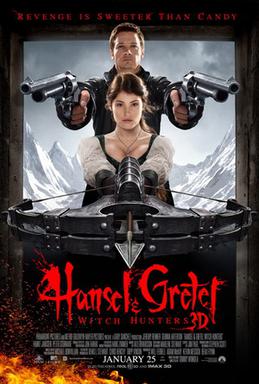
I've seen Hansel & Gretel: Witch Hunters on a few Worst of 2013 Lists.  I, however, don't understand all the hate.  Is it a great film?  Dear me, no.  Is it goofy fun?  Well, not really.  However, for what it was (mindless entertainment), Hansel & Gretel worked.  I did think it might have been a bit too bloody for my tastes, but I enjoyed it and am looking forward to the sequel.  I really don't understand the hatred Hansel & Gretel received by my fellow critics. 

Silly, goofy, but embracing its own oddball premise, Hansel & Gretel: Witch Hunters if anything showed that if Jeremy Renner wasn't strictly in on the joke, he at least could give this insane idea a sense of the serious. 

Most Unfairly Praised Film

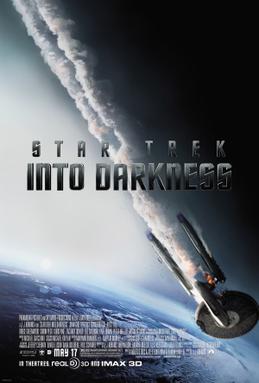
I did, contrary to popular opinion, thought highly of Star Trek Into Darkness.  I thought highly of Into Darkness when it was called Star Trek II: The Wrath of Khan.  Minus the lens flares (which I think are not that big a deal), my fellow critics appear to think J.J. Abrams is some sort of genius, but not having been impressed with either Lost or Super 8, I don't hold the view that Abrams is the new Spielberg.  Anyway, wasn't M. Night Shyamalan suppose to be 'the new Spielberg'?  I imagine that if anyone else had pulled Abrams' stunt of remaking Wrath of Khan and called it 'original', they would have been ridden out of town.  However, because it was J.J. Abrams, he gets a pass for this mockery of Star Trek lore. 

For the life of me I cannot understand how Into Darkness is seen by my colleagues as this grand epic rather than the shameless rip-off it was.  Trekkers at least had the decency to be outraged by this pillaging of the past to where they voted it the Worst Star Trek film of All Time.  I am fully aware that in many ways, Into Darkness is not really the worst of the franchise (really, The Final Frontier is really, really bad).  However, unlike most Whovians, who know little to nothing of Doctor Who pre-Rose but insist all the Eccleston/Tennant/Smith stories tie in seamlessly with what came from 1963-1989, Trekkers KNOW THEIR history and thus were not fooled by Into Darkness.  They had the good sense to reject its faux origin and call it what it was: shameful and serving only those who think Chris Pine originated the role of Captain Kirk.  Those who either are impressed with pretty colors and hot actors (Pine, Benedict Cumberbatch, or Zoe Saldana) or know there is something called Star Trek but which doesn't really involve anything pre-Star Trek 2009 think highly of Into Darkness.  I'm no Trekker, but here I am the first to say they are smarter than their rivals the Whovians. 

Biggest Surprise

I did not think I would like a romance between a human and a zombie.  In fact, I thought the whole concept idiotic, even grotesque.  However, Warm Bodies was a bright film that embraced its bizarre premise and threw in something not often found in zombie movies: wit and heart.

Nicholas Hoult had a mixed year: Warm Bodies was a hit while Jack the Giant Slayer bombed.  The latter never knew what it was: a light take on the fairy tale, or a dark and gritty take.  This schizophrenic nature doomed Jack the Giant Slayer to some Worst of 2013 lists, but Warm Bodies showed Hoult could carry off the idea that a zombie could find true love.  Warm Bodies had wonderful moments of comedy (such as zombie R.'s hesitation to wear make-up...he was still a man, after all) and genuine romance.  I was surprised at how much I enjoyed this somewhat supernatural version of Romeo & Juliet, and frankly, it was better than the actual Romeo & Juliet adaptation released the same year. 

Biggest Disappointment

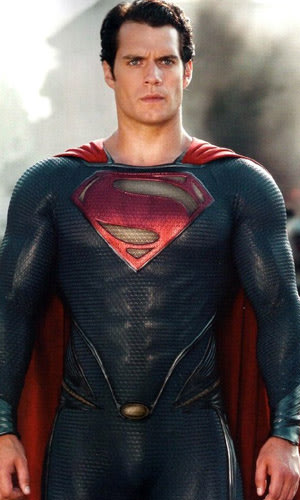
Let's get some things clear.  Henry Cavill is a breathtakingly beautiful man (and I come at this from a straight perspective).  He also is stiff as a board (or in his case, bored) and has the emotional range of a toothpick.  Man of Steel was a remarkably dry, dull affair, going overboard in the total lack of humor.  It's another victim of the Christopher Nolanfication of comic book films where even Superman has to be morose, dour, depressed and doubtful.

Let's go over some of the horrors in Man of Steel.  The 'S' no longer stands for Superman.  It stands for 'hope', Kal-El tells us.  Lay on the heavy symbolism there, Zack Snyder.  We spend what appears infinity on Krypton.  General Zod (Michael Shannon) picks the most bizarre time for a coup.  Krypton is about to go kablooey and he decides THIS is the perfect moment to seize power, when everything's going to blow up?  Lois Lane (Amy Adams) KNOWS Clark Kent's secret identity!  After being this Bruce Banner-type figure (all that was missing was 'the sad walking away music from The Incredible Hulk), Kent somehow gets hired sans degree to be a reporter on The Daily Planet?  Superman KILLS (no General Zod for the sequel)!  No Jimmy Olsen! 

And that's not even going into the mass destruction of Metropolis that must have killed thousands if not millions of people, or the particularly repulsive 9/11 echoes Man of Steel revels in.  However, there is worse to come.

The next Man of Steel movie, Superman Vs. Batman or something like that, will not only be the next Superman movie, but will also throw in Batman (Ben Affleck, and yes, I find it a dubious choice) AND Wonder Woman.  How we'll get THREE superheroes into one film without making it a.) very long and b.) short-changing the characters remains to be seen.  It's obvious DC wants to start a massive franchise to culminate in a Justice League movie.  However, they apparently haven't learned important lessons from their rivals at Marvel.

Before there was The Avengers, there were two Iron-Man movies, two Incredible Hulk films, one Thor and Captain America film, and the characters of Black Widow, Hawkeye, Agent Coulson and Nick Fury all making some form of appearance(s) in some or all of these films.  They also tie the various stories in some way or other.  Unlike what DC appears to be planning, they weren't just thrown in together with the hope (or the 'S') that it would all work perfectly. 

I can't say that Batman Vs. Superman will be a disaster, but somehow I don't fancy its chances. 

Besides that, I still think Superman: The Movie will be the ones people will watch in the future, not Man of Steel, which disappointment me tremendously.

You fill the suit well,
but you're no Superman...