Showing posts with label Sherlock Holmes. Show all posts

Thursday, July 8, 2021

The Hound of the Baskervilles (1983): The Television Special


THE HOUND OF THE BASKERVILLES

The Hound of the Baskervilles is one of the best-known Sherlock Holmes stories, its blending of the supernatural with murder making it all but irresistible to audiences. The 1983 television adaptation, while perhaps not as well known as others, is a surprisingly strong version that should be better known.

Dr. Mortimer (Denholm Elliot) comes to celebrated detective Sherlock Holmes (Ian Richardson) for help. Sir Charles Baskerville has died from an apparent heart attack, but Dr. Mortimer suspects that at the very least, Sir Charles' death was connected to an old family legend of a demon hound that haunts the family.

This curse, brought about by a Baskerville ancestor's rape of a farmer's daughter, now may come upon the newest Lord of Baskerville Hall, Sir Charles' American nephew Sir Henry (Martin Shaw). Already there has been an attempt on his life, but who and why would anyone want Sir Henry dead? Holmes sends the loyal Dr. John Watson (Donald Churchill) to the moors to be his eyes and ears.

There are suspects aplenty. Could it be jealous drunk Geoffrey Lyon (Brian Blessed), angered over his abused wife's liaison with Sir Charles? What about the creepy servants Barrymore (Edward Judd) and/or his wife (Eleanor Bron)? Seemingly pleasant neighbors Beryl Stapleton (Glynis Barber) and her brother Jack (Nicholas Clay) may also have motive for murder.

The case comes to a conclusion, one involving fake Gypsies and lost-lost heirs, but also ending in romance and a bright future once the demon hound is brought to heel.


The Hound of the Baskervilles has a very elegant, polished look and feel, a major credit to producer Sy Weintraub. Despite some scenes being studio-bound The Hound of the Baskervilles does capture well the Gothic horror feel of the story. Sometimes the studio nature is hard to ignore, such as when the first attempt on Sir Henry is made on what is meant to be the streets of London. On the whole though, we do get a sense of this Victorian world.

The performances on the whole are also on the whole good. Ian Richardson is not usually thought of in terms of Sherlock Holmes actors, let alone among the great ones. He makes a case for why he should rank higher on lists as he does a great job as the Great Detective. Richardson brings Holmes' arrogance and snobbery but allows him a slight touch of humor. He does, for better or worse, bear a strong resemblance to Peter Cushing where if you look fast you would think it was Cushing as Holmes, but that is a minor point. Richardson in a sense has a dual role, and he manages both well albeit that it soon becomes clear who is who.

Elliot keeps to a persona of a bumbling, slightly addled figure with his Dr. Mortimer. He was the closest to comedy relief, but he could also be serious when needed. Shaw was a bit blank as Sir Henry, but I put it to the efforts to have him try to speak with an American accent (he was eventually dubbed). Shaw seemed a bit removed from things, but that is a minor point. Perhaps the best performance save for Richardson was Clay, called to play multiple roles and doing each one well.

On the other extreme is Brian Blessed, a man who has built an entire career out of being bombastic to the Nth degree. Here he is simply unrestrained as Lyons, though to be fair his last scene where he tearfully denies committing murder shows he can on occasion tone it down.

As a side note, his story remains unresolved at the end of the film.

With regards to Churchill's Dr. Watson, he sticks with the Nigel Bruce interpretation as a thickheaded blubbering idiot, which is something much to my disliking. Pity that it wasn't until the Guy Ritchie films that the good Doctor had some kind of rehabilitation.

The Hound of the Baskervilles is a well-acted, well-crafted adaptation of the Sir Arthur Conan Doyle novel that hopefully gets more attention. Perhaps a bit too artsy at times (Sir Hugo's rape of the young girl intercut with a drowning horse a bit much) but on the whole I was surprised how good The Hound of the Baskervilles was. 

8/10

Thursday, May 31, 2018

Murder By Decree: A Review (Review #1056)


MURDER BY DECREE

When most people think of the great Sherlock Holmes, we get 'the usual suspects': Brett, Rathbone, on occasion Livanov.  We also get Cumberbatch foisted on us as a 'Great' Holmes, though I find him quite insufferable.  Rarely mentioned in that conversation, however, is Christopher Plummer, which is a shame.  Murder By Decree is the only Sherlock Holmes story Plummer starred in, and while it is not Canon and veers towards the outlandish in terms of plot, he does a remarkable job as The Great Detective and more than holds his own against the truly Great Versions.

Holmes is called upon to investigate the Jack the Ripper murders, but not by the police, especially his frenemy Inspector Lestrade (Frank Finlay).  Instead, it's a group of Whitechapel businessmen, irritated by what the crimes are doing to their business interests in this dilapidated part of London.  Holmes right-hand man, Dr. Watson (James Mason) is not eager for his friend to get involved in this investigation, especially since it is so ghastly and ghoulish.

Little does the good Doctor realize that such elements are the things that would intrigue Holmes.

Holmes and Watson begin their investigation, but find that there are nefarious forces against them.  Chief among them is Sir Charles Warren (Anthony Quayle), head of Scotland Yard who is dead-set against these amateurs getting into this case. His disdain is so great, as is his bungling of the case, that he deliberately destroys evidence: graffiti that blames 'the Juwes' for the crimes.

This is a correct clue, but a misleading one.  Holmes' esoteric knowledge of Freemasonry leads him to deduces that 'the Juwes' is not in reference to Jews, but to Masonic mythology.  Also finding himself involved in this ugly business is Robert James Leeds (Donald Sutherland), a medium who has a sixth sense of who the actual killer is.  Through his 'powers', Leeds does find the actual killer, but the police will not believe him.  They in fact place him in unofficial house arrest, but Leeds' clues do lead Holmes to the truth as to why these poor unfortunate souls have been murdered.

That trail leads him to Annie Crook (Genevieve Bujolds), who is locked up in an insane asylum.  She carries a shocking secret involving her baby daughter and someone of high rank.  Holmes, having uncovered the truth, now attempts to save Mary Kelly (Susan Clark), whom he came close to saving but who is the last to know Annie's shocking secret.  Holmes is too late to save Mary from her gruesome fate, but thanks to him the actual killers are caught.

However, those behind these Masonic/royalist plots are still free to keep their Satanic secrets under wraps.  Holmes extracts from them a solemn oath that Annie or her child will not be harmed in exchange for his own silence, and while it is too late for Annie herself, the child is safe.  Holmes looks back, partially in anger and partially in regret, into this sorry saga.


Murder By Decree is a showcase for Plummer, with him giving a bravura performance in a film extremely well-filmed by Bob Clark.  His final face-off against the three Masons behind these shocking crimes is a masterwork of monologue, balancing the righteous anger without being over-the-top.

What is also strong about Plummer's performance is that he brings a surprising lightness and humor to Holmes.  Plummer gives Holmes several moments where he rather wry and amused.  Right from the start when he comments on the lateness of His Royal Highness the Prince of Wales and how that won't endear him to his subjects, we see that this Holmes is a man fully aware and not as removed from the world as perhaps other versions have been.

From smashing a pea that Watson wants to corral to having a bit of a jolly about his 'killer scarf', Plummer finds humor in Holmes without making him a figure of fun.  When he needs to be serious, he is.  Plummer even brings a touch of emotion after his interview with Annie, a sense of sadness at her fate mixed with furious anger at how she has been mistreated by those in power.

For all the good Plummer does, poor James Mason finds himself playing Watson in the Nigel Bruce version, that of a dithering idiot who could not find his way out of a room if all the windows and doors were opened and clearly marked.  He seems perpetually flummoxed at everything, extremely prudish about the state of corpses despite being a doctor, and almost fanatically royal: Watson leads a cheer for HRH to try and stifle the angry boos from the commoners in the upper balcony who've been kept waiting for at least close to an hour.

In short, Mason's Doctor Watson is a total square and nincompoop, so much so that you almost want him to be taken away by the Masons.  John Hopkins' screenplay, however, does give him a strangely contradictory manner with the ladies.  Holmes at one point muses about what a ladies' man Watson is, but when a tart attempts to seduce him, Watson seems downright Victorian virginal.

Still, on occasion Mason does give Watson some sense: an attempt by that tart and her pimp to shake him down results in a right thrashing, even if Watson ends up getting arrested, much to Lestrade and Holmes' amusement.

I found Quayle to be wildly fussy as Sir Charles, but in his defense that was how the character was written.  Even though his part was small, Sutherland gives Robert the Medium a strange, otherworldly quality, a bit reminiscent of his performance in the Invasion of the Body Snatchers remake. 

Clark was extremely effective in his directing, bringing enough eeriness and Gothic horror to the killings without being graphic or giving away much.  Clark focused on the killer's eyes and POV, putting in appropriately eerie music to the wild goings-on. It is a masterwork of showing just enough without giving away anything, pulling in the violence while still giving people a taste of the gruesome and macabre.

Perhaps the Mason/Royal conspiracy bit was story-wise, extremely outlandish, and it seems like Murder By Decree has unleashed this oddball conspiracy theory on the world about the Jack the Ripper murders.  However, that's a minor quibble in a well-crafted, entertaining film.  Anchored by a brilliant performance from Christopher Plummer, with great work from Sutherland, Murder By Decree is a Sherlock Holmes film that all Holmesians should have in their collection.

DECISION: B+

Tuesday, July 25, 2017

Sherlock: Series Four. An Overview


SHERLOCK: SERIES FOUR

I’ve long argued that Sherlock, far from being this brilliant, intelligent, well-crafted adaptation of Sir Arthur Conan Doyle’s stories of The Great Detective, was intellectually weak bordering on the nonsensical, consistently confusing ‘convoluted’ for ‘complex’.  A lot of Sherlock, if one looked at it removed from any sense of ‘feels’ or emotional investment, would not stand up under scrutiny.  There is a delightful irony that a show based on a character that was a cold, calculated thinking machine could build a fanbase made up almost entirely of people who measure how successful an episode was by whether if and how much it made them cry.

There are one or two Sherlock episodes that I thought were good, but by and large I have not been converted into a ‘Sherlockian’.  Quite the contrary: I find myself a lone voice in the wilderness, continuously crying out in the desert that Sherlock has no clothes.  Virtually every other critic lavishes Sherlock with praise.  It gets Emmy Awards, gets held up as this monumental work of television, and gets on my nerves. 

Despite my long arguments about how a great deal of Sherlock does not make sense, even in its own world, people continue to tout it as if it were practically perfect in every way; it is as if Sherlock is something to almost worship.  I cannot convince people that many Sherlock episodes, along with the characters’ motivations and behavior, is irrational to the point of being insane.  That’s not even touching the character of Sherlock Holmes himself, as he has described himself as a ‘high-functioning sociopath’ (though I would argue about the ‘high-functioning’ part myself).


There is a kind of hubris in Sherlock, its fans, and its creators, a sense that they cannot be questioned in their brilliance, that any dissenting voice is at best a naysayer and at worse an evil being.  For too long, all this acclaim, all these awards, all these cheering children at Comic-Con squeeing at how Sherlock and Moriarty keep coming back from the dead without becoming zombies has inoculated Sherlock from criticism. 

It has given the show more than a false sense of security.  It has made it believe it was invulnerable, that it could do anything and get rewarded for it.  It is at a point now where Sherlock co-writers Mark Gatiss and Steven Moffat could have an entire episode take place on Atlantis and Sherlockians would take to Tumblr to speculate whether Sherlock was in reality Aquaman and how he could be Sherlock, Aquaman and Doctor Strange all at once.

Never mind that neither makes any sense, or that Sherlock Series/Season Four makes no sense.  The important thing about such a scenario is, ‘What part was the most emotional for you?’


At last, at long last, Sherlock Season/Series Four has finally brought about a pause to all this, at least to some but not all.  It is long past time to really examine Sherlock and find that it has left internal or external logic and slipped into farce.  Sherlock Season/Series Four is a smorgasbord of ineptness, unintentional comedy and simply daft leaps of logic.  Even whatever good there was in Sherlock overall: the supporting characters, the ‘Mind Palace’, were all abandoned to give viewers awful spectacle, bombast, and literal bombings to cover up that Sherlock has no clothes.

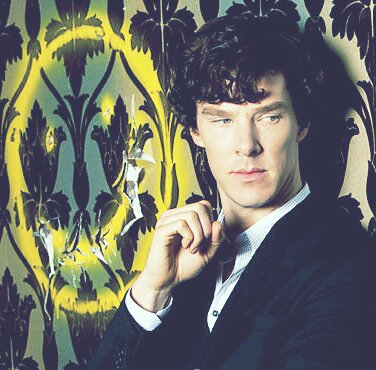
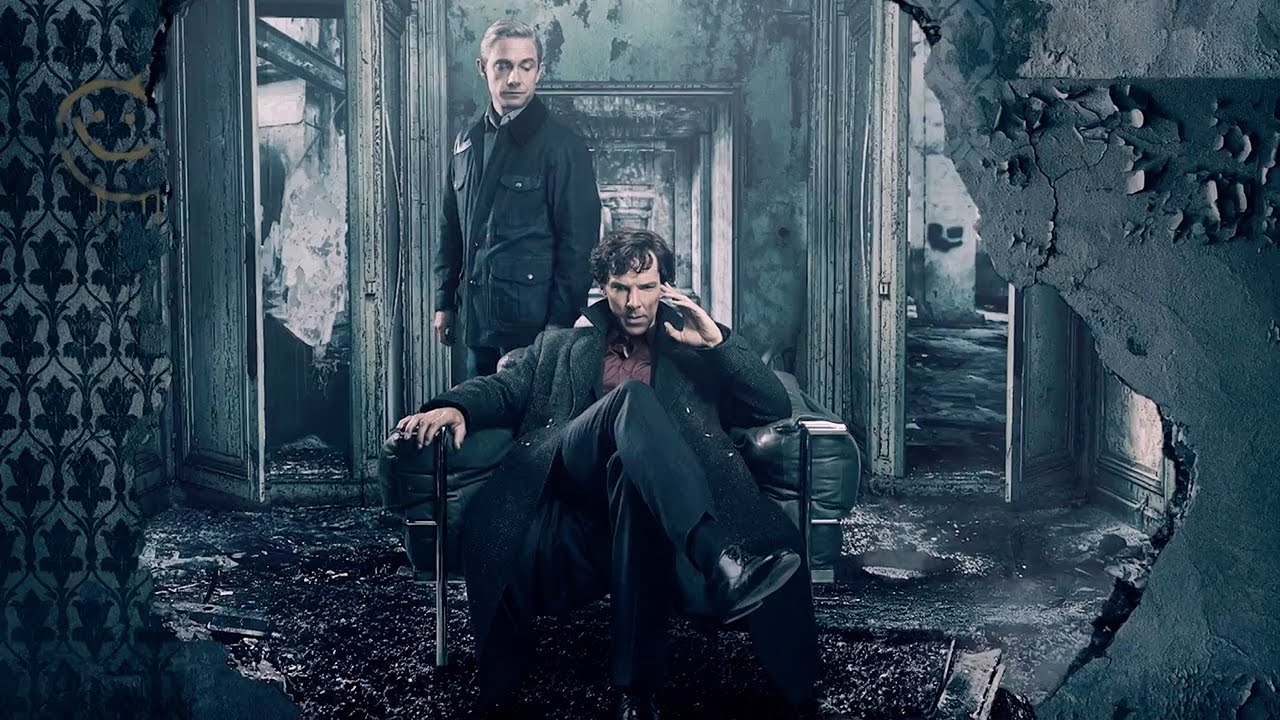
This series/season will probably be the end of Sherlock.  Part of that is due to the busy schedules of its two leads: Benedict Cumberbatch and Martin Freeman.  Part of it is also, in my view, due to the outlandishness of this series/season, one filled with such flat-out unbelievable turns and downright goofy moments that only thoroughly devoted Sherlockians would continue on the ‘Sherlock is BRILLIANT!’ road.

In the three feature-length episodes The Six Thatchers, The Lying Detective, and The Final Problem, I came across the issue of plot.  There weren’t any.  Of particular note in this aspect was The Six Thatchers.

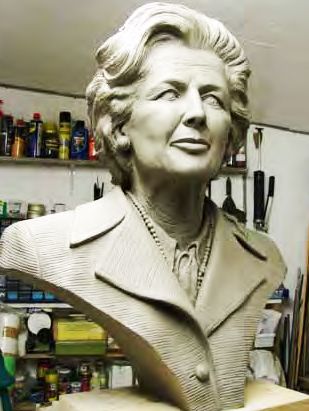
As a side note, apart from Churchill I can’t think of any Twentieth Century British Prime Minister whose bust could genuinely exist in people’s homes.  The Six Blairs?  The Six Edens?  The Six Chamberlains? The Six Heaths? The Six Attlees?


The Six Thatchers lurched from one story to another, as if the episode needed gobs of padding to justify its length.  We start with what we think is an intriguing mystery: a young man who was in Tibet is found dead in his own car on his father’s driveway, with the added twist that he had been dead for a week.  What could have been an interesting mystery, one that might have tied in with what was the main story was dismissed with a few words and no sympathy.

He was never in Tibet, died suddenly while going through an elaborate hiding scheme in his car, and no one knew he was dead until a car crashed into it a week later.

I’m not touching the cruelty of the idea of a dead young man left in a car to rot, though I do wonder whether the stench would eventually have alerted someone that there was a corpse in there.  We can even gloss over how Sherlock himself was particularly unsympathetic towards the grieving parents, even for him.

What I find hard to accept is that Sherlockians, indeed anybody, would not notice how this seemed a bad way to get the main story about the title figures rolling.  Gatiss and Moffat could have just started out with an exhibition of Thatcher, or someone delivering said bust to this family as a birthday gift for our Conservative MP.  Instead, we get a tease for something that is quickly shunted out of the way.

Even more scandalous is how AGRA came to be.  I'm supposed to believe John Watson, dimwit that he is, doesn't know his wife's real first name is Rosemund, or that despite all sense he would ask the atheist, obnoxious, generally unpleasant Sherlock to be his daughter's godfather.  AGRA, this code name for a super-secret, super-elite hit squad, was built around the member's real names.

It's almost ghastly to think that AGRA couldn't be code names for these elites: Avon, Glastonbury, Richmond, and Ashford.  THAT makes sense, and we could say they came from each city.  Instead, we opted to make things so shockingly simplistic as to just go with their names.


With Series/Season Four, we also got a most fascinating trope in Sherlock: the ‘Sherlock is Smart or Stupid Depending on When It’s Convenient’.   This Sherlock, who can deduce the most outlandish things about someone by the scent of their soap, and be right in his deductions, could not figure out that Mary Watson was a professional assassin.  Mycroft, who is supposed to be smarter than his 'brother mine', fell for some pantomime tricks involving the clown from IT and apparently has the Penguin's umbrella collection. Neither of the Holmes Boys could figure out that there was no glass in their hereto unknown sister's Magneto-type cell or that she had bamboozled the entire staff, putting them under her spell.

Again and again, Sherlock loves to dazzle us with its sense of brilliance, but when this collection of geniuses are required to be absolutely, positively moronic, they will be so. 

I also note, with great dismay, how little Sherlock thinks of both John Watson and other supporting characters.  Inspector Lestrade was essentially a series of cameos, who thought Sherlock Holmes, the man who has spent years dismissing him to his face as an idiot, was 'a good man' because after four-plus years, Sherlock finally remembered that Lestrade's first name is 'Greg'.  Molly Hooper, irrationally besotted with Sherlock (unless of course she just wants his body, which is plausible), gets a 'big' moment when the unfeeling Holmes has to trick her into saying 'I Love You', but as soon as that's done, she goes back to wherever she goes when she's not pining for our favorite jerk.


It's John Watson who seems to suffer the most at the hands of a man who can pinpoint to the second two weeks in advance where Watson will be but who got his wife killed when Mary made her sacrifice for someone who has been unpleasant to the Watson family.  Maybe, after writing that, the Watsons are just lapdogs to any Holmes.

I never thought I'd live to see a Watson more moronic that Nigel Bruce's version, but I didn't count on Young Bilbo.  I have long argued that Freeman's Watson is generally a wimp and an idiot, and Sherlock Series/Season Four gives more evidence to this hypothesis.  He's shot at, again, chained up at the bottom of a well, and sees his wife killed in front of him, all as a result of his association with Sherlock Holmes.  Yet, despite all this, he still stays loyally by his side.

That isn't counting the other times he's been shot, kidnapped, drugged, and psychologically tortured by the man he thinks of as 'his best friend'.  At times, I think Jim Moriarty would treat John Watson better than Sherlock Holmes.  

The man is an absolute blithering idiot, forever flummoxed by the goings-on around him, and worse, he rarely if ever stands up to Sherlock.  For heaven's sake: he put up a balloon to take his place and Sherlock didn't notice for hours on end, and despite Sherlock's near-total lack of interest, John Watson still would follow him to the ends of the Earth.

As a digression, it's interesting that in Elementary, Joan Watson is if not Sherlock Holmes' equal at least his partner in crime-solving, able to reach conclusions with her own intelligence.  Sherlock's John Watson, conversely, is essentially Sherlock's admiring worshiper, who looks on admiringly while praising him often.  I never got the sense that John Watson was respected by his Sherlock Holmes, while Joan Watson was respected by her Sherlock.  One cannot imagine John Watson telling Sherlock off or deflating Sherlock's ego the way Joan could.


The worst of Sherlock is The Final Problem.  Not even Kyle Anderson at The Nerdist, who specializes in being the Watson to Gatiss/Moffat's Sherlock, could praise it like he normally does.  It's such a shambles, with nothing in it making sense. Here again, I have argued that a great deal of Sherlock as a whole doesn't make sense, but  I think too many have been so besotted with Sherlock, confusing as I've said 'convoluted' for 'complex' that they care more about feelings than logic.

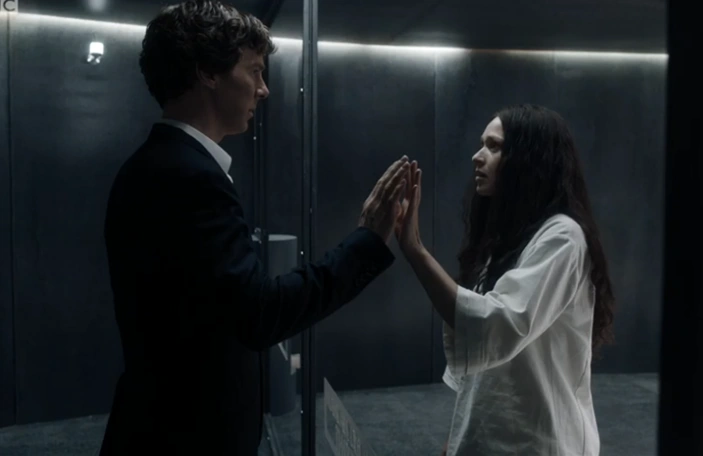
However, I think even the most forgiving viewer took a step back when The Great Detective not only survived an explosion unscathed, but failed to notice there was no glass separating him from his Missy-type sister, whom he couldn't remember despite being only a year older.

I think so much of The Final Problem was so out there that no one could go along with it.  I also think that maybe, just maybe, those same critics who constantly sang the show's praises perhaps thought they were played for suckers, that maybe Gatiss and Moffat thought they could get away with anything and no one would call them on it.

I simply cannot believe that Gatiss and Moffat could have written The Final Problem and thought it was excellent.  The mind boggles at such notions.  

As I look back on Sherlock Series/Season Four, I think, how can so many people say that all this was a hallmark of excellence, something to aspire to?  I've never been able to shake off the idea that Sherlock is the most overrated, over-praised program: one that masks its serious leaps of logic, its awful characterizations, and its generally nonsensical storylines behind a posh exterior of elegant baritones and cocked eyebrows.  

Should Sherlock Series/Season Four be the last we will see of these two, even I, who have been steadfast in my criticism for the series, feel the show and its fans deserved so much better than it got.

Monday, July 24, 2017

Sherlock: The Final Problem Review


SHERLOCK: THE FINAL PROBLEM

Ah.

I've long argued that Sherlock, far from being this great piece of television, something that is unimpeachable brilliant, was overrated, convoluted, and at times so outlandish and ridiculous that it was downright stupid and insulting.  I have long argued that most of the episodes don't make sense, are too over-the-top to be believed, and are generally atrocious.  Elementary, the U.S. counterpart on adapting the Sir Arthur Conan Doyle stories, was perhaps not brilliant, but it was at least sensible versus the Sturm und Drang of Sherlock.

Many times, I was told how wrong I was.  Sherlock won Emmy Awards, hailed by critics, with a mad fanbase that mostly didn't care about Canon, so long as they cried over the adventures of the high-functioning sociopath and his lapdog.  I however, maintained my view that Sherlock had no clothes, that everyone was saying it was brilliant, a work of genius, because they were expected to say it was brilliant, a work of genius.

The Final Problem is my vindication.

The Final Problem was so awful, even Kyle Anderson at The Nerdist, a man for whom shilling for almost everything connected to Mark Gatiss and Steven Moffat is second nature, couldn't shill for. The Final Problem is, with the exception of Gatiss' Doctor Who episode Sleep No More, literally the worst thing I have ever seen that was made for television.  Cop Rock was more coherent.
The Final Problem is the worst thing I have ever seen connected to Sherlock Holmes, so ineptly bad that there were times when I was howling with gales of laughter at how anyone, let alone two people, could have written all this and thought it was genius.
The Final Problem was just wrong on so many levels, so tone-deaf, so full of itself...it actually ends up an accurate reflection of Gatiss and Moffat.


We start with a little girl on an airplane, terrified.  Everyone is unconscious save her, and the plane's 'driver' is also out.

At this juncture, let me state that I am amazed that a child would refer to the pilot as 'the driver'.

She hears a phone ring, and on the other line is none other than Jim Moriarty (Andrew Scott), who is still either most sincerely dead or not.  He tells her "Welcome to the Final Problem".

Well, anyway we jump to Mycroft Holmes (Gatiss), watching a noir film until very spooky things begin happening, down to having Pennywise from IT pop out at him, driving him to the point of terror and unleashing the sword he has in his umbrella.

As a side note, does Mark Gatiss have some secret, burning desire to play the Penguin on Gotham?  I know both are gay, but still...

In any case, all this is just a rouse created by Mycroft's little brother, Sherlock Holmes (Benedict Cumberbatch), and his bitch, Dr. John Watson (Martin Freeman) to get Mycroft to admit they have a hereto unknown little sister.  She's so unknown that Sherlock, who is a year older than said sister and Mycroft's eight years, literally forgot all about her.

So, this secret sister, Eurus (Sian Brooke), as a child made Sherlock's beloved dog Redbeard disappear.  She also set the Holmes family home of Musgrave on fire, and Mycroft later told his parents that she had died in another house burning.  In reality, she's been locked up at Sherrinford, a combination Alcatraz/Arkham Asylum for the most dangerous master criminals of all time.

It's at this point a grenade floats in via drone, one set off by movement.  Once the three realize Mrs. Hudson (Una Stubbs) is safe, Sherlock and John jump out the second-story window while Mycroft races to save her and himself.


Moving on to sometime later, the three of them manage to hijack a boat and go to Sherrinford looking none the worse from their explosive escape.  At last, Sherlock sees his secret sister, and we find that she is dangerous.

We also find that somehow, Eurus and Jim Moriarty planned all these things five years earlier, when Mycroft, who ran Sherrinford as part of his work for the British Government, allowed her five minute unsupervised visit with our camp Napoleon of Crime.

Again, we see that despite Sherlock's near-godlike genius, he is stupid when it suits others.  While in the Hannibal Lecter-type cell with Eurus, he fails to notice that there is no actual glass separating him and Eurus.  Mycroft and Watson also discover that Eurus has some kind of hypnotic power over everyone, including the Governor of Sherrinford, to where they are all her slaves.

We also find that she is able to pop in and out of prison whenever she likes, including up to setting into motion a very elaborate, outlandish, and flat-out hilarious scheme of revenge against her elder brothers.

I'm pausing right now to note that the Legendary Legend of Legendness Herself, River Song from Doctor Who, pulled off the exact same trick of coming and going out of her prison at will.  It's simply appalling how Gatiss and Moffat essentially plagiarize themselves, to where it is just insulting to anyone save the Sherlockian/Whovians who simply have no capacity to reason.

She also bears similarity to 'Missy' or 'The Mistress', the transgender version of another Doctor Who villain, 'The Master'.  Both have generally bonkers plans that don't make sense and seem created for no rational reason.  Yet I digress.

Well, at this point Eurus, now totally in control of Sherrinford, puts the Holmes Boys and their lapdog through a series of 'elaborate' plots to get them to see how morality does not exist.  There's the previously mentioned little girl, whose voice they hear every so often, and then there's having to solve a mystery where three lives are at stake and the worse, getting Molly Hooper (Louise Breeley) to tell Sherlock, 'I Love You' or a bomb will explode.

Again, I pause at this juncture to point out that Sherlock Holmes, if Sherlock is to be believed, can willingly lose his virginity to someone he doesn't love to literally pump her for information but cannot actually say 'I Love You' to someone who has been pathetic in her besotted manner with him.  Molly, you can do so much better than Sherlock.

Ultimately, the three do get separated and Sherlock finds himself back in the ruins of Musgrave House.  John is down the well about to be drowned, but manages to communicate with Holmes that he found Redbeard, in a way.  It wasn't dog bones he discovers, but human remains, remains of a child.  Eurus wasn't the only thing Sherlock Holmes blocked out.

It seems Sherlock's best friend as a child, one Victor Trevor, and he were playing pirates.  Holmes was 'Yellowbeard', and Victor was 'Redbeard'.  Eventually, Holmes finds that Eurus is the little girl, locked in her own mind thinking she was going to crash.  A hug later, Watson is rescued from certain death when a rope is thrown at him.

How this rope will help him given his leg was chained to the ground we don't know.

Mycroft has to tell his unbelieving parents their daughter is still alive, and eventually all of them go to Sherrinford where Sherlock and Eurus play violin duets together.  In a prerecorded video, the dead (for now) Mary Watson (Miranda Abbington) tells her 'Baker Street Boys' to stay together.


From beginning to end, The Final Problem was just unspeakably bad.  Just beyond horrifyingly awful.  Not even in the diseased, deranged, delusional world of Sherlock, where all sorts of outlandish and idiotic things can happen because, well, the feels, does The Final Problem make sense.

Pick any point in The Final Problem, and you'll find something completely irrational to the point of imbecilic. 

Our genius detective, who can deduce within a second whether the retired Archbishop of Canterbury is a transgender white slavery mastermind who makes his Filipino concubines wear tutus while they lip-sync The Pet Shop Boys just by the number of dandruff flakes on his lapels failed to completely notice there was no glass between him and Eurus.

Mycroft Holmes, a man who has no emotion, could end up practically wetting himself like a little boy by a clown, a literal clown. 

The entire Holmes family never mentioned Eurus to anyone, with neither Papa or Mama Holmes having any pictures of Eurus or ever visiting a grave or memorial.

Little Victor Trevor's parents apparently had no problem never looking for their lost son, last seen at the Holmes' house.

Sherlock could confuse his best friend for a dog.  OK, on that one, given that he treats Watson like his bitch, maybe I'll give that one a pass.

Said bitch's rescue is a good one.  As he's drowning, he's rescued by having a rope thrown at him.  Exactly how the rope is going to rescue him when it was established he was literally chained up remains unclear.  His leg was bound, which is why he couldn't just float up.  His leg was literally chained up, which would require him to get a key to unchain him, but this magical rope could break the chain.

Ugh.


Three grown men were going to talk a little girl into landing an airplane.  Seriously, three grown men, two of them geniuses and one of them a completely wimpy imbecile, were going to talk a little girl into landing an airplane.

Three grown men miraculously and sans explanation survive a major explosion looking even better than they did before.  Not since Ben Affleck came back from crashing into the English Channel after getting shot down by the Germans only to return looking even more gorgeous in Pearl Harbor have I seen something so daft, so thoroughly idiotic as to astound with its silliness.  That movie had President Franklin D. Roosevelt standing up on his own power, and yet somehow that seems more plausible than just about everything in The Final Problem.

Scott's Moriarty was just there for dressing, but eventually, should there actually be a fifth season/series of this horror, they are just going to have to give up the eternal teases for him.  Again and again Moffat and Gatiss bring back Moriarty only to find that his various resurrections keep looking more and more outlandish and add little to nothing to the overall story.

I can say that the excessive sweetness of Stubbs' Mrs. Hudson so grating, the efforts of comedy so annoying (her listening to heavy metal while vacuuming), that I desperately wanted her to be blown up.  I wrote in my notes, 'KILL MRS. HUDSON!  KILL MRS. HUDSON NOW!!'

As is the case with all of Sherlock, both Holmes Brothers are smart only when necessary.  The Final Problem seemed rather Mycroft-focused, no doubt pleasing the raging egomaniac Gatiss, who is unshakable in his conviction that he is a genius (something to which he will testify to gladly).  If he's a genius, he is among the dumbest geniuses in the world: clueless that his sister has essentially hypnotized everyone to be her slave, though it begs the question, why couldn't she work her voodoo on him.


Eurus is a blank slate, with no emotion to her.  I know The Final Problem wants us to feel for her, to make her ultimately tragic and sympathetic.  However, as portrayed by Brooke and written by Gatiss and Moffat, Eurus was just a dumbed down version of Missy/The Mistress from Doctor Who: a bonkers criminal mastermind who comes up with outlandish schemes merely it seems to irritate our hero.

Eurus' great plans don't involve world domination or some master theft; no, that would be so trite and simple.  Her plans involve forcing our three dimwits to perform tasks to stretch out the episode, and despite her having killed four or more people, the important thing is to lock her back up in the same place where she left and came at will while her parents & siblings enjoyed seeing Eurus and Sherlock do violin duets together.

Freeman's John Watson is the wimpiest figure in television today: constantly abused physically and emotionally and yet coming back for more.  From the discovery that Eurus hadn't shot him but tranquilized him (again, exactly why she did this is unclear) to him running off with Sherlock to continue being his lapdog, one wonders whether he actually would function in the real world.  Cumberbatch too has nothing but his luxurious baritone to make him sound pseudointellectual, but he too was not interesting.  Rupert Graves' Inspector Lestrade had a cameo where he tells an officer that Sherlock Holmes isn't 'a great man.  He's a good man'.

Oh sure, Sherlock Holmes FINALLY gets his name of 'Greg' right after constantly forgetting it, and all of a sudden Holmes is a 'good man'.  How easily Greg is pleased.

The Final Problem had me laughing uncontrollably at many points, though the whole 'little girls killing children' thing was obscene.  Minus that, The Final Problem was a laugh riot: not noticing there was no glass, little girls flying airplanes, master criminals who pop in and out at will and can hypnotize all the staff to do their bidding without anyone else noticing.

Ah.

One bit of dialogue caught my attention, and sums up The Final Problem and Sherlock as well as anything I can think of.  Mycroft tells Sherlock about their until-now unknown sister "She's very clever," to which either Sherlock or John replies, "I'm beginning to think you're not".

When it comes to Mark Gatiss and Steven Moffat, many a true word.

0/10

Sherlock Season Four Overview


Monday, July 17, 2017

Sherlock: The Lying Detective Review


SHERLOCK: THE LYING DETECTIVE

Stunning is the best way to describe The Lying Detective, the second episode of Sherlock Series 4.

Stunning in how awful it all is, and more stunning in how much praise this piece of rubbish gets.  I genuinely struggle to understand how Sherlock, a show that is generally nonsensical despite its posh pedigree, can be considered brilliant.  I would qualify something to be brilliant if it makes sense, if it holds my interest, and if it doesn't have me rolling my eyes.

Times have changed.

It seems that Sherlock Holmes (Benedict Cumberbatch) has gone insane, or at least gotten way back into narcotics.  Rambling, confused, incoherent (a lot like the show itself, but I digress), part of his issue may be his struggle with the idea of guilt over the death of Mary Watson (Amanda Abbington).  Mary's husband, John (Martin Freeman) is also struggling: with her death, his own guilt, and his anger at Sherlock over it all.  He sees a therapist to help him with his issues, but there's no time for such introspection, for there's a case to be solved.

Sherlock, with his mad powers of deduction, had deduced two weeks before John did anything where he would be, down to the exact time.  This is why Mrs. Hudson (Una Stubbs) was able to race her Astor Martin car to the therapist where John was in a middle of a session.  She manages to get Sherlock there too, in what appears to be a completely disheveled state.

Sherlock has made wild accusations against Culverton Smith (Toby Jones), a billionaire philanthropist, accusing him of being a serial killer.  He even has overcome his disdain for Twitter to do so.

As a digression, what kind of person is Sherlock Holmes, a man who would willingly give up his virginity to literally pump someone for information? I call him pathetic, but again I digress.


Earlier, Sherlock had received information about Smith's murderous desires from Smith's daughter, Faith (Gina Granville), who had fallen on hard times.  She tells him an extraordinary story about how her father essentially drugged everyone with something that inhibits the memory so he could confess without them really remembering much.  With this scant bit of information, Holmes is able to find that Smith, far from being a benevolent soul with awful teeth, is really a psychopath and a truly evil man.

Still, who is going to listen to him in his state?  Smith is also a touch clairvoyant, as he sends his car to pick up Holmes and Watson.  Watson goes somewhat alone, still seeing Mary whom he converses with (something that I saw used to greater effect on Due South, but again, digression).  Holmes goes via ambulance where his one-sided love Molly Hooper (Louise Breely) examines him and finds him in dreadful shape.

It looks like Smith is having a bit of fun with Holmes, taking him first to a studio where he films a commercial talking about how he's a 'cereal killer', then to a hospital where Smith contributed a wing. In Smith's 'favorite room', the mortuary, Holmes confronts Smith but again there's no evidence of anything, and Holmes becomes unhinged.  It's up to Watson to knock him out of it, taking the chance for a bit of revenge for Mary.

While Holmes is in that hospital, Mycroft (Mark Gatiss), who has been tracking his brother, dares to go to 221 B Baker Street and face off against Mrs. Hudson.  As she, Mycroft, and John all argue, they find Mary's video recording.  John races to the hospital, where Culverton Smith does confess to a beleaguered Holmes that he does enjoy the thrill of the kill.  Not only that, Smith wants Holmes to be the next victim, and Holmes wants to be victimized.

In the end, John Watson saves Sherlock Holmes, but who is going to save John Watson?  Back at his therapist, John makes a shocking discovery: the same therapist was really the false Faith who fed Holmes the story.  Not stopping while the going was good, the same therapist/false Faith also confesses to being the girl on the bus whom Watson flirted with, AND she also happens to be the lost Holmes sibling: Eurus, which means 'the East Wind'.  All this time Watson might have thought it was a Holmes brother, but it was really a Holmes sister.

I can tolerate a great deal, but sometimes, Steven Moffat really tries my patience, though mercifully he doesn't try the patience of many a Sherlock fan who never bother to question anything, so long as he makes them cry.

I remember when in His Final Vow, Mycroft talked about 'the East Wind is coming'.  Now I'm supposed to accept that Mycroft was signaling that their up-to-now unknown sister Eurus was headed their way.  Apart from the deliberately and nonsensical vagueness of this, I'm supposed to also accept this as some sort of brilliant storytelling.

Again, we have the Sherlock trope of 'Sherlock is smart only when necessary'.  Here we have another example of how Sherlock Holmes, who can deduce that the Faith who came to him lived in a small house and had lost her lover and had been harming herself for months could also not deduce that the woman was a fake.


We also have a bit of a repeat of the past, where Sherlock Holmes again accuses someone of being a criminal and that person appears to be incapable of being one.  In The Reichenbach Fall, Holmes accused Richard Brook, mild-mannered children's television host of The Storyteller, of being a criminal mastermind.  Turned out he was really Jim Moriarty, but I found the reasoning behind that so convoluted, tortured and idiotic I still find it amazing Moffat, co-creator Gatiss, or anyone else involved could get awarded for such inanity.

If nothing else, Moffat is a master of repeating himself.

We face in The Lying Detective not so much a case as a variation of The Reichbach Fall, and we also face some really far-fetched plans.  I'm going to cut Moffat some slack with the idea that Smith drugged people before confessing his crimes because that all might have been a rouse to get the ball rolling, but it does seem slightly unfair to present this to the audience when a less, flamboyant manner to disseminate this information might have been used.

Truth be told, I was hoping Culverton Smith would be innocent, and if he had been we might have had a deeper exploration of the themes Moffat was going for: guilt, regret, anger, loss, pain and all that comes with all that.  Seeing Holmes broken down while still keeping his powers, seeing him slowly enter the world of humans, might have been a fascinating journey.

Instead, we got what we always see: Sherlock Holmes' almost divine abilities.  Now he is able to predict the future with total accuracy.  Via the Ghost of Mary, we are given what is a pretty logical way of how Holmes narrowed down the therapists (although despite his almost God-like ability to know all, he couldn't figure out that the therapist was Faith was the flirty text girl was his long-lost sister).  We also take time early on to see how Holmes made all his deductions to the false Faith, though again one wonders how he is clever enough to know she was about to kill herself but not clever enough to know it was all a performance.

Sherlock Holmes is smart only when necessary.  When he's required to be totally clueless, he will be so, logic be damned,

What is most frustrating about The Lying Detective is how Freeman's Watson continues to be the eternally flummoxed, eternally dimwitted, eternally puppy dog-like figure to Holmes.  Despite all the psychological torture he's endured at the hands of his 'best friend', he still races to save him.  Freeman has made John Watson such a bumbling, wimpy idiot he actually makes Nigel Bruce's take on the character seem Descartes-like in comparison.

I also at one point wrote in my notes, "F--- off, Mrs. Hudson!", and that is due to this mix of 'she's sweet but also tough' manner.  I think Stubbs is horrendous as the coddling Mrs. Hudson who manages to get an Aston Martin while still looking over her little lambs.  The transgender Ms. Hudson on Elementary has more sense than Stubbs' version.

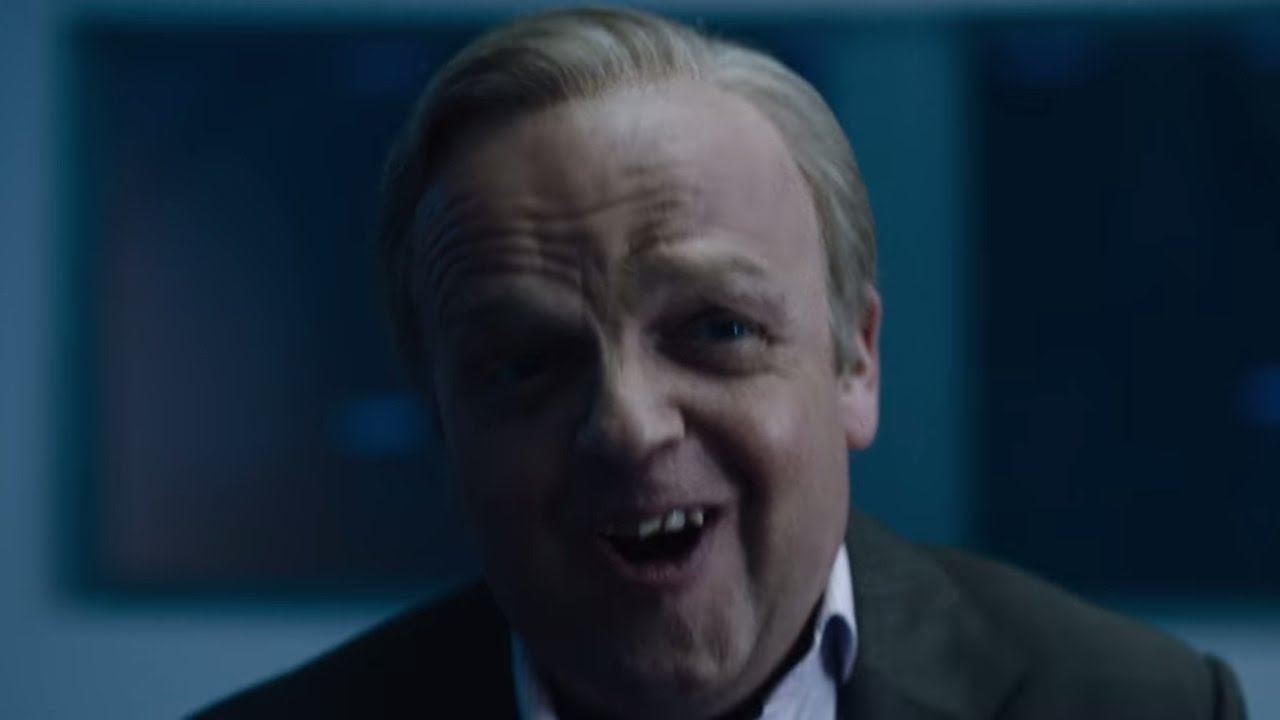
Guest star Jones played his part correctly: being obviously evil, hideous teeth and all.  While watching The Lying Detective I did hope against hope those weren't Jones' real teeth, and I figure there was a reason they kept focusing on them.  I understand Jones' character was meant to be some sort of Jimmy Savile-like character: outwardly fun and avuncular but in reality a monster of unparalleled hideousness.  Savile at least was able to fool people into thinking he was benevolent, but with his behavior, teeth, and obvious insincerity there was no way Smith could pull of that trick. 

He was just too obviously creepy.

As Watson observed, "Everything is about Sherlock", and as such, Cumberbatch got to have his 'character in health crisis' story.  He was fine in it; I can't find great fault, very perfunctory.  I did wish Watson or Smith had pulled the plug on him though, and is it a good thing when you are cheering for the murderer?

Moffat even included a few personal in-jokes in The Lying Detective, such as having a 'big fan' of Sherlock, a nurse, to comment that "Sherlock's blog" had gone down recently, a take on how often Moffat's Doctor Who scripts were criticized, I imagine (except for The Nerdist's Kyle Anderson, who almost always sings his praises). 

As we head towards the finale, I still marvel at how so many insist Sherlock is this piece of pure genius.  I find it all nonsensical, ridiculous, and illogical: three things I would never say about Canon.

If The Lying Detective is the best Sherlock can do, I shudder to think when we get an episode even Kyle Anderson can't shill for...

Holmes Family Portrait


2/10

Next Episode: The Final Problem

Monday, July 10, 2017

Sherlock: The Six Thatchers Review


SHERLOCK: THE SIX THATCHERS

As much as I've tried, I simply have never liked Sherlock.  I don't think it's smart, I don't think it's the best adaptation of Sir Arthur Conan Doyle's work, I don't think it's well-acted, and I especially don't think it's well-written.  Too often on Sherlock, writers/co-creators Steven Moffat and Mark Gatiss confuse convoluted for complex, making things so incomprehensible and illogical that Sherlockians and critics praise them for being excessively opaque.

Now, after watching The Six Thatchers, I can tell that they are up to their old tricks, never settling on one narrative when twenty will do, sacrificing logic and generally making things a total mess but getting praise and Emmy Awards for their idiocy.  I may be the only person who says 'Sherlock has no clothes on', but I call them as I see them and see no reason why I should celebrate something so utterly idiotic and just awful as Sherlock just because everyone else says so.

It's hard to give a plot summary because there are simply so many stories going on, which I figure is part of the pressure of having to write essentially a feature-length film versus a one-hour episode, but I'll do my best.  Sherlock Holmes (Benedict Cumberbatch) is brought back to London from exile after 'not' killing Charles Augustus Magnussen, Sherlock's brother Mycroft (Gatiss) reediting things.

Side note: this is a variation of Moffat's 'a character died but not really' bit, now suggesting that Sherlock didn't kill Magnussen when he most certainly did.  Moffat and Gatiss are masters at the art of rebooting things sans logic, but I digress.

Now with him back, Sherlock is having difficulty with the situation of John Watson (Martin Freeman) and his wife, Mary (Freeman's then real-life mistress, Amanda Abbington).  This is particularly true when it comes to their new baby, whom they name Rosamund or Rosie for short.  I would have preferred they name her 'Joan' as a nice dig at Elementary, but I'm not as clever as Mark Gatiss insists he is.

Despite all logic, John & Mary want Sherlock to be a godfather to their child, and he reluctantly agrees even though he sneers at both humans and the idea of a God.  After that, things get more jumbled.


Sherlock is called by Inspector Lestrade (Rupert Graves) to solve the death of a Minister's son who was found dead in his car when a week earlier the son had claimed to be in Tibet.  Making things more bizarre was that the son had been dead for a week when he was found after a car crashed into the boy's car when attempting to escape the police, causing the boy's car to explode (which is how they found the body in the first place).

That case is easily solved: boy was never in Tibet, died suddenly, father left boy's body in car and presumably would have left him there save for the unexpected car explosion.  It's another thing that intrigues Holmes, the smashed bust of Margaret Thatcher that the Conservative MP has.  Soon other Thatcher busts are being smashed, and someone has been killed in one instance.

Holmes sees a case, and somehow this case doesn't involve the Black Pearl of the Borgias, but a flashdrive that itself involves the secret past of former super-spy Mary Watson.  Her secrets are coming back to haunt her, when we find that this case involves her time in a super-elite assassination squad called AGRA, which cause her to try and flee.

John, perpetually flummoxed, is upset about all the secrets and lies of Mary, but he has a secret of his own.  He may be pursuing an affair with a pretty woman he met on the bus, though we don't see anything more than his desires and some text messages.  Eventually, after a few more twists and turns, we discover why AGRA was set up and who was behind the plot.  The real villain shoots at Sherlock but Mary jumps in front of the bullet to save him, begging him to take care of Watson.

It seems that seeing your wife shot in front of you is what finally breaks John's relationship to his 'best friend': not the psychological torture Sherlock has put him through, not the various times John's been kidnapped or shot at as a result of Sherlock's actions, not Sherlock's general haughtiness, rudeness, indifference and uncaring manner. 

Mary sends a video to him asking him to save John Watson, something that might be hard seeing that John wants nothing to do with him.  John, for his part, seems more interested in having a mistress to be all that focused on Sherlock.


The Six Thatchers is a big ball of rubbish, going on and on because Gatiss simply couldn't concentrate on one narrative.  We get false clues and leads, but we never actually get anywhere.

You think the case will involve the dead boy, but that was wrapped up in seconds, with a resolution that defies logic.  So, the father, who sees the son that came to surprise him for his birthday suddenly die, just decides to leave his beloved son in the car to rot?  I can understand grief being so great as to be devastating, but this is downright cruel.  Also, no one ever looked in the car?  Yes, I know we had this explanation that the boy was hiding behind a false seat cover (which again seems ridiculously extravagant) but if the boy pulled down the cover to show his face and then died, he couldn't have just pulled it up again to hide again after he drops dead.

Now, he could have died with the cover on without his father knowing, but that's not how it was presented to us.  As such, Gatiss wants to have things both ways: show us the boy dying but have the parents not know he died, and it just makes it not so much confusing as frustrating.

You think the case might involve the Black Pearl, a nod to the original Conan Doyle story The Six Napoleons,  but that is just a red herring, a bit of Holmesian fan service.

Most of this goes into Mary's past, and it's interesting that The Six Thatchers illustrates what I have long argued: that Sherlock Holmes is smart only when it's necessary.  When it's necessary to make him an idiot, Sherlock will have no problem making him so.  I argued that it was beyond idiotic to think that a man who can tell that someone is a cross-dressing child sex slaver based on the number of eyelashes he has on his nose or can tell if the Pope is a lesbian non-binary antiquities smuggler by seeing how many times he rubs his/her nose could not deduce Mary Watson had been a master assassin.

Now for someone who figured out that the Thatcher busts were being smashed as a result of her past could not equally take precautions against her using paper spread with sleeping potion to knock him out.

We also have moments that astound in their idiocy.  This super-elite, super-secret squad was named AGRA for the first names of the members? Alex, Gabriel, Rosemund, and Ajay couldn't apparently be bothered to have code names, but were perfectly willing to have their first names known to anyone willing to hire the AGRA-Team.  Further, it's a terrible cheat to give audiences no clue about Mary's real first name of Rosemund.

It's also a highly convenient coincidence that the code word of "Ammo" for ammunition would be confused with the Latin word "Amo" for Love, and that "Love" be one of the code names for a particular Minister involved in the machinations of assassinations and other nefarious dealings.

Something about all that just didn't sound right.  Why would the real villainness use the Latin to a group of Georgian terrorists?  Why couldn't she use 'Love'?  The answer is that if she did, Gatiss wouldn't have had his misleading moment between "Ammo" and "Amo".

Side note: 'amo' in Spanish also means 'Master' as well as 'Love'.  Just a thought.


At times, The Six Thatchers plays like a 007 spoof, and there certainly were efforts to play a lot of things for comedy.  The 'laughs' start right at the beginning, when Mycroft is attempting to make a very serious presentation only to ask Sherlock, "Are you tweeting?"

Sherlock's unusually chipper demeanor is explained as him being high but it also comes across as idiotic.  His continual tweeting while at the baptism, his inability to notice that John had replaced himself with a smiling red balloon, and a few moments when he clearly has no idea how to handle babies all try to make things funny.

I figure a lot of the Sherlockians thought it was all so hilarious, but I sat there wondering why so much comedy was forced onto situations that didn't need it.  Even when perhaps a little levity could have been introduced, it seemed all so forced, as if Gatiss really thought he was being clever.

The story goes on and on, because at a certain point there was nothing there, so Gatiss had to keep the ball rolling somehow.  We're given narrative after narrative: John's potential infidelity, Mary's past, the search for the six Thatchers, the dead boy in the car, the domestic hijinks of the Watsons.  It's so much going on but with nothing to show at the end of it.

Ammo vs. amo...I'm not buying a minute of this rubbish no matter how you dress it up.

That perhaps might be the only good thing in The Six Thatchers: some beautiful cinematography, particularly when we're at the London Aquarium.  Granted, some of this was undercut by the tons of graphics that overwhelm us (video screens and text messages that are now part of the Sherlock Canon), but some moments are quite visually splendid.

There isn't anything special about the performances in general.  Each continues to be submerged by Cumberbatch, whose efforts at hilarity in the beginning are almost cringe-inducing.  Freeman is still one-note, his Watson still the stooge.  Actually, I walk that back a bit: when Mary dies his growls and moans were hilarious and so false, I thought it among the worst performances of them all.

I confess to actually laughing out loud when I hear him emit whatever sounds he made.

Gatiss, I continue to insist, isn't acting but playing himself as Mycroft: a pompous, snobbish, elitist man who looks down on everyone and is convinced he's the smartest person alive.  I also sense it is his secret wish to play The Penguin on a Batman-themed show given his affinity for his umbrella.

Graves is still the idiot, who has no intelligence and essentially crawls to Sherlock.

Again and again, given how horrid Sherlock is, why do people still work with him, let alone associate with him? 

The Six Thatchers is a mess, rambling incoherently from one point to another, keeping up the idea that 'convoluted' is 'complex'.  It's just awful.

At the end of The Six Thatchers, after the credits, we see a quick shot of Mary saying to the camera, "Go to Hell, Sherlock".

Finally, something I can cheer about with regards to Sherlock.  That alone gets an extra point.

2/10

Next Episode: The Lying Detective

Friday, June 16, 2017

The Seven-Per-Cent Solution: A Review

THE SEVEN-PER-CENT SOLUTION

It's a curious thing that The Seven-Per-Cent Solution is titled thus versus a more common Seven Percent.  It's also curious that this Sherlock Holmes film is less about the mystery itself than it is about the main character.  The Seven-Per-Cent Solution is more of a character study of Sherlock Holmes, this cold analytical thinking machine, and who better to be our guide into Holmes' subconscious than the father of modern psychiatry, Dr. Sigmund Freud himself?

Dr. John Watson (Robert Duvall) has been hurriedly summoned to 221 B Baker Street. His friend and former flatmate Sherlock Holmes (Nicol Williamson) appear to be having intense issues with regards to his cocaine addiction.  Holmes keeps going on about Professor Moriarty (Sir Laurence Olivier), whom he accuses of being a criminal mastermind. 

Moriarty pays an unexpected call on Dr. Watson.  He tells the doctor that he was the Holmes' former tutor and that Holmes' accusations are now playing havoc on his life, urging him to get Holmes help.  Watson is extremely distressed by all this and decides on a radical solution: get Holmes treatment for his addiction.  In order to draw Holmes out of Baker Street, he creates with Holmes' brother Mycroft (Charles Grey) a ruse: getting him to follow the 'Napoleon of Crime' to the Continent, with the chase ending in Vienna.

Holmes, showing serious signs of addiction, falls into the trap, and is shocked to find he's been deceived.  Further, he isn't too pleased to find himself with Dr. Freud (Alan Arkin), but soon Freud begins hypnotizing Holmes and helping him through his withdrawal.  Holmes appears to be on the road to recovery when Freud receives an urgent call about a past patient that he helped weed off her own cocaine addiction: famed actress Lola Devereaux (Vanessa Redgrave).

Freud is upset she appears to have relapsed, but Holmes deduces she was forced to take drugs again.  He further deduces she was kidnapped, and that she is still in danger.  Devereaux is part of a strange plot involving white slavery, an unwitting victim of the machinations of her lover, The Baron (Jeremy Kemp).  It's now up to Holmes, Watson, and Freud to save Devereaux, giving wild chase on trains.

As she has been saved, Freud makes one last request of Holmes: to hypnotize him one more time.  Under hypnosis, Freud and Watson learn a shocking truth from the Holmes Family past, one both agree should remain secret, so secret Freud induces Holmes to forget it altogether.  Holmes decides not to return to London but to take some rest, telling Watson to tell the readers anything he likes, even up to saying he was killed by the Professor. 

Holmes, aboard a ship on the Danube, is surprised to find a fellow passenger: Lola Devereaux.  She hopes they can journey together and thus begins The Great Hiatus.

The Seven-Per-Cent Solution, adapted by Nicholas Meyer from his own novel, is an inventive and entertaining variation on The Canon.  The story is both serious and light.  We can tell it's meant as light entertainment with its opening: "In 1891 Sherlock Holmes was missing and presumed dead for three years.  This is the true story of that disappearance.  Only the facts have been made up".

In the serious vein, Holmes' cocaine addiction was a major part of the film, an aspect of Holmes' life that has rarely been touched on in film.  Jeremy Brett's Holmes made his cocaine addiction a major part of the adaptation of The Devil's Foot, and while Elementary has Johnny Lee Miller's Holmes be a heroin versus cocaine addict, he is always shown as a recovering drug addict, one who runs the danger of relapsing. 

Holmes' addiction, and in particular the almost psychedelic aspect of his withdrawal, is effective and well-filmed.  It's a serious subject addressed well, addressed seriously, and an important one too.  This isn't to say The Seven-Per-Cent Solution doesn't have moments of action or levity.  There's a brief scene with an Austrian cabby that is played for laughs. 

On the whole, however, The Seven-Per-Cent Solution is less about the crime than it is about Sherlock Holmes.  The mystery itself isn't much of a mystery: the kidnapping of Lola and the reason behind it are solved very quickly.  I think the crime is less important because Holmes is attempting to solve it while still struggling with his withdrawal, with the bonus of seeing Ziggy in essence become both Holmes and Watson: a detective and The Great Detective's aide.

One of the great aspects of The Seven-Per-Cent Solution is Williamson's portrayal of Holmes.  His portrayal is of a man, not a machine, a man with a great mind foundering under the chemical effects he has become enslaved to.  Holmes' paranoia, his fears, and his powerful methods of deduction are all brought greater power through Williamson's intelligent performance.  He even manages to bring light moments, such as whenever he is with his faithful Bassett hound, Toby.

It's a bit shocking to see Sherlock Holmes cry when under hypnosis as he reveals his greatest family secret, a scandal that would have brought shockwaves if it had been uncovered.  Here though, is what makes Nicol Williamson's performance so wonderful: he makes Sherlock Holmes human without stripping him of what made Holmes such an extraordinary figure.


It's a bit surprising to see Americans Duvall and Arkin play British and Austrian characters, complete with accents to match.  I don't think Duvall had a great deal to do in The Seven-Per-Cent Solution, but here, he went against the stereotypical Nigel Bruce-type portrayal of Watson as the blubbering, bumbling idiot.  Instead, he was more the loyal friend, helping a man he loved and admired overcome his private demons.

Arkin was the bigger role, giving Freud a serious tone but showing the good doctor to be equally bright and strong as Holmes.  He also had the disadvantage of anti-Semitism used against him, especially against the bigoted upper classes embodied by the Baron.

Redgrave was all sighs and mannerisms as Lola, but as she was meant to be a grand dame of the stage, that I think was how the part was meant to be played.

A couple of nice surprises were Olivier as Moriarty, less criminal mastermind and more frightened, elderly man, and Grey as Mycroft, forever shrewd and discreet.  In an interesting turn of events, Grey would later reprise his role as Mycroft in the Granada Television adaptations of Canon with Jeremy Brett as Sherlock.  By no means meant to tie the events of The Seven-Per-Cent Solution to anything on the series, it is a nice touch to see Grey recreate his role.

There are a lot of nods to Canon in The Seven-Per-Cent Solution, mentions of past cases and an alternative explanation of The Great Hiatus that Holmesians I think will find delightful.  There's even a song written by none other than Stephen Sondheim sung in a brothel, The Madam's Song, better known today as I Don't Do Anything Twice

If there is anything to criticize is some events that appear almost silly: Holmes, Watson, and Freud about to be mowed down by stampeding royal horses, and some projection screen that is painfully obvious even then.  Finally, the refueling of the chasing train by tearing down the wooden car reminds one of Around the World in 80 Days, where a similar solution was found to keep the boat sailing.

Apart from these minor points and a mystery that wasn't all that mysterious, The Seven-Per-Cent Solution should be one that true Holmesians should know of.  There are moments of comedy (Freud bemoaning the goings-on of people 'murdering nuns in brothels') and more importantly, a case study of Sherlock Holmes, a man caught in the vice of a terrible condition, and his efforts through therapy to come out of it.  It's mix of seriousness and wit make it a winning combination.

DECISION: B+

Sunday, November 27, 2016

Sherlock: The Abominable Bride Review

SHERLOCK: THE ABOMINABLE BRIDE

The Abominable Bride is the New Year's Special for Sherlock, the wildly popular Sherlock Holmes adaptation from the BBC.  It's also the only Sherlock episode this year, as the next episode will air in 2017.  Ostensibly, there will be no new Sherlock episodes due to the heavy schedule of its two leads: Benedict Cumberbatch and Martin Freeman.  This may be true, or perhaps partially true.

My own view is that Sherlock co-creators Steven Moffat and Mark Gatiss so tied themselves into a Gordian Knot with their efforts to be oh-so-clever that it will take months if not years to try to sort out their mess. 

They ended last season with a character we saw blow his brains out suddenly reappear (this trope of a character coming back from the dead being so favored by Moffat that it's downright parody); they then were left with having to find a logical way to explain this.  The Abominable Bride, in a way, was created to try and bring an explanation, but it ended up being a big tease where we were told he was really dead...or was he?

Well, now I have finally gotten around to watching The Abominable Bride.  Dear GOD but I've tried and tried so hard to like Sherlock, to get into it the way so many have, to hold it up as this great turning point in television history in the same way that so many critics have.

I can't, I simply can't.  The Abominable Bride is rubbish.  RUBBISH, RUBBISH, RUBBISH.  It's simply the worst thing I've ever seen on television.  I've seen The Librarians episodes that are more rational, logical, and coherent...and that series' premise is that magic is real!  The Abominable Bride, at first, was to my mind, the world's longest trailer.  When I reconsidered things, I think The Abominable Bride is a true horror, never answering the central question and making a mess out of the one they do have.

We get an alternate version of Sherlock Holmes (Cumberbatch) and Dr. John Watson (Freeman) in 1895, deep in the Victorian Era.  Watson's chronicles of Holmes' many varied cases have made them both celebrities, though neither is too fond of this.  Neither is their housekeeper, Mrs. Hudson (Una Stubbs), who complains that she does nothing but show people in and clean the apartment.

It's now that Detective Inspector Lestrade (Rupert Graves) presents Holmes, Watson, and Watson's much-neglected wife Mary (Amanda Abbington, Freeman's real-life mistress) with a most curious case.  It is about Emelia Ricoletti.  She was first seen shooting at people from her balcony, then apparently turning the gun on herself.  I say "apparently" because later that night, the same Mrs. Ricoletti appeared on the streets of the Lime House district, dressed as a bride, shooting her own husband.

Sherlock can't quite put things together at the morgue, and Dr. Watson comes up with his own theory (a secret twin).  Even morgue director Dr. Hooper (Louise Brealey) finds that idiotic, but what other explanation could there be?

Well, the case goes unresolved for some time, until Sherlock's older brother Mycroft (Gatiss), a monstrously obese man who has a running bet with Sherlock about how long Mycroft has to live until his weight kills him, brings him the case of Lady Carmichael (Catherine McCormack).  Her husband, Sir Eustace (Tim McInnerny) is being haunted by something in his past...Mrs. Ricoletti, enacting revenge or some wicked sin.

Holmes and Watson go to the Carmichael estate to stop Sir Eustace from being murdered, but they fail, thanks in large part to Watson being 'fraid of ghosts (he insisting he saw the Specter of Mrs. Ricoletti behind him).  Holmes angrily insists that there is no ghost, but he does find a strange clue on Sir Eustace.  It's a note pinned to the dagger in his chest, with two words: "Miss Me"?

It's here that Holmes' archnemesis Jim Moriarty (Andrew Scott) emerges, taunting Holmes to find how he managed to return from the dead just like Mrs. Ricoletti.

It's at this juncture that The Abominable Bride begins hopping back and forth between 1895 and 2015, where we go to the present-day to see the present-day Sherlock, apparently in the throes of a wide variety of drugs, wrestle with how Moriarty managed to apparently come back from the dead.

Eventually, with Mary Watson (secretly working with/for Mycroft) leading the way, Holmes and Watson find the truth of the Ricoletti case.  It was the result of a coven of suffragists (let's call them The Witches of Mrs. Pankhurst) killing off bad men.  Among the coven was Dr. Hooper (whom Watson, in a rare moment of reason, deduced was really a woman in drag), the Watson family chambermaid, and Lady Carmichael...or at least we think it's Lady Carmichael. 

The Witches of Mrs. Pankhurst, who counted Mrs. Ricoletti among their coven, staged her first death (allowing the real and very-much-alive Mrs. Ricoletti to off her husband before they kill her rather than let the tuberculosis she has do it).  Taking on the guise of the Avenging Ghost, they commit other murders.

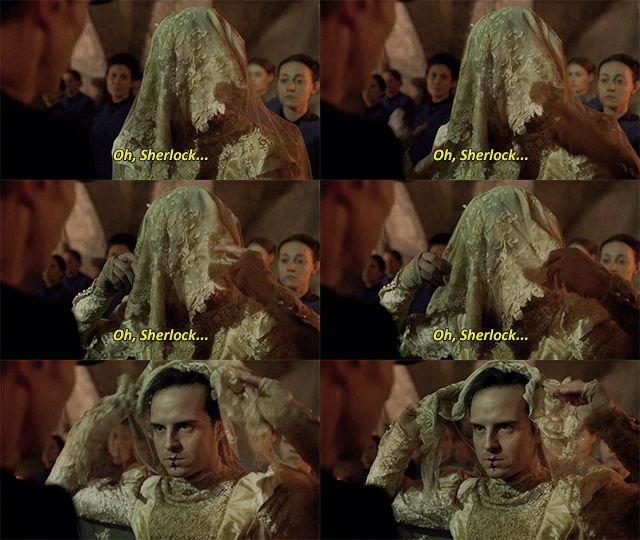
However, to Sherlock's surprise it isn't Lady Carmichael who comes into the Satanic ceremony dressed as the bride.  It's the ever-flamboyant Moriarty, taunting Sherlock with what I'd call the best description for The Abominable Bride: "Is it silly enough for you yet?" Flipping back and forth, we end up in two places.

In the present, Holmes finds that Moriarty is most sincerely dead...he just has to find out what Moriarty is going to do next.  In the alternate past, Holmes and Moriarty face off at Reichenbach Falls, only this time Watson shows up with his gun to push Moriarty off the cliff.  Holmes then realizes he will be safe, and jumps off same cliff a la Crouching Tiger, Hidden Dragon.


I wonder whether a better title to The Abominable Bride would have been The Satanic Rites of Emily Davison, given how the suffragist movement played a prominent role in the story.  Now, while The Abominable Bride won the Emmy for Outstanding Television Movie, I suspect that the Television Academy is thoroughly impressed by British accents and something that appears clever but on closer examination is downright insulting.

As I kept watching The Abominable Bride, I seriously wondered whether the whole thing was meant to be a comedy or spoof of Sherlock.  I'm not being facetious, I'm being perfectly honest in my view.

This view comes from the fact that Mrs. Hudson comes across as a total ninny, that apparently no one could tell that Dr. Hooper was a drag king, that Watson seriously suggested a 'secret twin', that the repartee between the chambermaid and Dr. Watson went for screwball but ended up as just screwy, that we had some sort of purple-hooded ceremony going on that looked as if were lifted out of Young Sherlock, that Dr. Watson was literally scared off by a ghost (thus validating that this version of Watson is giving Nigel Bruce's version a run for his money in making Watson a total dolt) and that Sherlock Holmes apparently ends up floating through all time at the Reichenbach Falls.

On a more serious note, The Abominable Bride was such a failure in how it treats both the story and the audience.  What we could have had was a nice treat: seeing Sherlock in the traditional setting for a Holmes story (even giving a nod to the Granada series when we first see Victorian London with both the visuals and musical cues from the Sherlock Holmes theme).

As a side note, I'm willing to wager that the vast majority of Sherlock fans would not get the Granada references, they too besotted with the idea that Sherlock Holmes is the original creation of Gatiss and Moffat to realize there were other versions.  Truth be told, I doubt many if any Sherlock fans would even bother watching any version that didn't have Benny or Marty.

I could even go along with the 'big reveal' that we are really in Sherlock's Mind Palace...if it had come at the end.  Instead, by coming when it did, it robbed us of any real mystery as we waited for them to go back to the future.

This episode is also, the first to my memory, to suggest that Sherlock had any kind of drugs problem.  If memory serves correct, the strongest addiction Holmes had on Sherlock was nicotine.  Now, apparently, he used a wide variety of drugs (including morphine and cocaine).  If this drug addiction was mentioned before on a previous Sherlock episode, it's been so long that I don't remember.

In terms of performances, the setting may have changed but it's a case of 'well, here we go again'.  I find every character on Sherlock to be completely insufferable: Sherlock less a detective and more a clairvoyant (and an arrogant one at that), Watson a complete nitwit, Mycroft a total ass, Mary secretly smarter, Lestrade a lesser nitwit, Mrs. Hudson a ninny. 

There was no variety between Victorian-set Sherlock and contemporary-set Sherlock, and while maybe that wasn't the goal I couldn't help wondering why if they were creating an alternate universe for our characters they didn't opt to change some elements.

Maybe it was just me, but I got the sense that with The Abominable Bride, co-writers Gatiss and Moffat decided to 'fix' Sir Arthur Conan Doyle's The Final Solution by 'improving' it.  They decided that Watson would appear at the Falls to stop Moriarty from killing Holmes rather than send him on a wild goose chase that led to Watson coming up with an erroneous conclusion. To my view, Gatiss & Moffat felt that they could give an alternative version of The Final Solution that would be better than the one ACD came up with, a more action-oriented one.

That again, is just my view, but it's one I can't shake, this sense that they think they know better.

There are some elements that I did like.  The resolution as to how Mrs. Ricoletti came to die twice was good (at least until we got the Witches of Pankhurst bit that made it look really silly). 

As a side note, given that Steven Moffat has been accused more than once of sexism, and that Mark Gatiss has no first-hand knowledge of 'the woman's perspective' in a relationship, was it a good idea for them to make suffragists our villainesses?

I know many, many people love Sherlock and loved The Abominable Bride.  More power to them. 

I, however, respectfully dissent.  A story that does nothing and moves nothing forward (we don't get a resolution as to how Moriarty survived or how Holmes came to the conclusion that Moriarty is not just merely dead, but most sincerely dead), with performances that solidify how the characters are never real, The Abominable Bride is something I would not watch again.

"Is it silly enough for you yet?"  Yes, which is why, try as much as I have, I simply have no love for Sherlock.   

0/10

Next Sherlock Episode: The Six Thatchers