Somewhere in Self/Less, there is a great movie yearning to break free. Self/Less is not a bad movie, but a little bit of a frustrating one. What it has is 'potential', which is a damning word if ever there was one when it comes to movies. Good ideas about immortality and its cost, of mad science, about lost and found opportunities get sidetracked by a rush to give us less intellect, more action.
Billionaire real estate mogul Damien Hale (Ben Kingsley, sporting a Nuw Yowk accent slightly more believable than Leonardo DiCaprio's two stabs at a Boston accent) is dying of cancer. His best friend/partner Martin (Victor Garber) is the only one who knows. Not even Damien's estranged daughter Claire (Michelle Dockery) knows he is ill. Damien decides to go for a radical treatment: shedding, where a person literally transfers his consciousness into another body. Faking his death, Damien finds himself a new body thanks to Dr. Albright (Matthew Goode), the director of a super-secret lab that has been working on this procedure.
Now going by the name Edward, Damien's new body is in the form of Ryan Reynolds. Damien struggles to adjust to his new body, eventually finding that being a 68-year-old man with the body of a 35-year-old does have some advantages. Temporarily staying in New Orleans, he even makes friends with Anton (Derek Luke) who shows him a few things about living life in the Big Easy.
Damien/Mark though, is still having problems with the corpse, getting odd flashes of a woman and child. Albright tells him it's just old memories struggling to get through, but when he refers to the woman in the flashbacks as "Latina", Damien becomes alarmed. He never mentioned the woman in the flashbacks was Latina. Determined to find out the truth, Damien manages to elude the company and goes to St. Louis, where he quickly finds Madeline (Natalie Martinez). She was the wife of one Mark Bidwell, who thought Mark was dead. Quickly they discover that Mark had sold himself to Albright to get the money to finance health care for their daughter Anna (Jaynee-Lynne Kinchen). They immediately flee Anton (whom we discover works for Albright) and a race is on to discover not just what happened, but to stop Albright in his nefarious schemes to murder people for their bodies.
The medication Damien needs to stop his visions gets lost, and if he doesn't take them, soon Mark's memories will overrun Damien's and in essence, Damien will cease to exist. We get one or two twists (some expected, some downright bizarre) until our fiery and gun-blazing conclusion.
As I said, Self/Less has some good ideas rattling in the script by David and Alex Pastor. You have a great premise in the idea of a man becoming another man, but Self/Less doesn't really know what to do with it. Again, Damien is a 68-year-old who now finds himself with a body of a much younger (and hotter) man, but whatever culture clashes he encounters go by the wayside. I can't imagine that even with a stronger physical body, Damien would become THAT proficient in basketball or stumble a bit in getting into the dating scene (or in his case, a succession of one-night stands). He might have a new body, but does shedding also give one a new personality?
Damien early on is shown to ruthlessly cut out a younger rival (Sam Page). Therefore, this is not a nice guy. Now, after discovering that Mark was killed to give him his new body (rather than being grown in a lab like he was told), Damien is horrified and outraged. It doesn't strike me as believable that he would be that appalled, or that he would find Madeline so quickly, or that the company would literally burn the house down with Damien in it after Anton tells the hired guns Albright wants him taken alive.
Other parts of Self/Less were a bit more puzzling. Bidwell is retired Army and has mad fighting skills, but Damien never questions how he, a man who has spent his life in business, can suddenly be all Mortal Kombat-like. His discoveries of Madeline and of Mark's past are very rushed. The predictable happy ending does it no favors either.
I would argue that the rushed nature of Self/Less is one of its key problems. Almost everything about it seems to be going at a shockingly rapid pace to be believed. Exactly how much time elapses between scenes is muddled. This is especially true when Damien starts investigating. The editing is so haphazard. Sometimes the montages work (like when Damien is learning to use his new body) sometimes it looks quite bizarre (his new basketball skills that come out of nowhere).
It's interesting that in terms of performances, we do get a lot of hit-and-miss. The standout is Goode, who is now the go-to guy for creepy villains (example, Stoker). He is calm throughout as the mad scientist, never wavering in his demeanor or going into fits of shouting. It's his extreme calm that makes him quite effective, though I'd like to see Goode in a flat-out comedy.
Reynolds is the one who comes off a bit bad in all this. He can do the action parts well, but sometimes his blank expression is almost comical. When Young Damien finds the wife of the previous scientist, it looked like Reynolds wanted to cry. I don't think that was the intention of his character. It is more frustrating to know that Reynolds can act, but keeps getting lost either in dramas that don't give him much if anything to work with or in action films.
It is positive to see a Hispanic character who isn't a stereotype (and who isn't asked to speak Spanish), and I think Martinez did a good job as Madeline given the material she had. I'm also glad that her being Latina was essentially incidental, and perhaps Self/Less can show Hollywood that Hispanics are capable of a wide variety of roles. Kincher was adorable as little Anna, and I will grant that her scenes with Reynolds as they bond were appealing.
Sadly, I feel worse for Dockery (whose American accent, unlike Kingsley, was at least believable). Appearing only in the beginning and end of Self/Less, she is thoroughly wasted in the film. Pity because it would have been interesting if she had had a larger part in the story (say, she suspected something was going on with her father and she investigated) we could have had her do something she needs to do: break out in a film now that she is no longer corseted on Downton Abbey.
Self/Less has good ideas that if pursued would have made for a more interesting film. It is only when it turned into an action picture, full of shootings and burning men, that it forget what a great premise it had. For my-self, the film is less than the sum of its body parts.
Celeste Holm: Best Supporting Actress for Gentleman's Agreement
The 20th Academy Awards appear to be keeping a solid tradition of rewarding 'message' pictures: films that had 'something IMPORTANT to say'. There was the issue of alcoholism (The Lost Weekend), then there was returning veterans (The Best Years of Our Lives), and now, it's anti-Semitism (Gentleman's Agreement). This idea that 'message' movies are somehow more artistically important than something that at least is 'charming' is an idea the Academy has stubbornly held onto.
If one looks at the list of just the nominees, we find that the two Christmas-connected movies (The Bishop's Wife and Miracle on 34th Street) are better remembered than the actual winner, Gentleman's Agreement. Sometimes a film or a performance is seen as 'more important' than others, which pushes a particular film or performance to the winner's circle despite the fact that if it were judged objectively, it might not even have been nominated.
We also see that Oscar campaigning has its limits. Shamelessly peddling your wares like a stripper before a group of virgins sometimes gets you the gold (prime example, Crappie Redmayne's Best Actor win...and NO, I WON'T let that go). However, the 20th Academy Awards gave us perhaps one of the most shocking upsets in film history. Making things worse, neither the actual winner or the presumptive winner's actual performances have gone on to be placed in the pantheon of Great Performances.
As always this is just for fun and should not be taken as my final decision. I should like to watch all the nominees and winners before making my final, FINAL choice. Now, on to cataloging the official winners (in bold) and my selections (in red). Also, my substitutions (in green).
THE 1947 ACADEMY AWARD WINNERS
BEST ORIGINAL SONG
A Gal in Calico from The Time, The Place, and The Girl Pass That Peace Pipe from Good News I Wish I Didn't Love You So from The Perils of Pauline You Do from Mother Wore Tights Zip-a-Dee-Doo-Dahfrom Song of the South
I find it very strange that a song can be so embraced, so beloved, so known...and yet the source of said song is all but forbidden. If you're lucky enough to get on Splash Mountain at the Disneyland/Magic Kingdom park, you'll hear Zip-a-Dee-Doo-Dah as its theme, as the ride is built around the film Song of the South. However, you won't find the actual film on sale at the parks...or anywhere (legally, that is).
Song of the South, ever since its premiere, was attacked as being racist and glorifying slavery. The fear and controversy over Song of the South has essentially blocked the film from being released in America. Roger Ebert, the dean of film reviewers, has sided with the 'no release' crowd. I have a harder time with this. This isn't on the same level as The Eternal Jew (whose few minutes that I watched so appalled me I think it should never be released for sale). Disney profits from Song of the South via the Splash Mountain ride, and I'm sure there must be some African-Americans who love the ride (despite its source). Granted, maybe they aren't aware of it, since again the film is not available.
It's all a shame really, because the song is still a.) quite good, and b.) simply too much in the American consciousness. Zip-a-Dee-Doo-Dah was listed as one of the 100 Greatest Film Songs of All Time by the American Film Institute, not bad for a song from a movie few have actually seen. Besides, when was the last time you hear someone whistle I Wish I Didn't Love You So?
BEST DIRECTOR
George Cukor: A Double Life
Edward Dmytryk: Crossfire Elia Kazan: Gentleman's Agreement
Henry Koster: The Bishop's Wife David Lean: Great Expectations
Let me get this out before I go on. Gentleman's Agreement is, if not the worst Best Picture winner of all time (and certainly Cavalcade gives it a good run for its money), at least among the most boring and preachy. Apparently, everyone in New York City is an anti-Semite (even, apparently, those Jews 'passing' for Gentile). Making things worse in all this is the fact that Kazan, one of the great directors, failed to make almost every actor act human. Everyone was more a type (the noble WASP hero, the woman he loves and shapes to tolerance, the Jewish best friend, the bigots of which there are many, the noble mother). I found all but two of the performances unbearable and dull. Why Kazan was singled out when David Lean brought real life into what I think of as one of Dickens' more dull stories (I've tried to read it three times and couldn't get through it) I have no idea. I suspect the fact that Kazan was American and Lean British had something to do with it.
It would take a generation before the Academy equated British with 'talent', an equation Crappie Redmayne used to his advantage.
Michael Powell & Emeric Pressburger: Black Narcissus
David Lean: Great Expectations
George Seaton: Miracle on 34th Street
Jacques Tourneur: Out of the Past Orson Welles: The Lady From Shanghai
I think it's only with the benefit of hindsight that we see the Academy is shockingly myopic when it comes to recognizing true greatness. While we still carry on with the dull Gentleman's Agreement, the pleasant The Bishop's Wife, and the still topical but better and watered-down Crossfire, some truly extraordinary films and filmmakers were ignored. For me, Welles' directing in The Lady From Shanghai (particularly the final shootout at the funhouse) is one of the most extraordinary works of this particular year. Granted, the plot is a little convoluted, but my goodness what a fantastic film.
BEST SUPPORTING ACTRESS
Ethel Barrymore: The Paradine Case
Gloria Grahame: Crossfire Celeste Holm: Gentleman's Agreement
Marjorie Main: The Egg and I
Anne Revere: Gentleman's Agreement
I said that in general, the performances in Gentleman's Agreement were as dull as dishwater, with two exceptions. Meet the first.
Holm played about the only real person in the film, one who wasn't just a walking lecture. She was on the good side of the fight against anti-Semitism, and not just because she was the only Gentile who didn't hate Jews or think they were dangerous. She was someone appalled at the bigotry, and who was brave enough to fight it.
What makes the film so bizarre is that in her big scene, where she all but declares her love for Gregory Peck's sanctimonious character, down to where she tells him she doesn't care if he's Jewish or not (he'd been masquerading to see what how hard it was for a Hebrew), he ups and leaves her when he hears the WASP he loves has no problems with Jews living in Connecticut. Seriously, I wanted to whack him upside the head when I saw that.
Kathleen Byron: Black Narcissus
Gloria Grahame: Crossfire
Celeste Holm: Gentleman's Agreement
Martita Hunt: Great Expectations
Natalie Wood: Miracle on 34th Street
I found it a bit of a struggle to figure out which of the far worthier nominees to actually win. There was Natalie Wood's charming junior cynic in Miracle on 34th Street, or Martita Hunt's terrifying turn as Miss Havisham from Great Expectations. However, as I thought on it, it was Byron's performance as the sexually starved Protestant nun growing insane in the Himalayas that stood out to me. Maybe it might come across as a bit too wild, but for me, I thought her eventual disintegration was a powerful performance.
BEST SUPPORTING ACTOR
Charles Bickford: The Farmer's Daughter
Thomas Gomez: Ride the Pink Horse Edmund Gwenn: Miracle on 34th Street
Robert Ryan: Crossfire
Richard Widmark: Kiss of Death
It's a curious choice the Academy made in that Gwenn's performance was for a light film. Perhaps in other years, Ryan's anti-Semitic murderer or Widmark's crazed killer would have gotten the prize. However, that year was the Year of Santa Claus, as Gwenn's pitch-perfect performance as Kris Kringle earned the prize. Upon receiving the Oscar, Gwenn, who at 71 would be the oldest Best Supporting Actor winner until George Burns and Christopher Plummer, quipped "Now I DO believe in Santa Claus".
What makes Gwenn's performance so good is that we really never truly, TRULY know whether this nice old man is indeed THE Santa Claus. He plays it as if he either IS Santa or just BELIEVES he's Santa. We never know completely one way or another, and that is part of the genius.
John Garfield: Gentleman's Agreement Edmund Gwenn: Miracle on 34th Street
Everett Sloane: The Lady From Shanghai
Robert Ryan: Crossfire
Richard Widmark: Kiss of Death
First, let me introduce you to the second performance in Gentleman's Agreement that was actually good, and that was Garfield's Jewish G.I. who, unlike the self-righteous Peck, can't go back to being Gentile when things get rough.
Having said that, I see no reason to remove Gwenn's charming Jolly Old Saint Nick from the winner's circle. Truly a wonderful performance.
BEST ACTRESS
Joan Crawford: Possessed Susan Hayward: Smash-Up: The Story of a Woman
Dorothy McGuire: Gentleman's Agreement
Rosalind Russell: Mourning Becomes Electra Loretta Young: The Farmer's Daughter
Campaigning can only get you so far, and this award is perhaps one for the history books.
Rosalind Russell, best known as a comedienne, decided she was going to get an Oscar. Having failed in a comedy (My Sister Eileen) and a biopic (Sister Kenny), she decided that a good old fashioned heavy drama would get her the prize she so long sought. She wasn't taking any chances either, having hired the same publicity man credited for getting her Oscar rival Joan Crawford her prize for Mildred Pierce. Campaigning furiously, perhaps brazenly, Russell made it clear this year was HER year. Most predictors likewise expected her to walk away with the Oscar for the heavy drama Mourning Becomes Electra.
Perhaps too heavy; in an infamous moment, when Fredric March opened the envelope Russell began to rise from her seat to begin her triumphant march. Somehow, the Academy didn't get the memo, for in one of the most shocking turns in Oscar history, the winner turned out to be the ONLY person no one expected to have a chance. Out of all the nominees, Loretta Young was the only one nominated for a comedy, yet it was her name that was announced to the stunned crowd. The win was so unexpected even Young was shocked when her performance as a Swedish milkmaid who gets elected to Congress beat everyone out. Ever the classy dame, Russell used her position to begin a standing ovation for a clearly stunned Young.
Proof positive that sometimes all the planning in the world, all the campaigning, can collapse in an instant.
Even more curiously, the Academy's usual penchant for rewarding drunks went wrong this time, so Susan Hayward's boozy broad bombed. Better luck next time, Susan...
Susan Hayward: Smash-Up: The Story of a Woman
Rita Hayworth: The Lady From Shanghai Deborah Kerr: Black Narcissus
Maureen O'Hara: Miracle on 34th Street
Gene Tierney: The Ghost and Mrs. Muir
For Heaven's Sake, why oh WHY did they nominate Dorothy McGuire's utterly dull, dull, dull performance as the WASP who learns to love the Children of Israel (or at least learn to possibly live with them) when there were just so many much better performances around that year? One is stunned to see that Maureen O'Hara never received a single nomination in her entire career (!) and that Kerr received six nominations and never one once...and yet, there's Crappie Redmayne, touting his Oscar as proof that he's superior to Richard Burton.
Even more astonishing, at least to me, is that Kerr did not receive a nomination for perhaps one of her best performances, as the strict nun who struggles against almost demonic forces she cannot understand, a clash of cultures where her British imperialism leads to ruin. Black Narcissus is one of her defining roles, yet it went unrecognized.
Ah, the Academy...
BEST ACTOR
Ronald Colman: A Double Life
John Garfield: Body and Soul
Gregory Peck: Gentleman's Agreement
William Powell: Life With Father
Michael Redgrave: Mourning Becomes Electra
Well, on this one I can't say I'm particularly wild about any of the nominees. I feel for Powell, perennial loser, and I am starting to lean towards Garfield. For the moment though, Ronald Colman's role as the actor who starts confusing fact with fantasy seems like a good enough and meaty enough role to take the prize.
Richard Attenborough: Brighton Rock
Ronald Colman: A Double Life
Cary Grant: The Bishop's Wife
Victor Moore: It Happened on Fifth Avenue
Robert Mitchum: Out of the Past
Again, it's surprising what gets recognized and what doesn't. Mitchum's film noir is one of his defining roles, and Grant would never be formally recognized by the Academy apart from an Honorary Oscar (and if anyone can make the case for how Eddie Redmayne is a better actor than Cary Grant, I'm all ears). Now, I'm the Sir Dickie's biggest fan (and I'll get to that when I tackle Gandhi, a film longer than India's struggle for independence). Having said that, his Pinkie, the thug who tortures people physically and emotionally, is what I picture while reading the Graham Greene novel. Granted, I haven't finished it, but so far both look quite good.
BEST PICTURE
The Bishop's Wife Crossfire Gentleman's Agreement Great Expectations Miracle on 34th Street
The studio had a great problem promoting Miracle on 34th Street. There was a time when Yuletide films weren't seen as commercial. Even if they were, the film was released, of all times, in MAY! The trailers weren't any more helpful: not discussing the actual plot, they had various people describe it as 'a man's picture' and 'a woman's picture'.
What it ended up being was a perfect family film. It is clever in how it never answers definitively whether the man in the Macy's Department Store was THE Santa Claus or just nuts. It is a sweet, gentle movie, full of insight into the power of faith.
It certainly is also a damn sight better than Gentleman's Agreement, a preachy, dull, boring film where the characters are almost all one-note, the story almost silly (really, every single person harbors some anti-Semitism) and the romance (such as it was) was terrible. It's a safe bet that while Miracle on 34th Street is still watched (and not the remake with Sir Dickie, I might point out), Gentleman's Agreement is mercifully forgotten, remembered if at all only for having won the Oscar.
Just like Crappie Redmayne.
Black Narcissus Crossfire The Lady From Shanghai Out of the Past Miracle on 34th Street
When one looks at 1947, we see there were so many better films than Gentleman's Agreement. There's Orson Welles' noir masterwork The Lady From Shanghai, and there's another noir masterwork (Out of the Past). However, when all is said and done, I was most stunned by Black Narcissus, and not just by the spellbinding cinematography by Jack Cardiff (genius).
This tale of saintly women who fall (in more ways than one) is one of the great films, widely remembered and still with a great power to amaze. Gentleman's Agreement, for its part, has a great power to induce slumber.
I don't care what anyone says, I think Jessica Lange doesn't have to be embarrassed by the remake of King Kong. It isn't her fault that Dino De Laurentiis opted to remake a genuine classic. It isn't her fault that we got a whole new story that isn't particularly good. For what the remake of King Kong is, for all its sins (and Lange isn't among them), the film itself is more entertaining than I remember it, though nowhere in the same league as the original.
Oil conglomerate Petrox is in search of a major reserve. They think there might be one on an island that has permanent fog cover. Oil executive Fred Wilson (Charles Grodin) pushes to explore the island, convinced that he will strike it rich on this unexplored island. Stowaway Jack Prescott (Jeff Bridges), paleontologist, wants to go explore the island as well, convinced that legends about a massive primate might be true. Reluctantly, Fred takes him on as the official photographer. As they get close to the island, they receive a distress call. The next day, they find a lifeboat floating with a beautiful woman barely alive. We discover that Dwan (Lange) managed to survive a yacht sinking. An aspiring actress, she soon charms both men: the married but greedy Fred, and the single and brilliant Jack.
She pushes to go the island, and there they encounter a native tribe that performs rites for Kong. Wilson wants the oil, which means they should push the natives out. The natives abduct Dwan for their rites, and she encounters Kong (the gigantic ape). The rescue party goes to save her, but Wilson, who has learned that the oil on the island won't be ready for 10,000 years, cooks up a new scheme: to take Kong and make him the symbol for Petrox (a Beauty and the Beast-type thing). Over Jack's loud objections, Kong is taken after Jack rescues Dwan.
Kong is brought to New York for a live broadcast, the first of many on a nationwide tour. Dubbed "King Kong", Wilson attempts to recreate the scenario they encountered on the island. Jack and Dwan, who have fallen in love during all this, find themselves on opposite ends. She wants to be a star, and he says he'll have nothing to do with this.
As expected, the debut is a disaster: the rush of photographers at Dwan enrages Kong, who thinks she's being attacked. Forcing his way out of the cage, he goes after Dwan and we get a rampage through New York City. Dwan and Jack manage to give Kong the slip, but Kong does find her and takes her to the highest point in the city: the World Trade Center.
It's now where the ultimate confrontation between man and beast will take place.
My memories of King Kong were vague, having first seen it as a child. Looking at it now, despite myself and its obvious flaws, I enjoyed the film much more than perhaps I should have. First, let me address that pesky issue about Jessica Lange, which the film is proud to "Introduce". As this is her debut I think people should cut her some slack. She is doing her best with little to no training and with a script that doesn't ask much from her except express positive feelings toward a gigantic ape.
Ask Meryl Streep to try and make THAT believable.
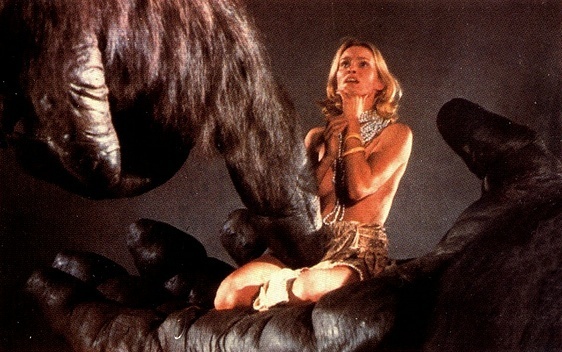
Lorenzo Semple, Jr.'s dialogue for Lange is one of the most unintentionally hilarious moments of King Kong. One wonders whether he meant to sound a bit risqué or just wasn't aware of his words' double meaning. When Kong has Dwan in her clutches, she screams at him, "Go ahead and eat me!" Maybe it's the teenager in me, but I can't help wondering whether the audience burst out laughing at this.
As a side note, the massive door bolt closing in the native village comes as close to being a phallic symbol as one can get without being completely obvious. Either that, or the filmmakers were completely unaware of how things looked.
I think Lange was put in a pretty impossible situation here and then blamed for it all. She's being asked to show that she has fallen, if not in love with a massive gorilla, at least to see its tender side, and asked to constantly bang on his hands to release her. Add to that the fact that this was her first film and Lange was given a thankless job and did what she could with it. The perceived disaster of King Kong for Lange (and I argue it was perceived, because even a trained actress would have difficulty with this, though it wouldn't be impossible) nearly derailed her career before it began, but Lange's fortunes turned to where she ended up winning two Oscars and three Emmys, becoming a respected actress.
On the whole though, I think Lange did as good a job as she could at the time: acceptable, by no means great, but reasonable given both her experience and the circumstances.
Coming off worse is Grodin, or at least he ran the risk of it. I was never sure whether Grodin meant to come off as cartoonish and camp as the "EVIL oil executive". He is so gleefully over-the-top one wonders whether this was the plan all along. I find it hard to believe that at some point director John Guillermin didn't see that Grodin was growling and inches from twirling his mustache. Even at the end, when Kong stomps him to death, Grodin couldn't control himself in making everything so wildly camp as to come off as hilarious.
Another side note: having Kong revealed by hiding him in a giant Petrox gas pump to have it lifted up may not be phallic, but it is at the very least, camp, bizarre, and hilarious.
Bridges had nothing really to do other than be his hippie-drippy self.
Semple's script I think tried to be too clever with the material. At one point, Jack berates Wilson. "Who the hell do you think went through there: some guy in an ape suit?" he snaps. Thing is, it WAS 'some guy in an ape suit, and painfully obvious it was a guy in an ape suit (its Best Visual Effects Special Oscar notwithstanding). It was so obviously a guy in an ape suit that it made the Japanese Godzilla films nuanced in turn.
Why Guillermin didn't direct the ape-man to walk like an ape (instead of being completely erect like you and me) is one of King Kong's stranger points.
Finally, the whole 'evil oil company' plotline, which takes up a great deal of the movie, is tired and cliché. It looks pretty topical at the time of the oil crisis, but now it looks dated, almost kitsch. Whatever clever or topical ideas it could have had (like how the oil company would destroy a civilization) pretty much went by the wayside.
Despite that, I found myself entertained by King Kong. One of King Kong's greatest strengths is John Barry's score, which is simply brilliant in evoking adventure and romance. It's a score that is so above the material and I think one of Barry's best.
Yes, in so many ways King Kong 1976 goes wrong. However, there is a great pleasure in watching it, like a flawed experiment that produces its own offbeat beauty. Nowhere near the original, I found King Kong had its own curious charm, and despite all my senses and the push to think it dreadful, I found myself entertained by the whole sorry spectacle.
I cannot tell a lie: King Kong may not be great filmmaking, but it is a great deal of fun no matter how you perceive it.
I think an inherit flaw in Elementary is that the killer (it's almost always a killer) is that the actual killer is pretty easy to peg. Terra Pericolosa is such an episode. About halfway through I figured out who the killer was. Normally, I'd say that is a bit of a downer, but I found I thought highly of Terra Pericolosa for two reasons. One, the actual case took a lot of turns to get to the inevitable conclusion and I enjoyed the ride. Two, we still got enough to focus on characters, which is one of Elementary's inherit virtues.
Oh, yes, we also saw CLYDE! (I always have to capitalize his name. Sorry).
Sherlock Holmes (Jonny Lee Miller) is brought in to consult quietly on a robbery of rare maps. He sends his protégé Kitty (Ophelia Lovibond) to investigate, and she finds that the robbery now has gone to murder. Sherlock's former associate, Joan Watson (Lucy Liu), along with Captain Gregson (Aidan Quinn) and Detective Bell (Jon Michael Hill) now come to participate in the investigation of both the robbery and the murder. Holmes deduces that the theft was a bit of a cover-up: rather than a random theft of rare maps, the thief targeted one particular map and took others to make it look like a random grab.
That map in question is the County of King James, Virginia 1794. It had been on permanent loan to the archive from the Bray family, wealthy philanthropists. The granddaughter of the map's owner, Margaret Bray (Mamie Gummer) is surprised to learn of the map's disappearance but is rather nonplussed on the subject.
At first, Holmes suspects that the theft involves collectors trading outside official channels, and tracks down a likely suspect in the trade. Said dealer happens to be found dead, and with the map still with him, or at least it looks that way. The map in question is a forgery.
Holmes then suspects that someone is attempting to reconstruct the rare book from which the map (one of many) was part of, with this particular map a missing piece. Holmes and Watson go to William Hull (Skipp Sudduth), real estate magnet who has the rare book but now wants to hire them to find the missing piece. Holmes refuses and now focuses not on the map, but on the information on the map. He notices that there is a slight discrepancy between the 1794 map and current maps, a slight bend in a river. A trivial fact, perhaps, but one that involves a future Indian casino worth billions. Reason enough for murder.
In between all this, is Holmes and Watson's struggle in how to help Kitty. Holmes believes giving her endless work to keep her from a social life is best. Watson thinks Kitty should continue socializing, including exploring a possible relationship with someone she's met.
What I enjoyed about Terra Pericolosa was more the journey than the destination. I had pegged the killer by the halfway point (and that was me just taking an educated guess, if by educated this particular character kept popping up). That being said, I was curious as to how it would all tie in together, and Terra Pericolosa did so quite well.
I enjoyed that there was a lot of logic into how Holmes went down point by point to his conclusions. How he tracked down the thief was excellent (the nom de guerre, the name of his shop/front). This is what makes Sherlock Holmes a fascinating figure no matter what medium he's in. An added plus is how both Kitty and Watson show that they themselves, under Holmes' tutelage, have learned to deduce as well. Kitty, for example, shows the archive's director how it wasn't a series of random thefts (the lock to the particular map was not tampered with while the others were) and Watson finds the actual killer by observing the model for the Indian nation's future casino.
We even get moments of comedy. David Atkins as Austin Cornblatt, who has been 'catfished' by Holmes, appears quite nervous in his confusion about "Amber1776" being in the form of Detective Bell, and it provides a bit of levity while also giving information.
I think we have in Terra Pericolosa some wonderful moments of acting and writing. Jonny Lee Miller has made Sherlock Holmes into a fascinating, even amusing figure that I can actually almost relate to. His acting allows us to see things without them being overt. For example, when Kitty is explaining how she came about to the security guard's body, Holmes is barely suppressing a gigantic grin, like a proud father. Bell wryly comments to Sherlock, "Her first corpse. You must be so proud," but while he may try to show he isn't, Holmes really is proud of his new protégé. Miller allows Holmes to be the smartest person in the room, but he still allows his natural gifts to be the source of some ridicule by others.
When Watson and Holmes are waiting for Hull, Holmes comments that he can hear the helicopter coming in. Watson does one better, commenting on how one of the motors is slightly off. He isn't amused but the audience clearly is. "You mock what you do not understand," he retorts, but whether Holmes says so out of hurt pride or as a snappy comeback is up to the audience.
Lovibond continues to grow as Kitty, not just a rape victim or Holmes' lackey, but as someone who is coming into her own. Liu is one of my favorite Watsons (after Jude Law, I think my favorite), for she is bright and can hold her own against the great detective. She even shares her own moment of humor early on with Lovibond, when we first see CLYDE! Kitty's brought him to her now that she's returned from what Holmes called her "Danish sabbatical/sexcapade". When Watson asks if she had any trouble with him, Kitty replies, "You mean the frowny one with the hard shell...or with Clyde?"
Miller and Liu as Holmes and Watson have this great working relationship, and their arguments about Kitty's social life do make it look like they're two parents arguing about the future of their child despite their mutual reluctance to have a father-daughter/mother-daughter type vibe. Holmes admission that he has been keeping Kitty busy is a wonderful moment for both Miller and Lovibond, and it shows just how well the acting, the directing, and the script are.
In terms of actual mystery, while the killer was easy to figure out (I bet Meryl Streep watched on in pride, and that's my only hint). In terms of how we got to the resolution, the character development, and the performances all around, I still marvel as to how Elementary isn't as embraced by Holmesians as its rival, which I find the weaker of the two. Terra Pericolosa was amusing, insightful into the characters, and a fun journey...even if by the midpoint I knew whodunit.
Old Blood and Guts may not have been as brutal or gruff as Patton paints him. Having heard the actual General George Patton, his voice is far more soft than the voice George C. Scott gives him. As it stands, I figure many people don't care whether the Scott version of General Patton is accurate to the real General Patton. The film Patton is gruff, belligerent, pompous, a prima donna, and of course, one hell of a general. He is also articulate, intellectual, knowledgeable about history and military tactics, and determined to win.
The Patton of Patton is a complex figure, one who finds himself near the greatness he believes himself to have achieved by divine right, if not for the Slap Heard Round the World, but more on that later. It's a fascinating film to watch since it both glories and ridicules its subject: making his thirst for war both his major virtue and greatest failure, touting his brazen determination and genius while also pointing out his arrogance and perhaps lunacy. Patton, for whatever one draws from it (a rare film that appeals to both right and left wings, though for different reasons), is a fascinating watch throughout.
Focusing only on his time in World War II, George S. Patton (George C. Scott) is a complex and fascinating character. He is a man of devout religious faith who swears constantly, a military tactician par excellence who at one point claims to literally remember the Roman battle of Carthage, claiming that in another life he was actually there. Normally, that would make him insane, but Patton is fully aware of where he is and what he does. His desire to rush headfirst into battle (sometimes literally as well, when he shoots at planes firing at him with his pistols) leaves his German adversaries puzzled.
Even more puzzled are they (and everyone else) when we get to the midpoint of Patton, the infamous incident where when visiting a military hospital, he becomes enraged at seeing one soldier whose only injuries appear to be psychological. The soldier in question isn't physically wounded like the other men, but is suffering from shell shock. Patton was not a believer in shell shock, and believing the man a coward, whacks him on the head with his glove. Everyone at the hospital, even the other soldiers, are shocked at Patton's actions. Word spreads, and Patton is dressed down by Eisenhower (never seen). His colleague and friend Omar Bradley (Karl Malden) watches all this, and begs Patton to control himself. Patton, however, being Patton, can't help himself, and turns a minor assignment into a major international fracas when he suggests to the British audience that Anglo-America would rule the world, leaving the Soviets out.
As his military career stalls, he gets one last chance of glory: leading an invasion of Germany itself (having lost command of the invasion of Europe after the slapping fiasco). He manages to show his prowess, but again his movement is halted by internal strife. He manages at war's end to insult the Russians again, but this time the Russian commander who is dining with him and their men returns the insults, which seems to delight Old Blood and Guts (as one of Patton's soldiers wryly comments, 'our blood, his guts'). At the end, as we see the General walking with his dog into the distance, the old general remarks (or perhaps remembers) how in Roman times a victorious general would receive a triumphant march into Rome, with a man whispering in his ear, "All Glory is Fleeting".
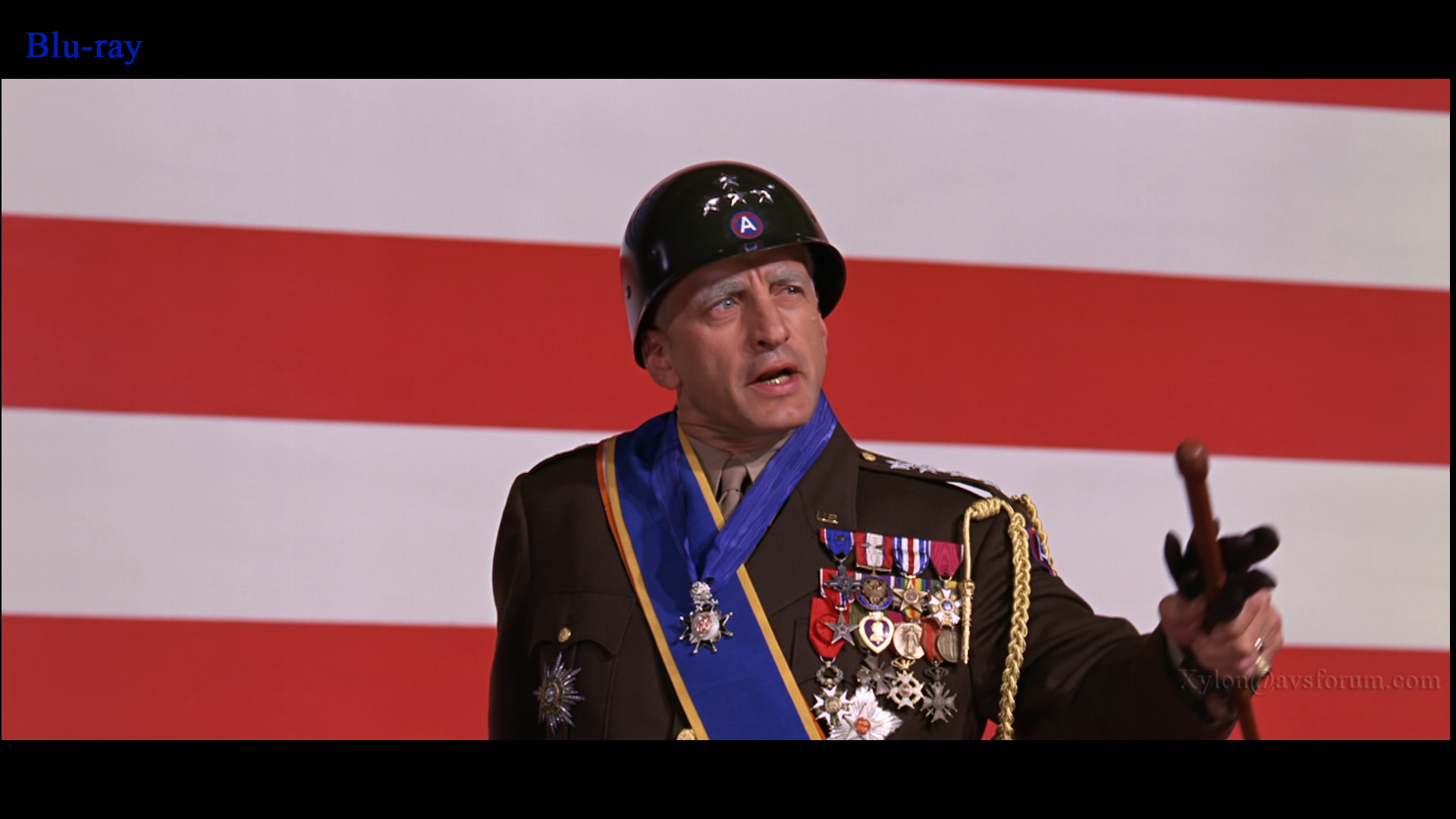
What is fascinating about Patton is that we get nothing of Patton's private life (no mention is made of his family or any friends apart from Bradley, who at times finds him virtually intolerable). In truth, everything we need to know about the General comes early on, in the famous speech he gives to his troops describing the glories of war and how Americans would always win (which must have been a most peculiar thing to hear in 1970, as the Vietnam Intervention was about to end in, shall we say, disgrace). For Patton (at least the film version), everything revolved around war, which is a glorious enterprise. I think Patton, however, did not make the general to be a complete cartoon of someone with blood-lust.
When Patton recites a prayer for positive weather before leading the troops into Germany, it is a beautiful prayer, spoken by a man of true faith (his belief in reincarnation notwithstanding). It was a very moving moment, and I think acts as a counterpoint to the more famous opening scene where Patton, in his military regalia and ivory-handle pistol, addresses his troops to mock those who lost and laughed.
Those observing the General are as insightful about Patton's faults and brilliance. One comments that "Patton is a 16th Century man", a romantic warrior lost in contemporary times. Patton in a way confirms this, when he comment's that a particular tactic is something from the 20th Century, which he openly hates. The Germans know he is brilliant, but are also incredulous that the Americans would really sacrifice their best commander because he slapped a soldier.
As a side note, that's the difference between Nazi Germany and America: we don't think anyone, particularly/especially generals, should go around slapping soldiers.
Patton is a fascinating figure in Patton, one who knows the enemy (he comments he read Rommel's book) and whose personal courage is without question. He also manages to push his army to amazing feats of victory. He also is one who might be a bit bonkers.
George C. Scott, who famously refused the Best Actor Oscar for Patton, is the show. His genius, his arrogance, his quiet devotion, his titanic fury, Scott captured the image of Patton. How close or far it is to the real Patton (who again, had a softer speaking voice and wasn't anything like the gravelly one Scott used) is a question of conjecture. I don't think that Patton is really meant to be completely accurate in its portrayal of Patton the man, but more about Patton the myth, the image of someone who sees war as something beautiful, noble, manly.
Scott is one of the two main things that makes Patton such a brilliant film. The second is Jerry Goldsmith's iconic score (which lost to Love Story, which no doubt would have angered the good General). Nothing against Love Story, which does have a memorable score, but Goldsmith's rousing music captures the determination of the warrior Patton was as well as the, peculiarities, of the man himself.
Patton is an epic film, with battle scenes that are thrilling without being overwhelming. It has one of the most legendary musical scores, one that is instantly recognizable even to those who've never seen the film. Towering above it all is George C. Scott, who could be as temperamental and combative as the man he is best known for playing. At one point, Patton tells Bradley (about the closest thing he has for a friend) that Patton knows he's a prima donna. It's an insight and a rare admission that perhaps George S. Patton knew he had a place in history (or another place, if he genuinely believed he fought at Carthage), and was determined to play the part given.
Patton is a breathtaking achievement. In terms of history and biography, it may not be without flaws. Then again, I think General Patton would be the first to agree that when the legend becomes fact, print the legend.
Harold Russell: Best Supporting Actor for The Best Years of Our Lives*
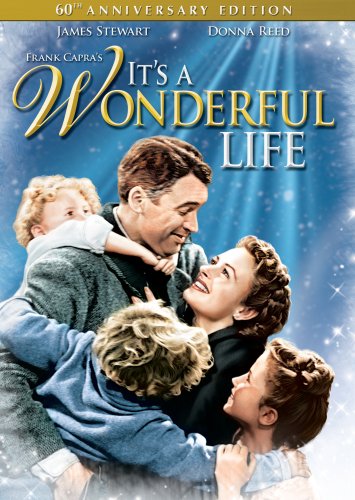
The 19th Academy Awards were coming to grips with the war the world had suffered through. The realistic The Best Years of Our Lives went up against the fantasy of It's A Wonderful Life. The Academy opted to revert to form and award honors to the 'serious' film, failing to see that people respond emotionally to movies. I think highly of William Wyler's war drama, but in the great scheme of things, I think it's clear which one is better. Certainly one is better remembered than the other and shown every year, while the other is respectable, but kind of dusty.
As always this is just for fun and should not be taken as my final decision. I should like to watch all the nominees and winners before making my final, FINAL choice. Now, on to cataloging the official winners (in bold) and my selections (in red). Also, my substitutions (in green).
THE 1946 ACADEMY AWARD WINNERS
BEST ORIGINAL SONG
All Through the Day from Centennial Summer I Can't Begin to Tell You from The Dolly Sisters Ole Buttermilk Sky from Canyon Passage On the Atchison, Topeka, and the Santa Fe from The Harvey Girls You Keep Coming Back Like a Song from Blue Skies
From The Harvey Girls, On the Atchison, Topeka, and the Santa Fe. Music by Harry Warren, lyrics by Johnny Mercer.
THANK GOD that we FINALLY just have five nominees this year. It means I can actually type them rather than go through endless selections. It will also cut down on the number of substitutions in this category. Out of all the nominees, On the Atchison, Topeka, and the Santa Fe is the only one that has broken on through to be well-known. It is much longer than the clip, and it's a jolly affair. When you have someone as remarkable as Judy Garland singing it, you have a brilliant number.
BEST DIRECTOR
Clarence Brown (The Yearling) Frank Capra (It's A Wonderful Life)
David Lean (Brief Encounter)
Robert Siodmak (The Killers) William Wyler (The Best Years of Our Lives)
Again, I have absolutely no objection to The Best Years of Our Lives. It's a fine picture, brilliant and courageous even, open and honest about the aftereffects of our veterans coming back from the war: the physical and emotional injuries they now must work and live with. I can see why Wyler won. I think Capra's film was seen perhaps as too Capra-esque, which is odd considering how dark It's A Wonderful Life is. We plunge into the dark side of George Bailey, a man at the grips of emotional collapse, driven to dangerous places. I don't think people then, perhaps now, appreciate how complex the film is emotionally.
Frank Capra (It's A Wonderful Life)
Alfred Hitchcock (Notorious)
David Lean (Brief Encounter) Laurence Olivier (Henry V)
William Wyler (The Best Years of Our Lives)
That being said, Olivier's bravura showcase of his beloved Shakespeare merits special attention. In a sense, it did: the Academy voting Olivier a special Oscar for "his outstanding achievement as actor, producer, and director in bringing Henry V to life". In what I think is rather odd, Olivier received an acting and producing nomination for Henry V, but no directing one. Part of me thinks the special Oscar was a way to give him something so they wouldn't have to vote for him anywhere else (saving the more important awards to homemade films about homemade subjects). Still, here's another case of admiring the actual winner, but finding the other one much more fascinating.
BEST SUPPORTING ACTRESS
Anne Baxter (The Razor's Edge)
Ethel Barrymore (The Spiral Staircase)
Lilian Gish (Duel in the Sun)
Flora Robson (Saratoga Trunk)
Gale Sondergaard (Anna and the King of Siam)
Again, I'm knocking the yellowface right off the bat. I like Robson as an actress, but I can't say whether Saratoga Trunk is her finest hour. I get the sense that Baxter's win was more a vote of confidence for an up-and-comer starting out her career. Again, another sure-fire way to win an Oscar is to play the drunk, and a depressed and vulnerable one at that. She also had a breakdown scene, so there you go. Baxter would gain fame for the role where she lost an Oscar rather than for the one she won an Oscar.
Anne Baxter (The Razor's Edge)
Ava Gardner (The Killers)
Gloria Grahame (It's A Wonderful Life) Myrna Loy (The Best Years of Our Lives)
Madame Konstanin (Notorious)
Let's remember something here: Crappie Redmayne wins an Oscar for his mechanical performance, but Myrna Loy never received a nomination, ever. And I mean ever. The Academy is full of it. How to single out a particular Loy performance? Well, in The Best Years of Our Lives, she plays what must have been old hat for her: the supportive spouse. Still, I think it takes great skill to make your presence known when you are asked to be in the background to the struggles of the men. Women too had to endure much sacrifice during the war and afterwards, and Loy's performance as the supportive but worried wife is a bright spot in a film that drags from time to time (particularly in the love story between her daughter and another veteran). Perhaps because Loy was a major star, she couldn't be relegated to a Supporting category, but it wasn't the lead female role (that would be Teresa Wright, the daughter). Still, I remember Loy, not Wright. The scene where she watches in despair as her inebriated husband attempts to give a speech without saying a word...perfect.
BEST SUPPORTING ACTOR
Charles Coburn (The Green Years)
William Demarest (The Jolson Story)
Claude Rains (Notorious) Harold Russell (The Best Years of Our Lives)
Clifton Webb (The Razor's Edge)
For me, the competition is between the experienced actor Rains and the novice Russell, who had no acting training whatsoever. Can it be argued that Russell was essentially playing himself? Perhaps. However, I don't see Harold Russell, but Homer Parrish, up on the screen. His anger, his hurt, his optimism, it's all there.
Lionel Barrymore (It's a Wonderful Life)
Claude Jarman, Jr. (The Yearling)
Thomas Mitchell (It's a Wonderful Life)
Claude Rains (Notorious)
Harold Russell (The Best Years of Our Lives)
It was a fierce battle here with some wonderful performances overlooked (The Jolson Story? Really?). We have Jarman, who was relegated to a Juvenile Oscar. We also have what are two iconic performances from It's a Wonderful Life: Mitchell as the kindly but absent-minded Uncle Billy, and Barrymore as that 'warped, frustrated old man', the dark side of cold-hearted capitalism. Capra was a conservative and certainly not against capitalism, but Mr. Potter was one where the human cost was irrelevant, seeing people only in terms of profit and loss. How his financial decisions affected others was not important. Compare the runs on the banks: Potter made a killing, but Bailey kept solvency while still caring about people. I think to Capra, people were more important than money. That's what makes Mr. Potter a fantastic villain: he is shrewd and manipulative and in a sense, right. He also is dangerous and unfeeling towards his fellow man.
BEST ACTRESS
Olivia de Havilland (To Each His Own) Claire Johnson (Brief Encounter)
Jennifer Jones (Duel in the Sun)
Rosalind Russell (Sister Carrie)
Jane Wyman (The Yearling)
Jones' nomination for Lust in the Dust (as the critics wryly called David O. Selznick's Western pseudo-epic) came from his insane desire to get his then-mistress another Oscar. Duel in the Sun was a film I couldn't finish, because the opening music was so long: we had an overture and prelude. Making things even worse regarding the score, Selznick at one point asked Dimitri Tiomkin, the film's composer, to create what Selznick called "an orgasm theme". Tiomkin, a respected composer from the old Russian school, was puzzled by this request. He could do a 'love theme', a 'war theme'. "How do you score an orgasm?", he retorted. Tiomkin, ever the courtly professional, attempted to please Selznick, but the tyrannical producer was not satisfied with the end result, complaining the music sounded nothing like an orgasm.
And that's not even touching on the idea that Jennifer Jones was playing a half-Mexican (!) and rather unsuccessfully at that.
I don't blame the Academy for giving de Havilland an Oscar, for she is a great actress. However, my choice is for Johnson's tragic wife caught up in a romance outside marriage.
Ingrid Bergman (Notorious)
Irene Dunne (Anna and the King of Siam)
Rita Hayworth (Gilda)
Claire Johnson (Brief Encounter)
Donna Reed (It's A Wonderful Life)
For my part, I think the best performance of that year was Bergman's conflicted double agent, who loved one man while being forced to marry another. The scene at the racetrack where the man she truly loves essentially calls her a whore is brilliant.
BEST ACTOR
Fredric March (The Best Years of Our Lives)
Laurence Olivier (Henry V)
Larry Parks (The Jolson Story)
Gregory Peck (The Yearling) James Stewart (It's a Wonderful Life)
I can't figure this one out. March's performance was respectable but nothing amazing. Maybe because he was playing a virtual alcoholic was what won it for him. The Academy has a soft spot for drunks, and while March was never truly a total drunk we could see his upper middle-class worldview collide with his war experience (and drowned in some booze).
We also see the now-forgotten Parks, whose true-life story is more tragic than anything in The Jolson Story. This was his big break, making Parks a major star (and leading to a sequel, Jolson Sings Again). Then came the Red Scare, and Parks, who had been a member of the Communist Party earlier in his life, was dragged into testifying and naming names in tears. Damned on both sides (for being an ex-Commie and for being a stool pigeon), Parks' career never fully recovered.
When one sees Stewart's performance, we see that it is the transition between his two personas. We still get the slightly bumbling, aw-shucks type, but we also see the darker, more tormented man that we would see to great effect in such films as Vertigo and The Man From Laramie. We saw the anger, as Martin Scorsese observed, of a man essentially trapped in a town he wants to leave.
It's an iconic performance, one that is remembered, while poor Fredric March...
Dana Andrews (The Best Years of Our Lives)
John Garfield (The Postman Always Rings Twice)
Cary Grant (Notorious)
Laurence Olivier (Henry V)
James Stewart (It's a Wonderful Life)
Stewart is brilliant as George Bailey, and we have a wide group of really top-notch acting that was ignored by the Academy, like the perennial also-ran Cary Grant in one of his best performances. However, while March's middle-class lush gets the big prize, I find the working-class vet struggling to find his place in a world that apparently doesn't need him to be the more compelling performance. It's a pity Dana Andrews isn't as well-remembered as I think he should be. He gives I think a much better performance than the more stoic March, for Andrews' Fred Derry journey to life and love is above all else, authentic.
BEST PICTURE
The Best Years of Our Lives Henry V It's A Wonderful Life The Razor's Edge The Yearling
Oh, it's clear why The Best Years of Our Lives won. It was topical (returning veterans dealing with life after war...and the women who love them). It was also very serious and sober. It even has a love story (which I found a touch tedious). The Best Years of Our Lives is an excellent film.
However, which one would you rather see? Which one has truly stood the test of time? Yes, so long as we have war we'll always have a need for films like The Best Years of Our Lives, but we still yearn for the goodness in all men, to know that every life matters, and that no man is a failure who has friends. It's A Wonderful Life may be nostalgic about an America that perhaps never truly existed, but it is the one we have always wanted. It's A Wonderful Life is one of the greatest film ever made, and leaves The Best Years of Our Lives in the dust...in the Lust in The Dust.
The fact that Duel in the Sun wasn't nominated despite Selznick's insane push makes that one of the few shining points in Academy history. Sometimes, a film is such a turkey not even a major mogul can push it to run the risk of winning the big prize.
Sometimes though, as we'll see in the future, that isn't always the case for nominees...and winners.
Just ask Crappie Redmayne.
The Best Years of Our Lives Brief Encounter Henry V It's A Wonderful Life Notorious
Sorry, Razor's Edge. You may be a fine film, but compared to Notorious or Brief Encounter, you're left in the dust...in the Lust in the Dust. We still have one film that has outlasted even those truly brilliant films.
It's A Wonderful Life stands up high and mighty among some films that won Best Picture and are thoroughly forgotten (Cavalcade, anyone?). Even up against The Best Years of Our Lives, we see that Capra's ode to America is stronger, better, and more true than Wyler's study of war wounds visible and invisible. Both great films, but for me, it truly is A Wonderful Life.
Next Time: The 1947 Academy Awards.
*Harold Russell received two Oscars that night. He was given an Honorary Oscar for "bringing hope and courage to his fellow veterans" through his performance in The Best Years of Our Lives. To the surprise of everyone, he won Best Supporting Actor for the same performance, thus becoming the only person to win two Oscars for the same role. He is also one of the few non-professional actors to win a competitive Academy Award.
A month ago I was in Charleston, and I thought it one of the best places I've been to. The people were friendly, I felt safe walking at night, and by God the she crab soup and chicken & dumplings were divine. I carry warm and happy memories of my time there, from walking up and down The Market to visiting Fort Sumter.
While there, I looked for souvenirs for various coworkers and family, and I knew I had to get something for my best friend/brother Gabe. Gabe is pretty much a redneck at heart, Hispanic heritage notwithstanding. Our mutual friend Kris calls him a 'brown Cracker', which is a pretty apt description. I looked around and found these very amusing shotglasses that I thought would be perfect for him. There was one caveat: they had the Confederate flag on them. After some thought, I opted to get him a Red Solo Cup shotglass for a variety of reasons. One, I thought he'd like that. Two, I don't know what he thought of the Confederate flag. Three, I wasn't at ease with buying something that for many people, understandably, is identified with slavery and segregation.
I felt great sadness and horror when I learned about the mass murder at the Emanuel African Methodist Episcopal Church (which in all likelihood I passed on my endless walking tours or whenever I would inevitably get lost in Charleston). I felt sadness not just for the victims, but for their alleged killer, because he had bought into a whole pack of lies that brought about this horror.
I think this would be a good time to point out a few things. I support removing the Confederate flag from the South Carolina state capital grounds (actually, from all government buildings). I oppose requiring private citizens from removing said flags from their homes. I support removing the Confederate flag even from war memorials. I oppose restricting or banning the sale of the flags.
I normally wouldn't wade into these waters, but recent events have made me reevaluate my silence. In particular, it is the reaction connected to The Dukes of Hazzard and various related merchandising. Warner Brothers announced that it would no longer license replicas of the show's signature car, The General Lee, with the Confederate flag on the roof. More recently, TV Land has dropped The Dukes of Hazzard from their rotation, again because the vehicle features a Confederate flag. To put the coda on this rush, golfer Bubba Watson, who owns a General Lee, has decided to paint the American flag on the top of the car over the Confederate flag.
First, a few points. Watson as the car's owner can do anything he wants to it. If he wants, he can replace the car horn which plays the first few notes of Dixie with Yankee Doodle Dandy. He can paint it blue and call it The General Grant (or Sherman). However, the question is, 'why?' The show has been off the air for thirty years. I grew up watching Dukes of Hazzard and never once was there any suggestion that the Duke cousins, or Uncle Jesse, or even Boss Hogg and Sheriff Rosco P. Coltrane were Klan members. There was never any suggestion on Dukes of Hazzard that the use of the Confederate flag was designed, intended, or even implied to be a sign of white power.
Second, it is really a question of context, which Americans, in their headlong rush, apparently can't seem to understand. Anyone who's seen Dukes of Hazzard knows you can't take any of it seriously. It's all rather innocuous, meant for laughs. If one looks at it more closely, you'll see that some of the Southern characters are held up to constant ridicule (particularly the not-so-dynamic duo of Boss Hogg and Sheriff Coltrane). Nothing on Dukes of Hazzard was created to be offensive, and that includes the General Lee. It really was all good-natured fun from two good ol' boys never meaning no harm.
Context is the most important aspect when judging anything. The killer used the Confederate flag in a particular context (to symbolize white power, racism, and murder). Dukes of Hazzard used the Confederate flag in another particular context (an acknowledgement of the region they're in). More importantly, Dukes of Hazzard NEVER used the Confederate flag to denote any evil intent or racism or violence against anyone. To suggest or think otherwise is flat-out idiocy.
I speak only for myself, but in all the years that I watched Dukes of Hazzard, I never got any idea that any of the characters wanted to kill anyone because of their race. I didn't become a racist, I didn't want to set crosses on fire or do anything against anyone.
If we as a society cannot tell the difference between the actions of an evil man and a silly television comedy that has been off the air for thirty years, then we as a society cannot function.
I understand why the Confederate flag is offensive to so many people. My own discomfort with it made me ultimately decide to not purchase items with the Stars and Bars on it. However, that was MY choice. It was not made for me. This is what Warner Brothers and TV Land do not understand. By deciding not to license more General Lees with the Confederate flag, Warners has made the choice for me. Moreover, they are attempting to rewrite history. On the show, the car has a Confederate flag. You can sell a new item, call it the General Lee, but if it doesn't have the Stars and Bars on it, it isn't the General Lee.
Similarly, TV Land, home of such shows as Impastor (about a gambling addict slacker who, while on the run, poses as a small-town gay pastor, leading me to wonder what churches the TV Land executives go to), can't claim to know television. Where once TV Land's exclusive domain was in merely rebroadcasting old television shows like Dobie Gillis and Get Smart, now it's not only decided to give us their own programming, but decided that I can't watch something that they had broadcast for several years merely due to the potential to offend someone. That offended person, for his/her part, is unaware that this show is a.) a comedy not to be taken seriously in any circumstance and b.) does not attach his/her meaning to the Stars and Bars that they do.
What can I say? Leave the Duke Boys alone. The Dukes of Hazzard should not be removed from broadcast merely because of the Confederate flag on the General Lee. The merchandising should continue to include the Confederate flag on the General Lee itself (other merchandising, I leave that up to the manufacturer's discretion). When I see The Dukes of Hazzard, I don't see a call for a race war. I see a funny action-comedy that spoofs itself, that shouldn't offend anyone (at least with some intelligence), and which has to be understood in the time and place it came from. My old English teacher, Mrs. Dominguez, always said that we cannot apply today's standards to yesterday's actions.
Something to think about.
Does this mean we won't be allowed to go to a Lynyrd Skynyrd concert anymore?