Thursday, January 25, 2018

Call Me By Your Name: A Review

CALL ME BY YOUR NAME

Is it better to speak or to die?

I'm highly conflicted by Call Me by Your Name.  It is a beautiful meditation on the joy and thrill and pain of first love of giving yourself body and soul to someone in an idyllic love that cannot last.  It is also about a twenty-four-year-old in a sexual relationship with a seventeen-year-old.  The genders of the participants is irrelevant: one or both could have been women and it would not remove the unease I felt about it all. 

How to resolve this conflict?  Is it better to speak or to die?

Elio Perlman (Timothee Chalamet) is spending his usual summer in northern Italy with his archaeology professor father (Michael Stuhlbarg) and mother (Amira Casar).  It is the Summer of 1983, and every year Professor Perlman has a graduate student come to study, learn and assist him.  Elio has a girlfriend, but they have not indulged in the full pleasures of the flesh.

Enter Oliver (Armie Hammer), the new grad student.  Elio is displeased he has to give up his room to Oliver, and looks upon Oliver's more casual nature with a bit of envy.  He especially looks upon Oliver's Star of David pendant that he wears, while Elio has not worn his for years.  Oliver, for his part, does not look much on Elio, especially since he will be there for only six weeks.

At this juncture, I'd like to point out that if I go by Call Me By Your Name, graduate students spend their time swimming and lying about topless for days on end, going to town on bicycles as they ride around the bucolic Italian countryside and hitting the occasional bar or dance.

Oliver has a way with women, who find the tall Jewish American a nice drink of water.  Elio finally has sex with his girlfriend, but he still finds himself drawn to Oliver.  He slips Oliver's shorts over his head (Brokeback Villa?) and dreams of him.  Finally, one day in town, Elio makes his feelings know to Oliver in the most subtle yet knowing way, where nothing is spoken overtly but the intention is clear.

Oliver says they cannot speak of these things, but it does not stop them from frolicking and kissing, Elio the more aggressive one.  Oliver still will not pursue anything stronger, and he begins to give Elio the silent treatment.  Days pass, and Elio finally slips him a note asking that he not hate him.  Oliver slips a note back, telling him to grow up and meet him at midnight.


That day, Elio all but counts the hours until the magic hour, when he goes to Oliver and they make love.  It is after their tryst that Oliver whispers that sweet nothing to Elio, "Call me by your name, and I'll call you by mine".  Elio finds himself in the throes of his first true passionate love affair, down to where he has an auto-erotic encounter with a peach.  When Oliver attempts to taste this literal forbidden fruit, Elio first is angered, then overwhelmed with sorrow and pain.

Elio freezes out his girlfriend, who does not understand.  To show appreciation for his work, Professor and Mrs, Perlman send Oliver and Elio on holiday before Oliver leaves for America.  There, the two lovers spend time frolicking in the mountains, late-night walks in the empty village streets save for a couple playing Oliver's favorite song, Love My Ways by The Psychedelic Furs, and enjoying The Mystery of Love.

However, Oliver has to depart, and it is a farewell at the train station.  Elio calls his mother to pick him up, obviously devastated but saying nothing.  It is his father, with a deft and delicate yet knowing touch, who discusses Elio's love affair, of which he knows of, and gives his son a beautiful monologue about the joy and pain of being yourself. 

Now, it is winter, and as the Perlmans are getting ready for Hanukkah, Oliver calls, telling them that he is engaged.  To give their son time to speak to Oliver alone, Elio murmurs 'Elio, Elio, Elio' to the other end of the phone, where we hear the respondent speak 'Oliver, Oliver, Oliver'.  As he stares into the chimney fire, Elio lets his tears flow out of him.


I would not blame people for thinking of Call Me By Your Name as artsy gay erotica.   I think few films have been as fixated on the male form as this one.  It almost seems as if Oliver and Elio do nothing but sit, stand, walk or lay about either shirtless or with open shirts. 

I suppose we should be thankful this did not apply to Michael Stuhlbarg.

I figure I'm one of those pesky reviewers who gets hung up on details.  Just as I could not figure out why, even with the warmth of the Tuscan sun, our hot young men went around shirtless for apparently days on end, I genuinely wondered what Oliver actually did.  If he had six weeks for this sojourn, I would imagine he would be too busy working with the professor to flirt with seventeen-year-old boys (he admits as much on their last night, when Oliver tells Elio that the impromptu shoulder-rub he gave Elio was a way to essentially test the waters, and finding him a bit hostile, decided not to go further).

Instead, for all the study this graduate student did, there was only a handful of times when we saw him doing any actual work.  Instead, Oliver spent most of his days swimming, laying on the grass and by the pool, where we could marvel at his beautiful and firm, hirsute form. 

Best internship ever.

Over and over I noted how despite being there for educational purposes, Oliver not only did relatively little in terms of education (unless it was to give a delighted Professor Perlman a true history of the word 'apricot') but more curious, did all this lounging and cavorting with the blessings of the good professor.  Would that any of my college professors had let me do such things, but I digress.

It's here that I express my great conflict with Call Me By Your Name.  Is it beautiful? Yes (and no, that is not a reference to Hammer or Chamalet or the Italian vista).  Chamalet's performance is excellent: his final scene, silent, where the emotions of having his heart break because his first and perhaps only real love hits you, and regardless of who was your first genuine love it is a universal moment.  Curiously, Chamalet's best moments are the silent ones: the multiple burden of losing his love and not able to tell his mother is real and heartbreaking.


The subtlety of saying just enough without having to scream "I'M GAY" is a credit to James Ivory's screenplay adaptation of Andre Asiman's novel.  Ivory not only lets things play out softly, with just enough to know what is being said without saying things directly, but also allows the characters to be intelligent without being elitist.

It also allows Stuhlbarg to have a beautiful monologue, where Professor Perlman makes clear he knows his son had a passionate love affair with Oliver, that it was a beautiful friendship...maybe more than a friendship, and that the pain of love is worth experiencing.  Ivory, who has long worked in film and crafted elegant movies of elegant people who suppress their feelings with his late producing/life-partner Ismael Merchant, has written a screenplay that would fit within that Merchant-Ivory collection.

As a side note, I personally would have preferred Blue Monday over Love My Way, but the latter is probably more appropriate to the message.

I was not quite convinced by Hammer, but this might be the fact that Oliver had some misgivings about starting up a sexual relationship with a minor but went ahead with them anyway, down to starting but not completing oral sex on Elio. 

Director Luca Guadagnino not only drew excellent performances from the cast, but also cinematically added touches the highlight the lushness of romance and those dreams of love we all have, how one romanticizes true heartache.

Finally, Sufjan Stevens' contributions in terms of songs, both Visions of Gideon which closes Call Me By Your Name and especially Mystery of Love, lifts the sequences to highlight that most beautiful and awful of human emotions: love, true love as opposed to mere physical pleasure.

Having said all that, it is still the story of an affair between an adult and a minor.  It is not quite statutory rape, but it is still highly unsettling to me.  Oliver is seven years older than Elio, and Elio, technically, is not an adult by the legal definition of one.  He may be at the age of consent, but we still have a 24-year-old having sex with a 17-year-old.  I would not feel comfortable if it were a 24-year-old man having sex with a 17-year-old girl or vice-versa or it both were women. 

Granted, that is just a personal thing, something that might trouble just me.  However, I cannot just ignore that detail.

Maybe that detail is what stops me from ranking it higher.  If I judge a film based on what is on the screen, Call Me By Your Name is a poem to and of that beautiful yet mournful being called 'love'.  If I judge it by the emotion it evoked, Call Me By Your Name is a moving film of the pleasure and pain of giving your heart, soul and body to someone who may not be there forever.  If I judge it by my values and beliefs, Call Me By Your Name still troubles me.

All together, it is still a beautiful, haunting experience, but one that I still struggle with.


DECISION: B+

Tuesday, January 23, 2018

Oklahoma City: A Review (Review #1005)


OKLAHOMA CITY

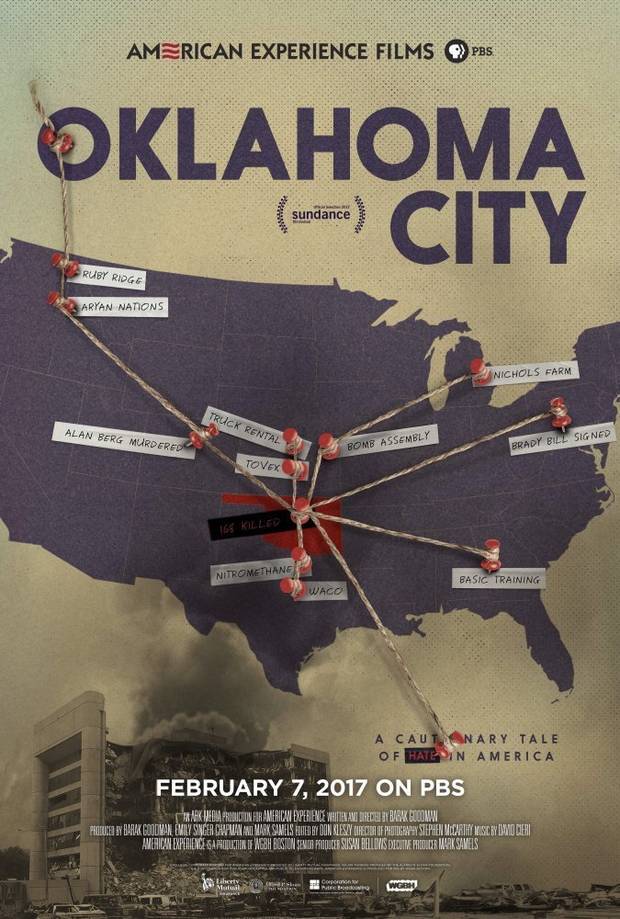
I am sadly old enough to remember the horror of the Oklahoma City bombing, the worst act of domestic terrorism in American history.  Oklahoma City makes for a good history lesson to learn about this shocking and barbaric act.  It does not make as strong a case for what came before as perhaps it could have.

Cutting in between the events of April 19, 1995 and what led up to the Murrah Federal Building bombing, Oklahoma City divides into three sections: The Spark, The Flame, and The Inferno.

The Spark chronicles the the rise of the white supremacist movement, culminating in how Bob Mathews formed a small group calling itself The Order to bring the racist novel The Turner Diaries to life.  This in turn led to the FBI taking a greater look at these movements, which led to another controversial moment: the siege at Ruby Ridge.

The Flame is on the siege of the Branch Davidian compound in Waco, Texas.  The 51-day standoff eventually led to the Bureau of Alcohol, Tobacco and Firearms storming the compound, where 76 people ultimately lost their lives.

The Inferno covers both the actual bombing and the aftermath. All of the preceding events pushed former Army veteran Timothy McVeigh to take matters into his own hands.  Pushing two former vets he knew: Terry Nichols and Michael Fortier, to help him procure material to make a massive explosive.  Oklahoma City is selected, but first Fortier and later Nichols both get cold feet and pull out of the actual bombing itself.  Only the cold and determined McVeigh goes through with it, leading to 168 deaths, including 19 children.

McVeigh, through some incredible investigative work by the FBI and a touch of luck, was quickly arrested.  Unrepentant till his dying day, McVeigh is executed, leaving not a revolution in his wake, but untold misery for all those who survived his inferno.


Oklahoma City is at its best when it focuses on the human element.  Seeing the images of the children murdered is the hardest thing.  It moved me to tears to see all these infants' smiling faces and know the horror of their deaths.  Seeing the grace and eloquence of their parents too is especially moving and impactful.  One of the interviewees, Helena Garrett, is billed simply as 'Mother', and that has to hit one on a deep level.

Ms. Garrett says that 'faith, family and friends' are what keep her going, but it is hard to know that her child is gone for no reason.

Oklahoma City also has archival recordings from McVeigh, giving us a chilling postmortem view from a man who never apologized or sough forgiveness for what he did, let alone see a need to do so.  We see a true heart of darkness.  Here, director Barak Goodman showcased a deft hand.

Where Oklahoma City is at its worse is in how unquestioning it is with regards to the FBI or ATF.  Not once does the film ever suggest that either agency made mistakes or bungled either Ruby Ridge or Waco, at least not that I can recall.  The ATF knew that the Davidians had been accidentally tipped off to the impending raid, but Oklahoma City does not have anyone interviewed questioning the wisdom of going ahead with the raid despite the Davidians being heavily armed and aware.

The FBI agent says flatly that the Branch Davidians fired first, a point that, like just about everything involving Waco, is still in dispute but which Oklahoma City never questions and accepts as almost an article of faith.


The truth is that no one knows who fired the first shot.  Those who either left before the final raid or escaped the fiery compound insist the federal agents fired first.  The FBI says the Davidians fired first.  Not even those who were on either side in Waco can say or prove beyond a shadow of a doubt who fired first.  For Oklahoma City to not question or suggest that there is uncertainty leaves a false impression: not that there was some conspiracy, but that the issue is settled when there is still so much that is murky.

Perhaps more controversially, the FBI interviewee states that the Davidians started the fire themselves that fateful April 19, case closed, end of debate.  The film produces audiotapes that show those inside the compound set the fire themselves.  While they have a stronger case about the Davidians causing the fire, the audio-recordings are not conclusive, especially since the audio alone is unclear.  The fire was probably set by the Davidians, though it might also have been accidental.  I do not believe it was intentional, but there is no way of knowing for sure exactly how it came about.

Oklahoma City puts itself squarely on the FBI/ATF's side, and even aspects that were egregious, such as taunting the besieged Davidians by playing These Boots Are Made for Walking at them as a mocking threat, are similarly not questioned as to their wisdom.

Personally, using the hymn Old Time Religion to open The Flame section was a mistake.  With the shocking events at Waco, which lead to greater horrors, using that hymn made the impending crisis in Waco sound as if it were not serious.  Perhaps The Old Rugged Cross would have been better choice: it's more somber than the upbeat Old Time Religion, befitting the situation.

Still, with a wealth of archival footage and interviews, including the dark clips of McVeigh's voice, and some excellent editing by Don Kleazy and David Cieri's tense and gripping score, Oklahoma City is a well-formed piece of chronicling this horrific crime and the tragedy that engulfed so many who had done nothing wrong.


DECISION: B-

Monday, January 22, 2018

The Librarians: And the Graves of Time Review


THE LIBRARIANS: AND THE 
GRAVE OF TIME

And the Grave of Time is the first Librarians episode in a long time where I simply wasn't feeling anything towards it.  I just wasn't enthusiastic about it.  And the Grave of Time felt simultaneously slow and rushed, a lot of the comedy failing and a resolution that seems rather pat and weak.

Nicole Noone (Rachel Nichols) is searching for the various artifacts that she has buried in her own graves.  Hot on her trail is Eve Baird (Rebecca Romijn), who forces Nicole to work with her, a case of Guardians United.

Nicole reluctantly agrees as she and Baird go search for Koschei's Needle, which is a powerful weapon that can destroy an Immortal.  Her 'graves' hold bits of the key that will open the container of said needle, and Jenkins (John Larroquette), who had locked Nicole up as being a danger, is convinced she is after it to kill him.  Her erstwhile lover, Flynn Carsen (Noah Wyle) is not sure of this, but together they go off to search for them.

This pretty much leaves the other Librarians out of the episode save for a few moments, especially at the end.

Nicole and Baird find another piece, and Nicole tries to get rid of her but fails.  Nicole has also been pursued by a mysterious Russian, and after Nicole, Baird, Jenkins and Flynn all temporarily join forces, they are split up.  The mysterious Russian tells them that Nicole helped Rasputin kill the Romanovs, and that he is a descendant of a lost Romanov who wants to avenge his family.  Koschei's Needle is found, but turns out the Russian is no Romanov.  He's Rasputin himself (Christopher Heyerdahl), and Nicole planned to use the Needle on him, not Jenkins.  Rasputin in turn used it on Nicole.

Flynn and Baird manage to kill off Rasputin thanks to being in Chernobyl, and Nicole is restored to life by Jenkins giving up his immortality and passing that on to her.  After all that, it appears that Flynn has resigned from the Library and left.


Looking back at And the Graves of Time, I find a lot of it a terrible letdown.  Part of it is how most of the cast was sidelined.  Cassandra Cillian, Jacob Stone, and Ezekiel Jones played such a minor part in the proceedings.  I think a case can be made that they played no part in And the Graves of Time, and/or that their lines could have been spoken by anyone else.

Another aspect that bothered me was Jenkins giving up his immortality for Nicole.  Now, this thread of Jenkins tiring of being an Immortal is an interesting one, and one that I think both should have been explored more and been introduced earlier.  It just seemed very rushed to me: he as far as I remember has never mentioned this weariness before and before you know it, he surrenders it.  Perhaps because I am not convinced Nicole is such a good person to give up Immortality for, or because this thread was barely mentioned, but it just did not work for me.

There are the comedy bits too that have me unhappy.  In one scene, Baird manages to escape a mausoleum by crawling out of one tomb and interrupting a family's grieving in the process.  Now, perhaps this did not sit well with me because I was reminded of recent funerals I've attended, none of which opened themselves up to laughs.  As such, maybe I just was not in the mood to see people in mourning as subjects of laughter.  However, I think this could have been handled better: say, a group of tourists exploring the mausoleum find themselves confronted with a walking dead.  A really funny bit would have been if there had been a ghost tour taking place that Baird had inadvertently crashed.

Making a family's grief the source of comedy...not to my liking.  If you want to think I am taking that too seriously, that's fine.  I'm just expressing my views on the subject, and I don't think it was funny.

Neither was Baird managing to magically show up sitting next to Nicole on the plane.  How would Nicole not notice Baird literally next to her?  How did Baird manage to get there in time?  I know The Librarians is not serious, but my suspension of disbelief goes only so far.


Again and again I felt the comedy parts were failing, particularly the 'witty banter'.  I also wonder about how Baird and Jenkins could meet a 'Romanov' and believe his story so quickly.  The 'Romanov' never mentioned whom he was descended from, so it makes his whole story so implausible, yet no one questioned it.

Finally, we have the 'Flynn leaves again' deal.  Here, I cut them some slack in that we got a potential crisis with the dangers of having more than one Librarian, but now it seems Flynn did not quit out of that.  He quit because...he felt guilty over Nicole?  He did not want to be tethered to the Library and Baird?

The performances were good: the interplay between Nichols and Romijn and especially Larroquette and Wyle were strong, even amusing.  The one funny bit was Flynn making Jenkins look like he was turning ill and senile to get access to a previous crypt.  Heyerdahl, however, seemed way too camp for Rasputin, down to a really broad Russian accent that was more out of a spoof than anything else.

For all the importance and danger of what was at stake, it all felt so dry to me.  And the Grave of Time just felt so empty, not even of people going through the motions.

This grave for me was empty and hollow.

3/10

Next Episode: And the Disenchanted Forest

Phantom Thread: A Review

PHANTOM THREAD

Phantom Thread is, if Daniel Day-Lewis is true to his word, his final film.  Now, I confess that I have never been as enamored of Day-Lewis as most.  I still think his turn in There Will Be Blood was wildly self-indulgent and yes, hammy.  I don't think Lincoln or him in it were terrible, but I also was a bit taken aback by all the 'he was the Lincoln' talk either.  He was brilliant in Lincoln, but I think Henry Fonda and possibly Raymond Massey might still hold up equally if not greater as our 16th President.  Even now, I think 'Sam Waterston' when I think of Lincoln, but I digress.

Phantom Thread is an elegant swan song for Day-Lewis if he has indeed retired.  Sumptuous in its setting, it captures the artist thoroughly devoted to his craft and the perils for anyone who gets in the way.

In the 1950's, haute couture desire Reynolds Woodcock (Day-Lewis) is the ultimate in glamour and elegance.  His House of Woodcock dresses the most sophisticated of women: royalty and women of wealth.  The confirmed bachelor has nothing but his work, aided by his sister Cyril (Leslie Manville).

As such, it is a surprise to Cyril and indeed to Reynolds that he soon is besotted with Alma (Vicky Krieps), a waitress he met while on a rare holiday.  Alma is nowhere near elegant, sophisticated, or wealthy.  She isn't even ravishingly beautiful: Reynolds notes she has no breasts to speak of; yet Reynolds has found in Alma a soulmate.

Perhaps one should point out that 'Alma' means 'soul', at least in Spanish.


Alma soon becomes his muse and mistress, even if the fastidious Reynolds can find Alma's manner a bit more rustic (the normally quiet breakfast is interrupted by Alma's loud buttering of her bread).  Still, he is in turns fascinated and irritated by her.

She wants to be a bigger part of his life, but as an artist he needs to follow his own path, which sometimes does not include her.  Things come to a head after Alma sends everyone away for the night so that she could spend a quiet surprise dinner with Reynolds, down to making the meal.  Over Cyril's warnings that her brother does not like surprises, Alma goes forth, only to end up with Reynolds snapping his way through the meal.

Things become dangerous when he becomes violently and suddenly ill the night he inspects the wedding dress for a Belgian princess, a favorite client of his.  This illness may not be as innocent as it may seem, just saying.  Cyril is forced to make the couture house stay late to repair the damage Reynolds has accidentally caused the dress, while Reynolds hovers between life and death.  Alma stays to nurse him through it, and realizing he cannot live without her, he asks for her hand, and she accepts.

Despite their marriage and apparent bliss, things still pretty much are the same, with him still distant from Alma.  She wants to go and celebrate New Year's, he'd rather stay home.  Again, they seem close to breaking, and again the idea of his becoming ill come to Alma's mind.  All she wants is for him to be vulnerable and let her in.  Perhaps he will, or perhaps not.

Paul Thomas Anderson, the film's writer/director, is well-regarded, but I find him an acquired taste. Of the PTA films I've seen (The Master, There Will Be Blood)  I find the lack of an ending, or at least a definitive ending an Anderson trope I cannot get behind.  Anderson's films, at leas of the ones I've seen, don't actually end, they just stop.


However, I sense that Phantom Thread is a bit of a departure for Anderson, at least when it comes to the style.  The film is very lush, down to Jonny Greenwood's score, which given his work in the two previous Anderson films I've seen, is also a departure but perfect in tune with the setting (no pun intended).

Looking at Day-Lewis, I find that he is perfect in his role as the brilliant and not-totally temperamental but aloof artist.  Reynolds Woodcock is a man who seeks perfection at all costs, who bristles at the idea that people, even wealthy yet highly insecure people such as Barbara Rose (Harriet Sanson Harris in a small but strong performance) could alter his vision.

The scenes with Barbara Rose, I think, indicate Anderson's overall message about the struggle to create art and especially when it comes to art versus finance.  Woodcock does not want to go to Barbara Rose's newest wedding, but as Cyril points out, Barbara Rose pays for the house.  He dislikes how Barbara Rose pulls down the collar to his newest creation, and in a rare moment of open rage, demands that the drunk and passed-out Barbara Rose have his dress taken off her.  The idea that someone, anyone, would sleep in one of his dresses is appalling, no matter how much money they have or even that technically, the dress is no longer his.

Krieps is also strong as Alma, the woman who wants to be loved by this fascinating man but who is also not an artist and cannot fathom the artistic temperament.  She knows herself to be not a great beauty, but she also has her own fears.  She says something to the effect that she is waiting for him to get rid of her at the tense surprise dinner, admitting to a kind of sense of inferiority.

It's curious that Manville, while good as the curiously named Cyril, did not have a major role to play, coming and going as needed.

Mark Bridges is almost a lock for Best Costume Design, given not only how sumptuous the clothes were but how important and integral these designs were for the film.  They are not only beautiful, but in keeping with the designs of the Eisenhower era of fashion.  They are both elegant and appropriate to the times.

Everything about Phantom Thread is très élégant, but don't call it 'chic', a term Woodcock detests.

DECISION: B+

Sunday, January 21, 2018

The Alienist Episodes 1 and 2 Review


THE ALIENIST

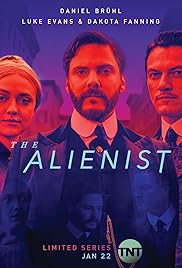
I know of but never read The Alienist, the popular Caleb Carr novel.  Now, TNT has adapted The Alienist into a limited series, and has made the first two episodes available for review.  The Alienist is well-produced, with strong performances and effective atmosphere.  Granted, the lurid and disturbing elements of this story might put off some viewers, and my impression is that The Alienist is very much indebted to Sir Arthur Conan Doyle.  On the whole, however, I found The Alienist works well and barring wild changes, please its readers.

Again, this review covers the first two episodes made available to reviewers.

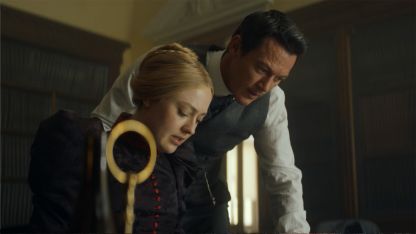
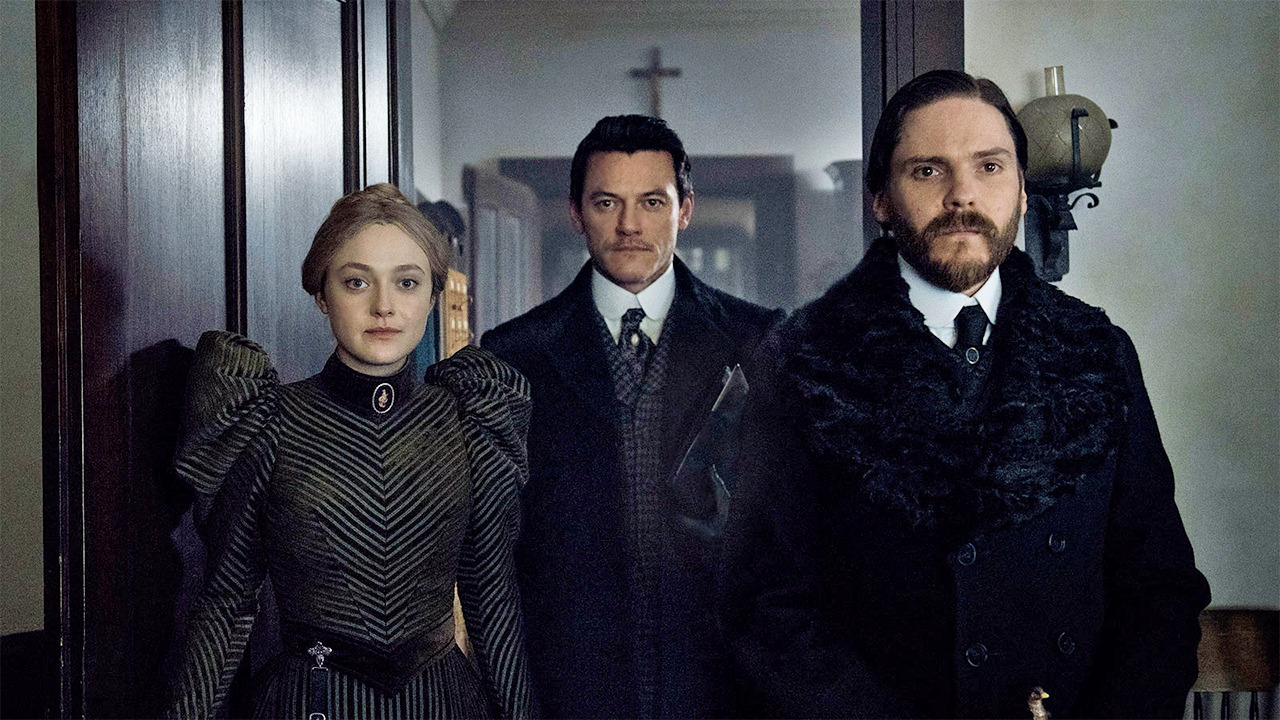
 It's New York City, 1896.  A young boy prostitute has been murdered in a particularly gruesome manner: dismembered, throat slashed, eyes gouged out.  The boy, Giorgio Santorelli, worked in a child brothel and went by the name 'Gloria', which is not surprising given that Giorgio was discovered in drag.  Newspaper illustrator John Moore (Luke Evans), himself no stranger to real 'ladies of the evening' is dragged out of an assignation with his favorite good-time girl to draw the corpse.  He hoodwinked his way to the crime scene, where despite his misgivings, Police  Commissioner Theodore Roosevelt (Brian Geraghty) allows him to take a look...if he can stomach the sight.

Moore, who also does society portraits, does this at the behest of Dr. Lazlo Kriezler (Daniel Bruhl), who studies mental illnesses.  To use the parlance of the times, Dr. Kriezler studies and helps those who have 'alienated' themselves from their true nature, hence 'the alienist'.  A modern man of science, he slowly comes to believe this is the work of someone who has killed before in the same way, remembering the death of Benjamin Zweig, a young boy murdered with his sister.  Benjamin had started dressing as his sister early on, and his parents had gone to Dr. Kriezler for help.  He told them that it was Benjamin's nature to cross-dress and they should accept it.  They didn't, the children ran off, then were murdered, with Benjamin found in drag.


Into this investigation comes Sarah Howard (Dakota Fanning), Commissioner Roosevelt's secretary and the first woman to hold any position in the New York City Police Department.  She and John have met socially but Sarah is not fond of him.  Despite herself, she becomes more involved in the investigation, one that Commissioner Roosevelt is displeased about but which he again gives way to.  To help, Roosevelt gives leave for two officers to help Kriezler in the more technical aspects: the Isaacson Brothers: Marcus (Douglas Smith) and Lucius (Matthew Shear), held in low regard by the other NYPD officers because of their scientific bent and Judaism.

Kriezler forms his group, but Moore is still not happy about being dragged into a world of child prostitutes, transvestites and sadistic butchering.  He also struggles with being pushed by Kriezler and his own conflicting views on Sarah: part protective of a lady as befitting the times, part perhaps erotic attraction.

Moore has his own ad hoc investigation by going into the Paresis, the den of iniquity that would be the Gilded Age's version of a gay bar/brothel/drag show.  Moore is equally shocked and repulsed by it all: the boys parading in dresses, the homosexuality (though whether the 'ladies' are actually homosexual or 'gay-for-pay' is unclear).  Moore is taken by "Sally", who isn't very helpful in providing information on Giorgio/'Gloria'.  He, however, was drugged by the owner, and Moore struggles to control himself, more 'girls' are brought in.


I leave it to you do decide whether the sight of young boys in drag approaching a middle-aged man in a scene reminiscent of the flashback of Suddenly, Last Summer is threatening or slightly camp.

It is hard to judge how successful a new series is based on just two episodes, but for what I saw The Alienist has some major pluses to it.

At the top are the performances.  In my world, there can never be enough Dakota Fanning.  Her Sarah is a strong woman, particularly in a very dark man's world.  She is the antithesis of the 'delicate flower' men like Moore might hold her as.  However, she is also one who is smart enough to know how much to push for in the constricted age she lives in, with that constriction going down to the corset society compels her to wear.

Fanning has a wonderful moment in Episode Two when she declines the offer of being walked from the carriage to her doorstep after Kriezler makes clear her invaluableness as the intermediary between his team and Commissioner Roosevelt.  As she walks home, we see her smile, the delight Sarah takes at being taken seriously communicated so well by one of our strongest and most competent young actresses.

Evans' Moore has the major strength of finding some humor in his frustration at finding himself dragged into things he would rather not do.  He has a sly humor to him that he, like Fanning, communicates without dialogue, such as when he has to rework a drawing for a client who complains that the subject's chin-line wasn't 'properly captured'.

At the heart of The Alienist is how Bruhl is as our investigator.  Bruhl's Dr. Kriezler is a bit opaque, a bit of a mystery to others save Moore, but even to the person who would qualify as his friend he still has a bit of distance.  Not that Bruhl does not manage to sneak in some good bits too.  "You made him a martyred saint in a Renaissance painting", the good doctor remarks on seeing Moore's illustrations.  Bruhl's Dr. is perhaps far more progressive than I would think possible in turn of the century America (I find it a stretch to think even the most advanced doctors would suggest to parents that a prepubescent boy's dressing as a girl is something they should just accept or even allow).


However, we get hints that Kriezler is not all there either.  In the first episode, he makes a long statement of how he has to put himself in the killer's mind, to almost 'be the killer'.  It's a chilling bit of acting so well-done by Bruhl, but it makes me question whether he'll end up being a bit bonkers too.

I would put that to the scripts, though again, not having read the Carr novel I cannot vouch for how close or far it strays from the original story.

However, in terms of performances I think The Alienist has rounded up a fine cast, and not just the leads.  Geraghty's Teddy Roosevelt is a flustered but honest man, one who dislikes outsiders investigating but also willing to allow it to save children from a gruesome fate.  The double-act of Smith and Shear as the Isaacson Brothers works well, though I figure Smith is the more romantic lead (he gets a surprisingly graphic sex scene) and Shear the more dutiful, mother-loving brother.

If there are issues with The Alienist, it is both in terms of subject and style.   I think people will be put off by child prostitution and the killing of children.  The Alienist, for better or worse, is a spiritual descendant of Sherlock Holmes, down to our characters.  It goes beyond the setting: what in the U.S. is the Gilded Age in Great Britain would be the late Victorian Era.

You have the Holmesian-like Kriezler (the highly intelligent yet not totally social figure), the Watson-like Moore (the not-as-bright figure who can be both the muscle and shocked by the goings-on), with Commissioner Roosevelt being a de facto Lestrade.

You even have Kriezler's Irregulars: Miss Howard and the Isaacson Brothers, and a Jack the Ripper-like crime wave, with touches of the macabre and the sexually charged.

It won't be everyone's cup of tea, but from the glimpses I had, The Alienist has strong atmosphere and strong performances that will make for good viewing of fans of the slightly off-kilter and period pieces.  I don't know if I will finish out the series only due to my discomfort with the idea of killing children and using them for sex.  That kind of thing disturbs me greatly.  However, I cannot fault The Alienist for being well-written and well-acted.

Going by that, it is worth a brief visit.


Episode One: 7/10
Episode Two: 7/10

Saturday, January 20, 2018

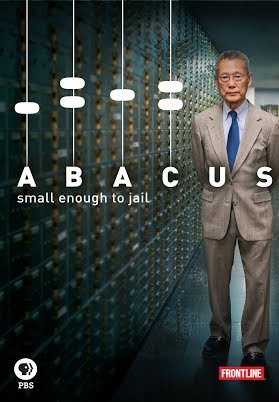
Abacus: Small Enough to Jail. A Review

ABACUS: SMALL ENOUGH TO JAIL

It has been ten years since the world financial market teetered on the verge of total collapse. The 2008 mortgage crisis had many causes and villains, but in the banking industry, there was only one that faced any actual prosecution.  It was not Morgan Stanley.  It was not Wells Fargo.  It was not Bank of America.

Instead, it was a small family-run bank with a total of six branches that specialized in working with the Chinese-American community, primarily in New York's Chinatown.  Abacus: Small Enough to Jail is a play on the idea that it was targeted because unlike the other major international corporations that were 'too big to fail', Abacus was easy pickings.  It was small and from a community that was not seen as a threat politically.   Abacus: Small Enough to Jail chronicles the Abacus trial, the effects it had on the family behind the bank, and on how Abacus Federal Savings Bank was almost made the scapegoat for a disaster not of their own making.

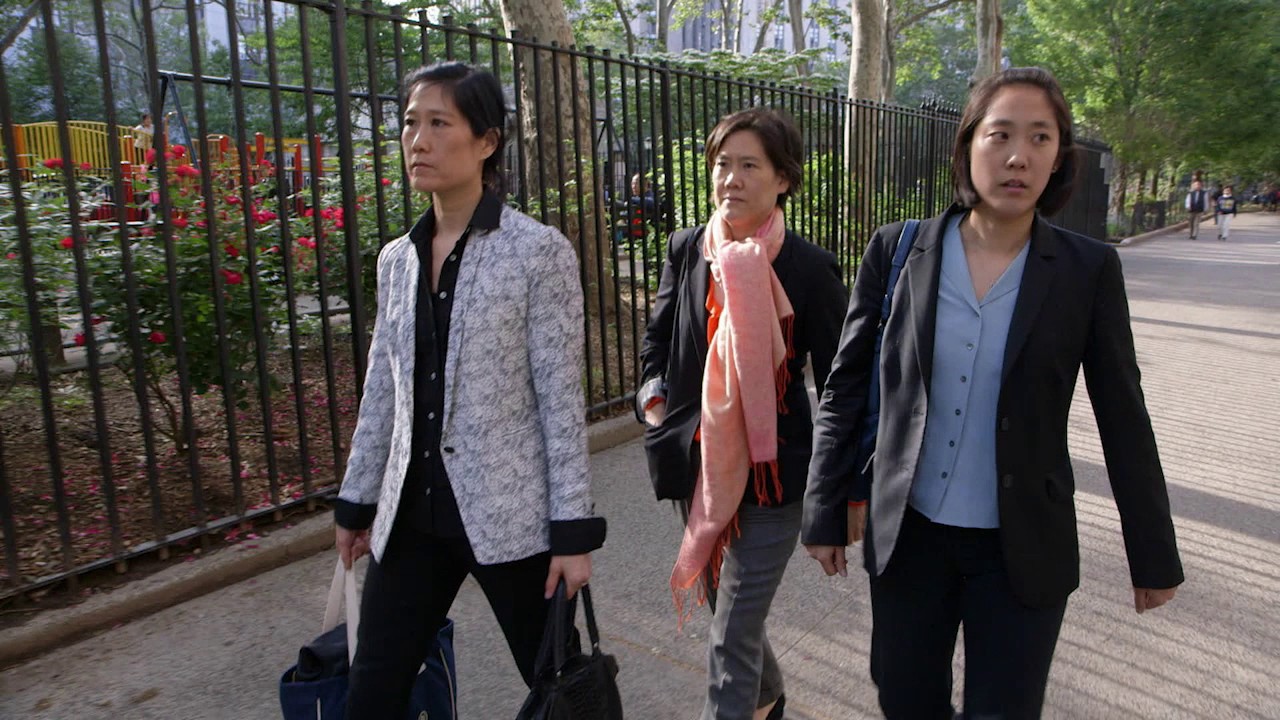
Thomas Sung, a first-generation Chinese-American, saw a need for a bank to service his community.  With that, he founded Abacus, using the legendary Chinese calculator as inspiration for the name.  Over time, Abacus Federal Savings Bank grew to respectability and prestige, and three of his four daughters came aboard to help run AFSB.  Only another daughter, Chanterelle, opted not to join the family business, but to become a lawyer and work for the New York County District Attorney.

That same attorney, Cyrus Vance, Jr., would become the Sung Family nemesis.

In December 2009, one of AFSB's employees, Qi Bin (Ken) Yu, was exposed as a thief and money launderer.  Moreover, he was deceiving the bank about loans made.  Yu was immediately fired and Jill Sung, one of AFSB's officers, reported the crime to the authorities.  Despite fully cooperating with the police, and despite the bank itself being the one to expose and report the crime, the NYCDA believed the bank itself must have known about the fraud.  Moreover, it was convinced the Sungs themselves were in cahoots with all the financial shenanigans.

With that, began a five-year ordeal of investigations, accusations, and a 67-day trial.  It was the second crisis the Abacus had faced, as in 2003 a previous employee had stolen money from the bank and caused a temporary panic among its depositors, who made a run on the bank until Mr. Sung went to meet them personally to calm them down.

The long process drags itself out, as Abacus sees other, larger banks get off or pay a large fee.  Vance is either deaf or disinterested in how his manner could possibly be seen as insensitive, such as when he has a group of ANSB employees paraded in front of the press chained together for the cameras.  As one lawyer observed, this is something Vance would never have done if the accused had been black, the connotations being too explosive.

The trial goes on, and it affects the Sungs, particularly the matriarch, Hwei Lin, who is displeased on how this affects her almost 80-year-old husband.  At the end of the trial, the jurors appear deadlocked, with the majority voting not guilty.  Finally, the jurors did come to a decision: not guilty on all charges. Thomas Sung celebrates, and a little spark of political activism among the Chinese-American community is lit, with many believing that Vance went after Abacus not just due to their relatively small status, but because few would care or mount much protest over the defendants being Asian.

At times, you would not be faulted for thinking director Steve James went overboard in portraying the Sungs as being almost saint-like. We start the film with scenes from It's A Wonderful Life, and more than once is it either suggested or flat-out stated, mostly by Mr. Sung, that he is like George Bailey.  That's all well-and-good that Mr. Sung sees himself as a George Bailey, or that James sees him likewise.  It, however, does make one wonder if perhaps it is a bit over-the-top to have the family, with their loving but on occasion bickering and snappish temperaments, made out to be as endearing as the Baileys.


At one point, the story of the 2003 run on Abacus is countered with a similar scene from It's A Wonderful Life and one thinks, 'you're going a bit too far here'.

There were other elements that Abacus could have done better.  A major question was on whether Jill Sung was going to testify at the trial.  While we were in on the conference call, I don't remember we actually heard from Jill over her decision.  That decision to not testify too had to be learned from inference more than from the actual film itself.

However, a lot of Abacus was quite well-done.  In particular was the coverage of the trial, done with voice-overs and court sketches.  We also saw what the AFSB referred to as the prosecution's 'incompetence mixed with arrogance'.  Vance, who was interviewed for Abacus, expresses no regret for the chaining up of the accused.  Another D.A. says something to the effect that the Sungs were not exonerated in the trial, merely not found guilty, as petty and mean-spirited a remark that leaves the Sung attorneys pretty much in disbelief when they reply to it.

I do not think Abacus makes as solid a case about how this particular bank was almost made the fall guy for the entire mortgage crisis meltdown, especially since it looked as if it was more focused on what one employee did than on the banking industry at large. However, as a legal thriller and a portrait of a family united in a time of crisis, it is a well-crafted film.

Despite the film and the Sung's own comparisons, Abacus: Small Enough to Jail is no It's A Wonderful Life

DECISION: B-

Wednesday, January 17, 2018

The Post: A Review

THE POST

Is The Post a film for this our time?  Up to a point, yes.  This based-on-a-true story of the struggle between the press and those in power makes a case for how The Post speaks to current events.  I personally think The Post thinks too highly of itself and its lofty goals, but I cannot fault a film for being well-crafted and strongly acted.

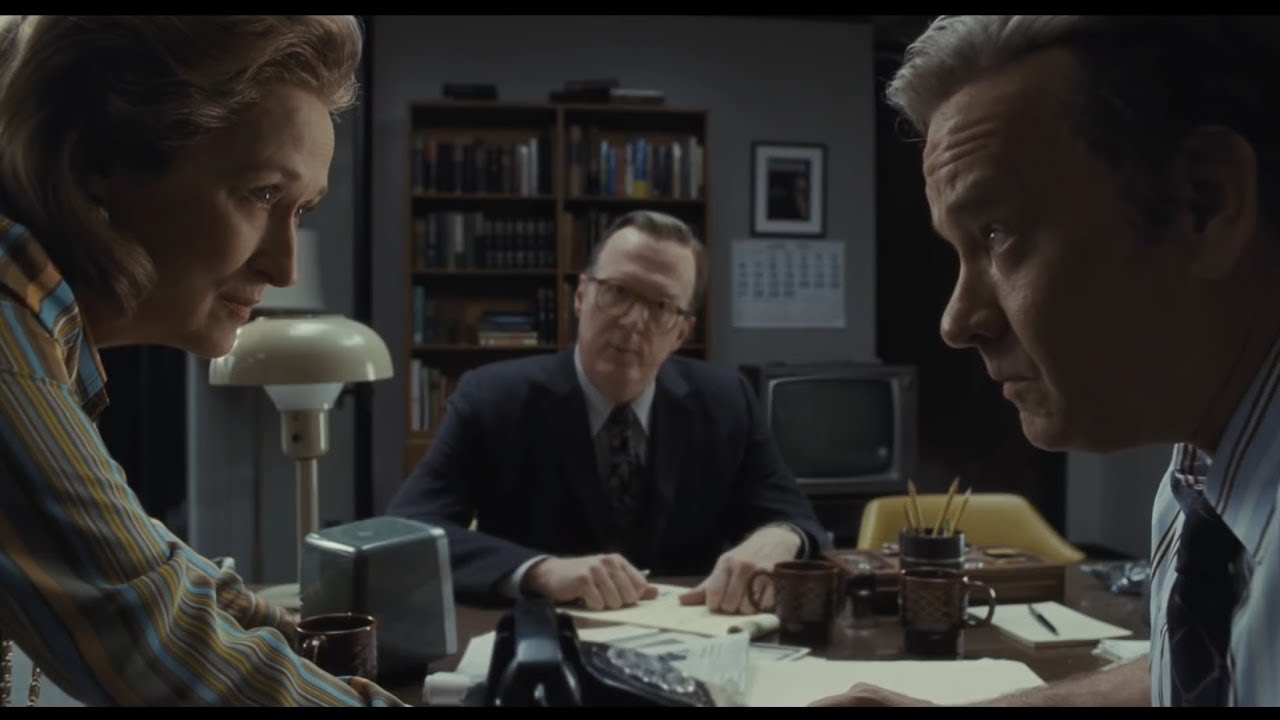
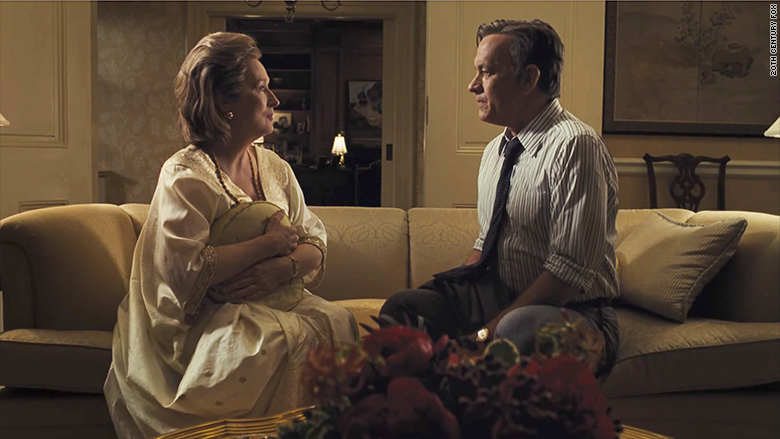
The Washington Post is facing economic hardships and the wrath of the Nixon Administration.  Part of the hostility comes from how the newspaper not only crashed Julie Nixon's wedding reception but referred to the First Daughter as 'vanilla'.  Post editor Ben Bradlee (Tom Hanks) detests Nixon and the Administration's bullying manner, but he also has to deal with Katharine Graham (Meryl Streep), the Post's publisher who is also pretty connected with Washington power brokers, in particular Defense Secretary Robert McNamara (Bruce Greewood).

Unbeknownst to both, the Administration is about to face its greatest crisis so far.  Daniel Ellsberg (Matthew Rhys), a former journalist himself who became an analyst, has secretly taken a massive study on Vietnam compiled for McNamara which essentially stated that Administrations from Truman to Nixon had lied to the American people about both the course of the war and its ability to win.  The Pentagon Papers showed that the government knew Vietnam was a lost cause, but Democratic and Republican administrations kept at it because they simply did not want to go down in history as having lost a war.

Bradlee, an old hand in the news business, knows that the rival New York Times has something, but he cannot put his finger on it.  It isn't until the Times publishes the first of the Pentagon Papers that he knows what they are up to, and he's furious to have another paper get the scoop.  He wants his own hands on the copies, but Graham won't use her friendship with McNamara to make him her 'inside man. Fortunately, another Post employee, Ben Bagdickian (Bob Odenkirk), has an inclining who could be the Times' source: his old friend/coworker, Ellsberg.  He manages to track Ellsberg down, and he gives Bagdickian all of the documents.

The crisis comes over whether to publish them after the Nixon White House successfully managed to block the Times publishing more of them through the courts.  Bradlee is in the publish it and be damned mindset, but Graham is more hesitant, especially since she has just put the Post through an IPO that nets the company much-needed revenue and a lawsuit could not only jeopardize the offering, but put them all in jail.  Still coming to terms with being the publisher after the 'accident' that took her husband (who was put in charge of the Post over her by her own father), she wavers and is pressured by her board to at least delay publication.  She makes the decision to back Bradlee.

As expected, now The Washington Post finds itself in legal limbo, and it takes the Supreme Court to decide the issue.  The Court rules 6-3 in the press' favor, and Graham and Bradlee are vindicated.  Nixon is enraged at this, and bars The Washington Post from all White House activities. The Post ends with the first moments of the Watergate break-in, the beginning of the end for Richard Nixon and his Presidency.   


I imagine that The Post figures its less about the events of the past than it is about the present, almost serving as allegory to the war between The Washington Post and the press at large and the Trump Administration.  If that is what cowriters Liz Hannah and Josh Singer had in mind, then more power to them.  I personally did not get the sense that The Post was presenting itself as a 'truth to power' story, most of the time.

At times, however, particularly whenever Hanks' Bradlee was railing against Power stopping or dictating to the press what to write or who should cover them, one could sense that The Post wanted to be something grander and more important.  Sometimes this idea gets a bit silly, such as when in the opening of The Post Bradlee is angry about Nixon not allowing a particular Post reporter to cover his daughter's wedding.   As he righteously or self-righteously (depending on one's point of view) goes on about how no one, particular those in Power, should dictate who can do the reporting, he won't hear how perhaps in this case that particular Post reporter ridiculing Tricia Nixon could possibly bother the First Family.

At this point, I would have told Bradlee, 'pick your battles', but he probably wouldn't hear of it.

Sometimes The Post veers into speechifying, and that is something mostly done by Hanks.  Now, in terms of performance, I think Hanks did a good job, which he always does.  If I were to fault him for anything, it is that I wasn't totally convinced that he felt that personal sense of betrayal when he learns through the Pentagon Papers that his good friend President Kennedy was just as culpable for the disaster in Vietnam as Nixon, whom he hates.

As a side note, despite Bradlee's declaration that the days where reporters and politicos could have cocktails together and be chummy with those they cover are over, I find that statement highly dubious if not disingenuous.  Far from it, I think.  The White House Correspondents Dinner, infamously referred to as 'the Nerd Prom', shows that the political class and the Fourth Estate are still very intertwined.


Moreover, far from being professional, dispassionate truth-tellers, the press, including the Washington Post, have become essentially partisan.  It goes beyond the Editorial Pages, where a particular point of view is expressed.  Television is the worst in this aspect. FOX News is a right-wing outlet, and MSNBC is its left-wing equivalent, both incapable of any actual reporting and obsessed with campaigning for/against whomever is in office.  There are few actual nonpartisan journalists: CNN's Jake Tapper, FOX's Shepard Smith, but apart from that it's almost impossible to find someone on television that is willing to speak truth to power to whomever is in power. 

To my mind, MSNBC and CNN were virtual Hillary Clinton for President infomercials, and FOX serving as the de facto Trump campaign spokes-channel.

Yet, I digress.

Streep is excellent as Graham, who works to balance her own doubts with efforts to assert herself.  The long and complex scene where all the men around her via a 1970's teleconference (consisting of people at various phones) trying to win her to their side is especially good.  If Steven Spielberg had a great cinematic moment in The Post, it's this one.

I would say, however, that the best performances are not from our big-name leads.  Instead, it's Odenkirk as the rumbled, weary, hangdog Bagdickian and Rhys as the frightened yet resolute Ellsberg that hold our attention.  It almost makes one long for a film about them.

The Post is effective, well-directed, well-acted.  In many ways, it is a good, solid film that I would recommend.  It isn't as good as it could be (why is it that any time we have a Vietnam sequence, we have to have Creedence Clearwater Revival song playing, in this case Green River?), and if people think it's allegory that's fine.

That's the thing with allegory: you can read it as such if you wish to.  Just remember, don't believe everything you read in the newspaper.  Don't believe the Hype.

Katharine Graham: 1917-2001
Ben Bradlee: 1921-2014

DECISION: B-