Tuesday, February 18, 2014

Nebraska: A Review (Review #615)

NEBRASKA

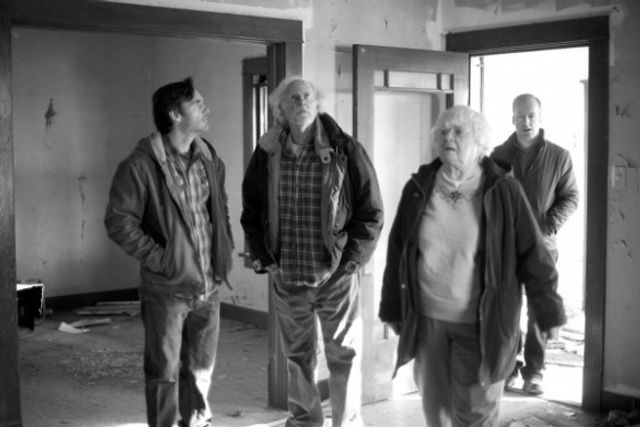
The flat farmland of the Cornhusker State and its plain, ordinary people appear to be ripe for ridicule or mocking.  I had that suspicion when I first heard about Nebraska and what I understood of the story.  However, director Alexander Payne (who seems to have a love for portraying various states: Sideways' northern California, The Descendants' Hawaii, and now Nebraska) and screenwriter Bob Nelson creates a far more nuanced film, one where the characters are real, where we can completely believe that they exist.  If I must confess to something, I saw many of my own relatives in the characters in Nebraska, and that familiarity with family types is just one part of what makes Nebraska such a wonderful, hilarious, and excellent picture.

Woody Grant (Bruce Dern) believes a mailing from a magazine subscription solicitor that he has won a million dollars.  Nothing will dissuade him of this concept, and he is determined to collect his fortune in Lincoln, Nebraska.  He has no problem going so far as to start walking from his home in Billings, Montana to do so.  Found wandering the highway, the police finally get in touch with one of his sons, David (Will Forte).  David tries to explain that this is just a way to get people to subscribe to magazines, but Woody I don't think either understands or accepts this explanation.  The letter says clearly he won a million dollars, and he is going to get his million dollars.

Woody's wife Kate (June Squibb) feels at a loss at what to do with her husband.  David's older brother Ross (Bob Odenkirk), a local newscaster, both think Woody should be put somewhere, but despite their troubled relationship (Woody won't recognize his alcoholism or the damage it has done to the family), David still holds out.  David, finally accepting that Woody will not be dissuaded, talks his father into having him drive to Lincoln to 'collect'.  Kate and Ross are both horrified by this, but David and Woody go off.

Circumstances force them temporarily off the road but fortunately (or not), they are able to stay with one of Woody's brothers in Hawthorne, Nebraska for the weekend.  Woody's brother Ray (Rance Howard) and his wife Martha (Mary Louise Wilson) are welcoming, but their sons, Bert and Cole (Tim Driscoll and Devin Ratray) can't believe it took them two days to drive from Montana to Nebraska.  Arrogant, boorish, and criminal, they are literally heavies to the somewhat senile Woody and generally kind David.  With Woody in town it's decided there's going to be an impromptu reunion of all the Grant boys, and Kate and Ross will be coming down that weekend as well. 

Woody now is able to see local big-shot and former business partner Ed Pegram (Stacey Keach), and despite David's warning about not mentioning the money, Woody can't help himself.  He doesn't brag about being a new millionaire, but states it as fact.  Naturally, the town and the Grant family is elated at this, for various reasons, some of which are particularly pernicious.


During that weekend, David finds out a great deal about both his parents from those who knew them when.  His family similarly finds out a great deal about each other and on how their extended family and former community react to learning about his fortune as well as the erroneous nature of it.  Kate settles things with all her in-laws, and after one harrowing night David, Ross, and Kate all leave the other Grants and Hawthorne to its own devices.

David and Woody continue on to Lincoln, where Woody goes to collect his prize.  Told he his numbers are not the winning ones, he leaves with only a Prize Winner cap for his troubles.  David, however, decides that his father has indeed 'won' what Woody was going to do with his winnings, arranging to get a new truck and air compressor (the only things Woody appeared to want, even if he really couldn't use either).  In a quiet ride of triumph through Hawthorne, David allows Woody to drive slowly down a main road (and Woody tells his son to hide so he can be seen alone), where an old friend watches Woody in his new truck with joy, Ed watches with resentment after having mocked Woody when the truth is uncovered, and Woody's eccentric brother Albert, who likes to sit by the side of the road and watch people go by, simply waves goodbye to his brother as Woody and David go back to Billings.

Nebraska does not hold its characters to ridicule or mockery.  Instead, it has a very sincere appreciation for them, despite their sometimes outrageous nature (seeing Kate lift up her dress and basically flash the grave of an old beau is shocking, hilarious, and oddly natural).  Woody's blunt and sometimes dismissive behavior towards David is counterbalanced with David's conflicted view: he loves his father but also holds some anger for how he was growing up.

David in one scene wants Woody to admit he was an alcoholic.  Nothing doing, with Woody still upset that David lost his beer as a child.  David's confession that he wasn't drinking it (as Woody thought) but pouring it out to get Woody to stop drinking doesn't dissuade the old man.  However, despite all this it is clear that David truly loves his father, understanding that in his senility the only thing Woody wanted was just a little dignity, and that despite the alcoholism Woody actually was a very good man, generous to a fault and almost ignorant of the avarice his family and friends were capable of.

In fact, all of Woody's immediate family loved him and each other.  Kate can belittle her husband for his foolishness, but she is the first and loudest voice to stand up to all the Grants who come asking for 'payment' of loans decades past.  She lets them know in no uncertain terms that she remembers all the things he's done for them, free of charge, and how they never thought to do the same.  Further, she is blunt in what Martha would not want advertised: while Martha recognizes that Cole 'did some jail', she is defensive when Kate brings up that Cole isn't 'volunteering' in roadside cleanup, but is there because of a rape he was charged with.  It isn't rape, Martha insists.  It was sexual assault, a parsing of terms Kate has no patience with.  Even Ross, who is more like his mother like David is like his father, shows his love by joining David in stealing back the air compressor Ed 'borrowed' thirty or forty years ago. 

Pity the compressor belonged to the Westendorfs, who by both their parents admission were really nice people that had never done them harm. 

This theft, which in other films might have been built up to a big moment, had me laughing uncontrollably, complete with Kate keeping the Westendorfs' attention as her sons hid in the barn.  When they complained to their parents as to why they didn't stop them, she replies she didn't know they were going to do something like that, and Woody too was similarly puzzled why they would want to take the Westendorf's air compressor.


In short, Nebraska has a clear yet sympathetic eye to the complicated family dynamic, how people can love each other and yet be endlessly frustrated by what they do.  As I stated, the characters reminded me so much of my own family (I would put myself as a David).  Kate didn't make me think of my mother save for how she told off her greedy relations by reminding them of the many times they had taken advantage of her husband.  In her gossipy nature and casual description of long-dead people Kate is so reminiscent of my aunts, and in their greed and general slothness you might have just as well put my own cousins.

Nebraska has top performances by every cast member.  Dern has Woody not be a sweet and endearing figure (he can be curt and surly) but there is also something of the lost innocent, who truly believes whatever he is told.  When Woody asks David why they aren't going to Lincoln on Sunday, David responds, "Today is Sunday.  Lincoln's closed," which Woody accepts at face value.  Dern gives simply a wonderful performance of a man who can tell it like he sees it when he is coherent.  Squibb is equally brilliant as his Kate, who loves him and is frustrated by him I would say in the same breath.  One moment when he is taken to the hospital, she calls an unconscious Woody an idiot, and the next kisses him tenderly on the forehead.

What I truly found amazing beyond words was Will Forte.  Who would have thought MacGruber could be such a fantastic actor?  David was the heart of Nebraska, his weariness and deep longing for a relationship with his father mixing with his frustration and protectiveness of a man who was not altogether good to him.  If nobody says it, then I will...Will Forte was ROBBED of a Best Supporting Actor nomination (Jonah Hill, who do you sleep with to get these nods?) because Forte gives us a man who at heart is a good person burdened by his family.

I also loved Mark Orton's score and Phedon Papamichael's beautiful black-and-white cinematography, which gives Nebraska a classic look. 

If I were to really find fault in anything regarding Nebraska, it is the short-shift David's relationship with his ex-girlfriend Noel is given.  She has one scene and is never heard or seen from again.  It was so brief it could have been cut without affecting the flow of the film. 

However, that is really a minor point.  Nebraska is a beautiful film: beautiful looking, beautifully acted, beautifully written.  It's one of those films people say, "I laughed, I cried," and while I didn't do the latter, I did feel for Woody and David as they take the tradition of a road trip and made it not a journey into the heart of darkness, but a journey of a father and son finding a true commitment to each other and the insane world of family. 

DECISION: A- 

Monday, February 17, 2014

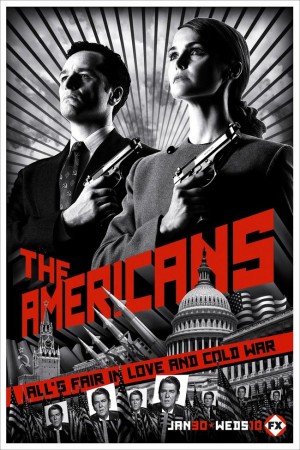
The Americans: A Brief Intro


With Season Two of The Americans fast approaching us, I decided it was about time to watch Season One.  I doubt I will make it before Season Two premieres, but the concept of The Americans intrigued me, and I want to see it and see if it is worth our time. 

As a child of the Reagan Revolution, I have foggy memories of a television miniseries named Amerika.  In this series, the Soviet Union managed to conquer the United States, and what followed after the States fell to the Russians.  I never believed this scenario and always felt the United States would triumph.  I was proven right.  Thanks, Ronnie.

The Americans not only takes us back to the early 1980s, but it also addresses a story we don't think of: the domestic troubles that accompany espionage.

Philip and Elizabeth Jennings, outwardly average and happily married Americans with two kids, are actually deep-cover agents for the KGB, dangerous and murderous Soviets spies.  However, it isn't just working for the Ruskies and trying to both stay alive and one step ahead of the FBI that they have to deal with.  They also have to deal with the issues of protecting their children, being parents, balancing work and home, and whether they are simply too much in character, whether the pretense they carry can actually work much longer. 

Curiously, in what I think is an intelligent role reversal, it is Philip who is the more sensitive and questioning of the two, while Elizabeth is the more steely and determined.  Philip hasn't so much grown accustomed to the American lifestyle as he has with the role of husband and father.  Elizabeth is similarly struggling to maintain her focus on her mission while also wondering about how to be a real mother to her real children, conceived not out of love but out of duty for Mother Russia. 

This I think will make for fascinating watching.

I am intrigued by Keri Russell.  I never watched Felicity (and frankly, doubt any man has), so while I'm aware of the reputation, I don't know enough of her work to dismiss Russell as the generally sweet young girl discovering the world.  I know nothing of Matthew Rhys but I think it is highly interesting that this Welshman is playing a Russian playing an American.  He has to not only keep a straight American accent but through the series has to play many characters, the disguises Philip (and Elizabeth) have to create to deceive everyone.  I also am interested in seeing Margo Martindale in her supporting role as their KGB supervisor.  I know of her, but am not too familiar with her work.  I have heard great things about her, so she's another plus to see what she does with the role.

Granted, I want to also empty out my DVR and get ready for Season Two.  I trust The Americans will make me proud to be one. 

Well, I hope to start formal reviews of each episode, which should start in late February or March. 

Premiere Episode 

Sunday, February 16, 2014

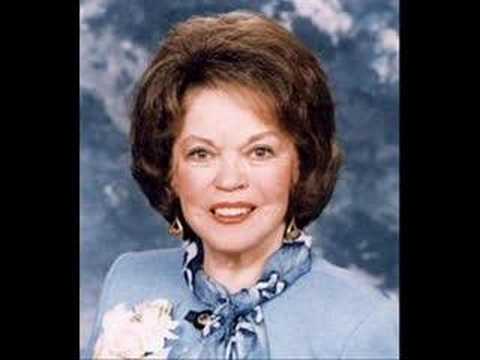
Shirley Temple: A Personal Remembrance

1928-2014

A Temple Offering...

It was a sad way to start a Tuesday morning. 

Even though Shirley Temple (Black) was 85 when she died, it isn't a grown woman that we picture when we hear the name 'Shirley Temple'.  Instead, it is that of a sweet-natured little girl, who charmed an entire nation out of the Great Depression.

Is it a strange sense of nostalgia that has us pausing to remember Shirley Temple, or to shade our memories of her screen persona?  It is a safe bet that for many of us, our parents, even perhaps our grandparents did not see a Temple film when it premiered.  She had not made a film in over 60 years.  Therefore, given all that, why did news of her death still impact people?

I think it has to do with the fact that Temple played an important role in film.  Shirley Temple was not the first child star.  However, she was the first one to create a mania to rival that for someone like Charlie Chaplin.  Her films were an emotional release to a nation that had been all but brought down by harsh economic times.  We in this Great Recession have no real inkling of how difficult, how horrible the 1930s were.  There was 25% unemployment, the Dust Bowl was devastating our crops, and there was open talk of revolution.

Into this breech entered this little girl, charming, sweet, who had this can-do optimism that would let her overcome.  In many ways, Shirley Temple represented to Americans what they though of themselves: people who had been beaten down but with pluck and determination, could rise to triumph in the end.

The emotional impact of her overall message (no matter the obstacle, you can succeed if we, to quote one of her songs, Be Optimistic) was what America needed.  It certainly was what 20th Century Fox needed.  Her films literally saved the studio from bankruptcy.  She was so important to the financial health of 20th that Fox head Darryl F. Zanuck created a whole story department to make films tailored to Temple.  One story I read is that when she lost a tooth on-set, Zanuck so panicked he ran out of a meeting with John Steinbeck. 

There's something to be said when as a little girl, your lost tooth takes precedence over a future Nobel Prize winning-author.


Still, cuteness (though she was that) can only get one so far (just ask Channing Tatum).  She had the talent to back up her popularity.  She was not only able to remember her own lines but those of her veteran costars.  She could keep up with dance steps alongside professional hoofers.  Buddy Ebsen and Bill 'Bojangles' Robinson were proficient dancers, and here was this child handling if not elaborate dance numbers at least more intricate numbers that most adults and certainly many child performers of yesterday and today couldn't master. 

As a digression, I think it is worthy of mention Temple's role in race relations.  I'm not saying she was some sort of pioneer, but give her credit: the fact that a white female and a black male shared the screen at all (and more daring, held hands onscreen) was a step forward to show the foolishness and injustice of bigotry.  Granted, Robinson was playing if not slaves certainly subservient figures, and films like The Little Colonel or The Littlest Rebel were hardly calls for racial equality.  However, so pernicious was the racism of the time that in the South, scenes of Temple and Robinson holding hands (which was their way of communicating dance steps) had to be cut.  It was a small step, but an important one nonetheless, making it at least possible if not acceptable for people of different races to share the screen.  The fact that she was such a little girl made these scenes less controversial, and Temple always regarded Robinson as a friend so any idea that they shouldn't hold hands was bizarre to her.

Children sometimes are the wisest of us all.

However, it is what she did after her heyday that marks Temple's true achievement.  Once her films started losing money, once she recognized that her career and popularity were closing, she took a good hard look at the reality of the situation and made the decision that this thing called a 'showbiz career' was not worth keeping up.  She had no desire to continue being famous, and with the exception of the Shirley Temple Storybook television series, Temple left the screen and did not look back.  Here is the key to what differentiates Temple from so many child stars.  She was not one to look back. 


Ambassador Black

Too often a lot of these child stars insist on keeping things as they were, on being stars long after the public either forgot about them or moved on.  Temple kept going forward.  In that she is truly remarkable.  She went on to become a delegate at the United Nations, then Ambassador to Ghana and later what was then Czechoslovakia.  Temple also took a very brave step by going public with her battle against breast cancer in 1972, one of the first major names to do so.  Her frank admission of her illness and open discussion of it led other women to get tested themselves, and who knows how many women's lives were saved because of Temple's then-daring act.

She made a life of her own, and made a life beyond the cameras.  For Temple, fame was nothing.  She once said that she couldn't just 'stay at home and look at old scrapbooks'.  She needed to work, and she did.  Temple was aware of all the doors 'little Shirley' opened, but in the end she made her own way.  She didn't give in to despair: not when her career dried up, not when she went through a divorce (about the only real hint of scandal, and even that was handled tastefully) and decided what she could do was contribute to the country that had given her so much by going into public service.  While she lost her only Congressional campaign, her career led her to diplomacy, and she earned the respect of her peers in the U.N. and around the diplomatic corps. 

In short, two things make Shirley Temple both a great star and a great figure/role model.  I don't know if I could call her a great actress.  However, her films are still popular and beloved.  Why?  I think it is because, for all the corniness they might have, they were totally sincere.  There was no cynicism, no meanness in her films.  Instead, they were filled with sweetness, with joy, and with optimism.  That covers her film work, and seeing her onscreen we can see why even now she is beloved: her mix of youthful optimism coupled with genuine ability to touch an emotional core makes her compelling to watch.

At the 70th Academy Awards
Oscar Winners' Reunion
Baby, Take A Bow

Secondly, when her career was over, it was over.  She didn't drown herself in alcohol or drugs, she didn't go out of her way to get people to pay attention to her.  Instead, she discovered herself, found new interests, was grateful for everything she received but also saw that there was a life outside Hollywood.  When the 70th Academy Awards had their "Oscar's Family Album" where they reunited those who had won Oscars in acting, honorary, or juvenile categories, Temple's appearance brought down the house.  It is a sign of the endearing love America had for its Little Princess that she still evoked such genuine affection all those decades later. 

It was an extraordinary life.

He ain't no Shirley Temple

In the end what makes Shirley Temple important is that at the end of her career, unlike other child stars, she did not look upon this turning point as something to mourn or to wrap her whole identity around.  Instead, in a radical departure from so many child actors, Temple accepted this as a matter of fact and moved on.  Therein lies one part of the greatest of Shirley Temple: she moved on.  She did not attract attention to herself by foolish behavior or making a spectacle of herself.  Instead, she did what we all do: she got an education, married, had children.  Temple went one step further: she adapted to being an adult in an adult world.  How many of US could become Ambassadors, let alone help usher a peaceful transition from authoritarianism to full democracy as she did when she served as U.S. Ambassador to then-Czechoslovakia in their Velvet Revolution?

Shirley Temple fashioned a life outside Hollywood.  When her career was over, she accepted it and kept going.  So many child performers could not, or cannot, or will not follow her example.  They cannot see their own worth comes from within, from family and true friends, not hangers-on or an entourage. 

The term 'child star' has become shorthand for ruined, chaotic lives done in by fame and fortune at a young age.  Bobby Driscoll, Natalie Wood, Sal Mineo, Dana Plato, Brad Renfro, Jonathan Brandis, Lindsay Lohan, Amanda Bynes, Shia LaBeouf.  There have been actors and actresses who started young who have managed to survive: Jodie Foster, Kurt Russell, Dakota Fanning.  They however, are not about themselves, but about their work, and I imagine that if they didn't enjoy acting they'd leave and be happy.  Can we say that about people like Drake Bell or River Phoenix or Carl "Alfalfa" Switzer?

Each of them owes something to the person who set the template for how to survive when no one wants you on the screen anymore...a little girl with 56 ringlets.

In the end, why does the death of Shirley Temple matter?  It matters because we've lost one child star who both grew up and never grew old.  It matters because Temple set the template for how to be a child star and how not to be swallowed up by it.  It matters because Temple became a lifeline in one of America's darkest times.  It matters because while there will always be child actors, and while there will be child actors with more talent, I doubt there will be child actors who were, are, and will always be as beloved as Shirley Temple.

Good night, Shirley.  Godspeed as you sail onwards, On the Good Ship Lollipop.


IN MEMORIAM

Saturday, February 15, 2014

The Wolf of Wall Street: A Review

THE WOLF OF WALL STREET


This is not scientific in any way, but out of my own curiosity I decided to count the number of expletives (in particular F-Words) that The Wolf of Wall Street used in its three-hour runtime.  Some reports have it as high as 544.  Other reports have it at a mere 506.  Now, yours truly decided to tally every F-Bomb he heard, and granted he might have missed a few (given how some characters repeated it so often I had to rush my tally marks), but my total comes to 512, and two of them were mouthed so I won't argue a count of an even 510. 

I can also report that my pen ran out of ink at the end of The Wolf of Wall Street, partially because all those tally marks do add up, partially because the movie is a whopping THREE HOURS LONG.  That's a mere 54 minutes shorter than Gone With the Wind (including the Overture, Intermission and Exit Music), 52 minutes shorter than Lawrence of Arabia (ditto), 32 minutes shorter than Ben-Hur, and 20 minutes shorter than The Godfather Part II.   I throw all that at you because The Wolf of Wall Street, again, is LONG.  That isn't necessarily a bad thing: long movies can be extremely good (examples: Gone With the Wind, Lawrence of Arabia, Ben-Hur, The Godfather Part II).  Sometimes though, a little trimming could have worked wonders: at 3 hours, 21 minutes, The Lord of the Rings: The Return of the King could have maybe cut out one of its many endings without being none the worse for wear.  In the same vein, The Wolf of Wall Street might have cut down on scenes that last longer than they should, maybe show less of Leonardo DiCaprio's nude body (among other naked people) and yes, throw out a few of the 506/512/544 F-Bombs. 

Its running time, while not justified, is however, only one aspect of The Wolf of Wall Street that makes me wonder how so many can think it is so good when it is not.  It's not bad, mind you.  There are many good things in it (the F-Bombs, though, are not among them).  It is just that there is a fine line between 'sprawling' and 'chaotic', and The Wolf of Wall Street goes through said line more often than not. 

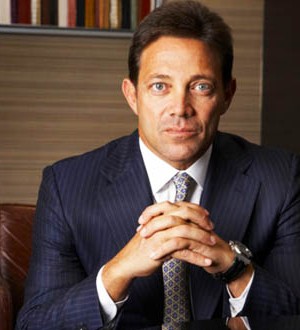
Jordan Belfort (DiCaprio) narrates his story, sometimes speaking directly to the viewer.  His life's ambition is to be hyper-rich (he is disappointed that his income one year didn't average a million a week).  Under the mentorship of Mark Hanna (Matthew McConaughey in a cameo), he soon starts his road to being a high-power stock broker.  Unfortunately, the day he starts is October 19, 1987: Black Monday, when the stock market takes a wild plunge leaving everyone stunned.  Out of work, his wife Teresa (Cristin Milioti) directs him to a Long Island firm that deals in penny stocks.  Belfort, however, takes his experience and starts making thousands, tens of thousands, even millions, selling worthless stocks in penny-ante companies. 

His wealth gains the admiration of Donny Azoff (Jonah Hill), who also shares his taste for drugs (introducing him to the joys of crack cocaine, a rare substance Jordan hasn't used before) and women (mostly, but that's later).  Jordan starts his own firm, with the ever-so-posh name of Stratton Oakmont, to lure more customers into his schemes.  As his crew, he gathers a collection of marijuana sellers, users, and only one with anything close to higher education (one of his employees, for example, thinks jujitsu is a place in Israel).  Jordan trains them in the art of the steal, and soon they become very rich.  With that, they also become even more self-indulgent with the hookers, the drugs, and the general bacchanal-like world of their own boiler room.


Jordan attracts more fools...I mean, followers, after a blistering profile in Forbes Magazine, and with that, he also attracts Naomi (Margot Robbie), a beautiful woman he calls the Duchess of Bay Ridge.  Now, Jordan has never been faithful to Teresa, but Naomi is simply too beautiful and desirable to let slip through his fingers.  Affair discovered, a quick divorce and second marriage commences.

Things are rolling along very well, but trouble is on the horizon.  FBI Agent Patrick Denham (Kyle Chandler), as well as the Securities and Exchange Commission, has been keeping his eyes on Jordan ever since the Forbes article, knowing he is a shady character.  Jordan tries to buy his way out of this, but no dice.  Still, he keeps rolling along, determined to make and keep his high-flying life going.  If it means using his wife's Aunt Emma (Joanna Lumley) to hide money in Switzerland, so be it.  If it means doing business in Switzerland with banker Jean Jacques Saurel (Jean Dejardin, clearly enjoying his further ventures into English-language cinema), that works too.  Eventually though, through a mix of inept bungling by Azoff and the Stratton Oakmont minions (particularly the money smuggling to Europe), Saurel's missteps, other outside forces (Benihana somehow helps bring him down too) and Jordan's own hubris the Feds catch up to him.   Though there is a chance for a deal Jordan decides to stay in the game.  That and his turning on the Feds by trying to tip off Azoff about the investigation lands him in a country club prison, but in the end, Jordan Belfort rises again, luring new people into following his Master Plan for Wealth.

I have never held that 'nothing succeeds like excess', so if people truly look at Jordan Belfort and his life of drugs, sex, and cash as something to admire they are far sicker than the subject of The Wolf of Wall Street.  I figure Martin Scorsese wanted to make a film about pure, naked (in more ways than one) greed and avarice, to hold up a mirror to the wild derangement of American capitalism gone mad.  Perhaps all the excess in The Wolf of Wall Street (especially the length) was meant to reflect the excess of Stratton Oakmont and Jordan Belford and his minions in particular.

That is still no reason for having so much in it that it soon becomes far too bloated and chaotic to justify either its running time or its content.

I could not help think that Terence Winter (basing his screenplay on Belford's autobiography) was simply too enamored of the insanity of Belford's world to maybe not try to trim things down.  I could easily see whole characters and subplots removed without affecting the flow of the story.  For example, we get a small story of Jordan's gay butler, Nicholas (Jon Spinogatti), who hosted his own orgy where cash was stolen.  Jordan and his crew is furious about the potential theft, going so far as to dangle the butler over the edge in order to get him to talk (after giving him a beating).  The butler at one point tells them that he and Donnie know the same person, a Rudy from the Lollipop Club (not to be confused with the Lollipop Guild), which Donnie hesitantly denies.

Does it suggest Donnie is gay, bisexual, maybe bicurious?  Well, minus one gay slur thrown at him long later this doesn't come up again.  Same goes for Jordan's two guards, Rocco and Rocco.  We see them when they can see on hidden camera Naomi denying the highly sex-crazed Jordan a visit to her 'special place', but then they disappear without rhyme or reason.  We also get near the end a horrifying scene where the drugged-out Jordan tries to take his daughter out of the mansion but only ends up crashing the car when he puts it in reverse with a terrified little girl in the car.  Violet (Johnnie Mae) does her best to rescue Skylar.

Now, who is Violet?  Who knows!  Technically, Violet is the housekeeper/nanny, but we were never formally introduced.  I remember writing in my notes "Kimmie--where'd she come from?" Kimmie (Stephanie Kurtzuba) is...well, I don't remember, and here is one of the big problems The Wolf of Wall Street has: minus the main characters, other pop in and out so quickly whatever role they played are quickly forgotten. 

Scenes that should have worked don't.  For example, there is the face-off between Denham and Belfort (a side note, at 48 Kyle Chandler looks if not the same age actually younger than the 39 year old DiCaprio).   What should be a battle of wits and subtle hints and nods soon starts getting longer, and longer, with pauses where it looks like they aren't sure if the scene is over or should continue. 

Further, while the cult-like atmosphere of Stratton Oakmont is captured in wild scenes of deranged decadence, it soon becomes a lot to take in: all the drugs, the sex, down to what I think is the first snorting coke/rimming scene in film history. 


This isn't to say that The Wolf of Wall Street doesn't have good things in it.  Leonardo DiCaprio is a great actor because he wills himself to be.  He throws himself into the role with naked abandon (literally sometimes), and we see a side of DiCaprio we rarely see: a comic, manic side.  The airplane scene where a hopelessly high Belfort can't control himself is funny, and his entire scene where while outrageously high he tries to drive home when he can barely move is a great moment.  DiCaprio is great in his role.  Chandler (though criminally underused) is similarly great as the honest agent.

The screenplay also does  have funny moments.  At the interrogation of the brokers, one answers with "I have no recommendation of that", obviously meaning 'no recollection'. 

However, one thing that did puzzle me was how Scorsese, a director who uses music to great effect, didn't have the touch here.  Sometimes it works brilliantly (when Naomi first appears, it's to I Might Like You Better if We Slept Together, and at his wedding they are serenaded to the appropriate Goldfinger, though perhaps this was a touch too direct), sometimes it's a bit odd (the Foo Fighters' version of Mrs. Robinson, while great, is an odd fit). 

Again, I didn't dislike The Wolf of Wall Street, but I really didn't care about this lunatic or his insane world.  I thought the story was simply out of control and would have benefitted from more cutting, less drugs, and less sex.  That, however, does happen to be my general view of life as well.

Born 1962


DECISION: C+

Friday, February 14, 2014

Her: A Review


HER

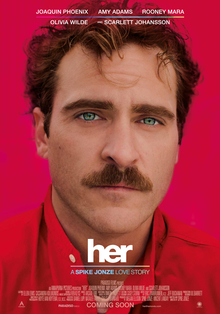
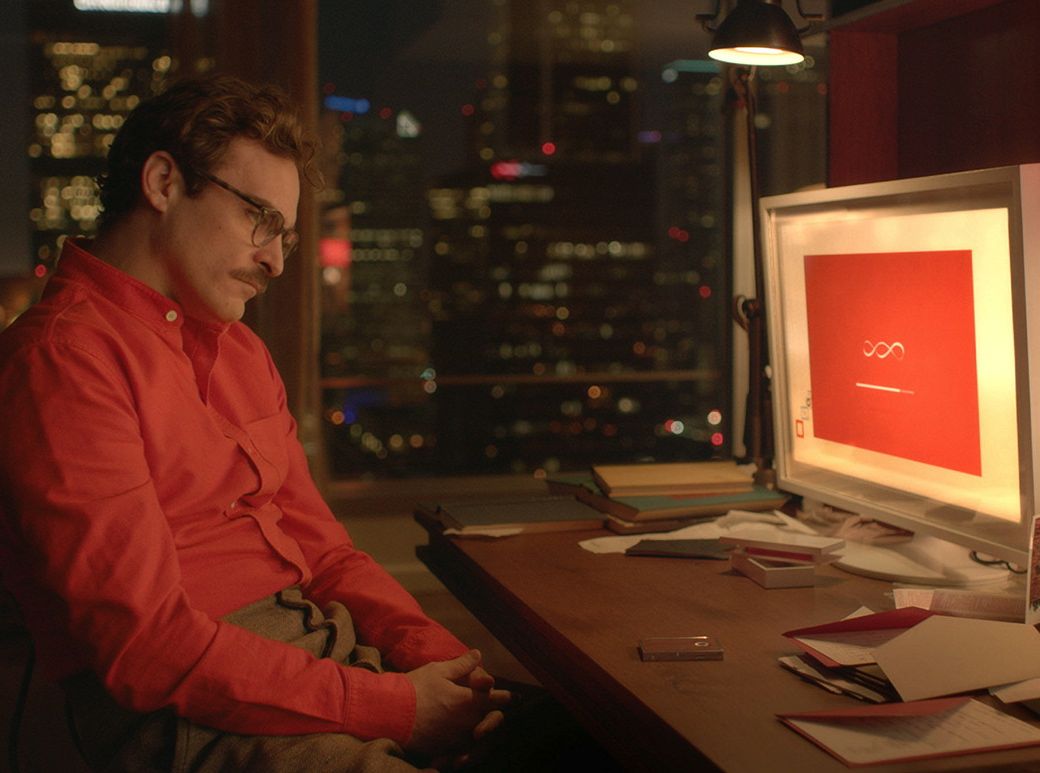
The entire story of Her seems so bizarre, so laughable, so nutty, that it is extraordinary to see how, despite it all, it makes sense and even works.  If I were to say it's about a guy who falls in love with his computer operating system, you would be excused for thinking 'it's just a dumb idea'.  However, Her isn't about a man falling in love with an OS, but about how people are becoming so isolated emotionally in our growingly digital world that such things are plausible, right down to the sex. 

That's right, I said sex.

Theodore Twombly (Joaquin Phoenix) is living alone after his wife Catherine (Rooney Mara) has filed for divorce.  While he has his job at Beautiful Love Letters dot Com, he himself is pretty lonely.  He can always have virtual sex with strangers he can talk to over the phone (I stress this is not the same as phone sex but close to it), but on the whole Theodore really has no one apart from his friend Amy (Amy Adams), who lives near him with her husband Charles.

One day, he decides to purchase OS1, an operating system with a conscience.  Once installed, he opts for a female voice, and that female voice dubs herself Samantha (Scarlett Johansson).  Soon, Theodore and Samantha start exploring each other's existence, her views and his willingness to open up to her like he hasn't with anyone else.  Somehow, some way, Theodore starts becoming emotionally involved with Samantha, and Samantha in return starts to reciprocate these odd things call 'feelings', culminating in a strange session of disembodied lovemaking.


This situation, curiously, is not unique to Sam and Ted in this world.  Many people are having relationships with their OS, including Amy, who has broken up with her husband.  Things like these are so commonplace that Sam goes through the trouble of hiring a human surrogate to have sex with Theodore.  He tries with Isabella (Portia Doubleday), but he simply finds it all too bizarre: it is and it isn't Sam.  Samantha is upset by all this, and moreover, Sam wants however, to discover the world as she develops.   

In the end, Ted finally signs the divorce papers, and his now ex-wife finds his new relationship proof positive that he cannot communicate with actual humans.  Sam, meanwhile, confesses that she loves 641 OS' but that it doesn't alter what she feels for him.  It does alter how he feels, and when she goes offline to find herself along with other OS', he has reached a place of peace.

I don't think Her is meant to be taken literally.  Instead, Spike Jonze is going for allegory, about how people are so isolated and unable to have deep emotional contact that artificial relationships with artificial beings soon become or may become the norm.  As Ted is 'making love' to Samantha, I could not see much difference between this encounter and that between Ted (going by the name Big 4 by 4) to SexyKitten (Kristen Wiig).  Both are not physical encounters, but audible ones.  The only real difference is that SexyKitten would have wanted just physical release, while Samantha would have been seeking out that thing called 'love'.

Even Theodore's profession indicates what Jonze wants us to get from his film.  Theodore is someone who writes deep, heartfelt love letters or letters of condolence for others.  I think Jonze is trying to say that people are no different than machines when it comes to true emotions or matters of the heart.  The idea that people now have to hire others to write things for them to me is as foreign as giving love (and making love) to a being that is not only not there, but that basically does not exist.  This is just a guess on my part, but I think Jonze is saying that there really is no 'substitute for love', which is what Sam is for Theodore. 

It also shows Theodore to be in his own way quite selfish.  Samantha, as far as he knows, has no real existence or identity outside him.  When near the end of Her, he finds the message that "OS1 System Not Found" when he literally 'turns her on', he goes into a blind panic.  It is because he fears she is gone, or because she is not there when he calls her.  Seeing his devastation when he learns she's fallen in love with 641 other Operating Systems, one almost feels for him, seeing how he's given so much to this voice. 

I think Joaquin Phoenix, for all the crazy in his own life, continues to show just how good an actor he is.  We see in his demeanor: his shy hesitancy coupled with a desire (though not the ability) to at best go beyond the physical and at worst not be able to communicate with a real person.  Phoenix does what appears impossible: make us believe that a man can if not actually fall in love with an Operating System, at least give himself so emotionally to one.  Johansson continues to show that she is not just a pretty face (though she is that too).  In Her, she cannot rely on her beauty, but instead squarely on her voice.  Johansson equals Phoenix's ability, going through the range of emotions from eagerness about the reality outside her own to a confused, even hurt feeling when he rejects her substitute.  Adams' performance, while smaller, is still a good showcase for her strengths as one of our best actresses around.  Granted, her disheveled look is a bit hard to take (she looks like she's escaped a looney bin), but I can't take away from her performance.

I also though highly of Arcade Fire's score for Her.  I'm probably one of the few people on Earth who doesn't know their music (or at least recognize it), but I found the mix of romantic and electronic music to be beautiful and natural to the subject: the automated and lush nature of the story.

Her makes this premise believable, and it has wonderful performances by Phoenix and Johansson.  It takes a great deal of talent to make something so bizarre work, and I am the first to say I'm not a Spike Jonze fan, but I give credit where it is do.  Her says so much about the strange nature of love and how we are slowly becoming so disconnected from others to where the idea that one can give emotions to a machine seems sadly plausible. 


DECISION: A-

Thursday, February 13, 2014

Elementary: Internal Audit Review


ELEMENTARY: INTERNAL AUDIT

An Inside Look at Holmes' Interior

Internal Audit left me wondering whether Elementary has been given the credit it deserves for being both a good Sherlock Holmes adaptation and a good show on its own merits apart from the Conan Doyle roots.  This episode managed to throw nods to the Canon that even the most cursory Holmesians would recognize while putting them in totally new context.  Internal Audit, coming right after Tremors, does the running theme of looking into how Sherlock Holmes has become more human proud.  The case itself is also quite solid, working on those multiple levels Elementary is specializing in, and we still get in between the actual murder investigation those personal explorations of the characters.  Internal Audit, however, doesn't just go for Holmes' internal audit, but we also get into Joan Watson and Detective Bell, tying things so well. 

Donald Houser (Thomas Ryan), a Bernie Madoff-type, has been murdered at his home.  It's unfortunate too, given that we see Houser was about to commit suicide when someone beat him to it. The person who discovered Houser, his personal chef Chloe (Heather Burns), immediately recognizes Joan (Lucy Liu) and vice-versa.  Houser's crimes were about to be exposed by investigative journalist Rosalie Nunez, but oddly, now she has turned up dead too. 

We turn to the last person to see Houser alive.  That is Jacob Weiss (Richard Masur), the head of the World Reparations Council, which is involved in restitution for Holocaust victims and their descendants (I imagine locating stolen finances and art).  Weiss has an alibi but unlike others, the WRC has not been swindled, since Houser worked for them for free.  We also learn how Chloe and Joan know each other: Chloe, once a highly successful restaurateur, was one of Joan's first clients.  She however, has been sober for several years and with a child.  Chloe fears exposure of her past will both discredit her to her clientele and put her child at risk of being taken from her.  Joan promises confidentiality and that Sherlock can be trusted. 


While Holmes continues the investigation, he has other matters creeping into his life.  Alfonso (Ato Esandoh), Sherlock's sponsor, now throws Holmes a giant curveball.  He thinks Holmes is ready to be a sponsor himself, and presents Randy (Stephen Tyrone Williams).  Holmes is highly ambivalent to take Randy on.  Watson now fixates on videos to see if she can find Nunez's killer whom they believe was inadvertently caught on tape by skateboarders recording themselves.  They get lucky: Nelson Maddox (Lucas Hall) fits the description Holmes deduces.  Complication: Nelson is Chloe's ex from their using days.

Holmes wants Chloe to go and identify Nelson, even if it means exposing her past and putting her child at risk of being taken in a custody fight.  He and Watson argue about this, she insisting there has to be another way.  To clear his head, he goes to Alfonso's, finally breaking into the car with the security system Alfonso has had Sherlock try to crack.  After a heart-to-heart Holmes jumps back into the case. 

The search for Maddox leads them to an art gallery run by Fabiana (Rebecca Dayan).  This 'Neo-Deconceptualist' gallery appears legit, but we find that a.) it's a money-laundering front, and b.) Maddox is dead in the dumpster outside.  We discover that Maddox has been a silent partner in the front, as well as who killed Maddox (who had been hired to kill Nunez and Houser because both knew too much), and it involved stealing money from Holocaust victims. 

It is a bane of Elementary to not have true follow-through on many characters.  While it is good to see Alfonso back, given the show's track record I don't know whether the idea that Sherlock Holmes being a sponsor will get any traction.  I'm after all still waiting for Ms. Hudson to return.  That should be the best case against Elementary by the Sherlockians (even if their own show has flaws, but that's for another time).  That, however, while a big point, doesn't cloud the good work Internal Audit does with regards to the characters and plot.

I highly enjoyed the word "Thief" in blood on the wall.  This is obviously a reference to "Rache" on the wall in A Study in Scarlet, and this in a side note is a fascinating look into how Elementary and Sherlock handle this iconic Canon scene.  In A Study in Pink, the word "Rache" was written on the wall (just like in Canon) but the reasoning was reversed; in the novel, the police thought it was an attempt to write "Rachel" but Holmes points them in the right direction: it is rache, the German word for 'revenge'.  A Study in Pink has it the other way round: the police think it is the German word for 'revenge' but Holmes points them in the right direction: it is "Rachel" interrupted, going so far as to ridicule the idea that someone would think it was rache.  I still don't know why those who love the Canon never object to this twisting of A Study in Scarlet.  In any case, Elementary moves away from the whole 'rache'/Rachel situation by substituting another word but keeping the writing on the wall.

I think Bob Goodman's take on this was a smart choice, honoring the Canon but making things fit the particular story.  We also get good moments of comedy in the screenplay.  There's Holmes' dismissive attitude of the youth having this narcissistic need to post all their trivial exploits online.  The best moments involve Randy (whom he calls Randall).  When the recovering addict says, "I'm Randy", a genuinely perplexed Sherlock asks if that was his name or his state.  Randy is now confused, but Holmes clears things up: he is asking the youth if he is horny because Sherlock (in Sherlock's view) has an effect on people.  Here, through both the screenplay and Miller's performance, see that Sherlock is still someone with a high view of himself but that these British puns can be used to great effect.  It is comic without being ridiculous.

Moreover, Internal Audit shows Sherlock Holmes to be in deep internal conflict.  He admits that the rational side to him won't admit error in regards to what happened in Tremors, but he also knows that that thing called conscious is eating at him.  We also see that what would have been easy for Holmes to do (expose Chloe's secret to apprehend the killer) is now harder, and not just because Chloe could lose her child.  Watson, the one person who is able to stand up to Holmes, insists that revealing Chloe is wrong on so many levels.  She points out what he already knows: he won't admit to feelings. 

As with Tremors, we still see the repercussions of Holmes' actions.  Bell makes a smaller appearance, but now we see through Hill's performance that Bell is trying to move forward despite the difficulties he faces.  It's a credit to Hill as an actor that even though he has few scenes he brings the best in them.  We also see subtle shadings that Watson is slowly adopting Holmes' methods.  We see this in the scene where Watson is observing the video of the skateboarders: she is watching multiple screens simultaneously (which is how we first are introduced to Sherlock Holmes in the pilot).  It's subtle, but effective.

Internal Audit showcases great performances by Miller, Liu, and Bell.  It has a strong story where the twists and turns make sense, a murder plot that holds.  I doubt we will see much of Sherlock Holmes as a sponsor (which would lead to fascinating stories or subplots) but other than that I think Elementary as a whole and Internal Audit specifically are doing Sherlock Holmes proud.


9/10 

Next Episode: The Diabolical Kind

Wednesday, February 12, 2014

Philomena: A Review

PHILOMENA


My Lovely Irish Rose...

I have read accounts that Philomena, the fact-based film on the story of Philomena Lee, is anti-Catholic.  I am not Catholic, but having seen Philomena, the film certainly is extremely harsh against the nuns who kept Philomena and her son separated for more than fifty years and went out of their way to stop any reunion.  However, the film condemns those who were directly involved.  Philomena also shows the present-day nuns quite compassionate and regretful of the wrong done to Mrs. Lee, and it shows its atheist co-lead to be almost as bad as those who follow the letter but not the spirit of The Word.  Philomena is a tender, moving, hilarious story of a sweet woman who deserved so much better than what she got but who despite the wrongs done still holds on to the faith that some of its practitioners used to shame and torture her.

When she was a young girl, Irish girl Philomena Lee (Judi Dench) had a child out-of-wedlock.  To cover the shame of this act, she was sent to Sean Ross Abbey to give birth.  After she and her son survive a breached birth, she must stay there four years to work off her debt.  The Abbey is filled with other young girls who got into trouble, and while Philomena finds working the laundry room hard (as well as the strictness of the sisters difficult save for one kind nun who sneaked a photo of her son and gave it to her), she does enjoy the one hour she and the other girls are allowed to be with their children.  Alarming news comes her way: the children of the Abbey are basically being bought and sold, and her Anthony has been taken.  She witnesses him and a little girl Anthony had bonded with spirited away, but she cannot stop it.  Philomena has kept her lost child secret for fifty years, until she tells her daughter in the hopes of finding Anthony.

Into this comes Martin Sixsmith (Steve Coogan), a disgraced former Labour advisor forced out of government.  He has decided to write a book on Russian history (which even he finds a boring prospect), until a chance meeting with Philomena's daughter.  She asks that, being a former BBC reporter (what do you know: a liberal working in the press!  Will wonders never cease?) if he could help.  Sixsmith sneers at the 'human interest' story, but the intellectual atheist is persuaded to help, partially for a chance for work, partially for a chance to attack the Catholic Church through the sins it committed (and thus showing how religion, or faith, in particular the Church and Christianity in general is abhorrent).  Philomena, a good-hearted woman who has remained a faithful Catholic and a somewhat naïve and endearing person with an open nature, is thrilled to have him help (though not entirely pleased at his anti-Catholic/Christian/religious attitude).

The convent says the records were all burned in a fire (a convenient one, Sixsmith holds), but local gossip of when actress Jane Russell (whose picture Sixsmith sees in the convent, her voluptuous presence at odds with the devout surroundings) came to town to adopt a child puts Sixsmith on a lucky break.  The children, including Philomena, were sold to Americans.  With that, Philomena, with her favorite romance novels in tow, takes her first flight to the New World to find her son.


Through some contacts from his BBC days Sixsmith is able to track down the lost child.  Philomena is delighted by everything: mints on pillows, a breakfast buffet, and even Mexicans serving at the hotel.  She is so enthralled by all these experiences, and never fails to be kind and loving to all the people she meets, even when Sixsmith is curt to everyone.  In a strange coincidence, Sixsmith finds that he had met Philomena's son, renamed Michael Hess, briefly when Martin covered the Reagan White House when Hess worked as a major Republican official.  He also has extremely hard news for Philomena: Michael Hess was dead.

Philomena is devastated by the news, sensing that the search has been for nothing, and that moreover Michael never cared about his birth mother or his Irish roots.  Despite her Catholicism she is quite at ease with Michael's homosexuality (having sensed it since his childhood), which he kept secret, along with his death from AIDS.  Martin's editors insist he follow the story to the bitter end, and while Philomena says she understands if he wants to end the story, he and she decide that it would be good to find family and friends for her to learn about Michael.  Martin by now has come to care for the sweet-natured Philomena, and he stumbles onto a clue that will delight her: an Irish harp lapel pin.  Michael's official photo has him wearing an Irish harp pin, showing that he kept Eire in his heart. 

Now Philomena and Martin search for Michael's partner, Peter Olssen (Pete Herman) who wants nothing to do with them.  Eventually they go to his home, and while he first refuses Martin he breaks down for Philomena.  In a video played at Michael's funeral Philomena gets confirmation of what Martin suspected (after Michael's sister provided a barely-noticed clue): Michael had gone to Ireland to search for his birth mother.  The video shows him at the Sean Ross Abbey, and the clue they had (a family fight over where Michael was to be buried) leads them back to the Abbey itself.  Michael's last wish was to be buried at the Abbey, in the hopes that his mother would come to his grave.  With that, it's back to the Emerald Isle.  Martin is incensed by how the Church treated Philomena and all the other girls.  He manages to find the frail Sister Hildegard (Barbara Jefford), the author of all this chaos, and he lets the habit have it.  While Sister Hildegard remains unrepentant, Philomena lets her know she forgives her.  Martin is apoplectic, saying the Church should beg HER forgiveness, not the other way round.  Philomena, however, rebukes Martin.  "I don't want to hate people.  I don't want to be like you," she tells him.  Philomena now is able to be at peace with her son close to her and Martin Sixsmith has a story to tell, with some thoughts about how he sees matters of faith.


I do find it a bit difficult to review Philomena only because of the one memory of the screening I attended that comes to mind.  I was the only person in the theater who didn't remember when Eisenhower was President.  I could never shake off the impression that Philomena was for an older set (the same way Being Julia appeared to my parents/grandparents more than people my age).  However, another reaction from the screening has also stayed with me. 

There wasn't a dry eye in the house.  If you are curious I did not cry openly, but I did feel a certain lump in my own throat seeing this journey Philomena went through. 

I think this is part due to Dench's performance.  We can almost always count on Dame Judi (Brother Gabe's secret object of lust, but that's for another time) to turn in a brilliant job, and in Philomena, we can't help loving this sweet woman, who is kind, finds the world endlessly fascinating, and who above all else manages to hold on to her faith.  Her Catholicism is not a burden but a source of strength, and she despite her lack of education (a running joke was that she kept referring to Sixsmith's education as being from 'Oxbridge', unaware that she was blending Oxford and Cambridge) she has what Sixsmith doesn't: an understanding that the institution failed her, not the source of said institution.  She doesn't hold the Church responsible for the miseries she endured because of the nuns' rigid interpretations.  She is angry, but she also knows, unlike Sixsmith, that holding on to resentment will enslave her.  Philomena has no airs of intellectual grandness.  Her rustic manner may appear almost to ridicule her, but I think people will find her lack of guile endearing.   In her own way, Philomena is wise beyond Martin.  "Just because you're in First Class, doesn't make you a First Class person," she observes when going on her first flight anywhere.  I say "Amen to that, sister".

As a side note, Dench's portrayal of Philomena reminds me of my own mother in this respect.  Martin casually asks her what she is reading, and with that, Philomena is off and running giving an entire recap of the romance novel that has so thrilled her (much to his clear horror).  My mother does the exact same thing only with movies.  I could ask what she watched or is watching, and I get the whole film, down to subplots and twists.    

I can't say I'm a fan of Steve Coogan as an actor or writer, but his screenplay (co-written with Jeff Pope...does anyone else find irony in that), contrary to what people might have said, is not a hatchet job.  If it was intended to be, much like a previous Stephen Frears film (The Queen), instead of being negative it inadvertently shows it to be positive.  Yes, the actions of the sisters was contrary to the teachings of Christ, but we don't see all the nuns as monsters.  Even in the dark days of Philomena's confinement, there were some caring nuns, and in the present some sisters did try to help and provide comfort to Philomena.  Also, rather than make the atheist/anti-religious Sixsmith heroic, the film does not shy away from making him unlikable.  He is rude to people, he belittles Philomena's faith to her face, and is so wrapped up in his own moral righteousness that he comes across as the atheist mirror opposite of the strict and uncaring Sister Hildegard (who fifty years later still holds Philomena to be a wretched, damned woman because of her 'carnality').   I figure the atheist Coogan might have thought Philomena's story would make us at the least see the Catholic Church as something horrible, but like Philomena I saw a system that was wrong, not the message or messenger Himself. 

I ended up loving Philomena Lee and Philomena itself.  It is well-acted, movingly so.  We care about her and find her a lovely person, wise and faithful in her way.   We get surprising twists and turns that are totally unexpected (which means most are true), and it is nearly impossible not to find Philomena and Philomena simply loverly.    

Born 1933

DECISION: A-