Friday, March 10, 2017

Bates Motel: Bad Blood Review


BATES MOTEL: BAD BLOOD

Never underestimate Bates Motel's ability to make crazy crazier.  Just when one thinks things couldn't be any more bonkers, out comes something even more outlandish yet surprisingly within normalcy of the series.  Bad Blood, the third episode in the last season, gives us two stories, loses Dylan and Emma, makes Chick simultaneously rational and repulsive, and ends with a sad but diabolical moment.

Norman Bates (Freddie Highmore) now has someone else know his 'secret': both his uncle Caleb (Kenny Johnson) and Chick (Ryan Hurst), the handyman who both stumbled into finding the body of Norma Bates (Vera Farmiga) and Norman in full drag as 'Norma'.  While Caleb freaked out to where he had to be chained up in the basement, Chick took all this remarkably well.  He played along with Norman's delusions, even having dinner with 'both' of them, attempting to keep up with whatever they were talking about.

Eventually, we learn why Chick is rather cool with everything going on: he plans to become a bit of a Robert Bloch and write all this down for what would probably be a wild best seller.  He even goes and gets a typewriter and secretly records Norma/Norman conversations.

Meanwhile, former Sheriff Alex Romero (Nestor Carbonell) is a desperate man.  Finding  that he will be transported to another jail, he takes the opportunity to escape, determined to get to Norman and enact revenge.  In his travels, he kidnaps a passerby and ends up attempting to hotwire a car.  The owner's teen child ends up blowing Romero with a shotgun, with Romero in shock.

As for Caleb, the guilt of his actions with Norma all those years ago, the insanity of his nephew, and the general chaos has left him resigned to a fate of death.  He too begins hallucinating between Norman and "Norma" (his head injury making things more muddled).  "Norma" tells Norman that for once, he has to the killing, in this case, of Uncle Caleb (as she cannot bring herself to do in her own brother).  Norman allows Caleb to flee and never return, but "Mother" comes down with a gun chasing after him.  All hell breaks loose when Caleb spots a car and desperately hails it.

Unbeknown to him, it's Chick, who turns away to read a text from Norman/Norma about picking up milk.  He is distracted just enough to not see Caleb running towards him, causing Chick to run Caleb down.
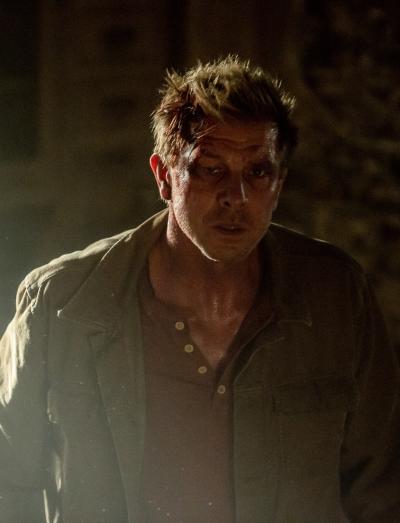
It looks like everyone, even dead people, are using others in particularly wicked ways.  "Norma" wants her son to kill someone.  Chick is playing Norman's delusions to gain fame and fortune for himself.  Caleb is playing to "Norma's" sense of brotherly bond to stay alive, though by the end he figures his sins have finally found him out.  Romero uses the friendly nature of his guard to put him off guard, and pushes an innocent stranger into a ride of terror.

There is an overwhelming sense of tragedy in Bad Blood, where the actions done decades ago, both good and evil, have brought a perfect storm that is devouring everyone in its path.  Of particular note is when Romero frees Jason (Joshua Hinkson), the man he forced to help him in his getaway.

A green-tinted sky and landscape presses down on Jason and Romero, as if they are both in a nightmare not of their making.  Jason softly begs for his life, pleading he has a wife, two children, and a mother.  He fears he will die for no reason, and Romero sees where he now is: lost, with no real way back from the mess he both made and finds himself in.  He seems almost genuinely stunned that anyone would think he, Alex Romero, would harm anyone.  It's a haunting, sad moment, a true tragic situation for two people who meant no harm (and in Jason's case, was just at the wrong place at the wrong time).

Credit has to be given to two fine performances: Johnson and Highmore.  Bad Blood is perhaps Kenny Johnson's best performance in his recurring role.  His Caleb is one that fears for his life, but who also sees, more than ever before, the harm and pain he's caused and how despite his own wish, he will never be able to make amends.  Johnson's Caleb is a man who is tired of running, who is resigned to his awful fate, who has given up on life.  The fact that he was given an unexpected reprieve, and then to have it taken in the worst way, by someone who sought to benefit from it but now finds he too has done evil, is tragic too.  Johnson is simply excellent in his regret, his pain, and in his remorse.

Highmore does something quite interesting: he deliberately heightens his voice when he is seen in drag as 'Norma'.  His adoption of more feminine manners and his voice going up to sound more feminine show that Norman was doing his best to be 'Norma' and not Norman pretending to be Norma.  Couple that with Highmore still having to play Norman, particularly when he has a scene with Madeleine Loomis (Isabelle McNally), shows that Highmore is consistently excellent in the 'dual role'.

As a side note, while she had only one scene, McNally was heartbreaking when she details her own loneliness and efforts to reach out to the nice young man at the motel.

Even Hurst as Chick, a character I've pretty much hated since his debut, does a great job when he has dinner with the 'two' of them.  A credit to how Farmiga and Highmore also worked well to make this particularly bizarre meal work pretty well.

There's something to be said where the guy who committed incest turns out to be the most sane person around.

Perhaps because Caleb was run down in the clumsiest of ways (seriously, text), I thought Bad Blood stumbled slightly.  However, this was another intense hour in a show that hopefully will come down to an epic series finale.

9/10

Next Episode:  Hidden

Thursday, March 9, 2017

Arrival: A Review (Review #895)


ARRIVAL

Timey-wimey.  This now-infamous phrase was begat on Doctor Who, and it is what came to me as I finished Arrival, a well-crafted but slightly puzzling film.  It's a very good film, well-acted, well-directed, keeping things steady if a bit slow.  However, because of timey-wimey, I can't embrace the film as much as I'd like to.

For the uninitiated, 'timey-wimey' is the explanation given as to how one event can essentially cancel out another event happening theoretically at the same time.  It's an easy way to reset events, to bring back characters believed dead back to life without actually having to go back in time to save them from death, and to cover up continuity errors.  Under the reign of Doctor Who show-runner Steven Moffat, 'timey-wimey' explained away all those pesky continuity errors between Episode A and Episode D and bring back dead characters.  He does this with Sherlock too, and many fans and critics (such as The Nerdist's Kyle Anderson), lavish praise on him for this.  I find the whole 'timey-wimey' thing ridiculous, but now I digress. 

I give all that information out though because Arrival, in its much more clever and elegant way, gives us a variation of 'timey-wimey',  which is one reason I am marking it down a bit.  It's hardly a terrible film as I've said, but still, that 'timey-wimey'...

Linguist expert Louise Banks (Amy Adams) has been brought in to help try and help translate the strange language of aliens that have placed their ships in 12 random locations around the world (the ship closest to her is in Montana).  Joining her is physicist Ian Donnelly (Jeremy Renner), both under the watchful and somewhat crabby eye of Colonel Walker (Forrest Whitaker).  The various locations around the world are attempting to work together, but there is still suspicion, fear, and terror among humanity as to the arrival of the new beings (news reports seen by those quarantined in Montana talk of riots, looting, forced curfews and chaos).

Every 18 hours the ship opens, and they go to meet the new beings.  Slowly, Louise and Ian start figuring things out when it comes to the two aliens, whom they nickname Abbott and Costello.  They manage to make progress, but soon more fear and paranoia come when Louise translates something the aliens write (their communication method coming in terms of symbols as opposed to sound): "Offer Weapon".

The Chinese, working on their own, translate things as "Use Weapon", and this creates a total state of panic among world leaders and military.  The Chinese in particular are going full-on war and go into radio silence.  Soon, the Russians, the Ethiopians and others are following their suit.  Louise and Ian desperately want time to work out a better translation, but things are spinning out of control.  Rogue members of the U.S. military attempt an attack on the craft while Ian and Louise are aboard. 

Things look hopeless until Louise ventures out once more, and this time the hovering ship sends a smaller craft to get her.  There, she meets Costello and is able to communicate with him/her (Abbott, she's informed, is dying).  Here, now, at last, Louise learns what they are there for, and it involves bending the rules of time itself.

She now must stop the paranoid, fearful world leaders, particularly Chinese General Shang (Tzi Ma) from firing on the spaceships. 

All this is intercut with scenes from Louise's own life, which involve a daughter that dies of cancer.  To say more would be to give too much away.


Arrival is a very deliberately paced film, never rushing or skimping on how time-consuming the translations or the fear among humanity would be.  That, I suspect, may test some viewers patience, as the film feels longer than its two-hour running time.  The big twist involving Louise's daughter Hannah might also test people.  With regards to it, frankly I don't think it was a big surprise.  Truth be told, part of me kept expecting it, and the fact that Arrival involves the blending of past, present and future shows that Eric Heisserer's adaptation of the short story by Ted Chiang, Story of Your Life, is not cheating the audience.  It is written and edited in such a way that the twist does not come out of nowhere or deliberately misleads audiences.

Still, I found it all a bit too pat, too easy a way to get out of a harrowing situation.  It wasn't unexpected, it wasn't illogical, but something still didn't sit right with me on that matter. 

However, Arrival handles the scenario extremely well, never being sensationalistic or unrealistic with the concept of aliens landing on Earth. It presents it in a mix of elegance and almost documentary-type, where the events are shown as plausible.  That is one of the great achievements of director Denis Villeneuve.

The other is in guiding his cast to give among their best work.  Amy Adams gives yet another brilliant performance, and having seen Arrival after the Academy Awards, I can see why so many were astonished that she failed to get a Best Actress nomination.

From what I see, obviously the WRONG redhead was nominated (and won), but again I digress.

Adams' performance is simply extraordinary: she plays the cool professional and a very haunted woman.  She has survivor's grief, the joys of motherhood, the agony of loss, the hope for a good future, as well as having to keep going on with her life.  Amy Adams always keeps things professional when she's with others, but when she's alone, she is vulnerable to what haunts her, even if her dreams and memories blend into each other.

Renner, among my favorites when not attempting to be shoved into action roles, is her equal as the strong and more down-home Ian, professional but with some humor to him.

Without going too much into things, Arrival is among the most intelligent science-fiction films to come down in a long time. It asks questions about fate, about whether we would alter the future/past even if and when we knew it.  It makes one think about whether fear of the unknown would make one attempt to understand it or destroy it.  Again, part of that 'timey-wimey' business simply didn't sit well with me, and at one point we had Renner's voice-over to speed things up (not being a fan of voice-overs, again not something I was thrilled by).

That being said, Arrival is a strong film, perhaps a bit slow for some, one that treats its premise seriously, with excellent performances.   

DECISION: B-

Wednesday, March 8, 2017

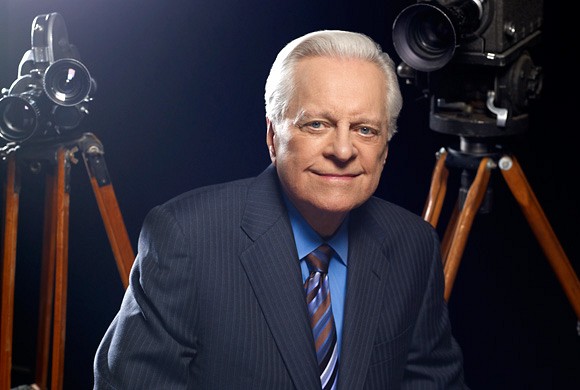
Aragon Remembers: Robert Osborne


Robert Osborne never made movies.  He wasn't a film director, never wrote a screenplay, and to say his acting career was brief is being generous.  Yet to generations of film viewers, particularly Generation X and Millennials, who came along after the glory days of the 'Golden Age of Cinema', Robert Osborne was the face of this era, how many of us learned about film.  It was thanks to him that so many received a Master Course to the Art and Joy of Classic Films.

I remember well when I first knew of Osborne.  I even recall the movie: On Moonlight Bay with Doris Day.  That was the film where I fell in love with Doris Day, and it was the first film I remember watching on Turner Classic Movies.   I'm pretty sure I had seen the channel before, but this was the first time I remember actually paying attention to it.  From that moment, I was hooked.

Robert Osborne, for many, was how we came to understand not just the importance of films pre-Star Wars, but the pleasure one can derive from them.  He didn't dislike Star Wars: on the contrary, he talked about how he got into a bit of a tiff with none other than Bette Davis when she flat-out told him she didn't like that kind of picture and he replied how could she say something so stupid.  He, however, was also dismissive of those who stated they didn't like black-and-white films, or silent films, without actually having seen any.

His brief talks before and after a film were not just methods of introducing or concluding a particular film's presentation.  They were little nuggets of both information and a fan's appreciation of them.  Osborne was no film snob.  I remember one time when he introduced the camp classic Queen of Outer Space, informing the audience that while Zsa Zsa Gabor was the main attraction, she herself was not the actual 'Queen of Outer Space'.  There was a soft, wry humor to this, not condescending but gently amused at something so offbeat as Queen of Outer Space

I think his importance to millions of TCM viewers was that he wasn't speaking as some grand old man of cinema, someone who was imparting his decades of knowledge to us, though he certainly did that.  He also spoke as a fan, someone who genuinely enjoyed these films.  The most passionate missionaries are those who love what they preach on, and Robert Osborne was passionate about film.  His enthusiasm and appreciation for both the Art and Pleasure of Cinema was infectious, and so many of us learned to love and/or appreciate all types of film thanks to him.

He insisted that these films and those who made them be studied and respected, not because it was a chore, but because it was a pleasure.  He took the remoteness from movies that were older than some of our grandparents.  Osborne, I don't think, ever said or believed that every film made before TCM started was brilliant or that films made today wouldn't measure up.  I think what he would have said was that we should give them a chance, to be open to all types.

His introductions to the films were erudite, elegant, and gentle, a calming presence that could be trusted to give us both information and enthusiasm.  Over his twenty-two years at Turner Classic Movies, he to many of us WAS TCM itself, the face of a network which was devoted to treating cinema's past with respect.  He was the perfect host: one who mixed vast wisdom with boundless enthusiasm.

I have great respect for Osborne's manner: elegant, respectful, and always willing to listen to those he shared the screen with whenever a guest discussed a film with him.  The only time I reproached him was when he mispronounced Mexican comedian Cantiflas' name for Around the World in 80 Days.  He said "CAN'T-in-flas", when it's pronounced "Cahn-TEEN-flaws".  Still don't understand why no one guided him.

I for my part will miss him, though ever since he quietly went off the air knew he had to be seriously ill.  The other hosts have failed to be universally loved as Osborne.  I know some people who dislike the weekend host, Tiffany Vasquez, because they hold she's too hesitant and withdrawn.  I have never liked Ben Mankiewicz, finding him irritatingly smug, more interested in showing off what he knows and making bad jokes and snide asides (usually against those he disagrees with).  Mank in particularly wouldn't suffer fools gladly, a skill Osborne perfected. 

Whatever their virtues, both won't match Osborne's courtly, elegant, and ever-so-polite and pleasant manner.

Robert Osborne loved film and film history.  He was an advocate to their importance.  I figure he'd be sad if he had learned about my Millennial coworker: she'd never heard of Bob Hope apart from being the name of a street, thought John Wayne was Batman, and not only had never heard of Cary Grant but, like Smalls in The Sandlot, asked, "Who is she?".  Worse would be her disinterest in learning about any of them, let alone watching any of their films.  His importance in introducing millions to a film catalogue that is unavailable on Netflix or Redbox cannot be underestimated. 

Robert Osborne was the warm, gentle, congenial and elegant face of what is called 'classic film'.  So many learned to love and appreciate the joy and craftsmanship of film thanks to Robert Osborne. 

Thanks For the Memory, Bob.

1932-2017

IN MEMORIAM

Monday, March 6, 2017

Florence Foster Jenkins: A Review


FLORENCE FOSTER JENKINS

The Chanteuse Has No Chanson...

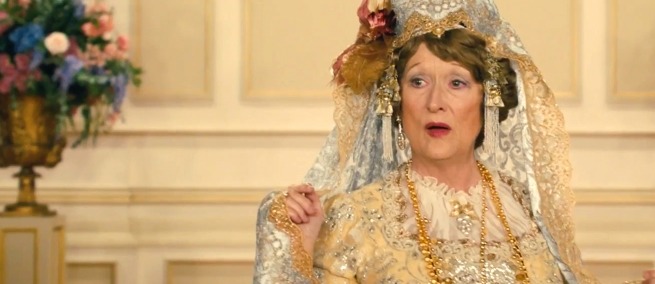
When accepting the Cecil B. DeMille Award at the Golden Globes, Florence Foster Jenkins star Meryl Streep took a swipe at the 'little people', telling us great unwashed that without her (and immigrants like Canadian Avant-garde actor Ryan Gosling, Indian-British actor Dev Patel, and Ethiopian-Irish actress Ruth Negga...and also Italian-born Amy Adams and Israeli-born Natalie Portman), we'd be stuck watching nothing but football and Mixed Martial Arts, which she oh so helpfully pointed out were not 'the arts' (as if I'd suddenly confuse Conor McGregor with Henri Matisse).   One wonders whether Miss Streep is aware that to many people, watching nothing but football and MMA would be nirvana, and would be a damn sight more preferable than watching something like Florence Foster Jenkins, her most recent film.  Florence Foster Jenkins, based on a true story, is not terrible (and Streep certainly isn't terrible in it).  However, while billed as a comedy, I found it more a mean-spirited film, filled with pretty reprehensible and out-of-touch rich people who haven't a clue about reality.

Let those analogies roll on in. 

Florence Foster Jenkins (Streep) is a doyenne of New York society and a patroness of the arts.  She also believes herself to be a great opera singer.  And why wouldn't she believe it?  Her ever-attentive husband, St. Clair Bayfield (Hugh Grant), a failed actor, tells her so.  Her high society friends tell her so.  Even an assistant conductor of the Metropolitan Opera, who comes to give her singing lessons, tells her that her voice is something unique.

Enter Cosme McMoon (Simon Helberg), a struggling pianist and composer, who has been selected to play the musical accompaniment to her singing lessons.  At the first lesson, McMoon gets a listen to this voice...and is shocked, horrified, even slightly amused at the result.


St. Clair Bayfield, who has a secret mistress squired away at an apartment the wealthy Jenkins pays for, convinces McMoon (with some words and cash) to essentially not be so picky about Madame Florence's unique interpretation of chanson. Bayfield goes out of his way to make sure this illusion (or is it delusion) is kept: he organizes recitals with a very select guest list that will ensure Madame Florence continues in her delusions.  He even pays off reviewers to put positive notices for her to read.

Of course, not everything can go smoothly, and at one recital, a nouveau riche woman has to be essentially dragged out when she cannot control her laughter at the awfulness of Madame Florence's performance.  Artist friends of Bayfield's mistress, Kathleen (Rebecca Ferguson) also snicker at the obliviousness of Madame Florence, finding it all so amusing, even if St. Clair is not amused and Florence is oblivious.

It may literally all be in her head, as Madame Florence is secretly suffering from a long-term case of syphilis, brought about by her first husband.  The illness is hidden with wigs and is not known to anyone save her, St. Clair, their housemaid, and their doctor.  Perhaps the syphilis has made her tone-deaf, or simply bonkers.

As she and McMoon continue to bond, with McMoon discovering St. Clair's mistress, Florence Foster Jenkins grows more irrational.  She decides to give a recording of her favorite arias as a gift to members of the Verdi Club (a society she helped found), and despite themselves a record of her singing manages to find its way onto radio.  St. Clair is horrified, even more so when he finds that it is Florence herself who made it available. 

The worst is yet to come though, as now, in an effort to help with the war effort, she has booked Carnegie Hall for a concert, giving away a thousand tickets to various servicemen in New York as thanks for their service in World War II.  St. Clair, who has now lost his mistress, is simply incapable of stopping his wife from making an unwitting spectacle of herself.  McMoon is highly reluctant to do the recital too, realizing that associating with someone as appallingly bad as Madame Florence could be the death of his career.  Eventually, his loyalty to Madame Florence outdoes his fears for his career.

The concert goes pretty much as one would expect: with hundreds of drunk servicemen, even some celebrities like Cole Porter and Tallulah Bankhead, Madame Florence for the first time in her illustrious career meets with something she has never heard: gales of laughter and catcalls.  Madame Florence is genuinely confused, failing to understand why people are not receptive to her performance as they have been in the past.

Despite this, she manages to be triumphant (though whether because the audience simply loved the sorry spectacle of someone so clearly unable to sing and being oblivious to it or because people felt genuinely sorry for her ineptitude is unknown).  St. Clair and McMoon do their best to keep the one negative review from the New York Post from her, but she manages to find it...and promptly drops dead after reading it.

Technically, she lingered for a few days, but essentially one bad review kills our heroine.


After watching Florence Foster Jenkins, the first thing that popped into my head was how delusional everyone basically was.  There is a line between eccentric and flat-out bonkers.  The film wants us to think Madame Florence was merely eccentric, a delightful but offbeat woman who marched to the rhythmically-challenged drummer in her head.  The end result for me was instead one of almost horror.  You can argue that she wasn't completely responsible for the lunacy of her career, as she was surrounded by sycophants who lavished her with praise when it was clear she was horrible.

However, she ends up looking deranged, almost unhinged, and not just because her voice is so Satanically atrocious.  Other aspects of her persona make her look even more crazy that she already appears to be: the grandiose wardrobe, her firm instruction about not sitting in certain chairs that were probably used by other musical 'geniuses' (oddly, bringing to mind the character of Sebastian from La La Land, who similarly insisted that no one touch, let alone, sit on a stool once owned by Hoagy Carmichael.  He was just a snob, but she was flat-out crazy).

The fact that no one dares tell her she is not a good singer makes everyone around her look mercenary, more interested in keeping their own pockets lined than in being honest.  The question about why no one could simply tell her that her voice was incapable of reaching the heights she so firmly believed she did is never answered, and I'm not sure it was even asked.

I don't know why the trailers make it look like St. Clair (who has a remarkably healthy ego of his own, insisting that posters advertising Florence refer to him as an 'eminent monologist and actor') was her true-blue loyal mate when we find that he not only had a mistress, but seemed rather unapologetic about it.  Granted, he and Madame Florence did not consummate their marriage due to her syphilis, but don't come to me and tell me a man can have a mistress and simultaneously care for an old woman with delusions of grandeur.  It would have been one thing if Madame Florence knew of Kathleen, understanding that St. Clair had needs she could not meet.  However, given the extent St. Clair went through to keep Kathleen a secret, the idea that he did it all for Florence stretches credulity.


Streep and Grant gave good performances.  That I cannot deny.  However, despite their good performances they never came across as anything other than crazy and predatory respectively.  One continues to wonder why St. Clair fostered this insane/inane idea that his wife was some grand diva when she clearly, painfully wasn't.  The film never made the case that he did it to spare her feelings, and more than once it looked like he and everyone else was interested only in taking advantage of her musical dementia for their own gain.  Throughout Florence Foster Jenkins, I never got the sense that St. Clair actually loved Florence, but merely tolerated his Bunny.  He clearly could have stopped her from making a fool out of herself before the whole world, but chose to acquiesce to her wishes to give a major concert.  By treating her as a child, or a fragile piece of glass that would shatter at a negative reaction, everyone around Florence ended up being more cruel than kind.

Again and again I never believed Florence Foster Jenkins wanted us to like our main character or to find her endearing.  I thought that it basically wanted us to laugh at her, to pile on more mockery on the memory of a deluded, apparently mentally unstable woman in little position to defend herself.

Two final points on Florence Foster Jenkins.  My mother came while I was watching the film, but she couldn't see the television I was watching the film on.  When the film has her performing Mozart's Queen of the Night, my mother asked, "Why is that poor puppy crying?" 

I am knocking down the film and giving it a slightly negative review, despite good performances from Streep and Grant, because of Simon Helberg.  Not because he gave a bad performance, but because in real life Cosme McMoon was half-Mexican, and the film opted to cast a non-Hispanic in the role.  It's the height of hypocrisy to tell us, the great unwashed, those who enjoy football and MMA, about the joys of diversity and tolerance...then insist that actors who are ethnically incorrect play roles they are not suited for, robbing the same minorities of an opportunity to work.


Unless of course, it's for film roles.  Then by all means, Build That Wall...

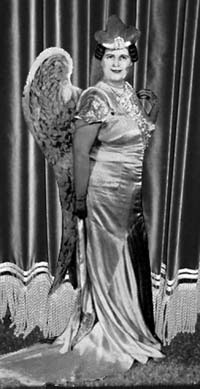
1868-1944
And in case you wanted to hear Mozart's Queen of the Night aria from The Magic Flute (one of the most difficult arias in all opera) done right...


DECISION: C-


And as a bonus...

Sunday, March 5, 2017

The Silver Chalice: A Review (Review #893)

THE SILVER CHALICE


The word 'inauspicious' would be a good word to describe The Silver Chalice as regards the career of Paul Newman.  Newman became one of the most respected actors of his generation (and his blue eyes didn't hurt either).  Nevertheless, in his debut on film, The Silver Chalice became an embarrassment to him, so much so that he turned down the title role in Ben-Hur because, in his words, he didn't want to ever again 'act in a cocktail dress'.  This is a pledge Newman kept, as I cannot think of any Biblical or historic epic that he ever worked on after The Silver Chalice.

However, the film exists, and it will forever be linked to Paul Newman.

You don't watch The Silver Chalice. You endure it. It's a film that more than earned Newman's scorn.  An embarrassment to just about everyone involved, it is perhaps the nadir of Biblical films, a film so misguided, so inept, that it might even have been a 'so bad it's good' title if only for the fact that it's so bad, it's just plain bad.

It's a bit difficult to give a summation of the plot of The Silver Chalice since it tends to bring things up and either forget about them or mention them long after we've moved on to other stories, but I'll do my best.  A young man is adopted by a wealthy Greek patron of the arts, seeing the young man's talent for sculpture.  The young man, now named Basil, finds his first true love with a slave girl named Helena, who escapes.  Basil would have been wiser to have left with her, for after his adopted father Linus dies, his wicked uncle Ignatius manages to pull a fast one, disinherit Basil (Newman) and have him sold off into slavery.  The only way for Basil to be restored is to get one of the five witnesses to his adoption to come forward.  Three are dead, and two are missing.

Many years later, Basil, now a silversmith, is found by Helena (Virginia Mayo), as well as Doctor Luke (Alexander Scourby).  Both want Basil free, though I'm not exactly sure what Helena's scheme is.  Doctor Luke buys his freedom for one reason: he needs someone to make a silver chalice to hold The Holy Grail, currently in possession of Joseph of Arimathea (Walter Hampden).  Helena has gotten herself involved with Simon the Magician (Jack Palance), whose feats of wonder astonish the simple Greeks and Jews in Antioch.  Simon is approached by a Jewish revolutionary who wants Simon to supplant the cult of 'Christians', with their effete theology of loving your enemy.  If Simon can convince the people that he is greater than this Jesus of Nazareth, he can help them form a revolution.

Somewhere in this Basil meets with Joseph's granddaughter Deborah (Pier Angeli), who is a Christian.  Well, somewhere in all this he manages to make the silver chalice, complete with the face of the apostles save for Peter, finding the making of the face of Christ rather impossible.  By the time the film ends, Basil and Deborah are married, go to Rome to meet Peter (Lorne Greene), and Helena & Simon fall into the court of Nero, where Simon decides he will face Peter in some sort of miracle death-match that involves the completely crazed Simon flying in the Coliseum.  For some reason, he fails, and in the ensuing riot Helena is forced to try and make some miracle, the silver chalice and the Holy Grail get lost when a mob storms Simon's home, and Basil and Deborah sail off.


It's a bit hard for me to really give an accurate overview of The Silver Chalice given that I kept falling asleep at it.  I did try to keep up with whatever wild turns or sheer lunacy the film went to, but after a while I gave up.  There is simply no saving The Silver Chalice from itself, as it is absolutely determined to make a spectacle of itself (and not in a Biblical spectacle good way).  It is all but impossible to make a good film when Lesser Samuels' adaptation of Thomas B. Costain's novel has such leaden lines as "Yes, you're right Theron.  I am a rich man, but I'm poor because I'm childless".

And that was within the first five minutes!  The rest of the script goes along those lines, with such awful dialogue that doesn't so much tell a story or even move the plot along but just give the poor actors something to say.  The fact that the story seems to go all over the place with no chance for any character development makes things all the more horrific.

Perhaps the script is why the acting is equally stiff, somewhere beyond parody.  Newman cannot be held to blame for the blankness of his performance.  I blame director Victor Saville (in his final directing job) for the fiasco of just about everyone's performance.  Those who weren't broad (like Mayo, doing more twirling than acting) were stiff and emotionless (like Newman).  The performances consisted of mostly people either standing around, striking poses and making 'grand pronouncements' or people showing no emotion.

There was one performance that seemed to be from another world, and that was Palance as our villain.  Perhaps he figured The Silver Chalice was going to be a disaster, or maybe he was just drunk.  However, there was a broadness to Palance that transcended broadness into sheer camp.  No man who wears red tights that appear to have sperm painted onto it will ever be described as rational.

There really isn't anything to recommend The Silver Chalice save for Franz Waxman's score, which is so far above the project.  It's no surprise that Waxman's score earned an Oscar nomination, but now we have the sad situation of having The Silver Chalice be an Oscar nominee.

Stiffly acted, The Silver Chalice is so sleep-inducing that one really cannot keep up with what's going on.  Newman survived this, though perhaps he should have laughed it off rather than issue apologies (few expect a first-time film actor to knock it out of the park in their debut...just ask Jessica Lange).  Mayo and Palance survived as well.  The Silver Chalice is not a film I'd recommend as it's too boring.  However, if you're having trouble sleeping...


DECISION: F 

Thursday, March 2, 2017

Bates Motel: The Convergence of the Twain Review


BATES MOTEL: THE CONVERGENCE
OF THE TWAIN

As we get closer to the series finale of Bates Motel, the show is absolutely determined to amp up the crazy.  In a certain sense, it has to: with Mother Bates technically dead, we have to have some wild finishes.  The Convergence of the Twain gives us a wild, wild finish, and actually makes good use of the one character I have always, always disliked.

Ghosts figurative and literal are all coming out.  Norman Bates (Freddie Highmore) continues to hold to his idea that his mother, Norma Bates (Vera Farmiga) is alive and hiding out at the house while pretending to be dead to the rest of the world.  He manages to throw in some good taunting of his stepfather, Sheriff Alex Romero (Nestor Carbonell) for good measure, showing himself to be very much alive.  Romero won't be denied, and his rage explodes into a fight in jail.  This may be a blessing in disguise, as it may allow him to be moved to another facility. 

For his part, Norman is not too eager to go on the date the hardware owner Madeleine Loomis (Isabelle McNally) has set up for him, but he quickly changes her mind when Madeleine tells him it's a double date.  He is even thrilled when he learns who her husband is: Sam Loomis (Austin Nichols), who went to the Bates Motel for a sexual liaison with his mistress, checking in as "David Davidson".  The moralistic, smug Norman is pleased to know who "David Davidson" is, but isn't about to tell his secret...and Sam is both worried and angry that Norman may reveal his indiscretion.

Norman continues to struggle against his growing desire for Madeleine, particularly since she bears a resemblance to Norma.  Norman now really slips out of control: going to a bar he truly cannot dissociate between himself and Norma, to where he carries on a conversation with the bartender as essentially Norma, but with dialogue that might make it look like it came from Norman.

Enter into all this lunacy Uncle Caleb (Kenny Johnson).  Having left Dylemma, he comes to find Norma, unaware that she is dead.  Once he learns this, Caleb is devastated.  Things are not helped by the emergence of Chick (Ryan Hurst).  Chick and Norman have come to a business arrangement: Chick will bring animals for Norman to stuff and then sell them to art collectors, splitting the profits.  Chick taunts Caleb with the knowledge that Caleb had raped Norma, but Caleb, like Romero, connects Norma's death to Norman's actions. 

Caleb, in a rage, goes to the house, where he makes a shocking discovery: Norma's body, frozen, all dressed.  He's knocked out, and Chick, who followed Caleb, comes across a scene that is so insane that he takes it all quite well: Norma's corpse, Caleb on the floor, and Norman, in full drag, telling him, "Well, now you know my secret.  I'm still alive".


We've had crazy in Bates Motel before, but few episodes, at least to my memory, have been flat-out bonkers as The Convergence of the Twain.  It has Freddie Highmore's best performance so far, one that would be considered a strong one for Emmy consideration if not for the Television Academy's fixation on ignoring the show altogether.  From Norman's smugness and self-righteousness at taunting Romero and looking down his nose at Sam to his ability to 'be Norma', Highmore really pushes himself.  We see the darkness and arrogance that Norman has, along with his conflicting emotions over Madeleine.  He dominates The Convergence of the Twain, and makes the difference between Norman and Norma believable, even frightening.

A highlight is the editing when Norman and 'Norma' are carrying on a conversation with the bartender (who was polishing the glass...I don't go to bars often, but is that ALL bartenders do?).  Not only is the editing itself really first-rate, but how the conversation flows between the 'three' of them.  It got to the point where I expected Norma to lose control and flirt with the bartender, which would have been stranger since from the bartender's perspective, it would have been Norman who was doing the flirting.  It was such a bizarre, surreal scene, one elevated by the writing, the editing, and Highmore and Farmiga's performance.

This as I said, is the first Bates Motel episode where Chick didn't annoy me.  He even appeared to be one of the few sane people in White Pine Bay, and his surprisingly calm reaction to witnessing the lunacy, a very soft "Holy S-hit", is almost wryly amusing.  Here he comes in to a dead woman all dressed in fine clothes, his enemy on the floor having been knocked out by a young man (22 if we go by the name on the joint tombstone, Norman born in 1995, Norma Louise: 1974-2015) dressed as the dead woman, complete with wig.

It's all pretty bonkers, but Chick takes it all in remarkably well. 

We also integrated the Loomis story into things in a way different from that of Psycho.  McNally is wonderful as the sweet, slightly flirtatious Madeleine and Nichols matches her as the slightly sleazy but not horrible Sam.

A few things didn't quite work.  One wonders why we went to Emma and Dylan at all, but it's not a surprise given how Bates Motel has struggled to integrate them into the show.   Johnson's grieving at Norma's grave was a bit over-the-top for me, and the Romero storyline better start paying dividends soon. 

Still, apart from that, The Convergence of the Twain gave us more cray-cray, which from Bates Motel, is what one loves the most.

9/10

Next Episode: Bad Blood

Wednesday, March 1, 2017

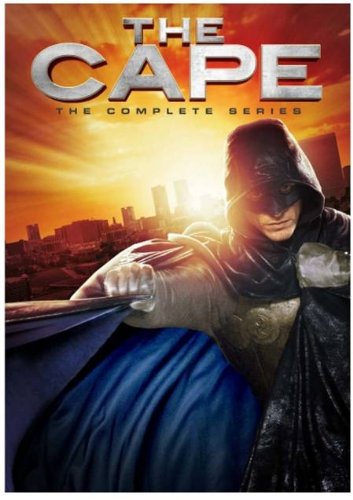
The Cape: The Complete Series Overview

THE CAPE: THE COMPLETE SERIES 

I can tell you quite easily why The Cape failed. 

First, the title didn't suggest an action series.  It suggested a vacation home.  Second, selling a concept of The Cape (a man who is believed dead and becomes a secret vigilante based on a nonexistent comic book) would be difficult to an audience tired out from the Heroes debacle and seemingly more interested in labyrinth storylines a la Lost.  It seemed a bit too silly for mainstream audiences and not adventurous enough for Comic-Con devotees. Third, The Cape was creating an original superhero, so unlike something like The Flash, Supergirl, or even something a little more opaque like Legends of Tomorrow, there is no built-in audience for something like The Cape.

Finally, did I mention the title (one of the worst for a masked hero television series)?

Still, I was a fan of The Cape (one of a handful), who followed most of the episodes until I frankly couldn't find it anymore.  Perhaps The Cape was simply ahead of its time, now that comic book adaptations are all the rage (Arrow, for example, premiered a year after The Cape, though that was based on a previous brand, which opened the floodgates to such series as The Flash, Supergirl, Agents of S.H.I.EL.D., Agent Carter, Daredevil, Legends of Tomorrow, Gotham, and Luke Cage among others on a wide variety of viewing formats).

Perhaps, however, The Cape was bad, and my enthusiasm for it has clouded my 'analytical critic's mind', to coin a phrase.  Five years on, it is time to reevaluate The Cape, to see if it was shunted off too quickly, or whether it should remain a curious anomaly in the annals of action hero television series: an effort to create something original with vague connections to comic books that simply failed.

The Cape lasted all of ten episodes (the last one airing online only), and there was not enough if any interest to have it sent to another network or online (was there such a thing). 

In a nutshell, The Cape was the following: Vincent "Vince" Faraday (David Lyons) is one of the few honest cops in Palm City.  He's so honest that when the Police Chief is assassinated, Vince is the one framed.  The actual assassin is, well, two-in-one: billionaire industrialist Peter Fleming, who has a secret identity of master criminal Chess (James Frain).  Faraday is not just framed for the murder, but is apparently murdered live on air, horrifying Vince's wife Dana (Jennifer Ferrin) and their son, Trip (Ryan Wynott). Adding insult to injury, Vince is declared "Chess", and all the criminal acts are blamed on poor Vince.  Fleming's company, ARK Enterprises, uses this to take over the Palm City Police Department, where Fleming begins to rule in an autocratic way.

Faraday is rescued by a group of thieves who call themselves The Carnival of Crime.  No surprise given that it is centered around circus folk, with the ringmaster/ringleader being Max Malini (Keith David).  Among his cohorts are the tough dwarf Rollo (Martin Klebba), a hypnotist named Ruvi (Anil Kumar) and a contortionist, Raia (Izabella Miko).  Malini takes Faraday on for reasons of his own, training him in various arts, with particular use of a strong cape that can do just about anything.  Faraday decides to clear his name, protect his family, and bring Fleming/Chess down by using a new identity, that of Trip's favorite comic book hero: The Cape.


Aiding The Cape is a mysterious figure called Orwell (Summer Glau), a blogger who finds information on the criminal world and helps him fight both Chess/Fleming and various other figures.  One particular figure is Dominic Raoul, better known by his nom de guerre, Scales (Vinnie Jones), whose skin resembles that of a snake. 

From this premise we go through both the growing conflict between The Cape/Chess-Fleming, and on occasion other criminals bordering on the super-criminal.  Dana and Trip attempt to rebuild their lives, with Trip getting actual visits from The Cape and Dana struggling with both the Faraday family friend, new Police Chief Marty Voyt (Dorian Missick), who is working with Fleming, and her own feelings for her new coworker, DA Travis Hall (Mather Zikel). 

Again, I think part of the reason The Cape failed is because of the name.  It's a point of humor even among the citizens of Palm City: in one episode, when a store clerk hears that the person who saved him call himself "The Cape", he stares puzzled and says something along the lines of 'you'll work on it'.  Early on, the silliness of "The Cape" kept cropping up, and for me, if you can't get your characters to take part of the premise seriously, you cannot get your audience to do so.

The Cape seems such a silly title for a lead character (though in its defense, no less sillier than say, The Blue Beetle), and the idea that there's a comic book character called 'The Cape' whom Faraday can match is also stretching things a bit much.  We were faced with a superhero we didn't know and I figure many people just couldn't bother with investing time with him.


It's a real shame though, since The Cape has some extremely positive aspects.  At the top of the list is Lyons as Faraday/The Cape.  Lyons makes Vince's desire to return to and protect his family a real moving, touching aspect.  Sometimes I did find Faraday's straight-arrow nature a bit grating, coming off as excessively moralistic, especially against The Carnival of Crime.  Sure, they're criminals (only thieves), but they helped Faraday at his worst, providing him with food, shelter, and the cape itself.  Faraday getting all huffy about their criminal activities may stem from his cop mentality, but it doesn't make it more obnoxious.

As a side note, you have to love a criminal organization that calls itself "The Carnival of Crime", especially since they ARE a literal carnival (or at least hiding out in one). 

Another high-point is Keith David as Max, the ringleader/master of said Carnival.  Malini is a wonderful character: shrewd, with a certain showmanship in his criminal capers, and someone who has a heart and a brain, a mixture of compassion and cleverness in dealing with people good and bad.  It's clear that Max is playing a long game when it comes to Faraday and The Cape, though what exactly it was we'll never know.

Keith is also blessed with one of the most beautiful voices this side of Creation, one who could say anything and make it sound wonderful.

I am of two minds when it comes to Frain's Chess/Fleming.  I wonder if it was a good idea to have started out with some sort of deranged villain when the whole 'evil businessman' aspect would have worked just fine.  It might also would have worked out well if we had a mystery around who "Chess" was instead of starting out with "oh look, Fleming is Chess".  The Cape at times seemed unsure as to how to pursue this storyline: sometimes Fleming could do bad all by himself (to coin a phrase), and others he looked like he was controlled by Chess.


Give Frain credit: at times he found the humor in the inherent lunacy of The Cape.  His efforts to 'be with the common man' fall flat, but in a humorous way.  Of particular note is when an effort is made to soften his image by having him wear a cowboy outfit.  The mixture of the seriousness, the evil of Fleming with this buckaroo ensemble is intentionally hilarious. 

Still, the whole Chess/Fleming dichotomy at times made one wonder where they were going to take this.  Orwell's story was also a bit muddled: we learn that she is Fleming's daughter (something Faraday or the Carnival of Crime never learns) and that she might too be slipping into some mental issues.  I figure all this would have been explored if The Cape had continued, but that was not to be.

I found that Glau was not a great actress, but at least not a horror.  I can't quite say that for Ferrin and Wynott as Dana and Trip.  Wynott in particular seemed so blank and boring as Trip, not changing his expression from episode to episode.  For a while I found Ferrin pretty weak too, but it wasn't until the later episodes, particularly the series finale Endgame (which I think, if the show had continued, would have been named Deja Vu), that she seemed to pick up a bit.  Perhaps giving her a real conflict over staying true to her husband's memory versus her confused feelings for Travis helped.

I think it also helped to have Zikel play against her, for his character of Travis seemed to be a real person, one who is kind, attracted to Dana, a potentially good stepfather to Trip, and an honest man in the bastion of corruption of Palm City.

As I watched The Cape, there was certainly a good idea rattling around there.  An honest man forced to adopt a secret identity of an already existing character who fights crime might work.  Lyons and David gave consistently good performances.  The show was building, but sadly I think too many found the whole thing idiotic.

Mores the pity.  Perhaps in the future I'll do reviews of all ten episodes, but for now, all I can say is that I enjoyed The Cape.  Maybe it was silly, maybe it was absurd, but for me, it was entertaining.  Not brilliant, but entertaining.