Showing posts with label Feud. Show all posts

Sunday, May 7, 2017

Feud: Bette and Joan. The Complete First Season


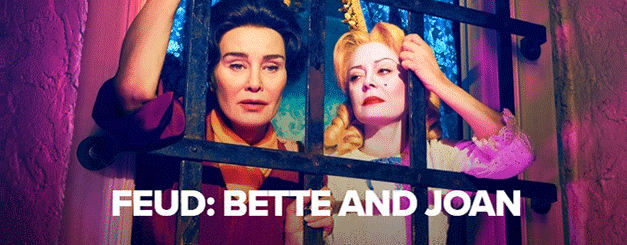
FEUD: BETTE AND JOAN

Television now has allowed itself to tell one story, briefly, without a desire to go on for several seasons.  Feud: Bette and Joan is in the tradition of another Ryan Murphy production, American Horror Story, in that every season will tackle another subject (next season, it will be the feud between His Royal Highness Charles, Prince of Wales, and his first wife, the late Lady Diana Spencer.  Still no plans as of this writing to tackle Olivia de Havilland/Joan Fontaine feud.  All's the pity).

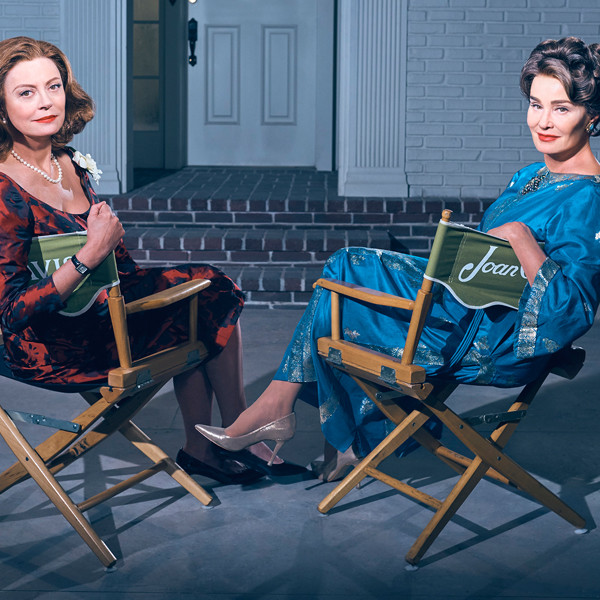
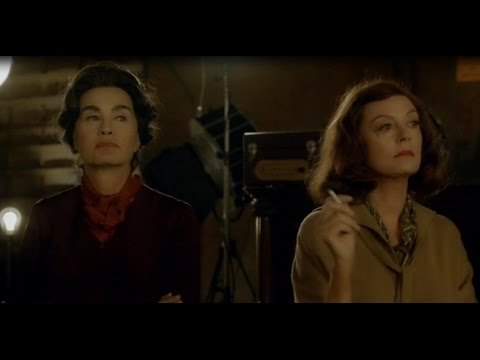
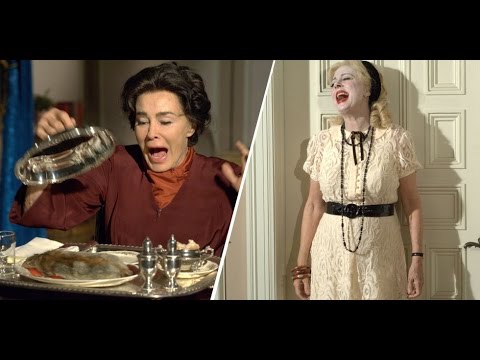
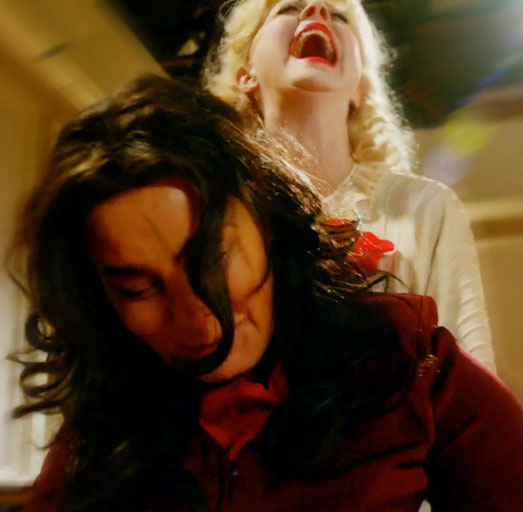
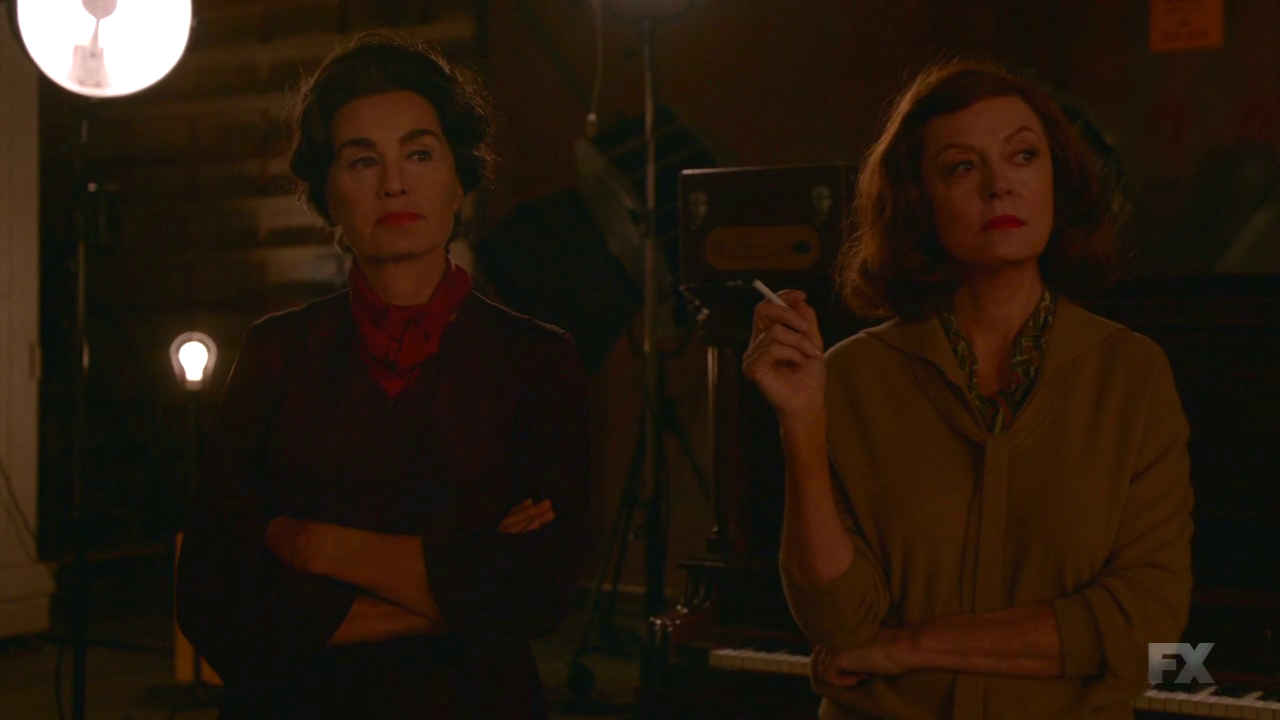
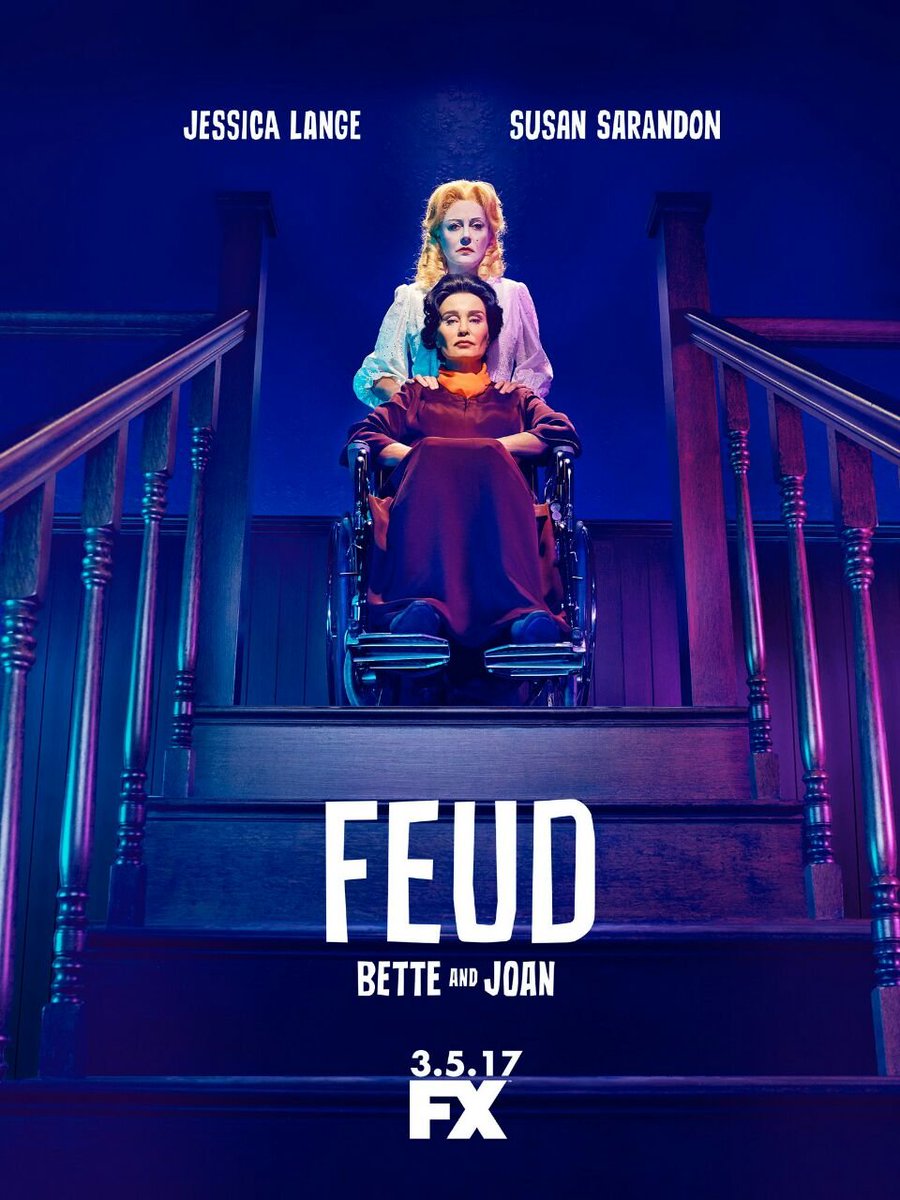
Bette and Joan chronicles the war between Bette Davis (Susan Sarandon) and Joan Crawford (Murphy muse Jessica Lange) primarily centered around the making of the only film they made together: What Ever Happened to Baby Jane?. We see how these two divas undercut each other in ways large and small, both during the production and the follow-up, Hush...Hush, Sweet Charlotte (which Crawford pulled out of through less-than-straightforward, unable to endure another round with Davis). It's a well-produced limited series, with standout performances by Lange, Sarandon, Alfred Molina as director Robert Aldrich, Stanley Tucci as Warner Brothers head Jack Warner, and Judy Davis as gossip maven Hedda Hopper.

Curiously enough, the war between Hopper and her fellow gossip maven Louella Parsons might make for a good Feud season, their rivalry already covered in a television movie, Malice in Wonderland.

I say well acted, which it was, but I also was not convinced by Lange's portrayal of Crawford.  Physically, Lange and the make-up crew did wonders to capture the Crawford look.  Vocally, in all eight episodes of Bette and Joan, Lange never sounded like Crawford.  There was a soft, breathy tone to her voice that didn't come close to what I remember of the real Crawford. 

Much better was Sarandon as Davis.  It wasn't an impersonation, but Sarandon got the short, clipped manner to Davis.  Molina was a delight as the forever put-upon Aldrich, having to deal with power-mad moguls and temperamental divas making his life eternally miserable. Davis was all acid as Hopper, frenemy to Crawford.  I think Tucci wasn't spot-on as the tyrannical Warner, the last of the great movie moguls, but when it came to Hollywood, Feud really is more about how it is today than how it was yesterday.
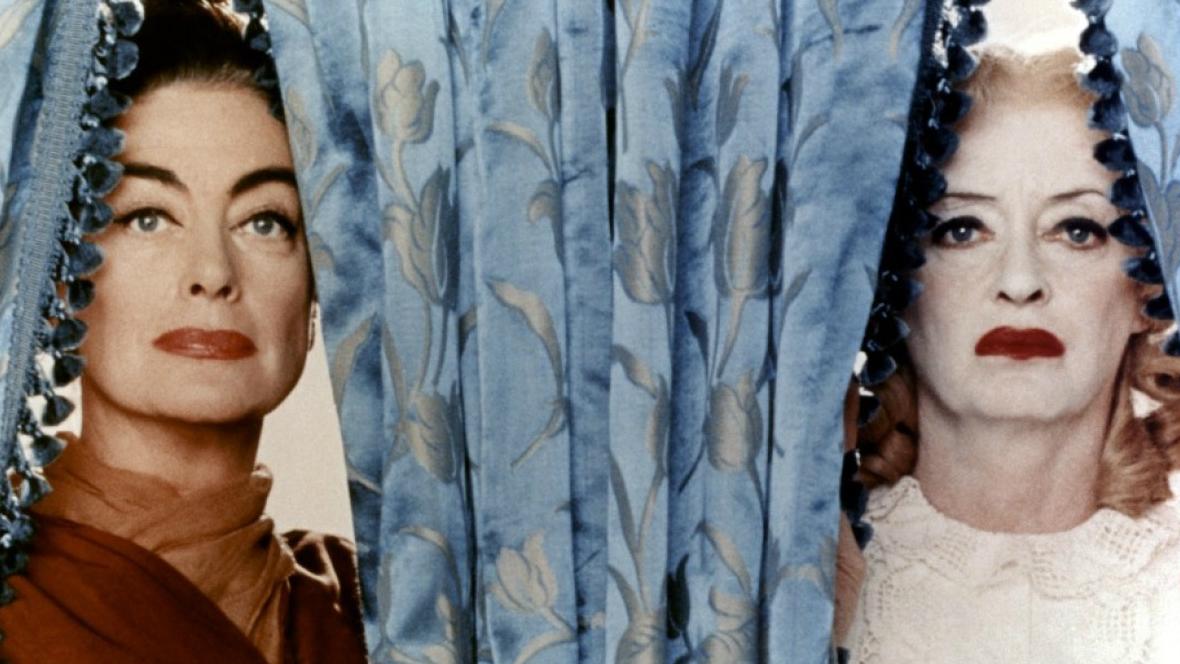


Feud is not just a tale of two women locked in a lifelong war that went on beyond the grave (Davis, outliving Crawford by more than a decade, still bitched about her long after Joan's body was a-moldering in the grave).  It's also about the relatively low position women have in Hollywood.  Warner at first doesn't want to hire Crawford and/or Davis for anything.  First, both of them gave him endless trouble when working for Warner Brothers (Davis more than Crawford, but both insufferable to him).  Second, he considers both of them, women in their fifties, would appeal to audiences.

Warner coldly dismissed them both due to their ability to arouse him sexually.

There's more than poetry in that idea, as today very few actresses past forty have both box office and 'sex' appeal.  Meryl Streep is a rare example, but today's Hollywood, like the one that saw Crawford and Davis relegated to has-beens, does not go out of its way to hire actresses of a certain age.  As I've pointed out, in the past decade the Best Actress Oscar winner has been on the young side (ironically, Streep pushes the average age up), while the Best Actor winner tends to be older.  The youngest Best Actor winner this decade is actually older or the same age as five Best Actress winners.

Older actresses (say 50+) are not given major parts in big films.  It is more than ageism, though that cannot be dismissed.  It is because Hollywood today is reluctant to make films that would require older actresses.  Today's Hollywood is more focused on comic book adaptations, franchise building, and the foreign market (particularly the Chinese market) to care about Sharon Stone, Julia Roberts, or Meg Ryan.

Think on that versus older actors like Jeff Bridges or Kurt Russell, who still appear in blockbusters.

In More, Or Less, we saw what was true then is true now: behind the scenes, it has not improved.  Female directors are still rare, female writers still struggle harder.  One character speculated that by the 1970s, studios would be forced to hire more female directors and writers because there would be more women. What was not seen was that the studio would respond to population growth, but not that of women, but of young boys.


If women were the economic powerhouse that it was thought they might be, would we really have the Marvel Cinematic Universe or its poor relation, the DC Extended Universe? Would we have The Fast & The Furious franchise (which came about virtually by accident)?  Perhaps the latter: F&F has wide appeal through all races and genders, but it is more male-centered than female.

Even in more female-centric films and television, they tend to be closer to what might appeal to men: gone are the days of Loretta Young, sweeping in wearing elegant gowns on her anthology show.  Now it's women like Chelsea Handler and Amy Schumer, women who've built their careers on being as raunchy, even vulgar as any of their male counterparts might be.  

I doubt anyone who watches Handler, Schumer, or Samantha Bee would imagine them wearing gowns and reveling in the glories of femininity.  Part of it is the change in society, which equates equality with similarity.  I've long argued that men and women are equal, but are not the same.  As such, things that might have mattered to Davis and especially Crawford: good parts where they could be strong women without being female versions of men, do not matter to those who are now en vogue in Hollywood.

Women are still not employed in larger numbers as directors or writers, let alone in the business office. So long as this continues, films will continue to go where the market is, and the market is in two places: China and the boys middle-school locker room.

Feud, in a sharp way, uses the past to illustrate the present.  Women in front of the camera still struggle to get parts if they are past their child-bearing years (will people like Jennifer Lawrence or Emma Stone really go on to play Chekov on film once they get to be Sharon Stone's age?).  The desire a woman may have to write and/or direct will still face a harder struggle than a man might.

Even if a man did get his film done, like Aldrich he might find himself having to constantly battle with studios who won't back his own vision and want to 'improve' on things, usually but not always with disastrous results.

The more things change...

Feud: Bette and Joan has so much going for it.  It has great acting, writing and directing.  It has nods to other projects like the Crawford biopic Mommie Dearest.  It gives us sometimes sympathetic portraits of Davis and Crawford, two women who despite protests to the contrary were far more similar than different.  It also has much to say, in a subtle way, about how things are now versus how things were then: the gimmicks, the struggles for things large (Oscar campaigns) and small (order of billing).   It's not a bitchy slap-fest of two old broads (though we have good old-fashioned sniping), but a well-crafted production about how something unique emerged out of a lifelong antagonism between two legendary actresses.

Wednesday, May 3, 2017

Feud: You Mean All This Time We Could Have Been Friends? Review


FEUD: YOU MEAN ALL THIS TIME WE COULD HAVE BEEN FRIENDS?

Feud is a tragedy.  Not in terms of production, for it's a well-created, well-crafted limited series. Instead, it's a tragedy in that we see how Joan Crawford and Bette Davis, at the center of the first season, ended: sad, relatively lonely, and with little to show for their decades-long rivalry. You Mean All This Time We Could Have Been Friends? wraps up this sad and sordid story of these two divas, who hopefully will be remembered more for their work onscreen than their wickedness off screen.

The episode, longer than most, first goes into chronicling Joan Crawford (Jessica Lange).  Facing serious health issues (including deteriorating teeth due to surgery to further her career), Crawford keeps drinking as she suffers from the poorly-funded filming of Trog, her final film.  She is genuinely appalled at how low the production is, and isn't too thrilled whenever people ask her about What Ever Happened to Baby Jane?, even when promoting her lifestyle book.

In a lengthy sequence, as she slips into hallucinations in the final week of her life due to cancer, she imagines a lavish yet intimate dinner party with her frenemy Hedda Hopper (Judy Davis), her difficult boss Jack Warner (Stanley Tucci), and even Bette Davis (Susan Sarandon).  While everyone there bemoans how low Hollywood has gotten, the two bitter rivals at this dinner appear to finally bury the hatchet, but not for long, as Mamacita (Jackie Hoffman), who has returned on a part-time basis, leads the disoriented Crawford back to bed, and in essence, to eternity.

Davis' career isn't going well either, having appeared in a series of failed pilots.  Her old friend Victor Buono (Dominic Burgess) tells Davis that Crawford is dying and urges her to make peace, telling her that Crawford is the only one who knows what Davis is going through.  He further points out that both have had parallel lives: struggles in their careers, ungrateful children.  Davis does call Crawford, but cannot bring herself to speak.

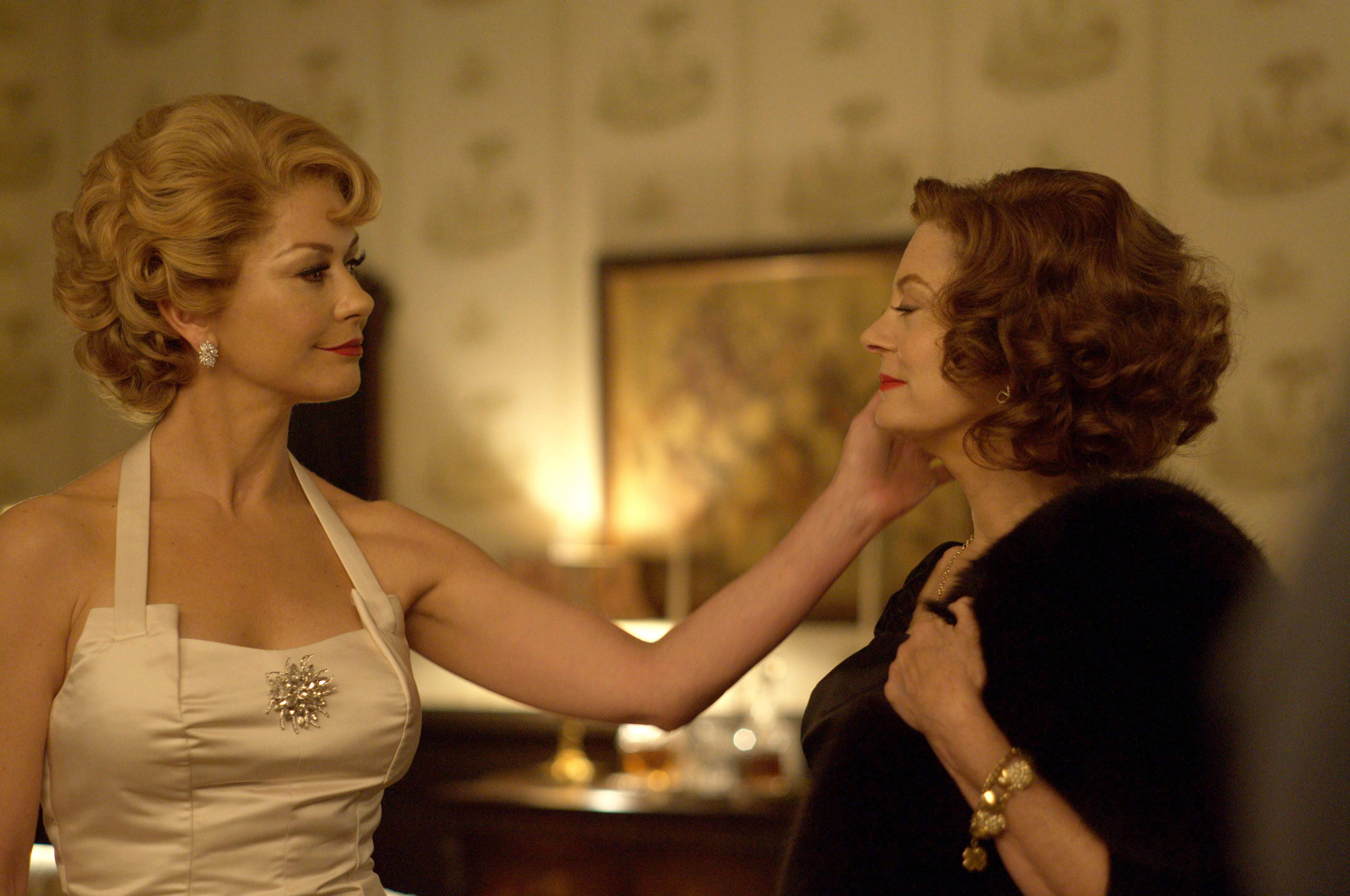
We finally go back to the Academy Awards of 1978, which have been the framework for Feud.  We learn that all these interviews of people like Joan Blondell (Kathy Bates) and Olivia de Havilland (Catherine Zeta-Jones) were for a documentary, one that Davis stubbornly will not participate in.  They, along with Pauline Jamison (Alison Wright), the assistant who found new life working on documentaries, watch the In Memoriam of the Oscars.  Blondell notes sadly that fifty years career were reduced to two seconds as Crawford's photograph is included in the montage.

We end with speculation about the first day's shooting of What Ever Happened to Baby Jane?, and we see that Crawford and Davis actually got along quite well, laughing like two old chums, before they head out to their separate dressing rooms.  Another montage tells us of the real people involved in this Feud.


The episode I think gets why this story is a tragedy, particularly for Crawford.  We see the indignities she went through with Trog, her final film, how bad pictures of her and her friend Rosalind Russell made her a recluse, how the stories in her daughter Christina's book Mommie Dearest privately devastated her, and how she died a lonely woman.  For Davis, we see how she kept working but in projects that did not fit her talent, how one of her few rivals (Katherine Hepburn) rejected her (in essence inflicting the same haughtiness on her that she inflicted on Crawford), and how her own daughter ended up rejecting her.

A scene between Davis and her daughter B.D. Hyman (Kiernan Shipka) reveals the resentment the latter had and how she disapproved of her mother as both mother and daughter.  The coldness Hyman has would be a preview of the devastating turn of events when Hyman wrote her own memoir, My Mother's Keeper.  However, unlike Crawford, who died before Mommie Dearest was published but was aware of its contents, Davis was very much alive when My Mother's Keeper came out (though disabled by a series of strokes and recovering from cancer).  Davis never again spoke to her daughter.

Despite all their hatred, the two did indeed have parallel lives.

There is a sense of tragedy in You Mean All This Time We Could Have Been Friends?, and the double meaning of the title (a line from What Ever Happened to Baby Jane?) rings true. The tragedy runs throughout the episode, from Mamacita's sad observation that people came when Crawford died but not when she needed them to Davis' discovery of someone she ended up hating more: Faye Dunaway, whom she worked with in a television movie and found more intolerable than Crawford (who at least was always professional on the set). The fact that Crawford had praised Dunaway and said she would be the only person who could play Crawford probably made things more maddening for Davis.


While the episode slips into fantasy (the extended dinner sequence and the first day shooting scene, the latter still a point of debate about its reality), it does draw you in.  We are aware that the whole thing is in Crawford's head, but knowing that she is days from death makes the whole scene, where the mixture of bitterness and elegance brings them a sense of peace.  Crawford in her dementia is allowed a moment of bliss and catharsis, and that seems poignant.

Davis talks about losing her 'high standards' in order to keep working, but fortunately Feud didn't.  Even in their smaller roles, Davis and Tucci were wonderful as the acid-tongued Hopper and the unapologetic Warner.  In her one scene, Shipka was cold and effective as B.D., forever angry. 

As for the two leads, You Mean All This Time We Could Have Been Friends? is more Lange's hour-plus as the dying Crawford.  While I question just how unhappy she was in making Trog (by all accounts, she was aware it was bad but remained the professional), Lange made Crawford a person, hurt and lonely, desperate to hold on to the one thing that gave her reason to live: her career.  Even if it cost her a set of teeth or suffered indignity upon indignity, Lange's Crawford kept going, rarely letting cracks appear.  When they did, like when her daughter Cathy (Audrey Moore) comes to visit with her own children, we see the vulnerability and pain of her final years.

Sarandon keeps that haughty demeanor to her Davis, but she also has regrets, particularly when she cannot bring herself to speak on the phone with Crawford.  The bitterness will not go away, and it makes it again, all the more tragic.

Again, sometimes the musical choices are a little too on the nose (playing The Doors' The End as Crawford films Trog is a bit too much), and proves a bit distracting.  I also question whether the episode had to be as long as it was.  However, these are minor complaints.  As an elegy to Crawford and Davis, to the end of their Hollywood, and to how Hollywood as an industry still can't do right with women (especially of a certain age), we see the present reflected in the past.

You Mean All This Time We Could Have Been Friends?  Yes, they could have, but chose not to.

Bette Davis: 1908-1989
Joan Crawford: 1904-1977


8/10

Next: The Complete First Season

Wednesday, April 19, 2017

Feud: Abandoned! Review


FEUD: ABANDONED!

Last week, I thought Feud was very much pro-Bette Davis.  Now, with Abandoned!, I think it's swung completely the other way and is pro-Joan Crawford.  Abandoned! displayed in all its naked, ugly 'glory' why the reteaming of Crawford and Davis for Hush...Hush, Sweet Charlotte ultimately collapsed, but also portrayed Davis in particular as the really vindictive, bitter bitch in this war; though Crawford could be petty and spiteful, Abandoned! makes her out to be almost a victim, partially of a Davis-Aldrich axis, partially out of her own decisions.

Production on the now-titled Hush...Hush, Sweet Charlotte appears to be going relatively smoothly.  Joan Crawford (Jessica Lange) is giving a good performance, earning the production team's respect and admiration.  Crawford is doing her best, even giving up drinking while on the job (a remarkable decision given she's a virtual alcoholic). Crawford, however, is worried that her costar, Bette Davis (Susan Sarandon) is undercutting her, particularly given how close and chummy Davis is with their director, Robert Aldrich (Alfred Molina). 

Crawford isn't completely off the mark: Davis and Aldrich appear to be having some form of liaison, and she spots Davis in her hotel room apparently mocking Crawford's performance, weakening her fragile ego.  In reality, Davis is actually marveling how Crawford is able to do things in one take, but she is too mean to give her hated rival a compliment.  She is able to make her life insufferable by openly criticizing her, by cutting the script to take lines away from her, and worse, by pushing Aldrich to make Davis associate producer, giving her more power. 

All this pushes Crawford back to the bottle.

Davis has become an absolute control freak: not only calling the shots on Hush...Hush, Sweet Charlotte (essentially emasculating Aldrich) but on her daughter, B.D. (Kiernan Shipka).  B.D. at sixteen wants to marry twenty-nine year old Jeremy Hyman (David Foy Bauer), whom Davis dismissively calls B.D.'s "elderly playmate Jerome", but Davis will have none of it. Eventually she consents with the proviso that Davis run the show.

Power gets to Davis' head: dictating Hush...Hush, Sweet Charlotte, controlling B.D.'s wedding plans, and undercutting Crawford, with the nadir being when Crawford's trailer on set is left abandoned while she took a nap.  Crawford is astonished, heartbroken, and furious to find the whole crew left her and Mamacita (Jackie Hoffman) stranded in the Louisiana bayou.

Back in Los Angeles, Crawford thinks she'll get a better deal, but soon she sees the rewrites to the script and how Davis again is exercising her powers on set.  Crawford has had enough and relies on an old Hollywood trick: she becomes 'ill'.  Davis is infuriated that Crawford is holding up production, but there's little she can do.  Aldrich for his part is firmly in Davis' camp, telling Crawford she can essentially take her ideas and stick them up her ass.  The war continues until the 'illness' so weakens the production that Crawford is fired, enraging Crawford enough to throw a vase in Mamacita's direction.  True to her word, Mamacita walks out.

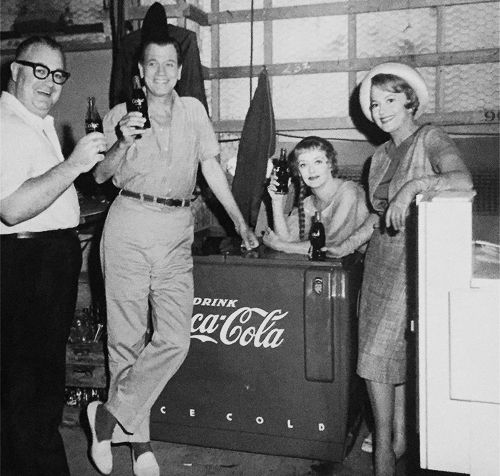
Davis is shocked when B.D. tells her that her 'first marriage' has already occurred, having married the moment she signed the consent forms.  To replace Crawford, Davis vetoes Vivien Leigh (saying there's no way anyone would believe Leigh as a Southern belle, Gone With the Wind notwithstanding and A Streetcar Named Desire not even mentioned).  Davis has someone else in mind, her old friend Olivia de Havilland (Catherine Zeta-Jones).  At first, de Havilland declines (though she suggests that if they need someone to play a bitch, they should get her sister Joan Fontaine).  However, de Havilland eventually agrees, and everyone celebrates by opening up bottles of Coke.

Davis, spiteful, vindictive and bitchy to the end.

Abandoned! is a shift for Feud in that it is as close to portraying Joan Crawford as a victim and Bette Davis as a villain.  There is no way anyone could watch Abandoned! and not be pushed to Crawford's side in this awful battle to the death between these two old divas.

Crawford's sympathetic portrayal starts right off the bat, when we see her making a conscious and determined decision not to drink.  We see how Davis constantly undermines her on-set, how she pushes to cut down scenes favorable to Crawford, how she uses her small power as 'associate producer' to bully her rival, and even in bringing in Coke to mock the unofficial Queen of Pepsi.  Even the most sad scene, when a despondent Crawford awakes from her nap to find the crew has left her, gives Crawford a terrible sense of tragedy, of a woman so whittled down that it just about breaks your heart.

Davis' villainy is further showcased when we see how she was towards B.D., her need to make a production out of her daughter's wedding to please Davis, and how she genuinely didn't care about B.D.'s happiness (misguided as she might have thought to someone thirteen years her senior).

Abandoned! was wise in showing that Davis' friend and costar Victor Buono (Dominic Burgess) warns Davis to control herself, and even lets Crawford gets words of wisdom from her old friend George Cukor (John Rubenstein).  Sadly, by this point nothing can heal their vicious war.  Abandoned! also shows that deep down, Davis and Crawford resented each other because one had something the other thought she lacked.

For Crawford, Davis was 'the legitimate actress', and this fed into her sense of inferiority.  Davis came from the theater, while Crawford came up as a dancer in clubs before breaking into silent films.  For Davis, Crawford was 'the great beauty', a woman admired for her physical attributes while she wasn't (Davis telling Aldrich that she had overheard Jack Warner after her screen-test, 'Who'd want to f*** her?', a comment that demoralized the then-virgin.  Warner's comment that he wished Davis looked like Crawford put the final nail on that coffin). 

The best moment in Abandoned! I think is when Crawford confronts Davis.  Joan at the end asks Bette what was it like to be the most talented, and she says it was wonderful...but it was never enough.  Davis asks what was it like to be the most beautiful, and she says it was wonderful...but it was never enough.

Helen Hunt (yes, THAT Helen Hunt), directing this episode, makes great use of her actresses, both Lange and Sarandon giving great performances.  I'm still not with Zeta-Jones as de Havilland: Zeta-Jones being almost too glamorous to play the more elegant but still approachable de Havilland.

As a side note, if Ryan Murphy won't make a Feud: Season Three (should there be one) about Olivia de Havilland and Joan Fontaine, he is either missing the boat or far too reverential to de Havilland. 

Not everything was perfect, of course.  Hunt's recreation of a bad de Havilland film, Lady in a Cage (which if memory serves correct has been mentioned earlier in Feud) was comically bad (at least I hope it was intentionally bad, for de Havilland couldn't be THAT campy and broad and deliberately awful).  The intercutting between the events chronicled in Feud with the faux-interviews of de Havilland and Joan Blondell (Kathy Bates) still jar.  The latter is not Hunt's fault.  The former is.

However, Abandoned! was a more sympathetic portrayal of Joan Crawford, even if, as Mamacita observed when leaving the hysterical actress, she did this to herself. Bette Davis may have won that round, and had a hit film, but she wins no one over to her side.


8/10

Next Episode: You Mean All This Time We Could Have Been Friends?

Thursday, April 13, 2017

Feud: Hagsploitation Review


FEUD: HAGSPLOITATION

After watching Hagsploitation, the newest Feud: Bette and Joan episode, part of me thinks that in this war, the people behind it are pro-Bette.  Part of me finds that my difficulty comes from certain aspects involving Joan Crawford that I wasn't sold on.  However, as we come close to the end of Season One, we find that perhaps there's a sliver of sympathy for our Devil.

Joan Crawford (Jessica Lange) has found work, but not the kind of elevated material she would like.  Instead, she's shilling out for a low-rent B-movie, Strait-Jacket, created by schlock director William Castle (John Waters in perhaps the worst bit of stunt casting I've seen).  She hates having to tour the country by wielding an ax (let alone having popcorn thrown at her), or doing some two-bit shtick where she 'chops off' Castle's head.

She is also displeased that rumors of a stag film she allegedly made very early in her Hollywood time, Velvet Lips, is making the rounds...again.  Her frenemy, Hedda Hopper (Judy Davis) lets Joan know oh so delicately that the stories are running around.  Crawford knows exactly where to find the source of this blue film: her own brother, Hal (Raymond J. Barry), who lives to hold it over Joan's head (and as a ready source of blackmail cash).  Things are not pleasant between them, but in the end all things worked out for her: Hal dies on the operating table, and when told this by Mamacita (Jackie Hoffman), Crawford calmly calls her banker to cancel the check.

Robert Aldrich (Alfred Molina), director of What Ever Happened to Baby Jane?, is having problems of his own.  His career is in the doldrums, and his wife has finally called it quits on their marriage.  He might have found a lifeline with Jack Warner (Stanley Tucci), who wants to cash in on the 'hagsploitation' craze sweeping the industry (taking former glamorous stars and seeing them degraded).  As it so happens, Aldrich has a script called What Ever Happened to Cousin Charlotte?, but Warner wants Crawford and Bette Davis (Susan Sarandon) to reunite.


Aldrich knows that this will be a disaster as the two of them are beyond despising the other, but Warner insists.  Aldrich for his part, pulls a few fast ones (after begging both of them to reteam).  First, he appears to give them whatever they ask for: Crawford wants her name above Davis, Davis wants creative control.  Second, What Ever Happened to Cousin Charlotte? will be made, not by Warners, but by Twentieth-Century Fox's Darryl Zanuck (who gave Aldrich a sweeter deal, and more importantly, respect).


The gang's all back (even Baby Jane costar Victor Buono), but the two rivals simply can't let go of things.  They make a genuine effort to have a united front to gain the upper hand, but nothing seems to work: Davis gets angry at Crawford's glamorous outfit for a script reading, her 'unintentional' posing for photographers, and at Aldrich's script.  Crawford tries to put in her two cents but gets cut off by Davis, who storms out.

Davis, however, will get her own once the crew goes to Louisiana for location shooting.  Crawford and Mamacita have no one to greet them at the airport.  They have no rooms for them until Davis 'graciously' finds them the smallest room possible.  Worse for Crawford however is finding out that Davis has buddied up with Aldrich, who earlier had explained his woes to Davis.  Perhaps Davis was genuinely trying to be kind to Aldrich as his twenty-four year marriage finally crumbled.  To Joan Crawford, however, it was Bette Davis using every trick in the book to get the upper hand.


Hagsplotation is probably the weakest Feud: Bette and Joan so far for me because of certain elements.  Once we have finished with their vicious brawl over Oscars, it made sense to see why What Ever Happened to Cousin Charlotte? (eventually retitled Hush...Hush, Sweet Charlotte) was made and the end result.  However, part of me rejected part of the premise from the get-go.

In Hagsploitation, Crawford is made to be incensed by doing such gimmicky bits for Castle, but from my understanding, Crawford was perfectly willing to go along with the theatrics.  Perhaps it's because I happen to like Strait-Jacket and think Crawford gave a very good performance in the film that I find these protests of her 'failing' dubious.  I think a greater dislike is the idea that Waters could possible be William Castle.  Apart from their fondness for gimmicks and schlock Castle and Waters don't appear to be in the same universe. 

Waters looks nothing like Castle, and for me, the casting of Waters is just a stunt, a deranged cameo to please certain people, not to serve the story.

Another aspect was playing Twilight Time when Warner talks about how it's twilight for him and the other moguls.  A bit TOO on-the-nose, as if they were trying too hard when a touch of subtlety would have worked.

Still, there were good parts.  The story of Crawford's difficult family gave Lange good material, and seeing Molina's Aldrich finally stick it to the tyrannical Warner was fun.

As the series winds down, Hagsploitation was to me less than the sum of its parts.

6/10

Next Episode: Abandoned!

Friday, April 7, 2017

Feud: And the Winner Is Review


FEUD: AND THE WINNER IS...
(THE OSCARS OF 1963)

It looks like the bitter rivalry between Academy Award winners Joan Crawford and Bette Davis is coming to a head.  For these two divas of the silver screen, nabbing an Oscar is a mark of respect, power, prestige, and one-upmanship.  Now, with And the Winner Is..., we see both the machinations for and against someone getting this prize.

Joan Crawford (Jessica Lange) is livid beyond anything that her What Ever Happened to Baby Jane? costar Bette Davis (Susan Sarandon) received a Best Actress nomination for the film and she didn't.  Things aren't helped by the fact that Davis is in her own way flaunting her nomination: at a press conference, when asked about Crawford's snub, Davis bitchily responds, "Define 'snub'". 

Quips like that essentially wave the red flag at a charging bull, and you don't want to wave them at someone as shrewd as Crawford, who is a terror when it comes to her own career.  Davis is the odds-on favorite to win over Anne Bancroft (The Miracle Worker), Katharine Hepburn (Long Day's Journey Into Night), Lee Remick (Days of Wine and Roses), and Geraldine Page (Sweet Bird of Youth). Crawford knows this, and is despondent.  Should Davis win, she'll be the first actress to have three Best Actress Oscars, something that had not been achieved.  Crawford's lone Oscar, for Mildred Pierce, now won't be enough comfort against that grand achievement.

Enter Hedda Hopper (Judy Davis), Crawford's frenemy and more important, Davis' enemy.  In a case of 'the enemy of my enemy is my friend', the two cook up a scheme to know Davis out of the running.  It's a classic case of 'good cop/bad cop': Hopper will badmouth Davis to various Academy members while Crawford will talk up other nominees.  Two candidates are selected for this charm offensive: Page and Bancroft.  Unlike the cantankerous, reclusive Hepburn or the 'television actress' Remick, both are primarily theater actresses (thus generally unknown or with no clout in Hollywood).  As such, they are no threat to Crawford.

Adding fuel to the fire, Crawford contacts both Page (Sarah Paulson) and Bancroft (Serinda Swan) to accept the Oscar on their behalf.  Crawford essentially cajoles Page into not going, while Bancroft, tied up in a play, is more enthusiastic and respectful about Crawford's offer.

Davis, however, isn't without friends in the industry, respected friends like fellow two-time Oscar winner Olivia de Havilland (Catherine Zeta-Jones).  Away in Paris, de Havilland really doesn't want to go, but Davis asks her to come with her.  De Havilland knows a thing or two about feuds (and as a digression, will Feud producer Ryan Murphy ever tackle the infamous de Havilland-Joan Fontaine war which makes the Crawford-Davis war look like a tea party?).

De Havilland agrees, and does her best to prop up a nervous Davis, who feels that a third win will put her back on top.  Davis at heart wants to win, but is also terrified of what a loss might mean for her career.

At last, it is Oscar night.  Crawford prepares for this night as if it were D-Day: a phalanx of wardrobe and make-up people come to make her into a Silver Goddess.  Crawford, snubbed and determined to see her mortal enemy brought down, is determined to make this night her own.  She is so invested in destroying Davis' chances that she ignores the advise of her friend, George Cukor (John Rubinstein) to call of the war.

Davis and de Havilland wait while the night goes on.  Crawford, for her part, has taken over the green room to make it into a party...her party.  She graciously welcomes the other winners, and makes a splash when presenting Best Director (having bullied her way into it, ordering the Academy President to let her present either Director or Picture).  De Havilland warns Davis not to go to the green room, but Davis goes and the two bitter rivals glare at each other. 

Crawford presents Best Director to David Lean for Lawrence of Arabia, and at last, Maximillian Schell presents Best Actress.  Davis, Crawford, and de Havilland all await.

And the winner is...Anne Bancroft for The Miracle Worker.  Davis momentarily moves towards the stage and suddenly stops, as if gasping for air.  Crawford coolly puts out her cigarette and takes that long walk to the stage.  De Havilland just stares in disbelief as Joan Crawford 'wins' Best Actress over Bette Davis.

De Havilland and Davis go back home, stunned at the turn of events.  Davis angrily acknowledges that this was essentially her last chance and she got outplayed.  Crawford, who hogged the limelight over the actual winners that night (Gregory Peck in To Kill a Mockingbird, Patty Duke in The Miracle Worker, Ed Begley in Sweet Bird of Youth, and Lean), goes home and places the Oscar next to her own, a sad symbol of such much.

The idea that the Oscars are awarded strictly on merit alone is a laughable one, but cute nonetheless.  Academy members are wined and dined and flattered and gently pushed, prodded, and manipulated to vote for certain people.  It may not be as wild as the late 1960s, where such abysmal turkeys as Doctor Dolittle and Hello, Dolly! received Best Picture nominations based on the insane campaigning, but Oscars are still not given out without some undue influence.

I'll go to my grave insisting that Eddie Redmayne's win for The Theory of Everything was a result of a brilliant campaign where he parlayed an 'aw-shucks' persona, this slightly bumbling but endearing and sweet young man into a shameless win.  It also helped that he is British, played a real-life figure, and a disabled figure: three things the Academy loves to reward.

It was a cold, calculated, mechanical performance, but Redmayne knew how to win and like Crawford, played the game in his favor well. 

His efforts to get a second consecutive Oscar for The Danish Girl blew up in his face (good): playing up this notion that giving him the Oscar for playing a transgender was a triumph for equality met opposition from actual transgendered people, his performance was more criticized than TOE, and his revelation of his 'generosity' (he "spontaneously" paid for other actors' rent) cut no ice with Academy members who aren't fond of giving back-to-back Oscars to people.  It also seemed a little too convenient to have this angelic information appear at the height of Oscar season. 

The more things change...yet I digress. 

And the Winner Is...is a greater showcase for Zeta-Jones as de Havilland, and like Lange, she has not convinced me that she IS Olivia de Havilland.  To me, she doesn't sound or particularly look like de Havilland, but she gives a strong performance as the loyal friend who is not overwhelmed by the machinations of the film industry.  Paulson's Page came across as a bit of a wimp, while Swan's take on Bancroft, though only one scene, was stronger: Bancroft was awed by Crawford coming to her show, but also aware what was behind her gesture.  Perhaps because Paulson had to play the scene over the telephone and Swan had Lange to react to onscreen made the difference.

This was Lange's best hour on Feud: her catty, bitchy left-handed compliments to everyone, the way she bullied everyone who stood in her way without anything but her sheer force of will.  When the Academy secretary tells the president, "Joan Crawford's headed this way and she's not slowing down," it's both amusing and a sign of Crawford's single-minded determination to bring her hated rival down.

As a side note, I don't think Crawford really was as bitchy and self-centered as And the Winner Is...makes her out to be.  Yes, she was self-centered, but I don't think she hogged the photographers' attention to the detriment of the actual winners to the level Feud showed. 

The episode is also full of wonderful, brilliant moments, such as when Crawford prepares for war...I mean, the Academy Awards.  There is something almost surreal about the montage: part elegant, part Satanic.  Kudos to Ryan Murphy for this and another fantastic moment: a long tracking shot where Crawford leads Lean backstage to the press (though, unless Lean wasn't there in person to accept for Bridge on the River Kwai, why would he ask where to go, since he had won Best Director once already prior to Lawrence of Arabia).

My one complaint would be that Murphy opted not to let Crawford be real bitchy to Davis, sweeping past her to accept Bancroft's Oscar with the words, "Step aside. I have an Oscar to accept".  Maybe he thought it would be gilding the lily, and he figured his take was more dramatic, but it has been documented that Crawford verbally bitch-slapped Davis that dramatic night.

In my own Oscar retrospective for 1962, I would have voted for Davis to win over Bancroft, though each nominee was excellent and worthy of a win.  And the Winner Is...is as close to reality about how these awards can be won and lost not on the work onscreen, but the one behind the screen.

8/10

Next Episode: Hagsploitation

Wednesday, April 5, 2017

Feud: More, Or Less Review


FEUD: MORE, OR LESS

It once was the work onscreen that we judged.  Now we have the backstory, in this case on What Ever Happened to Baby Jane?, the first and last time two notorious rivals and divas, Bette Davis and Joan Crawford, would work together.  Their bitter fight come to a bruising climax in More, Or Less, the fourth episode of Feud: Bette and Joan, and the specter of Oscar hangs over our two dueling divas.  Behind their war over the ultimate status symbol in Hollywood, More, Or Less is also about the difficulties of being a woman in the film industry, both in front of and behind the camera.  Sadly, the more things change...

Joan Crawford (Jessica Lange) and Bette Davis (Susan Sarandon) have private fears about What Ever Happened to Baby Jane?, sensing that if it flops, their careers are essentially over.  Will people watch these two old women (old by Hollywood standards), who are considered has-beens in the industry, revel in grotesque acts against the other?  Things do not bode well for either of them: despite having just made a film, neither can find more work.

Baby Jane director Bob Aldrich (Alfred Molina) has his own worries; he wants to catapult to bigger and better things, but Warner Brothers head Jack Warner (Stanley Tucci) essentially tells him he isn't good enough to be among the great directors.  Aldrich rejects all of Warner's scripts as Baby Jane knockoffs, but he is stuck when forced to direct a Western starring Frank Sinatra.  Ol' Blue Eyes is a monster and nightmare to work with: demeaning to everyone, dismissive of Aldrich as director, and not afraid of threatening gangster violence on anyone who doesn't cater to his diva temperament.

This, therefore, isn't the best time for Bob's loyal Girl Friday, Pauline Jameson (Alison Wright) to try and break into the business as a writer/director.  Pauline has an unexpected ally in Mamacita (Jackie Hoffman), Crawford's loyal Girl Friday who tries to get Crawford to work on Pauline's picture, with Pauline directing.  Crawford, however, has fears about trusting a novice director and female at that, for her first vehicle after her second 'comeback' (Mildred Pierce being her first), and unlike Pauline, Crawford remembers how women directors were shunted off once silent pictures went the way of all flesh.

To the surprise of everyone, What Ever Happened to Baby Jane? becomes a monster hit.  Crawford and Davis are relieved and delighted, but the former soon begins to panic.  She senses that Davis, with the showier part, is running away with the success, and the potential for an Oscar nomination.  Crawford is particularly terrified and infuriated by the idea that Davis will get a nomination and she won't.  Should Davis actually win, it will be her third Oscar, something no other actress had yet accomplished (the fact that Crawford had won only once being more fuel for her wrath). 

Davis goes full-force into promoting Baby Jane, making appearances in theaters and television (even belting out a novelty song called What Ever Happened to Baby Jane?, a brave act given she had no singing voice).  Crawford retreats into bitterness and the bottle.  Davis takes anything offered her, even a guest spot on Perry Mason (which given it's television, Davis isn't thrilled about).

Pauline finds her own dreams of moviemaking gone, but Mamacita, her secret ally, tells her over pie (something the health-conscious Crawford forbids her at home, but cannot stop her from having outside her watchful eye) not to fret.  Mamacita has been studying the growth of the American population, particularly on how women are slowly outnumbering men.  She tells Pauline that by 1970 the studios will be forced to hire more women directors and make more films geared towards women because of the majority of the audience will be women.

They'll be forced to cater to women, and Pauline's time will come.

Pity Mamacita never saw the rise of the Marvel Cinematic Universe or the growth of both the teen boy and Chinese market...

In the end, the Oscar nominations come out.  Joan Crawford is told to sit down by Mamacita, and we hear her wail of torment...

I find that what has been said about films and/or television shows set in the past is true: they are not so much chronicling what has passed but what is now.  Intelligent television and film (for example, The Americans, also on FX) may take place in a particular time and place (such as the 1980s or early 1960s), but they are in fact commentaries about the world now. 

Feud: Bette and Joan may be about the bitter rivalry between these two great actresses.  It is also about how the entertainment industry still struggles with giving women true parity with men on both sides of the camera.

We see this with Pauline, someone who hasn't been strictly in the background but who in More, Or Less emerges as a major part of the story.  Alison Wright is simply an undiscovered treasure (and in a curious turn, one of the major elements of what made The Americans such a great show). Wright balances the mixture of steeliness and vulnerability, between pushing for her own career and conceding the near-impossibility of it.

Pauline is burning with ambition.  She is bright.  She is capable.  She doesn't even want any special favors.  What she wants is a chance, a chance she won't get. 

She has all the accruements that would make for a reasonable chance at a writer/director career but one: she is a "She". 

What is interesting, to me at least, is how Crawford, who knows how hard the industry is to women, will not help a fellow woman.  Her reasoning is logical: after having her biggest hit in years, where there is now hope of a third wind to her career, she would be putting herself as a hostage to fortune by following up Baby Jane with a picture by an unknown, particularly from a woman at a time where a female director was almost unheard of (in the 'Golden Age', Dorothy Arzner was about the only female director of the era).

Mamacita's analysis is perhaps one of the most insightful regarding the state of the film and television industry today.  She (through screenwriters Gina Welch and Tim Minear) predicts that studios will have to eventually bend to giving women more jobs and make films with a female perspective based on the fact that the audience will be majority-female.  However, that precisely hasn't happened. If anything, Hollywood is becoming more resistant to female-centered films, female directors, and female executives (people like Sherry Lansing and Kathryn Bigelow notwithstanding).

Mamacita's prediction failed, in my view, because studios discovered the teen market, particularly the teenage boys, who wanted action over nuance, explosions over character, and sex/titillation over gender equality.  The roles for women have not improved, even when presented in more 'positive' light (Black Widow, the only female member of The Avengers, not only had the indignity of not having her own action figure upon Age of Ultron's release, but in that film, she was essentially relegated to 'love interest/damsel in distress').  The fact that so many films are made from comic books, dominated primarily by young men, with no end in sight for the Cinematic/Extended Universes, shows how current film will not bend to Mamacita's logic.

I've digressed greatly, but it's an endlessly fascinating topic: how despite being the majority of the population, women still are greatly underrepresented in film.  Add to that a limited shelf-life for actresses once they hit forty (something Crawford and Davis faced), and you see that Feud's subtext of the ageism and sexism in Hollywood is still as strong as ever.

One more digression: in the past decade, the youngest Best Actor Oscar winner at 32 was either the same age or older than five Best Actress Oscar winners during the same time period.  I said older, not younger.  Think on that: that five out of ten Best Actress Oscar winners were actually younger than 32.


More, Or Less again brilliantly manages to show the similarity between Crawford and Davis right from the beginning when both meet with their agents.  Crawford's phalanx of agents can't (or won't) get her new roles, and Davis is astonished and horrified to find someone old enough to be her son (and looking every bit his 22 years of age) to be her representative. In this opening scene, there's even a nod to Mommie Dearest, when Lange as Crawford appears in a fur hat and black clothes similar to the ensemble Faye Dunaway wore when meeting with Pepsi-Cola executives (and infamously shouting at this group of men when told she was being retired from the Board of Pepsi, "Don't F*** with ME, FELLAS!").

Lange as Crawford makes her almost sympathetic in her fear and paranoia about Oscar, and Sarandon as Davis gives us someone to respect, one who is hustling hard to make Baby Jane a hit.

In a smaller role, Toby Huss captures both the voice and cantankerous nature of the Chairman of the Board.

Again, this framing device of having Olivia de Havilland and Joan Blondell giving a joint interview in 1978 prior to the Academy Awards doesn't work for me.  I'm still hoping things will work out well for this bit, but so far, not buying it.
      
For its wit, its strong performances (particularly Wright), and for its insight into how the past can illuminate the present, we can't get enough More, Or Less.

9/10

Next Episode: And the Winner Is...(The Oscars of 1963)

Thursday, March 23, 2017

Feud: Mommie Dearest Review


FEUD: MOMMIE DEAREST

When you have an episode of Feud: Bette and Joan titled Mommie Dearest, one might think they are going to take another jab at Joan Crawford's notorious (but unproven) charges of vicious child abuse.  No.  They are playing you.  Instead, Mommie Dearest is primarily about Bette Davis' role as mother to her biological daughter B.D. Hyman (then Merrill), her own fraught relationship, as well as the effects Davis and Crawford's mothers had on them as adults.  We even have how one became a 'mother' of sorts to one of the What Ever Happened to Baby Jane? costars, and we have the best episode of Feud yet: a tragedy of broken people brilliantly acted.

What Ever Happened to Baby Jane? continues filming, but Joan Crawford (Jessica Lange) is concerned over the influence B.D. (Kiernan Shipka) is having over Crawford's twin daughters, who despite being teenagers are dressed like little children.  B.D.'s mother, Bette Davis (Susan Sarandon) is beginning to be concerned that B.D. may indeed be a bit directionless, so she reluctantly gives in to her director Robert Aldrich (Alfred Molina) to cast B.D. in a role in the film.

It proves to be a poor decision, for the highly professional Davis sees that B.D. is not an actress.  This is the first of some bad decisions from Davis.  She attempts to keep a working relationship with Crawford and invites her rival to drinks (which she knows the alcoholic Crawford won't turn down).  They end up talking about their mothers and their philosophies on motherhood.  Crawford's admission that she lost her virginity at 12 to her stepfather, and that Crawford did it willingly, shocks even the generally unflappable Davis, who didn't lose her virginity until her wedding night. Further, the hatred and emotional/physical abuse Crawford suffered at the hands of her mother is a sharp contrast to the loving and close bond Davis had with her own mother, who has recently died.

This conversation and opening up between them might have been a rapprochement between them, but that doesn't last long.  Davis is enraged when she reads that Crawford has fed to Hedda Hopper (Judy Davis) that Davis has decided to put herself up for a Best Supporting Actress Oscar for Baby Jane (one guess who is going for Lead).  They fight in front of the crew over the chances for Oscar, which shocks Aldrich, who points out the film isn't even finished.

Crawford is becoming more difficult with her drinking and obsession with looking her best, down to padding her bra when doing the ending beach scene.  Warner Brothers head Jack Warner (Stanley Tucci) finds the whole scene appalling.  "It's like Camille in reverse!" he snaps, complaining that Crawford keeps looking better despite the fact her character is supposedly dying.  While Crawford has gained the crew's favor with her kind manner towards them, Davis, for her part, has bonded with her costar, Victor Buono (Dominic Burgess).  The openly gay Buono fits into Davis' unencouraged fascination with homosexuals ("All the queens love me", she tells a delighted Buono, and even does an imitation of her female impersonators to please him).

Davis is better with Buono than with B.D., whom she doesn't have the heart to tell is awful.  Davis goes to bat for Buono, down to bailing him out when he's arrested in a raid on a gay theater where he's been 'auditioning' a young man.  Crawford is frankly too busy struggling with being alone (the twins having gone off to camp) to notice anything beside herself, and at last, after a lot of physical struggle where both costars physically hurt the other whenever they can, What Ever Happened to Baby Jane? is completed.


Mommie Dearest brilliantly plays with all variations of 'mother'.  We have, despite the title, very little of Crawford's relationship with her oldest daughter, Christina, the author of the notorious best-seller that has permanently ruined Crawford's reputation.  She's mentioned only in one scene, where Crawford insists she won't send her daughter flowers or a card congratulating her on Christina's opening night.  However, we see the complex nature of Crawford's emotional world when shortly after, she does indeed sign her card, closing with 'Mommie Dearest'.  It's both a clever joke and an indication that Joan Crawford was more complex emotionally on this aspect of her life.

With Lange's performance and Tim Minear's script, we see how damaged Crawford was when it came to the issue of mothers: both as a daughter and a mother.  This episode was Lange's best performance so far; from the scene at the bar where she talks about how fraught her relationship with her own mother was, how much she hated her and would gravitate towards anyone who showed her a modicum of love, to the intense fear of being alone, Lange both shocks and breaks your heart as Crawford.

Sarandon too gives a brilliant performance, especially since she is more central to Mommie Dearest than Lange's character.  Davis' own fears and pain about her children come to the forefront.  Of particular note is when Davis calls the hospital where her own adopted daughter Margo is.  The mentally challenged girl cannot keep attention to Davis on the phone, and Davis' mixture of regret and pain at not being able to help her are played so well.

Both Lange and Davis work well together whenever they are raving at each other, which makes perhaps one flaw in Mommie Dearest more evident.  There is a montage of their filming What Ever Happened to Baby Jane? that leaves something to be desires.  We see how Davis took advantage of a scene to kick Crawford in the head (whether this was an 'accident' or deliberate is a bit unclear, but we get strong hints she did it on purpose).  It makes Crawford's revenge (adding weights to her when Davis has to drag her off after ruining various takes by laughing as a result of being 'ticklish') both understandable and sadly not as well-drawn as could have been.

According to stories, Crawford's dead weight caused her to fall on top of Davis, who suffered from a bad back.  Davis had to go to a hospital for two days as a result of her injury, and one would think a whole or major part of a Feud episode could have been focused on the acts of violence the two rivals took on each other.  Sadly, it was reduced to a montage.

Yet I digress, for we have in Mommie Dearest one of the best-written and acted episodes of this short series.  We see the evolution of Davis' view of Buono, who at first horrified and appalled her (when told he was a Shakespearean actor despite having no major work outside San Diego, she snaps "I'm sure his Falstaff is the talk of Tijuana!"), turn to admiration (when Aldrich tells her she likes him, she retorts, "I like talent!") and even a bit of genuine affection (her "WHAT A DUMP!" line and her bailing him out of a shocking situation).

Burgess does well as Buono, and we even get a little history lesson when we see Buono hanging out at a gay theater, forgetting that once these types of establishments not only allowed for illicit hookups between men but that they ran the constant risk of being raided, with their patrons arrested and thus publicly outed and humiliated to a less tolerant world.

Credit also goes to Shipka, who 'acts' badly and also shows she too wishes for her mother's approval.

From playing Mama Said There's Be Days Like This in a montage to showing how both Crawford and Davis were products of their childhood, from the performances to the verbal catfight between them (down to Davis insisting she was robbed in 1950 thanks to her All About Eve costar, 'that bitch' Anne Baxter, and Crawford's retorts that Davis both demeaned Judy Holliday and it was Gloria Swanson who was robbed that year), Mommie Dearest had it all.  There was a great script in turns insightful and witty, brilliant acting all around, and some bits of strong comedy and drama.


Mothers and Daughters...


Daughters and Mothers...


10/10

Next Episode: More, Or Less

Saturday, March 18, 2017

Feud: The Other Woman Review


FEUD: THE OTHER WOMAN

One of my colleagues, Kristen Lopez of Journeys in Classic Film, made a witty but truthful tweet about The Other Woman, the second episode of Feud: Bette and Joan.

"This episode of Feud should have been called "Every woman wanted to screw Robert Aldrich". Oh, Ryan Murphy..."

We do seem to have a lot of women going after our schlubby journeyman director on this episode, but The Other Woman isn't about a mistress.  It certainly isn't Feud creator Ryan Murphy working out his own sexual fantasies.  It's about how insecurity and manipulation drove an unnecessary wedge between two women who looked like they were about to bury the hatchet.  It lends a bit of tragedy to Feud, making us wonder what would have happened if they had been allowed to use their talents, rather than their bitterness, to create.

Joan Crawford (Jessica Lange) finds a fan in a starlet (Kenzie Dalton) about to make her debut on What Ever Happened to Baby Jane?  However, when the starlet makes the fatal mistake of saying that an autograph is for 'her grandmother' who has loved Crawford 'since she was a kid', it's enough to irk Crawford's vanity and insecurity about her director, Robert Aldrich (Alfred Molina).  She convinces her costar/rival Bette Davis (Susan Sarandon) that the starlet has to go.

Go she does, much to the delight of Crawford and Davis, who now are actually pretty chummy.  Aldrich feels emasculated before the crew and rest of cast, determined to not let these two rule his film.  Unwittingly eager to help is Warner Brothers head Jack Warner (Stanley Tucci) who wants Aldrich to play one off the other to make their hatred burn up the screen.  Aldrich is a bit conflicted, especially when Aldrich's long-suffering wife makes it clear that manipulating them is a cruel act, especially when they're getting along.

Aldrich's conflict ends quickly, when he feeds a false blind item to gossip columnist Hedda Hopper (Judy Davis), claiming Davis said Crawford uses falsies.  The blind item both horrifies and enrages Crawford to where she interrupts a take of Davis' performance and threatens to drop out.  Davis denies she said anything but thinks Crawford is going overboard in her Lady Innocent routine.  To get back at Davis, Crawford deliberately says spiteful things about Davis to Hopper's rival, Louella Parsons. 

Now Davis is the one enraged, and secretly hit at a vulnerable point (her age).  This is heightened when she sees her daughter B.D. Hyman (Kiernan Shipka) flirting with the crew.  Crawford, for her part, attempts to seduce Aldrich and fails, and if she knew that Davis has managed to schtup Aldrich it probably would have sent her into fits.  Crawford, however, is too busy playing Hopper, using her 'love' of the Hollywood community to bash the more aloof Davis, going so far as to not publish the fact that Crawford tells her she's $2 million in debt.

The Other Woman gives us a tantalizing glimpse of what could have been: Joan Crawford and Bette Davis, if not buddy-buddies, at least able to see that they weren't the monsters the other imagined.  As they observe the poor starlet walking away with her box, they see that united they are stronger.  They even manage to giggle like girlfriends as they walk away, delighted that they have done something beneficial.

It's a curious thing that The Other Woman shows a lot of 'women walking away with their boxes', for as we go into flashbacks about the rising and falling careers of Crawford and Davis, we see how their respective studios (MGM and Warners) pushed them out due to their insistence on better roles (much to the irritation of their bosses who hated the idea that women could order them). 

It's at this point that a strong argument could be made that Feud: Bette and Joan is not just about the notorious war between these two divas of the 'Golden Age of Hollywood'.  It's also about the film industry which essentially hasn't changed since their time: how men are still the power either as the director or the executive, and how women of a certain age find their careers either stalling or falling when the next pretty young thing comes along.

Here are two talented women, Academy Award winners, respected by their peers, struggling to find work because they are no longer young and sexually desirable.  Where Crawford and Davis were when they made What Ever Happened to Baby Jane? will in twenty years be where Jennifer Lawrence and Emma Stone will find themselves.  Their male peers, say an Eddie Redmayne or Avant-garde actor Ryan Gosling, won't be facing the same sexism/ageism that Lawrence and Stone will.  Feud: Bette and Joan shows that the more things change...

Granted, this may be reading more into things than is intended, but it is a subject worthy of consideration.

The Other Woman shows that Davis and Crawford should have been allies, maybe even friends, because despite their own sense of importance (Davis, considering herself the actual actress, Crawford seeing herself as always a star) they were so terribly alike.  They saw the power they had when they joined forces (a bit of 'the enemy of my enemy is my friend'), but how they were manipulated by a mixture of male ego and their own insecurities.


I still am having a hard time accepting Lange as Crawford.  It's not that she doesn't look like Crawford (the make-up department does wonders for her in that respect).  It's just that I find Lange's Crawford voice so unlike my memories of what the actual Crawford sounded like.  Lange sounds rather soft, almost whispery.  However, her performance continues to be top-notch: Crawford's ego, vanity, and insecurity coming across so well.

Sarandon looks and sounds more like Davis (though the voice isn't exact either, she gets Davis' take-no-prisoners speaking).  She too does wonders, not just when playing Davis but when playing Baby Jane. 

Davis is just brilliant as the viper Hedda Hopper: with her notorious hats and faux-respectability, Davis brings out just how spiteful and vicious Hopper could be.  She is the one who wants more than anyone (even Aldrich or Warner) to see these two battle-axes go at it for her own self-interest, but Davis also shows how easily a little tear and appeals to Hopper's sense of 'the industry' can be manipulated.

As sad it might be, it's the men who are dominating Bette and Joan.  Molina is almost surely Emmy-bound for his performance as Aldrich: in his own way insecure, narcissistic, determined to do the right thing and constantly failing.   Tucci is sleazy as Jack Warner, and in his one scene, Dominic Burgess brings a touch of comedy as What Ever Happened to Baby Jane? costar Victor Buono.

Davis mistakes him for the catering crew and is horrified when she sees he will play her 'love interest'; with a mixture of innocence and knowing he tells her he's sure she wasn't expecting someone so fat and homosexual as he warfs down a donut.

For once, Bette Davis is left speechless.

Again, I don't quite get the framing device of the 1978 Academy Award interviews, though I'm willing to cut them some slack for a good payoff.  We do see how 'Golden Age' stars are not keen on modern Hollywood: as Joan Blondell, Kathy Bates takes a swipe at Coming Home (that Vietnam War thing, she calls it).  It doesn't help that Catherine Zeta-Jones neither looks or sounds like Olivia de Havilland (or that Feud hasn't announced as of yet they will feature her own notorious war with her sister, the late Joan Fontaine).

Still, The Other Woman builds up our story while serving as allegory to the status of women and men in this whacked-out industry known as Hollywood.  No La La Land frivolity here: it's all an ugly business of beautiful people.

8/10

Next Episode: Mommie Dearest

Saturday, March 11, 2017

Feud: Bette and Joan. Pilot Review


FEUD: BETTE AND JOAN

In the history of bitter rivalries, few match the lifelong grudge match between Joan Crawford and Bette Davis.  These two great stars (and strong actresses) hated each other with such venom it chills the soul to know that kind of hatred carried on well after one of them died.  In the new anthology series Feud, the first season is built around the antagonism between Davis and Crawford.  Perhaps people were expecting some awful, almost grotesque catfight between these two divas, something tawdry and vicious.  I expect there will be something to titillate audiences as our limited series continues.  However, in the pilot for Feud: Bette and Joan, what we see is a far more intelligent story about sexism, ageism, the dismissive nature of a cruel industry, and yes, a little bit of a parallel between the real and reel, between the Crawford-Davis war and that portrayed in their only film together (and basis for Feud): What Ever Happened to Baby Jane?

Joan Crawford (Jessica Lange) is facing a very difficult time personally and professionally.  A recent widow, she finds herself in financial straits, and no good offers for a 'comeback' role that would put her back on top, or at least get much-needed money into her account.  With the aid of her helpful girl Friday, Mamacita (Jackie Hoffman), Crawford does find something that might just work.

To get things rolling, she needs two people.  The first is workman director Robert Aldrich (Alfred Molina), whom she worked with on a previous film, Autumn Leaves.  Aldrich himself is facing a tough career slide: his newest project a floundering Biblical epic and with few prospects of his own.  He's intrigued with Crawford's suggestion, finding the project can be mostly self-financed.  He signs on board.

It now needs one more element, one that would cause shockwaves in Hollywood.  Crawford goes to none other than her greatest rival on and off the screen: Bette Davis (Susan Sarandon).  Davis won't admit it, perhaps even to herself, but her career is also going nowhere.  Appearing on Broadway in The Night of the Iguana, this acting superstar finds herself playing second fiddle to an ingénue with nary the talent of Davis. 

At first Davis is dismissive of working with "Lucille" (using Crawford's real name), but she bends when a.) Aldrich calls her and b.) she admits that her career could use a lift.  Reluctantly, she reads What Ever Happen to Baby Jane?


Aldrich finds nothing but difficulties when it comes to making What Ever Happened to Baby Jane?  The studios one by one turn him down, particularly because no one wants to make a film with a couple of old ladies or keep to Aldrich's vision.  Aldrich eventually pushes Warner Brothers mogul Jack Warner (Stanley Tucci) into making the film, despite Warner's own hatred for Davis (and lack of fondness for Crawford). 

We end with the first day's shooting.  Crawford is the Lady Elegant: giving gifts to all the crew (with Mamacita whispering who is who) but attempting to hide a terrible insecurity about her actual abilities as an actress, especially compared to her more respected costar.  Davis, for her part, just wants to get through this and is finding Crawford's manner grating.  She however, is determined to stand out in this production, and creates an outlandish make-up and wardrobe for her Baby Jane Hudson character.  It will be a counterbalance to the sophistication of Crawford, and now both ladies find themselves in the unlikely position of having to both upstage the other while working together to make What Ever Happened to Baby Jane? a commercial and critical hit.

The war is on.

All this is told in flashbacks with reminiscences of people like Olivia de Havilland (Catherine Zeta-Jones) and Joan Blondell (Kathy Bates).

Bette and Joan is, in its way, not a new tale.  It's actually one we've seen before when it comes to Hollywood: the fight older actresses have to mount to keep their careers going, the thick-headedness and reluctance to try something different from film industry veterans, and the rampant sexism of those in power.  Warner, taking in a massage when meeting Aldrich, starts out by asking the director if either Crawford or Davis are "f***able".  That's how good old Jack measures box office appeal of women: by whether or not you'd screw them, not on their actual abilities.

Throughout Bette and Joan we see how these two veterans of the studio system constantly come up against obstacles.  Crawford not only has to endure the more open sexuality of someone like a Marilyn Monroe, but have her fading stardom thrown in her face by Hollywood columnist Hedda Hopper (Judy Davis in a delightfully vicious role).  She wants a mean quote from Crawford, whom she refers to as 'yesterday's It Girl' on 'today's It Girl' (meaning Monroe) or she'll write about how Crawford left the awards dinner drunk and belligerent.  Davis, for her part, must also see that she very much in the style of Margo Channing in All About Eve, only unlike Channing, Davis chose to keep her career.

Feud also shows that the career difficulties Crawford and Davis faced are things that actresses today still face.  As they are looking over books that might make for a good movie, Crawford comments that there are essentially three types of female parts: Ingénues, Mothers, and Gorgons (read, hags).  This is something that actresses like Jennifer Lawrence, Brie Larson, and Emma Stone (all recent Best Actress winners, and all under 30 when they won) should think on.

Jack Warner in a sense is very much alive: powerful studio bosses who see the worth of a woman onscreen based solely on them being objects of desire, easily disposable once they are no longer 'desirable'.  The struggles, personal and professional, of these two women who are much more similar than either would admit is nothing new.


Let's go over the performances.  Lange is a mainstay of writer/director/creator Ryan Murphy, appearing in all but one of his American Horror Story anthology series.  I wasn't quite convinced that Lange was Crawford, finding her voice oddly soft, almost whispery.  She certainly looked the part, and for a while I thought it wasn't going to work.  However, by the end Lange convinced me that she will be more Crawford a person than Faye Dunaway was in Mommie Dearest (which was, well, not quite human).

The brittleness, the insecurity, the desire for respect, the fears of being seen as lesser were all brought together through Lange's performance.

Sarandon matches her as Davis, getting her snappish, crabby, blunt persona.  She, thanks to the script, is also allowed moments of vulnerability, where she in private she knows that like Crawford, she faces a tough battle against growing older (and thus, less relevant).

Molina is the real standout of Feud: the most long-suffering man in Hollywood.  He has to battle against studios who don't want Crawford/Davis, or his ideas, or even him.  Add to that the fact that these two tigresses are slowly coming at him and it would be enough to drive any man bonkers.  Molina shows that mix of exasperation and frustration while trying to balance two demanding stars and a studio breathing down his neck.

As a side note, I heard it somewhere that when it came to What Ever Happened to Baby Jane?, the director shouldn't have been Bob Aldrich, but Clyde Beatty...the world-famous lion tamer. 

As mentioned, Davis as the malicious Hopper was delightfully wicked, eagerly manipulating and pushing these two women for her own ends, and at her dinner the fact both were shrewd enough to play nice as a defense against Hopper was a showcase for all of them.

The aspects of Bette and Joan that I didn't particularly care for was the framing story of the interviews.  I can see why that was done: we need people not in the know to have some background, but something about it felt a bit forced, as if we didn't need that framing story at all.  Add to that the fact that Zeta-Jones never convinced me she was anything close to de Havilland (neither in look or sound). 

As a side note here, a Season Three of Feud should focus on Olivia de Havilland's lifelong rivalry with her sister, Joan Fontaine.  Season Two will center around the Prince of Wales and his late former wife, but the de Havilland/Fontaine war is ripe for dramatization. 

It's also a shame that two of our better and underused actors, Reed Diamond and Mark Valley, were given such small parts as the lovers of Crawford and Davis respectively. 

Still, Bette and Joan is a strong start to what looks to be another good anthology series from Murphy.  Here we have Joan Crawford: the great star who wants to be taken seriously as an actress, and Bette Davis, the serious actress who yearns to be a great star. 

Fasten your seat belts and bring us the ax.


7/10

Next Episode: The Other Woman