Thursday, April 4, 2013

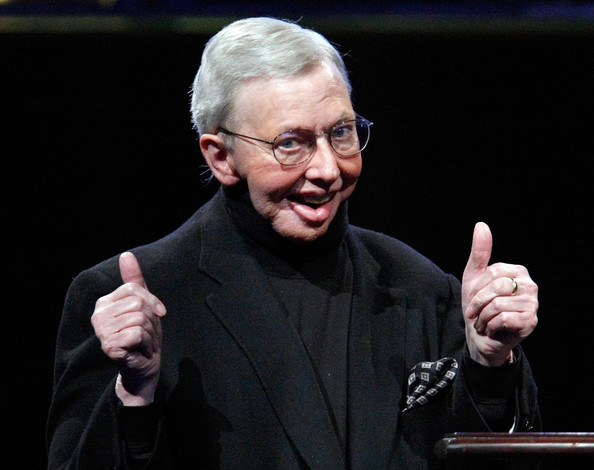
Roger Ebert: A Personal Remembrance

1942-2013
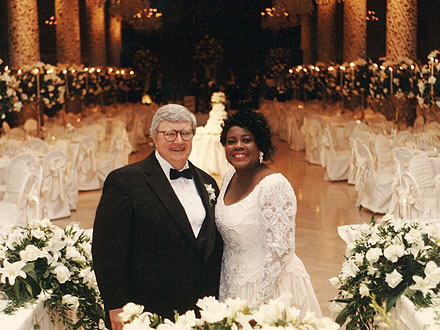
My friend Fidel Gomez, Jr. (who may or may not be dead) and I would discuss Ebert & Roeper the way people discuss Lost or The Walking Dead.  We'd marvel at their choices, argue about them, be in sharp disagreement with them or sometimes take their side.  I somehow ended up more on Ebert's side (which may explain why I consider Richard Roeper my one-sided nemesis), while Fidel tended to side with Roeper.  In any case, we both looked to Roger Ebert and Richard Roeper (and in our youth, Gene Siskel), for advise, instruction, and guidance on films.  Sometimes we agreed with them, sometimes not.  However, one thing we knew was that like us, Roger Ebert had a passion for film, which at least from me, earned my respect and admiration.

I always considered Roger Ebert the Dean of Film Criticism, the one whom all of us who write about film, either in print or online, looked to as a model of what a great film critic should be.  Again and again I am loath to call myself a film critic; the term implies that I seek out things to dislike, that I take a negative view of film in general.  I believe that film reviewer (giving my views of the film in question and what worked and/or didn't for me as a viewer) is closer to the truth, and I think it applied to Ebert.  Neither of us would say we go into a movie to hate it.  Rather, we wish to find something wonderful, or entertaining, or intelligent, and just wanted to tell the world about it.

More than anything, Roger Ebert loved film.  He loved all kinds of films: foreign-language, silent, documentaries, as well as popular fare.  He was as enthusiastic about The Hangover as he was about Vertigo.  Ebert popularized those films that might have been seen as a bit too avant-garde, too artistic, too out-of-the-mainstream for the general public.  He (like myself) believe that in terms of movies, we should not be afraid of the dark. 

In short, he followed the maxim that there are two kinds of film: good films and bad films.  His enthusiasm or condemnation of a film was expressed clearly and directly, all things we who write about film attempt to do.  He put great intelligence to his reviews, stating his case.  Sometimes his case didn't hold, but however that famous thumb went, you knew this is how Roger Ebert felt, without subterfuge or arrogance.

We who write film criticism all owe a debt to Roger Ebert.  We stand in his shadow.  His convictions on a film (whether to love or loath it), was spoken straight from the heart and without fear of whether it met with approval.  Some of my fellow film critics sadly are what are dubbed 'quote whores': people who for a good meal or trinkets might give praise to bad films, whose comments will then be used to promote the film as good.  Ebert was not like that.  When he loved something he loved it, when he hated it he did not mince words.  How he felt is how he put it on the page or spoke it on the screen.   He was unbought and unbossed.


When he became ill with cancer, he did not hide from it or its effects.  Instead, Ebert kept going, determined not to be silent.  The voice was gone, but the fingers could still fly across the keyboard, the mind was still sharp, and the eyes could still see the beauty and the garbage that is thrown at us.  Ebert refused to let cancer slow him down, let alone stop him.  He was limited in what he could do but he kept at it.  That is what I call courage: facing serious illness, acknowledging it, and continuing to live despite it.

I did not always agree with Ebert in terms of films and politics.  Sometimes I thought him mad.  However, few of us who write on film, argue about films, champion certain movies or condemn others, would be here without the powerful influence of Roger Ebert.  He was THE film critic that most of us grew up with and the one we would attempt to immolate in some way or other.  His love for movies and his desire to bring a wider perspective to audiences to think of movies not just as entertainment or even art but as something to bring pleasure to life itself will be one of his great legacies.  He used his voice to speak his mind about movies, and now thanks to him, all of us who write about film are proud to follow his example.

We Film Critics/Reviewers owe so much to Roger Ebert.  He was our guide, our unacknowledged mentor, our role model, and for a brief time and in the thinnest of ways, he was a colleague.  It's a safe bet most of us Film Critics/Reviewers would not be here without him. 

Thank you, Mr. Ebert.

My condolences to his wife Chaz and his family.  


The Balcony will now be a little lonelier...


IN MEMORIAM
 

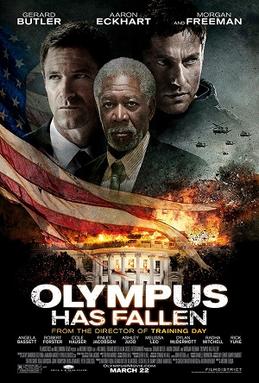
Olympus Has Fallen: A Review (Review #521)

OLYMPUS HAS FALLEN

In the vein of Hollywood groupthink, we have yet another example of two movies with a similar plot being released close to each other. We've had two "meteor is about to destroy Earth so we have to send astronauts to stop it" movies released near each other (Deep Impact and Armageddon).  We've had two "volcanoes come out in Los Angeles" movies (Dante's Peak and the appropriately named Volcano).   Last year or two, we had two "we're friends but are going to have casual sex without romantic entanglements but end up falling in love" movies (No Strings Attached and Friends With Benefits).  We also had two Snow White-based films: the cutesy Mirror Mirror) and the gritty Snow White and the Huntsman. 

And WHO says Hollywood is out of ideas?

Now we have the "White House in under siege and only one man can stop it' movies.  While we eagerly await White House Down, let us turn to Olympus Has Fallen, which beat it by at least three months.   As a film, Olympus Has Fallen is goofy but entertaining, a trifle despite the grand violence we're treated to.  It also doesn't stray far from a formula: the wounded warrior in need of redemption finds his cause, so I can't say it was terrible.  However, I don't think it is memorable either.

Secret Service Agent and former Army Ranger Mike Banning (Gerard Butler) is a haunted man.  Once close to his boss, President Benjamin Asher (Aaron Eckhart) and the First Son Connor (Finley Jacobsen), Banning is still mourning his failure to protect the First Family.  During a heavy snowstorm en route from Camp David to the White House, the motorcade suffered a car accident on a bridge.  Banning was able to rescue the President, but a badly injured First Lady (Ashley Judd) plunged into the river when the car fell.  Eighteen months later, the widowed President carries on, but Banning has banished  himself to the Treasury Department. 

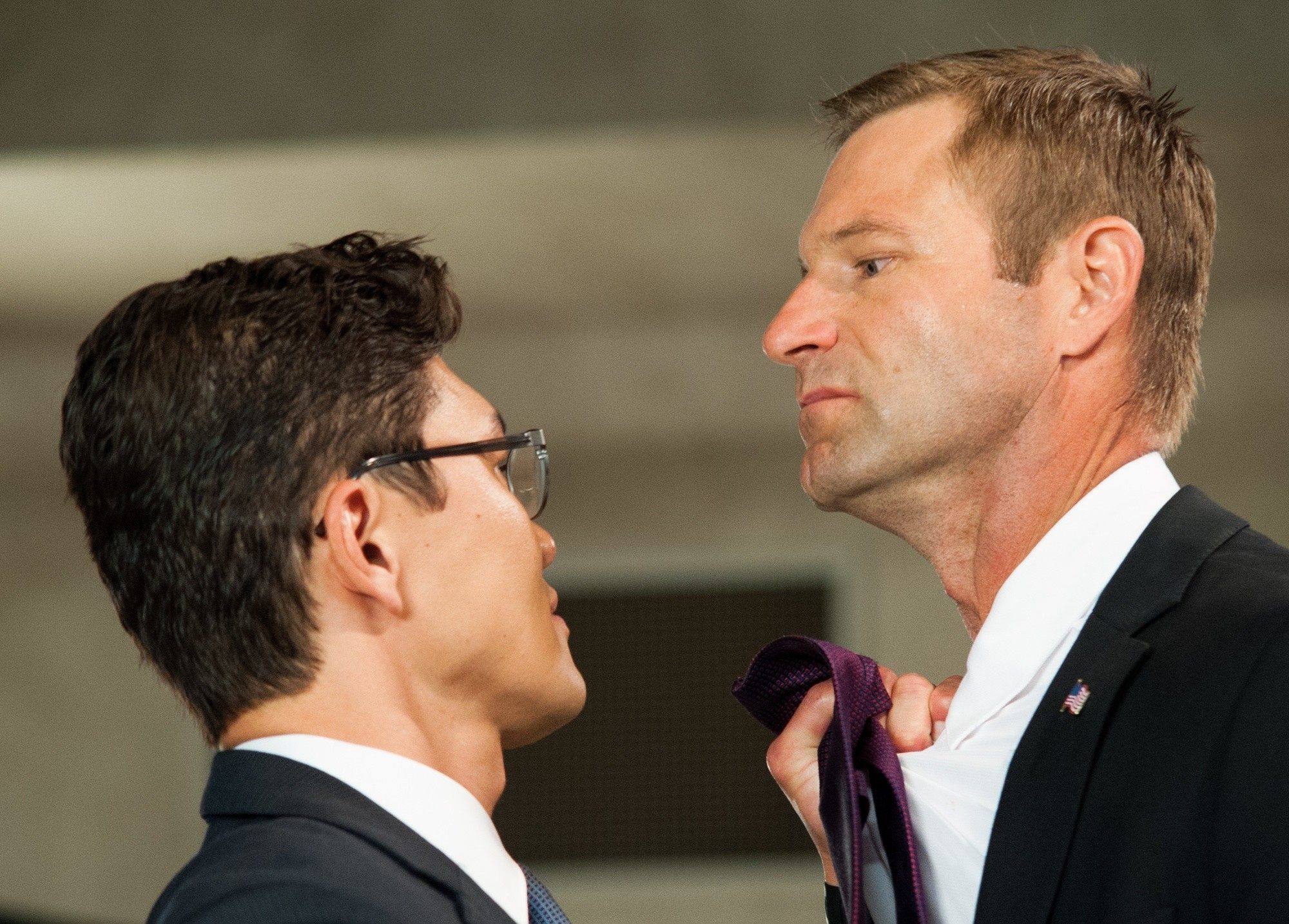
His fellow Secret Service Agent Dave Forbes (Dylan McDermott) has retired from government work, but now returns to the White House as part of a security detail for the South Korean Prime Minister.  However, there is treachery afoot: an airplane is headed towards the White House, and soon, chaos erupts in the streets of the capital.  A massive North Korean fifth column has burst into the White House, slaughtering agents and Army left right center.  Through the carnage, only Agent Banning is able to shoot back and enter the besieged Presidential residence.  The President, Vice President Charlie Rodriguez (Phil Austin), Defense Secretary Ruth McMillan (Melissa Leo), and others are taken prisoner inside the protective bunker when the South Korean entourage (except for the poor Prime Minister) turns out to be North Korean agents...including Forbes.  The ringmaster...leader, of this nefarious takeover is Kang (Rick Yune), a rogue terrorist who wants the U.S. troops out of Korea (partly for personal reasons as his family was somehow a victim of the Demilitarized Zone).

Now with Banning inside the White House unbeknown to Kang and Forbes, he is the only person who can return the President to safety.  Meanwhile, Secret Service head Lynn Jacobs (Angela Bassett) and House Speaker Trumbull (Morgan Freeman) must help coordinate Banning's actions while attempting to stop Kang from acquiring a code from three sources (all of them his hostages) that will bring a nuclear holocaust on America (his true aim).  Banning must also rescue not just the hostages, but Connor, who is somewhere hidden in the White House.


Honestly, I don't know why so many people appear willing and eager to trash Olympus Has Fallen.  This is the type of film one watches for lots of violence, lots of action, and little in terms of logic.  Take for example the confrontation between Banning and Forbes.  We all know Forbes is the bad guy, and we also know that when he 'finds' Banning eventually the good guy will be able to figure out (usually through a slip of the tongue) that Forbes is with the enemy.  However, as Forbes is dying (after all, we know he's not going to get out alive), he suddenly reverses course and gives Kang false information.  This sudden turnaround in his nature is almost unbelievable (why would someone who joins the North Koreans for the vaguest of reasons then suddenly turn patriotic at the end). 

Oh but in a film like Olympus Has Fallen, we pretty much have to throw logic out the window.   Yes, I'll say that Creighton Rothenberger and Katrin Benedikt's screenplay has some pretty set pieces (the long warrior fighting an army when the regular army and Secret Service detail proves shockingly inept, said lone warrior finding in this mission a sense of redemption for failing the first time, even the terrorist has a wounded past as some sort of motivation), but in fairness, Olympus Has Fallen takes all this very seriously. 

Bless the cast for playing all this seriously.  Truth be told, I have great admiration for Aaron Eckhart, an actor who just ought to work more.  Given how good he was in Battle: L.A. (a film I enjoyed), I think Eckhart could easily have switched roles with Butler and played the lone warrior convincingly.  Whether anyone would have bought Butler as the Commander-in-Chief is highly doubtful (especially if his Scottish brogue slipped out), but on the whole, Butler does his best Bruce Willis in Die Hard impression (right down to the quips).

In smaller roles, both Bassett and Freeman (obviously demoted from President to mere Speaker of the House) did solid work, which they almost always do even when doing Bartha roles as these clearly are.  They play things seriously, and for that I cannot fault them.  Same goes for McDermott, although I sensed he knew this was all a waste of his time.  I almost feel for Yune, an actor who always plays the bad guy.  Would be nice to see him try something new...

Antoine Fuqua manages to keep things going briskly, never pausing long for things to get bogged down.  It's a credit to him that the more ludicrous the situations or actions (such as Banning being able to not only escape a hail of bullets when the terrorists are shooting at him through a wall but him being able to shoot THEM down through said wall while firing without looking) it all manages to appear almost rational.

One thing that can be said for Olympus Has Fallen: we have now officially left a 9/11 mindset.  The audience either doesn't connect or think about just how horrifying the images we get are: you have a plane heading towards the White House, you have people in Washington, D.C. running for their lives, you even have the Washington Monument collapsing onto itself and tourists dumb enough to be there in the middle of the chaos.  Maybe I was the only one still trepidatious about such sights, but no one in front of or behind the camera, or the audience for that matter, took any of that in mind.  It was just a good action scene, not something reminiscent of a horrifying event that still shapes the world today.

Another aspect is in how Banning doesn't shrink from torturing two North Koreans he holds prisoner for information.  Whoever said torture, real torture (such as stabbing someone in the leg and cutting his throat) would not give results?

However, the flaws in Olympus Has Fallen are pretty evident: the effects are television-level, and at one point the headline in a faux-report is "Terrorist Attack Whitehouse", failing to note two grammatical errors.  Then again, it IS MSNBC...

As I see it, Olympus Has Fallen is not to be taken seriously (which the movie certainly does).  It has a little too much torture and gore for my tastes, and certain subplots that seem not only clichéd but a waste of time (Banning's nurse wife tending to the wounded...another 9/11 flashback...and the Connor story: once he's rescued we can get on to the main action of taking down North Koreans and kicking some ass).  However, for what it is, Olympus Has Fallen certainly has some entertainment value, nothing more.


We all know this is fiction: Olympus Has Fallen as a whole and the idea that Lawrence O'Donnell is a real journalist.  Therefore, while Olympus Has Fallen isn't the best film around, it has enough to make it worth a couple of hours of free time if nothing else is on.   Don't know if I'd say the same about The Last Word...

DECISION: C+

Wednesday, April 3, 2013

I'd Like to Thank the Academy, But I Can't Part 2


Having looked over the Bottom Nine Worst Oscar Moments, it is now time to look over the Top (for lack of a better word) Nine Worst Oscar Moments.  The speeches and production numbers get worse, the egos get larger, and the audience gets more and more moments of laughter, usually of the unintended variety.

Num. 9
85th Academy Awards

09.) The Boob Tube (2012)

Yes, we've managed to find a moment from the most recent Academy Awards to rank as a low point in the entire history of the Oscars.  Seth MacFarlane is hailed as a comedic genius.  Now granted I have seen one or two Family Guy episodes and stubbornly refused to watch Ted, so I cannot vouch for that.  Then again, my idea of 'comedic genius' is a Jack Benny, Lucille Ball, George Carlin, Carol Burnett, Richard Pryor, all of Monty Python, even perhaps The Kids in the Hall. 

In any case in his excruciatingly long opening number (around fifteen minutes), we were treated to such relevant matters as the talented Charlize Theron doing a little dance with the talentless Channing Tatum, and two or three songs from the crooner MacFarlane sees himself as.  The first musical number, an ode to Mr. Skin called We Saw Your Boobs, was I imagine meant to mock the perception that he's a low-brow comic.   However, it came off as just low.  I always marvel how a forty-year-old man could be called a genius for having an obsession most teenage boys leave after high school.  I wasn't bothered by his takedown of Kate Winslet, but when he takes cheap shots at Scarlett Johanssen's nude photo hacking, then it shows him to be tactless at best.


Num. 8
71st Academy Awards

08.) Debbie Does D-Day (1999)

God Bless Debbie Allen.  She's a talented dancer/actress/choreographer, and no matter how often her dance numbers for the Academy Awards are derided, she keeps giving it her all.  It isn't her fault that she is given a difficult task: attempting to create dance numbers to music that does not call for it.

However, in retrospect attempting to build a tap dance routine to Saving Private Ryan might not have been the best decision.  Here is a violent, gritty, graphic, overwhelming recreation of the Allied D-Day Invasion...with Savion Glover tapping his way through the accompanying music.  The two never meshed, and it just came off looking bizarre.

Num. 7
74st Academy Awards

07.) Cops and Roberts (2001)

Denzel Washington is like his hero Sidney Poitier in so many ways.  Like Poitier, Washington is one of a handful of black actors who can open a film.  Even when playing a loathsome character like in Training Day, Washington is still held as a dignified actor and person...exactly like Poitier.  Finally, both won Oscars the same night.  Poitier, the first black man to win a Best Actor Oscar for Lilies of the Field, was awarded an Honorary Oscar.  That same night, Washington was the second black man to win a Best Actor Oscar for Training Day.  Coming on the heels of Halle Berry being the first black woman to win Best Actress for Monster's Ball (and basically declaring the end of racism at the Academy Awards), it was a good night for African-American performers.

However, while Washington gave a dignified speech (saluting Poitier, acknowledging that win or lose, he was going to celebrate with his wife and kids), it was the presenter who looked foolish and smeared his moment.  Julia Roberts' behavior was one for the ages, giving Roberto Benigni a run for his money.  First, she took a cheap shot at the conductor Bill Conti who had almost played her off the year prior when she won for Erin Brokovich (although she mistakenly called him "Tom Conti", mixing the Oscar-nominated composer with the Oscar-nominated actor).  Then when she opened the envelope, she declared, "I love my life...Denzel Washington", thus begging the question as to whether she would have hated her life say if, Russell Crowe had won.   Finally, after giving his speech, Roberts leapt onto Washington and clung to him like a deranged groupie.  Washington gamely carried HER off the stage (he must be a strong man), but her overenthusiasm was embarrassing to both of them. 

Almost makes me wish Tom Wilkinson had won for In the Bedroom...trying to see her jump on him would have made for amusing television. 


Num. 6
15th Academy Awards

06.) The War Was Shorter (1943)

Bad Oscar Speeches Part IV

This is the most legendary Oscar speech in history...because it captures the worst tendencies of stars: to see this occasion as a turning point in film history.  Greer Garson had won the Best Actress Oscar for Mrs. Miniver, and I'm sure when she spoke, she spoke from the heart.  Unfortunately for the audience, her heart really would go on, and on, and on, and on...

Reports vary as to the actual length of Miss Garson's speech, ranging from five to eight minutes long.  Even if it was a mere five minutes, that's an extremely long time to thank any group of people for giving one a plaster figure of a naked man (gold being a rare material during World War II).  Let us recall that her speech was longer than the entire performances of Beatrice Straight, Judi Dench, and Anne Hathaway, who each won Supporting Actress Oscars for Network, Shakespeare in Love, and Les Miserables respectively.  Some people have been nominated for performances shorter than Garson's pronouncements.  Think on that: there are film performances that have won Oscars that are SHORTER than one almost-forgotten actress' whole speech. 

Ironically enough, Greer Garson's speech began with, "I'm practically unprepared."


Num. 5
48th Academy Awards

05.) She Is Big. 
It's The Pictures That Got Sound. (1976) 

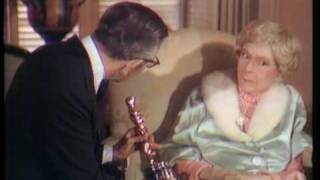
Mary Pickford is not remembered today by the general public, which is a terrible disservice to one of the true pioneers of cinema.  Mary Pickford, the first America's Sweetheart (her Canadian birth notwithstanding), was the first real movie star and the only other actor to rival Charlie Chaplin in popularity.  The Girl With the Golden Curls wasn't just a great silent film actress, but a strong businesswoman.  She got the best of Adolph Zukor, head of Paramount, and with Chaplin, director D.W. Griffith, and Douglas Fairbanks, created United Artists, a company to distribute their films and allow greater artistic control.  For all that she had done for the industry, an Honorary Oscar was the very least the Academy she also helped found could do.

However, what they did not do was give her dignity in her declining years.  Instead, in their efforts to be kind they treated audiences to a rather ghoulish spectacle, inadvertently humiliating one of the great stars of early cinema. 

Pickford was too weak to attend the ceremony.  Rather than present her with the Oscar privately or at least pre-record the event, the Academy decided that it would be best to take us on a trip to her home, dubbed Pickfair (after Pickford and her second husband, Douglas Fairbanks).  Two minutes of us driving up the driveway and taking a look 'round her house lends a certain Sunset Boulevard quality to this Grand Tour.  As we go up the stairs and past her dining room and salon, where we are shown a portrait of herself in much younger days, one almost expects to find a dead monkey lying around.  

At long last, we get a view of America's Sweetheart, and it's a ghastly one.  Looking far older than her 84 years, she looks in turns frail and out-of-it, almost drunk.  I'm not even sure she knew who this Walter Mirisch was who was giving her this Oscar.  Even worse, Mirisch in a rare lapse in judgment tried to have some small-talk with the real-life Norma Desmond (minus the crazy), a woman long forgotten by the Hollywood dragging her into the spotlight which had long passed her and whom audiences probably, despite Gene Kelly's intonations, did not remember 'that face'. 

Laura Linney, narrator of Mary Pickford and one of my favorite actresses, summed it up best when describing Pickford's Honorary Oscar presentation: "Her appearance horrified viewers."

At least in this instance the Academy appears to have learned from its mistake.  When the never-nominated Myrna Loy was awarded an Honorary Oscar in 1991, she was alone, with one camera in her apartment, and gave a two-sentence speech, "You've made me very happy.  Thank you very much."  The entire presentation for Loy lasted under two minutes (minus clip film), versus Pickford's horrifying five minute spectacle.
Num. 4
50th Academy Awards
 
04.) Zion Too Much (1978)

Bad Oscar Speeches Part V

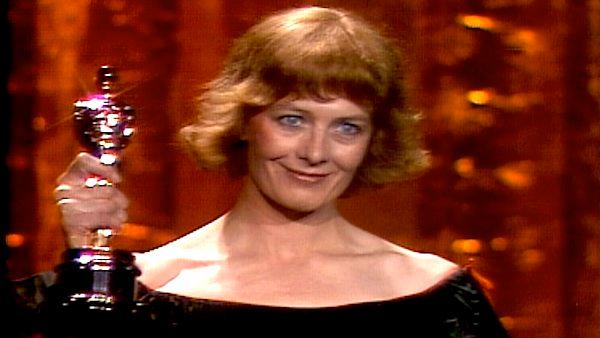
Vanessa Redgrave is one of the great actresses.  She's also someone I simply loath.  I make no secret that I admire the actress but detest the woman.  However, even by those who agree with her (the entire MSNBC organization), her Best Supporting Actress Oscar speech was less speaking truth to power and more 'I'm a genius and you're a bigot if you disagree with me'. 

Mad Van, who put the Red in Redgrave, decided we all needed her great insight and wisdom on the thorny and sad issue of the Arab/Israeli crisis.  Miss Redgrave had produced a film (I won't call it a documentary...unless I can call Triumph of the Will a documentary) called The Palestinian. A love letter to the Palestinian Liberation Organization (which advocated the destruction of Israel, which apparently did not bother Redgrave), it sparked the ire of certain members of the Jewish community. 

Oh but those Jews who supported such rubbish as Israel did not count on the genius of one self-important actress who felt people voted for her, not because they thought she gave the best performance, but because they were sending a message!  It was that phrase, 'Zionist hoodlums', which got the normally liberal crowd booing her.  It was the ultimate mark of deranged ego, to imagine that she and only she could light the way to piece...I mean, Peace with Israel (which to her meant all Israelis must go drown in the sea and let the Arab Palestinians do your country better).

Paddy Chayefsky, no conservative by any stretch, got his own when he appeared a short time later.  I think Chayefsky, proudly Jewish, took Redgrave's remarks as a smear on all Jews, and the kid from the Bronx wasn't about to kow-tow to this snooty British bitch. The writer of Network gave the best comeback to our Commie Countess. 

"Before I get on to the writing awards, there's a little matter I'd like to tidy up--at least if I expect to live with myself tomorrow morning. I would like to say, personal opinion, of course, that I'm sick and tired of people exploiting the Academy Awards for the propagation of their own personal propaganda.   I would like to suggest to Miss Redgrave that her winning an Academy Award is not a pivotal moment in history, does not require a proclamation and a simple 'thank you' would have sufficed."

SMACKDOWN!

Num. 3
75th Academy Awards

03.) The Moore The Angrier (2003)

Bad Oscar Speeches Part VI

Oh, if Chayefsky had been around to listen to this!  While I believe Chayefsky would have opposed the Iraq Intervention, I think he would have been appalled at Michael Moore's grandstanding, but then again, it is Michael Moore, someone who plays fast and loose with facts and who makes no bones about how his films are less documentaries in the traditional sense and more op-ed pieces.

Let's leave aside for a moment that he had just been given an Oscar for Bowling for Columbine, which featured Moore browbeating a clearly ill Charlton Heston.  The increasingly partisan Hollywood audience gave him a standing ovation for his propaganda film (which I understand, blames in part, George W. Bush for the Columbine High School massacre).  One he got started on his 'fictitious' laundry list, even some in the audience couldn't stand it.  It takes a lot to get a liberal crowd booing you when they agree with you most of the time.  I'm sure the stagehands and crew working the Oscars (who can't afford to be liberals) were in on the booing, but the footage clearly shows some in the audience booing as well.  Besides, if he was always right on everything, why then did ANYONE boo? 

As our rotund lefty continues hijacking the Academy Awards for his own political bromides, he ends with one of the more perplexing comments in acceptance speeches.  "And anytime you've got the Pope and the Dixie Chicks against you, you're time is up." Now, what the connection between the Holy Father and a defunct pseudo-country group is or why both being in agreement on something means the end of a government has been left unexplained.  Obviously the 'time is up' comment was about the effort to drown him out with music, but note that in his speech he never made comment about those who worked with or for him, or those who were murdered in Columbine.  Curious that.

Moore's speech was not a heartfelt commentary on the immorality of the Iraq Intervention.  It was a self-serving, egocentric exercise as to his own perceived genius.  However, in fairness, it might be the only time he exercised, period, so that's a plus.

Num. 2
59th Academy Awards

02.) Fugue For Tin-Ears (1987)

In an age of Youtube, nothing remains hidden...except for this: Fugue For Tinhorns from the musical Guys and Dolls as performed by Pat Morita, Dom DeLuise, and Telly Savalas.    Let's see: to sing a great but complicated song where three voices singing different parts while blending them together seamlessly you get Mr. Miyagi, Kojak, and Caesar from History of the World Part I. 

Having three people definitely NOT known for their singing performing a complex number is bad enough.  Having three people definitely NOT known for their singing performing a complex number as the OPENING to the show is disastrous.  Just attempting to imagine any of them alone attempting to carry a tune is rather bad, but attempting to hear all three of them is just horrifying.

As I said, while it was certainly broadcast on television, no footage (either film or photo) of this Trio from Hell has ever been seen since the telecast.  Somewhere Out There someone must have recorded that year's Academy Awards, and that tape will be analyzed more than the Zapruder film, but the fact that we've never seen this musical debacle speaks volumes about the misguided, atrocious moment it must have been.

Num. 1
61st Academy Awards

01.) Oscar's Lowe Point (1989)

It's just too easy to pick the opening number from the 61st Academy Awards as the worst moment in Oscar history.  Despite their best efforts, the Academy has never been able to erase the memory of this disaster from the public.  It takes a lot to cause a scandal so large that respected Academy members like Gregory Peck, Julie Andrews, and Billy Wilder write in protest against their organization being so publicly humiliated.

From the moment respected entertainment journalist Army Archerd introduced "Snow White" (Julie Bowman) and advised her to "follow the Hollywood stars" (who were dancers dressed like giant stars), the whole eleven minutes of this was a nightmare.  You had Merv Griffin singing I've Got A Lovely Bunch of Coconuts at a mock-up of the Coconut Grove!  You had legendary stars like Roy Rogers and Dale Evans, Vincent Price, Cyd Charisse and Dorothy Lamour used as so much stage dressing! 

Then comes Rob Lowe, introduced as Snow's 'blind date', and then the disaster just grew and grew.  Singing reworked lyrics to Proud Mary (Sample lyrics: Used to work a lot for Walt Disney/Making cartoons every night and day...), the whole thing just kept going and going.  Even after Lowe left his date at the Chinese Theater, the production number kept going. 


However, as infamous as the "Rob Lowe/Snow White" number is, and as disastrous as it was, we forget that there was ANOTHER musical number equally horrifying.  Twenty 'triple threats' (actor/singer/dancer) were showcased in an elaborate musical number called I Wanna Be An Oscar Winner. 

I digress to point out that 'triple threat' is exactly how former N*Sync member Lance Bass was described in his autobiography, where he admitted being gay just not admitted to having sex with other men.  Therefore, I take that triple threat lightly.

In any case, this whole spectacle had performers such as Corey Feldman (doing a Michael Jackson impersonation), Ricki Lake singing her hopes to work with Meryl Streep, Tyrone Power, Jr. engaging in a sword fight (yes, there IS a Tyrone Power, Jr.), and Patrick Dempsey doing a little soft-shoe (who knew McDreamy could trip the light fantastic?).  Almost TEN minutes of this showcase where, for the record, none of the featured performers have been nominated for Oscars, let alone won any.

And it HAD to end with a damn kick-line!  OF all the asinine things, a KICK-LINE!

If Fischer Stevens had been in there, then we could say the number was prophetic...even if he won for producing the documentary The Cove.

What is extraordinary about I Wanna Be An Oscar Winner is that you had three greats involved in the song: music by Marvin Hamlisch, lyrics by Fred Ebb, and choreography by Kenny Ortega. I guess they did the best they could and couldn't be held responsible for the horror it ended up being.

In a curious way, it is nice to see I Wanna Be An Oscar Winner as a time capsule.  It isn't as if none of the performers haven't gone on to have careers.  Blair Underwood, Holly Robinson (Peete), Joely Fisher, and Dempsey have had strong careers on television, turning in good work.  Christian Slater still works, but is not the draw he once was.  Melora Hardin, who appeared briefly, is not a big name but has worked steadily since her declaration that she would join the ranks of Louise Rainer and Roberto Benigni. 

Keith Coogan, Patrick O'Neal, Jr., D.A. Pawley, Matt Lattanzi,  and Corey Parker...well...I hear Jay Underwood is a pastor, so at least he has joy in his life.

As for a Lowe point, Chad Lowe (Rob's younger brother) was in the number as well, telling us how he was a 'serious actor'.  He's an Emmy winner, so that's not too bad.  Still, the whole number is at times almost sad, to see so many young people build up their hopes only to end up either failing to meet that goal of winning Oscars or languishing in obscurity.


The only thing people remember from this number is that it was Lucille Ball's final public appearance before her death less than a month later.  She and Bob Hope introduced the number, and they are the fun part.  Ball showed a lot of leg in a dress where the slit was dangerously high, but for a woman of 77 she had amazing legs.  Ball and Hope joked with each other with ease, laughing through their presentation (when Hope pointed out they'd made four films together, Ball quipped, "Talk about  Dangerous Liaisons".  When Ball later suggested they get on with the presentation, Hope said, "No, we're on a roll. Why stop?").   Their standing ovation was well deserved and a highlight of an abysmal show.

Well, that's settles it: the Academy Awards have had some shockingly bad moments, showing that even professionals can fail to put on a good show.   As they say, "Better luck next year..."
Monday, April 1, 2013

I'd Like to Thank the Academy, But I Can't Part 1


In the 85 years of the Academy of Motion Picture Arts & Sciences' Award of Merit, we've had some wonderful moments in terms of winners.  This is not a reflection of said moments.  Rather, it's a reflection of those rather odd moments, or worse, moments of sheer self-importance, that have made the Oscars at times into a sad, silly spectacle.  It seems that bad Oscar moments are relegated to one of two categories: bad acceptance speeches or bad production numbers.

I look upon our Eighteen Worst Oscar Moments as varying in degrees, from the grotesque to the bizarre.   Sometimes, the people involved simply did not appear to understand how strange it all looked.  Other times, they knew perfectly, and makes it all the more horrifying. 

This little retrospective isn't about winners per se: I'm not going into whether Person or Film A should have won/lost to Person or Film B.  Rather, it is a fond look back at those moments where the phrase "avert your eyes" would have been better than "the envelope, please".


Num. 18
51st Academy Awards
18.) Laurence Olivier Sees Stars (1979)

Bad Oscar Speeches, Part 1.

Sir Larry is one of the great thespians of the age.  He has defined classic stage and screen acting, a true actor's actor.  It therefore made sense to vote an Honorary Oscar to Lord Olivier for his body of work (in particular for bringing his beloved Shakespeare to popular attention). 

The award was not in question.  Rather, it is his speech that tries so hard to be poetic but that in the end sounds in turns both confused and nonsensical.  It started out all right, with him describing the Oscar as a beautiful star in the firmament of America's generosity, dazzling him a little.  So far, so good.  Then it shifts into a halting, slightly incoherent rhapsody about "the euphoria that happens to so many of us at the first breath of the majestic glow of a new tomorrow."  Then he goes on about the solace that is charging his soul, that lends him such a splendid part on this glorious occasion.

It all sounds very nice, but it also shows that when one has a voice like Laurence Olivier (who at the time was best known to the viewing audience as either the voice of Polaroid commercials or in a few years as Zeus in Clash of the Titans) one can utter nonsense and make it sound grand.  It certainly convinced Jon Voight, whose reaction to it puts a smiling coda on that shimmering light of America's firmament that breathes new life into the generous euphoria of the solace in tomorrow's soul...

Num. 17
46th Academy Awards

17.) Presenting A New
Academy Member (1974)  

There has always been speculation that the streaking incident, where a man ran across the Oscar stage completely naked, was staged as a publicity stunt.  If it was, the woman following David Niven, Elizabeth Taylor, wasn't let in on the joke.  Before announcing the nominees a flustered Taylor said that the event really upset her (never mind the number of men she'd seen naked).  Then, being the slightly bawdy broad that she was, she quickly added, "I think I'm jealous."

Niven was there to introduce Taylor, who would then announce that year's Best Picture.  In the middle of Niven's intro one Robert Opel ran behind him with no clothes, flashing a peace sign as he dashed behind the Brit.  The camera that was on Niven was a medium shot: angled in such a way that he was shot from the waist up.  Therefore, when Opel ran behind him it was done so quickly that you could not really see everything (though both the audience and the orchestra could, with the latter breaking into Sunny Side Up).

Niven, in what has to be one of the Best Oscar moments, then quipped, "Isn't it fascinating to think that probably the only laugh that man will ever get is by stripping off and showing his shortcomings."  I don't think the streaking was staged.  The Academy is a pretty staid group, and something like that wouldn't fit in to their M.O.  Sadly, Opel lost more than his fifteen minutes of fame: a mere five years later, Opel was murdered in his San Francisco sex shop, victim of a robbery.  It is a sad and tawdry end to a comical tail. 

Num. 16
45th Academy Awards

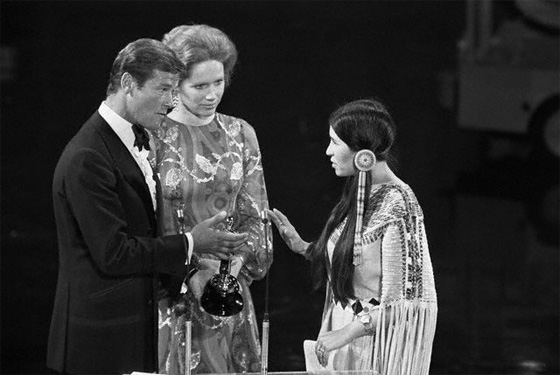
16.) Light As A Littlefeather (1973)

I can't call this a bad Oscar speech, because given the bizarre and almost unfair position Sacheen Littlefeather was placed in, she gave quite an eloquent speech...much more eloquent than Marlon Brando's rather pompous and bloated (no pun intended) manifesto he'd thrust on her a day or two prior and expected her to take television viewer's time with.

Marlon Brando had made a spectacular comeback in The Godfather, and he was the prohibitive front-runner for Best Actor.  However, Brando had developed a passion for Native American rights, and he figured THIS was the perfect setting to send a message.  However, as my one-sided nemesis Richard Roeper put it, what (the conditions of Native Americans) has to do with Brando winning a trophy for playing a gangster has never been explained.

It's a bad moment for the following reasons; it opened the floodgates for stars hijacking the Oscars to promote their own pet causes (be it AIDS-infected Haitians, Tibet, Zionist hoodlums, the Iraq Intervention, what have you), which in turn showed them as sanctimonious fools so elevated from the hoi polloi that is too stupid to realize just how all-knowing the stars are (but don't mind taking their money for the crappy films they make).  It also ended the practice of having proxies accept awards on people's behalf.  Well, maybe that isn't such a bad thing (cuts down on speeches).  Finally, whatever the motive, the lot of Native Americans has still not improved (casinos notwithstanding), which makes this moment a failure if it was meant to elevate their circumstances.

Num. 15
72nd Academy Awards

15.) Less "Who's the Man" and More "Where's the Man..." (2000)  

2000 was just a bad year for the Oscars, plagued by one bizarre occurrence after another.  First, the Oscar ballots were literally lost in the mail.  4/5th of ballots (all the ones going to California-based members) were piled under third-class junk mail (there's more than poetry in that coincidence), thus forcing  the U.S. Postal Service to rush additional ballot delivery (next time, try UPS). Next, the Oscar statues themselves were stolen, only to be found in the garbage by Willie Fulgear (a name tinged with irony), who discovered boxes containing 52 of the missing Oscar while searching for discarded items to use for tinkering.  "I've got more Oscars than any of the movie stars," Mr. Fulgear quipped.  The Academy invited him as a special guest, which was the least they could do for Mr. Fulgear.

Perhaps it was fitting that after stolen Oscars and missing ballots, we would then conclude this trifecta with a disastrous musical medley, which was capped off by Isaac Hayes' performance of his Oscar-winning Theme From 'Shaft'.  In their efforts to be spectacular, Hayes was to emerge from fog to his brilliant song.  However, there was so much fog used that Hayes became obscured, making it almost appear as if a disembodied voice was singing.  No one could see him through the fog.  Billy Crystal in mock-horror called out immediately afterwards, "Oh my God!  We lost Isaac Hayes!  First the ballots, then the statues, and now Isaac Hayes!" 

Num. 14
83rd Academy Awards

14.) Franco My Dear,
I Don't Give A Damn (2010) 

It SEEMED like a good idea at the time.  In an effort to bring up ratings, the Academy opted for two new hot (and more importantly, YOUNG) stars: 32-year-old James Franco (also a nominee that year), and 28-year-old Anne Hathaway.  I don't doubt that Franco and Hathaway are talented ACTORS, and they were certainly in on the joke.  One of their first quips was after Franco complimented Hathaway's dress and beauty, she said that Franco looked 'very appealing to a younger demographic as well'.  If given the right mix, their youthful irreverence and genuine talent might have made the show more breezy and fun.

However, as the show continued it became clear that only one was mentally there.  Throughout the telecast Franco seemed curiously disengaged, lethargic, even at times unsure of where exactly he was.  Speculation began to emerge that our favorite thespian/student/soap opera villain/Renaissance man had taken a ride on that Pineapple Express during the show.  I was watching with a few friends at what is laughing called my Big Oscar Bash, and most of them flat-out asked me if James Franco was high.  How they expected ME to know whether James Franco was using the wacky tobaky I'll never figure out.  It's not as if he's ever asked me to come over to his house.  I know I'm Hispanic, but that's a bit too much.

While Franco was a little too laid-back for the gig, Hathaway appeared to try to overcompensate by being manic to where one figured she was auditioning for a Prozac commercial in the 'before' side.  She was trying her best, but she was trying too hard.  The mismatch was not a disaster as has been reported, but I expect neither will have their Oscar hosting appear in any Kennedy Center Honors tribute film.

Num. 13
71st Academy Awards

13.) Benigni There (1998)

Bad Oscar Speeches Part II.

I don't want to hear any whining about Life Is Beautiful being a terrible film or Roberto Benigni being one of the worst choices for Best Actor (beating out Saving Private Ryan's Tom Hanks, Gods and Monsters' Ian McKellen, and American History X's Edward Norton...and Nick Nolte too). Back then, the world (particularly Americans) were taken by Life Is Beautiful's whimsy, its charm, and its joie de vivre's star and director.  In short, most everyone thought it was all so cute.  It is only since Benigni's win that the backlash against sentimentalizing the Holocaust has picked up steam.  In fairness, I have not seen Life Is Beautiful since its debut, so I'm in no position to argue its merits or lack thereof.  Not even the 'dignity' of the Academy Awards (or the subject matter really) however, was enough to keep the ever-ebullient Benigni under control.

Let us turn now to our tiny ball of Italian energy.  While most people might think his overenthusiastic reaction was when he won Best Actor, his infamous "seat-jumping" (which predates Tom Cruise's Oprah couch meltdown) was when he (or more correctly, Italy) won Best Foreign Language Film.  Sophia Loren simply said, "ROBERTO!" and the Italian answer to Jerry Lewis leapt, not to his feet, but onto the back of a seat (using Billy Bob Thornton's head for balance).  Walking a few seat-backs forward (it's a brave man who will walk all over Steven Spielberg), he kept cheering both the audience and himself.  Finally bunny-hopping to the stage, he butchered what English he knew before leaving, and America figured we'd seen the last of Roberto Benigni.  Oh, contraire...

Again, you have only yourselves to blame.  You encouraged him.  You all thought his movie was cute and precious and lovely...a Holocaust comedy.  It's really all y'all's fault.  Stop blaming the Italian nut and turn those fingers towards yourselves...

Num. 12
70th Academy Awards

12.) Drown and Drink (1997)    

Bad Oscar Speeches Part III.

James Cameron has never been a shrinking violet.  He certainly has talent (Terminator 2: Judgment Day is one of the greatest action/sci-fi films ever made, and certainly among the greatest sequels in film history).  Therefore, when his turd of a film Titanic (which I lovingly call Trashtanic) won a record-tying 11 Academy Awards out of its record-tying 14 nominations (losing only the Best Lead and Supporting Actress categories along with Best Make-Up...to which I will always be grateful to Men in Black for) Cameron had every cause to crow over those who didn't take him seriously.

However, in his exuberance at now finding himself a recipient of an award that such lousy directors as Alfred Hitchcock, Stanley Donen, Charlie Chaplin, King Vidor, Erich Von Stroheim, Ernst Lubitch, Stanley Kubrick, Federico Fellini, Ingmar Bergman, or Cecil B. DeMille never won, he forgot that with great power, comes great responsibility.  Upon winning his Best Director, he concluded his speech by quoting from the non-nominated Leonardo DiCaprio's Jack Dawson, "I'm the KING of the world." 

It's not when he won Best Picture that he uttered that ode to his own vainglory.  When he went up a second time for that award, it then turned James Cameron from merely a show-off into basically an out-of-touch, insensitive bastard.  He asked the audience to observe a moment of silence for all those who died on the Titanic.  If he had stopped THERE, closing with a gentle 'good night', it would have been classy.  Instead,  our raging megalomaniac could not go gentle into that good night.  Having his moment of silence observed, he called out "Now let's go party till dawn".   Somehow, the inappropriateness of boozing it up and dancing after recognizing the deaths of thousands of men, women, and children escaped Cameron.     

Num. 11
71st Academy Awards
 
11.)   Un-American Activities (1998)

This time, it's not the recipient who was the embarrassment, it was the audience.  Elia Kazan had been voted an Honorary Oscar for his body of work.  The announcement was barely out when howls of protest emerged.  I don't think people were objecting to the honor because he made lousy movies.  Far from it: Kazan's work as a director brought not only some of the greatest films made but also the Method style of acting.  Stars such as James Dean, Warren Beatty, and Marlon Brando owed their careers to Kazan (as did their disciples Al Pacino, Robert DeNiro, and Edward Norton among others).  He was influential to such giants as Martin Scorsese. 

It wasn't because he made lousy movies...it was because he was seen as a lousy human being.  Forty years earlier he had given the House Un-American Activities Committee the names of people he worked with who were or had been members of the Communist Party.  It was an ugly time in Hollywood: the blacklist ruined careers and lives.  Kazan's act was seen as betrayal at the least, down and out evil and opportunistic at the worst.  Nearly half a century had passed and he had still not been forgiven for being a 'friendly witness'.  The fact that the names he gave were already known to HUAC was either lost or irrelevant: he had sold out 'innocent' people to save his own skin and career.  You could not give a guy a prize for that.  He wasn't being given a prize for that, but such things are unimportant.


In all that time the wounds had still not healed.  People who were clearly not affected by the blacklist had not forgiven someone who had never injured them personally, just their sense of justice.  When a tottering ninety-year-old Kazan took to the stage, the audience showed their division.  Some, like Lynn Redgrave, Beatty, and Kathy Bates gave him a standing ovation.  Others, such as Holly Hunter, Ed Harris, and Nick Nolte showed their displeasure by sitting down and withholding their applause.  They had been asked to do so as a protest against his actions in the Red Scare era.  A third group, led by Steven Spielberg, applauded but did not stand.  Personally I find the third group the most cowardly: at least those who showed their displeasure by not applauding made their feelings to the 'stool-pigeon' known. 

If one goes by the work, Kazan merited the award.  Their silent act of protest did not heal the wounds of the blacklist.  It only intensified them.  Kazan was too pugnacious to give them what the blacklisted victims and their sympathizers wanted: an apology for giving names to a group who already had them.  I can understand the lingering anger and hatred the Blacklist caused to those whose careers were ruined while others like Kazan flourished.  I cannot say that one was a direct result of the other, but given that today it is worse to be a Republican than it is to be a Communist in Hollywood, perhaps it is time for us to move on.  Picking on old wounds never allows for healing.

Num. 10
67th Academy Awards

10.) Stupid Hosting Tricks (1995)

Oprah...Uma...Uma...Oprah.  That little 'running gag' has become the bane of Kennedy Center Honoree David Letterman (who, ironically, should be the bane of the Kennedy Center Honors themselves, but I digress).  Letterman's hosting of the Academy Awards has become notorious as a disaster.  The jokes not only fell flat (Oprah...Uma...) but by the time he hauled Tom Hanks on stage for a Stupid Pet Trick (after giving us a Top Ten List) the Academy Awards had turned into a Late Show in Primetime Special.

Letterman, like Franco, appeared to not be interested in being there.  In Steve Pond's well-researched book The Big Show, he observed that Letterman didn't do much rehearsing.  Letterman didn't take to the stage until three days before the ceremony, and then things went badly.  Letterman wanted rim shots for his jokes, the Late Show and Academy production crews were not working in tandem, and in rehearsal Letterman slipped into a Late Show mindset, treating the show as one of his own rather than a one-night special event.   If he'd had Farah Fawcett there, dear GOD...

At the rehearsal, Keanu Reeves, there to present Best Picture nominee Pulp Fiction, asked Academy Awards head writer Bruce Vilanch what Letterman was like.  Pressing for more info, Reeves asked Vilanch if Letterman was going to do his Late Show schtick.  An incredulous Reeves kept saying, "No," when told more and more about Letterman's plans for the Oscars.  When finally told Letterman was going to do a Stupid Pet Trick, a horrified Reeves responded angry (according to Pond, who had been granted rare access to rehearsals for The Big Show), "No!  He can't!  Whatever happened to restraint and decorum?"

When Keanu Reeves (never perceived as the smartest man in the room) realizes that a Stupid Pet Trick would ruin the Academy Awards 'restraint and decorum' but David Letterman doesn't...   Both The Late Show and Letterman's reputation have never fully recovered from this debacle (Kennedy Center Honor notwithstanding).

Well, that wraps up our first Worst Oscar Moments List (fitting for April Fool's Day).  Next time (hopefully), the Top Nine Worst Oscar Moments. 

Thursday, March 28, 2013

Sherlock: A Study In Pink Review


SHERLOCK: A STUDY IN PINK
Pink Lady Ingest...

This is a hard review to write.  A Study in Pink, the reimagining/updating of the debut Sherlock Holmes story A Study in Scarlet is the first episode of Sherlock, which comes from the pen of one Steven Moffat.   Longtime readers will know the difficulties I have with Mr. Moffat and what he has done to my favorite television show, Doctor Who.   I am doing my best to separate my growing hatred for Moffat from a dispassionate and fair review for A Study in Pink, so forgive me if I at times go on a tangent. 

After a long time, I finally forced myself to watch A Study in Pink.  There are things to admire in it, but now that I have seen it I think that perhaps too many people are seeing things in it that are not there, overpraising the end product without acknowledging the curious aspects of the episode.
Dr. John Watson (Martin Freeman) has returned from Afghanistan where his war wounds go beyond the physical.  Having returned to London, he finds lodgings are hard to come by.  That is, until a chance encounter with an old classmate leads Watson to one Sherlock Holmes (Benedict Cumberbatch), consulting detective for the Metropolitan London Police.  Holmes is looking for for a flatmate as well, and with Watson perhaps they could split an abode at 221 B Baker Street.

Holmes is aiding the police, headed up by Detective Inspector Lestrade (Rupert Graves) in a strange series of serial suicides.  Four people have died in the same way: by taking pills that kill them.  What makes this strange is that A.) there is no connection between them, and B.) they were found in the most unlikely places.  The fourth victim is found in an empty house, wearing pink.
Holmes works out that she was a serial adulteress who is missing two things: an overnight case and her cell/mobile phone.  He finds that those are vital clues, and that these four deaths are the work of a serial killer.  Watson, meanwhile, is taken to meet a man who calls himself Holmes' arch-enemy (or at least would be described by Holmes as such).  Asked to spy on Sherlock, with compensation, Watson refuses.

Watson is soon thrown into the case, at one point helping Holmes chase down a taxi where our killer might be.  It appears to be a false lead, but it proves what Holmes had surmised about Watson: his limp and need for a cane is not a war wound by a psychosomatic wound.  The final clue the woman left, the word "Rache" scratched out with her thumb, was obviously the word "Rachel".  She did have her daughter named Rachel, but she was stillborn.  It then hits Holmes that "Rachel" is the password to her cell phone, which he traces...right to 221 B Baker Street.

This cabbie (Phil Davis) freely confesses to Holmes: he is the killer.  However, he never actually kills anyone.  Instead, he merely takes them somewhere and offers them a choice: the victim can choose one of two pills.  Though identical-looking,  one is poisonous while the other is clean.  The cabbie (whom I don't think ever gave his name but I might be mistaken) takes the pill not chosen, and so far he's picked the right one.  It doesn't matter to him: he has a brain aneurysm that will kill him, and he's paid for every person who dies, the money goig to his children.  Now, a 'fan' of Holmes has brought them together.

Holmes refuses to take either pill, and is close to escaping, but the cabbie (whose name is Jeff Hope) taunts him to find which one is the right one.  He comes close to taking one of those pills, convinced he can pick the right one, when the cabbie is shot dead.  Holmes is able to deduce who the shooter is, but then stops, realizing that the deductions lead to a John Watson, who is somewhat obliviously looking on.  A Study in Pink ends with us finding who the 'arch-enemy' is: a government functionary named Mycroft Holmes (Mark Gatiss), and Holmes pondering the name of the 'fan', one Moriarty.

What undid A Study in Pink for me were certain factors, both of logic and taste.   First, I was puzzled by all the cloak-and-dagger business poor Dr. Watson is put through by our mysterious 'arch-enemy'.  A Holmesian with the most scant knowledge of The Canon (where I would put myself in) would believe the 'arch-enemy' would be Professor Moriarty.  While having it turn out to be Mycroft is a nice twist I did wonder why Mycroft just didn't wait for Dr. Watson to fully be integrated into Holmes' world before approaching him.  Certainly it would not be beyond the realm of possibility for John Watson to talk about his life once he turned to the blog his psychiatrist has urged on him.  I would have figured The Personal Blog of John Watson would be a far easier and cheaper source of Sherlock Holmes' activities than some double-agent business.

Furthermore, I am surprised that more Holmesians aren't too upset about changes to A Study in Scarlet.  The Conan Doyle story made it clear that the idea that "rache" being "Rachel" was dumb, but in A Study in Pink it makes it clear that the idea that "rache" was the German for "revenge" was the dumb idea.   What made A Study in Scarlet brilliant was that the 'obvious' clue wasn't all that obvious.  Here, Moffat decided he knew better...or that by making "rache" stick to its original meaning it might have made A Study in Pink too close to the original...or that modern-day audiences wouldn't buy the idea of 'revenge'.
I can see how given the plot of A Study in Pink the 'rache' HAD to change because revenge WASN'T the motive.  Still, that didn't sit too well with me.

My big problem with A Study in Pink is Moffat's rather odd fixation with homosexuality.  Allow me a slight digression.  The American Sherlock Holmes television series Elementary has tweaked the Canon by making Watson into a woman.   On that show, there is hardly any suggestion that Jonny Lee Miller's Sherlock Holmes and Lucy Liu's Joan Watson will ever become lovers.  On Sherlock, there is a constant sense that Benedict Cumberbatch's Holmes and Martin Freeman's Watson either will or people think they are lovers. 
If we were lovers...
Three times in the 90-minute A Study in Pink (or once every thirty minutes if you will), someone thinks these two are an item.
  • The landlady Mrs. Hudson (Una Stubbs) mentions there is a second bedroom should they need one.  A befuddled Watson tells her of course they'll need a second bedroom...why would they need only one?
  • The 'arch-enemy' asks Dr. Watson, "Might we expect a happy announcement by the end of the week?" when remarking how quickly Watson has entered Holmes' world. 
  • At a cafe, the owner whom Holmes helped out brought a candle to the table "to make it more romantic", and kept suggesting Holmes and Watson were on a date...which a clearly frustrated Watson kept denying.  Later on, Watson himself asks Holmes if he has a boyfriend (which would be fine with him) and in turn Holmes tells Watson that he isn't interested (suggesting that Holmes thinks Watson is hitting on him).

Throw in the fact that the "Harry Watson" who had given John his mobile phone was not as Holmes surmised Watson's brother but his sister Harriet who had broken up with her wife Clara and I keep thinking this whole "people think we're gay so it must be funny" business comes from another century.  I also note that in the future, when the iconic Irene Adler appears, she is...shock of shocks, a lesbian! 

As a side note, let's focus that on Doctor Who, the 'inspiration' for Sherlock Holmes & Dr. Watson are a same-sex interspecies couple: the lizard-like Silurian Madame Vastra and the human Cockney Jenny.  I can only speculate on Moffat's thinking, but it does seem rather odd that on one show, the Holmes-Watson parallel is homosexual, while on the actual Sherlock Holmes television show, almost everyone assumes the two men are romantically or sexually involve.

In short, on one Sherlock Holmes show, there is nary a suggestion that a man and a woman are schtupping, but on another Sherlock Holmes show, there is constant suggestion that two men are.  Let me be clear: people's sex lives are irrelevant to me.  My beef isn't with whether or not either or both are gay.  My beef is if this is done for comedic effect, it falls flat because that kind of 'confusion' hasn't been funny since the seventies.  It's just both distracting and silly, never funny.

A BIG mistake from a directing point in my view comes during the taxi chase.  In the excitement of the run, Watson forgets something, and at the end, he finds out what it is when his cane is brought to him.  The mistake Paul McGuigan made was in drawing our attention to the cane when the chase began.  Imagine what would have happened if we the audience had been allowed to forget the cane the way Watson had.  The surprise that would have come to both Watson and the audience when we are shown the cane brought back to us would have been so powerful.  Instead, by drawing our attention to the abandoned walking stick, the surprise element is gone. 

Finally, I wasn't sold on the idea that Jeff Hope (the name is drawn from the killer in the original story, Jefferson Hope), had to be slightly sympathetic.  He was doing it for the children.  Why couldn't he just do it because he enjoyed this clever way of killing without a patron, and a particular patron in that?

However, there are many positive aspects in A Study in Pink.  Chief among them are the team of Cumberbatch and Freeman.  Cumberbatch is quick and clever as Holmes, one who is bright but also almost devoid of human understanding.  When a girl at the morgue asks if he'd like a coffee, he answers yes...and for her to bring it up to him.  When she does, he is puzzled as to why she has removed her lipstick so soon after putting some on.  His mannerisms of someone who can come to almost correct conclusions but not be fully aware of how insulting he can be makes Cumberbatch's Holmes both highly intelligent and oddly dim at the same time.

Freeman is a wonderful Watson (which makes his total loss on my Best John Watson poll, receiving no votes whatsoever) puzzling.  He certainly is more comic than most Watsons (his constant flustration--a mix of fluster and frustration if you will) at being in situations he'd rather not be both criminal and social makes him endearing.  However, when called to take action, Freeman makes Watson not the bumbling idiot of the Nigel Bruce school but not as fight-happy as Jude Law's interpretation.  For Freeman's Watson, violence is used when needed.  It might be because Freeman's Watson is the only television Watson (apart from Edward Hardwicke's Granada series version) to have endured war.  However, Freeman is the only one to be a veteran still going through post-traumatic stress disorder, which has left him crippled (more emotionally than physically as he imagines).  The mix of haunted veteran, man of action, and comic foil is just brilliant.

In her few moments of screentime, Stubbs' Mrs. Hudson provides both comic relief and a hint of a mother figure to our two eager young lads.  Graves' Lestrade stays close to the detective who isn't up to speed as he should be, but at least he isn't totally stupid: his drugs raid on Baker Street show he can eventually work things out (Lestrade figuring Holmes might know more about the missing case than he lets on).

On the whole, A Study in Pink IS well-acted: Cumberbatch and Freeman make a good team and individually give good performances.  It also stays close to the outline of A Study in Scarlet (the poisoned pills, the cabbie being important...though it would have been amusing to have seen him in drag, the 'rache' clue) if not the actual plot.  It does make me wonder whether what I had been led to believe about Sherlock (that it was the Canon reinvented for the 21st Century) is not true (they WON'T be taking Canon stories and reinterpreting them but basically stay within the original stories and venture into original ones).  Somehow, after watching A Study in Pink, it looks like Sherlock will stay closer to The Canon than something like either Elementary or the Robert Downey, Jr. films, but still wander away from the Granada adaptations.

To conclude, A Study in Pink is good, but not worthy of the adulation and fanaticism Sherlock has built up.  Despite the Sherlock super-fans (some who think Steven Moffat CREATED Sherlock Holmes), I think The Canon is still better.

To coin a phrase, "Run you clever boys..."


7/10

Next Sherlock story: The Blind Banker


Wednesday, March 27, 2013

Alex Cross: A Review (Review #520)


ALEX CROSS

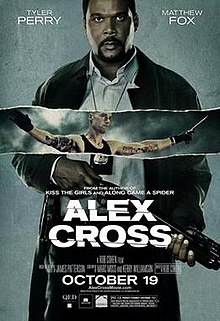
I don't blame Tyler Perry for attempting to try something new, and Alex Cross, what is supposed to be a gritty, dark, psychological thriller is as far as one can get from a tall black man in a dress and fat suit.  Since there have been apparently endless James Patterson novels about our titular character, I can figure that Alex Cross is meant to be a franchise-starter, where we see more films about our brilliant detective/psychiatrist.  I have never seen either Kiss the Girls or Along Came a Spider, the two other Alex Cross adaptations starring Morgan Freeman as Cross.   With Alex Cross, I can say that Tyler Perry did the best he could with what he was handed.  I can also say that one simply could not have chosen a worse way to attempt a franchise with such a lackluster film, filled with moments of unintended humor and some poor choices.

Alex Cross (Perry) is a brilliant psychiatrist and policeman, with a great wife (Carmen Ejogo) and two great kids...or three with Maria preggers.  He has a best friend since childhood who works under him, Thomas Kane (Edward Burns), who is having an affair with his fellow officer Monica (Rachel Nichols), a no-no in Alex's eyes.

As we continue, Detroit is now plagued by a serial killer, one of those brilliant psychopaths who leaves cryptic clues and gets off on torturing people.  Named Picasso by the detectives, the only name he ever gave was when he entered a cage match: The Butcher of Sligo (Matthew Fox).  Picasso is a master assassin, targeting people involved with a rich French tycoon named Leon Mercier (Jean Reno).  Mercier is in Detroit to help rebuild the devastated city with new industry, but those working under him have either met gruesome deaths or come close to it.

As Cross and his crew continue investigating, Picasso/Butcher continues his rampage, which now becomes personal.  He first killed Monica, then when he is thisclose to killing Cross off, Picasso quickly turns to Maria, assassinating her.  Cross is filled with both anger and regret, and soon becomes blinded by his fury.  Only his mother, Nana Mama (Cicely Tyson) advises that by pursing his own justice, Alex Cross will lose himself.  Despite himself, Alex and Tom are able to put their own griefs aside in order to stop Picasso from his rampage, and they succeed.  Alex Cross ends with the Widower having accepted an FBI position as a profiler, Tom giving him his application to the Burea, and Nana Mama bringing comfort...oh, and the brains behind the operation is caught.

Again, I don't blame Perry for attempting to branch out beyond the Madea character he has popularized, to show himself as both a leading man AND a genuine actor.  However, he couldn't have picked a WORSE way of going about it because there is nothing for Perry in Alex Cross to work with. Now, never having read any James Patterson novel of any kind (either from an Alex Cross, Women's Murder Club, or Maximum Ride series or something else from this publishing factory), I simply cannot believe his books can be as awful as the Marc Moss and Kelly Williamson adaptation of Patterson's Cross.  I'd like to look beyond the silliness of the whole "super-hitman who is always a step ahead of everyone else and is able to perform masterful dastardly deeds that put James Bond henchmen to shame".  It is just that nothing in Alex Cross is compelling: not the crimes, not the victims, not the characters.

Rob Cohen did a simply abysmal directing job if by directing you mean you guide the actors into their roles.  Perry looked almost catatonic as our lead, one who has no emotions to express.  Whether his wife and unborn child is killed before him or he confronts his mother's warnings or rams Picasso in what is intended to be a climatic confrontation, Perry has the same expression.  I don't hold him responsible because I imagine that since he was not directing himself, he was told to underplay everything. 

The same can't be said of Fox, who I figure was told to OVERPLAY everything to the point of farce.  At one point, when our master villain is taunting Cross with how his wife died, he does the unthinkable: make the "menacing dialogue" hilarious.  "If you had just kept your moth shut," Fox begins with his head looking right.  Then he looks STRAIGHT AT THE CAMERA to conclude, "you wouldn't be feeling any pain at all!"  I confess I just burst into laughter at this.  It was all so hilarious: the wild-eyed intensity of Fox (who already makes for easy parody from his role in Lost), mixed with the line reading PLUS the actual dialogue (which make it sound as if he is either threatening or apologizing to the audience for the film).

Burns, who A.) has never been able to rub his Irish charms off on me, B.) never convinced me he is some sort of writer/director genius (though I have never seen The Brothers McMullen), and C.) ALWAYS plays a variation of the wiseacre cop, does something he's never done in a film...be wasted as a character.  He pretty much plays the same character in the films he doesn't write/direct himself, and Alex Cross is a Bartha role for him as any that has come along.

As a side note, it's curious that TWO of Alex Cross' stars best known for their own work as independent film actor/writer/directors can't do good acting when someone else is doing the writing and directing.

Everyone is wasted in Alex Cross...acting-wise.  It's so sad to see both Ejogo (who was one of the best things about the remake of Sparkle) and Tyson have so little to do.  Both are much better actresses than the material given to them, and that is one of the big flaws in Alex Cross...as good as the actors (and Fox) may be, they can't make the most ludicrous situations believable.  Even worse, when you cast John C. McGinley as Cross' Chief, every scene he's in makes him look like a comical idiot.  The big problem with McGinley is that one is never sure if we're SUPPOSE to think he's an idiot or not.

Another unintended comic aspect is John Debney's score, which tries so hard to make things so dramatic and intense but again only comes off as parody than serious.

I figure that the hope was that Alex Cross would do two things: show Tyler Perry in a new light (that of a serious actor who could carry a film without a fat suit and a muumuu), and be the introduction to a franchise built around this criminologist genius.  Perry I think still can fulfill his separate goal to branch out beyond Madea (that might make for a good title: Tyler Perry's Beyond Madea), but Alex Cross is no franchise-builder.  It's just a shot in the dark that missed its target by a mile.

What everyone who paid to see Alex Cross felt...


DECISION: D-