Wednesday, October 8, 2014
The Maze Runner: A Review
At last, I can say what I have been thinking for quite some time, ever since I sat through the first season of Teen Wolf.
Dylan O'Brien is one of the best young actors around, and if he continues to choose wisely (and even on occasion, unwisely, given he was one of the few bright spots in The Internship), O'Brien will find he cracked my Future Legends list should I revisit it. The Maze Runner combines action with depth and had me fascinated as how it threw mystery upon mystery at me. Moreover, I was so surprised at how well O'Brien handled his first real leading role that I constantly found myself wondering, 'With Dylan O'Brien around, why do we need Logan Lerman?'
A young disoriented man is sent to a seemingly pastoral place. He doesn't know where or why or even who he is at first. He discovers that once a month, a new boy is sent there, and soon he remembers his name: Thomas (O'Brien). This community of 'lost boys' is headed by Alby (Aml Ameen), who was the first boy sent. There are others who are leaders like the tough Gally (Will Poulter) and the more gentle Newt (Thomas Brodie-Sangster). Thomas quickly learns that they are all trapped in a maze, one that opens every day but which not only closes at night, but one where if you are outside the Glades when they close, no one ever survives in. To map out the area, there are what they call Runners, among them the generally quiet Minho (Ki Hong Lee) and Ben (Chris Sheffield). Another youngster, Chuck (Blake Cooper) is too young to be a Runner, and more or less both looks up to and looks after Thomas.
In the few days Thomas is there, though, we find that he is different than those that came before. He is curious about the maze and more importantly wants out, while almost everyone else prefers the safety of the Glades rather than risk dying out in the maze. One time, circumstances bring both Thomas and Minho to be outside the maze, and they do the impossible: they live to tell the tale. Gally is becoming more and more agitated about the breakdown of their society thanks to Thomas, but Alby, stung by the Grievers (monsters that are in the maze) is in no position to help.
Things become more complicated when someone new arrives long before their scheduled appearance. Not only is this person early, but it is something that has not come before: a girl. Teresa (Kaya Scodelario) has a message in her hand: She's the last one, ever! While her presence doesn't upset the natural order of things (young men being not interested in sex), Thomas still finds himself remembering odd things, things involving Teresa, and things that may help them escape. Gally leads a revolution to keep what order he can, especially after the maze gates are not closed one night and the Grievers devastate the community. However, a group of them, with Thomas as reluctant leader, manages to lead a counter-revolution and insist on leaving. They do make it to a literal exit from the maze, but there are casualties, with one or two more twists thrown at us.
We also get the opening to a sequel.
Normally, I detest having films almost not end with such a suggestion, but given that The Maze Runner is the first in a trilogy of books by James Dasher I don't object. This is the newest adaptation of teen dystopian novels (which appear to be the rage) and it isn't even the sole entry this year (with both The Giver and upcoming Mockingjay Part One heading our way). However, I think The Maze Runner is the best so far and frankly prefer it to all the Hunger Games films (which appear beloved by critics and readers, though not by me).
There are good reasons for this. First, there is simply no romantic subplot to intrude on our tale. The Maze Runner is pretty much action, and even Teresa's appearance is one where the idea of having her and Thomas hook up doesn't appear to exist. From the moment director Wes Ball throws us into the story, letting the noises and darkness fill us with that sense of dread and danger, the action rarely lets up. There are some moments of calm and even some moments of character development (Chuck's longing for the parents he doesn't remember and his story are extremely moving). However, by and large we get one action scene after the other, as these kids continuously struggle to stay alive in a world they do not understand.
Second, we have really good performances from the young cast. Of particular note is Dylan O'Brien. Those of us who know him from Teen Wolf will be surprised that he can play a more mature and less comic character than his Stiles Stilinski, who is so goofy and at least in the beginning the comic relief to the supernatural goings-on. Scodelario doesn't have much screen time, but she makes the most of it as this girl who is genuinely confused about what she is doing there but who is as strong and capable of defending herself as anyone else. Poulter is effective as Gally, who isn't evil but whose motivations, while conflicting with those of Thomas and his allies, are based on trying to keep order and protect those around him. Cooper is the lightness in The Maze Runner, but his moments show that Chuck is also just a kid who loves and who deserved better.
Finally, we have an interesting and involving story that piles mysteries upon mysteries, each of them either being answered or leading us to a surprising conclusion. The special effects were effective and visually impressive (and moreover, were relevant to the plot), and while John Paesano's score sometimes was rather noticeable, I found myself both enjoying the music and finding it worked to set the mood be it action or suspense.
If I find any real fault in The Maze Runner (and they are minor) is that we go through so much that sometimes some of the minor characters who go with Thomas and Teresa (talk about T & T) get lost in the shuffle. Hopefully they will have greater roles in the upcoming sequels. Also, the ending(s) may be a bit much to take, with one big twist after another coming at us so soon we run the risk of rejecting the logic of it. Certainly the last moments with Gally seem a bit out of place, and the 'the adults are dead/not dead' business seems like a bit too much.
Again, these are minor points that did not take away from my enjoyment of the film. I found The Maze Runner to be exciting, remarkably intelligent, and held by some really strong performances, especially by Dylan O'Brien, who I hope with this series becomes a real breakout star. The big teen dystopian films like The Hunger Games and Divergent series have had female leads, and it's good to show young girls that they are capable of being strong and capable leaders. However, The Maze Runner is not afraid to let boys play again in the world of teen-centered action films, and of having a group work together rather than leaving it almost all up to one person. We have a great group of actors (of both genders and many races, a big plus for me) and I for one am looking forward to the sequel.
And for someone who generally eyes sequels with suspicion, that is the most amazing thing of all...
DECISION: B+
Monday, October 6, 2014
Gotham: Selina Kyle Review
GOTHAM: SELINA KYLE
Gotham continues to balance the police procedural with the comic-book source material on the whole, rather well. Selina Kyle oddly doesn't dwell too much on the title character, a figure we know will grow up to be Catwoman. It's a bit of a tease, especially because we don't get to hear from her until at least halfway through her eponymous episode. Having said all that, Selina Kyle is still a good episode where the crime-of-the-week keeps us within the Batman universe growing around us.
There's been a spate of homeless child abductions under the guise of the Mayor's Homeless Outreach Project. Two figures, Patti (Lilly Taylor) and Doug (Frank Whaley) seemingly mild-mannered, are the abductors, stunning their child victims with a poison pen. One of these homeless kids, Selina, who prefers to go by 'Cat' (Camren Bicondova) refuses Patti and Doug's generous offers of food, and flees when she sees what they do. Another homeless kid, Mackey (Kyle Massey) also runs for his life with Doug chasing after him. In the chaos, Mackey finds himself thrown through the window of a fancy Gotham restaurant.
In the abduction, a homeless veteran is killed, and that is the genesis of the investigation by Detectives James Gordon (Ben McKenzie) and Harvey Bullock (Donal Logue). The upright Gordon is appalled that a fellow officer went to protect the restaurant rather than stay with the body, but this brings them to Mackey, who tells his rather outlandish tale. To get some information, Bullock and Gordon go to Bullock's friend, mobster Fish Mooney (Jada Pinkett Smith). They appear to let bygones be bygones (she had, after all, tried to kill them both). She doesn't know anything about the kidnappings, but she has her own problems. It seems her overlord, mobster kingpin Falcone (John Doman) talked to Fish's former minion Oswald Cobblepot (Robin Lord Taylor) because Gordon apparently bumped him off. He told Falcone about Mooney's plans to overthrow Falcone. Mooney denies this, and to show that he believes everything she says, he has her 'lover' Lazlo (Michelangelo Milano) beaten as they chat.
The police, who want to keep the abductions quiet, do find there is a drug in Mackey's system thanks to the analysis of CSI Edward Nygma (Cory Michael Smith). This drug isn't used much ever since the Arkham Asylum was closed, but who then manufactures it? Gordon and Bullock find the provider, and it looks like the kids are rescued in time.
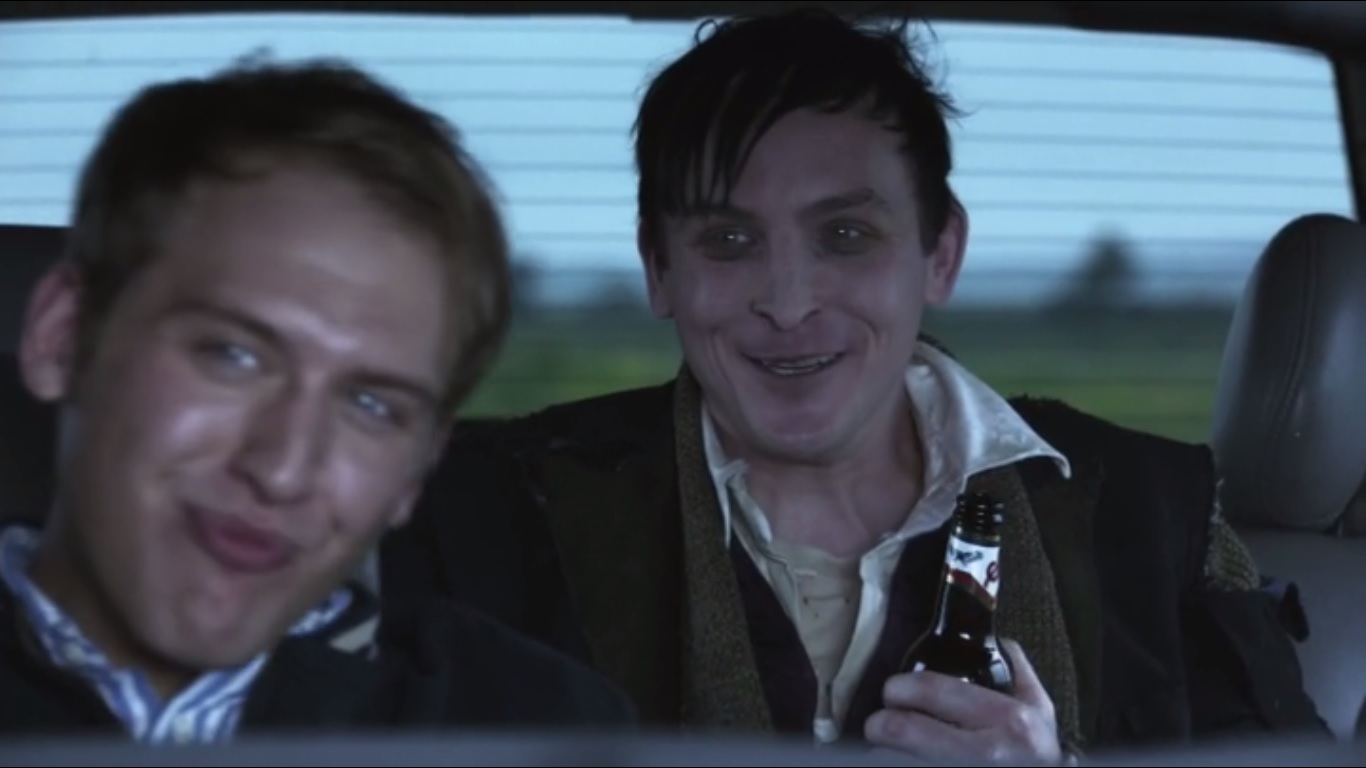
Never underestimate the corruption in Gotham, though. Mayor Aubrey James (Richard Kind) doesn't want these kids around, so it's upstate for these urchin. Gordon, ever straight as ever, is angered. It's imprisoning the children without trial. Bullock, however, does remind him that Gordon has no real standing in the morality department, having executed a man (or so he thinks). That same man, Oswald Cobblepot, is working his way back to Gotham for revenge, and he finds two frat guys to pick him up. The fact that his walk reminds them of a penguin is a trigger for Ozzie, who smashes the beer bottle they gave him and ruthlessly kills one while taking the other hostage. Oswald's disappearance alarms his mother, Gertrude Kapelput (Carol Kane), who files a missing person's report.
Cat is one of the kids going upstate, a fate she does not relish, especially since she insists she isn't an orphan and that her mother is somewhere. However, to her horror, Patti and Doug masquerade as the bus drivers and take the unsuspecting kids from the holding center, for The Dollmaker does not tolerate failure. At the docks Patti and Doug think they are one short, and at first find nothing. However, Patti finds Cat and is not afraid to kill her off. However, thanks to Bullock's rough manners with a witness they managed to find a vital clue that led them to the docks. Gordon doesn't object because if it's between letting Bullock beat a guy who held children hostage and the lives of forty children, "Saint James" (as Bullock called him) won't bat an eye.
Cat insists on talking to Gordon. This isn't the first kid James had talked to these few days. Wayne family manservant Alfred Pennyworth (Sean Pertwee) asks Gordon to talk to Young Master Bruce (David Mazouz) who has been injuring himself in an effort to 'test' himself. Cat then gives Gordon shocking news: SHE knows who killed the Waynes.
Again, Selina Kyle as an episode really isn't centered on Selina Kyle herself. She IS an important part of the story in that we do get a lot of the qualities that the future Catwoman will have. She tells a frightened child on the bus that if attacked, he should go for the eyes (putting out her hands like cat claws). We also see that she has the dexterity to move like a cat, and yes, she likes to be called 'Cat'. For some, this is laying on a bit thick. For me, I went along with it.
Selina Kyle really has a lot of balls in the air. There's the main story of the child abductions. There's the Fish Mooney subplot where she is swearing revenge on Falcone. There is the Kapelput/Cobblepot subplot where Mrs. Kapelput is worried that some 'woman' has taken her little boy, while Ozzie is busy trying to get money to return to Gotham. He is holding one of the frightened frat guys prisoner and at the end one isn't sure whether Oswald will cold-bloodily kill him as he did the other frat guy who ridiculed his unfortunate walk. Then there's the story of James Gordon, attempting to keep the virtues in a town teetering on total moral collapse. I give credit to Gotham producer and Selina Kyle writer Bruno Heller for keeping those balls floating remarkably well. I did feel the Cobblepot storyline was underused (we see Oswald in the beginning, middle, and end but for all intents and purposes his story could have been either excised or the whole episode itself). Apart from that I think the story flowed well enough to keep my interest.
One great highlight were the guest performances. Taylor and Whaley had this bizarre throwback style to their Patti and Doug, as if telling you just by their excessively sweet manners that they really were quite vicious and evil. They managed to keep their performances just this side of camp (though at one point Whaley, whom I had briefly mistaken for Peter Sarsgaard, appeared to be channeling Marlon Brando's Don Corleone when talking to their fence).
I also loved Carol Kane's whacked-out Mrs. Kapleput (I figure 'Americanized' to Cobblepot), Oswald's very own Mommie Dearest. In turns endearing and slightly bonkers, Mrs. Kapleput's assertion that it was a 'woman' who had led her little boy astray (and caused him to be missing) is amusing and well, weird. There's a certain Miss Havisham quality to Kane's portrayal, a woman who is not quite there. However, seeing how she clutches the rather-flattering picture of her little Ozzie had me smile. I just hope she returns for more guest spots for two reasons. One, I'd like to see the interplay between mother and son played out more. Two, is there really such a thing as too much Carol Kane?
As for the regular cast, despite her brief time on her own episode Bicondova made the most of her Cat/Selina. She was tough and smart yet with a hint of vulnerability underneath. McKenzie seems slowly warming up to making Jim Gordon this solidly square figure who is devoted to his profession. I'm also liking Logue as the sleazy Bullock. He's the type of person I'd say was a bad man but a good cop. We have yet to see any overt corruption or funny business from him, so while he may be unethical, he has yet to prove dirty. He's also able to make the most unsympathetic of figures almost endearing. Gordon is appalled at how dismissive he is towards the dead homeless man, reminding him the victim is a veteran. "And I salute his service, but he's still a dead wino", Bullock responds. When Bullock reprimands Gordon for allowing his fiancée Barbara (Erin Richards) to tip off the press, he tells his junior partner that he is letting his desires entangle him needlessly. "You, my friend, are a monkey riding a racehorse," he tells Gordon.
There's more than poetry in that statement mocking Gordon's WASP woman.
Pinkett Smith continues to keep a balance of camp and menace as Mooney where she delights in being evil. She is matched by another standout in Doran, who has such a way with dialogue. "Men who are about to die are very honest. It pays to listen to them," he coolly tells Mooney before revealing his final conversation with Cobblepot. The whole scene plays like a perverse replay of how Mooney dispatched Oswald when they had their 'mother/son' chat. Claiming loyalty, Moony insists she would never betray him and that he shouldn't lose sleep over the moves of his rivals. "I never lose sleep over my enemies. It's my friends that keep me awake," he replies.
Couldn't have said it better myself.
If I find fault in Selina Kyle, it is the shortchanging of other characters. Taylor's Penguin is still the highlight (though he has few scenes, they still provide great fear about how dangerous he is becoming), and the same goes for Mazouz's Bruce Wayne. If they ever get them in the same scene, we'll have an incredible scene. Both are becoming the performers who are running away with Gotham, and I hope that we will see more of them as the series progresses.
It also is frustrating me that Smith's Edward Nygma is still popping up in only one scene per episode so far. Granted, his role may grow as the series goes on, but I think a lot of potential is being wasted on having him pop in quickly to just disappear as quickly. I'd like a genuine moment of interaction with Nygma, Bullock, and Gordon, even dare I hope a scene outside work (does the Gotham City Police Department have a Christmas party?). We need to get more of Cory Michael Smith as Edward Nygma, not so much as counterpoint to Taylor's impressive Penguin but because there is such a great potential in the future Riddler.
I still think Gotham is a great series so far, and Selina Kyle was on the whole a second strong episode to a series that is continuing to impress as both an independent series and as part of the massive Batman mythos.
7/10
Next Episode: The Balloonman
Sunday, October 5, 2014
Meet the Mormons: A Review (Review #666)
MEET THE MORMONS
Mormons Are People Too...
I remember very well my first visit to Utah, as well I should. It was this May when I spent a week in Salt Lake City and surrounding areas. It's a beautiful state, but the old joke about Utah is still basically true: in Utah, the separation of church and state is a street.
The Salt Lake City Temple is literally down the hill from the Utah State Capitol.
I enjoyed my time in the Beehive State, but I also found myself immersed, willingly or not, in Mormon culture. I say 'Mormon culture' because Utah felt like another world altogether. I learned that the state is so heavily Mormon that during school, communities like Bountiful have Latter-Day Saints (or LDS) education centers called 'seminaries' across the street from schools (and nearly all students go directly from school to these seminaries then back to school, with only non-LDS students not attending). The LDS community has its own bookstore (Deseret Book) and even its own cinema. While in Utah I stayed with non-LDS friends, who showed me some of the many films of one Kirby Heyborne, of whom I'm now a fan. I should point out that the two Heyborne films I saw: The R.M. (which stands for "Returned Missionary") and The Best Two Years, while both enjoyable, had to be literally explained to me (as many of the in-jokes that an LDS member would find uproarious would be lost on a little old evangelical like me). Still, I got some understanding of Mormon culture and found it fascinating (I hope to later review Joseph Smith: Prophet of the Restoration, which plays daily in the Joseph Smith Memorial Building at Temple Square).
One thing I got was that Mormons have a bit of a persecution complex. I don't blame them, given they were driven out from both New York and Missouri I believe early in the faith's history, which brought them to the Great Salt Lake Valley. Notorious for the early church's practice of polygamy, the LDS Church has yet to live down the idea that Mormon men have a harem from the general mindset. They also have had negative press from the get-go thanks to such classic books as A Study in Scarlet (the Sherlock Holmes debut novel where a major subplot was the wickedness of the LDS Church) and the Western Riders of the Purple Sage. Early films like the mostly lost A Victim of The Mormons and Trapped By the Mormons I'm sure didn't help. Even now, most evangelicals bristle at the idea that Mormons are 'true Christians', and I can testify (to use LDS lingo) that at least one evangelical Christian I know refused to vote for Mitt Romney because Romney is Mormon (no word on whether this person also played Osmond Brothers or Gladys Knight albums backwards to hear any Satanic messages).
Well, the LDS Church is now on a charm offensive. We've all encountered the eager young men and women who come to our doors to share the other Gospel of Jesus Christ. Now we have Meet the Mormons, a documentary that features six LDS members discuss how they are not only average men and women but who have been made or made better by the LDS Church. Meet the Mormons can be one of two things: a genuine documentary about LDS members living their lives or thinly-veiled recruiting propaganda. The truth lies somewhere in between (but leans strongly on the latter).
Hosted by perky Jenna Kim Jones (who tells us she's a Mormon, which she clarifies is a nickname, not the official term like 'Catholic' or 'Lutheran' would be to their respective churches), we travel around the world and the U.S. to meet all sorts of people. They go by their titles: The Bishop (Jermaine Sullivan from Atlanta), The Coach (U.S. Navy football coach Ken Niumatalolo based in Annapolis), The Fighter (Costa Rican mixed martial arts fighter Carolina Marin Munoz), The Candy Bomber (retired U.S. Air Force Colonel Gail Halvorsen), The Humanitarian (Nepalese entrepreneur Bishnu Adhikari) and the Missionary Mom (Dawn Armstrong, her son Anthony, and her husband Craig).
With Jones' occasional comments, the participants are allowed to tell their tales, of either how they came to be LDS or how their LDS faith impacted their lives.
Some of the stories are completely compelling. Regardless of what one thinks of his faith, Colonel Havelson is a hero through and through. As the 'Candy Bomber', he dropped chocolates to Berlin children during the Berlin Airlift, and at 92 is still flying and recreating his extremely noble act that is worthy of honor and respect. The entire Armstrong family is also an amazing tale. Dawn Armstrong was without direction and had given birth to an out-of-wedlock child (Anthony). After this and the death of a second illegitimate child she was on the verge of total collapse, but the intervention of various Missionary Sisters saved her life and gave her and her son hope. She moved to Utah, married Craig (who has one leg) and now Anthony (who is biracial, and in a moment I'll argue why that is important) at the end of the film is serving as an Elder in Durbar, South Africa.
As fascinating as some of the stories are, I found a certain cold calculation to this entire endeavor. Meet the Mormons (apart from a clumsy title that lends itself to parody) reminded me of all things the Disney Vacation DVDs I receive every so often, highlighting the new attractions at the various Disney theme parks and cruises to get me to return. In the same way, Meet the Mormons doesn't have much about the individual Mormons themselves. Instead, it in some ways plays like a glossy promotional video for the Church.
Let us remember that the LDS Church provided the funds for Meet the Mormons, which they are open about. There is simply no way around the idea that Meet the Mormons, far from being an objective view of LDS members, is a recruitment tool which could easily be shown either at Home Study gatherings or be handed out by the Elders/Sisters along with copies of The Book of Mormon.
I could not help notice that all but one of the interviewees was Anglo (and that Anglo is a war hero). The Bishop is black, the Missionary Mom's son is biracial, and there was a Hispanic, a Polynesian, and Nepalese subject. Even the closing song has minority roots: David Archuleta, the American Idol alum who sings the closing song, Glorious, is Hispanic.
In the opening of Meet the Mormons, Jones interviews people in Times Square, and one of the stereotypes and clichés about LDS is that they are racists. I think there is a general idea that Mormon=White, and Meet the Mormons showcases members who are almost all non-White. However, I cannot shake the idea that this is no accident but by careful design, as if to show the world that there are not only Mormons of color, but that not all of them live in Utah.
Bishop Sullivan and/or Anthony Armstrong are never asked about the complex history the LDS Church has had with African-Americans (such as how black men were not given full priesthood privileges until 1978). It is possible that the Bishop and the Missionary are flat-out unaware of the Church's tortured racial history, but Meet the Mormons wasn't about to delve into that beehive (pun intended).
We were told that Mrs. Munoz would show how any stereotype of Mormon women would be shattered. I didn't see any shattering of stereotypes. Yes, she kick-boxes, but so do many women. The Munozes have a partnership in their marriage, but that isn't either unique or groundbreaking. It doesn't show she has a leadership position in her home or ward.
As a side note, it's curious that when we hear the various members reading or quoting Scriptures, it is the Bible, not The Book of Mormon we hear from.
Speaking of The Book of Mormon, there is something almost bizarre in seeing Jones walking in front of the Broadway theater marquee of the Trey Parker/Matt Stone spoof of Mormonism without really acknowledging it even as it is there in plain sight. We do get some clips where Mormons are spoofed in the popular culture, but Meet the Mormons again wasn't going to touch those ideas apart from countering them with inspirational stories of Mr. Adhikari bringing water to Nepalese villages, Coach Niumatalolo inspiring his team onto victory, or Colonel Halvorsen recounting how his Candy Bombing over Cold War-West Berlin began. Frankly, almost all religions are mocked in popular culture at one point or another, so shots taken at Mormonism aren't either out-of-the-ordinary or unique to them.
It would have been interesting to hear how these Mormons perceive themselves against the culture at large, or hear what they thought of The Book of Mormon musical. We never hear about how the ideas non-LDS (or Gentiles as non-LDS are dubbed by the LDS community) don't square with their realities. Instead, we hear from almost everyone about how the LDS in general has done great things for them. It isn't my place to say their religious beliefs haven't helped them, but if the whole point of Meet the Mormons was to...meet the Mormons, the film fails in that goal.
I personally think also that Meet the Mormons is a bit flawed in its mission (no pun intended). The thinking behind Meet the Mormons is that there is this wild perception among Gentiles that the LDS is some sort of bizarre universe. I have met several Mormons, and like Christians I know they laugh at comedies, enjoy socializing, even dancing, and in practically every respect live lives no different than non-LDS.
Meet the Mormons is saved (no pun intended) by the Armstrong and Halvorsen stories, which would make fascinating tales in their own right. That is why I'm giving it the mildest negative vote I can. I do this because in many other respects, Meet the Mormons strikes me as propaganda for the Church of Jesus Christ of Latter-Days, an effort to put their best multicultural face forward to a world that still views them with suspicion. It's all a bit too glossy, too calculated, too vaccinated to have me learn much that I couldn't gleam from a visit by either Elders or a stop at the home of an LDS member. Meet the Mormons has this air of being a well-produced semi-recruitment video that will play well in Utah, but which will give Gentiles little to no information about what it is like to be a Mormon in today's world.
Truthfully, I feel almost a little guilty about being mostly negative about Meet the Mormons. Mormons are the nicest people I've met. However, I have to always, at least when it comes to film reviews, Choose the Right.
DECISION: C-
Mormons Are People Too...
I remember very well my first visit to Utah, as well I should. It was this May when I spent a week in Salt Lake City and surrounding areas. It's a beautiful state, but the old joke about Utah is still basically true: in Utah, the separation of church and state is a street.
The Salt Lake City Temple is literally down the hill from the Utah State Capitol.
I enjoyed my time in the Beehive State, but I also found myself immersed, willingly or not, in Mormon culture. I say 'Mormon culture' because Utah felt like another world altogether. I learned that the state is so heavily Mormon that during school, communities like Bountiful have Latter-Day Saints (or LDS) education centers called 'seminaries' across the street from schools (and nearly all students go directly from school to these seminaries then back to school, with only non-LDS students not attending). The LDS community has its own bookstore (Deseret Book) and even its own cinema. While in Utah I stayed with non-LDS friends, who showed me some of the many films of one Kirby Heyborne, of whom I'm now a fan. I should point out that the two Heyborne films I saw: The R.M. (which stands for "Returned Missionary") and The Best Two Years, while both enjoyable, had to be literally explained to me (as many of the in-jokes that an LDS member would find uproarious would be lost on a little old evangelical like me). Still, I got some understanding of Mormon culture and found it fascinating (I hope to later review Joseph Smith: Prophet of the Restoration, which plays daily in the Joseph Smith Memorial Building at Temple Square).
One thing I got was that Mormons have a bit of a persecution complex. I don't blame them, given they were driven out from both New York and Missouri I believe early in the faith's history, which brought them to the Great Salt Lake Valley. Notorious for the early church's practice of polygamy, the LDS Church has yet to live down the idea that Mormon men have a harem from the general mindset. They also have had negative press from the get-go thanks to such classic books as A Study in Scarlet (the Sherlock Holmes debut novel where a major subplot was the wickedness of the LDS Church) and the Western Riders of the Purple Sage. Early films like the mostly lost A Victim of The Mormons and Trapped By the Mormons I'm sure didn't help. Even now, most evangelicals bristle at the idea that Mormons are 'true Christians', and I can testify (to use LDS lingo) that at least one evangelical Christian I know refused to vote for Mitt Romney because Romney is Mormon (no word on whether this person also played Osmond Brothers or Gladys Knight albums backwards to hear any Satanic messages).
Well, the LDS Church is now on a charm offensive. We've all encountered the eager young men and women who come to our doors to share the other Gospel of Jesus Christ. Now we have Meet the Mormons, a documentary that features six LDS members discuss how they are not only average men and women but who have been made or made better by the LDS Church. Meet the Mormons can be one of two things: a genuine documentary about LDS members living their lives or thinly-veiled recruiting propaganda. The truth lies somewhere in between (but leans strongly on the latter).
Hosted by perky Jenna Kim Jones (who tells us she's a Mormon, which she clarifies is a nickname, not the official term like 'Catholic' or 'Lutheran' would be to their respective churches), we travel around the world and the U.S. to meet all sorts of people. They go by their titles: The Bishop (Jermaine Sullivan from Atlanta), The Coach (U.S. Navy football coach Ken Niumatalolo based in Annapolis), The Fighter (Costa Rican mixed martial arts fighter Carolina Marin Munoz), The Candy Bomber (retired U.S. Air Force Colonel Gail Halvorsen), The Humanitarian (Nepalese entrepreneur Bishnu Adhikari) and the Missionary Mom (Dawn Armstrong, her son Anthony, and her husband Craig).With Jones' occasional comments, the participants are allowed to tell their tales, of either how they came to be LDS or how their LDS faith impacted their lives.
Some of the stories are completely compelling. Regardless of what one thinks of his faith, Colonel Havelson is a hero through and through. As the 'Candy Bomber', he dropped chocolates to Berlin children during the Berlin Airlift, and at 92 is still flying and recreating his extremely noble act that is worthy of honor and respect. The entire Armstrong family is also an amazing tale. Dawn Armstrong was without direction and had given birth to an out-of-wedlock child (Anthony). After this and the death of a second illegitimate child she was on the verge of total collapse, but the intervention of various Missionary Sisters saved her life and gave her and her son hope. She moved to Utah, married Craig (who has one leg) and now Anthony (who is biracial, and in a moment I'll argue why that is important) at the end of the film is serving as an Elder in Durbar, South Africa.
As fascinating as some of the stories are, I found a certain cold calculation to this entire endeavor. Meet the Mormons (apart from a clumsy title that lends itself to parody) reminded me of all things the Disney Vacation DVDs I receive every so often, highlighting the new attractions at the various Disney theme parks and cruises to get me to return. In the same way, Meet the Mormons doesn't have much about the individual Mormons themselves. Instead, it in some ways plays like a glossy promotional video for the Church.
Let us remember that the LDS Church provided the funds for Meet the Mormons, which they are open about. There is simply no way around the idea that Meet the Mormons, far from being an objective view of LDS members, is a recruitment tool which could easily be shown either at Home Study gatherings or be handed out by the Elders/Sisters along with copies of The Book of Mormon.
I could not help notice that all but one of the interviewees was Anglo (and that Anglo is a war hero). The Bishop is black, the Missionary Mom's son is biracial, and there was a Hispanic, a Polynesian, and Nepalese subject. Even the closing song has minority roots: David Archuleta, the American Idol alum who sings the closing song, Glorious, is Hispanic.
In the opening of Meet the Mormons, Jones interviews people in Times Square, and one of the stereotypes and clichés about LDS is that they are racists. I think there is a general idea that Mormon=White, and Meet the Mormons showcases members who are almost all non-White. However, I cannot shake the idea that this is no accident but by careful design, as if to show the world that there are not only Mormons of color, but that not all of them live in Utah.
Bishop Sullivan and/or Anthony Armstrong are never asked about the complex history the LDS Church has had with African-Americans (such as how black men were not given full priesthood privileges until 1978). It is possible that the Bishop and the Missionary are flat-out unaware of the Church's tortured racial history, but Meet the Mormons wasn't about to delve into that beehive (pun intended).
We were told that Mrs. Munoz would show how any stereotype of Mormon women would be shattered. I didn't see any shattering of stereotypes. Yes, she kick-boxes, but so do many women. The Munozes have a partnership in their marriage, but that isn't either unique or groundbreaking. It doesn't show she has a leadership position in her home or ward.
As a side note, it's curious that when we hear the various members reading or quoting Scriptures, it is the Bible, not The Book of Mormon we hear from.
Speaking of The Book of Mormon, there is something almost bizarre in seeing Jones walking in front of the Broadway theater marquee of the Trey Parker/Matt Stone spoof of Mormonism without really acknowledging it even as it is there in plain sight. We do get some clips where Mormons are spoofed in the popular culture, but Meet the Mormons again wasn't going to touch those ideas apart from countering them with inspirational stories of Mr. Adhikari bringing water to Nepalese villages, Coach Niumatalolo inspiring his team onto victory, or Colonel Halvorsen recounting how his Candy Bombing over Cold War-West Berlin began. Frankly, almost all religions are mocked in popular culture at one point or another, so shots taken at Mormonism aren't either out-of-the-ordinary or unique to them.
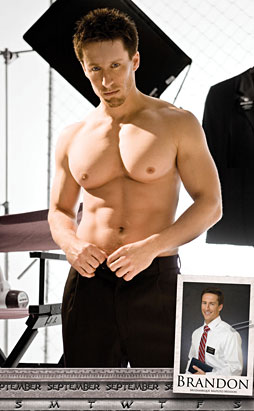
![]() |
| Bet Joseph Smith didn't see THIS in any of his visions... |
It would have been interesting to hear how these Mormons perceive themselves against the culture at large, or hear what they thought of The Book of Mormon musical. We never hear about how the ideas non-LDS (or Gentiles as non-LDS are dubbed by the LDS community) don't square with their realities. Instead, we hear from almost everyone about how the LDS in general has done great things for them. It isn't my place to say their religious beliefs haven't helped them, but if the whole point of Meet the Mormons was to...meet the Mormons, the film fails in that goal.
I personally think also that Meet the Mormons is a bit flawed in its mission (no pun intended). The thinking behind Meet the Mormons is that there is this wild perception among Gentiles that the LDS is some sort of bizarre universe. I have met several Mormons, and like Christians I know they laugh at comedies, enjoy socializing, even dancing, and in practically every respect live lives no different than non-LDS.
Meet the Mormons is saved (no pun intended) by the Armstrong and Halvorsen stories, which would make fascinating tales in their own right. That is why I'm giving it the mildest negative vote I can. I do this because in many other respects, Meet the Mormons strikes me as propaganda for the Church of Jesus Christ of Latter-Days, an effort to put their best multicultural face forward to a world that still views them with suspicion. It's all a bit too glossy, too calculated, too vaccinated to have me learn much that I couldn't gleam from a visit by either Elders or a stop at the home of an LDS member. Meet the Mormons has this air of being a well-produced semi-recruitment video that will play well in Utah, but which will give Gentiles little to no information about what it is like to be a Mormon in today's world.
Truthfully, I feel almost a little guilty about being mostly negative about Meet the Mormons. Mormons are the nicest people I've met. However, I have to always, at least when it comes to film reviews, Choose the Right.
![]() |
| This ISN'T what they meant by 'Brigham Young'... |
DECISION: C-
Tuesday, September 30, 2014
A Streetcar Named Desire (2014) National Theater Review
A STREETCAR NAMED DESIRE
There's crazy, there's psychotic, and then there's Blanche DuBois crazy, and when Blanche goes bonkers, she goes BONKERS! The National Theatre's production of the Tennessee Williams' masterwork A Streetcar Named Desire, which was broadcast in movie theaters on September 16, goes in two directions: both contemporizes the setting and keeping a more 'timeless' feel of the seamy goings-on in the Big Easy. With four great performances this version is not without its flaws, but still makes for compelling viewing.
There may be people who genuinely don't know the plot, so here goes. Blanche DuBois (Gillian Anderson), having lost her family's plantation, goes to visit her sister Stella (Vanessa Kirby), who lives in New Orleans with her husband, Stanley Kowalski (Ben Foster). Stanley is as uncouth as Blanche is elegant, and there is thinly veiled contempt for the other. Stanley sees Blanche as an uppity phony, Blanche sees Stanley as an abusive brute. Certainly there is truth to both perceptions, and Stella is put in the middle of their frosty war. Hope comes to Blanche courtesy of Mitch (Corey Johnson), Stanley's best friend who is not as harsh as Stanley. Mitch certainly is enamored of the sophisticated lady-like Blanche, and Blanche in turn sees Mitch as perhaps her last chance at happiness, as her first marriage ended with the young man's death by suicide early in their relationship.
However, things slowly disintegrate. Stanley learns through people at work that Blanche, far from being this respectable widow, was a virtual nymphomaniac and forced to resign when her attentions went to a seventeen-year-old boy in her school. This news, which Stan eagerly shares with Mitch, causes a disaster at Blanche's birthday party. Mitch doesn't show up, leaving Blanche devastated and confused. When he does appear, she's already slipping into total insanity as her carefully constructed world of 'magic' comes ripping apart at Stanley's hand. Despite now being a father, Stanley takes advantage of a clearly unhinged Blanche and rapes her. Stella cannot bring herself to believe Blanche's story (though one suspects she thinks her sister is telling the truth), and the decision is made to send her to an asylum. As she is collected, Stella is devastated, Stanley does not want to recognize anything's wrong, Mitch is torn, and Blanche, completely divorced from reality, accepting the Doctor's hand, telling him, "Whoever you are, I have always depended on the kindness of strangers".
I think Blanche DuBois is one of the hardest roles for an actress to play. First, no matter how many revivals and interpretations of our mad Southern belle there will be, all of them will be in the shadow of Vivien Leigh's iconic portrayal of Blanche in the film version of A Streetcar Named Desire (as she had originated the role on the London stage, Jessica Tandy having originated the role on Broadway). Second, the role is so meaty that a bad actress can amp up the psycho and be so over-the-top it ends up turning Streetcar into a comedy.
Certainly the exaggerated genteel nature of Blanche lend themselves to the possibility of an actress being excessively fluttery and a smelling salt short of getting 'the vapors'; throw in the fact that some actresses simply cannot do Southern accents and Blanche becomes too hot to handle. I'm from Texas, so Southern accents are not too familiar (Texans having our own manner of speaking), but I have watched The Dukes of Hazzard, so I'm familiar with the dialect.
Anderson, fortunately, did not go for a broad caricature of a grande dame of the Confederacy. Her Blanche was believable in her delusions, a woman who deep down KNEW the truth but as she put it, didn't want reality but magic, things as they SHOULD be rather than how they were. I found Anderson's Blanche to be highly vulnerable, someone who yearned to be the belle she wanted to but found that those things were long gone.
As a side note, I never believed she truly was a nymphomaniac or a slut. Rather, how I see Blanche is as a woman who had her dreams of love crushed by her husband Allen. I think it wasn't overtly spoken, but Allen, this great love of Blanche's, was homosexual and killed himself over the fact that he was gay and married to a woman but having an affair with another man. Her late husband she describes as 'the boy who 'wrote poetry'', which is as odd a euphemism for 'homosexual' as I've ever heard, and given it was created by Tennessee Williams (who was openly gay), that's saying something.
This destruction of her romantic ideals, I think, destroyed Blanche, and all those sexual encounters were not because she wasn't this refined woman or because she was being hypocritical. I think being with so many men, down to the seventeen-year-old boy she seduced as a teacher, was a way for her to drown her sorrow (as if the booze wasn't drowning her sorrows already). She yearned for that company, for MEN, for validation as a woman, and I've always thought her numerous affairs were a way to empty the loneliness.
To rely on the kindness of strangers.
Anderson is sensational as Blanche, bringing a painful vulnerability when she's completely lost it, but she is also arrogant and snobbish in regards to Stanley. In turns flirtatious and refined, Anderson controls herself even when she's cuckoo. She's not hypocritical, but honestly critical.
In a similar vein, any actor playing Stanley has to face Marlon Brando's long shadow. Here too one runs the risk of being excessively brutal without a hint of humanity. Foster, with his small eyes and muscular frame to offset his short height (at 5'9", the same height as Daniel Craig I should point out), gives Stanley a great vulnerability masking his harsh behavior. When Blanche is going on about how Stanley is something like an ape, we see a bit of genuine hurt and confusion about Blanche's summation of his character. As he crawls towards Stella after their fight, we see that perhaps Blanche's ideas are not far from the truth: he looks and behaves like a dejected animal, surrendering to the bestial part of his nature.
Foster even manages to bring in a bit of lightness whenever he keeps declaring he has an expert 'friend' who can examine whether something is accurate and on the level of the Napoleonic Code he's going on about. Foster is simply an actor who should act more and personally I blame the failure of X-Men: The Last Stand (where he was Warren Worthington III aka Angel) for the bad turns in his career. It would have been his breakout role, but it didn't, and somehow he's been relegated to 'tough guys', which is a shame since his performance in Ain't Them Bodies Saints showed he could play soft effectively. His ability to bring softness with that tough exterior is what makes his Stanley Kowalski a fine turn.
What I really enjoyed were Kirby and Johnson as Stella and Mitch respectively, particularly Johnson. He makes Mitch someone who is taken by Blanche and genuinely cares for her, but who is also devastated by her shocking past so at odds with his own idealization of Miss DuBois. Still the intense conflict raging within him about his feelings towards Blanche, coupled with his ability to be both working-class and slightly above the mire of the world he lives in makes Johnson a great version of Mitch, about the only character with redeeming values.
I think director Benedict Andrews did a great job in how he helped the actors craft their roles, and in some of his musical choices. We hear Wicked Game when Mitch and Blanche end their date, and I think it suggests that they were intimate, but the lyrics to Chris Isaak's song are fitting: Blanche was playing a 'wicked game' in how she was with Mitch.
If I were to find some faults with the production it would also relate to the music. Sometimes the music is too loud to where I had to cover my ears, and the balance between the traditional slow jazz of 1940-50s South and a more contemporary sound doesn't always hold up.
I also wasn't a big fan of the spinning stage, which at times blocked the performers.
However, on the whole this production of A Streetcar Named Desire is a showcase for Anderson, Foster, and Johnson, who have found success in the U.K. despite being Americans. They'll never be able to knock out the versions of Leigh and Brando, but Anderson and Foster give us excellent portrayals of these two iconic figures.
8/10
Monday, September 29, 2014
Franklin & Bash: Honor Thy Mother Review
FRANKLIN & BASH:
HONOR THY MOTHER
MILF Does A Buddy Good...
There are three selling points to Honor Thy Mother, the newest Franklin & Bash episode. One: Breckin Meyer (His Royal Highness Elmo, Duke of Landingshire) co-wrote the script with Franklin & Bash co-creator Kevin Falls. Two: Mark-Paul Gosselaar (Peter Bash) directed his co-star's script. Three: Kumail Nanjiani (Pindar Singh) makes a return guest appearance after his character disappeared without a trace and barely an explanation (which if memory serves right, has changed from between it was mentioned in the season opener The Curse of Hor-Aha and now).
We also have sex between HRH and his best friend's mom, a silly send-off for a divisive character, and a really boring case. Not even Reed Diamond could lift Honor Thy Mother from the Meyer of Breckin.
After the previous night's debauchery, HRH (Meyer) wakes up to find he's slept with Colleen Bash (Jane Seymour), his best friend Peter Bash's mom. All those jokes about how hot Peter's mom was hot have come to fruition, but poor Landingshire is crying like a little baby over all this. Colleen, fo her part, sees their romp as therapy, a freebie for her work as a sex surrogate to help HRH get over Ellen Swatello. Now, most of the episode HRH has to try to keep this terrible secret from his best friend, not easy given how often mothers come up in conversation, which instantly throws him into fits of panic.
However, there is some levity in Peter and HRH's life: Pindar Singh (Kumail Nanjiani) has returned. The exact nature of why he had to leave is still a bit muddled: in Curse of Hor-Aha I was pretty sure they told their new investigator Danny Mundy (Anthony Ordonez) Pindar left to help a friend, I think in Europe. Now, as I understand it, it was to try and track down his new love, who happens to look exactly like Carmen Electra. Despite Peter and Landingshire's protests, nothing will dissuade our panphobic former aide that this is not some sort of scam and that 'Bridget' is using Carmen Electra's image to get money from Pindy. Pindar and Danny instantly bond, the weird attracting the weird I guess.
Well, the case the boys have involves Tara and her brother Seth (Allison Smith and Mackenzie Astin respectively), the owners of the diner the boys frequent. They are in danger of losing the business because of failed health inspections. Could Eckhart Smith (Kurt Fuller), the evil fast-food king who has tangled with Franklin and HRH before and has his eyes on the diner be setting them up to failure? Smith denies he would deliberately sabotage them. He knew their family, and as he tells them all, "I would never screw your mom. A friend wouldn't do that to a friend". Wonder if there's a double meaning in that.
He certainly is chummy with the health inspector (George Wendt), but now he throws a little surprise at the boys: the diner failed the inspection fair and square, thanks to particularly nasty cockroaches.
HRH is still struggling with his actions (a rarity) and it is now affecting his work life to (two miracles in one day). Danny, who refuses to investigate "Bridget" (he doesn't spy on friends, only family, he says), does find that these cockroaches are particular to Thailand. When Colleen shows up at court, a rattled Landingshire drops the jar containing the evidence, causing chaos. This time, it isn't a F&B stunt, which leaves Bash puzzled.
A chat with Stanton Infeld (Malcolm McDowell) doesn't help. First saying he'll treat anything said in strictest confidence, he quickly turns around and tells HRH that he has no obligation but to tell Peter. However, thanks to an offhand comment by Danny, Peter puts it all together. However, he appears to be nonplussed by it all. He tells HRH to be good to his mom. As the day progresses, it's clear that Peter is being extremely passive-aggressive about the whole thing. However, because Damien Karp (Diamond) overheard HRH's confession, he now has the nuclear bomb to launch at Landingshire any time he feels like it. No matter what HRH and Peter throw at him, Karp will merely remind Franklin that he banged Bash's mom.
Colleen is displeased with the way both of them are behaving: Peter's thinly-contemptuous manner towards the one-night stand, HRH suggesting he could become Peter's stepfather. However, they do have to work together, especially after Smith managed to get the siblings to sign away the diner. Tara confesses that she planted the specially-ordered bugs to fail the inspection because she doesn't want to carry the burden of the restaurant anymore but doesn't want to be disloyal to the family's history.
It is difficult for them to work together after all this, but work together they must. They find a way to save the restaurant, and their friendship. At the party to celebrate, poor Pindar finally produces the long-awaited Bridget Barnes (who is Belgian, I think), and guess what...she looks like Carmen Electra! Pindar announces he will marry her, and invites them to his wedding as his best men. "Only if he can be theirs", they tell him, to which he replied that if the NFL is ready, so is he. With that, Pindar is finally written out of the show.
I know I said I hated Franklin & Bash after Freck, but now I find that this show is just terrible, terrible, terrible. I just don't see why I watch this show anymore, except perhaps because I get some sort of thrill watching train wrecks. What I say, I say out of love: Please Cancel Franklin & Bash. This show is not what it started out to be. The stories are bad. The acting is terrible. The situations patently absurd.
I see that Gosselaar, in his directorial debut, thought he was Alfred Hitchcock or Stanley Kubrick. He loved sweeping camera moves, and when Bash realizes his best friend had banged his mother, the camera goes wild with the camera circling him as the realization and shock come to him. Yes, we get that Peter is stunned to make this discovery, but a.) I'm not a fan of camera work that draws attention to itself, and b.) the subliminal work there doesn't enhance anything, but it does distract.
I could also point out something I generally don't point out, at that is continuity errors. Now, I'm a pretty forgiving person on that front, realizing that it takes many takes of a scene before a director is satisfied, so we won't always get things right. HOWEVER, this one error is glaring because it sets up a vital moment that I could not let it pass by.
In this scene HRH is holding the jar containing the cockroaches. Freckin Meyer clearly held the jar from the bottom when he is facing the judge. Then, when he turns around to see Colleen sitting at court, Meyer is holding the jar from the side, which allows him to drop the jar. It is physically impossible to go from holding the jar from the bottom to holding it from the side in one fell swoop. Obviously it was done to allow this 'dramatic/comic' moment, but I could not shake the idea that someone should have noticed Meyer was holding the jar in a way that would have been impossible to drop. Try as I might the whole thing fell flat (no pun intended).
It also didn't help that the script was pretty bad. I figure Meyer and Falls thought they were being clever with all the 'mom' talk going on, but again, as Colleen was scampering away the way it was shot you'd think Bash would have seen her leave. The passive-aggressive nature of the boys was so poorly performed and a big part of that was due to the lousy script. The idea that the beautiful woman who looks like Carmen Electra turns out to be real is, well, unreal. When Infeld says he's treat whatever is said in his office in the strictest of confidence, who here thought it was a 'shocking twist' that he turned around to say he would tell Peter. The idea that Peter would take this as well as he is also clichéd (as is the scene when Peter finally has a meltdown over it; who'd guess it would be when they were at a hearing), and as for the case itself?
First, the ham-fisted way Infeld mentioned how 'historic' the diner was, I suspected he was deliberately hinting to Peter how to solve his dilemma. Either that or the boys poor writing and directing really showed. Second, I kept thinking, Tara, why'd you go through all the trouble of importing these Thai bugs? Aren't American bugs good enough for you? Why don't you do what the rest of us do: torch the place and collect the insurance money? Really, you went through a lot of trouble for something that didn't need to be done. Just tell your brother you want out and grow up.
We now turn to Nanjiani's Pindar, a character beloved and hated by the fans in equal measure. Was it good to have him back? Well, seeing him vomit on his first scene does have the odd effect of capturing Franklin & Bash's current condition. However, I found myself frankly not caring one bit about his return, seeing how unimportant his character was to Honor Thy Mother. You could have cut Pindar out altogether and it wouldn't have affected the story. You could have had a new character face this 'Carmen Electra' situation and it wouldn't have affected the story. I think Nanjiani's guest appearance was a way to satisfy the F&B faithful (of which I suspect is a dwindling crowd) and close that character's storyline permanently.
It is highly doubtful Dana Davis' Carmen will have a similar send-off.
I never bought that Pindar/Danny connection, and found this bit of dialogue really strange.
Peter Bash (to Danny and Pindar): How's the cast of Big Bang Theory?
Pindar: That's racist.
His Royal Highness Elmo, Duke of Landingshire: How's that racist?
Danny Mundy: How isn't it?
The Big Bang Theory has a Jewish and Indian character, but as far as I know, there are no Hispanic nerds. Then again, in a state like California, there are relatively few Hispanics if television is to be believed.
Truthfully, I frankly no longer care about His Royal Highness & Bash. I don't care what happens to these Himbos with Law Degrees (given how generally stupid they are, one genuinely wonders if they slept their way through college in every way possible). Honor Thy Mother was flat, boring, predictable, and pretty much a sad and sorry thing to see. With all that, why then does Honor Thy Mother not get the absolutely lowest score possible?
Well, at least it was better than either The Curse of Hor-Aha or Freck...
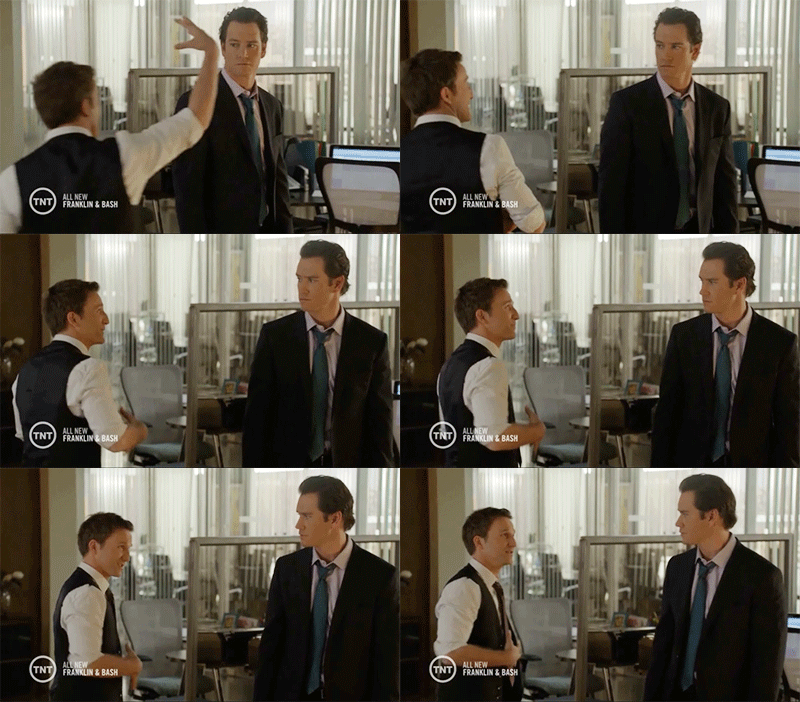
![]() |
| And people STILL wonder if we're gay... |
2/10
Next Episode: Falcon's Nest
Thursday, September 25, 2014
Gotham: Pilot Review
GOTHAM: PILOT
Well, we now have one of the best premieres of a comic book-based television series I've seen in a while. Gotham, which is more James Gordon-centered than Batman-centered, had a few hurdles to get through. In some ways, the Pilot threw a lot at us within its hour that might have worked better if spaced out a bit more. Still, on the whole the Pilot starts off the show in an excellent way.
James Gordon (Ben McKenzie) is a war veteran and son of District Attorney who now is a detective at the Gotham City Police Department. His new partner, Harvey Bullock (Donal Logue) is as shady and grizzled as Gordon is upright and dutiful. They find themselves now handling the biggest case in Gotham: the murder of Thomas and Martha Wayne, wealthy and respected members of the crumbling community. Only their son, Bruce Wayne (David Mazouz) is left to tell the tale, although unknown to everyone, there was another witness to the killing, a young street urchin, whose name isn't given on the episode if memory serves correct, but who has excellent feline and theft skills, a girl named Selina Kyle (Camren Bicondova).
It's no surprise that in a town as corrupt and morally bankrupt as Gotham, the police don't shrink from being if not in bed with the criminal underworld, at least within kissing distance. Bullock has close ties to Fish Mooney (Jada Pinkett Smith), a lieutenant in the Falcone Mob organization with eyes towards advancement. She runs a club where one of her minions, Oswald Cobblepot (Robin Lord Taylor), is completely subservient to her. He has a penchant for dressing well and has the pale skin and large nose that reminds people of a penguin, though he makes it clear he doesn't like that comparison.
Clues provided by Mooney's fence lead them to one Mario Pepper (Daniel Stewart Sherman), petty thief who may have Mrs. Wayne's necklace. He flees and is killed by Bullock to save Gordon. Cobblepot, who has his own eyes on the prize, turns informant to the Major Crimes Unit officers Montoya (Victoria Cartagena) and Crispus Allen (Andrew Stewart-Jones), and fingers Bullock and Gordon in a potential frame-up. Montoya and Allen, convinced Bullock's dirty and perhaps Gordon too, pursue an investigation, but Gordon tells them he'll investigate this himself.
As the investigation goes on, Gordon becomes more convinced Pepper was framed, but can't put Mooney and Bullock directly into this. Mooney isn't afraid to get dirty, coming close to killing Gordon to silence him. Bullock steps in, informing Mooney that it wasn't Gordon that is bringing the heat, but someone on her team who is coming close to connecting her with the Wayne killings. She instantly knows who that person could be: the only one who saw her with Mrs. Wayne's pearls, her little Penguin. She takes Cobblepot down hard, not caring that a poor stand-up comic (Jon Beavers) is watching while auditioning for her club, obviously upset at all this. She then orders her henchmen to take Gordon AND Bullock out, but in steps mob boss Carmine Falcone (John Doman), displeased Mooney is taking too much on herself, and begrudgingly recognizing that Gordon's father's memory still holds some sway with him.
"You can't have organized crime without law and order," Falcone tells Gordon. With that, the word comes down via Bullock: Gordon has to exterminate Cobblepot, or Bullock will have to kill both of them. A waddling Cobblepot pleads for his life, and Gordon is put in an impossible situation. He takes Oswald to the dock's edge, puts a gun to his head, then whispers to him to never return to Gotham before firing. Since Bullock is at a distance, it looks to him like Gordon went through with it, but in truth Gordon shot close to Oswald's head and let Oswald fall into the dock, where a shocked Cobblepot swims underwater for all its worth. Gordon returns to his fiancée Barbara Kean (Erin Richards), who is keeping secrets herself from Gordon. He also goes to visit Bruce, now cared for by family valet Alfred Pennyworth (Sean Pertwee), to tell him his parent's killers are still at large, and asks for a second chance to find them.
There just is so much pressure on Gotham. I don't think there has been this much scrutiny of a new series since perhaps Agents of S.H.I.E.L.D., and on the whole I think Gotham succeeded. What a pilot has to do is get the ball rolling, and that is what this one did. We get the traditional Batman elements (Bruce's parents killed) and a few that aren't part of the accepted Batman mythos; hearing Alfred shout when Bruce is standing on the ledge, "Oy, Master Bruce. Get your bloody ass down off there. Eyes forward!" is not what I think ANY version of Mr. Pennyworth, from the 1960's Batman of Alan Napier, to Burton/Schumacher's Michael Gough, and Nolan's Michael Caine would have dreamt of saying.
We also get a lot of the villains, perhaps too many in one outing. We see a quick glimpse of the GCPD's coroner, one Edward Nygma (Cory Michael Smith), who enjoys speaking in riddles. We get Mario Pepper's angry young daughter, IVY Pepper (Clare Foley), who is fond of plants. We also get this cat-like Selina, who seems drawn to young Master Bruce.
A particularly interesting case is that of our poor stand-up comic, one whose bad jokes and poor, halting delivery nonetheless amuse Mooney (about the only original creation on the show). I don't know much about comic-book Batman, but I do know about The Killing Joke, a graphic novel in which we learn that a failed stand-up would become...The Joker! It's far too soon to say this is for certain, or even if this was planned. I think it's a great tease to bait the Batman fan-base, but it's fun to speculate on whether this is the future Clown Prince of Crime, or if he will yet appear and this is just a poor kid having to see a terrible, terrible crime in a city dominated by darkness.
However, in terms of performances, we have two standouts. While his screentime is limited, Mazouz is excellent as Bruce Wayne. The horror of his parent's murders before him, coupled with a steadiness to become a man who will conquer his fears are excellently rendered and are a highlight of Gotham. He shows a maturity in performance of someone twice his age, and it will be a great thing to see how he takes his Young Master Wayne into becoming The Dark Knight.
The prize for the best performance, however, goes to Robin Lord Taylor as Oswald Cobblepot/The Penguin.From the moment we first see him, serving Fish Mooney, holding an umbrella over her head, Taylor so becomes the character sometimes it's almost frightening to see how he's turning into this master criminal. One wouldn't think he would, with his high voice and halting manner. However, as Gotham goes on, we see him as this shifty, opportunistic fellow, in turns terrified and terrifying. When Mooney coolly confronts him about his betrayal, we don't see his face, but his hands, the hands that had been rubbing Mooney's feet. They halt when we hear her talk about how she knows it was him, and they begin to tremble, for he and we know he's been found out.
As he pleads for his life, I felt a certain sympathy for this figure, but also recognizing that underneath that trembling figure and beak-like nose (enhanced by excellent make-up work), this man is ruthless and dangerous. Taylor is so powerful as the Penguin that if things go well (and I understand his rise will be one of the dominant threads in Season One), Robin Lord Taylor's interpretation of The Penguin may become the definitive version, supplanting both the camp of Burgess Meredith or the freak-show of Danny DeVito. Taylor's Penguin is human (his waddling a result of Mooney's brutal smack-down), but he is not one to be mocked...at least for long.
In terms of others, I hope Smith gets better things to do than his quick scene as Nygma. Though the Riddler is one of my favorite villains (behind Penguin), I wasn't too impressed with Smith. However, since he was there for about three to five minutes, it's hard to render a fair judgment. It was, however, nice to see Smith/Nygma's reaction to seeing that Gordon COULD solve his riddles easily. I think Pertwee's take on Alfred Pennyworth will be interesting to see: he won't be coddling Master Bruce, that's for sure. As for the two leads, McKenzie was all right if a bit bland as the earnest James Gordon, looking intense whenever he has to question someone and having flaring eyes to go with his righteousness. As much as I might dislike Logue, he was also effective as the more cynical and shady Bullock. One never knew how corrupt Bullock was, morally or professionally. I have to give him some credit: he did a good job (but I'm still not a fan).
As for Pinkett Smith, I think she knows Mooney is suppose to be a woman who relishes being evil, so while it might appear she's vamping it up, I grant a little leeway. Any woman who smugly tells Gordon that there's screaming out back because her 'boys' are watching a scary movie, then flat-out tells him the screams are a result of them beating someone's 'punk-ass' knows she's bad. Maybe a bit over-the-top, but just barely inside that line to make it pleasant to watch.
A thing that Gotham really got right was the look of the city. The cinematography makes this a dark, seedy world, one where the place is about to collapse on itself. The squalor of the Pepper's apartment, the cavernous police precinct, the elegance of Barbara's apartment, and the seediness of Mooney's club are all rendered to perfection. If there was justice, Gotham would be considered for an Outstanding Cinematography and/or Art Direction Emmy for next year regardless of how long it lasts.
It's just that impressive, the world the show builds up, a very noir world of darkness and danger at every turn.
If I were to criticize some things, it might be that there were too many villains popping in, rather than spacing them out a bit more. The story doesn't really deviate much from the 'good cop/bad cop'/'rookie cop/grizzled veteran' of a lot of programs. McKenzie's pronunciation of "Fish Mooney" was a bit odd: it kept coming off as one word, "Faschmuny", which made the villainess sound like a little old Jewish lady. I'm not going to criticize the dialogue or violence, saying only that it goes as far as network will allow it to (cable/satellite version of Gotham would be far darker and profanity-laden, I imagine). One thing that did displease me was the camera work when Gordon has to chase Pepper: the visuals looked bad with the camera so close to McKenzie's face it almost looked warped.
Gotham has such great promise. It has some great performances (Taylor better prepare himself to be part of many a cosplay tribute) and is extremely intriguing in how both Gordon and Bruce will become the men they will become to fight believable characters like The Penguin or The Riddler. Though not a perfect beginning, Gotham has me wanting to take a trip there.
Just avoid the alleys...
8/10
Next Episode: Selina Kyle
Tuesday, September 23, 2014
Atlas Shrugged Part III: Who Is John Galt?: A Review (Review #665)
WHO IS JOHN GALT?
Galt Complex...
I am someone who has bucked the trend of trashing the film adaptations of Ayn Rand's massive tome, Atlas Shrugged. I confess to being intrigued by some of her thinking, and also convince that I tried to read the book many years ago and pretty much gave up. Having enjoyed both Atlas Shrugged and Atlas Shrugged Part II: The Strike, I went into Part III: Who is John Galt? intrigued by the prospect of wrapping this series up.
What I found was pretty much a mess of a movie, where even the people in front and behind the camera appeared desperate to just get it all over with.
Using a series of performances and voice-over narration with stills, we first get the story of how John Galt (Kristoffer Polaha), the creator of a powerful machine that could power the world with little material, refuses to go along with his fellow plant workers in forgoing salaries to share the profits equally between those who work hard and those who hardly work at all. From there, we jump back into where we left off in Episode 2, where Dagny Taggart (Laura Regan, taking the role from Samantha Mathis, who took the role from Taylor Schilling), having crashed into a utopia of wealthy individualists, is asked to stay by Galt and those who think like him. Among those in this Libertarian Paradise is her old lover, Francisco d'Anconia (Joaquim de Almeida, taking over from Esai Morales, who took over from Jsu Garcia). They all are on strike against those who take more and more from them but who in turn give them nothing but abuse.
Dagny, however, feels someone has to fight against the growing tyranny taking the country into an abyss. She opts to leave, and return to the Taggart Train Company, where her venal brother James (Greg Germann, taking over from Patrick Fabian, who was taking over from Matthew Marsden) is in cahoots with the government that wants to starve the population, sacrifice Minnesota and its citizens for the 'betterment of the country', and basically destroy America. Dagny is determined to literally keep the trains running. With the government about to make its final assault, John Galt takes over our screens to make his famous speech, which in a nutshell can be capsulized by his mantra
I swear by my life, and my love of it, that I will never live for the sake of another man, nor ask another man to live for mine.
Galt is finally captured and tortured, but Who is John Galt? ends with his dramatic rescue, with Dagny (who by now has become his lover) and other counter-revolutionaries, including her former lover Hank Rearden (Rob Morrow, taking over Jason Beghe, taking over Grant Bowler) sweeping in and spiriting him away to the safety of that blissful world where selfishness is a virtue.
For myself, I was simply astonished at how rushed, chaotic, and even laughable Who is John Galt? was. As I watched, I could not help think that director James Manera, the third in this trilogy, was either in a hurry to get this into theaters or just didn't know what to do in trying to compress such a massive novel into a concluding chapter.
As a side note, I've always felt Atlas Shrugged would have worked better as a television miniseries, where the story could flow more smoothly and more importantly, we would have the same cast rather than have so many changes that it soon becomes impossible to try and think who is playing what character.
I don't really blame the actors in WIJG?, because they were given the thankless task of trying to create characters already interpreted by two other actors and jumping in at the tail end of the story, allowing for no real flow. Figuring best (or worst, given on one's interpretation) is Morrow, who was in a 'blink and you miss it' performance. I'm pretty sure he didn't appear until the final fifteen minutes of WIJG?, perhaps terrified that as one of the few legitimate names in the film, any association with this flop (artistic and political) would permanently ruin him. He and the character of Rearden didn't play any part in the film.
As for the other actors, my goodness some of them were beyond awful. Germann, whom I never liked in a show I never liked (Ally McBeal), behaved as though he wasn't aware what acting involved. I suppressed laughter when in what is suppose to be a tense dramatic scene and he no longer wants to be part of the nefarious machinations of the wicked government torturing the noble Galt, he came across as a whiny child.
As the lead, Polaha did what he could to make him a compelling character, but sometimes he came across as a generic hunk with little charisma to promote this great revolution of the mind. Regan similarly tried her best but her Dagny was not the most compelling figure either.
I blame the direction and the lousy screenplay (adapted by Manera and Harmon Kaslow and the trilogy's producer John Aglialoro, who curiously adapted the first but not second part of the trilogy). You give people pretty silly situations to try to bring to life and they could give it their all and still come off as terrible. However, everyone involved has to be mocked for a howler of a love scene that is less romantic than it is downright comic. As the trains are slowly coming back to life, with the nation on the bring of collapse, Dagny and John find a quiet area in a tunnel to consummate their buried passions. Part Harlequin Romance cover, part spoof, the scene not only appears to come out of nowhere but appears so ill-timed. At a time of great crisis, should people so involved in rescuing the nation be engaged in passionate lovemaking?
Among the biggest bad decisions was to try to sum up so much with voice-over and still pictures. To me, that signals they either ran out of money, time, or interest. Regardless of why it was done, it all came across as shockingly inept and uncoordinated, as if there was no director.
What really must gall Galt fans must be the butchering of Galt's famous "A Stands for A" speech, a blistering and massive manifesto outlining Rand's thinking. I don't even remember hearing 'A stands for A' (meaning that there is no supernatural force but that things are as they appear as I understand it). No interpretation could really do justice to an entire chapter's speech, and the end results don't appear to try to move you to support Objectivism.
It's almost as it is trying to get you to vote Socialist.
One almost feel for Aglialoro, who had to rush the films into production because his film rights were about to expire. Again, because we've had so many cast changes, three directors (or at least people with that title) and various adapters tackling the epic novel, the sum of the whole just collapses on itself. If he had just tried harder for a television adaptation, or just let the rights go...
Even if people agreed with Rand's theology or parts of it, like former Representative Ron Paul, Glenn Beck, and Sean Hannity (who all make cameos as themselves, and for the record, Beck looks like Leon Trotsky), Atlas Shrugged Part III: Who is John Galt? is a film that they would say is a shambles.
Again, I cannot make great claims to know what the self-described 'radical for Capitalism' would think about the film adaptations of her magnum opus. If I were to venture a guess, I think Ayn Rand would accuse it of being the work of the Forty-Fifth President, Madame Hillary Rodham Clinton, as a way of discrediting Rand's thinking and make it all look so foolish, even downright insane.
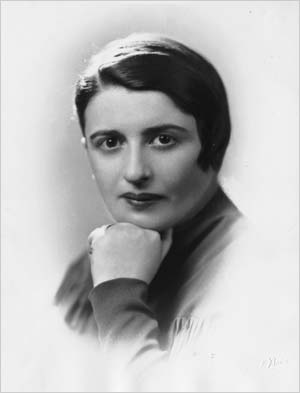
![]() |
| 1905-1982 |
DECISION: F
Subscribe to:
Posts (Atom)