Showing posts with label Amazon. Show all posts

Tuesday, March 24, 2026

Project Hail Mary: A Review

PROJECT HAIL MARY

Praise can be a dangerous thing, more dangerous than even microbes killing the Sun. Such is the case with Project Hail Mary. It has been less than three weeks, as of this writing, since the Academy Awards were held. Project Hail Mary, again as of this writing, is now seriously talked about as a major "awards contender". I will leave my exhaustion at the incessant awards season aside to look at the film itself. Project Hail Mary has some nice images and music. It is also far longer than it needs to be and is fast slipping into the most overrated film of 2026. 

In space, no one can see you stumbling into consciousness. A man finds himself awakened and receives various shocks. He is shocked to find two people dead. He is shocked to find himself floating in deep space. 

Over the course of Project Hail Mary, things begin to fall into place. Through a series of flashbacks, we learn that our floating astronaut is not Major Tom. It is Ryland Grace (Ryan Gosling). He is a renegade molecular biologist whose fight against orthodoxy has led him to be a middle school science teacher. His class, in fact, the whole world, is vexed by the Petrova lines. This is a strange infrared line between the Sun and Venus. The end result of this phenomenon is that it is slowly eating the Sun. This will cool the Earth within 30 years, dooming the planet.

There is, however, hope. Dour, humorless German Eva Stratt (Sandra Huller) gets Grace to examine the microorganisms collected from the Petrova lines. He finds that these microorganisms, named Astrophages, are infecting more stars. They can provide fuel for a desperate space journey to the distant star Tau Ceti. This is the only star that has not fallen to the Astrophage. It is time to find what if any immunity Tau Ceti has and if it can be brought to Earth.

Unfortunately, there is no way for the spaceship Hail Mary to return. Despite having no family or friends, Ryland will not go. "I put the "not" in "astronaut"", he insists. Circumstances, however, put him aboard.

All that is revealed in bits and pieces as Project Hail Mary tackles Plot B. Once he realizes where exactly he is, Grace works to complete the mission. Once near Tau Ceti, Grace is astonished to find another ship hovering nearby. Eventually, he finds that there is another creature who is working on the same problem. After a few fits and starts, Ryland is able to communicate and even become friends with an Eridian whom he names "Rocky" (James Ortiz). They jointly find that Tau Ceti-e, a planet in Tau Ceti's orbit, contains a microbe that prevents Astrophages to procreate and thus keeping Tau Ceti alive. The mission to retrieve that microbe off Tau Ceti-e (whom they rename "Adrian") is dangerous. The potential return journeys for both Grace and Rocky also put them in danger. Will amazing Grace and Rocky still manage to return to their respective home worlds? Will their distinct separate home worlds be saved?


Project Hail Mary has been wildly praised by both critics and audiences. I can speak only from what I saw both on screen and the screening that I attended. The people next to me were audible in their complaints about Project Hail Mary's runtime. Noting that Project Hail Mary is over two hours long, they noted that they were twenty minutes in with nothing that interested them. They walked out shortly afterwards. Project Hail Mary is two hours and thirty-six minutes long. As such, it needed cutting.

I note that Project Hail Mary has not one but two karaoke scenes. I understand that Stratt breaking from her usual humorless manner to sing Harry Styles' Sign of the Times has been embraced as this moving moment. However, did we really need to see Grace and Rocky with his digital voice doing a little bit of Let's Call the Whole Thing Off

As much adoration as Project Hail Mary is getting, I think people need to pause for a bit to look at how some things do not work. I might walk that back a bit. I think they work in a predictable, almost cartoonish manner. Rocky's somewhat cutesy voice is already a bit hard to take. It is, however, how almost everything he says ends with the words "statement" or "question" to emphasize that they are statements or questions that is a bit childish. For me, it runs the risk of not having us take what should be a dangerous situation seriously.

So much time is eaten up by the Grace/Rocky bromance that it veers dangerously close to being a straight-up comedy. Perhaps Drew Goddard's adaptation of Andy Weir's novel was meant to be that way. However, it also took stabs at what was intended as serious drama. Take for example when Grace launches the two dead crewmen into space. Project Hail Mary was meant to have this as a very moving, dramatic moment. However, given how Project Hail Mary was structured, we really did not know who these people were. We did not see Grace interact much with them in the various flashbacks. There was no chance for him to interact with them when they were all in deep hibernation. Therefore, I cannot feel emotional over people I do not know. 

Project Hail Mary is longer than it needs to be. We have Grace give an infodump via his middle school class. Unsurprisingly, Grace is one of those "hip" science teachers who makes science cool. Put aside how I find the notion that Grace could have a doctorate and find no other work except a middle school teacher laughably absurd. I find that a bit clichéd too. I do not know if any middle school would hire someone so wildly overqualified as Dr. Ryland Grace. Yet, I digress.

I find a few things wrong with this scene. First, there is no sense of urgency or danger about how the Sun is slowly dying. The kids are not well-directed to express their fears of impending doom. Ryan Gosling is not well-directed to show that he is trying to simultaneously shield and inform them. Second, I figure that we could have found another way to give us the information. Granted, we would have lost the "cool teacher forced into space" bit. However, we get another infodump when Grace is taken by jet to a battleship. Third, we do not connect with the kids or ever see or hear from them again. I'm not sure that they are even ever mentioned by Grace again. For being a hip teacher, Grace forgets the kids once he finds Rocky.

Project Hail Mary has also been lauded for having practical visual effects. I admit that when they go to Tau Ceti-e, it did look beautiful. However, the other visuals were laughable, at least judging in part from the audience reaction. The Hail Mary and Rocky's spacecraft looked like they were from a lost 1980's Doctor Who episode. They did not look real. They looked like children's models. Yes, some CGI can also look fake. This, however, looked like it came from something closer to Mystery Science Theater 3000 than from a major studio. I genuinely expected the Satellite of Love to come wandering in and join the Hail Mary.

The performances as directed by Phil Lord and Christopher Miller were less than what they could have been. Most of Project Hail Mary is a one-man show. That would be Ryan Gosling. His character felt at times too goofy to be this serious scientist sent on an Earth-saving mission. I can cut the film some slack in the initial opening when he is attempting to recover his memory. However, as Project Hail Mary went on, I kept wondering why such a goofball would be sent into space. 

The film reveals the reason: he was drugged and essentially kidnapped into it. I have a genuine question. Eva Stratt is supposed to be forever professional and humorless, calculating everything to near perfection. However, how is it that she never conceived of having multiple teams of Hail Mary crew on standby in case something happened to those scheduled to go up? Instead, after an explosion kills the scientist who was going to fly up, she is forced to turn to someone who apparently never had any real training to fly the ship or knew his way around it. Stratt first gives Grace three hours to think about it. After he states that he doesn't want to do it, Stratt, ever aware of the dangers, first attempts to force him into the ship. As he attempts to escape the facility, she then gets her goons to chase after him. This results in him getting drugged and corralled onto the Hail Mary without his knowledge or approval.

Bugs Bunny going up against Marvin the Martian had more logic to it. Yet, again, I digress.

Sandra Huller had one thing to do in Project Hail Mary: look serious. The dour, humorless German who looks like she takes everything literally and seriously is pretty much a stereotype. 

I can find things in Project Hail Mary to praise. Daniel Pemberton's score was nice and worked well in the film. Of particular note is a tango used during a montage. Some of the visuals, such as when they go to Tau Ceti-e, are also quite beautiful. 

Project Hail Mary is not a bad film. It has some good qualities within it. However, it is also too long for the story that it is telling. It also is a bit too jokey for what is meant as a serious situation. I think there is an overpraising for Project Hail Mary that will, in time, be seen as rather absurd. Project Hail Mary is fine enough, but it is not among the greatest science-fiction films ever made. That people are making it out to be may indeed be a Sign of the Times

Wednesday, November 19, 2025

Being the Ricardos: A Review

BEING THE RICARDOS

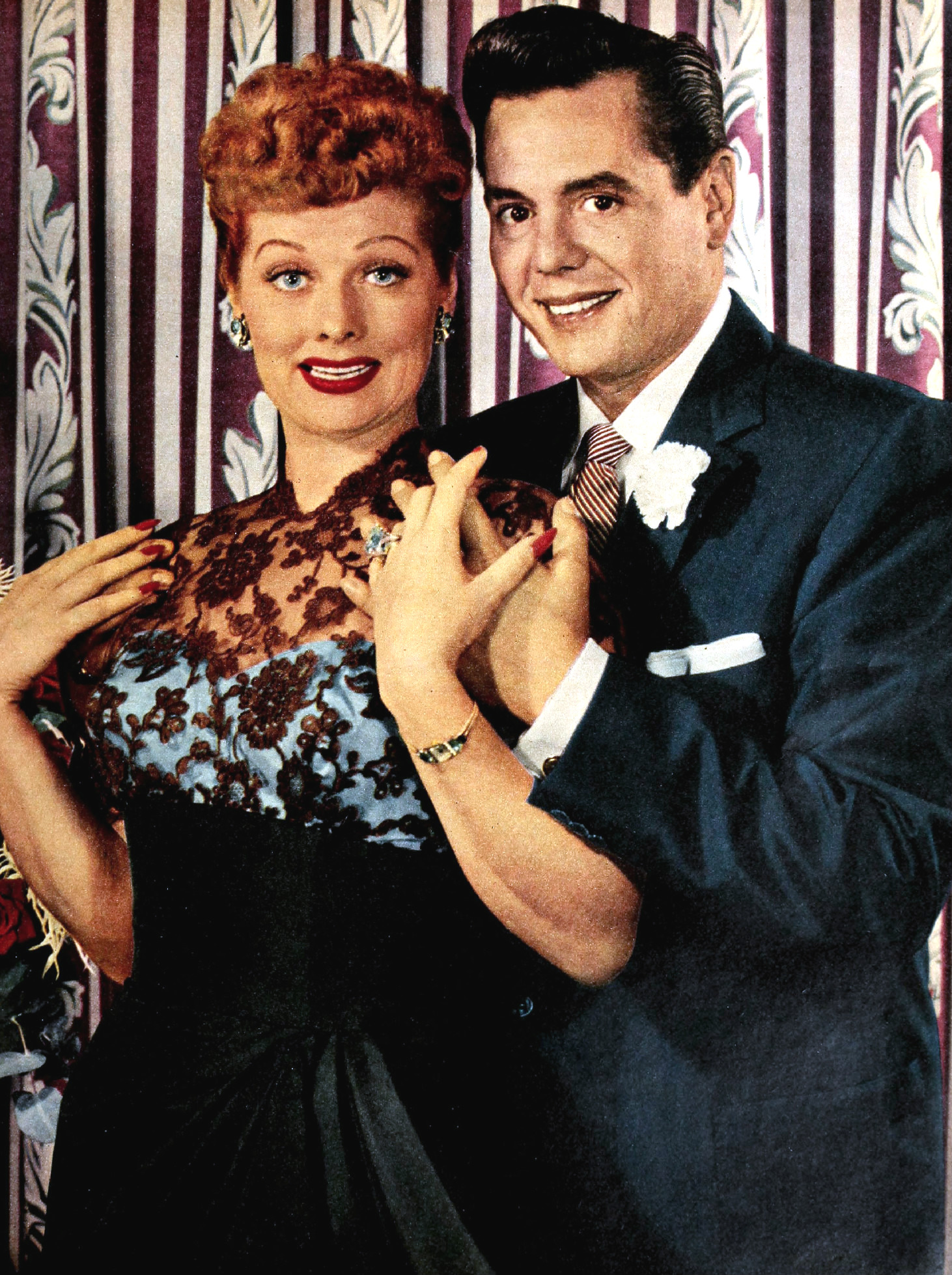
One week. So much can change in one week. Being the Ricardos, a biopic of Desi Arnaz and Lucille Ball, looks into one tumultuous week that had everything from Communists to pregnancy. While it has some good elements, Being the Ricardos could have been more.

It is 1952. The CBS sitcom I Love Lucy is a smash television hit. The I Love Lucy cast and crew are rehearsing for that week's episode, Fred and Ethel Fight. I Love Lucy star Lucille Ball (Nicole Kidman) is constantly taking control of the set. She has barely concealed contempt for the episode's director, Donald Glass (Christopher Denham). Ball's husband and costar, Desi Arnaz (Javier Bardem), is more easygoing and casual about things. He has full faith that things will work out during the week. There are read-throughs, blocking, rehearsals to fix whatever issues arise.

What can't be fixed are things outside the studio. News is starting to leak out over Ball's private testimony to the House Un-American Activities Committee. She had, decades earlier, registered to vote as a Communist. Ball had done that in order to please her beloved Grandfather Fred, who was deeply involved in leftist politics. Both Ball and Arnaz know that the story has no real merit, and she was cleared of any Communist ties. They also know that this news could bring a screeching halt to I Love Lucy and their careers.

There is something else that could do that. Lucille is pregnant. This is an absolute scandal as far as the network is concerned. Pregnancy, and all its implications, simply cannot be seen on television. The pregnancy is not helped by reports that Arnaz has been stepping out on Ball. He insists that all he was doing was gambling on a yacht with his friends. Ball is not fully buying this alibi. 

Ball is growing more brittle with each passing day. Her other I Love Lucy costars, Vivian Vance (Nina Arianda) and William Frawley (J.K. Simmons) attempt to help her. However, they have issues of their own. Vivian is growing frustrated that she keeps getting pushed to look less glamourous than Ball. William is an alcoholic. Vivian and William also cannot stand the other, constantly making passive-aggressive comments to and at each other.

Ball is similarly displeased at some of the writing from her longtime writers Bob Carroll (Jake Lacy) and Madelyn Pugh (Alia Shawkat). Pugh in particular wants to be more progressive in how women are shown on television. Ball pushes back somewhat, insisting that she is doing a sitcom not an empowerment movement. As the week continues, Ball and Arnaz fight battles together and apart until showtime.


There are some elements in Being the Ricardos that are quite strong. Three of the film's cast received Oscar nominations for their performances. I think they were ultimately warranted. Nicole Kidman does quite well as Lucille Ball. Ball is one of the most recognized faces and voices in television history. As such, Kidman had a hard task ahead of her. She met it with great efficiency.

Kidman got Ball's speaking voice, which was lower than her "Lucy" voice. There were a few reenactments of I Love Lucy, and Kidman could perform the "Lucy" character. On a certain level, Kidman had to play two characters. There was "Lucille Ball", savvy but damaged actress. Then there was "Lucy Ricardo", wacky housewife. Kidman has several strong moments in Being the Ricardos. There is when she and Javier Bardem's Desi have to meet at the top of Mulholland Drive due to their conflicting schedules. When having a conversation with others, Kidman also does well.

She could be navigating her frenemy status with Arianda's Vance. She could be listening to advise from Simmons' Frawley. She could be slightly irritated by Shawkat's Pugh. She could be in turns dismissive and pleading with Tony Hale's Jess Oppenheimer, her frustrated I Love Lucy producer. In almost every situation, Nicole Kidman can convince the viewer that she is Lucille Ball and not a Ball impersonator.

There was one moment where Kidman's acting was off. It is when she rushes home in a flashback to tell Arnaz that she was cast in The Big Street. This for Ball is a major coup, a chance to get top roles that would normally go to Rita Hayworth or Judy Holliday. Her scene with Bardem here felt a bit forced and theatrical. I put it down to a small misstep, for most other scenes are strong. Later in the flashback, she can barely contain her fury when told that RKO is dropping her contract. Despite The Big Street's critical success, the film is a flop. The mix of shock, anger and contempt that Ball has comes through in Kidman's performance.

The curious thing about Javier Bardem as Desi Arnaz is that he makes Desi likeable and casual. We do not see that driven, contradictory figure who could gamble and win until he gambled once too often both metaphorically and literally. For the most part, Bardem played Desi as an easygoing fellow, confident that things would turn out alright. 

Simmons and Arianda, who in my view was shamefully overlooked for a Supporting Actress nomination, also did well. Simmons does not look at all like William Frawley. However, he had some wonderful moments where he gives Kidman's Ball advise on how not to emasculate Arnaz in front of others. It was unintentional, but Frawley reminds Ball that even though Arnaz loves America, he is also still Cuban. Arianda has a great scene when confronting the besieged Ball about the latter's insistence on gaining weight. We see that there is a level of jealousy between them. We also do see that there is a sense of camaraderie building. 

I think at times Being the Ricardos spent a bit too much time showing the informal rivalry between Carroll and Pugh. To be fair, both Jake Lacy and Alia Shawkat did well in their roles. I just thought that in particular with Shawkat's Pugh, we were getting less witty repartee and more speeches. 

Where I think Being the Ricardos went wrong, wildly wrong, was in how it presented history. Yes, writer/director Aaron Sorkin was not making a documentary, as the saying goes. He managed to get in one of his famous "walk and talk" scenes into Being the Ricardos. However, there were some things that I did not think worked.

Being the Ricardos was presented as a faux documentary, with older versions of Carroll, Pugh and Oppenheimer speaking to the camera. Nothing against Ronny Cox, Linda Lavin and John Rubenstein as the older versions of the three mentioned figures. However, at certain points them jumping in to supposedly fill in information seemed almost jolting. 

That perhaps would not be a major issue. The historical accuracy in Being the Ricardos, however, is. Ball goes on about how she has to struggle to get good parts that would instead go to Judy Holliday. Holliday's first film was in 1944's Winged Victory. The Big Street was released in 1942. Holliday was barely making a ripple in New York City café society at the time of The Big Street

It makes no sense that anyone in Hollywood would know who Judy Holliday, this nightclub performer just starting out, was at the time. Ball, who at the time was known as "Queen of the B's" as in B-pictures and had been in movies for almost a decade, would not be losing out roles to Judy Holliday. The setup is a curious one. It is more curious when one thinks that Holliday, once established, was seen more as a comedienne. Her great claim to fame came in her Oscar-winning role in 1950's Born Yesterday. Holliday had originated the role on Broadway in 1946, where she charmed audiences for three years. 

It's already a stretch to think that a virtual unknown from Broadway was routinely offered film roles over a contract player who had some name recognition. To pretty much say that a bubbly comedienne was the de facto second choice for a serious drama over someone who had worked in dramas and comedies for almost a decade seems downright bonkers. How Ball would think that Judy Holliday was being offered roles ahead of her, especially serious dramatic roles like The Big Street, is downright bizarre. One wonders if Aaron Sorkin just pulled Judy Holliday's name out of a hat and decided she would be this great rival to Lucille Ball.

Worse is Desi Arnaz's big speech. As the I Love Lucy audience arrives to see the taping, Arnaz forgoes his usual warmup act to address the headlines of "Lucille Ball a Red". In Being the Ricardos, it takes a call from none other than J. Edgar Hoover, heard by the audience, to alleviate any concerns that Ball was part of a Stalinist takeover. In reality, Arnaz's speech was an eloquent defense of Ball and her actions to humor the grandfather who had raised her and her brother. He spoke about how revolution forced him out of Cuba. He even managed to make a wisecrack about the whole affair, saying that the only thing red about Ball was her hair, and that even that was not legitimate. 

It seems sad that Arnaz's work to save I Love Lucy from potential cancellation due to the Red Scare was undermined by Sorkin opting for more "drama". The real story is dramatic enough. 

Being the Ricardos is well-acted and moves well. I would quibble with how accurate the film is when it comes to this critical moment. That is a major drawback. However, the film is just good enough for people to go see. We will always Love Lucy. We just liked Being the Ricardos.

Desi Arnaz: 1917-1986
Lucille Ball: 1911-1989


Sunday, November 17, 2024

Frida (2024): A Review

FRIDA (2024)

What more is there to say about Frida Kahlo, the Mexican painter who has become an iconic figure long after her death? There has been a slew of films, and documentaries and merchandising built around Kahlo. There are even young girls named after her. What is there new that one can find? Well, Frida, the newest documentary on Kahlo, takes the novel approach of letting Frida speak for herself, so to speak. Using her own journal entries and artwork, Frida explores her life both external and internal. 

Frida Kahlo was always rebellious. The daughter of an atheist father and a deeply Catholic mother, Frida joined the Cachuchas (the Caps or Hatted Ones) as the lone female among the miscreants of her high-end school. Then came the horrific bus accident in 1925 that left her in immense pain physically and psychologically. Two years later, she embraced Communism, which was not an eccentricity in avant-garde Mexico City.

Then came muralist Diego Rivera. In this young girl, Diego found an artist of immense skill. He also found someone who would not defer to him. He actually deferred to her, and her "Frog Face" soon became his lover and later husband. As he ascended the artistic heights, down to a one-man show in New York, "Mrs. Rivera" found herself being both a companion and a minor celebrity in her own right. 

Despite their ardor for each other, they were not blind to their infidelities. Diego's string of mistresses and liaisons were not a particular bother to either, but Diego was very jealous whenever Frida took a lover, down to threatening sculptor Isamu Noguchi, one of Frida's lovers. Whether out of spite or gross irresponsibility, Diego had an affair with Frida's beloved sister Cristina. This was the breaking point for Kahlo, who promptly left Diego. She did soon reconcile with Cristina but divorced her Frog Face.

Soon, however, Frida began attracting attention of a different sort, becoming the toast of the New York art world. Paris, however, was a different matter. She found a frenemy in Surrealist writer Andre Breton, who championed her work while being inept in promoting her. Despite herself, she remarried Diego but never had sexual relations with him again. Reaching a certain contentment, her body finally began betraying her, dying in 1954 at the age of 47. 

Frida Kahlo is one of the most chronicled and documented artists of the Twentieth Century, or so it appears to be. She certainly has become iconic, so again, why delve back into more of her? Carla Gutierrez's film takes an approach that has been dabbled with in other Kahlo documentaries like The Life and Times of Frida Kahlo in using Kahlo's own words to tell her story. Gutierrez, though, used almost nothing but Kahlo's words in Frida. Apart from the words of some of her lovers, all men, the text is all from Frida's journals, letters and interviews. We know it is someone else as Frida puts their names on the screen, along with an accompanying image or Kahlo painting of them. The film also shows what they were at the time someone else spoke. Alejandro Gomez Arias, for example, is first billed as a "Classmate", then "Boyfriend", finally "Friend", if memory serves right. 

Frida is as close as one will get to hearing from Kahlo herself outside of a seance. Some of her observations are quite optimistic given her tumultuous life. "Love is the foundation of all life," she observes. There is at times, something almost joyful in her, a love of life that her physical and emotional troubles cannot squash. 

Other times, though, we see the sarcastic side of the artist. To be fair, Kahlo had every right to be enraged at Breton's wild mismanagement of her Parisian one-woman show. She has nothing but contempt for the Paris art world, which she finds pretentious and vapid and unwelcoming. To have her artwork exhibited with the tchotchkes that Breton purchased at a Mexican flea market enrages her. 

Finally, we see the vulnerable woman behind the legend. "I've adapted to his style," Frida quietly observes when writing about the influence Rivera had on her artistic manner. In her first romance with Arias, she muses, "I'm attracted to intelligent people. I choose those I feel are superior to me," a surprising revelation for someone held as an icon of feminist independence. The bus accident is described in surprisingly quiet terms. "It wasn't violent, but silent, slow," she observes. It is impossible to fully know how horrific and traumatic this moment was for Kahlo, but the still manner with which she wrote on it makes it all the more shocking. 

Frida takes a different tack when looking on her artwork. Rather than making them static, Frida choses to animate them, bringing them to life. I understand that some viewers dislike this method, thinking that it takes away from Kahlo's unique style and drawing attention to the animated style. Others find the animation clever, opening up the work. I fall more on the latter side. What I am surprised people have not comment on more is how Frida selectively adds color to archival footage, making reality more surreal in the Kahlo style. 

I found this decision clever, adding to the choice to make Frida more on how Kahlo looked at the world than on how the world actually looked. 

Frida delves into that mix of artistic freedom and personal courage. Like other Kahlo-centric projects, that pesky adoration of figures like Stalin and Mao is not touched on. Trotsky is a slightly different matter. I suppose there is a difference between sex and admiration. I also think some of the translations would not be how I would have translated the words (Frida is in Spanish, though appropriately subtitled). As I speak and understand Spanish, I had no trouble following the various words from Kahlo, Arias, Rivera and others. I do think that even non-Spanish speakers will enjoy two songs featured in Frida: En Cantos by Natalia Lafourcade and Amores by Marissa Mur and Luis Jimenez, the latter which closes the film. 

As a side note, En Cantos can serve as a pun in Spanish. En Cantos (two words) translates to "In Songs", while "Encantos" (one word) can be "enchantments" or "delights".

Frida is a strong introduction through the thoughts and art of this now-legendary Mexican figure. "What is joy? The creation born of discovery", Kahlo observes. Frida Kahlo is an icon to many. Frida does her right.

DECISION: B+

Wednesday, November 13, 2024

I Am: Celine Dion. A Review

I AM: CELINE DION

I should, in the interest of total disclosure, begin my I Am: Celine Dion review by saying that I frankly do not like her music. In her catalog, I find only two songs that I actually like: A New Day Has Come and her cover of I Drove All Night. Apart from that, I have been known to occasionally walk out of the room if a Celine Dion song is playing, in particular her signature song, Titanic's My Heart Will Go On. I find her singing at times bombastic, grandiose, and the songs overall rather milquetoast. I also have to recognize that she is highly beloved and admired for her admittedly powerful voice. I Am: Celine Dion takes us into her private world, one shaken by a very rare disease that may cripple her body but not her spirit.

After a jokey faux interview by her son Nelson, we then shift to a truly shocking sight: Celine Dion in the grips of a terrifying attack from her Stiff Person Syndrome. This illness, which affects one in a million people, leaves Dion crippled, in great pain and totally immobilized. It is a jarring moment before we go to One Year Earlier, 2021.

We are informed that Dion has had to cancel her Las Vegas residency, but now we hear from the Canadian chanteuse about her life pre-and-post diagnosis. She was diagnosed seventeen years prior but kept working as long and as hard as she could. It did, however, force her and her team to concoct reasons for cancelling shows, something that she loathed to do. "It's not hard to do a show," she observes in one of the many interviews, "it's hard to cancel a show". Obviously distraught at both having to cancel a show and lying about the reason, Dion nevertheless attempts to keep things going.

We look over her past and present: her early life in Quebec as the member of a family of 14 children, her various outfits, the songbook and her devotion to her stage and home families. She even shows us that she is perfectly in on the joke, such as her song Ashes for Deadpool 2 and the spoofing of My Heart Will Go On and Titanic on The Late Late Show with James Corden.  

In the midst of all the humor and love of performing, SPS still wreaks havoc on her life and career. The voice is not as strong as it was. Her physical ability to sing and perform are weakened. After attempting to record a new song, Love Again, we see a crisis owing to her SPS. Despite this, Celine Dion is determined to keep singing. 


Again, I am nowhere near a Celine Dion fan. However, as much as I may not care for her massive ballad catalog, one finishes I Am: Celine Dion with great respect for Dion's professionalism and devotion to her fans. As she talks about having to create false stories to mask the real reason for cancellations, you can see how much it hurt her to lie to the fans. She is fully aware that people have come from far away, spent a great deal of money, and rearranged their schedules to see her live. As such, when she was forced to withdraw due to the stiff person syndrome, the knowledge that she, even inadvertently, caused great disappointment to people that love her moves her to tears. 

It is difficult to see the two crises of SPS that I Am: Celine Dion has the courage to show. As this powerhouse performer, we see her dominating the stages. Now, we see her totally incapacitated, inaudible, clearly distressed to terrified, unable to do anything except perhaps weep in sadness and frustration. Her medical team with medication and soothing talk work to get her to return to physical control. While they succeed, it is still very painful to see, and one imagines far harder to endure. 

I Am: Celine Dion is a brave revelation of one woman's struggle with a rare disease and her determination to keep doing what she clearly loves: sing. These moments of vulnerability, of seeing not the glamourous diva but the vulnerable woman, elevate director Irene Taylor's documentary. Those are the good moments.

The bad, or perhaps more curious, moments are when we are treated to a tour of her Citizen Kane-like warehouse of her artifacts. I can, with some reluctance, look through Madame Angelil's stage couture and hear about her love of shoes (she confesses she has bought shoes that do not fit because she clearly loves them). Do I or anyone else really need to know that she keeps every piece of artwork done by her children? I simply was bored by her waxing rhapsodic on the need for a sleeveless outfit to work with her grand stage costume. I also could have done without a curious section where she goes over various events on her calendar with her team.

One of them involved sending a videotaped 100th birthday wish to one Dorothy. I was thoroughly puzzled over who "Dorothy" was, or why Dion was sending her birthday wishes on Dorothy's centennial as if Dion were the Queen. 

Moreover, while unintentional, that her twins are named Nelson and Eddy made me think that she and her late husband Rene named them after American baritone and actor Nelson Eddy. They didn't, but as odd as it sounds that her twin's names are Nelson and Eddy, conjuring images of Nelson Eddy and Jeannette MacDonald singing an operetta was hard to shake.

Given the scope of her career and the courage she has shown in her struggle with stiff person syndrome, one would have to be terribly unfeeling to not think Celine Dion is, if nothing else, courageous. I left I Am: Celine Dion with greater respect and admiration for someone who values professionalism and respects her craft and audience. That, after this diagnosis, she still had fierce determination to continue singing makes one admire her more even if one is not a fan of her music.

Given all we know now about Celine Dion's physical troubles, that she was able to dominate the Paris 2024 Olympic Games Opening Ceremony with her performance at the Eiffel Tower makes one respect and admire her all the more. It was as if she was carried by sheer will to show that she could still perform at great heights, figuratively and literally. Her rendition of Hymne a l'amour did not close out I Am: Celine Dion, but it might serve as the unofficial theme to this premiere chanteuse Quebecoise. 


Monday, April 10, 2023

Air (2023): A Review

AIR

The machinations of big business get a surprisingly upbeat look in Air, the story of how Nike got an up-and-coming sports player to their product and dominate the market. 

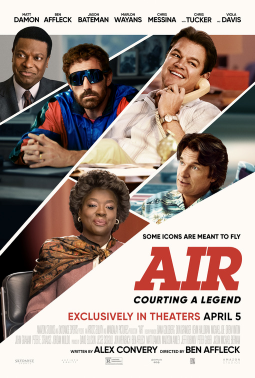
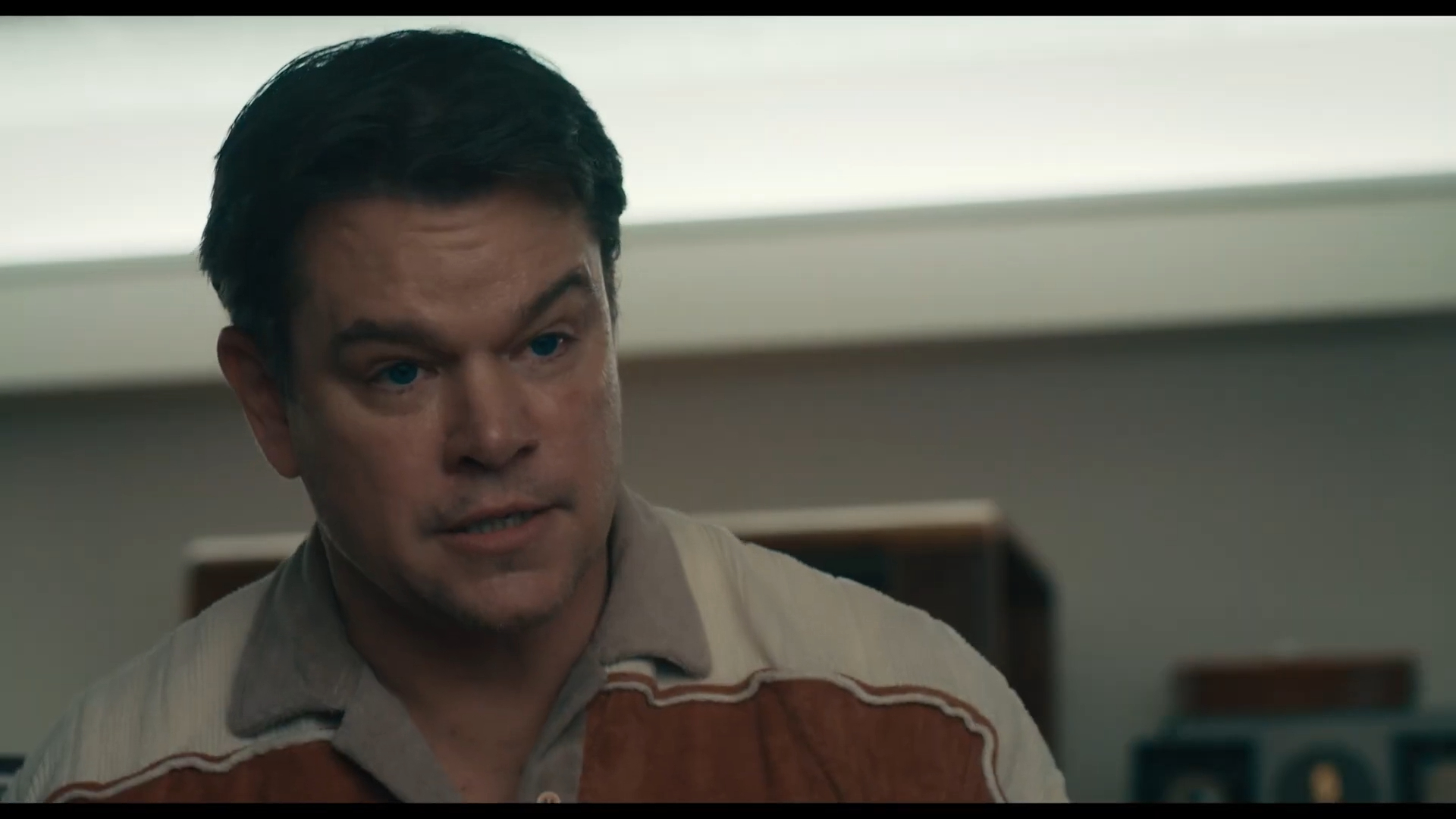
Nike basketball shoe division executive Sonny Vaccaro (Matt Damon) is struggling to find the budget and the marquee player to save the floundering division. Over loud objections from VP Rob Strasser (Jason Bateman) and Nike CEO Philip Knight (director Ben Affleck), Sonny pushes hard for a bigger budget and pursuit of third-round NBA draft pick. That third-round NBA draft pick is Michael Jordan.

Jordan leans strongly towards rival company Adidas, but Sonny is convinced that Jordan is worth pursuing. Coming up with the idea of building the shoe around Jordan rather than merely attaching a particular style to him, Sonny is relentless. He even, again over loud objections from Jordan's agent David Falk (Chris Messina) goes over everyone's head and makes his pitch to Jordan's mother, Deloris (Viola Davis).

Mrs. Jordan surprisingly agrees to have Nike court her son, as do Adidas and Converse. Now Sonny, Strasser and fellow Nike executive Howard White (Chris Tucker) must come up with both a pitch and a shoe to get Jordan to sign. Will shoe designer Pete Moore (Matthew Maher) get his "Air Jordans" to win over the young player? Will Nike outwit and outlast bigger, wealthier companies to be like Mike?

Air, on the surface, looks like a surprisingly boring story. Who could build up interest around shoes? What makes Air interesting is not so much the procedures to get Michael Jordan's endorsement. Rather, it is the humans behind the product. Each figure, from the driven Sonny to the eccentric Knight, have their own motivations in this mad pursuit of the unobtainable. While no doubt motivated by rich financial rewards, Air also shows that qualities like pride in work and desire to achieve in their own world can be equal drivers.

Perhaps the most moving story is that of Strasser. He can yell and be stubborn in his obstinance with Sonny, but we also see the people behind the marketing. Via Alex Convery's screenplay, Bateman gives a quiet monologue relating how his job is the only entry he has to visitations to his daughter post-divorce. Even if the company shuts down the basketball division, he says, he would continue buying a pair of shoes to bring her.

That and another silent scene where Sonny sees all the employees at their jobs brings to focus that the intricacies of finance and marketing have people behind them. They depend on these jobs to provide for themselves and their families. The jobs also give them a purpose, and it is that focus on the individual that pushes Air into a strong, smart film.

Even Mrs. Jordan sees that the Nike deal is not about dollars and cents alone, but his worth. His actual worth. Air reveals that things like respect, the individual's value and commitment to an idea and ideal is as important as what the cash results are.

I think that Ben Affleck is a better director than actor. Out of his filmmaking efforts, only Live by Night has been a failure. Affleck will almost always cast himself in his own films (Gone Baby Gone being the exception, though to be fair his brother Casey is the lead). This time, he is the supporting character, and this time Affleck did better than when he is the center of attention. His Phil Knight is casually eccentric, meaning that we hear bits about Buddhism but nothing that shows his offbeat brand of genius.

While not a bad performance, Affleck shrinks next to the rest of the cast. Damon brings that everyman quality as Sonny, determined, driven, aware he is right but with no one listening. Bateman and Davis are the real strong figures here. The former portrays Strasser as committed but not eager to take chances. The latter displays a quiet strength coupled with a shrewd mind.

Kudos should also go to Messina, whose rants had audiences in laughter but for the right reasons. Unsung is Julius Tennon as James Jordan, Michael's father. Amiable, affable and eager, he is a jolly figure throughout the film.

I think Air was maybe longer than it should have been (it runs almost two hours). It also does all but hide Jordan (we never see his face and he says three words: "Bulls colors" on seeing his new shoe and "Hello" over the phone at the end) but those are minor complaints. Well-paced, well-acted and with a story that grows on you, Air may not make me want to be like Mike, but you do end up wanting to cross over into the world of Jordan. 

DECISION: B+

Saturday, November 5, 2022

My Policeman: A Review (Review #1665)


MY POLICEMAN

My Policeman is Harry Styles' second stab at transitioning from pop star to serious dramatic actor. I can see why Styles and/or his team would find My Policeman so attractive (no pun intended). The story revolves around deep romantic and repressed emotions, one that attempts to dive into the tortured lives of a love triangle. My Policeman is a pretty-looking film with era-appropriate styles (again, no pun intended). It also is substandard fare on a subject that we have seen before, save for Harry Styles' ass. 

That is new.

Flipping back and forth between what should be present-day and 1957, My Policeman involves the romances of Tom Burgess. In the present-day sections, Tom (Linus Roache) is extremely upset that his wife Marion (Gina McKee) has brought the stroke-afflicted Patrick Hazelwood (Rupert Everett) to their home. Marion struggles with Tom's overt hostility but reading Patrick's journals from his early life and times help her perhaps understand things.

In 1957, young Marion (Emma Corrin) fancies her friend's brother Tom (Styles), just starting his career as a policeman while she begins her teaching training. A furtive courtship begins, but with the twist of a third party. That is museum director Patrick (David Dawson). Tom and Patrick met on police business, and Tom wants Patrick and Marion to educate him on things like music and books. 

They soon become fast friends, but the marriage of Tom and Marion is a bit of an issue. As My Policeman goes on, we learn that Tom and Patrick had become romantically and sexually involved, but the closeted Tom would find being an openly gay or bisexual policeman impossible, especially as homosexuality was still a crime. Patrick is not closeted but not openly gay. Marion eventually gets wise to what's been going on. 

Patrick and Tom going on a work-related sojourn to Venice is the last straw for Marion, and from there their various lives are affected, ruined and hurt by all these secrets and lies. Will there be a reconciliation of hearts before it is too late?

Having indulged in the pleasures of the flesh with female characters (and his director) in Don't Worry Darling, Styles now opts for some potential queer-bating in My Policeman. This story of repressed gay romance, adapted from Bethan Roberts' novel, is frankly a few years too late. It, perhaps through no fault of its own, seems to crib from other gay-themed films like Call Me By Your Name and especially Brokeback Mountain. There is even a scene that, while not exactly mirroring Brokeback Mountain, is too similar to be casually dismissed as accidental.

To be fair, in this version the wife does not literally observe her husband in passionate lip-lock with his BFF, but the suggestion is clear enough for her to be equally, or perhaps more exaggeratedly shocked. I say "exaggeratedly" because some of the acting is borderline laughable. The audience watching with me literally laughing at what is meant as a serious drama validates that idea.

I think Corrin was directed by Michael Grandage to play Marion as if she were playing a caricature of Diana, Princess of Wales. The mostly soft tones, the shy glances, almost suggest she is auditioning for The Crown. Her older counterpart McKee was no better, forcing the drama to veer dangerously close to mannered and skimming farce.

I do not think that it falls on the actors alone. Roache too was forced and exaggerated, really working hard to make the drama real but having the opposite effect. Curiously, this is the second film that I have seen where Roache plays a closeted figure. In Priest, he was the central character, and I think one of My Policeman's major flaws is in how we get not just a maddening back-and-forth but a curiously jigsaw structure from screenwriter Ron Nyswaner. 

My Policeman already has a bad habit of jumping from the past to the present, cutting away what drama that was slowly building. Worse, it structures the past in a way that jumbles things much more. We are introduced first to Tom and Marion, with Patrick coming in later. After more past-and-present, we then go back to Tom and Patrick for their story. 

Even more confusing, we have present-day Marion reading Patrick's journals and it appears she is shocked by the revelations. They should not be shocking to her because she was fully aware that Tom and Patrick were lovers. 

Everett had little to do apart from, in a halting manner, ask for cigarettes. Dawson was much better as the younger Patrick. While a bit more fey to be seen as straight, Dawson reveals a man who has fallen in love with a man who simultaneously returns his affection but locks himself away. Patrick gives himself body and soul to Tom, and unlike Tom is not afraid or ashamed of his feelings and desires. 

There is a quick smile when his assistant tells him a policeman is here to see him. To see that smile instantly turn into trepidation upon seeing two other officers coming to question his vices reveals a strong performance.

Let us move on to Harry Styles, who now has his heart set on being his generation's Gene Kelly (he sings, he dances, he acts). Harry Styles can be called "an actor" insofar as he is physically capable of saying words written down for him. As to creating a way to make those words sound as if they come from a character, he is not an actor. He has an admittedly pretty but expressionless face. It is a surprisingly stiff face no matter what the situation Tom is in.

What should be a struggle for Tom to express his desires carnal or romantic come across as blank with Styles. Another actor, one with more training and experience, might have made his conflict real. Styles could not. Take the scene where Tom and Patrick consummate their desires. In a slightly drunken stupor, Tom stars running his finger up and down Patrick's neck. This leads Patrick to start fondling Tom, culminating to Patrick going down on Tom. Tom essentially hitting on Patrick comes out of nowhere, as we have had no suggestion that Tom has any interest in Patrick or any other man. Being hesitant around Marion is not proof enough to say Tom is gay. 

That conflict, that unspoken desire, never comes across in Styles' performance. Give him credit, perhaps, for trying. However, it is so clear that Harry Styles is trying. He is not acting. 

The only time Styles seems to come alive is during the tasteful, dare I say artistic, sex scenes between Patrick and Tom, of which there are quite a few. These scenes are at least more romantic and real than something like Bros. It should be said that Styles struggles not just with a lack of acting ability, but with a script that hampers pretty much everyone. 

My Policeman is also hampered by focusing more on the lush production values and score than on the conflicting love stories. Its jumbled screenplay and similarities to other films, plus some cliches such as having soft music playing while Patrick is beaten, pushes My Policeman to be almost a parody of the earnest gay love story. Plot points, such as Marion's BFF having her own secret, come and go. Other plot points are left curiously unanswered.

Why is Marion shocked at Patrick's journals when she knew what he and her husband were up to? What happened after Tom was exposed? What happened in between 1957 and present-day to keep Tom and Marion together? All these questions are left unanswered. I put it to how My Policeman was going hither and yon, unable to focus long enough on anything. 

My Policeman is not terrible, but it is rote and sadly unoriginal. Respectable if poorly structured with weak acting save for David Dawson, My Policeman should have been retitled Brokeback Brighton

Sunday, September 11, 2022

Coming 2 America: A Review

COMING 2 AMERICA

You can't go home again. Those words of wisdom should have been heeded by Eddie Murphy and everyone else involved in Coming 2 America, a dismal, disastrous sequel to his brilliant 1988 romantic comedy

Prince Akeem of Zamunda (Eddie Murphy) is celebrating 30 years of marriage to his wife Lisa (Shari Headley) along with his three daughters. However, therein lies the problem: only a male can inherit the throne of Zamunda. With his father King Joffery (James Earl Jones) dying, Zamunda risks invasion and conquest by its next-door neighbor, Nexdoria.

Yes, the nation bordering Zamunda, which can be called its "next-door neighbor", is called "Nexdoria". Meditate on that for a moment. Now, let's move on.

Unfortunately for the Zamundan monarchy, Nexdoria's dictator General Izzi (Wesley Snipes) threatens the nation unless Akeem's oldest daughter marries his son. Fortunately for the Zamundan monarchy, Akeem had unknowingly sired a son while in Queen. He does not remember this because he had been drugged when he lost his virginity to a woman who bore him this bastard son.

Now let us meditate on the idea that a major plot point of Coming 2 America revolves around Akeem being raped. Akeem had sex with someone he did not know while drugged and without consenting to having sex with her. It is rape, pure and simple. Now, let's move on.

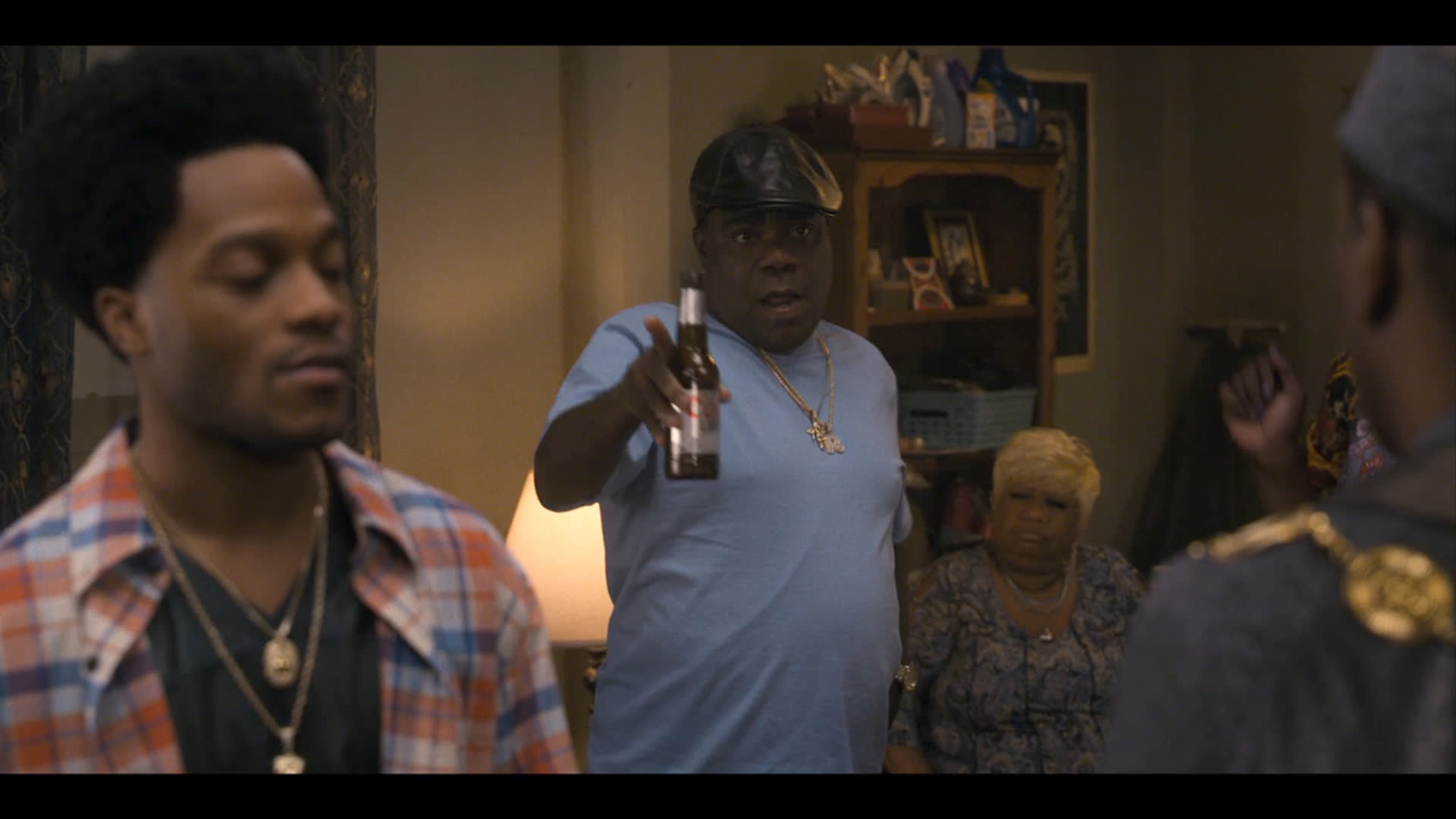
It is back to America to find his bastard son, Lavelle Junson (Jermaine Fowler). He and his boorish, trashy mother Mary (Leslie Jones) go to Zamunda so that Lavelle can be trained to succeed the throne as Crown Prince. While Lavelle struggles with completing his tasks to show his worth, he forms a bond with his hairstylist Mirembe (Nonzamo Mbatha). Lavelle, aided by his father figure Uncle Kareem "Reem" Junson (Tracy Morgan), now must rise to the task of kingship.

That is, unless Lavelle finds true love and King Akeem finds feminism.

My mother (RIP) had an expression when she saw people behaving shamefully, "Que no les da verguenza?", which I translate as "Do they not feel shame?". Watching Coming 2 America, I felt genuine embarrassment for everyone involved, an embarrassment that everyone involved should have felt for him or herself.  I was not even twenty minutes into Coming 2 America and could see that it was a disaster. That there was another hour to go in this cringe-fest fiasco filled me with pure dread.

I do not think that I have seen a worse film than Coming 2 America. Perhaps The Hangover Part II or The Green Hornet, but those films made me genuinely angry. Coming 2 America just made me sad. It boggles the mind that the original writers of Coming to America (Barry W. Blaustein and David Sheffield) along with Kenya Barris, could have worked on a script and thought naming the bordering country "Nexdoria" was in any way clever or funny.

Every single thing about Coming 2 America should offend any person with an ounce, a milligram of intelligence or decency. The movie trades in wildly offensive stereotypes that if not for Murphy's involvement would be accused of being flat-out racist. The most overtly racist character is Calvin Duke (Colin Jost), the grandson of the original Duke Brothers. 

As a side note, it should be noted that the Duke Brothers were from Trading Places not from Coming to America. Their whole cameo in Coming to America was a nice in-joke from Murphy's filmography. They were not essential to Coming to America, but somehow, we needed a Duke to interact with Lavelle. Having Jost (who may be the literal poster boy for "white male privilege" as I find no genuine talent to justify his success) say such things as telling Lavelle that Neil deGrasse Tyson is "your guy" is bad enough. However, Jost did not act in this film. He spouted words.

Leslie Jones and Tracy Morgan traded in stereotypes as the trashy woman and uncouth man respectively. Jones' character was more than just a boorish idiot. She was also loud, abrasive, arrogant, sexually voracious and unapologetic about having raped Akeem.

Again, that plot point is something I cannot get over. Semmi drugged Akeem and brought this vulgar woman to take advantage of someone incapacitated, who was not able to consent to sexual intercourse and who clearly was so drugged he thought the whole incident was a dream about a large boar riding him. If the genders were reversed and Semmi had drugged Mary with Akeem getting on top of her to have sex without her consent, people would have been outraged.

There would have been protests. Demands to fire the writers and director Craig Brewer. Loud condemnations from women's rights groups. Feature stories on news networks. I would argue rightly so. However, because it is a woman taking advantage of a man, somehow it is meant to be funny.

Akeem did not consent to have intercourse with Mary. He was incapacitated by drugging. He was raped, and that Coming 2 America thought that this was necessary, let alone funny, is disgusting.

Not that Jones' performance made anything of this better. Her whole career, at least from what I know of it, consists of playing a stereotype of a vulgar, uneducated woman. Clueless and insulting, I cannot believe Jones was proud of her work here, though her MTV Movie Award for "Best Comedic Performance" says more about MTV viewers (and perhaps the whole of Western civilization) than about how good she was.

The effort to make Morgan and Hall enemies transcended cringe. A scene where they are debating on ZNN with Daily Show host Trevor Noah as a Zamundian news host was lazy and stupid. Seeing Uncle Reem move from the split screen to strangle Semmi showed that they were in the same room, making the entire sequence illogical. 

Eddie Murphy looked pained at times to be there. Perhaps he was aware that Coming 2 America was bad. He has been in film too long to not realize that the film was monstrous. He also should have been aware that Coming 2 America was trading in terrible African American stereotypes of the black community comprising of poor, uneducated buffoons. 

He has done much good in trying to elevate black characters in film. Coming to America was a celebration of black life, with successful, well-educated and well-rounded characters. Both the African and African American characters were elegant, wealthy and humorous without being boorish or vulgar. 

Coming 2 America, conversely, felt like a massive step backwards. What I was thinking was, "Why couldn't Lavelle be highly educated but frustrated by his lack of upward mobility" or his mother be successful or at least reformed from her early party-girl days to becoming a strong woman working to support her son. Instead, we got Lavelle be a ticket scalper for his uncle (albeit a reluctant one), his mother still trashy, stupid and vulgar and his uncle crude and equally vulgar. Seeing Wesley Snipes do bizarre dances and be a parody of a parody of an African dictator was just sad. 

Only Mbatha and Fowler to a lesser extent gave anything close to decent performances. Mbatha had at least a decent character to play (though seeing her recite the plot of Coming to America was depressing even if she had no control over things). Fowler showed promise as Lavelle early on, though the bad sitcom-like script kept him down. 

Above all else Coming 2 America is not funny. I laughed once, when barbershop owner Clarence called Akeem "Idiot Amin". Apart from that, Coming 2 America was an exercise in horror, a cringe-worthy nightmare that should never have been made as it was. Bringing back bits that reminded one of the original just made things worse.

Coming 2 America will be in the pantheon of "Worst Sequels Ever" if not "Worst Movies Ever". 

Que nos le da verguenza?

DECISION: F-

Thursday, December 31, 2020

One Night in Miami...A Review (Review #1447)


ONE NIGHT IN MIAMI...

One Night in Miami... puts together four prominent African American men, each at a particular point in their lives. While a fictional story and not quite able to escape its stage roots, One Night in Miami... still holds the viewers' attention as these four men struggle, argue and laugh with their roles in American life and their community.

After brief scenes of each man facing situations that shape or shake their worldview, we go to February 25, 1964. Here, young boxing talent Cassius Clay (Eli Goree) meets up with his spiritual mentor, Nation of Islam Minister Malcolm X (Kingsley Ben-Adir). The Brother Minister has convinced Cassius to join the controversial religious sect and announce it after Clay's fight with Sonny Liston.

Also coming to the fight is Cassius' friend and Malcolm's frenemy singer Sam Cooke (Leslie Odom, Jr.) while their mutual friend, NFL superstar Jim Brown (Aldis Hodge) will be giving boxing commentary. After Clay wins the match, he gets Brown and Cooke to join him and the Brother Minister at their hotel.

Here, over the course of the night, the four men get into various discussions over their roles in the growing Civil Rights Movement, with Malcolm X and Cooke being the most divided. The former insists Cooke use his skills to advocate for action and not perform what he thinks of as soft, light music for majority-white audiences; the latter insists it is only through primarily economic freedom that will bring about advancement to the race. As each man attempts to explain himself and balance the joy of life, they each in the end make separate decisions that will impact their lives and careers.

One Night in Miami... is a speculative film in placing these four distinct legends together on this important night. However, it is more likely that in Kemp Powell's adaptation of his own play, they served as avatars for the state of African Americans and the paths open to them to take in claiming their full rights. The two dominant figures here are Malcolm X and Sam Cooke, who often come into conflict over how best to move the African American community forward.

I would argue that given the dominance of both Ben-Adir and Odom, Jr. in One Night in Miami... at times Goree and Hodge get lost as the Brother Minister and Mr. Soul battle it out. It would not be surprising to see Ben-Adir and Odom, Jr. receive recognition for their performances as both are exceptional. Despite being submitted for Supporting, I would argue it is Odom, Jr. who is the clear standout of the two.

It is more than just capturing Cooke's ease and confidence, but you also see someone at times eager to please, at times filled with barely concealed rage. His final scene as he premieres A Change Is Gonna Come on The Tonight Show is chilling. It is enhanced by editor Tariq Anwar, who mixes his performance with hints of the futures of Malcolm X, Mohammad Ali and Jim Brown (the sole surviving figure as of this writing). Ben-Adir at times sounds more like former President Barack Obama than Malcolm X in his cadence, but he has excellent moments too, such as when recounting how Cooke managed to hold an audience in the palm of his hand just by his voice.


Goree had some of Ali's inflections too, but curiously, neither he or the Brother Minister had that swagger or fire in One Night in Miami..., almost as if director Regina King had them be surprisingly restrained, muted. Of particular note is when the then-Cassius Clay wins: Goree doesn't have that mixture of swagger and delight in his declarations of being both "the greatest" and being "so pretty". Still, on the whole King proved herself an able director, leading her cast to fully formed performances.

She even had a few moments of comedy thanks to Christian Magby's eager Nation of Islam member Jamaal, who was simply too much of a fanboy to keep to strict NOI routines.

One Night in Miami... also has a wonderful closing song, Speak Now, that sounds like the perfect companion piece to Cooke's A Change is Gonna Come, one of the Greatest Songs of the Twentieth Century.

The film can't quite escape its stage roots in that certain scenes do play as if performed on stage, particularly whenever our quartet is together in Malcolm X's hotel room. Despite this, One Night in Miami... is a well-crafted film with strong performances that tells a fascinating "what-if" story. It's a story that is both of its time and ours.

Sam Cooke: 1931-1964
Malcolm X: 1925-1965
Mohammad Ali: 1942-2016
Jim Brown: Born 1936    

Wednesday, December 16, 2020

Herself: A Review


HERSELF

In Herself, we have the potential for an inspirational story of female empowerment with the potential for a surprisingly good dramedy. Somehow, there's a lot of potential in Herself but that potential, already teetering, fell apart just at the end.

Sandra (cowriter Clare Dunne) finally escapes her abusive husband Gary (Ian Lloyd Anderson) with their two daughters. Despite having two jobs she cannot afford a home of her own home or even a decent apartment in high-cost Dublin. In a mix of inspired and desperate move, Sandra comes up with the idea to build herself a small home.

With the help of various people her dreams of a tiny house figuratively and literally rise. There's Peggy (Harriet Walter), one of her employers who lends her the land and money. Next comes surly Aido (Conleth Hill), a construction supervisor who knows Gary and what a beast he is. Along with the mother of her daughters' friend and the squatter friends of another coworker, Sandra soon starts building. 

However, a series of unfortunate events lead Sandra to face off against Gary in court for custody, which itself leads to a fiery conclusion.

Herself trips itself up in various ways. It seems it wants to simultaneously be quite serious and inspirational. These are not mutually exclusive, but somehow the elements between slight whimsy and tense drama don't gel as well as they could.

For example, all the people helping Sandra are given the most cursory attributes (one has Down Syndrome, one appears jolly, one is Cameroonian) but the film asks us to accept that they have bonded over the shared project when they don't seem to have much connection even when working together, let alone outside. 

It just seems all too convenient, too easy to round up this group, almost as if they came straight from Central Casting to resolve many of her issues.

It also cannot resist adding touches of drama that can be seen from miles away. What, for example, were the odds that her older daughter Emma (Ruby Rose O'Hara) would get into a scrape that would later be used against Sandra? The final surprise, however, is perhaps the worst, as if Dunne, her cowriter Malcolm Campbell and director Phyllida Lloyd could not or would not give Sandra a happy ending. It just seems almost cruel.

Somehow, one thinks that under other hands Herself would be close to either a heartwarming comedy or that empowerment film it wants to be. However, it seems set on being a bit dour while trying to be uplifting too, a strange mix that does not quite work. 

What does work is the central performance of Claire Dunne as Sandra. You see an actress who communicates much with a glance, a look of despair or exasperation. Her performance makes Sandra into not just a survivor but a striver. She has quiet moments where the despair comes through (such as when she laughs at her girls crashing into her on skates when she's clearly distraught at her situation), but on the whole Sandra has gumption. 

You admire and cheer for her when she somewhat desperately attempts to convince a bank to let her have a loan by pointing out her building her own home would save the Irish State money in the long run. Her best moments though are at the trial, when she first has something of a breakdown and then pulls herself together to question why no one asks about what Gary did to her but instead focus on whether she filled out a form correctly.

You end up liking and caring about Sandra's plight, which is why the end hit such a sour note with me.

The other performances also are strong. Anderson balances Gary's charms and seductive powers with his cruelty. Walter's Peggy O'Toole also balances a cantankerous manner with a sincere friend. In a smaller role, Sarah Kinlen manages touches of lightness as the eager social worker helping Sandra while later making her a serious character.

Herself is a film I would have liked more if not for the ending. I don't require happy endings all the time, but there seems to be something almost sadistic about the final moments. It simply did not sit well with me, and I think more than a few audience members who may think well of Sandra and Herself will find the end less empowering and more frustrating.

Monday, December 14, 2020

Time (2020): A Review

TIME

Time, the new Amazon documentary, has in its simple title such a wealth of meaning. Its actual running time is remarkably brief (a mere 81 minutes) but in Time we see the decades roll by. We see the lost time of one family and the refusal to give into its slow march.

Sibil Fox Richardson (who also goes by the metaphorical nom de guerre Fox Rich) and her high school sweetheart Robert Richardson had a tender love story. They married out of high school and had six sons while starting a business selling hip-hop merchandise in Shreveport, Louisiana. However, their Culture store started faltering and in a wildly misguided step they opted to rob a credit union. 

As the driver Sibil agreed to a plea bargain where she served a three-year sentence, but Robert received a 60-year sentence for the crime. As such, they faced a lifetime separation. Sibil, however, would not accept what she and her family consider modern-day slavery. For the next twenty years she not only told her story but fought relentlessly to free her husband, all while maintaining a successful car dealership and raising their sons.

The boys grew up with just a cutout of Robert but were motivated by the situation to pursue careers in dentistry and political science. Eventually, Sibil's determined, sometimes frustrated work bore fruit as Robert is released, and he can at last return home.

Time is an elegant film, mixing Mrs. Richardson's home videos with new footage by director Garrett Bradley so well that while one notices the difference it is irrelevant to the flow. Bradley was wise to keep the black-and-white tone of the home videos to his footage, allowing for an easier connection.

Time makes its case about the excessive nature of sentencing by focusing on one family's story and how a 60 year sentence was clearly excessive. The film has the viewer not only question whether the punishment fit the crime but on how it affects those left behind. The Richardson's twins Freedom and Justus grew up without a father, being born shortly after Robert's incarceration. It's a terrible punishment for a crime born out of desperation.

By no means does anyone justify or rationalize the credit union robbery, but Time makes its quiet case that Robert should have borne such a heavy punishment. In a sense, while Mrs. Richardson's sentence was shorter due to agreeing to a deal (which her husband did not), there doesn't seem to be a reason for the length of sentence. This is certainly true given how Mrs. Richardson went on to be a successful businesswoman, mother and fierce advocate.

There are scenes in Time that will move the viewer, particularly the ending when Robert is released, enhanced by Jamieson Shaw and Edwin Montgomery's elegant score. Seeing the family reunited, the great love between Robert and Sibil and the cardboard photo of Robert finally burned are all powerful and beautiful moments.

Perhaps we could have done without the suggestion that Robert and Sibil were engaging in sex while on the way back from the prison, but that might be just me.

Time is not quite an advocacy film though it makes a case that sentencing is far too excessive for people who are not threats to society. It is up to the viewer whether or not they agree with Mrs. Richardson's assertion that she is an "abolitionist" fighting modern-day slavery or as her mother observes, "It's almost like slavery times". 

These are understandable views, but whether harsh sentencing is motivated solely by racism and poverty is again up to the viewer. Time does not drown us in statistics however, instead keeping our eyes on the impact this has on this family as a stand-in for all the other stories not told. 

Still, Time makes a powerful, strong and yet quiet case that in so many cases the punishment does not fit the crime. While positive steps in criminal justice reform are taking place, Time, in its way, suggests so much more needs to be done. 

Perhaps what Robert Richardson says to his longtime love once finally home makes the case for Time. Using "Love" as an acronym, it is "Life's Only Valid Expression". 

DECISION: B+

Tuesday, November 24, 2020

Sound of Metal: A Review


SOUND OF METAL

Sound of Metal is in some ways original and some ways familiar. It blends that familiarity and originally exceptionally well, with standout performances and a glimpse into a world most of us do not know.

Rock drummer Ruben Stone (Riz Ahmed) is touring with his musical and romantic partner Lulu (Olivia Cooke) when he starts having difficulty hearing, the sounds coming to him as muffled and disjointed. Whether due to years of hard rocking or a preexisting condition Ruben, for all intents and purposes, is deaf.

His depression and anger are so much that there are fears he may slip back into drug addiction after four years of sobriety. With that, he is reluctantly persuaded to go to a treatment facility that specializes in treatment for deaf addicts. Overseen by Joe (Paul Raci), Ruben shifts from struggling to easing his way into the deaf world.

Ruben, however, still wants to get his hearing back via surgery, secretly keeping tabs on Lulu and selling their RV and equipment to raise the funds. His decision affects his life in ways even he did not expect, realizing that despite what he wants he is in a new world, one that he might actually embrace.

Sound of Metal is a simultaneously quiet and loud film; it's quiet in how it takes its time with Ruben, moving slowly as he begins to crumble and then shifts from sullen to almost happy to desperate to perhaps in the end accepting. It is loud in the literal sense at times: particularly during the rock concert scenes, I had to cover my ears due to the high noise level. The sound work on Sound of Metal is excellent: capturing Ruben's hearing and what a non-deaf person would hear. The various shifts work within the film.

The subtitles that appear in Sound of Metal also work, and that is something extremely rare in film. Perhaps because I tend to put on subtitles whenever I see a film it look a bit longer for me to notice, but it was an excellent decision to carry out the subtitles throughout. It was an equally excellent decision to not put subtitles every time someone signed, letting the viewer experience what Ruben experienced.

At the heart of Sound of Metal's success are the performances. Ahmed is exceptional as Ruben. As co-written by director Darius Marder (screenplay by Darius Marder and Abraham Marder, story by Darius and Derek Cianfrance), Ruben's journey is pretty much to be expected: going from frustrated and angry to possibly embracing his new life while still hungering and scheming to get his old one back. However, Ahmed makes Ruben a more complex person. 

A lot of his best moments are when he is silent, whether expressing rage to irritation or even a bit of joy when laughing with his fellow deaf addicts, Ahmed expresses so much with his face and eyes and body. He also does have excellent moments when speaking. Of particular note is when he attempts to get money from Joe to get his RV back and for him to stay on despite hiding his operation. As Joe observes, "You sound like an addict". It's a brilliant and heartbreaking moment.  

This leads me to Raci, who should be on anyone's shortlist for Best Supporting Actor consideration. He is a caring man but also one who is not ashamed of who he is. "You don't need to fix anything here," Joe tells Ruben when the latter offers to make repairs around the facility, but which may be a rouse to get to Joe's computer. The double meaning is clear, and Raci delivers it in such a way as to suggest Joe is telling Ruben his deafness isn't something to "fix". Raci's performance to my mind is as equal if not slightly stronger than Ahmed's, great as the latter's is. He displays quiet strength, pride and no sense of shame about deafness (in the film, Joe can read lips). 

Rounding out the cast is Cooke, an actress I've admired since her work on Bates Motel. She is almost unrecognizable in her makeup, and we see in Lulu a woman who cares for Ruben, perhaps even loving him, but who also has moved on with her life when she returns to Paris to be with her father Richard (Mathieu Amalric in a small role). 

That's one of Sound of Metal's strengths. There are no villains or heroes, just flawed people making decisions they think are for the best. It treats the situation seriously, with no drifting into potential romances between Ruben and the deaf child teacher. It doesn't infantilize or idolize the deaf, instead treating them as people who unlike most cannot hear and communicate with Sign Language. It's to where Sound of Metal almost inspires one to learn the language.

I suspect curiously that the use of subtitles in Sound of Metal may actually throw people off, but it would be a disservice to skip it because of that. With an interesting story and strong performances all around, Sound of Metal wraps the viewer into this world both of the deaf and of Ruben's journey into it. 

DECISION: B+