Monday, June 13, 2011

Midnight in Paris Review (Review #225)


MIDNIGHT IN PARIS

I confess that the first few minutes of Midnight in Paris made me smile.  However, I am prejudiced in this regard: seeing all the sights of the City of Lights brought back all the joyful memories of my trip there barely a year ago.  Even though I had only a day and a half to see Paris (a half-day was spent at Versailles), I still saw so much that by the end of my time there, I too had fallen under its spell and became enchanted with the city by the Seine.  Therefore, Midnight In Paris served as a bit of nostalgia for me, and it is accurate to say that since nostalgia was at the heart of Woody Allen's film.

Gil (Owen Wilson) is a Hollywood screenwriter/script doctor who years to write the Great American Novel.  He finds inspiration in Paris, while his fiancee Inez (Rachel McAdams) and her parents (Kurt Fuller and Mimi Kennedy) most certainly do not.  She and her family are boorish, self-centered, devoid of respect for culture, perplexed why the French don't speak English, and find Paris a wasteland: in other words, typical Republicans as imagined by Woody Allen.

Gil, however, yearns to live in Paris rather than return to Hollywood, and more than anything would have loved to have lived in 1920's Paris and be able to rub shoulders with Hemingway, Fitzgerald, and all the artists who flocked there in the inter-war era.  Inez would much rather spend time with friends who happen to be in Paris at the same time, her old flame Paul (Michael Sheen) and his current flame Carol (Nina Arianda).

One night, after a bit too much to drink, Gil walks about alone in Paris.  At midnight, an old-style car comes and beckons Gil to enter.  Once there, he is given more champagne and taken to a party, where the piano is being played by Cole Porter (Yves Heck) and his novel is of interest to F. Scott Fitzgerald and his wife Zelda (Tom Hiddleston and Alison Pill).  They take Gil to gain the insight from Ernest Hemingway (Corey Stoll) who refuses to read Gil's novel but promises to take him to Gertrude Stein and have her judge it. 

However, right after leaving Hemingway Gil finds himself back in his own time.  Inez of course refuses to believe Gil did anything with his literary heroes (and also makes it clear that she thinks he's wasting his time both in Paris and in pursuing his novel when he should go back to swimming pools and movie stars, making real money for them).  Gil takes Inez to the same spot to show her this miracle, but of course it doesn't happen and she leaves.  Once midnight rolls around, however, we take another jolly jaunt.


Back to the 1920's, where Gertrude (Kathy Bates) tells Picasso (Michael Di Fonzo Bo) that his newest painting is all wrong.  The subject of this painting is there, a beautiful girl named Adriana (Marion Cotillard).  She and Gil have an immediate attraction, and she tells him how she so admires the Belle Epoque era of Paris.

Soon, Gil starts bouncing back and forth between his ideal time and his real time.  Gil is now torn between his growing interest in Adriana and his loyalty to Inez.  Who better to discuss this romantic conundrum than with Salvador Dalí (Adrien Brody), Man Ray (Tom Cordier), and Luis Buñuel (Adrien De Van)? 

Eventually, thanks to the help of a Rodin Museum tour guide (The First Lady of France, Madame Sarkozy, aka Carla Bruni), Gil realizes with whom he should be with.  However, there's a hitch: just as the relationship between Gil and Adriana is blossoming, a carriage takes them to the Paris of the Moulin Rouge, where she becomes entranced with the world of Toulouse-Lautrec (Henri Menjou Cortes), Edgar Degas (Francois Rostrain) and Paul Gauguin (Olivier Rabourdin).  Gil learns his lesson: the time one lives in will always appear boring to those living in it and that there is no need to romanticize the past because the present is what you make of it.  The good news is that Gil finally sees what will make him truly happy in the Twenty-First Century both in terms of his career and his life.


Allen is nothing if not blatant about both what he is trying to say both personally and politically in Midnight in Paris.  In short, we learn that as much as we may imagine a particular time and place as being "the ideal time" in the "I was born too late" mindset, the past is just that: the past, a time that we cannot go back to.  It is one thing to fantasize about living in a certain time, but truth be told, the time we live in is where we should devote ourselves to.  Even Gil's novel about a Nostalgia Shop reflects the character's belief in the power of the past, but, Allen would argue, it is a place that does not exist and perhaps never existed, not in the way we would imagine it. 

We see this in its most obvious terms with the relationship between Gil and Adriana.  Each has romanticized a particular era, and each has found himself visiting that era.  However, their reactions and decisions to actually abandoning their own time for their "dream time" shows how Gil has grown to understand that his time is his time, and that it is there where he has to live.

This isn't to say that Midnight in Paris is not without a sense of humor.  It might be amusing to see how Buñuel himself is confused by the plot Gil gives him for a movie: about a group of people who just cannot leave the room they find themselves in. I imagine more than a few people would find The Exterminating Angel confusing, so it's nice to imagine Buñuel puzzled by why they just didn't walk out through the door. It is also amusing to see the "pedantic" Paul shown up by the less-cultured Gil.  (Side note: the Buñuel joke would be amusing to only those who know of The Exterminating Angel, so it might be a bit highbrow for some viewers).


However, there were certain things within Midnight In Paris that might puzzle viewers.  It's clear that Inez is a hopeless shrew/harpy, so one wonders why Gil would date her, let alone be engaged to her.  She clearly doesn't have anything in common with him and worse, ridicules his hopes and tastes: deriding him for loving to walk in Paris in the rain for example, so we already know from the get-go they ain't staying together. 

I find this to be a certain stock character/plot device: a wife/fiancee so horrid that no intelligent man would want to be with her, let alone plan to marry her.  Strange, but while I was trying to think where I had seen a similar character, I suddenly remembered Something Borrowed, where again another woman so hopelessly unsuitable for the male lead is supposed to be inches from being his wife.

McAdams' one-note performance of this ugliest of Ugly Americans doesn't help matters.  She was never sympathetic or interesting, just wailing about all over the place, always whining and being dismissive of Gil while being in rapt attention for the pompous deliberations of Paul.  One would think Allen would have given her at least something to do besides complain about everything, but I think in a larger sense not only was Allen relying on a tried-and-true method of film-making (make the woman ugly so as to allow our hero to romance another woman without a bit of shame) but to take a few shots at Republicans. 

On two occasions Inez's parents are held to ridicule for their politics: did we really have to hear the father respond to his similarly-minded wife that Tea Party people were not "crypto-Fascist zombies".  It was those moments that felt false and forced, as if Allen wanted less to have dialogue than to make a point.  When that happens, it takes you out of the movie, which is ironic given the theme of nostalgia and of imagining living in the past that Midnight In Paris so deftly delves in.

The other performances were much better.  It was quite interesting to hear Sheen try his hand at an American accent though I wonder if he'd kept his British tones it would have made him sound more snobbish, but I digress, and while he basically disappeared near the mid-point of Midnight he still did a good job in making Paul both pompous and believable in his cluelessness about how little he actually knew.  One normally wouldn't think of Owen Wilson, with his laid-back persona, as being a Woody Allen-type: neurotic hyper-intellectual, but in Midnight In Paris, Wilson's drawl and sometimes sleepy-eyed appearance actually works with Gil's slightly bumbling nature and enthusiasm for 1920's Paris and the world of the Lost Generation. 

Those who were in the 1920's world fared the best.  In what is basically a cameo Brody reminded us that he does have a sense of humor by making Dalí obsessed with his own fame, and those rhinoceroses he constantly brings up.  Hiddleston (one of the best parts of Thor) had a practically pitch-perfect American accent and enthusiasm mixed with a bit of innocence as Fitzgerald, and Stoll got Hemingway's machismo perfectly. 


The women are not to be forgotten: Bates was delightful as that patroness of the arts Stein, offering straight talk and advice to Gil.  Pill, to my hearing, had a bit too-thick Southern accent, but showed in her few scenes the emotional and mental issues that the deeply-troubled Zelda would eventually be overwhelmed by.  Cotillard was the best as the generally sweet Adriana, who falls for Gil but who knows that an engaged man is not for her even though the clueless Gil apparently doesn't think any girl would be troubled by being told he's engaged to someone else.  Cotillard is coy, charming, innocent, optimistic and even naive: in short, a lovely performance of a flapper trapped in a time she doesn't really care about.

Even the First Lady does well as the tour guide flustered by Paul's pomposity but who helps Gil by translating the memoirs of one Adriana he happened to pick up. 

Of course, the highlights of Midnight In Paris are of the beautiful sights of the city itself: Paris, that belle ville, has been filmed many times in many movies, but Darius Khondji and Johanne Debas' cinematography make the city even more beautiful and romantic, which makes the boorish American family's disinterest in Paris even more bizarre, but I digress. 

The big problem I find in Midnight In Paris is in the fact that from time to time, Allen's dialogue doesn't sound natural.  Instead, it sounds as if he's giving the characters, and the audience, plot points and speeches, rather than making them sound like they are making it up as they go along, to quote a film.  This happens at least twice: at the very beginning of the film at at Versailles.  However, any film that shows just a glimpse of the Citizen Kane of palaces can be much forgiven.  

There are also little things, such as having an accordion playing: I figure it's required that every movie set in Paris have an accordion, but on the whole Midnight In Paris is a delight from start to finish.

By no means is Midnight in Paris a laugh-a-minute feature.  The laughter comes in fits: one scene involving Gil trying to leave his room while trying to keep his activities a secret from a surprise visit by his horrid fiancee and future in-laws just was not funny, but the charm of Paris and the story make up for it.  In that, it is beautiful.

Mon Paris, comment je t'aime...

DECISION: B-

Sunday, June 12, 2011

An Unplanned History & Grammar Lesson. Thoughts on Controversy Over Use of "Polish Concentration Camps"


It was one line, one simple line, for the review of X-Men: First Class.  I didn't give that one line much though because I trusted too much in Americans being aware of history.  Truth be told, many Americans are not aware of their own history, let alone world history.   It was the beginning of a series of unfortunate events, to coin a phrase, and it's grown to such a proportion that I feel compelled to make special comments about them (no apologies to Keith Olbermann). 

The line was in reference to the character of Erik Lehnsherr/Magneto played by Michael Fassbender.  For those not aware of X-Men mythology, Erik's hatred of humanity (and fear that people would come after 'the other') came from being sent to a concentration camp (I believe it was Auschwitz, though on this point I defer to my nerd friends).  We saw him sent to a camp in both X-Men and X-Men: First Class

It was here that I made a dreadful, though unintended mistake.  The title caption in X-Men: First Class read "Poland 1944".  With that, I wrote that Erik was in a "Polish concentration camp". 

In retrospect, it was not only a poor choice of words but understandably inflammatory.  By saying "Polish concentration camp" I meant to describe the location based on the information given to me by the film.  Instead, I inadvertently muddied the waters and created for myself a needless controversy.  I did not realize that the phrase "Polish concentration camp" could be interpreted as meaning that the Polish people themselves opened and operated the camp when they clearly were under occupation themselves.

I somehow trusted in people being aware that the death camps were under the control and management of the Nazi regime and that the Poles themselves were victims of this tyrannical, murderous regime as were the Jews, the Gypsies, Jehovah's Witnesses, homosexuals, and anyone else who did not fit into their deranged and demonic standards.  However, I simply did not realize while writing that the phrase "Polish concentration camp" could be interpreted in a way thoroughly unintended.


It was a dreadful and foolish lapse of judgement.  I was rightly taken to task for this error in phrasing.  Hoping to make amends, I rewrote that line to read "concentration camp in Poland".  This I hoped would clarify things and indicate location, which had been the original intent of that line.

However, I apparently made matters worse.  This was still incorrect because, like the last line, it could still be interpreted as making the Poles responsible for the actions of others.  Furthermore, it suggested that Poland was an independent state when it had been split in half by the Nazi regime and the Soviet Union.

I reworked it yet again, to say "concentration camp in Nazi-occupied Poland" and felt this was the end of the matter.  To quote Shakespeare, "Art thou not happy?" No, says the reader, thee is still not happy.

I've been asked to add "Germany" to the phrase, to read "concentration camp in Nazi Germany-occupied Poland".  The thinking as far as I understand it evolves from the suspicion that by leaving the "Germany" out, I might still leave people with suspicions that there were Polish Nazis.

I decided that I was obviously swimming in waters too deep for me, so I consulted the highest authority known to me.  I turned to my friend Justo Fernandez II, a high school and college professor of history who is an expert in the Holocaust and the Nazi years.  He is the type of person who will correct your pronunciation of the S.A. as "Es-Aaah", not "Es-say".

I asked for his advice, and it was thus: when referring to occupied territory such as France or Poland, I had to add the word "Nazi" to it.  Here, Justo sides with the audience and showed me I was completely wrong by referring to it as a "Polish concentration camp".  I asked him if it was correct to say "in Nazi-occupied Poland" rather than "Nazi Germany occupied Poland".  Professor Fernandez said, "Yes!! Correct!".   Therefore, I will leave the phrase as written "concentration camp in Nazi-occupied Poland".  

I think this comes from a basic understanding that "Nazi" refers to Germany from Hitler's appointment as Chancellor on January 30, 1933 to the formal surrender of Germany on May 8, 1945.  "Nazi" and "German" in referring to Germany immediately before and during World War II is interchangeable in the common mind.  In short, when saying "Nazi", it should be understood that I'm referring to "Germany".  With that in mind, and with Professor Fernandez's explanation about the correct uses of the "Nazi" and "Nazi-occupied", I will leave that line as is.

Any complaints about the phrase "concentration camp in Nazi-occupied Poland", please forward to Mr. Justo Fernandez, not to me.  Side note: as much as I love my friend, Justo I imagine would argue that the Republicans did invade Iraq, but I digress.


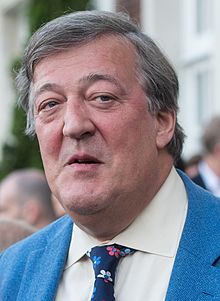
In this ensuing brouhaha, my greatest fear was that my poor phrasing would somehow link me with the rantings of the man on the left (and The Left), one Mr. Stephen Fry.  Now, let me state for the record that as an actor, I think Mr. Fry is extremely talented: his version of Jeeves from Jeeves & Wooster will be the definitive interpretation of the character.  In regards to his thoughts & views on non-artistic enterprises, that is another matter.

Stephen Fry and I are different in so many ways.
He's tall, I'm short.
He's fat, I'm...not so fat.
He's British, I'm American.
He's Jewish, I'm Gentile.
He's an atheist, I'm born-again.
He's a technophile, I'm a technophobe (this blog notwithstanding).
He's an ex-con, I've never been arrested.
He's far-Left, I'm center-right.
He believes Israel is a "state founded on terrorism, massacres, and the dispossession of another people from their land" and uses the Arab description of Israel's founding (the Naqba or Nakba: the Catastrophe), I believe Israel has a right to exist and see it as a nation that has survived "terrorism, massacres, and the dispossession of another people from their land"*.

In short, Mr. Fry and myself would not have much on which to build a long-lasting friendship.

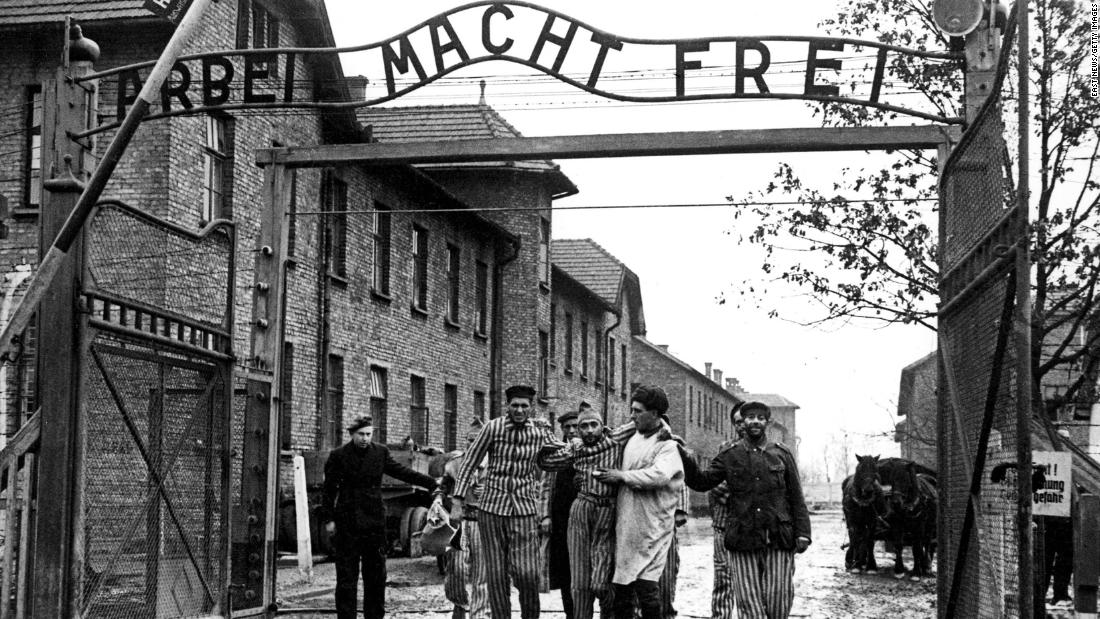
While Mr. Fry is considered an intellectual in his home country (as opposed to myself, who is merely considered smart by my immediate circle), he has said some incredibly stupid things.  In 2009 he held Polish Catholicism responsible for the Shoah (the fact that he had relatives murdered in Auschwitz might lend him some credibility, but in truth provide him no cover for his remarkable ignorance).  He stated in an interview on the British Channel 4 News,
"Let's face it: there's been a history in Poland of right-wing Catholicism, which has been deeply disturbing for those of us who know a little history, and remember which side of the border Auschwitz is on and know the stories, and know much of the anti-Semitic, and homophobic, and nationalistic elements in countries like Poland".
I want to make certain things clear. 
  1. I condemn Stephen Fry's woefully ignorant and bigoted comments.
  2. I do not believe Catholicism in Poland or any other country was/is responsible for the Holocaust or all the evils of the world.
  3. I do not believe Poland, the Polish people, or any occupied nation under the Nazi regime should be blamed for the Holocaust when anyone with a rudimentary knowledge of history would know the Final Solution was a Nazi idea.
Mr. Fry hates religion in general and has a particular antagonism for Catholicism, and I believe he said what he did because he does hold Catholicism responsible for the Shoah as well as for homophobia and anti-Semitism in general.   In short, Fry's "theology" is one of hate: against religion, against conservatism of any fashion, and against anyone who disagrees with him.  Here's another point where he & I disagree: I don't think those who disagree with me are evil but rather that they arrived at different conclusions than I through reason and spirit, while he believes those who hold different views (such as there is a God) are at best amiable fools and at worst hold responsibility for mass murder. 


This bit of wisdom I imagine would have come as a surprise to some, such as Edith Stein, the Jewish convert to Catholicism murdered at Auschwitz who later became the first Jewish-born saint in the Catholic Church since the time of the apostles (side note: technically, it is a misnomer to refer to her as St. Edith Stein when the correct title is St. Teresa Benedicta of the Cross, but she is commonly referred to--by myself included--as St. Edith Stein), or to St. Maximilian Kolbe, the Catholic priest imprisoned at Auschwitz who volunteered to take the place of another man condemned to die.  In a larger picture, even Pius XII, derided as "Hitler's Pope", allowed Jews to be hidden within the Vatican rather than be deported to the same camps Fry apparently believes the Catholic Church created.   These acts, and countless others, run counter to Fry's theory that Poland and specifically Polish Catholicism were responsible for the Holocaust.

I in no way wish to have my clumsy phrasing lumped or linked with Stephen Fry's woeful, foolish, and bigoted comments.  To his credit, Fry apologized for his statements and will take him at his word.  For myself, I too again take this opportunity to apologize to all offended by my bungled wording in the review of X-Men: First Class.  I again state for the record I never intended to imply or state as fact that Poland or the Polish people were responsible for the Holocaust and regret anyone thinking I believed such things. 

I felt it was important to state this in a separate post because it has become an endless distraction from my comments on X-Men: First Class itself.  No comments have been made about the film itself.  Instead, it has all been devoted to that one damn line, and how I wish I'd never written it.  With this, I hope to for once and all settle this and end what has been a frustrating point of contention with readers.  I really am tired of all this controversy and frankly, my friends, no longer wish to speak of it.  It was a clumsy turn of phrase, it's been corrected...twice...and I really want to move on from it.  Believe me: I can see clear to understanding the vigilance Poles and Polish-Americans take when the specter of the Holocaust is raised.  I as a Christian hate it when people say "Christians" bomb abortion clinics or "Christians" murdered millions from the Crusades to the Holocaust.  It wasn't "Christians" but people who either claimed or used Christianity to further their own malevolent plans.  However, I am just tired of all this and don't want to discuss it anymore. 

I'm sorry I suggested Polish culpability in the Holocaust, inadvertently as it was.  I'm sorry one line has caused such consternation to people.  I'm glad what I write brings out passion: I just wish it were my reviews and not a botched line within them. 

It looks like I finally have something in common with Stephen Fry: both of us regret ever saying what we said.  Still, there's a difference: I did not mean to imply the Polish nation or Polish Catholicism were responsible for the Holocaust--he did.

* My support for Israel's right to exist is firm, but I also hope that an independent state of Palestine may be founded and that Jewish Palestinians and Arab Palestinians may live side by side in peace.  My deepest prayer is that one of the flowers of the Arab Spring will be a recognition that Jews and Muslims are both Children of Abraham and that a nation called Israel and a nation called Palestine will be able to co-exist free from fear and mutual hatred.  Already Muslims and Coptic Christians in Egypt are seeing themselves as Egyptians first who should respect the other's belief systems and houses of worship.  We should do all within our power to make the sons of Isaac and the sons of Ishmael embrace and exchange the bread of peace. 

Update, July 2017:  

I was essentially hounded to frustration over this.  As much as non-Pole can understand how the term was inflammatory, I do understand. However, I've apologized for it, I've made changes to the original text that I think satisfy history, and I simply won't discuss this anymore.

I've written much on this subject, and I consider the matter closed.

Saturday, June 11, 2011

Personal Reflections on Atlas Shrugged


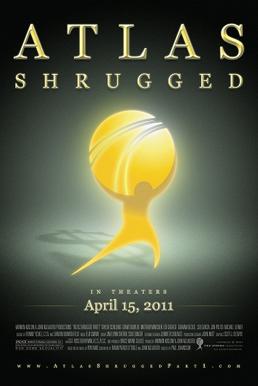
As I stated earlier how one sees Atlas Shrugged: Part 1 is strongly rooted in how one sees both the book it is based on as well as on its author, one Ayn Rand.  She is hated in some circles, virtually worshiped in others (I say virtually since as an atheist Rand would have objected, no pun intended, to being an idol).  Few people have a middle ground when it comes to our Goddess of Capitalism, and perhaps that is the problem.  The film may never get an even shake because so much passion on both sides is attached to the entire project: a case of not seeing the forest for the trees.  

Whatever her flaws, Rand was always a woman who stood by her principles.  At her death, her wreath was of a dollar sign, not a religious symbol like a cross or Star of David.  It was perfect for her, for if she worshiped anything, it was unfettered capitalism and the glory of the individual over the collective.   

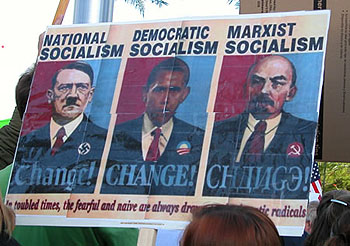
Atlas Shrugged is her Manifesto to the Capitalist: a voice in the wilderness if you will, to what she saw as the great flaw in American culture.  The flaw was the idea that people should work for the 'betterment of mankind' rather than the betterment of the individual.  Altruism was anathema to her; she believed that in pursuing an individual's own happiness was the highest goal.  Her ideology and her ghost would probably have remained a dusty curiosity if not for one Barack Hussein Obama II. 

The 2008 election was a watershed, unleashing a euphoria that bordered on the fanatical.  This passion, O-Phoria, if you will, took some bizarre turns.  Democratic operative James Carville published 40 More Years: How the Democrats Will Rule The Next Generation.  His thesis: voters would continue voting blue while the Republicans would basically go the way of the Whig Party.  In 2009, Michael Moore released Capitalism: A Love Story.  His thesis: capitalism is evil (this belief backed up by not one, but two Catholic priests) and must be replaced with 'democracy', ending his film with a swinging version of The Internationale, the socialist anthem. 

It couldn't be any clearer:  in 2008 and apparently from now on, America was turning away from free/mixed capitalism and embracing greater government economic management.


The children were being brought up to see in the President less a leader and more a cult icon to worship.  Children sang songs about the President-Elect (sample lyrics from some: "Obama's gonna change it/Obama's gonna lead 'em/We're gonna change it/And rearrange it/We're gonna change the world", and "I'm gonna study real hard/just like Barack"; note: it should be 'going to' in both songs since 'gonna' is not a word, but I digress.  Choirs were brought to CNN to sing the praises of the new President and his health-care legislation). 


Kids marched in formation like soldiers and stated "Because of Obama I'm inspired to be the next fill-in-the-blank", then told us about all the glories of his health-care plan, all to the cheers of "Yes We Can!"  Children's books about the President, such as Obama: Son of Promise, Child of Hope, had pictures that bore a striking similarity between the future President and his mother, Stanley Ann Dunham, and that of the Madonna and Child. 

The press, maligned for being partisan in favor of then-Senator Obama, was game to pursue the line of thought that the entire nation, if not world, was as eager for the President as they were.  First Lady Michelle Obama was declared the New Jackie: more glamorous, more beautiful, and more highly intelligent than the former First Lady (though Jacqueline Kennedy might have been proud of her country before her husband achieved the Presidency one would imagine). Journalists asked tough questions such as
"In this fatherless world, where did you learn to love?" (Harry Smith, CBS News)
 and waxing rhapsodic about how
"the sun glinted off (Obama's) chiseled pectorals (Eli Saslow, Washington Post).
(Side note: not since Stephanie Meyer wrote how EDWARD CULLEN literally sparkled have we been treated to such breathy, Harlequin-style writing.  The only difference: Meyer was writing for teenage girls, Saslow was writing for one of the major newspapers in America).

The press was apparently so enraptured by the President (Terry Moran of ABC News was so in love, perhaps literally judging from some of his interviews, that he was unaware that he stated that Barack Obama was "the son of a black man from Kenya and a white man from Kansas", emphasis mine) that they failed to note the significance of November 19, 2009.


On that date, the Nobel Committee announced that the winner of the 2009 Nobel Prize for Peace was...Barack Obama.  There were audible gasps at the announcement, but the committee was convinced their choice was inspired, perhaps inspiring, I cannot read their minds. 

It's important to make note of a few dates. 

Inauguration: January 20, 2009. 
Deadline for nominations: February 1, 2009. 

This means that the President had been in office for a total of twelve days before nominations were closed.  Even his most ardent supporters mocked this selection, but they failed to notice just how relevant it was to both his political fortunes and, in a strange way, to Atlas Shrugged making it to the theaters. 

The nation had been fed a continuous series of stories about the glories of President Obama, but the Nobel Peace Prize I believe made many Americans wonder what exactly he had done to win a prize that Gandhi never got.  It made them wonder what exactly they'd gotten with his election, then made them question other things: a vastly unpopular health-care plan and bailouts left right and center.  The ground was being sown for another voice, another ideology.

There were many who disagreed with what Florida voter Peggy Joseph said after an Obama campaign speech in October 30, 2008:
"I won't have to worry about putting gas in my car.  I won't have to worry about paying my mortgage.  You know, if I help him, he's going to help me".


Yet they were either not being heard or being dismissed, until CNBC's Rick Santelli went on a tear.  Curiously enough, he too mentioned mortgages.  Unlike Ms. Joseph, Santelli did worry about paying his mortgage, and was not too thrilled with the idea he might have to pay Ms. Joseph's too (Mr. Santelli didn't specifically mention Ms. Joseph, but it speaks to both their mindsets). 

Two conflicting ideologies were about to collide: Ms. Joseph's (Barack Obama/the government/the taxpayer was going to basically pay her bills) and Mr. Santelli's (the government was not going to pay Ms. Joseph's gas or mortgage with his money).  His rant was the antithesis of Ms. Joseph's breathless aspirations:
"How many of you people want to pay for your neighbor's mortgage, that has an extra bathroom, and can't pay their bills?  Raise their hands".
Obviously, he and those at the Chicago Mercantile Exchange Group floor cheering him on, was not going to accommodate Ms. Joseph and her like-minded compatriots.  His call for a Chicago Tea Party was the spark that undid all the hopes and aspirations of the Democratic Party for those 40 More Years.  From that point, the Tea Party Movement exploded.


Hidden within the nuttier elements of the Tea Party Movement (those who believed President Obama was some Muslim Manchurian Candidate or that his birthplace was not the United States) the specter of Ayn Rand and Atlas Shrugged rose to prominence.  The economic ideas she advocated, specifically pursuing your own self-interest rather than submitting them to benefit your neighbor, became manna for the movement. 

While the President and the press dismissed the Tea Party Movement as a group of racist wackos, they appeared oblivious to just how Ayn Rand was capturing the imagination.  The long-imagined Democratic domination of Washington ended in two years, with Republicans taking the House of Representatives and making it virtually impossible for the Democratic-controlled Senate to push legislation without their input.

With such free publicity, a film version of Atlas Shrugged was a no-brainer.  She had a growing fan base, and was declared an inspiration by beneficiaries of the Tea Party Movement like Senator Rand Paul of Kentucky and Representative Paul Ryan of Wisconsin.  If done correctly, it would be a most profitable enterprise.  Luckily for John Aglialoro, he happened to have the film rights.  Unluckily for Aglialoro, he was about to lose them if he didn't start filming.  With a bit of 'strike while the iron's hot' and a bit of 'now or never', he rolled the dice on Atlas Shrugged: Part I.

The circumstances of the filming were not going to produce a good film.  There were no stars (side note: the idea that Angelina Jolie, a woman who has made altruism a hallmark of her off-screen life, would be in a film deriding charity is downright bizarre, but I digress).  Time was against them.  Various plans for a television miniseries fell apart.  Still, Aglialoro pulled the project together, but the rush and lack of a budget showed.
 
The acting was at times weak (Taylor Schilling's as Dagny Taggart especially so, though by the end she did show slight improvement) and the sets look as if they were borrowed from a friend's house rather than proper-looking sets.  While Elia Cmiral's score was good, especially when we saw those trains rolling, and Ross Berryman's cinematography in those sequences was quite lovely to look at (as was at the end of Part I with the oil fields aflame), Atlas Shrugged: Part I had a stilted air to it. 

I'm not one to begrudge people for having little to no money to make a movie: Heaven knows some films with big budgets are lousy no matter how much money you throw at them.  Still, on the whole, Gabe's score for the film would probably be mine: Atlas Shrugged: Part I would earn a B- or C+ from me. 

I can't help think that many of the reviews were based less on the flaws of the film (although it does have a few) than on how the reviewer felt about Rand, about Atlas Shrugged, and about her right-wing/libertarian beliefs.  It wasn't a great film, but it wasn't this Satanic piece of trash most of my brethren hold it to be.  This is the primary reason I took Gabe with me: he was as objective a viewer as I could find, who would go without any prejudice and judge the film on its own merits.  We don't always see eye to eye (he enjoyed The Hangover Part II more than I did, much more), but here, we are in general agreement. 

Will there be a Part II or Part III?  That I do not know.  As with the Nobel Peace Prize, we have an X factor that people are not considering: DVD.  Many films that fail at the box office gain new life when they make it to the video market, some gaining cult status, and even a rise in popularity. 

If a DVD release proves successful, and if word-of-mouth makes it financially viable, Ayn Rand will rise yet again.

Thursday, June 9, 2011

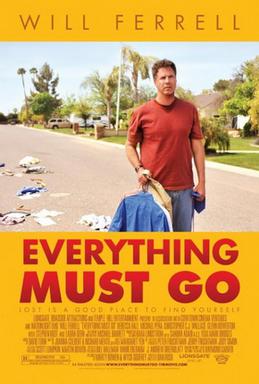
Everything Must Go: A Review

EVERYTHING MUST GO

I've found that there are two Will Ferrells.  The 1st Will Ferrell is the Ricky Bobby/Ron Burgundy/George W. Bush type: shallow, empty-headed boobs who live oblivious to how stupid they are yet manage to stumble into great success.  The 2nd Will Ferrell is the Stranger Than Fiction/Everything Must Go type: sad-sacks who are victims of forces out of their control. 

Now Will Ferrell 1.0 is for mass consumption, when he wants to make money.  Will Ferrell 2.0 is for selected tastes, when he wants to make art.  Everything Must Go falls in the 2.0 version, and there's nothing wrong with him reminding us that he is an actor and not the characters that have earned him popularity. 

It's safe to say that it has been the worse day of Nick Halsey's (Ferrell) life.  First, he gets fired from his job of sixteen years though in fairness to the company, through some fault of his own. He accepts this terrible situation the way he accepts all things: by being passive-aggressive and drinking excessively.  Once he drives himself home, he finds everything he owns out on the lawn, the locks and alarm code changed, and a letter from his wife saying that it's over and he's never to contact her again. I imagine a lost weekend in Denver mentioned by the company must have been the trigger.  To complicate matters, his joint account is inaccessible, his cell phone service is cut off, and the company car he was promised he could keep was taken shortly after: the Swiss army knife he stuck in the tire of the man who fired him may have had something to do with the reneging of that agreement.

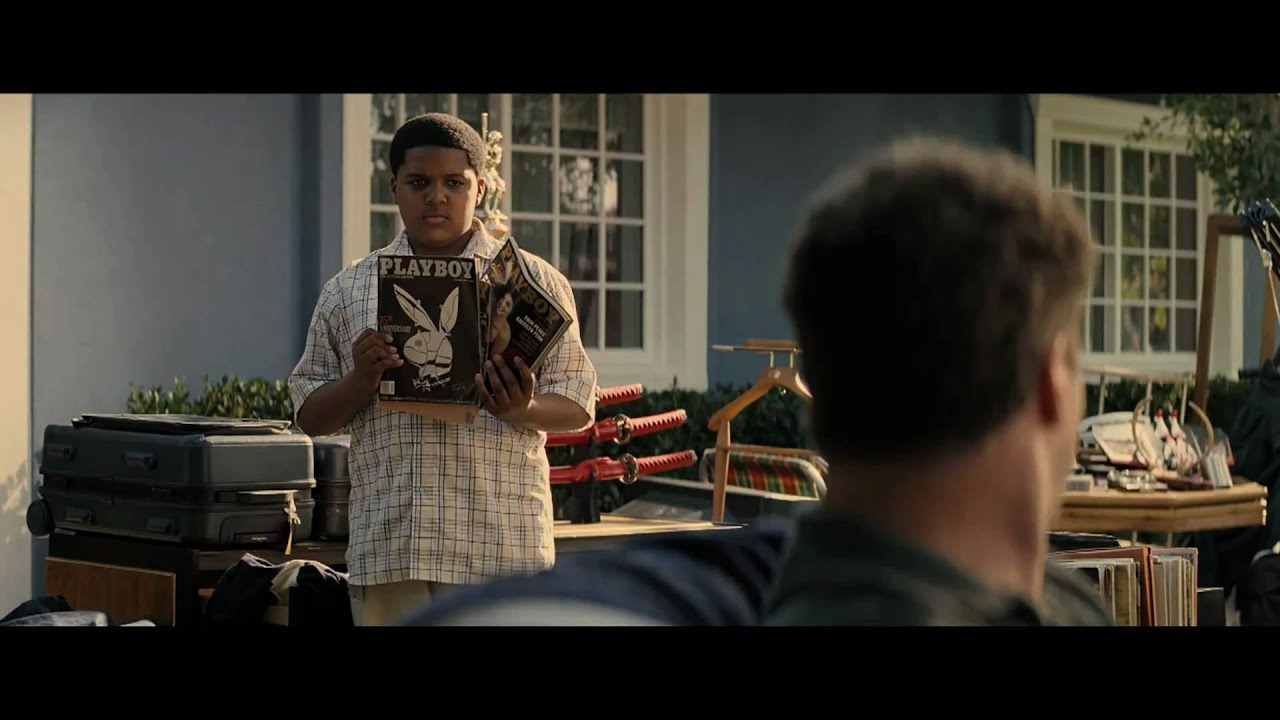
Still, Nick has his booze, which is his only tonic.  Circling Nick's yard on his bicycle is a neighborhood boy. Kenny (Christopher C.J. Wallace), and also observing him is his neighbor from across the street, Samantha (Rebecca Hall).  Nick has no intention of repairing anything or leaving his front yard, despite the warning from his AA sponsor/Detective Frank Garcia (Michael Peña) that Nick can't live in his yard. 

Nothing doing, Nick believes.  Why should he leave?  Garcia gets him a permit to hold a yard sale, which would give him cover for a few days to stay outside legally.  In the three days he has to hold this 'yard sale', Nick starts to bond with Kenny and takes him under his wing and starts taking some steps to pull himself together until getting a required third-act twist that leaves things in limbo.


Everything Must Go is based on the short story Why Don't You Dance? by Raymond Carver, so writer/director Dan Rush I imagine would have to stretch it out to make it the ninety-seven minutes it is, which is rather short in itself.  He chose to do so by giving us self-consciously quirky moments (Nick having to use Kenny's bicycle or having him witness the strange goings-on of his neighbors), and I've never been a fan of films that are deliberately quirky, that show us the offbeat side of life rather than let it spring from the situations the characters are facing. 

As seen in Everything Must Go, Nick is an extremely passive character who doesn't seem to understand that he is responsible for where he is at this point in life.  The film reminded me strongly of another movie about a man who appeared besieged on all sides by a cruel and unforgiving world but who could have solved his problems rather easily: A Serious Man.  Both films have as their leads men are remarkably passive and pathetic, who seem pretty resigned to their fate and who seem to believe their is no true resolution to their dilemma. 

There were moments that didn't ring true.  Chief among them is when Nick finds his old yearbook and sees an entry from a girl who wrote that he was a "diamond in the rough".  Even though it's been twenty years, the phone number still works, and thanks to that he's able to bicycle to the home of Delilah (Laura Dern); side note: all I could hear was that damn Plain White T's song, and if you have it in your head now, well, too bad.  Why should I be the only one to suffer?

While it was wonderful to see Dern again, and to be reminded of what a good actress she is, not only is she in the film for too short a time but it does stretch credibility that Nick would be able to find her after all those years. 


The moments where Everything Must Go attempted comedy fell flat, with the whole "get your freak on" antics of the neighbors almost forced, as if it were added to remind us that the film is suppose to be a comedy.  Near the end, we get a twist involving Nick's wife that also doesn't work; not only is it rather convenient that Nick is at the right place and right time to find out her secret, but is seems rather disingenuous, almost fake.  The twist isn't particularly good or clever, and comes so out of left field it is as if Rush had to write it in almost because it is expected to be there. 

I had big problems with the lead character.  Not only is he unwilling to do anything to help himself or have anyone else save perhaps Kenny to help him, he is remarkably passive.  I say this again and again because one would think Nick would be a mental adult to admit that he has to let go, metaphorically and literally.  However, Nick in the end doesn't pull his life together as it is pulled together for him by others namely Kenny, who has found in Nick a friend/father figure.  Everything Must Go from his viewpoint would have been a more interesting film in my view. 

This isn't to say Everything Must Go is a bad film.  What raises the film are the performances from an all-around cast save for Stephen Root as the sexually adventurous neighbor.  Ferrell gives a strong performance of a man who really doesn't care much, and although he still has elements of Ferrell 1.0 (his actions against the tires for example), he gives Nick a few moments of hope where this alcoholic may slowly put himself together.  The part in the film where he sees home movies of himself as a child (and thus, his life is really Daddy's fault) don't ring true but Ferrell certainly projects the mixture of hurt and regret Nick has. 

We get an incredible performance from Christopher Jordan Wallace.  He is best known for playing the younger version of his father, Christopher Wallace aka Notorious B.I.G. in the biopic of his late father's life.  Judging his performance in Everything Must Go, Wallace has a promising career as an actor should he choose to pursue one.   Kenny is a complex character: someone who sees in Nick someone to emulate but who also accepts the deep flaws the man has.   The character of Kenny could  have been either a sweet kid or a manipulative operator, but Wallace makes him a kid who wants to be more than what he is now, and who finds in Nick a role model and a friend.

Hall has good scenes with Ferrell as the neighbor who cares but who has issues of her own.  I suppose it's expected that she try to be friends with a man obviously falling apart in front of her, but she is sympathetic in her own struggles.  Curious side note: in Everything Must Go we never see Nick's wife (and only hear her voice once) and we never see Samantha's husband (only his back once).  The spouses are not the important thing in the film; rather, it is the fact that they provide a plot device that is.

Dern, as I've stated, was in only one scene, but any appearance from her is welcome.  Her Delilah was a good woman who cared for Nick because of a good thing he'd done in high school.  She, in short, was a real person, and while the situation didn't follow a pattern between her character and Ferrell in this case it was a plus, making Everything Must Go slightly smarter and more real than most films which would have focused on their relationship rather than make it one scene.  This I had no problem with.

One thing I had a big problem with was Peña.  His performance was rather quiet but again, that last-minute twist never rang true for me.  It took me out of the film entirely, and I left slightly displeased.

Everything Must Go has some wonderful performances (from Ferrell, Wallace, and Dern) but there really was no conclusion (not unlike a Coen Brothers film).  If it were not for that last-act "shocking" twist which I felt was tacked on, Everything Must Go would have been a good film about a man who has given up but for whom there is still a shred of hope that he will let go and move on.   On the whole, this is a film that will go, but not far.

DECISION: C+

Monday, June 6, 2011

Atlas Shrugged Part I: A Review

ATLAS SHRUGGED: PART I

Here's How You Objectivist...

First, some confessions.  Firstly, I have never finished Atlas Shrugged.  I tried reading Ayn Rand's epic novel and just couldn't get through it.  Second, I like to think that I have a rudimentary understanding of Rand's philosophy.  In my college days, while most of my classmates were drawn to the musings of Castro and Chomsky, I was slowly coming under the spell of this Russian 'radical for capitalism'.  Fortunately (or unfortunately, depending on your point of view), I was also intrigued by what the InterVarsity Christian Fellowship was also saying.  It was a struggle between Ayn Rand and Jesus Christ for my mind and heart--the latter won.  With all that, I can say that while I've heard of both Rand and her magnum opus, I do not know enough of it to embrace it with the fervor that Objectivists do.

Perhaps that is the problem with Atlas Shrugged: Part I, the film of a planned two-or-three part adaptation of the novel.  I wondered if people's views of Rand and her ideology affected how they received the film.  I have my own views on the film itself which I will share, but as I went home I thought that the best way to handle something as controversial as Atlas Shrugged was to have someone watch it who had no preconceptions, who would be able to judge the film solely on the final product and not on the baggage both the book and the author carry. 

With that in mind, I asked my best friend Gabe to see it.  He has never heard of Atlas Shrugged or Ayn Rand or Objectivism or anything regarding her political views.  In short, he was as pure a viewer as I could find.  I therefore asked him to watch it and give his own review.  This is the first time I've ever invited anyone to give their own review for any film, but Atlas Shrugged is a special case: one where the fervor it unleashes (both pro and con) may cloud a person's perspective as to how good or bad the film actually is.  In short, many people won't be able to see the forest for the trees.  I feel confident that I did, but in this case, let's hear from the audience.

And now, without further ado, I present the review for Atlas Shrugged: Part I as given by Mr. Gabriel Pedregon.  Gabester, take it away. 


What can we say about the future of our country in the way we are behaving right now? In this movie Atlas Shrugged, it displays what the country is headed for if we don't watch what we are doing. When the movie begins, it takes place in the future. I believe it was the year 2016. What I grasped from the beginning was a repeat of the United States history of economical torment. There was a second "Great Depression," as it was in the 1930s, and also a gas shortage which also happened in the late 1970s. At this point in viewing the motion picture, I intended to observe this film with a very intense attitude.

It started with a railroad company called Taggard Transcontinental and its business going downhill during the economic depression in 2016. It was run by the president James Taggard (Matthew Marsden),who apparently didn't know how to run "Jack Squat" when the depression hit. Later on, all the decisions were being made by his sister Dagny Taggard (Taylor Schilling), who did a lot of the negotiating and trying to make deals, while brother was sitting in the big office, not being productive.

Later on, Dagny Taggard clashed with a steel tycoon, who I thought was, the greedy Mr. Henry "Hank" Rearden (Grant Bowler). This person ran Rearden Steel. This was when I got really intense with the film and at a point I wanted to jump into the screen and just strangle the guy's throat. There was a point in the film where I really think the the bourgeoisie of America really just thinks of nothing but themselves and doesn't contribute to balance the crumbling society of the United States.

During the movie, many businessmen started disappearing when they received a letter and asked the question of: "Who is John Galt?" This point, it got interesting and had me wondering. Did this John Galt have the solution to the problem the country got into? Towards the end, Rearden made a deal with Taggard and they constructed a better railroad in Colorado and the train made record time and the rails didn't mess up. This did show that our industries can work well together by striking up deals to better benefit society. At the end, the answer seemed to have lied in this small town and by the time Dagny Taggard got to it, someone was burning it to the ground and that was how Part I ended. I felt like this movie was like a TV series, making you want more of what is to come next.

Overall, the acting was very well, and it did show the attitudes of industry executives and how much power they want to have in making their business a monopoly, like Rearden did. The directing was really good, I have to say and it was a good storyline. Director Paul Johansson told us a story in Atlas Shrugged:Part I of how our business big shots don't control their greed and spending wisely, we are going to find our country going into the commode for the years to come.

DECISION: B-

Thank you, Gabe. 
Now that I've read his review, I think it would be a good moment to stop and have a small chat about the film itself. 

Rick: Gabe, you didn't see Hank Rearden as a hero, yet you also seem to have contempt for James Taggert.  Who would you say is the hero in Part I?

Gabe: I really thought that Dagny Taggard was the hero, because like I had mentioned, James didn't do much but she was really out there and did come to terms with Hank Rearden and worked well with him.

Rick: Technically, that would make her a "heroine", but now I'm being nit picky.  I remember at one point you whispered an enthusiastic "Yes".  It was when Dagny and Hank decided to look for that super-engine.  Why were you so enthusiastic about them going off to find it?

Gabe: This showed me that this would have been the solution and a way they could maybe have that super-engine patened and used for making better engines for her trains, of course the steel rails from Rearden steel are good.

Rick: Now, let's move on to the technical aspects of Atlas Shrugged.  You thought the acting was good, and it might help to point out that Grant Bowler (Hank Rearden) was raised in Australia, yet his American accent was to my ears pitch-perfect, like when fellow Aussie Keith Urban sings flawless American country but when he speaks his native accent pours out.  Was there a particular performance that you thought was either good or bad?

Gabe: I would have to agree that Grant Bowler's character was outstanding for him being an Aussie and he truly displayed a perfect character of a big shot executive for an industry company, of course the question that I have is, "Who is John Galt?" don't worry, I won't go missing but I can't wait to find out in Part II.

Rick: I'm glad you brought up John Galt.  We never see him but curiously he is at the center of the story.  What do you think he is up to?  What do you think is his motivation?  I'm just asking for guesses since I know you haven't read the novel--believe me, it's a long, LONG, story.

Gabe: With John Galt, who knows, he could be a professor, a average Joe, or even a business man himself that might be starting a new type of economics to bail out the country of what has been happening in the year 2016 and he could be starting some sort of "cult" for business tycoons.

Rick: Very interesting, although we won't know for sure until Part II comes out.  Now, Atlas Shrugged is only 97 minutes long, as compared to The Green Hornet at 119 minutes or any of the Pirates of the Caribbean movies which clock in at over two hours.  Did you think the movie was rushed or that it might have expanded on the plot? 

Gabe: I wouldn't think that the movie was rushed, I think Johansson wants us to anticipate and wants us hungry for what is to come in the next part of the movie.

Rick: From your viewpoint, you though Atlas Shrugged was a well-made film with good (though not great) acting and an involving story that made you want to know what happens.  Is that accurate?

Gabe: In a sense, it all did come together in the end of Part I so I would say that it is accurate and is leaving me wondering till the next one comes out.

Rick: There's just one more point I'd like to go over before we conclude our little chat.  Now, before the movie, what did you know about Atlas Shrugged or its author, Miss Ayn Rand? 

Gabe: Believe it or not, I didn't even know this movie was based on a novel, which makes it even more fascinating that Paul Johansson used a novel to make a movie like this and teach us a lesson. To me, a good director is a good story teller, which I had learned in a film class I took my last semester of college.

Rick: So I take it you though Johansson was successful in telling a good story?  Secondly, what lesson did Atlas Shrugged Part I teach?

Gabe: Well I would say it is much of a story that has a lesson and his audience was intent for the United States and the first part taught us that somehow when our economy is in the toilet, we can sure work together to bring it back up again, but we should prevent it from happening and not having history repeat itself.

Rick: That's an interesting take and I'd like to pursue it a bit further.  How is the future repeating itself in the 2016 of the film? You've said that Dagny is the heroine of Part I, but who would you say is the villain?

Gabe: The beginning of the film just impacted me a lot before it actually started and that is what I have grasped from the film and of course what happened in the 30s and 70s is what was happening in 2016 and I would have to say the villain of part I would be society itself.

Rick:  Society?  You mean the American people themselves?  How are they the villains?

Gabe: Yes, because I would have to say we need to be careful in our investments and for tycoons to share their wealth instead of wanting more and making the market competitive and not so much monopolies.

Rick: Share the wealth.  Was that the message you got from Atlas Shrugged Part I?  That the tycoons and industrialists have a responsibility to give their fortunes to those who have less? 

Gabe: Well, I'd say to let others just have a piece of the pie.

Rick: That's an interesting take on the film.  Well Gabester, I think that about does it for your perspective on Atlas Shrugged Part I.  I can't thank you enough for agreeing to give me your input about the film.  I'm wondering if you'd like to do it again for Gentlemen Prefer Blondes should you go see it at the Plaza Classic Film Festival.  Would you be up for it?

Gabe: We'll have to see when it comes out and if it interferes with my work but yeah, and I would really like to see Godfather Part II  and Taxi Driver, but yeah this was interesting and I thank you for letting me be a part of your blog.

Rick: You're welcome, Gabester.  It was enjoyable to get a perspective from someone who didn't know about the book or its author. 

Now for a few Editor's notes.  The review for Atlas Shrugged Part I written by Gabe Pedregon will stand as the official review from Rick's Cafe Texan.  It has not been altered by me in any way: his words and thoughts are all his own.  Nothing in his section has been changed save for spelling and grammatical errors.

I will in a future date put in my own Personal Reflections on Atlas Shrugged Part I;  it should not be considered a substitute review.  Instead, it will merely be my own thoughts on the controversy the book, the film, and the author has created.  I will discuss some points Gabe did not cover (score, cinematography) and will put in my own view of the acting and directing, but those will be secondary to a reflection on factors not having to do with the film itself but on the emotions the film and its creator foster to both her admirers and detractors.

Sunday, June 5, 2011

X-Men: First Class. A Review

X-MEN: FIRST CLASS

Author's Note: This is the original review for X-Men: First Class.  I have revisited my original views on the film.  I've decided to keep this review as I originally wrote it. However, my views have changed since then. Scroll down to the bottom for a link to the updated version.

Let's start at the end: you can leave as soon as the credits start.  X-Men: First Class has no teaser scene at the end of the film, which is an innovation for comic book adaptations.  This sets it apart from the norm, and that would give it a certain quality.  The appearances from some of my newly favorite actors (James McAvoy, Michael Fassbender, Jennifer Lawrence), should also elevate the project and be a redemption against the bitter memories from both X-Men: The Last Stand and especially X-Men Origins: Wolverine.  Alas, this...reboot...prequel...whatever you want to call it, suffers from the sins of its predecessors: a lot of information that has to be rushed through in order to get to the climatic sequence at the expense of knowing who the characters are (both in terms of personality and even in name).

You couldn't have had two more different upbringings than those of Erik Lehnsherr (Fassbender) and Charles Xavier (McAvoy).  The former is a Jewish boy at a concentration camp in Nazi -occupied Poland, the latter a lonely WASP in upstate New York (a bit like Franklin D. Roosevelt, who was President in 1944 when we start the film).  Erik is terrorized (and it's strongly hinted, tortured) into using his powers to control metal by the Mengele-like Dr. Schmidt (Kevin Bacon).  Charles, meanwhile, has found a friend who, like himself, is different: he can read minds, and Raven can take the form of anyone, while her own features are a shocking blue.  Let's move on eighteen years.

Erik has made it his life's effort to hunt down as kill as many escaped Nazis as he can find (think of a Simon Wiesenthal with supernatural powers).  His Top Target is Dr. Schmidt, but more on him later.  Xavier, finishing his dissertation at Oxford, is too wrapped up in his work and the women he can bang to pay much interest to anything else, except perhaps Raven (Lawrence), who is like a sister to him.  In Las Vegas, CIA agent Moira McTaggert (Rose Byrne) is tracking down some shady business.  She makes a shocking discovery: the American general is meeting with Dr. Sebastian Shaw (Bacon), who can control fire, and more frightening, a woman in white turns into ice and a devil-looking man whisks said general back to the War Room from Dr. Strangelove.  Agent McTaggert knows only one person who can help: a newly-minted professor at Oxford who has written about genetic mutations.   


Soon, Xavier and Raven are recruited to track down Dr. Shaw, who is planning something nefarious with nuclear weapons.  Protecting him is Emma Frost (January Jones), said woman in white, who like Xavier can read and enter the thoughts of others.  Shaw has two other henchmen: the devil-looking one and another who can control wind.  Don't ask me for their names, only the devil-looking one had one that was used: Azalel (Jason Flemyng).  However, Erik has also tracked down Shaw, and in a battle gets in the CIA's way.  Xavier persuades Erik to join forces to capture a common enemy.  They also agree to find more mutants and train them.

The duo soon make fast work of it: finding four to join them, Raven, and even Dr. Hank McCoy (Nicholas Hough), who is 'in the closet' so to speak.  These kids are oblivious to the danger coming: Shaw basically creates the Cuban Missile Crisis in an effort to bring nuclear holocaust, and thus kill all the humans to leave the mutants to conquer the Earth.  Now, even with the defection of winged mutant Angel (Zoe Kravitz), the other youngsters have only a week to train to stop the Soviets from placing those missles in Cuba...and for Erik to avenge his parents.

The disappointment in X-Men: First Class is that at an incredible running time of two hours and twelve minutes, the film is far too long for the story it's NOT telling.  It's not an origins story because, like so many other comic book adaptations, we the non-comic book readers never get a chance to know who these characters are (sometimes literally: I had no idea what the backstory for the characters Banshee or Havoc are, let alone who Riptide is--that, I discovered, is the name of Shaw's wind henchman).  There is no real focus in X-Men: First Class, because director/co-writer Matthew Vaughn appeared too interested in showing off what his camera could do as opposed to how best to serve the story.

The best example I can give of this is at the training montage.  The constant splitting of the screen to create various rectangles and squares where we see the mutants learning to use their powers does lend it the appearance of a graphic novel, but it starts to become distracting (especially when you have two angles of the same event being shown simultaneously).  Another poor choice was to show the meeting room of the generals.  Granted, Erin Boyd and Sonja Klaus' set design is excellent in capturing the look of JFK-era 1960s, but what possessed Vaughn to make a deliberate copy of the War Room from Dr. Strangelove.  It might have gone over the heads of some of the audience, but I was half-expecting Mayor Quimby to send for the Esteemed Representatives of Television. 


I think the flaw that pushes X-Men: First Class down is what I always find brings any film down: too many hands on the script.  The credited writers number four (Vaughn, Jane Goldman, Zach Stentz, and Ashley Miller) and that is not counting the two people credited with the story (Sheldon Turner and Bryan Singer). That comes to six people who brought this story together, and the fact that so many people were working on the film shows in the final product.  We never get a true focus into what motivates the characters apart from Erik.

We're suppose to believe that Raven (aka Mystique) is Xavier's close friend.  However, she appears to have little conflict in leaving him at a critical point in his life to follow Erik (now Magneto).  The closest I can come to a reason is that they had a romance based on their belief that they are if not better than humanity that they shouldn't change who they are to suit non-mutants.  Given that for most of X-Men: First Class we've had a romance between Mystique and Hank (who becomes Beast), it seems even more strange.  We don't know why Emma Frost is so loyal to Shaw or (as stated earlier) why Angel dumped the group even after she saw one of her compatriots killed.  The story is so sprawling that the characters get short-changed, and we have to sacrifice character development for the next action scene.

Too much time is spent in Erik's Avenging Angel mode before we get him and Charles together, which is a disservice.  If we had a greater focus on the conflict between Erik's and Charles' worldview, we could have seen the rise of Magneto and Professor X.  We have a strong story between how these two friends became fierce rivals, but X-Men: First Class doesn't give us one.  What the film ends up with is a series of events tied together by having the same characters there, rather than having one event flow from another.

The performances were much better than the film deserved.  Fassbender showed the moments of humanity in Erik, and McAvoy makes his Charles a somewhat swaggering figure.  Lawrence did the best job as the conflicted Mystique, who cares for Charles but who has a worldview closer to Magneto than the Professor.  It's hard to judge the other performers since we never get a clear idea who they are as individuals (so much time wasted, yet so little shown in regards to their training).  I question how Bacon could go from German to American English without a trace of an accent (maybe nuclear energy affects the voice?).

There are also other things that made me dislike X-Men: First Class.  Henry Jackson's score had a terrible habit of announcing its presence, especially in the climatic sequence when Magneto raises the submarine and the ensuing battle.  It would be nice to have music that serves the story as opposed to being big and self-important.  I wasn't too thrilled with one of Dr. Shaw's lines when he raids the secret compound where our young mutants are.  "If you are not with us you are technically against us."  From what I know, George W. Bush is no longer President--you can stop using his line as code for "this guy's evil".

I also may be a bit nitpicky here, but when we see a map of the Cold War combatants we see U.S.A. in blue and Russia in red.  If it's the 1960s, shouldn't the map technically have read "U.S.S.R." or "Soviet Union"?  I suppose because the majority of the target audience did not live during its existence and remember the U.S.S.R. as something from ancient history, they wouldn't have particularly noticed or cared.  Yet, I digress.

Finally, there are two cameos from previous X-Men stars: one in the mutant recruiting montage and one after, the first delighted audiences (I wasn't particularly thrilled) and the second went by so fast most didn't even notice it.

In short, X-Men: First Class had a lot of potential to do what good science-fiction/fantasy can do: address real-life issues by placing them in another context.  Sadly, more interest was spent on raising a submarine than in giving the audience true motivation for the character's motives (or even to give them names).  There has to be something wrong with a film where one is more interested in the fact that Brendan Fehr is in the movie than in the movie itself.  Fehr is a good actor (here, playing the Communications Officer), but my mind went to how much I enjoyed his work in the too-short and quickly cancelled Roswell than in what is suppose to be a major battle between the Soviets and Americans, and later between the humans and the mutants.  In the final analysis, First Class needs a refresher course.

ORIGINAL DECISION: C-
REVISITED DECISION: B-

Update: Since the writing of this review, X-Men: First Class was revisited as part of the Fifth Anniversary "Second Look" Series.  The grade has been changed from C- to B-. 

Friday, June 3, 2011

Cavalcade (1933): A Review (Review #221)

CAVALCADE (1933)

Stars With Boers, Ends As A Bore...

Cavalcade is a remarkably boring film.

There is a good story desperate to get out and capture how history has overwhelmed and tied two British families: the upper-class Marryots and their servants the Bridges.  However, it appears that at times Cavalcade was less an adaptation of the Noel Coward play and more a film of the play itself.

We begin on New Year's Eve 1899.  The upper-class Marryots and their servants, the Bridges, although separated by class and status, are facing a similar circumstance: both Robert Marryot (Clive Brook) and Alfred Bridges (Herbert Mundin) are going to fight in the Boer War.  The women: Jane Marryot (Diana Wynard) and Ellen Bridges (Una O'Connor), must endure their absence and the agony of not knowing whether their husbands will come back or not.

They do come back, none too affected, and go their separate ways: the Bridges to open a tavern, the Marryots to continue whatever upper-class recently-knighted families do.  The Marryots have two sons: Edward (John Warburton) and Joey (Frank Lawton), while the Bridges have a daughter, Fanny (Ursula Jeans).  Edward is the more responsible of the two, Joey (or Joe when he grows older) the more happy-go-lucky one.  Fanny from childhood appears to have one dream: to sing and dance on the stage.

The changing world between the death of Queen Victoria in 1901 through the First World War and up to New Year's Eve 1933 are experienced by the Marryots and Bridges, with their lives intertwining in the years between.  The sinking of the Titanic all through the Great War affects both groups, with Joey and Fanny finding each other right after war breaks out.  Most of the men die, but the women continue.


If there is a flaw in Cavalcade, and it's a big one, is that for all the events that overtake the families, we never really stop to see how all these events affect them as people.  The entire project has them more as slightly disinterested bystanders to events both major and minor, with very little insight into their true reactions and feelings.

For example, Edward and his love, Edith Harris (Margaret Lindsay), are on their honeymoon aboard a massive ship.  I suppose that because we're given the date of April 14, 1912 on the screen we should know what ship they are on.  Put aside the fact that now there's no real mystery as to their fate: the bigger problem is that this cataclysmic event to which the Marryots are intimately impacted by barely registers a blip with Edward's parents, brother, or Edith's mother Margaret (Irene Brown), Lady Marryot's best friend.  No matter what event comes across their lives, it never seems to register on any of them as individuals.  They are all rather removed from it all, so we never see them, in particular the Marryots, as more than cardboard figures who can at most only commentate on tragedies rather than be impacted by them.

I put that lack of emotion not on the stiff-upper lip mode of British life, but on the fact that director Frank Lloyd had to rush on to the next event in Cavalcade without really worrying about how losing a son and daughter-in-law would impact the family.  I think the title Cavalcade is erroneously: a better title would have been Catalogue, since the film seems more interested in making note of the fact that certain events happened around the families as opposed to have affected them. 


Take for example after the Bridges leave the Marryots to open their tavern.  We start Cavalcade by seeing Alfred as a good working-class chap, loving to his wife and infant daughter, enthusiastic about life and the future.  Next time we see him, he's a lush.  We never see his transformation, what, other than having ready access to alcohol, got him to that state.  He isn't a brute, but certainly less caring and kind than he had been.  However, this 360 degree turn appears to be of no interest to Lloyd or screenwriter Reginald Berkeley.

The audience doesn't need to know how he got to degenerate to his sorry state: we just accept it.  We don't have to know how Alfred's end affects Fanny, or how Edward's end affects Sir Robert and Lady Marryott, and exactly why and how did he end up with a knighthood in the first place, or Joey.  None of these things, the emotion behind the events, matter.  The only thing that matters in Cavalcade is that they were around to witness them.   As a result, both the Marryots and Bridges rarely become ordinary people caught up in the tide of history.  Instead, they just happen to be around.

As I stated earlier, Cavalcade suffers from Lloyd's uninspired direction.  Often, the sets looked like sets, and while that can be forgiven in many films, in Cavalcade it only enhanced the rather stage-bound effect the film overall has.  The film looks as if it were taking place on a stage and someone opted to roll cameras. The best, or worst, example is when Mrs. Bridges and Lady Marryot meet for the last time to discuss their children's affair.  It looks like a set, and that instantly removes you from a sense that this is real.  It looks like you are watching it from a theater seat, to where you focus more on that than on what is happening between the characters, not that their weak direction doesn't help in that department. 

Very few times were we allowed to go outside, and when we did, Lloyd appeared more interested in showing us a song-and-dance pier show than the encounter between the Widow Bridges and Lady Marryot and their respective families. 


For sheer performances, few films appear to have such terrible ones as Cavalcade.  I won't put the blame on the actors themselves: O'Connor and Mundin did the best they could as the working-class Bridges, and their scenes together were quite effective.  However, the younger set appears to be like most of the film: blank and empty.  The scenes between Jeans' Fanny and Lawton's Joey are especially stilted.  We never get a sense that these two are desperately in love in spite of their shared history.

Like most of Cavalcade, we have to fill in the blanks as to what is really going on.  They are the primary example of this disjointed film: when they meet as adults, we get the suggestion that they find themselves drawn to each other, then the lights fade and when we see them next, we're suppose to believe they are passionately in love. 

The worst performance in Cavalcade is, to my mind, ironically the only one singled out for an Oscar nomination as Best Actress: that of Diana Wynard.  Thorough all of Cavalcade she is very mannered (not unlike Luise Rainer), given to staring out into the distance, in short, acting for the camera as if she were acting on the stage.  It only enhances the effect that Cavalcade has: one where it appears so stage-bound it never becomes real or authentic.  She faints at one point, but sadly, it comes off looking fake.

I don't want to fault Wynard herself. I fault Frank Lloyd, who for some reason never seemed interested in his performers.  She delivers a closing speech where she almost appears to be speaking directly to us but at the same time appears to be speaking to no one.  Would it have killed Lloyd to move the camera a bit for a close-up of Wynard, a reaction shot of Brook, a montage of her memories?  A little more imagination would have saved Cavalcade, but Lloyd didn't have any. 

Cavalcade at its heart has the potential of a good story: two families caught up in the maelstrom of history sweeping them into modernity and its chaos.  As executed here, Cavalcade is a slow, lumbering, stagy, dated film that is more a "Greatest Events" series than a true family story.  There are a few good moments (the montage of World War I was quite effective) but in the end Cavalcade will make for a dull evening with a Coward. 

DECISION: F

1934 Best Picture: It Happened One Night

Please visit more of the Best Picture reviews.