Saturday, April 8, 2017

The Case For Christ: A Review

THE CASE FOR CHRIST

I should start off my review for The Case For Christ by admitting a few things.  First, I am an evangelical Christian (one who at times needs A LOT of work on that).  Second, I've read the book The Case for Christ, the exploration of various objections to the truth of Christianity and answers to them.  Third, I've met the subject of the film, Lee Strobel, though that meeting was inauspicious: he just smiled, signed my book, and didn't converse with me as he did with others. Fourth and last, I saw The Case for Christ at a special screening arranged by the church I attend.

I mention all this because I want to be clear that while I am a Christian (though extremely flawed and sometimes lacking in many respects), I am and have always been an 'art before theology' critic.  A film with a Christian bent will not get an automatic pass from me.  I've been highly critical of other Christian films when I felt they were clumsy efforts that would not work for either a secular or faith-based audience. 

With all that being said, The Case for Christ is another step forward for Christian-themed films, one that balances evidence for the truth of Christianity with one man's internal and external struggles with life in general.

Lee Strobel (Mike Vogel) and his wife Leslie (Erika Christensen) are pretty happy in their lives: she a housewife and Lee an investigative reporter for the Chicago Tribune.  With a daughter and another child on the way, they seem happy, until their daughter nearly chokes to death at a pizza joint.  Fortunately, a nurse, Alfie Davis (L. Scott Caldwell), is there to save her.  Lee and Leslie are grateful, but they get a strange response from Alfie.  She tells them not to thank her, but thank Jesus.  Alfie and her husband had planned to go to another restaurant, but she sensed that God wanted her to go to the one they were at instead.

For the Strobels, who are atheists, this news is surprising.  Lee dismisses it as mere coincidence, happy as it may have been.  Leslie, though, is shaken up by this experience and begins to question her atheism.  She reaches out to Alfie and soon starts attending her church (a converted theater of all things), to seek out her answers.

Over time, Leslie embraces Christianity as the truth, which appalls Lee.  He figures she's about to join a cult of some kind and deals with his wife's growing faith with sarcasm, cynicism, and alcohol.  Thank goodness Lee has his career to ground him, in particular a police shooting he's investigating.  He also has a mentor who is a fellow atheist, but a coworker who is a Christian.  Lee, now conflicted about how to deal with his wife's faith, decides the best thing to do is simply disprove the reality of Christianity, in particular the Resurrection.

No Resurrection, No Christianity.

Sure, easy as that for an investigative reporter in 1980 to bring down the whole of Christianity which has stood for a mere 2000 years.  Easy as pie.
Strobel now does a dual investigation: that of the police shooting and the Case Against Christ.  Leslie eventually is baptized, but the strain in their marriage continues.  There'd be more if Leslie knew what Lee was up to, as he travels the country, seeking out historians, psychologists, and medical experts to question the various aspects of Christianity, especially the central doctrine of The Resurrection.

He speaks to historians who show him that while, for example, the Gospels mention different women at the Tomb on Easter morning, each Gospel mentions that it was women who found the Tomb was empty.  For a Judaic society that did not value the testimony of women, the fact they all mention women as being the first witnesses is completely at odds with the idea of 'reliable witnesses'.  Strobel is also reminded that often in court cases, witnesses to a particular event will not always have the exact same story and that when they do all agree on every detail, there is the suspicion of conspiracy.

One of those Strobel seeks is Dr. Roberta Waters (Faye Dunaway in essentially a cameo, but a welcome presence nonetheless).  Unlike the others he interviews, she is agnostic, but being a fellow traveler is no help for Strobel.  Waters dismisses the idea of mass hallucination among the 500 people who saw Christ post-Resurrection, saying that the idea that such a large group could be mesmerized to hold the same dream would be a greater miracle than the Resurrection itself.  She also hits a nerve with Strobel, pointing out that many of the great skeptics and atheists (Freud, Sartre), suffered from what she calls a "Father Wound": a distant relationship with their fathers.

Lee Strobel has his own 'father wound', being openly hostile when his father, Walter (Robert Forster in another cameo) visits his new grandson.  That wound might never heal, as Walter dies while Lee is in California learning that the Gospel accounts of the Crucifixion not only are sound but make the idea that Christ survived the Resurrection (that He merely fainted and was revived or the Swoon Theory) is at odds with how Roman crucifixions worked.

Lee, struggling with his own father issues, breaks down when he sees that the remote, distant father he's come to hate carried a clipping announcing Lee's hiring at the Tribune in his wallet, and kept a detailed scrapbook of all of Lee's articles, starting from when he was a child.

After two years of investigating, of attempting to find holes in Christianity, he not only finds a dead end, but finds that the evidence has convinced him of the truth of Gospel.  Just like C.S. Lewis (the 20th Century's greatest apologist in my view), Lee Strobel ends as a convert to the faith of Jesus Christ (though perhaps not as dejected as Lewis). 


Among the highpoints of The Case for Christ is that it does not bog itself down to being a sermon or dismissive of either a pro/anti-Christianity worldview.  Screenwriter Brian Bird had a hard task in that the actual book The Case for Christ is not a biography but the results of Strobel's investigation.  As such, he had to mix what Strobel found with the Strobels' story, and he did this well.  If you take away the end result (a book that has influenced people to become Christians in the same vein as Lewis' Mere Christianity), you have both a domestic drama of a marriage facing a curious crisis as well as a subplot of Strobel's investigation into the cop shooting, an investigation that takes an unexpected turn when he reexamines the evidence.

The two investigations come together when he finds that his original conclusion was wrong. When going to the wrongfully imprisoned man at the hospital to tell him he was wrong, he tells Strobel that it wasn't that he couldn't see the evidence, it that he didn't want to see it. 

The duality of this statement hits Strobel hard.

Bird and director Joe Gunn were also wise in how they portrayed the Strobels pre-conversion.  Unlike other Christian-based films where atheists are downright monstrous, these atheists are actually very nice people, loving towards each other, caring parents and partners, not perfect, but regular people.  The Christians in the film are also not perfect, and in that respect The Case for Christ does wonders in showing people of faith and non-faith as human.

As a digression, Hollywood would be wise to follow this film's lead and not portray Christians, particularly evangelicals, as uneducated, bigoted, or psychotic.

Mike Vogel gave an extremely rich and moving performance as Lee Strobel (even if he was saddled with a fright wig and mustache that were almost comical in their 'it's still the 1970s' look: a scene of him using hairspray caused laughter).  I remember Vogel from Bates Motel as the hot-but-sleazy Deputy, and it's good to see that he has really moved beyond into giving a performance that shows a flawed but loving man, curious about the world but still with deep hurt.  His scene at seeing how proud his father was of him is extremely heartbreaking.

Christensen, an actress we don't see often on film, also does well as Leslie.  In her sincerity, in her questioning, and in her love for Lee, Christensen is strong, and she makes Leslie strong too (for example, she isn't a demure little wife: when he shows up drunk, she lets him know she'll have none of it).

It is a shame though to not have Dunaway or Forster work together, or have them have one scene in the film.  Still, they do make the most of their small screen time.

The Case for Christ is not a dry recitation of Strobel's tome (though we do hit on certain points).  It's about one family's journey, and not necessarily a journey into faith.  It's about their journey to finding each other again when one changes and one doesn't.  More about two lives than a lecture, The Case for Christ is about love...in many forms.  

Leslie and Lee Stroble (Left to Right): Born 1952


DECISION: B+

Friday, April 7, 2017

Feud: And the Winner Is Review


FEUD: AND THE WINNER IS...
(THE OSCARS OF 1963)

It looks like the bitter rivalry between Academy Award winners Joan Crawford and Bette Davis is coming to a head.  For these two divas of the silver screen, nabbing an Oscar is a mark of respect, power, prestige, and one-upmanship.  Now, with And the Winner Is..., we see both the machinations for and against someone getting this prize.

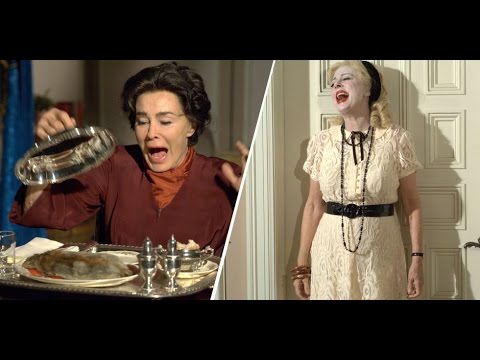
Joan Crawford (Jessica Lange) is livid beyond anything that her What Ever Happened to Baby Jane? costar Bette Davis (Susan Sarandon) received a Best Actress nomination for the film and she didn't.  Things aren't helped by the fact that Davis is in her own way flaunting her nomination: at a press conference, when asked about Crawford's snub, Davis bitchily responds, "Define 'snub'". 

Quips like that essentially wave the red flag at a charging bull, and you don't want to wave them at someone as shrewd as Crawford, who is a terror when it comes to her own career.  Davis is the odds-on favorite to win over Anne Bancroft (The Miracle Worker), Katharine Hepburn (Long Day's Journey Into Night), Lee Remick (Days of Wine and Roses), and Geraldine Page (Sweet Bird of Youth). Crawford knows this, and is despondent.  Should Davis win, she'll be the first actress to have three Best Actress Oscars, something that had not been achieved.  Crawford's lone Oscar, for Mildred Pierce, now won't be enough comfort against that grand achievement.

Enter Hedda Hopper (Judy Davis), Crawford's frenemy and more important, Davis' enemy.  In a case of 'the enemy of my enemy is my friend', the two cook up a scheme to know Davis out of the running.  It's a classic case of 'good cop/bad cop': Hopper will badmouth Davis to various Academy members while Crawford will talk up other nominees.  Two candidates are selected for this charm offensive: Page and Bancroft.  Unlike the cantankerous, reclusive Hepburn or the 'television actress' Remick, both are primarily theater actresses (thus generally unknown or with no clout in Hollywood).  As such, they are no threat to Crawford.

Adding fuel to the fire, Crawford contacts both Page (Sarah Paulson) and Bancroft (Serinda Swan) to accept the Oscar on their behalf.  Crawford essentially cajoles Page into not going, while Bancroft, tied up in a play, is more enthusiastic and respectful about Crawford's offer.

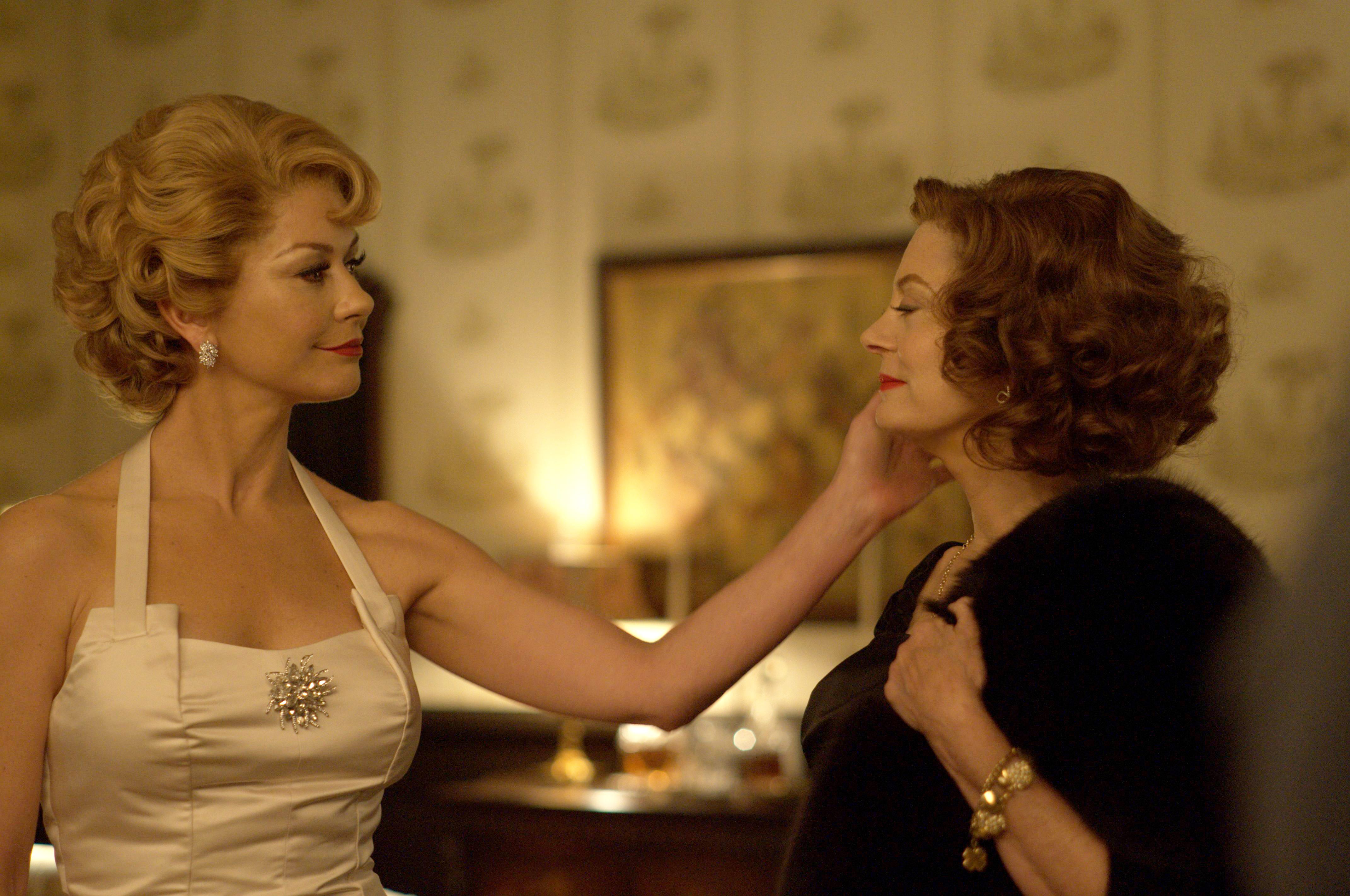
Davis, however, isn't without friends in the industry, respected friends like fellow two-time Oscar winner Olivia de Havilland (Catherine Zeta-Jones).  Away in Paris, de Havilland really doesn't want to go, but Davis asks her to come with her.  De Havilland knows a thing or two about feuds (and as a digression, will Feud producer Ryan Murphy ever tackle the infamous de Havilland-Joan Fontaine war which makes the Crawford-Davis war look like a tea party?).

De Havilland agrees, and does her best to prop up a nervous Davis, who feels that a third win will put her back on top.  Davis at heart wants to win, but is also terrified of what a loss might mean for her career.

At last, it is Oscar night.  Crawford prepares for this night as if it were D-Day: a phalanx of wardrobe and make-up people come to make her into a Silver Goddess.  Crawford, snubbed and determined to see her mortal enemy brought down, is determined to make this night her own.  She is so invested in destroying Davis' chances that she ignores the advise of her friend, George Cukor (John Rubinstein) to call of the war.

Davis and de Havilland wait while the night goes on.  Crawford, for her part, has taken over the green room to make it into a party...her party.  She graciously welcomes the other winners, and makes a splash when presenting Best Director (having bullied her way into it, ordering the Academy President to let her present either Director or Picture).  De Havilland warns Davis not to go to the green room, but Davis goes and the two bitter rivals glare at each other. 

Crawford presents Best Director to David Lean for Lawrence of Arabia, and at last, Maximillian Schell presents Best Actress.  Davis, Crawford, and de Havilland all await.

And the winner is...Anne Bancroft for The Miracle Worker.  Davis momentarily moves towards the stage and suddenly stops, as if gasping for air.  Crawford coolly puts out her cigarette and takes that long walk to the stage.  De Havilland just stares in disbelief as Joan Crawford 'wins' Best Actress over Bette Davis.

De Havilland and Davis go back home, stunned at the turn of events.  Davis angrily acknowledges that this was essentially her last chance and she got outplayed.  Crawford, who hogged the limelight over the actual winners that night (Gregory Peck in To Kill a Mockingbird, Patty Duke in The Miracle Worker, Ed Begley in Sweet Bird of Youth, and Lean), goes home and places the Oscar next to her own, a sad symbol of such much.

The idea that the Oscars are awarded strictly on merit alone is a laughable one, but cute nonetheless.  Academy members are wined and dined and flattered and gently pushed, prodded, and manipulated to vote for certain people.  It may not be as wild as the late 1960s, where such abysmal turkeys as Doctor Dolittle and Hello, Dolly! received Best Picture nominations based on the insane campaigning, but Oscars are still not given out without some undue influence.

I'll go to my grave insisting that Eddie Redmayne's win for The Theory of Everything was a result of a brilliant campaign where he parlayed an 'aw-shucks' persona, this slightly bumbling but endearing and sweet young man into a shameless win.  It also helped that he is British, played a real-life figure, and a disabled figure: three things the Academy loves to reward.

It was a cold, calculated, mechanical performance, but Redmayne knew how to win and like Crawford, played the game in his favor well. 

His efforts to get a second consecutive Oscar for The Danish Girl blew up in his face (good): playing up this notion that giving him the Oscar for playing a transgender was a triumph for equality met opposition from actual transgendered people, his performance was more criticized than TOE, and his revelation of his 'generosity' (he "spontaneously" paid for other actors' rent) cut no ice with Academy members who aren't fond of giving back-to-back Oscars to people.  It also seemed a little too convenient to have this angelic information appear at the height of Oscar season. 

The more things change...yet I digress. 

And the Winner Is...is a greater showcase for Zeta-Jones as de Havilland, and like Lange, she has not convinced me that she IS Olivia de Havilland.  To me, she doesn't sound or particularly look like de Havilland, but she gives a strong performance as the loyal friend who is not overwhelmed by the machinations of the film industry.  Paulson's Page came across as a bit of a wimp, while Swan's take on Bancroft, though only one scene, was stronger: Bancroft was awed by Crawford coming to her show, but also aware what was behind her gesture.  Perhaps because Paulson had to play the scene over the telephone and Swan had Lange to react to onscreen made the difference.

This was Lange's best hour on Feud: her catty, bitchy left-handed compliments to everyone, the way she bullied everyone who stood in her way without anything but her sheer force of will.  When the Academy secretary tells the president, "Joan Crawford's headed this way and she's not slowing down," it's both amusing and a sign of Crawford's single-minded determination to bring her hated rival down.

As a side note, I don't think Crawford really was as bitchy and self-centered as And the Winner Is...makes her out to be.  Yes, she was self-centered, but I don't think she hogged the photographers' attention to the detriment of the actual winners to the level Feud showed. 

The episode is also full of wonderful, brilliant moments, such as when Crawford prepares for war...I mean, the Academy Awards.  There is something almost surreal about the montage: part elegant, part Satanic.  Kudos to Ryan Murphy for this and another fantastic moment: a long tracking shot where Crawford leads Lean backstage to the press (though, unless Lean wasn't there in person to accept for Bridge on the River Kwai, why would he ask where to go, since he had won Best Director once already prior to Lawrence of Arabia).

My one complaint would be that Murphy opted not to let Crawford be real bitchy to Davis, sweeping past her to accept Bancroft's Oscar with the words, "Step aside. I have an Oscar to accept".  Maybe he thought it would be gilding the lily, and he figured his take was more dramatic, but it has been documented that Crawford verbally bitch-slapped Davis that dramatic night.

In my own Oscar retrospective for 1962, I would have voted for Davis to win over Bancroft, though each nominee was excellent and worthy of a win.  And the Winner Is...is as close to reality about how these awards can be won and lost not on the work onscreen, but the one behind the screen.

8/10

Next Episode: Hagsploitation

Bates Motel: Inseparable Review


BATES MOTEL: INSEPARABLE

As Bates Motel winds down to its conclusion, I find my enthusiasm flagging.  Inseparable, from what I see, is my lowest-rated episode.  It's not to be thought of as the worst episode in the whole of Bates Motel: we had some standout work by Freddie Highmore, coming fully out of Vera Farmiga's shadow, and one truly shocking and understated twist.  However, I find myself not really caring much on what happens, particularly when we got started.

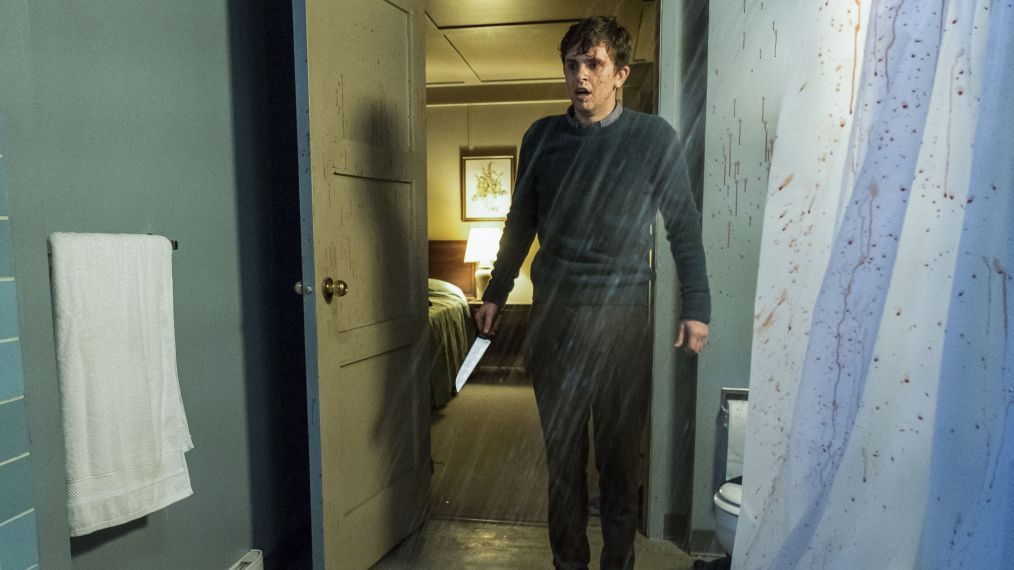
Sam Loomis (Austin Nichols) has been murdered in the Bates Motel shower by Norman Bates (Highmore).  Enter "Mother" (Farmiga), that deranged product of Norman's completely insane imagination, helping him get rid of Sam's body.  They find that their usual body-dumping site, a lake, is being overrun with police, who have found at least one body (that being of Jim Blackwell, who was sent by Norma's widower Romero to kill Norman).  They manage to find another dumping spot, but Norman is beginning to panic.

His panic about Blackwell (and maybe others) grows when Sheriff Greene (Brooke Smith) comes a calling.  She just comes to tell him that Jim won't be bothering him, but he suspects that Greene will put two and two together.  It's time for Norman to have essentially a total break from reality: he takes Norma's body from the freezer at the house and buries it, but he also knows that "Mother" is with him.

Someone who makes a return appearance in Norman's life is his half-brother/uncle, Dylan (Max Thieriot).  Already angry about not being told of Norma's death (and flat-out refusing to believe it was a suicide), he goes back to Bates to not just find out the truth but try and help Norman.  He finds that Norman has been off his meds for well over a year at least.  In an effort to help, he goes to the pharmacy to try and have it refilled.

This is where we get the real shocking twist: Dr. Edwards, Norman's psychiatrist, hasn't filled the prescriptions because he has been missing for a year!  Given that we 'saw' a run-in between Dr. Edwards and Norman two episodes ago, the discovery of Dr. Edwards' apparent end now makes us wonder whether anything we've seen of late is real or part of Norman's highly diseased mind.

Dylan also meets Madeleine Loomis (Isabelle McNally), who comes to the motel to see if Norman has seen Sam, who has disappeared.  Dylan's fears are now full-blown, and at the nice dinner Norman has prepared, Dylan calmly tells his brother that Norman is ill and needs help.  He all but begs Norman to take at least one pill that Dylan had filled to prove he is back on.  At this time, Norman is simply not himself or anyone: Norman essentially channels Norma, telling Dylan that he loves him, but that there is room for only one son.  With that, he whacks Dylan with a glass bottle, and all Hell breaks loose.  "Norma" lunges at Dylan with a butcher knife, but "Norman" grabs her in a desperate effort to save a stunned and disbelieving Dylan.  From Dylan's perspective, we see Norman literally struggling with himself, Norman obviously seeing something that isn't there.

After 'Norman' wins the fight, he does what he has always wanted to do: he calls the police to inform them that he, Norman Bates, has murdered Sam Loomis.

Oh, and Sheriff Romero (Nestor Carbonell) is still recovering from his gunshot wound and plotting revenge against Norman Bates.

Perhaps one reason why Inseparable is my least favorite (though still good) Bates Motel episode is that the show still wants to have it both ways.  On the one hand, it trumpets how they are not going to be slaves to the Alfred Hitchcock film by sticking with the story the movie had.  On the other, the opening shot of a shocked/dead Sam Loomis is an exact replica of Janet Leigh's shot after her character was killed in Psycho.  I don't get how one can say 'we're going for something different' and copy the source material at the same time.

There's a difference between nodding to the original and straight-up copying it, which I don't mind.  I do mind when you say 'we're going to be different' and then go for the same.

I also had pretty much forgotten the Romero subplot (which I still wasn't sold on: the idea that after getting this massive blast, Romero would still be strong enough to go hours and miles before calling the ambulance to get some surreptitious help and then hole up in a friend's house to recover).

The big news here is the revelation that Dr. Edwards, far from helping Norman in an impromptu session, is actually missing (and we figure, not just merely dead but most sincerely dead).  I think it would be wildly out of left field if the good doctor just happened to die, but why would and how did Norman murder him?

Did Dr. Edwards, an openly gay man, spot 'Norma' at the White Horse Bar?  Did Dr. Edwards try to help Norman see that he was trying to be his own mother (and Norman/Norma kill him over that)?  Did the good doctor even try and take advantage of things by 'picking up' Norma only to be killed when 'Norma/Norman' figure things out? 

Maybe it isn't as exotic as all that: perhaps Dr. Edwards merely trigger something in a session that got him killed later on (it's highly unlikely that if Edwards had disappeared, the police wouldn't have looked at his list of patients as potential suspects).  We're going to need a very good reason why the audience was misled in such a dramatic way.

If we look at Inseparable in terms of acting, you are going to have to wonder how Freddie Highmore won't get an Emmy nomination for his simply fantastic work on Bates Motel (he probably won't: the show has been consistently ignored over such beloved things as Game of Thrones or House of Cards.  Maybe if it were called Motel of Bates...)  This particular episode had Highmore do more than just Norman Bates (though he did that incredibly well).  He also, in his performance, had to 'play' Norma, and had to play someone who knows the truth but still struggles with his own unhinged 'reality' (acknowledging that his mother is dead but also fully accepting she is with him too).

Highmore is so good that it leaves poor Thieriot, never the best actor around, kind of fumbling.  Thieriot is hit and miss: he is quite good when softly, quietly confronting Norman about his issues, but after he's struck on the head he doesn't have much reaction to just how crazy things are.  We'll give him some leeway in that he was momentarily knocked out but you'd think more shock or horror or sadness would be seen.

With things now finally in the open, and Norman about to be locked up, the last three episodes of Bates Motel will either end this fantastic series with a bang or a whimper.  Inseparable is more whimper than bang, but some great performances and genuinely surprising twists make it still a good episode.  Good, not great.


5/10

Next Episode: The Body

Thursday, April 6, 2017

Eight Men Out: A Review


EIGHT MEN OUT

Say It Ain't So...

In the past four years, I've developed a passion for baseball.  I don't pretend to know the difference between an ERA and an RBI, but I find baseball to be a beautiful pastime: simultaneously elegant and athletic.  It's a sport with a long legacy, where ethics is held up as something sacrosanct.  Yes, you have your arrogant fools and divas (from the bigoted but brilliant Ty Cobb to the brilliant but immodest Bryce Harper) but for the most part, baseball players are held to a higher standard.  This is at the heart of why those players caught up in the 'Steroid Era' are the subject of fierce debate whether or not they should be enshrined in Cooperstown.  This is why Pete Rose, who has the most hits of any baseball player, still finds himself on the outside looking in, denied a spot among the immortals.

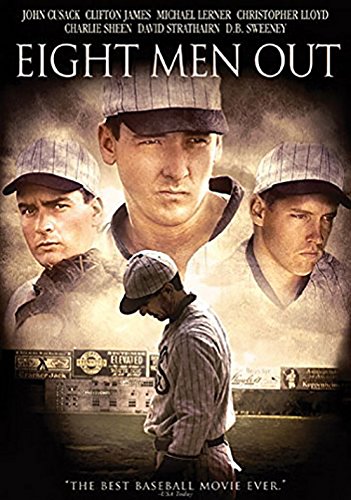
And this is why, on Opening Day for the El Paso Baseball Team, I'm reviewing the film based on the first massive baseball scandal: the so-called Black Sox Scandal, which ruined lives, brought major changes to America's pastime, and has condemned some great ballplayers to a Hall of Shame.  Eight Men Out is a strong drama, perhaps not as in depth as the story might call for, but one that gets at you emotionally if you love the sport.

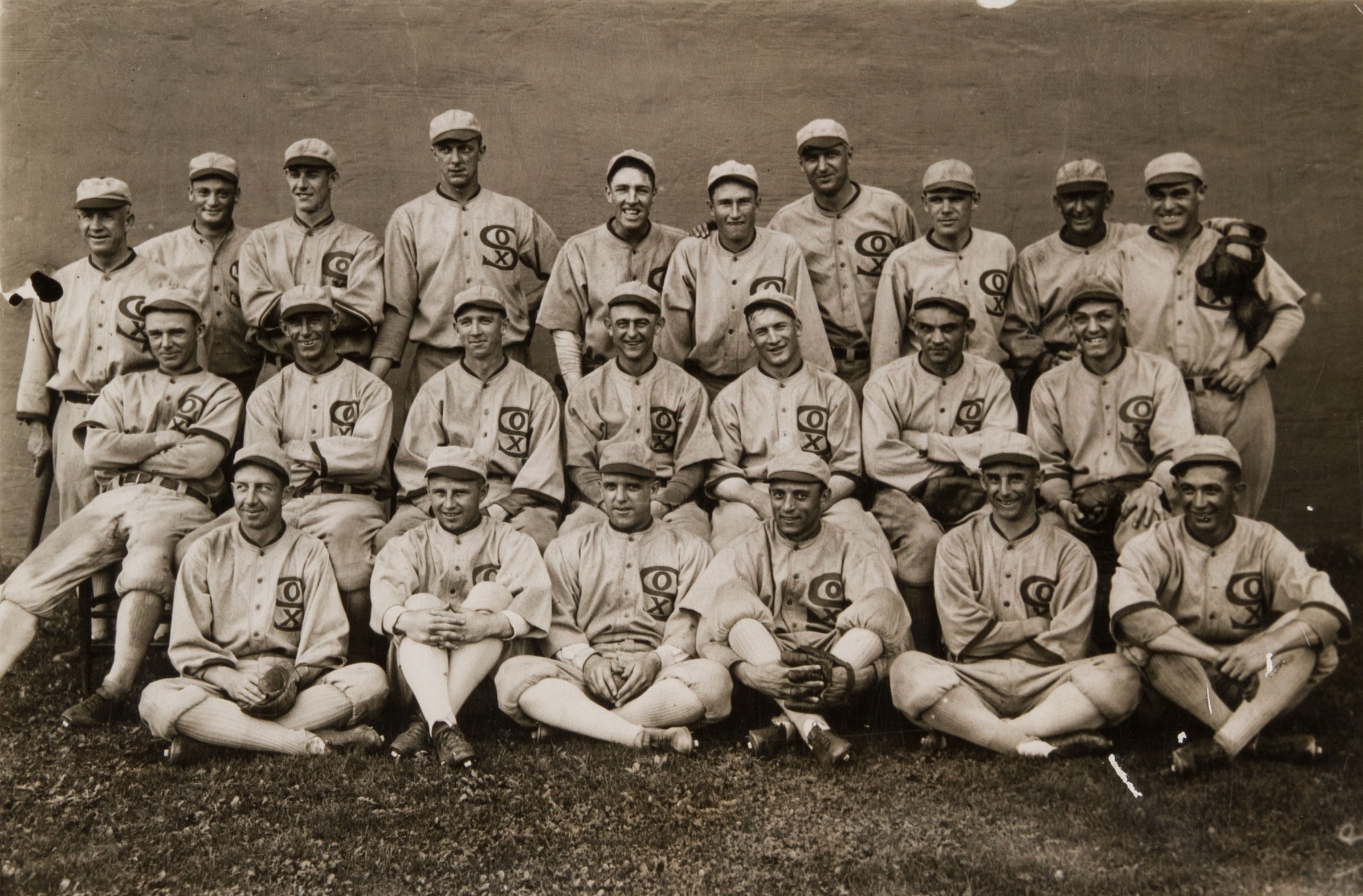
It's 1919, and the Chicago White Sox are poised for a World Series Championship.  However, behind the veneer of greatness is a team held in virtual contempt by its owner, Charles Comiskey (Clifton James).  He routinely bails on promised bonuses to his players while enriching himself.  Two gamblers, "Sleepy" Bill Burns (Christopher Lloyd) and Richard Edson (Billy Maharg) see an opportunity for a quick win: by bribing the White Sox to throw the series to the underdog Cincinnati Reds (then Red Legs), they could make a fortune.

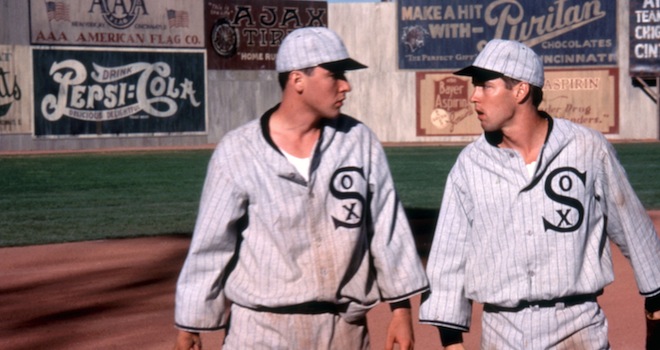
They soon start recruiting men of various enthusiasm.  Two of them, Arnold 'Chick' Gandil (Michael Rooker) and Charles 'Swede' Risberg (Don Harvey) were the main conspirators, in turn luring and pushing others to take a jab at Comiskey by making the money he routinely squelched on with the bribes.  Other conspirators, such as pitcher Eddie Cicotte (David Straithairn) go in on the fix to make the money Comiskey wouldn't give him, and two others, Buck Weaver (John Cusack) and 'Shoeless' Joe Jackson (D.B. Sweeney) appear to go in but then either back out or not have thought things through.

As the World Series gets under way, major betting against the White Sox alarms the gamblers that the fix is already an open secret, especially since there are hints that Arnold Rothstein (Michael Lerner), the most powerful crooked gambler, is financing the deal.  This sudden shift, along with the actual abysmal playing from the Sox, piques the curiosity of two old-time sports writers, Hugh Fullerton (Studs Terkel) and Ring Larder (the film's writer/director, John Sayles).  They drop hints that there's something rotten at Comiskey Park, but the Sox manage a comeback of sorts (primarily because they haven't been paid). 

Weaver and Jackson in particular do play well, much to the irritation/consternation of the those involved in the fix, but in the end the White Sox lose the Series.  Things appear to settle down despite the whispers that the White Sox threw the World Series, but after a lot of digging by Fullerton and Larder, the scandal explodes.  Comiskey and the other managers, terrified of what might happen if things are seen as anything less than on the level, rush to Judge Kennesaw Mountain Landis (John Anderson) to oversee baseball, but the wily old judge pushes hard terms on them.  He insists on being a Commissioner of Baseball with a lifetime contract and total power over the sport.  They acquiesce and the trial of the Eight Black Sox goes forth.

Fullerton and Larder are aware that this is Chicago, a city as corrupt as it is windy.  Weaver insists he knew of the fix but didn't join it, and Jackson, illiterate and a bit naïve, seems perplexed by it all (at one point, he quietly signs a confession with an X).  Being Chicago, the jury finds the men not guilty, and they believe that their careers will go back.

Kennesaw Mountain Landis, Baseball Commissioner, has other plans.

He bans the Eight from baseball for life for either being in on it or knowing about it and not reporting it (though curiously, a 'Clean Sox' player, college-educated Eddie Collins, played by Bill Irwin, did know something but wasn't banned).  At the end, we go to 1925 Hoboken, New Jersey.  Incognito, Buck Weaver, who constantly petitioned whoever the Commissioner was for reinstatement, goes to a game where a player named "Brown" does remarkable feats.  A fan insists it's Joe Jackson, and while Weaver recognizes his old teammate, he says it isn't him.


There's just a sense of unavoidable tragedy in Eight Men Out right from the beginning when we see them in triumph after winning the pennant and a ticket to the World Series.  Eagerly awaiting their bonus, they find to their disappointment that the celebratory champagne brought to them is there 'bonus'.  Adding insult to injury, the champagne is flat.  Sayles does a brilliant job in showing things rather than telling.

Sayles' mastery of subtlety is there in that moment, when we can see why these essentially decent men (with the exception of Gandil, who was just pushy and belligerent).  We see it when Sayles as Larder reads from a newspaper column denouncing him and Fullerton over 'fake news', the article saying better time would be spent investigating 'long-nose, thick-lipped gambling elements', a not-subtle anti-Semitic comment on the Jewish Rothstein. 

We see it in a bravura sequence, where we see the various figures involved in this story wander in and out of various rooms in a hotel hallway, some innocent, some guilty, and all working unwittingly against the other.  Only once does Sayles break from that tracking shot, to go into one of gambler's rooms, but the whole sequence spins wildly and brilliantly, letting us see where things are going in regards to the suspicions and the conspiracy.

Sayles also directs his cinematographer, Robert Richardson, to do something interesting at the end in the 1925 Hoboken game.  The scene has a light sepia to it that the rest of Eight Men Out doesn't, calling into it a sense of nostalgia

At the heart of the performances is Cusack as Weaver, an interesting choice given that 'Shoeless' Joe Jackson tends to be the best-known of the Eight Men Out.  He gives a brilliant performance: a man driven by desperation, first for money, then for his own sense of honesty and victory and genuine love of the game.  As the trial goes on, he meets two boys he's bonded with (one of whom idolizes Weaver so much he's been given the nickname 'Buck' in honor of his hero).  Cusack has a monologue about baseball, about what it is to him, means to him, and it just about breaks your heart.  Cusack went for soft over grand, and it worked.  Strathairn, who was also a major character, brings a forlorn tragedy as Cicotte, who in one instant both helped and damned his family.

Sweeney did a good job as the more naïve Jackson, who was bothered by the fact he had no real education and could not read or write (something fans pro-and-con knew).  Jackson, however, was not a major or central figure in Eight Men Out, so it's hard to judge exactly what he knew and/or when he knew it.

As a side note, I personally support lifting his ban and allowing for his induction into the Baseball Hall of Fame though I see why that has not happened.  However, should someone like a Barry Bonds, Roger Clemens, or Alex Rodriguez be inducted, the BBWA will have no moral leverage to insist that Jackson or Rose be kept out but Bonds, Clemens and/or Rodriguez should be let in.  Yet I digress.

Sayles also did a great job in directing himself as Larder (his spoof of the song I'm Always Chasing Rainbows into I'm Always Blowing Ball Games to the White Sox a wicked mocking of what he knew but couldn't yet prove);, Terkel was a delight as the wily old sportswriter (though given Terkel was a writer, the role came naturally to him).

A surprisingly good performance came from Bill Irwin, whom I know as a song-and-dance man.  He handled both the drama and the athleticism well, the latter not surprising since he is a trained magician and acrobat, but the latter genuinely surprising given his long reputation as a clown.  It shows Irwin is an untapped talent.

Since we have many players, it would be impossible to give each of their stories equal time.  It's a movie, not a documentary.  This might explain why Jackson and Sheen's Felsch essentially disappear for long periods, and despite the importance of the line in the annals of sports and American history, when Shoeless Joe is approached and we hear, "Say it ain't so, Joe!  Say it ain't so," I didn't feel just how tragic that query was.

Little things, granted.  In something as wide as the 1919 Black Sox Scandal, it would be difficult if not impossible to cover everything.  Eight Men Out does as good a job as possible, and for those of us who love or have grown to love the sport of baseball, it isn't a story that leaves you angry.  It makes you almost want to cry.


DECISION: B-

Wednesday, April 5, 2017

Feud: More, Or Less Review


FEUD: MORE, OR LESS

It once was the work onscreen that we judged.  Now we have the backstory, in this case on What Ever Happened to Baby Jane?, the first and last time two notorious rivals and divas, Bette Davis and Joan Crawford, would work together.  Their bitter fight come to a bruising climax in More, Or Less, the fourth episode of Feud: Bette and Joan, and the specter of Oscar hangs over our two dueling divas.  Behind their war over the ultimate status symbol in Hollywood, More, Or Less is also about the difficulties of being a woman in the film industry, both in front of and behind the camera.  Sadly, the more things change...

Joan Crawford (Jessica Lange) and Bette Davis (Susan Sarandon) have private fears about What Ever Happened to Baby Jane?, sensing that if it flops, their careers are essentially over.  Will people watch these two old women (old by Hollywood standards), who are considered has-beens in the industry, revel in grotesque acts against the other?  Things do not bode well for either of them: despite having just made a film, neither can find more work.

Baby Jane director Bob Aldrich (Alfred Molina) has his own worries; he wants to catapult to bigger and better things, but Warner Brothers head Jack Warner (Stanley Tucci) essentially tells him he isn't good enough to be among the great directors.  Aldrich rejects all of Warner's scripts as Baby Jane knockoffs, but he is stuck when forced to direct a Western starring Frank Sinatra.  Ol' Blue Eyes is a monster and nightmare to work with: demeaning to everyone, dismissive of Aldrich as director, and not afraid of threatening gangster violence on anyone who doesn't cater to his diva temperament.

This, therefore, isn't the best time for Bob's loyal Girl Friday, Pauline Jameson (Alison Wright) to try and break into the business as a writer/director.  Pauline has an unexpected ally in Mamacita (Jackie Hoffman), Crawford's loyal Girl Friday who tries to get Crawford to work on Pauline's picture, with Pauline directing.  Crawford, however, has fears about trusting a novice director and female at that, for her first vehicle after her second 'comeback' (Mildred Pierce being her first), and unlike Pauline, Crawford remembers how women directors were shunted off once silent pictures went the way of all flesh.

To the surprise of everyone, What Ever Happened to Baby Jane? becomes a monster hit.  Crawford and Davis are relieved and delighted, but the former soon begins to panic.  She senses that Davis, with the showier part, is running away with the success, and the potential for an Oscar nomination.  Crawford is particularly terrified and infuriated by the idea that Davis will get a nomination and she won't.  Should Davis actually win, it will be her third Oscar, something no other actress had yet accomplished (the fact that Crawford had won only once being more fuel for her wrath). 

Davis goes full-force into promoting Baby Jane, making appearances in theaters and television (even belting out a novelty song called What Ever Happened to Baby Jane?, a brave act given she had no singing voice).  Crawford retreats into bitterness and the bottle.  Davis takes anything offered her, even a guest spot on Perry Mason (which given it's television, Davis isn't thrilled about).

Pauline finds her own dreams of moviemaking gone, but Mamacita, her secret ally, tells her over pie (something the health-conscious Crawford forbids her at home, but cannot stop her from having outside her watchful eye) not to fret.  Mamacita has been studying the growth of the American population, particularly on how women are slowly outnumbering men.  She tells Pauline that by 1970 the studios will be forced to hire more women directors and make more films geared towards women because of the majority of the audience will be women.

They'll be forced to cater to women, and Pauline's time will come.

Pity Mamacita never saw the rise of the Marvel Cinematic Universe or the growth of both the teen boy and Chinese market...

In the end, the Oscar nominations come out.  Joan Crawford is told to sit down by Mamacita, and we hear her wail of torment...

I find that what has been said about films and/or television shows set in the past is true: they are not so much chronicling what has passed but what is now.  Intelligent television and film (for example, The Americans, also on FX) may take place in a particular time and place (such as the 1980s or early 1960s), but they are in fact commentaries about the world now. 

Feud: Bette and Joan may be about the bitter rivalry between these two great actresses.  It is also about how the entertainment industry still struggles with giving women true parity with men on both sides of the camera.

We see this with Pauline, someone who hasn't been strictly in the background but who in More, Or Less emerges as a major part of the story.  Alison Wright is simply an undiscovered treasure (and in a curious turn, one of the major elements of what made The Americans such a great show). Wright balances the mixture of steeliness and vulnerability, between pushing for her own career and conceding the near-impossibility of it.

Pauline is burning with ambition.  She is bright.  She is capable.  She doesn't even want any special favors.  What she wants is a chance, a chance she won't get. 

She has all the accruements that would make for a reasonable chance at a writer/director career but one: she is a "She". 

What is interesting, to me at least, is how Crawford, who knows how hard the industry is to women, will not help a fellow woman.  Her reasoning is logical: after having her biggest hit in years, where there is now hope of a third wind to her career, she would be putting herself as a hostage to fortune by following up Baby Jane with a picture by an unknown, particularly from a woman at a time where a female director was almost unheard of (in the 'Golden Age', Dorothy Arzner was about the only female director of the era).

Mamacita's analysis is perhaps one of the most insightful regarding the state of the film and television industry today.  She (through screenwriters Gina Welch and Tim Minear) predicts that studios will have to eventually bend to giving women more jobs and make films with a female perspective based on the fact that the audience will be majority-female.  However, that precisely hasn't happened. If anything, Hollywood is becoming more resistant to female-centered films, female directors, and female executives (people like Sherry Lansing and Kathryn Bigelow notwithstanding).

Mamacita's prediction failed, in my view, because studios discovered the teen market, particularly the teenage boys, who wanted action over nuance, explosions over character, and sex/titillation over gender equality.  The roles for women have not improved, even when presented in more 'positive' light (Black Widow, the only female member of The Avengers, not only had the indignity of not having her own action figure upon Age of Ultron's release, but in that film, she was essentially relegated to 'love interest/damsel in distress').  The fact that so many films are made from comic books, dominated primarily by young men, with no end in sight for the Cinematic/Extended Universes, shows how current film will not bend to Mamacita's logic.

I've digressed greatly, but it's an endlessly fascinating topic: how despite being the majority of the population, women still are greatly underrepresented in film.  Add to that a limited shelf-life for actresses once they hit forty (something Crawford and Davis faced), and you see that Feud's subtext of the ageism and sexism in Hollywood is still as strong as ever.

One more digression: in the past decade, the youngest Best Actor Oscar winner at 32 was either the same age or older than five Best Actress Oscar winners during the same time period.  I said older, not younger.  Think on that: that five out of ten Best Actress Oscar winners were actually younger than 32.


More, Or Less again brilliantly manages to show the similarity between Crawford and Davis right from the beginning when both meet with their agents.  Crawford's phalanx of agents can't (or won't) get her new roles, and Davis is astonished and horrified to find someone old enough to be her son (and looking every bit his 22 years of age) to be her representative. In this opening scene, there's even a nod to Mommie Dearest, when Lange as Crawford appears in a fur hat and black clothes similar to the ensemble Faye Dunaway wore when meeting with Pepsi-Cola executives (and infamously shouting at this group of men when told she was being retired from the Board of Pepsi, "Don't F*** with ME, FELLAS!").

Lange as Crawford makes her almost sympathetic in her fear and paranoia about Oscar, and Sarandon as Davis gives us someone to respect, one who is hustling hard to make Baby Jane a hit.

In a smaller role, Toby Huss captures both the voice and cantankerous nature of the Chairman of the Board.

Again, this framing device of having Olivia de Havilland and Joan Blondell giving a joint interview in 1978 prior to the Academy Awards doesn't work for me.  I'm still hoping things will work out well for this bit, but so far, not buying it.
      
For its wit, its strong performances (particularly Wright), and for its insight into how the past can illuminate the present, we can't get enough More, Or Less.

9/10

Next Episode: And the Winner Is...(The Oscars of 1963)

Tuesday, April 4, 2017

Kong: Skull Island. A Review (Review #901)


KONG: SKULL ISLAND

Kong: Skull Island is a curious film in that it is not a sequel or prequel to all the various King Kong films made before (though one wonders given the 1970s setting it would have been closer to the 1976 remake).  However, in its own way, Kong is setting up to be the first part of a major franchise, which fills me with more horror than the big monkey himself.

It's 1973, and scientist Bill Randa (John Goodman), along with his protégé Houston Brooks (Corey Hawkins) get U.S. government help in exploring the mysterious Skull Island, a realm which thanks to a perpetual storm cloud keeps outsiders at bay.  They get military help, headed by General Preston Packard (Samuel L. Jackson), who is eager for one last battle now that the Vietnam War is winding down (a war he's convinced we could have won).  He takes some of his men on this mission, even if means pulling them out from R & R.

Also going is former British Special Forces officer James Conrad (Loki himself, Tom Hiddleston), who is now a tracker for hire wiling away his life in the dens of Saigon.  He senses both danger and something Randa is hiding.  Our final explorer is Mason Weaver (Brie Larson), a photojournalist who has been using her lens to rally opinion against the war. 

They go into Skull Island, where the landing party is almost immediately attacked by a fierce monster: a gigantic ape that smashes their helicopters and kills some of the soldiers.  The group is split into two: one with General Packard, the other with Conrad.  Packard is determined to save his men, particularly Chapman (Toby Kebbell, who is also the body of Kong), and use the bombs he has to blow this thing out.  Conrad, for his part, wants to lead those with him out of Skull Island.  He encounters the natives, as well as Hank Marlow (John C. Reilly), a World War II pilot who in the pre-title credits crashed on Skull Island along with a Japanese soldier.

Like those Japanese soldiers alleged to be stranded on various islands, unaware that the Emperor had surrendered, Marlow is completely unaware of what the world is like now versus 1944.  He knows about Kong (the monster) as well as the creatures who killed Kong's family and are threatening all on Skull Island.  Kong, in his way, has been the only line of defense against these 'skullcrawlers'.  Marlow, Conrad and those with him help put a rudimentary boat together to sail downriver and make a rendezvous point to rescue them.

Packard, for his part, is determined to rescue Chapman (who is already dead).  The two groups eventually meet, attempt to save Chapman, get into battles with the 'skullcrawlers', and split over the fate of Kong.  It's a battle royale to see who makes it out alive and who wins out in this war for the Island of the Ape.

It's not a spoiler now, but in a post-credit scene Conrad and Weaver are questioned, where they are told that Kong is only the beginning of a whole slew of monsters, and we are teased with images of others that look similar to such creatures as Mothra...and Godzilla.

So, essentially, Kong: Skull Island serves as one of the world's longest trailers for another movie that culminates this Extended/Expanded/Cinematic Universe thing overwhelming cinema.  Only instead of comic book superheroes, we get big monsters.

That's one step for civilization...


I perhaps should be more despairing over the state of movies now, given that starting from Iron-Man back in 2008 (wow, less than a decade ago), more and more films are essentially long trailers and teasers for other films set in the same universe (Marvel Cinematic Universe, DC Extended Universe, and now whatever this is called).  That might be a good discussion for another day, but for the moment, I was simply too entertained by Kong: Skull Island to give such things much thought.

It wasn't as if they didn't come to me, particularly when we start our post-credit scene.  I found that part exceptionally irritating in its efforts to be smarter than the audience: we start with just Hiddleston's luxurious voice intoning, "You're just going to sit there, in the dark?"  I don't mind a little winking at the audience, but this bit from screenwriters Dan Gilroy, Max Borenstein, and Derek Connelly looks and sounds like outright taunting and mocking of audiences trained, almost Pavlovian-like, to get a little bit of business after the closing credits.

I might call this bit a slight misstep, one that nearly caused me to downgrade Kong: Skull Island.  The fact that I'm being teased with more films in this universe as opposed to just having an independent story without thought about making it part of a larger, more epic story also made me question whether I should rate it as highly as I did.

However, as I've said, I had too much fun with this film, which doesn't hide the fact that it's pure escapist fare, an action/adventure film that keeps things moving and has some comedy to go alongside the action.

That comedy comes courtesy of Reilly, who brings a gonzo mania to his stranded Marlow.  When telling the story of Kong, he says 'skullwalkers' with a very serious tone...before admitting that he tried to make the name sound ominous because he couldn't come up with anything more frightening to call them.

Pretty much all the performances were solid.  I commented that Kong: Skull Island was essentially Hiddleston's audition tape for James Bond, as he played the strong, tactical Conrad with a mix of intensity and sensitivity.  Jackson has never been better as the take-no-prisoners Packard, who isn't a clichéd mad general but someone with a bit of a backstory (a man who feels this might be his last chance at doing good in the military).


Larson, I don't think, was given much to do, and while to her credit she wasn't a damsel in distress she wasn't as strong as perhaps her character could have been.  I think some of the other supporting players had more to do (such as the duo of Shea Whigham and Jason Mitchell as the somewhat whacked out officer and his more straitlaced partner).  Thomas Mann, in a smaller role as the more naïve young trooper, had I think more to do.  It's a bit of a pity given Larson's talent, but at least she wasn't relegated to screaming woman in need of rescuing...most of the time.

Director Jordan Vogt-Roberts for keeping things flowing fast and furious (though maybe the journey to Skull Island took a bit longer than some might have wanted, I found no issue with it).  However, some things I can take issue with him and with Kong: Skull Island.

It was too enamored of its time: constantly reminding us that this is set in the 1970s (the music, the references, even a Richard Nixon bobblehead in the helicopter...did they have such things back in 1973?).  It is so in love with the era that one might have retitled the film Apocalypse Kong, given how the journey almost wants to think Packard has become some form of Colonel Kurtz.  Some of the deaths (particularly when one soldier gets stabbed through the mouth from a giant spider's leg) were particularly gruesome that belies the PG-13 rating.

Also, as in a lot of things in film, some things are just a little too convenient (such as Chapman's head with its dog-tags literally falling at Conrad's feet).  Their efforts at trying to draw parallels between Conrad's father dying in World War II and Marlow's yearning to return to his own son were either going nowhere or just there (and one feels bad for Marlow, who upon returning to his family in 1973 will have to wait another 43 years to see his beloved Chicago Cubs finally win a World Series, making him around 94 years old when the Cubbies managed to break the Curse of the Goat).

Yet I digress.

For whatever flaws it has, Kong: Skull Island did what it set out to do: be a fast-paced, pretty solid exciting action film that was entertaining, added a touch of comedy, didn't demand much from its audience, and yes, set up more MonsterVerse movies.   I can't complain about a film for meeting its goal.

DECISION: B+


Monday, April 3, 2017

Bates Motel: Marion Review


BATES MOTEL: MARION

I'd call Marion, the most recent Bates Motel episode, a classic...a classic bait-and-switch.  Perhaps it is because the shower scene from Psycho is so iconic that anyone trying for it (even the ill-fated remake) would be hard-pressed to equal it, let alone top it.  The episode is called Marion.  Those of us who know the story of Marion Crane and her visit to the Bates Motel know that she will meet a certain fate.  Bates Motel, however, opted to try something completely different.  Did it work?  Did it not work?  Will Psycho fans be surprised? Disappointed?

Let's take a look.

Marion Crane (guest star Rihanna) has at long last, checked into the Bates Motel, determined to help her lover, Sam Loomis (Austin Nichols).  Motel owner Norman Bates (Freddie Highmore) is conflicted in more ways than one.  First, he is erotically drawn to Marion (who wouldn't?), which is usually where "Mother" (Vera Farmiga) will pop up to kill the object of desire).  Second, he knows that Sam is married, something that Marion is unaware of.

The two slowly bond, and eventually Marion asks for Sam's address.  Norman has the unenviable duty to tell her of Mrs. Loomis, which Marion doesn't believe until she goes to his house and sees Sam attempting to soothe Madeleine (Isabelle McNally).  So enraged is Marion that she smashes Sam's car windows.  To make things worse, when Sam runs out to find out what's going on, he sees Marion storming off into the Oregon night...and Madeleine promptly locks him out.

It isn't just Sam who is having a bad night.  Earlier that night, Marion has opted to shower...and lives to tell the tale.  When she comes back to the motel, Norman almost hysterically helps her pack and leave, urging her to start a new life away from Sam and from her past.  She drives away with the money and won't answer her phone.  Norman answers his, where he finds an enraged half-brother/uncle Dylan (Max Thieriot), furious about not being told Norma was dead.  Dylan insists Norma wouldn't have committed suicide, but Norman won't budge.

Into all this enters one Sam Loomis.  He goes to the motel to find Marion, hoping to do something.  She isn't there.  After the awful night he's had, he opts to take a shower too.  Unbeknown to him, Norman continues his argument with "Mother" (i.e. himself), him struggling to admit she isn't there.  "Mother" reminds him that Sam is like Norman's father, a cruel man who abuses women.

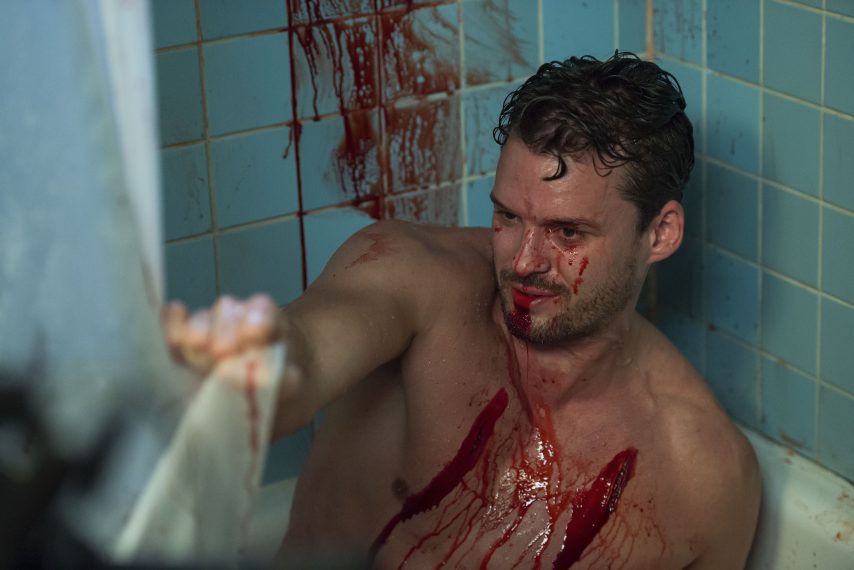
With that, Norman takes a knife, goes to Room One, and stabs SAM in the shower to death.


In the five years Bates Motel has been on, we all knew that eventually Norman would have to hit the showers.  However, I don't think anyone expected anyone other than Marion Crane to bite the dust.  I guess none of us counted on the idea that you just can't kill Ri-Ri.

Changing the established story to have our adulterous Sam be the one to meet the grisly fate, I imagine, will be one of those divisive moments for fans of both Psycho and Bates Motel.  The show has already changed quite a bit already: in the film, Sam wasn't married if memory serves correct.  He also didn't interact with Norman until after Marion was murdered.  As a result, I figure a good number of people will see Norman, dressed as himself, killing Sam rather than Marion to be a stroke of genius.

Others, I figure, will be displeased that it was not the object of desire that spurred "Mother" to kill (or even that "Mother" didn't do the killing).  Rather, "Mother" merely manipulated Norman to kill a man who represented his father, a curious version of patricide.  It almost makes it look justifiable, given how Sam cheated on both women.  No one should be killed for committing adultery and being reprehensible, but there you go.

I tend to fall on the latter side of the issue.  Lust, up to now, was a primary motivation for the killings, and to see Sam stabbed was a bit of an anticlimax, particularly again since the title of the episode is Marion.  I'm not sold on the idea that switching victims (and letting Marion live) was brilliant.  It also makes me wonder whether Sam was that unable to defend himself.  I figure Sam was physically stronger than Norman.  Yes, Norman did take him by surprise and he had a butcher knife coming at him, but unlike Marion he didn't have to worry about trying to both protect himself and cover his nakedness. 

Part of me still thinks Sam could have defended himself and not gotten himself killed.

Perhaps good, perhaps bad was in how Marion teased the audience with the infamous shower scene when Ri-Ri hit the showers, if memory serves right in the middle of the episode.  People were waiting for The Big Moment...only to not have it come. 

Perhaps if Marion had been killed in the way everyone expected, we would have been essentially watching a remake of the rest of Psycho (though it seems unlikely Madeleine or even Sam would have hired a detective to find Marion, and we had Dylan waiting in the wings).

Complicating things in the 'we've gone original' is that Marion didn't completely go original.  As Sam is dying, he copies the movements Marion did in Psycho (in shock, moving her hand to grab at the shower curtain, pulling them down as he/she collapses out of the shower, the look of disbelief etched on his/her face).  You can't say they opted to break with tradition while simultaneously adhering to it. The victim may have changed, but the imagery remained the same.

Let's move on to the performances.  Highmore again really excels as Norman Bates, particularly when he struggles with his sanity as he insists Mother isn't real until 'Norma' so overwhelms him that he surrenders.  He even has a moment of comedy when discussing with 'Mother' about being functional despite his insanity.

"The world is full of mad people who function, many of whom are Heads of State," he tells her.  Was that a sly dig at President Trump?  Who is to say?   

His scenes with Rihanna were also well-acted, particularly given how he, the trained actor from childhood, could have overwhelmed the relative newcomer.  However, both did real well when they talk quietly.

Ri-Ri is not a great actress (or even an actress given her few credits and primary career as a pop singer), and it shows in her last scene with Highmore when she expresses her disappointment in herself by getting involved with Sam.  However, credit should be given where credit is due, and Rihanna handled herself quite well.  It wasn't a great performance, but a good one, showing that perhaps with more training she might make a legitimate second career on screen to compliment her already successful one with a microphone.

Nichols too did well as the overwhelmed Sam, making him almost sympathetic.  Almost.

Curiously, it is the trained Thieriot whom I wasn't convinced with.  His scene where he discovers Norma's dead was not the greatest performance (I felt it a little blank), but he bounced back when he calls to confront Norman.  There was a rage there that pushed him forward.  I've always gone back and forth on both Thieriot and Dylan, and Marion was no exception.

Finally, back to The Change.  Ultimately, I wasn't convinced it was good.  It wasn't terrible and I'm not enraged that established lore was changed.  I just wasn't overwhelmed about its 'brilliance' either.  It was a bit more graphic than Psycho (we did see the knife plunge into Sam's back) but part of me didn't have that 'shock' that I did when I saw Marion in the shower.  I also don't know if having Roy Orbison's Crying during the scene helped or not (again, I lean on the 'not' side). 

I've read the reasons for the change, and I can understand them, even up to a point agree with them.  If we had Marion killed, we might have essentially seen the final Bates Motel episodes lose steam by remaking Psycho.  Still, I'm not fully on board with this alteration.  Could Marion have been killed and still have had major changes?  We already have with Norman killing Sam sans drag. 

I can see why things were done, but I'm still not there yet.


6/10

Next Episode: Inseparable