Friday, July 14, 2017

Robin Hood (1922): A Review

ROBIN HOOD (1922)

It is a sad fact that silent film stars are not as well-remembered now as they were then.  A case in point, I think, is Douglas Fairbanks.  Before sound took complete control, Fairbanks, along with his wife Mary Pickford, were the biggest stars in the world.  Even after the introduction to sound, neither Fairbanks or Pickford should have faded away.  Both had excellent voices and were trained on the stage.  However, perhaps they were too tied with silent films to have the careers in sound they should have had.

It would have been interesting to imagine Fairbanks recreate his Robin Hood in a sound film, since despite the popular idea that Errol Flynn made Robin Hood into the mirthful man of action, Flynn consciously or not owes a great deal to how Fairbanks played him.  Robin Hood was a romp, with Fairbanks giving what can only be called a robust performance as our noble outlaw.

King Richard the Lion-Heart (Wallace Beery) is going to go on Crusade.  He appoints Robert, Earl of Huntington (Fairbanks) as his second-in-command.  Huntington is a master jouster, general bon vivant, but unsure around women.  However, His Majesty plays matchmaker, and the Earl soon finds himself in love with the fair Maid Marion (Enid Bennett).  It's off to Crusade, but it was a poor decision, for the King's brother, Prince John (Sam De Grasse), along with his henchman Sir Guy of Gisbourne (Paul Dickey) have decided to take advantage of Richard's absence and steal everything that isn't nailed.

Prince John, Sir Guy, and another henchman, the new High Sheriff of Nottingham (William Lowery) are making England not so Merry.  In fact, they have made life miserable for the whole country, and in desperation Lady Marion contacts Huntington to return.  Huntington fears that if Richard knew the extent of John's treachery, he would cancel the Crusade, which he does not want.  He tries to get permission but the King thinks he wants to leave just to be with Marion.  Attempting to go anyway, Sir Guy deceives the King and has Huntington and his valet locked up.

Huntington and his valet, also known as Little John (Alan Hale), manage to escape from France and return to England, where they lead 'the Resistance' against 'Prince John's perfidery'.  Using the nom de guerre of 'Robin Hood', this outlaw thwarts John and the Sheriff at every turn, soon joined by Friar Tuck (Willard Lewis), Will Scarlett (Bud Geary), and Alan-a-Dale (Lloyd Talman).

The robbing of the Priory of St. Catherine proves fortuitous, as Robin discovers that Marion did not die falling off a cliff as her maidservant claimed.  Instead, Marian and her handmaiden have been hiding out at the priory, and the lovers are briefly reunited.

Things are going bad to worse for John.  First, Robin Hood is out there causing him nothing but trouble.  Next, Marion is still alive.  Worse but unbeknown to him, the Crusades are over and Richard not only is coming back but has learned the full extent of his brother's evil.  He also discovers that Sir Guy attempted to assassinate him, but Sir Guy is wrong when he reports to John that Richard is dead.  He had accidentally killed the Court Jester who was lying in Richard's bed.

Maybe we shouldn't ask.

Prince John's men retake Lady Marion, and Robin Hood races from the captured Nottingham to make a daring rescue, culminating in an epic battle which has a most happy ending.


I think if one looked at Fairbanks' performance as Robin Hood, a lot of people nowadays might find it bordering on laughable.  All that laughter, all that arm thrusting: I think the words 'boisterous' and 'enthusiastic' would be the best descriptors of when Fairbanks was Robin Hood.

I think it might look exaggerated, even silly through today's eyes, but I think Fairbanks was showing that as Robin Hood, he was full of life and fun, but using that as a way of masking the deep hurt he had at the loss of Marion.  The title cards I think read to say that he was full of fun, but a bitter grief too.

Putting aside the enthusiasm Fairbanks showed, Robin Hood also showcases that he had a great flair for wry humor and touching drama as well.  Early on, his clumsiness and fear of women was played for gentle laughs, culminating with him plunging into a moat to get away from his many female fans only to find himself facing a washerwoman.  "Another woman!" he says as he swims away.

The reunion between Robin and Marion, while extremely brief, showed a softer, gentler side to Fairbanks, and it is beautifully shot.

Credit to cinematographers Arthur Edeson and Charles Richardson, along with director Allan Dwan for creating some beautiful cinematic moments.  There's the aforementioned reunion, then there's the almost Expressionistic assassination attempt.  One particular moment that should be mentioned is when we see the effects of Prince John's tyranny.  We see surprisingly graphic images of dead men strung high up, with an old couple looking up in agony.  It's clear just by the images that the old couple are the parents of the dead man, killed by Prince John's men for unknown reasons, their agony palpable.
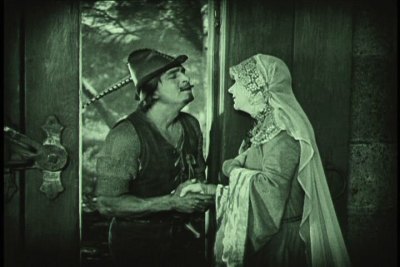


This is a rare moment however, as most of Robin Hood is lavish and extravagant.  From the opening joust match to the grandness of the sets and costumes, this film version of the legendary stories was full of life and vigor.

The mind does boggle a bit to think Wallace Beery could yuck it up as a more merry monarch, complete with pageboy hair, but Beery was quite entertaining as our mostly jolly Richard.  De Grasse was cool and appropriately wicked as Prince John, and Bennett was a typical 'damsel-in-distress', a bit fluttery for my taste.

Fairbanks, if nothing else, showcases his legendary athleticism in Robin Hood, making elaborate leaps that still astonish today, nearly a century later.  It was much part of his persona that Will Rogers, legendary comic and wit, made a spoof of Fairbanks and Robin Hood in a 1923 short, Big Moments From Little Pictures.   

The original release included a six minute intermission, part of the reason why Robin Hood over two hours long.  The length, plus Fairbanks' perhaps overenthusiasm as Robin Hood might be an issue watching the film today.   Still, on the whole Robin Hood has some wonderful moments of action, romance, and comedy, with a rousing performance by Douglas Fairbanks and great visuals that still attest to the power of our legendary outlaw's enduring popularity.

DECISION: B+

Monday, July 10, 2017

Sherlock: The Six Thatchers Review


SHERLOCK: THE SIX THATCHERS

As much as I've tried, I simply have never liked Sherlock.  I don't think it's smart, I don't think it's the best adaptation of Sir Arthur Conan Doyle's work, I don't think it's well-acted, and I especially don't think it's well-written.  Too often on Sherlock, writers/co-creators Steven Moffat and Mark Gatiss confuse convoluted for complex, making things so incomprehensible and illogical that Sherlockians and critics praise them for being excessively opaque.

Now, after watching The Six Thatchers, I can tell that they are up to their old tricks, never settling on one narrative when twenty will do, sacrificing logic and generally making things a total mess but getting praise and Emmy Awards for their idiocy.  I may be the only person who says 'Sherlock has no clothes on', but I call them as I see them and see no reason why I should celebrate something so utterly idiotic and just awful as Sherlock just because everyone else says so.

It's hard to give a plot summary because there are simply so many stories going on, which I figure is part of the pressure of having to write essentially a feature-length film versus a one-hour episode, but I'll do my best.  Sherlock Holmes (Benedict Cumberbatch) is brought back to London from exile after 'not' killing Charles Augustus Magnussen, Sherlock's brother Mycroft (Gatiss) reediting things.

Side note: this is a variation of Moffat's 'a character died but not really' bit, now suggesting that Sherlock didn't kill Magnussen when he most certainly did.  Moffat and Gatiss are masters at the art of rebooting things sans logic, but I digress.

Now with him back, Sherlock is having difficulty with the situation of John Watson (Martin Freeman) and his wife, Mary (Freeman's then real-life mistress, Amanda Abbington).  This is particularly true when it comes to their new baby, whom they name Rosamund or Rosie for short.  I would have preferred they name her 'Joan' as a nice dig at Elementary, but I'm not as clever as Mark Gatiss insists he is.

Despite all logic, John & Mary want Sherlock to be a godfather to their child, and he reluctantly agrees even though he sneers at both humans and the idea of a God.  After that, things get more jumbled.


Sherlock is called by Inspector Lestrade (Rupert Graves) to solve the death of a Minister's son who was found dead in his car when a week earlier the son had claimed to be in Tibet.  Making things more bizarre was that the son had been dead for a week when he was found after a car crashed into the boy's car when attempting to escape the police, causing the boy's car to explode (which is how they found the body in the first place).

That case is easily solved: boy was never in Tibet, died suddenly, father left boy's body in car and presumably would have left him there save for the unexpected car explosion.  It's another thing that intrigues Holmes, the smashed bust of Margaret Thatcher that the Conservative MP has.  Soon other Thatcher busts are being smashed, and someone has been killed in one instance.

Holmes sees a case, and somehow this case doesn't involve the Black Pearl of the Borgias, but a flashdrive that itself involves the secret past of former super-spy Mary Watson.  Her secrets are coming back to haunt her, when we find that this case involves her time in a super-elite assassination squad called AGRA, which cause her to try and flee.

John, perpetually flummoxed, is upset about all the secrets and lies of Mary, but he has a secret of his own.  He may be pursuing an affair with a pretty woman he met on the bus, though we don't see anything more than his desires and some text messages.  Eventually, after a few more twists and turns, we discover why AGRA was set up and who was behind the plot.  The real villain shoots at Sherlock but Mary jumps in front of the bullet to save him, begging him to take care of Watson.

It seems that seeing your wife shot in front of you is what finally breaks John's relationship to his 'best friend': not the psychological torture Sherlock has put him through, not the various times John's been kidnapped or shot at as a result of Sherlock's actions, not Sherlock's general haughtiness, rudeness, indifference and uncaring manner. 

Mary sends a video to him asking him to save John Watson, something that might be hard seeing that John wants nothing to do with him.  John, for his part, seems more interested in having a mistress to be all that focused on Sherlock.


The Six Thatchers is a big ball of rubbish, going on and on because Gatiss simply couldn't concentrate on one narrative.  We get false clues and leads, but we never actually get anywhere.

You think the case will involve the dead boy, but that was wrapped up in seconds, with a resolution that defies logic.  So, the father, who sees the son that came to surprise him for his birthday suddenly die, just decides to leave his beloved son in the car to rot?  I can understand grief being so great as to be devastating, but this is downright cruel.  Also, no one ever looked in the car?  Yes, I know we had this explanation that the boy was hiding behind a false seat cover (which again seems ridiculously extravagant) but if the boy pulled down the cover to show his face and then died, he couldn't have just pulled it up again to hide again after he drops dead.

Now, he could have died with the cover on without his father knowing, but that's not how it was presented to us.  As such, Gatiss wants to have things both ways: show us the boy dying but have the parents not know he died, and it just makes it not so much confusing as frustrating.

You think the case might involve the Black Pearl, a nod to the original Conan Doyle story The Six Napoleons,  but that is just a red herring, a bit of Holmesian fan service.

Most of this goes into Mary's past, and it's interesting that The Six Thatchers illustrates what I have long argued: that Sherlock Holmes is smart only when it's necessary.  When it's necessary to make him an idiot, Sherlock will have no problem making him so.  I argued that it was beyond idiotic to think that a man who can tell that someone is a cross-dressing child sex slaver based on the number of eyelashes he has on his nose or can tell if the Pope is a lesbian non-binary antiquities smuggler by seeing how many times he rubs his/her nose could not deduce Mary Watson had been a master assassin.

Now for someone who figured out that the Thatcher busts were being smashed as a result of her past could not equally take precautions against her using paper spread with sleeping potion to knock him out.

We also have moments that astound in their idiocy.  This super-elite, super-secret squad was named AGRA for the first names of the members? Alex, Gabriel, Rosemund, and Ajay couldn't apparently be bothered to have code names, but were perfectly willing to have their first names known to anyone willing to hire the AGRA-Team.  Further, it's a terrible cheat to give audiences no clue about Mary's real first name of Rosemund.

It's also a highly convenient coincidence that the code word of "Ammo" for ammunition would be confused with the Latin word "Amo" for Love, and that "Love" be one of the code names for a particular Minister involved in the machinations of assassinations and other nefarious dealings.

Something about all that just didn't sound right.  Why would the real villainness use the Latin to a group of Georgian terrorists?  Why couldn't she use 'Love'?  The answer is that if she did, Gatiss wouldn't have had his misleading moment between "Ammo" and "Amo".

Side note: 'amo' in Spanish also means 'Master' as well as 'Love'.  Just a thought.


At times, The Six Thatchers plays like a 007 spoof, and there certainly were efforts to play a lot of things for comedy.  The 'laughs' start right at the beginning, when Mycroft is attempting to make a very serious presentation only to ask Sherlock, "Are you tweeting?"

Sherlock's unusually chipper demeanor is explained as him being high but it also comes across as idiotic.  His continual tweeting while at the baptism, his inability to notice that John had replaced himself with a smiling red balloon, and a few moments when he clearly has no idea how to handle babies all try to make things funny.

I figure a lot of the Sherlockians thought it was all so hilarious, but I sat there wondering why so much comedy was forced onto situations that didn't need it.  Even when perhaps a little levity could have been introduced, it seemed all so forced, as if Gatiss really thought he was being clever.

The story goes on and on, because at a certain point there was nothing there, so Gatiss had to keep the ball rolling somehow.  We're given narrative after narrative: John's potential infidelity, Mary's past, the search for the six Thatchers, the dead boy in the car, the domestic hijinks of the Watsons.  It's so much going on but with nothing to show at the end of it.

Ammo vs. amo...I'm not buying a minute of this rubbish no matter how you dress it up.

That perhaps might be the only good thing in The Six Thatchers: some beautiful cinematography, particularly when we're at the London Aquarium.  Granted, some of this was undercut by the tons of graphics that overwhelm us (video screens and text messages that are now part of the Sherlock Canon), but some moments are quite visually splendid.

There isn't anything special about the performances in general.  Each continues to be submerged by Cumberbatch, whose efforts at hilarity in the beginning are almost cringe-inducing.  Freeman is still one-note, his Watson still the stooge.  Actually, I walk that back a bit: when Mary dies his growls and moans were hilarious and so false, I thought it among the worst performances of them all.

I confess to actually laughing out loud when I hear him emit whatever sounds he made.

Gatiss, I continue to insist, isn't acting but playing himself as Mycroft: a pompous, snobbish, elitist man who looks down on everyone and is convinced he's the smartest person alive.  I also sense it is his secret wish to play The Penguin on a Batman-themed show given his affinity for his umbrella.

Graves is still the idiot, who has no intelligence and essentially crawls to Sherlock.

Again and again, given how horrid Sherlock is, why do people still work with him, let alone associate with him? 

The Six Thatchers is a mess, rambling incoherently from one point to another, keeping up the idea that 'convoluted' is 'complex'.  It's just awful.

At the end of The Six Thatchers, after the credits, we see a quick shot of Mary saying to the camera, "Go to Hell, Sherlock".

Finally, something I can cheer about with regards to Sherlock.  That alone gets an extra point.

2/10

Next Episode: The Lying Detective

Saturday, July 8, 2017

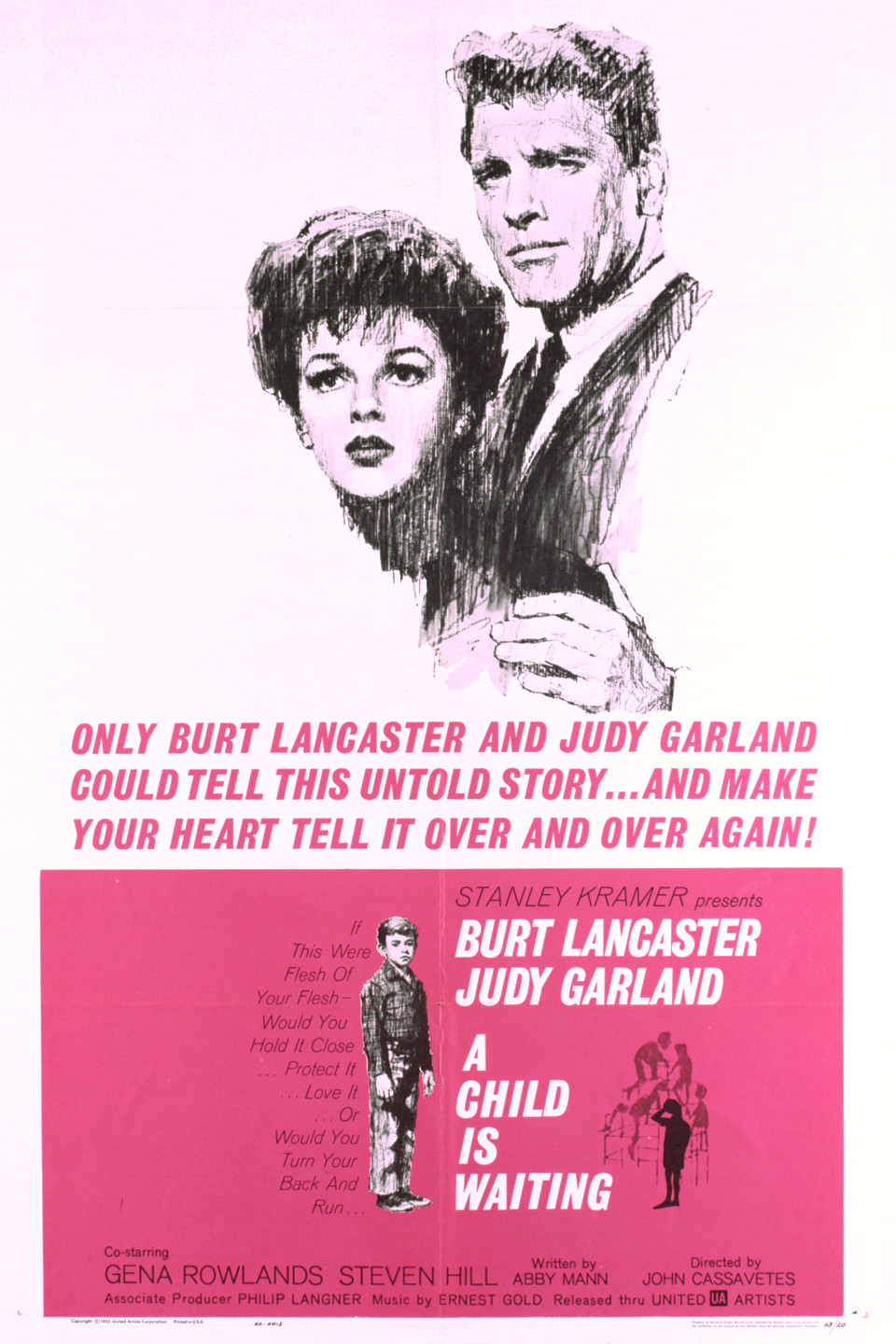
A Child Is Waiting: A Review (Review #925)

A CHILD IS WAITING

It was rare for Judy Garland to be given a straight dramatic role.  Apart from The Clock and Judgment at Nuremberg, Garland seemed to be pigeonholed in musicals and comedies.  Yes, she had a tremendous voice and was thoroughly charismatic in them, but one always senses that the true depth of her talent was never fully explored.  There were times when she was given dramatic parts where she also sang, such as her final film, I Could Go On Singing, but a straight-up drama?  Those were few and far between.

A Child is Waiting, Garland's penultimate film, is one of those rare dramas, as dramatic as one can get.  This story of retarded children as they were dubbed in 1962 used real disabled children to tell its story.  Appropriately melodramatic, a trifle condescending in the way only progressive ideas now discarded can be, it is a positive in bringing an important issue to the forefront.  It also appears slightly and unintentionally creepy and overwrought, a message picture where the message is no longer as strong as it once was.

Jean Hansen (Garland) comes to the Crawthorne State Mental Hospital looking for some meaning and purpose.  Though she has no experience in education or health, physical or mental, the head of the hospital, Dr. Matthew Clark (Burt Lancaster) hires her to be a music teacher given her musical background.

Crawthorne is a hospital devoted to the care of children who were in the parlance of the era 'defected' or 'retarded', what we would now call special needs children who range from those with Down's Syndrome to various levels of autism to severe mental retardation.  Hansen soon bonds with Reuben Widdicombe (Bruce Ritchey), a child who waits every Wednesday for either of his parents to come visit him.

Jean is very motherly towards Reuben, who appears to respond but who is still a bit remote, aloof from things.  Dr. Clark is not happy about this development and separates them, surprising both Jean and Reuben.  Dr. Clark also has to battle with officials at the state capital who don't see a great benefit to either the state or the children.  They want to know if Crawthorne will help students work within mainstream society, but Dr. Clark firmly rejects the idea that that should be their mission.

Jean opts to go over Dr. Clark and his advise and write to Reuben's mother Sophie (Gena Rowlands).  Thinking he's ill, she is disheartened to know it was a rouse to get her to see him.  Sophie tells them that she didn't come not because she didn't love him, but because she loved him too much.  Unfortunately, Reuben catches sight of her, which leads to him running away from the hospital.

Jean thinks she is doing no good there and tells Dr. Clark that she should go.  Dr. Clark won't stop her, but he also tells her that coddling people like Reuben won't help him.  Furthermore, he takes her to where mentally disabled adults live (the film doesn't clarify if it was at the same facility or not, but it's doubtful adults would be in the same hospital with children), warning her that if she does leave, Reuben may end up so disabled that he may end up here.

It's not what you can do for them, but what they can do for you, Dr. Clark scolds her, telling her this kind of thinking was wrong.  Jean returns and devotes herself to being the music teacher they deserve, and that does mean being firm with Reuben.  The film culminates at a Thanksgiving play, where Reuben's father Ted (Stephen Hill), who has struggled with Reuben's condition, finally sees his son, and sees him slowly speak in public.

Things end full circle, when Jean does what Dr. Clark did at the beginning: slowly coax a child out of the car and into the warm arms of the hospital.


It is interesting that A Child is Waiting, with the timespan of fifty-five years, shows now that what was considered progressive, even daring, now looks a mixture of condescending and patronizing.  At the time of its release, few if any films dealt with mental retardation, let alone featured people who had mental disabilities.  As such, A Child is Waiting is a strong step forward to bringing an issue that affected many out of the shadows. 

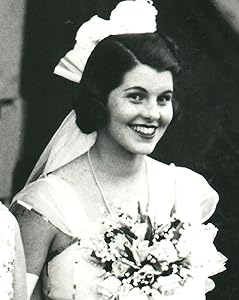
For too long, the issue of mental disability was kept hidden, something to keep secret.  While not overt, A Child is Waiting makes a very subtle mention of Rosemary Kennedy, the younger sister of then-President John F. Kennedy, who was mentally challenged and essentially hidden away in a mental hospital after her father had her undergo a disastrous lobotomy which rendered her permanently disabled.  Such things still were not openly discussed, and the mystery surrounding Rosemary, while not totally hidden, was still not the stuff of cinema.

However, A Child is Waiting is long before such things as the television series Life Goes On, which centered around the life of a family member with  Down's Syndrome (as a side note, Chris Burke, who played the Down's Syndrome-affected Corky, made some guest appearance as an angel on Touched By An Angel, something that I imagine producer Stanley Kramer would have found more surprising than his own ideas of his forward-thinking film).

And here is where A Child is Waiting runs into problems.  Despite receiving technical support from institutions and doctors, there is still this sense that the film is making wrong advocacy choices.  There is no distinguishing between those who have Down's Syndrome, between those who may have autism, or those who are severely disabled to where it affects them physically as well as mentally.  It lumps all of them into one group, which does a disservice to each group's specific needs.

It also suggests that hospitals like Crawthorne should not work to try and help integrate these three groups into mainstream society.  Rather, it would be better to help them by keeping them safe within the grounds of hospitals, among their own kind so to speak.  In the ensuing years since A Child is Waiting was released, there's been a major shift in thinking on the issue of mental disabilities.

Down's Syndrome-affected people now hold jobs, marry and work as well as possible within society.  Those with autism can receive medical treatment ranging from therapy to medication.  Those who are physically unable to care for themselves would get full-time care.  Still, despite the best intentions A Child is Waiting appears to think that someone with Down's Syndrome is in pretty much the same state as those who are physically disabled.  Today, I think that kind of mindset is rejected, so it makes the film slightly regressive.  It also would perhaps appear now to do what Dr. Clark said he didn't think should be done: coddle them to where they became totally dependent on others when they could do some things themselves.


I think the use of real-life special needs children worked for and against A Child is Waiting.  It worked for them to show that they were children who had the same curiosities and innocence of non-special needs children.  It worked against them because at times some of the images come across inadvertently as garish, almost frightening.  This is particularly the case when we go see the adults who are mentally disabled: the almost-documentary look has its positives, but it might be a bit too jarring for some audiences unaccustomed to these sights.

Part of me understands that it had to be done to get the point across, but part of me thought that by almost jumping into scenes like that with no warning would prove shocking and uncomfortable to viewers who might be struggling when seeing the children.  The adults shown might have been too much, especially since in the film, we practically jump from one scene to the other.

A Child is Waiting, beyond the promises and pitfalls of using children who had mental issues (one child obviously looked into the camera and responded to it, something that director John Cassavetes couldn't control), doesn't skimp on the drama.  The extended flashback sequence where Reuben's parents find their son is 'defective' (the father's words, not mine) has an echo effect along with the voice-over.  It's a way of doing flashbacks that I have not seen or heard before, and I found it quite impressive.

I did wonder about how Garland was photographed for the film, having a sort of glaze in her close-ups that Lancaster didn't.  Give credit to Garland, who worked so well with all the children.  She did have her usual nervous mannerisms as Jean, but one can see the caring, somewhat needy woman Jean was. 

Now, I've never been a Burt Lancaster fan, him almost always striking me as gruff, remote, even slightly arrogant.  However, for A Child is Waiting, I figure that was part of his character.

I also figure that the titled character could not have been played by someone with autism to the degree Reuben has (which is what I figure he was afflicted with).  He's called to be very still, unemotional most of the time, but screaming out in pain or rage when feeling abandoned. As such, it would require a professional actor, and Ritchey does extremely well as the waiting child.  You sense the hostility and anger within Reuben, of someone wanting to be loved, wanting to fit in, but not knowing how.  You also sense his distinct aloofness mixed with sadness at what he might see as rejection.  It's a strong performance.

It's at this point I'd argue Reuben is autistic rather than 'defective' or mentally disabled, which makes his time put away in an institution seem almost excessively cruel.  Rowlands and Hill don't make the parents, who divorce shortly after institutionalizing Reuben, into heartless people, well, at least Rowlands doesn't.  Hill is less sympathetic but one who also struggles with guilt about his son's condition.

Ultimately, A Child is Waiting is a sad film, but not one that leaves you completely hopeless, at least when it comes to Jean.  She's found her purpose in life, but whether it would have been better to have  helped those with special needs find their own purposes one leaves up to the viewer.

Rosemary Kennedy:
1918-2005

DECISION: B-

Thursday, July 6, 2017

Personal Reflections on King Arthur: Legend of the Sword


In the Golden Age of Hollywood, the studios managed to make around 50 films per year.  No surprise given that many of the studios were essentially factories, and the actors/stars were products.

Movie stars and actors (not the same thing) were controlled by the studios.  Their image, their publicity, even their private lives.  How many so-called 'lavender marriages' formed because a star's true sexual orientation had to be kept hidden?  In exchange, the studio invested heavily in said star if they thought that star had earning potential.

They were given singing lessons, acting lessons, dancing lessons, elocution lessons, wardrobe, and most importantly, they were kept working.  Yes, they didn't have much choice in their roles and could be suspended if they refused a part.  Sometimes they were cast in the same types to where they were almost never able to break free.  However, they did keep working and learning, and they had a chance to move up from small parts to perhaps larger roles, and even if they didn't 'break out', at least they managed to get a career that might not have had if not for people like Mayer, Warner, and Zanuck.

Now, what does all this have to do with the spectacular failure of King Arthur: Legend of the Sword? Why am I giving this little history lesson to go over why the film bombed, and bombed hard?

Well, for starters we have the issue of Charlie Hunnam.  Now, I don't know what kind of person Hunnam is, and I haven't seen enough of his work to judge whether or not he is a good actor, let alone a great one.  I can say that Hunnam isn't a big star.  I'd argue he's not even a star, let alone one that audiences want to see.

Tom Cruise is a big star, perhaps the biggest one we have, and he costarred with Russell Crowe, no slouch in that department; yet their names alone weren't enough to draw crowds to The Mummy (another flop).  If Tom Cruise of all people couldn't spin a hit with a recognized title, what made studio executives think Charlie Hunnam could?


As such, we have our first issue: casting.  King Arthur: Legend of the Sword has virtually no names that have a solid fanbase or recognition to lure audiences to the film.  The biggest name in the film was Jude Law, and let us remember how Chris Rock ridiculed Law's ubiquitousness when Rock hosted the Oscars.  You had respected actors in Legend of the Sword (Law, Eric Bana), but no one that one could point to and say, 'yes, I have to make that a must-see'.

Going back to when the studios ruled with an iron fist, they would not have cast Hunnam in the title role for a potential franchise (as a side note, they wouldn't have thought of a franchise: very few major Golden Age films have sequels or follow-ups.  Those were usually saved for B-films).  They would have started him small, in a supporting role, essentially an audition to the public to measure how they responded to him.

This is how Donna Reed for example, went from an Andy Hardy girlfriend to larger parts culminating in an Oscar and her own television series.  MGM saw that she had a positive response from audiences, so they opted to give her bigger parts.  Once she had that clout, then she could fight for better parts, even ones that went against her 'girl-next-door' image, like in From Here to Eternity.

Instead, Warner Brothers decided to throw a relative unknown at us and declare him a star, without wondering whether we would accept him as such.  It's no slam on Hunnam, who can't be blamed for the fiasco of Legend of the Sword outside of his performance (the only part of the production he had control over).


Now, with the casting of Hunnam in the lead, we have our second issue: franchising.  Warner Brothers and director Guy Ritchie and everyone involved with Legend of the Sword were aiming to make this a franchise.  Whatever the merits of Hunnam's acting abilities, the idea that this unknown with limited name recognition was going to carry a six-series franchise on his muscular shoulders seems bizarre. If you can't sell a franchise with its star alone (like with The Mummy), you sell it with the property.  The Arthurian legends, however, might not have been the right property with which to spin more gold.

It's one thing to give a franchise starter to someone like Cruise, who has done it with the Mission: Impossible films.  Cruise also had the benefit of a known property like The Mummy, the first in a highly ambitious 'Dark Universe' series.  While King Arthur is also a known property, a film about our noble monarch hasn't been successful since Monty Python & The Holy Grail, and that was a spoof.

The question of franchise is one that has to be addressed.  What studios are making now are not movies, but trailers for movies that may never come.  A horrendous example is Independence Day: Resurgence.  Ostensibly a sequel for a twenty-year-old film, ID:R ends with a naked announcement that there will be another film or worse, a whole series of films based on this.  However, in this case 20th Century Fox didn't seem concerned if ID:R was actually good.  They apparently thought that the end product would wow audiences so much that they'd clamor for more.

They didn't.  Independence Day: Resurgence was almost universally panned and audiences rejected it.  I do not foresee more Independence Day films, yet the film ends with the suggestion that our heroes will travel to other worlds to do more battle.

In a sense, it leaves ID:R unfinished, unresolved, and yet another in a long line of extensive trailers that audiences are given.


There's an irrational mania that has overtaken Hollywood: the Franchise Frenzy.  Studios, desperate for a steady stream of income, decide to latch onto properties that may open up new series, ones with hopefully high yields and low risks.  This is why we have the Marvel Cinematic Universe, the DC Extended Universe, the X-Men series, a more expansive Star Wars series, the Fast & Furious franchise, the Planet of the Apes franchise, the King Kong/Godzilla franchise and now the Dark Universe from Universal.

Raiding old properties and recent films, we've had failed franchise starters with the aforementioned Independence Day, along with other corpses in the Franchise Frenzy: Tarzan, The Huntsman, Ghostbusters, Pan, Warcraft, John Carter, Percy Jackson, Priest, Green Lantern, Jupiter Ascending, Seventh Son, The Green Hornet, Beautiful Creatures, Van Helsing, The Chronicles of Narnia, Prince of Persia, The Man From U.N.C.L.E. (which was also directed by Guy Ritchie), The Mortal Instruments, Kick-Ass, R.I.P.D., I Am Number Four, Power Rangers, Abduction, TRON, Robin Hood (with a reported sight on still spinning a franchise out of that property), The Lone Ranger, Divergent, The Three Musketeers, Ender's Game, The Last Airbender, and most painful/egocentric of all, After Earth.

We also have sputtering franchises, among others Jack Reacher, the new Aliens/Prometheus series, Pirates of the Caribbean, Diary of a Wimpy Kid,  Jason Bourne, Avatar, Transformers, Mission: Impossible, and Star Trek: franchises that aren't dead but are showing diminishing returns to where justifying another round gets harder and harder.

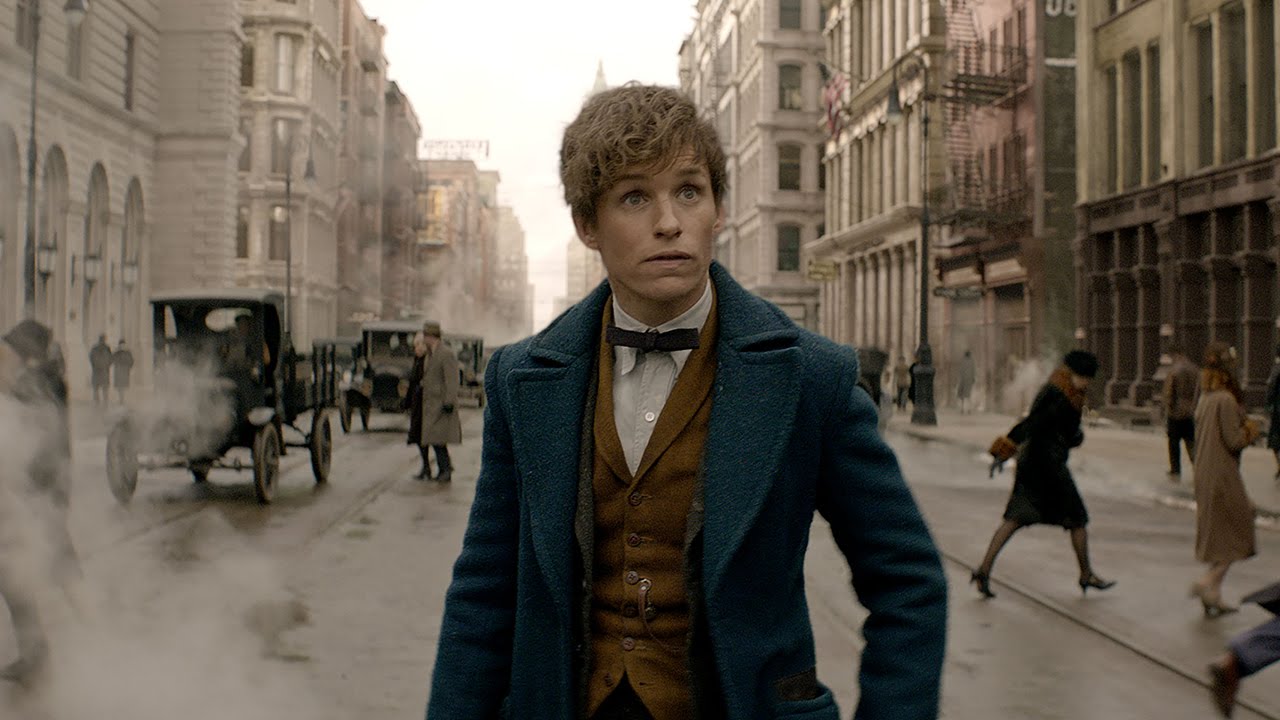
We'll also have more films if not whole franchises based on such films as Kingsman, Jurassic World, as well as upcoming films based on Vince Flynn's Mitch Rapp novels starting with American Assassin, and most curiously, Fantastic Beasts & Where to Find Them

No Newt Is Good Newt, I Say.

Does J.K. Rowling need the money?
Are people that desperate for five more merry adventures with Newt Scamander?

And that's not even getting into the nearly endless remakes we're going to be treated to or have been treated to.  Disney alone is blowing up its vaunted Vault to give us live-action versions of their animated films, right down to a live-action Dumbo.  I should note that the live-action version of Aladdin is being directed by Guy Ritchie, who brought us King Arthur: Legend of the Sword.

What could go wrong?

This Franchise Frenzy is what studios are rushing and falling all over themselves (and falling in general) to keep the coffers flowing.  It's considered safer to build on an already established film or title rather than run the risk of having a flop with something new or original.

Ironically, the more studios push franchises and sequels on audiences, the more they stubbornly refuse them.  People rejected The Mummy, but somehow, in some way, Universal will push on to bring us a remake of Bride of Frankenstein (I guess the first one wasn't good enough) and films on the Creature From the Black Lagoon, and on The Wolf Man (not to be confused with Benicio Del Toro's The Wolfman). Frankenstein (not to be confused with Kenneth Branagh's version, perhaps libelously named Mary Shelley's Frankenstein) and Dracula (not to be confused with Dracula Untold).


Now, one might wonder why despite these string of flops and fiascos, studios keep pushing on into the Deep Muddy (to misquote a Pete Seeger song).  Quite simple: The Red Middle Kingdom.

China now is a larger and more lucrative market for films than the U.S. and Europe, and the studios will go pay homage to Chairman Mao if it makes them a buck.  If a film strikes it big in China, we might get a sequel or a franchise regardless of how awful it is or how spectacularly it fails in the States or Britain.

The studios now are discovering the charms of the East, tailoring their films not for a domestic audience but an international one.

If one takes a brief look at recent films, we can see that as far as today's studio executives are concerned, they should Go East, Young Man.

Pacific Rim had Hong Kong as a major part of the story and had Chinese characters and stars in major roles.

Doctor Strange had its climatic battle in Hong Kong.  It also altered the character of The Ancient One to be Celtic rather than Tibetan since the Chinese don't want any mention of Tibet, a country they invaded, still occupy and won't acknowledge as independent.

The remake of Red Dawn had to have the villains changed from the Chinese to the North Koreans, again to placate the Communist regime in Beijing.

Independence Day: Resurgence had Chinese characters and stars in major roles.

Transformers: Age of Extinction has Hong Kong as a major part of the story.

Now You See Me 2 has Hong Kong as a major part of the story.

The Great Wall was essentially a Chinese film masquerading as an American one; the setting was Chinese, a number of the cast are stars in China, and parts of the dialogue were in Chinese.


All these films had either Chinese stars, Chinese characters in major roles, a Chinese setting, or a combination thereof because that is where the U.S. studios think real power lies.  They, I figure, want to still cull favor with American audiences, but they also know that so long as China has their back and can prop up a big-budget horror like Transformers, they can keep churning them out.

The studios aren't interested in that the Chinese film industry is still tightly controlled by the government.  They are more than willing to change settings, plot points, or anything else to please the Chinese leadership, while simultaneously dismissing objections from middle American audiences and certainly opposing any government interference from Washington.

I would not be surprised if within ten to fifteen years, we had a major Hollywood biopic on Chairman Mao, or a major Hollywood war film where the Chinese are portrayed as heroic.

I doubt that the Rape of Nanking will ever be made by any major studio no matter the star, the script or the director.

I think it has less to do with Hollywood agreeing with Communism and more seeing that Chinese audiences are a better source of income.


Now, what does the Chinese market have to do with the failure of King Arthur?  Well, China is the last recourse for a floundering film, especially a big-budget one.  Had King Arthur miraculously been a hit in China, we more than likely would have had another King Arthur film, if not the six originally envisioned.  The Mummy, for example, was a smash in China, taking in $52 million on its opening weekend there versus a mere $32 million in the States. 

As it stands, this time our favorite Reds won't be kowtowing to monarchy anytime soon, as there doesn't appear to be a rush in Shanghai to see Jude Law usurp a mythical throne.

From my vantage point, King Arthur: Legend of the Sword failed for a wide variety of reasons.  The cast is not big enough to pull in audiences.  It put too many eggs in one basket by forcing a franchise instead of concentrating on one film and taking it from there.  It also relied perhaps too optimistically on foreign markets to act as a cushion should it fail in the West.  It all was poorly thought out and executed.

Oh, and one more thing.  It was just a bad movie.

Wednesday, July 5, 2017

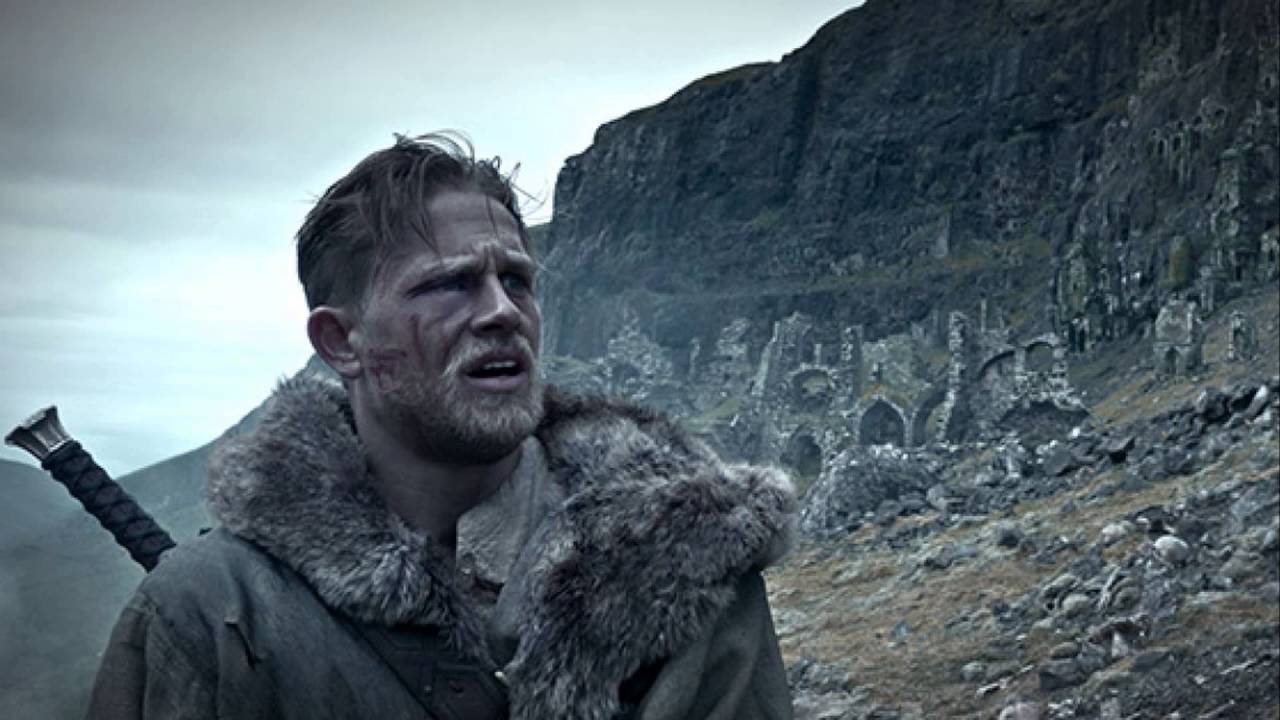
King Arthur: Legend of the Sword. A Review

KING ARTHUR: LEGEND OF THE SWORD

I have long contended that when we see a colon as part of a film title, it is a declaration that this will be a franchise.  King Arthur: Legend of the Sword follows this pattern, and from what I understand it was meant as the first of a highly ambitious six-part franchise on the adventures of our mythical King.

The end result is such a bungled disaster that we can pretty much rule out one sequel, let alone five more. King Arthur: Legend of the Sword should go down in history as a textbook example of what happens when film studios and filmmakers put the cart in front of the horse, put greed and lack of foresight ahead of common sense and for all intents and purposes, insult the audience.

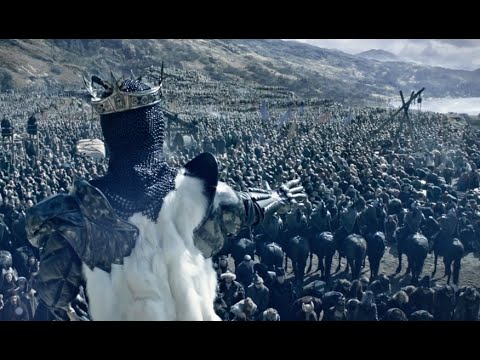
Back in un-merry old England, we learn that Mages and Humans have lived in peace, until the Mage Mordred attacks the last free stronghold: Camelot.  Here, brave King Uther (Eric Bana) defeats the monster who created gigantic elephants and saved his castle.  He would have been better served to watch his back, as his wicked brother Vortigern (Jude Law), whose name appears lifted from Voldemort, manages somehow to usurp the throne.

In the chaos of war, the young Prince is sent down the River Thames, where a gaggle of remarkably healthy-looking prostitutes find him, raise him, and name him Arthur (Charlie Humman).  He grows up in the back streets of Londinium, a bit of an Artful Dodger with a Cockney manner, forever managing to be a bit of a criminal with his mates.

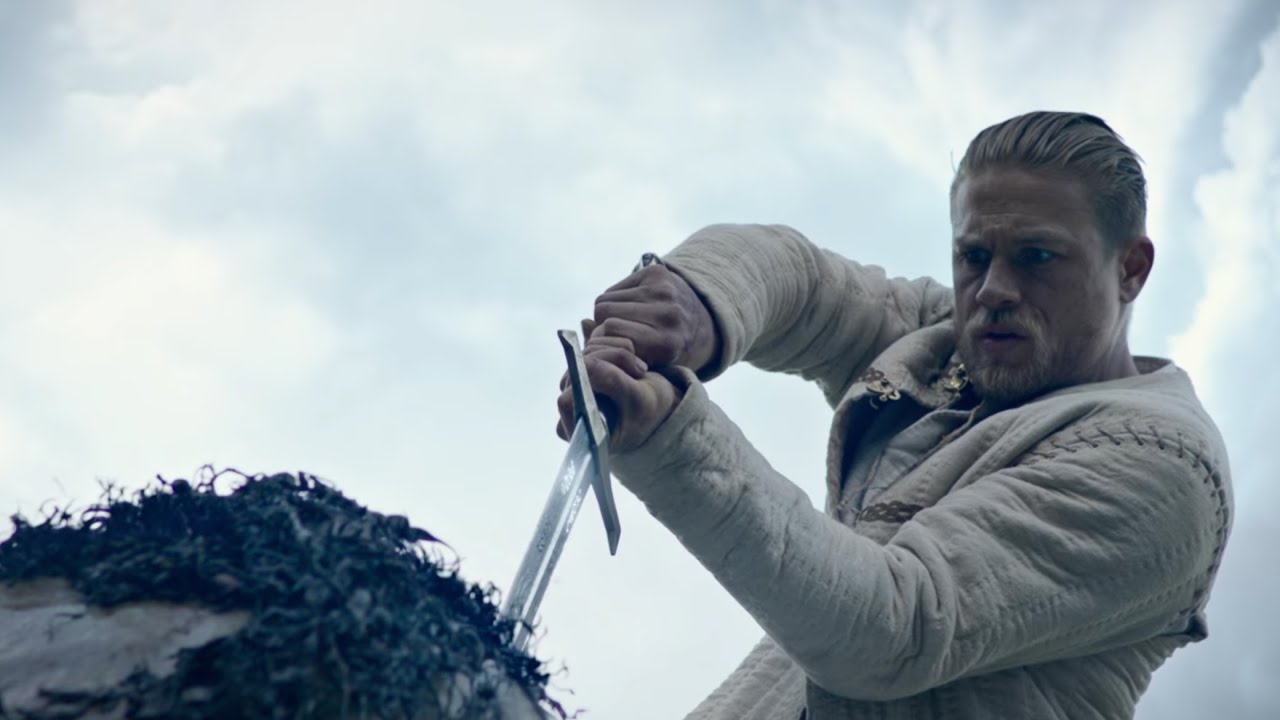
Vortigern wants to rule all England, but the deal he's made with some octopus women (shall we call them Octopussies) rests on him getting rid of all of Uther's blood heirs.  Arthur is still out there, so he gets every man of the right age to perform a task only Uther's son can do: pull out Excalibur, the Sword from the Stone.  Lo and behold, a disbelieving Arthur manages to do that, but finds the Sword is extremely powerful and him not able to fully control it.


Being his nephew, Vortigern plans to behead Arthur, but he is saved at the last minute by the intervention of 'The Mage' (Astrid Berges-Frisbey), a sorceress and apparent protégé of Merlin.  Once rescued, Arthur finds himself part of 'The Resistance', joining others.  Arthur must learn to use Excalibur, but he is still haunted by the past both metaphorically and literally.

Therefore, it is off to The Dark Lands where the hero is to be cleansed.  After that, he rejoins 'The Resistance' and becomes their de facto leader.  A plot to assassinate Vortigern fails, and the wicked King continues a reign of terror. 

Eventually though, Arthur and his blokes do get together, but not without losses.  Vortigern forces Arthur to surrender, especially since he has Excalibur (though it appears useless when he wields it).  Arthur is saved once again by The Mage, and with him finally triumphant, he is crowned King.

King Arthur: Legend of the Sword is an insult to the Arthurian legend, those who love it, and just about anyone who genuinely enjoys a good movie.  There is simply so much wrong with it, wrong on so many levels, it might genuinely take a whole other essay to detail how everything here destroys the lofty goals its makers had.

I think though, we can mention a few.  There's the wild changes to the Arthurian legend.  Mordred, whom I don't think we are introduced, wasn't some magical being: he had been up to now the bastard son of Arthur and his half-sister, Morgana Le Fey (though to be fair, if memory serves correct the enchantress disguised herself as Guinevere so as to sleep with her brother).  Vortigern appears to have been a wholly new creation, and Uther to my memory wasn't particularly noble.  Instead of Merlin having a major role in Arthur's life, he hands that duty off to The Mage (who as far as I know never got a real name, she was always just 'The Mage').

Let's not forget the entire story of 'Wart', but all that is in keeping with writer/director Guy Ritchie (who co-wrote the script with Lionel Wigram and Joby Harold, credited with the screen story).  Ritchie revels in the East End, working-class, not-quite-respectable figures, these brawlers and lowlife hoods.  His major works like Snatch and Lock, Stock and Two Smoking Barrels all revolve around the criminal underworld.  He even turned the very posh Sherlock Holmes into a more shady figure, more action-star than intellectual giant.


Is it no wonder then that when looking at King Arthur, the leader of the Knights of the Round Table, the embodiment of idealism and chivalry, he'd end up making him a bloke, complete with other mates who are petty criminals, live with hookers, and told the first part of some cycle in this way?

That is another problem with Legend of the Sword: it thinks it is highly clever by making Arthur 'one of the blokes' and instead fails to give him a real personality.  I have nothing against Charlie Humman, but I am perplexed as to why Hollywood continues to force him into being a big star.  Apart from his role on the television series Sons of Anarchy (where he essentially played the East End Arthur from Legend of the Sword except with an American accent), Hunnam is best known for the role he didn't play, infamously dropping out of Fifty Shades of Grey before production began due to, according to him, an extremely tight shooting schedule on other projects.

As a side note, he could have studied with the ghosts of Laurence Olivier, John Gielgud and Ralph Richardson and it still wouldn't have made Fifty Shades of Grey any better with him in it.

Hunnam is very handsome and muscular, but he hasn't broken through despite the mad push to get him there, particularly in action films.  Neither Pacific Rim or Crimson Peak or another recent flop, The Lost City of Z, have made him a bankable star.  Why a studio opted to build a whole franchise around such an untested actor with virtually no name recognition is a mystery.

Even if Hunnam could demonstrate that he was a deep, well-versed actor (which he hasn't), Legend of the Sword gave him little to nothing to work on.  We never really learned what made Arthur tick.  We never care about him as a person, let alone why we would rally around him to be our great hero.  Hunnam tried to show he could handle rapid-fire dialogue, but he was not compelling at all.

That is true for everyone in Legend of the Sword.  It got to a point where one doesn't even bother learning the characters names because we don't care a whit about them.  It's sad to see Bana wasted yet again.  I think Bana is a pretty good actor, and maybe if we had focused a film about him and his struggle against Vortigern we might have had something, but the film was too impatient to rush off to another action sequence to care.

Of particular embarrassment was The Mage.  Who was she?  Why was she?  Why didn't Merlin come?  Questions that won't be answered, and her performance so dull it isn't worth revisiting to try and find them.

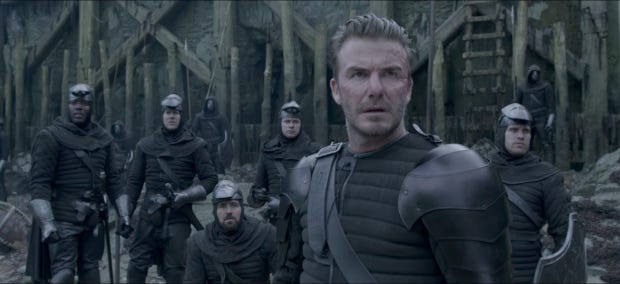
The best thing said about Jude Law in Legend of the Sword is that he probably had a laugh knowing he didn't have to act.  At least David Beckham in a cameo didn't have to think about anything other than having a good time, though while watching the film you are asking yourself, 'Is that David Beckham?'


A third issue is in the actual script, which thinks it is quick-witted when it ends up just being confused and boring.  Over and over Ritchie does what I imagine they tell you not to do in film school: he shows and tells simultaneously.  That is already bad enough, but he does this at the worst time.

In Legend of the Sword, we essentially get three scenes going on simultaneously.  In one, we see two characters telling Arthur that he has to go to The Dark Lands (or as I called them given the weird creatures inhabiting there, The Dark Lands of Dr. Moreau).  In the other, we see them going to The Dark Lands of Dr. Moreau.  In the third, we see him on The Dark Lands of Dr. Moreau.

These three mish-mashed scenes are going on at the same time, and soon it becomes impossible to know where you are in all this.  This followed an earlier scene where Arthur and his multicultural mates were being interrogated by a police, where the lot of them were having a hard time figuring out whom they were talking about ('Which George: back-alley George? Kosher George? Mud George?', while not an exact repetition of the dialogue, gives an idea of how they all talked).  As we were watching and hearing at the same time, jumping about, one wonders why Ritchie just didn't go for a more straightforward storytelling method: one where we either had brief clips of the happenings or actually saw the happenings rather than hopping about.

It is amazing that for a long, big action film, one can easily fall asleep at King Arthur: Legend of the Sword (I counted two or three times where I either dozed off or fought not to, with my friend admitting that he too had fallen asleep).

The film has no sense of excitement, of majesty.  We feel nothing when Arthur pulls the Sword from the Stone (which we discover was created out of Uther Pendragon when he literally turned to stone after being killed defending Camelot. Don't ask).  If it was trying to be clever by throwing in lines about "The Resistance" (that nom de guerre that anti-President Trump people have given themselves), it almost made one want to Make Camelot Great Again.

King Arthur: Legend of the Sword should have concentrated in trying to be one good film, not the opening chapter of a franchise.  The idea of a King Arthur series is dead, flat-out dead.  Boring, chaotic, with bad performances and a story that is rushed, nonsensical, and decimates the centuries-old Arthurian legends, King Arthur: Legend of the Sword is so bad that not even the Queens of Avalon can save it. 

DECISION: F

I include some Personal Reflections on King Arthur: Legend of the Sword.

Monday, July 3, 2017

Major Dundee: A Review

MAJOR DUNDEE

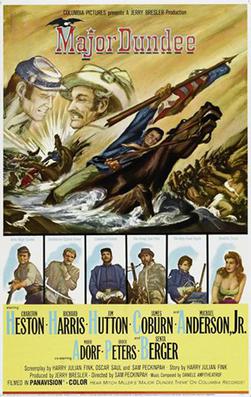
The backstage story of Major Dundee is an interesting one. Director Sam Peckinpah was drunk a good deal of the time, making him more irascible.  At one point, it's alleged that star Charlton Heston drew out his sabre and literally charged at the director.  Columbia Studios, fearing a disaster, cut the budget and ordered the Mexican shoot to close quickly.  Reedited with little to no participation by Peckinpah, Major Dundee was a critical disaster.

Nearly fifty years later, a restored version, putting back much of what was cut from the original, along with a new score by Christopher Caliendo, was released to much warmer reception.  Major Dundee is a good film, though not a great film, one that could have been more than what it is now but which still has a lot more positive than negative.

Narrated by Union bugler Tim Ryan (Michael Anderson, Jr.), we learn that we are still in the grips of the Civil War, out in the New Mexico Territory.  An Apache war lord, Sierra Charriba (Michael Pate) has been raiding and killing the settlers, culminating in a raid on a homestead where Union troops sent to stop him are slaughtered.  A punitive expeditionary force is sent out to capture or kill Sierra Charriba, led by Major Amos Dundee (Charlton Heston).

Dundee does not have enough men to go after Charriba, so he is forced to get Confederate prisoners to join in, none of whom are eager to join the Yankees.  The most unhappy about it is Captain Benjamin Tyreen (Richard Harris), an Irish immigrant who has risen to Confederate aristocracy.  He also happens to be Amos' former friend now bitter enemy.  Ultimately, being a Southern gentleman he gives Dundee his word that he will serve faithfully under Dundee, until the Apache is captured or killed.

Joining Dundee are African-American soldiers (then called Negroes), some mercenaries, and Samuel Potts (James Coburn), a one-armed scout.  There is also a bumbling artillery man, Lieutenant Graham (Jim Hutton), who isn't too eager to join on this journey.

In order to get to Sierra Charriba they have to cross into Mexico, currently in the grips of its own domestic crisis with the French having invaded and installed Maximillian and Carlotta of Austria as Emperor and Empress over the objection of its President, Benito Juarez.  The French occupation of Mexico is just one issue the driven Dundee faces, but the main one is how to integrate all these disparate troopers who loath each other.  The Union and Confederate soldiers barely get along and some of the Confederates have a hard time seeing the 'Negroes' as equals (one Rebel brazenly orders a black soldier to remove his boots).


As the hunt continues, Dundee becomes more inflexible, to where he has no problem engaging the French troops to get needed supplies in a village already stripped of everything by the Apache, the French, and now the Americans.  Despite the dire circumstances, Dundee bends to help the villagers, one of whom is surprisingly, a beautiful German-speaking woman, Teresa Antonia (Sante Berger), the widow of the local doctor whom she met in Vienna.

Tyreen and Dundee vie for the widow's affection, but they still have a mission. Dundee becomes more and more obsessed with chasing Sierra Charriba, while everyone else pays the price for his obsession.  Just as the various troopers appear to be getting along, one of them attempts to desert, and Dundee's order to shoot him when captured splits them again.

Eventually, they do find and kill Sierra Charriba, but now they are being pursued by the French, angry at this Yankee incursion.  The Americans/Confederates now must race back to the Rio Grande into the United States before the French catch up to them, and not all will survive.  Those who do return to the United States, according to the narration, on April 19, 1865, unaware the Civil War has come to a close and President Lincoln is dead.

Major Dundee has several elements which appear borrowed from other films past and future.  When Tyreen shoots the deserter, we can see elements of Lawrence of Arabia when T.E. Lawrence must do a similar act to keep his Bedouin army together.  Getting a group of military prisoners to join in this daring raid brings to mind a pre-Dirty Dozen.  We can even see shadows of a later Peckinpah film: The Wild Bunch, when another group of soldiers of fortune goes into Mexico.

Probably the biggest inspiration for Major Dundee is Moby-Dick, with Dundee as the crazed, obsessed Captain Ahab, chasing his own white whale with his conglomerate.  If so, then we have a slight issue when it comes to Charlton Heston.


I'm a Heston fan and think he is one of our great actors, but while he gave a good, solid performance in Major Dundee, I never fully accepted that he was a somewhat obsessed, almost crazed military leader.  There were moments when Dundee's obsession, his conflict between a love for Antonia and his desire to defeat all his enemies did come through (the scene where he is caught with another woman while recovering from an arrow wound is especially good).  However, Heston appears too controlled, too strong a presence to be seen as obsessed to the point of blindness. 

It's as if we can't see Heston as Dundee losing control of himself.  Yes, Heston commands the screen and yes, Heston conveys strength and arrogance and disinterest in how his troops see him, all to serve the mission.  Yes, we can even see a more romantic side to Chuck when he woos the widow, but despite this, Dundee's obsession with taking down Sierra Charriba doesn't quite come through because Heston seems too solid, too intelligent to give in to primal rage.

Heston, however, is above Harris' mannered Southern squire, who attempted to be charming but ended up looking slightly fey and exaggerated in his manner.  Much better were Hutton as the bumbling Graham, who I figure was the comic relief, but the best performance I thought was Coburn as the wily and realistic Sam.  He and Dundee had a closer relationship than that of scout and commander (often, Sam would refer to him as 'Amos', something even Dundee's former friend Ben rarely if ever did, and if so more out of anger than respect or camaraderie).  He was sensible, shrewd, and courageous, and stole almost every moment he was in.

Anderson, who narrates the film in voice-over, has amusing moments as the innocent bugler who finds a beautiful girl in the village to be loved.  Berger, in an equally smaller role, is the voice of love in a testosterone-filled film, one who is strong on her own but who still loves her very flawed man.  Mario Adorf brought dignity to his role of Sergeant Gomez, to where we can forgive his not being actually Mexican.  It's good to see a Hispanic

Major Dundee at times seems to lose its way, particularly with a very extended Mexican feast at the village that seems to drag down the film.  It also at times seems to forget that the quest is the central goal as it meanders back to getting at Sierra Charriba.  The actual battle seems almost anticlimactic and quick.

Still, there is more good than bad, and some wonderful moments.  Despite some night battles being hard to see, the final battle with the French is strong, particularly in the evolution of Tyreen, who risks his life for the colors, perhaps not realizing in the heat of battle that he was rescuing the flag of his sworn enemy.  The march out of the fort, with the defiant Confederates singing Dixie, the Union responding by simultaneously singing The Battle Hymn of the Republic, while the civilians singing Oh My Darling Clementine, was also beautiful (pity they didn't give the African-American soldiers a song, though I imagine they would be with the Battle Hymn). 

As we didn't have a chance to hear the original score, we can't say how it compares to the original, but the restored film's score by Caliendo is strong and thrilling.

Major Dundee could have been a great film, and perhaps it could benefit with a remake.  With strong performances by most of the cast and an interesting story, it works to entertain.  It doesn't hit the level of epic it aspires to, but it is a film that should be better remembered.   


DECISION: B-   

Saturday, July 1, 2017

The Song of Songs: A Review (Review #922)

THE SONG OF SONGS

It's hard to argue against a film that has Marlene Dietrich in the main role, but I wonder if The Song of Songs was really suited for her.  Her first film with a director other than her Svengali, Joseph von Sternberg, The Song of Songs still gives us her glorious face, but something is still a bit off, the idea of who Dietrich is supposed to be a bit lost.  It's interesting to see how she perhaps was crafted by von Sternberg into the Goddess she was seen as, and The Song of Songs, while at times quite lush and beautiful (like Dietrich) was not all it could be.

Innocent country girl Lily (Dietrich) is forced to move to Berlin after her father's death.  This thoroughly naïve, virginal girl is taken in by her aunt, Mrs. Rasmussen (Alison Skipworth), who owns a bookshop.  Auntie isn't happy that Lily is so uncultured and worries that despite her country bumpkin manners, her body and face will draw wickedness.

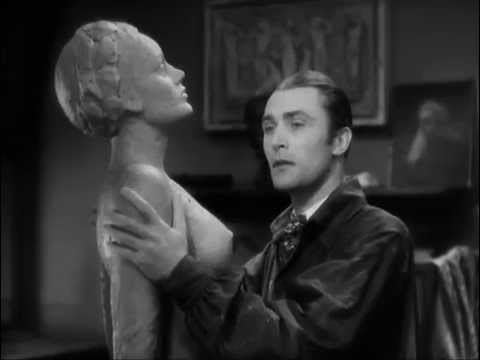
Lily soon catches the eye of Richard (Brian Aherne), a sculptor who lives across the street.  She is flattered that he wishes to sculpt her, but shocked he wants her to pose nude.  Mustering what courage she has, she disrobes for him as he creates the sculpture, which he calls The Song of Songs, after the book of the Bible that is her favorite and which she read to her dying father.

Soon, despite Auntie's whippings, Lily continues to pose for Richard and despite themselves, they fall in love (and presumably, in bed).  There is however, an obstacle: the Baron von Merzbach (Lionel Atwill), who commissioned The Song of Songs.  He is drawn to Lily, both for her beauty and innocence.  The Baron pushes Richard to abandon Lily and let him make her his Baroness.  Reluctantly, seeing that he has nothing to offer her, Richard agrees.

The Baron, no fool, has already gotten Mrs. Rasmussen's agreement to essentially sell off Lily to him.  Lily, devastated by Richard's sudden abandonment, marries the Baron.  The now-Baroness has to contend with a man she does not love, a Mrs. Danvers-type housekeeper (Helen Freeman), who it is strongly suggested had been the Baron's mistress prior to Lily, and the agriculturalist/gardener Edward (Hardie Albright), who has fallen immediately in love with the Baroness.

The Baroness is taught to be a sophisticated lady, but she still loves Richard despite the lessons in French, singing, dancing, and piano.  The Baron, eager to see how well his Eliza Dolittle has turned out, invites Richard to dinner to see how he has molded his own creation.  This reunion is an unhappy one, and in desperation the Baroness throws herself at Edward.  An accidental fire at his hut, however, alerts everyone to her indiscretion, and now shamed, leaves to sink into a life on the streets as a bitter but elegant courtesan.

Richard spots Lily at a club, and drags her to his apartment, where The Song of Songs still resides.  Angry at what she has become, Lily smashes the statue, declaring what right has she to live.  Despite the utter destruction of The Song of Songs, Richard and Lily may yet still make a life together.


Part of the difficulty with The Song of Songs is believing that Dietrich was an innocent anything.  Just a year earlier in Shanghai Express, she was the brazen, erotic Shanghai Lily, and now we were asked to believe she was Virginal Milkmaid Lily.  It all seems so outrageous to believe or accept given that for all these years, Dietrich's image was that of a femme fatale.  She just didn't convince that she was a naïve innocent. 

It would be akin to have us believe that The Golden Girl's Rose Nylund was now suddenly Blanche Devareux.

Despite this, Dietrich gave the material her best, and once she had fallen, we saw the Dietrich we all know and love, the erotic chanteuse whose sultry voice could lure men.  I think she gave playing the innocent as good a go as she could, but at times director Rouben Mamoulian was more interested in the visuals than in the performers.

That certainly is something The Song of Songs has going for it: a sometimes lush and romantic look that captures your attention.  Whether it is the clutter of the bookstore, the lovers' frolic in the meadows, or the final memory of when she, this fresh and innocent creature, had come to Richard's studio versus how she was now, the film does have an extraordinary look.

It doesn't have a particularly good performance from Aherne, who was exaggerated as the lovelorn Richard.  He was trying too hard to be so disinterested at first, then too interested later.  There is also in how he handles the sculpture, which at times borders on the frisky if not freaky.  I figure that was deliberate: to make the figure his own Pygmalion, but it did look a bit odd.  Almost makes one wonder what he does with The Song of Songs after dark.


One aspect of The Song of Songs that is puzzling in with regards to the Baron.  The script wants to have it both ways when it comes to him.  On one hand, he appears to genuinely love her, eager to make her into a refined lady and giving her a life of prestige and privilege as a Baroness.  On the other, he comes across as almost a dirty old man, lusting after this young, nubile creature, and having no regard for her in any way except to pass her off as a refined lady.

The film never entirely decided whether The Baron was in love with Lily or just lecherous towards Lily, asking us sometimes to be sympathetic to him, sometimes to rebel against him.

Same goes for her relationship with Edward.  She attempts to show how jaded she is when he declares his love, but then throws herself in desperation towards him, and more hilariously, thrusting her arms to where she literally sets the fire.

I've heard of Love in Flames, but this is a bit much.

The Song of Songs does have some really wonderful moments, particularly montages where we see the education of Lily, and the film is entertaining enough.  It just could have been more.

It's curious to see the great Dietrich, a woman who defined strength and allure, passing herself off as an innocent, down to a very soft voice.  I think her image as the sultry world-weary woman was too set to allow a radical shift like with The Song of Songs

My understanding is that The Song of Songs was the film, or at least the first, which heralded Marlene Dietrich's slide into 'box office poison'.  I might be wrong, but looking at the film, it might be a stretch in some respects, and by no means her finest hour.  Still, The Song of Songs has a melodramatic quality that is entertaining if a bit overdone.  With some beautiful imagery, and the beauty of Dietrich, The Song of Songs is lush though far from perfect.

Finally, a side note.  Given the somewhat erotic nature of The Song of Songs or The Song of Solomon from the Old Testament, does anyone else think it was a very curious choice for this innocent milkmaid to read this particular book to her dying father, or that her father would declare it his favorite book of Scripture?

DECISION: B-