Saturday, March 16, 2013

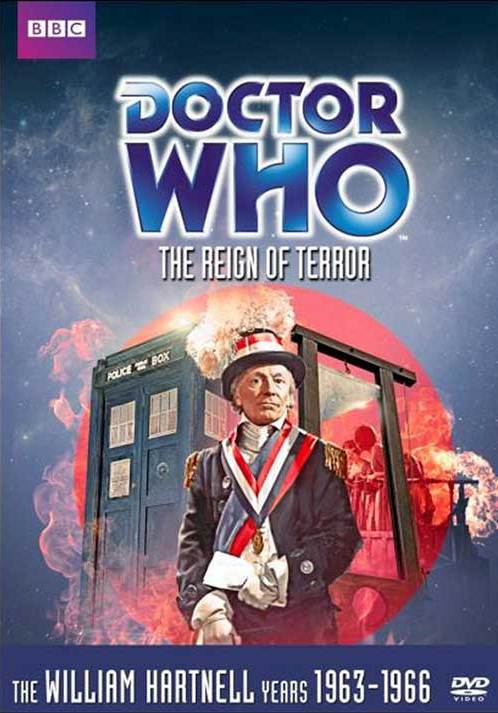
Doctor Who Story 008: The Reign of Terror

STORY 008: THE REIGN OF TERROR

The six-part First Doctor story collectively known as The Reign of Terror is yet another of the 'lost' stories, with two episodes missing.  Through the magic of animation reconstruction, we now have as close to a complete restoration as possible should the episodes never be found.  It is also a historical story, and with the collective title of The Reign of Terror we can guess it takes place during the chaotic post-French Revolution period.  We learn that the French Revolution and the succeeding period is the Doctor's favorite period in Earth's history, though one wonders why a pacifist would enjoy a period a particularly bloody period.  While The Reign of Terror suffers from an excess in length and appears to be taking its cue from other stories (more on that later), it is on the whole less an adventure story and more a history lesson through the six episodes: A Land of Fear, Guests of Madame Guillotine, A Change of Identity, The Tyrant of France, A Bargain of Necessity, and Prisoners of the Consiergerie.

The Doctor (William Hartnell) is in as especially cross mood.  His Companions Barbara Wright (Jacqueline Hill) and Ian Chesterton (William Russell) want to go back to their own time.  With a mixture of anger and hidden sadness he drops them off at what he thinks is 1963 England.  As is the ways of Doctor Who, he is mistaken: he lands them in France, specifically mid-July 1794 at the end of the rule of Maximilien Robespierre. 

The Doctor, his Companions, and his granddaughter Susan (Carole Ann Ford) now find themselves caught up int chaos of the Revolution.  Captured in a farmhouse, Ian, Susan, and Barbara are taken to Paris for prompt beheading as Enemies of the Revolution.  The Doctor, having survived the torching of the farmhouse, goes to their rescue.

He needn't have bothered.  While Ian is separated from the women, their route to the execution is interrupted by a secret group that rescues those sent to the guillotine.  Their rescuers, Jules (Donald Morsley) and Jean (Roy Herrick), suspect that there is a double agent within their ranks.  Also aiding them is the handsome and charming Leon (Edward Brayshaw), who has smitten and been smitten by Barbara.  Susan, however, has taken ill, and after a dangerous visit to a physician, they are recaptured and sent back to the Conciergerie Prison.

The Doctor, meanwhile, has infiltrated the Conciergerie, pretending he is a high provincial official of the Revolution.  The Jailer (Jack Cunningham) is constantly puzzled by this official, while the prison official and Revolutionary leader Lemaitre (James Cairncross) suspects there is something peculiar about this garishly-dressed officer.  It also doesn't help that he thinks Ian knows something about an espionage ring that is working with the British.  Ian, having overheard a dying prisoner, escapes and now has two goals: to find Susan and Barbara, and deliver a message to the mysterious James Stirling. 

Eventually the Doctor and his Companions are reunited, Barbara and Ian arrange a secret meeting where some Corsican general is offered one of three consul positions in a new French government, James Stirling's identity is exposed and Robespierre fell, bringing an end the Reign of Terror.

The Reign of Terror is at heart, a good idea for a story, but it has some flaws.  One big flaw is its length: at six episodes is it two episodes too long.  We go through a lot without actually having the cast be participants in either affecting or altering history be it major or minuscule.  Instead, they were just carried into events, always reacting to things but not impacting them.

Second, Dennis Spooner's story appears to be drawing inspiration (consciously or not) from The Scarlet Pimpernel.  We have a British agent working during the French Revolution who is involved in rescuing people from the guillotine while maintaining a secret identity.  Furthermore, we don't have any specific reason as to why Jean and Jules rescue Barbara and Susan in particular (other than they just happen to be in a passing tumbrel).  Part of me would have liked to have seen a little more humor without flashing back to the Looney Tunes' The Scarlet Pumpernickel.

The entire subplot of Ian's involvement with British spies seems to be there just to A.) lengthen the story and B.) give Ian something to do.  Most of the non-Doctor action involves Susan and Barbara: attempting to escape prison, attempting to stay alive and find both Ian and the Doctor.

Moreover, Ford's Susan proves herself to be shockingly annoying.  One appreciates that she has become violently ill during her time in prison (although to be frank, this whole 'Susan is getting in the way' business is slowly starting to get a bit tiresome), but even as she grows weaker and weaker (only to have a great recovery before the story ends), her whining and complaining about things slowly starts getting on our nerves.   It almost seems that most of the story is there, without the main cast having to do things to either get into or out of their situations.

One thing that was amusing (perhaps unintentionally, perhaps not) was the Doctor's wardrobe.  With his mass of feathers in his cap, it seemed that we can never fully take his get-up seriously.  Granted, it was done to get into the prison, but at times it does prove almost hilarious to see him constantly strut around like an unhinged peacock.  We also have an extended sequence in Episode Two: Guests of Madame Guillotine where the Doctor is put to manual labor which seems to just stretch the story.

Finally, for a story that is set in the Doctor's favorite era in human history (again, though we don't know why this particular time period is his favorite...I would have thought the Renaissance, or the Enlightenment, or even the Era of Good Feelings), he doesn't seem to either know much or show any particular fascination of being within that time frame.  He never stops to marvel that he is rubbing shoulders with Robespierre (who at least is seen as a loon).

However, The Reign of Terror has some wonderful things buried within this lost story.  Cunningham is in turns comic and menacing as the Jailer.  With equal ability he can be flustered, even flummoxed by the Doctor's mind games and suggest that he will take advantage of Barbara.   The identity of James Stirling does come as a true and unexpected shock.  We also have some of best examples of how Hartnell's Doctor is brilliant in how he is able to outwit his enemies rather than by using force.  How he manages to deceive the Jailer and Lemaitre, then use his backfired plan against the Jailer shows he is simply on a higher intellectual level.

One positive aspect is the conflict between Ian and Barbara after Leon the traitor is killed.  While Ian sees things as black-and-white (Leon was evil, he had to be killed), Barbara sees things in shades of grey (perhaps fifty given how she appears to like Leon).  She comments that Leon saw himself as a patriot, not as a villain.  In his perspective, Leon was working for the good guys and Jules and Jean were the bad guys.  It's unfortunate that the suggesting of attraction between Leon and Barbara stumps her argument, it does show that Doctor Who was willing to explore ideas about good and evil.  Unfortunately, this fascinating discussion was dropped pretty quickly but the fact it was introduced at all was a positive step.

Finally, the end of Episode Six has a simply wonderful closing scene with beautiful dialogue.  Having perhaps accepted that the four must keep wandering through time and space together a little bit longer, the Doctor muses, "Our lives are important, at least to us.  But as we see, so we learn."  Ian asks, "And what are we going to see and learn next, Doctor?"  The Time Lord replies, "Well, unlike the old adage, my boy, our destiny is in the stars, so let's go out and search for it."  We now see the chief strength of Doctor Who: limitless possibilities in terms of story. 

As far as the animation for the lost episodes (Episodes Four and Five: The Tyrant of France and A Bargain of Necessity) this is the second time we've had a reconstruction through animation.  The Invasion, the lost Second Doctor story, was brought to life through the work of Cosgrove Hall.  The Reign of Terror's animation is brought by Theta Sigma, and the styles of animation are clearly evident.  It might not be unfair to compare the two works, and I'm willing to acknowledge that perhaps seeing The Invasion first I am prejudiced towards that style of animation.

For myself, the animated episodes looked garish and surprisingly nonhuman.  I recognize that animation sometimes looks unreal, but with the two missing episodes I felt there was too much focus on the art and less on the human aspect.  In short, the animation drew a bit too much attention to itself in my view and less on the story.  While I got lost in the story of The Invasion and gave the animation not much thought (seeing it flow naturally in the story), The Reign of Terror didn't seem too concerned to make things look more natural.

On the whole, The Reign of Terror is a long but straightforward historic piece.  It isn't terrible but it has one or two flaws (particularly the length) to make it among the greats.  Still, on the whole mildly entertaining but nothing to lose our heads over.    

Unofficial Inspiration?
    

6/10

Next Story: Planet of Giants

Jazz On A Summer's Day: A Review


JAZZ ON A SUMMER'S DAY

What Music They Made...

My musical tastes run the gamut from The Smiths to George Strait to RenĂ©e Fleming to Michael W. Smith to Bob Dylan to Cusco to Ella Fitzgerald to John Lee Hooker to R.E.M. to the Kronos Quartet to The Supremes to Pitbull to Vangelis to Sade to Kenny Rogers to R. Carlos Nakai to Skillet to New Order...well, you get the idea.  As someone who loves music, I went into Jazz on a Summer's Day curious but not too familiar with jazz music itself.  The film is not strictly speaking a concert film because we get images of the America's Cup trials also taking place in Newport, Rhode Island at the same time.  It is closer to a documentary since we not only have no narration but also actual documentation of the performances rather than stating a point of view.  However you label it, Jazz on a Summer's Day is an extraordinary film, featuring some legendary performances that would make anyone fall in love with this distinctly American art form and see that above all else, good music is something to be enjoyed for its own sake.

Chronicling one day at the 1958 Newport Jazz Festival, Jazz on a Summer's Day directed by photographer Bert Stein in his only film showcases singers both well-known and more obscure to today's audiences at the top of their form.  More important at least to me, we see that for both participants and audiences, music was something to enjoy.  It's clear that those on the stage and those listening are A.) there for a good time, and B.) having a good time.

The performances are a mix of all sorts, interlaced with footage of young jazz enthusiasts playing at a home (or in a car, even dancing on a roof).   We also cut to reactions of the audiences, and Jazz on a Summer's Day might be a little jarring since we see them in suits, ties, dresses, amazingly well-dressed for a day-long concert in the outdoors.  However, given this is how they actually showed up (as opposed to the t-shirt/ripped jeans that are seen as the traditional concert uniform today), Jazz on a Summer's Day makes the audience look cool in their stylish casual wear.

Let us now focus on the performances.  We start with jazz legend Thelonious Monk, moving on to the George Kelly Quintet, Dinah Washington, and Gerry Mulligan Quartet who are more traditional jazz.  Jazz on a Summer's Day however, doesn't just stay within the jazz world.  We also get a little hard blues with Miss Maybelle, some highly experimental jazz with the Chico Hamilton Quintet and even a little early rock-and-roll with Chuck Berry.

That's right: Chuck Berry belts out Sweet Little Sixteen at the Newport Jazz Festival.

If I may digress a bit, Jazz on a Summer's Day shows that at this point in time, people followed Louis Armstrong's adage that there were only two kinds of music: good music and bad music.  In any other venue (say, a Woodstock or Warped Tour or Lollapalooza) it would be almost inconceivable to have a jazz performer or a classical guitarist take a stage in the same venue as a Green Day or Sparta.  Christopher Parkening will never jam with David Guetta, who might never perform with Enya, let alone appear on the same bill.  However, back in 1958, there wasn't that large a division between genres.  Blues, early rock-and-roll, and even avant-garde jazz all worked with more traditional sounds, which makes the collection of artists in Jazz on a Summer's Day such an astounding document.  

    
For myself, the highlight of Jazz on a Summer's Day is the extraordinary Anita O'Day, who is the second performer in the film.  Her rendition of Sweet Georgia Brown is simply amazing.  O'Day has a great sense of class, so stylishly dressed and the talent to back up her joy and a hint of swagger when performing.  It's clear that she loves the music, and her delivery and phrasing makes another song she performs, Tea For Two, into a fast and smooth version rather than the usual rendition of the song as something small and cute.  Everyone is having a good time: O'Day, her band, her audience, and the joy comes through. 

Speaking of Satchmo, Armstrong himself performs to a delighted audience, and his set is simply fantastic all the way.

However, I would be remiss to not point out that the film also has some remarkably contemplative moments.  Between the O'Day and George Kelly Quintet set we get a little Bach on the cello, which makes both the images and the sound more beautiful.  We also have contemplation with the final act, introduced in the most beautiful way possible.

"It is Sunday, and it is time for the world's greatest Gospel singer: Miss Mahalia Jackson."

Sister Mahalia brings a little church to Newport, bringing the joy of salvation and having people dance (if perhaps not in the Spirit) with Didn't It Rain.  Just before she closes her set, she almost sheepishly tells them, "You make me feel like a star," showing a deep humility at her enthusiastic response.  Jackson rarely ventured into secular music, making her appearance at a jazz festival all the more special. 

She however, stayed true to her gospel roots, closing out her set and Jazz on a Summer's Day with The Lord's Prayer, sung in a beautiful, haunting, and respectful way that makes it a true prayer in song.  The audience is rapt in attention, even some mouthing the words.  I can't think of a better way to close this most extraordinary and beautiful film. 

Jazz on a Summer's Day is simply the greatest concert film ever made (apologies to Woodstock, The Last Waltz, and Monterrey Pop).  It has a cool, relaxed atmosphere where performer and audience were professional and more importantly, just having a good time.  The music is beautiful, relaxed, and one where the joy of music pours out.  For myself, let them continue playing All That Jazz...

A Beautiful Day Indeed...


DECISION: A+

Thursday, March 14, 2013

Golden Boy: Young Guns Review

GOLDEN BOY: YOUNG GUNS

Rookie Justice And Mercy...

As we enter our third Golden Boy episode, I figure that the flash-forwards are slowly disappearing from view.  If that is the case, then Golden Boy will eventually find its way into a straightforward CBS police procedural, which I don't object to.   Already the only real hints of the future come from twice.  The first are the opening titles, where we are informed that Detective William Clark will become the youngest Police Commissioner in New York City history and this is his story.  The second come at the opening and closing of Young Guns, where in the grey-tones that Golden Boy indicates to be the future we see the older Commissioner Clark (Theo James) speak to a group of rookies.

Everything else in Young Guns could easily come from any other cop show about a rookie's first year battling such things as rival officers and his own ego and judgment.  In its favor, Young Guns takes a greater focus on the crime being investigated and comes up with a solid resolution.  However, we have the extra element of having the interplay between and within the characters being given equal treatment, making Young Guns both a plus and a minus to Golden Boy's overall premise.

Commissioner Clark makes an unannounced midnight appearance at his old precinct, where he addresses the officers.  From there, he tells his story of a case that had him balance what the law says and what justice is.   There is a shooting at the projects: two young men lie in an apartment.  One is dead, the other clinging to life, with the distraught mother of the barely alive one almost in hysterics.  Detective Arroyo (Kevin Alejandro) wants to continue the investigation if it means keeping the victim here, Detective Clark wants the victim moved to hospital.  Eventually Clark's partner Detective Owen (Chi McBride) gets them to go and move him to stop the tenants from becoming too hostile.

Back at the precinct, Detective Arroyo is angry to see his old friend Deputy Mayor Ellsworth (Eric Morris) takes a shine to Clark, giving him free tickets to a Yankees game at the Mayor's skybox rather than to Arroyo.  Arroyo's jealousy and rage get the better of him, and he tells Clark that he has a recording of him giving evidence money to Natasha, an informant from their last case.  He won't tell, and he won't drag Owen into this, if Clark just remembers his place and becomes deferential to Arroyo.  Even though Clark won't confide in Owen, the senior partner is too shrewd to not think something is not up.  He tells Clark that Owen is now 'investigating' him.

Meanwhile, the case goes on.  Arroyo and his partner McKenzie (Bonnie Summerville) zero in on Evander, a local drug kingpin, especially after learning there will be a shipment of weapons coming in for him.  A slight mix-up in location causes them trouble: rather than wait for more officers Arroyo orders that everyone raid the warehouse that wasn't targeted.  McKenzie is almost killed but Clark comes in and saves her.  While the weapons are confiscated, Clark learns with a little more investigating that Evander is not the actual killer.

Now Clark's dilemma: should he serve the law and arrest the actual killer, or serve justice to keep an admittedly bad man in prison.  Clark opts to do the right thing, which doesn't sit too well with the antagonistic Arroyo, but we end Young Guns with two curious moments: a.) Detective Clark has stumbled upon Arroyo and McKenzie in a compromising position, and b.) Commissioner Clark greets a rookie, one Officer Arroyo, Jr. (Blaze Mancillas).


Young Guns did something that Golden Boy has not done in the preceding two episode: put the crime as a major part of the story.  Granted, the actual mystery ended up being less than a mystery and the conflict between the detectives is what people tune into for the majority of the time in CBS police procedurals.  However, one thing that was dropped was the flash-forwards that dominated both the pilot and The Price of Revenge.   In fact, minus the opening and closing, Young Guns might have come straight from a Blue Bloods spin-off (if there was a cocky, smouldering kid on that show).  I don't know if this is how Golden Boy will keep the flash-forwards to a minimum, but I suspect they will.

Again we see that what is becoming the central question of Golden Boy (will Detective Clark follow Owen's example of doing good or Arroyo's example of winning at all costs as he climbs to Commissioner?) is not given a definitive answer one way or another.  Certainly we have flashes that he could take either route.  For example, the closing moment of the present-day story, where he observes that McKenzie and Arroyo are lovers, now give him some leverage against his rival.  Will he use it against Arroyo, and if so, how?  If he doesn't, how will he escape Arroyo's grasp?

We can see that Young Guns has parallel stories of the shooting victim and the ambitious cop.  When Clark is questioning the mother about the shooting, she made the comment that one of the victims said to her son that Evander "owns" Michael.  Clark's reaction is obvious since earlier Arroyo had used the exact same phrase.  "I own you," the detective tells Clark, one golden boy to another.  Both are caught in situations of their own making against antagonists that while technically clean are also ruthless and determined to show their underlings that they are in charge. 

Michael's choice nearly cost him his life.  It's clear that Clark's career survived whatever plans Arroyo had for him, but now the real mystery of Golden Boy grows: not only how does Clark get out of his predicament, but at what cost?

If anything, we have the basic structure to the series (the rise of this young man to see what exactly he turns into) as well as the characters whose motives are easy to understand.  Arroyo is used to being the big man on campus, and this kid comes in.  At first considering him a nuisance, Arroyo now sees him as someone who could eclipse him, and his ego will not allow that (at least without a fight).  Under normal circumstances he would be 'the bad guy', but Alejandro shows him to be an effective and basically professional cop who knows what he is doing (most of the time). 

McBride is also bringing the traditional 'wise elder' character something that we don't see with mentor/student relationships: a genuine shrewdness.  Clark and Arroyo both think they are successfully keeping Owen out of the loop, but neither appreciates that he hasn't been on the force 22 years without knowing how to read people.  When he asks Clark, "When did you become Arroyo's bitch?", it is not only funny (I admit to laughing out loud) but also as clear an indication to Clark that Owen is aware something is going on.  Still, McBride plays Owen as someone who unlike the equally hot-headed Clark and Arroyo, is willing to bide his time until he finds the truth.

As a digression, Arroyo, Clark, and Owen remind me of a story about three samurai who battled each other to become Shogun.  There once was a bird who would not sing.  One of them said, "Little Bird, if you do not sing, I will kill you."  The second said, "Little Bird, if you do not sing, I will make you sing."  The third said, "Little Bird, if you do not sing, I will wait for you to sing."  It was the third samurai who came out triumphant.  Arroyo would be the first: cold, ruthless, unwilling to let others get either the best of him or in his way.  Clark would be the second: determined to force situations to his favor.  Owen is the third: waiting to see how things work out and then make his move.  

Summerville is being set up to be caught in the Clark/Arroyo crossfire, though I keep wondering what exactly McKenzie sees in Arroyo (beyond the physical) to be romantically involved with him.  She, unlike her partner (in every way) sees Clark has capabilities and doesn't let her ego get the better of her (unlike Arroyo, who can't see straight when it comes to Clark).

One minor character, Detective Joe Diaco (Holt McCallany) appears to be getting lost in the shuffle.  He brings a lightness to the show and in Young Guns appears to be a competent, solid detective.  He even handles a bit of the investigation himself, but so far he seems to be there to be likable, provide tickets for all sorts of things ranging from Broadway to Jets games.   I hope to be wrong, but I keep thinking Detective Diaco is destined not to remain long with us...

Something that I wasn't too sure of was in regards to Officer Arroyo, Jr.  I can't remember if Detective McKenzie is now Arroyo's mistress or secret girlfriend because I can't recall if he is married or not.  I think the pilot established he was indeed a married man when he is involved with McKenzie, but I wonder if Commissioner Clark would tell this story of finding Arroyo and McKenzie in locked lips with his son to hear.  One hopes all these things will be answered in due course.

So far Golden Boy is keeping the cards close to the vest, unwilling to tip its hand as to whether Detective Clark becomes corrupted on his rise to power or not.   Young Guns put more emphasis on the present than on the future (which is a plus) but in doing so it also might be acknowledging that it can only keep going back to the future so much before that becomes too distracting.  It's building its story slowly, methodically, patiently.  On the whole, I think it is worth investigating to see whether the youngest Police Commissioner in New York City's history is worth finding that room at the top.      

7/10

Next Episode: Role Models

Wednesday, March 13, 2013

Golden Boy: The Price of Revenge Review

GOLDEN BOY: THE PRICE OF REVENGE

Rookie Best Served Cold...

On our second episode of Golden Boy, Police Commissioner Walter Clark (Theo James) reflects on the importance of confidential informers.  He does so by surreptitiously attending an informer's funeral, then flashing back to the first informer he knew and how that case went.  The Price of Revenge is like the pilot, more character-driven than mystery-driven, though this is more a plus than a minus.  It sets up future stories while going further into how the title character continues to grow as both a detective and a person.

Detective Clark apprehends Natasha Radkovich (Stephanie Brait), a petty thief who tells Clark and his senior partner Owen (Chi McBride) that if she tells them where a body is they could cut her a deal.  Clark and Owen find the body of a woman who is identified as being missing...as is her daughter Abigail.  The woman's sister Tara (Samantha Buck) tells the investigators that her sister had been clean for some time but that her niece's baby daddy was bad news. 

Meanwhile, Detective Arroyo (Kevin Alejandro) suspects that Natasha is not telling all he knows.  Partially because Clark now irritates him, partially because a child is missing, he literally beats it out of her, despite her pleas to talk to The Eyebrows (that would be Clark).  Natasha won't say anything about Arroyo's abuse but Clark can see it in her face (literally).  Still, there is no proof.  Abigail (Nicollet Pierinni) is indeed rescued, and the culprit, a highly troubled cab driver named Frank (Robbie Sublett) who had a sideline as a pimp, is taken in.

The Price of Revenge ends with our discovery that Arroyo got Natasha to get Clark to give her some money which may or may not have been evidence to help her get out of town (which he secretly recorded).  Sadly, the future Commissioner Clark places a rose on her grave, making it clear that she died shortly after the events of the story. 

We do have something of a subplot: Walter's sister Agnes (Stella Maeve) is now starting to show positive signs of improving her life with her new waittressing job.  In fact, Owen is impressed that Clark pays fellow officers to frequent the cafe and order donuts and coffee from the new girl. 

The Price of Revenge is centered again on the growing conflict between Clark and Arroyo.  It's clear that Nicholas Wooton's scripts are heading towards how the dynamics between the young upstart and the reigning detective will play out over the season.  Given that we know that he will grow up to be Commissioner Clark, I don't half-fancy Detective Arroyo's chances.  However, a major positive in Price of Revenge is that Arroyo is given a more complex persona.  He does a bad thing (beating a witness) but we see that he is motivated more by fears for the little girl than his growing antipathy towards Clark.  We also see the dynamic between Arroyo and his partner, McKenzie (Bonnie Summerville), which may be more intimate than perhaps acceptable. 

We also get a hint of things to come with Assistant District Attorney O'Connor (Odette Annabelle).  It's obvious Clark is instantly attracted to her (even though she instantly isn't).  Knowing what we know with the quick flash-forwards (and the fact that Theo James is breathtakingly beautiful enough to have deflowered Lady Mary Grantham, whose passions caused him to drop dead in her bed), I don't half-fancy O'Connor's chances of resisting Pamuk...I mean, Clark's charms either.

The guest stars were a highlight for me.  Brait's petty crook elicited sympathy as the girl who came to the Big City and found it wanting, fearful of police but wanting to trust.  Pierinni had a small role as the little girl Abigail, but seeing her sadness on realizing her troubled mother was indeed dead was genuinely sad. 

The Price of Revenge is still, however, geared more for the interactions between the officers than the actual mystery.  The growing rage within Arroyo, the growing antagonism Clark has towards Arroyo, the determination of Clark's senior partner Owen to keep him from going off the handle: all those are the things that are the focus of Golden Boy.  In this case, it becomes a dramatic version of The Office in the politics and rivalries between officers, but the drama between the characters is what keeps viewer's interest, with the mystery being just a way to get them to work.

So far, I've enjoyed the two episodes of Golden Boy, not for the crimes being investigated or even in the back-story of Clark's rise to power.  Rather, it is in how the interplay between co-workers is captured so well, something that is relate-able to audiences who have dealt with difficult co-workers in various points in their lives.    

In short, The Price of Revenge is well-written and acted, but again I wonder if the opening ("In seven years, Detective Walter Clark will become the youngest Police Commissioner in the history of New York City.  This is his story") will be the only thing left to remind us that these are all basically Commissioner Clark's remembrances.   Whether there will be a greater focus on the crimes I do not know (I suspect not), but Golden Boy is slowly starting to give greater focus to how people may start undercutting others for their own reasons, and in how one should react: do as their rivals do, or do the reverse to keep their humanity.      

Preview of Coming Attractions...


7/10

Next Episode: Young Guns

Tuesday, March 12, 2013

Emperor: A Review (Review #515)

EMPEROR

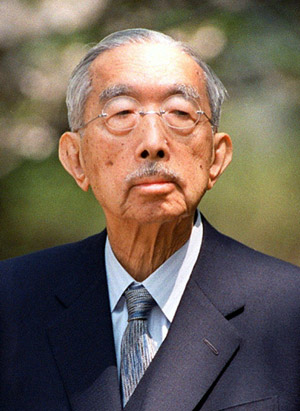
One of the great unanswered questions about World War II is exactly what role if any Emperor Hirohito of Japan had in the execution of the war.  History records that he was a powerless figurehead nearly totally removed from the actions taken in his name, from the invasions of Korea and Manchuria to the attack on Pearl Harbor, the Bataan Death March, and the rape of Nanking among other highlights during His Majesty's reign.   That has been the Official Story, which has on the whole been maintained for the nearly seventy years since Japan's total defeat (but which has been called into question since the Emperor's death in 1989). 

Emperor, the film, appears to be about the investigation into Hirohito's role in the prosecution of the war in the immediate days of the Allied Occupation of Japan.  This would be a fascinating film, seeing how perhaps the machinations of the Allies and the Imperial Court used each other to get what they wanted (even if it meant perhaps allowing a potential war criminal to get away).  Instead, Emperor takes up too much time with a love story which appears to be from another film altogether, and what could have been a great film is instead merely an interesting film for history buffs but which got lost in its determination to put more attention to romance than history.

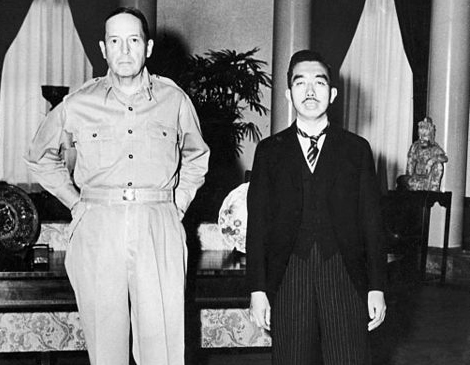
Japan has been brutally smashed by the Allied forces, in particular the Americans who bore the brunt of the Pacific War (including the opening salvo of the Pearl Harbor bombing by the Imperial Forces of Japan).  Now the Yankees have come to occupy the Land of the Rising Sun, a devastated ruin inches away from total collapse.  Heading up this Occupation is General Douglas MacArthur (Tommy Lee Jones).  One of the first orders of business is to round up any and all Japanese leaders now held to be war criminals, such as Prime Minister Tojo.

So far, so good.  Now the question is what to do about Emperor Hirohito, safely ensconced inside the Imperial Palace.  Washington and the American public wants him dragged out and hung for war crimes.  MacArthur fears that doing so will lead to an already emotionally and physically wrecked nation and population rising up to protect their Divine Sovereign.  Also, there is the question of legality to consider: what role if any DID Hirohito indeed have when it came to the prosecution of the war?

His Majesty consults with his top advisor...

To answer that, he appoints General Bonner Fellers (Matthew Fox) to investigate just exactly what His Majesty's role was...and to do it in 10 days.  Fellers fears this is not enough time to do so, but this is all the time he has to carry out this investigation.  He has been given a driver/interpreter, Takahashi (Masayoshi Haneda) but Fellers has something more important for him to do.

Fellers had once romanced a young Japanese girl, Aya (Eriko Hatsune), when they were studying at university in 1932.  However, she abruptly left the States without so much as a note.  In 1940, just before the outbreak of war, Fellers went to Japan to find Aya.  However, the government's paranoia about Americans forced the lovers to part, and now Fellers has decided to find whatever happened to the girl he loved and lost in the fog of war.

In all this, somehow the investigation continues, with various members of the Imperial Household attempting to block any suggestion that His Majesty could A.) been in any way involved with the war (their general position was, 'what war?', and B.) that His Divinity could ever be so much as interviewed, let alone answer questions. 

In the end Fellers gets all that he seeks: first, we find Aya's fate, and second, His Majesty astounds his advisers by paying a call on the Supreme Commander.  There, a meek but frightened Emperor Hirohito (Takataro Kataoka) goes to MacArthur and does the unthinkable: say he will bear all the responsibility for the war if it will spare his nation.  MacArthur, both genuinely moved and politically shrewd, tells His Majesty that such gestures will not be necessary.  Instead, MacArthur informs The Divine One that he needs HIS help rather than the other way round.

    
Emperor's greatest flaw is what it thinks is its greatest strength: the love story.  It's not a bad idea to have a story where romance is thwarted by war.  However, David Klass and Vera Blasi's adaptation of Shiro Okamoto's book His Majesty's Salvation never could integrate Feller's odyssey of the heart with his raison d'etre in Japan.  In fact, Emperor never appeared to decide WHICH of the two stories was the actual subplot.  One might imagine Feller's reminiscences about Aya would be secondary to the investigation about Hirohito's role in Japanese war policy: how deeply he was involved, whether he was in the loop or was just a powerless ceremonial sovereign. 

Unfortunately, so MUCH time in a short 98-minute film was spent on Feller's romancing and losing Aya and in his quest to discover her fate that it almost turns out the investigation into Hirohito is almost an afterthought.  He does do some questioning, and when he gets unofficial testimony about how at one point Hirohito broke precedent to speak a 'poem of peace' at a Cabinet meeting or how he suggested that his Cabinet, shortly after Hiroshima, agree with him to surrender, we have moments that actually draw us into the story.

Near the end, we have a flashback to when he had recorded his message to the Nation (The Emperor's Speech?) which had to be hidden (along with His Majesty) when fanatical troops attempted to force their way into the Imperial Palace to stop the broadcast.  Given the remarkably small budget Emperor had, it was an exercise in effective filmmaking as wave upon wave of troops attempt a coup.  These scenes, along with those of a devastated Tokyo (we can in some shots still see the capital smoldering in the background), are where Peter Weber makes the most of what he has and makes Emperor a strong film.


Did he get away with it?

However, it's in everything else where Emperor doesn't quite fall apart but which gets bogged down by its own misguided ideas.  As I've stated, far too much time is wasted on the love story which doesn't prove all that interesting.

I can't say that I'm a Matthew Fox fan (given that unlike most people, I didn't care to watch Lost after the first season), and I think an impersonation my friend Isaac does of Fox is better than what Fox does on screen.   However, in this case I'll say that Fox did the best he could with the material he had.  When he is questioning people, he is sharp and focused.  When he is romancing Aya, he looks almost bored.  The voice-over narration (one of the banes of my existence) does not help matters.

Hatsune similarly is given a thankless role, and one that never appears to come off.  She is suppose to be remarkably liberated for a Japanese woman (her phrase), but once back in Nippon she becomes the stereotypical demure, subservient Japanese lady.  The women in Memoirs of a Geisha were stronger and more liberated than Aya.

Tommy Lee Jones is having a grand time as the bombastic but shrewd MacArthur, a mix of someone who wants to build a better nation but who also has his eye on the Presidency.  It's unfortunate that Emperor (which I suspect the filmmakers were suggesting could also refer to MacArthur himself) failed to focus on him, or even bother to have him play much of a role in the story.  As great as Jones is, I wonder whether it was a mistake to not bother to either look or sound like MacArthur.  It looked like Tommy Lee Jones as MacArthur rather than MacArthur, but I give Jones tremendous credit that when he is on screen, Emperor picks up and we are instantly drawn to this vainglorious, cantankerous, and highly skilled military genius.

One big flaw in Emperor is what appears to be a subplot about a rival general who suspects Fellers' motives are less than pure.  This General Richter (Colin Moy) has gone so far as to compile a secret dossier on Fellers with such damning evidence as...he kept bombs away from an area where his ex-girlfriend was rumored to be in.  Why Richter so opposed Fellers (apart from a vague "we beat the Japs and he is a Jap-lover" motive) is left both unexplored and dropped before the film ends.

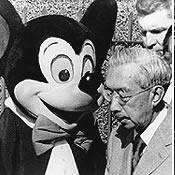
In the end, Emperor could be the love story or it could be the investigation.  It cannot be both.   On the whole I enjoyed Emperor (being a history buff, a World War II amateur historian, and a lover of Japanese art and culture) I found much to admire.  The historical truth in Emperor is up for debate.  Certainly Herbert P. Bix would contest much of it.  His book Hirohito and the Making of Modern Japan reads like articles of indictment against the Showa Emperor, arguing His Majesty knew and participated and encouraged the war much more than what has been reported.  He certainly didn't buy the idea that he was just this meek little marine biologist who like Mickey Mouse more than killing unarmed civilians. 

I can't answer one way or another, and Emperor doesn't give a definitive answer (though it leans on the 'figurehead' side).  If a greater emphasis on the investigation and machinations of keeping the Emperor in power had been addressed (and if Jones' MacArthur had been given a more prominent role), Emperor would have been a great film.  At the moment, what we have is a good film that military and history enthusiasts will enjoy, but which makes a case that here, it would have been better to make war, not love.


DECISION: C+

Monday, March 11, 2013

Golden Boy: The Pilot Review

 
GOLDEN BOY:
THE PILOT

Rookie Shines But Does Not Shimmer...

The police procedural is so synonymous with CBS it might just as well stand for Cop Broadcasting Service.  There's the CSI and NCIS franchises, Blue Bloods, Person of Interest, The Mentalist, Hawaii 5-0, and two new kids: the Sherlock Holmes update Elementary (which I happen to like) and Golden Boy.  How I got started watching Golden Boy I don't remember (I suspect an error in DVD recording), but the series takes a new twist on the cop procedural by going back and forth in time. 

Right from the get-go we know that Walter Clark (Theo James) will be at 34 the youngest New York City Police Commissioner in history.  We begin with an interview shortly after Clark achieves this ultimate prize (accomplishing something that future President Theodore Roosevelt took three more years to do).  Then we rush back to his earliest days as a beat cop.  There, he not only stops a hostage situation but saves his badly-wounded partner.  This being 2012, of course this was captured by cell phones, and thus Officer Clark becomes a famous hero.  Our ambitious cop now parlays his notoriety to go from mere cop to Homicide.  Despite his relative youth and inexperience, he gets his way.

Clark now goes into Homicide with lots of buzz, but not everyone warms up to our wunderkind.  Unfortunately for him, two of them happen to be both his 'hero' and his new partner.  In the latter is Don Owen (Chi McBride), a grizzled veteran two years away from retirement.  In the former is Christian Arroyo (Kevin Alejandro), a cock-of-the-walk who thinks Clark needs to learn his place.  Arroyo's partner, Deb McKenzie (Bonnie Somerville) had a brother, also a cop who has passed on before we start our story, who knew Clark and his sister Agnes (Stella Maeve), a girl trying to put her life back together. 

Our hot-headed Clark wants to be the one to crack the case presented: a young man murdered, but while Owen counsels patience (my young Padawan) Clark won't either heed his call or investigate the coldest cold case Owen gives him.  He wants the glory, he wants to recognition of his peers, but he still has much to learn.  Chief among his lessons is that he should acknowledge if to no one but himself the trauma he still suffers from the shooting that made him famous (his remarkably old-looking hands shake tremendously when leading a raid and he freezes when presented with an assailant about to shoot him).

Clark is also not above bending the law to get to the prime suspect, Oliver Esten (Roe Hartrampf) a wealthy heir.  He confronts him at a club and has no compulsion against taking his keys and going into his house to acquire evidence.  Clark's press connections threaten to expose the investigation to the public (a BIG no-no), but while Arroyo's less-than-orthodox methods (including being the leak to the press) do get Esten to be unmasked, Owen resorts to being an anonymous tip himself to save himself and Clark.  The Pilot ends with a now-Commissioner Clark reflecting on what he's learned on his first case: what kind of dog he fed in the beginning--the good one or the bad one (the positive side of his personality or the negative).

Golden Boy has the unique vantage point of being in the future, so we should already know that Clark has survived whatever machinations Arroyo or anyone else has created between the age of 27 (when he begins with Homicide) and 34 (the age he is when he becomes Commissioner).  One of Golden Boy's producers, Greg Berlanti, tried this future-flashback framing device on Jack & Bobby, which chronicled the rise of a future President of the United States while telling the backstory of the President and his brother.  An odd moment of history repeating itself.

In any case Golden Boy has slightly more positives than negatives to give it a mild recommendation as a mid-season replacement but which might eventually, if successful, lose or diminish some of its aspects.  For example, the characters are somewhat cliched: the grizzled veteran close to retirement (if McBride ever says that he's getting too old for something, just cancel the series), the cocky hot-tempered youth, the suspicious adversary, the troubled sister.  The actual crime is almost irrelevant to the story, almost as if we HAD to have a murder to give the cops something to do.  Perhaps crimes are solved that fast, I wouldn't know.  However, unlike other crime dramas we don't really bother going into the crime itself because the characters in the precinct are more important.

This is Golden Boy's salvation: the fact that the acting and characters are better than the material they're given.  I am extremely happy that we see a Hispanic in a major role (albeit the heavy, but a positive step nonetheless).  Alejandro knows something important: a villain never sees himself as a villain, and he plays Arroyo as someone who isn't evil but just willing and able to do things to show the new kids who's the boss.  McBride has the world-weariness to Owen down perfectly, someone who sees both peril and potential in Clark but who has his work cut out to whip him into shape.  The way he constantly cuts down Clark's pretensions of grandeur are excellent.

Not Always All Ears...

As the titular lead, the British James manages a good American accent.  A Nuw Yowk accent...not so much.  Despite his best efforts (and they are good) I was never convinced he was a native of the Bronx or Brooklyn or Queens...I think Clark is from Queens.  His performance, particularly the physical aspects (the lumbering gait, the slightly hunched-over figure as if trying to not stand out but not willing to slip into the shadows, the clenched fists) indicate that Clark is hungry but clumsy.  He WANTS to be at the center (or in his case, centre) of things but needs the patience and maturity he lacks to get to where he wants to go.  It's clear from the get-go that he's an ambitious young man who burns with desire to rise and rise.  James also has warm moments with his struggling sister (though one wonders why, given he lives alone and is currently unattached, he never has her live with him to begin with). 

With Nicholas Wooton's script we get an authentic sound to how colleagues speak to each other, complete with the rivalries and pettiness they have towards each other.  He is obviously building towards something with his characters

What is nice about Golden Boy is that Clark is not shown as a solid good guy.  He is a deeply flawed individual: ruthless, shady in his dealings with Esten, certainly with an ego and a sense of his own greatness.  He isn't the eager young rookie willing to learn to grow at his job.  Instead, Clark is a young man in a hurry, not particularly willing to wait or listen to advise to get ahead.  It will be interesting to see whether Clark follows Owen's example of steady work, Arroyo's example at success at all costs, or perhaps a mixture of the two.  In short, the one answered question in Golden Boy is whether Clark ends up a good guy or bad guy.

I wonder how long the framing device of going to the 'future' will last.  Given that if we are to focus on the crimes the flash-forwards will prove a bit distracting, and tying them to every story seems like padding.  Still, the characters were well-written and well-acted, quickly established (Arroyo's bad, Owen's good, Clark's somewhere in between).  The stories will be driven in the conflict between Owen and Arroyo over who ultimately controls how future Commissioner Clark turns out.  It might even be good to see Commissioner Clark take a case or situation set primarily in the future.

On the whole Golden Boy shows promise, but the violins might be tuning up already for a swan song.


6/10

Next Episode: The Price of Revenge 

Sunday, March 10, 2013

Jiro Dreams of Sushi: A Review


JIRO DREAMS OF SUSHI

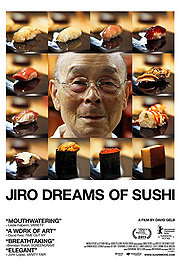
I've had sushi only once, and I thought it was quite good.  However, it would all pale next to the sushi Jiro Ona, the subject of Jiro Dreams of Sushi, makes.  The way people in the documentary speak of both Jiro and his sushi one might think it is a divine experience.   For the actual subject of the film, it is really all in the lifetime's work.  Jiro Dreams of Sushi is not about raw fish.  It is about the search for perfection through total devotion to one's craft, an elegant pursuit of doing one's best work, even at something as perhaps as 'insignificant' as making sushi.

At 85 years of age, Jiro Ona continues to work at his restaurant, located in the basement of a non-descript Tokyo building.  Within its walls though, is a veritable treasure trove of extraordinary craftsmanship.  We spend time with Jiro and his older son Yoshikazu, who will inherit his father's restaurant...as well as his father's legacy as the Citizen Kane of sushi makers.  Jiro's younger son has opened his own place, one that is a mirror image of Jiro's place.  As the film continues, we see that for Jiro, the work is everything.  "You have to fall in love with your work," he tells us, and for the hour-and-a-half that we see him and his staff (which train with him for ten years) work, we get the portrait of a man who puts his energies to making the perfect sushi.  Jiro is not insane or cruel, but he is constantly seeking perfection from those around him (which he asks of himself).   His mode of teaching and serving is one of utmost respect to everyone, and he doesn't dwell much if at all on the past, barely hinting that he can understand that his two sons would have wondered who that strange man sleeping in their house was on his rare days off.

Jiro Dreams of Sushi is a simply engrossing film.  As David Gelb's feature rolls on, we get an image of someone who has devoted his life to creating something beautiful, who takes great pride in his work, and who is guided by a set of ideas that should serve as a model for industry.  Jiro seeks perfection, not money.  He provides training and constructive criticism not to belittle but to improve the work.  He seeks perfection, not glory.

He continues to learn while keeping to the same routine.  Jiro is in some ways a throwback to an earlier time where devotion to one's craft was admirable, and who doesn't deviate from doing the same thing (for example, he takes the same train to work, even sitting on the same side).  However, Jiro is not stuck in the past.  Instead, he continues to experiment in order to improve.  Innovation blended with tradition is what has made Jiro Ona one of the most respected culinary figures in the world.  He could easily have made millions going on a mass marketing blitz.  Instead, he has remained at that same underground post, not moving in location but only in innovation.

Jiro also does two things that are a rarity in today's world.  One, he has a sense that the continued seeking of profits is self-defeating.  Business, he insists, should balance profits with preserving natural resources.  He sees what neither business or environmental groups do: that it cannot be one or the other, but both.  Overfishing will be the ruin of the sushi industry in terms of quality and quantity.  He is fully aware of the importance of both having a healthy fish stock (which should please the ecological group) but that fish must be harvested (which is what business would argue). 

Second, he also trusts his staff.  Near the end of Jiro Dreams of Sushi, he comments that 95% of the work is basically done by the time he gets to it.  After ten years of training, where the staff that stays with him (including his son) repeats something again and again until it is just right, Jiro can be assured that when he takes over it will be done to his specifications.  He sees his job to train those into doing their best work, not to check every little detail and constantly hover over them.  Would that directors and managers in various industries today take the attitude that their staff should be free of constant monitoring.

There is little to no exploration of who exactly Jiro Ona is.  Minus a trip to his childhood town where he visits old friends and pays respects to his parent's grave (although he laughingly dismisses the importance of his alcoholic father and the parents who put him out to find his own way before graduating high school) we never dwell or linger on what makes Jiro tick.  I don't think the fillm is meant to be a biography of Ona.  Instead, it is the portrait of someone who seeks to do his best at all times.  If Jiro were a scientist or a composer or a spiritual figure, one imagines he would be no different: always striving to both find ways to make the product better (not cheaper or faster, which are not the same things) but also not deviating from the path of perfection.

"Always look ahead and above yourself," Jiro tells us.  He is reminiscent of what Gustave Flaubert wrote to George Sand: "the man is nothing; the work, everything."  Jiro Ona personifies this idea that one should strive to to the very best work that one can, even in the smallest things.  Like the man himself, Jiro Dreams of Sushi tells its story simply but as it is observed in the film, ultimate simplicity leads to purity.

DECISION: A-