Sunday, December 16, 2018

Spider-Man: Into the Spider-Verse. A Review (Review #1150)

SPIDER-MAN: INTO THE SPIDER-VERSE

I wish my late friend Fidel Gomez, Jr. were here for a variety of reasons. One of them is that he would give his views on Spider-Man: Into the Spider-Verse, as he would probably not go into it willingly. He always complained that Miles Morales should have been fully Hispanic rather than half-Hispanic, feeling that there was no need to NOT have a totally Hispanic hero.

As a digression, he felt the same about how Green Lantern Kyle Rayner later discovered he too was half-Hispanic. Fidel's major complaint was 'why couldn't he have started out as Hispanic to begin with?'

Spider-Man has always been the superhero closest to my heart, and I'm very protective of him. Spider-Man: Into the Spider-Verse does justice to the genre, with a mix of beautiful animation, a surprisingly logical story given its multidimensional nature and characters I found myself caring about.

Even Spider-Ham.

Miles Morales (Shameik Moore) is a Brooklyn kid who likes to do graffiti art and admires his Uncle Aaron (Mahershala Ali) more than his straight-arrow policeman father Jeff Davis (Bryan Tyree Henry).

At this juncture I would like to say that I'm a bit confused as to why Miles apparently uses his mother's surname versus his father's, though perhaps being named 'Miles Davis' might be a bit too much, but I digress.

Miles, rather reluctantly, is sent to an elite New York City school, cutting him off from his Brooklyn roots. He has the smarts, just not the desire. His interest is piqued by a pretty new student, but he does not have the smooth moves yet to try much of anything.

He does love Spider-Man (Chris Pine), and to his total shock he finds that a spider has bitten him too while spending time with Uncle Aaron. Soon, it becomes clear that this was no ordinary spider, but being a kid, Miles has no idea how to handle his new powers.

Image result for spider-man into the spider-verseCircumstances not only force Miles to take up the mantle of 'Spider-Man' but also face off against Kingpin (Liev Schreiber).

Kingpin has set into motion the collapse of various multi-verses that end up bringing a variety of Spider-Men into Miles' universe. That included Peter B. Parker (Jake Johnson), a more disheveled version of our Peter Parker, Spider-Woman (Hailee Steinfeld), who has been masquerading as 'Gwen Stacy', the girl that piqued Miles' interest, Peni Parker (Kimiko Glenn), an anime-type figure, Spider-Noir (Nicolas Cage), a Spider-Man from a film noir dimension, and Spider-Ham (John Mulaney), from a cartoon-like world where his name is "Peter Porker".

All these various Spider-people join forces to stop Kingpin from bringing all the various dimensions in one place (Miles' universe) and get back to their own universes. More often than not, they freeze Miles out as he has both the least experience and is just a kid. Only Peter B. Parker thinks he has potential but is constantly overruled.

Eventually though, after some twists and turns and more personal losses for Miles, he steps up to be the hero he needs to be.

Spider-Man: Into the Spider-Verse is fully aware of what it is, and rather than try and deny its comic-book roots it instead embraces them. From the multiple panels and on-screen text to its jokey manner, Into the Spider-Verse is not afraid to have a few knowing jokes.


We start with an oddball acknowledgement of the various versions that have come already, down to the infamous dance number in Spider-Man 3 when then-Spidey Tobey Maguire went 'emo' and ended up looking foolish. The various winks and nods to the previous Spider-Man mythos liven up the story.

We also see the film awash in beautiful, bright colors. The film also takes a wide variety of animation styles from television cartoons to anime to noir and integrates them beautifully. There are times that the film almost looks like there was live-action.

Each Spider-Man is given his/her own style, and the film keeps to their unique styles. Given that we have a cavalcade of Spideys we can accept the colliding styles and more important to me, the issue involving Miles' Peter Parker did not upset me as much as it did when I was watching.

As a side note, in many ways as we the tongue-in-cheek manner we are (repeatedly) introduced to the multiple Spider-beings, we see they did keep to a pattern of sorts: the loss of someone important, the difficultly they endured, and the desire to return to their own universes.  Miles, sadly, would not be the exception.

The voice work is brilliant. Moore's Miles Morales (keeping to the alliteration of 'Peter Parker') makes Miles the somewhat insecure young man attempting to discover himself with his new powers. Jake Johnson, someone who needs to do more work in film, makes his Peter B. Parker into a regretful man who finds himself the unlikely mentor, balancing humor with heart.

Steinfeld has focused more on her pop music career of late, but her Gwen was wonderful and a badly needed positive role model for young girls. Cage is pretty much unrecognizable as Spider-Noir but it's a nice surprise.

The cast also has a great script to work with, where you don't sense any of the multiple Spideys getting short-changed, though I figure there was some of that. You might have the issue of making Kingpin more sympathetic, but it does give you a reason behind his villainy. You even have wild twists with Doc Ock and Prowler.

You also have a nice send-off for the late Stan Lee, who keeps his cameo in the film. His first line, "I'm going to miss him," could also apply to this much-loved figure.

Spider-Man: Into the Spider-Verse has both a lush look and witty yet heartfelt story that has you care about the characters and their situations. It is a fun film that also hits you emotionally and is a delight from beginning to post-credit end.

DECISION: A-

Saturday, December 15, 2018

Green Book (2018): A Review

GREEN BOOK (2018)

The way I talked my mother into seeing Green Book was by comparing it to Driving Miss Daisy. I leave it to you to decide whether the comparison is valid, but there's more than a hint of truth to the stories of interracial journeys in automobiles. Green Book has had some blow-back over whether it is accurate and/or told through a proper perspective. For myself, Green Book is a pleasant tale of two wildly different men whose interactions reshape some of their ways for the better.

Brooklyn goombah Frank Vallelonga, better known as 'Tony Lip' (Viggo Mortensen) is pretty happy with himself. A bouncer with the gift of gab, he seems able to get around through somewhat questionable methods. When the Copacabana Club is closed (in part due in secret to Tony) he applies to be a driver for what he thinks is a doctor.

Technically, he's correct, but Dr. Don Shirley (Mahershala Ali) is not a physician. He's a Doctor of Music, a classical pianist who is embarking on a U.S. tour, part of which will take him to the Deep South. This won't be an easy tour, as Dr. Shirley is black. Dr. Shirley is also a bit of an elitist snob: highly cultured and upright, he and the thoroughly uncouth muscle that is Tony make for the oddest of odd couples.

Dr. Shirley is fully aware of the dangers he faces as a black man touring the South, so he is smart enough to know that Tony Lip's habit of 'punching first and not bothering with questions' may be helpful. As the Don Shirley Trio go on their tour, Tony sends letters to his wife Dolores (Linda Cardinelli), poorly written and always ending with 'kiss the kids for me', his devotion to his wife and children about the only real qualities he has.

Image result for green book movieAs the journey continues, their unique circumstances make for sometimes amusing, sometimes tragic culture clashes. Dr. Shirley is appalled at Tony's boorish manners and ability to eat while driving. Tony is astonished that 'Doc', despite being black, has never heard Chubby Checker or Little Richard, and worse, has never eaten fried chicken. Tony assumes that Doc, being black, would know this almost by osmosis.

Then again, Tony wouldn't know what 'osmosis' is, probably figuring it was some kind of Greek god.

Tony also sees some of the sadness and isolation Dr. Shirley has, along with the various indignities he has to endure despite his sophistication and talent. As his driver/road manager/bodyguard, Tony gets Doc out of scrapes, sometimes of Shirley's own making.

Ultimately, both learn from each other. Tony learns a bit about the beauty of culture, the courage to face discrimination and the unpleasantness of it and takes Doc's dictation on expressing himself better through the letters Tony writes to his wife. Doctor Shirley learns to accept the nobility of the common man, to reach out to others in genuine friendship and the joys of fried chicken.

We learn that after their journey, ending on Christmas Day 1962, their friendship continued to the end of their lives, with them dying three months apart in 2013.

Image result for green book movie
It's a curious thing that the title object is barely touched on. The 'Green Book' in Green Book refers to the 'Negro Motorist Green Book', a travel guide specifically for African-Americans in this era, which directed the black traveler as to what establishments would welcome them. I think Tony probably consulted this 'green book' maybe twice, but for all intents and purposes Green Book was less about the title object and more about the journey both literal and figurative of our two characters.

Green Book is a good old-fashioned story about unlikely friends, people from totally different worlds who by the end grow to appreciate, perhaps even love the other. If one sees the film, we see that Tony and Dr. Shirley maintain most of their original worldview. However, we also see that they have changed once they got to know each other.

Early on, Tony threw away two glasses that black plumbers used while in his home. At the end of the film, he proudly has a black man for Christmas dinner. The upright Dr. Shirley berates Tony for trying to take a stone at a road-stop that had fallen off the display. Near the end as they race back through a storm to try and get home for Christmas, Dr. Shirley calmly suggests to Tony to 'put his lucky rock' on the dashboard, fully aware of Tony's sticky fingers but accepting it.

Image result for green book movieAs Green Book was co-written by one of Tony's sons (Nick Vallelonga, along with Brian Hayes Currie and director Peter Farrelly), you can figure Tony is going to be shown in a relatively positive light. His racism comes from his background as a less educated self-described 'guinea'. It helps, or hurts, that Mortensen seems to play a stereotypical Italian-American who would fit in perfectly at the Jersey Shore. His performance, while a bit broad for my taste, did grow on me.

Ali is his better as the elegant yet troubled Dr. Shirley. Some of his problems are external: the racism, the indignities he endures. Some, however, are internal: his aloofness from almost everything and everyone. For better or worse though, both his growing alcoholism and homosexuality are barely touched on.

Granted, Green Book wasn't about those issues, but they were introduced with little to no follow-through.

Still, while not perfect Green Book has moments of genuine warmth between this two disparate characters both amusing and endearing. We go from Tony's uncomprehending compliment to Dr. Shirley about 'the orphans album', referring to Shirley's Orpheus in the Underworld to Dr. Shirley, after giving Tony a beautiful passage to send his wife, telling Tony that ending the message with "P.S. Kiss the kids for me" is 'perfect'.

Green Book should not be thought of as a final say on the ugliness of racial intolerance or a statement that racism is done with. It should be seen as a film about two men from totally different worlds who found something very special: true friendship despite their differences.

Image result for dr. don shirley
Frank Vallelonga: 1927-2013
Dr. Don Shirley: 1930-2013

DECISION: B+

2019 Best Picture Winner: Parasite

Thursday, December 13, 2018

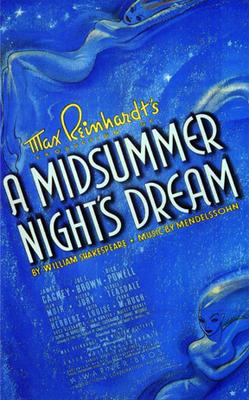
A Midsummer Night's Dream (1935): A Review


A MIDSUMMER NIGHT'S DREAM (1935)

A Midsummer Night's Dream is one of my favorite Shakespearean plays. Given I love this and The Tempest, it seems I gravitate more to his fantasies than the comedies, tragedies and histories though I love them too. This version of A Midsummer Night's Dream is interesting in that it came from Warner Brothers, a studio best known for gritty gangster films. You even have one the quintessential gangsters cutting loose as a literal ass. Posh, lavish, imaginative albeit at times a bit slow and with curious casting choices, A Midsummer Night's Dream may have more ambition than success, but said ambition certainly goes a long way.

Just before the marriage of Theseus, Duke of Athens (Ian Hunter) to Amazonian Queen Hyppolita (Verre Teasdale), we find ourselves in a love quadrangle. Young Hermia (Olivia de Havilland) is in love with Lysander (Dick Powell), and he with her. However, young Demetrius (Ross Alexander) is also in love with Hermia. She does not return his affection one whit, but her father favors Demetrius over Lysander. Helena (Jane Muir) is passionately in love with Demetrius, but while he's toyed with her, he is not interested.

Lysander persuades Hermia to run away with him, otherwise she will either be forced to marry Demetrius, be forever unwed or maybe even killed. Both Demetrius and Helena pursue them into the forest.  Into the forest also is a group of 'actors', really lower-class workmen, who are working to perform a romantic comedy/tragedy, Pyramus and Thisbe, in order to gain royal pensions for the wedding revels.

The leads are played by Bottom the Weaver (James Cagney) and Flute the Bellows-Mender (Joe E. Brown). Bottom is a total ham, desiring to play every part. Flute just wants to eat his seeds.

Our two groups are unaware of the fairies that dominate the woods. Soon Oberon, King of the Fairies (Victor Jory) and his Queen Titania (Anita Louise) begin quarreling over a changeling child. Through trickery and magic, Oberon casts a spell on Titania to fall in love with Bottom, who has been given the head of an ass.

Oberon's efforts to help our mortal lovers goes a bit haywire thanks to the puckish Puck (Mickey Rooney), who accidentally uses magic on the wrong males, causing both Demetrius and Lysander to fall in love with a shocked and flummoxed Helena, leaving poor Hermia fending for herself.

Over the course of this long night, Oberon gets the changeling from Titania but, feeling some guilt, reverses the spell and restores Bottom. Eventually Puck sorts out the romantic tangles with Lysander & Hermia and Demetrius & Helena falling in love (or in love again). They now join the royal wedding, where our comical players entertain the Court thanks to their ineptness.

With all loves restored and all mended, Puck bids us farewell.

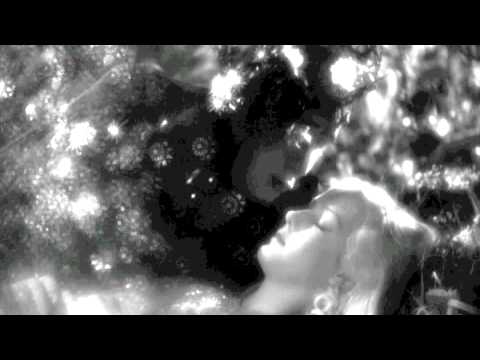
Related imageIf anything, A Midsummer Night's Dream is very lavish and artistic. I figure this was a way for Warners to add 'a touch of class' to their reputation. I think it is one of the most elaborate adaptations bordering on beautiful.

Part of me feels it's a pity it was not in color, but the overall look of the film is still highly impressive. Hal Mohr's cinematography captures the ethereal world of A Midsummer Night's Dream, particularly when we see the Fairy Court. The shimmering lights when we see the fairies, particularly with Oberon and/or Titania, makes the film literally sparkle.

Interestingly, Mohr was not nominated for an Oscar but ended up winning anyway for his cinematography. He was the first, and I believe only, write-in Oscar winner, which makes one wonder both why he wasn't officially nominated and why the Academy dropped the write-in votes.

The film is very poetic and artistic thanks to co-directors Max Reinhart (who had done the original Hollywood Bowl production it was based on) and William Dieterle, who had more film experience. Of particular note are the various ballet numbers from the fairies, which today may look a bit curious and over-the-top. However, whenever Oberon and Titania literally take flight, you are impressed at how well that works.

The special effects are also quite impressive and have stood the test of time.  The performances, not so much.

Image result for a midsummer night's dream movie 1935
A Midsummer Night's Dream was the film debut of Olivia de Havilland, who was discovered in the original Hollywood Bowl production and was brought on board to recreate her performance. While you can see that she was a bit more mannered than those who had more film experience, you can instantly see her talent as the lovelorn, spurned, and re-loved Hermia.

Rooney, also recreating his role, is ideal as the rakish Puck, delighting in the misadventures of these foolish mortals. Adopting a quirky tone, Rooney has an exuberance in his Puck, thrilling in the outlandishness of it all.

Similarly, Cagney cut loose and dove into his ham Bottom. This wild, over-the-top performance must have been a surprise to his fans, who were used to seeing him as the gritty gangster. Cagney's talent had been largely untapped, and here we see that he is more than able to do great comedy as this literal ass. Whether it is stumbling through the forest, being wooed by a Fairy Queen or giving a comically bad performance as 'Pyramus', Cagney was certainly in on the joke.

Other performers, however, seemed a bit lost. Anita Louise, while beautiful, was perhaps too dramatic as Titania, though given she was a Fairy Queen, I can cut her some slack. Joe E. Brown seemed so uncomfortable in Shakespeare, as if he just wanted to get it over with. Victor Jory as the Fairy King looked odd and sounded odder.

The worst was Dick Powell. Powell had two phases in his career: the boyish crooner and the hard-nosed gumshoe, who went from charming kid to cynical film noir antihero with surprising ease. A Midsummer Night's Dream was during his boyish crooner phase, but the breezy manner he used to great success in musicals like 42 Street and Gold Diggers of 1933 felt so wildly out-of-place in Shakespeare. Just about everything in his performance was so off.

Still, despite some offbeat casting A Midsummer Night's Dream is quite lavish and entertaining, elevated with Erich Wolfgang Korngold's adaption of Felix Mendelssohn's incidental music. Not without flaws it is still an elegant adaptation. 

DECISION: B-

Wednesday, December 12, 2018

Forrest Gump (1994): A Review


FORREST GUMP (1994)

Running Against the Idiot Wind...

I remember quite well the grief I got when I said that I didn't like Forrest Gump.  I was accused of having no heart, no soul, and even of being 'un-American' for my intense hatred of this film. It is now almost twenty-five years since our wise fool took America by storm. Has time softened my view or has my desire to see him sink into the Alabama swamps grown?

To my surprise, time has softened my view of Forrest Gump. Not enough to like it, but now longer filled with a burning passionate hatred towards it.

Told in flashback and voiceover, Forrest Gump (Tom Hanks) tells his story to four people who had the misfortune to sit next to him on a Savannah, Georgia bus bench (with only one of them apparently showing any interest in the oblivious Forrest's long and rambling tale).

We learn that he has an IQ of 75, but this is not an impediment to reaching great heights, even if Forrest never actually set out to do any of the things he did. Watched over by his very protective Mama (Sally Field), Forrest among his other accomplishments which is vaguely aware of...

A.) teaches a young Elvis Presley how to shake his hips
B.) becomes an All-American football star under legendary Alabama coach Bear Bryant
C.) meets President Kennedy as a result of the above
D.) fights in Vietnam where he saves most of his platoon
E.) meets President Lyndon Johnson as a result of the above, winning the Congressional Medal of Honor
F.) gives an inaudible but inspiring speech to anti-war protesters
G.) becomes a major player in Ping-Pong diplomacy
H.) meets President Nixon as a result of the above
I.) triggers Watergate
J.) inspires John Lennon to come up with the lyrics to Imagine
K.) becomes a billionaire via a combination of shrimping and investing in Apple Computers
L.) begins the jogging craze
M.) inspires both the 'Sh-It Happens' and 'Have a Nice Day' slogans (the Happy Face too).

Image result for forrest gumpOur blissfully unaware hero does have a few off moments. He informs President Kennedy 'I gotta pee' when presented to him after consuming too many Dr. Peppers and unintentionally moons President Johnson when the Commander-in-Chief mentions that Gump's war wound must be a sight. Gump's wound, he says in his strong Alabama accent, is 'in the but-tock'.

Johnson apparently is delighted by having Gump show him his 'but-tocks' in front of the other Congressional Medal of Honor recipients and the cameras.

Into his life float three people. Two he meets in Vietnam: his equally dim best friend Bubba (Mykelti Williams) and the irascible Lieutenant Dan Taylor (Gary Sinise), whom he always refers to as 'Lieutenant Dan'. Bubba dies in Vietnam, the only soldier Gump couldn't save. Lieutenant Dan does not, something that enrages him as he believed he was destined to die gloriously on the field of battle as had every ancestor of his in all previous American wars.

Then there's Jenny (Robin Wright). Jenny is the love of Forrest's life, his obscure object of desire. He punches out every man who hits her (of which there are at least two). He makes his idyllic love for her clear, even if he is unaware she is a victim of incest (Jenny's daddy, according to Gump, was always hugging and kissing her). He's also unaware that she is all about the counter-culture: singing folk songs (albeit nude for a strip show as a 'Beatnik Beauty' under the name 'Bobbie Dylan'), as a member of the Vietnam War protest movement, as a drugged-out disco chick, and eventually as Forrest's one-time tryst, which produced a child.

Oh, and she also dies of the most oblique case of AIDS in history.

Now a widower (as Jenny finally marries Forrest), he now has his son, Little Forrest, who unlike his dad is highly intelligent.

Image result for forrest gump
I wish I knew what hold Forrest Gump has over the American people. I suspect it is a combination of nostalgia, the idea that Forrest is 'a wise fool', a knowing sense that 'we' can grasp more than Gump (who many times seems terribly oblivious to something like Governor George Wallace blocking the entrance of black students) and his journey through America and its history.

Forrest knows bits and pieces but is never able to put things together. He shows as a child 'a young man with a guitar' how his body moves when hearing Hound Dog, and he knows that 'young man' sang songs, but he attributes his death to him singing too many songs. He suspects 'it's hard to be brothers' when commenting on the deaths of President Kennedy and his 'little brother'.

I suppose we're supposed to cheer Forrest's naivete and innocence, but I still can't. I think it is because in Forrest Gump, the title character never actually does anything of his own choice. Everything he does, and the almost always positive results that come from it, are because he follows instructions. Sometimes his following of instructions reaches outlandish levels: for example, he never learned football rules enough to know you stop running once you reach the end zone.

The first time he did that, he ran past the marching band members unlucky enough to stand in his way and into the tunnel. The only reason he stopped dead was due to the stadium and band members ordering him to stop.

Not once in Forrest Gump does he himself take the initiative to do something; the closest is when he starts running back-and-forth across America, and even he could not give you a reason as to why he did so. It's almost as a whim.

I am always amazed that few if any people actually notice how passive Gump is, how all this social and political upheaval is going on about him but which he has no reaction to. "And that's all I've got to say about that" is his constant refrain, but in truth, he never says anything at all. He never does anything either, again of his own free will. He's the perfect automaton, a robot complete with robot mannerism and inability to understand subtext.

Related imageThere are a host of issues with Forrest Gump that the sugary, schmaltzy nature of the film drowns. In 1994, the visual effects were highly lauded, winning an Oscar (one of the film's six out of a near-record 13 nominations). The mixing of Hanks with these historic figures was seen as groundbreaking and revolutionary, which they might have been.

However, in the quarter-century since, they look awful and hopelessly fake. While the John Lennon sequence even then was seen as the weakest one, it is now the Johnson section that looks the worse. It's patently obvious Johnson isn't there, the voice is nowhere near similar, and in a curious side effect, it makes Johnson look almost ghoulish. If someone watched Forrest Gump for the first time, he or she might be impressed with how Hanks was blended in with the George Wallace section, but everything after that they would immediately call out as fake.

Only the digital removing of Sinise's legs to portray Lieutenant Dan as an amputee still hold up well.

Director Robert Zemekis also drowns Forrest Gump in its soundtrack. Even when I saw it for the first time, the constant, almost frenetic nature of pop songs coming at me was grating. Now I see that Zemekis keeps pushing hit songs of the era at us, ostensibly to create atmosphere but I also think to make the CD soundtrack a two-disc set.

Take for example when Gump comes to Vietnam. We hear three songs (Fortunate Son, Can't Help Myself and Respect) within three minutes, one right after the other. A minute later, it's All Along the Watchtower, and Soul Kitchen two minutes after that. Both California Dreaming and For What It's Worth pop up two minutes after that.

When we see Forrest become a Ping-Pong master, we hear three Doors songs in almost an unhinged medley: Hello I Love You, People Are Strange and Break on Through. Maybe the lowest point is when Everybody's Talking is used in what can be a deliberate copy of Midnight Cowboy minus the sex. Yes, some songs work within the story (Fortunate Son, California Dreaming, even Free Bird as Jenny contemplates suicide), but the bombardment of songs becomes far too much to endure.

Image result for forrest gumpSpeaking of Jenny, I doubt few films have used characters as poorly as Forrest Gump. Like just about every character in Forrest Gump, Jenny has nothing to her despite a wealth of potential. Wright is a blank as this much abused, much abusing woman, resentful of being rescued but incapable of rescuing herself. Williams is just there to put in the 'shrimp' business (and as a side note, I've stubbornly refused to go to a Bubba Gump Shrimp Company Restaurant despite pleas and requests to do so, finding the whole thing almost Satanic).

Field was there just to spout homespun nonsense (and for the record, she actually says "Life is a box of chocolates; you never know what you're going to get" versus Forrest's statement that "Life is like a box of chocolates", not that it matters since I find that philosophy moronic: you get chocolates in a box of chocolates).

Hanks, despite the praise he's received, is not inspiring. I cannot fault him for playing the role as written: the very slow, heavily accented Southern goof. Hanks' performance makes me think of Forrest Gump as a kinder, gentler Boo Radley. It is sheer coincidence that I saw Rain Man just before I saw Forrest Gump, but I find that in both, the technique is more praised than the finding of character.

The highlight was Sinise as Lieutenant Dan, for at least he had an arc: from almost crazed commander to a man coming to peace with his situation.

I gave Forrest Gump a second chance. To its credit I didn't end up finishing it with a shaking fury like I did when I saw it in theaters. As I look on and look back on Forrest Gump, I find Shakespeare may be the source for the best review of the film:

It is a tale told by an idiot, full of sound and fury, signifying nothing.

DECISION: D+

1995 Best Picture Winner: Braveheart

Tuesday, December 11, 2018

91st Academy Awards: A Preview


Has the Academy of Motion Picture Arts & Sciences Gone Bonkers?

I have observed how The Academy of Motion Picture Arts & Sciences, the good people behind the Academy Awards or 'Oscars', have willingly, almost manically, lurched from one fiasco to another on their way to their 91st presentations.  The current Academy President, John Bailey, has been in office for a year and has already made the organization into a mockery. Not that his predecessor, Cheryl Boone Isaacs, didn't help, but I digress.

Earlier this year, the Academy Board of Governors (whom I was shocked to learn consists of 51 members) decided to make some changes to their presentations in response to declining ratings and interest among television viewers. I've already given my thoughts on those changes, but suffice it to say they did not go over well with anyone.

All three ideas are pretty bad, but the nadir was the introduction of a new category: "Outstanding Achievement in Popular Film", generally known as "Best Popular Film". This category was announced with great pride by the Academy, yet they never defined what the criteria was for "Best Popular Film".

Was it box office? Was it number of screens? What exactly made a film 'popular'? We know what 'costume design' is. We know what 'animated short' is. We can even figure out the difference between 'sound editing' and 'sound mixing'. 'Popular' though?

Their statement that "eligibility requirements and other key details will be forthcoming" is a shockingly nebulous declaration that I translate as 'we made up this category to get more viewers, but we'll work out the details later'.

My question is, 'Why not have the details, whatever they actually are, worked out before trumpeting your announcement?' The muddled launch of "Best Popular Film" was the beginning of this first fiasco.

"Best Popular Film" was seen, correctly I think, as pandering to viewers who would have seen something like Night School over The Shape of Water or Birdman. It made it look, again correctly I think, as trying to gin up interest for people who would rather watch Transformers than The Theory of Everything.

It was telling those of us who actually care about Best Production Design that the Academy was not going to recognize films based on 'merit' or what the voting members thought was the best work out of the three-to-five nominated but on some opaque notion of 'popularity'.

As a digression, some thought the 'Best Popular Film' category was a response to having Black Panther potentially be nominated/not nominated for Best Picture. Some saw it as pandering to audiences who flocked to the Marvel behemoth, some saw it as 'insurance' in case a 'real' film won over Black Panther. The merits of Black Panther being in the same league as Lawrence of Arabia or The Godfather is a discussion for another time (I personally don't think it is worthy of 'Best Picture') but I also think it was an actual coincidence and not some conspiracy.

Image result for kevin hart
After pulling the category (at least temporarily according to the AMPAS), they next got themselves in another fine mess. The Academy selected comedian Kevin Hart to be their host for the 91st Academy Awards.

On paper, it looks like an excellent decision. Hart is 39, a relatively young age for a host. Jimmy Kimmel was by comparison 49 when he first hosted two years ago. Hart is also wildly popular with audiences and is the rare African-American entertainer who cuts across racial lines. While his predominant audience is African-American, Hart's films such as Ride Along and Night School were hits with people of various racial/ethnic backgrounds.

In less than two days though, Hart was out as host. Tweets from eight and nine years past 'resurfaced' (i.e. were dug up) that were read as homophobic.  The Academy gave Hart an ultimatum to apologize or leave. Hart balked and bolted or was forced to resign. Now the Academy has as of this writing no host, with rumors that they will forgo a host altogether.

Let's put things on the record. Were the tweets right? No. The tweets though were from almost a decade ago, and as was pointed out to me, his latest film Night School had a positive portrayal of a lesbian character even if her lesbianism played virtually no role in the film.

I imagine that there is not one person who has said or done something in his/her life that he/she does not regret or at the very least is not reflective of who they are now versus who they were then. Hart's tweets then were wrong, but I for one am not going to hold them against him today.

Image result for james gunn tweets
A small group called for his ouster, and ousted he was. What makes this whole fiasco all the more bizarre to me is that the same people, or at least mostly the same people, who called for Hart to be pulled from hosting the Oscars simultaneously condemned Disney for firing James Gunn when his offensive tweets 'resurfaced' (i.e. were dug up). 

Like Hart, Gunn's tweets were from a decade ago. Like Hart, Gunn's tweets are offensive. However, I am at a loss to understand why so many who rushed to Gunn's defense also called for Hart to go even though both essentially did the same thing. Moreover, why would rehiring Gunn but not rehiring Hart be right given their similar circumstance.

In short, you have two similar situations: a famous person's old tweets 'resurfaced' (and I figure Gunn and Hart probably forgot about them to begin with), people call for said person to be fired (which he was) and yet...

And yet, with Gunn you had many, including the Guardians of the Galaxy cast and fans, demand he be reinstated, saying 'those are old tweets that don't apply to who he is now' but you don't have the same people apply those same standards to Hart.

The Academy, like Disney, is free to hire and fire anyone it wants. I, however, simply do not understand the mindset of those who 'resurface' decades-old comments as proof of evil. It would be different if Hart or Gunn said what they did today or maybe last year. However, should there be some statute of limitations on things like these?

The Academy faces more problems beyond not having a host or dumping a dumb category. There is the lack of interest in both the films awarded and the awards themselves, most of whom audiences already know the winners thanks to a cacophony of prior awards. There may be an uptick if films like Black Panther and perhaps A Quiet Place get Best Picture nominations, but by and large the Academy needs to reform yet again.

No institution can remain unchanged, especially one close to being one hundred. My suggestions are the following:

Cut the number of Board Governors
President John Bailey should if not resign at least not run for reelection
Cut or curtail the acceptance speeches
Expand knowledge of 'obscure' categories by actually showing the smaller films to a wider market (for example a requirement that a Best Picture hopeful feature a short-subject film or documentary)

The Academy has faced crises before and survived. It can survive this new one too. However, it will take more than 'Best Popular Film' to save it from itself.

Monday, December 10, 2018

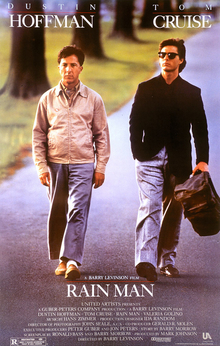
Rain Man (1988): A Review

RAIN MAN

It surprises me that as of this writing, it has been thirty years since Rain Man hit the zeitgeist of the United States. You couldn't go anywhere without hearing people talk about being 'an excellent driver'. Perhaps that is why Rain Man has both aged poorly and is not as well-remembered as other films, even from 1988 (I'd argue that Bull Durham and Dangerous Liaisons are more remembered). Rain Man is so dominated by one performer that everything else is all but forgotten, some of that being good, some being unfair.

Charlie Babbitt (Tom Cruise) is feverishly trying to save his luxury car import business, which is facing problems from EPA regulators and his creditors. Fortunately for him, he's learned that his estranged father Sanford has died.

Unfortunately for him, he also learns that Daddy Dearest has left him nothing except a 1949 Buick Roadmaster and some rose bushes. Understandably enraged at having the rest of his estate, coming at $3 million dollars, cut off from him, a little digging turns up some surprises.

The big surprise is that he has a hereto unknown brother, Raymond (Dustin Hoffman). Raymond has been institutionalized at a mental hospital for decades, but to both Charlie and his girlfriend Susanna's (Valeria Golino) astonishment, Raymond is able to not only identify the car but that he is what is called an 'autistic savant'.

Image result for rain man movieRaymond's autism allows him to be masterful with numbers but he has poor social skills. Nevertheless, Charlie essentially kidnaps his challenged brother to try and get at half the inheritance. He is perpetually callous towards Raymond, so much so that Susanna leaves in disgust even as Charlie's business is starting to fail.

Charlie must endure the difficulty of Raymond, which among other things means Raymond won't fly to Los Angeles (Raymond knowing all the airplanes have crashed save Quantas). Charlie's forced to drive them from Cincinnati to LA, much to his irritation at his irritating older brother.

Charlie perpetually snaps at Raymond until he discovers that Raymond is also 'Rain Man', a vague childhood memory whom Charlie always thought was an imaginary friend. In reality, Charlie's memory of the "imaginary" 'Rain Man' was really a faint recollection of Raymond, which a toddler Charlie could not pronounce properly. As they continue on their journey, Charlie soon starts seeing his brother in a different light, not that it stops him from using Raymond to count cards in Las Vegas, earning enough to pay off his debts.

After an informal hearing to determine what is best for Raymond, Charlie finally gives up and sees that it would be best to return him to the hospital. The emotionalless Raymond takes all this in, and Charlie and Raymond's caretaker doctor reach an agreement. Raymond returns to Cincinnati, and Charlie tells him he'll see him in a couple of weeks, which Raymond has calculated to the second.

Related imageI sense that the only thing people really remember from Rain Man is Hoffman's performance, but that is not necessarily a compliment. Thirty years on, people still mimic Hoffman's "I'm an excellent driver", complete with blank tone, cocked head and almost dead eyes. Mentions about "definitely" in that same tone also permeate the lexicon, even if people may not remember the film itself.

Hoffman, good or ill, so swallows Rain Man that he drowns out everything else. This is quite curious given that Rain Man should be Charlie's story: his growth and evolution from callow youth to genuinely loving brother.

We won't even go into the curious situation of having Cruise play Hoffman's younger brother despite the fact that Hoffman is old enough to be Cruise's father! There's a twenty-five year age gap between Hoffman and Cruise (at the time Rain Man was made, the former was 51, the latter 26). If we go by the events chronicled in Rain Man, Charlie would have been two years old and Raymond would have been 27 when they last saw each other. Yes, theoretically there can be an age gap that wide between siblings, but that tends to be for half-siblings more than full-siblings.

According to the film, Sanford Babbitt was 45 when Charlie was born. If we use the actual age difference, that would have made Sanford 20 when Raymond was born. Again, plausible, but how old exactly was their late mother when either Raymond or Charlie were born, or am I once again getting hung up on details? Have I also digressed?

Rain Man is a good reminder of when Tom Cruise actually acted as opposed to being the action star he has grown into (and no, that is not a short joke as Cruise and I are the same height). Cruise makes the evolution of Charlie more believable, even if the script made it feel surprisingly rushed. It's a credit to Cruise as an actor that he made Charlie into someone we could care about even if his actions were horrible.

Image result for rain man movie
For better or worse though, despite how strong Cruise is, Rain Man is all Hoffman, all the time. Pauline Kael, the doyenne of film criticism, eviscerated Rain Man and especially Hoffman. "Humping one note on a piano for two hours and eleven minutes", she famously described it. There is truth to Kael's statement. We can cut Hoffman some slack in that Raymond is simply incapable of change. As the autistic (much) older brother, he cannot suddenly have realization or understanding.

However, in many ways, Hoffman is about the performance, and Rain Man gives him a chance to act up a storm with Raymond's various quarks, his lack of emotion, his flat voice, his body movements. From his stillness to his sudden fits of fear and rage, Rain Man is not going to let one see a change in Raymond. Rather, he's just the vehicle for Charlie's change, and a character that allows for a full-on 'performance'.

Gugino is a touch comic as the long-suffering girlfriend, and again that is not a compliment.

Where I think Rain Man suffers is in Barry Morrow and Ronald Bass' screenplay.  At one point, I thought it would have been easier for Charlie to sedate Raymond to get him on the plane. As Raymond seems fine in taking the train, why not have simply done that rather than take this long road trip? I know, questions of logic because you had to have the road trip (how else to get to Vegas). It's certainly amusing to see how, despite being a hustler, Charlie is unaware that the casinos wouldn't catch on to his questionable winning.

Rain Man plays with the audience, and while I see where it is going in terms of the story of brotherly love and redemption, I still found it too long and a trifle insincere. I still think Rain Man will be remembered for two things: winning Best Picture and Hoffman's now much-parodied performance. I don't think it's terrible but apart from those two elements, who really remembers Rain Man?

DECISION: C+

1989 Best Picture Winner: Driving Miss Daisy

Tuesday, December 4, 2018

Free Solo: A Review

FREE SOLO

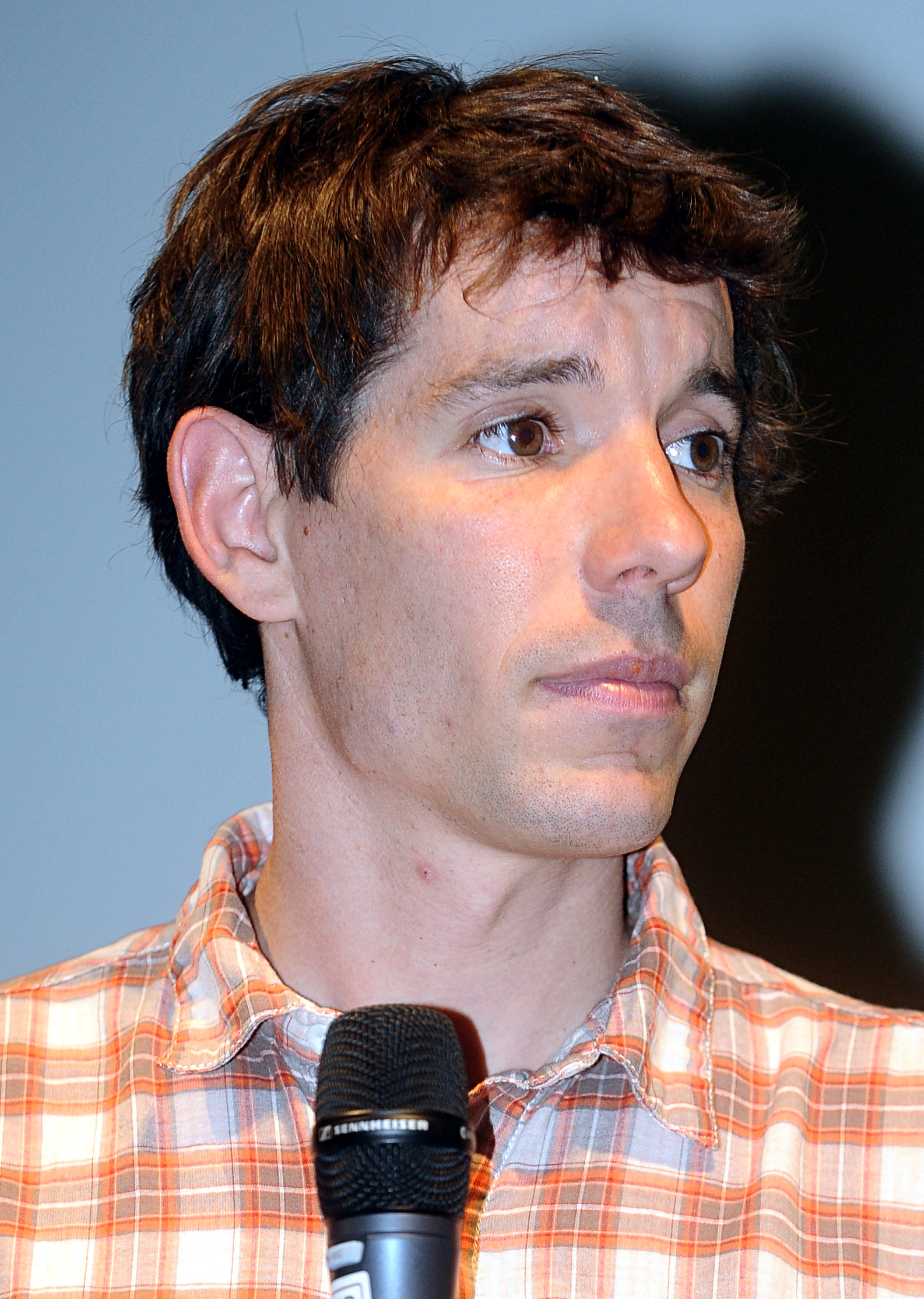
George Mallory, the British mountaineer, was once asked why he climbed mountains. His response is said to be 'because it's there'. Alex Honnold, the subject of the documentary Free Solo, seems to have a similar mindset when it comes to climbing large rocks with no ropes or other equipment (what is called 'free solo climbing').

George Mallory, I note, died on Mt. Everest at age 37 attempting to climb the world's tallest mountain, with debate whether he actually reached the summit or not. Honnold is as of this writing 33, and his attitude towards death is quite casual to almost nihilistic. Essentially, Honnold's worldview expressed in Free Solo is 'if I die, I die, so what?', but more on that later.

Free Solo covers his training on various cliffs around the world, along with his various talks and remembrances of things past, such as his parents' divorce and fellow free soloists who have died. Along with his associates and something of a girlfriend Sanni McCandless, 2016 is spent working towards his goal of free solo climbing El Capitan, the Yosemite Park monolith.

Not even an ankle injury during his training will eventually stop him from going up on June 3, 2017, almost on the spur-of-the-moment after not going up earlier. His first thwarted effort was in part connected to his unease about the cameras his associate and Free Solo co-director Jimmy Chin (along with Elizabeth Chai Vasarhelyi) had on him.

Free solo El Capitan he climbs, with various cameras capturing his rapid ascent up El Cap both with cameramen located at various points and on the ground. Once done, he smiles, Sanni returns and there it is.

Image result for free solo documentaryI thought to myself that Free Solo is what Grizzly Man would have looked like if a camera crew had followed Timothy Treadwell before he and his girlfriend were mauled to death by bears. The Alex Honnold I encountered in Free Solo is not someone I liked. He strikes me as not aloof but as distant as those peaks he strives for, his passion more for the methods than the actual achievement or joy that comes from it.

He's a bit of a loner, perhaps as his mother Dierdre Wolownick speculates with some kind of Asperger's Syndrome, who by his own admission sometimes has a 'bottomless pit of self-loathing' and didn't start hugging until he was 23.

The hugs apparently started coming because he saw that this was common among others.

Honnold does not seem to have a death wish but he seems not to comprehend why people put happiness as important. Life is about performance, what you do he believes, not personal happiness. Free solo climbing allows him to have that goal, that mark on the world, and other things are not worth noting.

Honnold's climbing hero and training partner Tommy Caldwell at one point asks if Honnold marks anything personal in his various diaries. Honnold seems almost genuinely puzzled about this inquiry, for his diaries note the technical aspects of climbs, not so far as I could tell what he feels about things. His relationship with Sanni too is something he can let go of: she is emotional when remembering his reaction to the widow of another climber when her husband died. 'What did she expect?', seems to be his reaction.

Image result for free solo documentary
One aspect of Free Solo that I was surprised by was on both how the Chin seems to be almost part of his own movie, less a chronicle of Honnold and his climb up El Capitan but about 'the making of Free Solo and the chronicling of Honnold and his climb up El Capitan'. Chin comes across almost as Honnold's personal videographer than just someone interested in showing others this man and his passion.

The film seems very interested in highlighting the technical prowess of the production, going into the nuances of where the cameras should be. To my mind, this comes close to being narcissistic both for Honnold and Free Solo itself. Early on there's mention of Honnold's charitable work but it's quite slight to where one wonders why it was mentioned at all.

Perhaps to make our remote figure look more human?

Free Solo has as its highlight the climbing, particularly when Honnold rises up El Capitan, the vistas and knowledge Honnold is holding on with just his hands and feet making things at times highly uncomfortable. Sometimes even the training scenes put the viewer on edge and are highly uncomfortable.

As a side note, is that part of the wide appeal of Free Solo, that we may see someone with one misstep or miscalculation plunge to their death? The Alex Honnold in Free Solo would have no feeling on dying, so perhaps we shouldn't either, but I digress.

Curiously, when it comes to Free Solo, I feel a certain sense of bullying. I didn't like it. I was not impressed with it or with Honnold apart from some remarkable visual moments and sense of suspense. Yet it seems to have a passionate core group of fans who find any criticism, no matter how mild or even logical, to be an affront on humanity. I feel as though I have to love it and think Alex Honnold among the Greatest Men in Human History.

I feel the same bullying coming from A Star is Born 4.0, so to be fair, I'd sooner watch Free Solo than A Star is Born 4.0, so there's that in its favor.

Born 1985

DECISION: C-