Wednesday, October 19, 2022

Anastasia (1997): A Review

ANASTASIA (1997)

It takes a deft touch to make an animated family musical film whose plot revolves around a political assassination that includes killing teens and children. Anastasia is a film that manages that balancing act exceptionally well, blending fantasy and history with strong musical numbers and even some cute animals.

Narrated in part by the Dowager Empress Marie (the late Angela Lansbury), we first see how beautiful the Czarist Imperial Court was until the evil sorcerer Rasputin (Christopher Lloyd) put a curse on the Romanov family. Soon, the Imperial family is overthrown. In the chaos of the Romanovs fleeing for their lives, kitchen boy Dimitri helps the Dowager Empress and her youngest granddaughter Anastasia escape the palace. Unfortunately, the Dowager Empress loses her favorite granddaughter at the train station.

Ten years later, there's A Rumor in St. Petersburg that while the Romanov family has been executed, one of the daughters may still be alive. Two con artists, Vladimir (Kelsey Grammer) and the now-adult Dimitri (John Cusack) are looking for a young woman who could pass as the Grand Duchess Anastasia. The Dowager Empress, now living in exile in Paris, has offered a massive reward to anyone who could genuinely prove herself as Anastasia.

Into this world comes Anya (Meg Ryan), an orphan who wants adventure and a Journey to the Past, to find her roots and family. She is, to Vladimir and Dimitri, the perfect impostor. However, is she an impostor? Could she be the real Anastasia, whose very name means "resurrection"? Rasputin, trapped in a netherworld, believes so. He, aided by his bat Bartok (Hank Azaria), plots to kill her before she reaches Paris. His plans are for naught, as the group has reached the City of Lights. While the Empress' cousin Sophie (Bernadette Peters) is convinced, will Anya prove herself the true daughter of the Czar? Will Dimitri and Anya admit their feelings? Will Rasputin succeed in his nefarious scheme?

The mind boggles at the idea that a story involving violent revolutions, frauds and wildly ahistorical flights of fancy can make for an almost charming musical. Anastasia, however, proves that it can be done. As Anastasia is geared towards families, we will not have an animated sequence of the Royal Family's execution. 

Instead, co-directors Don Bluth and Gary Goldman blend various elements to create our story. You have the historical elements, but you do not see the more graphic parts. To counterbalance the thoroughly evil Rasputin, you team him up with an almost adorable bat.

Granted, one wonders why Rasputin would rely on a creature like Bartok, but there it is. You also create, through both the animation and Lloyd's performance, a villain that is a mix of serious and silly. Yes, he is attempting to murder a young woman. However, he also is a bit of a bumbler who is quite literally falling apart. 

Anastasia opts to keep most of the focus off the potential fraud and sordid history. It does this by putting more focus on the romance between Anya and Dimitri. As the film continues, we see the shyster and the smart, plucky girl slowly falling in love. Like many a romance, they at first meeting think little of each other. However, we see how close they have grown.

This is aided by a whole slew of excellent songs. Journey to the Past, a lovely and strong number that speaks of Anya's longing for a family, was the one singled out for Oscar consideration. For my part, the slower, more contemplative Once Upon a December sung by Lansbury was the better song. Almost everyone in Anastasia gets a musical number. The big surprise is Rasputin's rock-like In the Dark of the Night, eerie and slightly comic. Purely comic is Paris Hold the Key (To Your Heart), a bouncy upbeat number that Peters sells to full effect.

Anastasia feels like a full-on Broadway musical with its songs, so it is no surprise that there was an actual Anastasia stage musical. The songs work so well and have such distinct styles that they work in moving the story forward.

The voice acting too is excellent. While Anastasia has well-known actors, they all seem perfectly cast for their roles. Ryan brings a plucky yet vulnerable heroine, lost but rising in courage. Cusack too has a shifty but loveable manner to Dimitri. Lansbury is caring but grand as the Dowager Empress, Grammer is likeable as the wise and surprisingly flirtatious Vladimir, and Peters (underused) is delightful as Princess Sophie.

Lloyd and Azaria work well as a double-act, the former's appropriately grandiose but comical wizard and the latter as the almost childlike bat.

Anastasia is an excellent film. Cute enough for kids (down to adorable dogs and bats), it blends fact, fantasy, romance and adventure. With excellent songs and animation, Anastasia is funny, charming and even moving. Despite myself, I did get a little misty-eyed when Empress Marie and Anya reunite. It may not be history, but Anastasia is well-crafted and good for all ages.
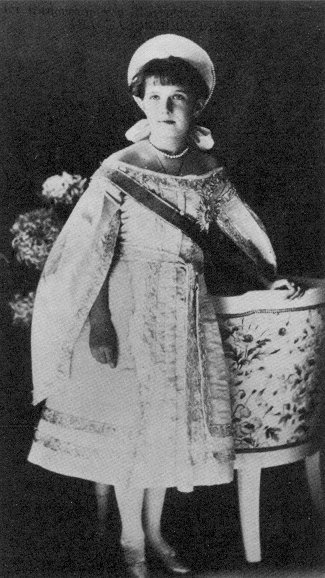
1901-1918

DECISION: B+

Tuesday, October 18, 2022

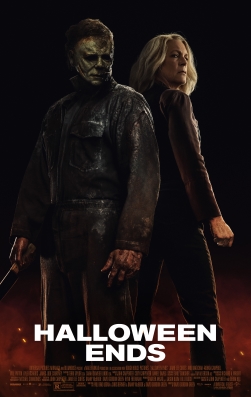
Halloween Ends: A Review

HALLOWEEN ENDS

If there is one point on which I have been roundly criticized, it is in that I have, for various reasons and circumstances, made Halloween Ends the first Halloween film that I have ever seen. Horror is not a genre that appeals to me. I do not hate it, but I am not passionate about it. As such, I just never found the Halloween franchise something I needed to see. 

Having now seen Halloween Ends, I think I can safely say that I have yet to see a Halloween film. Few films in a franchise, especially one billing itself as the epic conclusion to a long-running series, have gone as far out of their way to sideline their central characters as Halloween Ends.

Halloween Night, 2019. Twenty-one year old student Corey Cunningham (Rohan Campbell) is babysitting for a wealthy family. The only son, Jeremy (Jaxon Goldenberg) is an obnoxious tyke who taunts Corey and locks him in the attic. In a rage, Corey kicks the door open, which somehow ends up causing Jeremy to plunge to his death four floors just as his parents come in.

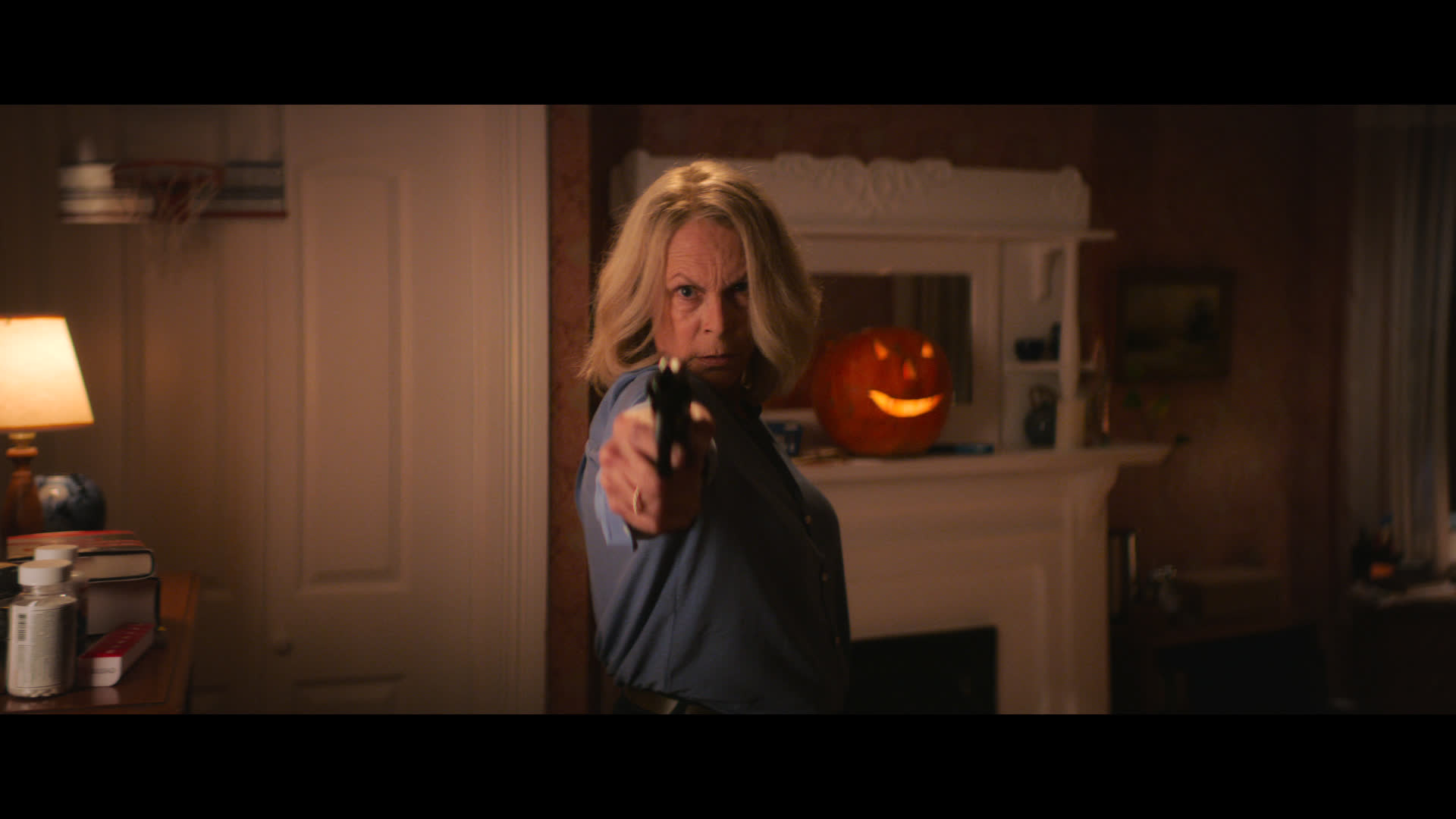
Three years later, Laurie Strode (Jamie Lee Curtis) is still coming to terms with the havoc her nemesis Michael Myers has caused not just her but the whole town of Haddonfield, Pennsylvania. Not quite a recluse but not a social butterfly, Laurie's time is taken up with her memoirs and her granddaughter Allyson (Andi Matichak). Allyson, also traumatized by Michael's murder of her mother, is working as a nurse.

This brings her in contact with Corey, now out of prison, whom Laurie helped after he was bullied by a gang of high school band members. Laurie at first encourages a romance between them. Soon, however, we see that Corey is developing a dark, murderous side. The bullying and an encounter with Michael Myers himself turns Corey into a de facto protégé of our favorite serial killer.  Soon, Corey starts killing while still pushing Allyson to leave this Podunk town behind. 

Corey's murderous mayhem can only be stopped by Laurie, who also must face off against her decades-long antagonist.

Again, I come at this from the vantage point of someone mostly unfamiliar with the Halloween mythos. Despite my admittedly limited knowledge however (here helped by an early montage that caught people up via Laurie's memoirs), I imagine that Halloween fans would feel that Halloween Ends was a bait-and-switch of almost insulting proportions.

Halloween Ends is not a Halloween film. It is a Corey Cunningham film with Michael Myers as a guest star. So much of Halloween Ends centers around Corey that the film really could have cut Myers out altogether without affecting the story.

There were, by my count, fourteen and a half kills in Halloween Ends. Michael Myers was responsible for two and a half of them (the half coming from snapping the neck of someone who had already stabbed himself in the neck). One death was accidental, but the eleven other kills were all Corey. At one point, Corey literally takes Michael's mask and kills while wearing it.

Things like that, I figure, make a mockery of Michael Myers. People, especially Halloween fans, did not come to see Corey Cunningham go on a murderous spree. I also do not think they came to see their favorite serial killer be made into someone else's servant. There are four credited screenwriters to Halloween Ends including the film's director, David Gordon Green. That is already a bad sign, to have so many hands on a script.

That four people minimum came up with one awful to idiotic decision after another is bad enough. Such things as having Corey recreate Michael Myers moments, not explain how after being tossed off a bridge Corey no longer needed his glasses and making vague suggestions that Michael either transferred his powers to Corey or at least looked into his soul are eye-rolling.

What made things worse is that one suspects there were more people working on the script. It felt as if the various screenwriters were throwing everything at the script to force a delay in the confrontation between Laurie and Michael. It also felt as if Halloween Ends wanted to build up a character that is not important to the past stories and which they cannot build up any future Halloween films. 

So much time is spent on Corey and his romance with Allyson it is almost like Halloween Ends does not care about Laurie or Michael. I do not understand the thinking behind every decision in the film.

Some of the scenes that were meant to inspire horror only ended up having the opposite effect. The radio DJ was supposed to meet a grisly end, but if so, the audience laughter showed they failed to do so. You cannot have characters such as Corey's mom say things like, "Boys who keep secrets don't get custard for dessert" and expect people to take this remotely seriously.

As Corey is essentially the lead character in Halloween Ends, I think Rohan Campbell gave as good a performance as he could given this is still early in his career. In the early scenes as the pre-loony Corey, he was pleasant while still feeling a bit off. It is only when he comes back that you struggle to believe he is bullied by people who went to band camp (even if three of the four were unpleasant, with only one showing even the smallest glimpse of kindness). Sometimes Campbell felt forced as the menacing Corey, the angry young man turned psycho.

Curtis made Laurie look slightly bonkers. Granted, the character has been throw a lot. However, she could not muster the menace of finally facing her tormentor once and for all or the wounded woman attempting to protect her granddaughter. Matichak looked bored throughout, as if silently cursing her agent for wrapping her up in this. 

I figure there were a few cameos and appearances from those in past Halloween films, but they did not elicit any responses. Instead, Halloween Ends is a disservice to Halloween fans. It is not a Halloween film. Filled with bad performances, nonsensical story beats and a central character no one cares about, Halloween Ends is a terrible, even sad, way to end this long franchise.

In the final analysis, I can see why it was called Halloween Ends. It is because no one would go see a movie called Corey Begins

DECISION: F

Wednesday, October 12, 2022

Amsterdam: A Review (Review #1655)

AMSTERDAM

Amsterdam touts itself as both a comedy and historic film with its opening on-screen text: "A lot of this really happened". If so, then history must be really dull and nonsensical. Simultaneously frantic and lethargic, Amsterdam thinks it is fun and zippy when it achieves only one thing: embarrassing everyone involved.

Hopping almost manically from 1933 to 1918 and back again, we see three people thrown together by World War I. There's Doctor Burt Berendsen (Christian Bale), who is not eager to be there put was pushed into it by his social-climbing wife and in-laws. There's Harold Woodman (John David Washington), a black soldier who won't tolerate discrimination against his fellow African-American soldiers. Berendsen, made commander of this group of troops, is injured alongside them.

At the hospital, they both meet Valerie Voze (Margot Robbie), a French nurse who is actually American. The three bond and share an idyllic time in Amsterdam despite Woodman and Berendsen's injuries (the latter with a glass eye), where Valerie and Harold begin a romance. 

Burt and Harold find themselves caught up in the murder of Liz Meekins (Taylor Swift), a Senator's daughter who asked Berendsen to perform an autopsy on her father. She is convinced it was murder, part of a plot to overthrow President Franklin D. Roosevelt and install a fascist dictatorship. Burt and Harold, along with Valerie (a surrealist artist who is now back in America) must clear their names of the crime. That means dealing with Valerie's frenemies Henry Norcross (Michael Shannon) and Paul Canterbury (Mike Myers), American and British spies whom Valerie knows. It also means dealing with Valerie's brother Tom (Rami Malek) and his wife Libby (Anya Taylor-Joy). 

The planned coup d'état revolves around General Dillenbeck (Robert DeNiro), who is to be the unwitting stooge to a cabal of industrialists bent on world domination. Things reach a climax at the military reunion, where attempted murders and conspiracies are exposed.


Writer/director David O. Russell is a good filmmaker. The cast is comprised of talented actors (three Oscar winners, two nominees). This collection of talents only makes the fiasco of Amsterdam harder to bear. As I watched, it was clear that everyone involved thought Amsterdam was clever and funny and even insightful about current-day situations. Whatever allegories between the little-known "Business Plot" of 1933 and such things as January 6 went over my head. 

What did not go over my head were the simply frightful performances. They did not compliment each other but instead were in conflict with each other. The tones of the three leads are a clear example. Bale acted as though Amsterdam was a Borscht Belt skit on acid. His performance was essentially that of a Jackie Mason impersonator, all rapid-fire line delivery and hand movements. At certain points when Bale was bemoaning life with his wife Beatrice (Andrea Riseborough), I thought we was going to exclaim, "Take my wife...PLEASE!"

Washington in turn was the complete opposite: stoic to the point of comatose. Perhaps he figured that Bale was sucking the air out the room with his non-kosher hamminess, so he opted to be too serious. If Bale thought Amsterdam was a rapid-fire comedy, Washington thought Amsterdam was a esoteric drama. Both style, fighting with each other, made it impossible to believe Burt and Harold were BFFs. 

Robbie was stuck in the middle, unsure of which direction to go. Perhaps finding it hard to match either tone, she straddled both and left no mark. Unable to control Bale's almost-crazed manner or lift Washington to play along (even with a romance that fell flat), Robbie was given a thankless job. I think she did the best she could under the circumstances, but she simply could not compete.


Amsterdam was long and meandering, with elements that seemed thrown in but never having a payoff. The entire subplot of Canterbury and Norcross' ornithological explorations was random. By the time we get to the alleged conspiracy to overthrow the government, it seems almost an afterthought versus what I figure is the main point of the film. The two cops who go after Burt and Harold appear to give them a free hand. Granted, it is because one of them served with Burt and I think supplies him with drugs, but it still seems bizarre that the junior cop did not say or do anything.

The other actors seemed to just be there. Malek and Taylor-Joy were nonentities in things. Only DeNiro seemed to take a stab at making things serious, but he too had some mugging. Taylor Swift was not on screen long enough to leave an impression (though the car running over her left an impression on her). I have heard people literally applauded when she was run over, though that did not happen when I saw the film. As with Harry Styles in Don't Worry Darling, you cannot throw a pop star into a movie and expect a transformative cinematic performance. 

In her defense, Amsterdam obviously made a mockery of established, well-trained and talented actors, so Tay-Tay already started out ten steps behind. If people like Bale, Robbie and DeNiro could not make Amsterdam work, how could T-Swift do better? 

Russell's script is already confused about what Amsterdam wanted to be. It made the cardinal sin though of sounding too contemporary for a film set in the Great Depression. People talk about being on "the right side of history" and "living your truth", expressions that I do not think existed in the 1930's. Granted, those are the script's minor issues, but they are issues nonetheless.

I think Amsterdam (a city that was not a major part of the film or story) is one of the biggest disappointments of the year. Rushed and dull, excessively long for the story it is not telling, one can only damn Amsterdam

Saturday, October 8, 2022

Catwoman: A Review

CATWOMAN

Catwoman became notorious right after its release, a film derided and despised by both public and critics alike. Many "me-ouch" and variations on "catastrophe/catastrophic" were tossed around with glee. I think those kinds of puns are tacky, but given how Catwoman ended up, they kind of fit.

Mousy Patience Phillips (Halle Berry, and no pun intended on the "mousy" bit) aspires to be a painter but is now relegated to working as an in-house advertising artist for the Hedare Corporation, which specializes in beauty products. CEO George Hedare (Lambert Wilson) is unhappy with Patience's work, though to be fair he's just a crabby person.

He's dumped his wife Laurel (Sharon Stone) as the face of Hedare after 15 years, opting for a literal younger model. This does not sit well with Laurel, but there is evil at work. The new Beau-Line beauty products have a curious side effect: they will turn the users into disfigured monsters if they stop using them.

Unfortunately for Patience, she accidentally overheard Laurel and the reluctant Dr. Slavicky (Peter Wingfield) about the Beau-Line products. As such, she is "killed", but Patience has secret allies: mystical cats who have chosen her as the new Catwoman.

Now, despite her growing romance with police officer Tom Lone (Benjamin Bratt), Patience must embrace her feline feminine side to stop Laurel and become the crimefighter Catwoman.

Perhaps it is not surprising that Catwoman has three credited screenwriters (John Brancato, Michael Ferris and John Rogers) with two of them having a story credit (Theresa Rebek being the third). I sense that more hands went into the script, which is cliched, unintentionally hilarious and groan-inducing. It is as if Catwoman never decided to be serious or camp. 

Instead, it opted to try and straddle both sides, making for a most confused final product. You take up a lot of screen time with Patience's wacky BFF Sally (Alex Borstein) but she comes across as grating and irrelevant to the plot. 

The fact that "Beau-Line" is pronounced at least two different ways but the second word is never pronounced as "lyne" but as "leen" is one of the lesser oddball elements. 

You have seen this "kill the woman who ends up coming back as Catwoman" in Batman Returns, and I'm astonished no one commented on the similarity. That Catwoman wants to be separate from the Batman mythos makes this all the more strange. 

One of Catwoman's greatest issues story-wise is that it gives Patience very little time to build up from this shrinking violet to frisky vixen. Trying to tie her in to a long line of vixens kind of just sits there. To be fair though, poor Halle Berry clearly does her best with what she is given. We see this when Catwoman and Laurel have their final confrontation: at one point Berry puts her hands up like paws as Laurel is beating her with a pole.

I do not question Berry's commitment to the role. She again was given a pretty thankless job and worked her behind off to make any of this work. Berry, however, was doomed from the start by things outside her control. Her costume was tawdry, not slinky. It would be something better suited to a furry dominatrix.

Her director, billed as "Pitof" (Jean-Christophe Comar) was probably the worst choice to helm what was meant as a major action film/franchise starter. For reasons unclear the producers gave the directing job to a man who had made only one film prior to Catwoman and whose said sole film was in French. Even that could be forgiven if not for some of the performances.

Benjamin Bratt looked utterly bored, even at times drugged throughout. He has no connection with Berry in what are meant as love scenes, and after getting shot, Lone seems more confused than in pain. Despite being shot however, he is still able to, later on, punch out a few hitmen, so I'm curious to understand that. 

Lone also has to be among the dumbest cops in history. At a robbery crime scene, we see a box of cupcakes and a note reading "Sorry" prominently displayed. Yet it takes what appear to be hours if not days for him to see that the "Sorry" matches the same "Sorry" Patience wrote on a coffee cup that she sent him after missing a date. Her feline agility when saving a kid from a crazed Ferris wheel (already a silly set up) again seems to escape him.

Stone probably thought she was in another film altogether, closer to the campy 1966 Batman than the darker 1989 Batman. She vamps it up to the Nth degree, refusing to take any situation seriously. It's almost admirable how crazed it comes across, even if the end result is laughable.

Catwoman also has some ghastly visual effects that make Catwoman clearly animated. I think it also does not help matters when Pitof appears more fixated on showcasing Halle Berry's ass than on I figure more important matters.

I think Catwoman is a terrible film, but I did not end up hating it. Rather, I felt almost sorry for everyone and everything revolving around Catwoman. I am, however, surprised that Catwoman is not a cult film, one where audiences can laugh together at people trying desperately to make things good and failing spectacularly.

Cats can land on their feet. Catwoman just fell on her face. 

DECISION: F

Thursday, October 6, 2022

Blonde: The 2001 Miniseries

 BLONDE: THE MINISERIES

Before the Joyce Carol Oates novel Blonde was adapted into a Netflix film, there was a little-remembered miniseries. Another time there may be a comparison between the two adaptations, but for now let us look at the first adaption. Blonde is a well-acted adaptation that should be better remembered.

With many of the characters speaking directly to us including from the title character herself, Blonde tells a fictionalized version of the life and times of Marilyn Monroe (Poppy Montgomery). Blonde opens with a written statement: "Although the following film depicts some actual persons and events, it is a work of fiction". 

We see Monroe almost beached on the shore, then go in chronological order from her childhood as Norma Jean Baker. Her mother Gladys (Patricia Richardson) informs us that her daughter's name came from two of her favorite stars: Norma Talmadge and Jean Harlow, and her surname from the husband she disliked the least. While her grandmother Della (Ann-Margret) tries to shield Norma Jean from Gladys' growing instability, she dies suddenly, causing Norma Jean great guilt. 

Norma Jean is married off to Bucky (Niklaus Lange), a pleasant though sexist young man. Norma's beauty and ambition propel her to first a modeling then film career. Under the management of Mr. Shin (Wallace Shawn), the now-Marilyn Monroe starts gaining more film work. Shin, who is in love with his creation, dislikes her association with Cass (Patrick Dempsey) on both a personal and professional level. 

As her star rises, Marilyn is wooed and lost by both The Baseball Player (Titus Welliver) and the Playwright (Griffin Dunne). Eventually, her affair with the President and her own emotional turmoil kill her at 36, her long-hoped dreams of motherhood unfulfilled.

Blonde breaks the fourth wall quite often, almost to the point of parody. Most of the time these interviews work. Of particular note is when Montgomery as Monroe speaks to us. Montgomery stays away from a breathy, whispery speaking style that Monroe might have used in her films. Instead, this Marilyn was soft-spoken but also strong and sincere. It is only at the end when she bizarrely comments about the President's "Social Security men" in a strange Southern accent that Montgomery/Monroe comes across as bonkers.

Throughout Blonde, the Marilyn Monroe we see is capable, fully aware and an intellectual. Many times in Blonde does Monroe either quote or write poetry. Marilyn came across as caring, frightened and deeply mournful. She declines Shin's marriage proposal even if it would set her up financially for years, but also cries bitterly when she learns of his early death. 

Other performances work well. Patricia Richardson, best known for the sitcom Home Improvement, was quite strong as Gladys both when in a somewhat catatonic state and when being glamorous as she speaks directly to the audience. Shawn too did well in drama as Shin, not in a comic manner but still with a lightness recognizable to Princess Bride fans.

Other performances though could have been better. Dunne was almost blank when with Montgomery. When he mistakes the raspberry stains on Marilyn's dress for blood, he asks "Is that blood? Are you miscarrying?" in such a bored manner one almost thinks he is barely learning English. Oddly, he does better when being "interviewed". Dempsey is admittedly handsome but leaves little impact as what we are meant to understand was a great love in Monroe's life.

Jensen Ackles as Eddie G. (Edward G. Robinson, Jr.) leaves even less of an impression and in my view was miscast as the third party in this strange ménage a trois. Eric Bogosian as the sleazy photographer was one-note in his aggressive manner.

Blonde does well in moving things forward, though other elements seem odd. For example, when the Playwright finds Monroe at the foot of the stairs, it is unclear given her emotional state whether Monroe fell or threw herself. The miniseries also ends on, if not an ambiguous note at least a less depressing one, with her performing and a text telling us that she died without becoming a mother. 

The miniseries played quite well as almost a biopic even if again Blonde is merely based on actual people versus being true-to-life. Well acted in particular by Montgomery and Richardson, Blonde is worth watching. 

7/10

Monday, October 3, 2022

Bros: A Review

BROS

It was perhaps inevitable that after Obergefell, we would have a same-sex romantic comedy. Bros touts itself as the first same-sex romantic comedy by a major studio featuring an all LGBTQ+ cast. I think this leaves a false impression that there have never been same-sex romances on film, or that openly gay actors have never played romantic leads gay or straight. 

Be that as it may, we now have this same-sex romcom, and despite the filmmakers' intentions they forgot two elements: the romance and the comedy.

Bobby Leiber (screenwriter Billy Eichner) is a podcaster and director of the soon-to-open LGBTQ+ Museum, which will feature among other things a closing wing detailing the homosexual life of President Abraham Lincoln. He insists he is happy in his misery, made up of Grindr hookups and quipping at all his gay friends' lives.

At the club, he spots the luscious Aaron (Luke MacFarlane), a probate lawyer who like Bobby is not looking for a long-term relationship. He appears more satisfied with being in threesomes than being monogamous. Nevertheless, the rapid-fire Bobby and the more straightlaced Aaron find an attraction to each other. From that, they date and don't date as they navigate group sex, Aaron's desires to be a chocolatier and Bobby's frustrations with opening the LGBTQ+ Museum. 

Will the live-action version of penguins Roy and Silo find true love with each other? 

Bros is not funny or romantic, two things that any romantic comedy should be. It is not funny because from the get-go it is trying too hard. Eichner, who cowrote the script with director Nicholas Stoller, opened with some totally cringeworthy moments that were almost insulting to the audience. At the awards show where Bobby received the "Best Cis White Gay Man of the Year" Award, we see Kristen Chenoweth wearing a large hat that represents the Stonewall Riots. 

Who genuinely thought either bit was funny? I sat there in disbelief that this could possibly have been conceived as amusing.

As if that wasn't already idiotic enough, the Out Athlete Award winner went on and on about how it's much harder being hot than being gay. Did Eichner and Stoller really think this was hilarious? Good comedy can be had from mocking conventions such as self-serious awards, but you have to have some sense of seriousness to sell the comedy. In short, you have to play the situations as if you are not aware that it is "funny". With these bits at the start, you are already telling the audience that you are not even bothering to play the situations seriously but instead screaming that "IT'S FUNNY! LAUGH, YOU PEONS! LAUGH!"

Bros is at times too referential to be seen as funny. Comments about the "serious gay cowboy film" and the lack of same-sex stories in Hallheart Channel films (an obvious callout to the Hallmark Channel) are more commentary than actual dialogue. Given that Hallmark is going to have a same-sex romance movie this year, Bros already looks dated. To be fair though, I doubt the upcoming The Holiday Sitter will be anywhere near the suggestion of polyamorous relationships like A Poly Holly Christmas, let alone feature the two male leads masturbating next to each other.

Watching Aaron getting blow jobs from two men simultaneously while also being with Bobby is not going to make most people laugh but gasp. There is another group sex scene where Aaron and his ex-high school hockey teammate start sex with Bobby joining in. The comedy is supposed to come from an uninvited man attempting to jump into the action, but given the muted reaction, I doubt it played as the comedy bit it was intended as. 

Perhaps in the gay community, the top (a man who takes the dominant sexual position) opting to be the bottom (or switching places so that his lover can be the dominant one and he be the submissive one) is a sign of vulnerability and openness. To others, whatever deep meaning will escape them. It is a bit hard to sell the universality of Bros when you have uncomfortable scenes of Grindr hookups that look almost mechanical.  

It also does not help that your lead characters are not worth following. Eichner's Bobby appears to be essentially playing Billy Eichner to where one would not be blamed if they called the character "Billy" versus "Bobby". Billy is too busy being rapid-fire in his delivery and a touch self-righteous to be likeable, let alone anyone to care about. He seems to be always "on", forever talking and annoying everyone around him. When he storms into the Lincoln Letters Wing in what he calls a "roid rage" (having injected himself with steroids to try and bulk up thinking that Aaron likes only buff men), Eichner does not act but spouts his dialogue out. Bobby is always talking to where you think a tranquilizer would do him a world of good.

Bobby is exceptionally unlikeable in how he behaves. When Aaron's mother Anne (Amanda Bearce) says that she thinks second graders might be too young to be exposed to gay history, Bobby/Billy goes into a tear. He goes on a verbal rampage about how his parents when he was 12 took him to see a play, Love and Compassion, which helped our flamboyant tween twink-in-training adjust to his gay life.

As a side note, I think Love and Compassion is meant to be Love! Valour! Compassion!, but I could be wrong.

We were, I presume, meant to sympathize or agree with Billy/Bobby (by this point it was hard to know whether it was the writer or the character making the speech). In reality, you leave this scene thinking that Bobby is bonkers. Anne was perfectly civil and not argumentative, but Billy/Bobby took it as a way to condemn people who do not share his views. He fails to notice that it was his parents' decision to take him to a show that opened with six men exposing themselves.

As a side note, would even New York theaters allow a 12-year-old to attend this Love and Compassion performance? Even openly gay 12-year-olds might get bored and fussy at theaters, so this nugget of Bobby/Billy's formative years sounds suspect, if not implausible. 

The idea that 7-to-8-year old's might not be ready to learn about any kind of sex escapes him, as does the idea that parents should decide what is appropriate for their children. Aaron's outrage is justified, but the film wants us to think him asking Bobby to not berate Aaron's parents is somehow wrong.

Just as one would question whether second graders were mature enough to handle a Holocaust exhibit, one could question whether teaching kids about LGBTQ+ history at that age is a good idea. 

Aaron too is underdeveloped except for his body. He gets character beats (he, unlike other stereotypical gay men loves Garth Brooks and does not know who Debra Messing is), but he is in his own way shallow and a stereotype of a sexually promiscuous gay man. Bros wants you think he is independent and smart, different from the casual hookups Bobby goes for. However, how he tolerates Bobby is a mystery given how snarky and difficult, almost needy Bobby is.

At one point Aaron tells Billy, "You're so smart and funny", and I thought that was Eichner projecting what he thinks of himself versus what Aaron actually thinks. I find it hard to believe someone like Aaron, who is openly yet casually gay and has a better job than Bobby, would endure him as a long-term boyfriend, let alone get weepy over him. Bros, again, wants you to think Bobby is in the right when Aaron gets angry with him when Bobby tells Aaron's mom off. I think Aaron was right in telling him off. MacFarlane to his credit did his absolute best to sell the character, but there was only so much he could do.

I will admit to laughing at a few parts. There's when the bisexual suggests he'd like a Hall of Bisexuals similar to Disney's Hall of Presidents. There's when Bobby, in the midst of his roid rage, attempts to demolish a bust of Transportation Secretary Pete Buttigieg while screaming, "Bye-bye Buttigieg!". The bit about Aaron promoting his newest chocolate creation is amusing. After fulfilling his dream of making chocolates, Aaron sends Bobby a video touting his "Harvey Milk Duds". 

Apart from that though, I found Bros unfunny and unromantic.

Bros is a niche movie, aimed at a very specific, very narrow market. Despite whatever its star and cowriter Eichner may say, Bros is going to be more for LGBTQ+ viewers. Even in that demographic, I think Bros would find only gay men being interested if that. A same-sex romantic comedy can be made, but Bros is not it. Less romantic comedy and more vanity project for Billy Eichner, Bros is too hung up on forcing what humor it has between group sex scenes. If, say perhaps, Bros had been about a Grindr hookup that developed into a genuine romance, we could have had something. However, Bros opted to be less romantic comedy and more sex farce with more sex and less farce. 

After seeing Bros, if I were gay, I would run back into the closet.

DECISION: F

Saturday, October 1, 2022

Nightcrawler: A Review (Review #1652)

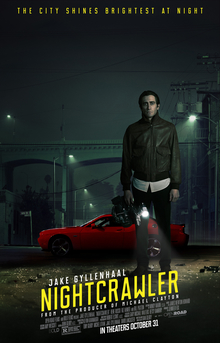
NIGHTCRAWLER

In the dark of the night, all sorts of strange creatures come out. The strangest may be the lead in Nightcrawler, an effective and haunting portrait of a soulless man in a soulless world. 

Lou Bloom (Jake Gyllenhaal) scrounges a life in Los Angeles until he comes upon an accident, where he sees Joe Loder (Bill Paxton) filming the crash. Lou learns that there is money to be made in selling the footage to television news shows. He then dives into this world of "nightcrawling" in the hopes of making his fortune.

Easier said than done given his early stumbles. Lou soon gets some good footage, which he sells to eager news director Nina (Rene Russo) with the promise of more. He also hires Rick (Riz Ahmed), a man severely down on his luck, to be his assistant.

Lou does not shrink from unethical to illegal activities, such as altering crime scenes and even moving bodies if it will make for better footage. He also forces Nina into a relationship to keep his footage coming. Things come to a head when he gets to what appears is a home invasion with three dead before the police. His footage is graphic but also the perfect material for Sweeps Week. Now under the auspices of his "Video Production News", Lou calls the shots over Nina. He also wrangles his way out of dealing with the police, though at the cost of people's lives.

Nightcrawler paints a dark portrait of Lou, a man whose lack of empathy is cool and logical but sad and depressing. It may be that Lou has either Asperger's or ADHD given how cold, almost robotic he is. In his treatment of Rick and Nina, in how he can record people dying in front of him, Lou has no compassion.

I'm going to walk back a bit from an Asperger's/ADHD diagnosis. Lou is closer to an amoral being, someone who cares only about himself. It is doubtful that he does not know right from wrong (the film starts with him stealing material to sell for scrap and we see that he held on to the watch he beat a security guard for). 

Jake Gyllenhaal gives perhaps his best performance as Lou. We see him as a gaunt, hollowed out man, who uses people living or dying as commodities to serve his own needs and gains. He does not shrink from making Lou monstrous (such as when he films Loder's car accident which Lou more than likely played a role in causing). He is cold to everyone, and we see Lou as monstrous and amoral at every turn.

His staccato delivery, his thin, almost crumbling physicality, the blankness behind the eyes all contribute to making Lou a figure of horror. "I can't jeopardize my company's success to retain an untrustworthy employee," he calmly tells Rick as the latter nears his end. Gyllenhaal does not build up this moment. He does not deliver this line with glee or a villain's cackle. Instead, it is delivered in a remote, cold manner, matter-of-fact, aware of the logic and perhaps aware of the cruelty. It is a chilling yet mesmerizing performance.


Gyllenhaal is matched by the two other main characters. Russo is equally cold but rational as Nina, the woman who feeds the public's need for sensationalistic stories. One of her last scenes with Lou where they negotiate terms for Lou's footage of a police shootout he essentially engineered plays out almost like a seduction scene. Russo has a breathless manner to her delivery, as if she and Lou are coming close to making love (Nightcrawler strongly suggests Lou had already pressured Nina into a sexual relationship to keep the footage coming). Nina is equally amoral, and Nightcrawler draws parallels between those filming death and those putting it out there.

Ahmed as Rick is equal to both Gyllenhaal and Russo. His Rick (who maintains a flawless American accent) comes across ostensibly as the most decent of the group, a man who needs a job so desperately he works with someone like Lou. However, even he can get sucked into pressuring Lou for an equal share of money despite his misgivings. To be fair, Rick had been wildly underpaid and very much abused by Lou for those months. However, it does not absolve him of being a participant, reluctant though he may have been.

The film also has a surprisingly strong electronic score from James Newton Howard.

Nightcrawler, written and directed by Dan Gilroy, is a solid film portraying a man taking advantage of a cruel market. With excellent performances, a strong script and firm direction, Nightcrawler is a film that is haunting and effective, a portrait of a dark man living of society's dark side. 

DECISION: B+