Tuesday, August 31, 2021
Tomorrow, the World!: A Review (Review #1528)
Monday, August 30, 2021
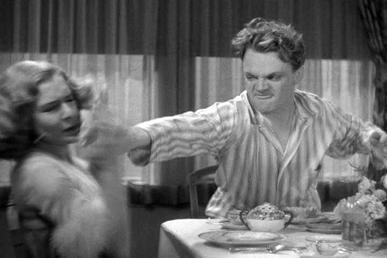
The Public Enemy: A Review
Sunday, August 29, 2021
Cactus Flower: A Review
This review is part of the Summer Under the Stars Blogathon. Today's star is Ingrid Bergman.
Ingrid Bergman was seen as the height of Continental elegance and sophistication. As such, it makes it more than startling to find her in something as wild and as daffy as Cactus Flower. The sight of the posh Swede cutting a rug and openly flirting with a man old enough to be her son isn't shocking so much as it is genuinely funny, not in a bad way but as part of a good romp.
Ditzy but sweet record shop employee Toni Simmons (Goldie Hawn) attempts suicide after her lover, dentist Julian Winston (Walter Matthau) ditches her at the last minute on their anniversary. She's saved only by the intervention of her neighbor, aspiring writer Igor Sullivan (Rick Lenz). Toni has been Julian's mistress for a year but now wants out. Horrified and moved by Toni's actions, Julian tells her he'll divorce his wife and marry her.
Only one problem: Julian isn't married.
He's been using the "wife and kids" line to avoid entanglements, but having fallen for the much-younger Toni, he opts for marriage. Things get complicated when Toni insists on meeting "Mrs. Winston" to see if she does agree to a divorce. Julian attempts to get his loyal nurse Miss Dickinson (Bergman) to pose as his wife.
At first appalled, she ends up going along with it, inadvertently making things worse. Now drawn into this web of deceit, "Mrs. Winston" has to find a boyfriend of her own. All this leads to Miss Dickinson liberating herself to wild abandon, Julian becoming more flustered by all the confusion his lies get him into, and ultimately the right couples end up together.
Cactus Flower works because it has an eccentric logic. As the situation becomes more and more convoluted there is still a semblance of sense throughout it. I.A.L. Diamond, adapting the stage play, gives the script a smooth flow, allowing the situation to build on itself despite the outlandish nature of things.Take for example when Julian gifts Toni a beautiful mink coat. Toni thinks "the wife" should get it, but it ends up with Miss Dickinson. A disinterested Julian tells Miss Dickinson the box is "his gift" to her, unaware of what it has. When Miss Dickinson opens the box and not only sees the coat but the love note he intended for Toni, she naturally mistakes both are for her.
It's really crazy, but it's all perfectly logical. Cactus Flower is built entirely on the situation never being forced but moving from Point A to Point B with ease.
The film also has a lot of wry wit and humor. At the Slipped Disc Club the various parties all meet, and we see how Igor finds the newly liberated "Mrs. Winston" to be an older sexy lady. Trying to dissuade the younger man by pointing out their age difference, Igor will have none of it. "Let's run away and live off your Social Security," he tells her to her amused delight.
While the term used to describe Miss Dickinson is a "barracuda", today it would be more "cougar".
This blending of wit and logic find a perfect fit when Toni observes "Mrs. Winston" getting down and dirty with Igor. Toni had previously seen her with Julian's friend masquerading as "Mrs. Winston's" boyfriend. She then sees her arrive later with another man. From all this, Toni essentially declares her rival a nymphomaniac. She points out that in the course of twenty-four hours "Mrs. Winston" has been with her husband, her ex-boyfriend, her current boyfriend and her potentially future boyfriend!
The performances match the farce. Hawn won Best Supporting Actress for Cactus Flower, a rare time when a comedic performance won. She is that bubbly persona Hawn is known for, but her Toni is sweet and guileless throughout the film. Despite thinking herself a mistress Hawn makes Toni a delightful, innocent person, one who genuinely cares about others. Her wide eyes and own wacky logic ensure that you like Toni.
Bergman for me is the big surprise here. I don't think she was known for comedies, let alone sex farces like Cactus Flower; what makes Bergman's performance brilliant is that she underplays the lunacy of the situations. She is perfectly droll in the beginning, showing a deadpan manner to the somewhat uptight nurse. Patient Harvey Greenfield (Jack Weston) attempts to flirt with her by saying he'd read an article about topless nurses. "I wasn't aware you were interested in reading", she retorts with a perfectly straight face.
Once Stephanie Dickinson discovers "the woman within", it's wild seeing Bergman so frisky and liberated. Bergman was hilarious throughout and a joy to watch her try another side to her many talents.
Cactus Flower is a delightful romp, an oddball but thoroughly logical film that more people should see. Perhaps a bit hampered by a sometimes stagey manner, it's still witty and amusing.
Saturday, August 28, 2021
Gorky Park: A Review (Review #1525)
This review is for the Summer Under the Stars Blogathon. Today's star is Lee Marvin.
Murder in the Soviet Union is not a simple matter. Gorky Park, based on the Martin Cruz Smith novel, has some good moments towards the end of the film. However, a lot of it feels a bit rote to dull.
Moscow police detective Arkady Renko (William Hurt) is not enthusiastic about a gruesome murder case he has. Three bodies have been found in Gorky Park, normally a quiet family-friendly area with ice skating. The victims had their faces removed, along with their fingerprints and anything that could identify them.
Renko is almost eager to have the KGB take this case, especially as he thinks they are involved. However, the investigation takes a strange turn when Renko is invited to a dacha by a high government official. Here, he encounters Jack Osborne (Lee Marvin), an American millionaire and sable importer. Osborne's companion is Irina Asanova (Joanna Pacula), a beautiful Soviet film costumer whose skates were found on the female victim.
What are Irina and Osborne's involvement with this case? Why is the strange American William Kirwill (Brian Dennehy) following Renko? It turns out Kirwill, a New York detective, is related to another of the victims, an American whose born-again Christianity got him mixed up in helping people flee the Soviet Union. However, there is more to this case, one involving both human and sable smuggling, corruption, and betrayals. A climatic shootout will lead to many deaths and freedom for some but not all.
What is interesting about Gorky Park is that it does not treat the Soviet system as anything exceptional. By that I mean that in essence Gorky Park is a police procedural, with the oppressive Communist regime as almost a backdrop versus a central part. Renko is presented as essentially an honest cop in a dishonest world, one who is interested in solving the crime and is appalled at what people will do to gain money. His methods stick within the traditions of an investigator who is set in finding the truth, but he is not in any way belligerent unless he has to be.
In fact, I remember only once does Renko show a threatening manner, and that is when he faces mortal danger.
Director Michael Apted brought a surprising stillness and perfunctory manner to Gorky Park, which may explain why the film felt longer than its already tiring two hour mark. Because the film is sometimes so still and quiet, it can feel stretched out to boring. There are certainly no big fight scenes until the end, and even here at times it's more restrained than other filmmakers would have made it.
I have an issue with William Hurt's performance. I think he was trying for a Russian accent, but sometimes it sounded more British than Russian, perhaps to match the British accents of some of the other cast members. Sometimes it sounded like a strange blending of British and Russian, and sometimes he sounded American.
Apart from his dodgy accent I'm beginning to warm to Hurt's overall performance. His Renko was honest, direct, and even allowed himself some moments of humor when interacting with his fellow detectives. I will admit that the romance between Renko and Irina struck me as both predictable and unbelievable, but apart from that it was a generally strong performance of the strong, silent figure.
The aspect about his father's heroism during World War II, along with his final fate, suggest that maybe there was an eye to making a film series out of the Cruz Smith Renko novels. As there were none, the repeated mentions of him trying to live up to his father fell flat.
Lee Marvin fortunately didn't have to don an accent and his Jack Osborne was equally strong. Quietly menacing. Marvin's Osborne was wily and capable of anything to get what he wanted be it pelts or a beautiful woman. His gravelly voice and stillness gave Osborne more menace, and the interplay between Hurt and Marvin when discussing sable hats shows both knew they were essentially speaking in code.
Pacula's Irina at times seemed almost blank, someone who did not seem to express any emotion. When she did after being shown her friend's head, it seemed a bit over-the-top to comical.
I think the stillness at times harms Gorky Park, leading to somewhat comical reactions such as when William Kirwill is discovered (both alive and dead). However, on the whole I found Gorky Park not a bad film, but a bit slow.
Friday, August 27, 2021
The Epic That Never Was: The Television Documentary
This review is part of the Summer Under the Stars Blogathon. Today's star is Merle Oberon.
In 1976 the television miniseries I, Claudius successfully adapted the Robert Graves novels I, Claudius and Claudius the God in its twelve episodes to become in my view one of the greatest miniseries events ever made. However, this was not the first time someone took a stab at adapting the Graves novels. The Epic That Never Was tells of the aborted first effort, a 1937 production that was stopped production a month after beginning.
With film star Dirk Bogarde as our guide, The Epic That Never Was uses interviews with the then-surviving cast, crew and I, Claudius author Graves to detail their memories and experiences on I, Claudius, with particular emphasis on its star, Charles Laughton.
I, Claudius was meant to be the ultimate triumph in the career of British film impresario Sir Alexander Korda. Fighting against the "quota quickies", British films made on the cheap to fill up government quotas, the Hungarian-born Korda wanted to challenge Hollywood. He had a surprise hit with The Private Life of Henry VIII starring an Oscar-winning performance from Laughton, and this led to a series of films.
Korda pulled out all the stops to make I, Claudius. Alongside Laughton would be a Who's Who of actors: Flora Robson as his grandmother Livia, Merle Oberon as his duplicitous wife Messalina and directing them would be none other than legendary auteur Josef von Sternberg.
Then, it all fell apart.
Laughton had difficulty "finding the character" according to Oberon, which made it difficult for him to act. It wasn't until he decided that Claudius was King Edward VIII, Duke of Windsor that he was able to give the role his all. However, von Sternberg was lost in his own sumptuous vision for I, Claudius to endure Laughton. Von Sternberg, for example, balked at having a mere six Vestal Virgins in era-appropriate costumes. He decided he needed sixty Vestal Virgins, all nude save for thin coverings, to fulfill his vision.
Finally, Oberon was involved in a car accident that put her out of commission. Von Sternberg decided he could not wait and that Oberon could not be replaced, and as such, I, Claudius was shut down.
The highlight of The Epic That Never Was is seeing the footage from the failed I, Claudius adaptation. Of particular note is the sequence where Laughton's Claudius takes the throne and speaks before the Roman Senate. In those five minutes we see an actor in full possession of extraordinary skill, his voice and movements so excellently crafted that the viewer forgets he/she is watching a clip from an unfinished film. Instead, the viewer gets wrapped up in I, Claudius and we get a tantalizing view of what could have been.
We also see how a film is put together, when the actors and extras are on set working. There's no music or sound effects to enhance what we normally would have seen had I, Claudius been completed. It's almost eerie how film sets, particularly large sets like I, Claudius, sound like when we get the raw materials of film.
The reminiscences of the surviving cast and crew, however, do not paint a positive picture for some of them. Von Sternberg, who looks like Colonel Sanders without his beard, seems highly contemptuous of I, Claudius in general and of both Laughton and Oberon in particular. The actors, according to von Sternberg, had truncated his film. As Emlyn Williams, who played Caligula in this unfinished film observed rather bitterly, "truncated his film" was a pretty dismissive way of referring to Oberon's car accident which left her physically scarred at the time.Williams also remembered that he didn't have a makeup or costume test before starting filming. "I only met the director on my first day of shooting, which was a Roman orgy starting at 6:30 in the morning on a January or February day and ending at 6:30 at night". Unintentionally, Williams' turn of phrase of "a Roman orgy starting at 6:30 in the morning" almost startles the viewer.
Oberon for her part all but states that I, Claudius was a vehicle for Merle Oberon. The surviving footage however gives little to suggest that I, Claudius would have been the Merle Oberon starring film that Merle Oberon suggests I, Claudius was intended as. In fact, she appears in one brief scene where Caligula orders her to marry the stuttering, limping Claudius. Oberon is pretty in the footage, but she has so few lines that it does not suggest the true evil, dare I say bitchiness Messalina is meant to be.
To be fair as this was one scene it is difficult to say if a completed I, Claudius would have made her performance a better one, but from the footage shown it suggests Oberon was more a pretty face than deep actress.
In her scene, Dame Flora Robson was much stronger as the old, cantankerous and cynical Livia. It's a curious thing that in reality Robson was only thirty when playing the eighty-year-old Livia.
In his own interview, Robert Graves is either blunt or unaware of how his motives for writing I, Claudius sound. "I'll write the true story (of Claudius) if I ever need the money", he says, but with no suggestion of humor to that comment. Whether he was just acknowledging the truth or making a joke is unclear.
The Epic That Never Was talks about Oberon's accident but does not state exactly why Oberon could not be replaced to keep the production going. As I understood it they had been in production for about a month. If so, I don't think there was that much footage as to make it impossible to recast the role. It could be that there was more footage, perhaps now lost, that would have made recasting impossible. However, it is a bit unclear.
It's accepted that Oberon's accident was the main if not central reason for I, Claudius dying, but von Sternberg hints that perhaps his difficulty with Laughton was the real reason, with Oberon's accident a fortuitous occurrence. Von Sternberg does say he found Laughton difficult, and while we can see that suggested by others (Williams called him "a brilliantly gifted child"), the final results showed that Laughton would have made a fine Claudius.
At the end of The Epic That Never Was, Graves suggests that the production died because the Emperor Claudius himself did not want to be photographed. Written about he can accept, but not filmed. Bogarde, who mentions he visited the set as a sixteen-year-old art student, wonders if in the future others would tackle the Graves novels.
Thirty-nine years after the first failed effort and eleven years after The Epic That Never Was, the miniseries adaptation proved him prescient.
8/10
Thursday, August 26, 2021
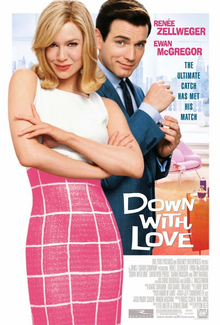
Down With Love: A Review
This review is part of the Summer Under the Stars Blogathon. Today's star is Tony Randall.
Down With Love is sold as an homage to the Rock Hudson/Doris Day "no sex sex comedies", and while the film has certain elements of the Hudson/Day films in it, I think it focused more on the style than on the substance of said Hudson/Day films.
Barbara Novak (Renee Zellweger) has just published her feminist manifesto Down with Love, arguing that women should focus on career over marriage and have sex without love. Finding no help from stuffy male publishers, her agent Vikki (Sarah Paulson) suggests an interview with dashing man's man, ladies' man and man about town Catcher Block (Ewan McGregor), as swinging a Lothario as ever walked the Earth. Catcher is the star journalist of Know Magazine (the magazine for men in the know), but Cather is nowhere near interested in Ms. Novak's theology on sexual equality.
His disdain is so great that he stands her up three times, each time for a stewardess that he goes to bed with. Much to Know Magazine's editor Peter McManus' (David Hyde Pierce) exasperation (who harbors secret passions for Vikki), Catcher is nowhere to be found. Despite this snub, Down with Love is a massive success, initially delighting Barbara's publisher Theodore Banner or TB (Tony Randall). Its success, however, is now affecting Catcher's sex life, so he cooks up a scheme to seduce Barbara by getting her to fall in love with him. Once she is under his spell, he'll write a damning expose on her.
To do this, Catcher creates an alternate persona: Captain Zip Martin, astronaut unaware of who Barbara is. Barbara appears to be taken in by this rouse, but soon it becomes a case of who's zooming who as Barbara has a few tricks up her own lavish couturier. However, as in all romantic comedies, our foursome find that love can conquer all, as Catcher and Barbara sing Here's to Love.
It's a curious thing that Rock Hudson and Doris Day are seen as the quintessential romantic screen duo when they in fact made only three films together: Pillow Talk, Lover Come Back and Send Me No Flowers. More curious is that despite what Down with Love may suggest, in only two of their three pairings did they play rivals (Send Me No Flowers had their characters married to each other already, deviating from the formula).
Down With Love is, or at least appears to be, perfectly open about how it thinks the formula for the Hudson/Day films worked: successful career woman meets sexual heel and they loath each other instantly, until through circumstances and mistaken identities the most mismatched couple find passion and romance. While Eve Ahlert and Dennis Drake's screenplay has certain elements that use said formula, the film is actually all style and little to no substance. Down With Love drowns in its own self-conscious and aware manner that it ends up not as an homage or even parody of the Hudson/Day films but almost a desecration of them.
The Hudson/Day films were exaggerated, farcical perhaps but never idiotic. The sexual tension was built around, in part, the double entendres and sly suggestions going on. Down With Love, for better or worse, is more overt while attempting to masquerade as innocent but naughty fun. The split screen scene that Down with Love riffs from Pillow Talk is a case in point.
For those who haven't seen Pillow Talk, a split screen was used to suggest that our leads were playing footsie in their separate bathtubs, whereas in Down with Love we see Catcher and Barbara appear to be simulating oral sex. While the former was suggestive and playful, the latter was almost vulgar, idiotic and nasty.
A major issue with Down with Love is that the script and director Peyton Reed focused more on the aesthetics than on the substance. The film in its costumes, sets and score is overt in its wild over-the-top manner. It, in short, refuses to take any of this seriously, mistaking open insincerity for humor. Down With Love is more about an homage to the late fifties style than to the Hudson/Day films themselves. Everything we see makes clear that Down with Love isn't going to even try to ground any of this in any sort of reality. Fully aware of itself, it thinks it can (like Catcher) get away with surface charm. Instead, by being so open about its exaggeration, Down with Love misses the charm of the Hudson/Day films.
The performances equal the broad nature of Down with Love. To her credit Zellweger does capture some of Day's facial manners, particularly the look of exasperation at situations. She also has a wonderful monologue where she reveals her motivations that is a strong piece of acting. However, she is not matched by McGregor, who swings into the parody of a parody of the Rock Hudson role with an almost too-cartoonish ferocity. Far too cocky for even what ends up as less a tribute and more an almost meanspirited spoof, McGregor's Catcher ends up quite repulsive. Moreover, you don't see how the romance blossomed between Catcher and Barbara.However, you do see McGregor shirtless three times, so if that piques your interest, there it is.
As a side note, we see Judy Garland in archival footage singing Down with Love (billed as being from The Ed Sullivan Show but in reality, from her eponymous show). Zellweger would, in a curious turn, end up playing Garland in the biopic Judy.
With Rock Hudson sadly dead from AIDS and Doris Day in happy retirement, it falls upon Tony Randall to serve as the only original piece from the three Hudson/Day films to tie it to Down with Love. His role in the Hudson/Day films was always that of the third wheel, the neurotic, slightly befuddled best friend forever trying to help or get something from either or both of the main characters. His role of the publisher who ends up cursing his main success is a sad waste of Randall's talent. He was so unimportant to the film it might just as well have been a cameo, and it's a puzzle as to why he couldn't play a larger role.
Much better were Pierce and Paulson. Pierce manages to balance being an homage to the Tony Randall-type role while making it his own. Paulson too balanced being exaggerated without making Vikki look stupid.
To be fair Down with Love has at least one highlight: the closing song Here's to Love. It has a nice swinging style and unlike the film itself it's cute and witty. "I hear the march that's calling for us/We'll walk down the aisle to an angels' chorus/I'll be your Rock if you'll be my Doris" go the lyrics. You have to tip your hat for a song that rhymes "chorus" with "Doris".
Down With Love is too self-aware to be the Rock Hudson/Doris Day homage it wants to be. It's cutesy but it's better to go for some Pillow Talk than to be Down with Love.
Wednesday, August 25, 2021
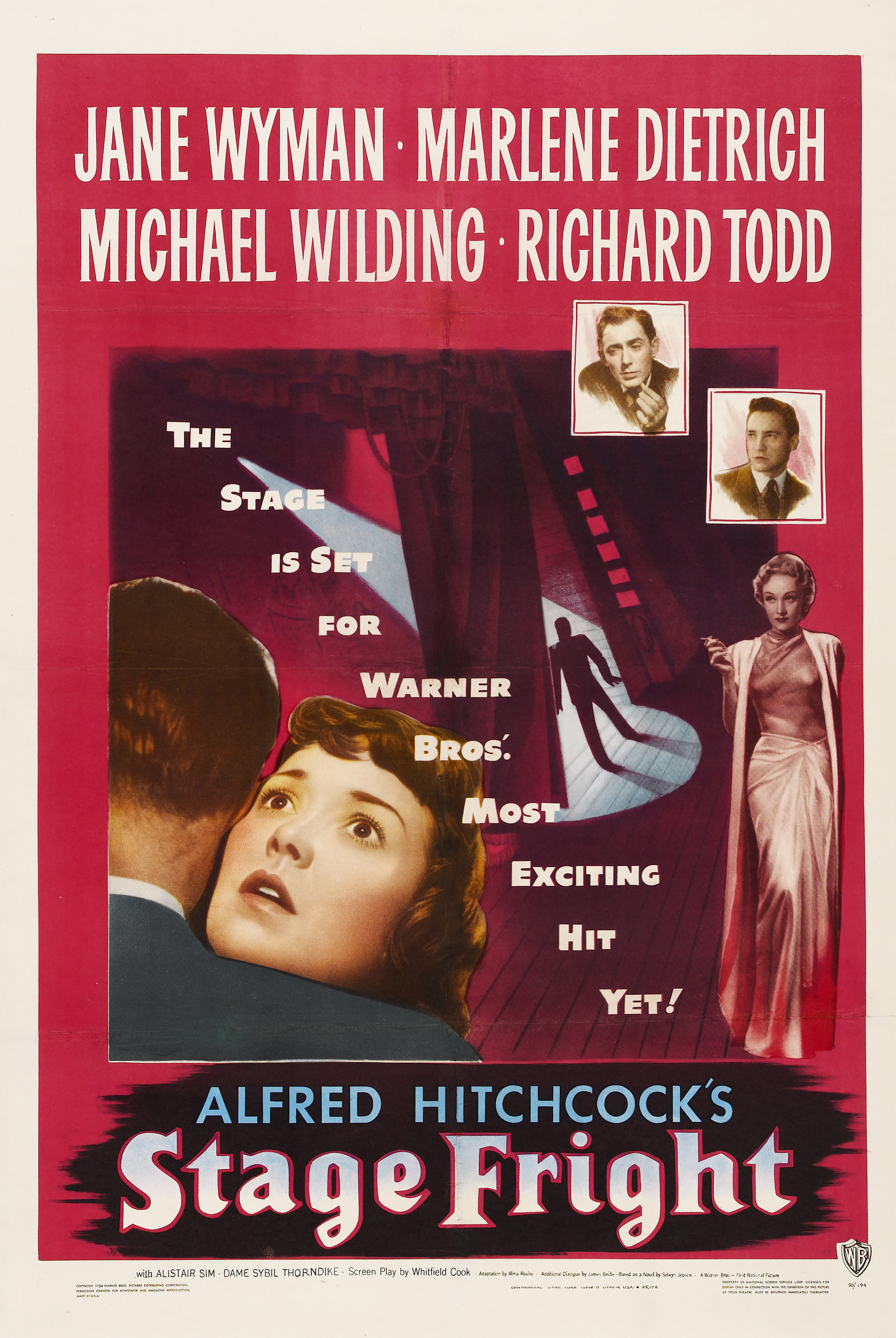
Stage Fright (1950): A Review
This review is part of the Summer Under the Stars Blogathon. Today's star is Jane Wyman.
Murder and death take stage in Stage Fright, a lesser-known and I would argue lighter Alfred Hitchcock film. With a bit more humor and some strong performances, Stage Fright is entertaining though not among The Master of Suspense's greater works.
Aspiring actress Eve Gill (Jane Wyman) learns from her love interest Jonathan Cooper (Richard Todd) that famed chanteuse Charlotte Inwood (Marlene Dietrich) has come to him for help after murdering her husband. Johnny has been having an affair with Charlotte, and as a result he was seen fleeing the scene of the crime by Charlotte's maid Nellie Goode (Kay Walsh).
Now, Eve is determined to clear Johnny's name. With help from her father Commodore Gill (Alastair Sim), Eve uses her acting skills to infiltrate Charlotte's circle, though she has to bribe Nellie to get her to pass Eve off as her "cousin", Doris Tinsdale. Eve becomes Charlotte's maid/stage dresser, while also starting something of a romance with Detective Wilfred Smith (Michael Wilding), who likes it when she calls him "Ordinary" Smith.
Charlotte maintains her innocence, but there are more twists in the tale until we discover that not is as it appears, with deadly results for one and romance for another.
Starting from Leighton Lucas' opening music on down to some of the performances, Stage Fright feels less thriller and more light entertainment. It is not surprising given that a highlight is Dietrich's rendition of The Laziest Gal in Town, a song written by Cole Porter specifically for her. Dietrich seemed to be having a ball playing up a bit as the great musical star, but she also can show a good, strong dramatic manner when reminiscing about how she had to kill off a dog who bit her.
As Dietrich was playing diva, it leaves Wyman to play a bit more mousey as Eve. Stage Fright did give her a chance to play dual roles: Eve Gill and Doris Tinsdale. It speaks to the more lighthearted manner of Stage Fright that there's an extended scene of Eve preparing to masquerade as the Cockney maid only to end up easily recognizable to her nearsighted mother (Sybil Thorndike). Wyman did well not just in these dual roles but also when showing her conflicting romantic feelings for Ordinary Smith.
More lighthearted elements come through Sim's performance, which for me was a highlight. With a slight twinkle in his eye and a generally amusing and amused manner, Sim's Commodore Gill showed himself to be less addled than his estranged wife but still able to show lightness. Like Wyman though, he was able to play the more dramatic elements, especially when warning Eve of how dangerous Johnny was.
I think a lot of Stage Fright is more light due to seeing how Eve continuously tries to hide her undercover work. Most of the film is Eve/Doris trying to keep others from discovering her double-act. This, along with Sim and Dietrich's performances indicate that Stage Fright is not intended to be deep or intense. Rather, it is a bit of a lark, not a full-on romp but not something to put one on the edge of one's seat.
Finally, in regards to what is called "the false flashback", I can see how it would be needlessly misleading the audience and think it should have been reworked. Rather than show, perhaps merely telling would have been enough, or at least indicate in some way that things were not as presented. However, it is not a deal-breaker for me.
Stage Fright, while nowhere near the same level as Vertigo or Psycho, is pleasant enough and worth the price of admission to see Marlene Dietrich be The Laziest Gal in Town.