Monday, January 21, 2013

Django Unchained: A Review


DJANGO UNCHAINED

It looks like the election and re-election of the first black President has not affected the 1970s worldview of Quentin Tarantino.  As far as he's concerned, blacks still have it hard, with The Man and 'Uncle Toms' forever plotting against them.  At least now they have a hero, a freed slave named Django (the D is silent).  Django Unchained, Tarantino's homage to spaghetti Western, sticks to what he knows and does best: making versions of the 70s films he so loves.  I have long argued that Tarantino does nothing but versions of 70s films, be it grindhouse cinema or blaxploitation or revenge schlock.  That he can do it well is not in doubt (even from someone as implacably anti-Tarantino as I).  The fact that QT desperately needs an editor is similarly not in doubt.

In the two-hour-forty-five minute running time, we get a sprawling story that really should be broken down into acts (if not whole films unto themselves). We start in 1858 (two years prior to the Civil War we're helpfully informed).  Dr. King Schultz (Christoph Waltz), dentist-turned-bounty hunter, is looking for a slave that can help identify a particular group of criminals.  He finds said slave, and his name is Django (Jamie Foxx).  He takes him (which does mean killing the slavers who won't agree to Schultz's rather generous terms of payment), and soon Schultz mentors Django as a bounty hunter himself.  The price for Django's help is his freedom, $75, and a horse (this was before 40 acres and a mule was being offered). 

Well, once the bandits are killed, we now go to the Hildy side of the story.  Broomhilda (Kerry Washington), Django's wife, had been sold off at the same time as Django.  Schultz has been mentoring Django in the art of boutny hunting, and now Django wants his wife back.  They learn that she has been sold to Calvin Candie (Leonardo DiCaprio), owner of Candyland, one of the most notorious plantations in the South.  Candie is passionate about "mandingo fighting": having slaves fight to the death.  The plan is such: Schultz and Django will go to Candie appearing to want to purchase a mandingo, then throwing in Broomhilda for a good price. 

This might have worked save for the machinations of the wicked Stephen (Samuel L. Jackson), the house slave who is a caricature of a caricature of what an Uncle Tom is held to be.  He realizes that Broomhilda and Django know each other and all this is a ruse.  Being the traitorous black that he is, he tells his Master, who forces them to pay through the nose for Hildy.  They do, but in a bloody shootout Candie and Schultz are both killed and Django is captured and sold off to the LeQuint Mining Company. 

However, Django convinces the mining company people he IS a bounty hunter, kills them off, and goes back to Candyland and has one last bloody confrontation.


Django Unchained has earned scorn and condemnation in certain circles for its wide use of a certain word that is unacceptable.  This word is used to demean and demote African-Americans.  This liberal use of that particular word surprises some, especially given that the President of the United States is African-American (since his father was Kenyan, Barack Obama can say he is truly African-American rather than the majority of those who use this term when it would be more accurate to say they are Americans of African descent, but I digress).  I will not use that word nor will I use the common term "N-Word" which strikes me as a rather childish way of getting around it.  However, this demeaning term for 'black' has caused controversy. 

Out of curiosity I kept a count of the number of times 'n----r' was used.  Granted I might have missed a few and don't know if anyone else kept a count, but my tally was 112 times spoken, once written on a sign.  Here is the rub of the high count of 'n----r': it would probably be historically accurate to have the characters use it (if one watches Roots, a more respectful take on slavery, one hears that word used repeatedly), but is it right, TODAY, to have a film with this word appearing that often? 

I can speak only for myself in that I was not pleased to hear it so often (in particular with sequences that I felt could have been cut) but I also think that its use is unacceptable in rap albums.  Therefore I would find it distasteful in film or music but if it is used in context (as in history-based films where this use would be found) then I can understand it.  Displeased, but understanding there is a reason for it.  I think Django Unchained might come off as being gratuitous in its use of 'n----r', but in the end I don't think it was.

The use of that word is not my chief complaint against Django Unchained.  It is its length.  The film appears to be two films colliding with each other, littered with scenes that might have been put on the cutting room floor.  The first film is over Django and Schultz going bounty hunting and Django's subsequent training.  The second is on Django and Schultz rescuing Broomhilda.  Since we have these two stories put together, we have a very long film.  We also have whole sequences that frankly should have been cut.

For example, there is one where Spencer 'Big Daddy' Bennett (Don Johnson, and frankly the name already makes this a silly subplot) goes after Schultz and Django for the killing of his overseers.  It is a spoof of the Ku Klux Klan with these inept guys arguing about the bags they use to cover their faces.  I imagine Tarantino laughing while writing this sequence (and yes, people in the audience were laughing, though I wasn't), but not only does it add nothing to the main story but to me was so forced in its efforts to be funny that it smacked almost of desperation.  Once they kill the criminals, that really should have been the end of that storyline.  Having this 'raid' only serves to lengthen a film that is already very long.

Really there was no reason apart from QT's insistence and love for his own work as to why Django Unchained was as long as it was. 

Let us now turn to the performances.  What I found was that most of them were appropriately exaggerated.  Waltz was doing a kinder, gentler Hans Landa: still urbane but without the murderous inclinations.  I think Schultz is the only character in Django Unchained with anything close to a conscience on the issue of slavery, for all the other characters (even some of the black ones) appear not only to endorse slavery but willing to make slaves suffer more.  Django obviously doesn't support slavery, but he isn't motivated in freeing fellow slaves or starting some kind of revolution.  He is only interested in saving his wife, therefore, whatever motivates him is strictly personal, up to celebrating killing whites.

Minus Waltz, everyone else appears to be hamming it up, but this is in keeping with the style Tarantino is going for.  DiCaprio is relishing playing the camp villain Candie (complete with Candyland, a most unusual plantation name given the penchant for romantic names for these estates).  Jackson clearly knew what he was doing with his turn as Stephen, drawing on the idea of the 'house slave' so blinded by his status that he sees himself as Candie's surrogate.  Intentional or not, Stephen struck me as doing a spoof of what people think the character of Uncle Tom from Harriet Beecher Stowe's Uncle Tom's Cabin is: the old, subservient black who betrays his own people in his idealization of his 'master'.  When Candie is killed, it's Stephen who mourns him almost hysterically, and it's Stephen who echoes Candie's ideas as if they were his own.  Jackson creates a selfish and wildly misguided (or evil) character, but it doesn't change that he, like everyone else in Django Unchained, is a caricature.

In regards to the violence in the film, yes, it is graphic, but from what I understand this is what Tarantino acolytes (such as my friend Fidel Gomez, Jr., who may or may not be dead) love.  Well, not always: he wasn't particularly fond of Grindhouse. From the first scene with the slavers, we are treated to lavish sights of blood exploding (and at one point, Tarantino himself exploding, which pleased me but at least I can tell the difference between fake and real violence).  This is how Tarantino indulges his inner film geek by amping up the gore.  I again wasn't pleased with it but figure this is what this particular audience wants and what Tarantino was drawing on: the films that inspired Django Unchained.     

The thing we must all remember about Django Unchained is that we are not suppose to take this seriously.  As far as QT is concerned, slavery is just the stage dressing for the story he wants to tell: a spaghetti Western/revenge film with all the trappings of 1970s B-film style that Tarantino loved as a kid and which he's insistent we all love with the fervor of a recent convert.  The horror of slavery is an excuse to have blood and gore and 'n----r' thrown all over us.  Again my issue isn't so much with the verbal usage (although perhaps less is more) or the violence (although it is far too much for my taste).  It is the length of the film, with subplots that don't serve the overall story, along with the exaggerated and deliberate manner of aping other genres that gets to me.

It is well-made, but hollow...and far too long.  I shudder at an extended edition.                    

DECISION: C-

Sunday, January 20, 2013

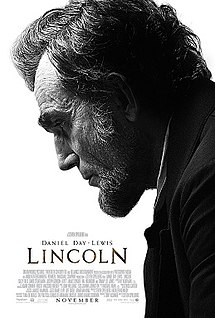
Lincoln: A Review (Review #494)


LINCOLN

President Abraham Lincoln has earned in place in the hearts of all Americans, the standard to which all other Presidents are measured.  Every President since our 16th looks to Lincoln and hopes to rank with him.  Few have.  Since his death in 1865 one can count on one hand those that have succeeded Lincoln who are considered close to him: Theodore and Franklin Roosevelt and Ronald Reagan are the only ones who are held to be among the greatest where Lincoln is already enshrined.  However, perhaps because Abraham Lincoln has been so deified films about him tend to be extremely reverential (with the exception of Abraham Lincoln: Vampire Hunter, a film I enjoyed but that few others appeared to).  We now have Lincoln, which was well-made, well-acted, and a fine film.  However, I found that in the end Lincoln to be a bit of a misnomer since most of Lincoln isn't about the President itself but about how he struggled and ultimately managed to push through the 13th Amendment to the Constitution of the United States, abolishing slavery in America.

President Lincoln (Daniel Day-Lewis) has won re-election, but now in January 1865 he is set on passing the 13th Amendment, despite the fierce opposition of the Democrats whom he still needs to provide the votes for passage in the House.  To help get the necessary votes, he and his trusted Secretary of State William Seward (David Strathairn) hire three proto-lobbyists to get the Democrats who might be swayed, some who are lame-ducks, some who might lose their seats if a close election is called against them by either Republican governors or a Republican-dominated House.

Of course, the rascally Radical Republicans give the President a headache also.  Their leader, Representative Thaddeus Stevens (Tommy Lee Jones) causes him trouble because of his passionate advocacy of 'Negro' rights, daring to suggest in his long career that 'Negroes' are equal to whites.  Only Republican Party founder and grandee Francis Preston Blair (Hal Holbrook) can keep the non-Radicals in line, but a price of his cooperation is seeing a peace delegation from the Confederacy, which the President steadfastly refuses to acknowledge exists.  This delegation, headed by Alexander Stephens (Jackie Earle Haley), held as the Vice President of the Confederate States of America, is kept waiting while Lincoln is working to ensure the 13th Amendment (so that the Emancipation Proclamation and the issue of slavery is settled once and for all, thus keeping the courts out of the possibility of returning slaves to bondage).

With his skills and a little wheeling and dealing, the Amendment is passed.  Lincoln then jumps to the surrender of Lee at Appomattox and then his assassination.


Here is the curious thing to me about Lincoln: it isn't about him.  Tony Kushner's screenplay (based on Doris Kearns Goodwin's Team of Rivals) is strong when it comes to the maneuvering and thinking of the President.  It shows that Lincoln was always two or three steps ahead intellectually of everyone else.  We get Lincoln and others in his circle (from his Cabinet members to Republican leaders) working to get their way, whether it is passage of the Amendment or get the peace delegation to be received.  The machinations of the participants was well-written and highly entertaining (the debates in the House during the Lincoln Administration were certainly more lively and entertaining than the ones we have now). 

HOWEVER, given the film is called Lincoln, one would have expected the film to be ABOUT Lincoln.  President Lincoln certainly wasn't a supporting character or someone that just pops in and out.  My issue with Lincoln is that the story we're told (the passage of the 13th Amendment and the various plans to promote or derail it) could have been told from another vantage point.  One could have made a film about Representative George Yeaman (Michael Stuhlbarg), who opposed slavery on moral grounds but who feared the Amendment would lead to full equality to blacks, a step he wasn't willing to make.  A film could also have been made on Representative Wells Hutchins (Walton Goggins), who while not having won his re-election bid still voted to defy his party to cast a vote for the Amendment (what would be called a Profile in Courage).

Instead, because Lincoln was almost squarely about the work of passing the 13th Amendment, the film flounders as a biopic.  In fact, once the Amendment passes, we get just a bit more about Lincoln and then he dies.  I cannot help feel that while Lincoln IS a good film, it is not a film about Lincoln per se.

However, this isn't to throw Lincoln under the bus.  Day-Lewis broke with tradition by giving the President a more accurate higher register, which goes against the idea that Lincoln's voice was stentorian and grand (read: deep).  His performance as the wise (and on occasion, wise-cracking) Commander-in-Chief was brilliant: for the most part gentle but also with flashes of anger.  When Lincoln does focus on the family issues (his at times unstable wife Mary--Sally Field--or his elder son Robert--Joseph Gordon-Levitt) we do get strong performances from them all. 

In fact, I don't think there is a bad performance among any of the Lincoln cast.  Even the minor roles such as Stuhlbarg or Goggins or Lee Pace as Democratic Congressman Fernando Wood or Gloria Reuben as Mary Todd Lincoln's dressmaker/friend and confidant Elizabeth Keckley were all done well.  Jones dominates his scenes as Stevens, who is prickly and shrewd and unbending.  Thus when he equivocates on his lifelong pledge of racial equality to ensure passage it is in turns shocking but wildly clever.

How I see Lincoln is that the film is passionately reverential.  John Williams' music treats the President with reverence (though when the lobbyists are rounding up cued it to be comical).  Janusz Kaminski's cinematography bathes Lincoln with appropriate grandness (the last shot of Lincoln, where the President gives a section of his Second Inaugural Address, the Malice Towards None, Charity for All Speech while emerging from a candlelight was a bit much for my taste).

Ultimately, I found Lincoln to be proper, well-made, but the President was still bathed in near-divine light, less human and more the President we all love and admire, but still don't fully know.  Respectful, respectable, reverential.  Nothing wrong with that, but perhaps a little more of the human touch might have pushed Lincoln to a higher level, to that level the film aspires to and the President has long achieved.              

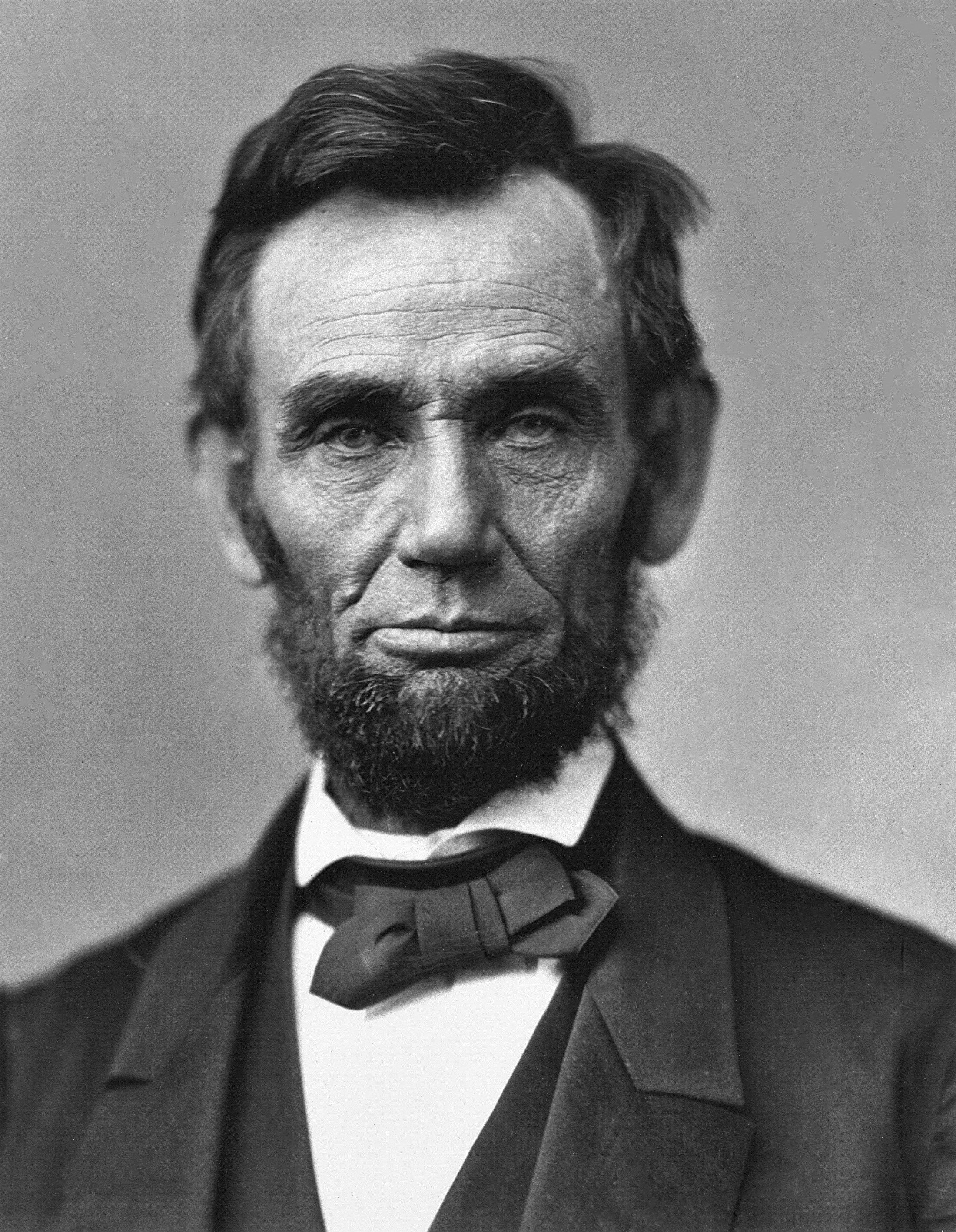
1809-1865

DECISION: B+

Saturday, January 19, 2013

Franklin & Bash: Voir Dire Review


FRANKLIN & BASH: VOIR DIRE

To Tell The Truth, It Disappoints...

It is shocking that Franklin & Bash co-creators Kevin Falls and Bill Chais could write a script that had me hating our fun-loving duo within seconds of it starting, but that they did with Voir Dire, an episode that sapped almost all my love for this series.  When once Jared Franklin (Breckin Meyer) and Peter Bash (Mark-Paul Gosselaar) were non-conformists sticking up for the little guy against the stuffy suits (personified by Reed Diamond's Damien Karp), now they just come off as egotistical and uninterested in behaving like functioning adults.  Voir Dire should be the breaking point between having our heroes living like Eternal Fratboys and having them maintain their sense of whimsy while slowly taking on actual responsibilities.

We begin with Jared and Peter back at the diner.  They are having breakfast, but there is tension.  The partner's meeting (daily I think it was) started at 9:30, and it's already 9:45.  Peter wants to get to the office, but Jared is too involved with his breakfast to care.  As a result of their absence, they by default are handed a case involving someone who knows the mechanic of Stanton Infeld (Malcolm McDowell).  This would be Sal Gotelli (Gino Anthony Pesi), a chop-shop guy accused of assaulting three other goons.  Our gumba is a total idiot: at one point, an Iron Chef-type show puzzles him: a program that is both a cooking a show AND a competition being beyond his comprehension.

Now, Sal did actually beat the goons down, but it was first self-defense, then he reveals it was over protecting a girl, Annabelle (Colleen Foy), who Sal says was threatened by them and whom he has a crush on.  Sadly, Annabelle has no idea who Sal is.  She recognizes him but they've never shared anything other than the purchases he's made. 

Our muscle-moron appears to do everything to sabotage his own case: he goes to Annabelle which makes her leave, fearing her life's in danger, and continuously keeping bits of information from Franklin and Bash. 

Fortunately for them, the majority of Voir Dire involves not the trial but the jury selection.  Our duo, in typical Franklin and Bash style, don't take the advise on jury selection from Infeld, Hanna (Garcelle Beauvais), or Karp.  Not even the summer intern shadowing them, Bonnie Appel (Danielle Panabaker) appears to dissuade them to stop offering challenges to nearly everyone to pick the jury they want for a self-defense case.  The fact that the prosecution hasn't offered any challenges themselves worrisome, especially after they have nearly depleted their own.  Of course, it's because the prosecution KNOWS it will not be a self-defense case due to Sal's own very-large stupidity.

With only two challenges left, it's up to Franklin and Bash to basically play the prosecution and jurors for fools to get the jury that will ensure their victory.  If it is due to tricking both groups, then be it.  If it means using Kiki Parker (Sandra Purpuro), the garage's secretary to whom Sal had been given the items he's bought from Annabelle and whom he hooked up with to show that Sal was motivated by unrequited love, then be it.

Voir Dire ends with opening statements where the prosecution will actually use the 'love' motive, which is exactly what Jared and Peter wanted all the time, thus suggesting that they will win this case.

It's hard to care for two individuals who are basically irresponsible, immature, somewhat sexist, and even up a point stupid, but Voir Dire not only wants us to expects us to cheer them on.  I had an immediate problem when we first see how easily Franklin and Bash, in particular Jared Franklin, blow off a partner's meeting.  Chais and Falls have a great set-up to what could be an evolving storyline between them: how Peter wants to grow up and become an adult while his bromate (brother/roommate) Jared simply won't grow up (and that is not a Breckin Meyer short joke).  It's obvious Peter is irritated, even angry, at being made to either run late or even miss a partner's meeting while Jared flat-out doesn't care.  Whatever is holding our bromates might be slowly coming apart: the pull of responsibilities versus the hope to extend their adolescence, but Voir Dire doesn't have the courage to explore this or let our characters grow.

Instead, pretty soon this thread is discarded for more 'hijinks'.

What is extremely irritating about the opening scene is that even in the Franklin & Bash world, two potential partners missing a partner's meeting merely because would not endear them to the partners who are not as implacably opposed to them like Hanna and Karp.  In fact, it might even given Hanna and Karp leverage to show Jared and Peter are simply not ready to take on the added responsibilities of representing Infeld and Daniels.  It just is wrong, and irrational, to have our two heroes not evolve or at least question whether they should continue to live up to Pitbull's mantra: Don't Stop the Party.  It would be nice to see Franklin and Bash keep a balance between being the fun-loving, anti-establishment fellows we met in Season One while slowly adapting to the responsibilities Season Two presents them.  Rather than that, our characters appear to be regressing, becoming MORE stupid as time goes by.

We've had examples of this already, but how bright can our lawyers be when they think referring to themselves in the third person means that each word in "Franklin And Bash" makes three?

There is something irritating, even aggravating, about two men in their thirties (or at least one) who feel free to miss meetings because they want to.  It's one thing to go against the rules, but another to think that ALL rules don't apply to them.  There's an arrogance to that which make what was once fun now be dismissive.

However, let's move on to the rest of the episode.  We see that they are clearly not taking the jury selection process seriously, showing a cavalier attitude in how they get the jurors.  Their idea of what constitutes a good juror reaches a nadir when Pindar (Kumail Nanjiani) puts a section on their board for JILFs (Jurors I'd Like to Foolaroundwith).  I noticed at the end there was a MAN'S picture in that section.  I figure it is an inside joke among the Franklin & Bash crew, but it was a sign of my boredom with Voir Dire that my eyes started wandering to the board. 

Of course, it does make one wonder WHO put that picture up?  It couldn't be the investigator Carmen (Dana Davis) who objected to it in the first place.  It's not Peter, whose run through two women this season.  It's highly unlike Bonnie the Shadow did it, which leaves us two suspects: Pindar, who created the JILF Board, or Jared, who seems unnaturally attached to Peter.

The dumb Italian mug and the sleazy Italian Jersey Shore-type broad were stereotypes, as were some of the jurors (the pretty Southern belle, the tough gun owner).  While Pesi didn't stretch as an actor with the dim-witted Sal (so dim-witted he, to quote Jamie Lee Curtis in A Fish Called Wanda, "to call (Sal) stupid would be an insult to stupid people", he did what was asked of him: be a stereotype. 

There is one bright spot in Voir Dire: Panabaker's Bonnie.  We get that she and Jared have similar backgrounds: scions of attorneys fearful they won't measure up to their father's reputations.  Not only was Panabaker the best performance all around but I hope that her character will reappear, even give Jared the romantic partner he so needs given that this season Meyer is the only one not paired off with someone at least once.

It is curious that at the end of Voir Dire, we're suppose to figure Franklin and Bash would win.  It's a curious thing that this case they 'won' not by cleverness but by manipulation.  It almost makes Jared Franklin and Peter Bash rather grotesque, not heroic, because we didn't see their victory by their minds.  Instead, by deceiving others they got their way. 

Wrapping up just how shocking Voir Dire is we have John Landis directing.  How could something so bad come from someone so good?

Voir Dire is something that almost angered me: how these two goofballs who don't take anything seriously get their way despite being irresponsible in their duties to the point of arrogance.  There's something now seedy and unpleasant about Franklin and Bash if this is how they continue, but I hope this was just a one-off misfire.  Otherwise, I will swear Franklin & Bash off.

They're all with Stupid...
          

2/10

Next Story: Summer Girls

Friday, January 18, 2013

Star Trek VI: The Undiscovered Country. A Review


STAR TREK VI: THE UNDISCOVERED COUNTRY

Some Things Should Remain Undiscovered...

Though I am by no means a Trekkie/Trekker, I have always insisted that Hamlet is not a play the Klingons would care for, let alone quote. I can't imagine a Klingon asking him/herself, "To be or not to be, that is the Question".  If anything, they would always "be". Why this warrior breed would enjoy or embrace the story of a man who almost WON'T fight but spends his time vacillating between taking action and not is a puzzle.  The Klingons I think would be more into something like Macbeth; with all the killings and coups, the Scottish play would be more up the Klingon's street. Therefore, Star Trek VI: The Undiscovered Country, already starts out on an off note.  While I applaud The Undiscovered Country for continuing in the effort to be an allegory about the world, the story itself gets sidetracked tremendously.  It starts off well, but then devolves to a general mystery/adventure story that got lost from its original intention.

Captain Zulu (George Takei), formerly of the U.S.S. Enterprise but now at the helm of the Excelsior, finds himself feeling the effects of a massive explosion on the Klingon moon Praxis.  The explosion is so powerful it blows Praxis apart, sending literal shockwaves in space.  Now the Klingon Empire has at the most 50 Earth years before the poison from Praxis will kill them all.  The Klingon economy will not be able to take this literal blow, and now the United Federation of Planets has a choice: start the peace negotiations the Klingons have asked for or strike to defeat them.  Despite the objections of Admiral Cartwright (Brock Peters), the Federation, under overtures opened by Mr. Spock (Leonard Nimoy) decides to negotiate and bring peace to the galaxy.

Using the old Vulcan proverb that "Only Nixon could go to China", Spock suggests sending Captain James T. Kirk (William Shatner) and the Enterprise crew to escort the Klingon Chancellor Gorkon (David Warner) to a peace summit on Earth.  Accompanying the Chancellor are his daughter Azetbur (Rosana DeSoto) and his chief of staff, General Chang (Christopher Plummer).  Kirk, still bitter about the death of his son at the hands of Klingons in The Search for Spock, does not want to go, but he does as he's told.

Also along on this voyage is Spock's protege, Valeris (Kim Cattrall), a fellow Vulcan on her first voyage. 

The Klingons and the Federation have a most unpleasant dinner together that quickly dissolves into anger.  Over Romulan ale, we hear the Klingons quoting Shakespeare and subtlety suggesting that the Federation wants to enslave them and/or forsake their culture.  The Federation gives as good as it gets, suggesting that the Klingons need for 'breathing room' will lead to conquest.

Well, soon things really spin out of control.  From out of nowhere the Enterprise appears to fire two missiles at the Klingon Bird of Prey.  Two mysterious figures transport onto the Chancellor's vessel and kill him.  Chang (who somehow survive unscathed) now accuses Kirk and McCoy of murdering the Chancellor.  Azetbur, now appointed Chancellor, will continue the peace process but at a different location to be kept secret and on one condition: no rescue attempt for Kirk and McCoy as they stand trial.

We now see Klingon Justice.  Chang acts as prosecutor, while the Federation Captain and Doctor are defended (weakly) by General Worf (Michael Dorn).

Side note: I have never gotten a straight answer from Trekker/Trekkies if this Worf is the SAME Worf from Star Trek: The Next Generation, but given the time frame I figure it is an ancestor with the same name...played by the same actor. 

Fascinating.

In any case, Kirk and McCoy are found guilty, but rather than be executed they are sentenced to life imprisonment on the asteroid Rura Penthe, aka the Alien's Graveyard.  Here, they meet Martia (Iman), a beautiful prisoner who we learn is a shape-shifter. She helps them escape, but then we learn she too is part of the conspiracy against them. 

While all this is going on, Spock and Valeris begin their own investigation as to how missiles could be fired from Enterprise when all weapons are accounted for.  There's evil at work, and after many false turns (and Kirk and McCoy's rescue) we find the assassins, along with the traitor within their midst.  We also learn that the Klingons have a new weapon: a Bird of Prey that can fire while still cloaked (invisible to the Federation radar). 

If you don't know who is behind this conspiracy, then basically you are an idiot. With the help from the Excelsior, the Enterprise and her crew are able to defeat the traitors and save the conference.

We now bid a fond farewell to the Enterprise crew, with the suggestion that the torch is about to be passed... 


Watching The Undiscovered Country, I never shook off the sense that Denny Martin Flinn and director Nicholas Meyer's screenplay (from a story by Mark Rosenthal, Lawrence Konner, and Nimoy) simply got away from them.  You have basically three stories going on in Undiscovered Country: the peace conference, the murder mystery, and the escape from Rura Penthe.  Each one really could be a whole film onto itself, but they are all slammed together to where the balancing act soon becomes impossible to hold. 

What would have benefited Undiscovered Country tremendously is if they hadn't gotten so carried away with the action on Rura Penthe and returned to a focus on who and why the peace conference should not take place.  One could have imagined that forces opposed to peace between Klingon and Federation would join together on screen to thwart the peace process, even perhaps tempting Kirk to join this cabal. 

Instead, we get bogged down by daring escapes and a mystery aboard the Enterprise that appears rather silly.  An important piece of evidence is uncovered but in a way that shows that the ship really WASN'T searched stem to stern.  The traitor proves to be obvious but I'd argue illogical in that said traitor really had no reason to participate in this conspiracy.  In fact, I'd argue that it was EMOTION rather than LOGIC that motivated the crime, which is again, illogical.

The script to its credit did make the parallel to the ending of the Cold War (by the way, WE won...sorry Vlad Putin and your bitch Medvedev).  We start with this Chernobyl-like disaster, and cover the fears and resentments on both sides.  At times the parallel is overt (Chang tells Kirk at the disastrous dinner that, "In space, all warriors are Cold Warriors"), but up to the time of the murder things were going well.  Once we get to Court TV: Klingon Edition, and then slip further out with Escape From Asteroid of the Klingon with occasional visits to Murder, Spock Wrote, that things start going in meandering routes to the conclusion, which plays like The Klingon Candidate. 

Now, that isn't to say that Undiscovered Country doesn't have some good things in it.  The screenplay has certain wit to it.  At one point, Kirk's notorious predilection for bedding beautiful aliens is spoofed with Martia.  At a climatic fight between them, when Martia shape-shifts to Kirk, the Original Kirk says, "Can't believe I kissed you".  The faux-Kirk retorts, "Must have been your lifelong ambition".   Even the most fierce Shatner-lover must have laughed at that.

"Logic is the beginning of wisdom, Valeris, not the end," Spock informs his protege.  It is interesting to see Spock turn to accept that what makes Vulcans unique, their reliance on reason over emotion, cannot be the be all end all.  Spock and Kirk slowly accept that all things do end, even their journeys in space, and these moments are welcome.

I always champion Shakespeare, and Plummer makes the most of his villainous Chang.  However, I do wonder how quoting Prospero's monologue from The Tempest ("Now our revels have ended") makes him particularly menacing.  It was clear that he would be the villain, so I wonder whether the mystery was all that important to the film.  I think Plummer relished going all-bad given Chang has no subtlety about him and how he was almost wild with fury at their trial (again, wouldn't he have been a witness rather than prosecutor...little things like that get to me). 

In a rare turn, Cattrall, who normally plays bimbos and/or whores, goes against type to play a logical Vulcan.  It seems almost shocking that Samantha the Slut could be called upon to play an alien, one with no emotion at that.  I'll say that Cattrall did as good a job as she was able to do.  While she is no one's idea of a great actress (I struggle seeing her as Desdemona), Cattrall did her best to be another sterile (emotionally speaking) being.  I still argue that her rationale is a bit murky and that even SHE doesn't quite take things as seriously as the members of her 'species' would, but at least she and Spock didn't get it on.

I shall put the issue of Cattrall's performance thus: Iman was more animated on screen, but Cattrall was playing an emotionless being, so it all balanced out.

As a side note, I did wonder whether Takei's loathing for Shatner was so great that he had to be elevated to Captain and thus avoid having to be under him.  This of course is something I cannot verify, but I did note that Hikaru Zulu never appeared with his castmates.  If one thinks about it, Zulu was a secondary, almost unnecessary character in The Undiscovered Country.  Really any Starfleet Captain could have been there to serve as Enterprise's reinforcements. 

Star Trek VI: The Undiscovered Country has much to recommend it: a timely story which is filled with a mix of nostalgia and sadness of having to take a final bow.  My only displeasure comes from how it started wandering away from its Cold War relevance to be more about escapes and mysteries than about intergalactic machinations to stop peace from coming.  This is why, with regret, I give it a mild reprimand.

Live Long And Prosper...


DECISION: C- 

Next Star Trek Film: Star Trek Generations          

Thursday, January 17, 2013

Elementary: Dirty Laundry Review


ELEMENTARY: DIRTY LAUNDRY

Sherlock Spies To Me...

Dirty Laundry has moments of wit, moments of serious, and moments that build character, and given the actual plot of the Elementary episode, that compensates for the rather offbeat story.  Offbeat might be a nice way of describing Dirty Laundry.  In retrospect, while I thought the acting and the mystery itself unfolded well, one wonders whether this was a throwback to Cold War fears come a good thirty to forty years too late. 

Recovering addict Sherlock Holmes (Jonny Lee Miller) and Sober Companion Dr. Joan Watson (Lucy Liu) are coming to the end of their time together (or at least the six weeks Watson has been assigned to Holmes).  Holmes may insist he's doing all right but it looks like he will actually miss his partner in crime (and vice-versa).  However, no time for reflection, as we have a strange murder to solve.  Terri Purcell, hotel manager, is found dead inside a hotel washing machine.  There is a broken pen at the scene but no ink.  In fact, the body and clothing is rather clean (no pun intended).

From all indications, Terri was a very nice person with no enemies, so as to why she was murdered we slowly start finding out.  Is it her husband Oliver (Mark Moses), recently unemployed with signs of domestic discourse?  What about the 'gentleman caller' Geoffrey Silver (Jake Weber) that the nosy neighbor saw?  Nothing so far on both counts.

Next, we turn to the ladies of the evening who frequent the hotel lobby and barroom.  They had been thrown out at one time so perhaps either a 'strumpet' (Holmes' word) or their pimps had it in for Terri.  No, say our working girls, far from it.  In fact, Terri provided protection and access to their 'clients'.  She even kept dismantling the security cameras to provide them cover...all free of charge. 

Now things keep getting curiouser and curiouser.  Why would Terri help out the call girls without so much as taking a cut (finder's fee, anyone)?  Terri did install hidden cameras in the hotel rooms, but she didn't blackmail the men, so what was going on?  Holmes quickly puts it together: Terri and were deep-cover Russian spies, using the hidden cameras with diplomatic guests to secure information for Vlad Putin and his bitch Dmitry Medvedev (as you might have guessed, I'm not a fan of either). 

The death of Terri is a result of the conflict between Terri and Oliver.  Vlad the "non-dictator" had ordered them to have a child, and they did: Carly (Melissa Farman), who had all the rights and privileges of American citizenship.  The Purcells weren't fond of each other, but they did love the daughter.  Terri wanted Carly (who was completely unaware of her parents' activities) to follow in the family business, while Oliver did not.  Things came to a head when Carly told her mother that she had been accepted with full scholarship to Michigan.  Rather than be thrilled, Terri was furious.  She insisted her daughter go to Georgetown and revealed the reasons why.  Horrified, Carly pushed her mother, causing Terri to hit her head.

Carly believed she had killed her mother, but unbeknown to her, Geoffrey (who had come in to sort this all out), who was the Purcell's handler, found that Terri was not dead.  Therefore, he finished the job and planned to railroad Carly towards following in her mother's footsteps.  However, Holmes and Watson were there to save her and Oliver (who turned state's evidence in exchange for protection) from imprisonment.

Oh, and the pen with no ink?  Well, it did have ink...it was just invisible, and the reason it was broken was because Terri tried to stop Geoffrey with the only thing she had on her.   

Invisible ink?  Russian spies? Liz Friedman and Christopher Silber's screenplay had elements that seem almost amusing on the surface (or at least inadvertent advertising for the upcoming The Americans FX television series which is about...deep-cover KGB agents in 1980s American suburbia).  Somehow, I would have found it more believable if they'd opted for either Chinese spies (those Commies still are after us) or fair-skinned jihadists who could blend into American society (wasn't Danny Thomas Lebanese?  Should we then start investigating That Girl for divided loyalties?)  Perhaps the idea of Russian spies today seems rather far-fetched, but in Dirty Laundry, I'll give it a pass merely because most everything else made it intentionally funny or great moments of drama. 

One thing to recommend Dirty Laundry is that Liu's Joan Watson takes center stage both in regards to the mystery and to her relationship with Holmes.  She has started growing in her own deductive powers.  Not even Holmes figured that Carly, like him, had dealt with a drug issue.  She also is the one that pointed out the fact that every suburbia had a nosy neighbor AND that said nosy neighbor had to have seen a lot given she was pruning outside season. 

Liu as Watson also has great moments with Miller's Holmes.  Their conversation at the hotel lobby while they go 'whore-fishing' is a delightful exchange (especially with Holmes' rather unique terminology: how often do you describe hookers as 'strumpets') and she even is allowed moments of comedy.  Poor Watson seems genuinely stunned that the hooker they've been questioning would take sexual interest in HER, not Sherlock.

Given how Sherlock has been portrayed in Elementary, one can only imagine what thoughts must have raced through his mind at the thought of two women...

Finally, it is in the gentle moments (either with Carly or Holmes) that Liu does her best work.  Watson is allowed to be caring, tender, even accepting of Holmes' inability to admit he genuinely likes having her around.

Miller likewise continues to grow as Sherlock Holmes.  He's still the smartest man around, and in Dirty Laundry I was pleased that how he worked out that Oliver was unemployed was presented to us logically without excess fuss.  Elementary STILL has these blue/green-tinted flashbacks that are maddening to me but perhaps I should just resign myself to it.  His ways with words (in particular the hotel lobby scene) are both witty and amusing, but when he does suggest through his face and voice that he does in a way need 'my dear Watson', Miller also does some strong work.

As for the guest stars, I was much impressed by Farman, whose character had some difficult circumstances to overcome.  She did an excellent job of someone who had overcome problems but who found herself in terrible circumstances. 

Lest I forget, both Aidan Quinn's Captain Gregson and Jon Michael Hill's Detective Bell continue to show their relevance to Holmes and Watson's endeavours.  With Quinn, I've enjoyed the fact that he isn't made to look like an idiot but as someone who is merely able to reach a point in the investigation and then gets stumped.  Hill is now appearing to grow in accepting that Holmes isn't a nuisance but someone who can assist them when the need arises.

If it weren't for the fact that the spies were RUSSIAN (which seems a slight too retro) Dirty Laundry might  have ranked a bit higher.  However, with strong interplay between Liu and Miller and a methodology that allowed us to at least keep up with them (minus the Russian angle), it is a good episode in what is turning out to be a smashing premiere season. 

Cleaning up the city one crime at a time...
  

7/10

Next Episode: M.

Wednesday, January 16, 2013

Silver Linings Playbook: A Review

SILVER LININGS PLAYBOOK


One Flew Over the Philadelphia Eagles' Nest...

The love thrown to Silver Linings Playbook is an absolute mystery to me.  It is billed as a comedy, but what I found is that Silver Linings Playbook is from the "we're all screaming at each other at the same time so it must be funny" school of comedy.  There were people who were laughing at some of the antics of our crazy people, but I was fighting to stay awake at a movie that thinks it's cute and whimsical and funny and clever when it is just annoying and smug.

Pat Solitano (Bradley Cooper) has been released from a mental hospital. In those past eight months he has been away, his wife Nikki has moved on and away, a logical thing to do since the reason Pat went to the funny farm in the first place was because he caught his wife in flagrante delicto with one of her co-workers and had almost beaten him to death.  To add insult to injury, they were doing the nasty in the shower with 'their song', My Cherie Amour, playing for them.  Now that he's out, he has to stay at his parents' home and respect a restraining order.

Restraining order be damned: Pat loves Nikki and knows she feels the same despite all evidence to the contrary.  He now plans on winning Nikki back by doing those irrational things all mentally ill people do: read Nikki's syllabus to be able to read all the books she'll be teaching (here's a hint: Pat didn't like A Farewell to Arms, but more on that later) and try to get in touch with her. 

As it so happens, there IS a way that presents itself.  Mutual friends Ronnie (John Ortiz) and Veronica invite him to dinner, where they introduce him to Veronica's sister Tiffany (Jennifer Lawrence, or as I dubbed her, J-Law).  She is a widow who like Pat speaks her mind/is mentally unstable (apparently that's one and the same), and SHE can be the courier in Pat's scheme.  Of course, there's a catch: he has to participate in a dance competition with him.

While there are suggestions that a romance could happen, both insist they don't know how to date, even after Tiffany talks about what a nympho she was after her husband's death.

Pat's mother Dolores (Jacki Weaver) and father Pat, Sr. (Robert DeNiro) aren't too thrilled over this relationship, especially Pat, Sr.  He too has lost his job and is now a bookie, always putting money on his beloved Philadelphia Eagles.  He has convinced himself that Pat, Jr. is some kind of talisman for our NFC East team and would rather Pat, Jr. go to the game or at least watch it than go dance with that cuckoo slut. 

This do appear to be going well until Pat, Jr. and his brother Jake (Shea Whigham) go to an Eagles game (Pop can't go because he's been banned for life for too many fights).  While defending a group of Indian-American Eagles' fans, a fight breaks out.  Just by going to the game he screws with Tiffany, skipping an important rehearsal.  Now Tiffany and Senior reach an agreement: IF the Eagles beat Dallas AND she and Pat, Jr. earn a score of minimum five, Senior will be able to win back the money he's lost to build his cheesesteak restaurant.

A cheesesteak restaurant in Philadelphia?  Whatever are the odds?

And whatever are the odds of these two falling for each other and the bets being lost?

I imagine that if SLP had played at any other time other than late November/December for awards consideration, it would have been seen for what it is: a second-tier romantic comedy where things go as predicted and mental instability is shown to be liberating rather than terrifying.   I didn't think the story (based on the novel by Matthew Quick) in itself was terrible.

Rather, it is in the delivery that I found much to be annoyed.

Both Pat, Jr. and Tiffany, we are led to believe in writer/director David O. Russell's adaptation, are suppose to be these wonderful people because they have no censor.  They speak their minds, are honest to a fault, and always call it as they see it.  Well, I didn't think that.  Instead, I found both of them irritating in how they are not oblivious to what they say (well, perhaps Pat, Jr. was) but in that they flat-out didn't care that what came out of their mouths was either inappropriate or insulting to others.  This is especially true for Tiffany, who at dinner is brash and I'd say boorish with her sister and brother-in-law who are being as civil as possible with some woman constantly yelling and insulting them.

That is what I found most aggravating about SLP: that this film holds that the more people scream at each other, the more we're suppose to think it's hilarious.  I have never gone for that style of 'comedy' (a prime example of how people just shouting all over the place and being hysterical is not funny is Freddy Got Fingered).  There seemed to be scene after scene of people being hysterical, sometimes for no reason, in SLP.  Moreover, one particularly frightening scene involved Pat, Jr.'s meltdown when he begins to frantically search for his wedding video.

Side note: wouldn't they have switched to DVD by now?  Just a thought.

It is about 3 in the morning as he storms about the house, including his parent's bedroom.  Nothing new here: he did the same early to tell them he thought A Farewell to Arms was terrible in its ending.  When his parents object to being woken up so early for this oddball book report, Pat, Jr. tells them the one who should be apologizing to them is Ernest Hemingway.  So does that make Pat, Jr. real crazy or just stupid?  Yet I digress.

As he goes around looking for said videotape and becoming more frantic, you can imagine that he accidentally hits his mother.  Then his father gets in on the act, and Jr. takes a few blows from Sr. who in turn gets some in return.  The entire fracas (both Jr.'s shouting and the fighting) brings the police and wakes up the whole neighborhood.  At his session with Dr. Cliff Patel (Anupam Kher) or with Tiffany (I don't remember) Junior rationalizes the whole thing, saying that if he really wanted to kill his dad he easily could have given he's younger and stronger.

Any rational group would have said that for his own safety, let alone for their own, Pat, Jr. should be returned to Baltimore (read, the hospital), but this is soon forgotten to get Pat and Tiffany to the big dance-off. 

Somehow I find this irresponsible to treat mental illness, particularly one with a violent streak, as a source of comedy.  I can't root for someone, especially one who not only is as prone to violence as Pat, Jr., but someone who mistakes insensitivity with honesty, one who confuses narcissism with sincerity.  Not once did Pat, Jr. ever question whether NIKKI wanted to be with him.  He figured that she did because he's Patrick Solitano, Jr. and obviously she was in love with him. His obsession with Nikki apparently bothered or concerned no one.  Far from it: some people encouraged him in virtually stalking his estranged wife. 

I have never been a Cooper-hater.  I think he is someone who CAN act.  However, I think that Cooper was trying too hard to affect some kind of working-class Italian-American Philly accent that came and went. That, coupled with his rapid-fire delivery of dialogue, didn't make him horrible but not overwhelming.

Same can be said for Lawrence, an actress whom I'm still fond of but beginning to question why.  She was good as the widow who liked to screw around but I wish she hadn't been directed to do all that screaming.  DeNiro didn't do badly and Weaver channelled Edith Bunker for her Dolores.

In short, I think they gave decent performances, but nothing extraordinary, certainly not to the level of acclaim they're getting.

What I would say about Silver Linings Playbook is that there is certainly a hope that people will think that because a lot of people talk fast and there is a lot of screaming we will have some semblance of screwball comedies.  Again, I didn't find anything particularly awful about Silver Linings Playbook, but it wasn't something I went crazy for.     


DECISION: C-


Tuesday, January 15, 2013

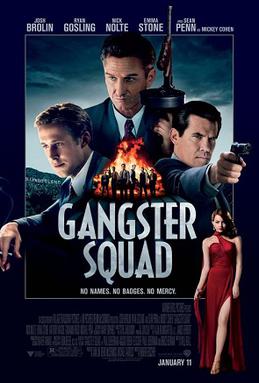
Gangster Squad: A Review (Review #491)


GANGSTER SQUAD

Gangster Squad is the first film for me in the year of our Lord 2013.  I understand that it hasn't received the best ratings from some of my brethren, and I can see why.  January is usually a graveyard for films that have to be released but which don't have much enthusiasm from their respective studios.  Gangster Squad is by no means perfect; in some ways, it's derivative of better films with some curious decisions by some of its cast in terms of what they do on-screen.  Having said that, Gangster Squad is disposable entertainment that can be appreciated more for its style than for its substance.

Los Angeles, 1949.  The Second World War may be over, but for some of its veterans, the battle has just begun. The city is being taken over by mobster Mickey Cohen (Sean Penn).  L.A. Police Chief Parker (Nick Nolte) and his right-hand man Darryl Gates (Josh Pence) have decided to form a new unit to deal squarely with Cohen, one that won't be too strict about its interpretation of the law.

To head up this operation they select Sargeant John O'Hara (Josh Brolin), who is reckless, strict, and has already run afoul of Cohen (though Cohen odoesn't know who burned down his brothel).  The war veteran now makes this is quasi-divine mission, and while his pregnant wife Connie (Mireille Enos) doesn't really want him to do this, she later helps form his squad.  Among those she selects is Officer Coleman Harris (Anthony Mackie), who is motivated by cleaning up his ghetto, Officer Max Kennard (Robert Patrick), an old-school Wild West-type marksman, and Officer Conway Keeler (Giovanni Ribisi), who is a technical whiz.  Kennard has a junior apprentice, Navidad Ramirez (Michael Peña), whom he calls "Christmas" (since that's what Navidad is in Spanish), who kind of pushes his way into membership.

Only one person won't join: Sgt. Jerry Wooters (avant-garde actor Ryan Gosling).  He doesn't see much in redeeming the City of Angels, but does see something good in schtupping Cohen's mistress, Grace (Emma Stone).  However, after Cohen's men kill a shoeshine boy he's fond of, Wooters is in.

Gangster Squad then goes into how said squad bit by bit take down Cohen's operation, while Cohen tries to find out who is behind his sudden troubles.  While only Keeler expresses any qualms about the methods of how Cohen is being pursued, this doesn't seem to trouble anyone else.  However, one of their number is killed (one guess as to who) and the entire thing ends in a final bloody shootout at Cohen's hotel, where justice is finally served.

Gangster Squad had simply the misfortune to have a scene that would come back to haunt it, one that had to be removed before its original release date in September 2012.  In what would have been the climax of the film, there was to be a wild shootout inside Grauman's Chinese Theater with moviegoers caught in the crossfire.  In one of those awful twists of history, the trailer for Gangster Squad featuring a clip of this ran in the midnight screenings of The Dark Knight Rises, where in Aurora, Colorado less than an hour later people were murdered inside a movie theater.

This of course required the filmmakers to remove the scene altogether (although I wonder if it will appear as a special feature in the DVD release...certainly they can't be blamed for Aurora because this was filmed long before and they couldn't have known what was to occur) and restructure the film.  A sequence in Chinatown took the place for Grauman's Chinese, but on the whole it does prove a lesson that one doesn't need excessive violence to tell its story.  For my part I didn't miss the Chinese Theater sequence and felt the story went along fine without it.

That being said, I thought Gangster Squad was a bit like The Untouchables, Junior.  Although adapted from Paul Liberman's Gangster Squad, screenwriter Will Beall seemed to take more from the Brian DePalma film.  The gangster wants the lawmen dead...their families, dead...and so on.  One of the squad himself is taken down to where I half-expected a sign to read "Touchable".  Fortunately we didn't have an Odessa Steps rip-off (I mean, homage) from Battleship Potempkin, but if we had, then we'd have a situation where Gangster Squad would have been laughed off the screen.

In terms of performances, I wonder why director Ruben Fleischer allowed the most 'actory' of his actors to do as they did.  First, Penn decided to go all-out in his villain, wildly overacting his wickedness.  The make-up job did not help: he looked as if he'd wandered out of Warren Beatty's Dick Tracy, the Jewish cousin to Big Boy Caprice.  It veered close to if not actually slipping into parody.

Hey Girl, I don't get this 'hey, girl' thing.
I'm Canadian.
Avant-garde actor Ryan Gosling similarly opted to have a little fun playing gangland cop.  He opted for a thin, reedy voice rather than his normal speaking voice, which seemed so at odd with the goings-on.  Here again, it almost veers towards the comical, especially whenever he expresses anger avant-garde actor Gosling slips into his natural speaking voice.

As for everyone else, it seems that Mackie and Peña are what was once called 'tokens', minorities that appear in the film to show how diverse the movie is but play a small role in the proceedings to where you wonder why they are there in the first place.   Patrick does look like he came off a Western film, and had good moments of comedy (as when his plan to break out O'Hara and Harris out of Burbank Prison flops) but again little to do.

Only Brolin has much a backstory to him (and most involve that pregnant wife of his).  His constant connection to the War and crime is never fully followed through.

Finally, on to the 'tomato', Emma Stone.  She was appropriately beautiful but again, given little to do other than strut her stuff. 

In terms of violence, it does at times go overboard with how it relishes showing the intensity of it (which curiously, real film noir didn't, just to point out).  It would have been better if some of it had been toned down (the ripping apart of people, the cutting off of hands could have been removed) but one should accept that this neo-gangster film was trying to show what they thought violence of the era should be.   Though the final shootout was more video-game than noir, I wasn't totally horrified by it.

On the whole,  while Gangster Squad has some great visuals and certainly has a nice retro look, the lack of character development (coupled with Penn's overenthusiasm for the role and avant-garde actor Gosling's sotto voce delivery) take some of the joy out of it.  Gangster Squad is not terrible, but the fact that it could have been better puts a damper on it.


DECISION: C-