Monday, January 17, 2011

All Hail The Betty White. Betty White At 89


The Betty White is probably right when she says she is 'overexposed', but if it weren't for the fact that America loves The Betty White as much as it does, we wouldn't be seeing her renaissance. For those who wonder why I refer to her as THE Betty White, it's quite simple.

For some reason(s), Betty White has transcended being a mere actress. She's become an Icon, a Beloved Figure who brings joy just by the mention of her name. She therefore can't be just plain Betty White. She is THE Betty White.  Also, I like calling her The Betty White.

What is it about The Betty White that endears her so much to the public at large? I think part of it has to do with just her name. Betty White. That has the ring of a sweet, dear lady. What danger, what harm, could possibly come from a Betty? Her screen persona is such that when we hear "Betty White", we do think of a nice, little old lady. We see Rose, the character she played on The Golden Girls: sweet, naive, an innocent. We love that about both Rose and The Betty White, although The Betty White is anything but innocent.

That is a second aspect of her appeal: the fact that she turns that image completely on its head. She can be sassy and shockingly risqué, and oddly, that makes us love her all the more. I think the biggest aspect of her appeal is that she is not only in on the joke, she adds to it. She plays on her image as a sweet little lady and laughs all the way to the bank.

It should be remembered that it was her reputation that put her on the map. The Mary Tyler Moore Show was looking for a man-hungry tramp who was 'sickeningly sweet, a Betty White-type'. With that description, The Betty White thought she would be perfect for a Betty White-type, and it's a sign of her talent that she turned a guest appearance as The Happy Homemaker Sue Ann Nivens into a recurring character on one of the best sitcoms in television history. She can get away with saying the most shocking and outrageous things, but she knows that her delivery makes it hilarious rather than vulgar. In a case of history repeating itself, The Betty White had agreed to appear in Hot In Cleveland on the understanding that she would appear in the pilot only, but once the show got picked up she was convinced to be a regular character.

In short, people just love The Betty White. The fact she can play on her image is a plus, right down to her now-famous Snickers ad. Under normal circumstances, the fact that an eighty-eight year old woman is tackled into the mud would be shocking. However, the fact that it's The Betty White makes it funny because she knows not to take any of it seriously. That's part of her appeal: she is in on the joke, so we never laugh at her, but with her, and she does it with such humor (and more importanly, talent), that she can get away with it.

Think on it: few characters can be as different as Sue Ann Nivens and Rose Nylund and that she can play both of them so well shows her extraordinary range as an actress. Moreover, if she so wished she could play dramatic parts well: there were scenes in The Proposal where she was quite touching, and her role in both The Practice and its spin-off Boston Legal showed she was not a nice lady when she had to be. Even her guest turn in Ugly Betty (where she essentially played a parody of herself) showed she could play on her image for laughs. In short, The Betty White's One Smart Cookie.


We also recognize that she is a caring person. Her work with animals has few equals with the possible exception of Doris Day. There doesn't seem to be any ruthlessness, any vindictiveness in her nature, which makes America love her more.

Finally, I think people love the fact that she still is working, at age 89 as of today. Americans admire and respect hard work, and few people have worked as much and as hard on television as The Betty White. Why she hasn't received a Kennedy Center Honors for her career is a puzzle. Hey, Kennedy Center...Wake Up!

Sassy, brassy, funny, outrageous, generous, and more importantly, talented, a lady who can be innocent and deviant...sometimes all at once. What can we say: America Loves The Betty White. She makes our Homes Happy. She is a Golden Girl.


At Rick's Cafe, drinks are always on the house for The Betty White. All kidding aside, we wish Happy Birthday to Betty White.

ALL HAIL THE BETTY WHITE!

Monday, January 10, 2011

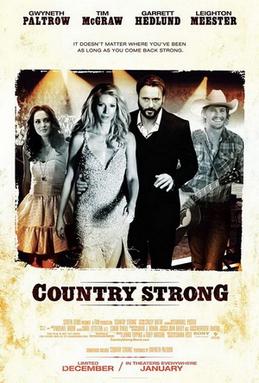
Country Strong: A Review

COUNTRY STRONG

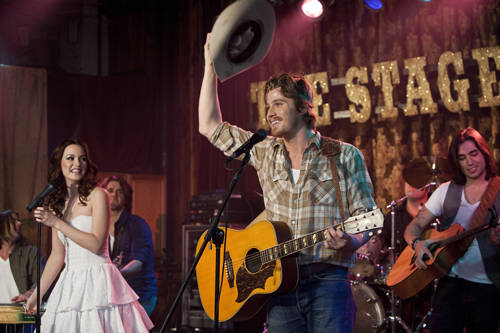
Country Strong has some surprises, the biggest being that three people not known for being singers (Gwyneth Paltrow, Garrett Hedlund, and Leighton Meester) are surprisingly good country singers, while the only legitimate country music singer in the film (Tim McGraw) is a surprisingly good actor. It appears to be a trend (perhaps the Glee Effect?) in film today where actors are now leaping into using their own voices to carry a tune, akin to how stars in the "Golden Age" of American films were able to both act and sing.

We had Jeff Bridges sing country in Crazy Heart, and now we have a Shakespeare girl, Tron, Jr., and a Gossip Girl belting out their best Merle Haggard and Patsy Cline renditions. Certainly the Country Strong soundtrack is worth getting, if perhaps not the film itself.

Kelly Canter (Paltrow) has just been let out of rehab early at the insistence of her husband, James (McGraw). This early release is opposed to by the rehab attendant she's grown close to, Beau (Hedlund), who is a struggling country music singer himself. James is determined to have Kelly make a comeback, but they need an opening act. Kelly wants Beau to open for her (in every way imaginable) but James is enchanted by a pretty chanteuse, Chiles Stanton (Meester).

In spite of Chiles' terrible stage fright, James puts her on the tour bill, and under the guise of having him as Kelly's sponsor, Beau comes as well. As the tour around Texas: Houston, Austin, and Dallas (the place where Kelly had a major drunken meltdown with tragic consequences that caused her to go to rehab in the first place), the players play Sexual Musical Chairs, Kelly falls very hard off the wagon and we have the triumphant Dallas Comeback show, but with a big and to my mind unexpected twist that bring Country Strong down. Way Down.

Country Strong has a few plot points from writer/director Shana Feste that didn't quite make sense. First, we never figure out why Kelly is upset that James would take a shining to Chiles (though we never actually see them in a compromising position) but she seems unconcerned about having an affair with Beau (which would have to have started while she was in rehab). Like a few things involving Country Strong, we have to take guesses as to where/when things started/ended in regards to the character's lives. We don't really know Beau's motivations for being with Kelly or Chiles for that matter, apart from the fact that he's a gruff-voiced hunk who likes women.


Love? Lust? Appreciation? Affection? We have no real understanding of his motivations, or really for those of other characters as well. We, for example, don't understand why James is so oblivious to his wife's mental/emotional collapse. We learn late in the film exactly what happened in Dallas, but even then, we have to wonder how James could have let his wife, in her conditions (note the plural) go on stage in the first place.

James doesn't appear to be a man motivated by greed, and appears to at times genuinely care for Kelly, so you wonder why he is so insistent that she continue a tour she is so obviously not fit for. Finally, we don't get a true sense that Beau is what the screenplay wants him to be: either a caring individual or a love'em and leave'em type.

In truth, Country Strong isn't about Kelly Canter. Rather, she is the reason that Beau and Chiles are brought into the story. Most of the film really is about them and their conflicting styles of country music: Beau a country purist in the George Jones style, and Chiles more Country Pop in the Taylor Swift mode, and their relationship: from hostility to romance.

Given all that, Country Strong is still entertaining and pleasant, right up to the ending, which kills the positive mood of the film and comes so out of left field you wonder if it was the filmmaker's attempt at heavy drama.

Paltrow's Kelly does create a portrait, curiously, not of a strong woman as the title would imply, but instead one who is falling apart. I was surprised to see people crying when we see her at the end, and it's a sign of her performance that she was able to move people so emotionally.

McGraw really didn't have much to do except stare out from the sides: either in anger or in love, and considering he is a genuine country music star, his character seems again unaware of anything involving his wife. His dismissal of Kelly's inability to perform should make his unlikable, but he didn't quite muster the anger the character would have had at Kelly's stumbling into oblivion. You don't get his motives for getting his wife out of rehab or pushing her to go back on the road. A more sensible man would have taken her out of circulation and back to dry out. Somehow, that idea never appears to occur to him. This is a curious aspect that makes the plot points within Country Strong, again, very illogical. I will also say that this was the worse hairpiece in his career.

As an actor, Hedlund is a very, very good singer. For most of Country Strong, he wasn't acting; he was singing, giving a series of performances that show he could easily transfer to a recording career should he want one. As in TRON: Legacy, I will put the blame on the fact that Beau was given not much to actually do. To his credit, he did project an unspoken passion for Kelly, even a more caring attitude than James'. However, given he has no problem shifting his romance to Chiles, you wonder what kind of person he really is.


It is Meester who impressed the most. Not having seen Gossip Girl, I come into her performance unprejudiced. She starts out as a bit bitchy and with an unsubstantiated confidence, but when she freezes when taking to the stage, we do actually feel for her. A problem in the screenplay is in how quickly she overcomes her stage fright (one wonders how she managed to keep failing to sing at a small club, which looked like a big Karaoke Night, but could take a major arena concert with almost the greatest of ease), and another script issue is in how Beau and Chiles' duets are handled (him coming to rescue her was a bit cliché) as is how their relationship grows.

Finally, I will question a point of logic within Country Strong. There's a scene where Chiles is reading flash cards with information in order to not appear dumb in interviews, and the question Beau steals from her is 'When did General MacArthur return to the Philippines?' The answer is given as 1946, but this makes no sense since everyone knows or should know the war ended in 1945; he kept his "I Shall Return" promise in 1944. It's these points of logic that get to me. Don't these people have Wikipedia?

In a film like Country Strong, music is important, and as stated the three singing leads handle this aspect far better than one would have thought. Even though the title song is the one getting the most publicity, for my money the Hedlund/Meester duet Give In To Me and Coming Home (sung by both Meester and Paltrow at her big Dallas Comeback concert) are the better songs and make the experience of watching Country Strong enjoyable. You tap your feet to the music, and the big Comeback show is filmed so well you forget you're watching a movie and can be fooled into thinking it's a concert film (down to three wardrobe changes for Kelly, which makes it a long show).

I was also highly impressed with Hedlund's cover of Merle Haggard's Silver Wings, which again could easily find its way on county radio if country radio wanted Haggard covers versus the pop-country of a Lady Antebellum or Florida/Georgia Line.

What brings Country Strong down from where it could have been is in the ending: it is so downbeat and even illogical. It doesn't make clear what exactly happened, and we can only speculate as to the motive. One wonders if it was necessary.

If it were not for this forced unhappy ending, Country Strong could have lived up to its title. The singing performances are quite excellent (the acting from the female leads outdoing those from the men), and it's a good film, though not great. It can be enjoyed by those who are still country, now that country's cool. You might have some issues with Country Strong though, if you were country when country wasn't cool.

DECISION: C+

Sunday, January 9, 2011

Little Ashes: A Review


LITTLE ASHES

A Dali Ance...

You have one of the greatest and most outrageous painters of all time. You have one of the most innovative and controversial filmmakers of the Twentieth Century. You have one of great poets and writers who literally died for his country. Out of that maelstrom, with all that creative genius within it, you create a simple romance about suppressed desires where all the creativity of Salvador Dalí, Luis Buñuel, and Federico Garcia Lorca is frankly not important. Little Ashes is serviceable and artsy, like its characters, and while not as good as it could have been, it does have its moments.

It is 1922 Spain. Luis Buñuel (Matthew McNulty) and Federico Garcia Lorca (Javier Beltrán) are avant-garde students, bucking the conservative system to which they live and study in. Entering this world is Salvador Dalí (Robert Pattinson), an odd character even by their standards. Dalí soon finds himself in the throes of their world, on of art and revolutionary thinking, the genesis of Dadaism and Surrealism.

Garcia Lorca is a divided soul: both fervently Catholic and yet filled also with strange sexual desires, at least strange to him. Garcia Lorca soon finds himself physically attracted to Dalí but prays for strength to resist temptation. However, the pull is too strong, and while visiting Dalí in his home in northern Spain, they achieve a remarkable level of intimacy given Dalí is suppose to be straight. While swimming together at night, under the serious moonlight (as David Bowie might say) they finally reveal themselves to each other with the tenderest of kisses. This, however, was the briefest of encounters, for while Garcia Lorca is willing, Dalí constantly hesitates, as if he can't quite bring himself to give himself over to Garcia Lorca's emotional and physical entreaties.

Buñuel, while only suspecting what's going on, is disgusted by all this and pulls away from them. Dalí moves to Paris to pursue his art, but Garcia Lorca can't move away either physically from the land he loves or emotionally from the man he loves. Eventually, Garcia Lorca is driven off when Dalí and Buñuel collaborate on the film An Andalusian Dog, which the proudly Andalusian Garcia Lorca believes is somehow mocking him.


We move quickly to 1936 Madrid. The Spanish Civil War is upon us, but for all their talk of revolution both Buñuel and Dalí are quite comfortable to let others fight the battles they've called for. It is only Garcia Lorca who continues speaking out against fascism. Dalí and Garcia Lorca do reunite when the former invites the latter over for tea. By this time Dalí is a celebrated artist and married to Gala (Arly Jover).

Garcia Lorca, who has not married, is shocked not so much by his erstwhile lover going straight but how comfortable he seems to be with the idea that General Franco and his Fascist become rules of Spain. He leaves him to his 'bourgeois' respectability. However, the Fascist seize Garcia Lorca, and we learn that he is executed while Buñuel parties in Paris and Dalí paints. While both are shocked and saddened by the murder of their friend, only Dalí sees the world in black, to become the even stranger public persona he became.

Little Ashes has the odd situation of being about three famous artists but not delving into their actual creativity. We rarely get to see Dalí paint or Garcia Lorca write. In fact, I don't remember Buñuel ever doing anything creative, though he talks a good game (perhaps like in real life, but given I haven't seen any of his films, perhaps I'm being a bit harsh).

Instead, it is about one man's homoerotic obsession with another who is either teasing him or who has some feelings for him but isn't quite sure what they are. In short, we don't ever get a full idea of what drives the artistic visions of any of them. In retrospect, it may not be the intention of screenwriter Phillipa Goslett, and I'm going to take a guess that it wasn't.

Instead, I suspect she was much more interested in the romantic ideas Garcia Lorca had about Dalí, and perhaps, how Dalí's rejection affected Garcia Lorca. I say 'perhaps' because again, we don't really see much beyond the surface, don't get a view into any of their internal thoughts or feelings.

I give credit to director Paul Morrison for doing a lot with what appears to be a budget of zero. There are one or two montages (particularly of when Dalí is in the throes of decadent Paris) where it looks like great economies were taken. Given that this was a smaller-market film, and one based on a more artistic interpretation of events, we can forgive the fact that scenes and sets didn't look like had major budgets. His directing of two of the leads was also quite effective.

Beltrán, the only actual Spaniard in Little Ashes, creates a man haunted by his desires but unable to have the love of his life return the ardor he feels for him. Beltrán doesn't have to be overt about how he falls in love with Dalí but does it with subtlety. At a puppet show his glance at Dalí tells you all you have to know about how friendship turns into love and then through Little Ashes turns to passion and even unrequited obsession.

Given that Castilian is his first language (Spaniard are quick to point out they don't speak 'Spanish' but Castilian), Beltrán handled speaking Garcia Lorca's poetry beautifully, and he says it with a fine voice, although the English translation is soon spoken over it all the time, to the point where it would have been better if Beltrán had just said it in English to begin with. Often, Beltrán's Garcia Lorca is a forlorn man, one who isn't given to shouting and raging but is soft-spoken, even when calling on his former friend/love interest to take a greater interest in the plight of the people.

McNulty (British), handled his Castilian accent remarkably well, though the character of Luis Buñuel had very little to do with the actual love story McNulty showed the violent side of Buñuel, up to perhaps being quite homophobic.


This brings us to Robert Pattinson, he of EDWARD CULLEN from the Twilight series (excuse me, SAGA). As EDWARD CULLEN, Pattinson has shown a distinct inability to act. Curiously, Little Ashes was released in the U.S., admittedly in a limited fashion, six months after Twilight (or as it should be called, The Twilight Saga: Twilight, given the predilection of that film series to be rather pompously titled The Twilight SAGA: This-That-Or-The-Other).

To my mind, it indicates Pattinson's desire to be taken seriously as an actor, and what can be more serious than in playing a potentially homosexual or at the very least, bisexual character who is also a crazy genius. I give Pattinson an A for Effort, because he does try for something different. He almost gets me to believe he can act, and perhaps he might have some potential.

However, when he tries to capture Dalí's offbeat oddity Pattinson can't stop trying to do anything other than opening his eyes as widely as possible and make faces, as if Dalí's persona is the sum total of Dalí the man. While that is how Dalí is remembered now, right down to his loony mustache, Pattinson never got into what shaped Dalí to become the Dalí we all know today.

Still, on the whole Pattinson did the best he could. The fact that he is in Little Ashes at all is what brought the film what little attention it got, and it shows Pattinson wants to be an actual actor. Granted, he has a way to go, but on the whole, he gives his best work in Little Ashes; then again, that isn't saying much.

Little Ashes doesn't capitalize on the coming together of three great artists, reducing their interactions to a simple love/lust story among two men. Still, it's not a bad film. Perhaps with a greater budget it could have achieved its artistic aspirations. Little Ashes tells its story with the appropriate artsy aspects and with good performances by two of the leads (and a good try by the third), it's a decently made film no matter how it's spread out.

Federico Garcia Lorca
1898-1936


Salvador Dalí
1904-1989


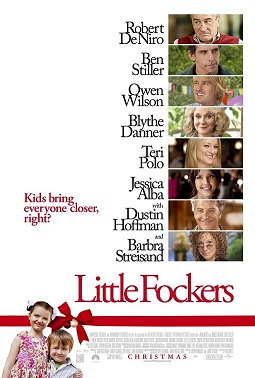
Little Fockers: A Review


LITTLE FOCKERS

One Focker Too Many...

You'd think that by the third one there would be a twist in the tale. You'd think that by the time we have a second sequel the characters would have learned something, would have had some kind of change to their outlooks. However, Little Fockers has decided that what worked in the first two films (Meet the Parents and Meet the Fockers) will work yet again. It is a case of diminishing returns, except that Little Fockers has proved to be financially successful.

I have to fight the temptation to say the reason for this is because people are stupid. Rather, I think the popularity of films like Little Fockers has to do with the fact that they don't require you to think. In fact, they almost demand that you turn off your brain in order to enjoy them. 

I have to start out by saying that while I have seen both Meet the Parents and Meet the Fockers, I don't remember much or hold them close to my heart. Therefore, if you walk into Little Fockers without knowing anything about the Fockers or the Byrnes families, you won't actually be too lost because for no matter how long it has been since either of those films were released the characters are still the same. Retired CIA agent Jack Byrnes (Robert DeNiro) is, after all these years of knowing him, still tightly wound-up and suspicious of his son-in-law, the poorly named Gaylord "Greg" Focker (Ben Stiller), a nebbish's nebbish perpetually terrified of Jack. Their respective spouses Dina and Pam (Blythe Danner and Teri Polo) are still supportive of their husbands but almost oblivious as to how the men are with each other. Greg's parents Roz and Bernie (Barbra Steisand and Dustin Hoffmann) are still wacky sex-crazed parents oblivious as to how their antics embarrass their son. A Ghost of Fockers Past, Pam's former love interest Kevin (Owen Wilson), back for a second round for no understandable reason.

Little Fockers, ostensibly, is about how Grandpa Jack, fearing the end is near for him, wishes to pass on the mantle of Pater Familias to his closest male heir. That would be Gaylord. Greg is thrilled that Jack has finally, after all these years, given him his total trust. Of course, that isn't the case, especially when Jack discovers Greg's connection to Andi Garcia (Jessica Alba). Andi is a saleswoman for a Viagra-like drug suitable for those with heart conditions with the clever name of Sustengo.

In any case, in order to make more money, especially to pay for his children to go to Early Human School, he agrees to sell this drug in secret, and the fact that Greg is going to hotels with a beautiful woman and that there are sexual-enhancement drugs at the Focker home instantly make Jack think Andi Garcia is Greg's mistress.

For a CIA mastermind that Jack is supposed to be, he is hopelessly inept and clueless about things. Now, while the central part of Little Fockers involves the Focker twins' birthday, that is really just an excuse for hilarity and hijinks involving erections, blood letting, and Owen Wilson in a blue leotard. Dear God, what are we coming to?


Little Fockers doesn't have a plot or a reason for being other than to make some money for all concerned. I should start out by saying that during the screening I attended, not only was I fighting to stay awake but was surprised that the audience wasn't laughing. There were some chuckles here and there but by and large it didn't have the flat-out howling that accompanied something like The Hangover.

I think it comes from the fact that we've seen it all before, and perhaps John Hamburg and Larry Stuckey (who co-wrote the screenplay) figured audiences wouldn't notice or care that we were seeing the same characters doing the same thing with little sense of joy or intelligence. Greg being intimidated by Jack: check. Greg cutting himself and bleeding profusely: check. Jack scowling through every situation: check. You'd think that by now Greg would have gotten some sort of backbone, but alas, if he did, if he actually stood up for himself, we'd have no film.

The situations aren't funny, and in fact, they're actually rather sad. Rather, it's sad to see Robert DeNiro turn into Robert Dinero, cashing a nice paycheck while dragging his reputation through the mud by having Ben Stiller stick a needle into his erect penis. Did anyone think seeing the young Vito Corleone endure an erection?


Besides, if you think about it, you'd think Jack would finally have realized after his years of training that Greg is actually a good guy. Then again, if we had the characters grow up, we'd know we'd have no movie. At least Dustin Hoffman had the good sense to turn down a chance to return to the franchise, at least until he got more money. Given he was outside the events of Little Fockers throughout (even at his grandchildren's birthday party), one can see the only reason Benjamin Braddock returned was for Cash (or if he was paid with credit cards, it was for Plastic).

The performances are across the board awful, texted in to get people paid and off the set. Even smaller parts (such as Laura Dern as the Early Human School director or Harvey Keitel as a shady contractor) had nothing to do either with the story or with their roles. They were really there as excuses to put the main characters in embarrassing situations, ranging from showing the stupidity of the children to burying Jack in dirt or gravel or something, by this time I didn't care.

The worst of the performances (and that is saying a lot) was Wilson, who not only had nothing relevant to the story, whatever it was suppose to be, but has not shifted from playing these slightly-dazed and confused dudes with a pseudo-Eastern mystical bent. His wardrobe for most of Little Fockers was this quasi-Buddhist monk garb, but when he puts on that leotard, you just begin to wonder if this Wilson brother has any actual talent apart from playing himself or a variation thereof. Here, you know and worse, he knows he's just going through the motions.

In short, Little Fockers has nothing to offer even the fans of the Meet The Parents franchise. When the highest level of humor involves either making a pun on Andy Garcia's name or an erect penis, you know you've hit the bottom of the barrel.

It has nothing going for it, or the audience. I truly hope that we don't have to endure more of these films. I don't want to see I Was A Teenage Focker. I would like to know (other than for money), what compelled anyone to try to continue with this series of unfortunate films.

However, I am forgetting one of my Golden Rules of Filmmaking: Part III Will Either Be A Disaster or a Harbinger of an Even Greater Disaster. Little Fockers is, technically, a Part III. Please let it be the last.

Tuesday, January 4, 2011

Legion (2010): A Review (Review #175)


LEGION

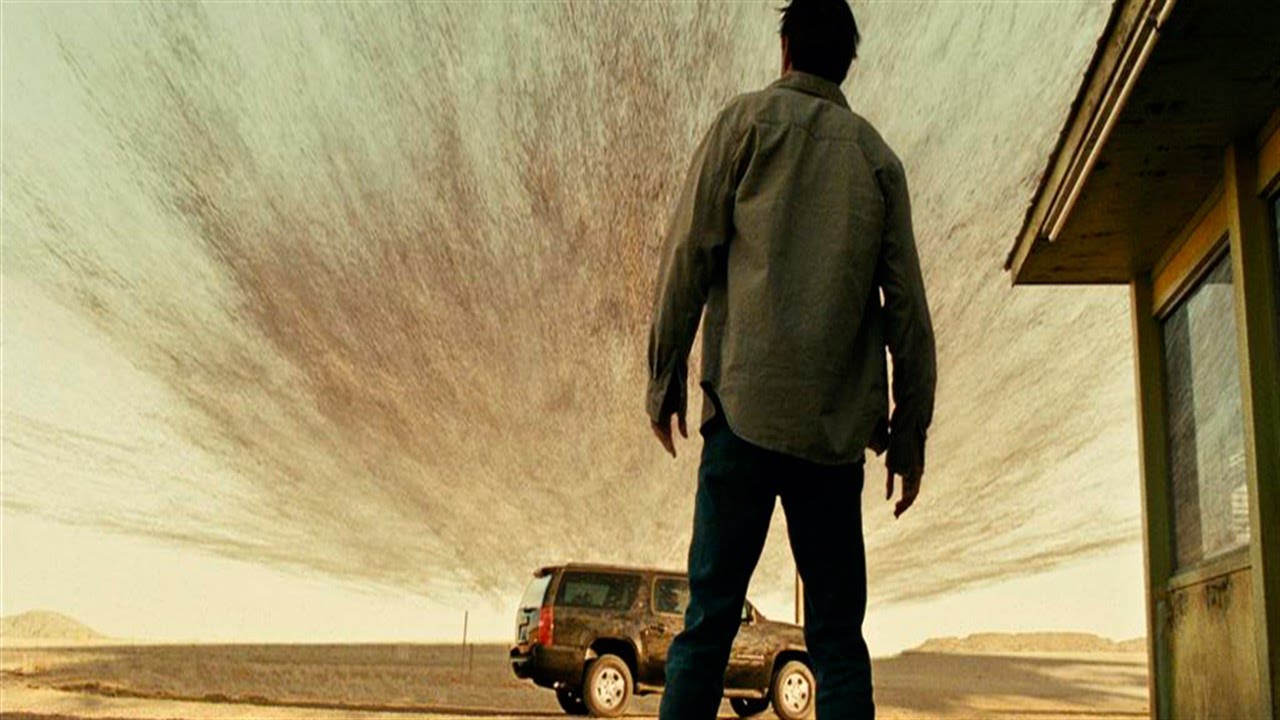
I am rather surprised that Legion didn't bring about a great deal of controversy among Christian circles. I imagine it was because Christians had enough sense to realize the film was so dull, cliche-driven and stupid that even the most ardent atheist would avoid it.

Michael (Paul Bettany), an angel from Heaven, comes down to Earth, appropriately to the City of Angels. He is a mission, one that means defying the very will of God. Meanwhile, there is an eight-month pregnant woman named Charlie (Adrienne Palicki) working as a waitress at an out-of-the way truck stop somewhere in Arizona with the rather poetic (and perhaps, symbolic) name of Paradise Falls. Although we never know who the father of her child actually is, we do know that her 'guardians', truck stop owner Bob (Dennis Quaid), his mechanic son Jeep (Lucas Black), who is in love with her and her baby, and loyal cook Percy (Charles S. Dutton) are all fond of her.

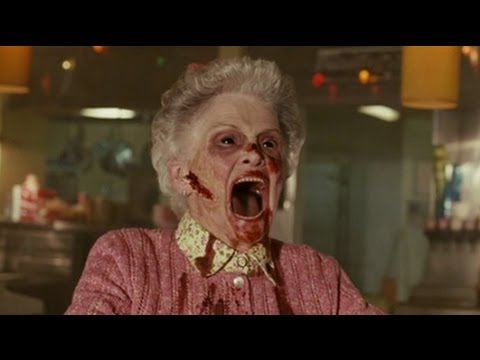
At this stop, we have a family stranded because of a malfunctioning vehicle: father Howard (Jon Tenney), wife Sandra (Kate Walsh) and daughter Aubrey (Willa Holland). Also wandering in is Kyle (Tyrese Gibson), belying the idea that truck stops in isolated Arizona outposts never get any customers. There is one more person who comes in, a sweet little old lady complete with a walker who introduces herself as Gladys (Jeanette Miller), as traditional an old lady name as one could find. Of course, she isn't a sweet little old lady. She's an angel-possessed woman (emphasis mine), who tries to kill the customers, specifically Charlie and her baby, who must never be born.

Michael arrives at the stop just after Gladys goes on a rampage (a delight to watch, I must confess: what's not fun about watching an old woman go all psycho and Spider-Man), and tells them that people are being possessed by angels (emphasis mine) to get at Charlie's baby. God has lost faith in humanity, Michael tells them, and so He's decided to wipe them off the face of the Earth.

Michael thinks this is wrong, but what pushes him to go rogue is God's decision to kill the unborn child, because this child is Humanity's last hope and God doesn't want that.

The rest of Legion involves angel-possessed beings taking various shapes (from ice cream truck salesmen to, well, the most/least likely suspect) attempting to trick the people inside to come out and be killed. As it happens, a few are misled, and we have them bumped off one by one (sometimes in rather horrifying ways), but, in spite of the efforts of Michael's former comrade Gabriel (Kevin Durand), the child is born, and the Important Ones (that would be Charlie, Jeep, and Aubrey) all flee Paradise Falls.

Michael and Gabriel will have one final battle, and I guess there was a happy ending.

A group of disparate strangers trapped together in a desert truck stop while besieged by otherworldly beings for some reason doesn't strike one as an original idea. However, the script by Peter Schink and director Scott Stewart isn't as far as I know going for originality or even correct theology. Legion, I figure, is going for terror and horror, two things that angels are known for. I didn't think that having a black man carry a piece for no defined reason was original. I didn't think having a family stranded because of a malfunctioning car was original. Finally, the 'possessed by angels' bit: that does trouble me.

It makes me think Schink and Stewart may not have a firm understanding of what angels are. Angels, from what I've been taught, are messengers, not hitmen. I would figure God, being all powerful, wouldn't need to have his messengers take over mortals to get His message across. Furthermore, why would God want to kill an unborn child who will save Humanity from His wrath, let alone by such an elaborate method? The script never makes clear as to why God wants to kill the child (thus making Him the new Herod in a way), we never know how this child will save Humanity, we never know if the child's father is important to the child's, is divine destiny the right phrase?

Well, in Legion, none of those details are important: all we're supposed to know is that this Child is the Enemy of God because the Child will save Humanity from God, and thus God needs to kill the Child because God wants to destroy humanity. Therefore, God can't just strike the Child down (assuming He would want to) or send the Four Horsemen to bring Mankind down. No, He has to send his angels on a homicidal spree in the middle of the desert.

Got that?

The performances were weak en masse. Bettany was doing his best Jason Statham impression in Legion, scowling and growling and packing heat with abandon. He must have had a roaring time doing an action film, but I think it would have been slightly more believable if Statham had played Michael. I figure both Michael and Gabriel were the Archangels, though it was never openly stated, and I wonder if defying the will of God, no matter how nutty, would make Michael the new Lucifer, but I digress.

Black had a blank stare throughout, no emotion, unless the same face is used when expressing unrequited love or sheer terror. Gibson plays a stereotypical role (black man with a gun), but there was no development to his character. It might be too much to ask for such things, but I still have hope. Both Dutton (as a gentle cook with an artificial arm, again, for no reason and no explanation) and Quaid (apparently not taking any of this seriously if I judge by his performance) are both wasted in nothing roles. I'll say that Holland (who looked familiar and then remembered as bad girl Kaitlin from The O.C.) is quite pretty, but other than this being a way to get a screen credit she did herself few favors in this film.

Moreover, Legion was at times boring in its predictability. The climatic fight scene between Gabriel and Michael was sometimes hard to follow do to John Lindley's dark cinematography where you couldn't tell who was who or what was what. Only the fact that Michael had no wings (he had cut them off) helped you figure out which one he was. The film was very overt in its attempts to look scary, with lights and fog in the dark. You also have to consider that for most of Legion, it looked like Night of the Zombie Demons, because for some reason the idea of angels possessing humans to commit murder just doesn't make any sense.

The movie leaves a slight opening for a sequel, but unfortunately that sequel is Terminator 2. In fact, Legion seems to echo far better films, and I wonder if Scott meant for that. The child who must be killed in order to stop him saving the world: Terminator. When they group slowly escapes a group of zombie angels by slowly walking out of the truck stop: The Birds. In fact, there were two echoes of The Birds in Legion, and when a film you're watching reminds you of other films you'd rather be watching, that is not a good sign.

The thinking behind Legion is all wrong. I don't think God will ever go to such lengths to kill someone who, I presume, could bring humanity back to the right path. Wouldn't He want to do His all to protect said child? It does seem rather presumptuous for an Angel, even if it is Michael, to tell God that He's wrong in His desire to wipe Man out of existence. Leaving the bad theology aside, Legion suffers from bad acting, no story, and laughable dialogue.

How do you not laugh when someone tries to build fear by demanding to see someone's teeth? I hope that this Legion is few.

Sunday, January 2, 2011

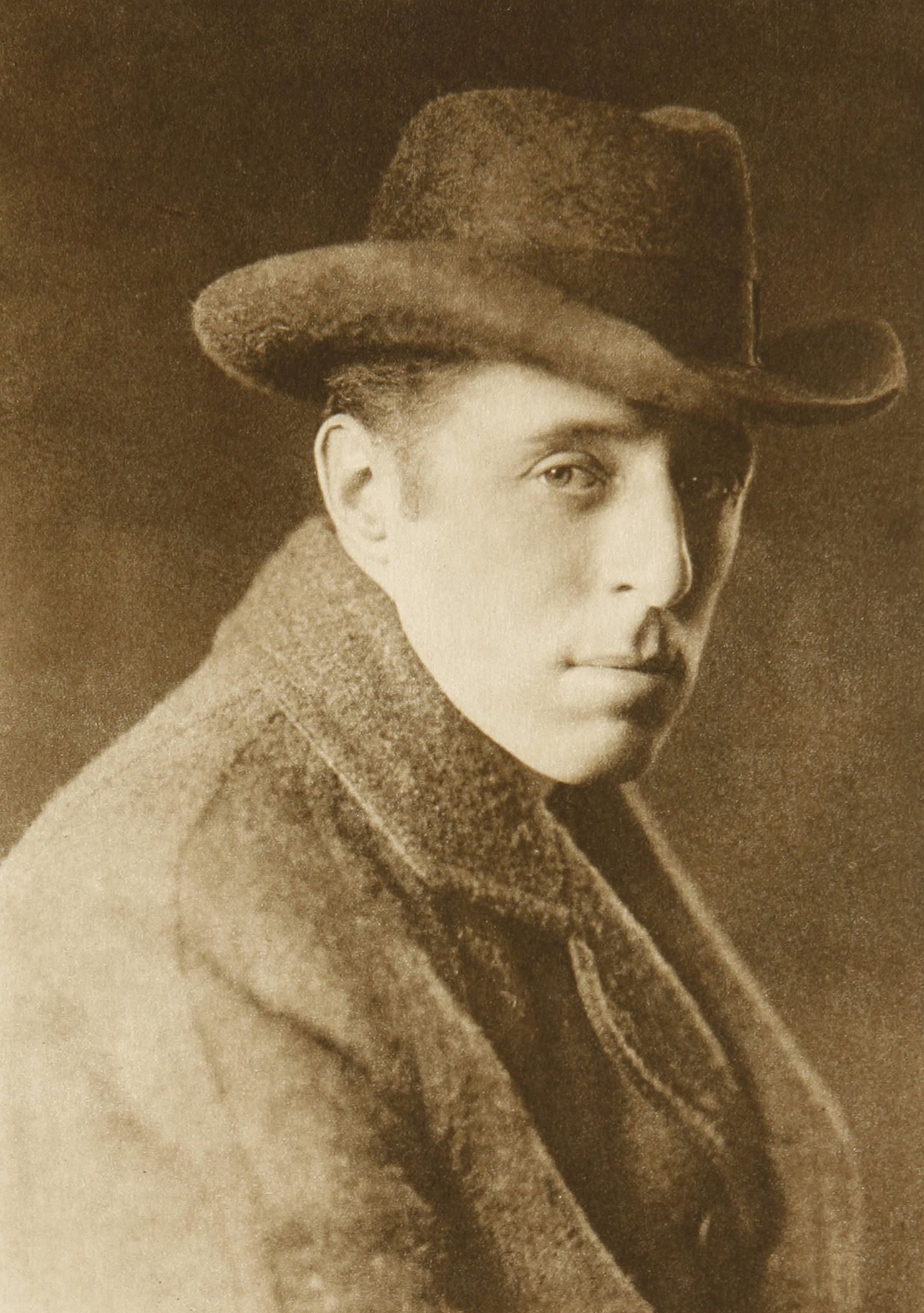
The First Genius. D.W. Griffith: The Great Directors Retrospective

1875-1948

D.W. GRIFFITH

To celebrate the New Year, I have decided to go back into the past. Every first of the month (or thereabouts) I hope to have personal reflections on twelve cinema giants, twelve directors who have shaped film into what it is today. I thought it only appropriate to begin the first with The Original: David Warks Griffith, who perhaps is not The Father of Film, but certainly the first truly original cinema master.

Griffith did not invent filmmaking, nor did he actually create the cinematic techniques we know today. He didn't start such things the close-up or the intercutting between stories, but he was the first one to put them together to make what we now know as "the modern motion-picture". If it were not for D.W. Griffith, we would not have film the way we do now.

Curiously, Griffith also showed the power cinema can have on the public. The Birth of A Nation still touches on the nerve because for better or worse, many people at the time held the imagery to be accurate. When I think of The Birth of A Nation, I can't help think of another film: The Battle of Algiers. Both have been used as recruiting tools for their causes (the KKK and Islamic terrorism respectively), and both still have a powerful impact to arouse passions. However, I don't think Griffith cared too much what the impact of his films in society would be. He just wanted to make an entertaining and popular film that would be a hit.


If we take a closer examination of The Birth of A Nation, we see how all the techniques that had been floating about in film came together to create modern cinema. Take the climatic siege sequence near the end of the film. The family is surrounded by the "enemy" on all sides, and the Ku Klux Klan is riding to the rescue (it nauseates me to write such nonsense, but there it is the movie). Griffith created the tension by going between the family and the Klan, cutting with quick clips to heighten the tension. Will they get there in time? Will the girls be captured?

It isn't so much the imagery that creates the anxiety, but the inter-cutting between the two points. It is more than likely that in another person's hands, we would have seen either one or the other, but it took a Griffith to realize that film is not tied down to a certain point in time and space. Unlike a stage play, we can jump to two or more places involving one point in time.

Moreover, The Birth of A Nation can be said to show the power of film to affect how history is seen. We can see the same in Oliver Stone's JFK. In spite of all the evidence, people still hold that there was a massive conspiracy to assassinate President Kennedy, and JFK either reinforced that view or convinced people that Film was History. People should know that historic films will always deviate from the actual details, but somehow we get a lot of our history from film, accuracy be damned.

We can forgive films as varied as Spartacus or Elizabeth:The Gold Age or even light fare like Shakespeare In Love for not being strictly correct because they don't set out to be history lessons. However, Stone, with JFK and Nixon or W appears to be doing more than what Griffith thought of doing: while the latter wanted to push film to be thought of as an art form, the former wants us to believe he is telling the absolute truth. That would, in my view, put him closer to Leni Riefenstahl than D.W. Griffith, but I've digressed.

The point of all that is that Griffith was the first, though he would not be the last, to show that film has a power greater than any other media before because we subconsciously trust what we see. With the techniques he mastered and utilized with great skill, he created the emotional impact he was looking for, and for this, he truly is an innovator and creative force.


It is a sad case that a great technical accomplishment can be a person's ruin. The Birth of A Nation was condemned (correctly in my view) for its grotesque racist imagery, and I think Griffith was truly amazed that anyone would not see it as history. Curious that only fifty years had existed between the end of the Civil War and The Birth of A Nation, so there were still many eyewitnesses to the events in the film. In response, he created Intolerance.

Here, Griffith went one better: four stories in four time periods with one theme--man's inhumanity, his Intolerance, for man. He was pushing film as art like never before, but I would argue it was a little too advanced for 1916 audiences which were used to more linear story-lines. However, the impact of Intolerance has entered the American mind: the Babylonian sequence (in particular the lavish sets) is now iconic and easily recognizable, if perhaps not from Intolerance at least from a silent film.

Until the end of his career, Griffith pushed film to be art, to create mood and subtext rather than rely strictly on the image on the screen. Unfortunately, once sound came in, D. W. Griffith went out. I suspect that part of it was just changing tastes: the sentimentality he so favored was no longer in vogue, audiences wanting more realism. The stories of innocent girls being rescued from all sorts of ills: be it violent fathers (Broken Blossoms) or violent rivers (Way Down East) or violent revolutionaries (Orphans of the Storm) just didn't sell as well as it once did. It also didn't help that The Birth of A Nation had all but ruined his reputation, making him into the poster boy for bigotry and out-and-out racism. His 1935 Honorary Academy Award (when at 70 he was now a shadow from the early years) was belated recognition of his contribution to film.

In the end, we have Griffith's films. The Birth of A Nation is a brilliant film in some ways, grotesque in others, but it is still an important film that should be preserved and studied by those who love film. D. W. Griffith I think was the first to see the potential in film not just as entertainment but as a legitimate art form. I think directors as varied as Fellini or Kurosawa or Scorsese or Lynch would not have come into being Griffith.

His films have lasted, as has his impact on cinema. Granted, his personal reputation will be forever haunted by The Birth of A Nation, but if we take his career as a whole, we see a man who wanted to create something beyond the style of his time. D. W. Griffith is a great filmmaker, and as such, he should rank high and his legacy should not be lost...unlike some of his films.

Please visit the hoped-for monthly restrospective on Great Directors.

Saturday, January 1, 2011

Star Trek IV: The Voyage Home. A Review (Review #174)

STAR TREK IV: THE VOYAGE HOME


A Whale of a Tale...

I feel it important to note for the record that Star Trek IV: The Voyage Home was the very first time I had come into contact with anything Star Trek-related. I had never seen the television programs and had not seen any of the films until we were shown The Voyage Home in middle school.

To show you how long ago it was (and/or how poor my school was), the class saw on VHS. Some readers will ask, 'What's VHS?', and in retrospect, that question is not only a valid one, but a sign of how The Voyage Home (or as I lovingly call it, The One With The Damn Whales) is one of the worst films in the Star Trek franchise, not only looking like an embarrassing antique but also mixing the mythology of Star Trek with sheer propaganda. If there's one thing I hate in films, it's when I'm being lectured (even when I agree with the filmmaker's point of view).

The Voyage Home has as an advantage that it takes a slightly more comedic take on the Star Trek mythos, most of which emerge from the culture clash between the 23rd and 20th Centuries. While screenwriters Steve Meerson, Peter Krikes, Nicholas Meyer, and Harve Bennett (from a story by Bennet and Leonard Nimoy, going for a second round of directing after The Search for Spock) had their bleeding-hearts in the right place, they failed to take into account that a science-fiction film based almost entirely on indoctrination will never work. They also, curiously, had a very limited imagination as to the future, but more on that later.

The Federation ship U.S.S. Saratoga encounters a strange vessel which looked like a big tube, that emits strange noises and is sapping their power. Meanwhile, the Federation High Council has convicted the crew of the U.S.S. Enterprise on various violations stemming from the results of Search for Spock. The crew, including half-human/Vulcan Spock (Nimoy) leave to face the consequences of their actions. Now, this big cylinder that has crippled the Saratoga is now menacing Earth, disrupting all power and causing hurricanes.

The Enterprise crew, still out of range, hears the S.O.S. of Earth and discovers that the big tube's mysterious noises are really whale songs. Spock theorizes the mysterious tube is attempting to, in his words, "seek(s) out another intelligent life form". Unfortunately, humpback whales have been extinct since the 21st Century (sometime I figure between 2000 and 2100). The only natural solution is go back to the 20th Century, get a humpback whale, and, to coin a phrase, "go back to the future". They achieve this, and find themselves in San Francisco, 1986.


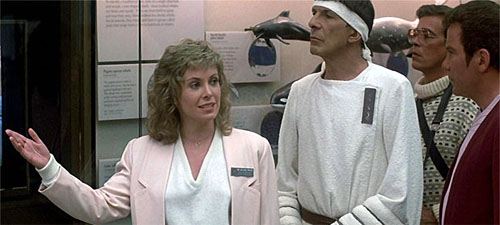
The crew split up: Scottie (James Doohan) and Dr. Leonard "Bones" McCoy (DeForest Kelley) are off to get material to encase the whale(s). Uhura (Nichelle Nichols) and Chekov (Walter Koening) go look for nuclear material to power the Klingon Bird of Prey, and Spock and Admiral Kirk (William Shatner) go look for some whales they've tracked to the city. In an aquarium, they meet Dr. Gillian Taylor (Catherine Hicks), who has been caring for two whales named George and Gracie. Kirk & Spock think they are perfect, especially since Gracie is with calf. However, Dr. Gillian is alarmed by these men's strange behavior. Kirk charms Gillian, though not enough for her to let him have the whales. Mute point, as they have been released into the wild without her prior knowledge.

Meanwhile, Uhura and Chekov, aboard the U.S.S. Enterprise (20th Century battleship version), which is a nuclear "wessel" (Chekov's Russian-accented pronunciation of "vessel"), get the material to power the ship but only Uhura manages to escape. For some reason, a Russian aboard an American battleship seeking nuclear technology causes alarm for the crew of that Enterprise. Chekov's companions now have to rescue him from a hospital, and after Gillian joins their cause they must now seek out and rescue George & Gracie and face the difficulty of bringing them on to the Bird of Prey, going back to the future (no pun intended) and release said whales.

Oh, and yes, that pesky and unimportant business about what happened in Search for Spock.


I applaud the efforts to make a lighter Star Trek film. I also respect the filmmaker's efforts to make a socially relevant film. My biggest problem with The Voyage Home is that it is far too heavy-handed in its efforts. One line states this clearly. "You know, it's ironic," Kirk intones near the end of the film. "When man was killing these creatures, he was destroying his own future". Not subtle at all, is it?

If that weren't bad enough, Spock informs Gillian that "(the whales) are unhappy about the way their species has been treated by man". I am surprised he didn't go on to misquote from Bambi, "MAN...is in the water". It is a great Pet Peeve in Film for me: I Detest Being Lectured To. The Voyage Home doesn't have any other reason for being other than to tell me to Save The Whales.

It is a sign of how the film is really environmental propaganda that most of the film involves saving the whales, not about the trial the Enterprise crew has. Granted, I love the whales, but I don't go to non-documentary films, especially science-fiction films, to be told to take a certain position (whale hunting is bad--what would I do without cinema to tell me what to think?).

Even that I could handle, but what sinks The Voyage Home (no pun intended) is that setting a science-fiction film that starts out in the future and then goes to current day almost automatically dates the film because we can't conceive of the technological breakthroughs or twists in history that may occur a generation later.

As of this writing, twenty-five years have passed since The Voyage Home was released. In that quarter-century, we have seen the development of laptop computers, miniature devices that will hold vast amounts of music and information (iPods & MP3 players), phones that will send written messages, devices that can hold vast amounts of literature in the palm of a hand (iPads, Kindle): things that we now take for granted. Somehow, all these devices either don't exists or apparently have had much impact on the 23rd Century. Seeing Scottie and McCoy deal with a PC may strike those born when The Voyage Home premiered as downright bizarre, since most of them have never seen a PC that size unless perhaps, it was at a museum.


The biggest difficulty in taking The Voyage Home seriously is actually one of my favorite anachronisms. When that big tube was laying siege to the Earth, one of the lines was, "Leningrad has lost all electric power". I find that line endlessly hilarious: apparently in the 23rd Century, humpback whales no longer exist, but Leningrad does! A more imaginative writing team (it could not have taken four people to write this) or director would have stated, "Saint Petersburg has lost all electric power," but somehow everyone concerned thought the Soviet Union would go on forever.

Talk about no hope for the future!  It will always be a curious footnote in cinema history: in the Star Trek universe, Leningrad went on into the 23rd Century, while in the 20th Century Leningrad faded into history a mere five years after The Voyage Home premiered.

Let's leave aside bothersome things like history for the moment. The Voyage Home has the most idiotic premise so far in the Star Trek universe: aliens want to know why they've lost contact with humpback whales (which, I imagine, means all these millennia humpback whales have been in contact with aliens), and as soon as they hear the whale song, they depart.

We never got to know who was inside that big black space cylinder or what they actually wanted (other than to say 'howdy' to Earth's most intelligent creatures: the whales). Not since V-Ger from The Motion Picture has Star Trek presented us with 'villains' so pointless and downright stupid. The reason for this is simple: it doesn't matter who or what they are. It isn't important, but putting the message that we have to Save The Whales is, thus the big black space cylinder's raison d'etre.

The comedy work was uneven. In the scenes with Spock and Kirk, their efforts to deal with their confusion about 20th Century life and those "colorful metaphors" are amusing though not hilarious. The one scene with Scottie attempting to communicate with a computer did, I confess, have me laughing.

The comedy involving Chekov looking for the "nuclear wessels" I know is one many Trekkers/Trekkies find brilliant, but I found them aggravating. Finally, given that they were in San Francisco, one wonders if they'd really stand out in the city as strange. The drama about rescuing Chekov felt almost tacked on, to create drama and lengthen the film, as did the whaling ship tracking down George & Gracie.

Side Note: not knowing anything about transporting beings the Star Trek way, I now ask my Trekker/Trekkie friends how the transport beam can not only transport beings but apparently their surroundings as well, given whales need water.


Of the cast, they know their parts. It's a sign of the disinterest in character development in The Voyage Home that Sulu (George Takei) wasn't needed but was there, a bit in the background, with little to do, certainly in regards to the overall story. Only Hicks as the good Doctor had anything considered a real performance, and she did show the love and passion her character had for the whales.

I do note that Kirk was up to his old tricks, not of pausing within a line but of romancing beautiful women. We haven't seen him try to woo a beauty in any previous Star Trek film, so that's a plus. However, given the extreme nature of the Enterprise's rescue operation, it does seem strange that Kirk would be hitting on Dr. Taylor at this point.

I had problems with some of the dialogue. How do you not laugh when you hear, "Admiral, I am receiving whale song"? I did, anyway. When Kirk tells everyone, "Everybody remember where we parked," it seemed a rather 20th Century thing to say, and one of the comedy bits I did not laugh at. Yes, the "nuclear wessels" routine got old fast.

There's also what I think is an inconsistency in the plot. When we first see George and Gracie, we are told they wandered into San Francisco Bay and have been cared for at the aquarium ever since. However, when they are released we are told they were born in captivity and they need to be in the wild. I might be mistaken, but unless they were referring to Gracie's unborn calf we have two different and conflicting stories about George & Gracie.

Finally, the entire plot of The Voyage Home makes no sense if you think about it. The Voyage Home isn't about the trial of the Enterprise crew. It's about The Damn Whales. The trial really is almost an afterthought, as is the crisis, which is nothing more than a plot device to tell us to Save The Whales. Furthermore, we have to figure the crew not only managed to go back in time, but return to the future at almost the exact moment they left. How they actually did this is irrelevant: we need to Save The Damn Whales. Once the mysterious ship hears the whales, they leave, presumably never to return, unless they become extinct again.

The Voyage Home has light moments, a plus. However, the fact the film is nothing more than a vehicle to promote a certain agenda (as laudable as it is) makes this not a Star Trek film, but a Greenpeace film masquerading as a Star Trek film.

Say Goodnight, Gracie...


DECISION: D+

Next Star Trek Film: Star Trek V: The Final Frontier