Thursday, December 26, 2024

Eight Gifts of Hanukkah: The Hallmark Television Movie

EIGHT GIFTS OF HANUKKAH

The Hallmark Channel breaks out not the holly but the dreidels for a Hanukkah-themed television film to add to its Countdown to Christmas set of films. Eight Gifts of Hanukkah is Hallmark's idea of representation to tell us of the joys of keeping romance kosher. To be fair, I imagine Christ would have lit the candles on a menorah, but that is neither here nor there at the moment. Eight Gifts of Hanukkah is at least in one way similar to most Countdown to Christmas Hallmark fare. It is terrible, filled with brain-dead characters and a plot so moronic that one is astonished either the story or characters would be able to function.

Successful optometrist Sarah Levin (Inbar Lavi) is unlucky in love and missing her beloved Bubbe Rose, a Holocaust survivor. However, a glimmer of hope has come on this Hanukkah season via gifts from a secret admirer. Sarah receives one on each night of the Festival of Lights. Who could be courting our kosher princess? 

Could it be her goy online find, successful British restauranteur Nigel Templeton (Oliver Rice)? What about frequent optometrist patient and half-Jewish tech billionaire Adam Lessner (Andrew Zachar)? A dark horse is her ex-boyfriend and fellow Jewish Community Center board member, successful lawyer Paul (Michael Patrick Denis).

One name that she does not even consider is her lifelong BFF Daniel Myer (Jake Epstein). He is a successful contractor remodeling her optometry clinic. He's known her all her life. He's besties with her brother Jacob (David Kaye). The Levin family knows and loves our cheerful, pleasant, successful, kind and loving good Jewish boy. Even Bubbe Rose loved him. 

By now, it should be obvious, painfully obvious, as to who the secret admirer is. It is painfully obvious to Sarah's friend and assistant Keisha (Natalie Malaika). In case it wasn't painfully obvious to everyone, Daniel flat-out tells his friend and associate Jimmy (Doron Bell) that it is he who is sending our oblivious Sarah rather lavish and specific gifts. Jimmy pushes for a direct approach with Sarah. Daniel, however, wants to see if Sarah can figure it out to see if they are bashert (meant to be in Yiddish). As the Mazel Ball to celebrate the holiday season comes closer, Sarah keeps flipping between thinking her secret admirer is Nigel, Adam or Paul. She even has faint thoughts of fellow JCC member Tom Sherman (Amitai Marmorstein). However, what is bashert is bashert, with our Hebrew Honeys finding each other in the end.

It would have been nice to have been Jewish, at least I think so. I was born in December, which meant that there would be a good chance that I would have celebrated both my birthday and Hanukkah at the same time. Imagine the motherlode I would have struck as a kid. This year, had I been half-Jewish, half-Gentile, I would have been making serious bank with gifts galore. Alas, I am not of the Hebrew persuasion, so the best I can do is Eight Gifts of Hanukkah. I do not know if there is a Hebrew version of getting coal for Christmas. If so, I would mark Eight Gifts of Hanukkah as receiving eight sets of pretty lousy gifts that I would be forced to regift for next year. 

If we go by the seven gifts Sarah received, it is shocking, flat-out shocking, that she did not figure it out on Night One. The gifts are in order of presentation: white roses, chocolates, a picture frame, a watch, a menorah, a music box that plays Ma'oz Tzur, and the antique pair of glasses like the ones Bubbe Rose owned that Sarah had been desperately bidding on (the eight being Bubbe Rose's promise ring that she had secretly given Daniel as a de facto engagement ring for whenever Sarah woke up). Upon receiving the first gift, Sarah comments that white roses were Bubbe Rose's favorites. Bubbe Rose grew them in her garden. Sarah even thought that roses were the reason Sarah thought her name was "Rose". How then could she think that Nigel or Adam, both of whom had either just met her or knew her to a limited degree, would know such intimate details?

One of those gifts was a menorah, which Sarah collects to keep Bubbe Rose alive. How could Nigel, the very Gentile chef and host of the Continental Fusion cooking show, know such things about Sarah outside of online stalking? Maybe Adam could know such things, but he makes clear that he is in the process of connecting to his Jewish heritage. As such, he would have no idea what Ma'oz Tzur was, let alone gift her with a music box playing it. Therefore, Adam could not, to a thinking person, be the secret admirer as he would not have as detailed a knowledge of Hanukkah as someone like Daniel, who was steeped in it, would.

Over and over again, the gifts all but scream "It's Daniel Myer"; yet for someone who examines eyes for a living, Sarah is thoroughly blind. Perhaps that was a subtext that screenwriters Karen Berger and Donald Martin were going for. I, however, think that is giving them far too much credit. 

In some ways, Sarah is a surprisingly horrible person. She has this plethora of admirers whom she uses to get things: catering the Mazel Ball from Nigel, a gaggle of toy bears for a Hanukkah Hunt from Adam. She is terribly oblivious to disinterested in Daniel, who bends over backwards to help her and be almost at her beck and call. For a lot of Eight Gifts of Hannukah, I was all but shouting "DON'T GIVE HER A CHANCE! SHE'S STUPID AND OBLIVIOUS!"

As a side note, am I a horrible person for not thinking that it should have been renamed the Matzo Ball? Would Latke Luau have been too tacky even for our Reform Jews (given that Jacob's daughter Zoey mentions that she wants to be a rabbi among other careers makes me think that they are not part of Conservative Judaism)? Yet I digress.

Eight Gifts of Hanukkah is also terribly structured with unnecessary characters. Tom Sherman gets mentioned as a potential suitor, but I did not really know who he was. Fellow JCC board member Myra (Samantha Farris) did nothing but kvetch at every opportunity at how poorly run the Mazel Ball was. It is also poorly acted by some of the cast. Inbar Lavi is pretty, and perhaps she had little material to work with and a lousy director in Mark Jean. She, however, could never escape a blank expression and poor line reading. Shelia Tyson and Barry Levy as Sarah's parents Esther and Stuart were equally bad. 

To be fair, a scene where Daniel and Sarah are at a bench dedicated to Rose Heller was surprisingly moving.

Jake Epstein as Daniel did not do a bad job, though again the material made him look like the Kosher King of Simps. Rice and Zachar also had little to work with, but they made the best they could of their characters. I actually would have thought both would have made good catches, though Zachar's Adam did seem a bit too eager to please. 

Am I being too hard on something as disposable as Eight Gifts of Hanukkah, which is just ramming a standard Hallmark Channel story through a Jewish lens? No, it has a dimwitted, somewhat unlikeable protagonist that makes me wonder why any man would want her. Daniel Myer is too good for Sarah Levin and would be better off moving to Aspen to find a better woman. 

Truth be told, so would Nigel Templeton, Adam Lessner, Paul and even Tom Sherman. When it comes to the central character in Eight Gifts of Hanukkah, every man should reject her latkes. 

3/10

Wednesday, December 25, 2024

The Holiday Sitter: The Hallmark Television Movie

THE HOLIDAY SITTER

Welcome to Rick's Texan Reviews' annual Christmas movie review, where I review a Christmas-themed film. This year, I look at the first openly-gay Hallmark Television Christmas movie.

The Hallmark Channel is donning its gay apparel for Christmas with The Holiday Sitter. I figure The Holiday Sitter was something that everyone behind the project patted themselves on the back for. Sadly, The Holiday Sitter will not make anyone's Yuletide gay, as it is probably the worst Hallmark movie that I have seen, which is saying a lot. 

Perpetual bachelor Sam Dalton (Jonathan Bennett) has no interest in much of anything outside his high finance career. He certainly is not interested in either having a family or his current family. Sam is looking forward to his Hawaiian holidays when his sister Kathleen Walker (Chelsea Hobbs) calls. She and her husband Nate (Matthew James Dowden) have to rush out of their New York suburb of Braydon to pick up the baby they have just ordered and hurriedly need a babysitter for their teen son Miles (Everett Andres) and tween daughter Dania (Mila Morgan).

Actually, they have to be there at the birth of their new child born via surrogate, and the birth mother went into early labor. The who, what and why of all this is irrelevant. The Holiday Sitter just needs an excuse to get the parents out and Sam in. 

Sam, who is so removed from his family that he does not know what Nate & Kathleen's house looks like and is I think unaware of his niece and nephew's names, does not tell his sister and brother-in-law that his flight leaves that very day. He just goes, and there meets Jason DeVito (George Krissa). He is the Walker's contractor, comes from a big Italian family and, like Sam, is openly gay. While Sam is totally inept with children, Jason is working to adopt rather than wait for Mr. Right, especially if Mr. Right does not want to start a family.

In the ensuing three days before Christmas, Sam and Jason find that opposites attract, both of them mentor Miles as he pursues Jason's niece Arabella (Bella Leonardo) in a local theater production and cater to Dania's vegan whims and hissy fits. Sam finds the joys of parenting and is even rewarded with his new niece being named Angelica Samantha in his honor. Will Sam and Jason find themselves in each other's arms by the end?

A good way to judge the success of a same-sex romance such as The Holiday Sitter would be if it would work with a heterosexual couple. Judging by that standard, it is possible for it to work, but there are outside factors that make The Holiday Sitter a disaster from the word go. Sam is really a horrible person. He is a bit shallow, clumsy (a running gag involves when he accidentally set the kitchen on fire the last time he babysat) and so bad with kids that when Dania calls him, "Uncle Sam" he responds with "Niece Dania" in a puzzled manner. He appears to not understand why he would be called "Uncle" by a minor. It is as if Sam is not a person or even a character but some odd audio-animatronic figure that is attempting to pass itself as human.

As a side note, he is "Uncle Sam" and there is not one joke about that. 

Had it been Samantha and Jason, The Holiday Sitter would still stink. At the top of the list is Morgan as Dania. I think she gave a bad performance, though to be fair every performance in The Holiday Sitter was hopelessly broad and cringey. What sets Morgan apart is how whiny and obnoxious Dania is. She is a vegan, which is already a sign that this tween girl is insufferable. Kathleen, who herself is also obnoxious when Sam finds a long list of dos and don'ts as well as a super-tight schedule for the kids, has given permission for Dania and Miles to have pancakes. Sam, whose cooking skills are already a source of mockery, tries to order out but has no luck. Dania, who wants her vegan pancakes, will not be denied and starts whining and making faces about it. If memory serves right, when Jason comes in to do his "uncle consulting" work, he finds Dania face down on the counter, making moaning noises.

I think that is meant to be funny. It only makes Dania into a little monster.

It takes a lot to make audiences actively hate children, but I hated Dania. Kathleen has promised her little girl that she and Nate will be there for Christmas. That means they have to ride through heavy snowstorms with a newborn to please this little brat. Sure, everyone has to go through hoops and ladders, even put a baby's life at risk, to please one little girl rather than tell her she can't get her way. Dania is perhaps the most awful character in The Holiday Sitter, which made the case that Sam is right in not wanting to be around any of his family.  

Not that anyone else in The Holiday Sitter gave a good performance. It is just that Morgan stood out because her character was so insufferable that part of me wishes she had been left out in the cold. As a side note, given that it is New York in winter, the weather seemed almost tropical in Braydon, the suburban Fire Island with its many gay couples.

Bennett is thoroughly hamming it up as Sam, never bothering to make the character into a real person. In some ways, Sam is a walking gay stereotype, the type of man who knows another man is gay because that man recognizes what type of loafers he wears.

In The Holiday Sitter, Jason tells Sam that he got some baking powder on his Rossini loafers. At first, Sam barely seems to notice what Jason said. As soon as it dawns on him that Jason knows what a Rossini loafer is, he asks him how he knows. Jason only smiles and walks away. Jason silently mouths his delighted reaction. To be fair, at least The Holiday Sitter answers the question on why Kathleen never bothered to hook up Jason and Sam (she knows that Sam, unlike Jason, does not want a family). Credit should be given for probably the only logical point in The Holiday Sitter. 

It is curious that Legally Blonde is now retroactively seen as homophobic because a gay character recognized Elle Woods' shoe brand, but The Holiday Sitter, which has a similar gag, is not. That Krissa and Bennett (the latter who also has a story credit with co-screenwriter Greg Baldwin, writing with Tracy Andreen) are both openly gay makes this bit more curious. They are diving into a gay stereotype which falls horrendously flat. 

As yet another side note, I know a few gay men who have no idea about shoe or clothes brands. That makes me think that The Holiday Sitter was not about moving past the "novelty" of a same-sex romantic comedy but about checking off boxes. Jason is a contractor, and here it would have been a nice change of pace to see someone who moves away from such stereotypes into more "manly" pursuits. That, however, would have required some thinking, which The Holiday Sitter was not about to do.

Jason's subplot about wanting a family is there to show the contrast to Sam, but being an acceptable uncle to his large group of Italian-American nieces and nephews does not show anything about his future parenting skills. I would have suggested making him Arabella's foster father, or even biological one. He could have been a divorced father, accepting his homosexuality after having married a woman and having a child with her. It is, I suppose, easier to keep him childless and giving him this vague goal of adoption, but his desire for a family never rings true and just comes and goes whenever the plot needs it.

I have digressed from the performances, which are all universally awful. Krissa is so blank as Jason, and even when playing against others, Krissa seems so robotic in his delivery. There is no chemistry between him and Bennett. Bennett did nothing but show Sam to be a near-moron, his performance being so broad as to almost transcend camp. When he is told that his new niece will be named after him, I think he is meant to be seen as genuinely moved. As performed by Jonathan Bennett, I genuinely could not tell if he was pretending to cry in an alleged humorous manner or not. That is bad: when what is meant to be moving ends up doubtful about its sincerity. 

Even in their small roles both Hobbs and Dowden were embarrassing as Kathleen and Nate. They were just dull and flat when separate from the central story. Andres probably was the best of the lot, but only when he performed in the Christmas play The Life and Adventures of Santa Claus. We'll leave aside the question as to why there was a Christmas pageant on Christmas Eve itself. 

The Miles/Arabella subplot went nowhere, was resolved quickly and was surprisingly the only heterosexual romance in the film. 

The Holiday Sitter was terrible, with director Ali Liebert being the most to blame. Not only were the performances pretty much awful, but The Holiday Sitter drowned in cutesy sitcom music that is annoying and shows the low level of production it flourishes in. 

Bros, with its claims of being the first gay romantic comedy released by a major studio, had a lot of fun mocking the Hallmark Channel romcoms, particularly its Christmas movies. Not to be outdone, Hallmark decided the same year Bros came out (no pun intended) that it was time for its first gay Christmas romantic comedy. While there have been gay and lesbian romances in one or two Hallmark movies, The Holiday Sitter is the first to have a same-sex romance as its central plot. It will probably not the last, but one can only hope that future gay Hallmark movies are better than The Holiday Sitter.

0/10

2023 Christmas Film: Journey to Bethlehem

2022 Christmas Film: Santa Claus (1959) 

2021 Christmas Film: It Happened on Fifth Avenue 

2020 Christmas Film: Roots: The Gift

2019 Christmas Film: Last Christmas

2018 Christmas Film: Christmas with the Kranks

2017 Christmas Film: The Man Who Invented Christmas

2016 Christmas Film: Batman Returns

2015 Christmas Film: A Madea Christmas

2014 Christmas Film: Prancer

2013 Christmas Film: A Christmas Carol (1951)

2012 Christmas Film: Arthur Christmas

Monday, December 23, 2024

Emilia Perez: A Review (Review #1915)


EMILIA PEREZ

I wonder if those involved with Emilia Perez genuinely believe that it is not just a great film but an important, even necessary one. As I watched Emilia Perez, I genuinely wondered if it was some kind of parody, like a Saturday Night Live short film that someone decided to expand to a two-hour-plus musical film.

Frustrated Mexican female lawyer Rita Mora Castro (Zoe Saldana) finds her desires to move upwards nearly impossible due to her being a black Latina woman. That is, until she agrees to meet a mystery figure so hidden that she has to be basically kidnapped to meet him. That person is feared drug lord Manitas Del Monte (Karla Sofia Gascon). 

At this point, I would like to stop to say that "Manitas" translates as "Little Hands". Most Mexican drug lords go for or are given tough sounding names like "El Jefe de Jefes" (The Boss of Bosses), "King Kong", "El Ingeniero" (The Engineer) or "La Muerte" (Death). With the possible exception of Edgar Valdez Villareal, whose blonde hair and blue eyes earned him the nickname "La Barbie", a drug lord named "Manitas" seems the least threatening nom de guerre in drug cartel history. To be fair, La Barbie was ruthless, and I would argue that it should be El Barbie, but I digress.

Manitas needs Castro for a very specific assignment for which she will be well compensated if she is successful. She must find a specific surgeon outside of Mexico or the United States for a very special operation. Manitas Del Monte, fearsome and feared drug lord, wants to become a woman. It takes a lot of flying around the world, but Castro finally finds an Israeli doctor willing to give Manitas the surgery. To complete his transition, Manitas fakes his death after sending his wife Jesi (Selena Gomez) and their children to exile in Switzerland, Jesi unaware of the deception.

Four years later, a seemingly chance encounter between now-successful lawyer Rita and a tall woman named Emilia Perez reveals that Emilia is the former Manitas. Rita initially fears for her life, afraid that the former Manitas is killing anyone who knows her secret. Instead, Emilia reveals that she is happy after finding the woman within save for one thing. She wants to be around her children and tasks Rita to make it happen. Talking a very reluctant Jesi into returning to Mexico, Jesi is told that Emilia Perez is a distant cousin to Manitas who wants to help her raise his children. Jesi takes this as an opportunity to reunite with Gustavo (Edgar Ramirez), a former lover.

At first things seem well if a bit off with Jesi and Emilia until Emilia runs into a mother searching for her son, one of Mexico's many drug war victims. Feeling guilty about Manitas' past, Emilia creates La Lucecita (The Little Light), an organization that helps find victim's bodies. She also starts a romance with Epifania (Adriana Paz), another victim's mother. Emilia, however, is incensed when Jesi decides to move with Gustavo and take her kids with her. This triggers a series of events that lead to tragedy and death for so many. Will Emilia reveal her past identity to Jesi? Will the drug wars claim other victims?

I look at the great praise Emilia Perez has received among my brethren and am left genuinely puzzled by it all. It is a musical about a drug lord who has a sex-change operation and the various women in said drug lord's life pre-and-post surgery. If it had been played as a straight drama, it already would be stretching believability. The fact that it is a musical, where the various characters break out into song, pretty much shifts it into farce. Even if one could roll with such a whacked-out premise and even wackier presentation, something about having Emilia sing a song to Jesi during the final shootout would, I imagine, elicit one of two reactions: howls of laughter or eyerolls. 

I like musicals, but Emilia Perez is a musical that fails in both execution and presentation. I know that sometimes musical numbers look forced and thoroughly unnatural to the surroundings. Here however, the presentations are exaggerated even for a musical. Sometimes the musical numbers seem so wildly out-of-place. Bienvenida, where Gomez's character muses on coming back to Mexico, is hilarious as she thrashes about in her bed and then slips into some odd Flashdance like dance with other dancers. El Mal, which is currently shortlisted for Best Original Song is not only a bad song on its own but is dreadfully sung when Gascon inserts Perez into things. I would argue that El Mal is more a rap than a straightforward song, more focused on its oddball presentation than in anything else.

Mi Camino, the other Emilia Perez song shortlisted for Best Original Song, is probably the only decent song in the film. Even here though, the shift from a karaoke-like performance to bigger one kind of drowns the good aspects of the song.

A viral clip of the song La Vaginoplastia is bad for two reasons. One is that the song itself is bad, more talked than sung, and with terrible lyrics. "Man to woman or woman to man? Man to woman. From penis to vagina" are bad. They are also poorly delivered. Second, the entire sequence is irrelevant given that the surgeon does not even take the job, so that adds to the running time.

As a side note, the song Papa has the lyric "hueles como papa" (you smell like Dad). If you drop the accent from the second "A", it then becomes "you smell like a potato".  

Director Jacques Audiard's screenplay is muddled on certain aspects. It is never established whether Josi is Mexican or Mexican American. She mentions something about potentially moving with her sister in the States and on occasion slips into English. However, it never makes clear whether she is an American who married to a Mexican or is a Mexican with relatives in America. 

There have been many who have bashed Selena Gomez for her Spanish. I will not. I know that Spanish is Gomez's second language, and I suspect her parents did not grow up speaking Spanish either. As such, she is three generations removed from a Spanish background. Her lack of a Spanish-speaking background is audible, but again that is not her fault, and I give her credit for making an effort. However, the fact that it is clear that at times she struggles makes the issue of whether Josi is a Mexican or Mexican American more muddled. 

I don't have much to say about Gascon as the title character. Emilia Perez's transformation into a repentant person is one that I did not believe. I think the film actually is less about Emilia Perez and more about Saldana's Rita as she appears to be the dominant figure. Saldana did well, not great, but well. 

Emilia Perez is a film that one looks at and thinks, "are they serious?". A musical about a transgender drug lord? I imagine that if the other drug lords found out about Manitas' desire to find the woman within, those who would not be laughing their heads off would be cutting Manitas' head off. I struggle believing any of this, particularly how Manitas' men would follow such a person. Yet I digress. 

Many of the song presentations look more as if they were made for the stage than for a film, let alone something that would appear acceptable as real in a musical film. The stylized nature of the various musical numbers ironically works against Emilia Perez. The film is too long for the story it is telling. Perhaps if Manitas/Emilia were an underling to a drug lord or a poor person, without musical numbers, we could have had a genuinely moving drama. What we ended up with Emilia Perez was something that veers if not crosses into parody that I find wildly overpraised. 

Emilia Perez no es una santa. Es una payasa. 

DECISION: F

Sunday, December 22, 2024

Kraven the Hunter: A Review

KRAVEN THE HUNTER

Perhaps at this point, one should not ask "What were they thinking?" so much as ask, "Why do they even bother?". This year we were treated to three films built around a Spider-Man villain. I did not hate Madame Web as much as most people, finding it an enjoyable bad film. I thoroughly detested Venom: The Last Dance, a confused and convoluted horror. Now we have Kraven the Hunter, a character that I think only more serious Spider-Man fans will have heard of. Neither having the sincere goofiness of Madame Web or the self-consciously goofiness of Venom: The Last Dance, Kraven the Hunter is not fun but not downright hideous but rather a lot of nothing. 

A young man is imprisoned in a high security Russian jail, but that was part of the plan. The young man is really a master assassin who takes down a Russian crime lord. the assassin then makes a daring and brazen escape, with the guards too late realizing that the prisoner was really Sergei Kravinoff, who has taken the nom de guerre of Kraven (Aaron Taylor-Johnson). 

We then go back sixteen years where young Sergei and his brother Dmitri are spirited away by his father, crime lord Nikolai (Russell Crowe). In his view, the best way for his boys to handle the offscreen suicide of their mother is by going hunting to Ghana. There, Sergei is almost killed when he hesitates and is taken by a lion. Fortunately, a young woman whose grandmother is into voodoo is around to provide a magical potion to save his life. Moving back into the present day, Dmitri (Fred Hechinger) is the owner and star of his own London club, where he is perfectly able to sound exactly like everyone from Harry Styles to Tony Bennett. Nikolai is still disappointed in Dmitri and Sergei is a stranger to him.

Sergei for his part has become an animal rights vigilante, going after poachers. This brings him into conflict with Aleksei Sytsevich, also known as The Rhino (Alessandro Nivola), who abducts Dmitri as insurance against Nikolai. Kraven, who loves his brother and unlike Nikolai is not willing to see him killed, turns once again to the voodoo queen who saved him, American lawyer Calypso (Ariana DeBose). She is somewhat helpful, but it is now up to Kraven to fight against Rhino and save Dmitri. This is complicated by Rhino's master assassin, a shadowy figure known as The Foreigner (Christopher Abbott). He is able to move fast enough to not make his targets aware of where he is, giving him the chance to kill them unaware. Will Kraven the Hunter be able to defeat his newest foes? Will Dmitri prove himself or prove that he is a future great danger? Will Calypso find powers outside those from her friends on the other side?


I do not think we need worry about the rise of Dmitri as the future villain Chameleon. Kraven the Hunter seems to have gone almost out of its way to ensure that no one will care. It is to where at one point I was getting Dmitri and Sergei mixed up, so bland the characters were. Everyone in Kraven the Hunter was bland, both in their characters and in their performances. You forget that the film has two Academy Award winners in its cast, yet watching Russell Crowe and Ariana DeBose here, one wonders how they have managed to put themselves in this willingly.

My guess is that director J.C. Chandor did not look on Kraven the Hunter as a passion project because no one had any passion. As stated, everyone looked bored and oddly disengaged from things. DeBose looks downright bored with things. Calypso was a nothing character: not interesting, not exciting, serving no purpose other than to bring about Kraven's rescue on two occasions. Hechinger, I think, was trying to make Dmitri a tragic figure, but he had little to work with. Overall, there was nothing in any performance that suggested those in front of the camera genuinely cared if Kraven the Hunter was good.

Perhaps I can walk that back a bit when it comes to Crowe. He seemed to want to camp it up with his faux-Russian accent but couldn't quite commit to being deliberately over-the-top. It soon becomes The Battle of the Bad Accents in Kraven the Hunter. I at least knew that Crowe's Nikolai was meant to be Russian. Try as I might, I was not sure what Nivola was supposed to be. That also goes for Abbott's The Foreigner, whose nom de guerre would probably elicit chuckles more than gasps. I cannot say that his charcter was ill-defined. I don't think he was defined at all.


When I look at Taylor-Johnson (separate from his buff body), I see someone who I think might have been sincere in an effort to make Kraven the Hunter if not good at least serviceable. It is, I think, unfair to place blame on him for how bad Kraven the Hunter is. He had a great opening in the film, the prison escape being a highlight and strong way to start. It is once we go to a flashback that I think is around forty minutes long that Kraven the Hunter starts coming undone. The flashback is too long, gives us a very silly way to have the characters interact and stops the momentum cold. Once we go back to the present day, the film builds up almost a sluggishness to it all. 

The visual effects were at times almost shockingly bad. What is meant as a climactic moment where Rhino reveals his true self and fights both Kraven and a buffalo stampede looks dull and terribly fake. The same with Kraven's attempted rescue of Dmitri. The score too attempts to build up what is meant to be one filled with tension and excitement. It could not.

Is Kraven the Hunter one of the worst films of 2024? I think not, for there are many films that are worse and which I would choose Kraven the Hunter to see again. That does not mean that I would want to watch Kraven the Hunter again.  It is, however, a final end to any hopes of any hoped-for franchise. No one will be craving more Kraven. 

Saturday, December 21, 2024

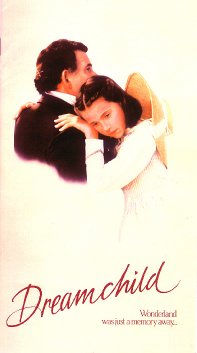
Dreamchild: A Review

DREAMCHILD

"Who are you?" This question, posed by the Caterpillar in Lewis Carroll's Alice in Wonderland, might be the theme to Dreamchild, a surprisingly obscure film connected to Carroll's wild fantasy. Well-acted, Dreamchild blends fact and fantasy to paint a portrait about creativity and the ties that bind past and present.

In 1932, almost eighty-year-old Alice Hargreaves (Coral Browne) is sailing to America to receive an honorary doctorate from Columbia University for the centennial of the Reverend Charles Dodgson's birth. Mrs. Hargreaves, accompanied by her lady's companion Lucy (Nicola Cowper), accepts that it is due to her connection to the man better known as Lewis Carroll, whose book he wrote with her as the de facto main character. However, why are so many American newspaper people hounding her so?

Among the most persistent is Jack Dolan (Peter Gallagher), recently fired from his newspaper job but who nonetheless hoodwinks both Mrs. Hargreaves and Lucy into speaking to him. Lucy, shy by nature, becomes quickly besotted albeit dubious of the handsome young American eager to cash in on the Alice in Wonderland craze that Mrs. Hargreaves has created. Jack talks Lucy into going to a tea dance at the hotel, leaving Mrs. Hargreaves presumably asleep and resting. However, she is anything but resting.

Her mind soon flows back to her halcyon days when she knew Dodgson (Ian Holm), the shy, stuttering math professor who was fond of the Liddle sisters. Alice, it seems, was her favorite, but was his interest more than just as a father figure? Alice now sees Dodgson and finds herself in a Mad Tea Party, struggling to fit in as both her old self and her younger version (Amelia Shankley). As she gets closer to the ceremony, Alice finds herself both puzzled and delighted by various opportunities for money that Jack, her new agent, is creating for her. Will she, however, come to terms with her celebrity and what all that means? Will Lucy find her own voice?

Dreamchild has an appropriately dreamlike manner thanks to screenwriter Dennis Potter, director Gavin Millar and the Jim Henson creations that bring Lewis Carroll's creations to life. Together, they blend fantasy and reality to Dreamchild. The film blends the past, the present and the fantasy world of Alice in Wonderland, giving us an imagined life of an old woman who finds herself famous for something not of her own making. 

The film feels a bit like a play given that there are many scenes that involve just Hargreaves, Lucy and Jack. Another scene where Jack and his girl Friday, Sally (Caris Corfman) meet for drinks at a bar, also has a feel that we are seeing a stage production. I imagine that Dreamchild, with some tinkering, could be adapted as a play.

As a whole, Dreamchild is well-acted, written and directed. Coral Browne made few films, concentrating mostly in the theater. Here, her Alice Hargreaves is sometimes confused, sometimes puzzled, sometimes even fascinated and amused by how her accidental celebrity is seen. While she clearly has no idea what products she is endorsing are, she finds the production of a radio show where she will record her commercials highly delightful. Potter's script detailing that she recorded commercials for "soup, soap and soda water" has a nice sense of alliteration to it. Her Alice is neither saintly nor tyrant. She is confused, even frightened, when she cannot find Lucy. She is haughty when initially dealing with Jack. She is downright mean when berating the put-upon Lucy and is proper but remorseful when she apologizes for her behavior. 

In the end, Alice Hargreaves in Dreamchild is a woman accepting the strange legacy of her association with Dodgson. She recognizes, now long after his death, that a man she was fond of and respected but whom she was also wary of gave the world a great legacy.


Despite the film involving the creation of Alice in Wonderland, Lewis Carroll is not a major part of Dreamchild. Despite this, Ian Holm does wonderful work as this shy, stuttering figure, struggling with his emotions. Was he literally in love with a child? Was it more a need to find joy in Alice's innocence? Dreamchild leans towards the idea of Dodgson as having very a very curious interest in young Alice. However, it is to the film's credit that any suggestion of a tawdrier element in Dodgson is not overt. I might have seen hints of it, but others may not.

Gallagher was good as Jack, this overtly sleazy but charming man. It was unclear to me whether he was genuinely fond of Lucy or was playing with her to get at what he wanted. Hargreaves' oblivious admission that Jack was taking twenty percent of what people were paying her reveals Jack to be very shifty. The same goes for his behavior towards Lucy. Is it love? Is it self-interest? Is it self-interest that turned into love? 

A standout is Copwer as Lucy. She is shy, hesitant, but slowly coming into her own. Lucy is becoming a woman, something that Mrs. Hargreaves does not account for. In her awkward manner with Mrs. Hargreaves and with Jack, one starts empathizing with Lucy. As such, when she finally explodes (albeit in a calm manner) at Alice Hargreaves, you almost cheer for her. Despite this, Lucy knows that she was wrong in her behavior, making her a fascinating figure to follow.

A highlight to Dreamchild is the puppetry of Jim Henson in bringing Carroll's creations to the screen. They are not sweet and charming. I would argue that they are slightly frightening. However, I think that was the point of their design: to be less cutesy and delve into the darker elements of the original book as well as Hargreaves' somewhat confused and conflicted relationship with Dodgson and the book's characters. 

Dreamchild has an appropriately dreamlike quality thanks to Gavin Millar's direction. When Dodgson and the Liddle family sail down a river on a rowboat, there is an almost lyrical quality in both the imagery and the overall mood. It is tranquil but somewhat unreal, as if everyone was floating. Stanley Myers' score adds to that vaguely unreal world.

Dreamchild is a story of legacy, good and bad. Regrets, confusion but acceptance and reconciliation with one's past moves the viewer. It is not the definitive story of the making of Alice in Wonderland, its inspiration or its author. However, the film works well, has some strong performances and style that enhance it on viewing. 

Alice, forever young.

Alice Liddell Hargreaves
1852-1934

Charles Dodgson (Lewis Carroll)
1832-1898


DECISION: B+

Wednesday, December 18, 2024

The Order: A Review

THE ORDER

The scourge of white supremacists remains lurking in the shadows, mercifully not dominant but still a menace. The Order, based on true events, chronicles the lengths some would go to make their genocidal dreams into reality. While respectable and with some good performances, I found a curious remoteness to The Order that robbed it of being a more gripping rendition of events.

The charismatic and youthful Bob Mathews (Nichoal Hoult) is the leader of The Order, a breakaway group from the white supremacists Church of Jesus Christ-Christian and its leader Richard Butler (Victor Slezak). While both advocate the overthrow of the government, Mathews is impatient and wants to take action. He takes inspiration from The Turner Diaries, a novel where a group of white supremacists commit various crimes to bring about their white utopia. Among those acts are bank robberies and even murder of friend and foe culminating in the assassination of local Jewish radio host Alan Berg (Marc Maron). 

Into this comes world weary FBI Agent Terry Husk (Jude Law). He has come to sleepy Idaho as a kind of informal semi-retirement after years of stressful undercover work investigating the Mafia. Now he finds himself drawn to investigate this group of bank robbers who pose a greater danger than mere theft. Aided by local Deputy Jamie Bowen (Tye Sheridan), who is acquainted with some of the supremacists, the Order's crimes escalate. Along with fellow FBI Agent Joanne Carney (Jurnee Smollett), they now work to bring the Order down. Lives will be lost and upended before Matthews is brought down in a fiery finish.

The Order has an interesting story to tell. It is told efficiently, but perhaps that is why I was not as impressed with the film as I could have been. Despite the horrors of the Order and their odious worldview, the film itself felt a bit remote, removed, almost clinical. I did not sense great passion from any of the characters. Instead, I could not shake the idea that everyone behind The Order, while well-intentioned, was slightly removed from things. 

A case in point is when, through a mix of accident and intent, Mathews and Husk meet and interact. I figure that this would be a great moment to build up tension or a sense of danger for Husk, unaware that the fellow hunter was the one he was hunting. However, it felt a bit clinical, as if both Hoult and Law were not fully committed. The same can be said for director Justin Kurzel, who was efficient but not passionate. I did not feel any sense of tension or suspense when Mathews and Husk interact. 

I did not feel that way when Mathews interrupts Butler's speech. The Order wants us to believe that Mathews, this young Turk, has now rallied Butler's group against him to adopt full-on revolution versus mere conversation. It could have been tense or suspenseful, building on the fear of Mathews' growing power. Instead, like in almost all of The Order, it felt dispassionate and slightly remote. 

That is also the case when Mathews meets new recruit Tony Torres (Matias Lucas). Despite the surname, Torres insists that he is not Mexican but of European Spaniard descent. This moment, I think, is trying to build tension as to whether or not Mathews will include this light-skinned potentially non-Aryan into the fold (he does). However, it was not as gripping as it could have been. Later, when Husk confronts Torres in jail about his connection to the Order and its crimes, he tells him what could happen if his associates discover that he is in fact Mexican. More often than not, The Order fails to build up tension or menace, and having Husk break out into a nosebleed in this scene might come across as unintentionally comical. 

That is not to say that there weren't moments of shock and horror. Alan Berg's assassination is creatively filmed, taking things from his point-of-view. It comes almost out of nowhere, and even if you know of Berg's murder prior to seeing the film, this scene still shocks with its presentation. Later on, someone else is gunned down in a well-filmed and acted moment. It elicits both shock and deep sympathy. Had The Order had more moments like those, it would have elevated the film more. 

The Order is respectively acted. Hoult is fine as Mathews, who is driven by a sense of arrogance and superiority of all kinds. It takes a particular kind of person to flaunt his pregnant mistress to all his friends and associates. Law was appropriately morose as the troubled FBI agent, missing his children and wondering if people would have his back. The performances were fine, but again a bit remote. I think only Sheridan, while still not as passionate one way or another, was the best performance in The Order. His Deputy Bowen was no hick, but he also was at times afraid and aware that he was over his head. As the film went on, I saw his growing rage at what he saw as the FBI's hesitancy in bringing this group of racist criminals down. Smollett, while showing some promise, was more like Hoult and Law, a bit aloof from things. 

The Order is a good film that I think could have been great. That perhaps is why I ended up not as enthusiastic as others have been. I found it efficient but dispassionate, which is a lost opportunity in my view. 

Wednesday, December 11, 2024

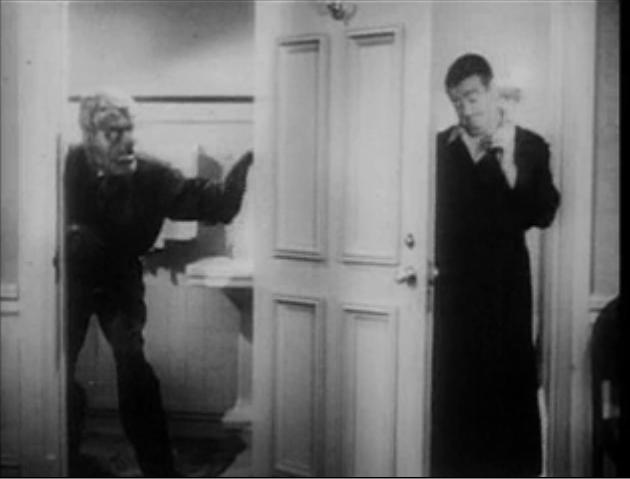
Abbott and Costello Meet Frankenstein: A Review

ABBOTT AND COSTELLO MEET FRANKENSTEIN

I have tried. I really have tried. However, try as I might, I simply do not find Abbott & Costello funny. In my few dealings with them, all Bud does is either yell at or beat up on Lou. To be fair, the childlike dimwit Lou would probably drive anyone into fits of rage. Abbott & Costello Meet Frankenstein, the comedy team's first foray into the world of the Universal Monsters, is fine, but I still cannot understand the appeal that they have. 

Cantankerous baggage clerk Chick Young (Abbott) and his frenemy and coworker Wilbur Gray (Costello) have been tasked to deliver a couple of packages to a Florida horror museum after Wilbur gets a strange phone call from London. Lawrence Talbot (Lon Chaney, Jr.) begs Wilbur not to take the crates to McDougal's House of Horror, insisting that they contain the real-life Dracula and Frankenstein's monster. Despite Wilbur's misgivings, he and Chick take them to the museum, where the terrified Wilbur sees Dracula (Bela Lugosi) and Frankenstein's monster (Glenn Strange) rise. Chick, however, keeps missing the creepers and thinks Wilbur is crazy.

Not, however, as crazy as Sandra Mornay (Lenore Aubert), who is smitten with Wilbur. Chick finds it impossible to believe that a beautiful woman like Sandra would find the short, fat and intellectually weak Wilbur an object of desire. Chick is right: Sandra, who is Dr. Mornay, is not interested in Wilbur's body. She is interested in his brain, but to use as part of Dracula's plan to resurrect Frankenstein's monster and make him Dracula's slave as part of his plot for world conquest. Wilbur is the perfect brain: totally blank and easy to control. 

More hijinks occur when insurance agent Joan Raymond (Jane Randolph) also appears to find Wilbur irresistible. That is part of her plan to find out what happened to the missing delivery objects, the idea that they literally walked away impossible for her to believe. Things get more complicated when Talbot comes to Florida, but struggles whenever there is a full moon, for that causes Talbot to turn into The Wolf Man. Will Chick and Wilbur, aided by Talbot, be able to stop the evil plans of Dracula and Dr. Mornay? What role if any does her assistant, Dr. Stevens (Charles Bradstreet) have in this unholy plan? Things come to a head at a masquerade ball and the next day, when some meet a fiery end, and a surprise monster makes an unseen appearance.


I wish I could love Abbott & Costello the way so many people do. Having now seen two of their films, this and when they met The Invisible Man (or met him again), I still do not get the appeal of a bully and a nitwit. I find both personas of Abbott and Costello pretty grating: the former is almost always abusive towards the latter, and the latter is almost always someone with the mind of a four-year-old. Yet, I recognize that for many, Abbott & Costello are comedic geniuses. Now, after decades of avoiding Abbott & Costello Meet Frankenstein, I think the film is fine. I did not find it hilarious. I did not find it clever. I found it tolerable.  

Abbott & Costello Meet Frankenstein seems a bit of a misnomer given that a lot of their interaction is with either Dracula or the Wolf Man. I could even be more technical in that Abbott and Costello did not actually meet Frankenstein himself, but his Monster as the Monster is not named Frankenstein. Moreover, I think Frankenstein's monster is in the film less than Dr. Stevens, and he seemed pretty unimportant to the plot apart from making him both Dracula's dupe and a potential love interest for Joan. 

As a side note, I copyright the term "Dracula's Dupe". 

I think the humor in Abbott & Costello Meet Frankenstein comes from the blending of the spooky and the silly. I suppose that one can have the IQ of Wilbur Gray and see that the film mixes traditional horror tropes (the scary music from Frank Skinner's score, the lobotomy plot, the various underground passages) with the idiocy of Lou Costello. The film has some of the cast playing things mostly straight, which in turn allows Bud and Lou to be as outrageous as they can be. 

Yes, that juxtaposition is where the humor comes from. It did not hit me often, but fair is fair to say that it did sometimes land. When Chick flat-out asks Sandra, "What I'd like to know is what's he got that I haven't got?", she replies, "A brain". The double meaning of her response is funny, as is the logic. Sandra is telling Chick the truth, but the pun in Robert Lees, Fredrick I. Rinaldo and John Grant's screenplay has a surprising wit to it. Another scene has Sandra, now under Dracula's total control, attempting to bring Wilbur to the dark side.

"I'll bite," he tells her. "No, I will," she replies. The pun in "bite" with one meaning one thing, the other meaning something else yet both being accurate is amusing. I also must confess that I did find the sight of Lou Costello as Wilbur Gray, this dimwitted but sweet figure, shyly tucking his head on Bela Lugosi rather cute and endearing.

Costello also had a way with the dialogue where the zingers come fast and furious. Complaining about a previous date that Chick had set Wilbur up with, the latter remarks, "Mine had so much bridgework, every time I kissed her, I had to pay toll". Using contemporary slang, both Chick and Wilbur dismiss Talbot's worries about his werewolf transformation given neither believe it. On being informed by Talbot that in a full moon, he turns into a wolf, Costello remarks that so do millions of other guys. 

Costello, despite his stature and girth, has surprising dexterity. A nice bit is when, mistaking the Wolf Man for Chick in a mask, he finally stands up for himself and starts smacking the monster. The mix of Wilbur's courage, even anger, against a menace he is unaware of would bring laughs. 

When Abbott as Chick finally got wise to the goings-on, he too was amusing. He does not catch on until late in the film, as he is the unbelieving figure. However, once he sees that Wilbur and Joan are in danger, he rallies to save them. 

Abbott and Costello's zaniness is countered by everyone else playing it straight. Nowhere does Bela Lugosi behave as though this is a comedy. Curiously, this is the only other time he plays Dracula apart from the original film. However, he is perfectly serious and even menacing, such as when he hypnotizes Sandra. In what I found a daring scene we can read ecstasy from Aubert's face when she is bitten.  As a side note, I wondered if Hedy Lamarr would have been better in the role, a mix of beauty and brains amidst all the chases.

I was surprised by Chaney, Jr.'s performance. He, to my mind, had not quite decided whether to play it straight or try for a little send-up. It was not a bad performance, but I wasn't completely sold by it. Strange as the Frankenstein monster looked more like Herman Munster than Boris Karloff's version. It was like the film itself: fine. 

Abbott and Costello Meet Frankenstein (technically Frankenstein's Monster) ends in an amusing gag. I am still not won over by their antics, but I did think well enough of this jaunt through horror with laughs that I did not end up feeling that I had wasted my time. "This is awful silly stuff", Wilbur observes to himself as he reads the Dracula legend. I think that sums up Abbot and Costello Meet Frankenstein, amusing if not flat-out hilarious, at least to me.