Wednesday, August 12, 2020

Peyton Place: A Review (Review #1405)


PEYTON PLACE

This review is part of the Summer Under the Stars Blogathon sponsored by Journeys in Classic Film. Today's star is Lana Turner.

My late mother had limited knowledge of American culture, particularly so-called "pop" culture. However, she would always refer to something particularly scandalous as being "a real Peyton Place", though she more than likely was referring to the television soap opera she saw as a young woman newly arrived to the United States than the film itself. While never having seen an episode of Peyton Place the soap, Peyton Place the film is pretty salacious even in its toned-down version.

Newly arrived Peyton Place High School principal Michael Rossi (Lee Philips) unwittingly enters a town that appears serene and bucolic but is a cauldron of sordid scandal underneath its WASP Heaven veneer. There's dress shop owner and respectable widow Constance MacKenzie (Lana Turner), forever protecting her daughter Allison (Diane Varsi) from sex and a scandal of her own. There's Allison's best friend Selena Cross (Hope Lange), who is from the poor side of town and whose stepfather is the lecherous drunk high school janitor Lucas (Arthur Kennedy). There's their shy classmate Norman (Russ Tamblyn) and wealthy but weak Rodney Harrington (Barry Coe), pushed by his father (Leon Ames) to stay away from the woman he loves, local teen tramp Betty Anderson (Terry Moore).

As Peyton Place goes on, we find this quiet town has the children and parents discovering the truth about their illegitimate births, along with virtually incestuous rapes, pregnancies, suicides and ultimately murder. Surprisingly, World War II is the most sane thing that affects our New England hamlet. The sordid private lives of those in Peyton Place culminates in a sensational murder trial where Selena would rather go to prison than have her shame exposed, until the courageous Dr. Swain (Lloyd Nolan) condemns the citizens for their shameful hypocrisy.

Peyton Place Review | Movie - EmpireAs I understand it, the film adaptation of Grace Metalious' novel was cleaned up quite a bit to pass the Hays Production Code, but even with perhaps the more salacious elements removed Peyton Place is still rather scandalous. What can  you say about a 1950's film that mentions "sex" repeatedly and makes clear that the teens are bursting to get it on? The lusting going on around Peyton Place among both adults and teens at times veers towards the comical at times.

It is to director Mark Robson's credit that some particularly daring moments are both subtle and overt enough to make things clear. Case in point is Selena's rape: it's nowhere near graphic but it is clear that there was a violation. The fact that it is as close to incest as possible makes it even more scandalous.

This was part of a new Lana Turner. No longer the "Sweater Girl" or pretty young thing, Turner is older, more mature as the seemingly upstanding but repressed Constance. Peyton Place is I think one of her strongest performances. We see a deeper, stronger, more mature Turner. It's a performance that shows her to be more than a glamour girl but closer to an actress. Her scenes with Lee were particularly strong, the two of them playing off each other in their tortured romance. Lee himself was quite good as the progressive Mr. Rossi, not afraid to love and speak his mind.

Peyton Place Movie Locations - Peyton Place Images, Pictures ...I was also surprised at the brief but strong turn of Leon Ames as Mr. Harrington. Mostly known for his genial father turns in lighthearted fare such as Meet Me in St. Louis and On Moonlight Bay, Ames shows a darker, more ruthless side as the bullying father. Ames was able to also show a gentle side when he reconciles with Betty, admitting he was wrong to push her away.

In smaller roles, it is surprising to see David Nelson of Ozzie and Harriet fame branch out into such sordid material. While not a particularly great performance, it was not bad. Moore seemed to channel a young Gloria Grahame as the teen tart, but she too did well.

Peyton Place earned a total of five acting nominations: one for Turner in Lead and four for Supporting. Out of the nominated Supporting roles I think Tamblyn's troubled and mother-dominated woman-fearing Norman was the strongest. That is not to say it was a particularly great performance, but it was better than Kennedy's wild over-the-top Lucas. Kennedy was "acting" drunk but oddly seemed too sober to be believable as a drunk. With regards to Lange and Varsi, to be honest they seemed too quiet and similar to be worth much.

Peyton Place is perhaps too long and Franz Waxman's score is if anything as equally dramatic as the wild goings-on. However, there is enough entertainment in this sordid tale of secret decadence among the respectable people to keep our interest.

DECISION: B-

Tuesday, August 11, 2020

A Man Called Adam: A Review


A MAN CALLED ADAM

This review is part of the Summer Under the Stars Blogathon sponsored by Journeys in Classic Film. Today's star is Sammy Davis, Jr.

Sammy Davis, Jr. in my opinion is not as well-remembered as he should be. He was more than just a member of the Rat Pack, but a gifted singer, dancer and actor. A Man Called Adam showcases Davis' dramatic ability despite the low budget, along with surprisingly good turns from people who were not actors and an exceptional performance from someone who would become a legendary actress.

Highly talented but volatile trumpeter Adam Johnson (Davis) struggles between his artistic gifts and his inability to function. Constantly alienating his band, agent and record label, Adam carries great burdens. There's the general burden of being a black man in a world still struggling to give him the respect he is due. Then there's the guilt he carries over the deaths of his wife and child in a car accident of his making.

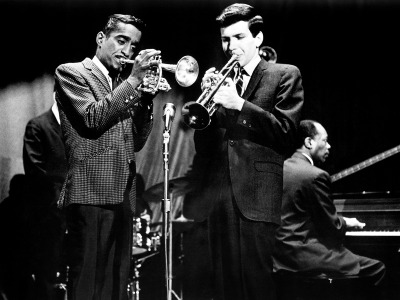
Into his life comes older trumpeter Willie Ferguson (Louis Armstrong) and his granddaughter, Civil Rights activist Claudia (Cicely Tyson), both temporarily staying at Adam's apartment with his prior permission while he was supposed to be away. Adam slowly starts to drop his defenses with them, and a romance blossoms. Adam also starts mentoring white trumpeter Vincent (Frank Sinatra, Jr.), but the old demons external and internal continue plaguing an increasingly ill Adam.

Run ins with racist cops, his continuing poor health, the guilt of his past and fears for his present all push Adam to try and push Claudia away, but she will not be dissuaded. Adam attempts to be more passive on a forced Southern tour organized by his label's representative Manny (Peter Lawford) but Vincent gets it instead for associating with blacks. Ultimately, his health, boozing and guilt all lead to a tragic ending to our brilliant but troubled trumpeter.

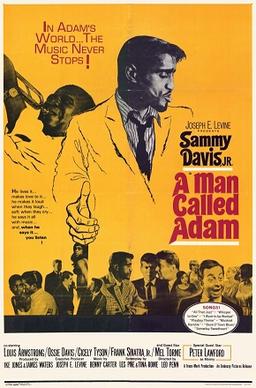
film: a man called adam | TumblrA Man Called Adam suffers from a small budget, the film at times feeling a bit disjointed and rushed from one scene to another. However, a forgiving viewer would find that A Man Called Adam has a wealth of positives that more than make up for the limitations.

At the top of the list are some wonderful performances. Sammy Davis, Jr. grips into the role with fervor, and even in what could have been wildly over-the-top moments Davis is controlled enough to make Adam's struggles and sometimes hysteria come across as more than artistic temperament.

Davis has a wonderful, quiet moment when he tells Claudia about the accident that killed his wife and child, one where racism and his reaction to it lead to a terrible tragedy. One feels that in this scene he is not acting but being, with some alterations describing Sammy Davis, Jr. versus Adam Johnson. It's a wonderful moment, full of tragedy and restraint, that showcases Davis' sadly untapped dramatic skills. 

Cicely Tyson blows the screen off as Claudia, this proud and loving woman who suffers with and for Adam. Tyson is magnetic, beautiful and strong, an actress of impeccable ability who makes Claudia's journey and love for this troubled man a fascinating thing to watch. Louis Armstrong in a rare dramatic role showcases great skill as Willie, the older trumpeter who can more than hold his own against Adam. We do get a chance to hear him perform, always a great treat. Armstrong, however, shows a surprisingly adept dramatic side when talking to Adam or Claudia, revealing a wise man who knew trouble when it came his way.

Ossie Davis as Nelson, Adam's right-hand man, also does strong work, as does Lawford in essentially a cameo role. Frank Sinatra, Jr. did well, not brilliant but well. A nice surprise is Mel Torme playing himself singing a pre-Kander & Ebb All That Jazz, and A Man Called Adam having great music is no surprise, as Benny Carter wrote the score and some of the songs.

A Man Called Adam is an interesting time capsule of when jazz was more prominent in American musical circles.  Its issues of race and respect are still relevant today. Granted, one sense that this was done on a shoestring budget, but if one gets past that we see some excellent performances and wonderful music that make A Man Called Adam worth a watch.

DECISION: B-

Sunday, August 9, 2020

Protocol: A Review

PROTOCOL

This review is part of the Summer Under the Stars Blogathon sponsored by Journeys in Classic Film. Today's star is Goldie Hawn.

When I first saw Protocol, I thought it was one of the funniest albeit silliest films I had seen. However, now with hindsight, had I missed the sharp satire of Washington politics Protocol may have had under the almost screwball nature of the lead's zany actions? Perhaps that is giving Protocol too much credit, but beneath its outlandish plot and wacky main character, you can gleam it saying something about the importance of public involvement in politics.

Ditzy and lovable cocktail waitress Sunny Davis (Goldie Hawn) is oblivious to anything and everything outside her world until she stops an assassination on the Emir of Ohtar. Finding herself in the "harsh but warm light of media attention", Sunny charms America with her openness and guileless nature.

The Administration and the Emir strike a deal: in exchange for a military base on Ohtar, the government will literally give him Sunny. She is hired to the Protocol Section of the State Department as cover for the nefarious deal. Sunny, being Sunny, manages to make a mess of every assignment she's given, though she also shows that she's not the dumb blonde the conspirators think she is by reading up on official rules and more importantly The Declaration of Independence.

Once in Ohtar, she discovers she was essentially traded for the base. The impending wedding causes two scandals: a revolution in Ohtar and a Congressional investigation. Ultimately, Sunny accepts responsibility for being a dupe as she understands her lack of intellectual curiosity and political involvement got her into this mess. However, Washington better watch out, for Sunny has just been elected to Congress.

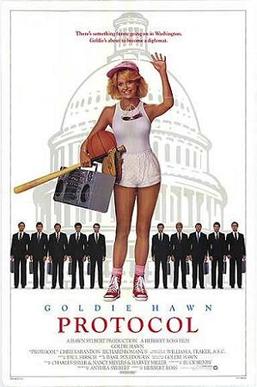
Protocol (1984)Protocol has a mix of sweetness and cynicism, a bubbly exterior that masks a very harsh vision of what government would do to get what it wants (in this case, white slavery for a military base). In its tale though, we see that screenwriter Buck Henry also spoke on the importance of civic involvement.

Sunny was not an uncaring woman, far from it. She was sweet, endearing and genuinely loving. However, despite living in Washington she never bothered to pay attention to anything outside herself. For example, she would change the channel with any news reports but get wrapped up in a soap opera. Sunny would blissfully and unquestionably accept and believe anything she was told, but it wasn't until she literally read up on government that she started becoming aware of things. Sunny started learning how government decisions affected her and more importantly that if she did nothing or went along with it, she had only herself to blame.

In the climatic speech Hawn says "I'm responsible," accepting that she was sold a bill of goods and rather than look at it she deferred to "the experts". Earlier, she told her love interest, Middle East Desk Chief Michael Ransome (Chris Sarandon) that the problem with professionals was that "they don't always care". She was referring to cleaners, but the subtext is clear: at times those who in theory know more become convinced of their infallibility, leading to disastrous results.

Goldie Hawn with Richard Romanus in Protocol (1984) | Goldie hawn ...
Again, this may be a bit too highbrow for something as lowbrow as Protocol, for the film is filled with various gags and silly moments. The montage of Sunny constantly screwing up even the most banal assignment is a case in point: she shows up to a garden party in shorts with a Frisbee, innocently saying, "You said it was a barbecue". The most outlandish is when, after being told to show the Emir "a really good time", she takes him and his entourage to the nightclub where she worked.

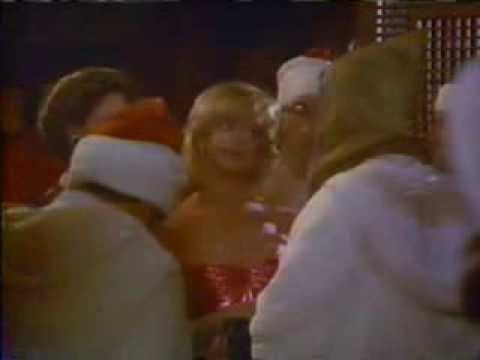
At Lou's Safari Club, where the waitresses wear themed costumes like zebras and an emu, the party inevitably turns chaotic. You have the Arab party, a Japanese birthday party, Sunny's gay friends and some biker friends of hers...and that's before the staid State Department officials arrive to try and stop the ensuing scandal. Sequences like these show Protocol to be a bit of a romp.

The humor is all over the place, but in a good way. You have the wild Safari Club party but also moments of almost gentle humor. In an effort to win Sunny over, the Administration sends someone who fits the description of someone generally popular with nothing to do. Enter the Vice President to small-town Oregon. There is a certain wit when the Vice President offers Sunny a job at "Protocol", as director Herbert Ross has triumphant trumpets play at the mention of "Protocol".

Goldie Hawn in Protocol 1984 TV trailer - YouTubeProtocol really hangs on Goldie Hawn, who also produced the film. She is bubbly and perky as Sunny, a woman who could genuinely believe Ransome called himself a "middle-aged desk clerk" versus "Middle East Desk Chief". She makes Sunny an endearing figure, which gives her few dramatic moments more heft.

While the rest of the cast did well in their broad roles, Andre Gregory is of particular note. As Nawaf Al Kabir, the Emir's spiritual advisor, Gregory shifts from a deep man of faith to a more comical character, cavorting with call girls and generally looking foolish. I think he was meant to be buffoonish in his addled manner (for example, being unaware how his waxing rhapsodic about Sunny's loins would anger the Emir), but now I think his performance would not be looked upon kindly.

To be fair, Protocol is not meant to be serious and everyone save Richard Romanus' Emir plays it as broad farce.

Protocol is charming and sweet, like Sunny Davis herself. Perhaps I'm a bit prejudiced in my like for Protocol as it was one of my late mother's favorite films. However, Protocol is a lark with a nice message about not neglecting our duties as citizens or ceding control of them to "experts" who go unchecked. This message, couched in a silly farce, is one worth remembering and applying today in these troubled times.

DECISION: C+

Wednesday, August 5, 2020

Mulholland Drive: A Review

Mulholland Dr. (2001) | The Criterion Collection
MULHOLLAND DRIVE

This review is part of the Summer Under the Stars Blogathon sponsored by Journeys in Classic Film. Today's star is Ann Miller.

Does Mulholland Drive actually make sense? It is pretty indecipherable to many people, even acolytes to its writer/director David Lynch. If you go into Mulholland Drive expecting a film with a beginning, middle and end that tells a straightforward narrative, you may leave it in total disgust. Even going into it with some idea of the surreal nature of it all may not be enough to comprehend it. However, I fond that Mulholland Drive has logic within it: the logic of dreams, fitting for a film built around dreams metaphorical and literal.

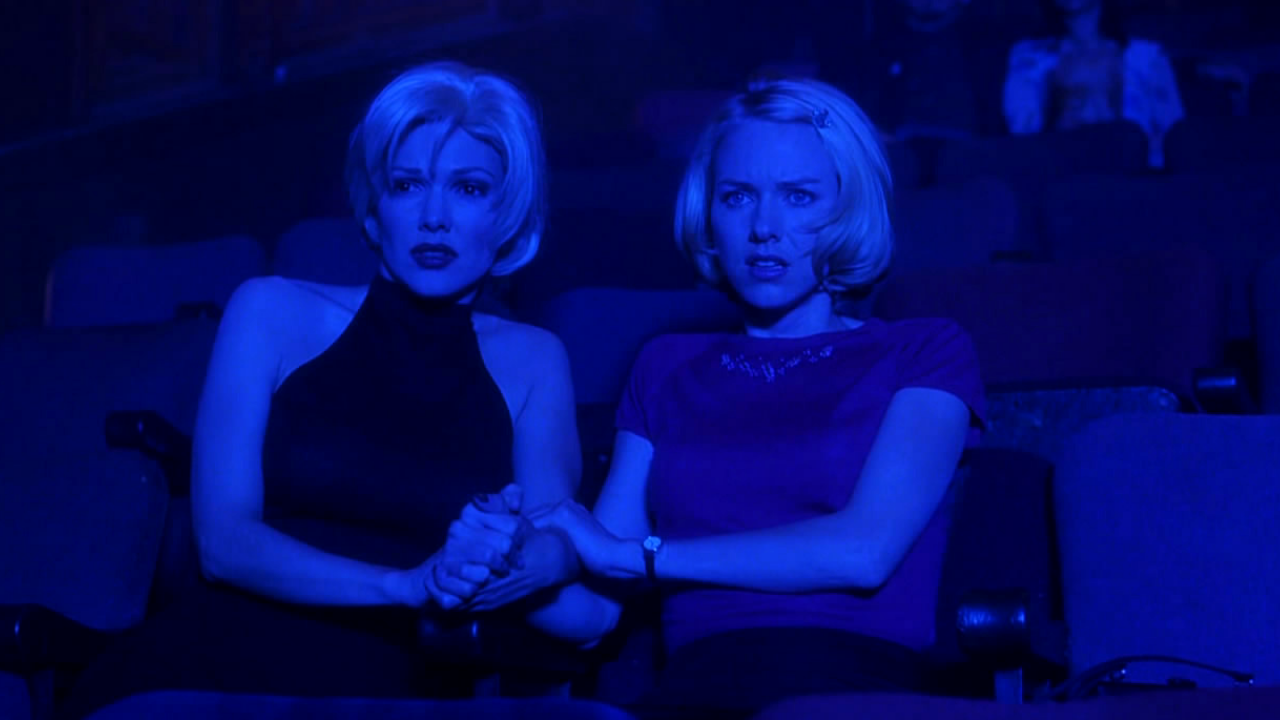
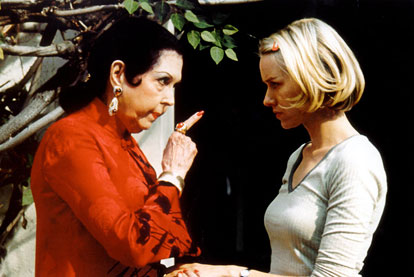
A mysterious woman survives both an attempted assassination and a major car crash but suffers amnesia as a result. Sneaking her way into an apartment, she is discovered by Betty Elms (Naomi Watts), a cheerful aspiring actress just arrived from Deep River, Ontario whose aunt rents that apartment from eccentric Coco (Ann Miller). The mysterious woman calls herself "Rita" (Laura Elena Harring) from a Rita Hayworth poster, but she has no idea who she is, let alone what thousands of dollars or a blue key are for in her purse. Betty, just starting out her acting career, decides to help Rita uncover her mystery.

As they continue their investigation, Betty also has her acting career to take care of. She nails an audition, but there is nefarious work afoot. Hotshot director Adam Kesher (Justin Theroux) is being pressured to cast a Camilla Rhodes for his feature, The Sylvia North Story, told "This is the girl". Adam at first resists, but forces beyond his control get him to do as he's told. Eventually, Betty and Rita become lovers, and after a tryst Rita takes Betty to Club Silencio, where a strange stage show sends them both into fits of shaking and crying. Back at Betty's apartment, Rita opens a blue box Betty found in her purse with the blue key and both essentially disappear.

Mulholland Dr. – IFC CenterAt about the two-hour mark, things take a wild turn. We find ourselves now in perhaps reality or a dream, with the disheveled Diane Selwyn (Watts again). She's a bitter, angry woman, having lost her lover Camilla Rhodes (Harring again). Camilla is in a relationship with her director, Adam (Theroux again). At a Hollywood party on Mulholland Drive, Diane witnesses silently and angrily Camilla and Adam's relationship, while Adam's mother Coco (Miller again) is equally not amused. Diane hires a hitman to kill Camilla, the hitman telling her she's find a blue key when the job's done. There is a blue key at her apartment, but visions of crazed old people drive Diane to the brink and she shoots herself.

In the end, a woman seen at Club Silencio whispers "Silencio" (Silence).

Yes, trying to give a narrative overview to Mulholland Drive is a difficult thing because it has many elements. In this overview, I had to leave out subplots of Adam's marriage, seemingly random people discussing their own dreams, clumsy hitmen and figures coming and going with nary a sense of reality. So, what to make of Mulholland Drive?

I think it bears remembering that Mulholland Drive started out as a television pilot that was rejected. As such, I think David Lynch put in potential story threads that in the planned series might have tied together. Once the pilot was killed, Lynch reworked it into a feature film, giving it his usual surrealistic touches.

Cast: Coco Lenoix
The general theory is that the first two-thirds of Mulholland Drive is Diane's dreams where she recasts those around her, including herself as the sweet, upbeat Betty who is destined for success versus the failed Diane. Diane failed at love and a film career, but "Betty" is on her way both professionally and personally, with "Rita" madly in love with her. I think this is as good a theory as possible to explain most of Mulholland Drive, with other elements (The Cowboy, the dark forces pushing Adam to say "This is the girl") being integrated from the hoped-for series.

That being said, I think Mulholland Drive is really about Diane, this lost angel in this City of Dreams. The film is about dreams, all kinds of dreams. It is about literal dreams where the most random things appear to make sense but wouldn't in reality. It is about metaphorical dreams: dreams of stardom, of love, of being able to change things for our better. It is about dark dreams, those desires carnal and murderous that we can live out safely within fantasy. As much as I can gather, Mulholland Drive is about how we can or do make our dreams come true, for good or ill.

In the Betty section, Betty herself marvels about how she is in this "dream place". A seemingly random section where a man discusses a recurring frightening dream to someone says "You're in both dreams, and you're scared". Dreams rarely make sense when we awaken but appear totally real and logical when we are in them. I think Mulholland Drive speaks to that idea of the unreal reality of dreams, extending it to aspirational dreams.

David Lynch to open Mulholland Drive-style nightclub in Paris ...Lynch extends this idea of unreal reality to the movies themselves. We accept the reality of the situation despite knowing, as the Club Silencio sequence openly declares, "No hay banda! (There is no band)". Everything is an illusion, the bizarre Master of Ceremonies declares, showing us how the "trumpet player" is mimicking playing but that it is a recording. It is all fake. The Betty/Rita story is fake. Betty herself is fake. Mulholland Drive itself is fake. It is all unreal, yet because we see it, we accept it as "real".

We see this brilliantly when we see what at first appears to be an argument between Betty and Rita. "You're still here?" Betty asks angrily. "I came back. I thought that's what you wanted," a somewhat puzzled Rita replies. "Nobody wants you here," Betty snaps. At first, we accept that there is some kind of falling out, but then Lynch pulls back the camera to show that Rita is merely reading lines from a script. Here, Lynch circumvents our original expectations and reveals that "it was an illusion". Our preconceived notions led us to one conclusion, but then more information changed it completely.

Later on, "Betty" delivers the same lines at the audition, differently, erotically, again revealing the unreality of acting. In those moments, the audience gets caught up in the performance it is soon forgotten that it is a performance. It becomes "real". I think Mulholland Drive was crafted to be Lynch's take on cinema: the falseness of it all both with what audiences are presented and what it takes to make one. Perhaps the "dark forces" pushing for a particular performer and crazed meetings were his subtle dig at studio interference?

Mulholland Drive was Naomi Watts' breakout role, and she is absolutely extraordinary in the dual roles. Even as Betty, we sense there is still something a bit off, something a bit too cheerful, upbeat and innocent. Her various transitions from the perky Betty to the sultry Betty in the audition to the bitter Diane show an exceptional range. Laura Elena Harring holds her own as Rita, this tormented and confused woman who shifts into the cold, selfish Camilla Rhodes. Theroux's Adam manages a wry humor when presented with odd situations but is able to show a slightly darker side when with "Camilla".

Curiously, I think Ann Miller in her final role has the most radical change. She is eccentric but caring with Betty, but dismissive and disinterested with Diane. While her role is small she makes the most of it, in turns almost endearing and slightly creepy.

Mulholland Drive should be seen as a dream and a meditation on dreams and film. I won't take away from people who think it might all be incomprehensible rubbish (I feel that way about Twin Peaks: Fire Walk with Me). Having seen Mulholland Drive again, I find that it is not as crazed or incomprehensible as I once thought.

The logic of dreams.

DECISION: A+

Tuesday, August 4, 2020

Helmut Newton: The Bad and the Beautiful. A Review

HELMUT NEWTON: 
THE BAD AND THE BEAUTIFUL

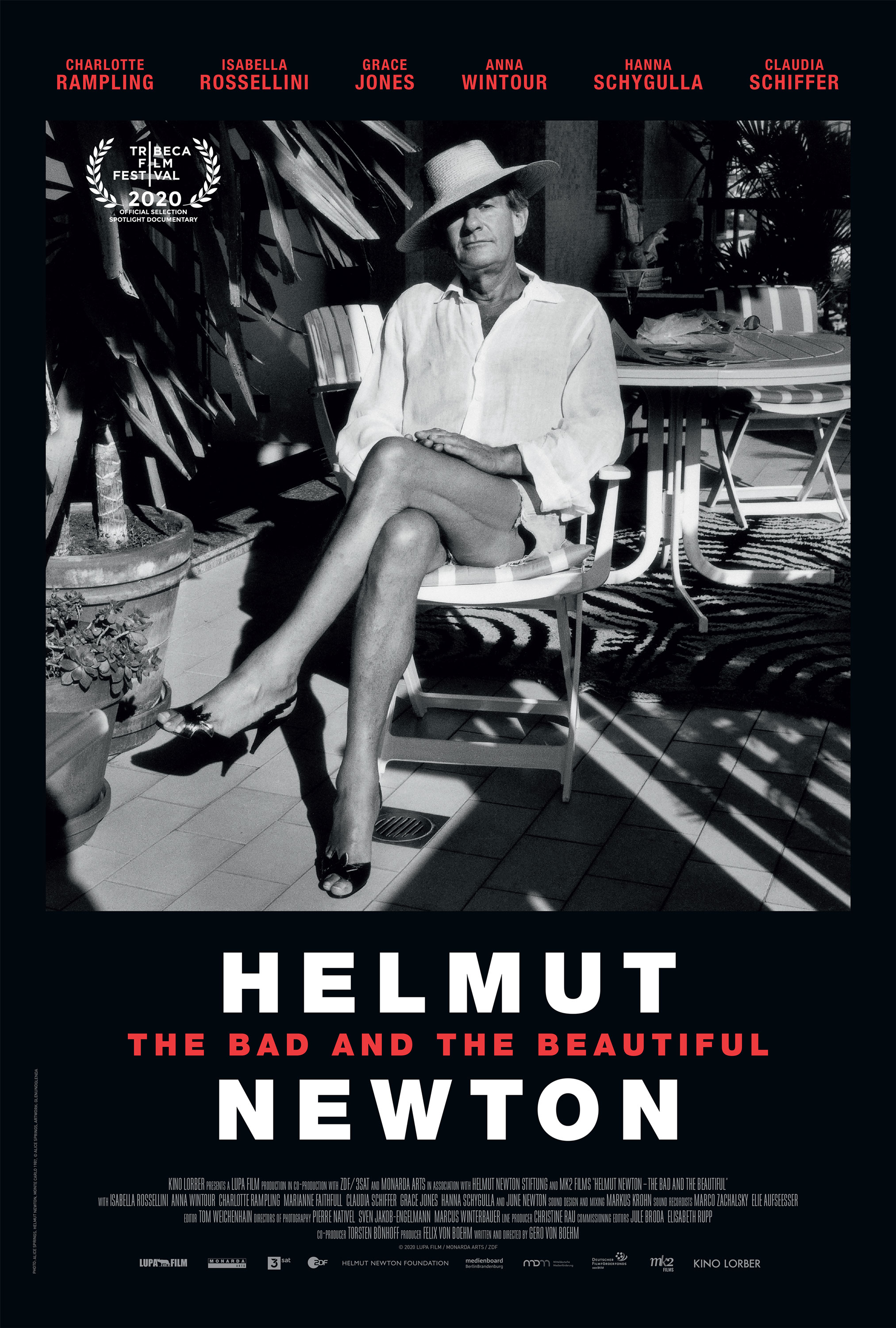
Helmut Newton is not a name that will strike people as familiar, at least outside artistic circles. His photographic images, however, have been seen by millions. Helmut Newton: The Bad and the Beautiful is a good primer for the late German-Australian photographer but unless you have a strong interest in the subject most people will come away with a sense that The Bad and the Beautiful is more homage than exploration. It might be intended as that, but it does not inspire much to the casual viewer or those who are not as enamored of Newton as the film, the interviewees or Newton himself were of Newton.

The film offers many interviews from a gaggle of admiring women, fitting for a man who disliked photographing men, seeing them as mere accessories. From Vogue editor Anna Wintour to actresses Isabella Rossellini, Grace Jones and Charlotte Rampling, each waxes rhapsodic about Newton and his work.

Therein may lie a problem. Director Gero von Boehm may think Newton a great artist, but The Bad and the Beautiful does not make a clear case that he is a great artist. The film clearly is not interested in chronicling his life: it takes a full 45 minutes before we even touch on his early years when his childhood coincided with the transition from Weimar Republic decadence to Nazi-era conformity.

That Newton was Jewish during this time would be interesting to explore, but The Bad and the Beautiful doesn't delve into that. It does touch on how Newton's aesthetic does bear a resemblance to of all things Triumph of the Will's director Leni Riefenstahl's. Both their work holds up the worship of the body in their fixation on the nude (male for her, female for him); more bizarrely at least to me is that some of his photographs of female nudes reminds me of the approved art of the Nazi era: the solitary female nude, strong, powerful, but soulless. As he makes clear via archival footage, he does not photograph the soul.

Hitler's Nude Nymphs to Go on View at Neue Galerie – ARTnews.comIn a montage of his photographs, a set of pictures of four women striking the same poses (one with clothes, one without) reminded me of the "non-degenerate" art the Nazi state promoted.

Let me absolutely clear: I am in no way suggesting, implying or intending to either that Newton was copying or sympathetic to Nazism or Nazi art. I am only stating that some of his photographs reminded me of approved Nazi-era "art" both in subject and style. That is all.

He was certainly aware of it: early in The Bad and the Beautiful an interviewee mentions how Newton got far-right French National Front leader Jean-Marie Le Pen to pose with his dogs, echoing Hitler's own dog photos to an unsuspecting Le Pen. It may well be a general German aesthetic to fixate on the nude, or even on vaguely sadomasochistic element. That I could not answer. I may be the only person for whom his photographs are reminiscent of the Nazi celebration of the body beautiful. However, the photographs did bring my limited knowledge of art and Nazi history.

The Bad and the Beautiful also does not answer accusations of misogyny in his aesthetic. Apart from a French-language interview where he faces off against Susan Sontag most interviews and the film itself appear to dismiss such charges. It may not be overtly treating any charges of misogyny as nonsense, but it does not answer them either.

Again, I think it is because Helmut Newton: The Bad and the Beautiful is not meant to be an exploration but an adulation of the subject. That does not make for particularly great filmmaking, particularly if one is unaware or little-aware of the subject matter. The film is good for those who care or are interested in Helmut Newton, not so much for those who are not. You won't learn much about the artist other than his subjects thought he was wonderful.

You will see a lot of interesting, sometimes shocking and provocative pictures, which perhaps is what Newton would have wanted all along.

DECISION: C+

Sunday, August 2, 2020

Written on the Wind: A Review (Review #1400)

Written on the Wind (1956) | The Criterion Collection
WRITTEN ON THE WIND

This review is part of the Summer Under the Stars Blogathon hosted by Journeys in Classic Film. Today's star is Rock Hudson.

Oddly, for all the glean and prestige the film has received, Written on the Wind is seen as somewhat tawdry and overwrought melodrama. It IS that, but the film so openly and unabashedly embraces that tawdriness that one ends Written on the Wind with an almost weird respect for all the luridness.

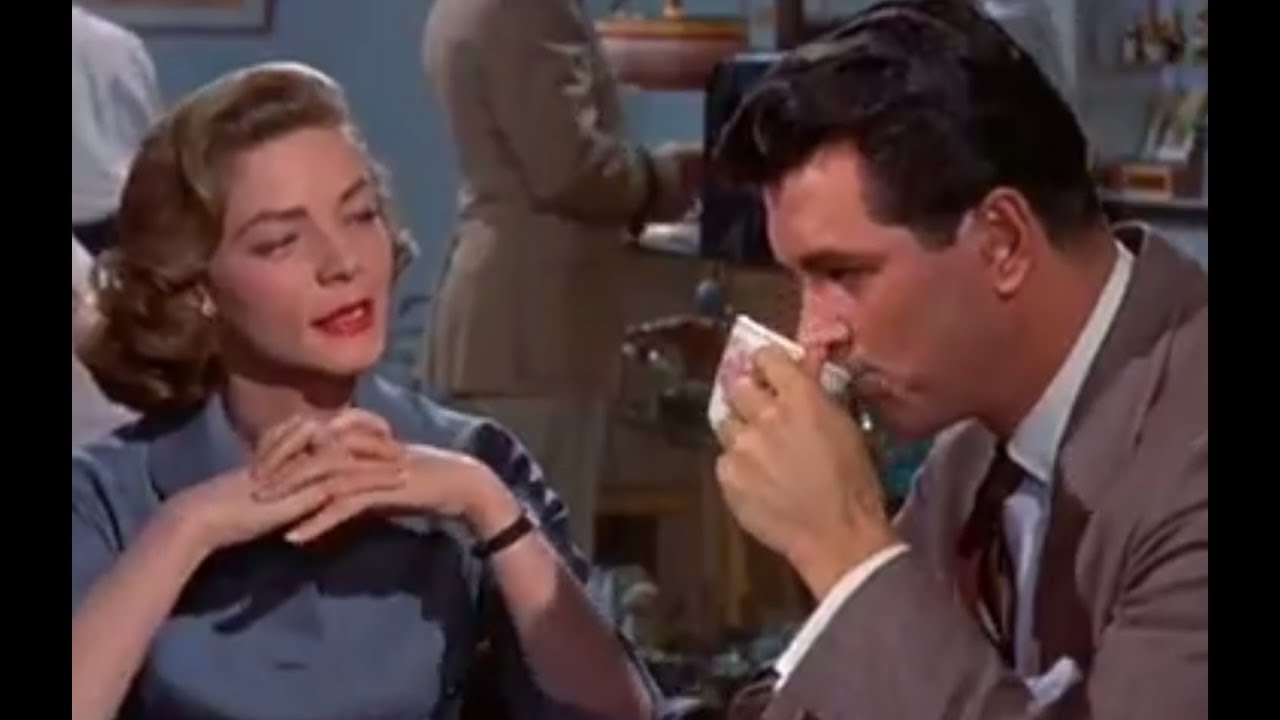
New York secretary Lucy Moore (Lauren Bacall) is swept into a quick romance and marriage to Kyle Hadley (Robert Stack), ne'er-do-well son of a Texas oil baron so wealthy and powerful their entire hometown is named after them. Kyle's best friend,  Hadley Oil geologist Mitch Wayne (Rock Hudson) carries a torch for Lucy, and she may have one for him, but she apparently loves Kyle. She's also a good influence, keeping Kyle off the booze.

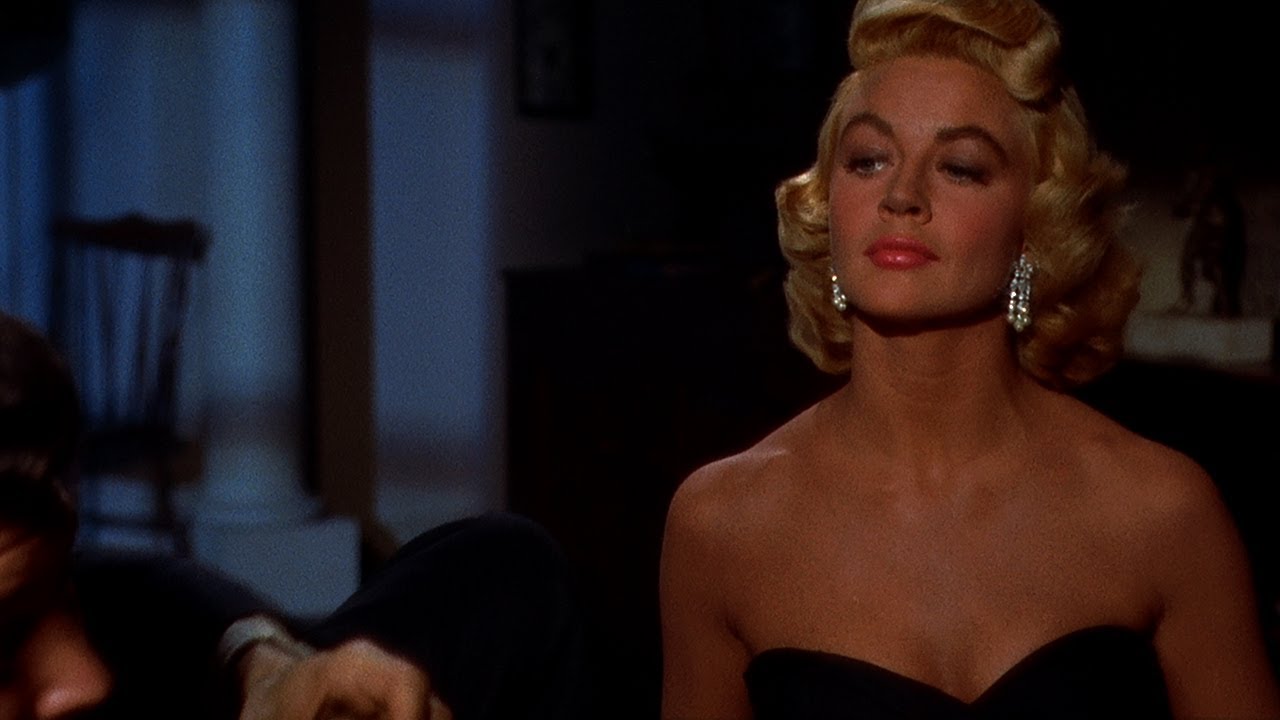
Pity that Kyle's nymphomaniac sister Marylee (Dorothy Malone) can't be tamed. She's set her heart (and other body parts) on Mitch, but he won't reciprocate. Despite this, things are going pretty well for everyone until Kyle discovers there's something wrong with him with regards conceiving a child. This of course leads him back to Demon Rum, and from there Written on the Wind unleashes a torrent of violence, accusations of adultery and up to murder. The climax comes at the murder trial, where the fate of one man is in the hands of a spurned woman.

Written on The Wind, 1956 Rock Hudson, Lauren Bacall, Robert Stack ...If anything, Written on the Wind, the sixth of eight film collaborations between star Rock Hudson and director Douglas Sirk, continues that lush visual style Sirk was celebrated for. We can tell right from the opening, where we're serenaded with the very lush and romantic Written on the Wind whilst seeing hints of a pretty crazed mansion culminating in a man apparently dropping dead.

Subtle it is not, but give Sirk credit: he sets things up beautifully with no words, marking him as a true visual artist. It's positively daring to see Stack's Kyle coming across a child riding an coin-operated horse after being (not-overtly) told he's essentially sterile. The juxtaposition of the thrusting horse and rider with the knowledge of his (probable) impotence is downright scandalous, but at the same time almost hilarious in its nod-nod-wink-wink manner.

The dialogue in George Zukerman's adaptation of Robert Wilder's novel also have some surprisingly daring statements. After Marylee suggests that Lucy and Mitch may be fooling around, a drunken Kyle snaps, "You're a filthy liar". At which point, an unrepentant Marylee replies, "I'm filthy, period". It's a wonder how any of this got past the censors.

Oscar-winner Dorothy Malone in Written on the Wind - YouTubeAs stated, Written on the Wind embraces its own tawdriness and over-the-top manner, particularly from some of its actors. Dorothy Malone won Best Supporting Actress for the film and it's almost strange that in the gonzo world of the Hadleys, Marylee seemed almost the most sane of the bunch. While she's described as a "nymphomaniac", I'd argue Marylee was more promiscuous than sex-crazed. Marylee is someone who drowns her private miseries in the arms of other men; moreover, she's a woman who is not afraid or ashamed of her desires.

Malone has a wonderful moment of quiet acting when remembering her childhood riverside jaunts with Mitch, the object of her affections. It makes Marylee a more rounded figure than given credit for when she's not wildly gyrating her hips as her father collapses down the stairs in shock at her picking up a gas station attendant for a one-night stand. She also has that old Oscar-bait: a courtroom scene, and Malone works it to the hilt.

I'm a bit puzzled as to how Stack got a Supporting Actor nomination given I found him so wildly over-the-top as the drunken, crazed Kyle. It's hard to be too over-the-top and outlandish in a Douglas Sirk film, but Stack managed it. He seemed to determined to be "evil" and "crazed" that it came across as if not hysterical (in every sense of the word) as it did overblown. He was just so overdramatic that it came across as almost farce.

Written on the Wind (1956) | The Criterion Collection
Perhaps he was attempting to compensate for Bacall and Hudson, who couldn't even run that gamut from A to B.  Both of them were so emotionless and blank that even in what were meant as "love scenes", they looked bored or at least puzzled as to human emotions. I will cut Hudson some slack in that Mitch is a pretty blank to boring figure: forever stoic, the role did not allow him much depth. One wonders what would have happened if he had played Kyle, letting that wild emotion pour out.

I think he would have been better as Kyle, but his stiff and still Mitch allowed him no growth. It's a weak performance, and while I haven't seen all eight of the Hudson-Sirk films, I can't imagine any of their other films being as weak performance-wise as Written on the Wind.

Bacall was the stranger of the two: she at times seemed to disappear from the film, even when she was on screen. It was as if she could not embrace the seedy, seamy nature of it all and wanted to play something so bonkers as Written on the Wind straight. Granted, it's a bit hard to be the metaphorical (and perhaps literal) straight woman in a tale of greed, decadence, impotence, harlots and vague suggestions of repressed homosexuality.

Written on the Wind might be tawdry, and it isn't subtle about the deranged lives of the rich, but it is wildly entertaining. 

DECISION: B+

Saturday, August 1, 2020

Summer Under the Stars 2020: The Catalog


Summer Under the Stars – Journeys in Classic Film

This is a catalog for the movies that I will review for the 2020 Turner Classic Movies Summer Under the Stars series. Films marked with a 🅤 will be shown for that star's day. Titles marked with an 🅔 are essays. Marie Antoinette, reviewed for John Barrymore's day, will be shown on Norma Shearer's day.

August 02: Rock Hudson: Written on the Wind ðŸ…¤

August 05: Ann Miller: Mulholland Drive

August 09: Goldie Hawn: Protocol ðŸ…¤

August 11: Sammy Davis, Jr.: A Man Called Adam ðŸ…¤

August 12: Lana Turner: Peyton Place ðŸ…¤

August 13: John Barrymore: Marie Antoinette 

August 15: Nina Foch: Mahogany

August 16: Cary Grant: Blonde Venus

August 17: Maureen O'Hara: The Hunchback of Notre Dame ðŸ…¤

August 18: Warren Beatty: Ishtar

August 19: Dolores del Rio: Madame Du Barry ðŸ…¤

August 20: William Powell: The Last Command

August 22: Natalie Wood: Brainstorm ðŸ…¤

August 28: Paul Henreid: Now, Voyager ðŸ…¤

August 29: Eva Marie Saint: The Sandpiper ðŸ…¤

August 30: Charlton Heston: The Agony and the Ecstasy