Thursday, January 7, 2010

The Song of Bernadette: A Review

THE SONG OF BERNADETTE

The faithful now flock to Lourdes, France in the hopes of finding cures for various physical ailments, but how did it all begin? The Song of Bernadette tells the story of the young girl whose Marion visions created controversy and religious fervor in equal measure. A moving, respectful portrait of a young girl's faith, The Song of Bernadette inspires even the strongest nonbeliever. 

Young French peasant girl Bernadette Soubinous (Jennifer Jones) sees "A Lady" in a grotto one day while waiting for her sister and a friend. The Lady, visible only to Bernadette, appears to also bring good fortune to the Soubinous family. Soon, other villagers go to the grotto, inspired by Bernadette's visions.

As her visions continue and crowds continue to grow, both government officials and the Church become worried that her visions will make her village the laughingstock of France or worse. Intense pressure is place on her to recant her story, especially by the Imperial Prosecutor (Vincent Price), but she cannot deny what she sees. Eventually, The Lady reveals her name to Bernadette. She says she doesn't understand what The Lady called herself, but repeats it: The Lady says she's The Immaculate Conception.

Ultimately, despite many hardships and physical ailments, Bernadette keeps to her faith, altering the lives and faiths of millions forever. By the end of The Song of Bernadette, Miss Soubinous has joined a convent but slowly succumbs to tuberculosis of the leg, beginning her own journey to meet her God

The Song of Bernadette is extraordinarily beautiful and respectful of the story of the town of Lourdes and the visions of this young girl. It is remarkably balanced, never once taking sides on the reality or falseness of Bernadette's visions. The doubters, primarily the government and Church, are not held out to be villains but are given reason and logic to repute the stories. In fact, one of the best points about the movie is that even though people like the Imperial Prosecutor are doubters, they are not presented as evil but as grounded in reality and thus incapable of taking anything on faith.

Near the middle of the film, Bernadette starts eating plants straight from the ground, then starts digging a hole and taking in the dirt as if it were water. The townspeople who've been following her think she has gone mad to the delight of the town officials. She is shuffled out of the area, and it becomes an emotional rollercoaster as by now you firmly believe that Bernadette believes. 

If you have a cursory knowledge about Lourdes, you know the result. However, the tension that builds as one man refuses to give up hope builds and builds until it comes to a beautiful fruition.

For myself, the most powerful moment comes a little later on. A family we've met earlier with a sickly child is told he is within hours of death. The mother will not believe this, and carries her son out of the house and runs straight to the grotto which now has water that has sprung out of nowhere. She places her child in the water as a devoted act of faith. I confess I was surprised at my reaction to this scene: I got a lump in my throat and some tears began to form.

The Song of Bernadette allows for gentle moments of comedy, such as when local officials refuse to reopen the grotto until a well-born lady, arrested along with the peasants, pays the one-franc fine and coolly informs them she's the governess of the Imperial Family. She has come by command of the Empress herself, embarrassing the village officials.   
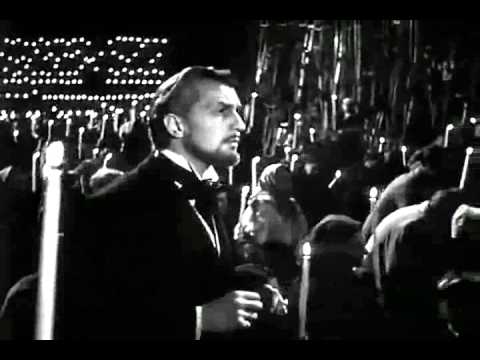


The Song of Bernadette is filled with beautiful, haunting moments, elevated by fine acting, a credit to director Henry King. Vincent Price, primarily known for his villains, shows a greater depth as The Imperial Prosecutor. His final scene is deeply moving. Returning from an informal five-year exile, he wanders through the silent throng of believers, and in voiceover Price delivers a gentle but passionate soliloquy about how even as he knows he is dying, he cannot bring himself to believe, only to fall to his knees, asking softly out loud to Bernadette, the girl he persecuted, to pray for him. It is difficult to impossible not to become emotional at this scene, a hard man breaking to fear and hope.

Jones' performance is sublime. Her Bernadette is beautiful, one who is honest, simple, and pure. She is guileless, incapable of lying or denying what she sees and hears. Her story never changes, no matter how many times she's asked about it or how much pressure is placed on her from her family, friends, Church or State to do so. Bernadette never claims to have seen The Virgin Mary, only a beautiful Lady.

Jones invokes the grace and quiet strength of Bernadette, and that is what makes her performance all the more extraordinary and brilliant. Jones portrays Bernadette not as holy or aware of her importance to others, but instead as graceful, and that is what makes us love Bernadette: not her visions, but her true heart and noble character.

The Song of Bernadette is also highlighted by Alfred Newman's Oscar-winning score, a rich and haunting one that lends to the spirituality and reverence of the subject matter.

We can trifle over little flaws in historic accuracy or its two-and-a-half hour length, but on the whole The Song of Bernadette is a quiet, beautiful film about a gentle girl and the power of faith. 

As I saw the film, I was reminded of the words of Christ, who said to the woman who touched his garment, "Your faith has made you well" (Mark 5:34). I also thought of 1 Corinthians 1:27 where Paul states, "But God chose the foolish things of the world to shame the wise; God chose the weak things of the world to shame the strong". Bernadette had little education, let alone comprehension of such concepts of the Holy Trinity or the Immaculate Conception, but her quiet strength and dignity metaphorically overthrew the powerful forces against her. 

The Song of Bernadette begins with a familiar quote: "For those who believe, no proof is necessary; for those who do not believe, no proof is possible". It may be that you may come to The Song of Bernadette as a believer or a non-believer, but with excellent performances and an involving story, those with or without faith will find The Song of Bernadette an excellent experience.

1844-1879


DECISION: B+

Wednesday, January 6, 2010

Avatar: A Review (Review #31)

AVATAR

What Happens When You Mix Green & Blue?

The way some Avatar fans talked about the film, you'd think it was one of cinema's great turning points. It was hailed as to the film that was to be to science-fiction films what Citizen Kane was to cinema itself. Decades in the making, is Avatar worthy of both the wait and praise? In certain respects, yes, but perhaps the adulation bears closer examination.

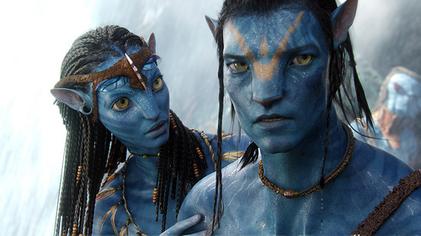
Paralyzed Marine Jake Sully (Sam Worthington) has been chosen to replace his twin brother on Pandora, a distant planet that contains the rare and valuable mineral found here: unobtanium. He is part of a plan to infiltrate the indigenous population called the Na'vi and learn their ways. Humans cannot breathe the Pandoran air, necessitating avatars: a human/Na'vi hybrid controlled by the individual's mind that will allow humans access to Pandora.

Assigned to protect Dr. Grace Augustine (Sigourney Weaver), they're attacked by a native animal; Sully gets separated and encounters Neytiri (Zoe Saldana) a Na'vi woman. He soon becomes part of their tribe, which delights the military/industrial complex. The evil corporate head Parker Selfridge (Giovanni Rivisi) sees a great opportunity in Jake, whom he hopes will be a spy for them to crush and exterminate the Na'vi. 

As Jake spends more and more time with the Na'vi, his alliance and sympathies start shifting to them, culminating in him and Neytiri falling in love. Not wanting to wait anymore for Jake to either negotiate and suspecting his motives, the military/industrial complex decides to move in, leading to an epic battle for control of Pandora.


It's curious that what Robert Zemeckis cannot do with motion-capture, James Cameron can. My theory is that the former wants it to look realistic while the latter wants it to look fantastical. Cameron sees stop-motion as a way to create worlds, Zemeckis as a way to recreate worlds. 

Cameron has done an incredible job creating Pandora, this extraordinary visual world which audiences are fully immersed in. There are incredible images of sheer beauty on Pandora, and they are created so well you don't really question them as being anything other than realistic. The visuals alone are worth the cost of admission.

Having said that, I had major problems with the story. The first big problem was that this story isn't very original. As I watched, I kept flashing back to primarily Dances With Wolves (Dances With Na'vi?), though I also saw elements of Braveheart and at one point, The Ten Commandments. You see the overall script and think that otherworldly universe aside, Avatar is really a collection of past films merely set in another world

Even in the case of the Na'vi, the stereotype of the native population as being ethereal, spiritual, at one with Nature & The Universe can't or won't be shaken. The Na'vi are all mystical enlightenment as opposed to the military/industrial complex about to ravage their homeland. If one found the indoctrination from Captain Planet a bit on the obvious side, Avatar does them one better.

While that can be expected, other bits may come as a shock. Near the end of the film, as the Na'vi and their human associates prepare for the onslaught from the military/industrial complex, Trudy Chacon (Michelle Rodriguez) comments something along the lines of how she wishes her mission wouldn't involve "martyrdom". At the very least Cameron is completely oblivious to how loaded this word and phrasing sound. While I didn't gasp I was surprised. Right after that, Colonel Quaritch (Stephen Lang) is rallying his troops for the final assault, he uses the phrase "preemptive strike" (which is rather ridiculous since they've already invaded Pandora so the Na'vi know they're there) and then tells them, "We will fight terror with terror".

The attempts at parallels between Pandora and Earth are a bit heavy-handed. One gets the sense that Cameron is attempting to draw comparisons between the invasion of Pandora and Iraq, which I think may either age poorly or hopefully be forgotten.

There's a shocking lack of originality among the visual splendor. The Na'vi seems shorthand for "native". Unobtanium is close to "unobtainable". Parker Selfridge could be read as "Selfish".  Leaving aside for the moment the film as a whole, one would have hoped Cameron would have created more original terms.


The acting is also an issue. There's a push to make Sam Worthington a major star, but after the frightful Terminator: Salvation and this we see Worthington is wooden, incapable of demonstrating human emotion. I'm beginning to wonder if he's more an Action Star than an Actor since his roles tend to be the same. Even that could be forgiven if not for the fact that he isn't compelling as an Action Star to begin with. 

I noticed that his native Australian accent was more pronounced here than in Salvation. I admit to taking it for granted that he was playing an American since all his cast-mates speak with American accents, but I thought it was odd to hear Sully sound as if he were more New South Wales than New England.

Particularly bad was Giovanni Ribisi as Parker Selfridge. He plays the evil industrialist with no variety at all, a mustache to twirl short and so cartoonishly over-the-top. Out of the whole cast, Sigourney Weaver saves herself because she is a first-rate actress who can play just about anything with great deal of conviction.

I don't take away from Avatar's extraordinary achievements in visuals, in taking us into a world that has no limits except one that an imagination will impose. I do wish that the story itself weren't so loaded with Environmental Movement cheerleading. Perhaps Avatar is a harbinger of things to come. That I welcome gladly.

Avatar is a visually splendid but surprisingly empty film. It's there to enjoy at the spectacle of it all, but not so much the story itself. 

DECISION: B-

Saturday, January 2, 2010

Did You Hear About the Morgans?: A Review (Review #30)

DID YOU HEAR ABOUT THE MORGANS?

Yes, I Heard.  How Awful...

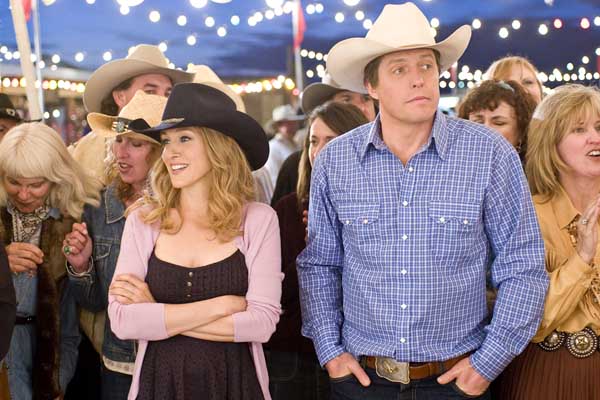
While watching Did You Hear About the Morgans? I heard two things: laughing audiences and the Green Acres theme song playing in my head. When the female lead goes on about how she couldn't relocate anywhere outside New York City, Eva Gabor going on about how she gets allergic smelling hay might as well been playing in the background.  I get the feeling that writer/director Mark Lawrence may actually have been inspired by the show to come up with the film's silly premise.

Meryl and Paul Morgan (Sarah Jessica Parker and Hugh Grant) have been separated for three years after Paul's one-night stand. After a reconciliation dinner they witness a murder. To protect them, they are sent by the Witness Protection Program to the the unchic Ray, Wyoming, where the culture clashes bright forth lots of laughs. 

If you are a more forgiving person, you know exactly what and how things will play out. I guess I'm not that forgiving, as Did You Hear About the Morgans? elicited nothing other than eyerolling.

Grant hasn't changed his persona or performance manner apparently since Four Weddings and a Funeral. It's the exact same performance in a pretty similar role: befuddled WASP.  His halting delivery, his fumbling body movements, it's almost to where one wonders whether he can act or just decided to give up and play "Hugh Grant" and cash his checks. 

I think it's clear that Parker took this as rehearsal for her next turn as Carrie Bradshaw: again, no different from her series. None. It was just Carrie in all but name.

While a lot in the film can be forgiven, perhaps what makes Did You Hear About the Morgans? so bad is that the Morgans as a pair so horrible is their cluelessness and vapid narcissism. When they arrived in Wyoming, they are taken by the sheriff and his wife (Sam Elliot and Mary Steenburgen) to the Bargain Barn, the local version of Costco or Sam's Club. They are amazed to find people actually pay $9 for sweaters! Only $9! There are even such things as two-for-one specials inside this massive store! Honey, we've discovered a whole new galaxy.

For people whose life experiences have never taken them outside Connecticut, Republican meat-eating, John Wayne movie watching people who shoot guns and don't commit crimes is astonishing. It's beyond cliché, it's damn insulting to both the Morgans and the good folks in Ray. It's as if the screenplay came from a good sixty years ago. It makes one wonder just HOW something like this got a green-light.

Elliot and Steenburgen come off a lot better in the film even if their parts are small because they are more believable as actual people. Yes, there were a few funny moments (though I wonder if seeing Grant sprayed with bear repellent isn't a little sadistic) but not enough to get over the clunky nature of the story or the sad state of affairs with the main character's acting. 

I found myself more intrigued with the story of the Morgan's assistants (Jesse Liebman and Elizabeth Moss) than in their employers and in Sheriff and Mrs. (Deputy) Wheeler than their charge.

In fact, my mind pursued a curious route. I thought about the possibilities of making a film about the assistants rather than the Morgans. I thought, how's this for a plot: throw out the murder angle (done to death--no pun intended). You make the sheriff and his wife actual cousins of Meryl, and she and Paul decide to rescue their marriage by going on a second honeymoon to their ranch. You have the culture clash and the romance without bothering with hitmen, as well as give them a legitimate excuse to be out of town. Or how about this: the Morgans leave under mysterious circumstances, leaving their assistants Adam & Jackie to deal with their various businesses. Can they do it? Do they fall in love in the process? Yes, maybe it ain't the most original of plots, but then again, neither is Did You Hear About The Morgans?

What you end up with are two people you never really like, in a situation you don't really believe, working on a film you really don't laugh a lot at. If you've heard about the Morgans, you've heard them all.

The Essentials: An Introduction

March 2021 Update: Sadly, my friend Fidel Gomez, Jr. died in 2017. It is an immense loss that I still feel. However, I think it would serve as a good memory to continue our long-hoped for project. 

A few years ago, my friend Fidel Gomez, Jr. and I started working on a project. It was a simple one: write about 52 films every person should see. The total came from the number of weeks in a year, to show that watching a great movie did not require hours and hours of one's time.

We wanted to have a wide variety of films: not just a list of "important" films but films from all sorts of genres. We found there are people who are terrified of musicals, of documentaries, of silent films. We also found there are some people who dismiss action films and/or Westerns and wouldn't consider them worthy of their time. 

These two types are the real film snobs: not the ones who hold up Cleopatra to Citizen Kane, but those who declare a movie to be bad without even seeing it merely because they don't have subtitles or have people singing and dancing. Fidel & I never considered ourselves film snobs. Just because we love the work of Akira Kurosawa or Orson Welles didn't mean we would automatically reject Die Hard or The 40-Year-Old Virgin. In short, we believed the problem wasn't with the movie itself, it was with the perception of the movie.

In the time we knew each other, I think both of us expanded each other's views on certain films & filmmakers. I learned to love Werner Herzog and Federico Fellini with the passion that Fidel had, and he gained an appreciation for the work of my beloved Alfred Hitchcock and John Ford. Of course, sometimes we still couldn't agree: I still find Stanley Kubrick an acquired taste and he was still resistant to Buster Keaton. That is what happens when you step out of your comfort zone and give these films a chance, going in with an open mind and leaving your notions out of the viewing.

This is what we wanted with The Essentials: 52 (More or Less) Films Everyone Should See. Fidel & I were very concerned that too many good movies were being ignored or forgotten because people wanted to stay within what they knew. We also feared that truly great films were being sacrificed in the place of truly awful work.

When we compiled our two lists, the ones that appeared on both automatically went in. It was just a matter of sorting out which ones would go in and which ones would go home. Sometimes we agreed real quickly, sometimes we argued fiercely until one or the other gave in, and sometimes we were reduced to flipping a coin because no matter what we said we couldn't convince the other. Eventually, we came up with 52 titles that we could live with. Now, in total there are 58 films altogether, but because we consider some of them to be part of one story we skated by with that reasoning to justify it being 52.

We went through all genres: documentaries, musicals, silent films, animation, comedies, action, science-fiction, foreign-language, and some that one or the other just loved for itself. Overall, we both thought it would be a good way to introduce people to films and directors and stars we think are worth your time. Eventually we used this as a standard to judge other films. "Would you make it an Essential?" one would ask the other if he thought it was really great. "That will never be an Essential," would be code for "What a lousy film".

As it is, Fidel Gomez, Jr. has disappeared from my life. I have no idea what happened to him after he said he was leaving to 'visit' his sister in Colorado. He may have moved up there permanently but he left no forwarding address or phone number. I miss him terribly. I assume he's still alive. In any case, I decided to go ahead and write about the films we came up with. If he is still alive, I'd love to see a Volume 2 of The Essentials. If he isn't, I hope to honor him by completing the work we started together.

The Essentials Collection

Friday, January 1, 2010

The Best of 2009 So Far

Update (December 2016): As I saw more films from 2009, I opted to revisit my 2009 List and rework it to make things more in line with my actual list.
Update (March 2021): I am reworking and re-cataloging all reviews, so this Best of 2009 List was current at the time originally written and reedited. A second list will be published once the cataloging is complete.

Well, it's a New Year, so we feel obligated to trot out the best films of 2009. This won't be easy, since I didn't see that many films and some good ones I haven't written a review for yet. Therefore, I ask you to indulge me, but at least I figure they will serve as teasers for the future when I DO write on them. Here they are in descending order:

Number 10:
The Princess & The Frog

A return to traditional 2-D animation that was once the hallmark of the Disney Company, The Princess & The Frog not only does a wonderful thing by creating the first African-American Disney Princess in Tiana, but also by making Tiana a more career-oriented character.  The film also mixes the varied musical styles of Louisiana: jazz, zydeco, Cajun, and gospel, into a wonderful gumbo that makes this film a delightful entry to the Disney Canon.

Number 9:
Star Trek

I have as of today not seen a single episode from the original Star Trek series or its various adaptations. I recently received a Best Of Classic Star Trek as a Christmas gift, so I will watch, though I plan to make Spock's Brain the first one I watch. Isn't it the Citizen Kane of Star Trek episodes? In any case, the series had been floundering under its own mythology and it took this "reboot" to make the saga fun again. This film is perfect for the long-time Trekker/Trekkie as well as a great introduction to someone who has little to no knowledge of the saga.

Number 8:
Notorious

Biopics can be a tricky thing, but Notorious, the life story of Christopher Wallace, aka Notorious B.I.G. aka Biggie Smalls, is a fascinating portrait of a man rising above his circumstances while at the same time never quite escaping them.  With strong performances by the cast, we get a sympathetic portrait of an artist gone too soon.

Number 7:
An Education

An Education might not be strictly a biopic, but this portrait of a young woman becoming herself through experiences both physical and mental has a brilliant performance by Carey Mulligan.  It is a study of the growth of an individual, a portrait of a girl who becomes a woman in every sense of the phrase.
Number 6:
The Hangover

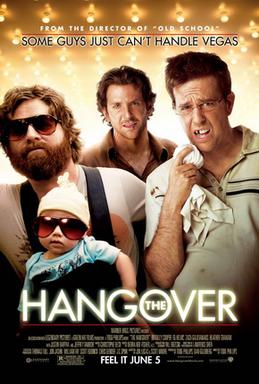
You take a somewhat clichéd situation (four guys go on a bender in Las Vegas) and you take it to the most extreme, outrageous level (a baby in the closet, a tiger in the bathroom, the groom missing). You then follow these average guys as they try to sort out the previous night and throw in crime lords and Mike Tyson into the mix, and you give it an actual logic (albeit a completely insane logic) and you get a first-rate comedy. What is especially good is that you relate to the characters...though hopefully not the situations. When a film can have you laughing during the closing credits, you've got a great film on your hands.

Number 5:
The Young Victoria

Perhaps I have a weakness for biopics, and ones involving royalty.  Don't let what might be thought of as a dry history lesson with elegant costumes (though they did win the film the Academy Award for Best Costume Design as royal-based films tend to).  The Young Victoria is an elegant film about the machinations and struggles the heiress to the British crown endured to reach a level of happiness with her beloved Prince Albert.  With excellent performances all around, The Young Victoria becomes a tour de force of passions within the confines of monarchy.

Number 4:
Michael Jackson's This Is It

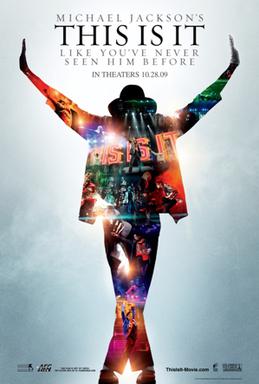
The weirdness that surrounded Michael Jackson was like a fog that hid his enormous talent. The trials, the surgeries, the spending sprees, the baby dangling, the accusations, all overshadowed just what a first-rate singer/songwriter and dancer he was. One always wonders if things had gone differently, if he were able to have been pulled into reality instead of his "Never-Land", things would have been so much better for everyone concerned. As it stands, This Is It is his artistic final will and testament, showing that he still had exceptional abilities. A terrible loss, especially for his children. I don't believe that genius and madness have to be related, but Jackson seems to have lived that...and died with that.

Number 3:
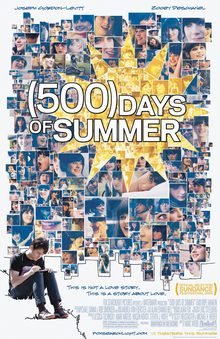
(500) Days of Summer

Love is a many-splendored thing. Love hurts. Love is strange. I'm sick of love. People will say we're in love. I'll never love this way again. I will always love you. Love was when I loved you. This can't be love. Is this love, that I'm feeling? (500) Days of Summer is a love story that is honest and true. Anyone who's been in love or been in love with love or has fallen in and out of love can relate to the story of a guy and a girl who go through the ups and downs of an affair to remember, for good or ill.


Number 2:
Precious

Precious is one of the most simultaneously heartbreaking and uplifting films. As we watch the title character struggle with horrific abuse and neglect, condemned to die due to the AIDS virus, we still finding herself freed from the misery of her world through her own will. With brilliant performances by newcomer Gabourey Sidibe and Monique, Precious is haunting, hauntingly beautiful, and emotionally impacting.

Number 1:
UP

Few films have been this moving, this funny, this brilliant as the latest Disney/PIXAR film. It may be old hat, but it's true: I laughed, I cried. UP hit you on a deeply emotional level, but it also was wildly funny and endearing and touching and well-written, even well-acted. Animation is not for kids, and neither is UP.  It was a tough battle between two emotionally impacting films, but by the thinnest of margins, UP is still my Best Picture of 2009.

Well, there it is. These are some of the films that I saw this year. Perhaps there were better films that I missed at the time of the writing (I think The Hurt Locker, for example), but I can't judge by reputation, only by what I see. I hope that 2010 is a great year for everyone concerned. I hope that films get better, people stop remaking films, come up with original ideas, not treat the audience like zombies, and that movies stop being entertaining only and start being entertaining and good.


2009: Some Odds and Bitter Ends

Thursday, December 31, 2009

Personal Reflections on Sherlock Holmes


When I was in middle school, I was into Agatha Christie and Sir Arthur Conan Doyle.  I loved mysteries and the Sherlock Holmes, Hercule Poirot and Miss Marple stories were some of my favorites. I admit thought that Holmes was my favorite. He was a hero: someone who used reason and logic to uncover great mysteries. 

I did my best to model myself after Holmes. I aimed to be a cold, thinking machine. I played the violin. Mercifully I didn't take Holmes' cocaine or morphine habits, so even I had my limits. Even today, I adopt the adage that if it's of no use to me I don't bother learning something. That I think has led me to make some ridiculous mistakes, but I digress.
 
In time, my passion for Holmes dissipated, but never my affection for him. I'm too much of a soft touch to be totally impassionate (though I still remain a bit distant emotionally), and I've long since hung up the fiddle & bow.

It was inevitable that I would find and seek out the various television and cinematic interpretations of Sherlock Holmes. There have been several interpreters of Conan Doyle's best-known creation on stage, screen, and television, from the comedic (Without a Clue) to the faithful (the Granada television series). Out of all the actors who've given life to Holmes, three versions now come immediately to mind: Basil Rathbone, Jeremy Brett, and Robert Downey, Jr.

I figure that when people think "Sherlock Holmes", they see Rathbone. He made fourteen pictures as Holmes with Nigel Bruce as Watson. I'll say that he most definitely looks the part. His face shows a keen intelligence with a touch of haughtiness. He also had the costume most associated with Holmes: the deerstalker cap and cloak. 

While I haven't seen many of his films, there was always an element in them that I always disliked: Nigel Bruce's interpretation of Watson. He made him into this fat, fat-headed tottering old imbecile who couldn't think his way out of a paper bag. He never struck me as right for the part of an action-oriented war veteran and respected doctor. Instead, Bruce made Watson a figure of ridicule, and to be frank the good doctor's reputation has only recently recovered. Watson is still seen in the contemporary mind as an idiot, and that's a terrible disservice to the stories themselves.

I look at Nigel Bruce's version of Doctor Watson and I think this is where the idea of "Watson as boob stooge" originated. Just as many future Sherlock Holmes find themselves in Rathbone's shadow, so do future Watsons. 

I also never liked the idea that Holmes lived in the present-day rather than Victorian & early Edwardian Britain. In retrospect I can see why it was done, but somehow to me a bit of magic was lost. Similarly was the decision to create stories for them rather than adapt the original ones. It all boiled down to money, as it was cheaper to make current-day films than period films. Despite that however, I think the Rathbone films serve as a decent introduction to the stories, minus Nigel Bruce.

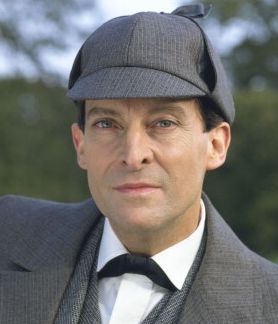
I came along when Granada Television brought the series to the small screen. Jeremy Brett was not the first to play Holmes on television, but to my mind, Brett is the Sherlock Holmes. It was Granada Television's intention to make all the stories and novels, but tragically, Brett's death prevented this. No one to me, except Rathbone in a close race, can match him. 

His Holmes was obsessed, sometimes uncouth, but always on the side of right. He showed Holmes to be someone of fierce intelligence but also more human than before. The adaptation of The Devil's Foot features as part of the story Holmes fighting, and ultimately quitting, his cocaine habit, and is one of the few times that I can remember Holmes ever referring to his associate by his first name of John. It is a credit to Brett that he asked for Holmes to face his cocaine addiction due to his concern that children who would watch would be influenced to take drugs. 

In The Empty House, we can see the humanity Brett brought Holmes. The Great Detective apologizes for playing a trick on Watson and tells him that while he is as trustworthy as Holmes' brother Mycroft, "you have a kinder heart".

David Burke and Edward Hardwicke also do more justice to Watson. In the series, he's hardly stupid, albeit not as bright as Holmes. They are men with guns and are not afraid of a fight. Again, in The Empty House, it's Watson that comes to Holmes' rescue. Watson even gets his own: in one story (I can't remember which), Watson ends the story by telling him, "Elementary, my dear Holmes". 

If it were not for Brett's death, we could have seen what could have happened once all the stories had been made. There is one caveat to Jeremy Brett: I wonder if his interpretation consumed him emotionally and psychologically.


That bring me to the most recent Sherlock Holmes: Robert Downey, Jr. To my mind, he did a wonderful job in making Holmes more action hero than intellectual machine as I think that was the intent. It is a Guy Ritchie film. Still, I can't help think that it all could have been better. 

This is prime example of when you give a good actor a good part but in a lousy movie. You keep thinking he could do more, show why he can solve these mysteries in a rational manner rather than being all rush-rush-rush, quick-quick-quick. He falls short of Brett and Rathbone, but if he continues with better stories and better direction he could reach their level.
 
Jude Law's Dr. Watson, on the other hand, is a mile high better than Bruce's. Here, he's almost totally action and nobody's stooge. Law makes his Watson a man of intelligence, action, and loyalty, things that he was in the stories. It's hard to believe Nigel Bruce could knock down a door to get in or to tell Holmes to stay out of his private life. I suppose that the best qualities to both Downey, Jr. and Law is that they are younger than the team of Rathbone & Bruce or of Brett and Burke/Hardwicke. At 44 and 37, they show a more youthful duo than either Rathbone or Bruce, even though Rathbone was only three years older than Downey and Bruce was actually Downey's age when they started their films.

Out of the limited number of Sherlock Holmes I've seen Jeremy Brett is the standard I measure all others. I don't think any future Holmes will measure up to his interpretation. I can hope that the new Sherlock Holmes despite my dislike of it as a film will introduce people to the novels & stories, eventually the television series. I fear that is a vain hope, since reading for pleasure seems to be a dying art. Still, I hope.


**February 2021 Update: Since the 2009 Sherlock Holmes premiered there have been more Pretenders to the Throne. The BBC released the television series Sherlock, with Benedict Cumberbatch as a modern-day Sherlock Holmes. Likewise, CBS had Elementary with Jonny Lee Miller in the role. I know many who think Cumberbatch is the best Sherlock Holmes of All Time, but I never warmed to him. It does not help I hated Sherlock is in my view downright nonsensical. It's to the point where even the biggest Sherlockian thought Series/Season Four was a total mess.

Elementary lasted seven seasons, building a slow and steady case for being the superior of the two modern-day versions. It's most worrisome aspect, that it gender-swapped Dr. John Watson for Dr. Joan Watson (Lucy Liu) has proven to be one of its stronger elements. For all the fears of romance between Holmes and Watson, there's more erotica about Sherlock's John Watson and Sherlock than Elementary's Joan Watson and Sherlock. 

As time has gone on, I've learned and seen more Sherlock Holmes interpretations, which I look forward to reviewing and cataloging. 

Wednesday, December 30, 2009

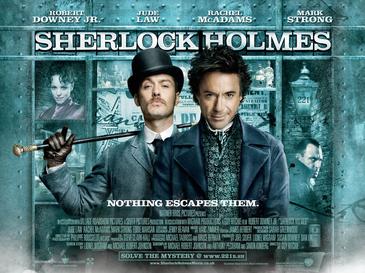
Sherlock Holmes (2009): A Review (Review #29)


SHERLOCK HOLMES

Quite Baker Street Irregular...

Guy Ritchie's version of Sherlock Holmes is if someone had read various Sir Arthur Conan Doyle novels while drunk and attempted to retell it while still drunk. Sherlock Holmes has a lot of action but hardly any sense. 

Sherlock Holmes appears to take elements from both The Canon and Sir Arthur's life for its story. There's Irene Adler (Rachel McAdams) from A Scandal in Bohemia. There are bits from another story, The Sussex Vampire, which has the element of the undead. You could even see bits of how in real life Sir Arthur was very much into spiritualism & the supernatural and a hint of The Lost Symbol: the secret societies, the dark rituals. 

The sinister Lord Blackwood (Mark Strong), has been murdering women in some vaguely occult rituals, is caught, and executed. Within hours however, he has apparently returned from the dead. This surprises Dr. John Watson (Jude Law), who not only helped capture him but was the attending physician at Blackwood's execution. Blackwood's ultimate plan is to take over the world (or at least the British Empire) in some plot that involves knocking out any opponents in Parliament with poison gas. 

Into this mix comes Sherlock Holmes (Robert Downey, Jr.), fascinated by this bizarre case. Holmes not only has to fight Lord Blackwood, but American criminal and adventuress Irene Adler. His frenemy with benefits is somehow involved in all the machinations, though on whose side is a mystery. This mystery doubles as we know she is working for the mysterious Professor Moriarty, who might be playing both sides.


I figure that the majority of the audience has never read a Sherlock Holmes story. Instead, they saw it for what it was sold as: an action film with cool fight scenes, story secondary. Perhaps the mind boggles at Guy Ritchie tackling the legendary literary character, but it's really not a shock at all. 

Ritchie has a passion for the criminal underworld, and Victorian London offers him a chance to revel in his frenetic style while "branching out" by having a different time period. Perhaps this is why I cannot warm up to him as a filmmaker: he keeps making the same film over and once more. It's one thing to make films in the same genre: Ford was a master at Westerns, Hitchcock of the suspense thriller. However, they told different stories and by and large tried to keep the story at the core of the film, not their cinematic style.

Ritchie, on the contrary, is all about style. You can tell that straight from the get-go, when Holmes explains how he's going to knock out someone and you get to see it in slow-motion, and then again at regular speed. This he does twice during the course of the film, and oddly he doesn't seem to do it that much when he explains how he reached his correct deductions. It's as if Holmes would be wasting his time explaining how he solved a mystery because it would get in the way of the physical action.

That is only a symptom of the poison coursing through Sherlock Holmes. The real disaster is the story. It's a damn idiotic one.  Four people came up with this (Michael Robert Johnson, Anthony Peckham, and Simon Kinberg with the screenplay, Johnson and Lionel Wigram with the story), yet it doesn't look as if they actually read the source material.

They didn't have to go through all this patent nonsense of quasi-Satanic rites and Masonic-type shadowy organizations. It's as if they didn't trust the material and felt it needed more fighting, less thinking to make it palatable. Perhaps they wanted to take some of the stuffing out of old material, but went about it the wrong way. It would have been easier to introduce their Holmes with creepy undertones and stay with Canon by adapting The Sign of Four or The Hound of the Baskervilles

I don't blame them for wanting to come up with an original story, but it was needlessly complex and convoluted to the point where it becomes flat-out idiotic. It also violates one of one of my Golden Rules of Film-Making: Never End Your Movie By Suggesting There Will Be A Sequel. Here, they used it without needing it. Why couldn't Professor Moriarty be the villain and escape? There would have had the suggestion of a sequel without having us go through all this nonsense.

The performances were far better than the movie itself. Robert Downey, Jr. is having a renaissance in his career, and his Sherlock, while flawed by relying more on muscle than on brain, still manages to project a quick witted, obsessed consulting detective. Jude Law's take on Watson is first-rate, less the idiot stooge and more an intelligent man who doesn't mind a good fight. I can't recall if he had the flaws of a gambling addiction in the stories, but they did right by having him be an Afghan veteran which he was in the stories. Curious, how some things remain the same more than a century later.


The interplay between Holmes and Watson, which was more in the vein of a buddy comedy, had a quality to it which made it believable that these two had an affection for each other that neither fully acknowledged. Mark Strong rose above the silliness of his Lord Blackwood, delivering a performance that almost makes you believe he truly is some sort of Satanic entity. 

The one name that comes off badly in this is McAdams: pretty to look at, but adding little to nothing to the actual story, what there was of one.

The fight scenes were done in Ritchie's frenetic pace, and if you like that you might enjoy them. One can't help but wonder, however, if there weren't too many fights that went on too long, stretching the movie needlessly. 

Hans Zimmer's score was rare in that it was quite pleasant. He's never been a personal favorite but in Sherlock Holmes he gave it an offbeat, almost playful score that suggested a genuine romp the film didn't deliver. Perhaps there is something wildly wrong when you pay more attention to the score than to the screen.

My sense is that Sherlock Holmes is not a film but a franchise starter, with an inevitable sequel. They'll ignore all the good work Conan Doyle wrote and decide the best thing to do is make Holmes an action hero rather than the cold, logical, thinking machine he's described at.

Of course, this is done not for those who've read and loved the stories, but for those more inclined to G.I. Joe: The Rise of Cobra than The Sign of Four. I have a great deal of affection for Sherlock Holmes, the character. I was tempted to do something the great detective would not do: let his emotions overrun his reason. While Downey, Jr. and Law make Sherlock Holmes well-acted, the movie itself is quite, yes I'll say it, elementary.