One of the terrible effects of the massive winter storms in early February was the fact that we had major power outages and were virtually under house arrest. As a result of the ensuing chaos, I was unable to get to my own selections for the Best of 2010. At last, now I am able to get down to my list. Now, I don't have a name for these endeavours (any suggestions would be nice: the closest I got was Letters of Transit, but frankly, that just sounds silly).
Therefore, without further ado, let's get down to My Nominees.
BEST PICTURE
The Fighter
Inception
The King's Speech
Toy Story 3
True Grit
BEST ACTOR
Jeff Bridges: True Grit
Aaron Eckhart: Rabbit Hole
Colin Firth: The King's Speech
James Franco: 127 Hours
Ryan Reynolds: Buried
BEST ACTRESS
Annette Bening: The Kids Are All Right
Nicole Kidman: Rabbit Hole
Diane Lane: Secretariat
Natalie Portman: Black Swan
Hailee Steinfeld: True Grit
BEST SUPPORTING ACTOR
Christian Bale: The Fighter
Andrew Garfield: The Social Network
Joseph Gordon-Levitt: Inception
Jeremy Renner: The Town
Geoffrey Rush: The King's Speech
BEST SUPPORTING ACTRESS
Helena Bonham Carter: The King's Speech
Loretta Devine: For Colored Girls
Barbara Hershey: Black Swan
Mila Kunis: Black Swan
Melissa Leo: The Fighter
BEST DIRECTOR
Ben Affleck: The Town
Darren Aronofsky: Black Swan
Tom Hooper: The King's Speech
Christopher Nolan: Inception
David O. Russell: The Fighter
BEST ORIGINAL SCREENPLAY
Black Swan
Buried
The Fighter
Inception
The King's Speech
BEST ADAPTED SCREENPLAY
127 Hours
Never Let Me Go
The Social Network
The Town
True Grit
BEST EDITING
127 Hours
The Fighter
Inception
The Town
True Grit
BEST CINEMATOGRAPHY
Buried
Black Swan
Inception
The King's Speech
True Grit
BEST ART DIRECTION
Burlesque
Inception
The King's Speech
Scott Pilgrim Vs. The World
True Grit
BEST ORIGINAL SCORE
Inception
The King's Speech
Never Let Me Go
Tangled
TRON: Legacy
BEST ORIGINAL SONG
Show Me How To Burlesque (Burlesque)
You Haven't Seen the Last of Me (Burlesque)
Give In To Me (Country Strong)
I See The Light (Tangled)
Shine (Waiting for Superman)
BEST COSTUME DESIGN
Black Swan
Harry Potter & The Deathly Hallows Part I
The King's Speech
True Grit
BEST MAKEUP
127 Hours
Black Swan
Harry Potter & The Deathly Hallows Part I
The Wolfman
BEST VISUAL (SPECIAL) EFFECT
Inception
Iron-Man 2
TRON: Legacy
BEST DOCUMENTARY FEATURE
Inside Job
Joan Rivers: A Piece of Work
Oceans
Waiting For Superman
BEST ANIMATED FEATURE
Despicable Me
Tangled
Toy Story 3
Now, it should be noted I only nominated those which I have seen and written of as of today, so if something you think should have been included, keep that detail in mind. I would have liked five nominees in every category but alas, sometimes I couldn't find enough.
Let's face it: a lot of 2010 was absolute junk. It's only in the last month or so of the year that a vast majority of the good films came our way, and then they took longer to play here in El Paso because this is a second or even third-tier market. We West Texans, especially in a majority Hispanic city, wouldn't be interested in dramas about King George VI or loony ballet dancers, the mindset goes.
We'd much rather watch things like Takers or Little Fockers, you know, things more at our intelligence level. Note The Sarcasm.
Well, by Saturday I'll announce my winners. Suggestions and opinions always welcome.
Sunday, February 20, 2011


Friday, February 11, 2011
The Eagle (2011); A Review
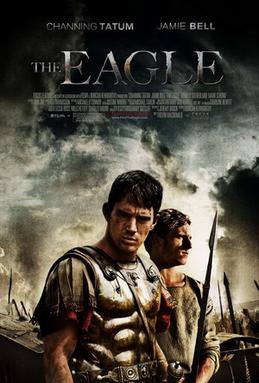
THE EAGLE
It Is Dangerous To Join A Celt...
It just may be that there simply is no getting away from it: every Roman-era film appears to be trying to channel Gladiator. Instead of going back to do some good action, nifty fight scenes, and grandiose dialogue about Empire, recent Roman epics go for some vague, mystical feel, with curiously Middle Eastern-style music and rather glum leads.
The Eagle, if it's aiming for those standards, achieves them remarkably well. If, however, it aims for anything else: be it entertainment or insightful commentary on friendship or honor, it missed by a Roman mile.
Marcus Flavius Aquila (Channing Tatum) is the son of the commander of the Ninth Legion, who twenty years earlier disappeared, along with their eagle standard, deep within the now-Scottish Highlands. Marcus, now a commander in his own right, takes command of a fort in Britannia. The native population attacks, and while Marcus manages to rescue his men he is severely wounded. He is taken to the villa of his uncle Aquila (Donald Sutherland), conveniently also in Britain, I might add, but Marcus is honorably discharged from service due to his injuries.
While at a gladiatorial event Marcus admires the courage of a Celtic slave (Billy Elliot, I mean, Jamie Bell). Marcus gets the crowd to spare the slave's life, and Uncle Aquila buys said slave for Marcus. This slave, Esca, is none to pleased to be in Marcus' service, but since he saved his life he pledges loyalty. Now, things would stay as they are but for rumors that the Ninth Legion's eagle has been spotted deep within the Highlands, beyond Hadrian's Wall. Marcus, desiring to restore his family's honor, decides to venture beyond the edge of the Roman world, taking Esca as his guide/translator/slave. Again, Esca is none too pleased with this arrangement, but he does as he's told.
While on their journey, they meet Guern (Mark Strong) who survived the massacre of the Ninth and has 'gone native'. He tells Marcus that Esca is a member of one of the tribes that took part in the massacre, and a little after both are captured by the Seal People which I confess to hearing as the Sea People but I kept calling the Painted People for obvious reasons. Now the tables are turned: Esca is now the master, and Marcus is the slave. In a native ceremony Marcus sees the Ninth Legion's Eagle, and with the surprise help of Esca retakes it. Now it becomes a race to evade the Seal People and make it back to the Roman world.

While on their journey, they meet Guern (Mark Strong) who survived the massacre of the Ninth and has 'gone native'. He tells Marcus that Esca is a member of one of the tribes that took part in the massacre, and a little after both are captured by the Seal People which I confess to hearing as the Sea People but I kept calling the Painted People for obvious reasons. Now the tables are turned: Esca is now the master, and Marcus is the slave. In a native ceremony Marcus sees the Ninth Legion's Eagle, and with the surprise help of Esca retakes it. Now it becomes a race to evade the Seal People and make it back to the Roman world.
Again, a film like The Eagle should not be held up to a standard of something like a Ben-Hur. The latter is an epic, and it involved the struggle between two men who at first loved each other only to see their love turn to bitter rivalry. The Eagle appears to have that in reverse: two men, or at least one man who hate each other learn to value each other. The problem is that Kevin Macdonald (no relation, at least known, to one of the Kids In The Hall with the same name) never got us to care all that much about Esca and Marcus.
He certainly never made us believe that they cared about each other. For most of the film, we never got a sense that Marcus and Esca grew as people or in their relationship to each other. In short, we never see them as friendly towards each other, let alone friends. Their relationship isn't based on anything because Esca spends so much time scowling we can't imagine he has any other emotion save for barely masked hostility for Marcus. This makes his aiding Marcus near the end quite puzzling because it comes from left field. As for Marcus, he appears so interested in the eagle standard that he never seems interested in sharing words with his slave. Therefore, if neither of the leads appears to have any interest in what the other is thinking or be able to read each other, how then can we believe that they can make the decisions they make?
He certainly never made us believe that they cared about each other. For most of the film, we never got a sense that Marcus and Esca grew as people or in their relationship to each other. In short, we never see them as friendly towards each other, let alone friends. Their relationship isn't based on anything because Esca spends so much time scowling we can't imagine he has any other emotion save for barely masked hostility for Marcus. This makes his aiding Marcus near the end quite puzzling because it comes from left field. As for Marcus, he appears so interested in the eagle standard that he never seems interested in sharing words with his slave. Therefore, if neither of the leads appears to have any interest in what the other is thinking or be able to read each other, how then can we believe that they can make the decisions they make?
There is also a wild inconsistency in Marcus' warrior abilities in Jeremy Brock's screenplay (adapted from Rosemary Sutcliff's The Eagle of the Ninth). Early in The Eagle, Marcus stirs from his sleep and in the misty quiet of the English country senses and hears an impending attack from the natives. However, later in the film, he appears completely clueless that a smaller group of Picts are about to attack him and Esca. In fact, it's Esca, not Marcus, that hears and senses the impending attack. Maybe it was suppose to show that both of them really are two sides of the same coin, but it signaled instead that Marcus' Spidey Sense was off.
The performances by the leads don't make things any clearer. Tatum appears built physically at least, and his short, cropped hair helps to perpetually play military types. If I go back to his previous films, at least the ones I've seen of his, it appears his stock and trade is to play soldier (G.I. Joe: The Rise of Cobra, Dear John, The Eagle, even perhaps The Dilemma). Perhaps Tatum doesn't mind appearing to be typecast since he has earned success in these types of roles.
However, while he is pretty to look at, he still isn't able to show any true expression. I confess that my mind wandered a bit to imagine Channing Tatum playing Hamlet, and found that my imagined efforts of him trying his hand at Shakespeare were more entertaining than the film I was watching. Throughout The Eagle he maintains the same facial expression as if he's still deciding what 'acting' truly entails.
When he's taken prisoner he looks genuinely confused as to what's happening, and while granted I've never served in the military I would imagine even I would realize when I was being taken prisoner and would be at the least slightly concerned. Since we never get a hint that Esca and Marcus are remotely friendly (they are overtaken by the Painted People after a very short argument/fight) we aren't shocked Esca turns on his master.
Speaking of Esca, it appears little Bell is going the Christian Bale route: former cute kid who gained fame for dancing turning into an all-Method, intense actor. He doesn't smile, or in fact doesn't really have much of a personality . Here he is, in his home country, looking over the beauty of the Scottish Highlands, and he doesn't seem even the least excited about been back to his native land. He really doesn't seem excited about anything. When we first see him, it may be just to draw attention to how he's physically built himself up, but for most of The Eagle, he appears to be a shadow, going through the motions of a second-rate action film, biding his time before he can find his own version of The Fighter.
The smaller roles don't fare better. Sutherland is basically a cameo whose purpose is to get Marcus and Esca together, a bit of a Roman matchmaker. Once they go off into the Outlands, he disappears from the film completely; he doesn't even bother to show up at the end. Strong is vaguely recognizable as Guern, but since we don't really get to know him all that well, we don't have any vested interest in him. There is unintended comic relief in two minor characters: Dakin Matthews' Claudius and his son Placidus (Pip Carter). We first hear Claudius before seeing him, and at first I thought Claudius sounded like a Roman version of Truman Capote. As for Placidus, besides having little to do except give Marcus the motive to begin his search, I couldn't help think he looks like a young Marco Rubio.
Perhaps we could have done with more comic relief in The Eagle. The tone of the film is deadly serious and deadly dull. It takes itself way to seriously. There isn't a sense of adventure, of action. Instead, the mood of the film is one where no one appears either awed or excited about anything. We also spend so much time seeing Marcus recover from his battle wounds we wonder how much time has actually passed, a problem we see again when our leads are wandering through unknown territory. Days? Weeks? We don't know.
The somber tone of The Eagle is carried further via Atli Ovarsson's score. When a good pounding beat would be good, say, a battle scene, we get instead these quasi-mystical choral works more suited for a Russian Orthodox service than a fight between Nobles and Savages (which to my mind is another Gladiator effect). The constant flashbacks to Marcus' memories of his father and of the fall of the Ninth Legion don't help; they tend to slow down what momentum The Eagle starts to build.
The somber tone of The Eagle is carried further via Atli Ovarsson's score. When a good pounding beat would be good, say, a battle scene, we get instead these quasi-mystical choral works more suited for a Russian Orthodox service than a fight between Nobles and Savages (which to my mind is another Gladiator effect). The constant flashbacks to Marcus' memories of his father and of the fall of the Ninth Legion don't help; they tend to slow down what momentum The Eagle starts to build.
The frustrating thing about The Eagle is that it bills itself as an action adventure, tries to be a character study of two men on opposite sides of a fight who find a genuine friendship between them, and then fails on both counts. Worse off, it leaves the door ever so slightly open for a sequel. Were there to be one, the only thing they could do is give the leads some personality.
Again, we never got to know Marcus or Esca, and certainly never got a sense they even cared for/about each other, let alone grew to be best friends. We never got the sense or understanding as to what motivated one or the other to do the things they did for each other. If the story had focused more on their relationship on the journey rather than on the beauty and wildness of the Scottish Highlands, (though they were spectacularly filmed thanks to Anthony Dod Mantle's cinematography), The Eagle could have been entertaining, certainly fun. The serious tone and poor starring performances, however, made it crash.
Again, we never got to know Marcus or Esca, and certainly never got a sense they even cared for/about each other, let alone grew to be best friends. We never got the sense or understanding as to what motivated one or the other to do the things they did for each other. If the story had focused more on their relationship on the journey rather than on the beauty and wildness of the Scottish Highlands, (though they were spectacularly filmed thanks to Anthony Dod Mantle's cinematography), The Eagle could have been entertaining, certainly fun. The serious tone and poor starring performances, however, made it crash.

Normally, it's Channing Tatum that serves as eye candy. It's nice to see him give Billy Elliot a chance to show off another beautiful male.
Monday, February 7, 2011
Sanctum (2011): A Review (Review #190)

I confess to having left Sanctum slightly entertained by its own second-rate nature. Everything about it was predictable, but my mild pleasure may have come due to some beautiful underwater imagery courtesy of Jules O'Laughlin's cinematography. It's more impressive personally considering what an aquaphobe I tend to be. Even by the relatively low standards Sanctum is aiming for, the film suffers from a whole range of standard cliches, ranging from characters to plot, and some truly awful acting that make a SyFy Channel original look like a Method case study.
Josh (Rhys Wakefield) is the son of legendary explorer Frank (Richard Roxburgh). He hates spelunking (or caving if you prefer), which is one of the things that puts Josh at odds with Frank. Other things includes Frank's harsh treatment of Josh and his absenteeism from Josh's life except for one month out of the year, which somehow always involves caves. In any case, Josh and Frank are in Papua New Guinea, where Frank is exploring Esa Ala, the largest unexplored cave system in the world. His venture is financed by Carl (Ioan Gruffudd), an American billionaire. Carl comes to Esa Ala to look at how things are going, bringing along his girlfriend Victoria (Alice Parkinson). Down the massive hole in the ground they go, but in spite of getting warnings about a storm, Frank decides to continue the expedition, even after one of his companions, Judes (Alison Cratchley) dies.
Needless to say, the storm turns into a cyclone, and our main characters, along with technician George (or as he's billed, Crazy George:Dan Wyllie) trapped within the massive cave system. Now, they must go further into the cave to try to escape. Sanctum then turns into a cheaper Poseidon Adventure, where it soon becomes obvious who will leave the cave alive and who will not.

The co-writer of Sanctum was inspired by true life events to bring this film to life. Something similar happened to Andrew Wight (who co-wrote the screenplay with John Garvin): Wight had been trapped in a cave for two days with a group. Obviously, he made it out alive, but one gets the sense that his story would have been more interesting than what he and Garvin came up with. One wonders if both of them decided to throw in all the standard cliches in a film like this so as to not make their audience think.
Let's go over some of the set stock characters and situations: gruff father, angry son, arrogant billionaire, whiny girlfriend, somewhat wacky sidekick. Need a wise native elder? Well, you got one in a roundabout way. At least three times before the main action starts we flash to an elderly Papua New Guinean for no reason who says nothing and has nothing to do with whatever story is being told. The story of the son who hates his father and his profession only to really bond with him at the end: is that somehow considered original?
If Sanctum were perhaps trying to play this for laughs, if it were going for B-Picture status, trying to almost be a parody of 'people trapped and needing to find a way out' films, it could have worked. However, the fact that they were playing it totally straight and serious only adds to the unintended humor of it all. I referenced The Poseidon Adventure because of the perhaps now-standard method of killing off characters one by one in order to have drama and pathos.
However, the difference between The Poseidon Adventure and Sanctum is that in the former, you spent some time building their characters so as to have some emotional investment in them while in the latter you just hand the audience a 'cheat-sheet' version: rich man is brash and egocentric, girlfriend is whiny and a bit of a coward, son is angry, father is abrupt, and hope you care. You don't. Part of you actually wants some if not all the characters to meet a rather grisly end. Just look at the types you're dealing with and you know which ones they are.
However, the difference between The Poseidon Adventure and Sanctum is that in the former, you spent some time building their characters so as to have some emotional investment in them while in the latter you just hand the audience a 'cheat-sheet' version: rich man is brash and egocentric, girlfriend is whiny and a bit of a coward, son is angry, father is abrupt, and hope you care. You don't. Part of you actually wants some if not all the characters to meet a rather grisly end. Just look at the types you're dealing with and you know which ones they are.
As standard as those characters and situations are, that could be overlooked, but not the rather bad acting from everyone involved. Director Alister Grierson seemed more interested in capturing the beauty of underwater exploration than he did in his cast. With the exception of Gruffudd, no one in Sanctum is internationally known, and while it was a wise decision to let the Australian actors keep their native accents, it was a poor decision to not give them any characters to actually perform.
None of the main actors gave performances. Wakefield's angry young man apart from being unoriginal was also a bit annoying. He just wasn't able to have any emotion apart from variations of 'I hate my dad'. Roxburgh just kept growling and growling throughout Sanctum, except at the end, but by then we really didn't care. There was something illogical about Frank: he's suppose to be this master caver, but is apparently unconcerned with the fact that a major storm is coming his way.
A more sensible person with vast experience would have told his crew to leave, but no, Expert Frank decides: oh, a storm, that's not important. He also is oddly detached from the fact that so many people are dying around him, as if all that is a mere inconvenience to his plans. In fairness, no one really seems to react that there are bodies flowing all over the place. Sanctum is divorced from character who care or whom we care about, even though it wants us to.
Worse was Parkinson's Victoria; every time we saw her she did nothing but whine. Now, maybe that was the whole reason for her character, but she never communicated anything with her face: no fear, no terror, just endless frustration at the indignity of having to go down a giant water-filled cavern. Gruffudd to his credit maintained a complete and convincing American accent, but at the end, at what is suppose to be a climatic moment, his beaten-up face almost makes it look comical. Even here, we have another cliche: without giving too much away, I did wonder why someone just didn't die.
If the makers of Sanctum (including producer James Cameron, who should have looked at the script instead of being mesmerized by the prospect of underwater photography) had made a few changes, we would have had a better picture. Why not have the father and son actually love each other? Why not have Josh want to follow in his father's footsteps? Why not have each character have their own moment where they contribute something, come up with a solution to whatever situation they come across? Why not have them work together? Why not let everyone live, or at least not dispatch everyone one by one? If one person has to die, at least make it near the end of the film as opposed to just waiting for another one to bite the dust (or swallow the water, as it were). That gives something of an emotional release that Sanctum may have been going for but which it couldn't do.
As I am more and more removed from watching Sanctum, I can see the flaws outweigh the benefits: again, I go back to some beautiful imagery. Bad acting, a nonsensical story, weak direction, even a person set ablaze that elicited more laughter than suspense or terror (the phrase, 'Mr. Fantastic squealing like a little girl' was used) all sink Sanctum (no pun intended).
In short, Sanctum can be enjoyed if you suspend your thinking completely. However, you do run the risk of falling asleep. At least one positive came from watching Sanctum: I got a mad desire to go to nearby Carlsbad Caverns.
In short, Sanctum can be enjoyed if you suspend your thinking completely. However, you do run the risk of falling asleep. At least one positive came from watching Sanctum: I got a mad desire to go to nearby Carlsbad Caverns.
Saturday, February 5, 2011
The Kids Are All Right: A Review

Lesbian Is More...
Good intentions don't lead to good comedies. I'd argue that good intentions never lead to good comedies and rarely good dramas. The Kids Are All Right is suppose to be a comedy, and maybe a groundbreaking one at that in that it involves lesbians with children! You can't get funnier than lesbians with children, right? The film has its moments of great acting, but at times to my mind the decisions the characters make or don't make appear to be rather random and chaotic.
Nic (Annette Bening) and Jules (Julianne Moore) are in a committed civil union/domestic partnership. They have two children: Joni (Mia Wasikoska) by Nic, and Laser (Josh Hutcherson) by Jules. Both children appear to have adopted aspects of their birth mother's personalities: Joni is more responsible and intellectual, reflecting more of the control-freak Nic is, while Laser appears more laid-back, matching Jules' hippie-dippy mindset. For the most part, they are a functional family, though Jules feels a bit unappreciated by the more successful and dominant Nic: the latter is a doctor while the former has drifted a bit into her new profession as a landscape designer.
Laser wants to meet his sperm donor (father is perhaps a bridge too far), but is too young to do so. Joni, however, is eighteen, so he pressures/persuades her to contact the sperm bank and they contact Paul (Mark Ruffalo). He is a lackadaisical cool dude who is running a successful restaurant/organic garden who has no interest in having anything more than good sex without commitment.
Paul's just going through life, feeling the good vibes, when he gets a call that the deposits he made in 1991 and 1993 want to see him. He agrees, and while the meeting is a bit uncomfortable for the three of them both groups are intrigued enough to keep in touch. Jules & Nic discover what the kids did, and while not pleased they see that it is only natural for their kids to have an interest in where they came from. Paul and Jules do bond, but Nic is still resistant to the man.

Paul's just going through life, feeling the good vibes, when he gets a call that the deposits he made in 1991 and 1993 want to see him. He agrees, and while the meeting is a bit uncomfortable for the three of them both groups are intrigued enough to keep in touch. Jules & Nic discover what the kids did, and while not pleased they see that it is only natural for their kids to have an interest in where they came from. Paul and Jules do bond, but Nic is still resistant to the man.
As Paul starts to fill a male figure role in Joni & Laser's life, he hires Jules to do some yard work. As with David and Bathsheba, they begin a 'comedic' sexual affair. Nic, unaware of what's going on, decides that she is fighting a losing game and decides to make overtures with Paul whom everyone else likes. To her surprise, Nic finds herself charmed by Paul, especially in a mutual love for Joni Mitchell. However, while in Paul's bathroom she discovers Jules' hair, and the affair.
Confronting her spouse, Jules comes clean, breaking both her spouse and kid's heart. Paul, who has never been interested in having a family, decides that he is in love with Jules, and tries to persuade her to leave Nic and bring the kids with her. Jules, however, makes it clear she is a lesbian, albeit one who likes having sex with men, and will stay. Eventually, on the tense road trip taking Joni to college, both forgive each other and we leave with the idea they can work it out.
The Kids Are All Right seems an odd title (not knowing The Who song and if it relates to the film) since it isn't about Laser and Joni. This is really a story of infidelity and restoration, which would in a sense make Paul the mistress. I'm told that it is a comedy, and I figure the comedy comes from the wild romps Jules and Paul share, from their constant protestations that they won't have sex only to have wild sex. However, I wonder if director/co-writer Lisa Chodolenko with the film written with Stuart Blumberg) were subconsciously tapping into the notion that lesbians like sex with men.
This is the second film where a lesbian character discovers the Joy of Straight Sex (Spike Lee's She Hate Me being the other). I am aware that Miss Chodolenko is a lesbian in real life, but I do wonder just how many lesbians thrill to the sight of Mark Ruffalo's member as Jules did.

This is the second film where a lesbian character discovers the Joy of Straight Sex (Spike Lee's She Hate Me being the other). I am aware that Miss Chodolenko is a lesbian in real life, but I do wonder just how many lesbians thrill to the sight of Mark Ruffalo's member as Jules did.
To my mind, The Kids Are All Right is really two films: one, the comedy, about Jules getting on with a person of a different gender despite her protests to the contrary, and one, the drama, about Nic dealing with the disenchantment of her family to her form of benevolent dictatorship and the pain of infidelity. There could also be a third film: that of the too cool for school Paul discovering the joys of parenthood. For my mind, the comedy didn't work but the drama did.
I wasn't overwhelmed with Ruffalo. To my mind, he appeared to be playing a similar character here that he did in You Can Count on Me which I don't remember too well since I was falling asleep at it: the guy who drifts through life a little dazed and confused, who talks as if he's coming around from being drugged. Moore seems to develop a penchant for playing lesbians or women with lesbian tendencies (Chloe, The Hours, and now The Kids Are All Right). Why she hasn't become a gay icon is a mystery.
Her performance was excellent in the dramatic scenes: the moment when she appears in front of her family to in essence beg forgiveness is especially tender and wrenching, but when she tries to lighten the mood, she just comes across as a privileged lefty: firing the Hispanic gardener and then saying she did that because she suspected drugs, so remarkably stereotypical and bigoted for a woman who would like a bit more tolerance.
Her performance was excellent in the dramatic scenes: the moment when she appears in front of her family to in essence beg forgiveness is especially tender and wrenching, but when she tries to lighten the mood, she just comes across as a privileged lefty: firing the Hispanic gardener and then saying she did that because she suspected drugs, so remarkably stereotypical and bigoted for a woman who would like a bit more tolerance.
The best performance is from Bening. If you'd like to see how to act without saying a word, take a look at the scene when she returns to the table after realizing her partner has been unfaithful to of all things a man, and a man she doesn't care for in the first place. Her face registers a wide variety of emotions: rage and hurt and heartbreak and dignity one after another. She expresses all the conflicting emotions Nic feels at the situation she finds herself in without having to say anything. As good as this moment is, or when she reacts to Jules' confession, she is also able to express the concern she has for her family even when she appears to not be able to let go.
The actual kids of The Kids Are All Right also show a maturity beyond their years. Wasikoska looks so much like Joni Mitchell she could easily play the songstress in a biopic. Her Joni is a bright girl who is at first impressed by Paul but who sours when she sees what he's done to their unit. Hutcherson's Laser is a bit more easily led and used, a bit insecure by who he is.
However, what I wondered about Joni & Laser in The Kids Are All Right was about their best friends: both of them picked very peculiar people whom they appear to have nothing in common with and who generally behaved in a way that embarrassed them. Therefore, I would wonder why they would want to be with such people. Laser, for example, appears almost always to object to anything his 'best friend' Clay (Eddie Hassell, so achingly close to Eddie Haskell) does: from skateboarding off a roof to finding gay male porn in Laser's parent's room to even trying to urinate on a dog (seriously).
However, what I wondered about Joni & Laser in The Kids Are All Right was about their best friends: both of them picked very peculiar people whom they appear to have nothing in common with and who generally behaved in a way that embarrassed them. Therefore, I would wonder why they would want to be with such people. Laser, for example, appears almost always to object to anything his 'best friend' Clay (Eddie Hassell, so achingly close to Eddie Haskell) does: from skateboarding off a roof to finding gay male porn in Laser's parent's room to even trying to urinate on a dog (seriously).
Side note: are lesbians really turned on by watching two men having sex? Not being a lesbian I was just curious, no pun intended. I guess more comedy springs from that, but to be honest it was all escaping me if that was the intent. I was too busy wondering about lesbians and gay porn to concentrate on the laughter it was suppose to inspire.
Come to think of it, I wonder why neither Jules or Nic ever bothered to think that perhaps their children would be in the mildest way curious about their shared sperm donor (I can't really find myself able to use the term 'father', since fatherhood entails so much more than someone's sperm).
While watching The Kids Are All Right, I got the sense that if it were a straight couple (and the hook of the film is that it is a lesbian couple) what comedy there would be would have played better (a straight woman may have marveled with delight & glee at Mark Ruffalo's cock). I also thought that Jules is your standard progressive 'our kids are our friends' type while Nic may be in the closet, as daresay a Republican! That Nic appears to be turning into a functioning alcoholic doesn't help matters or the comedy aspects.
While watching The Kids Are All Right, I got the sense that if it were a straight couple (and the hook of the film is that it is a lesbian couple) what comedy there would be would have played better (a straight woman may have marveled with delight & glee at Mark Ruffalo's cock). I also thought that Jules is your standard progressive 'our kids are our friends' type while Nic may be in the closet, as daresay a Republican! That Nic appears to be turning into a functioning alcoholic doesn't help matters or the comedy aspects.
Now, granted, I did laugh a few times: such as when Nic asks Jules after her first romp with Paul, "Did you break ground? Did you dig in?" To me, the subtext was amusing (and I have to hope that they were intented to be double entendres).
If The Kids Are All Right was suppose to be a comedy, I confess to having laughed much. In many ways, it isn't all that clever or original (Jules, for example, doeth protest too much when schtupping Paul). In many ways, the film is pretty predictable in how it's going to go.
Still, Annette Bening gives one of her best performances as the wronged woman, so it has that bonus. I will end by saying that I know quite a few straight men who like Joni Mitchell.
Still, Annette Bening gives one of her best performances as the wronged woman, so it has that bonus. I will end by saying that I know quite a few straight men who like Joni Mitchell.
Friday, February 4, 2011
Life As We Know It: A Review

We can go over the basic premise of Life as We Know It and see that it is really a hodgepodge of other rom com cliches, but in fairness, it has something I haven't seen more use of in films about opposites attracting, killing off the lead's best friends in order for them to be together. This plot device is so surprising that even Messner (Josh Duhamel) wonders out loud if his and Holly's (Katherine Heigl) married best friends somehow planned it all out.
Fortunately for them and for the makers of Life as We Know It, they really don't seem too bothered by the fact that two people in their first year of marriage died rather horrific deaths in order for our more important couple to get together and even have a child without having to go through that bothersome pregnancy phase.
Fortunately for them and for the makers of Life as We Know It, they really don't seem too bothered by the fact that two people in their first year of marriage died rather horrific deaths in order for our more important couple to get together and even have a child without having to go through that bothersome pregnancy phase.
We begin with Holly & Messner's first and only date. It's obvious from the get-go that they are from totally different worldviews: her eco-friendly smart car vs. his cool bike merely symbolic of their wildly divergent views on everything. We also know what kind of people they are within the first few minutes: Holly's a Katherine Heigl-type: uptight neurotic successful businesswoman but disastrous in romantic situations, and Messner, who insists on going by his last name rather than by his first name of Eric, is your booze-guzzling man-child whose life consists of wearing a baseball cap and going from one broad to another with the greatest of ease (and being Josh Duhamel, it isn't hard to believe women lose their thinking whenever he breezes in).
Side note: here's one cliche in Ian Deitchman and Kristin Rusk Robinson's script: every woman and gay man)whom the male lead comes within viewing distance of will immediately lust after him. Of course, that's not already encountering a second cliche: the female lead is the only woman who cannot stand this irresistible man but who therefore, is obviously perfect for him; did someone watch Made of Honor I wonder. As it turns out, Holly and Messner end up hating each other and can barely hide their contempt for each other in front of their best friends, Peter (Hayes MacArthur) and Alison (Christina Hendricks) Novak.

Now, in spite of their mutual loathing Holly & Messner do love the Novak's child, Sophie. Therefore, when Peter & Alison die, it's no mystery they would leave their only child in the joint custody of both their best friends/Sophie's godparents, who they know hate each other, without bothering to tell either of them their plans. Happens all the time, right?
The lawyer overseeing the custody informs them that the Novak estate will cover the mortgage, which is fortunate since Sophie should not be moved so as to lessen the emotional instability of having new surroundings. I confess to not remembering what my home looked like at age 1, so I wonder how Sophie would even quite realize the man and woman hovering over her excess of poop were not her parents, but I digress.
Now, the professional bachelor and the professional prude will have to live together, leading to all sorts of hijinks. Their requisite collection of wacky neighbors including the gays next door, one of whom longs for the firm thighs and smooth chest of Josh Duhamel do their best to guide them through the first year of childhood. Of course, being yet another rom-com cliche, neither of them really know what they are doing.
Enter Sam (Josh Lucas) the man Holly lusts for who just happens to be Sophie's pediatrician: given how close Alison & Holly are suppose to be, and given what an uptight perfectionist Holly is suppose to be, don't you think she would have know the man whom she sees at her bakery thirty-five times at her last count is also Sophie's doctor? Oh, why bother wasting time thinking on such silly terms as logic in Life As We Know It.
Soon, a romance would have started between Holly and Sam, but in spite of schtupping women left right and center court (Messner is a technical director at Atlanta Hawks basketball games), he's instantly jealous of their romance. To cut it short, Holly and Messner realize they are in love with each other, a complication with Messner's career tears them apart (is it me, or was his last name deliberately chosen), they have a major fight, and then come together.
I should put in another little cliche the script threw in: the case worker who always comes at the most inopportune time, and there's even one of those 'rushing to the airport gate to tell the one leaving how they really feel about each other' moments; it would be more original to have those scenes at a train station or a bus stop or on the dock: at least it would be different.
At this point I can say that Life As We Know It somehow went off from being predictable to being borderline nonsensical, even for a second-rate romantic comedy. It starts with the fact that neither Holly or Messner ever grew as characters or people: throughout the film they stayed pretty much as they were when we started.
That might be overlooked, but how is that we can possibly believe Alison and Peter would be friends with these two since they don't appear to have any real connection to each other, put both of them in a position to care for their child when it would have been obvious to both of them that they found it hard to be in the same room, let alone live in the same house, and/or put their only child in the care of two people too neurotic or irresponsible to handle their own lives with any sense of intelligence, let alone a child. Couldn't they just do what divorced parents do: take turns caring for Sophie in their own homes? The fact they were forced to live together goes to the idiocy of a film where one isn't suppose to think about how these situations would work.
That might be overlooked, but how is that we can possibly believe Alison and Peter would be friends with these two since they don't appear to have any real connection to each other, put both of them in a position to care for their child when it would have been obvious to both of them that they found it hard to be in the same room, let alone live in the same house, and/or put their only child in the care of two people too neurotic or irresponsible to handle their own lives with any sense of intelligence, let alone a child. Couldn't they just do what divorced parents do: take turns caring for Sophie in their own homes? The fact they were forced to live together goes to the idiocy of a film where one isn't suppose to think about how these situations would work.
Isn't it always the case that both of them have 'really important things in their careers' come up at the exact same night and there's no one around to help care for Sophie? I know that always happens, so why not in this movie?

Now, I confess to having enjoyed Josh Duhamel in Las Vegas...or rather, enjoying his work on the television show Las Vegas. He seems like a cool guy to hang out with, knock down a few brewskies, watch the game, so here, he doesn't expand his persona. His character is called to be the type of guy who's a slob emotionally and physically, except for his actual physical build which is suppose to be perfect who can be reformed by the 'right woman': the responsible, mature one.
Duhamel seems game to play on this type, but certainly one can wonder just why we're suppose to like a guy more concerned with his baseball cap than with a baby, a typical guy who almost literally doesn't know the upside of a baby from a baby's bottom. I suppose Duhamel doesn't mind playing the 'himbo' (a scene where he stretches in the front yard before running sending all the women and the gay man into a tizzy), and whether he actually wants to try for more challenging parts I don't know. I can say that having only a reference to Las Vegas and the first two Transformers films, Josh Duhamel is a model who can say lines written for him, not an actor, at least not yet.
Same can be said of Heigl. I wonder if she tires of playing the same role in every movie she's in. Holly isn't distinguishable from her roles in The Ugly Truth or Killers and I figure in 27 Dresses or Knocked Up (having not seen the last two, I can't say for sure, but I'll wager all of them are interchangeable by this point in her career). Maybe she doesn't mind being now a 'type'...certainly gets her film roles and builds her name away from Grey's Anatomy or Roswell. Still, the supposedly harried but remarkably upbeat character who doesn't know the wrong man is the right man is wearing extremely thin by this point.
In a Battle of the Beautiful Joshes, Lucas would be the better choice. After all, who could really go against Coach Haskins? In a more sensible world, Holly would have gone with the man who stayed by her side, who has a steady job, who is actually responsible.
Yet, Life As We Know It isn't based on being sensible. I figure he does what he can with the role of the love interest we're suppose to dispose of to the requisite false happy ending, but one gets the sense he knew he could have been doing something better than this film. None of the leads were well directed by Greg Berlanti. In fact, not even the disposable characters were believable or at times even likable: when you don't mind that the rather annoying Peter & Alison are offed, then we have serious problems.
Yet, Life As We Know It isn't based on being sensible. I figure he does what he can with the role of the love interest we're suppose to dispose of to the requisite false happy ending, but one gets the sense he knew he could have been doing something better than this film. None of the leads were well directed by Greg Berlanti. In fact, not even the disposable characters were believable or at times even likable: when you don't mind that the rather annoying Peter & Alison are offed, then we have serious problems.
Ultimately, the audiences who enjoy Life As We Know It don't seem to be bothered by a creep factor in the film: the plot device to get the two leads to fall in love is an orphan. A child lost her parents at the age of one, and we're suppose to believe that is the making of a love story.
In the height of irony, Life As We Know It doesn't really know much about life.
In the height of irony, Life As We Know It doesn't really know much about life.
Blue Valentine: A Review (Review #187)
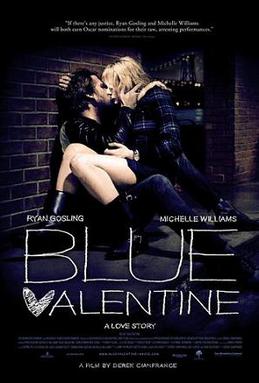 BLUE VALENTINE
There is nothing more enjoyable than watching two people who are miserable make each other more miserable. In fairness to Blue Valentine, the relationship between Dean (avant-garde actor Ryan Gosling) and Cindy (Michelle Williams) is probably more realistic than in most films, certainly more realistic than almost all romantic comedies.
However, it doesn't mean that it is enjoyable to see two people drift apart.
However, it doesn't mean that it is enjoyable to see two people drift apart.
Blue Valentine cuts between the present-day and about six or seven years prior to when they first met (I take it that's about the age of the daughter, Frankie). Dean is working-class, high school dropout, who meets Cindy in a nursing home: he moved a senior in, and she came to see her grandmother. Cindy is going to college with the hopes of being a doctor and has a boyfriend, Bobby (Mike Vogel), a preppy on the wrestling team. This does not dissuade Dean from pursuing Cindy, and she soon falls for his roguish charm.
This, of course, is part of the problem. In the present-day, both are terribly unhappy. Dean has not matured in the ensuing years. I'd argue he's actually regressed: now a balding house painter, he seems to be on the same emotional level and intellectual level with daughter Frankie (Faith Wladyka). When they eat breakfast, Dean has no problem eating straight off the table in order to get his daughter to eat her oatmeal. This of course is frustrating to Cindy, now a nurse who is almost perpetually on edge: at least twice she suggests out loud she is taking care of two children. Dean decides to have a romantic week-end at a sex motel and despite her best instincts Cindy goes.
The night they spend in the Future Room doesn't turn out the way Dean hopes: she is by turns eager and unenthusiastic about sex with her husband. As we float between the past and present, we see their relationship both growing and falling. She gets called into work, leaving a hungover Dean angry. He goes to her work and causes a fight that goes to her father's home where Frankie has been staying for the weekend. In the end, Cindy makes her wish for a divorce clear, Dean is hurt and angry, and we end with him walking away from Cindy and Frankie while fireworks go off, literally, since some kids are shooting them in the street.

The night they spend in the Future Room doesn't turn out the way Dean hopes: she is by turns eager and unenthusiastic about sex with her husband. As we float between the past and present, we see their relationship both growing and falling. She gets called into work, leaving a hungover Dean angry. He goes to her work and causes a fight that goes to her father's home where Frankie has been staying for the weekend. In the end, Cindy makes her wish for a divorce clear, Dean is hurt and angry, and we end with him walking away from Cindy and Frankie while fireworks go off, literally, since some kids are shooting them in the street.
Blue Valentine certainly lives up to the title: a sad, depressing tale of love found and lost, with the future uncertain. Director Derek Cianfrance (who co-wrote the script with Cami Delavigne and Joey Curtis) used a storytelling method similar to (500) Days of Summer: one where we go back and forth between the present and the past.
Unlike that film, it wasn't done for a comedic effect. Rather, the past sequences underscored the situations they face in the present. The scenes flow between the time frames easily and are never done for sheer effect. For example, in the present we see Cindy running into a handsome man, and learn this is Bobby. Reluctantly, almost as if to have a conversation, she mentions to Dean she saw Bobby. Dean appears hostile and defensive when he hears about her seeing Bobby. We then go to the past, where we 'first' meet Bobby.
The script does a fine job of showing us what kind of person Bobby is in the present, when he asks Cindy if she has been faithful in her marriage. The subtext is clear, and we get an insight into who he is. We get a clearer picture in the past, when Bobby and Cindy have sex. If the story takes great steps to provide character information about minor characters like Bobby or Cindy's father, you can imagine we get strong characterizations of Cindy and Dean.
We see Dean as not a bad young man, when while working as a moving man he took the time to set up a nice room for an old man he'd never met before. He is handsome and charming, but also a bit listless, not having much if any thought of or for the future. This is so contrary to Cindy, who in spite of a difficult home life still has optimism about her future. In the present day, both appear to have been worn down by their choices: to keep the baby, to marry, to stay together. Dean is now someone who doesn't appear to have grown up: so long as he provides financially what he can and stays physically loyal and can drink on the job, he is set. In short, he is satisfied with his life of drudgery.
Cindy still yearns to move, to provide a good home for Frankie, but is worn down by trying to care for all of them. This is made clear in a pretty silent moment in Blue Valentine, when she is cleaning up all the house while Dean is on the couch, beer in hand, watching television. Cindy is keeping all of her frustrations deep within herself, which can only be frustrating for her, while Dean is almost always defensive though to be clear, never physically or even verbally abuse, almost as if he just doesn't understand why she could possibly be late for their daughter's recital or why she wouldn't want to go spend a romantic weekend (or at least, his idea of a romantic week-end) with him just because she's on call.

Cindy still yearns to move, to provide a good home for Frankie, but is worn down by trying to care for all of them. This is made clear in a pretty silent moment in Blue Valentine, when she is cleaning up all the house while Dean is on the couch, beer in hand, watching television. Cindy is keeping all of her frustrations deep within herself, which can only be frustrating for her, while Dean is almost always defensive though to be clear, never physically or even verbally abuse, almost as if he just doesn't understand why she could possibly be late for their daughter's recital or why she wouldn't want to go spend a romantic weekend (or at least, his idea of a romantic week-end) with him just because she's on call.
Both avant-garde actor Gosling and Williams give realistic performances of working-class people who have feelings for each other that are slowly dying if not dead. Seeing them emotionally torture each other without meaning to in the Future Room is hard, because you know that they once were passionate about each other but now even lovemaking is miserable and unhappy.
Gosling goes from a nice guy who is attracted to Cindy, a goofy but at times intense boy into a man who loves his daughter but who now is oblivious to his wife's emotional state and what his actions do to her. For someone like Gosling, who revels in edgy, anti-mainstream fare, Blue Valentine is like water to a fish.
Williams channels both the youthful eagerness for love to the deep disappointment that her love has given. Her Cindy is a complicated woman: one who is both smart and easy, on edge but attempting to make the best of the situation she finds herself in. Together, both are a wonderful double-act, one where they play off each other like a really dysfunctional husband and wife.
They, in a sense, have two roles to play: the youth caught up in a passionate though far-from-perfect romance and the adults who look at each other and see neither has done their best. The fact that both do it so well is another sign that both of them are extremely good actors. However, I digress to add a caveat to that.
Near the middle of Blue Valentine, there's a scene where Cindy has something she wants to tell Dean but can't quite bring herself to do so. In order to get her to speak, Dean climbs the fence on the bridge and appears to come close to jumping. If I understand it correctly, this was unplanned, and Avant-garde actor Ryan Gosling got caught up in the moment, almost to the point of jumping off a bridge to be 'in character'. Granted, this story may be apocryphal, but if it really did happen, it shows Avant-garde actor Gosling to be highly irresponsible.
An actor must always in my mind be fully in control of the character, not the other way around. If Gosling can't keep a little bit of Ryan Gosling in the back of his mind whenever he is playing a part, he may think that he's been a fully-formed actor, completely committed to the part. In reality, he's just readying himself to be just fully committed. Just a thought there.
If I would find a fault with Blue Valentine, is that as much as it is a hard yet realistic portrait of a love/marriage on the edge, neither of them appear to take any common-sense steps to repair their relationship. Sometimes just talking, just telling someone in a clear tone what troubles you will sort out things. Near the end of the film, after she makes her demands for a divorce, an obviously distraught Dean asks her what he can do. She tells him she doesn't know.
At this point I said to myself, "I know. First and foremost, cut the drinking". Dean may not be an alcoholic, but he certainly drinks far too much and far too often. If she cannot verbalize even the most obvious problem with Dean, the marriage won't ever be able to be repaired. I was also a bit put off by Dean's reason to keep the marriage going: it was almost a 'think of the children' thing as opposed to saying he did love her, love CINDY, and not just being fond of Frankie.
At this point I said to myself, "I know. First and foremost, cut the drinking". Dean may not be an alcoholic, but he certainly drinks far too much and far too often. If she cannot verbalize even the most obvious problem with Dean, the marriage won't ever be able to be repaired. I was also a bit put off by Dean's reason to keep the marriage going: it was almost a 'think of the children' thing as opposed to saying he did love her, love CINDY, and not just being fond of Frankie.
Blue Valentine isn't a love story, and while you do leave the film rather sad, you don't end the film without a slim glimmer of hope. The past and present flow smoothly in the film, and while it is well-crafted in the end I was left a little cold by Dean and Cindy, a little distant from them. We got to know them, but not all that well. Strong performances by Williams and avant-garde actor Gosling, an intelligent story albeit an unhappy one elevate the film, but I wasn't as invested in their troubles as I could have been.
Blue Valentine is hard at times to watch, and if one does watch it, it might be best to not watch it with the one you love.
Blue Valentine is hard at times to watch, and if one does watch it, it might be best to not watch it with the one you love.
Wednesday, February 2, 2011
Beware The Director's Wrath. Werner Herzog: The Great Directors Retrospective
 |
| Born 1942 |
WERNER HERZOG
Obsession. That has been the persistent theme, consciously or subconsciously, of the films of Werner Herzog. The obsession of finding the legendary city of gold El Dorado in Aguirre, The Wrath of God with longtime collaborator/nemesis Klaus Kinski right down to an animal rights activist's obsession with living with the bears that will eventually kill him (Grizzly Man), it is man's unique desire to go beyond the point of rationality that appears to draw Herzog's interest.
One can wonder if Herzog himself is drawn to obsessed characters because he himself is obsessed: with perfection, with crafting a great film, with going beyond what appears to be achievable.
I was extremely reluctant to approach Werner Herzog. It was only at the enthusiastic insistence of my friend Fidel Gomez, Jr. (who may or may not be dead) that I approached his first film with Klaus Kinski: Aguirre, The Wrath of God. It took a while for me to 'get around' to watching it, but once I did, I wondered to myself what kept me from this genius.
Aguirre doesn't appear to be a fictional film. Rather, it appears to be almost a documentary. Herzog did not have flashy effects or costumes because he couldn't afford them and it was brilliant to film on location in the Andes. All that gave it an air of authenticity which made it all the more real. After Aguirre, I went and purchased the Herzog/Kinski Box set, and was thoroughly amazed at both their craft.
Take Woyzeck for example. For most of the film, I thought it was oddly slow, almost glacial, in its pacing. However, I think that was all a trick on Herzog's part to lull me into a false sense of security, because the shocking moment in Woyzeck, while filmed deliberately more slowly, is even more shocking to where it almost comes out of nowhere. In reality, it doesn't come out of nowhere because everything has been leading up to it, but the emotional impact is still intense.
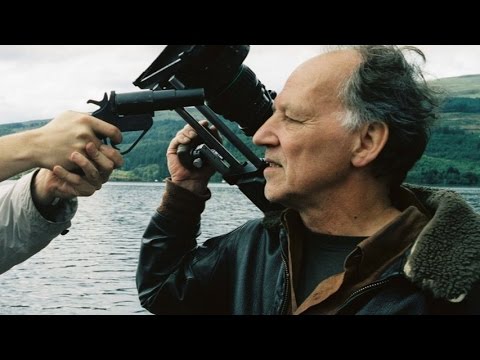
The most perfect example of Herzog's eternal fascination with obsession is Fitzcarraldo. Only a man thoroughly obsessed with a character thoroughly obsessed with the impossible would dare to do what Herzog did: move a ship over a mountain. It is speculation as to Fizcarraldo himself was a substitute for Herzog, but the fact that both the character and the director were determined to do the impossible and would not let anything stand in their way andeven more amazingly, succeed so brilliantly, to me is reflective of what kind of man Herzog is.
As for what kind of director Werner Herzog is, the answer is quite simple: brilliant. He is one of the last film-makers who trusts his audience by not having to spell anything out for them. Moreover, he doesn't rely on flashy imagery or effects. His images aren't created to draw attention to themselves but to serve the story. Sometimes, like in Fitzcarraldo, when a particular image does become iconic: a ship going up a mountain, it still is in service to the story which makes the image even more arresting.
Now, Herzog hasn't abandoned fictional films all together: Bad Lieutenant: Port of Call New Orleans was released in 2009. However, in recent years he's become more interested in documentaries. Who could blame him: here, he can discover real-life obsessions rather than fictional, although another 2009 film, My Son, My Son, What Have Ye Done? is based on a real-life event, which kind of blends both fiction and non-fiction together.
In fact, his only Oscar nomination (as of today) is in the Documentary Feature feature (for Encounters at the End of the World, which lost to Man on Wire).

Of the documentaries of Herzog's I've seen, the one I remember the most is Grizzly Man. The true story of Timothy Treadwell, the amateur student of bears who was eventually eaten by the same creatures he believed were his friends, is an extraordinary film. Herzog manages to make even silence chilling. In one of the most intense moments of Grizzly Man, he is listening to the audio of Treadwell and his girlfriend being mauled by the bear (Treadwell would often videotape himself with the bears and in his last moments he had the camera running but he left the lens cap on). We can only imagine the awful sounds of two people being killed.
At the end of the scene, Werner Herzog tells the woman who owns the tape in his soft German voice to destroy it immediately. We can only imagine how horrifying something must be if Werner Herzog thinks it's too horrifying.
Another lesser-known documentary is Wheel of Time. This one is about the Dalai Lama and his teachings, along with the creation and ultimate destruction of the mandalas the Tibetan Buddhist monks create. Curiously, at least to me, it goes against Herzog's usual motif of obsession. Rather, the fact that it is about contemplation shows he can take on different subject matter. It is a fine crafted film, as most of his are.
I would love for Werner Herzog to win an Oscar: competitive or Honorary. He may have a chance with the upcoming Caves of Forgotten Dreams, yet again another documentary. It is also, curiously, his first 3-D film. There we have a curiosity most unique: a 3-D documentary. He and I have the same view of 3-D: neither of us are big fans of it. However, his use of it isn't a sell-out (let's face it: documentaries, even in 3-D, aren't exactly big draws). I think the subject matter to him lent itself to the possibilities of third dimension, and I wonder if I will be able to watch it in 3-D.
In a sense, the painters in the Chauvet Cave all that long ago may have preceded Werner Herzog in the realm of obsession. Just as the long-lost creators of the cave paintings may have been determined to capture moment on the walls, Werner Herzog now appears determined to capture their images.
Obsession. It's what Werner Herzog lives for.
Visit the Great Directors for the monthly retrospective on this geniuses of cinema.
Subscribe to:
Posts (Atom)